
Recent from talks
Battle of Hanover
Knowledge base stats:
Talk channels stats:
Members stats:
Battle of Hanover
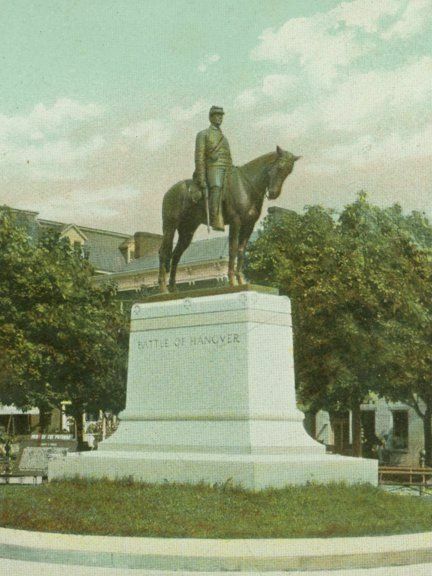
The Battle of Hanover took place on June 30, 1863, in Hanover in southwestern York County, Pennsylvania, as part of the Gettysburg campaign of the American Civil War.
Maj. Gen. J.E.B. Stuart's Confederate cavalry, which was riding north to get around the Union Army of the Potomac, attacked a Federal cavalry regiment, driving it through the streets of Hanover. Brig. Gen. Elon Farnsworth's brigade arrived and counterattacked, routing the Confederate vanguard and nearly capturing Stuart himself. Stuart soon counterattacked. Reinforced by Brig. Gen. George A. Custer's Michigan Brigade, Farnsworth held his ground, and a stalemate ensued. Stuart was forced to continue north and east to get around the Union cavalry, further delaying his attempt to rejoin Robert E. Lee's army, which was then concentrating at Cashtown Gap west of Gettysburg.
As Robert E. Lee moved his Army of Northern Virginia northward in June 1863 through the Shenandoah Valley toward Pennsylvania, portions of his cavalry under J.E.B. Stuart slipped eastward across the path of the Union Army of the Potomac. A series of raids in eastern Maryland netted prisoners and supplies, disrupting Federal communications and telegraph lines. However, Stuart was not able to effectively screen Lee's advance or provide intelligence on the movements of the Federal army. As Stuart headed north intending to link with Lee, Union cavalry commander Maj. Gen. Alfred Pleasonton, riding toward Pennsylvania to the west of Stuart, ordered his divisions to fan out across a wide swath, keeping an eye out for Confederates.
Brig. Gen. Judson Kilpatrick's division was on the Union right flank. Most of his men passed through Hanover early in the morning of June 30, pausing briefly for refreshments and to receive the greetings of the jubilant townspeople. Their town had been raided three days before by Confederate Lt. Col. Elijah V. White's cavalry, attached to Maj. Gen. Jubal Early's division that had occupied York County. White's Virginians and Marylanders had followed the railroad to Hanover from nearby Gettysburg, and taken horses, food, supplies, clothing, shoes, and other desired items from the townspeople, often paying with valueless Confederate money or drafts on the Confederate government. White's raiders had destroyed the area's telegraph wires, cutting off communications with the outside world, before sacking the nearby Hanover Junction train station. The unexpected arrival of Kilpatrick's column was a pleasant surprise to the residents of Hanover, who warmly greeted the Union troopers with food and drink.
Most of Kilpatrick's men remounted and passed through town, heading northward through the nearby Pigeon Hills toward Abbottstown. He left behind a small rear guard force to picket the roads south and west of Hanover. In the meantime, Stuart had left his billet at Shriver's Corner, Maryland, and was proceeding northward across the Mason–Dixon line into Pennsylvania. Hearing that Federal cavalry had been spotted near his intended destination, Littlestown, Pennsylvania, he instead turned toward Hanover in adjacent York County. His progress was slowed considerably by a cumbersome train of over 125 heavily laden supply wagons he had captured near Rockville, Maryland. In addition, he had skirmished with Delaware cavalry on June 29 at Westminster, Maryland, further delaying him.
Shortly before 10:00 a.m. on June 30, the rear guard of the 18th Pennsylvania Cavalry encountered Confederate videttes about three miles (5 km) southwest of Hanover at Gitt's Mill. In the ensuing exchange of small arms fire, a Confederate cavalryman died, and several were wounded. Shortly afterward, 25 men from Company G of the 18th Pennsylvania were captured by the 13th Virginia from John R. Chambliss's brigade, the vanguard of Stuart's oncoming cavalry. Also that morning, a series of minor engagements occurred near Littlestown and elsewhere along Stuart's path.
Southwest of Hanover at a tiny hamlet now known as Pennville, the 2nd North Carolina Cavalry struck the 18th Pennsylvania's central column and split it in two. Union survivors retired in disorder through the streets of Hanover just as Stuart's horse artillery arrived, unlimbered, and opened fire. As the Confederates occupied the town in the wake of the fleeing Pennsylvanians, General Farnsworth wheeled the 5th New York Cavalry into position near the town commons and attacked the Rebel flank in the streets, forcing the Tar Heels to abandon their brief hold on the town. The commander of the 2nd North Carolina, William Henry Fitzhugh Payne, was captured after his dying horse pitched him into a nearby tanning vat. A Union soldier pulled Payne out and took him prisoner.
As more of Chambliss's men (and General Stuart) arrived on the scene, they were met by additional Federals near the sprawling Karle Forney farm, just south of Hanover. Nearly surrounded in the confused fighting, Stuart and a staff officer escaped cross-country through the hedges bordering the country lane, at one point leaping their horses over a 15-foot (4.6 m) wide ditch. Hearing the unmistakable sound of distant gunfire, Judson Kilpatrick raced southward toward Hanover, with his horse dying in the town square from the severe ride. The young general began to deploy his men in and around Hanover, barricading some streets with barrels, farm wagons, dry goods boxes, and anything else that might provide cover. Shortly before noon, fighting at the Forney farm ceased as the Rebels broke off contact. Kilpatrick positioned Custer's newly arrived brigade on the farm and awaited developments.
Hub AI
Battle of Hanover AI simulator
(@Battle of Hanover_simulator)
Battle of Hanover
The Battle of Hanover took place on June 30, 1863, in Hanover in southwestern York County, Pennsylvania, as part of the Gettysburg campaign of the American Civil War.
Maj. Gen. J.E.B. Stuart's Confederate cavalry, which was riding north to get around the Union Army of the Potomac, attacked a Federal cavalry regiment, driving it through the streets of Hanover. Brig. Gen. Elon Farnsworth's brigade arrived and counterattacked, routing the Confederate vanguard and nearly capturing Stuart himself. Stuart soon counterattacked. Reinforced by Brig. Gen. George A. Custer's Michigan Brigade, Farnsworth held his ground, and a stalemate ensued. Stuart was forced to continue north and east to get around the Union cavalry, further delaying his attempt to rejoin Robert E. Lee's army, which was then concentrating at Cashtown Gap west of Gettysburg.
As Robert E. Lee moved his Army of Northern Virginia northward in June 1863 through the Shenandoah Valley toward Pennsylvania, portions of his cavalry under J.E.B. Stuart slipped eastward across the path of the Union Army of the Potomac. A series of raids in eastern Maryland netted prisoners and supplies, disrupting Federal communications and telegraph lines. However, Stuart was not able to effectively screen Lee's advance or provide intelligence on the movements of the Federal army. As Stuart headed north intending to link with Lee, Union cavalry commander Maj. Gen. Alfred Pleasonton, riding toward Pennsylvania to the west of Stuart, ordered his divisions to fan out across a wide swath, keeping an eye out for Confederates.
Brig. Gen. Judson Kilpatrick's division was on the Union right flank. Most of his men passed through Hanover early in the morning of June 30, pausing briefly for refreshments and to receive the greetings of the jubilant townspeople. Their town had been raided three days before by Confederate Lt. Col. Elijah V. White's cavalry, attached to Maj. Gen. Jubal Early's division that had occupied York County. White's Virginians and Marylanders had followed the railroad to Hanover from nearby Gettysburg, and taken horses, food, supplies, clothing, shoes, and other desired items from the townspeople, often paying with valueless Confederate money or drafts on the Confederate government. White's raiders had destroyed the area's telegraph wires, cutting off communications with the outside world, before sacking the nearby Hanover Junction train station. The unexpected arrival of Kilpatrick's column was a pleasant surprise to the residents of Hanover, who warmly greeted the Union troopers with food and drink.
Most of Kilpatrick's men remounted and passed through town, heading northward through the nearby Pigeon Hills toward Abbottstown. He left behind a small rear guard force to picket the roads south and west of Hanover. In the meantime, Stuart had left his billet at Shriver's Corner, Maryland, and was proceeding northward across the Mason–Dixon line into Pennsylvania. Hearing that Federal cavalry had been spotted near his intended destination, Littlestown, Pennsylvania, he instead turned toward Hanover in adjacent York County. His progress was slowed considerably by a cumbersome train of over 125 heavily laden supply wagons he had captured near Rockville, Maryland. In addition, he had skirmished with Delaware cavalry on June 29 at Westminster, Maryland, further delaying him.
Shortly before 10:00 a.m. on June 30, the rear guard of the 18th Pennsylvania Cavalry encountered Confederate videttes about three miles (5 km) southwest of Hanover at Gitt's Mill. In the ensuing exchange of small arms fire, a Confederate cavalryman died, and several were wounded. Shortly afterward, 25 men from Company G of the 18th Pennsylvania were captured by the 13th Virginia from John R. Chambliss's brigade, the vanguard of Stuart's oncoming cavalry. Also that morning, a series of minor engagements occurred near Littlestown and elsewhere along Stuart's path.
Southwest of Hanover at a tiny hamlet now known as Pennville, the 2nd North Carolina Cavalry struck the 18th Pennsylvania's central column and split it in two. Union survivors retired in disorder through the streets of Hanover just as Stuart's horse artillery arrived, unlimbered, and opened fire. As the Confederates occupied the town in the wake of the fleeing Pennsylvanians, General Farnsworth wheeled the 5th New York Cavalry into position near the town commons and attacked the Rebel flank in the streets, forcing the Tar Heels to abandon their brief hold on the town. The commander of the 2nd North Carolina, William Henry Fitzhugh Payne, was captured after his dying horse pitched him into a nearby tanning vat. A Union soldier pulled Payne out and took him prisoner.
As more of Chambliss's men (and General Stuart) arrived on the scene, they were met by additional Federals near the sprawling Karle Forney farm, just south of Hanover. Nearly surrounded in the confused fighting, Stuart and a staff officer escaped cross-country through the hedges bordering the country lane, at one point leaping their horses over a 15-foot (4.6 m) wide ditch. Hearing the unmistakable sound of distant gunfire, Judson Kilpatrick raced southward toward Hanover, with his horse dying in the town square from the severe ride. The young general began to deploy his men in and around Hanover, barricading some streets with barrels, farm wagons, dry goods boxes, and anything else that might provide cover. Shortly before noon, fighting at the Forney farm ceased as the Rebels broke off contact. Kilpatrick positioned Custer's newly arrived brigade on the farm and awaited developments.
Recent media