Hubbry Logo
Fraxinus pennsylvanicaFraxinus pennsylvanicaMain
Open search
Fraxinus pennsylvanica
Community hub
Fraxinus pennsylvanica
logo
8 pages, 0 posts
0 subscribers
Be the first to start a discussion here.
Fraxinus pennsylvanica
from Wikipedia

Fraxinus pennsylvanica
Leaves and fruit
Apparently Secure
Apparently Secure  (NatureServe)[2]
Scientific classification Edit this classification
Kingdom: Plantae
Clade: Tracheophytes
Clade: Angiosperms
Clade: Eudicots
Clade: Asterids
Order: Lamiales
Family: Oleaceae
Genus: Fraxinus
Section: Fraxinus sect. Melioides
Species:
F. pennsylvanica
Binomial name
Fraxinus pennsylvanica
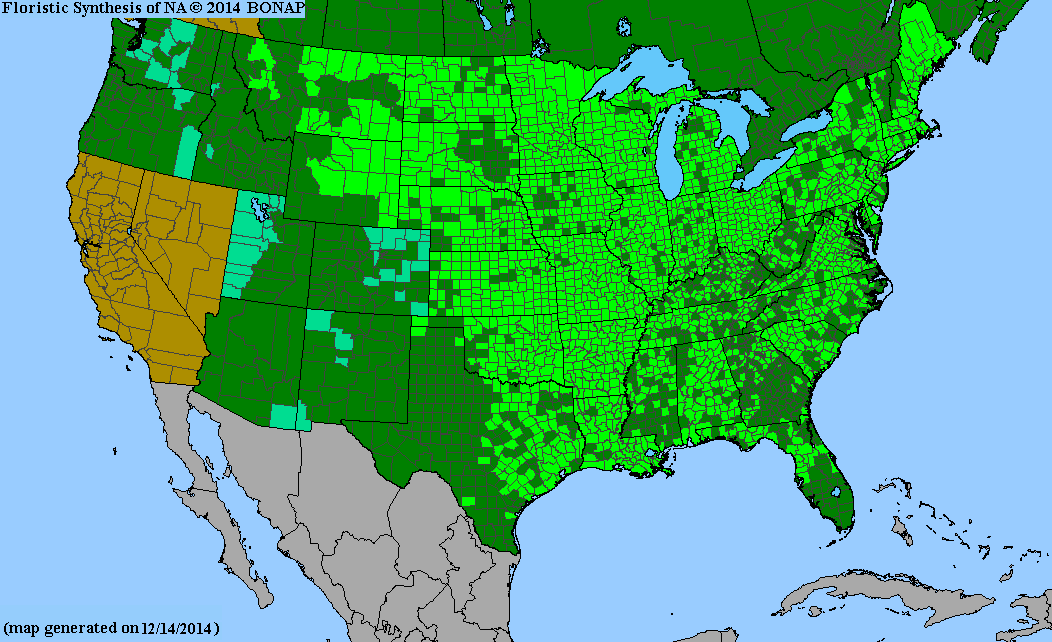
Natural range of Fraxinus pennsylvanica

Fraxinus pennsylvanica, the green ash or red ash,[3] is a species of ash native to eastern and central North America, from Nova Scotia west to southeastern Alberta and eastern Colorado, south to northern Florida, and southwest to Oklahoma and eastern Texas. It has spread and become naturalized in much of the western United States and also in Argentina and Europe, from Spain to Russia.[4][5][6]

Other names more rarely used include downy ash, swamp ash, and water ash.

Description

[edit]
Bark

Fraxinus pennsylvanica is a medium-sized deciduous tree reaching 12–25 metres (39–82 feet) (rarely to 45 m or 148 ft) tall with a trunk up to 60 centimetres (24 inches) in diameter. The bark is smooth and gray on young trees, becoming thick and fissured with age. The winter buds are reddish-brown, with a velvety texture. The leaves are 15–30 cm (6–12 in) long, oppositely arranged, pinnately compound with seven to nine (occasionally five or eleven) leaflets, these 5–15 cm (2–6 in) (rarely 18 cm or 7 in) long and 1.2–9 cm (123+916 in) broad, with serrated margins and short but distinct, downy petiolules a few millimeters long. They are green both above and below. The autumn color is golden-yellow and depending on the climate, green ash's leaves may begin changing color the first week of September in the northern parts of its native range.[where?] The flowers are produced in spring at the same time as the new leaves, in compact panicles; they are inconspicuous with no petals, and are wind-pollinated. The fruit is a samara 2.5–7.5 cm (1–3 in) long comprising a single seed 1.5–3 cm (581+18 in) long with an elongated apical wing 2–4 cm (341+12 in) long and 3–7 mm (18932 in) broad.[7][8][9][10]

It is sometimes divided into two varieties, Fraxinus pennsylvanica var. pennsylvanica (red ash) and Fraxinus pennsylvanica var. lanceolata (Borkh.) Sarg. (syn. var. subintegerrima (Vahl) Fern.; green ash) on the basis of the hairless leaves with narrower leaflets of the latter, but the two intergrade completely, and the distinction is no longer upheld by most botanists.[4]

Like other species in the section Melioides, Fraxinus pennsylvanica is dioecious, with male and female flowers produced on separate individuals.[11]

Ecology

[edit]
Bark and leaf

It is the most widely distributed of all the American ashes; its range centers on the midwestern U.S. and Great Plains. Seedlings of the tree have a high tolerance to water logging[12] which may explain why the natural habitat of green ash is almost exclusively stream sides and bottomlands. The large seed crops provide food to many kinds of wildlife.[3]

Green ash is threatened by the emerald ash borer, a beetle introduced from Asia. This introduced pest kills most ash trees that it infests, accounting for mass die-offs of ashes in North America and in Moscow, Russia.[13] Asian ashes have a high tannin content in their leaves which makes them unpalatable to the beetle, while most American species (with the notable exception of blue ash) do not.[14] A common garden experiment showed that green ash is killed readily when exposed to emerald ash borer, while the Asian species F. mandschurica shows resistance against emerald ash borer.[15]

The United States Forest Service has discovered small numbers of "lingering ash" trees in the wild that have remained healthy after emerald ash borer swept through the population.[16] The possibility of these trees possessing genetic resistance to the beetle is currently being investigated with the hope that green ash could be restored using the surviving trees.[17] Although larval infestation by the invasive emerald ash borer kills more than 99% of green ash trees, it has been found that emerald ash borer infestation induces production of secoiridoids in infested trees and that cultivars that are progeny of "lingering ash" produce higher levels of these secoiridoids than progeny of susceptible trees.[18]

Winter twig of Fraxinus pennsylvanica. Green ash can usually be distinguished from white ash (F. americana) by its D-shaped leaf scars. In F. americana, the lateral buds are more deeply recessed within their corresponding leaf scars, giving the latter a more C-shaped appearance.[19]

The spread of emerald ash borer was facilitated by the extensive use of green ash as an ornamental tree in the central U.S. following the loss of American elms in the 1950s–60s due to Dutch elm disease. That epidemic was the result of a similar overuse of elms in urban environments, leading to a monoculture that lacked any disease or pest resistance. Scientifically for green ash this is because modern cultivars utilized regionally were parented from sometimes only four individual trees selected for unique traits and male seedless flowering. Proclaiming a harsh lesson learned, cities like Chicago did not replace dead elms with a 1:1 ash:elm ratio. Instead, Norway, silver, red and sugar maples, honey locust, linden/basswood, redbud, crabapples, and hackberry, among others, were also utilized during this recovery period and in new urban and suburban areas. Fortunately, with these additional species, many cities were able to reduce the percent of ash and other species to much lower levels (20% average) than during the Dutch elm disease era where from 56% to 100% of the trees were elm.

Injections and spraying of ashes with pesticides has been used in city parks to protect valued trees from emerald ash borer.[20]

Both American elm and green ash were extremely popular due to rapid growth and tolerance of urban pollution and road salt, so many housing developments in Michigan were lined from end to end with ashes, a result of which the beetles had an enormous food supply to boost their population well above infestation thresholds. The tree was also extensively propagated and sold by local nurseries. According to the American Nursery Industry, "Back in the late 1980s, Dr. Frank Santamour Jr., then a research geneticist with the U.S. National Arboretum, proposed the 10-20-30 formula for diversity in the urban forest, limiting the plantings in a community to no more than 10 percent within a single species, 20 percent within a genus and 30 percent within a family." Many communities are using a more strict 5-10-20 rule today, because of the threat posed by emerald ash borer.[21]

Green ash is also vulnerable to many other diseases including ash yellows, ash dieback and ash bacterial canker that can cause gradual loss of vigor and exhibit similar symptoms to emerald ash borer infestation such as crown dieback, bark cracking, and epicormal sprouts. These conditions are most common on stressed trees in areas of poor soil, urban pollution, and lack of moisture. A wave of ash dieback struck the northeastern United States in the 1950s–60s that killed an estimated 70% of ashes in the region.[citation needed]

Uses

[edit]

Urban ornamental trees

[edit]
Autumn leaf color

Green ash is one of the most widely planted ornamental trees throughout the United States and much of Canada but mostly Alberta, including in western areas where it is not native. It is also widely planted in Argentina. It is very popular due to its good form and resistance to disease. About 40% of boulevard trees in Edmonton, Alberta, are green ash.[22] It is often planted for shade or as a windbreak.[23]

For the last two centuries American elm and ash, which both belong to the ancient Elm-Ash-Cottonwood Bottomland ecosystem,[24] achieved distinction as North America's two most popularly planted urban species, used primarily for their superior survival traits and slowly maturing 180–300 year majestic natural beauty. Today used as living national monuments, the National Park Service is protecting Thomas Jefferson's 200-year-old planted example, and George Washington's 250-year-old white ash which has a 600-year possible lifespan.[citation needed] Green ash had been widely used as a primary ornamental and long lived monument tree until the elm fad of the 1880s, and regained top position once again after Dutch elm disease arrived.[citation needed]

Other continents learned of American ash species' urban survivability and unique beauty through the worldwide popularity of Midwestern Prairie style ecology and architectural movement. Modernizing cities in Russia and China then began using imported green ash a century ago to line streets and landscape new public parks.[25][26] Advantages of green ash include its tolerance of harsh urban environmental conditions, ease of propagation, and (in eastern North America) its value for wildlife as a native keystone species.[27]

Utility to wildlife

[edit]

North American native ash tree species are used by North American frogs as a critical food source, as the leaves that fall from the trees are particularly suitable for tadpoles to feed upon in ponds (both temporary and permanent), large puddles, and other water sources.[28] Species such as red maple, which are taking the place of ash due to the ash borer, are much less suitable for the frogs as a food source — resulting in poor frog survival rates and small frog sizes.[28] It is the lack of tannins in the American ash varieties that makes them good for the frogs as a food source and also not resistant to the ash borer. Varieties of ash from outside North America typically have much higher tannin levels and resist the borer. Maples and various non-native invasive trees, trees that are taking the place of American ash species in the North American ecosystem, typically have much higher leaf tannin levels.[28]

Other uses

[edit]

Green ash wood is similar in properties to white ash wood, and is marketed together as "white ash". The commercial supply is mostly in the South. It is very popular, used in making electric guitars because it can be somewhat lighter than white ash without sacrificing too much in tone.[dubiousdiscuss] It has a bright sound with long sustain, plus the wood grain is aesthetically desirable to many guitar players.[dubiousdiscuss] Gibson, Fender, Ibanez, Warwick, and many other luthiers use ash in the construction of their guitars.

References

[edit]
Revisions and contributorsEdit on WikipediaRead on Wikipedia
from Grokipedia
Fraxinus pennsylvanica, commonly known as green ash, is a medium-sized in the olive family (), native to central and eastern . It typically reaches heights of 50-70 feet (15-21 m) with a trunk diameter up to 24 inches (61 cm), developing a pyramidal form in youth that matures into a broad, rounded crown up to 40 feet (12 m) wide. The tree features opposite, pinnately compound leaves 6-12 inches (15-30 cm) long with 5-9 (usually 7) dark green leaflets that turn yellow, golden, or bronze in fall, and it produces small dioecious flowers in spring followed by single-winged samaras 1-2 inches (2.5-5 cm) long. Its bark is gray-brown with diamond-patterned ridges, and it is distinguished from similar ashes like white ash by its hairier twigs and less notched leaflets. Native to a range extending from and southeastern in southward to and in the United States, F. pennsylvanica has been widely introduced elsewhere, including parts of , , and . It thrives in moist bottomlands, floodplains, riverbanks, and swamps on fertile, well-drained alluvial soils such as clay, , or , but demonstrates remarkable adaptability to drier uplands, urban conditions, , salt, and wind. Ecologically, it plays a key role in forests and mixed hardwood stands, associating with species like boxelder, red maple, and American elm, while providing food and habitat for wildlife including birds, squirrels, , moths, rabbits, beavers, and porcupines through its , buds, and bark. Hardy in USDA zones 3-9, it tolerates annual precipitation from 15-60 inches (380-1520 mm). The wood of F. pennsylvanica is heavy, hard, and strong, historically used for tool handles, furniture, , baseball bats, and oars, though often marketed interchangeably with white ash. As an ornamental, it is prized for shade, windbreaks, and street plantings due to its rapid growth rate of 1-2 feet (0.3-0.6 m) per year, good form, and tolerance of tough sites, with cultivars like 'Marshall's Seedless' and 'Patmore' selected for improved traits. Indigenous uses include boiling the inner bark as a thickener or bread ingredient. However, F. pennsylvanica faces severe threats from the invasive (Agrilus planipennis), an Asian beetle detected in the U.S. in 2002, which has killed hundreds of millions of ash trees across by larval under the bark, often within 3-5 years of infestation. This pest has drastically reduced populations in the Midwest and Northeast, altering forest composition, air quality, and wildlife habitats, with no natural resistance in native ashes. Ongoing efforts include biological controls with parasitic wasps and breeding for resistant varieties. Other challenges include fungal diseases like anthracnose and , insects such as oystershell scale and lilac borer, and brittle branches prone to storm damage, leading to recommendations against new plantings in many areas.

Taxonomy

Etymology

The scientific name Fraxinus pennsylvanica comprises two components derived from . The genus name is the ancient Latin term for , which also connoted "" due to the ' tough and elastic wood historically used for crafting spear shafts and bows. The specific epithet pennsylvanica means "of ," honoring the state where the was first scientifically described and classified by American botanist Humphry Marshall in his 1785 publication Arbustrum Americanum, the earliest botanical book authored and printed in the United States. Common names for F. pennsylvanica include green ash, red ash, , and water ash, reflecting variations in its habitat preferences and appearance. Historically, the species was known as red ash, while its variety F. p. var. lanceolata (now subsumed under the main species) was termed green ash based on differences in leaf and branchlet characteristics; this distinction has since been unified under the single name green ash. Early taxonomic confusion also arose with white ash (Fraxinus americana), as the two species share similar morphology and ranges, leading to occasional misidentification in both wild and cultivated contexts.

Classification and varieties

Fraxinus pennsylvanica belongs to the genus Fraxinus in the family Oleaceae and the order Lamiales. The species was first described by American botanist Humphry Marshall in his 1785 work Arbustrum Americanum: The Trees and Shrubs of North America, making it one of the earliest documented North American ash trees. The taxonomy of F. pennsylvanica includes several historical synonyms, such as Fraxinus campestris and Fraxinus darlingtonii, which reflect past interpretations of morphological variation. Varietal recognition has been inconsistent; while some early classifications proposed varieties like F. pennsylvanica var. pennsylvanica (red ash, with pubescent twigs) and var. subintegerrima (green ash, with glabrous twigs and nearly entire leaflet margins), these are now often treated as synonyms or morphological variants within the single species due to overlapping traits and lack of clear genetic boundaries. This species is closely related to other North American ashes, including F. americana (white ash) and F. nigra (black ash), from which it is primarily distinguished by its typically serrate to crenulate leaflet margins and samara wings that do not extend to the seed base. Recent genetic studies, particularly those conducted after 2010, have revealed significant hybridization potential with F. americana, leading to extensive admixture in natural populations and complicating morphological identification in zones of .

Description

Morphology

Fraxinus pennsylvanica is a that typically reaches heights of 15 to 25 m (50 to 82 ft), with exceptional specimens attaining up to 37 m (121 ft), and a trunk of up to 60 centimeters. The bark is gray-brown, developing into a distinctive diamond-patterned texture with shallow furrows and crisscrossing ridges as the matures. The twigs are stout, ranging from gray to greenish-brown, and often smooth or lightly pubescent, featuring prominent white lenticels. Leaf scars are characteristically U-shaped or semicircular, with the lateral buds positioned atop them and the upper edge nearly straight or slightly notched. Buds are rounded to conical, covered in rusty-brown hairs, with terminal buds sometimes acute and lateral ones more ovate. Leaves are and pinnately , measuring 15 to 30 centimeters in length, typically consisting of 7 to 9 (occasionally 5 to 11) lanceolate to ovate-elliptic leaflets that are 5 to 15 centimeters long and 2.5 to 5 centimeters wide. The leaflets are dark green and glossy above, paler and sometimes pubescent below, with crenate-serrate to entire margins, and they turn vibrant golden-yellow in autumn. The species is dioecious, with small, apetalous flowers emerging in spring before the leaves, arranged in loose to compact panicles. Male flowers are light green to purple and clustered tightly, while female flowers are greenish and produce single-seeded samaras upon fertilization. The fruits are winged samaras, 2.5 to 7.5 centimeters long, with an elongated apical wing measuring 2 to 4 centimeters in length and 3 to 7 millimeters broad, maturing to tan and persisting in dangling clusters.

Growth habits

Fraxinus pennsylvanica exhibits rapid growth during its early years, particularly under favorable conditions, with height increases of up to 60 cm per year in the first few seasons in nursery settings or irrigated sites. As the tree matures, growth moderates to an average of 0.7–0.8 m annually in open-grown stands, allowing it to reach heights of 14–17 m within 21 years. , including seed production, is typically attained around 10 years, with the species demonstrating a lifespan of 100–150 years in natural wild settings, though individuals in cultivation or optimal environments may persist longer, up to 200 years or more. The develops an upright oval that becomes more rounded with age, providing effective shade while tolerating well, which makes it suitable for urban landscapes where shaping is often required. Its is shallow and fibrous, lacking a prominent and spreading extensively in a saucer-like pattern to depths of 0.9–1.4 m, enhancing windfirmness. In flooded or waterlogged conditions, F. pennsylvanica can produce adventitious roots through lenticels, allowing adaptation to periodic inundation without significant stress. Young saplings are moderately shade-tolerant, persisting in positions for over 15 years, but mature trees thrive best in full sun for optimal growth and vigor. Once established, the species shows high due to its extensive network, surviving severe dry periods with minimal mortality. However, it is sensitive to , exhibiting reduced growth and stability on eroded or heavily trafficked sites where penetration is hindered.

Distribution and habitat

Native range

Fraxinus pennsylvanica, commonly known as green ash, is native to a broad region of eastern and central . Its range extends from and westward across southern to southeastern and , southward through the to and northern , and eastward along the Atlantic coast. The species is most abundant in the Midwest and , where it forms significant components of riparian and communities. It occurs across a wide elevational gradient, from to 2,000 meters, with scattered populations documented up to about 2,300 meters in the . Prior to European settlement, green ash occupied extensive contiguous habitats across its range, though these have since become fragmented due to agricultural conversion and other land uses. Within this native distribution, it primarily inhabits moist sites such as floodplains, river and banks, and low woodlands.

Introduced ranges

Fraxinus pennsylvanica has been introduced outside its native range in eastern and central to regions including the , , , and parts of . In the , the species was introduced as an ornamental in states such as , , and starting in the early , where it has escaped cultivation and become naturalized in riparian areas. In , Fraxinus pennsylvanica is widely planted and has naturalized in countries including , , , , and , often forming stands in habitats. The species has also been introduced to northeastern , where it is established in natural settings and reported as invasive in some areas. In , introductions occur in regions such as Korea, Primorye, West Siberia, and , primarily for purposes. In non-native regions, Fraxinus pennsylvanica often forms dense stands in riparian zones following escape from urban plantings, though it is considered invasive in some regions, particularly and parts of , and is subject to ongoing monitoring and management. As of 2025, quarantines in the European Union and Great Britain restrict the movement of ash materials to prevent the spread of the emerald ash borer, a pest posing risks to introduced populations.

Reproduction

Flowering and pollination

Fraxinus pennsylvanica is dioecious, producing male and female flowers on separate trees. The inconspicuous, apetalous flowers emerge in spring, typically from April to May, before the leaves emerge, arranged in terminal panicles on the previous year's growth. Male inflorescences form in tight clusters, featuring purplish stamens, while female flowers occur in looser panicles and appear greenish. Male flowers mature and shed pollen 1 to 2 weeks earlier than female receptivity, which lasts 7 to 10 days per tree and extends 2 to 3 weeks across populations. Pollination in F. pennsylvanica is anemophilous, relying entirely on dispersal of lightweight grains. The majority of travels 8 to 15 meters from the source , though traces can reach up to 100 meters or more under favorable conditions. Due to its dioecious nature and low self-compatibility, successful fertilization depends on the proximity of opposite-sex trees, with optimal occurring when males and females are within tens of meters. This requirement enhances but can limit reproduction in sparse stands. Flowering is closely synchronized with the onset of leaf-out, to optimize exposure for capture. This timing maximizes efficiency in the brief receptive window. However, ongoing is altering these patterns, with studies of North American deciduous woody communities, including F. pennsylvanica, documenting an advance in spring flowering events of approximately 1.2 days per decade from 1993 to 2021.

Seed production and dispersal

Female trees of Fraxinus pennsylvanica produce single-winged samaras following successful , with fruits maturing in late to early across much of the species' range. These samaras typically measure 25 to 45 in length and contain a single encased in a lightweight pericarp that aids in dispersal. Seed production begins at around 10 years of age, with many female trees bearing fruit annually, though abundant mast crops—characterized by synchronized heavy seeding—occur intermittently every 3 to 5 years, contributing to surges. In mast years, individual s can yield thousands of samaras, though exact quantities vary by tree size, health, and environmental conditions. Samara viability is high for fresh , with rates exceeding 80% under optimal storage, and seeds remaining viable for 1 to 8 years when kept at low temperatures (e.g., 5°C) and 7 to 10% moisture content. Dispersal of F. pennsylvanica samaras occurs primarily via , with the winged structure enabling travel distances of up to 100 meters from the under favorable conditions. plays a secondary role, particularly in riparian habitats where floods can carry samaras considerable distances downstream, facilitating colonization of new areas. Animal-mediated dispersal is less dominant but notable, as birds and small mammals consume the seeds, with some intact samaras passing through digestive tracts or being cached, thereby extending dispersal beyond limits. Samaras typically fall from trees shortly after maturation and persist on the ground through winter, forming a short-lived of 1 to 3 years in natural soils. Germination of F. pennsylvanica seeds requires a period of cold, moist stratification to break , typically 60 to 120 days at 2 to 5°C, followed by exposure to alternating temperatures of 20 to 30°C for optimal . Adequate exceeding 20% is essential during stratification and early growth to prevent , with flooded or moist conditions enhancing success in habitats. In natural settings, success rates range from 20% to 50%, influenced by factors such as , disturbance, and , leading to variable establishment.

Ecology

Habitat requirements

_Fraxinus pennsylvanica thrives in moist, fertile alluvial soils typically found in floodplains, riparian zones, and low woods. It prefers medium-textured soils such as s and that are deep and noncompacted. The species exhibits broad soil tolerances, growing well on clay, , and , and it can adapt to sandy loams and even coarser sands in upland sites with adequate . Optimal ranges from 5.5 to 7.5, though it tolerates a wider range of 4.1 to 8.3 depending on regional conditions. This tree demonstrates high flood tolerance, surviving inundation for up to 60 days annually through physiological adaptations like the formation of aerenchyma in roots, which enhances internal oxygen transport during anaerobic conditions. It requires full sun to partial shade for optimal growth, with seedlings performing best in 20–40% of full sunlight. Annual precipitation between 500 and 1,500 mm supports its development, though it can endure periodic drought in suitable soils. Prolonged drought, however, stresses the plant, reducing growth rates and increasing susceptibility to decline. In , Fraxinus pennsylvanica often occupies early- to mid-seral stages in and riparian communities, acting as a in disturbed areas where it stabilizes soils post-flooding. It contributes to mid-seral development in bottomland s but rarely persists as a climax dominant due to competitive pressures in mature stands.

Ecological interactions

_Fraxinus pennsylvanica serves as a in riparian ecosystems across its native range, contributing significantly to food webs and community dynamics by providing essential resources for various wildlife. Its foliage and twigs are heavily browsed by , with populations at densities of 0.6 to 0.7 animals per influencing survival and regeneration. Beavers rely on green ash as a major winter food source, utilizing stems and branches for both nutrition and dam construction in habitats. Seeds are consumed and dispersed by birds such as wood ducks, , and northern bobwhites, enhancing propagule distribution while supporting avian populations in s. Additionally, the offers critical for amphibians in riparian zones, where its structure facilitates breeding and shelter in moist understories. While green ash lacks nitrogen-fixing associations, its leaf litter plays a key role in improvement by increasing and cycling, particularly in environments where annual inputs can reach substantial volumes. This process enriches , benefiting understory herbs and overall community productivity. In dynamic s, green ash competes with like cottonwood (Populus deltoides), initially sharing space during high-water events but later dominating mature stands as succession progresses. These interactions help stabilize riparian communities, facilitating the growth of diverse herbaceous layers beneath the canopy. Prior to the invasion of (Agrilus planipennis), green ash supported numerous of insects, including such as the eastern tiger swallowtail () and polyphemus moth (), which utilized its foliage and bark as host resources within food webs. The widespread die-off from has altered these dynamics, creating canopy gaps that increase light penetration to the understory and favor invasive shrubs like Amur honeysuckle (). These gaps disrupt native community structure, potentially reducing by promoting non-native proliferation in the absence of ash-dominated canopies. As of 2025, the has infested nearly all ash trees in its North American range, with biological control agents like Tetrastichus planipennis beginning to influence pest populations and aid in partial ecosystem recovery.

Threats and conservation

Pests and diseases

The primary biotic threat to Fraxinus pennsylvanica is the (Agrilus planipennis), an invasive native to first detected in in 2002 near , . The larvae feed on the and beneath the bark, the tree and disrupting nutrient and water transport, which leads to canopy dieback and death; untreated infested trees typically succumb within 2–4 years, with mortality rates exceeding 99% in affected populations. As of July 2025, the pest has spread to 37 U.S. states and the District of Columbia, as well as provinces in and countries in , primarily through human-mediated movement of infested , nursery stock, and logs. Other insect pests include the lilac/ash borer (Podosesia syringae), whose larvae tunnel into the trunk and branches, causing galls, sap flow, and structural weakening, particularly in stressed or young trees. The banded ash borer (Euderces congestus) and red-headed ash borer (Neoclytus acuminatus) also attack, with larvae boring into wood of weakened or dying trees, accelerating decline but rarely killing healthy individuals outright. Fungal diseases pose additional risks: anthracnose, caused by Gnomoniella fraxinea (anamorph Discula fraxinea), results in leaf spots, shoot blights, and defoliation during cool, wet springs, though F. pennsylvanica shows moderate resistance compared to white ash. Verticillium wilt, induced by Verticillium dahliae or V. albo-atrum, causes vascular discoloration, wilting, and branch dieback, often leading to tree death in severe cases. Canker diseases, such as those from Nectria species or Phlyctema vagabunda, produce sunken lesions on branches and trunks, girdling tissues and contributing to dieback. Fire primarily top-kills green ash saplings and small trees by scorching aboveground tissues, though mature trees often survive low- to moderate-intensity burns due to thick bark. Top-killed individuals exhibit prolific sprouting from root crowns and stumps, enabling rapid regeneration in fire-disturbed habitats. Post-fire environments commonly favor infection by decay fungi, including Armillaria species, which cause root rot and basal decay in resprouting stems and weakened roots, potentially reducing long-term vigor.

Conservation status

_Fraxinus pennsylvanica, commonly known as green ash, is assessed as Critically Endangered on the due to the severe impacts of the invasive (Agrilus planipennis), which has caused projected population declines exceeding 80% over the next three generations. This status was assigned in 2017 under criteria A3e+4ae, reflecting near-total mortality rates in infested areas and limited natural regeneration, as the beetle attacks trees of all sizes and persists in ecosystems post-outbreak. NatureServe ranks the species as globally apparently secure (G4) as of 2021, an adjustment from previous G5 secure status, acknowledging widespread distribution but acknowledging ongoing declines driven by the pest. Subnational ranks vary, with vulnerable (S3) or imperiled (S2) designations in several U.S. states and Canadian provinces where local populations have been heavily impacted, such as S3 in and S2 in . The U.S. Fish and Wildlife Service has not listed green ash under the Endangered Species Act at the federal level, though it maintains a species profile highlighting threats; state-level protections exist in over 10 jurisdictions, often tied to these subnational ranks, including restrictions on harvest or habitat safeguards in vulnerable areas. By 2025, the is estimated to have killed hundreds of millions of ash trees across , underscoring the scale of population loss. Conservation efforts focus on resistance breeding, biological control, and regulatory measures to mitigate further declines. Programs target "lingering ash" trees—those exhibiting partial resistance with survival rates of 1–10% in heavily infested sites—for , with genetic studies identifying traits that allow some individuals to withstand or recover from borer attacks; hybrids from these survivors are being developed for restoration planting, including recent 2025 emphasizing for resistance amid . Biological controls include releases of wasps such as Tetrastichus planipennisi, introduced from starting in the late 2000s and approved for widespread use by the 2010s, which target emerald ash borer larvae and have established in multiple states, achieving parasitism rates up to 50% in some areas, with 2025 reports indicating slowed EAB advance in release sites. Quarantines enforced by the USDA Animal and Plant Health Inspection Service restrict movement of ash wood and materials to slow spread, while ex situ collections in over 180 botanic gardens and arboreta preserve for future recovery initiatives.

Uses

Ornamental planting

Fraxinus pennsylvanica, commonly known as green ash, has been widely planted as an ornamental tree since the 19th century, valued for providing shade and serving as windbreaks in both rural and urban settings. Its adaptability to a range of conditions, including tolerance to urban stresses such as air pollution, soil compaction, and periodic flooding, made it a popular choice for street tree plantings and landscapes. For instance, prior to the widespread arrival of the emerald ash borer (EAB), green ash comprised approximately 40% of Edmonton's boulevard trees, highlighting its prominence in municipal urban forestry programs. Propagation of green ash for ornamental purposes typically occurs through seeds or root cuttings, with seeds sown in fall in mulched beds without requiring stratification. Site preparation involves selecting moist, well-drained soils of clay or , ideally with a between 6.5 and 8.0, and planting at spacings of 10–15 meters to allow for mature canopy development. Several cultivars have been developed to enhance ornamental qualities, including 'Marshall's Seedless', a clone that produces no fruit and forms an upright, oval canopy, reducing in urban areas. Another popular selection is '', which exhibits a vigorous, pyramidal form with a strong central leader and reliable golden fall color. Recent breeding efforts have identified lingering green ash genotypes with partial resistance to EAB, leading to development of more resilient cultivars as of 2023. However, the use of green ash and its cultivars in ornamental planting has declined significantly since around due to devastation from the invasive , which has killed hundreds of millions of trees across , prompting replacement with more resistant species such as oaks or maples.

Timber and economic value

The wood of Fraxinus pennsylvanica, known as green , is characterized by its hardness, strength, shock resistance, and coarse , with white sapwood that contributes to its . These properties make it suitable for demanding applications, including tool handles, bats, flooring, furniture, crates, and oars. Although white (Fraxinus americana) is preferred for its straighter , green ash lumber is often marketed interchangeably as "white " due to comparable qualities and lower cost. Prior to the widespread impact of the , ash species including supported substantial commercial harvesting , with annual removals of ash sawtimber estimated at approximately 114 million board feet (about 0.27 million cubic meters) across eastern regions as of the early , contributing to a total regional value of about $25 million annually. This timber played a key role in industries reliant on resilient hardwoods, such as sporting goods and interior , underscoring its economic significance in forested areas from the Midwest to the Northeast. Beyond traditional markets, green ash holds potential for production, with its exhibiting a high caloric content of 4,768 calories per gram, making it viable for conversion in energy applications. It has also been employed in efforts, demonstrating good establishment on disturbed sites; for instance, plantings on an Ohio spoil reached densities of 110 trees per in 1966, persisting at 79 per by 1997. Historically, Native American communities utilized green ash for practical and medicinal purposes, weaving wood splints into baskets and preparing inner bark infusions as teas to treat fevers, insect bites, and as a general tonic.

Wildlife benefits

The seeds of Fraxinus pennsylvanica, known as green ash, serve as a vital source for various birds and mammals, particularly during fall and winter. Game birds such as wood ducks, , northern bobwhites, and wild turkeys consume the samaras, while nongame species including finches, blackbirds, grosbeaks, and cardinals also feed on them extensively. Small mammals like squirrels, white-footed mice, and rabbits eat the seeds, often caching them which aids in dispersal and germination. The tree's bark and cambium provide essential forage for larger mammals, with American beavers relying on stems as a major winter food source in regions like . White-tailed deer browse on twigs, leaves, and foliage, especially in spring and early summer, though heavy browsing can impact seedling survival at densities of 0.6–0.7 animals per . Green ash offers valuable nesting and cover habitat for numerous wildlife species, including dense foliage for shelter and branches for perches. It supports nesting for raptors like Cooper's hawks and eastern screech-owls, as well as cavity-nesters such as mountain bluebirds; in woodlands, it hosts 49 bird species representing 23% of the local nesting avifauna. The tree's low-toxin leaves serve as host for larvae, including those of the tiger swallowtail (), white-marked tussock moth (), and waved sphinx moth (Ceratomia undulosa). In wetland habitats, green ash contributes to refuges by providing shade and moist microenvironments that support breeding and foraging. In restoration projects, green ash enhances biodiversity by stabilizing soils, offering multi-layered cover, and promoting seed production that attracts seed-dispersing , with survival rates up to 98–100% on shallow-water sites when protected by shelters. Following (Agrilus planipennis) infestations, surviving green ash trees are prioritized in management strategies to preserve forests, facilitate population recovery through and biocontrol, and maintain corridors for migratory birds and other species.

References

Add your contribution
Related Hubs
User Avatar
No comments yet.