


Community hub
Recent from talks
Contribute something
Nothing was collected or created yet.
Wildlife corridor
View on Wikipedia

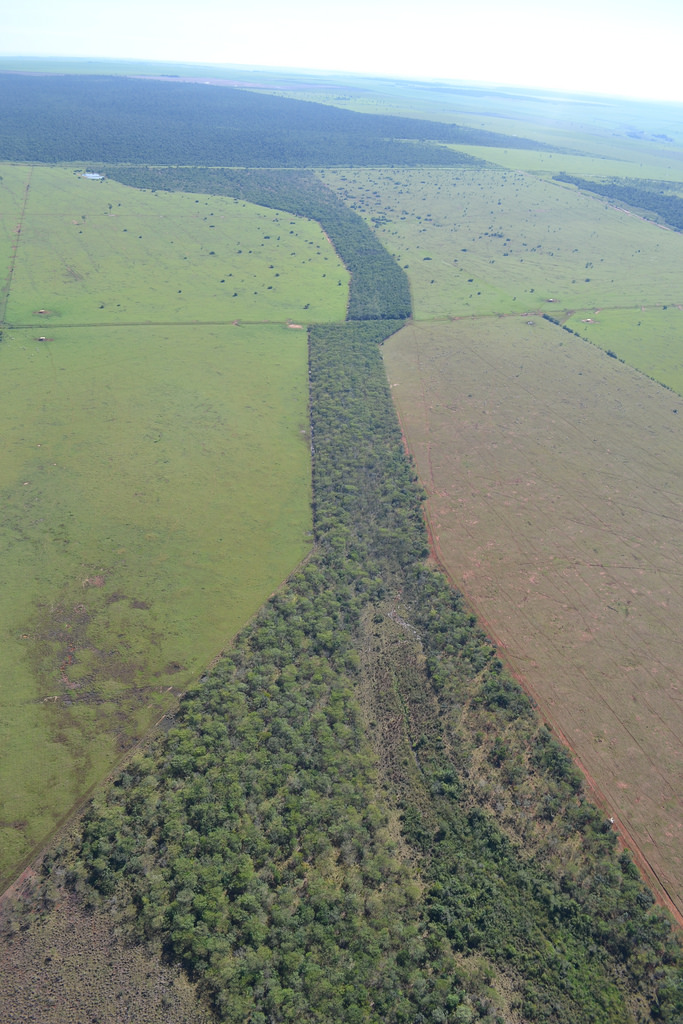
A wildlife corridor, also known as a habitat corridor, or green corridor,[1] is a designated area that connects wildlife populations that have been separated by human activities or structures, such as development, roads, or land clearings. These corridors enable movement of individuals between populations, which helps to prevent negative effects of inbreeding and reduced genetic diversity, often caused by genetic drift, that can occur in isolated populations.[2] Additionally, corridors support the re-establishment of populations that may have been reduced or wiped out due to random events like fires or disease. They can also mitigate some of the severe impacts of habitat fragmentation,[3] a result of urbanization that divides habitat areas and restricts animal movement. Habitat fragmentation from human development poses an increasing threat to biodiversity, and habitat corridors help to reduce its harmful effects. Corridors aside from their benefit to vulnerable wildlife populations can conflict with communities surrounding them when human-wildlife conflicts are involved.[4] In other communities the benefits of wildlife corridors to wildlife conservation are used and managed by indigenous communities.[5]
Purpose
[edit]
Habitat corridors can be considered a management tool in areas where the destruction of a natural habitats has severely impacted native species, whether due to human development or natural disasters. When land is fragmented, wildlife populations may become unstable or isolated from larger populations.[6] These management tools are used by ecologists, biologists, indigenous tribes, and other concerned parties that oversee wildlife populations. Corridors help reconnect these fragmented populations and reduce negative population fluctuations by supporting these key aspects that stabilize populations:[7]
- Colonization: Animals can move and occupy new areas when food sources or other natural resources are scarce in their primary habitat.
- Migration: Species that relocate seasonally can do so more safely and effectively without interference from human development barriers.
- Interbreeding: Animals can find new mates in neighboring regions, increasing genetic diversity.
- Tribes: Indigenous groups use wildlife corridors as an effective management strategy to sustain their physical and spiritual needs.[5]
Daniel Rosenberg et al.[8] were among the first to define the concept of wildlife corridors, developing a model that emphasized the corridors' role in facilitating movement unrestricted by the end of native vegetation or intermediate target patches of habitat.[9]

Wildlife corridors also have significant indirect effects on plant populations by increasing pollen and seed dispersal through animals movement, of various species between isolated habitat patches.[10] Corridors must be large enough to support minimum critical populations, reduce migration barriers, and maximize connectivity between populations.[11]
Wildlife corridors may also include aquatic habitats often referred to as riparian ribbons,[12] and are typically found in the form of rivers and streams. Terrestrial corridors take the form of wooded strips connecting forested areas or an urban hedgerows.[11]
Human relations
[edit]Wildlife corridors can connect into federal, state, private, and tribal land which can influence the opposition or acceptance of including wildlife corridors. The development of man made structures and expansion into natural areas can have an impact on both human and wildlife.[13] Although expressions such as "freedom to roam" promote the idea of wildlife freely moving throughout natural landscapes, this same ideology does not apply to indigenous peoples.[14] The theoretical ideas of landscape connectivity present them in a purely scientific and non-political manner that fails to account for political factors that can impact success within wildlife corridors and restorative ecological practices.[14][15] Attempts to restore habitat over time require support from the local communities that surround the habitat area, oftentimes these communities are indigenous, that a restoration project is being placed around.[16]
Indigenous knowledge of ecological landscape features across history is usually substituted with European explorers' of landscape ecology recollections when developing widescale corridor plans and within the broader ecological field.[14][17][13] As such there is a distinction in the use of ecological and indigenous knowledge when taking into account where wildlife populations are found, species composition within a community, and even seasonal patterns lengths and changes.[16][18] Widespread efforts that actively involve the input of a variety of political and environmental groups are not always used in ecological restoration efforts. Currently there are some collaborations ongoing between indigenous groups surrounding wildlife corridor habitat such as the Yellowstone to Yukon Conservation Initiative which promote the conversion of previously stolen land into indigenously managed land.[14] The concern regarding land once used and lived upon by indigenous people, which now makes up habitat within wildlife corridors, and developed land that corridors cut across contribute to the Land Back movement.[14]
Managing both terrestrial and aquatic lands can have a positive economic impact on Indigenous groups that continue to rely on wildlife populations for cultural practices, fishing, hunting, etc. in a variety of natural landscapes.[13][19] Indigenous groups face financial inequities despite the large benefits of conservation efforts; this if the result of a lack of consideration placed on how wildlife corridors can impact local communities.[13] The overlap of wildlife, specifically larger predator species, poses a physical danger to local communities.[20] Economic revenue for local groups nearby or within heavily forested areas poses a threat to human property, crops, and livestock with higher chances of wildlife encounters; fisheries can also be negatively impacted by wilderness areas.[20] Many indigenous tribes manage wildlife populations within tribal lands that are legally recognized by governments, yet these tribes lack the finances to effectively manage large swathes of habitat.[5] The Tribal Wildlife Corridors Act would allow indigenous groups across the U.S. to implement wildlife corridors with both the finances and cooperation of neighboring governmental allies to help manage tribal lands.[5]
Users
[edit]Most species can be categorized into one of two groups: passage users and corridor dwellers.
Passage users occupy corridors for brief periods. These animals use corridors for such events as seasonal migration, juvenile dispersal or moving between different parts of a large home range. Large herbivores, medium to large carnivores, and migratory species are typical passage users.[21]
Corridor dwellers, on the other hand, can occupy a corridor for several years. Species such as plants, reptiles, amphibians, birds, insects, and small mammals may spend their entire lives in linear habitats. In such cases, the corridor must provide enough resources to support such species.[21]
Types
[edit]Habitat corridors can be categorized based on their width, with wider corridors generally supporting greater wildlife use.[22] However, the overall effectiveness of a corridor depends more on its design that its width.[11] The following are three main categories of corridor widths:
- Regional – (>500 metres (1,600 ft) wide); connect major ecological gradients such as migratory pathways.
- Sub-regional – (>300 metres (980 ft) wide); connect larger vegetated landscape features such as ridge lines and valley floors.
- Local – (some <50 metres (160 ft)); connect remnant patches of gullies, wetlands, ridge lines, etc.
Habitat corridors can also be classified based on their continuity. Continuous corridors are uninterrupted strips of habitat, while "stepping stone" corridors consist of small, separate patches of suitable habitat. However, stepping-stone corridors are more vulnerable to edge effects, which can reduce their effectiveness.

Corridors can also take the form of wildlife crossings, such an underpasses or overpasses that allow animals to cross man-made structures like roads, helping to reduce human-wildlife conflict, such as roadkill. Observations that underpasses tend to be more effective than overpasses, as many animals are too timid to cross over a bridge in front of traffic and prefer the cover of an underpass.[23]
Monitoring use
[edit] | This section's tone or style may not reflect the encyclopedic tone used on Wikipedia. (March 2008) |
.jpg)
Researchers use mark-recapture techniques and hair snares to assess genetic flow and observe how wildlife utilizes corridors.[24] Marking and recapturing animals helps track individual movement.[25]
Genetic testing is also used to evaluate migration and mating patterns. By analyzing gene flow within a population, researchers can better understand the long- term role of corridors in migration and genetic diversity.[25]
Design
[edit]Wildlife corridors are most effective when designed with the ecology of their target species in mind. Factors such as seasonal movement, avoidance behavior, dispersal patterns, and specific habitat requirements must also be considered.[26]
Corridors are more successful when they include some degree of randomness or asymmetry and are oriented perpendicular to habitat patches.[27][11] However, they are vulnerable to edge effects; habitat quality along the edge of a habitat fragment is often much lower than in core habitat areas.
While wildlife corridors are essential for large species that require expensive ranges; they are also crucial for smaller animals and plants, acting as ecological connectors to move between isolated habitat fragments. [28] Additionally wildlife corridors are designed to reduce human-wildlife conflicts.[29][30]
Examples
[edit]In Alberta, Canada, overpasses have been constructed to keep animals off the Trans-Canada Highway, which passes through Banff National Park. The tops of the bridges are planted with trees and native grasses, with fences present on either side to help guide animals.[31]

In Southern California, 15 underpasses and drainage culverts were observed to see how many animals used them as corridors. They proved to be especially effective on wide-ranging species such as carnivores, mule deer, small mammals, and reptiles, even though the corridors were not intended specifically for animals. Researchers also learned that factors such as surrounding habitat, underpass dimensions, and human activity played a role in the frequency of usage.[32]
In South Carolina, five remnant areas of land were monitored; one was put in the center with the other four surrounding it. Then, a corridor was put between one of the remnants and the center. Butterflies that were placed in the center habitat were two to four times more likely to move to the connected remnant rather than the disconnected ones. Furthermore, male holly plants were placed in the center region, and female holly plants in the connected region increased by 70 percent in seed production compared to those plants in the disconnected region. Plant seed dispersal through bird droppings was noted to be the dispersal method with the largest increase within the corridor-connected patch of land.[33]
In Florida June 2021, the Florida Wildlife Corridor act was passed, securing a statewide network of nearly 18 million acres of connected ecosystems.[34] Starting from the Alabama state line, through the Florida panhandle and all the way to the Florida Keys. Containing state parks, national forests, and wildlife management areas supporting wildlife and human occupation.
The positive effects on the rates of transfer and interbreeding in vole populations. A control population in which voles were confined to their core habitat with no corridor was compared to a treatment population in their core habitat with passages that they use to move to other regions. Females typically stayed and mated within their founder population, but the rate of transfer through corridors in the males was very high.[35]
In 2001, a wolf corridor was restored through a golf course in Jasper National Park, Alberta, which successfully altered wildlife behavior and showed frequent use by the wolf population.[36][37]

Major wildlife corridors
[edit]- The Paséo Pantera (also known as the Mesoamerican Biological Corridor or Paséo del Jaguar)[38]
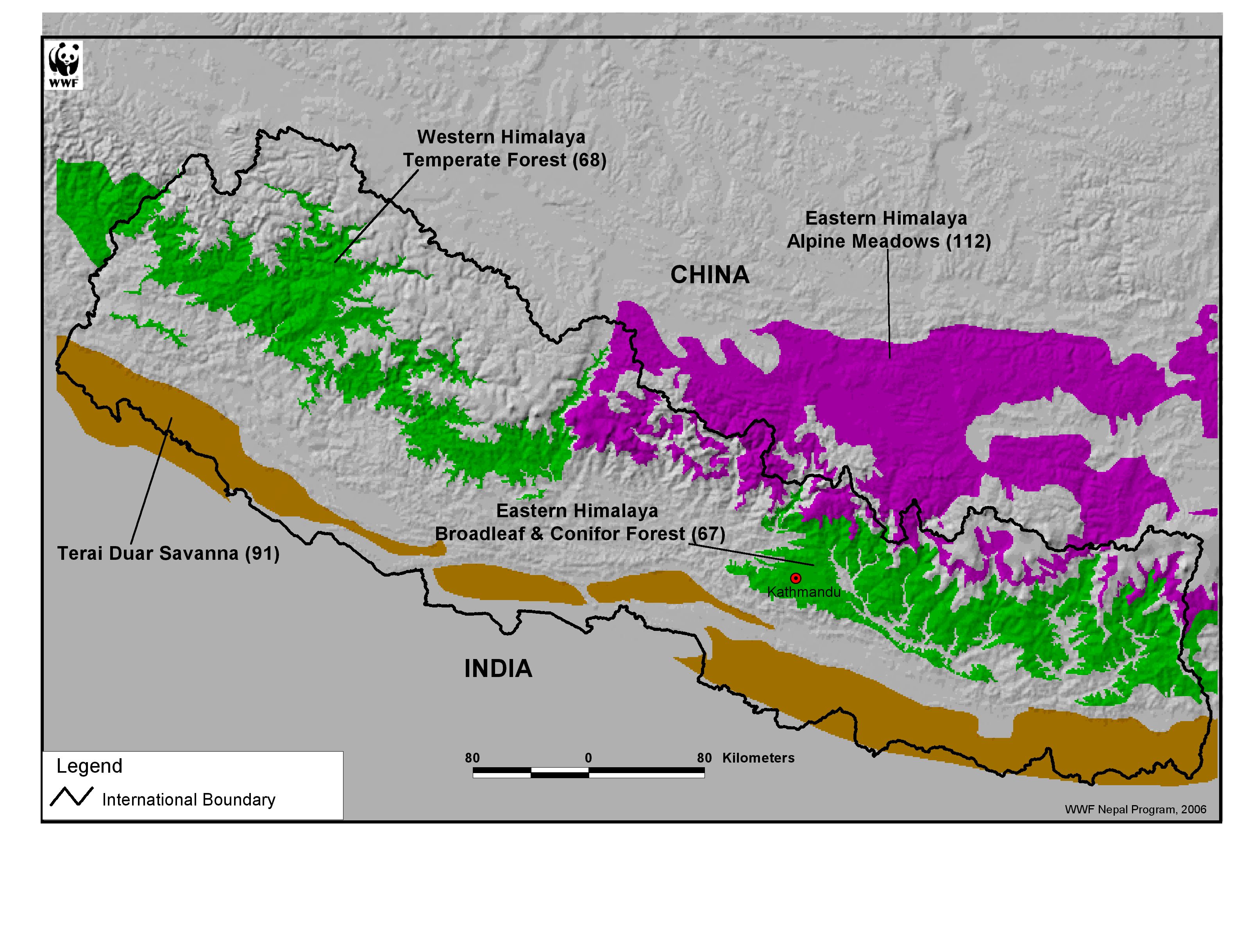
- The Eastern Himalayan Corridor[39]
- China-Russia Tiger Corridor[40]
- Tandai Tiger Corridor[41]
- The European Green Belt[42]
- The Siju-Rewak Corridor, located in the Garo Hills of India, protects an important population of elephants (thought to be approximately 20% of all the elephants that survive in the country). This corridor project links together the Siju Wildlife Sanctuary and the Rewak Reserve Forest in Meghalaya State, close to the India-Bangladesh border. This area lies within the meeting place of the Himalayan Mountain Range and the Indian Peninsula and contains at least 139 other species of mammals, including tigers, clouded leopards and the Himalayan black bear.[43]
- The Ecologische hoofdstructuur is a network of corridors and habitats created for wildlife in the Netherlands[44]
- The 16 kilometres (9.9 mi) long Kanha-Pench elevated corridor on NH 44.[45]
- Two elephant passes and two minor bridges on NH 54 in Assam's Lumding Reserve Forest.[46][47]
- Three elephant underpasses, each with 6 metres (20 ft) of vertical clearance on NH 72 and NH 58 in Uttarakhand, India.[48]
- Terai Arc Landscapes, Lower Himalayan Region.[49]
Evaluation
[edit]Some species are more likely to utilize habitat corridors depending on migration and mating patterns, making it essential that corridor design is targeted towards a specific species.[50][51]
Due to space constraints, buffers are not usually implemented.[8] Without a buffer zone, corridors can become affected by disturbances from human land use change. There is a possibility that corridors could aid in the spread of invasive species, threatening native populations.[52]
See also
[edit]


- Colored walls or corridors
- Aquatic organism passage
- Emerald network
- Wildlife crossing, green crossing
- Area and links
Further reading
[edit]- Beier, Paul; Noss, Reed F. (December 1998). "Do Habitat Corridors Provide Connectivity?". Conservation Biology. 12 (6): 1241–1252. Bibcode:1998ConBi..12.1241B. doi:10.1111/j.1523-1739.1998.98036.x. S2CID 16770640.
- Bennett, A.F. 1999. Linkages in the Landscape: The Role of Corridors and Connectivity in Wildlife Conservation. The World Conservation Union, Gland, Switzerland.
- De Chant, T. 2007. A Future of Conservation. Northfield Habitat Corridors Community Plan, Northfield, Minnesota.[53]
- Department of Environment and Conservation (DEC). 2004. Wildlife Corridors. DEC, New South Wales.
- Dole, J.W., Ng, S.J., Sauvajot, R.M. 2003. Use of Highway Undercrossings by Wildlife in Southern California. Biology Conservation, 115 (3):499-507.[32]
- Foreman, Dave. Rewilding North America: a Vision for Conservation in the 21st Century. Washington: Island, 2004.
- Fleury, A.M.; Brown, R.D. (1997). "A Framework for the Design of Wildlife Conservation Corridors with Specific Application to Southwestern Ontario". Landscape and Urban Planning. 37 (8): 163–186. Bibcode:1997LUrbP..37..163F. doi:10.1016/S0169-2046(97)80002-3. hdl:10214/4617.
- M., S. 2002. Ecology: Insects, Pollen, Seeds, Travel Wildlife Corridors. Science News, 162 (10):269.
- Mech, S.G.; Hallett, J.G. (2001). "Evaluating the Effectiveness of Corridors: a Genetic Approach". Conservation Biology. 15 (2): 467–474. Bibcode:2001ConBi..15..467M. doi:10.1046/j.1523-1739.2001.015002467.x. S2CID 84520743.
- Roach, J. 2006. First Evidence that Wildlife Corridors Boost Biodiversity, Study Says. National Geographic Society, Washington, D.C.[54]
- Rosenberg, D.K.; Noon, B.R.; Meslow, E.C. (1997). "Biological Corridors: Form, Function, and Efficacy". BioScience. 47 (10): 667–687. doi:10.2307/1313208. JSTOR 1313208.
- Simberloff, D.; Farr, J.A.; Cox, J.; Mehlman, D.W. (1992). "Movement Corridors: Conservation Bargains or Poor Investments?". Conservation Biology. 6 (4): 492–504. Bibcode:1992ConBi...6..493S. doi:10.1046/j.1523-1739.1992.06040493.x.
- Sutcliffe, O.L.; Thomas, C.D. (1996). "Open Corridors Appear to Facilitate Dispersal by Ringlet Butterflies (Aphantopus hyperantus) between Woodland Clearings". Conservation Biology. 10 (5): 1359–1365. Bibcode:1996ConBi..10.1359S. doi:10.1046/j.1523-1739.1996.10051359.x.
- Tewksbury, J.J.; Levey, D.J.; Haddad, N.M.; Sargent, S.; Orrock, J.L.; Weldon, A.; Danielson, B.J.; Brinkerhoff, J.; Damschen, E.I.; Townsend, P. (2002). "Corridors Affect Plants, Animals, and Their Interactions in Fragmented Landscapes". PNAS. 99 (20): 12923–12926. Bibcode:2002PNAS...9912923T. doi:10.1073/pnas.202242699. PMC 130561. PMID 12239344.
References
[edit]- ^ "Planning Portal – Glossary: G". Archived from the original on 1 December 2008.
- ^ Barbosa, S.; Mestre, F.; White, T. A.; Paupério, J.; Alves, P. C.; Searle, J. B. (2018). "University of Michigan Dearborn Library Catalog - Database Authentication Screen". Molecular Ecology. 27 (17): 3452–3465. Bibcode:2018MolEc..27.3452B. doi:10.1111/mec.14806. PMID 30030869. Retrieved 4 October 2024.
- ^ Bond, M. (2003). "Principles of Wildlife Corridor Design. Center for Biological Diversity" (PDF). Biologivaldiversity.org. Archived (PDF) from the original on 6 June 2022. Retrieved 11 August 2015.
- ^ Matejcek, Astrid; Verne, Julia (1 August 2021). "Restoration-as-development? Contesting Aspirational Politics Regarding the Restoration of Wildlife Corridors in the Kilombero Valley, Tanzania". The European Journal of Development Research. 33 (4): 1022–1043. doi:10.1057/s41287-021-00403-2. hdl:10419/287555. ISSN 1743-9728.
- ^ a b c d Fallon, Cait (23 August 2021). ""Tribal Wildlife Corridors Act Bolsters Wildlife Conservation on Tribal Lands"". National Wildlife Federation. Retrieved 26 October 2024.
- ^ Beier, Paul; Majka, Daniel R.; Spencer, Wayne D. (August 2008). ""Forks in the Road: Choices in Procedures for Designing Wildland Linkages"". Conservation Biology. 22 (4): 836–851. Bibcode:2008ConBi..22..836B. doi:10.1111/j.1523-1739.2008.00942.x. ISSN 0888-8892. PMID 18544090.
- ^ Barbosa, Soraia; Mestre, Frederico; White, Thomas A.; Paupério, Joana; Alves, Paulo C.; Searle, Jeremy B. (September 2018). ""Integrative approaches to guide conservation decisions: Using genomics to define conservation units and functional corridors"". Molecular Ecology. 27 (17): 3452–3465. Bibcode:2018MolEc..27.3452B. doi:10.1111/mec.14806. ISSN 0962-1083. PMID 30030869.
- ^ a b Rosenberg, Daniel K.; Noon, Barry R.; Meslow, E. Charles (1995). "Towards a definition of wildlife corridor". Integrating People and Wildlife for a Sustainable Future: 436–9. Archived from the original on 31 March 2022. Retrieved 14 September 2018.
- ^ "What is a landscape?". Archived from the original on 13 August 2020.
- ^ Tewksbury, Joshua (1 October 2002). "Corridors affect plants, animals, and their interactions in fragmented landscapes". Proceedings of the National Academy of Sciences of the United States of America. 99 (20): 12923–6. Bibcode:2002PNAS...9912923T. doi:10.1073/pnas.202242699. PMC 130561. PMID 12239344.
- ^ a b c d Fleury, Allison M.; Brown, Robert D. (1997). "A framework for the design of wildlife conservation corridors With specific application to southwestern Ontario". Landscape and Urban Planning. 37 (3–4). Elsevier: 163–186. Bibcode:1997LUrbP..37..163F. doi:10.1016/S0169-2046(97)80002-3. hdl:10214/4617. Archived from the original on 28 October 2022. Retrieved 28 October 2022.
- ^ Repayment", "Debt (30 August 2021). "The Riparian Ribbon". ArcGIS StoryMaps. Archived from the original on 20 May 2023. Retrieved 20 May 2023.
- ^ a b c d Gurney, Georgina G.; Darling, Emily S.; Ahmadia, Gabby N.; Agostini, Vera N.; Ban, Natalie C.; Blythe, Jessica; Claudet, Joachim; Epstein, Graham; Estradivari; Himes-Cornell, Amber; Jonas, Harry D.; Armitage, Derek; Campbell, Stuart J.; Cox, Courtney; Friedman, Whitney R. (26 July 2021). "Biodiversity needs every tool in the box: use OECMs". Nature. 595 (7869): 646–649. Bibcode:2021Natur.595..646G. doi:10.1038/d41586-021-02041-4. PMID 34312552.
- ^ a b c d e Brown, Nicholas Anthony (4 March 2022). "Continental Land Back: Managing Mobilities and Enacting Relationalities in Indigenous Landscapes". Mobilities. 17 (2): 252–268. doi:10.1080/17450101.2021.2012503. ISSN 1745-0101 – via Taylor & Francis Online.
- ^ Kelly, Jennifer Rebecca (October–December 2019). "A Sociocultural Perspective: Human Conflict with Jaguars and Pumas in Costa Rica". Conservation and Society. 17 (4): 355. doi:10.4103/cs.cs_17_141. ISSN 0972-4923.
- ^ a b Haq, Shiekh Marifatul; Pieroni, Andrea; Bussmann, Rainer W.; Abd-ElGawad, Ahmed M.; El-Ansary, Hosam O. (10 August 2023). "Integrating traditional ecological knowledge into habitat restoration: implications for meeting forest restoration challenges". Journal of Ethnobiology and Ethnomedicine. 19 (1): 33. doi:10.1186/s13002-023-00606-3. ISSN 1746-4269. PMC 10413632. PMID 37559120.
- ^ Gordon (Iñupiaq), Heather Sauyaq Jean; Ross, J. Ashleigh; Cheryl Bauer-Armstrong; Moreno, Maria; Byington (Choctaw), Rachel; Bowman (Lunaape/Mohican), Nicole (1 February 2023). "Integrating Indigenous Traditional Ecological Knowledge of land into land management through Indigenous-academic partnerships". Land Use Policy. 125 106469. Bibcode:2023LUPol.12506469G. doi:10.1016/j.landusepol.2022.106469. ISSN 0264-8377.
- ^ Klein, Julia A.; Hopping, Kelly A.; Yeh, Emily T.; Nyima, Yonten; Boone, Randall B.; Galvin, Kathleen A. (September 2014). "Unexpected climate impacts on the Tibetan Plateau: Local and scientific knowledge in findings of delayed summer". Global Environmental Change. 28: 141–152. Bibcode:2014GEC....28..141K. doi:10.1016/j.gloenvcha.2014.03.007.
- ^ "The Economic, Socio-Cultural, and Ecological Benefits of Indigenous Protected and Conserved Areas in British Columbia" (PDF). Yellowstone to Yukon Conservation Initiative. May 2023. Retrieved 9 December 2024.
- ^ a b Kelly, Jennifer Rebecca (December 2019). "A Sociocultural Perspective: Human Conflict with Jaguars and Pumas in Costa Rica". Conservation and Society. 17 (4): 355. doi:10.4103/cs.cs_17_141. ISSN 0972-4923.
- ^ a b Beier, P.; Loe, S. (1992). "In My Experience: A Checklist for Evaluating Impacts to Wildlife Movement Corridors". Wildlife Society Bulletin. 20 (4): 434–440.
- ^ "Wildlife, forest, and forestry. Principles of managing forests for biological diversity". Biological Conservation. 63 (3): 271. 1993. doi:10.1016/0006-3207(93)90732-g. ISSN 0006-3207.
- ^ Ng, Sandra J.; Dole, Jim W.; Sauvajot, Raymond M.; Riley, Seth P.D; Valone, Thomas J. (2004). "Use of highway undercrossings by wildlife in southern California". Biological Conservation. 115 (3): 499–507. Bibcode:2004BCons.115..499N. doi:10.1016/S0006-3207(03)00166-6. Archived from the original on 31 October 2022. Retrieved 31 October 2022.
- ^ Dixon, Jeremy D.; Oli, Madan K.; Wooten, Michael C.; Eason, Thomas H.; McCown, J. Walter; Paetkau, David (2006). "Effectiveness of a Regional Corridor in Connecting Two Florida Black Bear Populations". Conservation Biology. 20 (1): 155–162. Bibcode:2006ConBi..20..155D. doi:10.1111/j.1523-1739.2005.00292.x. ISSN 0888-8892. JSTOR 3591161. PMID 16909668. S2CID 15106420.
- ^ a b Mech, Stephen G.; Hallett, James G. (April 2001). "Evaluating the Effectiveness of Corridors: a Genetic Approach". Conservation Biology. 15 (2): 467–474. Bibcode:2001ConBi..15..467M. doi:10.1046/j.1523-1739.2001.015002467.x. ISSN 0888-8892. S2CID 84520743. Archived from the original on 13 August 2023. Retrieved 4 April 2022.
- ^ Newmark, William D. (1993). "The Role and Design of Wildlife Corridors with Examples from Tanzania". Ambio. 22 (8): 500–504. ISSN 0044-7447. JSTOR 4314138.
- ^ "Designing wildlife corridors". Sciencedaily.com. Archived from the original on 2 November 2022. Retrieved 4 August 2015.
- ^ Benitez-Malvido, Julieta; Arroyo-Rodríguez, Víctor (2008). "Habitat fragmentation, edge effects and biological corridors in tropical ecosystems". Retrieved 2 November 2022.
- ^ Maulana, Rheza (1 April 2023). "Architecture for Wildlife: The Possible Solution to Human-Wildlife Conflicts in Indonesia". IOP Conference Series: Earth and Environmental Science. 1169 (1) 012046. Bibcode:2023E&ES.1169a2046M. doi:10.1088/1755-1315/1169/1/012046.
- ^ Huijser, Marcel P.; Fairbank, Elizabeth R.; Camel-Means, Whisper; Graham, Jonathan; Watson, Vicki; Basting, Pat; Becker, Dale (1 May 2016). "Effectiveness of short sections of wildlife fencing and crossing structures along highways in reducing wildlife–vehicle collisions and providing safe crossing opportunities for large mammals". Biological Conservation. 197: 61–68. Bibcode:2016BCons.197...61H. doi:10.1016/j.biocon.2016.02.002. ISSN 0006-3207.
- ^ Dickie, Gloria (22 July 2022). "As Banff's famed wildlife overpasses turn 20, the world looks to Canada for conservation inspiration". Canadian Geographic. Retrieved 26 February 2024.
- ^ a b Ng, Sandra J; Dole, Jim W; Sauvajot, Raymond M; Riley, Seth P.D; Valone, Thomas J (20 March 2003). "Use of highway undercrossings by wildlife in southern California". Biological Conservation. 115 (3): 499–507. Bibcode:2004BCons.115..499N. doi:10.1016/S0006-3207(03)00166-6.
- ^ Susan Milius (22 October 2002). "Insects, pollen, seeds travel wildlife corridors". Science News. Archived from the original on 4 November 2022. Retrieved 4 November 2022.
- ^ Realm, Visual. "About The Corridor". Florida Wildlife Corridor Foundation. Retrieved 13 November 2024.
- ^ Aars, Jon; Ims, Rolf A. (1 July 1999). "The Effect of Habitat Corridors on Rates of Transfer and Interbreeding Between Vole Demes". Ecology. 80 (5): 1648. doi:10.1890/0012-9658(1999)080[1648:TEOHCO]2.0.CO;2. ISSN 0012-9658. Archived from the original on 4 November 2022. Retrieved 4 November 2022.
- ^ Shepherd, B; J. Whittington (2006). "Response of wolves to corridor restoration and human use management". Ecology and Society. 11 (2) art1. doi:10.5751/ES-01813-110201.
- ^ Rosenberg, Daniel K.; Noon, Barry R.; Meslow, E. Charles (November 1997). "Biological Corridors: Form, Function, and Efficacy". BioScience. 47 (10): 677–687. doi:10.2307/1313208. JSTOR 1313208.
- ^ "Paseo Pantera Project". Archived from the original on 9 November 2022. Retrieved 9 November 2022.
- ^ "Map of Nepal". Archived from the original on 12 April 2023.
- ^ "New corridor links Amur tiger habitats in Russia and China". WWF. Archived from the original on 9 November 2022. Retrieved 9 November 2022.
- ^ "Panthera". Panthera.org. Archived from the original on 22 November 2011. Retrieved 4 August 2015.
- ^ "European Green Belt Initiative". Archived from the original on 11 November 2022. Retrieved 9 November 2022.
- ^ "Siju-Rewak Corridor". CONSERVATION CORRIDOR. 2 May 2012. Archived from the original on 9 November 2022. Retrieved 9 November 2022.
- ^ Ecologische Hoofdstructuur
- ^ Gandhi, Divya (7 September 2019). "A wild, wild road". The Hindu. ISSN 0971-751X. Archived from the original on 9 November 2022. Retrieved 17 September 2020.
- ^ "Why This Elevated Stretch On National Highway 44 Is A Hit With Animals In Pench Tiger Reserve". India Infra Hub. 25 February 2020. Archived from the original on 9 November 2022. Retrieved 17 September 2020.
- ^ Singh A.P.; Singh A.K.; Mishra D.K.; Bora P.; Sharma A. (2010). Ensuring safe access to wildlife in Lumding Reserve Forest, Assam, India, Mitigating the impacts of up-gradation of Doboka-Silchar National Highway (NH54E) (PDF). WWF-India. Archived (PDF) from the original on 15 December 2021. Retrieved 17 September 2020.
- ^ Azad, Shivani (18 January 2019). "Elephant underpass in Rajaji hanging for 9 yrs, NGT orders NHAI to deposit Rs 2 cr". The Times of India. Archived from the original on 9 November 2022. Retrieved 9 November 2022.
- ^ Chauhan, Priya (1 April 2021). "26 Important Wildlife Corridors Providing Safe Passage to Species". Planet Custodian. Archived from the original on 23 April 2021. Retrieved 23 April 2021.
- ^ Fran. "Elephant corridors in Botswana to protect the herds". Your African Safari. Archived from the original on 4 November 2022. Retrieved 4 August 2015.
- ^ Green, Siân E.; Davidson, Zeke; Kaaria, Timothy; Doncaster, C. Patrick (December 2018). "Do wildlife corridors link or extend habitat? Insights from elephant use of a Kenyan wildlife corridor". African Journal of Ecology. 56 (4): 860–871. Bibcode:2018AfJEc..56..860G. doi:10.1111/aje.12541.
- ^ Beier, Paul; Noss, Reed F. (December 1998). "Do Habitat Corridors Provide Connectivity?". Conservation Biology. 12 (6): 1241–1252. Bibcode:1998ConBi..12.1241B. doi:10.1111/j.1523-1739.1998.98036.x. S2CID 16770640. Archived from the original on 13 August 2023. Retrieved 14 May 2022.
- ^ "Northfield Habitat Corridors". De-chant.com. Archived from the original on 3 August 2007. Retrieved 11 August 2015.
- ^ "First Evidence That Wildlife Corridors Boost Biodiversity, Study Says". News.nationalgeographic.com. 28 October 2010. Archived from the original on 21 February 2015. Retrieved 11 August 2015.
External links
[edit]
- Defragmentation in Belgium (Flanders) - Connecting nature, connecting people. Accessed: 22 January 2009
- Wildlife Corridors Project Regeneration
- Wildlife passages - De-Fragmentation in the Netherlands - How to evaluate their effectiveness? Accessed: 22 January 2009
- CorridorDesign.org - GIS tools for designing wildlife corridors Accessed: 9 March 2010
- ConservationCorridor.org - information, tools and links to connect the science of landscape corridors to conservation in practice. Accessed: 14 September 2012
| International | |
|---|---|
| National | |
| Other | |


Wildlife corridor
View on GrokipediaFundamentals
Definition and Core Concepts
A wildlife corridor consists of linear habitat features that link otherwise isolated patches of natural habitat, enabling the movement of animals, plants, and other organisms between them. These connections counteract the isolating effects of habitat fragmentation caused by human activities, such as road construction, urbanization, and agriculture, which divide continuous landscapes into discrete remnants. By facilitating dispersal, foraging, and migration, corridors support essential ecological processes including gene flow and recolonization of vacant habitats.[1][9][7] Habitat connectivity forms the foundational concept, referring to the degree to which landscape elements permit or impede species movement and interaction across fragmented areas. Fragmentation reduces population sizes, elevates inbreeding risks, and heightens vulnerability to stochastic events, potentially leading to local extinctions. Corridors address this by maintaining functional linkages that preserve metapopulation dynamics, where subpopulations exchange individuals to sustain overall viability. Theoretical underpinnings draw from island biogeography and landscape ecology, positing that connected habitats enhance species persistence compared to isolated ones.[10][11][12] Core principles emphasize that corridors must align with species' perceptual ranges, movement behaviors, and habitat requirements to be effective, rather than merely providing structural continuity. Natural corridors, like riverine strips, often serve multiple species, while artificial ones, such as culverts or fencing-guided paths, target specific barriers. While models demonstrate corridors' role in bolstering genetic resilience irrespective of certain traits, real-world efficacy varies with landscape resistance and predator avoidance, underscoring the need for site-specific assessment over generalized assumptions. Potential drawbacks, including amplified edge effects or pathogen transmission, highlight that corridors do not universally benefit all taxa without targeted design.[13][3][5]Historical Development
The concept of wildlife corridors emerged from foundational ecological theories addressing habitat fragmentation and population dynamics in the mid-20th century. Metapopulation theory, introduced by Richard Levins in 1969, demonstrated that isolated habitat patches require dispersal corridors to prevent local extinctions and sustain regional populations through recolonization. Complementing this, the 1967 theory of island biogeography by Robert H. MacArthur and E.O. Wilson quantified how isolation reduces species richness, implying that linkages between "islands" of habitat could enhance persistence by facilitating immigration and gene flow. These models shifted conservation thinking from static reserves to dynamic connectivity, though initial applications focused on theoretical simulations rather than engineered structures.[14][15] Landscape ecology advanced the corridor paradigm in the 1980s, integrating it into spatial models of heterogeneous environments. Richard T.T. Forman and Michel Godron's 1986 book Landscape Ecology proposed the patch-corridor-matrix framework, viewing landscapes as mosaics where corridors—linear features like rivers or strips of vegetation—connect discrete habitat patches amid a less permeable matrix, thereby directing species movements and ecological fluxes. Early field studies validated this by examining de facto corridors, such as fencerows and roadside verges, which supported arthropod and bird dispersal in fragmented agricultural landscapes, though effects varied by width, vegetation quality, and matrix hostility. Experimental tests, including habitat patch arrays at sites like the Savannah River Ecology Laboratory in the 1980s and 1990s, provided empirical evidence that corridors boosted insect and small mammal movements between patches, countering isolation's genetic and demographic risks.[16][17][18] By the 1990s, theoretical insights translated into practical designs, particularly wildlife crossing structures to mitigate road barriers. One early U.S. example was a 15-centimeter-wide ecoduct tunnel built in Davis, California, in 1995, enabling small mammals like rodents to traverse highways and reducing roadkill. International precedents included ungulate underpasses in Europe dating to the 1970s, but systematic U.S. policy traction grew in the 2000s; the Western Governors' Association's 2007 resolution marked the first major call to map and safeguard corridors across western states, prioritizing migration routes for species like pronghorn. Regional initiatives, such as the Florida Wildlife Corridor launched in 2010 by conservation planners, further institutionalized corridor planning through GIS-based mapping of historical connectivity. These developments reflected growing recognition of anthropogenic fragmentation's scale, with over 1,000 documented crossings worldwide by the 2010s, though long-term efficacy depended on site-specific monitoring.[19][20][21]Ecological Foundations
Theoretical Basis
Habitat fragmentation, resulting from human activities such as urbanization and agriculture, isolates wildlife populations into discrete patches, elevating extinction risks through reduced dispersal and increased edge effects.[22] The theoretical rationale for wildlife corridors addresses this by promoting landscape connectivity, drawing from foundational ecological models that emphasize movement between patches for population viability.[14] Central to this framework is the theory of island biogeography, formulated by Robert MacArthur and E.O. Wilson in 1967, which models species richness on isolated habitats as an equilibrium between immigration rates—higher for larger, closer patches—and extinction rates, which rise with isolation and small size.[22] In terrestrial contexts, fragmented habitats mimic oceanic islands, where barriers like roads or cleared land suppress immigration, leading to biodiversity loss; corridors theoretically function as "bridges" to elevate immigration and stabilize communities.[23] This theory underscores that connectivity counters the deterministic decline predicted for isolated patches, particularly for species with low dispersal abilities.[14] Complementing this is metapopulation theory, introduced by Richard Levins in 1969, which views species persistence as dependent on a network of local populations in habitat patches, sustained by dispersal that recolonizes sites following stochastic extinctions.[22] Corridors enable such migration, transforming vulnerable, independent subpopulations into a resilient metapopulation by facilitating rescue effects and averting total collapse from local failures.[23] Models within this paradigm, such as stochastic patch occupancy models, predict higher occupancy rates in connected systems, assuming dispersal success correlates with corridor quality and patch configuration.[24] These theories also extend to genetic processes, where corridors promote gene flow to counteract inbreeding depression and genetic drift in small, isolated populations, as evidenced by agent-based simulations showing enhanced allelic diversity and adaptive potential in connected landscapes.[3] Circuit theory applications further quantify this by modeling gene flow as electrical current through resistive landscapes, identifying corridors that minimize barriers to effective dispersal.[25] Collectively, these principles posit that corridors restore natural connectivity dynamics disrupted by fragmentation, though their efficacy hinges on species-specific traits like mobility and habitat fidelity.[26]Anticipated Benefits
Wildlife corridors are anticipated to restore connectivity in fragmented landscapes, enabling animal dispersal and migration between isolated habitat patches, which counters the isolating effects of habitat loss and barriers such as roads or urban development.[3] This connectivity is expected to facilitate access to resources like food and mates, reducing the risks of local extirpation in small populations by allowing individuals to traverse suboptimal habitats.[27] Theoretical models predict that such linkages promote metapopulation persistence, where corridors support recolonization of patches following stochastic extinctions, thereby stabilizing overall population dynamics.[28] A primary anticipated benefit involves enhanced gene flow, as corridors are theorized to increase the exchange of genetic material between subpopulations, mitigating inbreeding depression and genetic drift that erode diversity in isolated groups.[29] Agent-based simulations indicate that this gene flow can elevate effective population sizes and genetic resilience across species with varying dispersal abilities, from sedentary plants to mobile vertebrates, fostering adaptability to environmental changes.[3] Population viability analyses further suggest that sustained gene flow via corridors could prevent the accumulation of deleterious alleles, supporting long-term species survival even in human-modified landscapes.[30] Corridors are also expected to bolster biodiversity by augmenting species richness and abundance through increased movement and habitat linkage.[27] Ecological theory posits that these structures maintain key processes like predator-prey interactions and pollination by enabling transient use as refugia or foraging routes, potentially amplifying ecosystem functions in connected patches compared to isolated ones.[31] For instance, in fragmented forests, corridors are anticipated to reduce edge effects and invasion by non-native species by channeling native biota flows, preserving native community compositions.[32]Structural Variations
Types of Corridors
Wildlife corridors are classified primarily by their origin, structural continuity, and spatial scale, with these categories often overlapping in practice. Natural corridors arise from existing landscape features without human engineering, such as riparian zones along waterways or linear forest remnants that historically connected larger habitats.[33] These provide baseline connectivity but may degrade due to ongoing fragmentation from agriculture or urbanization.[2] In contrast, artificial or man-made corridors are purposefully constructed to restore or enhance linkages across barriers like roads and railways; examples include vegetated overpasses spanning highways, allowing species such as deer or bears to cross safely, as documented in structures built since the 1990s in North America and Europe.[33][18] By structural continuity, corridors divide into continuous linear types—unbroken strips of suitable habitat, such as extended hedgerows or riverine belts that enable sustained movement—and stepping-stone types, which consist of isolated habitat patches (e.g., small woodlots or wetlands) separated by matrix land uses, necessitating repeated dispersal events across less hospitable areas.[34] Continuous forms better support wide-ranging species requiring direct travel, while stepping-stones may suffice for habitat-generalists but risk higher mortality from edge effects or predation in gaps.[35] Spatial scale further delineates types based on width and scope: regional corridors exceed 500 meters in width, linking major biomes or migration routes for diverse taxa, as seen in large protected linkages like those proposed for the Yellowstone to Yukon region.[36] Sub-regional corridors, 300–500 meters wide, connect intermediate landscape elements such as valley floors to ridgelines, facilitating gene flow among subpopulations.[36] Local corridors, under 300 meters (often 50 meters or narrower), handle fine-scale connections like those between adjacent patches or across minor infrastructure, though their limited breadth restricts use by larger animals.[36] Empirical designs often integrate these scales, prioritizing wider corridors for permanence, as narrower ones exhibit higher abandonment rates in long-term monitoring.[2]Design and Implementation Principles
Design principles for wildlife corridors prioritize functional connectivity between fragmented habitat patches, guided by species-specific dispersal behaviors and landscape resistance models such as least-cost path analysis to identify linkage zones with minimal barriers to movement.[37] Corridors are hypothesized to enhance genetic exchange and population resilience, though empirical validation requires site-specific monitoring due to variable effectiveness influenced by matrix quality and species traits.[38] Key factors include selecting umbrella species whose requirements encompass those of co-occurring taxa, assessing habitat suitability for cover, forage, and water, and ensuring corridors embed within a permeable matrix to avoid isolation.[2] Habitat quality within corridors must approximate that of core areas to support sustained use, with restoration of native vegetation essential to provide structural complexity and reduce predation risks at edges.[15] Width is critical to mitigate edge effects from invasive species or human disturbance; minimum recommendations range from 300 meters for general use to over 1,000 feet (approximately 305 meters) for large mammals, with wider spans preferred to accommodate behavioral avoidance of narrow strips.[2][6] Length should be minimized to lower mortality risks during transit, while curvature can mimic natural contours to ease navigation for orienting species.[39] Location favors low-resistance paths avoiding steep topography or high-development zones, informed by GIS mapping of threats like roads.[37] Implementation involves engineering features to overcome linear barriers, such as wildlife overpasses spanning 30-50 meters in width for effective crossing by diverse taxa or underpasses with natural substrates and adjacent fencing exceeding 1.8 meters to guide animals without trapping.[15] Fencing directs movement toward structures while excluding domestic predators, and speed reductions on adjacent roads reduce collision risks.[40] Legal mechanisms like conservation easements secure private lands, prohibiting incompatible uses such as intensive agriculture or lighting that disrupts nocturnal species.[2] Adaptive management integrates ongoing monitoring—via camera traps or track counts—to evaluate usage and adjust designs, ensuring financial endowments support long-term maintenance.[37] Stakeholder engagement, including public input and threat mitigation prioritization, underpins sustainable execution at landscape scales.[37]Empirical Assessments
Monitoring Techniques
Camera and video monitoring represents a primary non-invasive technique for assessing wildlife corridor usage, deploying motion- or heat-activated devices at crossing structures, entry/exit points, or along paths to capture species identity, crossing frequency, and behavioral patterns. These systems quantify relative movement rates and detect both successful passages and failed attempts, with studies of North American overpasses recording daily crossing rates of 1.6 animals (SE=0.4) for 40–60 m wide structures versus 0.7 (SE=0.4) for narrower ones, alongside greater species diversity in wider designs.[6][41] Limitations include detection range constraints (typically 10–20 m) and higher equipment costs, though advancements in remote setups enable long-term deployment spanning hundreds to thousands of monitoring days.[41] Radio telemetry, utilizing VHF or GPS collars affixed to target animals, tracks individual movements to evaluate corridor permeability and changes in home range connectivity before and after implementation. This approach delineates precise pathways, dispersal events, and barrier effects, as demonstrated in Banff National Park evaluations showing altered movement post-crossing structure installation, but demands animal capture, specialized skills, permits, and substantial funding.[41] Tracking surveys, such as snow tracking, artificial tracking beds, or track plates, record footprints to estimate relative density and crossing events, particularly for mammals in temperate regions. These low-cost methods have documented usage in culverts and overpasses, though they cannot distinguish individuals and are susceptible to weather erasure or human disturbance.[41] Genetic monitoring via DNA assignment testing analyzes non-invasively collected samples like hair from snares or scat to identify individuals and measure gene flow across corridors, revealing population-level connectivity as in grizzly bear dispersal studies. While effective for elusive species, it incurs high laboratory expenses and requires expertise in genotyping.[41] Vehicle collision monitoring, tracking road-kill incidents pre- and post-corridor development while controlling for traffic volume, indirectly gauges barrier mitigation success, with significant reductions signaling enhanced habitat linkage.[41] Rigorous designs like before-after-control-impact (BACI) frameworks, combined with multi-year efforts often exceeding a decade, are essential for detecting population and ecosystem responses beyond immediate usage metrics.[41]Evidence of Effectiveness
A meta-analytic review of 78 studies published up to 2008 found that habitat corridors increase movement rates of organisms between fragmented patches by approximately 50%, with effect sizes varying by taxa: strongest for invertebrates (Hedges' g = 1.1), non-avian vertebrates (g = 0.7), and plants (g = 0.6), and weaker for birds (g = 0.2). This analysis included both experimental and observational data across ecosystems, indicating corridors reliably enhance dispersal despite landscape context differences.[42] Subsequent syntheses affirm these findings but highlight nuances in outcomes beyond movement. A 2019 meta-analysis of experiments from 1985–2018 across 20 studies showed corridors consistently boost inter-patch movement (overall effect size >0), particularly for arthropods and vertebrates, though less so for abundance or species richness in some cases; natural corridors outperformed artificial ones, suggesting design and context influence broader ecological benefits like gene flow and population persistence.[43] Genetic analyses of wildlife crossing structures, such as overpasses and underpasses, provide direct evidence of facilitated connectivity: in one study of multiple species, DNA-based assignment tests confirmed higher gene flow across barriers where structures were present, reducing isolation in fragmented populations.[44]Road-integrated corridors demonstrably mitigate wildlife-vehicle collisions (WVCs). In Banff National Park, Alberta, over 50 overpasses and underpasses constructed since 1981 along the Trans-Canada Highway, combined with fencing, reduced total WVCs by over 80% and ungulate mortality by nearly 90% from pre-construction baselines, based on 30+ years of monitoring data; grizzly bears and elk showed marked increases in successful crossings, supporting demographic connectivity.[45][46] Similar results occur elsewhere: paired fencing and structures yield ~86% WVC reductions in meta-assessed cases, with wider overpasses (~50 m) accommodating diverse taxa more effectively than narrower designs.[6] For large carnivores, corridors have aided recovery. Florida panther (Puma concolor coryi) populations, bolstered by underpasses under highways like Alligator Alley since the 1990s, expanded from ~20–30 individuals in 1995 to over 230 by 2023, with documented dispersals across former barriers enabling gene flow and reduced inbreeding; underpasses specifically lowered strike rates, a primary mortality factor.[47] These outcomes underscore corridors' role in countering fragmentation, though long-term persistence requires complementary habitat protection.[48]