Hubbry Logo
Greig FraserGreig FraserMain
Open search
Greig Fraser
Community hub
Greig Fraser
logo
8 pages, 0 posts
0 subscribers
Be the first to start a discussion here.
Greig Fraser
Greig Fraser
from Wikipedia

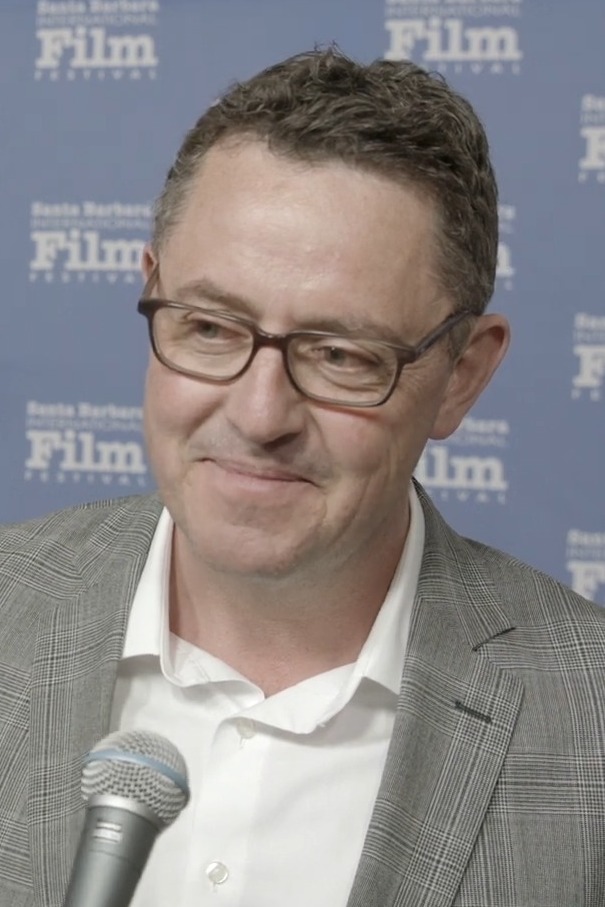
Greig Fraser is an Australian cinematographer.

Key Information

He received the Academy Award for Best Cinematography for Dune (2021) and two other nominations for Lion (2016) and Dune: Part Two (2024). He is also known for Zero Dark Thirty (2012), Rogue One (2016), The Batman (2022), and The Creator (2023).

Early life and education

[edit]

Greig Fraser graduated from Luther College in Croydon Hills in 1993.[1] He studied at the RMIT University in Melbourne. Despite forming an interest in photography at an early age, Fraser discovered that videography was perhaps a medium he felt more passion for as he started harnessing his skills along with his first feature documentary as Cinematographer, P.I.N.S., which released in 2000.[2][3]

Career

[edit]

For his short film Cracker Bag he was nominated for Best Cinematography at the 2003 AFI Awards.[4]

For his work on Lion,[5] he won the American Society of Cinematographers Award for Outstanding Achievement in Cinematography in Theatrical Releases and AACTA Award for Best Cinematography and received Academy Award and BAFTA Award nominations.

Fraser shot Rogue One on the Arri Alexa 65 large format digital camera and Panavision lenses from the 1970s, making it the first feature film shot entirely with the Alexa 65. Fraser said of working with the Alexa 65, "The images are sharper and have more resolution, and those things are an advantage, but for me it is about the depth of the image -- there is a three-dimensionality to it. Often the beauty came from the texture; we found that the camera excelled when we were filming something with texture; it really enhanced the quality of picture."[6]

Fraser returned to the Star Wars franchise with the 2019 television series The Mandalorian. In 2020, for his work on the series, Fraser won the Primetime Emmy Award for Outstanding Cinematography for a Single-Camera Series (Half-Hour).

For his work on Dune he won his first Academy Award for Best Cinematography in 2022. Fraser said a feature of his work in that film was intentionally using simple compositions, "We tried to simplify the frames as much as we could. By doing that, we've been able to give the viewers that absorption of story and experience" and colour palette: "We tried quite hard to make sure that it all sat within a certain tone."[7][8]

Personal life

[edit]

Fraser met costume designer Jodie Fried in Sydney in 2004, while they were working on a short film. After moving to the United States in 2008, they were married in a helicopter above Las Vegas. They live in Los Angeles with their three children.[9]

Critical reception

[edit]

Film critic Glenn Kenny has praised Fraser's work in The Batman and Dune, saying they were a "sort of stunning magic trick": "There's both a gauziness and a heft to his imagery. His use of shadow and silhouette is masterful, and does so much to convey a sense of foreboding and tension."[10] Fellow cinematographer and Academy Award winner Roger Deakins praised Fraser's work on The Batman as "extraordinary", and called Fraser's and the film's omission from being nominated in the category at the 95th Academy Awards due to the Academy's tendency to avoid superhero films "snobbery."[11]

Critic Susan Wloszczyna praised his work on Lion, saying it was "visually poetic".[12]

Filmography

[edit]

Feature film

[edit]
Key
Denotes films that have not yet been released
Year Title Director Notes
2005 Jewboy Tony Krawitz
2006 The Caterpillar Wish Sandra Sciberras
Out of the Blue Robert Sarkies
2009 Bright Star Jane Campion
Last Ride Glendyn Ivin
The Boys Are Back Scott Hicks
2010 Let Me In Matt Reeves
2012 Killing Them Softly Andrew Dominik
Snow White and the Huntsman Rupert Sanders
Zero Dark Thirty Kathryn Bigelow
2014 Foxcatcher Bennett Miller
The Gambler Rupert Wyatt
2016 Lion Garth Davis
Rogue One Gareth Edwards
2018 Mary Magdalene Garth Davis
Vice Adam McKay
2021 Dune Denis Villeneuve
2022 The Batman Matt Reeves
2023 The Creator Gareth Edwards With Oren Soffer;
Also credited as co-producer
2024 Dune: Part Two Denis Villeneuve
2026 Project Hail Mary Phil Lord
Christopher Miller
Post-production

Short film

[edit]
Year Title Director Notes
2005 Lucky Nash Edgerton
Stranded Stuart McDonald
2006 Love This Time Rhys Graham
The Water Diary Jane Campion Segment of 8
2007 The Lady Bug Segment of To Each His Own Cinema
Crossbow David Michôd
Spider Nash Edgerton
2008 Netherland Dwarf David Michôd
Theo huong den ma di (The Fading Light) Thien Do
2009 The Life Rupert Sanders
2011 Scenes from the Suburbs Spike Jonze
2013 Greatness Awaits Rupert Sanders

Television

[edit]
Year Title Director Episodes Ref.
2019 The Mandalorian Dave Filoni
Deborah Chow
"Chapter 1: The Mandalorian"
"Chapter 3: The Sin"
"Chapter 7: The Reckoning" (With Baz Idoine);
Also credited as co-producer on season 1
[13]

Awards and nominations

[edit]
Year Association Category Title Result Ref.
2016 Academy Awards Best Cinematography Lion Nominated [14]
2021 Dune Won [15]
2024 Dune: Part Two Nominated [16]
2016 BAFTA Awards Best Cinematography Lion Nominated
2021 Dune Won
2022 The Batman Nominated
2016 American Society of Cinematographers Outstanding Achievement in Cinematography Lion Won
2021 Dune Won
2022 The Batman Nominated
2024 Dune: Part Two Nominated

Other awards

Year Award Category Title Result
2009 Chicago Film Critics Association Best Cinematography Bright Star Nominated
2012 New York Film Critics Circle Best Cinematographer Zero Dark Thirty Won
Chicago Film Critics Association Best Cinematography Nominated
National Society of Film Critics Best Cinematography Nominated
Washington D.C. Area Film Critics Association Best Cinematography Nominated
2016 AACTA Awards Best Cinematography Lion Won
2021 Dallas–Fort Worth Film Critics Association Best Cinematography Dune Won
Houston Film Critics Society Awards Best Cinematography Won
San Diego Film Critics Society Best Cinematography Won
Satellite Awards Best Cinematography Won
Washington D.C. Area Film Critics Association Best Cinematography Won
Chicago Film Critics Association Best Cinematography Nominated
Florida Film Critics Circle Best Cinematography Nominated
Los Angeles Film Critics Association Best Cinematography Nominated
San Francisco Bay Area Film Critics Circle Best Cinematography Nominated
St. Louis Gateway Film Critics Association Best Cinematography Nominated
Critics Choice Association Best Cinematography Nominated
2022 British Society of Cinematographers Best Cinematography The Batman Nominated
Dallas–Fort Worth Film Critics Association Best Cinematography Nominated
St. Louis Gateway Film Critics Association Best Cinematography Nominated
2023 Seattle Film Critics Society Best Cinematography (Shared with Oren Soffer) The Creator Nominated

References

[edit]
[edit]
Revisions and contributorsEdit on WikipediaRead on Wikipedia
from Grokipedia
Greig Fraser (born 3 October 1975) is an Australian cinematographer renowned for his visually striking work on major feature films, most notably (2021), for which he won the . Born in , Victoria, Fraser developed an early interest in through high school studies in photography and media, later attending the Royal Melbourne Institute of Technology (RMIT University), where he initially struggled but eventually resumed his education. Fraser began his professional career as a stills photographer and studio cleaner before transitioning to in the early , starting with the Melbourne-based production company Exit Films on award-winning TV commercials, music videos, and the documentary P.I.N.S. (2001). He went freelance in 2002, quickly gaining recognition with short films like Crackerbag (2003), which earned a at and an Australian Film Institute nomination for Best Cinematography. His breakthrough in narrative features came with collaborations on films such as Bright Star (2009) directed by and (2012) directed by . Among his most acclaimed projects are (2016), (2016)—for which he received Academy Award, BAFTA, and ASC nominations—and The Batman (2022), alongside television work like (2019–present). Fraser's cinematography often emphasizes immersive environments and innovative , as seen in the epic desert vistas of and its sequel Dune: Part Two (2024), contributing to his status as one of the industry's leading visual storytellers. He holds memberships in the (ASC) and Australian Cinematographers Society (ACS), and continues to earn accolades, including the 2025 AACTA Award for his contributions to the screen industry.

Early years

Early life

Greig Fraser was born on 3 October 1975 in , Victoria, . Fraser developed an early interest in during his high school years, where he studied and media, fostering a passion for through images. He attended Luther College in Croydon Hills, graduating in 1993. This formative period laid the groundwork for his later pursuit of formal training in .

Education

Fraser enrolled at RMIT University in , where he pursued a in , honing his foundational skills in visual storytelling. After struggling in his first year and failing classes due to missing attendance, he took a year off before resuming his studies. During his time at RMIT, he developed expertise in both still photography and through hands-on university projects, often borrowing 16mm and 35mm film equipment to collaborate with emerging directors on short films. This practical experience allowed him to transition from solo photographic work to the collaborative demands of , building a portfolio that bridged his academic training with professional aspirations. Building on an early personal interest in from high school, Fraser's university projects emphasized experimental techniques in lighting and composition, preparing him for documentary-style . Fraser graduated from RMIT in 1999.

Professional career

Early career

After establishing himself as a still , Greig Fraser transitioned to in the early 2000s by joining the Melbourne-based Exit Films, where he contributed to commercials and began exploring motion picture work. This shift allowed him to apply his photographic skills to collaborative environments, marking the start of his professional career in the Australian industry. Fraser's initial projects focused on documentaries and short films, building his technical foundation. His debut in feature-length documentary cinematography came with P.I.N.S. (2000), directed by , which profiled the personal lives of three parking inspectors and premiered at the . This work highlighted his ability to capture intimate, observational narratives on a modest budget using mini-DV format. In 2003, Fraser received his first Australian Film Institute (AFI) nomination for Best Cinematography in a Non-Feature Film for the short Cracker Bag, a coming-of-age story about a girl's anticipation of a fireworks celebration, directed by Glendyn Ivin. Building on this recognition, he won the AFI Award for Best Cinematography in 2005 for Jewboy, a drama examining within Sydney's Hasidic Jewish community, directed by Tony Krawitz; the film's stark, introspective visuals earned praise for their emotional depth. Fraser solidified his standing in the Australian independent scene through contributions to features like Last Ride (2009), a tense father-son road drama set in the and directed by Glendyn Ivin, where his emphasized the harsh, expansive landscapes to underscore themes of isolation and redemption. These projects, often low-budget and character-driven, honed his reputation for naturalistic lighting and composition, paving the way for international opportunities while remaining rooted in Australian storytelling.

Breakthrough works

Fraser's breakthrough into high-profile international cinema began with his collaboration with director on Bright Star (2009), a biographical romantic drama depicting the love affair between poet and . His captured the Regency-era setting through painterly visuals, emphasizing natural light, sun-dappled landscapes, and intimate close-ups that evoked sensory longing and emotional intimacy, aligning with Campion's vision of a film experienced through the senses. This work led to further opportunities in U.S. productions, notably his role on Kathryn Bigelow's (2012), a thriller chronicling the hunt for . Fraser handled the film's intense action sequences, particularly the climactic night raid, by employing night-vision aesthetics with infrared lighting and low-output sources to mimic a moonless night, while adopting a documentary-style realism in interiors through practical lighting and scaled sets that constrained artificial illumination. His approach supported Bigelow's procedural narrative, blending precision with on-set adaptability to heighten tension and authenticity. Fraser's growing international profile culminated in his cinematography for Lion (2016), directed by Garth Davis, which followed an Indian man's search for his family after being adopted in . The film earned Fraser his first Academy Award nomination for Best at the 89th Oscars, recognizing his evocative portrayal of contrasting environments—from the vibrant chaos of to the subdued Australian suburbs—using subtle and child-level perspectives to convey emotional displacement. In the mid-2010s, Fraser continued building credits across U.S. and U.K. productions, including Foxcatcher (2014) and The Gambler (2014) in the U.S., and Lion co-produced with the U.K. His work on Adam McKay's Vice (2018) marked early experiments with digital lighting tools, such as LED fixtures from Digital Sputnik and LiteGear, to achieve flexible color control and soft ambient effects across the film's satirical span of decades, complementing a mix of film formats for varied period tones. These projects solidified his transition from Australian roots to a versatile presence in Anglo-American cinema during the 2010s.

Major collaborations and recent projects

Fraser's collaboration with director Gareth Edwards on Rogue One: A Star Wars Story (2016) marked a significant milestone in his career, as he pioneered the use of the Arri Alexa 65 large-format camera system for the entire production, delivering an epic scale that captured the film's vast interstellar battles and gritty realism. This choice allowed for a digital equivalent to 65mm film, enhancing the visual depth and immersion in a way that influenced subsequent science fiction cinematography. His partnership with began with (2021), where Fraser crafted a desaturated, monumental using a mix of and anamorphic formats to evoke the harsh, otherworldly dunes of , blending practical desert shoots with innovative LED volume stages for seamless integration of environments. This collaboration continued into (2024), expanding the epic's scope with broader landscapes filmed in locations like Jordan's , employing LF cameras to heighten the narrative's tension through dynamic compositions and controlled lighting that emphasized the story's themes of destiny and conflict. In 2022, Fraser teamed with for The Batman, infusing the film with a noir aesthetic through high-contrast lighting, desaturated colors, and practical effects that evoked 1970s crime thrillers, while utilizing digital "emulsification" techniques to mimic film grain and create a tactile, shadowy Gotham. This approach underscored the detective-driven narrative, with strategic use of shadows and rain-slicked streets to amplify Batman's brooding isolation. Fraser's work on The Creator (2023), directed by Gareth Edwards, adopted an indie-style methodology for a large-scale sci-fi epic, co-cinematographing with using compact cameras and rigs for guerrilla shoots across , resulting in a visually intimate portrayal of a future war between humans and AI. The film's innovative workflow, including AI-assisted VFX, allowed for a $80 million budget to achieve blockbuster visuals focused on emotional human-AI interactions. Looking ahead, Fraser is set to lens Project Hail Mary (2026), a sci-fi adaptation starring , directed by , with production emphasizing practical sets and filming to capture the novel's high-stakes space mission. In 2025, while no new releases emerged, Fraser's influence persisted in sci-fi and action genres through announcements of his role as on Sam Mendes' four interconnected biopics, a project exploring the band's story from each member's perspective, further diversifying his portfolio beyond .

Personal life

Family

Fraser married and Jodie Fried in 2008 during a brief ceremony over , which lasted approximately 12 minutes and was officiated by the pilot and a minister. The couple first met in in 2004 while collaborating on a project. Fraser and Fried have three children: Felix, Leo, and . The family maintains a transient lifestyle to accommodate professional commitments, with Fraser expressing a deep appreciation for fatherhood and actively supporting his wife's ethical rug business while prioritizing family time during breaks from work. He has publicly acknowledged the challenges of balancing demanding shoots, such as extended periods away filming in remote locations, by thanking his family for their support in allowing him to pursue these opportunities. The family's relocation to the in 2008, where they currently reside in , was motivated in part by career advancement, reflecting how familial considerations shape Fraser's professional decisions.

Residence

Greig Fraser has resided primarily in , California, since 2008, relocating there to facilitate access to Hollywood opportunities and major film productions. As an Australian citizen, Fraser maintains strong ties to his home country and makes occasional returns to to visit family. His adaptation to life has involved navigating the demands of a high-pressure industry while prioritizing work-life balance, supported by his wife and their three children, all of whom are settled in their Venice Beach home. Fraser has not undertaken any major relocations since 2020, continuing to base his professional and personal life in Los Angeles as of 2025.

Artistic approach and reception

Cinematographic techniques

Greig Fraser has demonstrated a strong preference for large-format digital cameras to capture the expansive scale of epic narratives, notably employing the ARRI Alexa 65 for Rogue One: A Star Wars Story (2016), where its 65mm-equivalent sensor allowed for immersive wide shots that mimicked the depth of traditional film formats. In the Dune series, Fraser combined the Alexa 65 with the ARRI Alexa Mini LF for sequences formatted to IMAX specifications, enabling high-resolution detail in vast desert landscapes while maintaining flexibility for both IMAX and standard aspect ratios. This choice emphasizes his focus on texture and grandeur, bridging the visual fidelity of analog film with digital precision to enhance storytelling in science fiction epics. In The Batman (), Fraser prioritized practical effects and natural to achieve immersive realism, simulating available light sources like streetlamps and rain reflections through non-traditional fixtures, including LED panels and controlled silicone raindrops on camera filters during the film's iconic . He aimed to evoke a gritty, documentary-like authenticity by minimizing artificial enhancements, using the ARRI Alexa LF with anamorphic lenses to soften edges and allow light to fall off naturally, thereby grounding the superhero narrative in a tangible, shadowy Gotham. This approach extended to precise key for the , where subtle highlights on the eyes were achieved without overexposure, reinforcing the character's emergence from darkness. Fraser's color grading often involves desaturation to evoke alien, unforgiving sci-fi environments, as seen in Dune (2021), where he and colorist Dave Cole developed a look-up table (LUT) that muted skies to a hazy white and subdued sands and rocks, avoiding vibrant hues to convey Arrakis's harsh desolation. For Dune: Part Two (2024), he rejected pure digital desaturation to preserve skin tones, instead opting for a skip-bleach chemical process on the film-out print, which naturally dulled colors while adding organic grain and contrast. In The Creator (2023), where Fraser served as co-cinematographer, this philosophy influenced the post-production grading at FotoKem, emphasizing muted palettes to heighten the dystopian tension through available light and practical sets. Fraser's transition from to digital workflows underscores his emphasis on texture and scale in epic narratives, as seen in his shift from earlier projects to digital for works like (2016) and larger productions. For , he captured footage on the ARRI Alexa LF digitally, then transferred it to 35mm using a for added grain and organic imperfections, before scanning back to digital for final editing and VFX integration. This hybrid method allows precise control over the "film look" without the logistical constraints of full analog shoots, enabling seamless scaling for distribution while preserving narrative immersion. Central to Fraser's philosophy in 2020s projects is the concept of "truth in the image," which prioritizes honest representation through , lenses, and composition to make fantastical elements believable. In a 2022 American Cinematographer interview, he stated, "I’m a firm believer in the fact that we, as humans, have evolved to understand ," advocating for setups that mimic rather than stylized artifice. This guided his work on The Batman, where he avoided over-polished visuals in favor of "dirty" blacks and practical illumination, and on Dune: Part Two, where fabric extensions on sets diffused organically to reflect the desert's unforgiving . Fraser elaborated in a 2024 discussion that this approach fosters , ensuring images convey emotional truth amid spectacle.

Critical reception

Critics have lauded Greig Fraser's in (2016) for its emotional resonance and visual poetry, which effectively captures the protagonist's displacement and cultural overlaps through symbolic framing and intimate perspectives. of described it as the best work of Fraser's career to that point, surpassing his contributions to and , by mining universal emotional depths from a simple narrative. This approach earned Fraser an Academy Award nomination for Best , highlighting his ability to evoke profound sentiment in an Oscar-contested drama. Fraser's visuals in (2021) received widespread acclaim for their magnificent scale and atmospheric immersion, transforming Frank Herbert's sci-fi epic into a visually stunning spectacle. In his review, praised the film's team, including Fraser, for balancing grandeur with restraint, noting how the visualizes vast desert scenes with a sense of depth and cinematic allure. further highlighted Fraser's "gauziness and sharpness" across and subsequent works as a "stunning magic trick" that enhances atmospheric texture. For The Batman (2022), Fraser's noir-infused style drew comparisons to legendary cinematographer , with critics emphasizing its gritty, rain-slicked Gotham aesthetic and meticulous texture. Deakins himself called Fraser's work "extraordinary" and the best of the year, underscoring its innovative urban noir portrayal. Reviews, such as Alex Billington's at First Showing, commended the "spectacular" visuals for their dingy, immersive quality, redefining the genre through desaturated colors and dynamic lighting. Throughout the 2020s, Fraser has built a reputation as a versatile adept at bridging indie sensibilities with blockbuster demands, innovating across genres from intimate dramas to epic sci-fi. profiled his transition from indie roots in films like to pioneering LED technology in and , positioning him as a leader in practical-yet-digital filmmaking. By 2025, post-Dune: Part Two (2024), critics continued to laud his bold innovations, such as infrared filters for eerie black-and-white sequences and pre-vis for realistic lighting, which expanded the franchise's visual vocabulary while maintaining artistic continuity.

Filmography

Feature films

Fraser's feature film credits as cinematographer are presented below in chronological order by release year. This includes only theatrical and streaming releases exceeding 60 minutes in length.
YearTitleDirector
2006The Caterpillar WishSandra Sciberras https://www.rottentomatoes.com/m/caterpillar_wish
2006Out of the BlueRobert Sarkies https://www.rottentomatoes.com/m/out_of_the_blue_2007
2009Last RideGlendyn Ivin https://www.rottentomatoes.com/m/last_ride
2009The Boys Are BackScott Hicks https://www.rottentomatoes.com/m/boys_are_back
2009Bright Star https://www.rottentomatoes.com/m/bright_star
2010Let Me In https://www.rottentomatoes.com/m/let_me_in_2010
2012Killing Them Softly https://www.rottentomatoes.com/m/killing_them_softly
2012Snow White and the Huntsman https://www.rottentomatoes.com/m/snow_white_and_the_huntsman
2012Zero Dark Thirty https://www.rottentomatoes.com/m/zero_dark_thirty
2014Foxcatcher https://www.rottentomatoes.com/m/foxcatcher
2014The Gambler https://www.rottentomatoes.com/m/the_gambler_2014
2016Lion https://www.rottentomatoes.com/m/lion_2016
2016Rogue One: A Star Wars StoryGareth Edwards https://www.rottentomatoes.com/m/rogue_one_a_star_wars_story
2018Vice https://www.rottentomatoes.com/m/vice_2018
2018Mary Magdalene https://www.rottentomatoes.com/m/mary_magdalene_2018
2021Dune https://www.rottentomatoes.com/m/dune_2021
2022The Batman https://www.rottentomatoes.com/m/the_batman
2023The CreatorGareth Edwards https://www.rottentomatoes.com/m/the_creator_2023
2024Dune: Part Two https://www.rottentomatoes.com/m/dune_part_two
As of November 2025, Fraser is attached to the upcoming feature (2026), directed by , with principal photography completed in 2024. https://www.thewrap.com/greig-fraser-project-hail-mary-ryan-gosling-movie/ He is also attached to the four Beatles biopic feature films (2028), directed by .

Television

Fraser's foray into television marked a significant innovation in virtual production techniques, most notably through his contributions to the Disney+ series (2019–present). As director of photography and co-producer, he collaborated with to pioneer the system, utilizing massive LED walls to create immersive environments in real time, reducing the need for traditional screens and enhancing on-set performance. This approach debuted in the first season and set a new standard for episodic storytelling in science fiction television. In season 1, Fraser photographed three key episodes, bringing a cinematic scope to the half-hour format with Arri Alexa LF cameras and anamorphic lenses to achieve a wide, immersive field of view that echoed the Star Wars film legacy. These included "Chapter 1: The Mandalorian" (directed by Dave Filoni), introducing the titular bounty hunter's world; "Chapter 3: The Sin" (directed by Deborah Chow), exploring moral dilemmas in a remote outpost; and "Chapter 7: The Reckoning" (directed by Deborah Chow, co-photographed with Baz Idoine), a high-stakes assault sequence that highlighted the Volume's capabilities for dynamic action. His work on "Chapter 7: The Reckoning" earned him, alongside Idoine, the 2020 Primetime Emmy Award for Outstanding Cinematography for a Single-Camera Series (Half-Hour), recognizing the seamless integration of practical and digital elements. Fraser's involvement extended to the technological groundwork for season 2, where the refined system enabled even more complex sequences, such as those in "Chapter 16: The Rescue," contributing to the series' continued acclaim for visual innovation, though his direct episode photography was limited to season 1. No additional television miniseries, pilots, or specials appear in his credits as of 2025.

Awards and nominations

Academy Awards

Greig Fraser has received three nominations in the Best Cinematography category, securing one win for his contributions to epic and drama. His debut nomination came at the in 2017 for Lion (2016), directed by , where Fraser captured the story of a young Indian boy's separation from his family and his later search for them as an adult by shooting the opening sequences from a child's low-angle perspective to convey vulnerability and the overwhelming scale of the world. This approach emphasized the protagonist's disorientation amid India's bustling landscapes, blending handheld intimacy with wider environmental shots to heighten emotional stakes. Fraser earned his first Academy Award at the 94th ceremony in 2022 for (2021), directed by , transforming Frank Herbert's novel into a visually monumental adaptation through large-format Arri Alexa LF cameras that rendered the arid expanse of with stark, immersive depth and texture. His cinematography masterfully balanced practical desert locations with controlled lighting to evoke the planet's harsh, otherworldly atmosphere, earning praise for sequences like the flights and sandworm encounters that integrated vast scale with intimate character focus. At the 97th in 2025, Fraser received his third nomination for Dune: Part Two (2024), the sequel that advanced ' journey on , but did not win the award, which went to for . He refined the established visual language by employing Alexa 65 for heightened resolution in action set pieces and manipulating light to depict contrasting environments like the stark Giedi Prime. This work highlighted Fraser's role in sustaining the franchise's cohesive aesthetic, using dynamic compositions to underscore themes of destiny and conflict amid expansive dune vistas and intimate rituals.

Other awards

In 2025, Greig Fraser received the AACTA Byron Kennedy Award, honoring his outstanding contribution to the Australian screen industry through innovative on films such as , The Batman, and . The award, presented at the ceremony and introduced by director George Miller, recognizes Fraser's pioneering use of technology and distinct visual storytelling that have elevated global perceptions of Australian talent. Earlier that year, at the 55th Australian Cinematographers Society (ACS) National Awards, Fraser won the prestigious Milli Award for Australian Cinematographer of the Year for his work on , marking his second such honor after a previous win for Bright Star in 2011; he also received a Gold Tripod in the Feature Films category. Fraser's career accolades from cinematography societies span decades, beginning with an early nomination from the Australian Film Institute (AFI). He has earned wins from the American Society of Cinematographers (ASC) and Primetime Emmy Awards, alongside nominations from the British Academy of Film and Television Arts (BAFTA). These honors highlight his technical mastery and collaborative impact on high-profile projects in film and television.
YearAwardCategoryProjectOutcome
2003Australian Film Institute (AFI) AwardsBest Cinematography in a Non-Feature FilmCracker BagNomination
2010Australian Film Institute (AFI) AwardsBest CinematographyBright StarWin
2017Australian Academy of Cinema and Television Arts (AACTA) AwardsBest CinematographyLionWin
2020Primetime Emmy AwardsOutstanding Cinematography for a Single-Camera Series (One Hour)The Mandalorian (Chapter 7: The Reckoning)Win (shared with Baz Idoine)
2022American Society of Cinematographers (ASC) AwardsOutstanding Achievement in Cinematography in Theatrical ReleasesDuneWin
2025British Academy of Film and Television Arts (BAFTA) Film AwardsBest CinematographyDune: Part TwoNomination
2025American Society of Cinematographers (ASC) AwardsOutstanding Achievement in Cinematography in Theatrical ReleasesDune: Part TwoNomination
2025Australian Cinematographers Society (ACS) National AwardsAustralian Cinematographer of the Year (Milli Award)Dune: Part TwoWin
2025Australian Academy of Cinema and Television Arts (AACTA) AwardsByron Kennedy AwardCareer contributionWin

References

Add your contribution
Related Hubs
User Avatar
No comments yet.