


Community hub
Recent from talks
Contribute something
Nothing was collected or created yet.
Rachel Perkins
View on Wikipedia
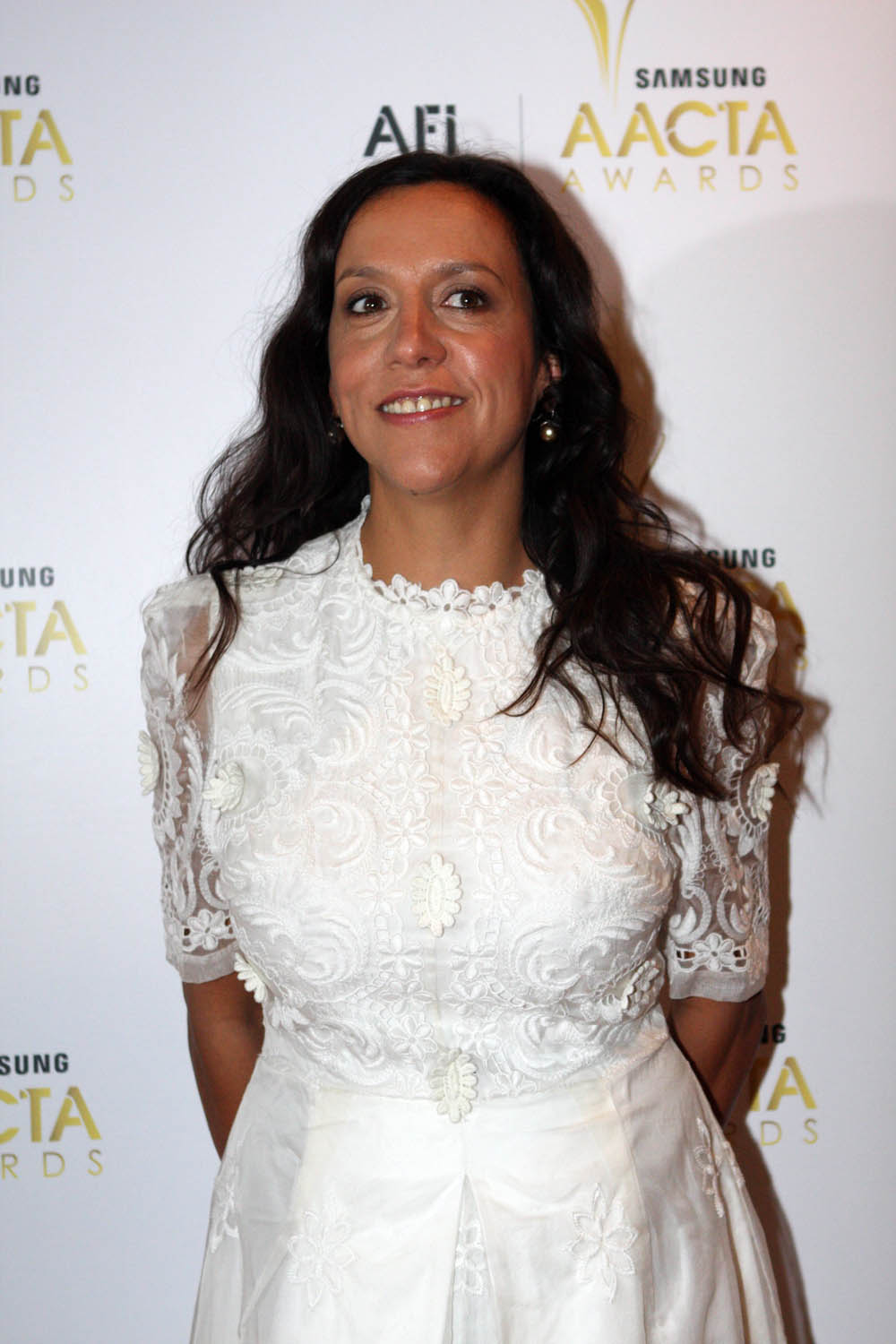
Rachel Perkins (born 1970) is an Indigenous Australian film and television director, producer, and screenwriter. She founded and was co-director of the independent film production company Blackfella Films from 1992 until 2022. Perkins and the company were responsible for producing First Australians (2008), an award-winning documentary series that remains the highest-selling educational title in Australia, and which Perkins regards as her most important work. She directed the films Radiance (1998), One Night the Moon (2001), Bran Nue Dae (2009), the courtroom drama telemovie Mabo (2012), and Jasper Jones (2017). The acclaimed television drama series Redfern Now was made by Blackfella Films, and Perkins directed two episodes as well as the feature-length conclusion to the series, Promise Me (2015).
Key Information


Perkins is an Arrernte and Kalkadoon woman from Central Australia, who was raised in Canberra. She is the daughter of Aboriginal activist Charles Perkins and his wife Eileen.
Early life and education
[edit]Perkins was born in Canberra, Australian Capital Territory,[1][2] in 1970.[3] She is the daughter of Charlie Perkins,[1] granddaughter of Hetty Perkins, and has Arrernte, Kalkadoon,[4] Irish, and German ancestry.[5] Her siblings are Adam and Hetti Perkins, an art curator, and her niece is actress Madeleine Madden.[6][7]
She and her sister attended Melrose High School in Canberra.[8]
Perkins' paternal grandmother's people were from Alice Springs, and she wanted to learn more about that side of the family's culture, so, after finishing school in 1988, she applied for a job as a television presenter with the Central Australian Aboriginal Media Association (CAAMA), mainly to get the airfare to fly there. As she expected, she was not given the job, but they offered her a traineeship at Imparja Television, where she learnt the basics of production, including editing and sound recording.[9][4]
After starting her career as a filmmaker, in the early 1990s she won a scholarship to study production at the Australian Film, Television and Radio School (AFTRS) in Sydney, where she met and collaborated with Warwick Thornton.[10] She completed the Specialist Extension Course Certificate – Producing in 1995, and also met and became friends with Ivan Sen there.[11]
Career
[edit]A few years after beginning her traineeship at CAAMA, aged 21, Perkins became executive producer of the Indigenous unit at SBS Television, the only person in the unit.[9]
In 1992, Perkins founded Blackfella Films,[2] a documentary and narrative production company creating distinctive Australian content for television, live theatre, and online platforms, with a particular focus on Indigenous Australian stories. Much of her film work was done under the company name.[12]
Perkins wrote, directed, and co-produced (with Ned Lander) a 55-minute documentary film about her father's 1965 protest bus journey into regional New South Wales, dubbed the "Freedom Ride". The film was called Freedom Ride,[13] and it was part of the 1993 series Blood Brothers, which profiled four prominent Aboriginal men.[14] Perkins said that she travelled with her father to many of the places that the Freedom Ride visited, and it was also a good opportunity to interviewer her father about his early life and get an insight into him and events that she would not otherwise have had access to. She also gained an "understanding of the importance of filmmaking, in terms of capturing Australian cultural history".[9]
In 1996, under the auspices of the Indigenous Branch of the Australian Film Commission, Perkins produced a film for Warwick Thornton (who was also a friend), From Sand to Celluloid – Payback.[9][15][a]
Radiance (1998) was her first feature fiction film as a director. She said later that it took a long time to cast the main characters, who included Trisha Morton-Thomas, Rachael Maza, and Deb Mailman, then a newcomer from Brisbane, and that they rehearsed for six weeks.[9]
In 2001 she co-wrote (with playwright John Romeril[18]) and directed the telemovie One Night the Moon, featuring musicians Paul Kelly, Kev Carmody, and Maireed Hannah.[9]
First Australians was a seven-part documentary series broadcast on SBS Television in 2008. The general manager of SBS Nigel Milan had asked Gordon Briscoe what he could do for Indigenous people, and Briscoe suggested giving them back their history. It was a very ambitious project, and Perkins said that it was the most important thing she would ever work on, "because it really was an opportunity to try and tell the Indigenous story in a comprehensive manner from an Indigenous perspective, over a span of 200 years. It had never been done before".[9] The series took six years to make,[15] and as of 2024[update] remains the highest-selling educational title in Australia.[19]
Bran Nue Dae, a film version of Jimmy Chi's 1990s hit stage musical, was directed by Perkins and released in 2009.[15]
In 2009 Perkins was curator of the Message Sticks Indigenous Film Festival. This tenth anniversary of the festival held at the Sydney Opera House featured the premiere of Fire Talker, a documentary film about her father Charlie Perkins by Australian filmmaker Ivan Sen.[20][21]
Her courtroom drama / biopic telemovie about land rights campaigner Eddie Koiki Mabo, Mabo, featuring Jimi Bani and Deborah Mailman, was broadcast in 2012.[15]
Also in 2012 Perkins directed two episodes of the first series of Redfern Now in 2012: "Stand Up" and "Pretty Boy Blue", the latter dealing with a death-in-custody.[15] She also directed the feature-length conclusion Redfern Now: Promise Me (2015).[22] Luke Buckmaster of The Guardian gave the film 4 out of 5 stars, praising its "superb cast" and saying "the series concludes at the peak of its power".[23]
Perkins executive produced the first series of First Contact (2014), a reality television show which challenged the non-Indigenous participants of Indigenous Australians.[24]
Also in 2014, she finished making the documentary film Black Panther Woman for SBS. The film was nominated for the Documentary Australia Foundation Award for Australian Documentary at the Sydney Film Festival.[25]
She directed the feature fiction film Jasper Jones, released in 2017.[26]
Perkins wrote, directed, presented, and produced the three-part documentary series The Australian Wars which aired on SBS and NITV in September 2022. This series examines the Australian frontier wars fought across the country when British settlers moved in.[27][19][28]
Perkins has said that of all the filmmaking jobs, she likes editing the best, as it is the most creative part. She also said that she feels a great sense of responsibility "to make films or to use media as a vehicle to tell my people's story and to create change".[9]
Blackfella Films
[edit]Perkins founded Blackfella Films in 1992.[2]
Darren Dale joined the company in 2000, becoming co-director of the company. The award-winning First Australians, a seven-part documentary series broadcast on SBS Television in 2008, won many awards and was also sold overseas. Miranda Dear, formerly head of drama at ABC Television, was a producer and head of drama at Blackfella from 2010 to 2020.[12] Other productions have included the television film Mabo, the TV series Redfern Now, and many more since.[29] In 2009, Blackfella Films was renting space from Bangarra Dance Theatre in offices overlooking Sydney Harbour.[9]
In 2022, Perkins left Blackfella Films.[12]
Other activities
[edit].jpg)
Perkins served as Commissioner with the Australian Film Commission from 2004 to 2008, and since 2009 has been on the board of Screen Australia.[29] She has been a member of the boards of the New South Wales Film and Television Office (now Screen NSW), the Australian Film, Television and Radio School (AFTRS), National Indigenous Media Association, the Indigenous Screen Australia, and the Australian International Documentary Conference. She has said that she gets onto these boards in order to help drive government policy.[9]
In 2015, she raised funding for the Arrernte Women's Project, which had been established in 2014, one of the goals of which was to record the traditional songs and associated cultural knowledge of the Arrernte women of Central Australia, to create an archive for future generations.[25][30]
Perkins became president of the AIATSIS Foundation in 2015.[31][32] She was a council member from 17 May 2017 to 16 May 2021,[33] and is deputy chair of AIATSIS board from 1 July 2024 30 September 2024.[34]
In 2019, she was invited to give the ABC's annual Boyer Lecture, which she titled The End of Silence, and broadcast on ABC RN in November and available as a podcast.[5]
Perkins served two terms on the Australian Heritage Council, from February 2015 to February 2018 and from March 2018 to March 2021.[35]
In 2023, she campaigned for a "yes" vote in the 2023 Australian referendum to establish an Indigenous Voice to Parliament.[36]
In March 2024, Perkins was a guest speaker in a "spotlight session" at the Australian International Documentary Conference.[19] In the same month, she was appointed chair of AFTRS, the first Indigenous filmmaker to be appointed to the position in its 50-year history.[10]
In 2024 she conducted masterclasses for Indigenous screen students at the Centre of Appropriate Technology in Alice Springs.[10]
In March 2025 Perkins took part in discussion about the role of storytelling, hosted by the Bob Hawke Prime Ministerial Centre in partnership with WOMADelaide Planet Talks in Adelaide, along with Daniel Riley, artistic director of Australian Dance Theatre, and led by playwright Wesley Enoch.[37]
Recognition and awards
[edit]Personal honours
[edit]- 2002: Winner Byron Kennedy Award, awarded by the Australian Film Institute, for "for her vast amount and breadth of her work as writer, director, producer, executive producer and instigator across drama, documentary and television; for her dynamism and creativity; for her outstanding ability to inspire others and work collaboratively; and for her passionate championing of Indigenous filmmaking and filmmakers"[38]
- 2011: Australian International Documentary Conference Stanley Hawes Award, in recognition of her contribution to documentary filmmaking in Australia[39]
- 2017: Lifetime Achievement Award at the National Dreamtime Awards 2018, in recognition of her contributions film and culture[39]
- 2018: Featured in Blackwell & Ruth's global project 200 Women: Who Will Change the Way You See the World, which included a book and series of exhibitions around the world[40][2][41]
- 2023: Finalist, National NAIDOC Awards[39]
Film and TV awards
[edit]Some of the many awards for which her films and TV productions have been nominated or won include:
- 1994 – The Tudawali Award: Blood Brothers – Freedom Ride (1993)[42]
- 1998 – Nominated, AFI Award for Best Achievement in Direction]: Radiance (1998)[citation needed]
- 1998 – Winner, Melbourne International Film Festival, Most Popular Feature Film: Radiance (1998)[citation needed]
- 1998 – Winner, Canberra International Film Festival Audience Award: Radiance (1998)[citation needed]
- 2001 – Winner, AWGIE Award (Australian Writers' Guild), Television Original: One Night the Moon (2001)[citation needed]
- 2001 – Winner, AWGIE Award, Major Award: One Night the Moon (2001)[citation needed]
- 2001 – Winner, IF Award for Best Direction: One Night the Moon (2001) (nominated)[citation needed]
- 2001 – Winner, New York International Independent Film & Video Festival, Genre Award Best Feature Film – Musical: One Night the Moon (2001)[citation needed]
- 2002 – Winner, Film Critics Circle of Australia Awards, Special Achievement Award: One Night the Moon (2001)[citation needed]
- 2009 – Multiple wins and nominations for First Australians
- 2009 – Nominated, FCCA Awards, Best Director, for Bran Nue Day
- 2013 – Winner, ADG Award, Best Direction in a TV Drama Series, for Series 1, Episode 6 of Redfern Now: "Pretty Boy Blue:
- 2013 – Winner, Deadly Awards, TV Show of the Year, for Redfern Now[43]
- 2017 – Winner, Antipodean Film Festival Jury Grand Prix, Best Feature Film[44]
- 2019 – Winner, AACTA Award for Best Television Drama Series, for Mystery Road, Series 1[citation needed]
- 2019 – Winner, Australian Directors' Guild Awards, Best director in a television drama series, for Mystery Road, Series 1[45][46]
- 2023 – Winner (with Darren Dale, Jacob Hickey and Don Watson), New South Wales Premier's History Awards, Digital History Prize: The Australian Wars, Episode 1[47]
Personal life
[edit]Perkins has a son with her ex-husband, filmmaker Richard McGrath.[26][48]
She has said that next to filmmaking, music is her other passion.[9]
Selected filmography
[edit]- Blood Brothers – Freedom Ride (1993) – producer, director, writer
- Radiance (1998) – director
- One Night the Moon (2001) – director, writer
- Flat (2002), a short film by Beck Cole – co-producer (with Darren Dale)[49]
- Mimi (2002), a short film by Warwick Thornton – co-producer (with Darren Dale)[50]
- First Australians (2008) – producer, director, writer, narrator
- Bran Nue Dae (2010) – director, writer
- Mabo (2012) – director
- Black Panther Woman (2014) – director
- Jasper Jones (2017) – director
- Mystery Road (2019 & 2020) – TV series
- Total Control (s1, 2019) – TV series
- The Australian Wars (2022) – writer, director, presenter, and producer
Footnotes
[edit]- ^ Penny McDonald is listed in most credits as producer,[16] but Perkins is listed as line producer.[17]
References
[edit]- ^ a b Bagshaw, Eryk (13 November 2013). "Two of us: Rachel and Hetti Perkins". The Sydney Morning Herald. Retrieved 20 November 2019.
Sisters Rachel Perkins, 44, and Hetti Perkins, 49, are the daughters of renowned Aboriginal activist Charlie Perkins.
- ^ a b c d "Rachel Perkins". 200 Women who will change the way you see the world. Retrieved 26 August 2024.
- ^ "Perkins, Rachel, 1970- [authority record]". AIATSIS. Retrieved 26 August 2024.
- ^ a b Hands, Tenille (2012). "Perkins, Rachel". Written by Tenille Hands, National Film and Sound Archive; [in] The Encyclopedia of Women and Leadership in the Twentieth Century [Creative Commons International 4.0]. Retrieved 20 November 2019.
- ^ a b Perkins, Rachel (16 November 2019). "Director Rachel Perkins calls for 'end of silence' on Indigenous recognition in ABC Boyer Lecture". Australia: ABC News. Retrieved 20 November 2019.
...an edited extract from the first of Rachel Perkins's Boyer Lectures. Her complete series of lectures, titled The End of Silence, will be broadcast on ABC RN.
- ^ "Aboriginal teen 'stoked' after speech". The Age. Melbourne. Australian Associated Press. 25 October 2010. Retrieved 27 September 2015.
- ^ Dobbie, Phil (6 November 2010). "An Employment Pool of Eager Aussies". CBS MoneyWatch. Retrieved 27 September 2015.
- ^ Celebrating the Achievements of our Past Students, ACT Government, archived from the original on 30 January 2017, retrieved 31 January 2017
- ^ a b c d e f g h i j k Perkins, Rachel. "Filmmaker interviews: Rachel Perkins" (Interview). National Film and Sound Archive. Retrieved 26 August 2024.
- ^ a b c d Morris, Linda (3 April 2024). "Rachel Perkins to chair AFTRS at crucial point for the arts school". The Sydney Morning Herald. Retrieved 27 August 2024.
- ^ "Rachel Perkins". Australian Film Television and Radio School. 24 March 2023. Retrieved 27 August 2024.
- ^ a b c "About". Blackfella Films. Archived from the original on 23 May 2024. Retrieved 26 August 2024.
- ^ "Blood Brothers – Freedom Ride". National Film and Sound Archive. Retrieved 26 August 2024.
- ^ "Blood Brothers (1993)". Screen Australia. Retrieved 26 August 2024.
- ^ a b c d e Collins, Felicity (December 2013). "Rachel Perkins: Creating Change Through Blackfella Films". Contemporary Australian Filmmakers (69). Retrieved 27 August 2024 – via Senses of Cinema.
- ^ "From Sand to Celluloid". National Film and Sound Archive. Retrieved 27 August 2024.
- ^ "Short Films of Warwick Thornton, Part 1: Payback (1996)". Aboriginal Art & Culture: an American eye. 8 February 2010. Retrieved 27 August 2024.
- ^ Cath Lavelle, ed. (November 2001). "One Night the Moon Media kit" (PDF). MusicArtsDance. Archived from the original (PDF) on 14 July 2011.
- ^ a b c "Rachel Perkins: Truth to Power". AIDC. 22 January 2024. Retrieved 27 August 2024.
- ^ "SBS Film – Spreading the message by Mary Colbert". 4 May 2009. Archived from the original on 10 September 2009. Retrieved 23 May 2009.
- ^ "ABC Sydney – What's on This Weekend – SATURDAY 9 May – FILM FESTIVAL". Australian Broadcasting Corporation. Archived from the original on 11 September 2009.
- ^ "Watch Redfern Now: Promise Me". Netflix. 26 November 2018. Retrieved 27 August 2024.
- ^ Buckmaster, Luke (9 April 2015). "Redfern Now: Promise Me review – final, unsettling showing from a superb cast". The Guardian. Retrieved 27 August 2024.
- ^ Munro, Kate (28 November 2014). "First Contact producer Rachel Perkins: 'Prejudice often comes from ignorance … people can change'". The Guardian. Retrieved 27 October 2016.
- ^ a b "Rachel Perkins". Radio National. 30 September 2019. Retrieved 27 August 2024.
- ^ a b Dow, Steve (28 January 2017). "Rachel Perkins on Jasper Jones and Indigenous activism". The Saturday Paper. Retrieved 28 January 2017.
- ^ "Filmmaker Rachel Perkins reveals the truth of The Australian Wars". National Indigenous Television. 24 August 2022. Retrieved 27 August 2024.
- ^ Payne, Anne Maree; Norman, Heidi (21 September 2022). "In The Australian Wars, Rachel Perkins dispenses with the myth Aboriginal people didn't fight back". The Conversation. Retrieved 21 September 2022.
- ^ a b "Blackfella Films". Official site. Australian Broadcasting Corporation. Retrieved 27 May 2013.
- ^ Turpin, Myfany (2016). "4. Finding Arrernte songs".
- ^ Slattery, Claire (18 October 2016). "Foundation launches million-dollar plan to record Australia's songlines". Australia: ABC News. Retrieved 27 October 2016.
- ^ "A Foundation for all Australians". The Australian Institute of Aboriginal and Torres Strait Islander Studies (AIATSIS). 14 May 2015. Archived from the original on 27 October 2016. Retrieved 27 October 2016.
- ^ "Transparency Portal". Transparency Portal. Retrieved 26 August 2024.
- ^ "Australian Institute of Aboriginal and Torres Strait Islander Studies (Board)". Directory. Australian Government. Retrieved 26 August 2024.
- ^ "Australian Heritage Council". DCCEEW. 13 March 2012. Retrieved 26 August 2024.
- ^ Perkins, Rachel (1 October 2023). "Grasp the nettle". The Monthly. Retrieved 27 August 2024.
- ^ "Rachel Perkins, Dr Debra Dank & Daniel Riley in-conversation with Professor Wesley Enoch AM" (video + text). Home. 6 March 2025. Retrieved 12 May 2025.
- ^ "The Byron Kennedy Award, 1984-2016" (PDF). AACTA.
...is awarded for outstanding creative enterprise within the film and television industries. The Award is given to an individual or organization whose work embodies the qualities of [producer] Byron Kennedy: innovation, vision and the relentless pursuit of excellence
- ^ a b c "Rachel Perkins". AustLit. Retrieved 27 August 2024.
- ^ Blackwell, Geoff; Hobday, Ruth. "200 Women: Book Review". Top Titles. Australian Booksellers Association. Retrieved 26 August 2024.
- ^ "BMW Group Presents: 200 Women Who Will Change the Way You See the World". BMW Group PressClub. 5 August 2018. Retrieved 26 August 2024.
- ^ "Aboriginal Australia : 1994 highlights [Catalogue entry]". AITSIS. Mura Collections Catalogue. Retrieved 20 November 2019.
...covers the Tudawali Film and Video Award. Rachel Perkins' entry 'Freedom Ride' won the award and Rachel discusses the film and using the visual media as a tool to help tell Indigenous stories
- ^ "Aboriginal magistrate Pat O'Shane, Archie Roach honoured at Deadly Awards". Australia: ABC News. 10 September 2013. Retrieved 27 August 2024.
- ^ "All the Awards from Festival des Antipodes". Rencontres Internationales du Cinéma des Antipodes. Retrieved 27 August 2024.
- ^ Maddox, Garry (6 May 2019). "Sweet Country wins top prize at the Directors Guild Awards". The Sydney Morning Herald. Retrieved 20 November 2019.
- ^ Knox, David (7 May 2019). "Australian Director's Guild Awards 2019: winners". TV Tonight. Retrieved 20 November 2019.
- ^ "NSW Premier's History Awards". State Library of NSW. 25 March 2020. Retrieved 7 September 2023.
- ^ Mengel, Noel. "Hurt and healing voiced". The Courier-Mail.
- ^ "Flat". Blackfella Films. Retrieved 27 August 2024.
- ^ "Mimi". Blackfella Films. 11 January 2024. Retrieved 27 August 2024.
Further reading
[edit]- "Rachel Perkins". Radio RN. Australian Broadcasting Corporation. 2019. (bio)
- "Screen Australia's Indigenous Department celebrates 25 years". Screen Australia. 4 June 2018.
- Unearthing our first voices (Canberra Times) Archived 10 September 2009 at the Wayback Machine
- Article about Rachel Perkins and her movie Radiance in Urban Cinefile
External links
[edit]
| International | |
|---|---|
| National | |
| Academics | |
| People | |
| Other | |

Rachel Perkins
View on GrokipediaEarly life and family background
Upbringing and parental influence
Rachel Perkins was born in 1970 in Canberra, Australia, to Charles Perkins, a prominent Aboriginal activist who led the 1965 Freedom Ride to protest racial discrimination, and Eileen Perkins, his wife and fellow advocate for Indigenous rights.[1][7] Her family background reflected mixed heritage, including Arrernte and Kalkadoon Indigenous ancestry from Central Australia through her paternal lineage—her grandmother Hetty Perkins was Arrernte, and her grandfather Martin Perkins was Kalkadoon—alongside German and Irish roots.[2][8] Raised in an activist household, Perkins experienced a childhood immersed in the civil rights movement, with her father's work dominating family dynamics and daily routines.[7] She frequently observed Charles Perkins hosting meetings at home, where he navigated consensus-building among varied stakeholders to advance Indigenous interests, fostering in her an early appreciation for strategic dialogue over confrontation.[9] The family routinely attended demonstrations and policy discussions, embedding activism into everyday life without compartmentalization, amid broader national debates on Indigenous socioeconomic challenges such as education access and employment disparities.[9][10] This environment exposed Perkins to her parents' emphasis on self-reliance and institutional reform, as exemplified by Charles Perkins' roles in federal bodies like the Office of Aboriginal Affairs, rather than reliance on perpetual grievance frameworks.[7] Such direct immersion in protests and advocacy efforts cultivated her formative understanding of storytelling's potential for elucidating causal factors in social inequities, grounded in empirical family narratives of resilience amid historical exclusion.[1][9]Education and formative experiences
Perkins completed her secondary education in Canberra in 1988, amid a family environment steeped in Indigenous activism that exposed her to key events like the protests against the Australian Bicentenary celebrations marking 200 years of European settlement.[11] [7] This period heightened her consciousness of historical dispossession and the need for Indigenous self-representation, influenced by her parents' direct involvement in civil rights campaigns.[7] Immediately after finishing school, at age 18, she moved to Alice Springs to connect with her Arrernte heritage and undertook a traineeship at the Central Australian Aboriginal Media Association (CAAMA), Australia's first Indigenous-owned media organization.[1] [11] There, she received hands-on training in sound recording, editing, directing, and producing content in Indigenous languages, focusing on cultural preservation, current affairs, and advocacy for community rights—skills that instilled a dedication to media as a tool for self-determination rather than external narratives.[11] [1] The mentorship of CAAMA co-founder Freda Glynn, who prioritized Indigenous control over storytelling, reinforced Perkins' emphasis on documenting lived experiences and systemic factors affecting outcomes, such as the tensions between welfare dependency and cultural autonomy.[1] [12] In 1995, Perkins was awarded the inaugural Indigenous Program Scholarship at the Australian Film Television and Radio School (AFTRS) in Sydney, where she completed a producing course covering budgeting, financing, and drama production.[1] This formal education complemented her practical CAAMA experience, providing structured expertise in independent media creation tailored to Indigenous creatives and solidifying her approach to filmmaking grounded in empirical community realities over imposed ideologies.[1]Professional career
Entry into filmmaking and early projects
In 1988, at the age of 18, Perkins relocated to Alice Springs and commenced a traineeship at the Central Australian Aboriginal Media Association (CAAMA), an organization established in 1980 to produce Indigenous radio and television content.[13] There, she acquired foundational skills in filming, editing, directing, and producing, while gaining practical experience in the collaborative dynamics of media production through work on CAAMA's television series.[1] This entry point aligned with the nascent phase of Indigenous-led media initiatives in Australia, where CAAMA represented one of the few outlets enabling self-representation amid broader industry skepticism; contemporaries at CAAMA dismissed prospects for Indigenous films, asserting that audiences showed no interest and ratings would fail.[14] By 1991, Perkins had advanced to executive producer of the Indigenous unit at SBS Television, the sole such role at the time, overseeing content development for a national broadcaster.[13] Her directorial debut came in 1993 with Freedom Ride, the opening episode of the four-part SBS documentary series Blood Brothers, which she co-wrote and directed in collaboration with producer Ned Lander.[15] The 54-minute film chronicles the 1965 Freedom Ride organized by her father, Charles Perkins, involving 29 university students who traveled by bus through New South Wales towns like Walgett and Moree to document and protest racial segregation practices, such as bans on Aboriginal entry to public pools and clubs.[16] Employing archival newsreel footage, contemporary interviews with participants, and dramatic reconstructions, the documentary prioritizes eyewitness accounts and historical evidence to reconstruct events, retracing Perkins senior's leadership in exposing systemic discrimination without overlaying unsubstantiated narrative interpretations.[15] Perkins' early career unfolded against significant barriers for Indigenous filmmakers, including scarce funding and production opportunities prior to the 1990s; for instance, only 24 documentary titles featured Indigenous filmmakers in key roles during the 1980s, reflecting limited institutional support and a film industry dominated by non-Indigenous perspectives that often perpetuated stereotypical portrayals.[17] The Australian Film Commission's Indigenous Branch, formed in 1993 to allocate targeted resources, marked a pivotal shift, yet pre-existing hurdles like budget constraints and underrepresentation persisted, with Indigenous training programs for drama and features not emerging until 1997.[18] Through these initial projects, Perkins honed screenwriting alongside directing and producing, leveraging documentary formats to foreground empirical documentation of civil rights struggles, thereby contributing to the gradual transition from external ethnographic depictions to Indigenous-controlled narratives.[19]Establishment of Blackfella Films
Blackfella Films was established in 1992 by Rachel Perkins as an independent production company aimed at producing innovative screen content centered on Indigenous Australian stories and perspectives.[20][21] The venture sought to provide a platform for Aboriginal and Torres Strait Islander creatives in an industry historically dominated by non-Indigenous voices, focusing on factual documentaries, dramas, and series formats.[22] Early operations emphasized self-determination in storytelling, with Perkins serving as the primary director and producer.[23] Producer Darren Dale joined in 2001, assuming a co-directorial role and helping expand the company's capacity for larger-scale projects, including the landmark 2008 documentary series First Australians.[20][24] The business model evolved to incorporate strategic partnerships with public broadcasters like SBS, which signed a multi-year deal in 2009 for Indigenous-focused content, alongside funding from federal bodies such as Screen Australia.[25][26] This reliance on government and broadcaster support—common in Australia's subsidized screen sector—facilitated output across factual and scripted genres but highlighted commercial dependencies, as private market viability for niche Indigenous productions remains limited without public investment.[27] In October 2022, Perkins announced her departure after three decades, citing a desire to pursue independent endeavors, with Dale continuing as co-director to steer ongoing operations.[28][29] The transition underscored sustainability challenges for culturally specific companies, which often balance artistic independence against funding precarity in a landscape where state grants and broadcaster commissions constitute core revenue streams.[30] Over its tenure, Blackfella Films has delivered dozens of projects, establishing itself as a key player in Indigenous-led production while navigating these structural realities.[20]Documentary productions
Perkins directed the four-part documentary series Blood Brothers (1993), produced with Ned Lander and aired on SBS, profiling prominent Aboriginal figures through personal stories and historical context. The episodes covered diverse experiences, including the Freedom Ride installment on her father Charles Perkins' 1965 activism against segregation in rural New South Wales, utilizing interviews, reenactments, and archival material to illustrate mid-20th-century Indigenous advocacy.[15][31] In 2008, Perkins wrote, directed, and co-produced the seven-episode First Australians series, a seven-hour production that premiered on SBS on October 14, totaling over 300 hours of footage from archives, interviews with historians like Marcia Langton, and expert analysis spanning European contact in 1788 to the 1993 Mabo High Court decision overturning terra nullius. The series emphasized Indigenous resistance to dispossession, including frontier conflicts and government policies like the Stolen Generations, drawing on primary documents to quantify impacts such as population declines from violence and assimilation failures. While lauded for compiling overlooked testimonies, its portrayal of unidirectional settler aggression has drawn scrutiny for underweighting empirical evidence of bidirectional violence, including Aboriginal raids on settlements documented in colonial records, and pre-contact intertribal warfare that shaped social structures.[32][33][34] Black Panther Woman (2014), a 52-minute documentary directed and produced by Perkins, chronicles Marlene Cummins' experiences in the Australian Black Panther movement of the 1960s-1970s, focusing on her founding of community services like medical clinics and radio programs amid personal trauma from abuse and addiction. Through Cummins' firsthand account and period footage, it exposes internal misogyny within activist circles, highlighting causal links between ideological fervor and individual vulnerabilities without broader institutional critiques. The film prioritizes personal narrative over aggregate data on movement outcomes, such as sustained outreach programs' reach.[35][36] Perkins wrote, directed, presented, and produced the three-part The Australian Wars (2022), airing on SBS and NITV in September, which examines colonial frontier conflicts using archaeological evidence, massacre site mappings, and interviews to detail events like the Myall Creek Massacre (1838, 28 killed) and broader patterns of resistance. The series references digital mappings identifying over 400 verified massacre sites from 1788-1930 where colonial forces killed groups of at least five Indigenous people, estimating thousands of direct deaths amid expansion. Empirical frontier violence data supports documented settler-initiated killings on this scale, though population declines of 500,000-1 million were predominantly driven by epidemics (over 90%), with violence as a secondary but deliberate factor in dispossession; the production's emphasis on genocidal intent aligns with some scholarly interpretations but overlooks quantified instances of Indigenous offensive actions and localized coexistences. It received the 2023 Digital History Prize in the NSW Premier's History Awards for innovative evidentiary use.[37][38][39]Feature film direction
Perkins made her feature directorial debut with Radiance (1998), an adaptation of Louis Nowra's play about three estranged Indigenous sisters—Cressy, Nona, and Mae—who reunite in their decaying Queensland family home following their mother's death, unearthing buried secrets tied to their heritage and personal traumas.[40] Shot on location in Hervey Bay, the production emphasized intimate character-driven realism, with Perkins drawing on her documentary background to capture authentic emotional confrontations among the leads, including Trisha Morton-Thomas, Deborah Mailman, and Taungaroa Emile.[41] The film earned Australian Film Institute (AFI) nominations for Best Director, Best Film, and Best Adapted Screenplay, alongside a win for Mailman in Best Actress in a Supporting Role.[42] Critically, it was praised for addressing Indigenous family dynamics and identity without overt didacticism, though some noted its stage-like structure limited broader visual experimentation.[41] In 2001, Perkins directed One Night the Moon, a 57-minute musical drama set in 1930s outback New South Wales, where a farmer's young daughter vanishes under a full moon, and racial animosity bars an expert Aboriginal tracker, Albert Namatjira-inspired figure, from aiding the search, underscoring settler-Indigenous land knowledge disparities and frontier prejudices.[43] Featuring original songs by Paul Kelly—who co-starred with Kaarin Fairfax as the parents—and Memphis Slim-inspired blues, the film used stark black-and-white cinematography to evoke isolation and inevitability, with Perkins prioritizing narrative economy over spectacle to highlight causal failures in cross-cultural trust.[44] Produced for television but screened theatrically at festivals, it received AFI nominations for Best Direction and Best Original Music Score, reflecting acclaim for its restrained exploration of historical racism's tangible consequences. The work's thematic focus on Indigenous ecological expertise versus European hubris drew positive responses for avoiding sentimentality, though its brevity constrained deeper economic contextualization of rural Indigenous marginalization.[45] Perkins' third feature, Bran Nue Dae (2009), adapted Jimmy Chi's 1990 stage musical and follows Willie, a young Aboriginal man in 1960s Broome, who escapes a Catholic seminary to reclaim his cultural ties and romance amid pursuits by authorities and personal temptations, satirizing assimilation-era policies through road-trip escapades.[46] With a cast including Rocky McClellan, Missy Higgins, and Ernie Dingo, the production relocated the story from stage to vibrant Western Australian coastal and desert settings, where Perkins employed lively choreography and Pidgin-infused dialogue to blend humor with critiques of missionary interference in Indigenous family structures.[47] Budgeted at approximately $6.75 million, the film grossed over $7 million domestically, achieving rare commercial viability for an Indigenous-led musical by appealing to broad audiences with its upbeat tone.[48] It garnered AFI Awards for Best Supporting Actor (Ian Hughes) and Best Production Design, but faced mixed critiques for its exuberant optimism potentially glossing over persistent socio-economic hardships like poverty and dislocation in Indigenous communities, favoring cultural celebration over unflinching realism.[49]Television series contributions
Perkins directed two episodes of the 2012 ABC drama series Redfern Now, including "Stand Up" and "Pretty Boy Blue", marking the first Australian television drama produced entirely by an Indigenous creative team and centering narratives of urban Aboriginal family life, identity, and social challenges.[50] The series aired to strong reception, contributing to broader industry recognition of Indigenous-led storytelling formats. In 2018, she helmed all six episodes of Mystery Road season 1 for ABC, adapting Ivan Sen's feature film into a crime thriller format that follows Indigenous detective Jay Swan investigating disappearances in remote outback communities, blending themes of crime, cultural tensions, and personal identity.[51] The series achieved critical acclaim and commercial success as a ratings performer on ABC platforms, expanding Indigenous narratives into mainstream genre television.[52] Perkins directed the inaugural 2019 season of Total Control for ABC, a six-part political drama depicting an Indigenous woman's rapid ascent amid government intrigue, media scrutiny, and identity conflicts, which premiered at the Toronto International Film Festival.[53] The series secured the 2019 Australian Academy of Cinema and Television Arts (AACTA) Award for Best Television Drama Series, underscoring its impact on elevating complex Indigenous political stories to national audiences via public broadcaster reach.[54] These contributions reflect Perkins' transition from documentary to scripted drama, facilitating greater Indigenous creator access in Australian television post-2010s; Screen Australia data from 2016 shows Indigenous characters comprising 5% of TV drama roles—disproportionate to their 3% population share—attributable in part to successful series like Redfern Now demonstrating viable audience demand without relying on mandated quotas, though overall non-Indigenous diversity lagged at 18% for main characters.[55] Her work on these ABC and SBS-distributed series has mainstreamed Indigenous perspectives in crime and politics genres, with empirical viewership metrics indicating sustained engagement, such as Mystery Road's status as a top iView program.[51]Public engagement and advocacy
Roles in Indigenous organizations and media
Perkins has held several leadership positions in Australian screen agencies, influencing policy on Indigenous representation and funding. She served as a Commissioner on the Australian Film Commission from 2004 to 2008 and joined the board of Screen Australia in 2009, contributing to decisions on national screen production support, including initiatives for Indigenous content development. As a founding member of Screen Australia, she advocated for increased opportunities in media employment and training for Indigenous practitioners, drawing from her own experience as the recipient of the first Indigenous Program Scholarship in 1995.[1][3] In organizational leadership, Perkins chairs the interim board of the Council of First Nations, established in 2025 as a rebranded entity focused on representing Indigenous voices in policy discussions with governments and other First Nations groups.[56][57] Her role emphasizes coordination among representative organizations to advance collective Indigenous interests beyond electoral politics. In April 2024, she was appointed chair of the Australian Film Television and Radio School (AFTRS) council, becoming the first Indigenous filmmaker and former graduate to hold the position in the institution's 50-year history; in this capacity, she oversees strategic direction for national training in film, television, and radio, prioritizing mentorship and skill-building for emerging Indigenous talents.[58][59] Perkins has engaged in public forums on media and storytelling's societal role, such as a March 6, 2025, discussion at the University of South Australia with author Debra Dank, hosted by the Hawke Centre, which examined how narratives contribute to public understanding of history and culture.[60] Her broader contributions to Indigenous media policy include board service on federal agencies like Screen Australia, where she has pushed for sustained funding mechanisms to support training programs that address employment gaps in the sector.[61] These roles underscore her focus on institutional frameworks for Indigenous media capacity-building, separate from her production work.Advocacy on historical and social issues
Perkins has advocated for Indigenous advancement through personal responsibility and economic integration, critiquing approaches that perpetuate welfare dependency. In a 2014 opinion piece, she defended Aboriginal leader Noel Pearson against detractors, praising his role in leveraging policy for social transformation and securing resources for Indigenous programs.[62] She highlighted Pearson's philosophy, informed by international research, which challenges chronic community issues by emphasizing individual and communal accountability over grievance-focused rhetoric, noting his courage in confronting resistance from within Aboriginal groups.[62] This endorsement aligns with Pearson's documented arguments that extended welfare since the 1970s has eroded work ethics and family structures in remote communities, contributing to cycles of unemployment—reaching 40-50% in some areas by the 1990s—and health crises, rather than fostering self-sufficiency.[62] Perkins' support underscores a preference for causal interventions targeting behavioral and economic factors, countering narratives that attribute disparities solely to external oppression without addressing internal dynamics. Her reconciliation advocacy integrates historical acknowledgment with pragmatic reforms, reflecting awareness of self-determination policies' limitations. As co-chair of Australians for Indigenous Constitutional Recognition since at least 2019, Perkins has promoted frameworks that build on past efforts like the 1970s land rights gains, which preserved cultural ties but coincided with stalled socioeconomic progress in many communities during the 1980s and 1990s, including rising youth suicide rates (up to 5-10 times national averages in some regions) and educational disengagement.[3] She has echoed calls for structural changes that prioritize evidence of policy efficacy, such as economic empowerment models over isolated autonomy, to mitigate outcomes where self-determination without market integration perpetuated isolation and dependency.[63] This stance, rooted in her father's activism legacy, favors causal realism—linking persistent social ills to policy-induced passivity—over idealized separatism. On media representation, Perkins has pushed for depictions grounded in verifiable progress and agency, rather than reductive frames of inevitable disadvantage. In 2023, she critiqued historical media failures in serving Indigenous perspectives, arguing that concentrated ownership sustains imbalances that overlook success stories and internal reforms.[64] Her 2019 Boyer Lecture urged breaking the "great Australian silence" on frontier history and contemporary crises like incarceration—where Indigenous rates exceed 25% of prisoners despite comprising 3% of the population—while advocating institutional responses informed by decades of dialogue, not unsubstantiated victimhood tropes.[65] Such positions highlight skepticism toward mainstream outlets' tendency to amplify grievance without empirical scrutiny of contributing factors like substance abuse and family breakdown, prioritizing narratives that enable accountability.[65]Controversies and debates
Interpretations of Australian frontier history
In her 2022 documentary series The Australian Wars, Rachel Perkins frames Australia's frontier era (roughly 1788–1934) as a prolonged conflict akin to genocidal warfare, emphasizing systematic massacres, dispossession, and the suppression of Indigenous resistance narratives in official histories. The three-part production draws on eyewitness accounts, descendant testimonies, and archival records to depict events such as punitive expeditions and station killings, with interviewees articulating intergenerational trauma and calls for reparative justice, including treaty-making and land acknowledgments. Perkins explicitly labels the violence as "genocidal," arguing it involved intentional destruction of Aboriginal groups to clear land for settlement, and critiques the "great Australian silence" propagated by institutions that minimized these events.[66][67] This portrayal has been praised for elevating suppressed histories and debunking the notion of passive Indigenous victims, highlighting organized resistance like guerrilla tactics, alliances among clans, and leaders such as Pemulwuy or Yagan who inflicted casualties on settlers. However, it has faced scrutiny for selective sourcing that amplifies one-sided atrocity accounts while underrepresenting empirical evidence of mutual violence and Aboriginal agency. Archival and archaeological records document pre-contact intertribal warfare across Australia, involving ritual combat, territorial raids, and population controls that predisposed groups to frontier escalation; post-contact, Indigenous warriors conducted offensive spearing attacks on livestock, homesteads, and travelers, resulting in an estimated 1,500–2,500 European deaths (including women and children) from 1788 to 1900, often unprovoked by immediate settler aggression. Critics, including historian Keith Windschuttle, argue Perkins' narrative echoes "black armband" historiography prone to inflating Indigenous death tolls—claiming up to 20,000 from violence alone—through unverifiable oral traditions and uncorroborated newspaper reports, while ignoring decentralized conflict dynamics absent a central extermination policy comparable to 20th-century genocides.[68][69][70] Such interpretations carry implications for contemporary land rights and sovereignty claims, positing frontier violence as invalidating British sovereignty under international law and justifying retroactive treaty demands. While Perkins' work achieves visibility for under-discussed massacres—recent mappings identify over 400 verified sites of settler-led killings causing thousands of deaths—its emphasis on unidirectional victimhood risks entrenching communal division by sidelining evidence of Indigenous adaptations, such as economic integration via pastoral labor, intermarriage, and technological adoption (e.g., firearms and horses) that enabled survival and agency amid conflict. Balanced analyses, drawing from primary colonial dispatches and quantitative frontier studies, reveal a chaotic resource contest rather than orchestrated annihilation, with disease and displacement as primary population reducers (decline from ~750,000 to 100,000 by 1900), underscoring causal complexities beyond moral binaries. Mainstream acclaim for the series often stems from outlets with documented progressive biases favoring emotive Indigenous advocacy over forensic scrutiny, potentially sidelining dissenting scholarship that prioritizes verifiable metrics.[38][71]Positions on contemporary Indigenous policy
Rachel Perkins has advocated for constitutional recognition of Indigenous Australians through an advisory Voice to Parliament, aligning with the Uluru Statement from the Heart issued in 2017.[72][73] As co-chair of the Yes23 campaign, she described the proposed Voice as a "nation-building moment" essential for reconciliation and fairness, arguing it would provide non-binding advice on matters affecting Indigenous communities without altering executive or legislative powers.[72][74] Perkins emphasized that the mechanism addressed historical exclusions, such as the abolition of the Aboriginal and Torres Strait Islander Commission (ATSIC) in 2005 amid corruption allegations and governance failures that undermined its elected regional councils and national board.[75] In response to critics like Warren Mundine, who warned that the Uluru Statement represented a symbolic declaration risking social division by prioritizing treaty and truth-telling over practical outcomes, Perkins contended that opponents were manufacturing discord and that forgiveness for past rejections did not imply forgetting them.[76] She rejected claims of divisiveness, asserting the Voice would embed race-neutral consultation processes already embedded in legislation like the Native Title Act 1993, while acknowledging that symbolic recognition could complement but not substitute for economic reforms.[77] However, the referendum on October 14, 2023, failed with approximately 60% national No votes and majorities against in every state, highlighting empirical challenges in securing broad support for such institutional changes amid concerns over legal risks and distraction from targeted socioeconomic interventions.[78][79] Perkins' advocacy contrasted with alternatives emphasizing practical policy, such as Noel Pearson's focus on welfare reform, school attendance mandates, and economic empowerment through property rights and job creation, which prioritize causal factors like family structure and education over constitutional symbolism.[80] Despite ATSIC's dissolution—stemming from documented mismanagement including unauthorized expenditures exceeding $1 million—she maintained the Voice's design as a permanent, advisory body insulated from political abolition would mitigate past pitfalls, though empirical data on Indigenous advisory mechanisms post-ATSIC, such as the National Indigenous Australians Agency's consultations, show persistent gaps in closing disparities like the 8.6-year life expectancy shortfall reported in 2023.[75] Perkins argued that rejecting the Voice would delay addressing systemic consultation deficits, even as defeat underscored voter preferences for evidence-based, non-constitutional approaches to Indigenous policy.[81]Recognition and honors
Personal awards and distinctions
In 2011, Rachel Perkins was awarded the Stanley Hawes Award by the Australian International Documentary Conference (AIDC), recognizing her significant contributions to documentary filmmaking in Australia through innovative storytelling and leadership in the field.[82][83] In 2023, she received the National NAIDOC Creative Talent Award for her longstanding achievements as a writer, director, and producer advancing Indigenous narratives in film and television.[2][84] In 2024, Perkins was honored with the Distinguished Services to the Australian Screen Award by APRA AMCOS and the Australian Guild of Screen Composers, acknowledging her over three decades of industry leadership, including founding key Indigenous media organizations and pioneering screen projects that integrate music and storytelling.[85][86]Awards for creative works
Perkins' documentary Freedom Ride (1993), part of the Blood Brothers series, received the Tudawali Award for excellence in Indigenous filmmaking.[87] Her later documentary series First Australians (2008) garnered AFI Awards, including recognition for its historical scope and production quality as judged by industry peers.[51] In 2023, Episode 1 of The Australian Wars (2019–2020) won the Digital History Prize in the New South Wales Premier's History Awards, acknowledging its innovative use of digital formats to examine frontier conflicts through archival evidence and testimony.[88] The series also secured a Gold Award in the History & Society category at the New York Festivals.[89] For feature films, Radiance (1998) earned Perkins a nomination for Best Achievement in Direction at the AFI Awards, with the film itself winning Best Actress for Deborah Mailman, highlighting its critical reception among Australian Academy voters despite limited commercial distribution.[90] In television, Perkins' direction of Redfern Now (2012) contributed to the series' win of the TV Week Logie Award for Most Outstanding Drama Series in 2013, based on viewer and peer ballots emphasizing narrative impact.[91] Total Control (2019–2024) received five AACTA Awards, including Best Television Drama Series, reflecting academy endorsements for its scripting and direction amid competitive fields favoring politically aligned content.[53] These wins, totaling over a dozen major prizes across mediums, demonstrate consistent peer validation in bodies like AACTA and Logies, which have been noted for tendencies to prioritize works aligning with institutional narratives on Indigenous issues over divergent historical interpretations.[92]| Year | Work | Award | Issuing Body |
|---|---|---|---|
| 1994 | Freedom Ride (Blood Brothers) | Tudawali Award | Indigenous media recognition |
| 2008 | First Australians | AFI Awards (multiple) | Australian Film Institute |
| 2013 | Redfern Now | TV Week Logie for Most Outstanding Drama Series | TV Week |
| 2020 | Total Control (Season 1) | AACTA for Best Television Drama Series (plus four others) | Australian Academy of Cinema and Television Arts |
| 2023 | The Australian Wars (Episode 1) | Digital History Prize | NSW Premier's History Awards |