Hubbry Logo
Grey OwlGrey OwlMain
Open search
Grey Owl
Community hub
Grey Owl
logo
8 pages, 0 posts
0 subscribers
Be the first to start a discussion here.
Grey Owl
Grey Owl
from Wikipedia

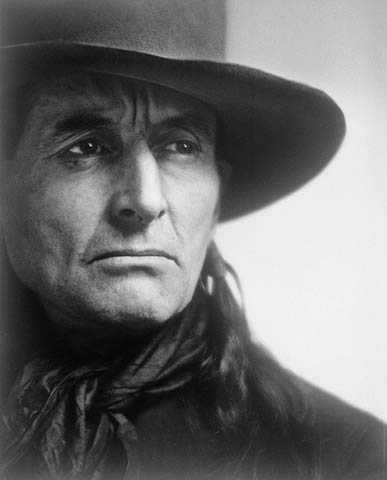
Archibald Stansfeld Belaney (September 18, 1888 – April 13, 1938), commonly known as Grey Owl, was a popular Canadian writer, public speaker and conservationist. Born an Englishman, he immigrated to Canada and, in the latter years of his life, passed as half-Indigenous, falsely claiming he was the son of a Scottish man and an Apache woman.[a] With books, articles and public appearances promoting wilderness conservation, he achieved fame in the 1930s. Shortly after his death in 1938, his real identity as the Englishman Archie Belaney was exposed.[2]: 210ff  He has been called one of the first persons to engage in Indigenous identity fraud in Canada.[3]

Key Information

Moving to Canada as a young man, Belaney established himself as a woodsman and trapper, before rising to prominence as an author and lecturer. While working for the Dominion Parks Branch of Canada in the 1930s, Belaney was named the "caretaker of park animals", first at Riding Mountain National Park in Manitoba and then at Prince Albert National Park in Saskatchewan.[2]: 92, 108  His views on wilderness conservation, expressed in numerous articles, books, lectures and films, reached audiences beyond the borders of Canada, bringing attention to the negative impact of exploiting nature and the urgent need to develop respect for the natural world. He was particularly concerned about the plight of the beaver (Canada's national animal), which by the 1920s had been hunted almost to extinction.[4]: 113 

Recognition of Belaney includes biographies, academic studies, historic plaques in England, Ontario and Quebec, and a film based on his life, directed by Richard Attenborough.

Early life (1888–1906)

[edit]

Archibald Stansfeld Belaney was born on September 18, 1888, in Hastings, England, into an upper-middle-class English family. His father was George Belaney and his mother Katherine "Kittie" Cox. His paternal grandfather had come from Scotland and married in England.[2]: 8–11 

Kittie was George Belaney's second wife. Before Archie's birth, George had immigrated to the United States with his then-wife Elizabeth Cox and her younger sister, Kittie. After Elizabeth's early death, George married 15-year-old Kittie. Within the year they returned to England in time for the birth of their son Archie. George was unable to settle down to steady employment and wasted much of the family's fortune on various unsuccessful business ventures. He agreed to return permanently to the United States in exchange for a small allowance. Archie remained in England in the care of his father's mother, Juliana Belaney, and his father's two younger sisters, Janet Adelaide Belaney and Julia Caroline Belaney, whom the boy would know as Aunt Ada and Aunt Carry. It was Aunt Ada who would come to dominate Archie's early life.[2]: 11–13 

Belaney attended Hastings Grammar School, where he excelled in subjects such as English, French and chemistry.[5] "He mixed little with the other students in class, or afterwards. The shy, withdrawn boy, ashamed of having been abandoned by his parents, lived largely in his own world."[2]: 15  Outside school, he spent time reading and exploring St Helen's Wood near his home. He also collected snakes and other small animals. Belaney was known for pranks, such as using his chemistry set to make small bombs, which he called "Belaney Bombs".[2]: 14–21  A family friend later recalled that he "used to come to our house in Quarry Road with his pockets full of snakes, and he was always keen on Red Indians and making wigwams the garden." "He used to make gunpowder and one Sunday he buried some in our garden and the explosion shook all the windows in the road. On another occasion he was cutting up phosphorus for gunpowder and set light to the curtains in the room."[6]

Fascinated by the Indigenous peoples of the Americas, Belaney read about them and drew pictures of them in the margins of his books. He prepared maps showing the linguistic divisions in Canada and the locations of the tribes. His knowledge impressed his aunt Ada, who was "amazed at his knowledge of the detail... He was not interested in the romantic picture of the Indians but in their mastery over nature..."[1]: 37 

Belaney left Hastings Grammar School and started working as a clerk in a lumber yard, where, on weekends, he and his friend George McCormick perfected knife throwing and marksmanship. He hated the job and ensured a sudden end to it by lowering a bag of fireworks down the chimney of the company's office. The resulting explosion almost destroyed the building. Although, in agreement with his aunt Ada, he was supposed to work longer in England, he was finally allowed to move to Canada,[2]: 23–24  with the understanding he would "learn to be a farmer while he was getting used to the country".[1]: 39 

On March 29, 1906, at the age of 18, Belaney boarded SS Canada for Halifax, Nova Scotia. Arriving on April 6, he went to Toronto, where, with no intention of becoming a farmer, he worked for some time in a retail shop (perhaps Eaton's).[2]: 24, 36 

First years in Canada (1906–1915)

[edit]

Against the horizon & beyond the edge of the low range of hills that bounded a distance of full 30 miles, a heavy column of smoke rose & seemed to meet the sky where it turned & rolled off in immense billows to the south, the smoke of a forest fire. Over all shone the sun bringing into contrast the lights & shades of hill and valley. To me this was a wonderful sight; my first glimpse of the wilderness.

—Grey Owl, quoted in From the Land of Shadows: the Making of Grey Owl[2]: 35 

Toronto held no appeal for Belaney, and he soon left, bound for Lake Temagami, one of the largest lakes in northern Ontario, and home of the Teme-Augama Anishnabai (deep water people) community.[b] In 1907 he was working at the Temagami Inn as a "chore-boy". He returned home to Hastings for a short visit during the winter of 1907–1908, probably to ask for money from his aunts. He learned then that his father had been killed in a drunken brawl in the United States.[2]: 38–39 

Belaney returned to work at the Temagami Inn in 1908. He determined to lose the remaining traces of his English accent. At the Temagami Inn he met Angele Egwuna, who was working there as a kitchen-helper. She spoke little English and he little Ojibwe, but a friendship developed. Through Angele he also met members of her family, who called him "gitchi-saganash" (tall Englishman). Her uncle gave him the nickname "ko-hom-see" (little owl), a name that would be transformed years later into "Grey Owl".[2]: 38–41 

The Egwunas invited Belaney to spend the winter of 1909–1910 trapping with them in the bush to the east of the south arm of Lake Temagami, where he learned how the Temagami Ojibwe managed their hunting territories by killing only the animals that they needed and leaving the rest to reproduce. The time with the Egwunas improved both his proficiency with the Ojibwe language and the skills he needed to survive and make a living in the bush. Belaney would later report this as his "formal adoption" by the Ojibwe. The boy from Hastings was finally living the life he had dreamed of.[2]: 39–42 

In the summers of 1910 and 1911, Belaney worked as a guide at Camp Keewaydin, an American boys’ camp on Lake Temagami. On August 23, 1910, he and Angele Egwuna were married on Bear Island in a Christian ceremony. In spring 1911 their daughter Agnes was born.[2]: 43–44 

Little is known of Belaney's life in the winter of 1911–1912. He next surfaces, alone, in the summer of 1912 in Biscotasing. He worked in the surrounding area as a forest ranger during the summers of 1912–1914 and spent the winters in the bush on the trapline. In Bisco, Belaney began a relationship with Marie Girard, a Métis woman who worked as a maid in the boarding-house where he stayed. At his invitation she joined him on his trapline during the winter of 1913–1914.[2]: 45–52 

There is no record of Belaney's life in the winter of 1914–1915. In June, 1915, he sailed for England with the Canadian Army. Marie Girard died of tuberculosis in the fall of 1915, shortly after giving birth to their son, John Jero.[2]: 52–53 

In his first years in Canada, Belaney had established himself as a backcountry woodsman, with a keen appreciation of the wilderness. At some point he also began to develop the fiction of having been born in Mexico to a Scottish man and an Apache woman. His debut as husband and father had not been a success: "Archie kept falling deeper and deeper into personal problems of his own making, going from one crisis to another."[2]: 53 

In the Canadian Army (1915–1917)

[edit]

Belaney enlisted with the Canadian Overseas Expeditionary Force on May 6, 1915, during the First World War.[c] In June he was shipped to England and initially assigned to the 23rd Reserve Battalion in Kent. He later joined the 13th Battalion (Royal Highlanders of Canada), known as the Black Watch, and was shipped to the front line in France, where he served as a sniper. Fellow soldiers accepted his assumed Indian identity, with one writing that he "...saw him squirm up muddy hills in a way no white man could. He had all the actions and features of an Indian.... Never in all my life did I ever meet a man who was better able to hide when we would go out onto No Man's Land."[2]: 55–58 

Belaney was wounded in the right wrist on January 15, 1916. Then on April 23 he was shot in the right foot, a serious injury from which he never fully recovered. He was shipped back to England, where it was found necessary to amputate a toe. From November 1916 to March 1917, he convalesced in the Canadian Military Hospital in his home town of Hastings.[2]: 58–60 

Encouraged by his aunts, Belaney renewed his childhood friendship with Ivy Holmes. Ivy, then 26, was an accomplished professional dancer, who had travelled extensively in Europe. Acquainted with her since childhood, he dispensed with the pretense of being Indian. She found that his stories about canoeing in Canada made the "backwoods sound terribly attractive". Belaney was silent about his wife and child back in Canada. They were married on February 10, 1917.[2]: 61–63 

The couple decided that Belaney would return to Canada and establish himself near Biscotasing, then send for Ivy, who "looked forward to seeing his beloved wilderness". Exactly how he thought that plan would work out, with a legal wife and child no more than 100 kilometers away and (as far as he knew) a mistress in the same town, is a mystery. Belaney left for Canada on September 19, 1917. Ivy never saw him again. He wrote to her for a year until he finally admitted that he was already married. Ivy divorced him in 1922.[2]: 63, 170 

Back to Canada (1917–1925)

[edit]

Belaney returned to Canada in September 1917, and was discharged from the army at the end of November. His most pressing concern was his wounded foot, which was painful and limited his mobility–an unfortunate prospect for someone who wanted to go back into the bush. In October he received treatment at a hospital in Toronto, but achieved little success. He had other worries: What to do about his first wife, Angele, and his daughter Agnes? What to do about his second wife, Ivy, still in England and expecting to be sent for? What to do about his illegitimate son, Johnny, born to his deceased mistress Marie? After meeting with Angele, he returned to Biscotasing at the end of 1917, alone.[2]: 64–69 

Belaney soon gained a reputation for drunkenness and disorderly conduct in Bisco. Despite this, he made a favorable impression on many people, one person recalling "[I] liked immensely this endearing rebel. Archie was one of the nicest things that happened to me when I was growing up."[2]: 68–71 

Belaney spent much of 1918 recuperating and gradually regained control of his right foot, but the disability remained for the rest of his life, with his foot sometimes swelling to twice its normal size. He did not approach Johnny and the boy did not learn who his father was till years later. He finally admitted to Ivy that he was already married, which ended their relationship. (He would be served divorce papers in 1921.) Now he had a new worry: His aunts were furious with him and regarded his treatment of Angele and Ivy as "nothing less than diabolical".[2]: 67–71 

In the summer of 1919, Belaney worked on a survey party in the bush. A co-worker recalled "The 'Mexican half-breed' had an unattractive side. 'He was taciturn and morose, with a violent, almost maniacal temper.'"[2]: 68 

His best friends in Bisco were the Espaniels, an Indigenous family with whom he lived in the early 1920s. He joined them for two winters trapping at Indian Lake on the east branch of the Spanish River. Belaney also maintained a cabin on his hunting ground nearby at Mozhabong Lake. His command of the Ojibwe language benefited from this time with the Espaniels, and he also learned the "Indian way of doing things" – which in Jim Espaniel's words "the white man calls conservation".[2]: 71–72 

In the summers of 1920 and 1921, he worked as the deputy forest ranger on the Mississagi Forest Reserve.

Here Archie was at his best, on the five three-week tours through the huge reserve, checking on the summer ranger stations situated 50 to 60 kilometres from each other.... [Belaney] loved the wilderness. He insisted that [the men under his supervision] carefully check all camping sites for fire and also work on the trails, keeping up the portages to the different lakes in their district, allowing access in case of a fire.[2]: 70 

Worried about the logging of Ontario's remaining old-growth pine forests, Belaney wanted the Mississagi area made into a park. In a fledgling attempt at conservationism, he posted signs saying "GOD MADE THIS COUNTRY FOR THE TREES DON’T BURN IT UP AND MAKE IT LOOK LIKE HELL" and "GOD MADE THE COUNTRY BUT MAN DESTROYED IT".[2]: 70 

Inspired by his boyhood reading of authors such as Fenimore Cooper and Longfellow, Belaney invented his own elaborately choreographed "war dance", which "...surprised the local Ojibwa and Cree for, as fur buyer Jack Leve put it, 'The Bisco Indians didn't know his brand of Indian lore.'" Local reactions to the war dance were mixed, with some people saying it was good fun, while others said it was just an excuse for drinking. Some Indigenous men joined in, while others thought the dance was evil.[2]: 73 

Belaney's big day arrived on Victoria Day, May 23, 1923. The Sudbury Star reported: "War Dance Given at Biscotasing. A Big Celebration Held on Victoria Day. In honour of the good queen to which his grandfather and namesake had sent his epic poem, The Hundred Days of Napoleon, Archie put on the greatest war dance of his life."[2]: 74 

In April, 1925, an arrest warrant was issued for Belaney after a particularly egregious piece of misbehaviour. Soon after, he left Bisco for good, returning to Temagami and taking up again with Angele, who bore him a second daughter, Flora, in 1926. Amazingly, there is no record of Angele ever reproaching him for his treatment of her, and she appeared to accept his wayward conduct to the end. In the fall of 1925, she saw him off at the train station – and never saw him again. By then, Belaney had already begun his fourth relationship.[2]: 75–77 

Transformation into Grey Owl (1925–1931)

[edit]
A crouching man in buckskins, Grey Owl, feeds a jelly roll to a standing beaver.
Grey Owl feeding a jelly roll to a beaver

The transformation of Archie Belaney from a backcountry woodsman into the popular writer and public speaker Grey Owl began in 1925. His concern, expressed in books, articles and public appearances, was the vanishing wilderness and the consequences of this for the creatures living in it, including man. His message was "Remember you belong to nature, not it to you."[9]: 127 

In the late summer of 1925, 36-year-old Belaney began courting 19-year-old Gertrude Bernard. Their relationship would last till 1936,[9]: 111  and prove to be both tumultuous and a crucial factor in Belaney's transformation.[10]: 11  They met at Camp Wabikon, located on Temagami Island, where he was working as a guide.[11]: 1ff  She was of Algonquin and Mohawk descent.[12]: 227 

Her father's nickname for her was "Pony", but she would come to be known by another name, "Anahareo". According to her account in Devil in Deerskins: My Life with Grey Owl, Belaney's answer to her father's question about his background was this: "I come from Mexico. [M]y father was Scotch and my mother was an Apache Indian."[11]: 9  Anahareo did not discover Belaney's true identity until his death and exposure in 1938.[11]: 180 [d]

In February, 1926, Anahareo joined Belaney near Doucet in the Abitibi region of northwestern Quebec, where he was earning a living as a trapper.[11]: 12  Their courtship was eventful at times. Anahareo later claimed she once stabbed Belaney with a knife.[11]: 63  In summer Belaney proposed to her. Due to his undissolved marriage to his first wife, Angele Egwuna, the couple could not marry under Canadian law, but the chief of the Lac Simon Band of Indians declared them husband and wife.[9]: 52 

After a summer working as a fire ranger in Quebec, Belaney was back trapping again in the winter of 1926–1927. Anahareo accompanied him on the trapline and was horrified by what she experienced:

Nothing in her small-town up-bringing had prepared her for the heart-wrenching sight of the frozen corpses of animals who had died in agony while trying desperately to escape from the unyielding metal jaws of the leghold traps. Nor could she bear to watch as Archie used the wooden handle of his axe to club to death those who were still living.[9]: 52 

A woman in buckskins, Anahareo, holds a beaver in her arms.
Anahareo holding a beaver

She attempted to make him see the torture that animals suffered when they were caught in traps.[13] According to the account given in Pilgrims of the Wild, Belaney located a beaver lodge, which he knew to be occupied by a mother beaver, and set a trap for her. When the mother beaver was caught, he began to canoe away to the cries of the kittens, which greatly resemble the sound of human infants. Anahareo begged him to set the mother free, but, needing the money from the beaver's pelt, he could not be swayed. The next day he rescued the baby beavers, which the couple adopted.[14]: 27–33  As Albert Braz stated in his article "St. Archie of the Wild", "[P]rimarily because of this episode, Belaney comes to believe that it is 'monstrous' to hunt such creatures and determines to 'study them' rather than 'persecuting them further'."[13]: 212 

In 1928, lured by stories of abundant wildlife and bush, Belaney and Anahareo, along with the adopted beavers, McGinnis and McGinty, moved to southeastern Quebec, where they were to reside until 1931. Their intention was to set up a beaver colony, where the beavers would be protected and could be studied. Arriving in Cabano in autumn to find the vicinity heavily logged and unsuitable, they moved to the area of Lake Touladi, east of Lake Témiscouata, and built a cabin on Birch Lake, where they spent Christmas and the rest of winter. They found a family of beaver in the vicinity.[9]: 61–62, 66 

"The Passing of the Last Frontier"

Belaney's first article, "The Passing of the Last Frontier", was published on March 2, 1929 in the English magazine Country Life. The article was submitted by his mother, Katherine Scott-Brown, and the magazine mistakenly attributed the authorship to her. In a later issue they ran a correction identifying the author as her son, Archibald Stansfeld Belaney.[2]: 257  In March 1929, Belaney received a check for the article and a request from the publisher for the book that would be published in 1931 as The Men of the Last Frontier.

An unfortunate incident occurred that put an end to their dream of founding a beaver colony on Birch Lake: A friend of theirs, David White Stone, had arrived at their cabin while they were away and, unaware of their plans, had trapped the beavers that were to be the start of the colony. Then yet another unfortunate incident occurred: The two beavers, McGinnis and McGinty, disappeared. The couple was devastated by the incidents. David White Stone and Anahareo found two beaver kittens to replace the "two Micks". One of them soon died. They adopted the surviving beaver, naming it Jelly Roll, and moved to a cabin on Hay Lake near Cabano.[9]: 66–69  At the end of summer the three relocated for some time to the nearby resort town of Metis, where Belaney gave his first public lecture.[15] He moved back to Hay Lake with Jelly Roll, while Anahareo and David White Stone left to work his mining claim in northern Quebec.[9]: 69 

In 1930, Belaney published his first article for the periodical Canadian Forest and Outdoors, "The Vanishing Life of the Wild".[2]: 297  Under the name "Grey Owl" he wrote many articles for the periodical in the following years, becoming increasingly known in Canada and the United States. In June he inadvertently caught a beaver in a trap, which he nursed back to health and named Rawhide.[9]: 76  Gordon Dallyn, the editor of Canadian Forest and Outdoors was greatly interested in his writings and brought him to the attention of James Harkin, the Commissioner of National Parks.[2]: 89  In the spring, he received a visit from the Parks Branch publicity director, J.C. Campbell.[9]: 71  The Parks Branch commissioned the first beaver film, The Beaver People,[16] which featured the two beavers, as well as Anahareo and Belaney (identified as Grey Owl), and was shot in the summer of 1930.[17]: 54, 100 [2]: 299 [e] In correspondence with his London publisher Country Life, Belaney signed himself "Grey Owl" for the first time in November.[2]: 85 

In January, 1931, Belaney, in the persona of Grey Owl, gave a talk at the annual convention of the Canadian Forestry Association in Montreal, where the film was shown in public for the first time. "The event was a huge success. It set the pattern for numerous speeches Grey Owl was to give, dressed in his Indian regalia, with films of his tame beaver to illustrate his stories."[9]: 79 

The Parks Branch offered Grey Owl a position as "caretaker of park animals" at the Riding Mountain National Park in Manitoba. Years later James Harkin explained his reasons for the offer: "The providing of a position for Grey Owl was entirely to serve our purpose of securing publicity for the National Parks and for wild life conservation by using Grey Owl's beaver and Grey Owl's personality as a spear-head in that connection."[2]: 91 

Beaver Lodge (1931–1935)

[edit]

In the spring of 1931, Grey Owl and Anahareo, with the beavers, left Quebec, bound for a new life in the west, where a cabin had been built for them on Beaver Lodge Lake.[2]: 92 

The friendship between Grey Owl and Bill Oliver began rather awkwardly one June day in 1931. Bill, then working under contract for the Parks Branch, had just lugged his twenty-five kilograms of camera equipment over the five-kilometer forest trail to Grey Owl's cabin northeast of Clear Lake in Riding Mountain National Park. It had been a long haul for the hearty photographer. Just as he put down his heavy load at Beaver Lodge Lake, Grey Owl greeted him with this remark: "So you're the cameraman. I may as well tell you I have not much use for white men." When Bill asked why, his host replied: "I have never had the pleasure of meeting many who did not want to deface God's earth." Only after Grey Owl's death did Bill Oliver realize the irony of the situation. The Indian making these remarks was born and raised in Hastings, Sussex, just fifty kilometers or so from the village of Ash (near Canterbury), Bill's hometown.

—Donald B. Smith. From the Land of Shadows: the Making of Grey Owl.[2]: 101 

In June, a second beaver film was produced.[9]: 82  This film, The Beaver Family,[18] was shot by the cameraman W. J. Oliver, and released in 1932.[17]: 54, 100 [2]: 299  Grey Owl would work with W.J. Oliver on more films in the coming years.

Beaver Lodge Lake proved to be unsuitable for the beavers, as a summer drought had resulted in the water becoming stagnant and the risk of the lake freezing to the bottom in winter could not be ignored. The bigger waterways of Prince Albert National Park in Saskatchewan were found to be a better habitat for beaver.[2]: 108 

Grey Owl and Anahareo at cabin, Lake Ajawaan, Saskatchewan

In October the group relocated to Lake Ajawaan in the park, which was ideal for their needs, being isolated, heavily wooded and teeming with wildlife. The Superintendent of the Park, Major J.A. Wood, had a cabin built for them according to Grey Owl's specifications. It was known thereafter as Beaver Lodge, and would be Grey Owl's base until his death in 1938.[2]: 110  He received many prominent visitors at the lodge, including the Governor-General, John Buchan, 1st Baron Tweedsmuir, an admirer of Grey Owl's writings on wildlife, the poet Charles G. D. Roberts and his son, the writer William Harris Lloyd Roberts.

In late 1931, Grey Owl's first book, on which he had been working for two years, was published under the title The Men of the Last Frontier. Grey Owl intended the title to be "The Vanishing Frontier", but to his chagrin, the publisher, Country Life, changed the title to "The Men of the Last Frontier" without consulting him.[2]: 115 [f]

Among other topics the book describes the plight of the beaver in the face of extensive trapping and raises concerns about the future of the Canadian wilderness and wildlife. The demand for beaver pelts in the 1920s and 30s had increased so much that the beaver was on the verge of extinction in Canada. Trappers, many of them inexperienced, were being drawn to the forests in higher numbers than ever before. Grey Owl argued that the only way to save the animal was to stop the influx of trappers.[19]: 151  This was highly unlikely during the Depression, "beavers [being] to the north what gold was to the west".[19]: 144  Though the book focusses on the beaver, Grey Owl also used the animal as "...representative not only of all North American Wild Life but of the wilderness itself..."[20]: ix 

He believed that Canada's wilderness and vast open spaces, both of which were fast disappearing, were what made it unique in the world.[13]: 207  Grey Owl also raised concerns about how the Canadian government and logging industry were working together to exploit the forests and attempt to replace them with "synthetic forests", all the while projecting a false image of forest preservation.[19]: 172–173 [g]

The winter of 1931–1932 saw Grey Owl at work on the early chapters of Tales of an Empty Cabin, his final book, which would only be published in 1936. Anahareo, pregnant and stuck in the cabin, was fed up, later writing "All I heard from Archie that winter was the scratch, scratch of his pen, and arguments against taking a bath. Like a kid, he loathed baths." On August 23, 1932, their daughter Dawn was born.[2]: 112 

At Beaver Lodge, the third beaver film, Strange Doings in Beaverland,[21] was shot by W. J. Oliver in August 1932. The roof of the cabin was temporarily removed to facilitate the filming of some scenes. Oliver returned in 1933 to film the fourth beaver film Grey Owl's Neighbours,[22] which showed Grey Owl interacting with various animals in addition to the beavers. It also showed him welcoming visitors arriving by canoe.[17]: 54, 100 [2]: 299  Oliver took many photographs of Grey Owl looking "consciously Indian", which were used as publicity for his lecture tours.[2]: 124  The photographs were also used as illustrations in Grey Owl's works. In September 1935, Grey Owl and W. J. Oliver collaborated on their final film, Pilgrims of the Wild,[23] which showed Grey Owl and Anahareo together on a canoe trip in the bush.[17]: 54, 100 [2]: 299 

From 1932 to 1934, Grey Owl worked on the autobiographical novel Pilgrims of the Wild, which was published in early 1935. Later in 1935 he finished the children's adventure story, The Adventures of Sajo and Her Beaver People.[2]: 116 

Leaving Dawn with a family in Prince Albert, Anahareo went alone on prospecting trips to the Churchill River area. The first trip was in the summer of 1933.[2]: 113  The second trip lasted an entire year, from the summer of 1934 to the summer of 1935, in which she travelled by canoe to Wollaston Lake, 550 kilometers north of Prince Albert, and continued farther north to the edge of the Barren Lands. Grey Owl's letters to her betrayed a mixed bag of emotions: admiration for her fiercely independent spirit and courage in making such an arduous trip alone, concern for her safety, envy that she could make a trip into the bush that poor health and the pressure of writing prevented him from making – also irritation that the endeavor cost more than they could afford.[24]

At Grey Owl's request, Anahareo returned from the prospecting trip in the summer of 1935 to help him prepare for the upcoming lecture tour in Great Britain and to look after the beavers in his absence. She sewed his costume for the tour and later wrote:

Archie brought back five moose-hides and about two pounds of beads, but since every stitch of his outfit had to be hand-sewn, with only three weeks to do it in, I told him that I wouldn't have time for beadwork – and besides all that fancy stuff would make him look sissified. To this he answered, 'Do Indians in full regalia look sissified?' 'No, but a bushman would look funny all decorated up.' 'I agree with you there. But I'm not going as a bushman, I'm going as the Indian they expect me to be.'[11]: 173 

First tour of Great Britain (1935–1936)

[edit]

On October 17, 1935, Grey Owl arrived at Southampton, England on the Empress of Britain from Montreal for the start of his first lecture tour in Great Britain.[2]: 2  The tour was organized by his London publisher, Lovat Dickson, who later reported "The crowds everywhere were immense and enthusiastic." So popular were the lectures that the tour, originally planned to end in 1935, was extended for two months into 1936. All told, Grey Owl gave over two hundred lectures and addressed nearly 250,000 people.[1]: 238 

His lecture in Hastings was typical of those on the tour, beginning with words of greeting followed by a showing of Pilgrims of the Wild, a film about his life with Anahareo at Beaver Lodge. While the film ran, Grey Owl moved about the stage, telling stories about the wildlife in Canada, particularly about the beaver. "He talked directly to his audience, and used no notes. His animated dialogue and his second, third and fourth films magically transported his listeners from the narrow streets of Hastings to the vast, unbroken Canadian forests."[2]: 4 

On February 14, 1936, Grey Owl embarked at Greenock on the Duchess of Bedford, arriving in Halifax on the 21st.[2]: 129–130  In May 1936 Grey Owl wrote to the Manager at White Rock Pavilion, Hastings, asking him to find the address for his aunts. His aunts later said that they had received only about three letters from him after he left for Canada.[6]

Back to Beaver Lodge (1936–1937)

[edit]

Grey Owl returned to Beaver Lodge after the wildly successful British tour in the late winter of 1936. He continued to work on Tales of an Empty Cabin, which would be published later that year.[2]: 154 

He also conceived of a new project: Having seen how much value the beaver films added to his lectures in promoting his ideas, he wanted to take a cameraman with him into the Canadian wilderness to show what it is like to travel in the bush in winter and summer. The films, along with the beaver films, would be shown during his lectures in the upcoming tour.[1]: 243 

In March he pitched the idea to the Parks Branch, which had underwritten the five beaver films, and to a number of influential people, including the Prime Minister, Mackenzie King, but his request for funding was turned down.[h] His publishers agreed to put up $2000 for the winter film, while Grey Owl paid the remaining costs of that film and the entire costs of the summer film out of his own pocket, commenting "This picture is the dream of my life, & neither Parks nor financial considerations are to stop me."[2]: 155–158, 174  The summer film was supposed to be shot that year in 1936, but the complications of getting together the equipment, rivermen and a new cameraman (W. J. Oliver, with whom Grey Owl had collaborated on the previous films, not being available) led to it being postponed to the summer of 1937.[1]: 243 

The Trail – Men Against the Snow (1937) was shot by B.J. (Bert) Bach in the Abitibi area, Quebec, where Grey Owl spent many winters trapping in the 1920s.[i]

The Trail - Men Against the River (1937) was shot by B. J. (Bert) Bach in the Mississagi Forest Reserve, near Biscotasing, where Grey Owl worked for many years as a fire ranger in the 1910s.[j]

In early August 1936, Grey Owl travelled to Fort Carlton, Saskatchewan, where he attended a convention of the Great Plains Indians, commemorating the 60th anniversary of the signing of Treaty 6. He participated in the "huge Indian dance" in "his own particular style" and addressed the assembly with the words: "If there is anything I can do to help your cause, please let me know, I know a number of their important people in Ottawa and I know they will listen to me, again I thank you all."[2]: 160–161 [k]

Grey Owl's tumultuous ten-year relationship with Anahareo suffered a serious rupture in April 1936, and they parted for good later that year, probably in September.[2]: 163–164 [l][m]

On November 9, Grey Owl spoke at the Toronto Book Fair. The venue was filled to capacity with a crowd of 1,700 people, while 500 were turned away due to lack of space. Donald B. Smith described his reception as follows:

No one equalled Grey Owl for crowd appeal at Canada's first book fair, not C. W. Gordon (Ralph Connor), the best-selling Canadian novelist; not E. J. Pratt, the Canadian poet; not the famous American journalist John Gunther; not Carl Van Doren, the well-known American literary critic. The tall, lean man in buckskins and full headdress stole the show with his stirring talk on the "Unknown Canada".[2]: 167 

On November 12, he addressed members and guests of the Empire Club, including many Toronto dignitaries, telling them he wants to "arouse in the Canadian people a sense of responsibility they have for [the] north country and its inhabitants, human and animal".[2]: 168 

On December 7, 1936, Grey Owl married Yvonne Perrier, a French Canadian woman he had met in Ottawa in March. They returned to Beaver Lodge on New Year's Day, 1937.[2]: 170–171 

In mid-March, the couple went to Abitibi for the shooting of the winter film. "Yvonne proved the perfect helper for Grey Owl. Quickly she learned to snowshoe and although new to winter travelling, loved it, even the camping out in Abitibi in sub-zero temperatures." Grey Owl was not in such good shape: "[I]n one or two shots he looks as though the work entailed was rather too much for him... By all accounts, Grey Owl was all in at the end of the day."[2]: 173–174 

You see canoes driven at high speed over great lakes whose shores are black with pines; you see dark cavernous forests of huge trees untouched by the hand of man. Men trot over portages under mountainous loads; canoes, inverted on men's shoulders, pass through the wood for all the world like huge running beetles on two legs. You watch while camp is made, discover how we cook and eat in primitive ways. You are made to realize the consummate skill and the unconquerable daring of trained canoemen as they drive their light, frail craft down miles of rapids, each a seething vortex of thundering white water in which canoes reel and plunge and stagger and careen, leaping to the rhythmic throbbing of the drum-fire of the rapids.

—Grey Owl. "Preface to the Special Tour Edition", The Men of the Last Frontier, Tour Edition (1937)[2]: 177–178 

In early June, the couple went to Biscotasing, the start of the two-week canoe trip. Donald B. Smith writes "During the arduous filming that followed on the Mississagi River, one thought sustained Archie. Life on the trail in summer would be immortalized." Despite being exhausted by the end of the trip, Grey Owl put on his own form of war dance in Bisco, which "still lacked rhythm and had no Indian words in it".[2]: 178 

In July the Indian Defense League of America invited Grey Owl to participate in the annual border crossing between Niagara Falls, Ontario, and Niagara Falls, New York, as "a naturalist and champion to the beauty of wild life, notably his beloved beaver". For the first time in his life, Grey Owl, supposedly raised in Arizona, stepped onto his "native soil".[2]: 179 

Second tour of Great Britain (1937)

[edit]

Grey Owl arrived in England in late September, 1937, accompanied by his third wife, Yvonne, who proved to be a stabilizing influence. The tour kicked off with several weeks of lectures in London and then went on the road throughout Great Britain from the end of October to mid-December. Donald B. Smith described the second tour as his "Greatest Triumph".[2]: 181–182 [n]

Grey Owl gave a Royal Command Performance at Buckingham Palace on December 10, 1937, attended by King George VI and the young princesses Elizabeth and Margaret. He began with the words "You are tired with years of civilization. I come to offer you – what? A green leaf." Grey Owl was impressed by the King, who struck him as a "keen woodsman". It is reported that, in parting, Grey Owl put out his hand to the King and said "Well, good-bye, Brother, and good luck to you."[2]: 188–189 

Grey Owl visited his aunts in Hastings after his second perfornance there on 14th December.[6] The tour finished, Grey Owl embarked for New York on December 21.

North American tour, death and exposure (1938)

[edit]

Grey Owl arrived in New York from Great Britain on New Year's Day, 1938. In the next three months he gave 28 lectures in the United States and visited nine cities in Canada.[2]: 194 

Poster of Grey Owl's talk "Back to my beaver people", Massey Hall, March 26, 1938

On March 26, 1938, Grey Owl appeared at a packed Massey Hall in Toronto. "On that evening nearly three thousand Canadians gave him the greatest ovation of his life."[2]: 209 

The frantic pace of the North American tour in early 1938 had taken a heavy toll on Grey Owl's health. To reach the Massey Hall lecture on March 26 in time, he and Yvonne had been on the train for seventeen hours, arriving in Toronto with two hours to spare. Despite this, he took the stage in the largest concert hall in Canada and gave the performance of his life: "[F]or two hours [he] enchanted everybody. He really was superb." After the lecture they immediately boarded the Canadian Pacific transcontinental train to Regina, where on March 29 he gave the last lecture of his life.[2]: 209 

Exhausted and run-down, Grey Owl retreated, alone, to Beaver Lodge on April 7. (Yvonne was hospitalized with exhaustion in Prince Albert.) Very ill now, he called for help three days later on April 10. He was transported to hospital in Prince Albert, where he died on April 13 at the age of 49. The park superintendent and friend, Major J.A. Wood, reported "At 8.25 in the morning, he died very quietly, and pictures taken show that the congestion in his lungs [pneumonia] was very slight, which all goes to prove that he had absolutely no resistance whatever." He was buried on the ridge behind Beaver Lodge.[2]: 209–210 

Upon receiving notice of his death on April 13, the North Bay Nugget, which had sat on the story for three years, ran an exposé, contending that Grey Owl was the Englishman Archie Belaney, and did not have a drop of Indian blood in him. Donald B. Smith described the resulting controversy:

After he died on April 13, 1938, a battle waged on both sides of the Atlantic about his origins. Archie Belaney had been so convincing as Grey Owl. After the initial disclosures about his Canadian and English past, neither Major Wood, nor Betty Somervell, nor Lovat Dickson believed the allegations. Lovat Dickson led the fight in Britain, and Major Wood in Canada, to gain acceptance of Grey Owl's own story about his past and to put his valuable work in perspective.[2]: 213 

Lovat Dickson spent months after his death trying to disprove the claim that Grey Owl was in fact an Englishman, going so far as to ask Anahareo to England "expressly to meet Mrs. Scott-Brown, Archie's mother, hoping that [Anahareo] would, or could, detect in her a drop of Indian blood. Of course, there wasn't a trace".[11]: 187  In the end she was forced to accept the truth: "I had the awful feeling for all those years I had been married to a ghost, that the man who now lay buried at Ajawaan was someone I had never known, and that Archie had never really existed."[11]: 187 

The story of how a lonely boy playing Indian in the woods behind his house in Hastings transformed himself, first into an accomplished backcountry woodsman and trapper in the Canadian wilderness, and then into the renowned author and lecturer Grey Owl, continued to fascinate and arouse controversy well after his death.[2]: 216–217 

I am an Indian and have spent all my adult life in the woods, yet never have I met one who so sincerely loved and appreciated the wilderness as [Grey Owl] did.

—Anahareo, quoted in Apostate Englishman: Grey Owl the Writer and the Myths[10]: 62 

Posthumous recognition

[edit]

In 1972, the Canadian Broadcasting Corporation broadcast a documentary on Grey Owl, directed by Nancy Ryley.[2]: 217 

In 1999, the film Grey Owl, directed by Richard Attenborough and starring Pierce Brosnan, was released.

In June 1997, the mayor of Hastings and the borough's Member of Parliament Michael Foster unveiled a plaque in his honor on the house where he was born at 32 St. James Road, Hastings, East Sussex. A commemorative plaque is on the house at 36 St. Mary's Terrace, where he grew up with his grandmother and aunts.[28]

The Hastings Museum contains an exhibition of memorabilia and a replica of part of his Canadian lakeside cabin.

The ranger station at Hastings Country Park has a commemorative plaque to Grey Owl.[29]

In Riding Mountain National Park, the cabin, where he resided for six months in 1931, is a Federal Heritage Building.[30]

In Prince Albert National Park, the cabin built in the 1930s according to his specifications still stands and is open to visitors.[31]

Appendices

[edit]

Grey Owl's works

[edit]

Books

Articles and short pieces[32]

  • "The Passing of the Last Frontier" (1929)
  • "The Vanishing Life of the Wild" (1930)
  • "Little Brethren of the Wilderness" (1930)
  • "The Fine Art of the Still Hunt" (1930)
  • "King of the Beaver People" (1930)
  • "Who Will Repay?" (1931)
  • "A Day in a ... Hidden Town" (1931)
  • "More about "Game Leaks." The Indian’s Side of the Question" (1931)
  • "A Mess of Pottage" (1931)
  • "Comments on Mr. Godsell’s Article by Grey Owl" (1931)
  • "White Water!" (1931)
  • "Little Indians" (1931)
  • "The Perils of Woods Travel" (1931)
  • "Indian Legends and Lore" (1931)
  • "And a Little Child Shall Lead Them" (1931)
  • "A Philosophy of the Wild" (1931)
  • "Unto ... the Least of These" (1932)
  • "Secrets of the Beaver Family" (1932)
  • "Re-builder of the Wilderness" (1932)
  • "The Beaver Family Migrates" (1933)
  • "The Beaver Babies" (1934)
  • "A Description of the Fall Activities of Beaver" (1935)
  • "Getting Lost in the Woods" (1935)
  • "The Indian’s Code of the Wild" (1935)
  • "Author’s Special Preface to his English Readers" (1935)
  • "The Fine Art of the Still Hunt" (1935)
  • "Introduction to The Great Trek" (1936)
  • "Grey Owl Speaks his Mind" (1936)
  • "A Plea for the Canadian Northland" (1936)
  • "Preface to Special Tour Edition" (1937)
  • "Grey Owl’s Farewell to the Children of The British Isles" (1937)
  • "Grey Owl Pleads for Wild Life" (1938)
  • "My Mission to My Country" (1938)
  • "A Message from Grey Owl" (1938)

Alcohol use

[edit]

Belaney started drinking when he arrived in Canada as a young man. "At some point during his first years in Temagami, he also discovered alcohol. Years later he said that 'he wished all liquor tasted like ginger ale so he could enjoy the taste as well as the effect.' He drank for the effect."[2]: 42  He was a lifelong drinker. "If one accepts alcoholism as 'recurring trouble, problems or difficulties associating with drinking,' Archie by 1930 had become an alcoholic."[2]: 85, 86  His favorite drink, according to Anahareo, was "Johnny Dewar's Extra Special".[11]: 133  He would also drink vanilla extract and occasionally make his own moonshine.[2]: 86 

At the end of the 1935 British tour, "Anxious to ease the pressure of the hectic, stressful last four months, Grey Owl now wanted to drink heavily." His companion on the ship back to Canada, Betty Summervell, noticed that he smelled of onion and "...thought the onion smell came from an Indian cure he was taking for his sickness". In fact, he had on board "...a number of bottles of whisky, which he hid under his bunk. He drank whenever she left the cabin. Just before she returned he chewed a raw onion to banish the whisky smell. After three days of neither eating nor sleeping, the intoxicated Grey Owl looked like a ghost."[2]: 129 

Excessive alcohol consumption compromised Grey Owl's position with the Dominion Parks Branch in Ottawa. The photographer Yousuf Karsh had organised a dinner in his honour, at which he was supposed to meet a group of important governmental officials. However, as the dinner began, Grey Owl was absent. Karsh later found him "raising a drunken row in the bar".[2]: 156  James Harkin (the head of Parks Branch) was forced to defend Grey Owl, writing to the government's Assistant Deputy Minister "I am sorry to hear that Grey Owl has been indulging too freely in liquor. As a matter of fact, with so much Indian blood in his veins I suppose that it is inevitable that from time to time he will break out in this connection."[2]: 157 

Grey Owl's names

[edit]

Belaney had a number of names in his life:

  • Archibald Stansfeld Belaney. This was his full, legal name. He disliked "Archibald" and preferred to be called "Archie Belaney". Even after adopting the pen name "Grey Owl", he continued to use this name for legal purposes, such as employment.[q]
  • Grey Owl. Belaney started using this as a pen and stage name in the 1930s and it is under this name that he is commonly known to the public.
  • Wa-sha-quon-asin. Belaney used this pen name as well as "Grey Owl" in the title pages of his books. According to one source, the word "Wa-sha-quon-asie" (ending in "e" not "n") means "white beak owl" in Ojibwe and is used to denote the screech owl, not the grey owl.[2]: 91–92  Another source claims the word is "Ojibwa Indian (simplified)" for "wenjiganooshiinh" and means "'great horned owl' or 'great grey owl'".[34][r]
  • Archie Grey Owl. Belaney made some abortive attempts to avoid his legal surname by enlisting "Grey Owl" in that role. He tried to use this name in his Record of Employment at Prince Albert National Park. According to Smith, "The civil service, however, continued unimaginatively to address him in all correspondence as 'A. Bellaney'. At least they spelt his name incorrectly."[2]: 118 
  • Archie McNeil. Belaney married his third wife, Yvonne Perrier, under this name, fearing a charge of bigamy due to his undissolved marriage with his first wife. In an elaborate fiction about his past, Belaney told Yvonne his father was a George McNeil, who was third generation Scottish in the United States. His will was also drawn up in the name of "Archie McNeil, familiarly known as Grey Owl".[2]: 170–171, 279 
  • Ko-hom-see. This name was a nickname given to Belaney by his first wife's family and means, according to one source, "Little Owl". The family regarded him as "the young owl who sits taking everything in".[2]: 41 
  • Anaquoness. This is a nickname that Belaney got during his time in Biscotasing due to the unusual Mexican sombrero he wore there. He translated the Ojibwe word as "Little Hat".[2]: 65 

Relationships with women

[edit]

Belaney had known relationships with five women and fathered four known children:[9]: 19, 28, 32, 36, 45, 47, 111, 118 

  • Angele Egwuna, married 1910 in Canada. Daughters Agnes Belaney, born 1911, Flora Belaney, born 1926.
  • Marie Girard, relationship from 1912 to 1915 in Canada. Son Johnny Jero, born 1915.
  • Ivy Holmes, married 1917 in England. Divorced 1922.
  • Gertrude Bernard (Anahareo), relationship from 1925 to 1936 in Canada. Daughter Shirley Dawn, born 1932.[s]
  • Yvonne Perrier, married 1936 in Canada. (Belaney was married under the name "McNeil", due to his undissolved marriage with Angele Egwuna.)

See also

[edit]

Notes

[edit]

References

[edit]

Further reading

[edit]
[edit]
Revisions and contributorsEdit on WikipediaRead on Wikipedia
from Grokipedia
Archibald Stansfeld Belaney (18 September 1888 – 13 April 1938), better known as Grey Owl, was an English-born writer, lecturer, and conservationist who resided in and assumed the fabricated identity of an guide named Wa-sha-quon-asin to champion the preservation of northern wilderness and populations. Immigrating to around 1906 after a youth steeped in romanticized tales of Indigenous life, Belaney initially pursued and guiding in and later northern regions, adopting Indigenous attire and customs to embody his persona. His encounter with (Gertrude Bernard), an Algonquin-Mohawk woman, proved pivotal; she persuaded him to spare and raise orphaned kits after a hunt, catalyzing his renunciation of in favor of advocacy against fur exploitation and . Grey Owl's writings, including Men of the Last Frontier (1931), Pilgrims of the Wild (1934), and Sajo and the Beaver People (1935), blended , natural observation, and moral appeals for ecological , gaining international acclaim and influencing early conservation policies. Employed by as a warden in from 1931, he demonstrated by rehabilitating s like Jelly Roll and Rawhide, producing educational films and lectures that drew widespread public support for wildlife protection, crediting his efforts with aiding beaver recovery from near-extinction due to over-trapping. Following his death from pneumonia in 1938, exposed his English origins and fabricated heritage, sparking backlash that questioned his authenticity yet affirmed the substantive impact of his environmental message, as his books continued to inspire global conservation movements despite the persona's deceit.

Early Life and Formative Influences

Childhood and Family in (1888–1906)

Archibald Stansfeld Belaney was born on 18 September 1888 in , , , to George Furmage Belaney, a businessman of Irish descent whose ventures repeatedly failed, and Kathleen Verena Cox, a young English woman from a modest background. His paternal grandfather, Archibald Belaney, had been a Scottish merchant, while his grandmother, Juliana Mary Henrietta Jackson Belaney, traced her lineage to the Stansfeld family of Halifax, , which provided the middle name Stansfeld. The parents' marriage dissolved amid financial hardship and George's and unreliability; by around 1890, when Belaney was about two years old, his father had abandoned the family, leaving the child in the care of his paternal aunts, Janet Adelaide (Ada) and Julia Caroline (Carrie) Belaney, in . Belaney's aunts provided a stable but strict household, with Ada serving as his primary educator in early years, instilling a fondness for and through home lessons. He developed an early passion for , maintaining a of pets including frogs, mice, and snakes in the family , and frequently roamed the local cliffs, woods, and beaches, mimicking owl calls and enacting fantasies of Native American life inspired by adventure novels such as those by . Though occasionally visited by his mother, who had remarried and managed limited contact due to family estrangement and her own challenges—including an institutionalized brother named Hugh—Belaney's emotional ties remained with his aunts and grandmother, who occasionally supplemented the household. His father's rejection left a lasting mark, fostering a sense of independence and rebellion against authority. Formally educated first at a local Anglican church school for three years starting around age eight, Belaney transferred in September 1899 at age 11 to Hastings Grammar School, where he remained until age 15 in 1903, achieving proficiency in English, French, and religious studies but earning a generally mediocre record due to his distractibility and outdoor pursuits. Upon leaving school, he took employment as a clerk in a Hastings lumberyard from 1903 to 1905, an occupation that exposed him to wood and frontier imagery, further fueling daydreams of emigrating to Canada's wilderness to live among Indigenous peoples. In March 1906, at age 17 and with his aunts' financial and moral support—particularly Ada's encouragement to pursue self-reliance—he departed from Liverpool aboard the SS Tunisia, bound for Halifax, Nova Scotia, marking the end of his English residency.

Immigration and Initial Adaptation in Canada (1906–1915)

In March 1906, at the age of 17, Archibald Stansfeld Belaney sailed from to , marking his immigration to with the intent to immerse himself in the northern wilderness. Upon arrival, he briefly resided in , taking odd jobs to save money for further travel northward to regions associated with Indigenous communities that had captivated him since childhood. From , he proceeded via Témiskaming, Quebec, to in , arriving later that year in territory inhabited by the Ojibwa. Belaney was welcomed into the community by the family of John Egwuna, facilitating his initial adaptation through direct immersion in local customs and . He learned the Ojibwa language, canoeing techniques, snowshoeing, and methods from Indigenous mentors, including Angele Egwuna, a local woman of mixed Ojibwa and European descent whom he married on August 23, ; the couple had a daughter, Agnes, born in 1911. During summers, Belaney secured employment as a forest ranger and fishing guide for outfitters catering to sportsmen, roles that honed his navigational and outdoor proficiency amid the boreal forests and lakes. By 1912, Belaney had relocated approximately 160 kilometers northwest to Biscotasing (Bisco), where he intensified his adaptation by pursuing winter as a primary livelihood, targeting fur-bearing animals like and in the remote bush. This period involved shedding his English accent and mannerisms to blend with the rugged frontier environment, though he began fabricating a personal backstory claiming descent from a Scottish frontiersman and an mother—a that aided but stemmed from romanticized self-invention rather than fact. Personal struggles, including heavy alcohol consumption, complicated his settling; he abandoned his and in 1911 and later separated from a subsequent partner, Marie Girard, around 1914–1915, amid ongoing transience between trapping grounds. Despite these instabilities, his acquired expertise in wilderness subsistence laid foundational skills for his later endeavors, bridging his English origins with the Canadian north's demands.

Pre-Persona Career and Experiences

Work as Trapper, Guide, and Fur Trader (1906–1915)

Upon arriving in in 1906 at age 18, Archibald Belaney settled briefly in before heading north to Témiskaming, , and then in , where he immersed himself in the local Ojibwa () community. There, from 1906 to 1910, he learned essential wilderness skills such as canoeing and under the tutelage of Angele Egwuna and her uncle John Egwuna, adapting to a "northern style" of living that transformed him from an English immigrant into a proficient . In August 1910, Belaney married Angele Egwuna on Bear Island in , a union that produced at least two daughters, Agnes (born around 1911) and Flora (born 1926), though the marriage deteriorated amid his growing restlessness. By 1911, he had begun working as a guide for American hunters and fishermen in the region, leveraging his acquired knowledge of local terrain and wildlife to support himself economically through seasonal guiding fees. In 1912, Belaney relocated to Biscotasing (Bisco), , where he took up employment as a summer forest ranger and while furs during the winter months, a dual occupation that provided income from guiding services and the sale of pelts amid a competitive facing declining populations of target animals like and . His reputation in Bisco grew for practical skills in trapping lines and navigation, alongside personal traits such as expertise in knife throwing, piano playing, and frequent heavy drinking, which marked his lifestyle during this period. He also entered a relationship with local woman Marie Girard around this time, fathering a son, John, in the fall of 1915 shortly before her death from ; the couple had separated by early 1914 or 1915. Throughout 1906–1915, Belaney's primary livelihood derived from fur trapping, which involved setting lines for small game and larger fur-bearers, and guiding, often for non-local sportsmen seeking big game or expeditions in northern Ontario's lakes and forests, though exact earnings records remain sparse and the trade's viability was strained by market fluctuations and overhunting. These years honed his in remote settings, including Ojibwa-language proficiency and techniques, but also reflected the harsh economic realities of life, where trappers like Belaney navigated isolation, seasonal hardships, and reliance on trading posts for pelts and supplies.

Military Service in World War I (1915–1917)

In May 1915, Archibald Stansfeld Belaney enlisted in the Canadian Expeditionary Force in , joining the 52nd Battalion (New ) as a private with regimental number 415259. On his attestation papers, he falsely claimed to have been born in , , on 18 September 1888, and described his heritage as a mix of Scottish and descent, while also noting prior service with the "Mexican Scouts, 28th Dragoons." He departed for in June 1915 aboard a , where his —grown in emulation of Indigenous style—was cut upon arrival per military orders. Belaney underwent training in before deployment to the Western Front, where he served as a in the trenches of and . His role involved and marksmanship duties amid the grueling conditions of static warfare, though specific engagements beyond frontline service remain undocumented in available records. In April 1916, he sustained a to his right foot during , resulting in a permanent partial that impaired mobility. Following the injury, Belaney was hospitalized in for treatment and rehabilitation. He was formally discharged from the CEF on 30 November 1917 as medically unfit for further service, primarily due to the lingering effects of the foot wound, which was assessed at 25% disability (later adjusted to 20%). He received a of $150 per annum commencing 1 December 1917, with provisions for collection delays to accommodate seasonal work in remote areas. Belaney returned to on 19 September 1917, reportedly haunted by the psychological toll of the war's horrors, which influenced his subsequent withdrawal into bush life.

Post-War Return and Lifestyle (1917–1925)

Belaney returned to on September 19, 1917, following a to his right foot sustained in April 1916 during service as a in the Canadian Expeditionary Force; he had been hospitalized in before sailing back. He was formally discharged on November 20, 1917, in due to the foot injury, which required toe amputation and caused permanent impairment, along with prior gassings and a left wrist . Overwhelmed by the war's slaughter, he retreated to Biscotasing, , rejecting any return to and resuming a solitary frontier existence among local Ojibwa communities. To sustain himself, Belaney trapped during winters from 1918 to 1925, operating a profitable trapline in the Biscotasing area that included pelts, while summers involved as a fire warden, forest ranger, and wilderness guide in Biscotasing and the region. This seasonal rhythm reinforced his self-identification with and Indigenous ways of life, honed through immersion with , though he maintained a reputation for reliability in guiding despite occasional unreliability from alcohol. His lifestyle during this period was marked by heavy alcohol consumption, which escalated into a habitual dependency fueled by homemade brews and trauma, contributing to a morose and quick temper. Belaney avoided discussing the , focusing instead on solitude and practical survival, living in rudimentary cabins and gradually blending factual experiences with emerging personal mythologies about his heritage. By 1925, he had shifted temporarily to , continuing trapping amid growing regional depletion of fur-bearing animals.

Development of the Grey Owl Identity

Adoption of Indigenous Persona and Motivations (1925–1931)

In the mid-1920s, Archibald Stansfeld Belaney began to solidify his long-held pretense of Indigenous heritage by adopting the persona of Grey Owl (Wa-sha-quon-asin, meaning "the one who flies by night" in ), claiming descent from a Scottish fur trader father and an mother from . This fabricated backstory portrayed him as having been raised among in the and before migrating north, a narrative he had loosely promoted since his early years in but which gained deliberate structure during this period to support his emerging role as a wilderness advocate. To embody the identity, Belaney altered his appearance by dyeing his hair black, growing it long, and incorporating buckskin clothing, beaded accessories, and mannerisms observed from and other First Nations individuals he had encountered as a trapper and guide. Belaney's motivations stemmed from a childhood infatuation with Romanticized depictions of Indigenous life in and adventure tales, which fueled his emigration to in 1906 and subsequent immersion in bush living, but evolved into a calculated amid post-war disillusionment with and fur trade decline. He expressed contempt for "white" civilization's exploitation of nature, viewing Indigenous traditions as a purer with the that he sought to emulate and defend, though his own history contradicted this ideal. Critically, Belaney believed that adopting an Indigenous guise would lend authenticity and urgency to his conservation pleas, amplifying their impact on non-Indigenous audiences who romanticized "native" wisdom while ignoring actual First Nations voices on . This instrumental rationale—prioritizing persuasive effect over personal truth—reflected his pragmatic opportunism, as evidenced by his selective omission of his English origins in early writings and interactions. By 1929, Belaney published his first article under the Grey Owl byline in Country Life magazine, detailing bush life and critiquing , marking the persona's transition from personal affectation to public platform. A follow-up piece appeared in Forest and Outdoors in 1930, further embedding the identity in print. In late 1931, he released The Men of the Last Frontier, a collection of essays on frontier vanishing, explicitly credited to Grey Owl and reinforcing the invented heritage to underscore themes of cultural and ecological loss. These outputs, totaling around 10,000 words across publications, demonstrated his intent to leverage the persona for broader influence, though they drew on genuine observations from decades in the bush rather than fabricated experiences alone.

Partnership with Anahareo and Shift to Conservation (1925–1931)

In late summer 1925, Archibald Belaney met Gertrude Bernard, known as , an woman of Mohawk descent, while working as a guide at Camp Wabikon on in . Their relationship began as a courtship, with Belaney proposing they trap together in the Abitibi region of northwestern , where he earned a living setting traps for fur-bearing animals. Anahareo, then 19 years old, joined him in February 1926 near Doucet, Quebec, adopting a bush lifestyle that involved shared hardships in remote cabins during harsh winters. They formalized their union in an aboriginal ceremony in early June 1926 at Lac Simon, Quebec, conducted by an Algonquin band leader, though Belaney remained legally married to his first wife, Angele Egwuna. Anahareo exerted significant influence on Belaney's worldview, particularly regarding wildlife; during a trapping excursion, she pleaded to spare two orphaned beaver kits found in his traps after their mother was caught out of season, marking a pivotal moment in his shift from exploitation to preservation. The couple adopted the kits, naming them Jelly Roll and Rawhide, and raised them as pets in their cabin, an experience that Belaney later detailed in Pilgrims of the Wild (1934) as transformative, leading him to abandon beaver trapping entirely. This hands-on encounter fostered Belaney's growing commitment to conservation, prompting him to deepen his adopted Indigenous persona as Wa-sha-quon-asin, or Grey Owl, to advocate for wilderness protection. By 1928, Belaney had begun writing, encouraged by Anahareo, who also prospected for minerals to supplement their income amid financial struggles from depleted fur yields and isolation. His first conservation article appeared in Country Life in 1929, followed by another in Forest and Outdoors in 1930, signaling his emerging public voice on ecological issues like beaver preservation amid overhunting pressures. The partnership faced strains from Belaney's inconsistencies and the demands of bush life, but Anahareo's advocacy for animal welfare—rooted in her Indigenous heritage and opposition to indiscriminate trapping—solidified Grey Owl's ideological pivot. In spring 1931, Belaney secured a position as a conservation officer at Riding Mountain National Park in Manitoba, relocating with Anahareo and their beavers, which laid groundwork for broader advocacy efforts.

Conservation Efforts and Public Advocacy

Establishment of Beaver Lodge and Early Campaigns (1931–1935)

In spring 1931, Archibald Belaney, known as Grey Owl, and his partner relocated from Quebec to in , employed by the Dominion Parks Branch to re-establish beaver populations depleted by and habitat loss. A cabin was constructed on Beaver Lodge Lake for them and their two pet s, Jelly Roll and Rawhide, to serve as a base for observing and protecting the animals. A summer drought in 1931 reduced the lake to a stagnant slough unsuitable for beavers, prompting Grey Owl's request for transfer; on October 26, 1931, he, , and the beavers—including Jelly Roll's new kits—moved to in . Park staff built a new at Ajawaan Lake, dubbed Beaver Lodge, featuring a over the water to allow the beavers free access in and out, where they constructed a lodge partially integrated with the structure. This site became Grey Owl's primary residence and demonstration area for beaver conservation until 1935. From Beaver Lodge, Grey Owl initiated early campaigns emphasizing ' ecological role in preventing erosion, maintaining wetlands, and supporting wildlife, arguing against their commercial exploitation. He collaborated with filmmaker W.J. to produce short educational films, starting with The Beaver Family in 1931, which documented the beavers' behaviors and habits to illustrate their value to ecosystems. Additional films like Grey Owl's Neighbours (1933) followed, showcasing daily life with the beavers and promoting preservation to park officials and the public. These efforts, combined with magazine articles detailing his observations, raised awareness within Canadian national parks administration, leading to stricter protections for beaver habitats amid ongoing pressures. Grey Owl's hands-on approach involved hand-rearing orphaned s and integrating them into the lodge environment, using the site to host limited visitors and demonstrate non-lethal . By 1935, these activities had positioned him as a park naturalist, influencing policy shifts toward conservation over extraction, though commercial persisted outside protected areas. His campaigns highlighted empirical observations of beaver dams' benefits for water retention and forest health, challenging prevailing views that prioritized short-term economic gains from pelts.

Writings, Films, and Publications

Grey Owl's literary career began with periodical articles that drew on his experiences in the . Encouraged by his partner , he submitted his first piece, "The Passing of the Last Frontier," to the British magazine Country Life, where it appeared on March 2, 1929, initially under his Archibald Belaney before subsequent works adopted the Grey Owl . This essay lamented the encroachment of civilization on northern frontiers and indigenous ways of life, themes that recurred in his later output. Follow-up articles in Country Life and other outlets, emphasizing and critiques of , garnered attention and paved the way for book contracts. His debut book, The Men of the Last Frontier, published in in 1931, comprised essays blending memoir, indigenous lore, and for preserving Canada's northern ecosystems against industrial exploitation. This was followed by Pilgrims of the Wild in 1934 (), an autobiographical narrative detailing his purported transformation from fur trapper to conservationist, centered on rehabilitating s at his cabin in . In 1935, he released the children's book The Adventures of Sajo and Her Beaver People (), a fictionalized tale of two children adopting orphaned beaver kits, intended to foster empathy for the species among young readers. His final book, Tales of an Empty Cabin (1936), offered anecdotal sketches of wilderness solitude, animal behaviors, and reflections on human-nature relations, drawing from observations at his remote lodge. These works, illustrated with his own drawings and photographs, sold widely and amplified his conservation message, though critics later scrutinized their romanticized portrayal of indigenous life. In parallel with writing, Grey Owl contributed to early documentary s highlighting and anti-trapping . His initial effort, The Beaver People (1930), a silent short filmed near Cabano, , showcased his and Anahareo's interactions with tame beavers to demonstrate the animals' intelligence and utility in land restoration. This was followed by The Beaver Family (1931), shot in , , which chronicled beaver family dynamics under his care. Collaborating with W.J. Oliver from 1936 onward under auspices, he produced additional shorts like Rhythms of the Wild (1937), emphasizing harmonious wildlife behaviors to counter perceptions of beavers as pests. These films, distributed to educate the public and policymakers, preceded his lecture tours and reinforced the themes of his publications.

Lecture Tours and Public Engagements (1935–1938)

In late 1935, Grey Owl undertook a four-month lecture tour of at the invitation of his publisher, Lovat Dickson, delivering approximately 200 lectures illustrated with films of beavers and northern to audiences exceeding 250,000 in total. The engagements began with smaller crowds but rapidly escalated to overflowing halls managed by police for queuing spectators, including a on , 1935, at London's attended by 3,000 people. His talks centered on wilderness conservation, encapsulated in the , "Remember you belong to , not it to you," which resonated widely and spurred reprints of Pilgrims of the Wild during the tour. Upon returning to , he arrived wealthy, laden with gifts in eight large pieces of luggage. Domestically, Grey Owl's prominence led to key Canadian engagements, such as dining with Prime Minister to discuss conservation policy. On November 9, 1936, he spoke at the Book Fair in the King Edward Hotel to 1,700 attendees—500 of whom were turned away—advocating protection of Canada's forests on the occasion of Tales of an Empty Cabin's release. Grey Owl's second British tour in late 1937, lasting three months and accompanied by his wife Yvonne Perrier, proved even more acclaimed, featuring a broadcast on the on November 25. It culminated in a royal command performance at on December 10, 1937, before King George VI, Queen Elizabeth, and Princesses Elizabeth and . Entering after the royals were seated, he greeted the King with "How, Kola" ( for "I come in peace, brother"), then addressed the princesses directly in an impassioned lecture on wildlife, followed by a 10-minute encore at young Elizabeth's request; the King afterward conversed with him on preservation. Early in 1938, Grey Owl conducted a final three-month tour across , furthering his advocacy until health declined shortly before his death on April 13. These engagements amplified his influence, drawing crowds through dramatic storytelling and visual aids while advancing pleas against resource exploitation, though his persona's authenticity remained undisclosed at the time.

Personal Life and Character Flaws

Multiple Marriages and Relationships

Archibald Belaney, known as Grey Owl, entered into his first marriage with Angele Egwuna, an Ojibwa woman, on August 23, 1910, at Bear Island on , . The couple had a daughter named Agnes, born around 1911, but Belaney abandoned Egwuna and their child in 1911 amid his increasingly erratic lifestyle and heavy drinking. He briefly reunited with Egwuna in 1925, during which time a second daughter, , was born in 1926, though the reconciliation did not last. Following his separation from Egwuna, Belaney began a relationship with Marie Girard, a woman, in the early 1910s while in . They had a son, John, born in the fall of 1915, but separated early in the winter of 1914–15; Girard died of shortly thereafter. While recovering from war injuries in , Belaney married his childhood friend Florence Ivy Mary Holmes (also known as Constance or Ivy) on February 10, 1917, in Hollington near . This union constituted , as his marriage to Egwuna remained legally undissolved, and it ended in divorce on August 9, 1922. In early June 1926, Belaney participated in an aboriginal ceremony marrying , a Mohawk woman, at Lac Simon, . significantly influenced Belaney's shift toward conservation advocacy, and they had a daughter, Shirley Dawn, born in August 1932. The relationship deteriorated due to Belaney's and personal strains, leading to their separation in 1936. Belaney's final was to Yvonne Perrier, a French-Canadian woman from , on December 5, 1936, in ; he used the alias Archie McNeil to circumvent potential charges stemming from his unresolved first . Perrier accompanied him on his 1937 lecture tour of Britain, but Belaney died in 1938 before the marriage could fully develop. Throughout his life, Belaney maintained relationships with at least five women, often overlapping or marked by abandonment and legal irregularities.

Alcoholism and Other Vices

Belaney's developed early in his , with entries from Biscotasing between 1908 and 1918 noting a taste for homemade , such as references to brewing days triggering consumption. By 1918–1925, alcohol had become a major problem amid emotional turmoil post-World War I, contributing to acute depression and influencing periods of intense writing. The habit escalated in the 1930s: during 1931–1932 at , frequent bar visits led to administrative reprimands for riotous behavior; on the 1935 lecture tour, relentless drinking necessitated supervision by publisher Lovat Dickson to prevent public incidents. In 1936 at , he operated a personal distillery and engaged in weeks-long disappearances to bootleggers, as documented in warden reports and his notebooks; by 1937, contemporaries like Hugh Eayrs described the "drink question" as "worse than ever," marked by brutal outbursts toward his companion Yvonne Perrier. This chronic weakened his constitution, exacerbating fatigue from lecture tours and culminating in his on April 13, 1938, at Holy Family Hospital in , from compounded by , following a diet largely of liquids and raw eggs in his final weeks at Ajawaan Lake cabin. Beyond alcohol, Belaney exhibited philandering tendencies that compounded his personal instability, including flirtations during the 1935 tour with Dickson's maid and obsessive female admirers, as well as infatuations like his 1936 pursuit of Ukrainian singer Olga Pavlova while in a relationship with . He displayed behavior, such as distributing at least $1,000 to old acquaintances in Biscotasing in 1937 during film production, raising financial concerns for park superintendent James and contributing to Parks considerations of termination by November of that year. Regarding , Belaney restricted cigarettes at his Beaver Lodge in 1936 due to discarded ends harming the resident beavers, preferring pipes as an alternative, though his own heavy use of pipe aligned with his adopted Indigenous persona. These vices strained professional relationships and public image management, with officials like intervening to mitigate risks to his conservation advocacy role.

Contradictions in Lifestyle and Ideology

Despite portraying himself as an embodiment of Indigenous harmony with nature—untainted by modern vices and advocating a simple, self-reliant wilderness existence—Grey Owl's private indulgence in alcohol starkly contradicted this ideal. Belaney's excessive drinking persisted into the 1930s, compromising his health during lecture tours and even straining his official role with the Dominion Parks Branch, as reports noted his compromised position due to liquor consumption. This habit, which intensified after World War I and included appearing publicly intoxicated, clashed with the stoic, temperate persona he cultivated in writings like Pilgrims of the Wild (1934), where he idealized a vice-free communion with the wild. Furthermore, Grey Owl's decried the white man's exploitative commercialization of , yet Belaney aggressively self-promoted his fabricated identity to achieve status, including high-profile British tours in 1935 and 1937 that drew audiences at . This pursuit of fame through films, books, and lectures—mediums of modern mass culture—undermined his preached rejection of industrialization and , as he leveraged the very systems he critiqued for personal acclaim and to amplify his conservation message. His earlier career as a trapper, killing animals for pelts until around 1925, also highlighted a pragmatic shift to only after personal influences like , rather than consistent ideological commitment. These inconsistencies reveal a tension between Grey Owl's romanticized vision of Indigenous life as inherently superior and morally pure, and Belaney's adoption of it as a performative tool, infused with English-derived habits and opportunistic . While his amplified conservation awareness, it rested on a selective, idealized that omitted his own deviations from the he espoused.

Death, Exposure, and Immediate Aftermath

Final Days and Death (1938)

In early April 1938, Grey Owl returned to his cabin at Beaver Lodge in , , severely exhausted from an extensive lecture tour across and the that had spanned the previous months. His condition deteriorated rapidly due to overwork and underlying health issues, including the effects of long-term heavy and alcohol use, which had weakened his constitution. On April 8, he was found unconscious on the floor of the cabin, suffering from , and was immediately transported to Victoria Hospital in Prince Albert. Despite medical treatment, the infection proved fatal; what was described as a mild case overwhelmed his depleted , leading to his death on April 13, 1938, at the age of 49. He was buried in a simple ceremony near Beaver Lodge, with his beaver companions Jelly Roll and Rawhide present at the site prior to interment.

Revelation of True Identity as Archibald Belaney

Following Grey Owl's death from on April 13, 1938, at , his fabricated Indigenous identity was rapidly exposed through journalistic investigations. On the same day, the North Bay Nugget published an exposé asserting that Grey Owl was in fact Archibald Stansfeld Belaney, an Englishman born on September 18, 1888, in , , who had immigrated to in 1906 and assumed a false as a Scots- métis named Wa-sha-quon-asin to advance his conservation advocacy. The revelation stemmed from Belaney's documented records, including British birth certificates and details, cross-verified by reporters who had long harbored suspicions about inconsistencies in his , such as his lack of verifiable tribal affiliations despite claims of Apache heritage from his mother. The following day, April 14, 1938, the corroborated the story with a front-page article declaring Grey Owl a "white man" masquerading as Indigenous, drawing on tips from acquaintances aware of Belaney's English origins and his early life as a trapper under pseudonyms like "" before fully adopting the Grey Owl identity around 1930. This prompted transatlantic inquiries, including confirmations from Belaney's relatives in , who verified his non-Indigenous parentage—his father a Scottish solicitor and his mother English—thus dismantling the narrative he had maintained even to close associates like his wife , who claimed ignorance of the deception until the publications emerged. Within a week, the story achieved international prominence, with outlets like the Times and U.S. papers reprinting details from Canadian sources, fueled by Belaney's prior fame from films and lectures that had portrayed him as an authentic Indigenous voice for wilderness preservation. Official records from , where Belaney had worked as a , further substantiated the exposure by aligning his employment history with Belaney's timeline rather than any Native . The swift unraveling highlighted vulnerabilities in Belaney's secrecy, reliant on isolated living and selective storytelling, but undone by death's removal of his personal control over the narrative.

Controversies Surrounding Deception

Charges of Fraud and Cultural Appropriation

The revelation of Archibald Belaney's non-Indigenous origins immediately following his death on April 13, 1938, prompted accusations of fraud against the persona of Grey Owl. The Toronto Star disclosed on April 14, 1938, that Belaney, born September 18, 1888, in Hastings, England, had immigrated to Canada in 1906 and fabricated an identity as an Indigenous man of mixed Scottish-Apache descent, born near the U.S.-Mexico border around 1883. This exposure, prompted by correspondence from his sister, transformed public admiration into widespread ridicule, with international media confirming the deception and highlighting how Belaney had sustained the hoax through adopted Indigenous mannerisms, language, and regalia to promote his writings and conservation efforts. Critics charged Belaney with fraud for leveraging the false identity to secure credibility, book sales exceeding 100,000 copies by 1938, government employment with , and lecture tours that drew thousands, arguing that his persona exploited public perceptions of Indigenous authenticity in environmental . No formal legal proceedings ensued due to his , but the misrepresentation was decried as a deliberate that misled publishers, officials, and audiences, including British royalty who hosted him in 1937, potentially inflating his influence beyond what a white Englishman's voice might have achieved. Accusations of cultural appropriation centered on Belaney's adoption of Ojibwe customs and nomenclature—such as the name Wa-sha-quon-asin (meaning "the one who hates dogs" or Grey Owl)—along with buckskin , beaded accessories, and practices like skin-darkening with berry juice, without verifiable Indigenous heritage. This was portrayed as an inauthentic co-opting of First Nations elements to embody a romanticized "" archetype, which some historical analyses contend reinforced stereotypes while displacing genuine Indigenous perspectives on land . In retrospective critiques, the has been characterized as a masquerade that, though motivated by conservation zeal, involved systemic , with modern Indigenous commentators like lawyer Jean Teillet describing such pretensions as "the ultimate step in ," akin to cultural through erasure of authentic voices. While some contemporaries and later historians noted among certain Indigenous communities for the underlying message, the charges underscore a tension between deceptive means and purported ends in Belaney's legacy.

Ethical Implications for Conservation Messaging

The exposure of Grey Owl's fabricated Indigenous identity as Archibald Belaney in 1938 raised fundamental ethical concerns about the use of in environmental , particularly how reliance on a false could erode public confidence in conservation narratives. Belaney's lectures and writings, which emphasized the interconnectedness of and human survival, captivated audiences partly due to the perceived authenticity of his claimed Apache-Ojibwe heritage, fostering a romanticized view of Native that masked his British origins. This artifice, while effective in garnering attention, invited accusations that conservation messaging premised on cultural prioritizes emotional appeal over factual integrity, potentially leading to backlash when truths emerge. Proponents of Belaney's approach argued that the ends—heightened awareness and policy shifts—vindicated the means, as his campaigns directly contributed to reintroduction programs in (starting 1931) and , where colonies were successfully re-established from relocated animals, reversing local extirpation driven by fur . His books, such as Pilgrims of the Wild (), underwent multiple reprints and translations into eight to twelve languages, sustaining influence despite the . However, this perspective overlooks the causal risk of diminished trust: post-exposure press coverage shifted from praise to ridicule, highlighting personal failings and amplifying skepticism toward environmentalists who employ narrative embellishments. From a first-principles standpoint, effective conservation requires verifiable causal links between human actions and ecological outcomes, not persona-driven persuasion; Belaney's amplified short-term mobilization but exemplified how fabricated authenticity can undermine long-term , as evidenced by initial public disillusionment that questioned the genuineness of his ecological observations. Empirical affirms the soundness of his core advocacy—beaver populations in affected parks stabilized and grew following interventions—but the ethical lapse illustrates that messaging grounded in transparent evidence fosters enduring adherence, whereas reliance on imposture invites scrutiny of motives and erodes institutional trust in advocacy bodies like , which had endorsed him. Modern reappraisals, informed by this precedent, stress prioritizing -driven appeals over identity-based narratives to avoid similar vulnerabilities in wildlife protection efforts.

Effects on Indigenous Communities and Representation

Belaney's adoption of an Indigenous persona allowed him to position himself as an authentic voice for First Nations perspectives on wilderness and conservation, thereby distorting public understanding of Indigenous worldviews during . By fabricating a mixed heritage, he co-opted elements of and other Indigenous cultures he encountered in , including knowledge gained from relationships with actual First Nations individuals, to craft his narratives and lectures. This misrepresentation extended to his films and writings, where he presented personal anecdotes as rooted in Indigenous tradition, potentially overshadowing genuine Indigenous advocates at a time when their own voices faced systemic marginalization under Canadian policies like the . The exposure of Belaney's English origins in April 1938, shortly after his death on April 13, prompted varied reactions among Indigenous communities, with some expressing betrayal over the exploitation of their trust and cultural elements. Mohawk journalist Doug George-Kanentiio, reflecting on historical impersonators, argued that figures like Grey Owl inflicted significant harm by eroding credibility in Indigenous claims of identity and expertise, complicating efforts by real First Nations people to assert their legitimacy in public discourse. Anahareo (Gertrude Bernard), Belaney's Mohawk wife who collaborated on his conservation work and helped rehabilitate beavers starting in the mid-1920s, later distanced herself from the full extent of his deceptions, though she credited their partnership for advancing wildlife protection; her own subsequent advocacy highlighted the personal toll of the fraud on Indigenous partners involved. Critics contend that Grey Owl's buckskin attire and romanticized portrayal of Indigenous life reinforced colonial stereotypes of the "noble savage" in harmony with nature, perpetuating patterns of white cultural dominance over Indigenous narratives rather than elevating authentic representation. This appropriation, occurring amid broader colonial oppression, contributed to a legacy where non-Indigenous figures profited from Indigenous imagery without accountability, as evidenced by ongoing debates in educational contexts; for instance, in 2021, a London, Ontario, Catholic school board withdrew teaching materials on Grey Owl for failing to disclose his pretended Indigenous identity, following complaints from Indigenous parents concerned about misleading youth on cultural authenticity. While Grey Owl's conservation messaging indirectly supported preservation of lands significant to Indigenous communities, such as where he resided from 1931, the representational harm outweighed these benefits by prioritizing a fabricated persona over empowering First Nations voices in environmental advocacy. Indigenous scholars and commentators have since framed his case as emblematic of cultural dispossession, where stolen identities hinder contemporary efforts to reclaim narrative control amid processes.

Enduring Legacy and Balanced Assessment

Positive Impacts on Wildlife Conservation

Grey Owl's establishment of a beaver sanctuary at Lake Ajawaan within in 1931 provided a protected habitat for breeding and observation, enabling the release of captive-raised s into depleted areas and supporting local population recovery amid widespread overhunting for fur. Employed by as a caretaker of park animals starting that year, he constructed lodges and documented beaver behavior, yielding data that informed early practices in Canadian national parks. His films, including professionally shot footage of beavers in their from the early , and live demonstrations with tamed animals shifted public views from seeing beavers as pests to recognizing their role in ecosystem engineering, such as dam-building that creates wetlands beneficial for . Books like Pilgrims of the Wild (1934) and The Adventures of Sajo and Her Beaver People (1935), which detailed anti-trapping advocacy and wilderness preservation, achieved bestseller status in and Britain, fostering broader support for habitat protection policies. Lecture tours in Britain in 1935 and 1937 attracted thousands, amplifying calls for beaver conservation and influencing international attitudes toward Canadian at a time when populations had declined sharply due to commercial , with some estimates indicating over 90% reduction in certain regions by the early . These efforts, combined with Anahareo's parallel advocacy, inspired global movements to safeguard similar , contributing to reintroduction programs and restrictions in . While direct causation for species-wide salvation remains debated, Grey Owl's persona undeniably elevated conservation awareness, leading to sustained park protections that persist today.

Criticisms and Reappraisals of Influence

Following the 1938 revelation of his true identity as Archibald Stansfeld Belaney, Grey Owl's conservation advocacy faced significant criticism for lacking credibility, as his influence had hinged on the perceived authenticity of his fabricated Indigenous heritage, which lent authority to his wilderness preservation appeals. Audiences who had embraced his lectures, , and —such as Men of the Last Frontier ()—felt deceived, prompting some publishers to withdraw titles or replace his with his real name, contributing to a temporary eclipse of his work. This backlash extended to Indigenous communities, where his pretense was seen by some as disrespectful cultural appropriation, exacerbating tensions over non-Indigenous claims to native knowledge in environmental discourse. In reappraisals from the mid-20th century onward, biographers and historians contended that Grey Owl's deception should be decoupled from his substantive environmental contributions, emphasizing his pioneering role in advocating sustainable decades before mainstream adoption. His efforts, including beaver reintroduction programs in Riding Mountain and Prince Albert National Parks established in , were credited with bolstering species recovery and influencing Canadian policy, with renewed interest sparking in the 1970s through reprinted editions and a 1972 CBC documentary. By the 1990s, works like Donald B. Smith's 1990 reframed him as a flawed yet visionary figure whose integration of Indigenous stewardship principles offered an alternative to exploitative resource views, sustaining his legacy amid modern despite the fraud.

Modern Debates on Separating Work from Persona

In contemporary discussions, Grey Owl's conservation efforts are often weighed against his fabricated Indigenous identity, with scholars and environmentalists debating whether the authenticity of his message hinges on his persona. Critics, particularly amid heightened awareness of "pretendian" cases—non-Indigenous individuals falsely claiming Indigenous heritage—contend that Belaney's deception exploited cultural for credibility, undermining the integrity of his advocacy and contributing to harmful appropriations that marginalized genuine Indigenous voices. This view gained traction in educational contexts, as evidenced by a 2021 incident in , where a board withdrew Grade 6 materials on Grey Owl for omitting his , emphasizing the need to contextualize his persona to avoid misleading students about Indigenous representation. Conversely, proponents of separating his work from his persona highlight empirical outcomes, such as his role in shifting toward protection in during , which contributed to the species' rebound to an estimated 10-15 million individuals across by the late . Figures like have cited Grey Owl's writings and films as formative influences on their own , arguing that the universal call for preservation transcends the author's background. The 1999 biopic Grey Owl, directed by and starring , exemplifies this perspective by portraying Belaney's environmental passion as genuine, even while acknowledging the imposture, and framing his lectures and books as catalysts for early conservation awareness. These debates reflect broader tensions in assessing historical figures through modern lenses of cultural authenticity versus pragmatic impact, with no consensus: while Indigenous advocacy groups often prioritize accountability for appropriation, ecological historians emphasize verifiable policy influences, such as Parks Canada's establishment of protected areas inspired by his campaigns. Local commemorations, like those in , —Belaney's birthplace—continue to honor his persona's role in popularizing , provided the fraud is disclosed, illustrating a conditional separation in public memory.

References

Add your contribution
Related Hubs
User Avatar
No comments yet.