Hubbry Logo
GuzmaniaGuzmaniaMain
Open search
Guzmania
Community hub
Guzmania
logo
8 pages, 0 posts
0 subscribers
Be the first to start a discussion here.
Guzmania
Guzmania
from Wikipedia

Guzmania
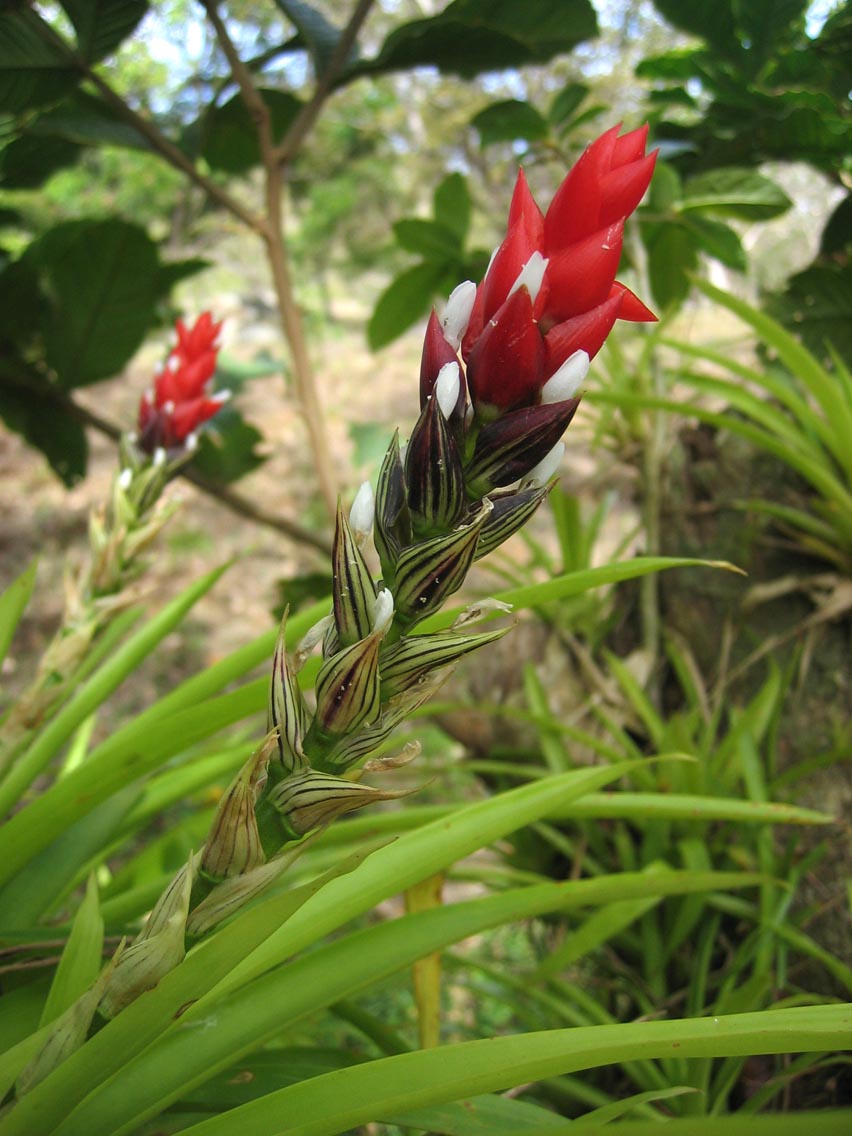
Guzmania monostachia
Scientific classification Edit this classification
Kingdom: Plantae
Clade: Tracheophytes
Clade: Angiosperms
Clade: Monocots
Clade: Commelinids
Order: Poales
Family: Bromeliaceae
Subfamily: Tillandsioideae
Genus: Guzmania
Ruiz & Pav.
Synonyms[1]
  • Caraguata Lindl.
  • Devillea Bertero ex Schult. & Schult.f.
  • Massangea E.Morren
  • Sodiroa Andrews
  • Schlumbergeria E.Morren
  • Thecophyllum André
  • Chirripoa Suess.

Guzmania (tufted airplant) is a genus of over 120 species of flowering plants in the botanical family Bromeliaceae, subfamily Tillandsioideae.[2] They are mainly stemless, evergreen, epiphytic perennials native to Brazil, southern Mexico, Central America, and northern and western South America.[1][3] They are found at altitudes of up to 3,500 m (11,483 ft) in the Andean rainforests.[2]

The genus is named after Spanish-Ecuadorian pharmacist and naturalist, Anastasio Guzmán [es].[4]

Several species of this genus are cultivated as indoor and outdoor garden plants. The best known is Guzmania lingulata (scarlet star) which bears orange and red bracts.

The plant dies after it has produced its flowers in summer, but new plants can easily be propagated from the offsets which appear as the parent plant dies. They are epiphytes and can do well if tied on to pieces of bark with roots bound into sphagnum moss.

Guzmanias require warm temperatures and relatively high humidity. The ascomycete fungus Cochliobolus sativus and other pathogens can cause fatal root rot in plants of this genus if the roots get too wet and cold.[citation needed]

Species

[edit]

As of September 2014, the World Checklist of Selected Plant Families recognizes 215 species, including hybrids.[5]

Notable cultivars

[edit]

Hybrids:

  • cv. 'Rana'
  • Wittmackii-Hybrids
  • Zahnii-Hybrids

References

[edit]
[edit]
Revisions and contributorsEdit on WikipediaRead on Wikipedia
from Grokipedia
Guzmania is a of over 200 of epiphytic, rosette-forming bromeliads in the pineapple family (), subfamily Tillandsioideae, characterized by their tank-type habit where leaves form a central cup that holds water and nutrients absorbed through specialized trichomes. Native to tropical and subtropical regions of the , from and the southeastern United States (including ) through to northern and the , these evergreen herbaceous perennials thrive in humid, shaded forest environments, often growing on branches or rocks as non-parasitic air plants. The typically feature strap-like, flexible leaves in , sometimes with crossbands or stripes, forming funnel-shaped rosettes up to 12–18 inches tall, from which emerge showy, torch-like inflorescences with brightly colored bracts in hues of red, orange, yellow, or pink that last for weeks or months. The actual flowers are small and inconspicuous, usually white or yellow, nested within the bracts, and bloom year-round in their native habitats but are often synchronized in cultivation. Named after 18th-century Spanish naturalist Anastasio , the genus is one of the most diverse in , with species like Guzmania monostachia ( tufted airplant) noted for conservation concerns in due to loss. Widely cultivated as popular houseplants and landscape ornamentals in frost-free regions, Guzmania species are valued for their low-maintenance care requirements, including bright indirect , high , and well-draining conditions, while propagating easily via offsets from the parent rosette. Their ecological role in native ecosystems includes providing and moisture for small and contributing to forest in premontane rainforests and hammocks.

Description

Morphology

Guzmania species are epiphytic, stemless, perennials that form tight rosettes of leaves, typically growing to heights of 0.5 to 3 feet (15–100 cm) with widths of 0.5 to 2 feet (15–60 cm). These plants exhibit a bromeliad growth form, where the overlapping leaves create a central funnel-shaped capable of holding water and nutrients. Roots are short and reduced, serving mainly for anchorage rather than absorption. The leaves are simple, strap-shaped (ligulate), rigid, and leathery, with entire margins and a glossy or smooth surface; they are often scurfy or lepidote (covered in small, peltate scales) on the underside for absorption. Typically 20–50 cm long and 1–3 inches (2.5–7.6 cm) wide, the leaves range in color from dark green to reddish or variegated, arranged in a rosette that spirals polystichously (in multiple ranks) from the base. The is erect and terminal, arising from the rosette center on a scape (flower stalk) that may be shorter than or equal to ; it forms dense spikes, heads, or compound structures (simple to bipinnate) up to 6 inches (15 cm) long, with flowers arranged polystichously. Showy, petal-like bracts dominate the appearance, often inflated and brightly colored in shades of red, orange, yellow, purple, pink, or green, crowding the scape tip and persisting for several months to attract pollinators. In contrast, the true flowers are small (less than 1 inch or 2.5 cm), tubular, and short-lived, emerging from the bracts in clusters of 5 to many per inflorescence; they feature white to yellow petals that are connate (fused) into a short tube, with included stamens and no basal appendages.

Reproduction

Guzmania species exhibit primarily ornithophilous pollination, with flowers producing nectar rich in sugars to attract hummingbirds as the main pollinators, though some display mixed mating systems including selfing. Certain species show entomophilous characteristics, where insects such as bees visit the flowers for nectar, contributing to pollen transfer. The vivid bracts surrounding the inflorescence enhance visual attraction for these pollinators. Flowering in Guzmania is induced by environmental cues, particularly photoperiod and temperature variations, which signal the plant to initiate reproductive development after several years of vegetative growth. The emerges centrally from the rosette of leaves, bearing numerous small flowers that open sequentially over weeks or months, maximizing opportunities. Post-, Guzmania produces dry, septicidal capsules as fruits, each containing many minute adorned with feathery comas (plumose appendages) that promote dispersal by increasing aerodynamic lift and enabling attachment to substrates like tree bark. may also achieve dispersal via animals, such as birds or small mammals interacting with the habitat. As monocarpic plants, Guzmania individuals flower and fruit only once before the parent rosette senesces and dies, typically after 6–13 years depending on growth conditions. However, during or shortly after , the generates 1–3 offsets, or pups, from its base through vegetative propagation, allowing clonal colonies to persist and expand in natural epiphytic or terrestrial settings. This strategy ensures population continuity in fragmented habitats.

Taxonomy

Etymology and history

The genus Guzmania was established in 1802 by the Spanish botanists Hipólito Ruiz López and José Pavón in their work Flora Peruviana et Chilensis. The name honors Anastasio , an 18th-century Spanish pharmacist, naturalist, and explorer who contributed to the study of South American flora and perished in 1807 during an expedition in Ecuador's Llanganates Mountains. 's fieldwork, which included collecting plant specimens across the , inspired the dedication, reflecting the era's growing interest in neotropical amid European scientific expeditions. The earliest described species within the genus was Guzmania lingulata, originally published as Tillandsia lingulata by in his 1753 , based on specimens from the and . This species, characterized by its lingulate leaves and scarlet inflorescence bracts, was not formally placed in Guzmania until 1896, when German botanist Carl Christian Mez transferred it in his monographic treatment of the in Monographiae Phanerogamarum. Mez's work marked a pivotal reorganization of bromeliad genera, distinguishing Guzmania by its superior ovary and free sepals, which helped clarify the boundaries of Tillandsioideae from earlier Linnaean classifications. During the , Guzmania gained prominence through collections by European botanists exploring the tropical , notably Édouard André's expeditions in and from 1875 to 1876, where he gathered over 120 bromeliad specimens, including numerous Guzmania types that expanded the known diversity of the genus. These efforts, alongside those of collectors like William Skinner in , fueled advancements in bromeliad taxonomy by providing material for morphological studies and highlighting the epiphytic adaptations of Guzmania in humid montane forests. Later, in the early , American botanist Lyman built on this foundation through systematic revisions, solidifying Guzmania's role in understanding bromeliad evolutionary patterns.

Classification and phylogeny

Guzmania belongs to the family , subfamily Tillandsioideae, and tribe Tillandsieae. The genus includes 213 accepted as recognized by current taxonomic databases, though this number is subject to ongoing revisions influenced by hybridization events and newly discovered taxa. Phylogenetic analyses place Guzmania in a basal position within tribe Tillandsieae of the core Tillandsioideae, where it forms a monophyletic group sister to a diverse encompassing genera such as , Racinaea, Wallisia, and others. It shares close evolutionary ties with within Tillandsieae, while is resolved in the sister tribe Vrieseeae, highlighting distinct lineages within the subfamily. Molecular studies employing plastid markers like matK, rbcL, trnL-trnF, and rps16 , supplemented by nuclear loci such as PHYC and PRK, have clarified these relationships and revealed an explosive diversification of Guzmania and related core Tillandsioideae lineages. (ITS) sequences have been used but show limitations due to low variability; diversification is linked to Andean uplift approximately 14.2 million years ago, promoting adaptive radiations in montane habitats. Infrageneric groupings in Guzmania remain informal and are primarily delineated by morphological features, including inflorescence structure and leaf characteristics; traditional sections such as sect. Guzmania (characterized by compact spikes) and sect. Saccharoguzmania (with more elongate, saccharine-like s) receive partial support from molecular phylogenies, though some classical divisions lack full corroboration.

Distribution and habitat

Geographic range

Guzmania is a genus of epiphytic and terrestrial bromeliads native to the tropical Americas, with its range extending from southern and in the United States southward through —including countries such as , , , , , and —to northern and western regions of , encompassing , , , , , and parts of , , , and . This broad distribution covers diverse biomes within the Neotropics, reflecting the genus's adaptability to varied climatic conditions across approximately 20 countries and territories. The genus also occurs on numerous Caribbean islands, including , , ( and ), , , and various such as the Leeward and , as well as the Venezuelan . However, Guzmania species are largely absent from the interior lowlands of the , where conditions may be less suitable for their typical epiphytic lifestyle, though they are present in peripheral forested areas of northern and western . In terms of elevation, Guzmania occupies a wide altitudinal gradient, from near in coastal and lowland regions to over 3,500 meters in highland areas, but the majority of species are found in montane forests between 500 and 3,000 meters, where humid environments prevail. Some species, such as those in and certain locales, thrive at lower elevations, while others are restricted to higher altitudes in the Andean cordilleras. This elevational diversity contributes to the genus's overall span across a vast portion of the tropical American landscape.

Ecology

Guzmania species are predominantly epiphytic, colonizing branches in the humid forests and rainforests of the Neotropics, where they thrive in environments with high and persistent moisture. While most grow as epiphytes without parasitizing their hosts, some , such as Guzmania plicatifolia, exhibit terrestrial habits in shaded understories, and others are lithophytic on rocky outcrops in montane regions. These growth forms allow Guzmania to exploit diverse microhabitats within tropical ecosystems, often at mid-elevations where fog and cloud immersion maintain saturated conditions. Key adaptations enable Guzmania to survive in these nutrient-poor, water-variable settings. The tank habit, formed by tightly overlapping rosette leaves, captures and stores rainwater along with falling debris, creating a reservoir that supplies essential nutrients and supports internal hydration during dry spells. Leaf surfaces are densely covered with peltate trichomes, specialized scales that rapidly absorb atmospheric moisture and dissolved nutrients, compensating for the lack of soil contact. These plants tolerate high relative humidity levels, often 80–100%, and moderate shade in the forest canopy, with some species employing crassulacean acid metabolism (CAM) photosynthesis to minimize water loss in fluctuating conditions. Ecologically, Guzmania plays vital roles in forest dynamics by providing microhabitats within their water-filled tanks, which shelter diverse including , frogs, , and that contribute to nutrient cycling and . These phytotelmata enhance local , supporting endemic species and fostering complex food webs that boost overall epiphyte diversity in the canopy. Certain Guzmania species serve as indicators of undisturbed habitats, as their abundance declines sharply with even minor perturbations to and light regimes. Montane populations of Guzmania face significant threats from , which fragments habitats and reduces canopy cover essential for maintaining microclimatic stability, and from , which alters patterns and increases frequency in cloud forests. These pressures exacerbate vulnerability in species adapted to narrow elevational ranges, leading to population declines and potential local extinctions.

Cultivation

Growing requirements

Guzmania plants, being epiphytes in their natural habitat, require conditions that mimic the shaded, humid environments of tropical forests when cultivated as ornamentals. They thrive in bright indirect light, typically ranging from 1,000 to 2,000 foot-candles, to promote healthy growth without risking leaf scorch from direct ; east- or west-facing windows are ideal indoors. Daytime temperatures should be maintained between 18–27°C (65–80°F), with nighttime minima not dropping below 15°C (59°F) to prevent stress or damage. Relative humidity levels of 50–70% are essential, which can be achieved through regular misting or placement in naturally humid areas like bathrooms or kitchens. For soil, use a well-draining epiphytic mix composed of elements like orchid bark, sphagnum moss, and to ensure and prevent . Watering involves filling the central leaf cup () with room-temperature, dechlorinated weekly, allowing it to drain slightly between refills, and flushing the tank monthly to avoid stagnation; supplemental misting of leaves enhances . During the active growing season (spring to fall), apply a diluted, balanced liquid fertilizer at half strength monthly to the central tank or as a foliar spray. Guzmania are popular as houseplants in temperate regions due to their tolerance for indoor conditions, but outdoors they suit USDA hardiness zones 10–12 in shaded, frost-free locations.

Propagation and care

Guzmania are primarily propagated vegetatively through offsets, or pups, that emerge at the base of the mature plant after it flowers. These pups should be separated when they reach one-third to one-half the size of the parent to promote rooting success. Using a sharp, sterilized knife or pruners, cut the pup close to the parent's base, retaining any developing roots if present. Pot each pup individually in a 2- to 4-inch with a well-draining, peat-based mix amended with or bark. Place in bright, indirect light with high humidity; roots typically form within six months, after which the young can be treated as mature. Seed is uncommon in cultivation due to the lengthy time to maturity but involves sowing fresh seeds on moist sphagnum moss or a similar sterile medium under a covered environment to maintain high . occurs in 10 to 14 days at temperatures between 70°F and 80°F with bright, indirect light. Once seedlings develop 1.5 to 2 inches of growth, transplant them to small pots; full maturity requires 3 to 6 years. Ongoing maintenance includes repotting every 2 to 3 years or when fill the , using a pot only 2 inches larger to accommodate the shallow . The central cup of the rosette should be kept one-quarter full of soft or , flushed monthly to avoid stagnation and mineral buildup. As Guzmania is monocarpic, the parent plant dies after flowering; remove the faded bloom and dead foliage at the base to redirect energy to the pups, which can then be nurtured or separated. Commercial nurseries often use for mass propagation of Guzmania, producing uniform, pathogen-free efficiently.

Pests and diseases

Guzmania , like other bromeliads, are susceptible to several common pests during cultivation, particularly when grown indoors or in humid environments. Scale insects, mealybugs, and spider mites are the most frequent invaders, often appearing on leaves and stems where they feed on plant sap, leading to yellowing and . may target young growth, clustering on tender shoots and causing distortion. These pests can be effectively managed with applications of or , applied thoroughly to affected areas and repeated as needed to target all life stages. Diseases in cultivated Guzmania primarily stem from cultural mismanagement, with arising from overwatering that creates waterlogged conditions favorable to pathogens like Pectobacterium species. Fungal leaf spots, often caused by organisms such as Exserohilum, manifest as dark, oval lesions on foliage, exacerbated by low air circulation that traps moisture. , resulting from poor drainage in the potting medium, leads to mushy roots and eventual decline. In outdoor settings, bromeliad weevils (Metamasius callizona) pose a threat, boring into bases and causing , discoloration, and structural collapse. Prevention strategies focus on vigilant care tailored to Guzmania's preference for high humidity with adequate airflow. new for at least two weeks to inspect for pests before integrating them into collections. Maintain by regularly flushing the central leaf cup with fresh water to prevent stagnation and bacterial buildup, while ensuring the potting medium drains quickly to avoid root issues. Promoting good air circulation around the plant reduces fungal risks, and for outdoor exposures in weevil-prone areas like , monitor for early signs and remove infested material promptly.

Species and cultivars

Species diversity

The genus Guzmania encompasses 213 accepted species, as recognized by the database maintained by the Royal Botanic Gardens, . This tally reflects extensive taxonomic revisions, with approximately 10-15 new species described since 2010, driven by intensified field surveys in tropical montane regions. These discoveries highlight the genus's understudied diversity, particularly in remote Andean habitats where cryptic has been uncovered through targeted expeditions. Species diversity within Guzmania is concentrated in the , where environmental heterogeneity fosters high ; and each support over 40 , representing the epicenters of genus richness. Morphological variation is especially evident in bract coloration, which spans vibrant reds, oranges, and yellows to attract pollinators, and in size, ranging from compact forms under 10 cm to expansive structures exceeding 30 cm, adaptations linked to local ecological niches such as and gradients. Natural interspecific hybridization occurs frequently in contact zones between closely related , leading to intermediate forms that blur taxonomic boundaries. efforts, using markers like matK and rbcL, have encountered challenges in delimiting these hybrids due to reticulate and incomplete lineage sorting, often requiring integrative approaches combining genetic, morphological, and ecological for accurate resolution. Recent taxonomic updates include the addition of Guzmania panamensis in 2013, distinguished by its elongated peduncle and red floral bracts, from central , and Guzmania sanluisensis in 2025, a endemic from northern with unique leaf and traits.

Notable species

Guzmania lingulata, commonly known as the scarlet star, is a prominent in the , recognized for its bright red bracts that form a striking star-shaped . Native to regions from southeastern through to northern and central , including , it thrives in wet habitats as an . This serves as the of the Guzmania, first described by in 1753 under the name Tillandsia lingulata before being . Guzmania monostachia, the tufted airplant, features white flowers emerging from green to salmon-pink bracts on a single spike. It is distributed across , the islands, , and , where it grows as an in humid forested wetlands. The species is threatened in parts of its range, particularly in , due to habitat loss and invasive pests like the Mexican bromeliad weevil, leading to its critically imperiled status in those areas. Guzmania sanguinea, often called the blood-red guzmania, is distinguished by its intense red and foliage that develops vivid red pigmentation, particularly on the upper leaf surfaces and bracts. Endemic to Andean regions including , , , and extending to and Trinidad-Tobago, it inhabits wet tropical montane forests as an . This species is notable for its dramatic coloration, which has contributed to its popularity in ornamental . Guzmania berteroniana, a widespread epiphytic bromeliad, produces inflorescences with to dark-red s and white to purple-tinged flowers, forming a dense rosette of smooth, glossy leaves. Native to , , and the , it occurs in tropical wet forests but is commonly cultivated worldwide for its ornamental value due to the long-lasting colorful display.

Cultivars and hybrids

Guzmania cultivars and hybrids have been developed primarily for ornamental purposes, emphasizing vibrant colors, compact growth, and extended bloom duration to suit indoor and potted plant markets. Many popular selections derive from G. lingulata, a noted for its scarlet bracts, with breeding efforts focusing on enhancing hues and resistance to diseases like . Notable cultivars include 'Red Riding Hood', a compact hybrid with bright red inflorescences and deep red pigmentation at the leaf bases, prized for its showy display and suitability as a tabletop . Similarly, 'Orangeade', a G. lingulata selection, features vivid orange bracts that provide striking contrast against green foliage, making it a favorite for arrangements. These varieties exemplify selection for dwarf habits and bold coloration to appeal to indoor growers. Hybridization within Guzmania began in earnest in the mid-20th century, with intensified breeding since the to produce longer-lasting color retention and improved disease resistance, often through crosses involving G. lingulata and G. conifera. Intergeneric hybrids, such as those in the ×Guzvriesea group (e.g., ×Guzvriesea 'Mirabilis' from Guzmania zahnii × ), combine traits from Guzmania and for novel forms and enhanced vigor. Over 400 cultivars and hybrids are registered with the Bromeliad Society International, reflecting extensive development for commercial appeal. Commercially, Guzmania hybrids hold significant value in the global industry, with major production centers in , where micropropagation techniques support large-scale ornamental bromeliad cultivation, and , a key exporter of tissue-cultured . These hybrids are primarily grown as potted specimens for indoor decoration, selected for traits like enhanced hues in reds, oranges, and yellows, as well as compact sizes ideal for home environments.

References

Add your contribution
Related Hubs
User Avatar
No comments yet.