Hubbry Logo
Metal detectorMetal detectorMain
Open search
Metal detector
Community hub
Metal detector
logo
8 pages, 0 posts
0 subscribers
Be the first to start a discussion here.
Metal detector
Metal detector
from Wikipedia
U.S. Army soldiers use a military standard metal detector

A metal detector is an instrument that detects the nearby presence of metal. Metal detectors are useful for finding metal objects on the surface, underground, and under water. A metal detector typically consists of a control box, an adjustable shaft, and a variable-shaped pickup coil. When the coil nears metal, the control box signals its presence with a tone, numerical reading, light, or needle movement.[1] Signal intensity typically increases with proximity or metal size and composition. A common type are stationary "walk through" metal detectors used at access points in prisons, courthouses, airports and psychiatric hospitals to detect concealed metal weapons on a person's body.

The simplest form of a metal detector consists of an oscillator producing an alternating current that passes through a coil producing an alternating magnetic field. If a piece of electrically conductive metal is close to the coil, eddy currents will be induced (inductive sensor) in the metal, and this produces a magnetic field of its own. If another coil is used to measure the magnetic field (acting as a magnetometer), the change in the magnetic field due to the metallic object can be detected.

The first industrial metal detectors came out in the 1960s, and were used for finding minerals, among other things. Metal detectors help find land mines. They also detect weapons like knives and guns, which is important for airport security. People most commonly use them to search for buried objects, like in archaeology and treasure hunting. Metal detectors are also used to detect foreign bodies in food, and in the construction industry to detect steel reinforcing bars in concrete and pipes and wires buried in walls and floors.

History and development

[edit]
An early metal detector, in 1919, used to find un-exploded bombs in France after World War I

First idea

[edit]

The first metal detector was likely the simple electric conduction metal detector ca. 1830.[2] Electric conduction was also used to locate metal ore bodies by measuring the conductivity between metal rods driven into the ground.

In 1841, Professor Heinrich Wilhelm Dove published an invention he called the "differential inductor".[3] It was a 4-coil induction balance, with 2 glass tubes each having 2 well-insulated copper wire solenoids wound around them. Charged Leyden jars (high-voltage capacitors) were discharged through the 2 primary coils; this current surge induced a voltage in the secondary coils.[4] When the secondary coils were wired in opposition, the induced voltages cancelled as confirmed by the Professor holding the ends of the secondary coils. When a piece of metal was placed inside one glass tube the Professor received a shock. This then was the first magnetic induction metal detector, and the first pulse induction metal detector.

In 1862, Italian General Giuseppe Garibaldi was wounded in the foot. It was difficult to distinguish between bullet, bone, and cartilage. So Professor Favre of Marseilles quickly built a simple probe that was inserted into the track of the bullet. It had two sharp points connected to a battery and a bell. Contact with metal completed the circuit and rang the bell.[5] In 1867, Mr. Sylvan de Wilde had a similar detector and an extractor also wired to a bell.[6] In 1870, Gustave Trouvé, a French electrical engineer also had a similar device however his buzzer made a different sound for lead and iron.[7] The electric bullet locators were in use until the advent of X-rays.

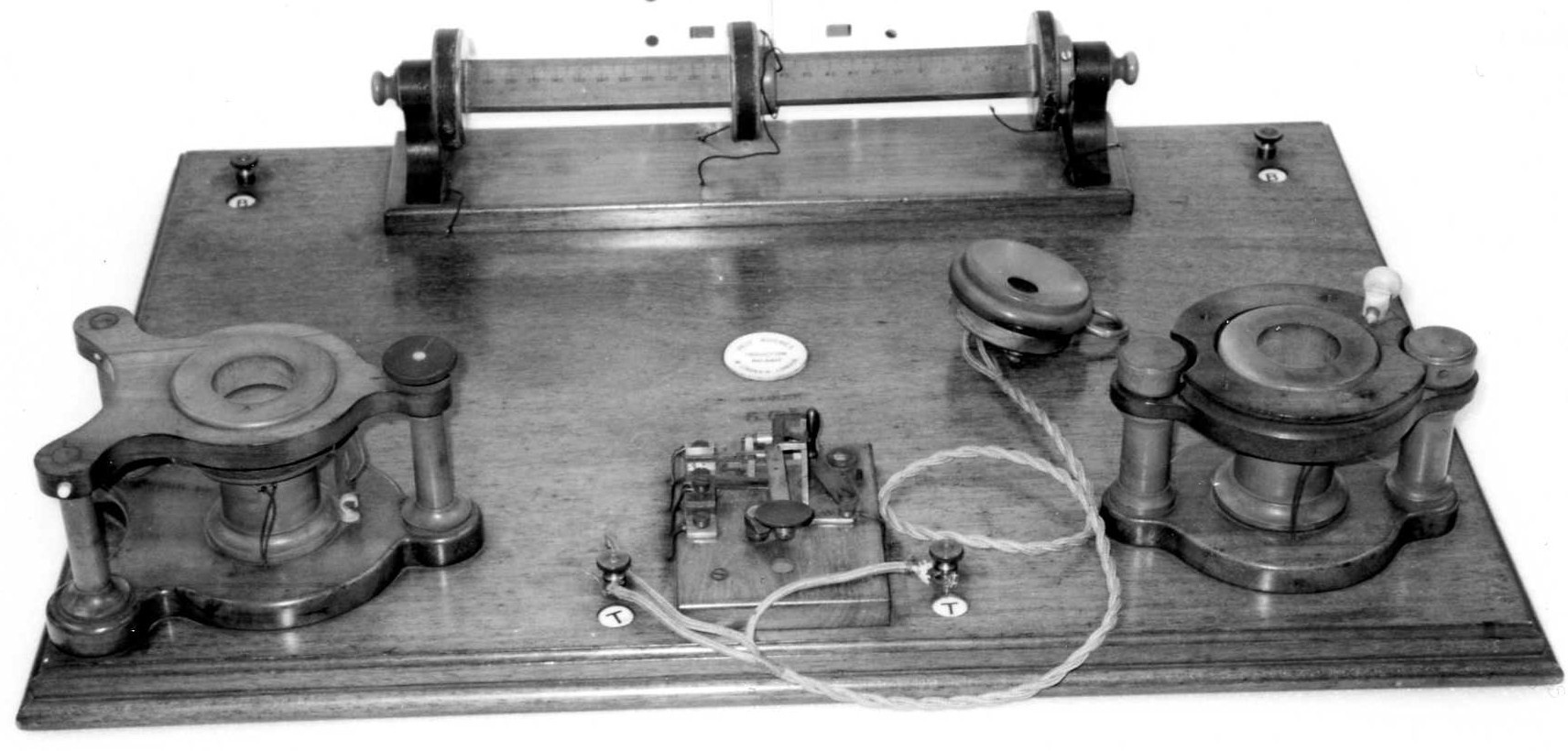
In late 1878 and early 1879, Professor (of music) David Edward Hughes published his experiments with the 4-coil induction balance.[8] He used his own recent invention the microphone and a ticking clock to generate regular pulses and a telephone receiver as detector. To measure the strength of the signals he invented a coaxial 3-coil induction balance which he called the "electric sonometer".[9] Hughes did much to popularize the induction balance, quickly leading to practical devices that could identify counterfeit coins. In 1880 Mr. J. Munro, C.E. suggested the use of the 4-coil induction balance for metal prospecting.[10] Hughes's coaxial 3-coil induction balance would also see use in metal detecting.

In July 1881, Alexander Graham Bell initially used a 4-coil induction balance to attempt to locate a bullet lodged in the chest of American President James Garfield.[11] After much experimenting the best bullet detection range he achieved was only 2 inches (5 centimeters). He then used his own earlier discovery, the partially overlapping 2-coil induction balance, and the detection range increased to 5 inches (12 centimeters). But the attempt was still unsuccessful because the metal coil spring bed Garfield was lying on confused the detector. Bell's 2-coil induction balance would go on to evolve into the popular double D coil.

On December 16, 1881, Captain Charles Ambrose McEvoy applied for British Patent No. 5518, Apparatus for Searching for Submerged Torpedoes, &c., which was granted Jun 16 1882. His US269439 patent application of Jul 12 1882 was granted Dec 19 1882.[12] It was a 4-coil induction balance for detecting submerged metallic torpedoes and iron ships and the like.[13] Given the development time involved this may have been the earliest known device specifically constructed as a metal detector using magnetic induction.

In 1892, George M. Hopkins described an orthogonal 2-coil induction balance for metal detecting.[14]

In 1915, Professor Camille Gutton developed a 4-coil induction balance to detect unexploded shells in farmland of former battlefields in France.[15] Unusually both coil pairs were used for detection.[16] The 1919 photo at the right is a later version of Gutton's detector.

Modern developments

[edit]

The modern development of the metal detector began in the 1920s. Gerhard Fischer had developed a system of radio direction-finding, which was to be used for accurate navigation. The system worked extremely well, but Fischer noticed there were anomalies in areas where the terrain contained ore-bearing rocks. He reasoned that if a radio beam could be distorted by metal, then it should be possible to design a machine which would detect metal using a search coil resonating at a radio frequency. In 1925 he applied for, and was granted, the first patent for an electronic metal detector. Although Gerhard Fischer was the first person granted a patent for an electronic metal detector, the first to apply was Shirl Herr, a businessman from Crawfordsville, Indiana. His application for a hand-held Hidden-Metal Detector was filed in February 1924, but not patented until July 1928. Herr assisted Italian leader Benito Mussolini in recovering items remaining from the Emperor Caligula's galleys at the bottom of Lake Nemi, Italy, in August 1929. Herr's invention was used by Admiral Richard Byrd's Second Antarctic Expedition in 1933, when it was used to locate objects left behind by earlier explorers. It was effective up to a depth of eight feet.[17] However, it was one Lieutenant Józef Stanisław Kosacki, a Polish officer attached to a unit stationed in St Andrews, Scotland, during the early years of World War II, who refined the design into a practical Polish mine detector.[18] These units were still quite heavy, as they ran on vacuum tubes, and needed separate battery packs.

The design invented by Kosacki was used extensively during the Second Battle of El Alamein when 500 units were shipped to Field Marshal Montgomery to clear the minefields of the retreating Germans, and later used during the Allied invasion of Sicily, the Allied invasion of Italy and the Invasion of Normandy.[19]

As the creation and refinement of the device was a wartime military research operation, the knowledge that Kosacki created the first practical metal detector was kept secret for over 50 years.

Beat frequency induction

[edit]

Many manufacturers of these new devices brought their own ideas to the market. White's Electronics of Oregon began in the 1950s by building a machine called the Oremaster Geiger Counter. Another leader in detector technology was Charles Garrett, who pioneered the BFO (beat frequency oscillator) machine. With the invention and development of the transistor in the 1950s and 1960s, metal detector manufacturers and designers made smaller, lighter machines with improved circuitry, running on small battery packs. Companies sprang up all over the United States and Britain to supply the growing demand. Beat Frequency Induction requires movement of the detector coil; akin to how swinging a conductor near a magnet induces an electric current.

Refinements

[edit]

Modern top models are fully computerized, using integrated circuit technology to allow the user to set sensitivity, discrimination, track speed, threshold volume, notch filters, etc., and hold these parameters in memory for future use. Compared to just a decade ago, detectors are lighter, deeper-seeking, use less battery power, and discriminate better.

State-of-the-art metal detectors have further incorporated extensive wireless technologies for the earphones, connect to Wi-Fi networks and Bluetooth devices. Some also utilize built in GPS locator technology to keep track of searching location and the location of items found. Some connect to smartphone applications to further extend functionality.

Discriminators

[edit]

The biggest technical change in detectors was the development of a tunable induction system. This system involved two coils that are electro-magnetically tuned. One coil acts as an RF transmitter, the other as a receiver; in some cases these can be tuned to between 3 and 100 kHz. When metal is in their vicinity, a signal is detected owing to eddy currents induced in the metal. What allowed detectors to discriminate between metals was that every metal has a different phase response when exposed to alternating current: longer waves (low frequency) penetrate deeper into the ground, and select for high-conductivity targets like silver and copper; shorter waves (higher frequency) are less ground-penetrating, and select for low-conductivity targets like iron. Unfortunately, high frequency is also sensitive to ground mineralization interference. This selectivity or discrimination allowed detectors to be developed that could selectively detect desirable metals, while ignoring undesirable ones.

Even with discriminators, it was still a challenge to avoid undesirable metals, because some of them have similar phase responses (e.g. tinfoil and gold), particularly in alloy form. Thus, improperly tuning out certain metals increased the risk of passing over a valuable find. Another disadvantage of discriminators was that they reduced the sensitivity of the machines.

New coil designs

[edit]

Coil designers also tried out innovative designs. The original induction balance coil system consisted of two identical coils placed on top of one another. Compass Electronics produced a new design: two coils in a D shape, mounted back-to-back to form a circle. The system was widely used in the 1970s, and both concentric and double D type (or widescan as they became known) had their fans. Another development was the invention of detectors which could cancel out the effect of mineralization in the ground. This gave greater depth, but was a non-discriminate mode. It worked best at lower frequencies than those used before, and frequencies of 3 to 20 kHz were found to produce the best results. Many detectors in the 1970s had a switch which enabled the user to switch between the discriminate mode and the non-discriminate mode. Later developments switched electronically between both modes. The development of the induction balance detector would ultimately result in the motion detector, which constantly checked and balanced the background mineralization.

Pulse induction

[edit]

At the same time, developers were looking at using a different technique in metal detection called pulse induction.[20] Unlike the beat frequency oscillator or the induction balance machines, which both used a uniform alternating current at a low frequency, the pulse induction (PI) machine simply magnetized the ground with a relatively powerful, momentary current through a search coil. In the absence of metal, the field decayed at a uniform rate, and the time it took to fall to zero volts could be accurately measured. However, if metal was present when the machine fired, a small eddy current would be induced in the metal, and the time for sensed current decay would be increased. These time differences were minute, but the improvement in electronics made it possible to measure them accurately and identify the presence of metal at a reasonable distance. These new machines had one major advantage: they were mostly impervious to the effects of mineralization, and rings and other jewelry could now be located even under highly mineralized black sand. The addition of computer control and digital signal processing have further improved pulse induction sensors.

One particular advantage of using a pulse induction detector includes the ability to ignore the minerals contained within heavily mineralized soil; in some cases the heavy mineral content may even help the PI detector function better.[citation needed] Where a VLF detector is affected negatively by soil mineralization, a PI unit is not.

Uses

[edit]

Large portable metal detectors are used by archaeologists and treasure hunters to locate metallic items, such as jewelry, coins, clothes buttons and other accessories, bullets, and other various artifacts buried beneath the surface.

Archaeology

[edit]

Metal detectors are widely used in archaeology with the first recorded use by military historian Don Rickey in 1958 who used one to detect the firing lines at Little Big Horn. However archaeologists oppose the use of metal detectors by "artifact seekers" or "site looters" whose activities disrupt archaeological sites.[21] The problem with use of metal detectors in archaeological sites or hobbyist who find objects of archeological interest is that the context that the object was found in is lost and no detailed survey of its surroundings is made. Outside of known sites the significance of objects may not be apparent to a metal detector hobbyist.[22]

England and Wales

[edit]

In England and Wales, metal detecting is legal provided that the landowner has granted permission and that the area is not a Scheduled Ancient Monument, a site of special scientific interest (SSSI), or covered by elements of the Countryside Stewardship Scheme.

The Treasure Act 1996 governs whether or not items that have been discovered are defined as treasure.[23] Finders of items that the Act defines as treasure must report their finds to the local coroner.[24] If they discover items which are not defined as treasure but that are of cultural or historical interest, finders can voluntarily report them to the Portable Antiquities Scheme[25] and the UK Detector Finds Database.

France

[edit]

The sale of metal detectors is allowed in France. The first use of metal detectors in France which led to archaeological discoveries occurred in 1958: people living in the city of Graincourt-lès-Havrincourt who were seeking copper from World War I bombshell with military mine detector found a Roman silver treasure.[26] The French law on metal detecting is ambiguous because it refers only to the objective pursued by the user of a metal detector. The first law to regulate the use of metal detectors was Law No. 89–900 of 18 December 1989. This last is resumed without any change in Article L. 542–1 of the code of the heritage, which states that "no person may use the equipment for the detection of metal objects, for the purpose of research monuments and items of interest prehistory, history, art and archeology without having previously obtained an administrative authorization issued based on the applicant's qualification and the nature and method of research."[citation needed]

Outside the research of archaeological objects, using a metal detector does not require specific authorization, except that of the owner of the land. Asked about Law No. 89–900 of 18 December 1989 by a member of parliament, Jack Lang, Minister of Culture at the time, replied by letter the following: "The new law does not prohibit the use of metal detectors but only regulates the use. If the purpose of such use is the search for archaeological remains, prior authorization is required from my services. Apart from this case, the law ask to be reported to the appropriate authorities an accidental discovery of archaeological remains." The entire letter of Jack Lang was published in 1990 in a French metal detection magazine,[27] and then, to be visible on the internet, scanned with permission of the author of the magazine on a French metal detection website.[28]

Northern Ireland

[edit]

In Northern Ireland, it is an offence to be in possession of a metal detector on a scheduled or a state care site without a licence from the Department for Communities. It is also illegal to remove an archaeological object found with a detector from such a site without written consent.[29][30][31]

Republic of Ireland

[edit]

In the Republic of Ireland, laws against metal detecting are very strict: it is illegal to use a detection device to search for archaeological objects anywhere within the state or its territorial seas without the prior written consent of the Minister for Culture, Heritage and the Gaeltacht, and it is illegal to promote the sale or use of detection devices for the purposes of searching for archaeological objects.[32]

Scotland

[edit]

Under the Scots law principle of bona vacantia, the Crown has claim over any object of any material value where the original owner cannot be traced.[33] There is also no 300 year limit to Scottish finds. Any artifact found, whether by metal detector survey or from an archaeological excavation, must be reported to the Crown through the Treasure Trove Advisory Panel at the National Museums of Scotland. The panel then determines what will happen to the artifacts. Reporting is not voluntary, and failure to report the discovery of historic artifacts is a criminal offence in Scotland.

United States

[edit]

The sale of metal detectors is allowed in the United States. People can use metal detectors in public places (parks, beaches, etc.) and on private property with the permission of the owner of the site. In the United States, cooperation between archeologists hunting for the location of colonial-era Native American villages and hobbyists has been productive.[22]

As a hobby

[edit]
A man metal detecting on a beach in Japan, 2016
This 156-troy-ounce (4.9 kg) gold nugget, known as the Mojave Nugget, was found in 1977 by an individual prospector in the Southern California Desert using a metal detector.

There are various types of hobby activities involving metal detectors:

  • Coin shooting is specifically targeting coins.[34] Some coin shooters conduct historical research to locate sites with potential to give up historical and collectible coins.
  • Prospecting is looking for valuable metals like gold, silver, and copper in their natural forms, such as nuggets or flakes.[35]
  • Metal detectors are also used to search for discarded or lost,[36] valuable man-made objects such as jewelry, mobile phones, cameras and other devices. Some metal detectors are waterproof, to allow the user to search for submerged objects in areas of shallow water.
  • General metal detecting is very similar to coin shooting except the user is after any type of historical artifact. Detectorists may be dedicated to preserving historical artifacts, and often have considerable expertise. Coins, bullets, buttons, axe heads, and buckles are just a few of the items that are commonly found by relic hunters; in general the potential is far greater in Europe and Asia than in many other parts of the world. More valuable finds in Britain alone include the Staffordshire Hoard of Anglo-Saxon gold, sold for £3,285,000, the gold Celtic Newark Torc, the Ringlemere Cup, West Bagborough Hoard, Milton Keynes Hoard, Roman Crosby Garrett Helmet, Stirling Hoard, Collette Hoard and thousands of smaller finds.
  • Beach combing is hunting for lost coins or jewelry on a beach. Beach hunting can be as simple or as complicated as one wishes to make it. Many dedicated beach hunters also familiarize themselves with tide movements and beach erosion.
  • Metal detecting clubs exist for hobbyists to learn from others, show off finds from their hunts and to learn more about the hobby.

Hobbyists often use their own metal detecting lingo when discussing the hobby with others.[37][importance?]

Politics and conflicts in the metal detecting hobby in the United States

[edit]

The metal detecting community and professional archaeologists have different ideas related to the recovery and preservation of historic finds and locations. Archaeologists claim that detector hobbyists take an artifact-centric approach, removing these from their context resulting in a permanent loss of historical information. Archaeological looting of places like Slack Farm in 1987 and Petersburg National Battlefield serve as evidence against allowing unsupervised metal detecting in historic locations.[38]

Security screening

[edit]
Metal detectors at Berlin Schönefeld Airport

In 1926, two Leipzig, Germany scientists installed a walk-though enclosure at a factory, to ensure that employees were not exiting with prohibited metallic items.[39]

A series of aircraft hijackings led the United States in 1972 to adopt metal detector technology to screen airline passengers, initially using magnetometers that were originally designed for logging operations to detect spikes in trees.[40] The Finnish company Outokumpu adapted mining metal detectors in the 1970s, still housed in a large cylindrical pipe, to make a commercial walk-through security detector.[41] The development of these systems continued in a spin-off company and systems branded as Metor Metal Detectors evolved in the form of the rectangular gantry now standard in airports. In common with the developments in other uses of metal detectors both alternating current and pulse systems are used, and the design of the coils and the electronics has moved forward to improve the discrimination of these systems. In 1995 systems such as the Metor 200 appeared with the ability to indicate the approximate height of the metal object above the ground, enabling security personnel to more rapidly locate the source of the signal. Smaller hand held metal detectors are also used to locate a metal object on a person more precisely.

Industrial metal detectors

[edit]

Industrial metal detectors are used in the pharmaceutical, food, beverage, textile, garment, plastics, chemicals, lumber, mining, and packaging industries. Contamination of food by metal shards from broken processing machinery during the manufacturing process is a major safety issue in the food industry. Most food processing equipment is made of stainless steel, and other components made of plastic or elastomers can be manufactured with embedded metallic particles, allowing them to be detected as well. Metal detectors for this purpose are widely used and integrated into the production line.

Current practice at garment or apparel industry plants is to apply metal detecting after the garments are completely sewn and before garments are packed to check whether there is any metal contamination (needle, broken needle, etc.) in the garments. This needs to be done for safety reasons.

The industrial metal detector was developed by Bruce Kerr and David Hiscock in 1947. The founding company Goring Kerr[42] pioneered the use and development of the first industrial metal detector. Mars Incorporated was one of the first customers of Goring Kerr using their Metlokate metal detector to inspect Mars bars.

The basic principle of operation for the common industrial metal detector is based on a 3-coil design. This design utilizes an AM (amplitude modulated) transmitting coil and two receiving coils one on either side of the transmitter. The design and physical configuration of the receiving coils are instrumental in the ability to detect very small metal contaminates of 1 mm or smaller. Today modern metal detectors continue to utilize this configuration for the detection of tramp metal.

The coil configuration is such that it creates an opening whereby the product (food, plastics, pharmaceuticals, etc.) passes through the coils. This opening or aperture allows the product to enter and exit through the three-coil system, producing an equal but mirrored signal on the two receiving coils. The resulting signals are summed together effectively nullifying each other. Fortress Technology innovated a new feature, that allows the coil structure of their BSH Model to ignore the effects of vibration,[43] even when inspecting conductive products.[44]

When a metal contaminant is introduced into the product an unequal disturbance is created. That creates a very small electronic signal. After suitable amplification a mechanical device mounted to the conveyor system is signaled to remove the contaminated product from the production line. This process is completely automated and allows manufacturing to operate uninterrupted.

Civil engineering

[edit]

In civil engineering, special metal detectors (cover meters) are used to locate reinforcement bars inside walls.

The most common type of metal detector is a hand-held metal detector or coil-based detectors using oval-shaped disks with built-in copper coils. The search coil works as sensing probe and must be moved over the ground to detect potential metal targets buried underground. When the search coil detects metal objects, the device gives an audible signal via speaker or earphone. In most units, the feedback is an analog or digital indicator.

The metal detectors were first invented and manufactured commercially in the United States by Fisher Labs in the 1930s; other companies like Garrett established and developed the metal detectors in terms of technology and features in the following decades.

Military

[edit]

The first metal detector proved inductance changes to be a practical metal detection technique, and it served as the prototype for all subsequent metal detectors.

Initially these machines were huge and complex. After Lee de Forest invented the triode in 1907 metal detectors used vacuum tubes to operate and became more sensitive but still quite cumbersome. One of the early common uses of the first metal detectors, for example, was the detection of landmines and unexploded bombs in a number of European countries following the First and Second World Wars.

Uses and benefits

[edit]

Metal detectors have several military uses, including:

  • Exposing mines planted during the war or after the end of the war
  • Detecting dangerous explosives and cluster bombs
  • Searching people for weapons and explosives using hand-held metal detectors

War mine detection

[edit]

Demining, also known as mine removal, is the method of clearing a field of landmines. The aim of military operations is to clear a path through a minefield as quickly as possible, which is mostly accomplished using equipment like mine plows and blast waves.

Humanitarian demining aims to clear all landmines to a certain depth and make the land secure for human use. Landmine detection techniques have been studied in various forms. Detection of mines can be done by a specially designed metal detector tuned to detect mines and bombs. Electromagnetic technologies have been used in conjunction with ground-penetrating radar. Specially trained dogs are often used to focus the search and confirm that an area has been cleared, mines are often cleared using mechanical equipment such as flails and excavators.

Technology development

[edit]

Gerhard Fischer

[edit]

Gerhard Fischer developed a portable metal detector in 1925. His model was first marketed commercially in 1931; he was responsible for the first large-scale hand-held metal detector development.

Gerhard Fisher studied electronics at the University of Dresden before emigrating to the United States. When working as a research engineer in Los Angeles, he came up with the concept of a portable metal detector while working with aircraft radio detection finders. Fisher shared the concept with Albert Einstein, who foresaw the widespread use of hand-held metal detectors.

Fisher, the founder of Fisher Research Laboratory, was contracted by the Federal Telegraph Company and Western Air Express to establish airborne direction finding equipment in the late 1920s. He received some of the first patents in the area of radio-based airborne direction finding. He came across some unusual errors in the course of his work; once he figured out what was wrong, he had the foresight to apply the solution to a totally unrelated area, metal and mineral detection."

Fisher received the patent for the first portable electronic metal detector in 1925. In 1931, he marketed his first Fisher device to the general public, and he established a famous Fisher Labs company that started to manufacture and develop hand-held metal detectors and sell it commercially.[45]

Charles Garrett

[edit]

Despite the fact that Fisher was the first to receive a patent for an electronic metal detector, he was only one of many who improved and mastered the device. Charles Garrett, the founder of Garrett Metal Detectors, was another key figure in the creation of today's metal detectors.

Garrett, an electrical engineer by profession, began metal detecting as a pastime in the early 1960s. He tried a number of machines on the market but couldn't find one that could do what he needed. As a result, he started developing his own metal detector. He was able to develop a system that removed oscillator drift, as well as many special search coils that he patented, both of which effectively revolutionized metal detector design at the time.

To present day

[edit]

In the 1960s, the first industrial metal detectors were produced, and they were widely used for mineral prospecting and other industrial purposes. De-mining (the detection of landmines), the detection of weapons such as knives and guns (particularly in airport security), geophysical prospecting, archaeology, and treasure hunting are just some of the applications.

Metal detectors are also used to detect foreign bodies in food, as well as steel reinforcement bars in concrete and pipes. The building industry uses them to find wires buried in walls or floors.

Discriminators and circuits

[edit]

The development of transistors, discriminators, modern search coil designs, and wireless technology significantly impacted the design of metal detectors as we know them today: lightweight, compact, easy-to-use, and deep-seeking systems. The invention of a tunable induction device was the most significant technological advancement in detectors. The method employs two tuned coils to produce electromagnetically induced acoustic noise. One coil serves as an RF transmitter, while the other serves as a receiver; in some situations, these coils may be tuned to frequencies ranging from 3 to 100 kHz.

Due to eddy currents induced in the metal, a signal is detected when metal is present. The fact that every metal has a different phase response when exposed to alternating current allowed detectors to differentiate between metals. Longer waves (low frequency) penetrate the ground deeper and select for high conductivity targets like silver and copper, while shorter waves (higher frequency) select for low conductivity targets like iron. Unfortunately, ground mineralization interference affects high frequency as well. This selectivity or discrimination allowed the development of detectors that can selectively detect desirable metals.

Even with discriminators, avoiding undesirable metals was difficult because some of them have similar phase responses (for example, tin foil and gold), particularly in alloy form. As a result, tuning out those metals incorrectly increased the chance of missing a valuable discovery. Discriminators also had the downside of lowering the sensitivity of the devices.

See also

[edit]

Notes

[edit]

References

[edit]
Revisions and contributorsEdit on WikipediaRead on Wikipedia
from Grokipedia
A metal detector is an electronic instrument that employs electromagnetic induction to detect nearby metallic objects, both ferrous and nonferrous, by generating a primary magnetic field that induces eddy currents in conductive targets, which in turn create a detectable secondary field. The foundational prototype emerged in 1881 when Alexander Graham Bell constructed an induction balance device to locate the bullet in assassinated U.S. President James A. Garfield, though it failed due to metal bed springs interfering with the signal. The first portable model suitable for practical field use was developed in 1925 by German-American engineer Gerhard Fischer, who patented it in 1931 and began commercial production, initially for mineral prospecting and later adapted for treasure hunting and military applications such as unexploded ordnance detection. Modern metal detectors operate via technologies like very low frequency (VLF) for discrimination between metals or pulse induction (PI) for deeper penetration in mineralized soils, enabling applications in recreational treasure hunting—where users have recovered coins, jewelry, and relics—archaeological site surveys to pinpoint buried artifacts without extensive excavation, and security screening at airports, courthouses, and events to identify concealed weapons or contraband. While these devices have facilitated millions of amateur and professional finds, their unregulated use has sparked debates over cultural heritage preservation, as unrecorded recoveries can sever artifacts from contextual data essential for historical interpretation.

Principles of Operation

Metal detection methods for buried objects can be broadly classified as passive or active. Passive detection, exemplified by magnetic gradiometers, measures gradients in the Earth's natural magnetic field caused by ferromagnetic materials, such as iron, using sensors without external excitation; magnetic gradiometers detect anomalies from ferrous objects or magnetic minerals but cannot identify non-ferrous metals like gold, making them suitable for deeper, larger-scale surveys in archaeology and geophysics. Active detection, employed by most conventional metal detectors, transmits low-frequency electromagnetic waves to induce eddy currents in conductive metals—both ferrous and non-ferrous, like copper or gold—generating a secondary magnetic field for detection, as in very low frequency (VLF) or pulse induction (PI) detectors, with effectiveness typically limited to shallower, smaller objects.

Electromagnetic Induction Basics

Electromagnetic induction is the phenomenon by which a changing magnetic field produces an electromotive force (EMF) in a nearby conductor, as formulated in Faraday's law of electromagnetic induction. This law quantifies the induced EMF as equal to the negative time rate of change of magnetic flux through the circuit, expressed mathematically as E=dΦBdt\mathcal{E} = -\frac{d\Phi_B}{dt}, where ΦB\Phi_B is the magnetic flux. The magnetic flux ΦB\Phi_B depends on the magnetic field strength BB, the area AA enclosed by the conductor, and the angle θ\theta between the field and the normal to the area, given by ΦB=BAcosθ\Phi_B = B A \cos\theta. Lenz's law, a consequence of the negative sign in Faraday's equation, dictates that the induced EMF generates currents opposing the change in flux, conserving energy in the system. In the context of metal detectors, electromagnetic induction forms the foundational operating principle for most devices, particularly those using very low frequency (VLF) and pulse induction (PI) technologies. A transmitter coil in the detector's search head carries an alternating current, typically at frequencies between 3 kHz and 30 kHz for VLF systems, creating an oscillating primary magnetic field that extends into the surrounding medium. When this field encounters a conductive metallic object, the changing flux penetrates the object and induces circulating eddy currents within it, according to Faraday's law. These eddy currents, loops of induced electric current confined to the conductor's surface due to the skin effect, flow in paths that oppose the primary field per Lenz's law. The eddy currents in turn generate a secondary magnetic field that disturbs the original field, producing a detectable phase shift or amplitude change in the receiver coil's signal. In VLF detectors, separate transmitter and receiver coils measure this perturbation, with the phase difference between transmitted and received signals indicating the target's conductivity and size—ferrous metals typically cause one phase shift, while non-ferrous metals cause another. For PI detectors, a single coil pulses high-amplitude current bursts, and the decay time of the induced currents in the target extends the secondary field's persistence, allowing detection in conductive soils where VLF systems struggle. This induction process enables discrimination between metals based on their electrical properties, though mineralization in soil can introduce false signals by mimicking eddy current effects.

Signal Detection and Processing

The receiver coil in a metal detector captures the secondary electromagnetic field produced by eddy currents induced in metallic targets, which distorts the primary field generated by the transmitter coil. This detected signal is inherently weak, often in the microvolt range, necessitating initial amplification through low-noise preamplifiers to elevate it above environmental noise levels. Signal processing begins with analog filtering to suppress high-frequency noise and low-frequency drifts from sources like ground mineralization or operator motion, typically using bandpass filters tuned to the operating frequency (e.g., 3–30 kHz in very low frequency systems). Ground balancing circuits then calibrate the system by subtracting the steady-state response from conductive or magnetic soils, preventing false signals; this is achieved via automatic or manual adjustment of the receiver phase or gain to nullify the soil's contribution. In very low frequency (VLF) detectors, discrimination relies on phase-sensitive detection, where the received signal is synchronously demodulated against the transmitted reference to yield in-phase (real) and quadrature (imaginary) components; ferrous targets exhibit greater phase lag (up to 180°) due to magnetic hysteresis, while non-ferrous metals show shifts closer to 90°, enabling conductivity-based target identification via a phase shift threshold. Pulse induction (PI) systems, conversely, process time-domain decay curves after each transmit pulse, integrating the transient signal during a "window" period (e.g., 10–100 μs post-pulse off) to measure decay rate; highly conductive targets like silver prolong the decay via persistent eddy currents, contrasting with quick-decaying ferrous responses, though PI offers limited discrimination without advanced sampling. Contemporary detectors incorporate digital signal processing (DSP) following analog-to-digital conversion at rates exceeding 100 kHz, applying algorithms such as fast Fourier transforms for frequency-domain analysis or principal component analysis to extract features like signal amplitude, decay time constants, and spectral signatures from noise-corrupted data. These enable enhanced target classification against libraries of known metal responses, with machine learning variants improving accuracy in mineralized soils by as much as 20–30% in field tests, though performance varies with sampling precision and computational power.

Factors Affecting Detection Accuracy

Ground conditions, particularly soil mineralization, profoundly impact metal detector performance by introducing electromagnetic interference that mimics or masks target signals, thereby reducing detection depth and increasing false positives. Highly mineralized soils, rich in iron oxides or salts, absorb or scatter the detector's , limiting penetration to as little as half the depth achievable in neutral ground; for instance, in , iron-laden soils common in certain geological regions, effective detection may drop to 6-12 inches for coin-sized targets using (VLF) detectors. Moisture levels exacerbate this: wet soils enhance conductivity, potentially boosting signal strength for conductive targets but amplifying ground noise in mineralized areas, while dry conditions may weaken responses from non-ferrous metals. Target characteristics determine the signal strength and discriminability, with larger objects producing stronger eddy currents and thus easier detection at greater depths—typically, a dime-sized silver coin might register at 8-10 inches in low-mineral soil, whereas a pinpoint target like a small earring could require proximity within 4 inches. Shape and orientation play critical roles: flat, broad targets aligned parallel to the coil generate maximal response, while spherical or edge-on orientations can reduce sensitivity by up to 50% due to uneven field interaction; ferrous metals respond more reliably to magnetic fields, whereas non-ferrous or stainless steel variants demand higher sensitivity settings owing to weaker conductivity. Depth inherently degrades accuracy exponentially, as signal attenuation follows an inverse cube law in electromagnetic induction, making sub-surface discrimination challenging beyond 18-24 inches even for advanced pulse induction models. Detector design and operational parameters further modulate accuracy: higher operating frequencies (e.g., 15-20 kHz) enhance sensitivity to small, low-conductivity targets like gold nuggets but suffer greater attenuation in conductive soils, whereas lower frequencies (e.g., 5-8 kHz) favor deeper penetration for larger relics at the cost of missing fine jewelry. Coil size inversely correlates with precision—larger coils (11-13 inches) extend range but dilute resolution in trashy sites, prone to masking adjacent targets, while smaller coils (5-6 inches) sharpen focus for accuracy in high-mineralization or cluttered environments. Sensitivity adjustments amplify weak signals but heighten susceptibility to environmental noise, necessitating ground balancing to nullify mineralization effects; improper calibration can yield 20-30% false rejections in field tests. Operator proficiency influences interpretive accuracy, as audio/visual cues require experience to distinguish targets from ground chatter, with studies indicating skilled users achieve 15-25% higher recovery rates through sweep technique and threshold management.

Types of Metal Detectors

Very Low Frequency (VLF) Detectors

Very Low Frequency (VLF) detectors operate on the principle of continuous-wave electromagnetic induction using dual-coil configurations, typically consisting of a transmitter coil and a receiver coil integrated into a single search head. The transmitter coil generates a stable sinusoidal electromagnetic field at frequencies between 3 and 70 kHz, which interacts with conductive objects in the ground to induce eddy currents. These currents create a secondary magnetic field that alters the receiver coil's signal, producing a detectable phase shift relative to the transmitted waveform; ferrous targets generally cause a phase lag, while non-ferrous targets produce a phase lead, enabling basic material discrimination through signal processing. In the absence of a target, the receiver coil is balanced to cancel the transmitted signal, amplifying subtle distortions from nearby metals via audio tones or visual indicators on the control unit. Modern VLF models incorporate digital signal processing to filter noise, adjust ground balance for mineralization, and provide numerical target ID values based on conductivity, with higher frequencies (e.g., 15-20 kHz) favoring small, low-conductivity items like gold nuggets and lower frequencies (e.g., 5-10 kHz) enhancing depth for larger relics. Sensitivity to phase and amplitude allows rejection of trash metals like iron nails while alerting to coins or jewelry, though performance degrades in conductive soils where mineralization mimics target signals, necessitating manual or automatic ground balancing. Compared to pulse induction detectors, VLF units offer superior target separation and discrimination in neutral soils, achieving detection depths of 8-18 inches for quarter-sized objects under optimal conditions, but they consume less power and are lighter, suiting extended hobby use. Drawbacks include reduced effectiveness in highly mineralized or saltwater environments, where false signals from magnetic soils or wet sand overwhelm the receiver, limiting maximum depth to half that of pulse systems in such terrains. Battery life typically exceeds 20 hours on alkaline cells, and coil sizes from 6 to 11 inches balance sensitivity and coverage. VLF technology emerged in the early 1970s as an improvement over beat frequency oscillation designs, with Garrett Manufacturing coining the term "VLF" and releasing the GroundHog VLF/TR model in 1977, which featured transistorized circuitry for better stability and trash rejection, spurring widespread adoption among prospectors and relic hunters. By the 1980s, multi-frequency VLF variants enhanced versatility, though single-frequency models remain dominant for their simplicity and cost-effectiveness, priced from $200 for entry-level units to over $1,000 for advanced models with wireless audio and GPS integration.

Pulse Induction (PI) Detectors

Pulse induction (PI) metal detectors function by transmitting short, high-powered pulses of electrical current through a search coil, which generates a brief but intense magnetic field. Upon cessation of each pulse, the magnetic field rapidly collapses, inducing eddy currents in any nearby conductive metal objects. These eddy currents produce a secondary magnetic field that persists longer than the primary field, and the detector's receiver circuitry measures the time-domain decay characteristics of this response, typically over multiple pulses per second. Unlike continuous-wave systems, PI technology samples the return signal after the initial pulse-induced ground mineralization effects have decayed, minimizing false signals from soil minerals or saltwater. This time-domain approach enables PI detectors to achieve greater penetration depths, often exceeding those of very low frequency (VLF) detectors by 50-100% for large targets in conductive environments, due to the higher transmitted power and reduced susceptibility to ground interference. They excel in highly mineralized soils, such as those rich in magnetite or conductive salts, where VLF units suffer significant signal attenuation. However, PI detectors provide limited target discrimination, as they primarily detect the presence and amplitude of the decay signal rather than phase shifts, making it challenging to differentiate ferrous from non-ferrous metals without advanced signal processing. Basic iron discrimination is possible by analyzing decay speed—ferrous targets decay faster—but accuracy remains lower than VLF phase-based methods, often requiring manual ground balancing. PI systems consume more battery power owing to their high-pulse-energy operation, typically yielding 4-10 hours of use compared to 20+ hours for VLF models, and they are generally more costly due to complex circuitry for pulse timing and high-voltage handling. Sensitivity to small, low-conductivity targets like fine jewelry or tiny nuggets is reduced relative to VLF detectors, as the pulse width must be optimized for depth over finesse. Commercial PI detectors emerged prominently in the late 1970s, with Garrett's Sea Hunter model in 1979 marking an early underwater-capable design leveraging the technology's immunity to saltwater. Primary applications include gold nugget prospecting in arid, mineralized terrains like Australian outback or Nevada deserts, where depths up to 2-3 feet for gram-sized nuggets are achievable under ideal conditions. They are also favored for beach and underwater treasure hunting, relic recovery in conductive soils, and professional uses such as landmine detection or industrial scanning, where depth and environmental robustness outweigh discrimination needs. In security contexts, PI variants ignore non-metallic clutter effectively but may alert on all metals indiscriminately.

Beat Frequency Oscillation (BFO) Detectors

Beat frequency oscillation (BFO) detectors operate using two radio-frequency oscillators: a reference oscillator with a fixed frequency and a search oscillator incorporating a coil that generates an electromagnetic field. When the search coil approaches a metal object, the object's conductivity induces eddy currents that alter the coil's inductance, detuning the search oscillator and shifting its frequency. The outputs of both oscillators are mixed in a detector circuit, producing a beat frequency equal to the difference between the two, which is amplified and output as an audible tone via a speaker or headphones; the presence of metal changes this tone's pitch. The search coil typically functions as both transmitter and receiver in a single-loop configuration, with the reference oscillator often using a stable LC tank circuit unaffected by external influences. Frequencies employed are usually in the low RF range, such as 100 kHz to several MHz, to balance penetration and sensitivity. Detection range is limited by the Q-factor of the search coil and environmental factors like soil mineralization, which can cause false signals by similarly detuning the oscillator. BFO designs emerged as one of the earliest practical metal detector technologies for hobbyist use in the mid-20th century, with commercial models proliferating in the 1950s and 1960s under brands like Fisher and White's Electronics. Their simplicity—requiring few components, such as transistors for oscillation and mixing—made them cost-effective and easy to build or repair, ideal for entry-level treasure hunting. However, they lack target discrimination, responding to all conductive materials without distinguishing ferrous from non-ferrous, and exhibit shallow detection depths, typically under 1 foot for coin-sized objects in low-mineralization soil. Sensitivity to small or low-conductivity targets is also poor compared to later very low frequency (VLF) systems, and they are prone to instability from temperature variations or coil capacitance changes. Despite these limitations, BFO detectors remain viable for basic applications like beach detecting or shallow relic hunting where affordability outweighs performance needs, though they have largely been supplanted by more advanced technologies since the 1970s. Modern hobbyist circuits, such as three-transistor BFO designs, continue to demonstrate the technology's enduring accessibility for DIY projects.

Specialized and Industrial Variants

Industrial metal detectors are designed for contamination control in manufacturing, employing balanced coil systems with a transmitter coil and dual receiver coils to identify disruptions in electromagnetic fields caused by metallic impurities. These systems detect ferrous, non-ferrous, and stainless-steel contaminants down to 1-3.5 mm spheres, with sensitivity calibrated to mitigate product effects like moisture or salinity in food and pharmaceutical processing. Variants are categorized by material flow: tunnel detectors for conveyor-integrated inspection of packaged goods, pipeline detectors for fluids and semi-solids, and free-fall detectors for dry bulk materials like powders. Security-focused variants include walk-through portals, which use multi-zone arrays—such as 33 zones in models like the Garrett PD6500i—to pinpoint metal locations on passersby, enabling rapid screening in airports, schools, and events. Complementary hand-held wands, exemplified by the Garrett Superwand, provide audio and vibratory feedback for precise secondary checks, detecting small ferrous and non-ferrous items like blades or firearms components. In geophysical prospecting for mining and archaeology, two-box detectors like the Fisher Gemini-3 facilitate deep searches for large metallic targets, such as ore deposits or buried caches, with capabilities to locate objects like 55-gallon drums up to 10 feet deep or trace utility pipes. These differ from standard hand-held units by prioritizing volume over pinpoint accuracy, often operating on very low frequency principles adapted for subsurface mapping. Advanced archaeological variants may integrate metal detection with magnetometry or ground radar for non-invasive anomaly detection, supporting site surveys without disturbance.

History

Early Concepts and Initial Inventions (Pre-1920s)

The foundational principles of metal detection trace back to Michael Faraday's 1831 discovery of electromagnetic induction, wherein a changing magnetic field induces electric currents in conductive materials, such as metals, enabling their detection through measurable disturbances in electromagnetic fields. Early experimental devices in the late 19th century built upon this phenomenon, primarily for medical applications to locate metallic fragments within the body. In 1874, French electrical engineer Gustave Trouvé developed the first known prototype of a metal detector, a handheld electromagnetic device designed to identify and extract bullets or other metal objects from injured patients by detecting induced currents. This innovation marked an initial practical invention, though limited by the era's rudimentary electrical technology and lack of portability. A more documented early implementation occurred in 1881 when Alexander Graham Bell, collaborating with assistant Sumner Tainter, rapidly assembled a rudimentary induction balance metal detector featuring four coils to locate the .44-caliber bullet lodged in the chest of assassinated U.S. President James A. Garfield. The device successfully detected metal in laboratory tests but failed during the bedside examination due to interference from the metal springs in Garfield's mattress, highlighting early challenges with environmental electromagnetic noise. Bell's effort represented a significant step in applying electromagnetic principles to precise localization, influencing subsequent designs. By the outset of World War I in 1914, adaptations of these induction-based concepts were employed by military forces, particularly the French Army, to detect buried mines and unexploded ordnance, constituting the initial wartime inventions of portable metal locators before widespread commercialization in the 1920s. These pre-1920s developments laid the groundwork for metal detection technology, emphasizing causal mechanisms of eddy current generation over speculative or unverified methods.

World War Era Developments (1920s–1940s)

In the 1920s, German immigrant Gerhard Fischer developed the first portable electronic metal detector while experimenting with radio direction-finding equipment for geophysical prospecting, noticing unintended responses to subsurface metal ores. This led to the creation of the Metalloscope, a beat-frequency oscillation device patented on January 5, 1937 (US Patent 2,066,561), which used a transmitter coil to induce eddy currents in buried metals and a receiver coil to detect phase shifts for signaling presence. Fischer founded Fisher Research Laboratory in 1931 to commercialize the technology, initially targeting mining and treasure hunting applications with sales of early models like the Fisher 27, though adoption remained limited due to high costs and rudimentary sensitivity. The 1930s saw refinements in induction-based designs, with Fischer's instruments gaining use in archaeological surveys, such as locating ancient artifacts, but the technology's potential shifted toward military applications amid rising global tensions. By the late 1930s, electromagnetic principles were adapted for detecting buried ordnance, driven by experiences from World War I unexploded remnants. World War II accelerated metal detector evolution, primarily for landmine and unexploded bomb clearance, as proliferating metallic mines demanded portable, reliable detection. In 1941, Polish officer Józef Kosacki designed the Mark I mine detector—a lightweight induction coil system on a wooden frame—for the British Army, enabling effective probing of minefields in North Africa and Europe with reduced false positives from soil mineralization. The U.S. military introduced the SCR-625 in 1942, a vacuum-tube-based very low frequency detector weighing about 50 pounds, used by engineers for anti-tank mine detection, though limited by battery life and sensitivity to wet soils. Germany deployed the Frankfurt 42, a 54-pound ultra-high frequency unit with a 7-foot probe arm, optimized for low-metal-content mines but hampered by operator fatigue and electromagnetic interference. These wartime innovations emphasized ruggedness and discrimination against non-target metals, laying groundwork for post-war civilian models, though detection depths rarely exceeded 1-2 feet for small objects.

Post-War Commercialization and Refinements (1950s–1970s)

Following World War II, metal detector manufacturers increasingly targeted civilian markets, including treasure hunting, beachcombing, and mineral prospecting, as military demand waned and portable designs became feasible for hobbyists. Fisher Research Laboratories, established in 1931, expanded production of consumer-oriented models during the 1950s, leveraging wartime refinements in induction balance technology to offer devices suitable for public use, such as locating lost coins and jewelry. By the mid-1950s, advancements in transistor technology—commercialized after Bell Labs' 1947 invention and widely adopted in electronics by the late 1950s—enabled lighter, battery-powered detectors weighing under 5 pounds, compared to earlier vacuum-tube models exceeding 20 pounds, thus broadening accessibility beyond professionals. The 1960s marked a surge in commercial competition, with over 35 firms entering the market by 1967, driven by growing hobbyist interest and affordable pricing around $100–$200 per unit. Charles Garrett founded Garrett Electronics in 1964, releasing the company's inaugural product, the dual-coil Hunter model, which emphasized ease of use for amateur prospectors seeking gold nuggets and relics. White's Electronics, operational since the early 1950s, contributed with models like the Beachcomber, optimized for saltwater environments through improved ground balancing to minimize mineral interference. These developments coincided with the first industrial detectors for mining and quality control, appearing in the early 1960s to detect ore impurities with sensitivities down to 0.1 grams of metal. Key refinements focused on discrimination capabilities to differentiate metal types, reducing false signals from trash like pull tabs. Beat frequency oscillation (BFO) designs dominated early 1960s consumer units but suffered from poor depth in mineralized soils; very low frequency (VLF) technology emerged as a superior alternative by the late 1960s, using separate transmit and receive coils operating at 3–30 kHz to analyze phase shifts for ferrous/non-ferrous identification. Fisher introduced the VLF-552-D in 1969, one of the earliest handheld VLF detectors for hobbyists, achieving detection depths up to 12 inches for coin-sized targets while incorporating motion-based discrimination requiring coil sweeps over targets. Into the 1970s, VLF models proliferated, with manufacturers like Garrett refining ground balance controls—manual dials adjusting for soil mineralization—to extend effective range in varied terrains, catalyzing a hobby boom evidenced by organized clubs and finds exceeding thousands of artifacts annually in the U.S.

Digital and Advanced Innovations (1980s–Present)

The integration of microprocessors into metal detectors during the 1980s marked a pivotal shift toward digital processing, enabling enhanced signal analysis, automatic ground balancing, and improved target discrimination compared to analog predecessors. Garrett Metal Detectors received the first U.S. patent for microprocessor use in these devices, allowing for programmable features that reduced false signals from mineralized soil and ferrous junk. This era saw the introduction of digital displays for visual target identification (VID), where conductive and ferrous content could be numerically quantified, facilitating user selectivity for coins, relics, or gold without manual tuning adjustments. By the late 1980s, models like early microprocessor-equipped VLF units achieved detection depths up to 12 inches for coin-sized targets in neutral soil, a measurable improvement over 1970s analogs limited to 8-10 inches under similar conditions. Advancements accelerated in the 1990s and 2000s with digital signal processing (DSP) chips, which processed raw electromagnetic signals in real-time for noise reduction and precise phase analysis. Garrett's Ground Target Imaging (GTI) series, launched in the early 1990s, incorporated DSP to provide true target depth and size estimation, displaying graphical representations of buried objects to aid recovery decisions. Waterproof digital detectors emerged, such as those with submersible coils rated to 10-16 feet, expanding applications to beach and underwater prospecting where saltwater conductivity previously overwhelmed analog circuits. Discrimination algorithms refined via firmware updates allowed rejection of iron nails (ferrous ID below 20 on a 0-99 scale) while accepting non-ferrous targets like silver coins (ID 70-90), with field tests confirming 90% accuracy in mixed trash sites. From the 2010s onward, multi-frequency operation addressed limitations of single-frequency designs, particularly in variable mineralization or conductive environments. Minelab's Multi-IQ technology, introduced in the Equinox series around 2018, simultaneously transmits multiple frequencies (5-40 kHz range), enabling simultaneous optimization for small gold nuggets (higher frequencies) and deeper relics (lower frequencies), with reported depth gains of 20-30% over single-frequency peers in saline soils. Garrett's Multi-Flex in the APEX model (2019) similarly offered selectable multi-frequency modes, improving stability in iron-infested sites by averaging phase shifts across bands. GPS integration further digitized workflows; Minelab's CTX 3030 (2012) embedded GPS for waypoint logging and find mapping, storing coordinates with target data exportable to software for overlay on Google Earth, enhancing archaeological surveys by correlating detections with site grids to within 1-meter accuracy. These features, powered by low-power ARM-based processors, extended battery life to 12-20 hours per charge, supporting extended field operations without performance degradation. Recent iterations incorporate advanced DSP for adaptive noise cancellation, though empirical tests indicate multi-frequency yields the most consistent gains in challenging terrains over raw power increases.

Applications

Hobby and Recreational Use

Metal detectors have gained widespread popularity among hobbyists for recreational treasure hunting, with activities centered on locating lost coins, jewelry, relics, and occasionally valuable artifacts in non-restricted public and private lands. In the United States, the hobby engages over 1 million participants, reflecting its appeal as an accessible outdoor pursuit combining technology, history, and chance discovery. The global market for hobby metal detectors underscores this growth, valued at approximately USD 2.1 billion in 2023 and projected to reach USD 4.3 billion by 2032, driven by affordable entry-level models and increasing interest in outdoor activities. Primary recreational applications include beach detecting, where detectors scan wet and dry sand for items lost by swimmers, such as rings, watches, and coins exposed by tides; coin shooting in parks, playgrounds, and sports fields to recover modern and pre-decimal currency dropped during daily use. Coin metal detecting specifically involves hobbyists and professionals using detectors to locate both historical and modern coins buried in soil, beaches, or fields. Techniques include researching sites via historical maps and records to identify high-potential areas, adjusting detector settings such as higher operating frequencies (10-20 kHz) for sensitivity to small coin-sized targets, and interpreting audio and visual signals to discriminate coins from trash like nails or foil. This pursuit contributes to numismatics, history, and archaeological research by recovering coins that provide data on economic patterns, trade routes, and cultural exchanges, often linking to larger discoveries such as coin hoards and treasures. Ethical and legal considerations emphasize obtaining landowner permissions, minimizing site disturbance through precise pinpointing and small recovery holes, and reporting significant finds to national documentation schemes, such as the UK's Portable Antiquities Scheme, which records artifacts for preservation and scholarly analysis. and relic hunting on old homestead sites or farm fields for buttons, tools, and Civil War-era artifacts on permitted properties. Gold nugget prospecting represents a specialized subset, employing detectors in mineralized terrains like deserts or rivers in regions such as Australia, Alaska, and the western United States to detect sub-gram nuggets overlooked by traditional panning. Annual sales of hobby units exceed 1.5 million globally, supporting diverse terrains with very low frequency (VLF) models equipped with target identification and discrimination features to filter iron debris like nails and pull tabs, which constitute the majority of signals in urban or plowed areas. Typical finds yield modest returns, often comprising clad coins (e.g., quarters and dimes from the 1960s onward), silver jewelry, fishing sinkers, and occasional pre-1965 U.S. silver coins, though trash items outnumber valuables by ratios exceeding 10:1, necessitating patience and site research via historical maps or permission from landowners. In the United Kingdom, around 20,000 enthusiasts participate, frequently uncovering Roman and medieval artifacts in plowed fields, though such historical recoveries remain exceptional compared to everyday losses. Hobbyists often form local clubs for organized hunts, sharing tips on coil sizes (e.g., 8-11 inches for versatility) and operating frequencies (5-15 kHz for general use), enhancing success rates through communal knowledge rather than relying on media-hyped windfalls.

Archaeological and Historical Site Exploration

Metal detectors are employed by professional archaeologists as efficient remote sensing instruments to locate buried metal artifacts during site surveys, testing, and excavations, functioning similarly to basic tools like shovels but with greater sensitivity to small or deeply buried ferrous and non-ferrous objects. This capability allows for the rapid identification of items such as coins, tools, weapons, and jewelry that provide evidence of past human activity, chronology, and trade networks, often in contexts where traditional methods like shovel probing or geophysical surveys may miss diminutive or corroded targets. Their low cost and portability make them suitable for large-scale inventories of historical sites, including battlefields and settlements, where metal signatures indicate concentrations of activity. In systematic application, archaeologists grid survey areas and use detectors to pinpoint anomalies, followed by controlled excavation to document stratigraphic relationships and avoid contextual loss, which is critical for interpreting artifact associations. For example, in 1970s fieldwork at the Palo Alto battlefield in Texas—site of an 1846 Mexican-American War engagement—detectors helped recover military hardware like cannonballs and accoutrements, refining understandings of troop movements and engagements. Modern digital variants enhance precision through discrimination settings that filter modern trash, improving datability and reducing false positives in layered historical deposits. However, efficacy depends on operator training; improper use risks damaging fragile sites by prompting hasty digs that obliterate deposition evidence, underscoring the need for integration with broader archaeological protocols. While professional deployments prioritize scientific recovery, collaborations with licensed detectorists have yielded significant finds, such as the Staffordshire Hoard—a 7th-century Anglo-Saxon cache of over 3,500 gold and silver items discovered in 2009—which informed early medieval metallurgy and warfare despite initial hobbyist origins. Such partnerships, as facilitated by schemes like the UK's Portable Antiquities Scheme, demonstrate how detectors augment archaeology by recovering objects missed in manual digs, though unauthorized use at protected sites remains prohibited under laws like the U.S. Archaeological Resources Protection Act, which bans excavation without permits to prevent looting and ensure contextual preservation. Detector-assisted surveys thus balance efficiency gains against risks of incomplete data if not paired with rigorous documentation.

Security Screening and Public Safety

"دستگاه اسلحه یاب" (weapon finder devices) refers to metal detectors used in security to identify concealed firearms and other metal objects, including handheld wands ("راکت فلزیاب") and walk-through gates ("گیت فلزیاب"). These devices employ electromagnetic technologies, such as pulse induction, to detect metals and alert via sound, vibration, or lights. They are deployed globally, including in Iran, at airports, courts, borders, schools, and public venues to prevent entry of prohibited items like guns and knives. Metal detectors are employed in security screening at airports, government buildings, schools, and public events to identify concealed metallic objects, primarily weapons such as firearms and knives. Walk-through metal detectors, which use electromagnetic fields to detect disturbances caused by metal passing through an archway, became standard in aviation security following increased hijackings in the late 1960s and 1970s. The first commercial walk-through models, like those patented by CEIA in 1979, utilized microcomputer-based digital signal processing for improved accuracy. Hand-held detectors, or wands, supplement walk-through units for secondary pat-downs, employing similar pulse induction or continuous wave technologies to pinpoint small metal items. In aviation, the U.S. Federal Aviation Administration mandated metal detectors at all screened airports by 1973 in response to hijacking threats, though pre-9/11 screening was often lax, allowing alarms from items like box cutters to be cleared without thorough checks. Post-September 11, 2001, the Transportation Security Administration expanded deployment, integrating metal detectors with advanced imaging technology, yet federal data indicate persistent limitations, including failure to detect all threats in controlled tests. For public buildings and events, such as stadiums and courthouses, detectors deter weapon entry and facilitate rapid screening of crowds, with models designed for high-traffic areas featuring adjustable sensitivity to balance threat detection and throughput. School applications focus on urban districts, where daily or random screening aims to prevent incidents involving guns or blades, though implementation remains exceptional rather than routine across U.S. institutions. Empirical assessments, including a review by the National Institute of Justice, highlight that while detectors identify metallic threats effectively, they provide limited deterrence against non-metallic weapons like plastic knives or improvised explosives and generate frequent false positives from everyday items such as keys, belts, or medical implants. Airport walk-through metal detectors detect these metal implants by sensing disturbances in electromagnetic fields caused by conductive metals, including non-ferromagnetic ones; however, sensitivity varies by implant size, location, equipment calibration, and airport-specific settings. A 2015 analysis of airport screening revealed high false alarm rates, underscoring the need for operator training and complementary measures like behavioral profiling or X-ray scanners to address detection gaps. Advanced variants integrate AI-based cameras for visual gun detection, enhancing capabilities beyond traditional metal sensing. Overall, metal detectors enhance layered security protocols but do not eliminate risks, as evidenced by their inability to independently prevent all metallic threat scenarios in peer-reviewed evaluations.

Industrial Inspection and Quality Control

Industrial metal detectors are utilized in manufacturing to detect and eliminate metallic contaminants from products, safeguarding equipment from damage and ensuring product integrity. These systems employ electromagnetic principles, typically a balanced three-coil configuration, to identify disruptions in magnetic fields caused by ferrous, non-ferrous, and stainless steel fragments as small as 0.2 mm in diameter, depending on product characteristics and sensitivity settings. Automatic reject mechanisms, such as pneumatic pushers or diverters, separate contaminated items from the production line to minimize waste and downtime. In food processing, metal detectors serve as a critical control point under Hazard Analysis and Critical Control Points (HACCP) protocols, complying with standards like Global Food Safety Initiative (GFSI), British Retail Consortium (BRC), and U.S. Food and Drug Administration (FDA) guidelines to prevent physical hazards from broken machinery parts or raw material impurities. For instance, they are positioned post-processing stages like grinding or packaging to intercept contaminants that could lead to recalls, with studies indicating that undetected metal fragments contribute to approximately 10-15% of food safety incidents in high-risk categories. Systems are calibrated for "product effect"—variations in moisture or salt content that mimic metal signals—ensuring detection rates exceed 99% for specified thresholds in wet or dry products. Beyond food, these detectors apply to pharmaceuticals, textiles, and recycling, where they prevent contamination in bulk powders or fibers and protect downstream machinery like extruders from abrasive metal ingress. In pharmaceutical production, integration supports Good Manufacturing Practice (GMP) by verifying absence of metal in tablets or injectables, reducing liability from foreign body inclusions. Overall, adoption correlates with reduced recall costs, estimated at millions per incident for major brands, though they complement rather than replace preventive maintenance, as no system guarantees absolute metal-free output.

Military and Demining Operations

Metal detectors are utilized in military operations to detect buried landmines, unexploded ordnance (UXO), and improvised explosive devices (IEDs), enhancing troop safety during clearance missions. These devices operate primarily through electromagnetic induction, identifying metallic components in threats, and have been integral since World War II, where early models like the one developed by Polish officer Józef Kosacki detected thousands of mines during the North African campaign at El Alamein in 1942. In modern conflicts, such as those in Iraq and Afghanistan, counter-IED teams employ lightweight, portable detectors like the MineHound and Gizmo, which have increased the frequency of IED discoveries by enabling rapid sweeps in high-risk environments. In demining operations, metal detectors form the backbone of humanitarian and post-conflict clearance efforts, targeting antipersonnel mines and cluster munitions remnants that endanger civilians. Organizations like the Geneva International Centre for Humanitarian Demining (GICHD) endorse handheld models such as the F3 Compact for battle area clearance, which are designed for reliable detection in varied terrains including soil with magnetic interference. Dual-sensor systems, combining metal detection with ground-penetrating radar (GPR), address limitations of traditional detectors by identifying low- or non-metallic mines; for instance, the Minehound VMR3 detects both metallic and plastic-cased explosives up to depths of several centimeters, reducing reliance on visual or probing confirmation alone. Despite their utility, metal detectors face challenges including high false positive rates—often exceeding 99% in contaminated areas due to scrap metal and debris—which prolongs operations and increases operator fatigue. Effectiveness varies by soil conductivity and mine composition; while highly sensitive to ferrous metals, they struggle with minimum-metal designs prevalent in post-1990s munitions, necessitating integration with magnetometers or GPR for comprehensive surveys. Military and demining protocols thus emphasize operator training and multi-tool verification to mitigate risks, as evidenced by Vallon detectors' use in UXO detection under challenging electromagnetic conditions.

Civil Engineering and Geophysical Surveys

Metal detectors play a critical role in civil engineering projects by enabling the non-invasive location of buried metallic utilities, such as pipes, cables, and conduits, prior to excavation activities, thereby minimizing risks of structural damage, service disruptions, and safety hazards. Handheld devices, operating on electromagnetic induction principles, effectively detect ferrous metals like cast iron or steel pipelines at depths typically up to 1-2 meters, depending on soil conductivity and target size. For instance, in urban construction sites, these tools are routinely used alongside electromagnetic locators to map subsurface infrastructure, with studies indicating that metal detector surveys can achieve detection accuracies exceeding 90% for shallow metallic targets when calibrated properly. In geotechnical investigations, metal detectors facilitate the assessment of subsurface anomalies by identifying buried metallic debris, drums, tanks, or reinforcements, which inform soil stability evaluations and contamination risk analyses. The ASTM D7046 standard outlines protocols for employing metal detection in subsurface exploration, emphasizing its utility for detecting both ferrous and non-ferrous metals to delineate hazardous waste sites or construction foundations without invasive digging. Geophysical surveys often integrate metal detectors with broader electromagnetic methods to locate shallow metallic objects, such as in environmental remediation where they pinpoint drums or canisters at depths of less than 3 meters, aiding in precise site characterization. Advanced applications include two-box metal detectors for tracing long metallic lines like ductile iron pipes in utility locating, particularly effective in environments with high metallic content where ground-penetrating radar alone may falter. Time-domain electromagnetic systems, akin to sophisticated metal detectors, enhance detection in geophysical contexts by distinguishing ferrous from non-ferrous targets through signal decay analysis, with field tests demonstrating improved resolution in conductive soils. Limitations persist in highly mineralized or clay-rich soils, where false positives from natural mineralization can occur, necessitating complementary techniques like terrain conductivity mapping for validation. Overall, these tools contribute to safer engineering practices, with regulatory bodies like the U.S. Federal Highway Administration recommending their use in utility relocation protocols to avert excavation incidents reported at rates of thousands annually in infrastructure projects.

Regulations and Controversies

No comprehensive international treaty specifically governs the use of metal detectors, but the 1970 UNESCO Convention on the Means of Prohibiting and Preventing the Illicit Import, Export and Transfer of Ownership of Cultural Property establishes a framework requiring states parties—numbering 141 as of 2023—to protect cultural property against clandestine excavation and illicit trafficking, activities often facilitated by unregulated metal detecting. This convention obligates nations to enact domestic laws prohibiting unauthorized digs and promoting the reporting of archaeological finds, with penalties for non-compliance including export bans on looted items. Implementation varies, as the convention relies on national legislation rather than direct enforcement, leading to criticisms that it insufficiently curbs hobbyist detecting in countries with lax oversight. Regionally, the 1992 European Convention on the Protection of the Archaeological Heritage (Valletta Convention), ratified by 39 Council of Europe member states, mandates prior authorization for metal detector use in archaeological contexts and emphasizes site protection to prevent destruction of contextually valuable artifacts. In the European Union, while no unified directive exists, national laws influenced by Valletta often restrict detecting to permitted areas: for instance, Sweden's Heritage Conservation Act effectively bans private use to avoid heritage looting, whereas the United Kingdom's Treasure Act 1996 allows detecting on private land with landowner consent but requires coroner reporting of "treasure" finds like prehistoric base metal objects or post-1708 gold/silver items within 14 days. Eastern European states like the Czech Republic permit detecting only under archaeological supervision or with state approval, reflecting concerns over unrecorded finds entering black markets. Outside Europe, regional frameworks are sparser and predominantly national. In Asia, countries like Japan and Thailand prohibit metal detecting on historical sites under cultural property laws aligned with UNESCO principles, with penalties including fines up to $10,000 USD for unauthorized excavations. South Africa's National Heritage Resources Act restricts detecting to beaches, banning it on inland heritage zones to preserve Iron Age and colonial artifacts. In Australia, state-level regulations under the Aboriginal and Torres Strait Islander Heritage Protection Act require permits for detecting on Indigenous lands, with federal oversight via the Protection of Movable Cultural Heritage Act 1986 prohibiting export of significant finds without certification. These frameworks prioritize heritage integrity over individual prospecting, though enforcement gaps persist in less-resourced regions, enabling illicit trade.

Debates Over Heritage Preservation vs. Personal Rights

The debate centers on the tension between safeguarding archaeological contexts and artifacts for collective historical understanding versus individuals' rights to engage in recreational metal detecting on permitted lands, often invoking property ownership and personal liberty. Proponents of heritage preservation argue that unauthorized or careless detecting disrupts stratigraphic layers, erases provenience data essential for interpreting artifacts' cultural significance, and fuels black-market trade, as evidenced by archaeological assessments showing that isolated recoveries preclude reconstructing settlement patterns or trade networks. In contrast, hobbyists assert that detecting on private property with landowner consent constitutes a legitimate exercise of ownership rights, and many voluntarily report finds, contributing to databases that enhance archaeological knowledge without professional excavation costs. Critics of unrestricted detecting highlight empirical damage from "nighthawking," where illegal operators excavate protected sites, as in the 2015 Leominster case in England, where two detectorists unearthed a 300-item Viking silver hoard but caused irreversible site disturbance by failing to record context, leading to felony convictions under the Treasure Act 1996. Similar incidents doubled at English Heritage sites between 2018 and 2020, with organized groups targeting medieval castles and battlefields, prompting calls for stricter enforcement to prevent loss of non-metal artifacts disturbed during digs. In France, amateur detecting has impoverished sites by extracting coins and objects for illicit sale, undermining systematic surveys that preserve site integrity for future research; non-reporting of coin finds in particular severs them from historical context, limiting insights into economic histories and numismatic patterns. These cases underscore causal risks: small pits aggregate into larger erosions, and unreported finds enter private collections, evading public benefit. Advocates for personal rights counter that blanket restrictions infringe on civil liberties, particularly where laws like the U.S. Archaeological Resources Protection Act (1979) prohibit detecting on federal lands but permit it on private property, balancing conservation with individual initiative. In the UK, the Portable Antiquities Scheme has recorded over 1.4 million finds from hobbyists since 1997, many yielding insights into unexcavated rural economies, including numerous coins that aid numismatic and archaeological studies through documented context. Peer-reviewed analyses propose cooperative models, such as the European Public Finds Recording Network, to foster mutual trust rather than adversarial bans, arguing that prohibiting the hobby drives activity underground without addressing root incentives like economic gain. Underlying the contention is skepticism toward institutional biases: heritage professionals, often embedded in academia, may prioritize site control to sustain funding and expertise monopolies, while media portrayals amplify rogue cases over compliant detectorists' contributions, as hobby surveys indicate most operate ethically with minimal disturbance when unregulated plundering is distinguished from licensed pursuit. Legal frameworks worldwide reflect this equipoise, with nations like Estonia exploring regulated hobbyist integration to avoid outright suppression, recognizing that empirical data favors context-preserving protocols over absolutist prohibitions that ignore property rights and voluntary reporting's proven yields.

Conflicts Between Hobbyists, Archaeologists, and Authorities

Conflicts between metal detector hobbyists and professional archaeologists often stem from differing priorities: hobbyists seek personal finds and enjoyment, while archaeologists emphasize preserving stratigraphic context and scientific value of sites, viewing unregulated excavation as destructive to historical data. In regions with legal frameworks like the UK's Treasure Act 1996, which requires reporting of potential treasure, compliance varies, leading to accusations of looting when finds are not reported or sites are disturbed without permission. Authorities, including police and heritage organizations, intervene to enforce restrictions on protected lands, exacerbating divides as hobbyists perceive regulations as overly restrictive barriers to recreational access. A primary flashpoint is "nighthawking," the illegal use of metal detectors on scheduled monuments or without landowner consent, often at night to evade detection, which damages archaeological features through unrecorded digging. In the UK, where such activities violate the Ancient Monuments and Archaeological Areas Act 1979, nighthawking has led to numerous prosecutions; for instance, in 2015, detectorists George Powell and Layton Davies were convicted for excavating a hoard of over 300 Viking silver items near Leominster, Herefordshire, without reporting, resulting in 5.5-year and 4.75-year sentences respectively, and the artifacts' valuation at £3 million being forfeited. Another major case occurred in 2021, when five members of a Tameside gang received sentences totaling over 10 years for repeated illegal detections at protected sites like Beeston Castle and Roche Abbey, yielding coins and other artifacts seized by authorities. These incidents highlight enforcement challenges, with heritage groups reporting increased violations amid rising hobby popularity, though some hobbyists contend that reported damage is sometimes misattributed, such as to animal activity rather than deliberate intrusion. In Europe beyond the UK, similar frictions arise under stringent national laws; for example, in France, unauthorized detecting on archaeological sites carries fines up to €7,500 and equipment seizure, with violations prosecuted to protect state-controlled heritage, pitting individual freedoms against collective preservation mandates. Archaeologists criticize hobbyist practices for removing artifacts from context, potentially biasing historical interpretations—particularly for coin finds, where non-reporting obscures economic and trade data—while hobbyists argue that professional excavations are slow and underfunded, leaving sites vulnerable; this has prompted calls for better collaboration, though mutual distrust persists due to past non-reporting and site trampling. In the US, federal laws like the Archaeological Resources Protection Act (ARPA) of 1979 prohibit metal detecting on public lands without permits, leading to conflicts where hobbyists face fines or imprisonment for violations on Native American or historical sites, as authorities prioritize cultural resource management over recreational pursuits. Despite occasional alliances, such as voluntary find-reporting schemes, these tensions underscore causal realities: unchecked hobby detecting can irreparably alter site integrity, justifying authority interventions, yet overly broad bans risk alienating potential citizen contributors to heritage discovery.

Enforcement Challenges and Notable Cases

Enforcing restrictions on metal detecting, particularly bans on protected archaeological sites, faces significant hurdles due to the vast scale of land under protection and limited resources for monitoring. Authorities struggle to patrol remote or expansive areas like national parks and historic monuments, where illegal "nighthawking"—detecting under cover of darkness—allows perpetrators to evade detection by using portable equipment and operating at night. In jurisdictions such as the UK and France, understaffed heritage agencies rely on voluntary reporting through systems like the Portable Antiquities Scheme, but non-compliance persists because detectors can be concealed and activities mimic legitimate hobbies. Prosecutions often hinge on post-detection evidence, such as unreported finds or site damage, rather than real-time intervention, complicating enforcement amid varying local laws that require permissions for each site. In the US, federal and state parks impose strict prohibitions, yet violations occur due to inconsistent signage and low patrol presence, leading to fines but rare imprisonment unless artifacts are sold. International differences exacerbate challenges; for instance, while the UK mandates coroner inquests for potential treasure, lax border controls enable smuggling of illicit artifacts, undermining domestic efforts. A prominent case involved Layton Davies and George Powell, who in 2015 discovered a Viking hoard valued at £3 million near Herefordshire, England, but concealed it from authorities, resulting in 2019 convictions for theft and conspiracy; Davies received an additional five-year sentence in 2024 for related offenses. In 2021, a Tameside gang of five nighthawkers was sentenced after pleading guilty to illegal detecting at Beeston Castle and Roche Abbey, yielding Roman and medieval artifacts; they received suspended terms and bans from sites, highlighting coordinated raids as a response to organized looting. Other incidents include Andrejs Grisulis and Matthew Madden, fined in 2022 for unauthorized detecting at Scotland's Iron Age Dunadd Fort, damaging a scheduled monument and removing an artifact. In Ireland, a detectorist was convicted in 2023 and fined €1,000 for failing to report Bronze Age objects, underscoring reporting law enforcement but also the challenge of verifying compliance without routine checks. These cases demonstrate that while penalties deter some, persistent underreporting and site-specific vulnerabilities sustain enforcement gaps.

Recent Developments

Technological Advancements (2020–2025)

During the early 2020s, metal detector technology advanced through the integration of artificial intelligence (AI) and machine learning algorithms, enabling more precise target identification and discrimination between metals and non-metallic objects, which reduced false positives in challenging environments like mineralized soils or cluttered sites. These systems analyze signal patterns in real-time to classify detected items with greater accuracy, outperforming traditional single-frequency models that often struggled with depth and conductivity variations. For instance, AI-enhanced detectors improved sensitivity to small or deep targets by up to 20-30% in field tests, as reported by industry developers focusing on signal processing innovations. Multi-frequency operation emerged as a key innovation, with simultaneous multi-frequency (SMF) technology allowing devices to transmit and receive on multiple frequencies concurrently, enhancing performance across diverse ground conditions and target types without manual adjustments. Models incorporating SMF, such as those released by manufacturers like Minelab and XP, achieved better depth penetration—up to 50% deeper for certain targets compared to prior very low frequency (VLF) systems—and improved ferrous/non-ferrous separation, particularly useful in archaeological and treasure-hunting applications. This advancement addressed limitations of older fixed-frequency detectors, which were prone to interference from ground mineralization, and saw widespread adoption by 2023-2025 in both handheld and ground-search units. Wireless connectivity and smartphone app integration became standard features, enabling real-time data sharing, customizable settings, and GPS mapping for pinpointing find locations, which streamlined operations for hobbyists and professionals. In industrial sectors, such as food safety and pharmaceuticals, detectors like Loma Systems' IQ4M, launched in April 2025, incorporated advanced digital signal processing for superior contaminant detection at high production speeds, minimizing false rejects while complying with stringent hygiene standards. These developments collectively drove market growth, with portable and smart detectors projected to expand due to enhanced ergonomics and AI-driven analytics. The global metal detector market is estimated to reach USD 1.8 billion in 2025, expanding at a compound annual growth rate (CAGR) of 9.05% to USD 2.77 billion by 2030, propelled by rising security demands and regulatory requirements in food processing and pharmaceuticals. Alternative projections value the market at USD 0.91 billion in 2025, with a CAGR of 8.2% leading to USD 2.01 billion by 2035, reflecting variations in segmentation across portable, industrial, and security devices. Security applications dominate the market share, accounting for the largest portion due to escalating threats of terrorism and the proliferation of screening protocols at airports, event venues, and public infrastructure, which necessitate advanced walk-through and handheld detectors. Industrial sectors, particularly food and beverage processing, drive growth through compliance with FDA and USDA standards aimed at detecting contaminants, thereby averting costly recalls and health liabilities estimated in billions annually for the industry. The pharmaceutical subsector alone is projected to grow from USD 157.1 million in 2025 at a 4.7% CAGR, supported by stringent quality assurance to ensure product purity amid rising global drug production. In the consumer hobbyist domain, annual unit sales surpass 1.5 million devices, fueled by enthusiast communities engaged in treasure hunting and relic recovery, with the segment valued at USD 283 million in 2025 and forecasted to reach USD 467 million by 2031. Portable detectors, encompassing both hobby and security uses, are expected to hit USD 1.53 billion in 2025, growing at an 8.3% CAGR to USD 3.39 billion by 2035, as affordability and technological improvements like GPS integration broaden accessibility. Economically, the industry supports manufacturing employment and supply chain activities, with growth tied to regulatory enforcement that mitigates risks such as contamination-induced losses—exemplified by industrial detectors reducing operational disruptions in food lines valued at hundreds of millions in prevented downtime. However, market expansion also correlates with higher upfront costs for end-users in regulated sectors, potentially straining small-scale operators despite long-term savings from enhanced safety and efficiency. Overall, these trends underscore a resilient sector where empirical demand from verifiable threats and compliance imperatives sustains revenue streams across diverse applications.

References

Add your contribution
Related Hubs
User Avatar
No comments yet.