Hubbry Logo
High FensHigh FensMain
Open search
High Fens
Community hub
High Fens
logo
8 pages, 0 posts
0 subscribers
Be the first to start a discussion here.
High Fens
High Fens
from Wikipedia

The High Fens (German: Hohes Venn; French: Hautes Fagnes; Dutch: Hoge Venen), which were declared a nature reserve in 1957, are an upland area, a plateau region in Liège Province, in the east of Belgium and adjoining parts of northwestern Germany, between the Ardennes and the Eifel highlands. The High Fens are the largest nature reserve or park in Belgium, with an area of 4,501.2 ha (11,123 acres; 45.012 km2); it lies within the German-Belgian natural park Hohes Venn-Eifel (700 km2 (270 sq mi)), in the Ardennes. Its highest point, at 694 metres (2,277 ft) above sea level, is the Signal de Botrange near Eupen, and also the highest point in Belgium. A tower 6 metres (20 ft) high was built here that reaches 700 metres (2,297 ft) above sea level.[2][3] The reserve is a rich ecological endowment of Belgium covered with alpine sphagnum raised bogs (watered only by precipitation, instead of surface water, as the appellation “fens” would imply), both on the plateau and in the valley basin; the bogs, which are over 10,000 years old, with their unique subalpine flora, fauna and microclimate, are key to the conservation work of the park.[4][5]

Key Information

In 1966, the European Council awarded the "Diploma of Conservation" to the High Fens, for their ecological value.[3] In 2008, Belgium has added the High Fens to its tentative list of UNESCO World Heritage sites.

Geography

[edit]
Ardennes and Eifel highlands; the ellipse marks the location of the High Fens.

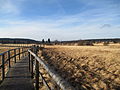
The High Fens, established as a reserve in 1957, with their high altitude and unique location, consist mainly of raised bogs, and low, grass- or wood-covered hills, moorland and forest. The provincial capital of Liège is to its west, the German border is to the east and the dark forested hills of the Ardennes surround the southern part. The park stretches between Eupen in the north, Monschau in the east, Spa in the west and Malmedy in the south.[4] It stretches north of Malmedy as far as Eupen and marks the end of the Ardennes proper. It is contiguous with the Eifel hills, which stretch east from the German border to form the large Deutsch–Belgischer Naturpark.[6] Signal de Botrange located in the Haute Fagnes is marked by a Telecom Tower erected over an older artificial, earthen mound with stone steps that was built to raise a small part of the broad plateau from 694 to 700 metres (2,277 to 2,297 ft).[7] Large urban centres in the vicinity of the reserve are Eupen, Verviers, Spa and Malmedy.

Part of the High Fens reserve remains closed during the spring breeding season of the endangered black grouse (Tetrao tetrix).[5] During the summer there is a risk of fire in the forest area. Boardwalks cross the bogs, permitting access across these areas. Paths lead to many areas of the park, and there are signposts to guide visitors through the park.[6] The nature reserve of the High Fens is coordinated under the Nature Division and Forests of the Walloon Region.

Climate

[edit]

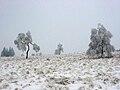
The reserve is one of the wettest and coldest parts of Belgium. It is frequently shrouded in mist and low cloud. It has a subalpine climate with strong winds and fierce winters, which are occasionally subarctic.[5][6] The Fagnes plateau intercepts clouds brought by the prevailing Atlantic winds, and this results in copious precipitation, with an average of 1,400 millimetres (55 in) of rain per year. However, beneath the fragile composition of the overlying soils are rocky beds and clay that prevent infiltration of water and thus create the conditions for wetlands, marshes and bogs.[8]

The highest and lowest annual rainfall recorded are 2,024 millimetres (79.7 in) and 762 millimetres (30.0 in) respectively, with maximum on a single day of 156 millimetres (6.1 in) on 7 October 1982 at the Signal de Botrange. The maximum snowfall recorded at Signal de Botrange was 115 centimetres (45 in) in 1953. The maximum number of frost days (when the temperature remains below 0 °C (32 °F)) in a year is reported to be 158 days and the minimum is 70 days. The lowest temperature recorded was −23.6 °C (−10.5 °F) in 1942, but it was −25.2 °C (−13.4 °F) in 1952 at Baraque-Michel.[9][10]

The bridge on the Amblève River.

Several rivers have their sources in the High Fens: the Vesdre, Hoëgne, Warche, Gileppe, Eau Rouge, Amblève, Our, Kyll, and Rur. In winter all the water sources freeze into snow[clarification needed] making the High Fens one of the best ski resorts in Belgium. During winter the swamps appear as if "wrapped in white fluffy snow shawl".[11]

Zoning

[edit]

The region has been zoned under a 1992 regulation into specific areas to manage access for visitors and tourists. These areas are designated as Zones B, C, and D. Zone B is open to the public daily, with specific regulations: bicycles and dogs are prohibited, visitors must stay on designated tracks, waste must be disposed of in trashcans only, and silence must be maintained. Zone C can be visited only accompanied by a guide authorised by the park administration. However no access to this zone is allowed from mid-March to late June, when an endangered species, the black grouse, breeds here. Zone D is a totally protected reserve area, with no access to the public.[3]

Flora and fauna

[edit]
Panorama of the High Fens

In the High Fens the habitats of many plants and animals typically found further north or in the mountains, result from the geology and relief, the harsh climate, high rainfall, long and cold winters and low average temperatures in the region.[10]

The High Venn's plateau thus is rich in flora and fauna some of which have become rare and threatened in the last more than three centuries. The heathers and turf moors in the reserve have a significant role to maintain biodiversity for the rare and threatened flora and fauna as it ensures regulation of the water balance and maintains value of the landscape. However, since the 17th century, peat cutting, drainage, inappropriate spruce plantations, infestation of the ground by the purple moor-grass, a herb, had caused problems for the ecology of the region. These negative aspects are now being rectified by special projects titled "Life-Nature Project".[12]

Flora

[edit]

The common heather or Calluna, a small bush of 20–50 centimetres (8–20 in) height is grazed by sheep and also has healing qualities; the bilberry, in the family Ericaceae, is a shrub found at an altitude of 500 m (around 1600 feet); the rootless peat mosses (Sphagnum) of about 40 centimetres (16 in) grow at 3 centimetres (1 in) a year and form the basic turf moors through the buildup of organic matter; cotton grass, a perennial plant in wet regions; sundew (Drosera rotundfolia) found in the acid turfs of the reserve which are carnivores and consumes insects. The logo of the park is the seven-petalled flower of Chickweed-Wintergreen (Lysimachia europaea), not to be confused with other plants with similar names such as Chickweed (Cerastium spp.) or Wintergreen (Gaultheria spp.).[13][14]

Fauna

[edit]
An illustration of the black grouse (Tetrao tetrix), male and female from an early 20th-century natural history

Faunal species recorded are: the wild boar, roe deer, hen harrier, black grouse, wood mouse, grasshopper warbler, great grey shrike, meadow pipit, European stonechat and northern wheatear.[13] The black grouse, a protected species, is found in small numbers. It is a sedentary bird. The male species has black plumage with a red wattle above the eyes while the female species has a brown plumage with black, grey and white stripes and possesses a light forked tail.[14] Vertebrates, spiders and insects reported in the reserve are: orvet (Anguis fragilis), Odonata Orthoptera, Heteroptera Lepidoptera, diptera, crustaceans, myriapods and shellfish.[15]

Fires

[edit]
Burnt path in Helle Valley in High Fens, in May 2011, one month after the fire

As the habitat consists of bogs, fire is a major hazard during the drought period, when the Fens are closed except for a small area near Polleur [fr]. Triangular signs painted in red are fixed at the fire hazard locations.[3] In April 2011 in a fire that broke out in the High Fens 1,000 hectares (2,500 acres) of land were destroyed. It is said to be the biggest ever fire in the Fens and 300 firefighters supported by a helicopter were involved in dousing and controlling the fires.[16]

Activities

[edit]

The winter sports activities allowed in the Fens in specified area and outside conserved area of the fens are skiing, bicycling and trekking. Cross-country skiing in the High Fens is permitted on specified forest tracks which are located in the outskirts or even outside the nature reserve. Hiking trails have been reorganized outside the parks reserved areas. The walk routes would be limited to undergrowth adjacent to nature reserve. Bicycle routes have been specified outside the nature reserve in nearby forests.[3] The subalpine climate may change to subarctic condition and hence when taking adventure walks in the night through the park it could be hazardous unless one is properly equipped for taking such a risk.[5]

Monument

[edit]

Another notable monument is at Gèyeté (Gayetay) within the municipal boundary of Sart and Jalhay; it is in memory of eight American airmen who were the crews of two Douglas C-47 Skytrains from 50th Troop Carrier Squadron that collided in flight on 6 April 1945 due to fog. The memorial consists of a three-bladed propeller erected on a quartzite pedestal, with a cross erected next to it with the inscription "For the American airmen."[17][18]

[edit]

Notes

[edit]
[edit]
Revisions and contributorsEdit on WikipediaRead on Wikipedia
from Grokipedia
The High Fens, known in French as the Hautes Fagnes, is a vast and plateau that forms Belgium's oldest and largest , spanning approximately 6,210 hectares (as of 2023) in the eastern region near the German border. This , established in , features a unique, subarctic-like shaped by post-Ice Age conditions around 10,000 years ago, with acidic, nutrient-poor soils supporting active raised , wet and dry heaths, and bog woodlands. As part of the larger Hautes Fagnes-Eifel , which extends into and encompasses diverse ecosystems including forests, streams, and reservoirs, the High Fens reaches its highest elevation at (694 meters), making it the highest point in . Ecologically, the reserve is a critical biotope under and Ramsar conventions, characterized by waterlogged conditions that foster rare flora such as sphagnum mosses and carnivorous plants, alongside an arctic-influenced climate with nearly 150 foggy days per year. Its biodiversity includes threatened species like the (Lyrurus tetrix), the only remaining population in , as well as the (Lanius excubitor) and various dragonflies, with ongoing restoration efforts having rehabilitated over 300 hectares of bogs since 1993 to combat historical drainage and peat extraction. The High Fens holds exceptional European conservation significance, recognized with a European Diploma since 1966 and placed on UNESCO's Tentative List in 2008 for its role in preservation and climate regulation through in its layers. Managed by the Region, the reserve addresses threats from and like grey alder (), while promoting through 13.2 kilometers of controlled trails for and guided tours. This blend of pristine wilderness and active management underscores its value as a symbol of in the region.

Geography and Geology

Location and Extent

The High Fens nature reserve is situated in the eastern part of Liège Province, within the Ardennes region of Belgium, directly bordering the Eifel region of Germany. This upland plateau forms a transboundary protected area, integrated into the larger High Fens-Eifel Nature Park through a 1971 agreement between Belgian and German authorities focused on joint management. Covering a total area of 5,371 hectares, the reserve represents Belgium's largest peatland complex and one of its oldest protected sites, established in 1957. Its boundaries are roughly defined by a rectangle encompassing the surrounding towns of Eupen to the north, Monschau (in Germany) to the east, Spa to the west, and Malmedy to the south. The terrain reaches its highest elevation at Signal de Botrange, standing at 694 meters above sea level—the highest point in Belgium and the Benelux countries. An observation tower constructed on the summit in 1923 adds 6 meters, allowing visitors to reach an effective height of 700 meters for panoramic views.

Geological Formation

The High Fens developed as a plateau during the , approximately 14,000 years ago, at the close of the last glaciation, when periglacial conditions in the unglaciated region created extensive wetlands in topographic depressions. Initial accumulation occurred in these water-saturated basins, driven by the proliferation of mosses ( spp.) in an environment with high precipitation and poor drainage, leading to the formation of ombrotrophic raised bogs reliant on atmospheric water inputs rather than . Over millennia, from decaying moss and associated vegetation built up under anaerobic conditions, transforming the initial wetlands into a domed plateau of active surface. The underlying bedrock of the High Fens belongs to the sequences of the , specifically sandstones and schists that were deposited in a shallow marine to deltaic setting around 387–382 million years ago during the Givetian stage. These rocks, part of the resistant Stavelot-Venn within the broader Ardenne Anticlinorium, underwent deformation and low-grade metamorphism during the approximately 300 million years ago, folding into northeast-southwest trending structures. Subsequent uplift of the , linked to intraplate tectonic reactivation, elevated the plateau to over 600 meters, exposing the schistose and quartzitic layers that provide a stable, impermeable base conducive to water retention and bog expansion; overlying deposits include thin and periglacial sediments. Peat layers in the High Fens have reached thicknesses of up to 8 meters in central areas, though spatial variability is high, with averages of 0.5–2 meters influenced by local and historical drainage. Post-glacial saw the bogs expand laterally from depressions to the plateau, creating a of active raised and bogs alongside relictual wetlands, while surrounding river incision during uplift formed incised valley systems that contrast with the flat bog expanse. This progression from early wetlands to the modern moorland-forest-valley landscape reflects ongoing periglacial legacies, including cryoturbations and solifluction features from the stadial, and a sharp elevational transition to the lower lowlands below 500 meters.

Climate and Hydrology

The High Fens exhibit a subalpine climate characterized by high humidity and cool , with an average annual of approximately 1,440 mm and a mean annual of 6.7°C. This elevated plateau, reaching over 600 meters in altitude, intercepts moist Atlantic air masses, leading to frequent on about 202 days per year and persistent fog on around 150 days, contributing to a mystical, often overcast atmosphere. Strong westerly winds are common, exacerbating the harsh conditions and influencing local microclimates. Hydrologically, the region serves as a critical watershed, with several major rivers originating from its bogs and moorlands, including the Vesdre, Amblève, and Ourthe, which flow into the basin and support downstream supplies. The extensive layers, formed over millennia on nutrient-poor, acidic substrates, function as natural reservoirs, retaining through high and slow drainage, while the low (typically below 4) and oligotrophic conditions limit nutrient availability and maintain bog integrity. These features create a dynamic system where surface and interactions sustain the wetlands, buffering against seasonal fluctuations and providing ecological stability. Seasonal variations are pronounced, with harsh winters featuring prolonged sub-zero temperatures and consistent snow cover for up to , enhancing water storage in the frozen landscape. Summers are mild, with average highs rarely exceeding 15°C, though microclimates in the bogs promote frequent formation due to and topographic trapping of moist air. Winds intensify during transitional seasons, accelerating and contributing to the region's overall hydrological balance. Projections and studies from 2020 indicate increasing variability in rainfall patterns across the , including the High Fens, with more frequent extreme events driven by , such as intensified winter precipitation and occasional summer droughts, as of 2020. This trend, linked to broader European shifts, has led to heightened risks in originating rivers while stressing peat bog resilience through altered recharge rates.

History

Early Human Use

The High Fens, a high plateau in eastern , have seen interaction since the , primarily driven by the need for resources in the surrounding harsh landscape. practices emerged as a key use, with herds from nearby villages such as those in the Malmédy and regions driven onto the plateau to exploit its open heathlands and prevent woodland regrowth. This activity, documented from the end of the , maintained the area's open character while providing summer pasture for cattle and sheep, though it was limited by the boggy terrain and severe weather. Peat extraction, documented from the mid-16th century, intensified thereafter, serving as a vital source in wood-scarce regions and for agricultural improvements like litter bedding. Cutters targeted the raised , removing layers of sphagnum that altered the and reduced bog thickness, often on communal lands owned by municipalities. This exploitation, though labor-intensive due to the peat's low quality and the remote location, supported local economies until the , when it contributed to widespread landscape degradation. Early settlements in the High Fens vicinity remained sparse owing to the plateau's inhospitable conditions, including frequent fog, heavy rainfall, and poor soil, confining permanent habitation to lower valley villages that seasonally accessed the area. Cultural references in local communities reflect this isolation, with such as the legend of the Lützevennsmännchen—a mischievous ghost said to haunt the Lützevenn —embodying fears of the fens' dangers and serving as cautionary tales for wanderers. In the , limited industrialization extended human impact through attempts at and drainage in the surrounding lowlands and plateau edges. plantations were introduced, necessitating extensive ditching to dehydrate the mires for growth, which further fragmented the wetlands and supported emerging industries like textiles in . Concurrently, large dams, such as the Gileppe Dam (built 1867–1875), harnessed fen waters for urban supply, marking a shift toward engineered exploitation that set the stage for later conservation efforts.

Establishment and Protection

The efforts to protect the High Fens began in the early 1900s, driven by local scientific initiatives aimed at halting destructive exploitation and drainage activities that threatened the unique . Botanist Jean Massart, along with colleagues like Léon Fredericq, played a pivotal role by warning of potential total destruction of the fens if such practices continued unchecked, advocating for preservation as early as 1911. These campaigns laid the groundwork for formal protection, emphasizing the ecological value of the bogs against commercial interests. The High Fens was officially declared a on May 23, 1957, through a Belgian royal decree (arrêté royal) that designated state-owned lands in the plateau region for conservation to maintain their pristine state. Initially covering approximately 1,100 hectares of the core area, the reserve was expanded over subsequent decades through additional royal decrees and land acquisitions, reaching 4,501 hectares by 2000. Further expansions occurred, reaching 5,371 hectares by 2021, with an additional 843 hectares added in 2023. This establishment marked one of Belgium's earliest comprehensive s, focusing on safeguarding the and of the raised bogs. In 1971, the reserve was integrated into the newly created High Fens-Eifel Nature Park, a cross-border initiative with adjacent German territories to enable coordinated management across the Belgian-German border. This partnership enhanced protection efforts by addressing transboundary ecological issues, such as water flow and habitat connectivity. Following World War II, the reserve faced early challenges in balancing rapid tourism growth with preservation needs, as visitor numbers surged—reaching up to 15,000 per day on peak weekends—leading to issues like soil compaction, erosion, and wildlife disturbance. Management authorities responded by implementing access restrictions and monitoring to mitigate these pressures while promoting sustainable appreciation of the area.

Ecology

Flora

The flora of the High Fens is characterized by peat bog specialists adapted to the region's acidic, waterlogged conditions, forming a unique relictic subalpine ecosystem in western Europe. Dominant species include various Sphagnum mosses, which form extensive carpets and drive peat accumulation by retaining water and acidifying the substrate. Heather (Calluna vulgaris) and cross-leaved heath (Erica tetralix) are prevalent in heath areas, providing structural cover, while cotton grasses (Eriophorum spp., such as E. angustifolium and E. vaginatum) create characteristic tussocks in open bog surfaces. Carnivorous sundews (Drosera rotundifolia) are also widespread, trapping insects to supplement nutrients in the nutrient-poor environment. Rare -alpine plants thrive in the cooler, wetter microclimates, reflecting the area's role as a southern outpost for boreal species. Notable examples include the starflower (Trientalis europaea, also known as chickweed-wintergreen), which forms delicate whorls of leaves in mossy hollows; (Vaccinium oxycoccos), a creeping shrub with trailing stems; and moorland cloudberry (Rubus chamaemorus), a herbaceous perennial producing amber berries in damp depressions. Other specialists like bog rosemary () and bog asphodel (Narthecium ossifragum) add to the diversity, often at the limits of their European range. The High Fens support a rich diversity of vascular , contributing to a despite the harsh conditions. Vegetation is organized into distinct zones shaped by and historical . Open , dominated by and , occupy water-saturated cores where active formation continues. Wet heaths, featuring ericaceous shrubs like heather and (), transition to slightly drier margins, while encroaching forests of (Betula spp.) and pine (Pinus spp.) fringe the edges, often requiring management to prevent bog encroachment. These plants exhibit specialized adaptations for survival in the acid-tolerant, waterlogged milieu, influenced by the plateau's with high precipitation. Sphagnum mosses, for instance, possess dead hyaline cells that store up to 20 times their weight in water, enabling persistence in fluctuating moisture levels. Vascular species like sundews and have narrow, rolled leaves to minimize and form mycorrhizal associations for enhanced nutrient uptake in oligotrophic soils. Slow growth rates and prostrate habits further conserve resources in this low-nutrient, acidic setting ( often below 4), preserving the bog's relictic character.

Fauna

The High Fens host a diverse array of animal adapted to its unique peat and ecosystems, with many serving as indicator for the of these wetlands. These habitats support mobile that relies on the open, wet landscapes for , breeding, and migration, including birds that nest on the ground and mammals that roam the fringes. The reflects the region's subarctic-like conditions, emphasizing tolerant of cool, acidic environments. Birds are prominent among the High Fens' wildlife, with the (Tetrao tetrix) standing as an emblematic indicator species for intact moorlands. This lekking grouse performs courtship displays in spring, and recent surveys show population recovery, with 13 displaying males recorded in 2024 compared to just three in 2017, attributed to habitat improvements and reintroduction efforts. Other key birds include the golden plover (Pluvialis apricaria), a ground-nesting that breeds on the heathlands, as well as the (Circus cyaneus), a raptor hunting over the bogs, and the (Asio flammeus), which quarters the open terrain for small mammals during winter migrations. Mammals in the High Fens include large herbivores and semi-aquatic species that utilize the area's waterways and forested edges. (Cervus elaphus) roam the plateau, grazing on heaths and influencing vegetation structure through browsing. (Sus scrofa), which have expanded into the area through natural recolonization, now frequent the fens, rooting in the soil and promoting , while Eurasian otters (Lutra lutra) inhabit the streams and peat pools, preying on fish and amphibians in these hydrologically dynamic habitats. Insects and amphibians thrive in the wet, nutrient-poor conditions of the High Fens, with many specialized to bog life. Bog hoverflies, such as species in the Syrphidae family, hover over pools, their larvae filtering bog water. Dragonflies are abundant, with 37 species recorded, including rare peat-moor types that hunt smaller above the moor. Natterjack toads (Epidalea calamita), adapted to shallow, sunny pools in wet habitats, breed in temporary water bodies, their distinctive calls echoing during summer.

Biodiversity Threats and Conservation

The High Fens, a transboundary spanning and , faces significant threats primarily from , , and atmospheric . has induced prolonged droughts and water deficits, leading to drying of peat bogs that disrupts hydrological balance and reduces habitat suitability for moisture-dependent such as sphagnum mosses and associated wetland flora. Invasive conifer , particularly Norway spruce (), introduced through historical , compete with native vegetation, alter soil chemistry, and exacerbate drying by increasing evapotranspiration and intercepting precipitation. Atmospheric , including and heavy metal deposition, has historically increased peat acidity and introduced contaminants, stressing acid-tolerant bog while occasionally favoring more tolerant invasives in altered conditions, though deposition levels have declined since the late . Conservation efforts in the High Fens are supported by EU-funded Nature projects, which focus on restoring integrity and . The PLTHautes-Fagnes project (2006–2011) restored approximately 1,800 hectares of endangered habitats, including raised bogs and wet heaths, through actions such as blocking drainage ditches, removing invasive trees, and reintroducing extensive grazing by Scottish and horses to control scrub encroachment and promote open bog conditions. Ongoing initiatives, including extensions and subsequent projects up to the 2020s, continue bog restoration and habitat connectivity improvements across the plateau, emphasizing sustainable management to counteract degradation. These conservation measures have yielded measurable successes, notably in species recovery. The black grouse (Tetrao tetrix), Belgium's last remaining population confined to the High Fens, has shown signs of stabilization and growth following reintroduction efforts starting in 2007 and reinforcement translocations from since 2017, with spring lek counts increasing from critically low levels in the early 2010s. The site's designation as a Ramsar of international importance in 2003 has bolstered legal protections and international cooperation for wetland conservation. Biodiversity monitoring in the High Fens involves annual surveys, particularly for key like through standardized spring censuses conducted since the 1970s, which track population trends and habitat responses to restoration. Transboundary between Belgian and German authorities, facilitated by shared plans and joint on impacts, ensures coordinated monitoring up to 2025, focusing on hydrology, distributions, and legacies to inform adaptive conservation strategies.

Management and Human Impact

Zoning and Access Regulations

The High Fens implements a structured system to reconcile ecological protection with controlled access, categorizing the landscape into three distinct zones based on sensitivity and conservation needs. Zone B permits access but confines visitors to designated marked paths and wooden boardwalks to minimize impact on the terrain. Zone C allows entry only under the supervision of a certified guide, ensuring educational oversight in more vulnerable habitats, while Zone D remains entirely off-limits to the , serving as core protected zones for undisturbed ecological processes. In 2022, the reserve was extended by approximately 845 hectares, incorporating additional areas into the protected system. Strict regulations underpin this zoning, prohibiting off-trail walking, wild camping, and the collection of , , or geological materials across all accessible zones to avert erosion, , and hydrological alterations in the peat bog . These measures, enforced by dedicated wardens patrolling the reserve, have been in place since its designation in 1957 as one of Belgium's inaugural protected areas under royal decree. Violations can result in fines, with temporary closures also imposed during high-risk periods such as fire hazards, marked by red flags along boundaries. The zoning framework evolved significantly in the early 2000s to align with the European Union's network, integrating the reserve into multiple designated sites that emphasize habitat restoration and species protection. Key among these is the (SPA) and (SAC) Plateau des Hautes-Fagnes (BE33035C0), encompassing over 4,000 hectares and forming the bulk of the reserve's approximately 5,000-hectare extent, thereby subjecting the majority of the area to enhanced EU-level conservation standards. This alignment reinforced the preventive focus on integrity, addressing threats like visitor-induced while facilitating cross-border cooperation within the adjacent region.

Fires and Restoration Efforts

The High Fens, a sensitive , has experienced several significant fire events, with the most extensive occurring in April 2011 when a ignited by during an exceptionally dry spring consumed approximately 1,385 hectares of heathlands and mires on the plateau. This blaze, which required the efforts of over 300 and aerial support, destroyed roughly one-fifth of the reserve's core area, highlighting the vulnerability of the region's raised bogs to prolonged conditions. Smaller fires have also impacted the area, including controlled burns and minor wildfires in the that affected localized heath patches, as well as a 170-hectare peat fire in May 2023 near the Belgian-German border caused by human activity, which necessitated an international response involving German teams and helicopters. Fires in the High Fens typically originate from natural ignitions like striking desiccated surfaces, exacerbated by climate-driven droughts that lower water tables and expose flammable , though human causes have also occurred. In lands such as the High Fens, ignition leads to smoldering that can persist underground, releasing substantial stored carbon—potentially equivalent to years of annual emissions from the ecosystem—and causing long-term losses by sterilizing soils and eliminating key species like mosses and ericaceous shrubs. The 2011 event, for instance, resulted in the immediate death of vegetation cover and disruption of hydrological functions, contributing to elevated CO2 emissions and that threatened endemic and dependent on wet conditions. Restoration efforts following the 2011 fire were launched promptly by the Walloon Region's nature conservation services, focusing on the removal of charred plant debris to prevent nutrient lockup, followed by the sowing of native heather (Calluna vulgaris) seeds to facilitate revegetation. Complementary measures included hydrological rewetting through ditch blocking to restore water levels and reintroduce natural flooding, alongside the revival of traditional sheep grazing programs to control invasive grasses and promote open heath regeneration, drawing on historical practices dating to the Middle Ages. Similar, albeit smaller-scale, interventions were applied after the 2023 fire, emphasizing rapid suppression and monitoring to limit peat damage. Restoration efforts have led to substantial vegetation recovery in the years following the 2011 fire, with native heaths re-establishing on much of the burned terrain and improved peat moisture levels enhancing potential, though full ecological restoration remains ongoing, including after the 2023 event. The experiences underscore the importance of integrated fire management and rewetting for building in European peatlands, informing broader conservation strategies against increasing risks.

Recreation and Tourism

Outdoor Activities

The High Fens provide an extensive network of approximately 200 km of marked hiking trails that wind through peat bogs, moorlands, and forested areas, offering visitors opportunities to experience the region's unique high-altitude ecosystem. A notable route is the Botrange circuit, an 8.7 km boardwalk trail starting from Signal de Botrange—Belgium's highest point at 694 meters—traversing the Grande Fagne bog with panoramic views of heathlands and protected wetlands. In winter, seasonal snowshoeing is permitted on these marked paths, allowing exploration of snow-covered landscapes while minimizing environmental impact. Cycling enthusiasts can enjoy cross-country routes tailored for the , particularly in winter when transforms paths into trails, with loops ranging from 5 to 20 km departing from sites like Baraque Michel. is restricted to designated zones outside the core conservation areas to protect fragile ecosystems, providing challenging rides through surrounding forests and valleys. Nature observation is a key pursuit, with birdwatching hides strategically placed for viewing species adapted to bog habitats, such as black grouse. Guided tours focus on the bog ecosystems, educating participants about peat formation, rare flora, and wildlife conservation. These activities are confined to permitted access zones to preserve the sensitive environment. Peak seasons include summer for optimal flora viewing amid blooming heaths and cotton grasses, and winter for cross-country skiing during periods of sufficient snowfall, creating ideal conditions on prepared tracks.

Visitor Infrastructure and Guidelines

The High Fens-Eifel provides essential visitor infrastructure to facilitate safe and educational exploration of its sensitive ecosystems. The primary facility is the Nature Park Centre at Botrange, which serves as a key with interactive exhibits on local , , and conservation efforts, alongside a shop, cafeteria, and information desk for trail guidance. Additional support includes the Haus Ternell Nature Centre and the Tourist Information at , both offering exhibitions and starting points for guided walks. Parking is available at major trailheads along roads such as the N68 and N676, though spaces are limited and managed through a system (green for , orange for approaching capacity, red for full, and dark red for restricted entry) to prevent overcrowding. Extensive wooden boardwalks traverse the bogs and mires, protecting fragile vegetation while providing accessible paths for hikers of varying abilities. Visitor guidelines emphasize minimal environmental impact and respect for , aligning with principles such as staying on marked s to avoid damaging soils and keeping dogs on leashes at all times—dogs are prohibited in core zones, with alternative routes signposted. Seasonal closures occur during periods, and visitors must check on-site flags (green for open, red for closed) or the park's route planner for real-time updates on access restrictions, including potential limitations to protect breeding habitats. Digital tools support , including the free online route planner and downloadable maps available via the park's , which provide app-compatible details for self-guided exploration. Tourism in the High Fens contributes significantly to , attracting approximately 1.1 million visitors annually to the broader Hautes-Fagnes area as of recent assessments, bolstering sectors like and guiding services. To promote sustainability and counter pressures, the park employs through its access system, ensuring trails do not exceed safe visitor limits while maintaining the site's protected status since 1957. The Botrange Centre holds Access-i certification for inclusive facilities, supporting eco-friendly visitation for diverse groups.

Cultural Significance

Monuments and Memorials

The American Airmen Memorial, located in the heart of the Hautes Fagnes nature reserve near Solwaster, commemorates eight U.S. Army Air Forces pilots killed in the crashes of two C-47 transport aircraft on April 6, 1945. The planes, departing from Bierset airbase, collided in dense fog, leading to crashes on Gayetai and Polleur hills. Inaugurated in 1947, the monument features a block supporting a twisted three-bladed alongside a wooden inscribed "For the American pilots," serving as a poignant reminder of wartime sacrifices in this remote . Nearby, a British Airmen Memorial honors seven crew members lost when their aircraft exploded on June 29, 1943, marked by a stone with bronze plaques detailing the incident. Additionally, remnants of observation posts dot the landscape, remnants of German defensive positions established to monitor Allied movements across the strategic plateau during the . Historical border markers, such as those delineating 19th- and early 20th-century territorial divisions between , , and the , also persist in the area, reflecting past geopolitical tensions that shaped the region's contested boundaries. These sites are maintained by local authorities and nature reserve management, with periodic restorations ensuring their preservation amid the ongoing ecological protection efforts of the High Fens. Annual commemorative events, organized by regional historical groups, draw visitors to reflect on the area's role in , blending remembrance with the serene natural surroundings. Collectively, these monuments symbolize the High Fens' layered wartime history, juxtaposing human conflict against the enduring tranquility of one of Europe's largest bog ecosystems.

International Recognition

The High Fens, known as Hautes-Fagnes in French, has received significant international recognition for its ecological value as one of Europe's premier ecosystems. In 1966, the awarded the European Diploma for Protected Areas to the Hautes-Fagnes , acknowledging its outstanding contributions to conservation and landscape preservation. This prestigious award, which highlights protected areas of pan-European importance, has been renewed periodically to reflect ongoing management successes, with renewals documented in 1981, 1986, 1991, 1996, 2001, 2006, and 2011, and extended until March 28, 2031, following approval in 2023. Further affirming its global significance, the High Fens was designated as a Wetland of International Importance under the on 24 March 2003. This status recognizes the site's 9,974 hectares as Belgium's largest complex, encompassing active raised sphagnum bogs and serving as a critical for such as the (Tetrao tetrix), the last remaining population in , along with rare flora and migratory birds including the (Grus grus) and (Circus aeruginosus). The designation underscores the area's role in maintaining hydrological functions and carbon storage, vital for international efforts. In 2008, nominated the High Fens plateau to UNESCO's World Heritage Tentative List, highlighting its unique geological and climatic features. Spanning over 4,000 hectares in the Province of , the site features a high-altitude plateau with peat bogs influenced by westerly winds, creating a distinctive that supports rare ecosystems. This inclusion signals potential for full World Heritage status, emphasizing the area's natural phenomena and as exemplary of European heritage. The High Fens also exemplifies transboundary conservation through its cooperation with German protected areas. A 1971 agreement established joint management between the Parc Naturel Hautes-Fagnes and the , fostering cross-border initiatives for habitat protection and . This partnership evolved into the in 2015, integrating the Belgian reserve with Germany's to enhance ecological connectivity across the Belgium-Germany border and address shared challenges like peatland restoration.

References

Add your contribution
Related Hubs
User Avatar
No comments yet.