Hubbry Logo
Northern wheatearNorthern wheatearMain
Open search
Northern wheatear
Community hub
Northern wheatear
logo
8 pages, 0 posts
0 subscribers
Be the first to start a discussion here.
Northern wheatear
Northern wheatear
from Wikipedia

Northern wheatear
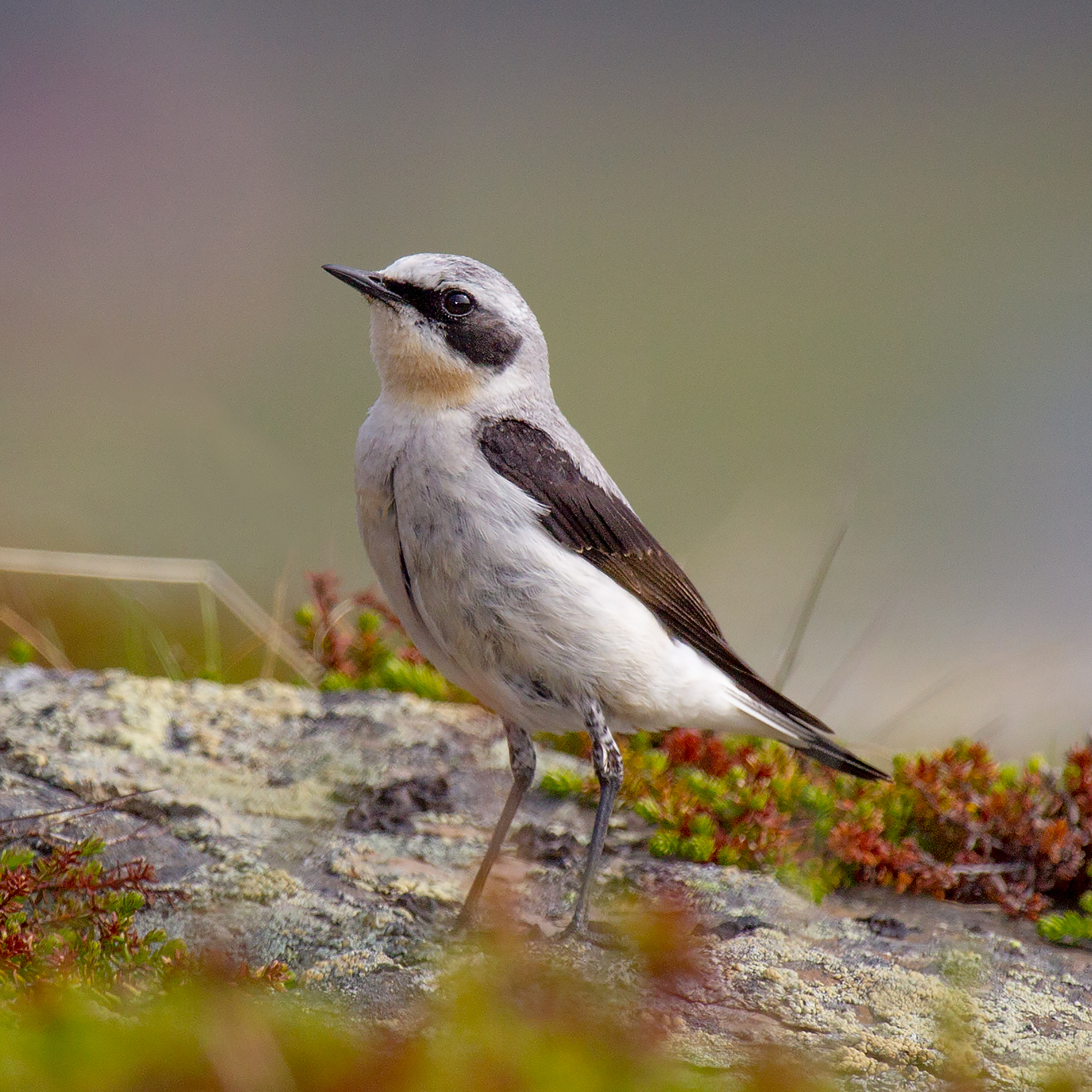
Male in breeding-plumage
Female
Scientific classification Edit this classification
Kingdom: Animalia
Phylum: Chordata
Class: Aves
Order: Passeriformes
Family: Muscicapidae
Genus: Oenanthe
Species:
O. oenanthe
Binomial name
Oenanthe oenanthe
Synonyms

Motacilla oenanthe Linnaeus, 1758

Northern wheatear juvenile

The northern wheatear or wheatear (Oenanthe oenanthe) is a small passerine bird in the Old World flycatcher family. It is the most widespread member of the wheatear genus Oenanthe in Europe and North and Central Asia. The northern wheatear is a migratory insectivorous species breeding in open stony country in Europe and east across the Palearctic with footholds in northeastern Canada and Greenland as well as in northwestern Canada and Alaska. It nests in rock crevices and rabbit burrows. All birds spend most of their winter in Africa.

Taxonomy and systematics

[edit]

The northern wheatear belongs to a distinctive group of Old World flycatchers, known as chats, that were formerly thought to be thrushes. Genetic analysis showed that they were in fact a type of flycatcher (Muscicapidae), with the resemblance to thrushes being the result of convergent evolution.[2] The northern wheatear was first formally described by the Swedish naturalist Carl Linnaeus in 1758 in the 10th edition of his Systema Naturae as Motacilla oenanthe.[3] The species is now placed in the genus Oenanthe that was introduced by the French ornithologist Louis Pierre Vieillot in 1816.[4][5] The generic name, Oenanthe, is also the name of a plant genus, the water dropworts, and is derived from the Greek ainos "wine" and anthos "flower", from the wine-like scent of the flowers.[6] In the case of the wheatear, it refers to the birds' return to Greece in the spring at the time that the grapevines blossom.[7]

Its English name has nothing to do with wheat or with ear, but is an altered (perhaps bowdlerised) form of white-arse, which refers to its prominent white rump.[8]

The four generally accepted subspecies of the Northern Wheatear with their breeding range are as follows:[9]

  • O. o. leucorhoa (Gmelin, JF, 1789) – northeast Canada, Greenland and Iceland (the 'Greenland wheatear')
  • O. o. oenanthe (Linnaeus, 1758) – north and central Europe through north Asia to east Siberia and northwest North America
  • O. o. libanotica (Hemprich & Ehrenberg, 1833) – southern Europe through the Middle East and southwest Asia to Mongolia and northwest China
  • O. o. seebohmi (Dixon, 1882) – northwest Africa

O.o. seebohmi is regarded as a distinct species by some authorities such as the International Ornithological Committee, Seebohm's or the Atlas wheatear.[10]

Description

[edit]
Eggs, Collection Museum Wiesbaden

The northern wheatear is larger than the European robin at 14.5–16 cm (5.7–6.3 in) in length. The northern wheatear also has a wingspan of 26–32 cm and weighs 17–30 g.[11]

Both sexes have a white rump and tail, with a black inverted T-pattern at the end of the tail.

The plumage of the summer male has grey upperparts, buff throat and black wings and face mask. In autumn it resembles the female apart from the black wings. The female is pale brown above and buff below with darker brown wings. The male has a whistling, crackly song. Its call is a typical chat chack noise, and the flight call is the same.

Behaviour and ecology

[edit]

Migration

[edit]

The northern wheatear makes one of the longest journeys of any small bird, crossing ocean, ice, and desert.[12] It migrates from Sub-Saharan Africa in the spring over a vast area of the Northern Hemisphere that includes northern and central Asia, Europe, Greenland, Alaska, and parts of Canada.[12] In autumn all return to Africa, where their ancestors had wintered.[12] Arguably, some of the birds that breed in north Asia could take a shorter route and winter in south Asia; however, their inherited inclination to migrate takes them back to Africa,[12] completing one of the longest migrations for its body size in the animal kingdom.[13]

Birds of the large, bright Greenland race, leucorhoa, make one of the longest transoceanic crossings of any passerine. In spring most migrate along a route (commonly used by waders and waterfowl) from Africa via continental Europe, the British Isles, and Iceland to Greenland. However, autumn sightings from ships suggest that some birds cross the North Atlantic directly from Canada and Greenland to southwest Europe, a distance of up to 2,500 kilometres (1,600 mi).[14] Birds breeding in eastern Canada are thought to fly from Baffin Island and Newfoundland via Greenland, Ireland, and Portugal to the Azores, crossing 3,500 kilometres (2,200 mi) of the North Atlantic) before flying onwards to Africa.[15] Other populations from western Canada and Alaska migrate by flying over much of Eurasia to Africa.[12]

Miniature tracking devices have recently shown that the northern wheatear has one of the longest migratory flights known - 30,000 km (18,640 miles), from sub-Saharan Africa to their Arctic breeding grounds.[16]

"The Alaskan birds travelled almost 15,000km (9,000 miles) each way - crossing Siberia and the Arabian Desert, and travelling, on average, 290km per day. "This is the longest recorded migration for a songbird as far as we know," said Dr Schmaljohann.[16]

Breeding

[edit]

Northern wheatears first breed when they are one year old.[17] The nest is built entirely by the female while the male perches nearby, sings and sometimes performs song-flights.[18] The nest is placed in a cavity such as a rabbit burrow, a crevice among rocks or in a man-made object such as a wall or pipe. The nest typically has a foundation of untidy plant material. The nest cup is constructed of finer grasses, leaves, moss and lichen. The female lays eggs at daily intervals. The clutch is 4–7 smooth but not glossy eggs that are around 21.0 mm × 15.8 mm (0.83 in × 0.62 in) in size with an average weight of 2.83 g (0.100 oz). The eggs are very pale blue in colour and sometimes have a few red-brown marks at the larger end. They are incubated almost entirely by the female beginning after the penultimate or final egg has been laid. The eggs hatch after approximately 13 days. The chicks are fed by both parents and are brooded by the female for the first five or six days. They fledge after 15 days and become independent of their parents when they are between 28 and 32 days old. Normally only a single brood is raised each year but when a clutch of eggs is lost, the female will lay a second clutch.[19]

Status and conservation

[edit]

The northern wheatear has an extensive range, estimated at 2.3 million square kilometres (0.87 million square miles), and a large population estimated at 2.9 million individuals in the Old World and the Americas combined. The species is not believed to approach the thresholds for the population decline criterion of the IUCN Red List (i.e., declining more than 30% in ten years or three generations), and is therefore evaluated as least concern.[1]

Relationship with humans

[edit]

In the 18th and 19th centuries wheatears were considered a delicacy in England, called "the English ortolan" and Sussex shepherds supplemented their income by selling the birds they trapped.[20][21][22]

References

[edit]

Sources

[edit]
  • Cramp, Stanley, ed. (1988). "Oenanthe oenanthe Wheatear". Handbook of the birds of Europe the Middle East and North Africa. The Birds of the Western Palearctic. Volume V: Tyrant Flycatchers to Thrushes. Oxford: Oxford University Press. pp. 770–792. ISBN 978-0-19-857508-5.
[edit]
Revisions and contributorsEdit on WikipediaRead on Wikipedia
from Grokipedia
The Northern wheatear (Oenanthe oenanthe) is a small, sparrow-sized in the family (Muscicapidae), measuring 14–15 cm in length with a wingspan of about 26–32 cm and weighing 17–30 g. It features striking with a gray back, white underparts, black wings and mask (duller in females), and a bold black-and-white T-shaped tail pattern, complemented by a conspicuous white rump visible during flight. This species is renowned for its long-distance migrations, breeding in open, rocky , short-grass meadows, and grazed pastures across the northern Holarctic, from and northwestern eastward through to , while wintering in sub-Saharan 's short-grass steppes, savannas, and cultivated fields. Populations exhibit remarkable feats, such as Alaskan and breeders traveling up to 14,500 km across to , and those from and undertaking non-stop flights of 3–4 days (approximately 3,700 km) across the . During migration and on breeding grounds, it forages primarily on the ground for like beetles, moths, and flies, using quick hops and runs to capture prey, supplemented by berries in late summer. Breeding occurs in monogamous pairs (with occasional in males) from May to in the north, where nests are built in rock crevices, burrows, or walls, lined with grasses, , and feathers; clutch sizes range from 3–8 eggs, incubated for 12–14 days, with nestlings fledging after 15–16 days amid up to 19–20 hours of daylight feeding by both parents. Males defend territories with aggressive displays, including flights that highlight the white rump, and produce a warbling incorporating imitations of other birds, alongside harsh "chak-chak" calls. Globally, the Northern wheatear population is estimated at 10–500 million individuals and classified as Least Concern by the IUCN, though European numbers have declined by about 66% from 1980–2009 due to habitat loss from agricultural intensification and climate changes. In , the breeding population of around 2.6 million appears stable or increasing in northeastern , with vagrants occasionally appearing south of typical ranges.

Taxonomy and systematics

Etymology and classification

The Northern wheatear bears the scientific name Oenanthe oenanthe, a tautonym established when Louis Jean Pierre Vieillot introduced the genus Oenanthe in 1816, with the species originally described by Carl Linnaeus in 1758 as Motacilla oenanthe in Systema Naturae. The genus name Oenanthe derives from the Ancient Greek words oinos (wine) and anthos (flower), alluding to the bird's spring arrival in southern Europe coinciding with the budding of grapevines, from which wine is produced; this etymology also echoes the name of a medicinal plant used in antiquity. The specific epithet oenanthe repeats the genus name, while the English common name "wheatear" originates from the Old English "hwīte ārs" (white rump), referring to the bird's prominent white posterior, which it flashes during flight and display. The Northern wheatear is classified within the family Muscicapidae, which encompasses flycatchers and chats, a placement supported by molecular and morphological evidence that distinguishes it from its former assignment to the thrush family Turdidae. The genus Oenanthe, comprising approximately 22 of primarily arid-adapted passerines, forms a monophyletic within Muscicapidae, characterized by ground-foraging habits and open-habitat specialization across the Palearctic, Afrotropical, and Indomalayan regions. Phylogenetically, the Northern wheatear belongs to a diverse radiation that diverged around 5 million years ago, with its closest relative being the Atlas wheatear (Oenanthe seebohmi), as evidenced by shared haplotypes and low between the two. Other near relatives, such as the wheatear (O. deserti), cluster within the same Palaearctic wheatear subgroup, reflecting adaptations to similar and environments.

Subspecies and distribution

The Northern wheatear (Oenanthe oenanthe) is divided into three recognized , each adapted to distinct regions of its breeding range across the Holarctic. These exhibit variations in size, coloration, and structural features such as and tail morphology, reflecting adaptations to their environments and migration patterns. The nominate subspecies O. o. oenanthe is the most widespread, breeding in northern and central Europe, across northern Asia to eastern Siberia, and in Alaska and northwestern Canada. It is characterized by the typical wheatear plumage, with males in breeding condition showing blue-gray upperparts, a white rump, black wings and tail with white upper tail-coverts, and buff underparts. This form serves as the baseline for comparisons among subspecies. O. o. leucorhoa, often called the Greenland wheatear, breeds in northeastern Canada, , , , and the . This subspecies is larger than the nominate, with longer, broader, and more pointed wings and a more forked tail, facilitating its transatlantic migrations. is generally paler, with whiter underparts and reduced buff tones on the throat compared to o. oenanthe, though some individuals show richer buff on the breast. O. o. libanotica is distributed from and Asia Minor through the to , Mongolia, and northern . Similar in overall size to the nominate , it differs in having more silvery-gray upperparts, whiter underparts, and a narrower black band on the tail. Wing and tail shapes are subtly distinct, contributing to its adaptation for shorter migrations within . Taxonomic debates center on the former subspecies O. o. seebohmi, breeding exclusively in the of northwest . It is smaller than the other subspecies, with proportionally shorter wings. Males display a distinctive black throat (bib), black underwing-coverts, and a greater extent of white on the forehead, setting it apart morphologically; females show reduced . This form has paler overall . While genetic evidence () shows low divergence and shared haplotypes with O. oenanthe, morphological, vocal, and ecological differences, as well as mitochondrial genome analyses, support its recognition as a separate (Oenanthe seebohmi, Atlas wheatear) by some authorities, including the IOC World Bird List since 2021; others retain it as a due to ongoing debate and need for nuclear genome data. No further significant taxonomic revisions have occurred as of 2024. The collective breeding range of these subspecies forms a broad circumpolar band across the northern Holarctic, from the Arctic tundra to subalpine zones.

Description

Morphology and measurements

The Northern wheatear (Oenanthe oenanthe) is a small bird characterized by a slender, thrush-like build. Adults typically measure 14.5–16 cm in total length, with a ranging from 26–32 cm and a body mass of 17–30 g. These dimensions place it among the smaller members of the family (Muscicapidae), facilitating its agile movements across open terrains. Key structural features include an upright posture, long legs suited for ground-based activities, and a short . The bill is thin, straight, and slightly decurved at the tip, with a relatively deep and wide base, adapted for capturing small . The wings are pointed, enhancing flight efficiency during long migrations. Sexual size dimorphism is minimal, with males averaging slightly larger than females in body mass and linear measurements. This subtle difference does not significantly impact overall morphology but aligns with patterns observed in many migratory passerines.

Plumage and sexual dimorphism

The Northern wheatear exhibits pronounced in its breeding , with males displaying more vivid and contrasting coloration than females. Adult males in breeding condition feature a pale gray crown, , and back, accented by a prominent black mask extending from the lores through the ear coverts, bordered above by a white and below by a white throat. The wings are black, the underparts are primarily white with a buffy wash on the breast, and the tail shows a distinctive black-and-white pattern with an inverted T-shaped terminal band. In contrast, adult females in breeding plumage have duller brown-gray upperparts, including the crown and back, with a less distinct pattern consisting of a thin white , a subtle dark line through the eye, and a faintly demarcated ear patch. The is pale with a buffy wash extending to the breast and sometimes lower belly, while the wings appear brownish rather than starkly black, and the tail pattern remains similar to that of the but with reduced contrast overall. During the non-breeding season, both sexes adopt a browner and less contrasting appearance, with extensive buffy tones on the , , and lower belly, along with buff edges on the feathers; the white undertail coverts are retained, but the overall is more subdued and uniform compared to the breeding phase. Juveniles possess a speckled with pale upperparts featuring dark scaling, and underparts edged with dark spots or streaks, resembling a buffy version of the non-breeding adult but held only briefly from July to August. They undergo a post-juvenile molt, typically partial and involving body feathers, coverts, and sometimes tertials, completing by early October to attain first-winter before southward migration. A key identifying feature across all ages and sexes is the prominent white rump, which is especially conspicuous in flight and extends to the tail base, contrasting sharply with the black wings and tail.

Distribution and habitat

Breeding range

The Northern wheatear (Oenanthe oenanthe) has a nearly circumpolar breeding distribution across the Holarctic region, spanning from and westward through and across to and the Chukotka Peninsula in far eastern , with a notable gap in where suitable habitat is limited. This vast range covers an estimated extent of occurrence exceeding 79 million km² for breeding populations, encompassing diverse northern latitudes primarily above 50°N. In and , the southern breeding limit generally follows around 50°N, though it extends farther south in some areas, reaching approximately 40°N in and down to the in the eastern portions of the range. Recent studies indicate a contraction in the southern European range, with a 67% reduction in occupied areas in mainland and a shift to higher altitudes (as of 2024). Breeding occurs seasonally from early May to , with timing shifting later at higher latitudes, such as June–July in eastern . Elevations vary from in coastal to up to 2,800 m in mountainous regions, allowing occupation of alpine zones alongside lowland plains. Breeding population densities vary across the range and are highest in prime northern habitats, where they can attain 10–20 pairs per km², reflecting the ' adaptation to open, resource-rich environments during the short summer season. In more marginal southern sites, densities are lower, often below 15 pairs per km², influenced by habitat availability and competition. Subspecies exhibit distinct breeding distributions within this overall range: the nominate O. o. oenanthe occupies northern and central Europe through northern Asia to Chukotka and northwest (including ), while O. o. leucorhoa is restricted to northeastern , , and , and O. o. libanotica breeds in , the , and southwest extending to Mongolia and northwest . These variations align with genetic and morphological differences adapted to regional conditions.

Wintering range

The Northern wheatear (Oenanthe oenanthe) winters almost exclusively in , where the entire global population, including individuals breeding in , congregates during the non-breeding season from September to April. This range extends from the zone in the north, encompassing countries like , , , , , and , southward through central and eastern regions including , , , , and , and occasionally reaching as far south as . Subspecies exhibit some spatial segregation within this African wintering area. The Nearctic subspecies O. o. leucorhoa, breeding in , , and , primarily occupies western African sites from and eastward to . In contrast, the nominate subspecies O. o. oenanthe, from Palearctic breeding grounds, tends toward western and central African wintering zones, while eastern populations may overlap into central and eastern areas. Densities are widespread yet patchy across open landscapes, peaking in mid-winter (December–February) with higher concentrations in western sites compared to eastern ones, influenced by seasonal resource availability. Outside the core African range, the species occurs as a vagrant in southern Asia, with records in India, Nepal, Malaysia, and the Philippines, though these are infrequent and not indicative of established wintering. Vagrant occurrences have also been documented farther afield, including in Australia (notably the Cocos (Keeling) Islands), the Hawaiian Islands (with fewer than 15 records), and northern South America such as Panama and Brazil's Fernando de Noronha archipelago. These extralimital sightings likely result from overshoots during the long-distance migration linking breeding and wintering grounds.

Habitat requirements

The Northern wheatear (Oenanthe oenanthe) occupies open, sparsely vegetated landscapes during the breeding season, favoring , moorlands, rocky slopes, and alpine meadows where remains low and scattered rocks or boulders provide essential microhabitats. These habitats, often above the , include stony estuarine plains, heavily grazed heathlands, downlands, and streamside bluffs, supporting the ' need for crevices and exposed ground. Breeding occurs across elevations from to 2,800 m, with a preference for short-grass areas that facilitate ground-level activities. The avoids dense forests and areas of continuous tall , which limit access to suitable open terrain. In winter, the Northern wheatear shifts to arid and semi-arid environments in , including dry grasslands, savannas, hot deserts, and semi-deserts with rocky outcrops and insect-rich soils. Preferred wintering microhabitats feature open ground interspersed with perches such as scattered evergreens (Balanites and Salvadora) or boulders, alongside arable lands, coastal dunes, and sea cliffs that offer similar sparse cover. Elevations range from 0 to 2,800 m, mirroring breeding preferences for short and barren or lightly grazed plains. These habitat selections enable the Northern wheatear to tolerate the cool, short summers of Arctic breeding grounds and the dry, arid conditions of African winters, as the open structures provide thermal regulation opportunities and resource access without the constraints of dense cover.

Behaviour

Foraging and diet

The Northern wheatear (Oenanthe oenanthe) is primarily an insectivorous ground-forager, relying on a diet dominated by arthropods during the breeding season. Key prey items include adult and larval beetles (Coleoptera, comprising approximately 40% of the nestling diet), lepidopteran larvae (about 33%), dipterans such as flies (around 7%), and spiders (Araneae, roughly 5%), with other invertebrates like ants, grasshoppers, and hemipterans (e.g., stink bugs) making up the remainder to total over 80% arthropods. These birds play an ecological role in controlling invertebrate populations in open habitats, particularly pests like beetles and caterpillars in grassland and tundra ecosystems. Foraging occurs diurnally on bare or short , where individuals defend territories averaging 2 hectares, utilizing about 56% of the area for feeding. They employ a characteristic "perch-and-pounce" technique, scanning from low perches (e.g., rocks, fences, or shrubs) before hopping or running in short bursts to capture prey on the ground surface, occasionally pursuing flying briefly. This method suits their morphology, with strong legs adapted for terrestrial pursuits. Seasonal shifts in diet reflect resource availability, with comprising the bulk during breeding but supplemented by and in late summer, fall, and winter quarters in , where insect abundance may vary. During migration preparation, increased berry consumption aids fat deposition for long-distance flights. Provisioning parents have a field metabolic rate of about 2.2 times their (approximately 87 kJ per day each). For a typical brood of six nestlings requiring around 55 kJ per day, the pair collects about 330 kJ per day in total to meet both their own needs and the brood's demands.

Vocalizations

The Northern wheatear produces a variety of vocalizations, primarily consisting of songs and calls that serve communication functions during breeding and non-breeding periods. The male's is a jumbled, variable warble lasting typically 2-5 seconds, incorporating whistles, trills, buzzes, crackling sounds, and mimicked elements from other , often delivered from a or during a song-flight display. This functions mainly for territorial defense and mate attraction during the breeding season, with males using it to proclaim and maintain breeding territories. Calls in the Northern wheatear are shorter and more abrupt, including a harsh, repeated "chak-chak" alarm call, a high-pitched "weet" or "wheet" contact call, and a dry rattling , often combined in sequences. These calls alert to predators, maintain contact between mates or members, and are used year-round for individual defense outside the breeding period. In flight, individuals may emit wheezy or thin versions of these calls to coordinate movement. Vocal variations among subspecies are minimal, with songs and calls showing consistent acoustic structures across populations. Juveniles develop vocalizations early, beginning to call around three days after hatching with a basic repertoire of three calls by day 15, including a thin, high-pitched "ee-ee-ee" food-begging call resembling a "tseep."

Social interactions

The Northern wheatear (Oenanthe oenanthe) is generally solitary outside the breeding season, occurring as individuals or occasionally in loose pairs, with rare formation of small winter flocks. During migration and on wintering grounds in , birds exhibit a degree of social attraction at stopover sites but maintain largely independent s without extensive grouping. Territoriality is prominent year-round, with males aggressively defending areas of approximately 0.5–2 hectares through and visual displays, extending to nonbreeding periods where territories can be held for up to 53 days or more. In wintering habitats such as short-grass savannas, mean territory diameters measure about 70 meters, reflecting high site fidelity and minimal overlap with neighbors. Social interactions involve toward intruders, primarily conspecific males, manifested through wing-spreading displays, rapid chases, and occasional physical fights that highlight the white rump and tail for . Females engage less frequently in such confrontations, and interspecific occurs toward other songbirds encroaching on defended areas. remains minimal, emphasizing the ' solitary tendencies even in resource-rich winter environments. Pair bonds are seasonally monogamous, lasting only through the breeding period with males engaging in mate guarding to prevent extra-pair copulations, but no persistent bonds form outside this time.

Reproduction

Breeding biology

The Northern wheatear breeds during the northern hemisphere's spring and summer, with timing varying by latitude and region; in northern areas such as and , breeding typically occurs from May to July, while it begins earlier in from April to June. Most pairs raise a single brood per season, though a second brood may occur rarely following early success or failure of the first. The exhibits a monogamous , with pairs forming annually upon return to breeding grounds. Males typically arrive at breeding sites several days to a week before females, establishing and defending territories in open, rocky habitats to attract mates through and display flights. Once paired, the female selects a nest site, often in rock crevices, burrows, or wall gaps. Clutches consist of 3–8 pale blue eggs, occasionally marked with fine reddish-brown spots, which are laid at intervals of about 24 hours until the clutch is complete. Incubation, performed almost entirely by the female with minimal male involvement, lasts 13–14 days and begins after the final egg is laid to ensure synchronous .

Nesting and parental care

The Northern wheatear constructs its nest in concealed cavities such as rock crevices, abandoned burrows, or gaps in walls and human-made structures like or under . The female alone builds the nest, forming a foundation of dried stems and occasionally feathers, topped with a cradle and cup made from grasses, mosses, lichens, twigs, weeds, leaves, , and feathers for lining. Nest construction typically takes 2–7 days. Eggs from a typical of 3–8 hatch synchronously after an of 13–14 days, primarily by the . The altricial chicks are brooded by the and fed by both parents, with the often contributing more to nestling care. Nestlings after 15–16 days, departing the nest site but remaining dependent on parental feeding for about 2 weeks, during which parents may divide responsibilities among the brood. success typically ranges from 20–60%, though it varies by environmental conditions; predation accounts for most nest failures.

Migration

Patterns and routes

The Northern wheatear (Oenanthe oenanthe) is a long-distance full migrant, with breeding populations across the circumpolar and northern temperate zones of , , and undertaking annual journeys to wintering grounds primarily in , and for some eastern Asian breeders, extending into parts of southern . These migrations involve round-trip distances typically ranging from 15,000 to 30,000 km, depending on breeding origin; for instance, individuals from Alaskan breeding grounds migrate approximately 15,000 km one way across to , while those from eastern Canadian populations migrate about 7,500 km one way, including a substantial transoceanic leg. Migration timing is tightly synchronized with seasonal changes, with post-breeding departure from northern breeding sites occurring primarily in to , allowing arrival in African wintering areas by . The northward return migration begins in , with birds reaching breeding grounds between and May; for example, European populations from arrive around mid-, while alpine breeders from and arrive slightly later in late . This schedule enables a wintering period of 4–5 months in , where birds exploit insect-rich habitats, though exact durations vary by and annual conditions. A 2023 study using multi-sensor geolocators on Alpine breeders confirmed direct Mediterranean crossings and detailed stopover patterns, supporting the described routes. Routes differ markedly by breeding population, reflecting adaptations to geography and wind patterns. Western populations, such as those breeding in Greenland and eastern Canada (subspecies leucorhoa), follow a trans-Atlantic pathway, often involving a nonstop flight of 3,500–4,000 km across the North Atlantic Ocean from northeastern North America toward northwestern Europe or directly to northwestern Africa, followed by southward travel along the continent's western edge to wintering sites in Senegal and nearby regions. In contrast, eastern populations from Alaska, Siberia, and central Asia (subspecies oenanthe) migrate overland westward across Eurasia and the Middle East, traversing up to 14,500 km one way to reach eastern and southern African wintering grounds. European breeders exhibit intermediate routes: lowland populations from Germany typically detour via the Iberian Peninsula and western Mediterranean, while alpine populations from the Swiss and Austrian Alps take more direct paths crossing the Mediterranean Sea eastward. Stopovers during migration are generally brief and focused on refueling, lasting from a few days to several weeks, particularly in and where birds replenish fat reserves in open habitats similar to their breeding grounds. For trans-Atlantic migrants, modeling indicates that while many complete the ocean crossing without intermediate stops, up to 24% may divert to European landfalls for recovery if fuel loads prove insufficient, emphasizing the role of these sites in buffering migration risks. Overall migration speeds 200–300 km per day, enabling completion of the journey in 1–3 months per direction. The Northern wheatear employs multiple orientation cues during its long-distance migrations, primarily relying on a magnetic based on the Earth's geomagnetic field inclination , known as the magnetoclinic mechanism, which has been shown to successfully simulate many observed routes in this species and others, explaining 65% of routes across studied migrations. This magnetic allows precise directional orientation across vast oceanic expanses, such as the North Atlantic, where other cues may be unreliable. Additionally, the wheatear uses a time-compensated sun , adjusting for the sun's apparent movement to maintain course, particularly effective at high latitudes between 61° and 69°N. Stellar cues from the also contribute, providing a geographic north reference through the rotation center of stars, integrated with magnetic information for nocturnal flights. These sensory systems are supported by neurological adaptations, including an enlarged Cluster N region in the , which processes directional and information, as well as visual cues essential for and orientation. To sustain these migrations, Northern wheatears undergo significant physiological preparation, including hyperphagia that enables them to double their body weight—primarily through fat accumulation—prior to departure, with some individuals gaining over 10% of their lean mass daily via enhanced and . This fuel storage, composed mainly of (about 95%), powers endurance flights without intermediate . The demonstrates remarkable endurance, capable of non-stop flights lasting 3 to 4 days (72 to 96 hours) across open water, such as the 3,500 km trans-Atlantic leg, supported by metabolic adaptations that optimize energy use from fat reserves while minimizing . These flights involve sustained high metabolic rates, facilitated by avian cardiovascular enhancements like proportionally larger hearts and efficient oxygen delivery, though specific data for wheatears highlight stable during prolonged exertion to maintain aerobic performance. Juveniles undertake their first migration independently, without guidance from adults, relying on an innate, genetically programmed orientation system that dictates migratory directions and timing through endogenous circannual and circadian rhythms. This inherited program varies by population, correlating with total migration distance (e.g., 4,000–14,500 km), and manifests in nocturnal restlessness that intensifies with longer routes, ensuring solo navigation success.

Conservation

The Northern wheatear maintains a large global estimated at 23,000,000–39,900,000 mature individuals (IUCN ), with an extent of occurrence spanning 79,500,000 km² across its breeding and non-breeding ranges. Overall, the ' population trend is suspected to be decreasing at a slow to moderate rate, primarily driven by regional variations rather than a uniform global collapse. In , which hosts 25–49% of the global breeding population, numbers have declined, with a 25% reduction over three generations (approximately 1970–2015) according to the IUCN assessment. In contrast, populations in regions, including parts of , remain stable, with no significant changes detected in recent surveys. Regional monitoring efforts, such as the North American Breeding Bird Survey (BBS), indicate stable trends for breeding populations in and , where the species is common in and rocky habitats. For instance, Alaska's breeding population is estimated at around 78,000 individuals, though with high uncertainty. The International Union for Conservation of Nature (IUCN) classifies the Northern wheatear as Least Concern (assessment 2021), reflecting its extensive range and large size despite localized declines.

Threats and conservation measures

The Northern wheatear faces several anthropogenic threats, primarily habitat loss and degradation on both breeding and wintering grounds. In European breeding areas, agricultural intensification and have reduced suitable open habitats with short vegetation and bare ground, leading to population declines in countries like and the . On wintering grounds in , conversion of savannas and steppes to similarly diminishes foraging areas, exacerbating declines among long-distance migrants. Additionally, the species is vulnerable to nest predation by mustelids, snakes, and foxes, with higher risks in taller vegetation that offers less concealment for ground nests. As an reliant on beetles, ants, and caterpillars, it suffers from use, particularly systemic insecticides like neonicotinoids, which cause invertebrate food shortages and have been linked to breeding population declines in . Climate change poses significant risks through phenological mismatches and range alterations. Earlier springs in breeding areas can desynchronize arrival timing with insect food peaks, reducing nestling condition and breeding success, as observed in studies of migratory songbirds including the Northern wheatear. In southern Europe, warming temperatures are driving contractions in low-elevation distributions, with populations shifting upward at rates of about 0.9 meters per year in Scandinavian mountains and a 67% reduction in occupied areas in Spain since the 1980s. These shifts track climatic optima but may limit suitable habitat at higher elevations, potentially constricting overall range in montane regions. Conservation efforts benefit the Northern wheatear indirectly through broader protections, given its Least Concern status on the due to its extensive global range. Key breeding and stopover sites, such as wetlands in Ramsar-designated areas in and , provide safeguarded habitats that support populations during migration and breeding. Initiatives to reduce pesticide use and promote insect conservation, like those under the European Union's , enhance food availability without species-specific programs. No targeted recovery actions are currently required, though monitoring continues via organizations like . Ongoing highlights gaps in understanding long-term responses to threats, particularly through geolocator tracking. Recent studies, including a 2023 analysis using multi-sensor and barometric geolocators, have revealed flexible migration routes and local movements in Alpine populations, suggesting some adaptive potential to changing conditions, such as earlier arrivals at breeding sites. However, these indicate a narrowing window for adjustment as pressures intensify, underscoring the need for continued tracking to inform future protections.

Relationship with humans

Cultural significance

The Northern wheatear holds symbolic value in various cultures, often associated with its distinctive appearance and migratory habits. Its English derives from the "hwītārs," a of "white arse," referring to the bird's prominent rump visible during flight, a feature that has inspired colloquial nicknames across English-speaking regions. In , particularly in Britain, the wheatear is viewed as a of resilience and wandering due to its epic transcontinental migrations. In the context of birdwatching, the Northern wheatear is a favored species in the , where it serves as an early indicator of spring migration, with males arriving on breeding grounds in March and April to claim territories. Birders prize sightings of this long-distance traveler as one of the first harbingers of the season, especially along coastal paths and upland areas where the bird's bobbing tail and striking stand out against rocky terrains. The bird has appeared in literary works that highlight its journeys. In literature, Irish poet Michael Longley's 2001 poem "Wheatear," published in The New Yorker, evokes the bird's transatlantic migration from Africa to Ireland, portraying it as a fragile yet enduring migrant colliding with human spaces. In modern times, the Northern wheatear contributes to citizen science efforts through apps like eBird, where enthusiasts worldwide log sightings to track migration patterns and population dynamics. These contributions have revealed details of its remarkable routes, such as Greenland subspecies crossing the Atlantic to Africa, aiding research on climate impacts without direct human intervention.

Historical exploitation

In the 18th and 19th centuries, the Northern wheatear was regarded as a culinary in , often trapped during its autumn migration and prepared in dishes such as wheatear pie. Shepherds in regions like supplemented their income by capturing the birds in snares or coop traps set near rabbit burrows, a practice that persisted into the early before conservation concerns arose. The species has been infrequently kept in aviculture, primarily due to its innate long-distance migration instincts and highly restless behavior, which lead to stress and aggression in confined spaces. Captive pairs require expansive aviaries mimicking open, rocky habitats to reduce intense fighting—sometimes fatal—during breeding attempts, but successful rearing remains rare outside specialized setups. Historical exploitation declined sharply in the 20th century with the introduction of protective laws, including the UK's , which made intentional killing, injuring, or of the Northern wheatear illegal without a license. These measures, building on earlier bird protection acts, effectively curtailed for food or sale across much of its European range. Today, direct exploitation of the Northern wheatear is minimal and prohibited in key breeding areas like the , with no evidence of commercial trade; any recorded instances involve low levels of wild-caught birds in domestic markets, posing negligible conservation risk.

References

Add your contribution
Related Hubs
User Avatar
No comments yet.