


.jpg/2000px-Building_Fairs_Brno_2011_(170).jpg)

Community hub
Hot tub
View on Wikipedia |
.jpg)


A hot tub is a large tub full of water used for hydrotherapy, relaxation or pleasure. Some have powerful jets for massage purposes. Hot tubs are sometimes also known as "spas" or by the trade name Jacuzzi.[1] Hot tubs may be located outdoors or indoors.
In contrast to a typical bathtub, a hot tub is designed to be used by more than one person at a time, with many models accommodating four or more people. Unlike baths, soaps and shampoos are not used in wet-jetted hot tubs (although they can be used in air-jetted hot tubs). Home hot tubs are often closer in construction to standard bathtubs, while the construction of a public hot tub often has more in common with a swimming pool, of which it can be considered a type.
History
[edit]The earliest hot tubs were calderas in which hot stones were placed to heat the water.[citation needed] Therma in Ikaria has been a very popular place particularly for hydrotherapy ever since the 4th century B.C.[2] The remains of wrecked marble bathtubs along with a prehistoric aqueduct that have been unearthed from this area bear ample testimony of the place's popularity in the ancient times.[2]
In 737 A.D., Japan's first onsen opened near Izumo, Shimane, and centuries later, the first ryokan (inns) were built, offering food, accommodations, and soaking tubs called ofuro.
In ancient Rome, there were three types of baths: Baths at home (balnea), private baths (balnea privata), and public baths (balnea publica). The practice of bathing was so engrained that the Roman legions, during their long occupations in foreign lands, built their own baths at mineral and thermal springs in the newly conquered lands. Examples are found all over Europe.[3]
In the 1940s, hot tubs began to appear in the US, inspired by the Japanese ofuro. Hydrotherapy pumps were introduced by Jacuzzi. Fiberglass shell hot tubs appeared around 1970 and were soon superseded by cast acrylic shells.
Water treatment
[edit]Plumbing
[edit]The plumbing of the hot tub consists of:
- A pressure system delivering water to the jets.
- A suction system returning water to the pumps.
- A filtration system: the plumbing has to incorporate a filter system to help clean the water. Some models use a separate small 24/7 filter pump while others use programmed settings of the main pumps.
- Induced air: The jets may use a venturi effect to incorporate air into the water stream for a lighter massage effect; this requires another set of hoses.
- Some models use an air blower to force air through a separate set of jets for a different "bubbly" massage effect; this is a separate system from the induced air.
- An ozone system: ozonation is a common adjunct to water maintenance, and if installed will have its own set of hoses and fittings.
Heating and energy use
[edit]Hot tubs are usually heated using an electric or natural gas heater, though there are also submersible wood fire hot tub heaters, as well as solar hot water systems. Hot tubs are also found at natural hot springs; in this case, the water may be dangerously hot and must be combined with cool water for a safe soaking temperature.
Effective insulation greatly improves the energy efficiency of a hot tub. There are several different styles of hot tub insulation: some manufacturers fill the entire cabinet with foam, while others insulate the underside of the shell, the inside of the cabinet, or both. Many manufacturers advertise the superiority of their approach to insulation, but few independent side-by-side comparisons are available. The hot tub pump and hot tub heater represent most of the power consumption in a hot tub and vary in use of power depending on their size.[4]
Energy efficiency of portable hot tubs has been studied by the Pacific Gas and Electric Company (PGEC),[5] leading to industry responses[6] and interest from both the California Energy Commission and Natural Resources Canada.[citation needed] California's portable electric hot tub listing[5] include R values of thermal insulation, and standby watts.[7][8]
In 2019 an update to the ANSI standard for energy efficiency was approved. For the first time, this new standard increases the minimum energy efficiency level for portable spas and inflatable spas.[9][10] Hot tub covers have been shown to reduce most of the evaporative losses from the pool when not in use. With this component of heat loss being 70%,[11] a cover with even a small R-value is able to achieve as much as a 75% reduction in heating costs when used as opposed to leaving the water surface exposed.[12]
There are several different types of spa covers. Some covers are better for insulation and therefore are lighter on internal parts and energy efficiency. Some examples of covers are insulated, aluminum, rolling, or a tonneau.[citation needed]
Sanitation and water quality
[edit]Since some hot tubs are not drained after each use it is necessary to treat the water to keep it attractive and safe. It must be neither too alkaline nor too acidic, and must be sanitised to stay free of harmful microorganisms. Partly due to their high water temperatures, hot tubs can pose particular health risks if not regularly maintained: outbreaks of Legionnaires' Disease have been traced to poorly sanitized hot tubs.[13] Typically chlorine or bromine are used as sanitizers, but salt water chlorination is starting to become more common.
Sanitation can also be aided by a non-chemical ozonator.
For aesthetic reasons, and for the sanitizer to work properly, water should be neither too alkaline nor too acidic (low pH). The hardness level of the water, measured as the amount of dissolved calcium, is also important. Insufficient hardness can lead to corrosion and water foaming. The ideal range of calcium hardness levels in a hot tub or spa water should be between 150 and 250 ppm (parts per million)[citation needed]
Types
[edit]
- Portable vinyl-liner hot tub: these are cheaper and smaller, and require less power, e.g. 110–120 V 15 A household power circuits in North America.[citation needed]
- Roto-molded hot tubs are constructed with the shell and surrounding cabinet as a single piece. They have molded seating.[14]
- Acrylic: these hot tubs have a cast acrylic shell, supported by a frame structure, and are usually surrounded by a skirt of either cedar or simulated wood-grain plastic. They typically can seat two to seven persons or more.[citation needed][15]
- Cement: hot tubs can also be built of cement, above-ground, or in-ground like a small swimming pool.[citation needed]
- Wooden hot tubs: round wooden hot tubs peaked in popularity in the 1970s, having now been replaced by modern construction methods. Wooden hot tubs are often made of redwood or cedar and assembled from vertical staves and the structure is held together like wooden barrels, with metal bands.[14]
- Stainless steel hot tubs can be made in any shape and size and are extremely durable.[16]
- Fiberglass hot tub: glass-reinforced polyester (GRP) hot tubs are made of a plastic matrix reinforced by fine fibers of glass.[citation needed]
- Inflatable PVC hot tubs. An inflatable hot tub is an air-filled spa structure. Air is pumped into a vinyl skin that expands and creates a solid form. Most commonly round in shape.[17][18]
Safety
[edit]Sitting in water above normal body temperatures can cause drowsiness which may lead to unconsciousness and subsequently result in drowning. The U.S. Consumer Product Safety Commission (CPSC) recommends that water temperatures never exceed 40 degrees Celsius (104 °F). A temperature of 37 degrees Celsius (100 °F) is considered safe for a healthy adult. Soaking in water above 39 degrees Celsius (102 °F) can cause fetal damage during the first three months of pregnancy.[19]
It is also recommended to install residual-current devices for protection against electrocution. The greater danger associated with electrical shock in the water is that the person may be rendered immobile and unable to rescue themselves or to call for help and then drown.[20]
Hot tubs and spas are equipped with drains that can create powerful suction and between 1980 and 1996, the CPSC had reports of more than 700 deaths in spas and hot tubs, about one-third of which were drownings to children under age five. In the same period 18 incidents were reported to the CPSC involving body part entrapment. To reduce the risk of entrapment, US safety standards require that each spa have two drains for each pump, reducing the amount of suction.[21] From 1999 to 2007 there were 26 reports to the CPSC concerning circulation entrapments hot tubs and spas, including three deaths.[22]
In 2001[23] and in 2012[24] the CPSC issued recalls for spa heaters which overheated and caused fires.
The Uniform Swimming Pool, Spa and Hot Tub Code is a model code developed by the International Association of Plumbing and Mechanical Officials (IAPMO) to govern the installation and inspection of plumbing systems associated with swimming pools, spas and hot tubs as a means of promoting the public's health, safety and welfare.[25]
Disease risk
[edit]Poorly sanitized hot tubs have been linked to a number of diseases, principally caused by facultative anaerobic bacteria. Such incidents include hot tub folliculitis and legionellosis.[26][27]
Gallery
[edit]-
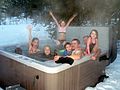 Bathers enjoying a hot tub in the winter in Keystone, Colorado
 -
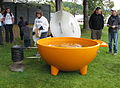 Wood-fired hot tub at the Adirondack Canoe Classic, Saranac Lake, NY
 -
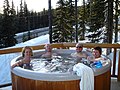 A hot tub at the Big White Ski Resort, Canada


See also
[edit]References
[edit]- ^ "Has jacuzzi become a generic trademark?". genericides.org. Archived from the original on March 6, 2021. Retrieved March 2, 2021.
- ^ a b Ikaria: The Ancient Spa of Therma in Ikaria Greece, Eastern Aegean, Greeka.com.
- ^ Schadewalt H. The history of Roman bathing culture [in Dutch]. Integraal1989;4:25–35
- ^ "Tips to Improve Hot Tub Energy Use" (PDF). Retrieved 18 October 2014.
- ^ a b Pacific Gas and Electric Company (May 12, 2004), Analysis of Standards Options For Portable Electric Spas (PDF), California Energy Commission, archived from the original (PDF) on 2006-10-06, retrieved 2008-09-09 (archived from the original on 2006-10-06).
- ^ Katherine Wang and Joshua Keim (September 2007). Turning Up the Heat. Poolspanews.com. Retrieved on 2012-08-10.
- ^ "List of portable electric hot tubs approved for sale in California". Archived from the original on Oct 27, 2008.
- ^ California's current appliance efficiency regulations. energy.ca.gov (2006).
- ^ Megan Geuss (January 13, 2020), Updated hot tub standard could bring surprisingly big energy savings to states, Appliance Standards Awareness Project, retrieved 2020-05-14
- ^ ANSI/APSP/ICC-3 "Permanently Installed Residential Spas" (PDF), American National Standards Institute, January 8, 2018
- ^ "Shutting down your hot tub to save electricity?". 2023-01-28.
- ^ "Shutting down your hot tub to save electricity?". 2023-01-28.
- ^ BBC (12 March 2013). "Stoke-on-Trent Legionnaires' deaths: Report calls for hot tub review". BBC News. Retrieved April 20, 2013.
- ^ a b Chahine, Aline (2020-08-13). "9 Types of Hot Tubs to Consider For Your Future Home". Architecture Lab. Retrieved 2021-04-20.
- ^ Samaan, Payal (9 July 2021). "What are Acrylic Hot Tubs". Allstate Home Leisure.
- ^ "The Best Hot Tubs for the Home". Bob Vila. 2020-10-28. Retrieved 2021-04-20.
- ^ Bob Barton (August 2016), "Recent Work on the Design and Construction of Air Inflated Structures", Procedia Engineering, 155, Science Direct: 47–60, doi:10.1016/j.proeng.2016.08.006
- ^ What Makes An Inflatable Spa Different From A Regular Spa?, 24 May 2020
- ^ "CPSC Warns Of Hot Tub Temperatures". U.S. Consumer Product Safety Commission. Archived from the original on 11 October 2011. Retrieved 2 December 2012.
- ^ "Install Ground-Fault Circuit-Interrupter Protection for Pools, Spas and Hot Tubs" (PDF). U.S. Consumer Product Safety Commission. Archived from the original (PDF) on 15 November 2012. Retrieved 2 December 2012.
- ^ "CPSC Issues Warning for Pools, Spas, and Hot Tubs". U.S. Consumer Product Safety Commission. Archived from the original on 2 December 2012. Retrieved 3 December 2012.
- ^ "1999–2007 Reported Circulation/Suction Entrapments" (PDF). U.S. Consumer Product Safety Commission. Archived from the original (PDF) on 8 January 2013. Retrieved 3 December 2012.
- ^ "2001 Reported Fires Caused by Hot Tubs". U.S. Consumer Product Safety Commission. Retrieved 3 December 2012.
- ^ "2012 Reported Fires Caused by Hot Tubs". U.S. Consumer Product Safety Commission. Retrieved 3 December 2012.
- ^ 2021 Uniform Swimming Pool, Spa and Hot Tub Code (18 ed.). International Association of Plumbing and Mechanical Officials (IAPMO). February 2021.
- ^ "Hot Tub Rash (Pseudomonas/ Folliculitis) | Healthy Swimming | Healthy Water | CDC". www.cdc.gov. 2020-07-01. Retrieved 2021-04-20.
- ^ "Respiratory Infections | Healthy Swimming | Healthy Water | CDC". www.cdc.gov. 2021-03-30. Retrieved 2021-04-20.
External links
[edit] Media related to Whirlpool baths at Wikimedia Commons


Hot tub
View on GrokipediaOverview
Definition and Purpose
A hot tub is a large tub or small pool filled with heated water, typically maintained at temperatures between 100°F and 104°F (38–40°C), designed for soaking, relaxation, or hydrotherapy.[8] This setup allows multiple individuals to immerse themselves simultaneously, often while socializing, and many models incorporate jets to create water currents for enhanced massage effects.[9] The primary purposes of hot tubs include promoting personal relaxation, facilitating social gatherings, and offering relief from muscle tension and soreness via hydrotherapy, where warm water and buoyancy aid in reducing stress on the body.[10][2] They are commonly integrated into private homes or spa environments to support recreational leisure and therapeutic wellness routines.[11][12] Hot tubs are distinct from a "Jacuzzi," which refers specifically to a trademarked brand of jetted tubs rather than a generic category, though the name is often misused colloquially for any similar device.[13] Unlike smaller hot baths—typically individual, indoor bathtubs filled temporarily with hot water and lacking jets or continuous circulation—hot tubs provide a larger, shared space with sustained heating and aeration for prolonged use.[14] The term "hot tub" itself was popularized in the 1960s in California, originating from the practice of repurposing wooden wine vats for communal soaking among vineyard workers and counterculture groups.[15]Basic Components
A hot tub's shell forms the primary vessel that holds the water, typically constructed from layered acrylic reinforced with fiberglass for durability and resistance to cracking under temperature changes and weight stress.[16] This material provides a smooth, non-porous surface that is easy to clean and maintains structural integrity over time, often backed by a composite resin for added strength.[17] Jets are integral to the hydrotherapy function, injecting pressurized water or air mixtures to create massaging effects on the body.[18] They vary in type, including hydrojets for powerful water streams and air jets for gentler bubbling, with placement designed to target specific muscle groups like the back or neck.[19] The pump circulates water throughout the system, powering the jets and ensuring flow through the heater and filters for even heating and basic sanitation.[18] Circulation pumps run continuously at low speeds for efficiency, while high-speed jet pumps activate for massage sessions, typically measured in horsepower (1-5 HP) and gallons per minute (GPM) flow rates.[19] The heater raises and maintains water temperature, usually electric with a coiled element that transfers heat to the circulating water, capable of reaching 104°F (40°C) in most models.[18] Gas heaters offer faster recovery in larger tubs but are less common due to higher installation costs.[19] The control panel serves as the user interface, allowing adjustments to temperature, jet intensity, and cycle modes via digital displays or touchscreens, often integrating with smartphone apps for remote monitoring.[18] The cabinet encloses the mechanical components, typically made from weather-resistant wood, synthetic polymers, or composite panels to protect against moisture and pests while providing aesthetic appeal. Beneath it, a metal frame—often stainless steel or galvanized—offers rigid support to the shell, distributing the weight of the filled hot tub and occupants. Empty (dry) weights vary by size and construction: smaller 2-4 person models often range from 400-800 pounds; 6-person hot tubs typically weigh 600-1,200 pounds empty (with standard acrylic hard-shell models around 800-1,000 pounds); larger 8+ person tubs commonly range from 900-1,500 pounds or more. When filled, weights increase significantly due to water (approximately 8.34 pounds per gallon); for example, 8-person models typically weigh between 4,500–6,000 pounds or more (with dry weights of 900–1,100 pounds and water adding approximately 3,800–4,500 pounds for capacities of 450–650 gallons), while 6-person models often reach 4,000-6,000 pounds filled depending on water capacity (typically 300-500 gallons), and anchoring the plumbing.[20][21] An insulated cover, usually made of vinyl-over-foam with tapered edges, seals the tub to retain heat, prevent evaporation, and deter debris, often weighing 50-100 pounds for safety compliance.[22] Accessories like steps or ladders, constructed from durable plastic or resin with non-slip treads, facilitate safe entry and exit, reducing slip risks on wet surfaces.[23] Electronics integrate via wiring harnesses connecting the control panel to pumps, heaters, and sensors, with temperature and flow sensors monitoring conditions to prevent overheating or dry firing, ensuring automated safety shutoffs.[24]History
Early Developments
The origins of hot tub-like soaking traditions trace back to ancient civilizations, where communal bathing in heated waters served social, hygienic, and therapeutic purposes. In ancient Rome, elaborate thermae complexes emerged as early as the 1st century BCE, featuring heated pools and rooms for immersion in warm water, often sourced from natural hot springs or artificially warmed via hypocaust systems. These facilities, such as the grand imperial baths built from the 1st century CE onward, promoted relaxation and health among citizens, with evidence of their widespread use across the empire for communal soaking rituals. Similarly, in Japan, onsen—natural hot spring baths—have roots extending over 3,000 years, with archaeological evidence suggesting prehistoric use for healing and communal bathing, formalized in records from the 8th century CE as sites for restorative immersion in mineral-rich geothermal waters.[25][26] The 18th and 19th centuries saw the rise of hydrotherapy, which emphasized warm water immersion as a medical treatment for conditions like rheumatism, influencing the development of dedicated soaking vessels. European practitioners in the early 19th century advocated for water-based treatments, including warm baths, to alleviate joint pain and inflammation, drawing on earlier traditions of mineral spring soaks to promote circulation and muscle relaxation. This therapeutic focus extended to Scandinavia and North America, where wooden tubs—often constructed from local timber like cedar or oak—were used for heated soaking, typically warmed by wood fires beneath or beside them, to treat ailments such as arthritis and fatigue in rural and therapeutic settings.[27][28] By the early 20th century, these practices evolved toward more portable and enclosed wooden designs, particularly in rural North American areas where access to natural springs was limited. Craftsmen adapted barrel-like structures from redwood or similar woods into self-contained hot tubs, heated externally with wood fires, allowing for private therapeutic soaks in remote homesteads and farms. These rudimentary portable tubs laid foundational designs for later innovations, emphasizing simplicity and natural heating methods over complex infrastructure.[29]Modern Invention and Popularization
The invention of the modern hot tub is closely tied to the Jacuzzi family's innovations in hydrotherapy. In the late 1940s, the Jacuzzi brothers, leveraging their expertise in hydraulics from their aviation pump business, developed the J-300, a portable hydrotherapy pump first marketed in 1956 and designed to aerate bathwater and provide relief for a family member's rheumatoid arthritis.[30] This device was initially patented and marketed for medical purposes, marking a pivotal advancement in therapeutic water circulation. By 1968, Roy Jacuzzi, a third-generation family member, adapted the technology for recreational use by creating the "Roman," the world's first self-contained whirlpool bath with integrated jets delivering a 50-50 air-to-water ratio, transforming hydrotherapy into a leisure experience.[5] The hot tub gained cultural traction in the 1960s amid California's counterculture movement, where it symbolized free love, communal relaxation, and sensory exploration. Northern California pioneers, influenced by post-World War II encounters with Japanese soaking traditions, repurposed wooden wine vats and redwood hot tubs—often heated by wood-fired stoves—into social gathering spots that embodied the era's ethos of peace and hedonism.[31] These rudimentary setups, sometimes integrated with saunas, became icons of the West Coast lifestyle, blending wellness with countercultural ideals and laying the groundwork for broader acceptance.[32] Commercialization accelerated in the 1970s with the introduction of fiberglass shell hot tubs, which addressed the maintenance issues of wooden models and enabled more efficient production and installation. This era saw a boom in manufacturing, as gelcoat fiberglass tubs—often plumbed on-site—debuted around 1970, marking the first widespread mass-produced hot tubs and fueling industry growth.[31] By the 1980s, the market expanded significantly into home spas, with portable acrylic models becoming affordable luxuries for suburban households, driven by innovations in durability and energy efficiency.[33] The 1990s brought global dissemination, as American manufacturers like Jacuzzi exported hot tubs to Europe and Asia, capitalizing on rising demand for home wellness products and establishing international production facilities.[34] Post-2000, inflatable hot tubs emerged as an accessible entry point, with the first models launched in 2007 by Bestway, offering portable, budget-friendly options that further democratized the market.[35] Into the 2020s, hot tub popularity has surged with smart technology integrations, allowing remote control via mobile apps for temperature adjustments, jet activation, and maintenance alerts, enhancing user convenience and energy management. This surge was particularly notable during the COVID-19 pandemic, with sales increasing substantially in 2020 as consumers sought home-based wellness options amid lockdowns.[36] By 2025, these app-connected features have become standard in premium models, reflecting a broader trend toward IoT-enabled home relaxation amid global wellness booms.[37][38]Types
Portable Hot Tubs
Portable hot tubs are self-contained units designed for mobility and straightforward installation, typically featuring inflatable or rigid plastic shells. Inflatable models connect to standard 120-volt household outlets without needing dedicated electrical wiring, while many rigid plastic shells require 240-volt dedicated wiring. Inflatable models weigh 50 to 110 pounds when empty, and rigid plastic shells weigh 300 to 500 pounds, making both manageable for relocation by a small team (2-4 people). Unlike fixed installations, they require no permanent plumbing or foundation, allowing placement on patios, decks, or level ground.[39] Key features include integrated electric heaters and circulation pumps that maintain water temperatures up to 104°F, along with basic filtration systems to keep the water clean. Most portable hot tubs accommodate 2 to 6 persons, providing seating in compact square or round designs that hold 200 to 300 gallons of water. Setup is quick, often completed in 1 to 4 hours by inflating or positioning the shell, filling with a garden hose, and powering on the unit. Advanced models incorporate bubble jets for massage effects, though they lack the high-pressure hydrotherapy jets found in more robust spas.[40][41] These hot tubs appeal due to their affordability, with prices ranging from $300 for basic inflatables to $5,000 for feature-rich rigid-shell versions, offering significant cost savings over permanent options. Their portability enables easy movement between locations or seasonal storage, ideal for renters or those testing hydrotherapy before committing to a larger investment. However, drawbacks include a lifespan of 5 to 10 years with regular maintenance, as the materials degrade from UV exposure and chemical use, and jets that provide milder stimulation with reduced durability compared to in-ground models' stainless-steel components.[42][43] Portable hot tubs see common use in residential settings for short-term rentals, seasonal backyard relaxation during warmer months, and as an accessible entry point for beginners exploring spa ownership. They suit apartments, vacation homes, or spaces with limited square footage where permanent fixtures are impractical. In terms of evolution, inflatable variants gained popularity in the 2010s, with brands like Intex introducing enhancements such as LED mood lighting, wireless Bluetooth speakers for music integration, and app-controlled operation for remote heating adjustments. Compared to in-ground models, portable hot tubs prioritize flexibility over long-term durability.[44][35]In-Ground and Built-In Models
In-ground and built-in hot tubs are permanently installed spas that are embedded directly into decks, poolsides, indoor floors, or landscaped grounds, constructed using materials such as concrete, gunite, or prefabricated acrylic shells, often finished with tiles or stone for a seamless aesthetic integration.[45][46] These models require professional excavation, plumbing, and construction by specialized contractors, often taking weeks or months to complete, in contrast to the quick setup of portable alternatives.[12] They generally offer larger capacities, seating 6 to 12 people comfortably, with robust shells designed for long-term outdoor exposure and advanced hydrotherapy systems featuring 20 or more powerful jets for targeted massage.[47][48] Many designs allow integration with existing swimming pools or home landscaping elements, enhancing overall property flow without the mobility of above-ground options.[49] A key advantage of in-ground models is their aesthetic appeal, as they blend naturally into surroundings like patios or gardens, creating a luxurious, custom-built environment that elevates property value.[49] Their longevity typically spans 10 to 20 years or more with proper maintenance, outlasting many portable tubs due to reinforced construction.[50][51] However, these benefits come with drawbacks, including high upfront costs typically ranging from $6,000 to $25,000 including installation, with prefabricated models costing $6,000–$17,000 and custom-built models ranging from $8,000–$25,000. Prices vary based on size, features, brand, site preparation, electrical work, and location. Round shapes are available (e.g., 96-inch models), but costs align with general in-ground ranges rather than differing significantly by shape.[52][53] Complete immobility makes relocation impossible without major demolition, and operating expenses can also be elevated due to the need for constant heating in non-insulated setups.[54] Customization is a hallmark of in-ground hot tubs, allowing owners to tailor designs for specific needs, such as spillover configurations that connect directly to adjacent swimming pools for shared water circulation and visual unity.[49] Features like programmable underwater lighting for ambiance, ergonomic variable seating to accommodate different body types, and enhanced jet placements for therapeutic relief further personalize the experience.[46][48] These installations are particularly suited to luxury homes and high-end resorts, where they serve as focal points for relaxation and entertainment in upscale outdoor or indoor settings.[12][49]Commercial and Public Installations
Commercial and public hot tubs are oversized units designed to accommodate 10 or more persons simultaneously, distinguishing them from residential models by their capacity for high-traffic environments such as hotels, gyms, spas, and community centers.[55][56] These installations prioritize durability and accessibility, often incorporating Americans with Disabilities Act (ADA) compliance features like pool lifts, transfer walls, or sloped entries to provide at least one accessible means of entry for individuals with disabilities.[57][58] Key features of commercial hot tubs include reinforced acrylic shells and durable materials like stainless steel accents to endure frequent use, along with multiple seating zones for varied user comfort.[59][60] They are equipped with industrial-strength pumps and enhanced filtration systems, such as high-capacity cartridge or pressurized filters, capable of processing water for 20 to 50 users per day while maintaining clarity and sanitation.[61][62] These installations offer businesses revenue potential by enhancing guest experiences and differentiating facilities, as seen in hospitality and wellness sectors, though they necessitate rigorous maintenance schedules to prevent wear and ensure operational reliability.[63] Costs for purchasing and installing such units typically range from $20,000 to over $100,000, influenced by size, customization, and site preparation requirements.[64][65] Notable examples include rooftop hot tubs at hotels like the Firebrand Hotel in Whitefish, Montana, which provide relaxation amid scenic views, and therapeutic hot tubs integrated into rehabilitation centers for recovery-focused hydrotherapy.[66][67] Following the 2020 COVID-19 pandemic, many public hot tubs received hygiene upgrades, including ultraviolet light disinfection systems and stricter cleaning protocols to bolster user safety.[68][69] Public hot tubs face elevated regulatory standards compared to private ones, mandating ADA-compliant access features and, in certain jurisdictions, lifeguard supervision to mitigate risks during operation.[57] For example, California law requires lifeguard service at public swimming pools, including associated hot tubs, where direct fees are charged for use.[70][71]Other Types
Other notable types include wooden hot tubs, often made from cedar or redwood for natural insulation and traditional aesthetics, typically heated by wood-fired stoves or electric elements and suitable for outdoor settings evoking historical soaking traditions. Hybrid swim spas combine hot tub relaxation with adjustable swim currents for in-place swimming and exercise, accommodating both lounging and fitness in a single unit, popular for compact backyards or multi-use spaces.[72][73]Design and Technology
Plumbing and Filtration Systems
Hot tub plumbing systems facilitate the movement of water through the vessel, ensuring effective circulation for filtration, heating, and jet action. These systems typically utilize PVC or CPVC pipes, with PVC being suitable for general water conveyance due to its durability and resistance to corrosion in unheated lines, while CPVC is preferred near heating elements for its ability to withstand temperatures up to 200°F without deforming. Valves, such as diverter and on/off types, regulate flow direction and volume, allowing users to adjust water paths between jets, returns, and drains. Drains, including main suction and skimmer inlets, draw water from the tub's bottom and surface to capture debris, preventing clogs and maintaining balanced flow. Systems are categorized as low-flow, relying on smaller circulation pumps for continuous filtration, or high-flow, which employ larger jet pumps for powerful therapy but higher energy use during operation.[74][75][76] Filtration in hot tubs primarily involves cartridge or sand filters to remove particulates from the water. Cartridge filters, the most common type for portable and residential models, consist of pleated polyester or similar media that traps debris; they typically filter down to 10-20 microns and require replacement every 1-2 years, though intensive use in high-bather-load environments may necessitate more frequent changes, such as every 3-6 months for disposable variants. Sand filters, suited to larger or commercial hot tubs, use silica sand beds to capture particles as small as 20-40 microns and are reusable, offering longevity of 5-7 years for the media with periodic maintenance. Skimmers complement filtration by collecting surface debris like leaves and oils before it enters the system, often integrated via floating or fixed inlets connected to the plumbing.[77][78][79] Water circulation is driven by pumps that maintain hygiene and integrate with plumbing for overall system efficiency. Most hot tubs feature one or two pumps: a low-horsepower circulation pump (0.25-0.5 HP) for constant filtration and a higher-power jet pump (1-5 HP, often two-speed for low/high settings) for massage functions. Circulation pumps run 8-24 hours daily to turnover the entire water volume multiple times, while jet pumps operate intermittently. Typical flow rates range from 20-50 gallons per minute for circulation, ensuring adequate filtration without excessive strain on components; higher flows up to 100+ GPM occur during jet activation. For sand filters, backwashing reverses flow through the media to expel trapped debris, performed by switching the multiport valve to "backwash," running the pump for 2-3 minutes until effluent clears, then "rinsing" briefly to settle the bed—this process is recommended every 1-2 weeks or when pressure rises 8-10 psi above baseline.[80][81][82]Heating and Energy Efficiency
Hot tubs primarily employ three heating methods to raise and maintain water temperature: electric resistance heaters, gas-fired systems, and heat pumps. Electric heaters, the most common type, utilize dedicated compact immersion elements (also known as réchauffeur électrique or chauffage électrique pour spa) rated between 1.5 and 6 kW. These are distinct from electric boilers used for home central heating (known as "chaudière électrique" in French), which typically cost from around 1,800€ to over 4,000€ depending on power and model. In contrast, spa-specific electric heaters are more affordable, typically ranging from 80€ to 500€ on average, with 3 kW models often priced around 79€–200€ depending on power, brand, and features, providing efficient heating for residential use by converting electrical energy directly into heat within the water.[83][84][85] Gas heaters, fueled by propane or natural gas, deliver rapid heating through burners producing 100,000 to 400,000 BTU per hour, making them suitable for larger or commercial installations where quick recovery is needed.[86] Heat pumps, which extract ambient air heat to warm the water, are ideal for mild climates with average temperatures above 50°F, offering a coefficient of performance (COP) of 4-6 for reduced operational costs compared to direct heating.[87] Additionally, the design of the hot tub base and cabinet significantly impacts energy efficiency. While cabinet insulation minimizes heat loss through conduction and convection, excessive air circulation or large gaps underneath the tub (e.g., on raised decks or with open skirting) can increase convective cooling from cold air flowing under the base, drawing heat away from the shell and plumbing and requiring more heater runtime. Manufacturers recommend placing the hot tub on a solid, level foundation like a concrete pad to minimize such air gaps and reduce bottom-side heat loss. Conversely, controlled ventilation within the cabinet—often via side vents near pumps and heaters—is necessary to dissipate excess heat from equipment operation, preventing overheating and component failure. Over-insulating without adequate cabinet airflow can cause thermal issues, particularly in warmer climates. Modern designs balance this with perimeter or full-foam insulation systems that trap and sometimes recirculate pump waste heat for improved efficiency, rather than allowing unrestricted airflow underneath. Temperature control in hot tubs is managed by digital or analog thermostats that precisely regulate water to 100-104°F, the recommended range for safe therapeutic use as established by the U.S. Consumer Product Safety Commission to prevent overheating risks.[88] Insulation plays a critical role in retention, with covers typically featuring high-density foam cores achieving R-values of 10 to 20, while cabinet insulation around the shell and components often matches or exceeds this for minimal heat loss through conduction and convection.[89][90] Energy consumption for electric hot tubs averages 1,500 to 3,000 kWh annually, depending on model efficiency, ambient conditions, and usage patterns, with standby heating accounting for the majority of draw. Efficiency can be enhanced by practices such as always using the insulating cover, which reduces evaporative and radiative heat loss by up to 70%, and setting lower temperatures (e.g., 98°F) when not in use to cut demand.[91][92] Advancements in heating technology include inverter-based systems, which use variable-speed compressors in heat pumps or heaters to modulate output precisely, achieving 20-30% energy savings over fixed-speed models by avoiding on-off cycling inefficiencies. Solar-assisted preheating integrates panels to capture sunlight for initial warming, supplementing primary heaters and potentially offsetting 20-50% of energy needs in sunny regions.[93][94] As of 2025, modern hot tubs increasingly incorporate smart technology, such as Wi-Fi connectivity and app-based controls, allowing remote monitoring of energy use, automated adjustments, and integration with voice assistants for optimized efficiency.[95] For average U.S. households with electricity rates of $0.16-$0.18 per kWh as of 2025, operating an electric hot tub incurs annual costs of $250 to $550, influenced by insulation quality, climate, and maintenance of components like seals and filters to prevent excess energy waste.[96][97]Cooling and Dual-Temperature Features
While most hot tubs maintain water temperatures between 100°F and 104°F for traditional hot soaking, advanced models and add-on systems enable active cooling to lukewarm (around 70-85°F) or even colder levels (down to 50-60°F) for cool soaks, exercise, or contrast therapy. Notable examples include:- Hot Spring Spas' CoolZone system, an add-on chiller/heat pump that allows temperatures from approximately 60°F to 104°F, integrating with compatible models for efficient cooling and heating.
- Aqua Living/Atera swim spas with AnyTemp technology, providing a range from 56-62°F up to 104°F, ideal for maintaining tepid water in hot climates.
- Polar Hot Tubs with Arctic Heat Pump, capable of chilling to around 40°F while heating to over 100°F.
- Dual-zone swim spas (e.g., from Jacuzzi, Master Spas, Sundance) with independent temperature controls for separate swim (cooler) and soak (hotter) areas.
Sanitation and Water Quality Management
Maintaining proper sanitation and water quality in hot tubs is essential to prevent the growth of harmful microorganisms and ensure user safety. Primary sanitizers include chlorine, which should be maintained at a minimum of 3 parts per million (ppm) in hot tubs to effectively kill bacteria.[98] Bromine serves as an alternative sanitizer, with recommended levels of 3-8 ppm, offering stability in higher temperatures typical of hot tubs.[99] Biguanide (PHMB) provides a chlorine- and bromine-free option, requiring concentrations of 30-50 ppm to control bacterial growth without irritating the skin or eyes.[100] Supplemental systems like ozone generators and ultraviolet (UV) light enhance primary sanitizers by oxidizing organic contaminants and destroying pathogens, reducing the need for chemical dosages by up to 50-90% in some setups.[101] Ozone injects O3 gas to break down waste, while UV systems use light to inactivate bacteria and viruses passing through the circulation.[102] These aids work in conjunction with filtration systems to improve overall water clarity. Water quality also depends on balanced chemistry: pH should be kept between 7.2 and 7.8 to optimize sanitizer effectiveness and prevent corrosion or scaling.[103] Total alkalinity, which buffers pH fluctuations, is ideally 80-120 ppm.[104] Calcium hardness levels of 150-250 ppm help avoid damage to equipment and surfaces by maintaining water stability.[105] Regular testing using strips or kits ensures these parameters stay within range, allowing for timely adjustments.[106] Shock treatments with non-chlorine oxidizers, such as potassium monopersulfate, are applied weekly to oxidize organic waste like sweat and lotions, preventing cloudiness without raising sanitizer levels.[107] To prevent biofilm—a slimy bacterial layer that forms on surfaces and in plumbing—enzymes can be added to break down organic residues, while silver ion cartridges release ions to inhibit microbial adhesion, typically replaced every four months.[108][109] Complete water changes every 3-4 months remove accumulated dissolved solids that sanitizers cannot address.[110] The Centers for Disease Control and Prevention (CDC) establishes standards for sanitizer levels, recommending at least 3 ppm free chlorine or equivalent bromine to ensure effective bacterial kill rates in hot tub water.[111]Operation and Maintenance
Setup and Filling
Setting up a hot tub begins with careful site selection to ensure stability, safety, and accessibility. For portable models, choose a level, solid surface such as a concrete pad at least 4 inches thick or a reinforced deck capable of supporting the filled weight; for example, 8-person hot tubs typically weigh between 4,500 and 6,000 pounds (2,040 to 2,720 kg) when filled with water, depending on the model, dimensions, and water capacity (usually 450-650 gallons), with dry (empty) weights of 900-1,100 pounds and water adding approximately 3,800-4,500 pounds (water weighs about 8.34 lbs per gallon).[39][112] Many specific models weigh around 5,300-5,500 pounds when filled; the site should provide unrestricted access for delivery, with entry points at least as wide as the tub's height, and be within 10 feet of a 220V/50A electrical outlet or GFCI-protected circuit for standard installations, or a standard 110V outlet for plug-and-play models. Proximity to a clean water source, like an outdoor hose bib, and a suitable drainage area is essential to facilitate filling and future maintenance without excessive hose lengths that could cause kinks or restrictions. For in-ground or built-in models, the site requires excavation to the manufacturer's specified depth, typically involving soil testing for stability and anchoring the shell with concrete footings to prevent shifting; professional surveying is recommended to avoid underground utilities.[113][114] Assembly for portable hot tubs is relatively straightforward, as these units arrive pre-assembled and self-contained; after delivery—often via forklift or crane for access-limited sites—position the tub on the prepared foundation using a level to confirm even contact on all sides, then secure any peripheral components like steps or covers. Connection of plumbing involves attaching the provided hoses to the pump and filter housing if not factory-integrated, ensuring all unions are hand-tightened to avoid leaks. In contrast, built-in models demand more involved assembly, including lowering the pre-molded shell into the excavated pit using heavy equipment, aligning it precisely, and connecting to on-site plumbing and electrical conduits before backfilling with gravel or concrete for support and drainage. Always consult local building codes, as permits may be required for structural modifications.[113][115][114] The filling process starts with closing the drain valve at the base of the tub and flushing the garden hose for 30 seconds to remove debris before attaching a hose-end pre-filter to capture sediments, metals, and chlorine from municipal water. This pre-filter is particularly important for removing metals such as iron or copper, which can cause a yellow tint in the hot tub water, often becoming more noticeable after shocking or oxidizing the water. If using well water or suspecting high metal content in the source water, test the water quality beforehand and consider a specialized metal-removing pre-filter or pre-treating with a metal sequestrant to prevent discoloration and staining issues. Fill slowly through the filter cartridge port or skimmer until the water level reaches the manufacturer's recommended mark, typically midway up the skimmer or pillow, equating to 300-650 gallons depending on model size, with larger 8-person models often holding 450-650 gallons; this prevents pump cavitation from low water while avoiding overflow. For portable tubs, filling takes 10-30 minutes; monitor for air pockets by keeping jets off until full, and test fill water quality beforehand if using well water to avoid mineral buildup. Common pitfalls include overfilling, which can flood equipment compartments, or underfilling, leading to dry running of pumps.[116][117][118][119][120] Initial startup follows filling and requires connecting power only after verifying the water level; turn on the breaker to enter priming mode, where pumps activate automatically for 4-10 minutes to expel air from lines—press the jets button to run each pump sequentially at low speed, listening for gurgling that indicates air locks, and add water if needed. Run the jets for an additional 10-15 minutes to circulate fully, then set the heater to 100°F (38°C) and allow 4-24 hours to reach temperature, depending on ambient conditions and model efficiency. Tools essential for this phase include a standard garden hose with pre-filter, adjustable wrench set for hose connections, a digital level for site verification, and a leak detection spray or soapy water solution to check seals. Avoid common errors like powering on before filling, which can damage pumps, or skipping priming, resulting in overheating. Component connections, such as pump inlets, should align per the owner's manual for seamless integration.[121][122][118]Chemical Balancing
Maintaining proper chemical balance in a hot tub is essential for ensuring clear, sanitary water and preventing damage to equipment or user discomfort. This involves regularly testing and adjusting key parameters such as pH, total alkalinity, calcium hardness, sanitizer levels, and stabilizers to keep the water within safe ranges. Imbalances can lead to issues like reduced sanitizer effectiveness or accelerated wear on components.[123][124] A standard testing routine recommends weekly checks using digital testers or test strips to measure pH (7.2–7.8), total alkalinity (80–120 ppm), calcium hardness (150–250 ppm), free chlorine (3–5 ppm), and free bromine (4–6 ppm). These ideal ranges remain consistent with established industry standards and CDC guidelines as of 2026, with no significant changes occurring in 2025 or 2026; CDC guidelines (applicable to public hot tubs but widely referenced for residential use) specify pH 7.0–7.8, minimum free chlorine 3 ppm, and minimum free bromine 4 ppm (with recommendations up to 8 ppm for bromine in some contexts). Digital testers provide precise photometric readings for pH, free chlorine, total alkalinity, and other metrics, often displaying results in seconds for accurate weekly monitoring. Always test after filling or before use, and retest 30–60 minutes after adding chemicals to allow stabilization. The order of adjustments is critical: address total alkalinity first to buffer pH stability, then adjust pH, followed by sanitizer levels.[125][126][124][98] To lower total alkalinity (TA) when it exceeds the ideal range of 80–120 ppm, the primary method is to use sodium bisulfate (also known as dry acid or pH decreaser). Always adjust TA before pH, add chemicals gradually to avoid overshooting, and follow product labels for specific dosing.[127][128] Step-by-step guide:- Test current TA using strips or a kit.
- Calculate dosage based on hot tub volume and current TA (e.g., approximately 1.5 oz of sodium bisulfate lowers TA by 10 ppm in 500 gallons).
- Wear gloves and goggles; pre-dissolve dry acid in water if needed.
- Turn on circulation/jets (low speed), open cover partially for ventilation.
- Slowly add the chemical around the perimeter, away from fittings.
- Circulate for 30–60 minutes, then let sit 1 hour.
- Retest TA and pH; repeat small doses if needed.
- If pH drops too low, raise it with a pH increaser or aeration (run jets/air blowers).
Cleaning and Winterization
Routine cleaning of a hot tub begins with weekly wiping of the shell and jets using a soft cloth and mild, pH-neutral soap to remove surface residues and prevent buildup.[143] Debris such as leaves or insects should be skimmed from the surface daily with a net, while settled particles on the bottom can be vacuumed using a dedicated spa vacuum tool to maintain clarity without straining the filtration system.[144] Filters require monthly attention: remove them, rinse thoroughly with a garden hose to dislodge loose dirt, and soak in a solution of white vinegar and water overnight to dissolve mineral deposits and oils before rinsing and reinstalling. Similar vinegar/water mixtures (often 1:1 or 1:4 ratios) are commonly used in community practices and guides for cleaning the empty tub's shell, surfaces, jets, and other components, as well as for removing scale, calcium deposits, soap scum, and body oil residues. Vinegar is occasionally used in small amounts to mildly lower high pH levels, though dedicated pH adjusters are preferred for precision and to avoid potential issues with water chemistry.[145][146][147][148] Deep cleaning should occur every three to four months or after heavy use to address biofilm and embedded contaminants. Begin by turning off power to the hot tub, draining the water completely using a submersible pump, and flushing the plumbing lines with a specialized cleaner circulated through the jets for 15-30 minutes to loosen residues.[145] Scrub the shell's interior surfaces, including around jets and pillows, with a soft-bristled brush and non-abrasive cleaner to remove biofilm without scratching the acrylic; avoid harsh chemicals that could damage seals.[149] When the tub is drained and dried, a dried foam residue or scum line may appear as a sticky or chalky film from body oils, lotions, soaps, detergents, or other contaminants that accumulated at the water line. To remove this residue, gently scrub the affected areas with a soft cloth, sponge, or non-abrasive tool using a mild cleaner such as a solution of equal parts white vinegar and warm water, a baking soda paste, a citric acid solution, or a dedicated spa surface/shell cleaner; avoid abrasives to prevent scratching the acrylic. Rinse thoroughly afterward.[150] To prevent such buildup, shower and rinse off lotions, oils, or other products before entering the hot tub, maintain proper water chemistry through regular testing and balancing, perform weekly shocking, clean filters regularly, and drain and refill the hot tub every 3-4 months.[151] Rinse all components thoroughly with fresh water, and inspect pillows, gaskets, and seals for wear, replacing them annually to prevent leaks and maintain hygiene.[152] Hot tubs used in short-term rental properties require more frequent cleaning than privately owned residential units, typically after each guest turnover rather than on a quarterly schedule. High bather loads in rental settings accelerate the accumulation of body oils, lotions, and contaminants, increasing the risk of bacterial growth and water chemistry imbalance. In such cases, filter rinsing, shell wiping, sanitizer testing, and water shocking after each use are considered minimum standards for maintaining safe water quality.[153] Winterization is essential in cold climates to protect against freezing damage, typically performed after the final drain in late fall. Fully drain the hot tub and all accessible lines by loosening pump and heater unions, then use an air compressor set to 20-30 PSI to blow out residual water from plumbing lines, starting from the farthest jet and working toward the pumps to avoid backflow.[154] Add propylene glycol-based antifreeze to pump housings and any low points in the system to lower the freezing point, ensuring no water remains that could expand and crack components.[155] Secure a fitted, insulated cover over the hot tub to block moisture and debris, and store filters in a dry area after cleaning. Failure to winterize properly can lead to frozen pipes bursting, resulting in costly repairs.[156] Proper handling and storage of the hot tub cover is essential to prevent damage such as warping, bowing, cracking, or uneven foam compression caused by prolonged uneven pressure. Avoid leaning the cover against walls, fences, or any vertical surfaces. Instead, use a cover lifter, such as a pivot or hydraulic lifter, to remove and store the cover in an upright or suspended position away from walls. If a lifter is not available, lay the cover flat on the ground or use a dedicated cover stand or valet system. Essential tools for these tasks include a spa vacuum for debris removal, submersible pump for efficient draining, filter cleaning solution or vinegar for soaks, soft brushes for scrubbing, an air compressor for winterization, and a cover lifter for proper cover handling.[144][149] Chemical aids like line flushers can enhance deep cleaning by breaking down biofilms in pipes, though full details on their use are covered in chemical balancing procedures. For spring startup, inspect the hot tub cover, shell, and components for winter damage such as cracks or mold growth, repairing as needed before proceeding. Refill with fresh water using a hose filter to minimize contaminants, power on the system to heat and circulate, then test and rebalance chemicals to achieve proper pH, alkalinity, and sanitizer levels for safe operation.[157][158] Clean or replace filters if stored, and run the jets briefly to ensure all lines are clear before use.[152]Health and Safety
Benefits and Therapeutic Uses
Hot tubs provide several physical benefits through the combined effects of warm water immersion, buoyancy, and hydrostatic pressure. The buoyancy of the water supports the body, reducing gravitational stress on joints and muscles by up to 90%, which can alleviate pressure on sore areas and improve mobility for individuals with joint-related conditions.[159] Hydrostatic pressure from the surrounding water helps reduce swelling by promoting fluid drainage from tissues, while the heat dilates blood vessels, enhancing circulation and delivering more oxygen and nutrients to muscles.[160] Studies on hydrotherapy indicate that such immersion can increase skin blood flow substantially during passive heat stress, supporting recovery and reducing inflammation.[161] Therapeutically, hot tubs are used for arthritis relief, as the warmth and jets provide hydromassage that loosens stiff joints and eases chronic pain, aligning with recommendations from organizations like the Arthritis Foundation for heat therapy in managing symptoms.[162] They also aid post-workout recovery by promoting muscle relaxation and improved blood flow, with research showing that hot water immersion after resistance exercise enhances inflammatory mediator turnover and supports greater recovery compared to passive rest.[163] For pregnancy, hot tubs may offer comfort by relieving back pain and swelling when used with doctor approval, typically limited to short sessions to avoid overheating.[164] However, contraindications include avoiding use with open wounds, as immersion can increase infection risk.[165] Mentally, hot tub use contributes to stress reduction by stimulating endorphin release, the body's natural mood elevators, which can lower cortisol levels and promote relaxation.[7] Evening soaks have been linked to better sleep quality, as the subsequent drop in body temperature mimics the natural pre-sleep cooling process, improving overall rest.[7] Clinical evidence supports these benefits, particularly for conditions like fibromyalgia, where balneotherapy via hot water immersion has shown significant pain reductions in multiple trials from the 2010s; for instance, a 2012 study reported increased beta-endorphins contributing to pain relief, while a 2013 trial noted improvements in sleep and function lasting months post-treatment.[166] A 2025 clinical trial further demonstrated statistically significant decreases in average and worst pain scores after four weeks of hot tub therapy for fibromyalgia patients.[167] To maximize benefits, sessions should last 15-20 minutes at temperatures between 100°F and 104°F, followed by hydration to prevent dehydration, as recommended by the Pool & Hot Tub Alliance.[168]Benefits for Athletes and Sports Recovery
Hot tubs and hydrotherapy are popular among athletes, including professional cyclists, for post-exercise recovery. The combination of warm water immersion (typically 38–40°C), buoyancy, and jet massage promotes increased blood flow, which helps deliver oxygen and nutrients to fatigued muscles while flushing metabolic waste like lactic acid, reducing delayed-onset muscle soreness (DOMS) and stiffness after intense rides or training. Professional cyclists report benefits such as muscle tone restoration, toxin elimination, injury prevention through reduced overloads, pain relief, swelling reduction, and improved sleep from relaxation. The jets provide targeted massage to common cycling trouble areas like quadriceps, hamstrings, calves, and lower back. Buoyancy reduces joint stress, aiding flexibility, range of motion, and gentle stretching, which can help prevent overuse injuries common in cycling (e.g., tight hips, IT band issues). Emerging research highlights unique benefits from hot water immersion training (e.g., pedaling in warm water), which can enhance performance in hot/humid conditions via improved heat tolerance and cardiovascular adaptations. A 2025 randomized controlled trial found recreational athletes improved 30-minute hot-weather time trial performance by 27W (vs. 13W in controls), a roughly 2x greater gain after short-term sessions. Compared to cold therapy (ice baths), hot immersion excels in relaxation, flexibility, perceived recovery, and maintaining power between efforts, while cold better reduces acute inflammation. Contrast therapy (alternating) combines advantages. Caveats: Limit sessions to 10–20 minutes, stay hydrated to avoid dehydration, and consult physicians for cardiovascular conditions, as heat increases heart rate. Avoid alcohol and prolonged exposure.Safety Hazards and Prevention
Hot tubs present several physical safety hazards, primarily related to drowning, entrapment, electrical shocks, and overheating, which can lead to serious injury or death if not properly managed. Drowning risks are heightened by the slippery surfaces of hot tub interiors and surrounding areas, making it difficult for users, especially children, to maintain footing in shallow but heated water. The U.S. Consumer Product Safety Commission (CPSC) estimates that spa-related submersion incidents accounted for approximately 250 nonfatal drowning injuries to children under 15 annually during 2018–2020, with children younger than 5 years comprising the majority of victims due to their vulnerability to slips and unsupervised access.[169] As of 2025, CPSC estimates indicate a 17% increase in pool- and spa-related nonfatal injuries for children under 15 from 2020 to 2022, averaging 6,800 annually, underscoring ongoing risks.[170] Fatal drownings in spas, though less common than in pools, averaged around 14 cases per year for children under 15 during 2019–2021, often exacerbated by the relaxing effects of warm water leading to loss of consciousness.[171] Entrapment hazards occur when a user's body, hair, limbs, or clothing becomes caught by the strong suction from drains or jets, potentially pulling them underwater. Hair entrapment, in particular, can cause rapid drowning if long hair wraps around an uncovered or damaged drain fitting. To mitigate this, the Virginia Graeme Baker Pool & Spa Safety Act of 2007 requires anti-entrapment drain covers and systems compliant with ASME/ANSI A112.19.8 standards or equivalent safety vacuum release systems under ASTM F2387, which limit suction force and prevent blockages. These measures have significantly reduced entrapment incidents since implementation, but regular inspection of covers for cracks or wear is essential. Electrical hazards arise from improper wiring or water exposure, potentially causing shocks or electrocution in conductive water. Ground fault circuit interrupter (GFCI) protection is mandated by the National Electrical Code (NEC) Article 680 for all hot tub circuits, automatically shutting off power if a ground fault is detected to prevent lethal currents from flowing through the water. Bonding and grounding of all metal components, including the hot tub shell and plumbing, equalizes electrical potential and further reduces shock risk, as recommended by the CPSC for installations. Overheating, or hyperthermia, results from prolonged exposure to water temperatures typically ranging from 100–104°F (38–40°C), leading to symptoms such as dizziness, nausea, rapid heartbeat, and confusion, which can impair judgment and increase drowning likelihood. Vulnerable groups, including pregnant individuals, children, the elderly, and those consuming alcohol, face heightened risks; for instance, alcohol dilates blood vessels and accelerates heat absorption, while pregnant women should limit exposure to 100°F (38°C) for no more than 10 minutes to avoid fetal complications. Frequent or prolonged hot tub use can cause skin dryness and itching by removing natural skin oils through heat and exposure to sanitizers, as well as dehydration leading to blood pressure fluctuations that heighten dangers for those with heart conditions, low blood pressure, kidney or diabetes issues, or risk of sudden adverse events. The American College of Obstetricians and Gynecologists advises avoiding hot tubs entirely during pregnancy if possible.[172][7] Preventive measures focus on physical barriers and operational controls to address these hazards effectively. Installing self-closing, self-latching fences or rigid safety covers meeting ASTM F1346 standards around hot tubs restricts unauthorized access, particularly for young children, and is a key CPSC recommendation to prevent drownings. Non-slip mats or textured decking around the entry area minimizes slipping on wet surfaces. Automatic timers limit session durations to 15–20 minutes, reducing overheating risks, while readily accessible emergency shut-off switches allow immediate deactivation of pumps and heaters in case of entrapment or distress. For users employing hot tubs for recovery during intense athletic training, precautions include staying hydrated to counteract sweating-induced dehydration, avoiding extreme heat or prolonged sessions to prevent additional fatigue, and opting for cooler options or rest if experiencing overtraining symptoms such as unusual fatigue or extreme soreness, as excessive heat may theoretically exacerbate muscle breakdown risks in rare cases.[173][174] Professional installation ensuring GFCI compliance and annual inspections by certified technicians further enhance overall safety.[175] Users with pre-existing conditions should consult physicians before regular use and adhere to recommended soak times.Disease Risks and Mitigation
Hot tubs, if not properly maintained, can harbor pathogens that lead to waterborne illnesses, primarily through inadequate sanitation allowing bacterial and parasitic growth in warm, moist environments. Common pathogens include Pseudomonas aeruginosa, which causes hot tub rash (folliculitis), a skin infection manifesting as itchy, red bumps or pus-filled blisters around hair follicles, typically appearing 1–2 days after prolonged skin exposure to contaminated water.[111] Legionella bacteria, particularly Legionella pneumophila, can cause Pontiac fever—a flu-like illness with symptoms such as fever, cough, and muscle aches—or more severe Legionnaires' disease, a pneumonia acquired via inhalation of aerosolized mist from hot tubs, with onset within 2–10 days of exposure.[176] Cryptosporidium, a chlorine-resistant parasite, poses a risk through fecal contamination, leading to gastrointestinal illness characterized by watery diarrhea, stomach cramps, and dehydration lasting up to two weeks, transmitted primarily by swallowing contaminated water.[177] Risk factors for these infections include poor water quality from insufficient disinfectant levels, biofilm buildup in pipes and filters, overcrowding that overwhelms sanitation capacity, and inadequate ventilation promoting aerosol spread.[111][176] Transmission occurs via direct contact with contaminated water or aerosols, with vulnerable groups such as older adults (≥50 years), smokers, and those with compromised immune systems facing higher risks for severe outcomes like pneumonia from Legionella.[176] In the 2010s, the U.S. saw multiple outbreaks linked to hot tubs, including a 2019 incident at a North Carolina state fair where over 100 cases of Legionnaires' disease were confirmed from mist generated by display hot tubs, highlighting ongoing public health concerns.[178][179] Pseudomonas folliculitis outbreaks, while decreasing slightly, still contributed to hundreds of cases yearly during this period, often tied to hotel or public facilities with lapses in maintenance.[179] Cryptosporidium incidents, though less common in hot tubs than pools, were reported in treated recreational water settings, underscoring the parasite's persistence despite standard chlorination.[180] Mitigation strategies focus on rigorous sanitation and user hygiene to minimize pathogen proliferation. Maintain free chlorine at ≥3 ppm or bromine at ≥4 ppm, with pH between 7.0–7.8, tested regularly using strips; shock the water weekly or after heavy use to eliminate contaminants.[111][176] Users should shower with soap before and after entering, avoid swallowing water, and remove swimsuits promptly to prevent bacterial trapping; cover hot tubs when not in use to reduce debris and evaporation.[111] Advanced systems like ultraviolet (UV) light or ozone disinfection can achieve up to 99% reduction in bacteria such as Pseudomonas and Legionella by disrupting their DNA or oxidizing cellular components, serving as effective supplements to chemical sanitizers.[181] Following the COVID-19 pandemic, enhanced protocols emerged, including more frequent surface disinfection, biofilm scrubbing, and capacity limits to curb aerosol transmission, drawing from heightened public hygiene awareness and CDC guidance on inactivating viruses in aquatic venues.[182][99]Bacterial risks and disinfection
Hot tubs require proper sanitation to prevent bacterial growth, typically using chlorine (at least 3 ppm free chlorine) or bromine (4–8 ppm), with pH maintained between 7.0–7.8. These disinfectants effectively kill many pathogens in the water when levels are correct, including Staphylococcus aureus and methicillin-resistant Staphylococcus aureus (MRSA). According to the CDC, MRSA does not survive long in properly disinfected recreational water, and there are no reported cases of MRSA spreading through contact with well-maintained chlorinated or brominated hot tub water. However, these chemicals primarily act on bacteria suspended in the water or on surfaces. They do not penetrate sufficiently to kill or significantly reduce Staphylococcus aureus that is colonizing the skin (e.g., in nasal passages, armpits, or groin), which is protected by skin oils, dead cells, or biofilms. Soaking in a hot tub does not serve as an effective decolonization method for skin-resident staph, unlike targeted antibacterial washes (e.g., chlorhexidine). The warm water and organic load from bathers can also reduce sanitizer efficacy over time if not monitored. To minimize risks:- Shower with soap before and after use to reduce organic load and rinse skin.
- Maintain and test disinfectant levels regularly.
- Avoid use if you have open wounds or active skin infections.
Chemical irritation from sanitizers
While proper sanitation with chlorine (minimum 3 ppm) or bromine prevents bacterial infections, exposure to these chemicals and their byproducts can cause irritant effects, particularly with frequent or daily use. Chlorine acts as an irritant by stripping the skin's natural protective oils (sebum), leading to dryness, itching, flaking, and irritation. This can manifest as red, tender skin or a "chlorine rash" (irritant dermatitis), with symptoms like burning or inflammation. Individuals with sensitive skin, eczema, or psoriasis may experience flare-ups. Chronic exposure may contribute to premature aging or increased skin sensitivity due to repeated barrier disruption. Chloramines (disinfection byproducts formed when chlorine reacts with organic matter like sweat or urine) can cause additional irritation, including red eyes, skin rashes, and respiratory symptoms such as coughing or throat irritation, especially in indoor or poorly ventilated hot tubs. Hair may become dry and brittle over time. These effects are generally mild at recommended levels but increase with prolonged immersion, high bather load, or imbalanced chemistry.Prevention tips
To minimize irritation:- Shower with soap before entering to reduce organic contaminants that form chloramines.
- Rinse thoroughly and moisturize skin immediately after exiting (using fragrance-free, barrier-repair creams like those with ceramides).
- Limit soak time to 15-20 minutes.
- Remove and wash swimsuits promptly after use.
- Test and maintain proper pH (7.0–7.8) and disinfectant levels regularly.
Environmental and Regulatory Considerations
Energy Consumption and Sustainability
Hot tubs consume an average of 3 to 7.5 kilowatt-hours (kWh) of electricity per day during typical operation, with heating representing the largest portion of this energy demand, often accounting for 70-80% of total usage due to the need to maintain water temperatures around 100°F (38°C). Circulation pumps and auxiliary systems contribute the remainder, while runtime energy draw can reach 1.5 to 6 kWh per hour when heaters and jets are active. This breakdown highlights how standby heating, even when covered, dominates costs, as evidenced by real-world data from over 20,000 users showing a median daily consumption of 6 kWh.[91][183] Sustainability efforts in hot tub design focus on reducing operational energy through features like LED lighting, which uses up to 80% less power than traditional bulbs while providing equivalent illumination and lasting longer. Variable-speed pumps offer significant savings by adjusting flow rates, potentially reducing pump energy use by 30-80% compared to single-speed models, depending on runtime and load. Additionally, many modern shells incorporate recycled materials, such as 100% recyclable medium-density polyethylene (MDPE), minimizing manufacturing waste and end-of-life disposal impacts. These innovations not only lower ongoing energy needs but also promote material circularity.[184][185][186] The environmental footprint of a hot tub includes an annual carbon dioxide (CO2) emission of approximately 0.8 to 2 tons per unit, based on average electricity use and regional grid emission factors (e.g., 0.4 kg CO2 per kWh in the U.S.). Off-grid solar integration can offset 50-70% of needs with 3-5 standard 400W panels, producing sufficient daily output in sunny climates to cover heating and circulation. As of 2025, energy-efficient models emphasize full-foam insulation and efficient components to meet rising efficiency standards, while EU ecodesign directives push for low-emission gas heaters in compliant units, reducing NOx and CO2 outputs.[187][188] Owners can further mitigate impacts by insulating covers to cut heat loss by up to 75%, operating primarily in mild weather to minimize heating demands, and ensuring a 10-year lifespan to offset initial manufacturing emissions through sustained use. Lifecycle considerations show that well-maintained hot tubs achieve environmental breakeven within 2-3 years of operation compared to production impacts, prioritizing durable, efficient designs.[92][189]Water Usage and Conservation
Hot tubs typically hold between 300 and 650 gallons of water per fill, depending on the model's size and seating capacity. Models for 4 to 6 people generally hold 300 to 500 gallons, while larger 8-person models typically hold 450 to 650 gallons.[190][20] Owners are generally recommended to fully drain and refill the water every 3 to 4 months to prevent buildup of dissolved solids and maintain water quality, resulting in an annual water usage of approximately 1,200 to 2,000 gallons for average households.[191] The primary sources of water loss in hot tubs include evaporation, splash-out during use, and water expended during filter maintenance. Evaporation accounts for about 1 to 2 inches of water loss per week, accelerated by the hot water temperature and exposure to air, particularly in uncovered or frequently opened tubs.[192] Splash-out occurs from bather movement and can add 5 to 10 gallons weekly with regular use, while filter cleaning consumes additional water: backwashing sand filters (less common) uses 50 to 200 gallons per cycle, and rinsing cartridge filters (most common) uses 1 to 5 gallons, typically performed monthly.[193] Effective conservation methods focus on minimizing these losses through simple practices and accessories. Insulated automatic covers, when used consistently, can reduce evaporation by up to 90% by sealing the water surface and limiting heat escape, thereby decreasing the need for frequent refills.[194] Additionally, recycling drained hot tub water as greywater for non-potable uses, such as irrigating drought-tolerant landscaping after allowing chemicals to dissipate for 3 days, repurposes up to 500 gallons per cycle and complies with many local regulations.[195] Technological innovations further support water efficiency in modern hot tub designs. Compact models, such as 2-person units holding around 200 gallons, require less initial and replacement water while providing similar therapeutic benefits.[196] Integrated sensors for leak detection and water level monitoring, available in smart hot tub systems, alert owners to issues early, preventing undetected losses of 50 gallons or more per incident.[197] In arid regions prone to drought, hot tub water usage can contribute to local freshwater strain, prompting restrictions on filling or refilling during water shortages, as seen in areas like California where spas represent a small but regulated portion of residential consumption.[198] Standard maintenance requires full water changes every 3-4 months; partial drains are not generally recommended as they may not sufficiently control total dissolved solids, potentially compromising water quality and safety.Regulations and Standards
Hot tubs are subject to various safety codes that govern their electrical components and design to prevent hazards such as electrocution and entrapment. In the United States, UL 1563 establishes the standard for electric spas, equipment assemblies, and associated equipment, covering requirements for construction, performance, and marking to ensure safe operation.[199] For suction entrapment prevention, the ANSI/APSP/ICC-7 standard outlines design and performance criteria for circulation systems in swimming pools, wading pools, spas, and hot tubs, addressing risks like hair, body, limb, evisceration, and mechanical entrapment.[200] In Europe, EN 60335-2-60 specifies safety requirements for household and similar electrical appliances used with hot tubs, swimming pools, and similar applications, including mechanical, electrical, and thermal safety aspects.[201] Installation regulations for hot tubs typically require adherence to local building codes and electrical standards. In the U.S., in-ground hot tub installations often necessitate building permits to ensure structural integrity and compliance with zoning laws. Electrical installations must follow the National Electrical Code (NEC) Article 680, which mandates ground-fault circuit interrupter (GFCI) protection for all non-factory-installed components and branch circuits supplying hot tubs to mitigate shock risks. These requirements include bonding of conductive parts and proper grounding to prevent stray currents.[202] Public and commercial hot tubs are regulated by health department rules focused on sanitation and accessibility. The NSF/ANSI 50 standard establishes criteria for equipment and chemicals used in swimming pools, spas, hot tubs, and recreational water facilities, ensuring effective filtration, disinfection, and water quality for public use.[203] Following updates to the Americans with Disabilities Act (ADA) standards in 2010, with ongoing enforcement, public hot tubs must provide at least one accessible means of entry, such as a pool lift, transfer wall, or sloped entry, to accommodate individuals with disabilities.[204] International variations in regulations reflect regional priorities on safety and efficiency. In Australia, the Minimum Energy Performance Standards (MEPS) under the Greenhouse and Energy Minimum Standards Act impose stricter energy labeling requirements on hot tub components like pumps and heaters, aiming to reduce consumption through mandatory efficiency ratings displayed on products.[205] Import tariffs on hot tubs and related equipment can influence global trade, with countries like the U.S. imposing duties on certain foreign-made units to protect domestic manufacturers, potentially increasing costs by 5-25% depending on origin. Compliance with these regulations involves manufacturer certifications, regular inspections, and enforcement mechanisms. Manufacturers must obtain certifications such as UL listing or CE marking to verify adherence to applicable standards before market entry. Local authorities conduct inspections during installation and operation, and non-compliance can result in penalties, including fines that vary by jurisdiction but can reach up to $10,000 per violation in some U.S. areas for code infractions related to safety or permitting. == Cost of ownership == The total cost of owning a hot tub includes the initial purchase price, installation expenses, and ongoing annual operating costs for electricity, chemicals, filters, and maintenance. Costs vary significantly based on model quality, size, features, location, climate, local energy rates, and usage patterns. Figures below reflect typical ranges for standard above-ground portable hard-shell hot tubs in the United States as of 2025-2026. === Upfront costs ===- '''Purchase price''': Entry-level models range from $3,500 to $7,000; mid-range (most common for quality) $7,000 to $12,000; premium/luxury $12,000 to $20,000 or more. Quality hard-shell units typically fall in the $5,000 to $12,000 range.
- '''Installation''': Adds $1,500 to $5,000 or more. Breakdown includes: ** Delivery and setup: $0–$1,500 (often $300–$600). ** Site preparation (level foundation, concrete pad): $500–$3,500 (average $800–$1,500). ** Electrical work (dedicated 240V circuit, GFCI): $500–$2,500 (average $900–$1,500; higher for panel upgrades). ** Accessories (steps, cover): $150–$500. Total installed cost for a mid-range tub often reaches $10,000–$15,000 or higher.
- '''Electricity''': The largest variable expense, depending on insulation, climate, and efficiency. Typical monthly: $20–$60 for efficient models; annual: $250–$1,400 (average $300–$700). Costs rise in cold climates or with poor insulation; efficient models in mild conditions can run as low as $15–$35/month.
- '''Maintenance and supplies''': Annual totals $200–$800 (broader estimates $350–$1,100 including some electricity overlap). ** Chemicals/water care: $150–$500/year ($20–$50/month). ** Filters: $50–$150/year (replacements every 6–24 months). ** Other (test strips, occasional professional service): $50–$300/year. ** Repairs (as tub ages): Budget $200–$500/year for parts like pumps or heaters. Total annual operating costs commonly range from $400–$2,000, with some higher-end scenarios up to $2,000–$5,500.