Hubbry Logo
Ian CallumIan CallumMain
Open search
Ian Callum
Community hub
Ian Callum
logo
8 pages, 0 posts
0 subscribers
Be the first to start a discussion here.
Ian Callum
Ian Callum
from Wikipedia

Ian Stuart Callum (born 30 July 1954) is a British car designer who has worked for Ford, TWR, and Aston Martin. In 1999 he became the Director of design for Jaguar Cars, later Jaguar Land Rover, a position he held until mid 2018.

Key Information

In 2019, Callum founded his own automotive and product design company, named Callum.

Background

[edit]

Callum was born in Dumfries, Scotland,[1] in 1954. In 1968 (at the age of 14) he submitted a car design to Jaguar in the hope of landing a job.[1] Callum studied at Lanchester Polytechnic's (now Coventry University) School of Transportation Design in Coventry, Aberdeen Art College and the Glasgow School of Art, where he graduated with a degree in Industrial Design. He subsequently graduated from the Royal College of Art in London with a post-graduate master's degree in Vehicle Design.

Callum's younger brother Moray was Vice President of Design at Ford until his retirement in 2021.

Career

[edit]

Ford

[edit]

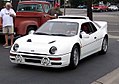
From 1979 to 1990 Callum designed for Ford, working between Dunton, Japan, Italy and Australia, mainly on "bits of cars, mostly steering wheels".[2] As well as working on bread-and-butter Fiestas and Mondeos, he contributed to image builders such as the RS200 and Escort RS Cosworth, the last of which he is especially proud of and with which he collaborated with fellow RCA graduate Peter Horbury.[2] He was then appointed Design Manager responsible for the Ghia Design Studio in Turin, where he worked on the Via, Zig and Zag show car concepts.

TWR

[edit]
Aston Martin DB7 (1993)

After eleven years in a corporate environment, Callum left Ford in 1990 to join Peter Stevens and Tom Walkinshaw to form TWR Design. He said,

Some of my colleagues came to see me from Ford, and I’d walked away from this giant studio at Dunton, the corporation, all that stuff, into this little tin shed in Kidlington. They thought I was utterly mad. But I was as happy as could be, I was doing something I wanted to do.[3]

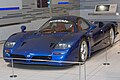
In 1991 he was appointed Chief Designer and General Manager of TWR Design. During this period he was partially responsible for designing the Aston Martin DB7, which is probably the design he is currently most famous for. He also designed the Aston Martin Vanquish, the V12-powered DB7 Vantage and Aston Martin's Project Vantage concept car as well as taking responsibility for a wide range of design programs for other TWR clients, including Volvo, Mazda and HSV. He was awarded the Jim Clark Memorial Award in 1995 in recognition of his styling work on the DB7. In 1996, he designed the Volvo C70 Coupe and in 1998 the Nissan R390.[4]

Jaguar

[edit]
Jaguar XK (X150)
Jaguar F-Type

In 1999, on the death of Geoff Lawson, Callum was appointed to succeed him at Jaguar, which was a Ford Motor Company subsidiary at the time (now a subsidiary of Tata Group). For a short stint, Callum directed design at both Jaguar and Aston Martin. Callum has claimed that during this time he was responsible for the majority of the design of the DB9 and V8 Vantage, despite both designs officially being attributed to Henrik Fisker, the subsequent director of design at Aston Martin, upon their introduction. In an interview with Car and Driver in 2010, when asked how much of the DB9 and V8 Vantage were designed under his watch, Callum replies "The DB9, I’d say pretty much 100 percent, including the interior. Maybe not color and trim and wood finishes, but certainly the surfaces of the car. And the V-8, I would say a good 80 percent. In fact, we started the V-8 first and then shelved it while we did the DB9—that’s why they’re quite similar".[5] At Jaguar, since the Lawson designed 2001 X-Type and 2002 XJ were well advanced his influence was initially felt through a series of concepts, the 2001 R-Coupe and 2003 R-D6. The first production Jaguar to bear his influence was the 2004 facelift of the S-Type followed by the 2004 X-Type Estate, of which he oversaw the tailgate design.

With the next generation of Jaguar models Callum took Jaguar away from the Lawson-era retroism, which produced the more traditional-looking X-Type, S-Type, and XJ, towards a new style. This began with the second generation, 2006 XK, which bears striking similarity to the Aston Martin DB9, which Callum describes as being a result of modern safety legislation.[3] This new direction continued with the 2008 XF as previewed by the concept C-XF, which Callum describes as the 'next significant step forward' in Jaguar's design direction,[6] and the 2010 XJ.[7] He also oversaw the design for the 2010 C-X75 concept car,[8] the 2012 refresh of the Jaguar XF and introduction of Sportbrake, the 2013 F-Type, the 2015 Jaguar XE, 2015 second generation Jaguar XF (the first Callum-led design to replace another Callum-led design), the 2016 Jaguar F-Pace, and the 2018 Jaguar I-Pace.

According to Callum, ‘Jaguars should be perceived as cool cars and cool cars attract interesting, edgy people.’[9] The quality of Callum's work at Jaguar has been acknowledged by twice Le Mans 24 hours winner and fellow Dumfries native, Allan McNish.[10]

Callum

[edit]

In early June 2019, Callum announced that he was stepping down from Jaguar but would continue with the company as a design consultant. "Designing Jaguar cars was a lifelong dream for me, and I’m delighted to remain involved as a consultant for the brand", he said in an interview.[11] Shortly afterwards, he founded an independent automotive and product design agency, named simply Callum, based in Warwick and specialising in bespoke and limited-edition products.[12]

Callum was appointed Commander of the Order of the British Empire (CBE) in the 2019 Birthday Honours for services to the British car industry.[13]

Notable designs

[edit]

Awards

[edit]
Callum receives the Car of the Year trophy for the Jaguar I-Pace

In 2006, he was honoured with a Royal Designer for Industry (RDI) award from the Royal Society of Arts and was joint recipient with his brother, Moray Callum, of the Jim Clark Memorial Trophy, awarded annually to Scots who have made a major contribution to the world of motoring.[14]

In 2016 he was invited to deliver the MacMillan Memorial Lecture to the Institution of Engineers and Shipbuilders in Scotland. He chose the subject "Car Design in the 21st Century".[15]

In 2018, he was elected a Fellow of the Royal Society of Edinburgh.[16]

References

[edit]
[edit]
Revisions and contributorsEdit on WikipediaRead on Wikipedia
from Grokipedia
Ian Callum CBE (born 30 July 1954) is a -born British automotive designer renowned for revitalizing Jaguar's during his tenure as the company's Director of Design from 1999 to 2019. Born in , , Callum developed an early passion for car design, inspired by classic British automobiles of the . He pursued formal education in at the , followed by a in vehicle design at the Royal College of Art in . Callum began his professional career in 1979 at Ford Motor Company's design studios in and , where he contributed to projects including the Fiesta, Mondeo, RS200 rally car, and Escort RS Cosworth. In 1990, he joined TWR Design, led by , serving as chief designer and creating landmark vehicles such as the , Vanquish, and DB9, as well as the , , and racer. His appointment at in 1999 marked a pivotal shift, as he drew inspiration from the brand's founder Sir William Lyons to introduce a modern, elegant aesthetic that emphasized performance and sophistication. Under his leadership, launched transformative models including the , XF, XJ, XE, F-Type sports car, F-Pace SUV, and the all-electric I-Pace, which earned the World Car of the Year award in 2019. In 2019, Callum retired from Jaguar to co-found CALLUM, a Warwick-based and consultancy specializing in automotive projects, limited-edition vehicles, and innovative concepts like the Vanquish 25 restomod and a reimagined . His contributions to the industry have been recognized with the Commander of the (CBE) honor in 2019, the Royal Designer for Industry (RDI) title, and the EyesOn Design Lifetime Achievement Award in 2025.

Early Life and Education

Early Years

Ian Callum was born on 30 July 1954 in , , a in the region's southwest. He grew up in a modest family environment, with his father working as a in the local community. Callum shared a close bond with his younger brother, Moray Callum, who would later follow a similar path as an automotive designer; the siblings often pursued shared interests in vehicles from an early age. From childhood, Callum displayed a keen fascination with cars, influenced by the automotive culture in his surroundings despite the area's relative economic challenges. He began sketching cars as young as three years old, a hobby that quickly became a central passion. Family outings further fueled this interest; for instance, his grandfather once drove him 80 miles from to view the iconic , an experience that left a lasting impression. Along with his brother , Callum would use their mother's to request car brochures from local dealers, eagerly studying the designs and specifications. These early activities, including drawing vehicles and immersing himself in automotive literature, laid the foundation for his lifelong dedication to design. By age 14, this enthusiasm prompted him to submit an original car sketch to , marking an early bold step toward his future career. This formative period in shaped Callum's initial creative impulses, leading him to pursue formal studies in art and design.

Academic Background

Ian Callum began his formal in art and design at Lanchester Polytechnic (now part of ), where he enrolled in the School of Transportation Design around 1970, laying the groundwork for his interest in vehicle aesthetics. He subsequently transferred to Art College before completing his undergraduate studies at the , earning a degree in in 1977. Following this, Callum pursued advanced specialization in , completing a in Vehicle Design at the Royal College of Art in in 1978. His studies at the Royal College of Art were sponsored by . During his time at these institutions, Callum developed foundational skills through coursework in industrial and transportation design, including early explorations in vehicle sketching that honed his ability to conceptualize form and function, though specific theses or mentors from this period are not widely documented in public records.

Professional Career

Ford Era

Ian Callum joined Ford in 1979 as a junior designer at the company's European studios, initially tasked with detailing components such as steering wheels for models like the Sierra, Transit van, and . Over the next few years, he progressed through the ranks, gaining a solid in that emphasized cost-effective restyling of platforms and challenging conventional approaches within a corporate environment. This period allowed him to build foundational expertise in functional aesthetics, particularly for performance-oriented vehicles. A pivotal contribution came with the , a mid-engine rally special developed for competition and launched in 1984, where Callum played a key role in shaping its exterior and . By the late 1980s, as design manager at Ford's Ghia studio in , , he led the development of the Escort RS , a high-performance rally introduced in 1992 but conceived earlier to meet requirements; his involvement focused on its aggressive, bodywork and interior . These projects under Ford's structured leadership honed Callum's skills in and rally-specific aesthetics, blending aggressive styling with practical performance demands for . After 11 years at Ford, Callum departed in 1990 to co-found TWR Design with Peter Stevens and , seeking greater creative autonomy and the opportunity to lead his own studio.

TWR Period

In 1990, Ian Callum left Ford to join forces with Peter Stevens and in establishing TWR Design, an independent studio focused on high-performance engineering and styling. By 1991, Callum had risen to the role of chief designer and general manager at TWR, where he led a team emphasizing innovative prototypes for luxury and applications. This appointment marked a pivotal shift from volume production to specialized, low-volume projects, allowing Callum greater creative autonomy in collaboration with Walkinshaw, whose racing expertise complemented Callum's vision. During his tenure, Callum's most notable contribution was the design of the Aston Martin DB7, a grand tourer that debuted at the 1993 Geneva Motor Show and revived the brand's heritage with its elegant lines and six-cylinder powertrain. The DB7, styled under Callum's direction at TWR, utilized shared components from the Jaguar XJS to control costs while achieving an accessible luxury sports car identity, with production beginning in 1994 at a dedicated facility. Building on this success, Callum contributed significantly to the Aston Martin Vanquish, whose development began as the Project Vantage concept in the mid-1990s; the production model launched in 2001 as a flagship supercar featuring a hand-built V12 engine and aerodynamic aluminum body, evolving from TWR's iterative prototyping to emphasize performance and sophistication. Callum's work at TWR extended to other high-profile vehicles, including the convertible, launched in 1996, which introduced a more curvaceous, premium aesthetic to Volvo's lineup through TWR's engineering and styling collaboration. In the racing domain, he oversaw the exterior design of the , a racer unveiled in 1997, blending aggressive aerodynamics with TWR's motorsport heritage for Nissan's GT1 class challenge. These projects reflected a strategic pivot under Walkinshaw's leadership toward luxury sports cars, prioritizing emotional appeal and technical precision over mass-market utility. Callum departed TWR in 1999 to assume the role of design director at .

Jaguar Tenure

Ian Callum was appointed Director of Design at in 1999, during the period when the brand was owned by . In this role, he led the design team based in Whitley, , focusing on modernizing Jaguar's aesthetic identity while drawing subtly from his prior experience with luxury prototypes at TWR. His leadership marked a pivotal shift toward sleek, contemporary forms that revitalized the brand's global appeal under corporate oversight. Under Callum's direction, the team oversaw the redesign of the , launched in 2006 as the first major new model of the fully shaped by his vision. This was followed by the XF saloon in 2007, which introduced a bolder, aluminum-intensive structure and became a cornerstone of Jaguar's renewed saloon lineup. Subsequent developments included the sixth-generation XJ flagship sedan in 2009, emphasizing aerodynamic efficiency and interior luxury, and the F-Type sports car in 2013, which revived Jaguar's heritage in two-seat performance vehicles with a low-slung profile. Callum's tenure extended into Jaguar's electrification efforts, where he guided the development of the I-Pace , unveiled in 2018 as the brand's first all-electric . The I-Pace featured innovative styling with a low roofline, cab-forward proportions, and active grille shutters to optimize , setting a benchmark for luxury EVs. However, his leadership faced setbacks with the planned 2021 XJ electric sedan, which was canceled in February 2021 amid Jaguar Land Rover's Reimagine strategy due to slower-than-expected EV market growth. The project encountered design challenges, including a taller profile deemed more stately than ideal and a single configuration to streamline production, limiting variants. After 20 years, Callum stepped down as Director of Design on July 1, 2019, transitioning to a and role to support ongoing projects. His departure paved the way for Julian Thomson to assume the position, while Callum's influence continued to shape Jaguar's design legacy.

CALLUM Venture

In 2019, Ian Callum founded , an independent and consultancy based in , , specializing in the creation of bespoke and limited-edition products across various industries. The firm operates from a 20,000-square-foot facility equipped for full , , and prototyping services, enabling it to deliver premium, end-to-end solutions for clients seeking customized automotive and projects. CALLUM's core focus encompasses advanced engineering, , and high-end consultancy, allowing it to craft innovative products that blend heritage with modern . Following his departure from , Callum retained an ongoing consultancy role with the brand, providing design expertise on select projects while pursuing independent ventures. Since its , CALLUM has expanded into restomods and conceptual developments, leveraging Callum's automotive legacy to reimagine classic vehicles for contemporary audiences. A notable example is the 2025 collaboration with Wood & Pickett, resulting in a restomod featuring a rebuilt 1.3-liter producing 110 horsepower, upgraded suspension, and brakes, priced starting at £75,000 for limited production. As of 2025, CALLUM remains active with forward-looking initiatives, including the eVITA concept prototype—an electric wheelchair-accessible vehicle (eWAV) developed in partnership with Motability Operations to enhance mobility for disabled users through innovative flat-floor design and low-angle ramp integration.

Design Philosophy and Influence

Core Principles

Ian Callum's design philosophy centers on achieving timeless aesthetics that transcend fleeting trends, drawing inspiration from the elegant simplicity of classic British . He emphasizes creating forms that endure through "beauty and simplicity," critiquing contemporary " styling" characterized by excessive lines and random surfacing as detracting from enduring appeal. This approach reflects his early fascination with British icons like the , which he views as exemplifying minimal bodywork that encapsulates maximum performance, a he applies to foster designs with lasting visual . Central to Callum's principles is the seamless integration of form, function, and emotion in vehicle styling, where aesthetic appeal must enhance usability and evoke a visceral response. He advocates balancing conceptual boldness with production realities to avoid impracticality, ensuring that designs like those with unique proportions challenge conventional constraints while prioritizing drivability and emotional connection. In this vein, Callum stresses that effective design arises from understanding a vehicle's "character" holistically, refining it through subtle evolutions that maintain harmony between visual drama and practical performance. Callum has been a vocal for addressing the unique challenges of design, particularly the tension between aerodynamic efficiency and commanding presence. He highlights the opportunity to rethink proportions—such as cab-forward layouts freed from engine constraints—while navigating battery placement and height to preserve brand identity and visual excitement, as seen in efforts to channel air dynamically without sacrificing stature. This philosophy underscores his belief in leveraging EV freedoms to create more spacious, innovative forms that still demand attention on the road, as demonstrated in CALLUM's SKYE all-electric . At the heart of Callum's methodology is a commitment to close between and teams, a practice he champions through his firm , where integrated expertise enables creations that push boundaries without compromising feasibility. He warns against over-complication in modern cars, urging designers to embrace restraint and pragmatism—focusing on millimeter-precise refinements and safety-compliant innovations—to deliver elegant outcomes that avoid unnecessary embellishments. As Callum notes, "At the end of the day, I still want people to look at this car and think, I want to get in and drive it," prioritizing intuitive appeal over ostentatious excess.

Industry Impact

Ian Callum's tenure at Jaguar during the 2000s was instrumental in revitalizing the brand's design identity, moving away from retro styling toward contemporary aluminum-intensive architectures that prioritized lightness, rigidity, and aerodynamic efficiency. Under his leadership, the introduction of the aluminum-bodied coupé debuting in 2005 and the subsequent XF saloon in 2008 represented a bold departure from the heritage-heavy designs of the prior era, helping regain its footing in the competitive luxury segment by blending British elegance with modern engineering innovation. The launch of the I-PACE in 2018 under Callum's direction marked a pioneering moment for luxury electric vehicles, establishing benchmarks for dramatic, cab-forward proportions and sustainable aesthetics that emphasized performance without compromising visual appeal. As one of the earliest luxury EVs from a heritage brand, its design influenced broader trends in the sector by demonstrating how electric powertrains could enable unconventional forms, inspiring subsequent models to integrate similar aerodynamic and proportional innovations for enhanced range and style. Through his work at TWR and the founding of , Callum has significantly enriched British automotive design heritage by championing , engineering-led craftsmanship that honors tradition while pushing technological boundaries. At TWR, where he served as chief designer, his contributions to projects like the helped preserve and evolve the marque's grand touring legacy, infusing it with accessible luxury for a wider audience. 's approach continues this , focusing on restomods and custom commissions that reaffirm Britain's reputation for meticulous, heritage-inspired in a global market dominated by . Callum's influence extends to and public discourse on , where he shares insights from his to guide emerging talent. In 2024, he participated in several high-profile discussions, including and live Q&A sessions, exploring the progression of automotive from analog craftsmanship to digital and electric paradigms, thereby fostering a new generation of designers attuned to sustainable and experiential priorities. By 2025, Callum's legacy continues to bolster the competitive edge of and through his foundational designs and ongoing projects at , such as reimagined classics like the restomod and the Wood & Pickett restomod that maintain brand relevance amid electrification and luxury consolidation. His early works, including the DB7 and Vanquish, provided a blueprint for the brand's resurgence as a performance icon, while 's modern lineup owes its athletic poise to his vision, ensuring both marques remain leaders in British luxury amid evolving market demands.

Notable Works

Key Production Designs

Ian Callum's early production design breakthrough came with the , a mid-engined, all-wheel-drive rally homologation special developed for competition in the mid-1980s. While at Ford's Ghia studio, Callum contributed to its aggressive, wedge-shaped , featuring a low-slung body with flared wheel arches and a prominent rear wing to optimize airflow and downforce for high-speed . The RS200's rally heritage cemented its status as an icon of the era's short-lived but intense regulations, with approximately 200 units produced between 1984 and 1986 to meet requirements, earning praise for its raw, purposeful styling that influenced subsequent performance cars. Transitioning to TWR Design, Callum led the exterior styling of the , a that revived the brand's fortunes from 1993 to 2004. The DB7 showcased elegant proportions with a long hood, raked windshield, and flowing fenders evoking classic lines, balanced by a compact silhouette that emphasized poise and luxury. Its design received widespread acclaim for blending heritage cues with modern refinement, helping achieve commercial success through over 7,000 units sold and establishing a template for the brand's DB lineage. During his tenure as Jaguar's Director of Design, Callum's , launched in 2007, marked a bold shift toward contemporary . The saloon featured a prominent grille flanked by slim headlights and distinctive vertical taillight motifs, creating a muscular yet aerodynamic profile that broke from Jaguar's softer heritage aesthetics. The XF's reception was strong, with critics lauding its emotional appeal and sales exceeding expectations, positioning it as a key model in Jaguar's revival with refined handling and interior quality. The , debuting in 2013, embodied Callum's vision for a pure with sinuous, tension-filled lines inspired by the iconic E-Type. Its design highlighted a long, sculpted bonnet, haunched rear fenders, and integrated exhausts for a predatory stance, prioritizing form-follows-function without compromising visual drama. The roadster and variants garnered enthusiastic reviews for their evocative styling and driving purity, becoming best-sellers that reinforced Jaguar's credentials. Callum's final major Jaguar contribution, the I-Pace electric crossover introduced in 2018, pioneered futuristic EV design with a seamless, cab-forward body. Its low roofline, flush door handles, and cloaked rear pillars minimized drag while evoking a monolithic, spaceship-like form, integrating advanced lighting and a minimalist interior for spacious efficiency. The I-Pace was well-received for pushing boundaries in sustainable luxury, influencing the segment with its blend of performance and innovative packaging.

Concepts and Independent Projects

During his tenure at Tom Walkinshaw Racing (TWR), Ian Callum led the styling for the , a racer developed for the 1997 . The project integrated advanced engineering from and TWR, featuring a carbon-fiber , a 3.5-liter producing over 700 horsepower, and aerodynamic elements optimized for endurance racing, including a low-slung body with active spoilers. Callum's design emphasized sleek, muscular proportions that balanced speed and , contributing to the car's third-place finish in its debut race, though the homologation road version he also styled was never produced. In 2021, Callum oversaw the development of a next-generation flagship sedan that was ultimately canceled as part of Jaguar Land Rover's Reimagine strategy. The design adopted a taller stance compared to previous XJs, with increased ground clearance for enhanced accessibility and presence, while consolidating to a single length to streamline production. Built on an (EV) platform derived from 's modular architecture, it featured a spacious interior with advanced digital interfaces, though the powertrain was engineered for flexibility to accommodate a straight-six alongside battery-electric options. Following his departure from , Callum's studio unveiled a 2025 concept rendering for an , extending the Vanquish 25 restomod project. Dubbed the VC25 , this two-door wagon interpretation maintains the original Vanquish's grand touring silhouette but adds an elongated rear roofline and expanded cargo space, preserving the 5.9-liter V12 engine's 550 horsepower output. The design, rendered in digital form without a physical , highlights Callum's vision for , low-volume coachbuilding, blending classic proportions with modern materials like exposed aluminum accents. Also in 2025, Callum collaborated with coachbuilder Wood & Pickett on a restomodded , transforming the Mk5 Mini Sportsback into a coachbuilt homage to the original with contemporary upgrades. The project features a rebuilt 1310cc inline-four tuned to 110 horsepower—nearly double the classic's output—paired with a strengthened gearbox, recalibrated ECU, and modern suspension components including adaptive dampers for improved handling. Priced at £75,000 for the handcrafted version, it incorporates luxury touches like leather upholstery and digital instrumentation while retaining the Mini's compact footprint and iconic wheel-at-corner layout. The eVITA concept, developed by Callum Designs in partnership with Operations, represents an innovative electric -accessible vehicle (eWAV) prototype that progressed from initial renders in 2024 to a fully drivable model by 2025. This employs a dedicated EV architecture with a skateboard integrating a high-voltage beneath the floor, enabling seamless integration via a central lowerable platform without compromising passenger space for up to four occupants. The design prioritizes accessibility and dignity, featuring power-operated sliding doors, advanced driver-assistance systems tailored for caregivers, and a modular interior that allows reconfiguration for varying mobility needs, all powered by an efficient electric emphasizing low-speed urban maneuverability.

Awards and Honors

Major Design Awards

Ian Callum has received several prestigious awards recognizing his contributions to automotive design, particularly during his tenure at Jaguar and earlier roles. In 1995, Callum was awarded the Jim Clark Memorial Award by the Jim Clark Trust for his styling work on the Aston Martin DB7, marking an early highlight in his career. In 2006, the Royal Society of Arts honored Callum with the Royal Designer for Industry (RDI) distinction, the highest accolade for designers in the UK, acknowledging his innovative engineering design in the automotive sector. In 2014, Callum received the Minerva Medal from the , the highest award given by the society, for his outstanding lifetime contribution to British design, particularly in the automotive field. In 2015, Callum was named Designer of the Year at The Drum Design Awards, topping the Designerati 100 list for his influential work in . In 2019, under Callum's direction as Jaguar's Director of Design, the won the World Car Design of the Year award at the , celebrating its groundbreaking electric aesthetics and cab-forward proportions. In 2025, received the EyesOn Design Lifetime Design Achievement Award, presented at the Vision Honored Gala in on June 13, for his enduring impact on , including iconic vehicles like the and , as well as his innovations through , the design consultancy he founded in 2019. This peer-selected honor recognizes his ambitious creativity and ongoing contributions to automotive artistry.

Other Recognitions

In recognition of his contributions to the British automotive industry, Ian Callum was appointed Commander of the (CBE) in the 2019 Queen's . This honor specifically acknowledged his services to over two decades at . Callum was elected a Fellow of the Royal Society of (FRSE) in 2018, joining an esteemed body that recognizes excellence in science, arts, and humanities. His fellowship highlights his broader impact on design innovation and cultural heritage in and beyond. In 2021, Callum was named GQ's Car Designer of the Year at the GQ Car Awards. Callum has received media acclaim for his enduring influence on British design, notably in a 2024 episode of The Intercooler , where he was described as "Britain's greatest living car designer" during a live discussion on his career legacy.

References

Add your contribution
Related Hubs
User Avatar
No comments yet.