Hubbry Logo
Ice MarchIce MarchMain
Open search
Ice March
Community hub
Ice March
logo
8 pages, 0 posts
0 subscribers
Be the first to start a discussion here.
Ice March
Ice March
from Wikipedia
First Kuban Campaign or Ice March
Part of the Southern Front of the Russian Civil War

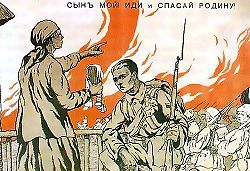
A Volunteer Army recruitment poster represents a woman addressing her son with the words: "My son! Go and save your Motherland!"
DateFebruary 22 – May 13, 1918
Location
Kuban Oblast, Southern Russia
Result Strategic White victory
Belligerents

Russia White movement

Russian Socialist Federative Soviet Republic Bolsheviks

Commanders and leaders
Lavr Kornilov 
Russia Mikhail Alekseyev
Russia Anton Denikin
Russia Sergey Markov
Russia M. O. Nezhentsev 
Russian Socialist Federative Soviet Republic Ivan Sorokin
Russian Socialist Federative Soviet Republic Alexei Avtonomov
Russian Socialist Federative Soviet Republic Rudolf Sivers
Strength
Volunteer Army:
initially 4,000, later 6,000
(2,000 Don Cossacks)
14 artillery pieces
Red Army:
24,000 - 60,000
20+ artillery pieces
3 armored trains
Casualties and losses
400 killed
1,500 wounded
2,000 deserted[1]
5,000-20,000+ killed
(exact number unknown)
10,000 wounded
7,000 captured
3,000 fled
2 armored trains captured or destroyed

During the battle of Yekaterinodar:
15,000 lost, about 10,000 of which were wounded
Map of the march

The Ice March (Russian: Ледяной поход), also called the First Kuban Campaign (Russian: Первый кубанский поход), a military withdrawal lasting from February to May 1918, was one of the defining moments in the Russian Civil War of 1917 to 1921. Under attack by the Red Army advancing from the north, the forces of the Volunteer Army, sometimes referred to as the White Guard, began a retreat from the city of Rostov south towards the Kuban, in the hope of gaining the support of the Kuban Cossacks against the Bolshevik government in Moscow.

Volunteer Army

[edit]

After the Bolshevik Party seized power in Russia in November  [O.S. October] 1917, many of those opposed to the new government gravitated towards the fringes of the old Russian Empire, particularly to those parts still under the control of the German Army. In the Don Cossack capital, Novocherkassk (near Rostov-on-Don), the Don Cossack Host had elected General Aleksei Maksimovich Kaledin to the position of Ataman at its traditional assembly, the Host Krug [ru] (1 July [O.S. 18 June] 1917). On 20 November  [O.S. 7 November] 1917, not long after the Communists took control in central Russia, the Don Krug declared its independence. Novocherkassk became a haven for those opposed to the Bolshevik Revolution, and soon hosted the headquarters of the Volunteer Army, made up for the most part of former Tsarist officers, and under the command of General Mikhail Alekseyev and General Lavr Kornilov.

The Cossacks aimed primarily to defend their independence, but the Volunteers persuaded them that they could guarantee this only by joining with them in fighting against the Bolsheviks, who had the support of a large part of the non-Cossack population of the Don region. With the encouragement of Kaledin, the Whites, still only some 500 strong, managed to recapture the city of Rostov from local Red Guard units on 15 December  [O.S. 2 December] 1917.[2] However, by the beginning of 1918 better-organised and stronger Communist forces began an advance from the north, capturing Taganrog on the Sea of Azov on 10 February [O.S. 28 January] 1918. Kornilov, now in command of some 4,000 men at Rostov, judged it pointless to attempt a defence of the city in the face of superior forces. Instead, the Volunteers made ready to relocate to the south, deep into the Kuban, in the hope of attracting more support, though the whole area was in deep winter. Thus began the Ice March. With his defenses gone and his government in a state of collapse, Kaledin shot himself (11 February [O.S. 29 January] 1918).

Kornilov's death

[edit]

On 23 February, as the Red Army entered Rostov, Kornilov began the march south across the frozen steppelands. The soldiers, carrying one rifle each, and hauling some field artillery, were accompanied by long trail of civilians from Rostov fearful of Bolshevik reprisals. Anton Denikin, Kornilov's second-in-command, later recalled, "We went from the dark night of spiritual slavery to unknown wandering-in search of the bluebird."[3] The bluebird was a traditional symbol of hope in Russian fairy tales and legend.

From his four thousand men, Kornilov formed three regiments under General S. L. Markov, Colonel Nezhintsev, General Afrikan P. Bogaewsky, and a battalion under General Borovskii. Another thousand civilians accompanied the army, including the politicians V. N. Lvov, L. V. Polovtsev, L. N., Novosiltsev, and N. P. Shchetnina, plus journalists, professors, soldiers' wives, doctors and nurses.[4]

According to Peter Kenez, "United by a boundless hatred of the enemy, the soldiers performed miracles of military accomplishment; the world had seen few armies of comparable size with greater fighting ability." On 23 February, the army entered Olginskaia for a rendezvous with Ataman Popov on 26 February. However, Popov elected to stay within the Don, while the Volunteer Army headed south towards Ekaterinodar and the Kuban. The march took them through Stavropol province and their first battle, and victory, against the Bolsheviks on 6 March at Lezhanka. On 9 March, the army entered the Kuban, and another battle on 14 March at Berezanskaia. On 17 March, after four days of fighting, the army captured Korenovskaia, and its large cache of military supplies. On 28 March, the bitterest battle was fought against the Bolsheviks in which a number of volunteer officers froze to death crossing a small river with shallow icy water, hence the name of the campaign. By the end of March, the Volunteer Army was able to absorb Viktor Pokrovsky's Kuban Army, which had recently fled Ekaterinodar.[4]

With his army now double in size, Kornilov decided to mount an attack on Ekaterinodar, the capital of the recently established North Caucasian Soviet Republic. Kornilov organized his army into three brigades under Markov, Bogaevskii and Erdeli. The attack, which began on 10 April, was met with heavy resistance from forces more than twice the size of the Volunteers. Kornilov was killed when an artillery shell hit the farmhouse where he had set up headquarters. Some accounts have characterized this event as "very bad luck" because shell had hit the one room where Kornilov was, killing him but not injuring anybody else present in the building. He was succeeded in command by Denikin, who decided to abandon the assault after five days of fighting, and withdraw to the north. Hearing of the death of Kornilov, Lenin told the Moscow Soviet, "It can be said with certainty that, in the main, the civil war has ended."[5][4]

On the evening of 13 April, the Volunteer Army's forced march began in order to save the demoralized Volunteer Army, avoiding large Red forces. Denikin left 211 of his severely wounded, with doctors and nurses, at Elizavetinskaia, Diad'kovskaia, and Il'inskaia. By the beginning of May, the army had made it back to the border of the Don. According to Kenez, "The Ice March had ended. The Army, which had started the march with four thousand soldiers, had five thousand at the end of the campaign. But the greatest achievement of the march was simply survival."[4]

Aftermath

[edit]

The campaign inspired hope in the volunteers, and showed that the white army could resist in a huge disparity of forces, just as the Steppe March was later used to raise the moral component of the troops.

The Volunteer Army established its headquarters in Mechetinskaia and Egorlykskaia, and established contact with Ataman Pyotr Krasnov. Krasnov agreed to support the Volunteer Army with weapons and money, and take on the sick and wounded. In June, Alekseev established a political department in Novocherkassk, and Denikin published his "Goals of the Army". Amongst other points, it stated "the Germans must withdraw from the territory of Russia; the Bolsheviks must capitulate and be disarmed..."[4]: 149–157 

Memory

[edit]
First Kuban Campaign Badge

All those who survived the First Kuban Campaign, referred to as pervopokhodniks (Russian: Первопохо́дники, "First-campaigners", see ru:Первопоходник) were awarded the First Kuban Campaign Badge [ru] in memory of their courage and martyrdom.

References

[edit]

Notes

[edit]
Revisions and contributorsEdit on WikipediaRead on Wikipedia
from Grokipedia
The Ice March, also known as the First Campaign or Ledyanoi pokhod in Russian, was a grueling military retreat by the anti-Bolshevik from southward through frozen terrain to the region between late February and mid-May 1918, amid the early stages of the . Comprising roughly 3,600 to 4,000 officers and soldiers under the political leadership of General Mikhail Alekseev and military command of General , the force withdrew to evade encirclement by advancing Red Guard units following the loss of key Don Cossack strongholds. The expedition spanned approximately 1,200 kilometers over 80 days, with nearly half involving intense combat against numerically superior Bolshevik forces, including failed assaults on Bolshevik-held . Harsh winter conditions—blizzards, ice-covered steppes, shortages of food and ammunition—compounded by disease and desertions exacted heavy tolls, yet the army's discipline and improvised tactics enabled it to break through multiple ambushes and preserve its fighting core. Kornilov's death from artillery fire during the second siege of Yekaterinodar on 13 April prompted General to assume command, marking a leadership transition that stabilized operations. Strategically, the Ice March proved foundational for the White cause in , allowing the to regroup, incorporate local Kuban Cossack reinforcements, and expand to around 6,000 effectives by its conclusion, thereby sustaining anti-Bolshevik resistance against the consolidating Soviet regime. This odyssey symbolized the Volunteers' resolve and organizational resilience, contrasting with the Red Army's reliance on , and laid the groundwork for subsequent offensives in the Don and areas.

Background and Context

Origins of the Volunteer Army

General Mikhail Alekseev, the former Chief of the Imperial Russian General Staff, began organizing anti-Bolshevik volunteer forces in , the administrative center of the Don Cossack Host, in early November 1917 (Old Style) after fleeing Petrograd amid the Bolshevik consolidation of power following the . With the tacit support of Don Alexei Kaledin, who opposed Bolshevik encroachment on Cossack autonomy, Alekseev established recruitment centers targeting demobilized officers from the Imperial Army, cadets known as yunkers, students, and sympathetic disillusioned by the Provisional Government's collapse and the spread of Soviet influence. The initial detachments, often referred to as the "Alekseev Organization," totaled around 700-1,000 volunteers by late November, lacking formal structure, heavy weaponry, or broad popular backing but unified by a commitment to restoring order against Bolshevik "anarchy." Lavr Kornilov, a prominent Imperial general who had led the failed coup against the in August 1917 and subsequently imprisoned, escaped Bolshevik custody in Bykhov and arrived in the Don region by early December 1917. Kornilov quickly integrated his supporters, including from his prior commands, into Alekseev's formations, assuming operational military leadership while Alekseev retained oversight of political and administrative functions; this division reflected Kornilov's emphasis on combat readiness and Alekseev's focus on coalition-building with regional anti-Bolshevik elements. The group formally declared itself the around November 17, 1917 (Old Style), though the title gained official currency in early , marking the first coordinated effort in . These origins were constrained by the Volunteer Army's officer-heavy composition—over 80% of early enlistees were former Imperial officers—and minimal enlisted ranks, reflecting the reluctance of rank-and-file soldiers to join amid widespread war-weariness after . Armament was scavenged from local depots or Cossack arsenals, with initial forces equipped for infantry operations but deficient in artillery and transport, compelling reliance on mobility and surprise in nascent skirmishes against in the Donbass. This precarious start, amid Kaledin's fragile control over the Don Host, underscored the Army's dependence on Cossack tolerance rather than full alliance, foreshadowing tensions that would erupt during the Ice March.

Strategic Situation in South Russia, Early 1918

In the aftermath of the , South emerged as a focal point of anti-Bolshevik resistance, primarily anchored in the Don Cossack region. The Don Host, led by Aleksei Kaledin, rejected Bolshevik authority and proclaimed the Don Military Government's independence in November 1917, aligning with the nascent formed by former Imperial officers and Mikhail Alekseev. This force, comprising approximately 4,000 volunteers by early January 1918, conducted limited operations, including the capture of on 9 December 1917 after clashes with local Red Guard units. However, the Whites' holdings remained tenuous, confined largely to the Donets Basin and northern Don areas, with scant resources and reliance on Cossack irregulars whose loyalty was divided by ideological splits and economic grievances. Bolshevik forces, invigorated by consolidation in central Russia, mounted a concerted push southward under commanders like Vladimir Antonov-Ovseyenko. By late December 1917, they had seized Kharkov, leveraging numerical superiority—estimated at over 50,000 armed men across Ukraine and the Donbass by early 1918—drawn from politicized workers, demobilized soldiers, and local Soviets. Red Guard detachments, though poorly disciplined, outnumbered White and Cossack combined forces by at least 5:1 in the theater, enabling advances that isolated anti-Bolshevik pockets and disrupted supply lines. The Treaty of Brest-Litovsk, signed on 3 March 1918 but anticipated in negotiations, freed Bolshevik troops from Eastern Front obligations, exacerbating the Whites' strategic isolation as German forces occupied Ukraine per the armistice terms. Compounding military disparities were political fractures: Kaledin's government faced internal revolts from pro-Bolshevik Cossack elements and urban workers, culminating in his suicide on 29 January 1918 amid collapsing defenses. The , ideologically committed to restoring order against Bolshevik "anarchy," lacked broad popular support beyond officer cadres and conservative Cossack elites, hampering recruitment. , a key rail hub and symbolic prize, became indefensible as Bolshevik columns converged from the north and east, forcing White leaders to contemplate evacuation to the steppe where potential Cossack reinforcements and access offered slim prospects for regrouping. This dire configuration—outnumbered, undersupplied, and politically fragmented—defined the Whites' precarious stance, setting the stage for radical maneuver.

Formation and Initial Operations

Assembly at Rostov-on-Don

The Volunteer Army was officially announced on December 27, 1917 (Julian calendar), with General Mikhail Alekseev as its political and organizational leader and General Lavr Kornilov as military commander, initially basing operations in Novocherkassk near Rostov-on-Don. Political frictions with Don Ataman Aleksey Kaledin prompted the transfer of Volunteer Army units to Rostov-on-Don on January 14, 1918, where Kornilov rode ahead on horseback after Bolshevik saboteurs derailed a transport train. Upon arrival in Rostov, the army comprised approximately 3,500 personnel, drawn largely from former imperial officers, cadets, students, and schoolboys, many of whom traveled in attire to avoid detection by Bolshevik forces. Core units included the First Officers' Regiment, Kornilov Shock Regiment, Guerrilla Regiment, and a , reflecting the ad hoc yet disciplined composition of early forces reliant on volunteer enlistment rather than . Assembly in Rostov facilitated intensified recruitment among local anti-Bolshevik elements, including and refugees fleeing Soviet control, swelling ranks through appeals for volunteers against the Bolshevik regime. This gathering point enabled coordination with Kaledin's Cossack troops for joint operations, though underlying command tensions persisted; by early February 1918, the army's strength exceeded 3,600 combatants equipped with limited and supplies scavenged from captured Bolshevik depots. Rostov's strategic position as a rail hub and Don River port supported logistical buildup, with Alekseev overseeing fundraising from sympathetic donors while Kornilov drilled units for offensive action against encroaching Red Guards. Initial skirmishes around the city tested the assembled force, validating its combat readiness despite material shortages and the harsh winter environment.

First Kuban Campaign Prelude

In early February 1918, the Volunteer Army, commanded by General Lavr Kornilov with political oversight by General Mikhail Alekseev, maintained its base in Rostov-on-Don after initial successes in expelling Bolshevik forces from the city in late 1917. The force comprised over 3,600 volunteers, organized into battalions and regiments such as the Kornilov Shock Regiment and Markov Infantry Regiment, supported by eight field guns. However, strategic vulnerabilities emerged due to limited local support; the Don Cossack Host under Ataman Alexei Kaledin provided irregular assistance but faced internal divisions, with many frontline Cossacks unwilling to commit fully against the Bolsheviks amid economic hardships and war fatigue. The suicide of Kaledin on 11 February 1918, triggered by the erosion of Cossack loyalty and the impending withdrawal of the Volunteer Army, precipitated the collapse of the Don anti-Bolshevik government. This left the Whites isolated as Bolshevik forces, led by Vladimir Antonov-Ovseyenko, intensified their offensive in the Donbas-Don region, capturing Taganrog and advancing southward with numerically superior Red Guard detachments estimated at over 10,000 men in some groups. Without reliable Cossack reinforcements, Rostov became untenable, as the city's defenses relied on the small Volunteer contingent rather than a broader regional alliance. Kornilov and Alekseev thus resolved by late February to evacuate Rostov and conduct a fighting retreat toward the Kuban region, aiming to link with more reliably anti-Bolshevik Kuban Cossacks and establish a sustainable base away from the Don's faltering front. This decision reflected a pragmatic assessment of causal factors: the Bolsheviks' mobilization advantages, derived from control of industrial areas and urban proletarian support, contrasted with the Whites' dependence on voluntary officer enlistments and fragmented rural loyalties, necessitating relocation to preserve combat effectiveness. The prelude underscored the Volunteer Army's early operational constraints, prioritizing survival over static defense in a theater where Bolshevik forces held the initiative through superior manpower and local Bolshevik councils.

The March Itself

Decision to Evacuate and Route

In late February 1918, as Bolshevik forces under commanders such as Rudolf Sivers advanced on , the leadership of the —Generals , the military commander, and Mikhail Alekseev, the political organizer—faced the imminent threat of encirclement and annihilation of their approximately 4,000-man force. Outnumbered and lacking sufficient local Don Cossack support to hold the city against the Red onslaught, Kornilov and Alekseev opted for evacuation to preserve the army's core as a viable anti-Bolshevik nucleus rather than risk its destruction in urban fighting. This decision prioritized long-term strategic regrouping over immediate defense, reflecting Kornilov's emphasis on maintaining offensive potential despite the retreat. The chosen route directed the army southward from across the frozen steppe toward Ekaterinodar, the administrative center of the Kuban Cossack Host, approximately 300 kilometers away. This path aimed to link up with potentially more receptive Kuban Cossack elements, who were seen as ideologically aligned against Bolshevik centralization, unlike the more ambivalent . By avoiding major roads and population centers, the route sought to minimize Bolshevik pursuit and , though it exposed the column to harsh winter conditions and limited opportunities. The march commenced on February 23, 1918 (February 10 Old Style), with non-combatants and civilian volunteers trailing the core units.

Harsh Conditions and Logistical Challenges

The Ice March unfolded amid severe late-winter conditions in , with the traversing snow-covered steppes, enduring sleet, blizzards, and sub-zero temperatures typical of February and early March 1918 in the Don and regions. Soldiers frequently forded icy rivers and streams, exposing them to and , while the lack of proper winter gear exacerbated these risks. The terrain, characterized by open, windswept plains, offered little shelter, and the decision to avoid major roads and railways to evade Red forces further isolated the column from potential resupply points. Logistical challenges were acute from the outset, as the —numbering around 4,000 combatants initially, augmented by civilians and families—lacked sufficient , relying primarily on foot marches with minimal and wagons for and provisions. Food supplies dwindled rapidly, forcing dependence on in a region depleted by war and uncooperative local populations, particularly after the ' reluctance to provide aid amid their own conflicts with . Ammunition and medical resources were limited, contributing to high rates of exhaustion, , and ; an estimated 2,000 men deserted during the march, many succumbing to or rather than combat. The encumbrance of non-combatants, including officers' families and Rostov seeking refuge, strained the already precarious supply lines, slowing progress and increasing vulnerability to pursuit by superior numbers. Kornilov's insistence on rapid movement without prolonged halts prevented organized resupply or rest, prioritizing survival over comfort, though this approach tested the army's cohesion and weeded out the unfit. These hardships forged a hardened core of volunteers, but at the cost of significant non-combat losses, underscoring the Volunteer Army's initial organizational frailties in sustaining operations without established bases.

Combat Engagements During the Retreat

The Volunteer Army's retreat from involved persistent rearguard actions against Bolshevik forces advancing from the north, as well as vanguard clashes to secure the route southward across the frozen . Departing on 23 February 1918 with approximately 4,000 men, repelled initial pursuits by disorganized Red Guard detachments, often outmaneuvering larger but less cohesive enemy groups through rapid night marches and ambushes. These engagements were characterized by small-scale assaults and charges, with the army's officer-heavy composition enabling effective tactical decisions despite shortages and harsh weather. A pivotal confrontation unfolded at Novo-Dmitriyevskaya on 28–29 March 1918 (15–16 March Old Style), where Kornilov's forces encountered a Bolshevik concentration under local Soviet command, numbering several thousand irregulars supported by armored trains. The battle commenced with artillery exchanges and evolved into brutal hand-to-hand fighting amid deep snowdrifts, as described in General A.I. Denikin's memoirs, where White units like the Kornilov Shock Regiment and Markov's dropouts held key positions against repeated assaults. The inflicted disproportionate losses—estimated at over 1,000 Reds killed or wounded—while suffering around 200 casualties themselves, securing a tactical victory that prevented encirclement and allowed the column to press toward the . Further south, near the frontier, the army cleared Bolshevik garrisons at stanitsas such as Velikoknyazheskaya and Ust-Dzhegutinskaya through combined assaults, integrating defecting Cossack elements and disrupting Red supply lines. Over the 80-day march, combatants logged 44 days of active fighting, with consistently prevailing in these encounters due to superior , , and Kornilov's aggressive command, though at the cost of steady attrition from wounds and desertions. This pattern of combat preserved the army's core strength, enabling eventual reinforcement in the region despite the retreat's grueling nature.

Leadership Transitions

Kornilov's Role and Command Style

Lavr Kornilov served as the commanding general of the Volunteer Army, appointed in December 1917 upon his arrival from imprisonment in Bykhov, with responsibility for all military operations while Mikhail Alekseev handled political and financial matters. Under his leadership, the army, numbering around 4,000 men at the outset, evacuated Rostov-on-Don on February 23, 1918, in response to advancing Bolshevik forces, initiating the Ice March southward toward the Kuban region to link up with anti-Bolshevik Cossack hosts. Kornilov reorganized the force en route, structuring it into formal brigades—such as the 1st and 2nd Infantry Brigades—by mid-March 1918, drawing on his World War I experience to impose combat readiness amid the retreat's chaos. Kornilov's command style emphasized relentless offensive action and iron discipline, rejecting defensive postures or dispersal despite the army's exhaustion and supply shortages; he overrode Alekseev's inclination to remain on the Don, insisting on the Kuban advance to secure a base for expansion. This approach involved authorizing harsh measures against perceived internal threats and civilian resistance, including summary executions of looters and deserters to preserve cohesion in the , as well as reprisals against peasants withholding food or suspected of Bolshevik ties, which contributed to documented atrocities during the march. His authoritarian tactics, rooted in pre-revolutionary traditions, prioritized operational momentum over mercy, fostering high morale among committed officers but straining the ranks through forced marches in sub-zero temperatures and minimal rations. During the subsequent of Ekaterinodar, the Soviet capital, Kornilov directed repeated assaults starting April 9, 1918, disregarding the city's fortified defenses and the army's numerical inferiority, until his death from an artillery shell on April 13, 1918 (March 31 Old Style). This persistence exemplified his doctrinal commitment to decisive strikes, even at high cost, which preserved the army's fighting spirit but led to tactical failures and heavy casualties in the campaign's opening phase.

Kornilov's Death and Immediate Succession

During the Volunteer Army's second attempt to capture Ekaterinodar on 13 April 1918, Kornilov positioned his forward headquarters in a farmhouse approximately 4 kilometers from the city center, from which he directed operations against Bolshevik defenses. A Red artillery shell exploded inside the structure, killing Kornilov outright along with several aides, including his chief of staff Colonel V. L. Shatilov. The blast occurred amid intense combat, as White forces numbering around 6,000 faced superior Bolshevik numbers and fortifications, rendering the assault unsustainable. Kornilov's death marked a critical at a pivotal moment in the Kuban Campaign, following the grueling Ice March retreat. To conceal the loss from troops and maintain , his body was initially kept secret and later buried in an near the site; official announcement was delayed until after the army's regrouping. General Anton Ivanovich Denikin, Kornilov's designated deputy and commander of the 1st Division, promptly assumed tactical command of the Volunteer Army's approximately 3,000 surviving combatants. General Mikhail Vasilyevich Alekseev retained overall political authority as the army's founder and symbolic head, ensuring continuity in the anti-Bolshevik coalition's structure. Denikin's immediate decisions included withdrawing from Ekaterinodar to avoid , a move that preserved the core fighting force for future operations in the region. This transition, occurring on 31 March by the then in use, stabilized command without significant internal disruption, though it shifted emphasis from Kornilov's aggressive frontal tactics to Denikin's more methodical approach.

Arrival and Consolidation

Reaching the Kuban Region

The , numbering over 3,600 men and equipped with 8 field guns, initiated its retreat from at the end of February 1918 as Soviet forces advanced, marking the beginning of the Ice March southward into the region. This movement traversed frozen steppes and involved ongoing clashes with Red units, testing the endurance of the predominantly officer-composed force. By early March 1918, the army had entered the , approaching Ekaterinodar, the administrative center held by , where it paused to regroup amid exhaustion from the 300-kilometer trek. On 16 March, the main body arrived at the of Penzenskaya, a Cossack settlement northeast of Ekaterinodar, providing a temporary base for resupply and assessment of capabilities. Mid-March reinforcements from the Detachment, approximately 3,000 Cossack cavalry under General Viktor Pokrovsky, augmented the Volunteers' strength, facilitating reorganization into the 1st and 2nd Infantry alongside a mounted . Despite losses from combat, disease, and exposure—estimated at around 1,000 men during the march—the arriving force retained high morale and combat effectiveness, its officer nucleus largely intact, enabling plans for an assault on Ekaterinodar to secure a stable foothold.

Integration with Local Cossack Forces

Upon arriving in the region in mid-March 1918, the , reduced to approximately 3,000-4,000 effectives after the rigors of the Ice March, linked up with General Viktor Pokrovsky's Kuban Cossack detachment of about 3,000 men on March 26-27. This juncture, occurring near the village of Olginskaya, effectively doubled the anti-Bolshevik forces' manpower to roughly 6,000, providing critical reinforcements and enabling the army's reorganization into the 1st and 2nd Brigades alongside a mounted . Pokrovsky's unit, comprising Kuban Cossack horsemen who had been resisting Bolshevik advances independently, represented the initial tangible integration with local elements, though it stemmed from alignment rather than formal coordination with the Kuban Cossack . Broader incorporation of the Cossack Host encountered significant obstacles, as the —governing body of the self-proclaimed —pursued regional separatism and autonomy, viewing the Volunteer Army's leadership under Generals Alekseev and Kornilov as overly centralized and indifferent to Cossack particularism. Many (Cossack villages) offered lukewarm or conditional support, with frontline Cossacks often prioritizing defense of their territories over joining an external expeditionary force; this reluctance was exacerbated by early clashes, such as the skirmish at Berezanskaya during the march itself, where local Cossacks briefly opposed Volunteer detachments mistaken for . Consequently, mass mobilization of Cossacks did not materialize immediately, limiting reinforcements to volunteers from sympathetic stanitsas and defectors from Red units. Despite these frictions, the alliance with Pokrovsky facilitated tactical consolidation, allowing the combined force to press assaults on Bolshevik-held Ekaterinodar in late March and early April, during which additional Cossack elements trickled in, forming nascent structures like the 1st Cossack Brigade. Under Denikin's command following Kornilov's death on April 13 (Old Style), pragmatic diplomacy and battlefield imperatives gradually eroded resistance, paving the way for expanded recruitment; by summer 1918, Cossack contingents swelled the army through localized levies, though underlying tensions over command authority persisted, foreshadowing later subjugation of the in June 1918. This partial integration preserved the as a viable base for the in the South, albeit at the cost of strained relations that hampered unified operations against .

Immediate Aftermath

Casualties and Army Reconstitution

The Volunteer Army initiated the Ice March on February 23, 1918, from Rostov-on-Don with a combat strength of approximately 4,000 officers and men, supported by 14 artillery pieces, excluding several thousand accompanying civilians including families and refugees. Over the ensuing two-week retreat southward across approximately 400 kilometers of frozen steppe, the column faced extreme winter conditions—blizzards, temperatures dropping below -20°C, and shortages of food, fodder, and medical supplies—compounded by rearguard actions against numerically superior Red pursuers. These factors inflicted substantial attrition: combat casualties included hundreds killed and wounded in clashes such as those at Belaia Glina and across the Donets River, while non-combat losses from frostbite, typhus, and malnutrition were comparably severe, with many ill or incapacitated left behind to avoid slowing the march. Desertions also mounted amid the ordeal, reducing the effective fighting force to roughly 3,000 upon entry into the Kuban region around March 10; precise tallies remain approximate due to incomplete records, but the overall toll underscored the march's brutality, claiming perhaps 20-25% of the original combatants through death or permanent disablement. Reconstitution efforts commenced immediately in the Kuban steppe, prioritizing preservation of the veteran officer nucleus despite the depletion. Local anti-Bolshevik sympathies provided initial bolstering: on March 26, 1918, General Viktor Pokrovsky's detachment—comprising about 3,000 and irregulars who had evacuated Yekaterinodar—integrated into the , elevating total strength to around 6,000 and restoring and components. This merger, though limited by widespread Cossack hesitancy toward the Volunteers' all-Russian agenda, enabled rapid reorganization into consolidated battalions and regiments, including the 1st Cossack Brigade, while ad hoc recruitment from regional volunteers and captured equipment offset further attrition ahead of the Yekaterinodar offensive. Under emerging leadership transitions, these measures sustained operational coherence, averting disintegration and facilitating a pivot to offensive operations by late March.

Tactical and Strategic Reassessments

Following the conclusion of the First Kuban Campaign on May 26, 1918, with the Volunteer Army's failure to capture Ekaterinodar despite repeated assaults, General , who had assumed command after Lavr Kornilov's death on April 13, reassessed the tactical doctrine emphasizing frontal attacks against entrenched Bolshevik positions. The campaign's heavy losses—reducing the force from approximately 4,000 to under 3,000 effectives—highlighted the vulnerabilities of rigid offensives in contested terrain, where superior Red numbers and fortifications neutralized the ' qualitative edge in and motivation. Denikin shifted toward decentralized, mobile warfare, dispersing units into villages for recuperation, recruitment, and hit-and-run raids on Bolshevik supply lines, which preserved manpower while eroding enemy cohesion without exposing the army to decisive engagements. This tactical pivot was complemented by internal reforms to address discipline and organization issues exposed during the march's privations, including widespread desertions and straggling. Denikin implemented stricter military codes, drawing on pre-revolutionary standards, and restructured the army into formalized brigades under experienced officers like Vladimir May-Mayevsky and Sergei Markov, prioritizing rapid maneuver over massed infantry charges ill-suited to civil war conditions of irregular foes and unreliable logistics. These changes, informed by the march's demonstration of small-unit resilience in extreme weather, enabled the Volunteers to adapt to guerrilla-style operations, leveraging their officer-heavy composition for initiative at lower levels while minimizing reliance on cumbersome artillery or conscripts. Strategically, the Ice March compelled a reevaluation of overreliance on the , whose partial neutrality had forced the initial retreat from on February 22, 1918; Denikin recognized that without full Cossack mobilization, isolated White offensives risked by Bolshevik reinforcements from the north. The pivot to the steppe as a primary base reflected this, focusing on alliance-building with local Kuban Cossack hosts, who provided 10,000-15,000 recruits by mid-1918, and establishing a self-sustaining rear area for training and arming a larger force. This long-term consolidation strategy—eschewing premature advances toward in favor of securing southern flanks—allowed the to expand to over 30,000 by summer 1918, though critics like Denikin himself later attributed early overambition to Kornilov's influence, advocating patience amid Allied hesitancy and Red disarray.

Historical Significance and Assessments

Achievements in Preservation and Morale

The Ice March preserved the as a viable fighting force by enabling its evasion from overwhelming Bolshevik numerical superiority, safeguarding a core of approximately 3,700 officers and soldiers who departed on the night of February 22–23, 1918 (Old Style). Despite traversing over 1,100 kilometers through subzero temperatures, snow-covered terrain, and sporadic engagements amid supply shortages, the expedition avoided decisive defeat, with the main column coalescing in the steppe by early May. Losses totaled around 25% of personnel, predominantly from , , and straggling rather than direct combat, allowing General Mikhail Alekseev's leadership cadre—including key figures like Vladimir May-Mayevsky and —to reconstitute operations without total dissolution. This feat of endurance cemented the army's identity as an indomitable vanguard, markedly elevating morale among participants who viewed the ordeal as proof of their superior resolve against Bolshevik disorganization. Survivor testimonies and regimental histories portray the march as a crucible that forged unbreakable unit cohesion, with minimal mutinies or mass surrenders despite privations that claimed figures like General on April 13. The of triumphant amid "heroic age" trials inspired , as the preserved force's arrival in Cossack territories signaled to potential allies the viability of sustained resistance. Long-term, the march's success in cadre retention laid the groundwork for , as the intact nucleus trained and integrated local volunteers, expanding the army from thousands to over 40,000 by June 1918 through mobilizations. Morale gains manifested in symbolic artifacts, such as the First Campaign badge awarded to veterans, which honored the collective sacrifice and reinforced a mythic of central to ideology. These elements underscored the expedition's causal role in sustaining anti-Bolshevik momentum when broader fronts appeared collapsing.

Criticisms of Strategy and Internal Dynamics

The Ice March, conducted from 23 February to 16 March 1918, exposed strategic vulnerabilities in the Volunteer Army's approach, as the force of approximately 3,600 men, predominantly officers and lacking adequate logistical support, suffered heavy non-combat attrition from , disease, and exhaustion amid sub-zero temperatures and conditions. Critics, including later historical analyses, have faulted Kornilov's insistence on immediate evacuation from without sufficient reconnaissance or alliances with local Cossack hosts, arguing that this hasty retreat prioritized survival over consolidation, resulting in an estimated 25-30% loss rate through desertions and fatalities before reaching the . The adherence to conventional linear tactics, unsuited to the fluid partisan warfare of the civil conflict, further compounded failures, as seen in the subsequent stalled assault on Ekaterinodar from 9-13 April 1918, where superior defenses inflicted disproportionate casualties without decisive gains. Internally, the grappled with divided command structures that undermined cohesion, with Kornilov assuming while Mikhail Alekseev managed political and supply affairs, leading to overlapping authority and strategic disputes. Kornilov's authoritarian style—emphasizing harsh discipline, including summary executions for looters and deserters—clashed with Alekseev's more conciliatory efforts to court broader anti-Bolshevik support, fostering resentment among ranks and hindering recruitment beyond the officer elite. A notable rift emerged during the Ekaterinodar operation, where Kornilov overrode Alekseev's reservations about a direct assault, resulting in his death from artillery fire on 13 April 1918 and exposing the risks of unheeded counsel. These dynamics, compounded by punitive requisitions that escalated into atrocities against peasants resisting food seizures—such as village burnings and reprisal killings—alienated rural populations and perpetuated the army's isolation from potential mass bases.

Broader Impact on the White Movement

The Ice March preserved the as the primary nucleus of organized anti-Bolshevik resistance in , averting the potential annihilation of its experienced officer corps amid relentless Bolshevik advances in early 1918. By enduring severe winter conditions and combat losses—reducing the force from roughly 4,000 men at departure to about 3,000 survivors upon reaching safer territories—the march enabled strategic relocation to areas with sympathetic Cossack populations, laying the groundwork for subsequent expansion. This survival was pivotal, as the 's cadre provided leadership and tactical expertise that other fragmented groups in the Don and regions lacked, fostering coordination among anti-Bolshevik factions. The event catalyzed recruitment and operational growth within the broader by demonstrating resilience against superior Bolshevik numbers, attracting volunteers and desertions from Red units. Post-march integration with swelled ranks to over 10,000 by summer 1918, evolving the force into the Armed Forces of South Russia under Denikin, which mounted significant offensives like the Second Campaign. This momentum contrasted with White setbacks elsewhere, such as Kolchak's stalled Siberian front, underscoring the southern theater's role as a viable base capable of challenging Bolshevik consolidation. Symbolically, the Ice March embedded a of heroic sacrifice in White ideology, with Denikin and others framing it as a "Way of the Cross" that imbued the movement with quasi-religious fervor for purification through . This mythology enhanced cohesion and appeal, inspiring parallel endurance epics like the and reinforcing the Whites' self-image as defenders of Russian orthodoxy against atheistic , though it also highlighted internal divisions over strategy that later hampered unified action. Ultimately, by staving off early defeat in the , the march prolonged the Civil War's multipolar nature, delaying Bolshevik monopoly on power until 1920.

Legacy and Memory

Commemoration in White Émigré Narratives

The Ice March, known in Russian as Ledyanoi pokhod, featured prominently in memoirs and literary works by White émigrés, where it was often portrayed as a crucible of heroism and national redemption amid the Bolshevik onslaught. Roman Gul, a participant wounded during the march, published Ledyanoi pokhod (s Kornilovym) in Berlin in 1921, drawing from his contemporaneous diary entries to depict the Volunteer Army's endurance through blizzards, starvation, and combat losses exceeding 1,000 men from an initial force of around 4,000. Gul's narrative emphasized the officers' unyielding discipline and sacrificial spirit, framing the retreat not as defeat but as a vital preservation of anti-Bolshevik cadres against overwhelming Red numerical superiority. Other émigré accounts reinforced this heroic . Konstantin Kuznetsov's Ledyanoi pokhod described the episode—spanning February 23 to March 30, 1918—as the "most heavy, tragic, and heroic" segment of the First Campaign, highlighting how the army's cohesion under Generals and Mikhail Alekseev exemplified unbreakable resolve despite desertions and Bolshevik ambushes that claimed roughly one-third of the force. Similarly, Ignaty Volegov's Vospominaniya o Ledyanom pokhode, written in exile after his service in and , recounted the march's trials as a testament to White fidelity to , underscoring the moral imperative that drove participants to prioritize duty over survival. These works, circulated among émigré communities in and , mythologized the event as the foundational "baptism by ice" of the , symbolizing resilience against Bolshevik tyranny. In broader émigré historiography, such as Andrei Bogaevsky's 1918 recollections republished in exile, the march was commemorated for specific feats like General Sergey Markov's defense at Dvadtsatka station on March 10, 1918, where a action halted pursuit, averting total encirclement. This narrative served to sustain morale in , portraying the 3,000-kilometer trek's survivors—many officers who later formed the core of forces in the Don and —as bearers of uncorrupted Russian patriotism, untainted by class divisions or revolutionary contagion. Émigré presses in and amplified these accounts to counter Soviet erasure of sacrifices, embedding the Ice March in a legacy of stoic defiance that influenced interwar Russian exile identity.

Modern Historical Interpretations

Historians in the late 20th and early 21st centuries have largely assessed the Ice March as a grueling but essential maneuver that averted the annihilation of the Volunteer Army's cadre, enabling its reconstitution amid Bolshevik advances. Peter Kenez, examining primary accounts and operational records, describes the period as the "heroic age" of the force, where a combination of officer-led discipline, ideological anti-Bolshevism, and tactical flexibility allowed roughly 3,000 survivors—primarily seasoned combatants—to emerge intact by late May 1918, despite initial numbers exceeding 4,000 including non-combatants, and losses from , skirmishes, and attrition estimated at over 25%. This preservation of an elite nucleus, Kenez argues, proved causally decisive, as it facilitated alliances with and subsequent recruitment drives that swelled ranks to 30,000-35,000 by September 1918. Evan Mawdsley, synthesizing broader Civil War dynamics, underscores the march's strategic realism: Kornilov's aggressive push toward Ekaterinodar, though ending in his death on April 13, 1918, from artillery fire, exposed Red vulnerabilities while Denikin's ensuing withdrawal prioritized force conservation over territorial holds like Rostov, ceded on , 1918. Mawdsley notes that without this adaptation—rooted in the army's limited manpower and the ' initial reluctance to commit fully—the southern might have collapsed prematurely, as Bolshevik forces under commanders like Ivan Sorokin numbered tens of thousands with superior logistics. Such views counter earlier Soviet-era dismissals of the event as futile adventurism, privileging empirical outcomes: the march's 750-kilometer traversal through sub-zero conditions (-20°C averages) and minimal provisions forged a resilient core unencumbered by unreliable levies. Critiques within modern scholarship focus on internal frictions and opportunity costs, attributing partial failures to Kornilov's authoritarian style, which alienated potential local allies and exacerbated supply strains, as detailed in operational analyses drawing from Denikin's memoirs and regimental logs. Kenez highlights how these dynamics—elite cohesion amid peasant indifference—limited broader mobilization, yet affirms the retreat's net positive: it shifted focus to strongholds, yielding tactical gains like the April-May skirmishes that disrupted pursuits. Overall, consensus holds the Ice March as emblematic of asymmetry—qualitative superiority compensating for quantitative deficits—though debates persist on whether earlier Don integration could have obviated the need, given the government's vacillations documented in contemporary dispatches.

References

Add your contribution
Related Hubs
User Avatar
No comments yet.