


Community hub
Recent from talks
Contribute something
Nothing was collected or created yet.
Foxy Brown (rapper)
View on Wikipedia
Key Information


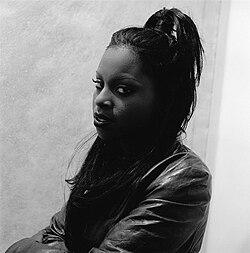
Inga DeCarlo Fung Marchand (born September 6, 1978),[nb 1] known professionally as Foxy Brown, is an American rapper. She signed to Def Jam Recordings and released her debut studio album Ill Na Na (1996) to critical and commercial success. The album peaked at number seven on the US Billboard 200, received platinum certification by the Recording Industry Association of America (RIAA), sold over seven million units worldwide, and was supported by the Billboard Hot 100 top ten single "I'll Be" (featuring Jay-Z).
In 1997, Brown formed the New York City-based hip hop group The Firm alongside rappers Nas, AZ and Cormega. The group released a self-titled album in 1997 which peaked atop the Billboard 200 but received a mixed reception. Brown followed this with her sophomore release, Chyna Doll (1999), which saw continued commercial success and debuted atop the Billboard 200, making her the second female rapper to do so. Her third studio album, Broken Silence (2001), peaked at number five on the same chart and earned a Grammy Award for Best Rap Solo Performance nomination for one of its songs.
Since parting ways with Def Jam, Brown has cancelled the majority of her releases including Ill Na Na 2: The Fever and Black Roses. Following years of legal issues and a lack of output, Brown released the mixtape Brooklyn's Don Diva (2008).
Early life
[edit]Marchand is a Trinidadian-American of Dougla (mixed Afro-Trinidadian and Indo-Trinidadian) and Chinese-Trinidadian descent.[7] She was born in Brooklyn,[8] and grew up in its neighborhood of Park Slope alongside her two older brothers. Her parents divorced when she was four, and her family moved in with her maternal grandfather.[9] She later attended Brooklyn College Academy.[9]
Music career
[edit]1994–1996: Early career
[edit]While still a teenager, Brown won a talent contest in the Park Slope neighborhood of Brooklyn, New York. Members of the production team Trackmasters who were working on LL Cool J's Mr. Smith album were in attendance that night and were impressed enough to invite Brown to rap on "I Shot Ya."[10] She followed this debut with appearances on several RIAA platinum and gold singles from other artists, including remixes of songs "You're Makin' Me High" by Toni Braxton.[10] Brown was featured on the soundtrack to the 1996 film The Nutty Professor on the songs "Touch Me, Tease Me" by Case and "Ain't No Nigga" by Jay-Z.[11] She became an instant sensation due to being very talented and rapping provocatively at such a young age. The immediate success led to a label bidding war at the beginning of 1996, and in March, Def Jam Records won and added the then 17-year-old rapper to its roster.[10]
1996–1997: Ill Na Na and The Firm
[edit]In 1996, Brown released her debut album Ill Na Na to strong sales. The album sold over 128,000[12] copies in the first week, and debuted at No. 7 on the Billboard 200 album charts.[10] The album was heavily produced by Trackmasters, and featured guest appearances from Jay-Z, Blackstreet, Method Man, and Kid Capri.[13] The album was platinum and launched two hit singles: "Get Me Home" (featuring Blackstreet) and "I'll Be" (featuring Jay-Z).[14]
Following the release of Ill Na Na, Brown joined fellow New York-based hip hop artists Nas, AZ, and Cormega (later replaced by Nature) to form the supergroup known as The Firm. The album was released via Aftermath Records and was produced and recorded by the collective team of Dr. Dre, the Trackmasters, and Steve "Commissioner" Stoute, then of Violator Entertainment. An early form of The Firm appeared on "Affirmative Action" from Nas' second album It Was Written. A remix of the song and several group freestyles were on the album Nas, Foxy Brown, AZ, and Nature Present The Firm: The Album.[15] The album entered the Billboard 200 album chart at No. 1.[16]
In March 1997, she joined the spring break festivities hosted by MTV in Panama City, Florida, with performers including rapper Snoop Dogg, pop group The Spice Girls, and rock band Stone Temple Pilots.[17] Later, she joined the Smokin' Grooves tour hosted by the House of Blues with the headlining rap group Cypress Hill, along with other performers like Erykah Badu, The Roots, OutKast, and The Pharcyde, the tour set to begin in Boston, Massachusetts in the summer of 1997.[18] However, after missing several dates in the tour, she left it.[19]
1998–2003: Chyna Doll and Broken Silence
[edit]Chyna Doll was released in January 1999 and debuted at No. 1 on the Billboard 200 Album chart,[20] selling 173,000 copies in its opening week,[21] making her the second female rapper to accomplish this feat after Lauryn Hill.[22] However, its sales quickly declined in later weeks.[23] Chyna Doll has been certified platinum after surpassing one million copies sold in shipments.[24]
In 2001, Brown released Broken Silence. The first single from the album was "Oh Yeah", which featured her then-boyfriend, Jamaican dancehall artist Spragga Benz.[25] The track "Na Na Be Like" was produced by Kenya Fame Flames Miller and Nokio from Dru Hill. The song "Candy", which featured guest vocals from Kelis, was never officially released as a single, but was hugely successful on the radio; it managed to chart at 48 on the R&B/Hip-Hop Singles & Track Chart and number 10 on the Rap charts". Na Na Be Like" was also on the Blue Streak Soundtrack. The album debuted on the Billboard Charts at No. 5, selling 130,000 units its first week. Like previous albums, Broken Silence also sold over 500,000 records and was certified gold by the RIAA.
In the same year, Brown recorded a song for the comedy film Rush Hour 2, Blow My Whistle, which is a collaboration with Japanese-American singer-songwriter Hikaru Utada, and was written by Utada with Pharrell Williams and Chad Hugo. The song is included on Def Jam's Rush Hour 2 Soundtrack, which peaked the 11th spot on both the Billboard 200 and the Top R&B/Hip-Hop Albums and also the first on the Top Soundtracks. "Blow My Whistle" was produced by The Neptunes.[26]
In 2002, Brown returned to the music scene with her single "Stylin'", whose remix featured rappers Birdman, her brother Gavin, Loon, and N.O.R.E. It was to be the first single from her upcoming album Ill Na Na 2: The Fever.[27] The next year, she was featured on DJ Kayslay's single "Too Much for Me" from his Street Sweeper's Volume One Mixtape.[28] She also appeared on Luther Vandross' final studio album Dance with My Father.[29] That April, Brown appeared on popular New York radio DJ Wendy Williams' radio show, and revealed the details of her relationships with Lyor Cohen, president of Def Jam Recordings at the time, and Sean "P. Diddy" Combs. Brown accused both of illegally trading her recording masters. She also announced that Cohen had cancelled promotion for her fourth album Ill Na Na 2: The Fever over personal disagreements.[30] Therefore, "Stylin'" was released on the compilation album The Source Presents: Hip Hop Hits Vol. 6.[31]
2004–2010: Scrapped albums and Black Roses, baby!
[edit]Upon leaving Def Jam Recordings after her disappointment in the cancelled promotion of her studio album Ill Na Na 2: The Fever, Brown began recording in late 2004. Months later, she reunited with Jay-Z, performing dates on the Best of Both Worlds Tour. After re-signing with Def Jam under his regime, Brown and Jay-Z began work on Black Roses with production by The Neptunes, Kanye West, Timbaland, Trackmasters, and Dave Kelly. Brown confirmed guest appearances by Barrington Levy, Dido, Luther Vandross, Mos Def, Baby Cham, Spragga Benz, Shyne, Big Daddy Kane, Rakim, KRS-One, Roxanne Shante, and Jay-Z, although it was uncertain whether all would make the final cut for the album.[32][33]
In November 2004, Brown announced that the title for her upcoming album would be Black Roses, explaining "My best friend Barrington Levy has a song called 'Black Roses.' He's been traveling all over the world and never seen a black rose in no other garden. When he found his black rose, he knew that shit was special. Y'all niggas can have all the female rappers in the world, but there's only one black rose. I feel that's me."[34] Brown also announced that she would be the first artist signed to Jay-Z's upcoming imprint record label S. Carter Records. Rather than launching the imprint, though, Jay-Z became the new president of Def Jam Records, where he signed Brown as one of the first artists on his new roster.[35] In December 2005, Brown announced she had experienced severe and sudden hearing loss in both ears and she had not heard another person's voice in six months. Brown put Black Roses aside during this time.[36] In June 2006, Brown said her hearing had been restored through surgery and she was planning to resume recording. Her label did not set a release date, but hoped the album would be out by the end of 2006. They were unsure if the title Black Roses would be kept.[37] In November 2006, there was speculation that Jay-Z was disappointed in Foxy Brown's "lack of productivity on the album" and was planning to drop her from the Def Jam label. The planned December 2006 release of Black Roses was cancelled.[35]
On May 22, 2007, Black Hand Entertainment announced a management deal with Brown, with Chaz Williams as her manager. No release date was set for Black Roses, but Brown said the album was nearly complete.[38] Two days later, a release date of September 6 was announced.[39] On August 16, Black Hand Entertainment announced that Brown would leave Def Jam to launch an independent record label, Black Rose Entertainment, distributed by Koch Records.[40][41] The street album Brooklyn's Don Diva, was scheduled with a release date of December 4, but was delayed until the following year.[40]
Brooklyn's Don Diva was ultimately released as a street album on May 13, 2008, after many delays triggered by her prison sentence. It contains two previously unreleased songs from her shelved album Ill Na Na 2: The Fever. The album peaked at No. 83 on the Billboard 200 chart, No. 8 on the Independent Albums chart, and No. 5 on the Top R&B/Hip-Hop Albums chart.[42]
2011–present: Collaborations and current projects
[edit]In January 2011, Brown released the diss track "Massacre",[43] a response to Lil' Kim's "Black Friday". On August 14, 2012, Foxy appeared as a special featured guest on Nicki Minaj's Pink Friday Tour in New York City.[44][45] Rapper AZ later hinted in an interview that Brown was working on new material with Minaj.[46] In August 2018, Brown made her first official guest appearance since 2009 on "Coco Chanel" from Nicki Minaj's fourth studio album Queen.[47]
According to media sources, Brown is back to work on her upcoming fourth studio album.[48][49][50] In 2019, Brown remixed Casanova's "So Brooklyn".[51][52] A visual album, King Soon Come was also slated for release in 2019, but has since been delayed indefinitely.[48][53][49][50]
In August 2020, Brown reunited with her group The Firm for the song "Full Circle" from Nas' album King's Disease.[54]
Other ventures
[edit]In 1998, Brown was featured in commercials for Mistic's "Living Delicious" sparkling water drink campaign.[55] Hoping to take more control over her career during this time, she also launched her own label, Ill Na Na Entertainment, in a joint venture with Def Jam Recordings.[56]
In 1999, in promotion of her album Chyna Doll, Brown collaborated with Avirex to produce exclusive merchandising, which was advertised in the liner notes of the Chyna Doll album and in the music video for Brown's song "I Can't".[57][58] Following the rise of collaborations between hip hop artists and high fashion designers, Brown was named a spokeswoman for Calvin Klein and modeled in their jeans campaign.[59] That year, she was also a muse to John Galliano for Dior.[60]
In 2002, in promotion of both the show and her comeback single Stylin', Brown was featured in commercials for The Real World: Las Vegas.[61]
In 2004, Brown launched "Champagne and Ice", her luxury fur collection distributed by Alexis & Gianni.[62][63]
Artistry
[edit]

Musical style
[edit]Brown's lyrics have been described to be "raunchy" and "over-the-top" with "skimpy clothes to match."[64] Her music is often centred around themes such as "fashion, sex, and the mafia" and is described as "intriguingly seductive" and having "a contemporary edge with a sleek and sexy soundscape."[65] Her work for her debut album was described as "a heroine straight from the pages of a James Bond novel," selling over a million copies with the support of major male artists such as Nas and AZ.[65] Brown's voice has been described as a "husky flow" with "dancehall swagger".[47]
Although her work was compared to rapper Lil' Kim, David Opie of Highsnobiety wrote:
Just because they were both the 'First Ladies' of their respective crews, doesn't mean that Foxy or Kim were identical by any means, and it was hugely misogynistic to suggest otherwise...In an industry that still actively mocks vulnerability and weakness, hip hop needs more rappers who are willing to open up in this way, and the fact that Foxy did so such a long time ago speaks volumes about her artistry.[47]
Legacy
[edit]Brown's impact on the rap world has often been overlooked due to her legal run-ins, but it has been noted that "she's bright, talented, sexy and, most important, she's not afraid to take risks creatively" and that her "impact still stands."[66][47] Her albums have been cited to harness "a winning formula of looping R&B songs into hip-hop hits, resulting in the genre-shifting record," Ill Na Na.[67] The release of her album marked a monumental moment in hip-hop history, but was downplayed due to comparisons between her and rapper, Lil' Kim and although Foxy may not have achieved the "iconic status" Kim had reached, "her debut album was an essential part of a turning point in mainstream rap music."[68] Rolling Stone author, Kathy Iandoli stated,
In seeing Foxy...release [Ill Na Na] it was a reassurance that skills paid off; it didn't really matter who was helping with the rhymes. It was the delivery and the content that was being said, and whose mouth it was coming out of. It was just a reassurance to me as a hip-hop head that this space might be opening up for women in a way that has never been done before. There was something about what [she] said and how [she was] saying it, that was hinting that a huge change was about to come.[69]
Elle writer Janelle Harris wrote that Brown celebrated "the beauty of her mahogany skin as the self-professed 'dark-skinned Christian Dior poster girl,' boasted about being 'dripped in Gabbana...starring in billboards as big as the pride of the Black girls who saw themselves in her likeness."[70]
Described as one of the "illest to ever do it – regardless of gender," Scott Glaysher of HipHopDX noted that "If those aforementioned male rappers epitomize the menacing New York City mobster of the late 90s then Foxy represents the mob wife that is even more sinister with weaponized sexuality." He stated that "the sheer confidence and astute rhyming Foxy brought to Ill Na Na, makes it one of the 90s most memorable albums and a catalyst for the fierce feminine rap wave that followed.[71] In 2020, Spin ranked her at 20, as one of the 30 Best Female Rappers Ever.[72]
Brown's sophomore studio album Chyna Doll debuted at number one in 1999, making it only the second female rap album to debut at the top spot after The Miseducation of Lauryn Hill in 1998 by Lauryn Hill.[73][74][75][76][77] Her work has been paid homage to by numerous artists including, Nicki Minaj,[78] Kash Doll,[79] Bia,[80] Ivorian Doll,[81] Megan Thee Stallion,[82] JT of City Girls,[83] Dreezy,[84] and Maliibu Miitch.[85] Minaj has even gone so far to say that without Foxy she "may have never even started rapping" and that she is "the most influential female rapper."[86]
Legal issues
[edit]
Brown has a substantial history of assault and menacing.[87] On September 7, 2007, New York City Criminal Court Judge Melissa Jackson sentenced Brown to one year in jail for violating her probation that stemmed from a fight in 2004 with two manicurists in a New York City nail salon.[88] On September 12, representatives of the rapper disputed claims by her lawyer that she was pregnant.[89] On October 23, 2007, Brown was given 76 days in solitary confinement due to a physical altercation that took place on October 3 with another prisoner. According to the prison authorities, Brown, the next day after the incident, was also verbally abusive toward correction officers and refused to take a random drug test.[90] Prison authorities reported on November 27 that she was released "from solitary confinement...for good behavior",[91] and Brown was finally released from prison on April 18, 2008.[92]
On July 22, 2010, Brown was arrested and charged with one count of criminal contempt, which is a class E felony (the least severe), for violating an order of protection.[93] The charge stems from an incident during the evening of July 21, 2010, in which it was claimed that Brown swore at, then mooned her neighbor Arlene Raymond, at whom she had thrown her BlackBerry, in 2007. Following the BlackBerry incident, Raymond sought and received a restraining order against Brown. Following her arrest, Brown appeared in court where she pleaded "not guilty" to the charge and was released on a $5,000 bail. If convicted, she faced up to seven years' imprisonment.[94] On July 12, 2011, the charges were dropped.[95]
Personal life
[edit]From 1997 to 1999, she was engaged to fellow rapper Kurupt.[96][97] In 2000, she announced that she was suffering from depression. She subsequently entered drug rehabilitation at Cornell University Medical College to receive treatment for opioid addiction, stating that she could no longer record or perform without resorting to morphine.[98] Around 2001, she was engaged to Spragga Benz.[25] Her uncle, Federico de la Asuncion, was one of 265 fatalities in the crash of American Airlines Flight 587 on November 12, 2001.[99]
Brown suffered hearing loss from May 2005 to June 2006. She opted for a hearing aid, and while recording music, had someone tap beats on her shoulder.[36][37]
In 2013, reports surfaced online claiming Brown had confessed to having a sexual relationship with Jay-Z and made disparaging remarks about him.[100] In an interview with Combat Jack, Brown denied these reports, stating: "He never said not one bad thing about me. So when that false story came out about me talking about him, it's like, why would I say those things about him?"[101]
On January 13, 2017, she gave birth to her first child, a girl.[102]
Discography
[edit]- Studio albums
- Ill Na Na (1996)
- Chyna Doll (1999)
- Broken Silence (2001)
- Collaboration albums
- The Album with the Firm (1997)
- Unreleased albums
- Ill Na Na 2: The Fever (2003)
- Black Roses (2005)
Tours
[edit]Headlined
[edit]- Ill Na Na Tour (1997–1998)
- Chyna Doll Tour (1999–2000)
- Foxy Brown Tour (2002)
Co-headlined
[edit]- Smokin' Grooves Tour (1997)
- No Way Out Tour (1997)
- Get Up On A Room (1999)
- Out4Fame Germany Tour (2015)
Appearances
[edit]- Reasonable Doubt Tour (1996)
- Survival of the Illest Tour (1998)
- The Black Album Tour (2003)
- Best of Both Worlds Tour (2004)
- Pink Friday Tour (2012)
Filmography
[edit]Films
[edit]| Year | Title | Role |
|---|---|---|
| 1998 | Woo | Fiancée |
| 2004 | Fade to Black | Herself |
Awards and nominations
[edit]| Award | Year[a] | Category | Recipient(s) and nominee(s) | Result | Ref. |
|---|---|---|---|---|---|
| Billboard Music Awards | 1997 | Billboard Music Award for Top Rap Song | "I'll Be" | Nominated | [103] |
| Ascap Awards | 1997 | Rhythm & Soul Music Award | "Touch Me, Tease Me" | Won | [104] |
| Echo Awards | 1998 | Best International Newcomer | "Ill Na Na" | Nominated | [citation needed] |
| Echo Awards | 1998 | Best International Rock/Pop Female Artist | "Get Me Home" | Nominated | [citation needed] |
| Soul Train Lady of Soul | 1998 | Best R&B/Soul or Rap Music Video | "Big Bad Mamma" | Nominated | [105] |
| Soul Train Lady of Soul | 1999 | Best R&B/Soul or Rap Music Video | "Hot Spot" | Nominated | [106] |
| MTV Video Music Awards | 2000 | Best Video from a Film | "Thong Song (Remix)" | Nominated | [107] |
| BET Awards | 2002 | Best Female Hip-Hop Artist | Herself | Nominated | [108] |
| Grammy Awards | 2003 | Best Rap Solo Performance | "Na Na Be Like" | Nominated | [109] |
| BDS Certified Spin Awards | 2005 | BDS Certified 50,000 Spins | "U Already Know" | Won | [110] |
| Ascap Awards | 2011 | Rhythm & Soul Music Award | "Hold You Down (Goin In Circles)." | Won | [111] |
| Culture Queens | 2019 | Hip Hop Icon | Herself | Won | [112] |
Notes
[edit]- ^ An arrest report by the Broward County Sheriff's Office dated February 16, 2007, listed her birth year as 1978. An article in The New York Times from September 8, 2007, stated: "Ms. Brown, who turned 29 on Thursday [September 6], had tried to conceal her identity by writing her name as Enga rather than Inga, and giving her date of birth as 1980 rather than 1978." The website AllMusic lists her birth date as September 6, 1979. An Entertainment Weekly article from March 9, 2001, appears to support the 1979 birth year. In her song "I Don't Need Nobody", Marchand raps "1978 / The year I was born".[6]
- ^ Indicates the year of ceremony. Each year is linked to the article about the awards held that year, wherever possible.
References
[edit]- ^ "Foxy Brown". Discogs.com. Retrieved June 2, 2022.
- ^ Rogo, Paula (October 23, 2020). "Foxy Brown Reveals That Her Dad Was Stopped From Returning to the U.S." Essence. Retrieved May 2, 2021.
- ^ "September 6 In Hip-Hop History: Foxy Brown Is Born". iheart. Retrieved September 6, 2022.
- ^ Roman Cooper (August 15, 2013). "Foxy Brown Was "Shocked" To Hear Her Name On Jay Z's "Picasso Baby"". HipHopDX. Retrieved December 29, 2021.
- ^ Life After Lockup: Foxy Brown (Jet Magazine, page 58). May 19, 2008.
- ^ "I Don't Need Nobody" on YouTube
- ^ Calloway, Sway (May 29, 2001). "Foxy Brown – Outspoken (Part 4)". MTV News. Archived from the original on May 2, 2006. Retrieved May 9, 2006.
- ^ "September 6 In Hip-Hop History: Foxy Brown Is Born". iHeart. Retrieved June 6, 2024.
- ^ a b Foxy Brown encyclopedia.com
- ^ a b c d Bush, John (2008). "Foxy Brown – Biography". AllMusic. Retrieved March 29, 2023.
- ^ Erlewine, Stephen Thomas. "The Nutty Professor" – overview. AllMusic: c. 1996.
- ^ Billboard. December 7, 1996.
- ^ Erlewine, Stephen Thomas. "Ill Na Na" – overview. AllMusic
- ^ "Foxy Brown – Billboard singles". AllMusic. Retrieved October 10, 2007.
- ^ Birchmeier, Jason. "The Firm – Biography". AllMusic. Retrieved February 25, 2008.
- ^ "The Firm – Billboard Albums". Billboard. Retrieved February 25, 2008.
- ^ "Foxy Brown, Spice Girls, Snoop, STP Do Spring Break". MTV News. March 13, 1997. Archived from the original on June 14, 1997. Retrieved March 29, 2023.
- ^ "Cypress Hill, Erykah Badu, Foxy Brown Join Smokin' Grooves Tour". MTV News. April 8, 1997. Archived from the original on June 14, 1997. Retrieved March 29, 2023.
- ^ "Foxy Brown Bows Out of Smokin' Grooves". MTV News. July 14, 1997. Archived from the original on February 19, 1999. Retrieved March 29, 2023.
- ^ "Foxy Brown Delays Sophomore Album, Talks Diversity". MTV News. December 7, 1998. Archived from the original on April 24, 1999. Retrieved March 29, 2023.
- ^ Boehlert, Eric (February 3, 1999). "Shock the Shocker". Rolling Stone. Archived from the original on January 4, 2008. Retrieved February 25, 2008.
- ^ Brown, Preezy (January 26, 2019). "7 classic songs from Foxy Brown's 'Chyna Doll' that showcased her brilliance". REVOLT. Retrieved April 3, 2021.
- ^ Promis, Jose F. ""Chyna Doll" – Overview". AllMusic. Retrieved October 11, 2007.
- ^ "Foxy Brown – Gold and Platinum". RIAA. Archived from the original on September 24, 2015. Retrieved February 23, 2008.
- ^ a b Huey, Steve (2003). "Spragga Benz – Biography". AllMusic. Retrieved February 25, 2008.
- ^ Rush Hour 2 on IMDb
- ^ Reid, Shaheem (September 23, 2002). "Cam'ron, Foxy Brown, N.O.R.E. On Illest Tour". MTV News. Archived from the original on October 22, 2002. Retrieved March 29, 2023.
- ^ Reid, Shaheem (May 20, 2003). "DJ Kay Slay Says It's Mo' Artists, Mo' Problems On Legit CDs". MTV News. Archived from the original on December 23, 2003. Retrieved March 29, 2023.
- ^ Jeffries, David (2003). "Dance with My Father – Overview". AllMusic. Retrieved March 9, 2008.
- ^ "Foxy Brown's "Ill Na Na 2" Shelved Indefinitely". Yahoo! Music. April 22, 2003. Archived from the original on June 29, 2011. Retrieved February 29, 2008.
- ^ Kellman, Andy (2002). ""The Source Presents: Hip Hop Hits, Vol. 6" – Overview". AllMusic. Retrieved December 9, 2008.
- ^ Reid, Shaheem. "Jay-Z Brings Pal Foxy Brown Back To Def Jam". MTV News. Archived from the original on April 20, 2005. Retrieved March 29, 2023.
- ^ Concepcion, Mariel (May 24, 2007). "Foxy Brown Readies Comeback With 'Black Roses'". Billboard. Archived from the original on May 27, 2007. Retrieved March 29, 2023.
- ^ Reid, Shaheem (November 5, 2004). "Foxy Brown Planning Comeback With Help From Jay-Z, Shyne". MTV News. Archived from the original on April 6, 2005. Retrieved March 29, 2023.
- ^ a b Johnson, Dick (November 6, 2006). "Foxy Brown Served "Black Roses," Gets Axed From Label?". SOHH. Archived from the original on September 30, 2007.
- ^ a b Harris, Chris (December 15, 2005). "Foxy Brown Says She Hasn't Heard A Thing For Six Months". MTV. Archived from the original on December 17, 2005. Retrieved March 29, 2023.
- ^ a b Reid, Shaheem (June 27, 2006). "Foxy Brown Returns: Deafness Cured, She's Back To Work". MTV. Archived from the original on October 20, 2007. Retrieved March 29, 2023.
- ^ Roberts, Anthony (May 23, 2007). "Foxy Brown Under New Management, Ordered To Submit DNA Sample in Assault Case". SOHH. Archived from the original on September 30, 2007.
- ^ Concepcion, Mariel (May 24, 2007). "Foxy Brown Readies Comeback With 'Black Roses'". Billboard.
- ^ a b Crosley, Hillary (August 15, 2007). "Foxy Brown Joins Koch Records". Billboard.
- ^ Starbury, Allen (August 14, 2007). "Foxy Brown Leaves Def Jam; Inks Label Deal Through Koch". Baller Status. Archived from the original on February 4, 2015.
- ^ "Brooklyn's Don Diva > Charts & Awards > Billboard Albums". AllMusic. Retrieved August 18, 2008.
- ^ "New Music: Foxy Brown – 'Massacre' (Lil' Kim Diss)". Retrieved August 5, 2015.
- ^ "VIDEO: Nicki Minaj Speaks on Foxy Brown after her "Pink Friday Tour"". Universal Music. August 16, 2012. Retrieved December 22, 2012.
- ^ "Watch: Nicki Minaj Welcomes Foxy Brown To 'Pink Friday' Stage". August 15, 2012. Retrieved May 18, 2013.
- ^ Nadine Graham (October 22, 2012). "The Firm's 'The Album' 15 Years Later: AZ Speaks on Group's First & Final Project". The Boombox. Retrieved December 22, 2012.
- ^ a b c d Opie, David (August 20, 2018). "Why Foxy Brown Will Always Be the Illest". Retrieved April 29, 2020.
- ^ a b Winslow, Mike (March 2, 2017). "Rapper Foxy Brown Gives Birth to a Baby Girl". AllHipHop. Retrieved August 20, 2017.
Foxy Brown is working on her latest album, King Soon Come.
- ^ a b Madden, Sidney. "Happy Birthday, Foxy Brown!". Retrieved September 30, 2017.
To date, Foxy is said to be working on her fourth studio album, King Soon Come.
- ^ a b Clark, Danielle Kwateng. "Foxy Brown Shares The First Photo Of Her Adorable Baby Girl". Retrieved September 30, 2017.
Currently she's working on her fourth studio album.
- ^ "Ill Na Na: What's Up With Foxy Brown Now". Nevernaire. July 26, 2022. Retrieved August 3, 2022.
- ^ "Casanova2X ft. FOXY BROWN - So Brooklyn (Remix) SNIPPET (2019)". Youtube. October 11, 2019. Retrieved August 23, 2020.
- ^ Loop, The Black. "Wow! Foxy Brown Just Gave Birth to a Baby Girl! Shocks Everyone!". Archived from the original on August 22, 2017. Retrieved August 20, 2017.
Congrats to Foxy Brown! Foxy Brown is working on her latest album King Soon Come.
- ^ AZ [@quietAZmoney] (August 18, 2020). "Ever so often things come back full circle! It's a blessing to be apart of [sic] Greatness., Show love this Friday 8/21 King Disease! Another classic..." (Tweet). Retrieved August 18, 2020 – via Twitter.
- ^ "Foxy Brown - "Mistic" Commercial (1998)". Youtube. January 17, 2016. Retrieved January 17, 2016.
- ^ Disco Divas. University of Pennsylvania Press, Incorporated. January 2003. ISBN 978-0-8122-1841-1.
- ^ Foxy Brown - Chyna Doll (Liner Notes)
- ^ "Foxy Brown - I Can't ft. Total". Youtube. December 24, 2009. Retrieved January 21, 2023.
- ^ Sister 2 Sister: S 2 S. Jamie Foster Brown. July 1999.
- ^ AnOther (September 6, 2017). "John Galliano and Foxy Brown, the 00s' Most Fabulous Muse". AnOther. Retrieved January 28, 2025.
- ^ "Foxy Brown - Stylin Remix (Real World Las Vegas promo 2002)". Youtube. March 30, 2021. Retrieved January 21, 2023.
- ^ Foxy Brown Launching Fur Collection. All Hip Hop. May 21, 2004.
- ^ Foxy Fur Real. WWD. August 3, 2004.
- ^ Rosario, Richy. "Writers Look Back on Foxy Brown & Lil Kim's Powerful Debuts 20 Years Later: They Were 'Milestones in Hip-Hop'". Billboard.
- ^ a b "Foxy Brown". February 27, 2020.
- ^ White, Brooklyn. "Foxy Brown Is Still On Our Fashion Moodboards". Retrieved April 29, 2020.
- ^ Grove, Rashad. "'Ill Na Na': How Foxy Brown's Debut Album Changed The Game For Women in Hip-Hop". Retrieved April 29, 2020.
- ^ Lindsey, Treva. B (February 22, 2016). "How 'Hard Core' and 'Ill Na Na' changed the game for women in rap". Complex Networks. Retrieved April 29, 2020.
- ^ Rosario, Richy. "Writers Look Back on Foxy Brown & Lil Kim's Powerful Debuts 20 Years Later: They Were 'Milestones in Hip-Hop'". Billboard. Retrieved April 29, 2020.
- ^ Harris, Janelle (December 27, 2016). "20 Years After Their Debuts, Lil' Kim And Foxy Brown's Style Still Feels Revolutionary". Elle. Retrieved November 2, 2020.
- ^ "The 20 Best Rap Albums Of All Time ... From Artists Who Just Happen To Be Women". HipHopDx. August 28, 2019. Retrieved August 12, 2020.
- ^ "30 of the Best Female Rappers Ever". SPIN. December 23, 2020. Retrieved July 4, 2021.
- ^ "One Of Rapper Eve's Biggest Songs Was Originally Meant For Aaliyah". May 14, 2020. Retrieved September 21, 2020.
- ^ "How Much Do You Know About the History of Female MCs on the Billboard Charts? Take Our 20-Question Quiz!". Billboard. Retrieved August 3, 2020.
- ^ Jolson-Colburn, Jeffrey (September 2, 1998). "Lauryn Hill Queen of the Music Hill". E! Online. Archived from the original on June 10, 2015. Retrieved March 31, 2013.
- ^ Caulfield, Keith. "Nicki Minaj's 'Roman Reloaded' Debuts at No. 1 on Billboard 200". Billboard. Retrieved April 11, 2012.
- ^ Caulfield, Keith (March 15, 2018). "Cardi B's 'Invasion of Privacy' Debuts at No. 1 on Billboard 200 Chart". Billboard. Retrieved March 15, 2018.
- ^ Alexis, Nadeska (August 16, 2012). "Nicki Minaj cites Foxy Brown as one of her biggest influences". MTV. Archived from the original on October 22, 2012. Retrieved March 29, 2023.
- ^ "KashDoll pays homage to Foxy Brown". Youtube. September 12, 2019.
- ^ Gonzales, Erica (August 12, 2021). "BIA Has a Whole Lot More in Store for Us". Harper's BAZAAR. Retrieved August 18, 2021.
- ^ Ways, Curious (August 12, 2020). "Meet Ivorian Doll, the Reigning Queen of Drill". HUNGER TV. Retrieved January 9, 2022.
- ^ "Megan Thee Stallion lists her 5 favourite female rappers". Hip Hop Hero. April 24, 2021. Retrieved January 9, 2022.
- ^ "JT (City Girls) Showing Foxy Brown Luv Over the years!". Youtube. October 28, 2019.
- ^ "Rapper Dreezy Instagram post pays homage to Foxy Brown". Youtube. January 9, 2021.
- ^ "Maliibu Miitch Pays Homage To Foxy Brown's Chyna Doll Album With Remix". February 3, 2019. Retrieved April 29, 2020.
- ^ "Nicki Minaj Says Foxy Brown Is the Only Rapper She Competes With". September 7, 2017. Retrieved August 3, 2020.
- ^ Larry Celona & Erin Calabrese, "Foxy Brown busted again for attacking nemesis neighbor", New York Post, July 22, 2010.
- ^ "Foxy Brown Sentenced To A Year In Jail". Billboard. Associated Press. September 7, 2007. Retrieved September 7, 2007.
- ^ "Jailed Foxy Brown 'not pregnant'". BBC News. September 13, 2007. Retrieved February 24, 2008.
- ^ Scharm, Jamie (October 23, 2007). "Foxy Slammed with Solitary". New York Post. Archived from the original on April 30, 2009. Retrieved October 29, 2007.
- ^ "Foxy Brown released from solitary confinement". Billboard. November 27, 2007.
- ^ McGee, Tiffany; Hopkins, Tiffany (April 18, 2008). "Foxy Brown's Emotional Release from Prison". People.
- ^ "Foxy Brown Arrested in NY Over Order Of Protection". Billboard. September 14, 2009. Retrieved August 5, 2011.
- ^ "Foxy Brown pleads not guilty to violating order of protection, exposing herself to Arlene Raymond". New York Daily News. New York. July 22, 2010. Retrieved August 5, 2011.
- ^ Gorta, William J. (July 13, 2011). "Over the moon!". New York Post. Retrieved January 22, 2015.
- ^ "Foxy Brown Ready For Married Life?". MTV News. September 11, 1997. Archived from the original on February 19, 1999. Retrieved March 29, 2023.
- ^ Johnson, Elon (October 8, 1999). "Kurupt Is "Calling Out" DMX". MTV News. Archived from the original on September 20, 2003. Retrieved March 29, 2023.
- ^ Salomon, Yves (December 26, 2000). "Foxy Brown in Rehab". Yahoo! Music. Archived from the original on September 22, 2005.
- ^ "THE CRASH OF FLIGHT 587; A List of the Victims of Flight 587". The New York Times. November 14, 2001. ISSN 0362-4331. Retrieved September 28, 2020.
- ^ "Foxy Brown denies bashing Jay-Z". rollingout.com. May 24, 2013. Retrieved May 25, 2013.
- ^ "Foxy Brown Denounces False Jay-Z Report: Notable/Quotable". huffpost.com. June 12, 2013. Retrieved August 14, 2013.
- ^ Kwateng-Clark, Danielle (March 3, 2017). "Foxy Brown Welcomed A Baby Girl!". Essence. Retrieved April 17, 2017.
- ^ Singh, Amrit (September 29, 2008). "VH1's 100 Greatest Hip-Hop Songs". Stereogum. SpinMedia. Retrieved May 18, 2016.
- ^ Billboard. Nielsen Business Media. June 14, 1997.
- ^ Billboard. Nielsen Business Media. August 15, 1998.
- ^ "Lauryn Hill, Monica Top Lady Of Soul Nominees". MTV. Archived from the original on April 11, 2023. Retrieved April 11, 2023.
- ^ Billboard. Nielsen Business Media. August 5, 2000.
- ^ "2002 BET Awards Red Carpet". BET. Archived from the original on February 25, 2023. Retrieved October 3, 2020.
- ^ "Foxy Brown – Grammy Awards". Retrieved September 27, 2020.
- ^ Billboard. Nielsen Business Media. June 18, 2005.
- ^ Bleek, Don (July 5, 2011). "Congratulations: Foxy Brown Receives ASCAP Award [With Pictures]". Retrieved April 11, 2023.
- ^ Miss2Bees (June 19, 2019). "The Source |Rucker Roots and Urban Skin Partner with Culture Queens to Celebrate Women in Hip Hop". The Source. Retrieved May 17, 2023.
{{cite web}}: CS1 maint: numeric names: authors list (link)
Further reading
[edit]- Hope, Clover (2021). The Motherlode: 100+ Women Who Made Hip-Hop. Harry N. Abrams. ISBN 978-1-4197-4296-5.
External links
[edit]
| International | |
|---|---|
| National | |
| Artists | |
| People | |
| Other | |

Foxy Brown (rapper)
View on GrokipediaEarly life
Childhood and family
Inga DeCarlo Fung Marchand, known professionally as Foxy Brown, was born on September 6, 1978, in Brooklyn, New York, to parents of Trinidadian descent.[3][1] Her father, Keith Stahler, was a welder of Afro-Trinidadian and Indo-Trinidadian heritage, while her mother, Judith Marchand, was an elementary school teacher of Chinese-Trinidadian ancestry.[1][3] The second of three children, Marchand has two older brothers, Gavin and Anton Marchand; Gavin later pursued a career in music under the name Young Gavin.[1][4] Marchand's parents divorced when she was four years old, after which Stahler abandoned the family amid his struggles with drug addiction, leaving Judith Marchand to raise the children as a single parent in the Park Slope and Prospect Heights neighborhoods of Brooklyn.[2][1][3] Despite the challenges of a single-parent household, Marchand grew up immersed in a culturally rich Trinidadian American environment, attending Brooklyn College Academy, a specialized high school.[2][1] Her mother's influence as an educator emphasized education and resilience, shaping Marchand's early perspective amid the vibrant, diverse urban setting of Brooklyn.[3]Entry into music
Inga Marchand, known professionally as Foxy Brown, began her music career in her mid-teens in Brooklyn, New York. At age 16 in 1994, she won a local talent competition in the Park Slope neighborhood, which caught the attention of the production duo Trackmasters, who were scouting talent while working on LL Cool J's album Mr. Smith.[5][1] This opportunity led to her recording debut on the remix of LL Cool J's "I Shot Ya," released in 1995 as part of Mr. Smith. The track, a posse cut also featuring Prodigy, Keith Murray, and Fat Joe, showcased Brown's confident, streetwise flow and marked her introduction to a wider audience in hip-hop. Produced by Trackmasters, the remix generated significant buzz, positioning the then-teenage rapper as a rising star in the male-dominated New York scene.[5][6] Building on this momentum, Brown secured additional high-profile features in 1996, including Jay-Z's "Ain't No Nigga" from Reasonable Doubt (released June 25, 1996), the remix of Toni Braxton's "You're Makin' Me High," Case's "Touch Me Tease Me" from The Nutty Professor soundtrack, and her "Get Me Home" (featuring Blackstreet), the lead single from her upcoming debut. These collaborations, which highlighted her versatile lyricism blending sensuality and toughness, sparked a major label bidding war. In March 1996, at age 17, she signed with Def Jam Recordings, setting the stage for her solo breakthrough.[5][6][7][8]Music career
1994–1997: Early recordings and Ill Na Na
In 1994, at the age of 15, Foxy Brown, born Inga DeCarlo Fung Marchand in Brooklyn, New York, was discovered by the production duo Trackmasters (Poke and Tone) during a local talent show in Park Slope, where she impressed them with her freestyle rapping skills.[9][7] This led to her first major recording opportunity on the remix of LL Cool J's "I Shot Ya" from his 1995 album Mr. Smith, where she shared the track with emerging artists Prodigy of Mobb Deep, Keith Murray, and Fat Joe.[5][7] Her confident delivery on the posse cut garnered attention, marking her entry into the male-dominated hip-hop scene and establishing her as a promising female MC.[10] Building on this momentum, Brown made several high-profile guest appearances in 1995 and 1996 that solidified her buzz. She featured on the remix of Toni Braxton's "You're Makin' Me High," appeared on the soundtrack for The Nutty Professor with Case on "Touch Me Tease Me," and collaborated with Jay-Z on "Ain't No Nigga" from his debut album Reasonable Doubt.[7] These tracks, produced largely by Trackmasters, showcased her sultry flow and streetwise lyrics, drawing from influences like Roxanne Shanté and MC Lyte while carving a more glamorous persona.[5] By early 1996, amid a bidding war from labels, she signed with Def Jam Recordings at age 17, allowing her to develop her debut project under the guidance of her mentors.[10] Brown's debut album, Ill Na Na, was released on November 19, 1996, via Def Jam, with Trackmasters serving as executive producers alongside contributions from Teddy Riley, Havoc, and others.[5][7] The album debuted at number 7 on the Billboard 200, selling 109,000 copies in its first week, and topped the Top R&B/Hip-Hop Albums chart.[10] It eventually achieved platinum certification from the RIAA, with over one million copies sold, driven by singles like "Get Me Home" (featuring Blackstreet), which peaked at number 42 on the Billboard Hot 100, and "I'll Be" (featuring Jay-Z), which reached number 7.[7][5] Critically, Ill Na Na received praise for Brown's bold, unapologetic style and luxurious production, though some reviewers noted its explicit content and reliance on guest features; it positioned her as a key figure in elevating female representation in 1990s hip-hop.[5][7]1997–2001: The Firm, Chyna Doll, and mainstream success
In 1997, Foxy Brown co-founded the hip hop supergroup The Firm alongside rappers Nas, AZ, and Nature (replacing original member Cormega), with production support from Dr. Dre and the Trackmasters.[11] The group's self-titled debut album, The Album, was released on October 21, 1997, via Aftermath/Interscope Records, featuring Brown's prominent verses on tracks like "Firm Biz" and "Phone Tap."[12] It debuted at number one on the Billboard 200 chart, selling 147,000 copies in its first week and earning gold certification from the RIAA.[13] Critically, the project showcased Brown's sharp lyricism within a mafia-themed narrative, though it received mixed reviews for its polished, commercial sound.[14] Following The Firm's release, Brown returned to her solo career, building on the momentum from her 1996 debut Ill Na Na. Her second studio album, Chyna Doll, arrived on January 26, 1999, via Def Jam Recordings, with production from Trackmasters, Lil' Rob, and others, emphasizing luxurious, street-infused themes.[15] The album debuted at number one on the Billboard 200, selling 173,000 copies in its first week and marking the first solo female rap album to achieve that feat; it later reached platinum status.[16] Lead single "Hot Spot" peaked at number 91 on the Billboard Hot 100, while features like "I Can't" with Total highlighted her growing versatility.[17] This period solidified Brown's mainstream breakthrough, positioning her as a leading female voice in hip hop amid a male-dominated landscape. By 2001, her dual number-one albums (The Album collaboratively and Chyna Doll solo) made her one of only two female rappers with multiple Billboard 200 toppers at the time, alongside high-profile collaborations such as "I'll Be" with Jay-Z (peaking at number seven on the Hot 100 in 1997).[18] Her success drove over a million in combined solo sales by 2000, influencing a wave of empowered, glamorous female rappers.[7]2001–2005: Broken Silence and career setbacks
In July 2001, Foxy Brown released her third studio album, Broken Silence, through Violator Entertainment and Def Jam Recordings. The project marked a shift toward more introspective and mature themes, addressing personal struggles, relationships, and industry pressures, with production from contributors including Big Yam and Scott Storch. The lead single, "Oh Yeah" featuring Spragga Benz, blended hip-hop and dancehall elements, peaking at number 55 on the Billboard Hot R&B/Hip-Hop Songs chart. Critics praised the album's lyrical depth and sonic diversity, noting Brown's evolution as an artist compared to her earlier work.[19] Broken Silence debuted at number five on the US Billboard 200 chart, selling 131,000 copies in its first week, and was later certified gold by the RIAA for shipments exceeding 500,000 units. Despite its commercial success, the album underperformed relative to her previous releases, amid a shifting landscape in hip-hop dominated by emerging artists. Following the album's launch, Brown contributed guest verses to tracks by artists like Jay-Z and Nas but shifted focus to developing her fourth studio album, initially titled Ill Na Na 2: The Fever, in collaboration with producer Sean Combs. However, tensions with Def Jam executives, including public disputes with then-CEO Lyor Cohen, culminated in her departure from the label in October 2003, stalling the project and leading to its indefinite shelving. After departing Def Jam in 2003, Brown returned to the label in 2005 when Jay-Z became president, allowing work on a new project, Black Roses, to resume.[20][21][22] Brown's career faced further challenges in 2004 when she was charged with felony assault, criminal possession of a weapon, menacing, and harassment after an altercation at a Manhattan nail salon on August 29, where she allegedly kicked one employee and struck another. The incident, stemming from a dispute over a manicure, drew significant media attention and legal scrutiny; in May 2005, she rejected a plea deal that would have avoided jail time, prolonging the case. Compounding these issues, on May 23, 2005, Brown experienced sudden and severe hearing loss, rendering her nearly deaf and halting her recording sessions for an upcoming independent project. She publicly addressed the condition in December 2005, revealing she had learned to lip-read and was preparing for cochlear implant surgery the following year, which forced an extended hiatus from music and exacerbated her professional setbacks.[23][24]2005–2012: Album delays and Brooklyn's Don Diva
Following the release of her 2001 album Broken Silence, Foxy Brown encountered significant personal and professional challenges that stalled her recording career. In May 2005, while preparing her fourth studio album Black Roses under Def Jam Recordings, Brown experienced sudden sensorineural hearing loss, which severely impaired her ability to work in the studio and perform; she publicly addressed the condition in December 2005.[24] She underwent surgery in 2006 to address the condition, which improved enough to allow her to resume activities, though the ordeal contributed to delays in completing Black Roses.[25] The album, initially slated for an August 2005 release with lead single "Come Fly With Me," was nearly finished by mid-2006 but saw its planned December launch canceled amid these health setbacks and label uncertainties.[26] Brown's legal troubles further disrupted her momentum. In October 2006, she was sentenced to three years of probation and ordered to attend anger management classes after pleading guilty to assaulting two manicurists in a 2004 nail salon incident. However, in September 2007, a New York judge sentenced her to one year in jail for violating probation terms by missing anger management sessions and testing positive for marijuana.[27] She served eight months at Rikers Island, including time in solitary confinement following a prison altercation, and was released early for good behavior in April 2008.[28][29] In May 2007, amid these issues, Brown signed a management deal with Black Hand Entertainment, led by Chaz Williams, and parted ways with Def Jam to join independent label Koch Records in August 2007.[30][31] This shift led to the announcement of Brooklyn's Don Diva, a street album positioned as a follow-up to Broken Silence, with an initial release date of December 4, 2007, followed by Black Roses in 2008.[32] Brown's incarceration postponed Brooklyn's Don Diva, which was ultimately released on May 13, 2008, as her first project in seven years. The 15-track mixtape, featuring production from Scott Storch and guest appearances from artists like Fabolous and Jay-Z, debuted at No. 83 on the Billboard 200, No. 5 on the Top R&B/Hip-Hop Albums chart, and No. 8 on the Independent Albums chart, selling approximately 7,000 copies in its first week.[33] Despite critical notes on its raw, unpolished style as a comeback effort, it reaffirmed Brown's gritty, Brooklyn-centric lyricism amid her ongoing struggles.[34] From 2009 to 2012, Brown remained largely inactive in releasing new music, focusing on sporadic features and personal recovery, while Black Roses remained shelved without an official launch during this period.[35] Her output was limited to guest verses, such as on Jah Cure's 2010 track "Call on Me," as legal probation and health recovery continued to overshadow major projects. This era marked a prolonged hiatus, with Brown occasionally teasing Black Roses in interviews but prioritizing stability over studio commitments.2013–present: Independent releases and ongoing projects
Following her departure from major label affiliations, Foxy Brown operated independently through her Black Rose Entertainment imprint, focusing on selective collaborations and sporadic releases amid personal and legal challenges. In 2018, she made a notable return to recording with a guest verse on Nicki Minaj's track "Coco Chanel" from the album Queen, where Brown delivered bars celebrating luxury and resilience, marking her first major feature in nearly a decade.[36] This collaboration highlighted her enduring influence on younger female rappers, as Minaj has frequently cited Brown as a key inspiration in her career.[37] In 2020, Brown reunited with her former group The Firm—alongside Nas, AZ, and Cormega—for the track "Full Circle" on Nas's Grammy-winning album King's Disease. The song served as a reflective nod to their 1997 debut, with Brown's verse emphasizing longevity and comeback narratives in hip-hop. Produced by Hit-Boy, it peaked at number 37 on the Billboard Hot R&B/Hip-Hop Songs chart, underscoring her continued relevance in the genre despite limited solo output.[38][37] Brown has since pursued independent singles, including a 2023 collaboration with reggae artist Horace Andy on a cover of "Hit the Road Jack," blending hip-hop and roots elements in a minimalist production, as well as "Vice City" with Nas, LL Cool J, and AZ. In 2024, she featured on "Touch Me" from the Right Time Riddim. In 2025, she appeared on "By Your Side" from Preponderance (The Mixtape). She has also teased material for a long-awaited fourth studio album, titled King Soon Come, though no full project has materialized as of November 2025. These efforts reflect her shift toward self-directed creative control, prioritizing quality features and personal projects over commercial pressures.[37][39]Business ventures
Fashion and endorsements
Foxy Brown emerged as a pivotal figure in bridging hip-hop aesthetics with high fashion during the 1990s and early 2000s, embodying a bold, glamorous style that fused luxury labels with street-ready elements. Her wardrobe often featured monogrammed Gucci pieces, form-fitting Dolce & Gabbana ensembles, and plaid Burberry patterns, as seen in iconic outfits from her music videos and public appearances, such as the Gucci-monogrammed look from a 1997 Word Up! Magazine interview. This signature blend of opulence and urban edge influenced a generation of artists and helped popularize designer brands within hip-hop culture.[40][41] In 1997, shortly after her debut album Ill Na Na, Brown secured a prominent endorsement deal with Calvin Klein, serving as a spokeswoman and starring in their jeans campaigns. Photographed by Bruce Weber for the brand's advertisements—following high-profile models like Kate Moss—these campaigns highlighted her as a symbol of youthful sensuality and crossover appeal. She reprised this role in 1999 for Calvin Klein Jeans' Fall collection and in 2000 for a multi-artist campaign featuring TLC's Left Eye, Shakira, and Macy Gray, shot by Steven Meisel, further cementing her status in commercial fashion modeling.[42][43][44] Brown's ties to couture deepened through her role as a muse to designer John Galliano during his tenure at Christian Dior. In 1999, she performed at the New York Christian Dior boutique opening, wearing a denim-print halterneck dress with a handkerchief hem from the upcoming S/S 2000 collection, marking her as a key inspiration for Galliano's vision to infuse hip-hop energy into the house's traditional elegance. The following year, as the official muse for Dior's S/S 2000 runway, she exemplified Galliano's reimagining of the brand for a diverse, modern clientele, often appearing in head-to-toe Dior looks at events like the 2000 store opening. Brown herself praised Galliano, stating, "I’ve always been a John Galliano fan from day one, I think he is the designer for the millennium."[45][42] Expanding into entrepreneurship, Brown launched her own fashion line in 2004 with "Champagne and Ice," a luxury fur collection distributed by Alexis & Gianni, reflecting her penchant for extravagant, high-end accessories like early-adopted Hermès Birkin bags that she showcased two decades prior to their mainstream hip-hop resurgence. These ventures underscored her broader impact on fashion, positioning her not just as a wearer of trends but as a creator and endorser who elevated Black women's visibility in luxury markets.[46][47]Acting and media appearances
Foxy Brown made her acting debut in the 1998 romantic comedy film Woo, directed by Daisy von Scherler Mayer, where she portrayed the fiancée of the character played by Tommy Davidson.[48] The role marked her entry into cinema amid her rising music career, though the film received mixed reviews for its comedic elements and ensemble cast including Jada Pinkett Smith. In 2004, Brown appeared as herself in the documentary Fade to Black, which chronicled Jay-Z's Madison Square Garden concert and featured interviews with hip-hop artists.[49] Her contribution highlighted her connections within the industry, alongside performers like Mary J. Blige and Missy Elliott.[50] On television, Brown served as a featured artist on the 2003 MTV series Duets, where she collaborated with contestant Brad Bufanda to record a version of her song "I Need a Man" from the album Black Roses.[51] The short-lived show paired fans with musicians for duet sessions, showcasing her mentorship role in the competitive format.[52] Brown appeared in archival footage in the 2010 BET documentary My Mic Sounds Nice: A Truth About Women and Hip Hop, directed by Ava DuVernay, which explored the contributions and challenges faced by female rappers through interviews and archival material.[53]Music business ventures
In 1998, Brown founded Ill Na Na Entertainment in a joint venture with Def Jam Recordings. In 2007, she launched Black Rose Entertainment as an independent label, distributed by Koch Records.[54]Artistry
Musical influences
Foxy Brown has frequently acknowledged the pioneering women of hip-hop as central to her development as a rapper, drawing inspiration from their confidence, lyrical prowess, and unapologetic presence in a male-dominated genre. In particular, she has highlighted Roxanne Shanté as a profound influence, crediting the Queensbridge rapper's fearless battling style and commanding aura for shaping her own approach to the mic. During a 2001 Rap City interview, Brown described Shanté as "the ultimate for me," praising her as "the realest" who "didn't care" and served as "the rebel of female artists." She elaborated in a 2013 discussion, stating, "The only one who did it for me... Roxanne Shanté, that’s who I looked at and I said that’s me," emphasizing Shanté's power among male peers and her role as a "big sister" figure who motivated Brown's global ambitions.[55][56] Brown's early fandom of Salt-N-Pepa also played a key role in her artistic identity, particularly the duo's blend of style, sensuality, and commercial success. In a 1999 interview with Cynthia Garrett, she revealed emulating Pepa as a child, saying, "I was Pepa growing up. When I was like 10 or 12, I had the leather African hat with the hand side and the big earrings and I thought I was Pepa." Brown viewed the group—especially Pepa—as a familial influence, learning from their longevity and ability to thrive in hip-hop while embracing femininity. This admiration informed her own fusion of street credibility and glamour in tracks like those on Ill Na Na.[57] Beyond female trailblazers, Brown drew from broader hip-hop icons and pop figures who expanded her sonic palette. She has cited Nas as an influence, particularly his intricate storytelling and Queensbridge roots, which aligned with her own Brooklyn upbringing and contributed to her involvement in The Firm. Additionally, Michael Jackson's innovative sound and performance energy inspired her, leading her to sample the Jackson 5's "I'll Be There" in the unreleased track "Maria" from the Chyna Doll sessions. These diverse sources underscore Brown's evolution from a teenage prodigy to a multifaceted artist blending raw lyricism with melodic elements.[22][57]Style and themes
Foxy Brown's musical style is characterized by a husky, seductive flow infused with dancehall swagger and Caribbean influences, blending hardcore East Coast rap with R&B-tinged production to create a sleek, sexy soundscape.[54] Her delivery often shifts between aggressive and sultry tones, allowing her to navigate provocative narratives with commanding confidence and playful assertiveness.[58] On her debut album Ill Na Na (1996), this style manifests in tracks like "I'll Be," where she matches Jay-Z's verses with direct retorts and narrative control, flipping traditional gender dynamics in relationships.[59] Later works, such as Broken Silence (2001), showcase a more mature evolution, incorporating introspective elements and Brooklyn slang alongside her signature Trinidadian twang, as heard in "Oh Yeah."[60] Her lyrical themes revolve around empowerment, sexuality, materialism, and street life, often portraying herself as a "made woman" who embodies independence and sexual agency. In Ill Na Na, she explores sexual prowess and loyalty to men through organized crime fantasies and conspicuous consumption, with lines like "brace yourself as I ride on top" emphasizing role reversals and self-reliance: "I don’t need a man’s wealth … I can do bad by my damn self."[61] Fashion and mafia motifs dominate, celebrating her identity as a "dark-skinned Christian Dior poster girl" while delving into raunchy, over-the-top depictions of desire and glamour.[54] Albums like Chyna Doll (1999) continue this hedonistic focus, rhyming about designer wardrobes, jewelry, and explicit sexual desires, though critics noted recycled elements akin to her earlier work.[62] By Broken Silence, Brown's themes deepen to include personal struggles, family ties, and rivalries, reflecting emotional growth amid industry pressures. Tracks like "Oh Yeah" address hood authenticity and rivalries—"I’m just hood, been like this from the fuckin’ start"—while "The Letter" reflects on personal struggles and family ties, and "730" delivers pointed disses toward Lil' Kim, blending aggression with vulnerability over losses like those of Biggie and Tupac.[60] Throughout her catalog, these elements underscore a sex-positive, unapologetic femininity rooted in Black and Caribbean pride, influencing perceptions of female rappers as multifaceted storytellers.[63]Legacy
Cultural impact
Foxy Brown's emergence in the mid-1990s significantly shaped the landscape of hip-hop by amplifying the presence and commercial viability of female rappers in a male-dominated genre. Her debut album Ill Na Na (1996) achieved platinum status within three months, marking one of the earliest instances of a female-led rap project reaching such heights and legitimizing women's roles as lead artists beyond features or novelties. [64] This success, coupled with her follow-up Chyna Doll (1999) debuting at number one on the Billboard 200—one of only a handful for female rappers at the time—established a blueprint for future artists, demonstrating that women could command chart-topping sales and lyrical dominance. [65] Her unapologetic persona challenged industry norms, influencing both male and female peers by prioritizing skill over accessibility. [66] In fashion and cultural aesthetics, Brown pioneered the "ghetto fabulous" style, blending luxury elements like furs, designer diamonds, and high-end labels with streetwear sensuality, which extended her influence beyond music into broader pop culture. [67] Alongside Lil' Kim, she rejected masculine attire in favor of overtly feminine looks—such as colorful wigs, bikinis, high heels, and bold makeup—pushing boundaries on gender representation and sparking debates in outlets like The Source magazine about women as "harlots or heroines" in hip-hop. [68] This approach not only attracted collaborations with top designers but also highlighted darker skin tones in high fashion, fostering a "tough but girly" archetype that empowered Black women to embrace sexuality as a form of agency and power. [64] Brown's legacy endures through her profound influence on subsequent generations of female rappers, particularly in lyrical style and persona. Nicki Minaj has repeatedly named Brown as her "biggest influence," crediting her for shaping the bold, multifaceted female rap star, and the two collaborated on Minaj's 2018 track "Coco Chanel," underscoring this lineage. [69] [65] By reappropriating terms like "bitch" as symbols of empowerment in her music, Brown paved the way for modern artists to assert control over their narratives, contributing to a more diverse and assertive female voice in hip-hop that continues to evolve. [70]Influence on artists
Foxy Brown's commanding presence, lyrical prowess, and unapologetic embrace of sensuality in hip-hop have profoundly shaped subsequent generations of female rappers, establishing her as a blueprint for blending street credibility with glamour. Her debut album Ill Na Na (1996) and collaborations with artists like Jay-Z popularized a style that fused hardcore rap with R&B sensibilities, influencing the aesthetic and thematic elements in modern female rap. This impact is evident in how she empowered women to assert dominance in a male-dominated genre, paving the way for bolder expressions of femininity and sexuality.[66] Nicki Minaj has repeatedly credited Foxy Brown as one of her primary influences, describing her as "the most influential female rapper to me" during a 2012 performance at Roseland Ballroom in New York City, where Minaj brought Brown onstage as a guest. Minaj's early mixtape era, particularly tracks like those on Beam Me Up Scotty (2009), echoed Brown's rapid-fire flow and confident persona, with Minaj stating on her Queen Radio podcast that she "may have never started rapping if it wasn’t for Foxy Brown." This acknowledgment underscores Brown's role in inspiring Minaj's versatility and stage presence, which helped Minaj become a dominant force in hip-hop. In April 2025, Billboard ranked Brown the 10th best female rapper of all time, further affirming her foundational influence.[71][37][72] [65] Cardi B has also cited Brown among her key inspirations from the 1990s and 2000s female rap wave, noting in a 2020 Billboard interview that growing up listening to artists like Foxy Brown, Lil' Kim, Trina, and Khia directly informed the explicit, empowering energy of her hit "WAP" (2020) featuring Megan Thee Stallion. Cardi emphasized how these predecessors' "raunchy" styles normalized bold sexuality in rap, allowing her to create music that celebrates female autonomy without apology. Similarly, Megan Thee Stallion has referenced Brown's trailblazing sensuality as part of the lineage shaping her own "hot girl" persona, contributing to the resurgence of confident, body-positive rap in the 2010s and 2020s. In August 2025, Brown herself proclaimed a "Holy Trinity" of female rap consisting of herself, Minaj, and Lauryn Hill, highlighting her self-recognized enduring legacy.[73][37][74] Beyond these marquee figures, Brown's influence extends to emerging artists like Kash Doll and Ivorian Doll, who have drawn from her fusion of luxury and grit in their lyricism and visuals, further amplifying her legacy in diversifying hip-hop's female voices.[37]Legal issues
Assault and battery cases
In August 2004, Foxy Brown, whose real name is Inga Marchand, was involved in an altercation at Bloomie's Nail Salon in Manhattan, New York, where she allegedly assaulted two employees following a dispute over payment for a $20 manicure.[75] She was charged with two counts of misdemeanor assault and second-degree menacing after reportedly kicking one worker in the abdomen and striking the other in the face.[76] Brown initially pleaded not guilty in April 2005, claiming self-defense, but the case proceeded to trial preparations.[75] On August 28, 2006, she pleaded guilty to the assault charges, and in October 2006, she was sentenced to three years of probation, 140 hours of community service, and mandatory anger management classes.[77][76] In February 2007, Brown faced another battery charge in Pembroke Pines, Florida, after an incident at a beauty supply store where she allegedly threw a bottle of hair glue at an employee who asked her to leave as the shop was closing and then swatted a responding police officer.[78] She was arrested and charged with misdemeanor battery and resisting an officer without violence, posting $1,500 bond the following day.[79] Brown pleaded not guilty in March 2007 but failed to appear for a subsequent court date, leading to an arrest warrant.[80] The case was resolved in April 2008 when she received one year of probation, concurrent with her existing New York probation.[81] Later that year, on July 30, 2007, Brown allegedly assaulted her neighbor Arlene Raymond in Brooklyn, New York, by throwing her BlackBerry phone at her during a dispute over the volume of music from Brown's car, causing Raymond a bruised eye and chipped tooth.[82] She was arrested on August 14 and charged with felony third-degree assault, misdemeanor assault, criminal possession of a weapon (the phone), and aggravated harassment; the incident violated her 2006 probation.[83][84] On September 7, 2007, she was sentenced to one year in jail at Rikers Island for the probation violation.[85] While incarcerated, she pleaded not guilty to the assault charges in October 2007.[86] In May 2008, Brown pleaded guilty to misdemeanor menacing and criminal possession of a weapon, receiving credit for time served and an additional year of probation; she was released in April 2008 after serving eight months.[87][81] In July 2010, Brown was arrested again in Brooklyn for an altercation with the same neighbor, Arlene Raymond, violating an order of protection stemming from the 2007 incident.[88] She was charged with third-degree menacing, second-degree harassment, and public lewdness after allegedly screaming threats and exposing herself during the confrontation.[89] The charges were dismissed in July 2011 when Raymond declined to cooperate with prosecutors.[90]Other legal matters
In 2008, Simon & Schuster filed a lawsuit against Foxy Brown to recover a $75,000 advance paid to her in 2005 for an autobiography titled Broken Silence, which she failed to deliver by the agreed deadline of February 2006.[91] The publisher sought repayment plus interest and legal fees, citing breach of contract after multiple extensions were granted.[92] Brown responded through her attorney, claiming the suit was meritless and that she intended to fulfill the obligation, though the case's resolution details remain unreported in public records.[93] In July 2009, the Internal Revenue Service (IRS) sued Brown for unpaid federal income taxes totaling $641,558 from the years 2003 through 2006, filing liens against her properties to secure the debt.[94] The agency had previously issued tax liens in 2006 ($147,598) and 2009 ($93,364), highlighting ongoing financial obligations that contributed to her reported fiscal challenges during a period of reduced musical output.[95] No public updates on the lawsuit's outcome have been disclosed, but it underscored broader tax disputes common among entertainers of her era.[96] Brown faced a criminal contempt charge in 2010 stemming from an ongoing neighborhood dispute in Brooklyn, where she was accused of violating a 2009 restraining order against neighbor Arlene Raymond by shouting obscenities and exposing her buttocks (an alleged "mooning" incident) on July 21 outside their shared building.[97] The conflict originated from complaints about noise from Brown's car stereo, leading to the initial order; she pleaded not guilty and was released on $1,500 bail.[98] In July 2011, the charges were dismissed after Raymond declined to testify, citing a desire to move on; Brown's attorney then announced plans to file a $100 million civil lawsuit against New York City for malicious prosecution and civil rights violations.[99] The proposed suit alleged improper handling of the case, but no further developments or filings have been confirmed publicly.[100] In January 2011, Brown's former longtime manager, Bernadette Brennan, terminated their professional relationship and announced intentions to sue her for over $100,000 in unpaid studio recording costs accrued during sessions for unreleased projects.[101] Brennan claimed she personally covered the expenses after Brown failed to reimburse her, amid reports of the rapper's financial instability.[102] Additionally, producer Daddy Diggs indicated plans to join the action for similar unpaid fees related to his contributions.[103] The lawsuit's status and any settlement remain undisclosed in available records.Personal life
Relationships
Foxy Brown was engaged to West Coast rapper Kurupt from 1997 to 1999, a period marked by their collaboration on tracks like "If You Think I'm a Fool" from her album Ill Na Na.[104][105] Their relationship ended amid rumors of infidelity involving DMX, which contributed to tensions during the East Coast-West Coast rap feud.[105] In the early 2000s, Brown entered a long-term relationship with Jamaican dancehall artist Spragga Benz, with the pair getting engaged around 2004 before splitting in 2005.[106] They maintained an on-and-off connection over the years, and Spragga Benz is the father of Brown's daughter, C'Yani, born January 13, 2017.[107][108] Brown publicly confirmed his paternity in a 2017 Instagram post captioned "Daddy," sharing a photo of him with the child.[109] Brown has faced persistent rumors of a romantic involvement with Jay-Z dating back to the mid-1990s, when they collaborated on songs like "Ain't No Nigga" from his debut album Reasonable Doubt. These speculations, fueled by references in Nas's 2001 diss track "Ether," alleged an inappropriate relationship beginning when Brown was a teenager.[110] In October 2024, Brown addressed and denied these claims on Instagram, stating they were false and emphasizing her respect for Jay-Z while criticizing efforts to portray her negatively toward him.[110] No confirmed romantic links with other prominent figures, such as Nas, have been substantiated beyond professional collaborations like their work on The Firm.[111]Health issues
In 2005, Foxy Brown experienced sudden sensorineural hearing loss (SSHL), a rare condition affecting approximately one in 10,000 people, which left her completely deaf overnight while she was recording her album Black Roses.[112] The onset occurred in May, and by December, she reported not having heard another person's voice for six months, prompting widespread concern for her career as a rapper.[112] Initial treatments and earlier surgeries had only partially restored about 20% of her hearing, but it subsequently deteriorated further.[113] In January 2006, Brown underwent surgery in Los Angeles to implant an electronic device in her right ear aimed at reversing the profound hearing loss.[114] Following the procedure, she was reported to be recovering, with expectations that her hearing would slowly return within weeks and that she would regain full auditory function.[115] By 2008, while serving a one-year prison sentence for probation violation, Brown faced complications with the ear implant, including worsening symptoms that required specialized reprogramming and repair by her California-based doctor.[114] She petitioned for early release, warning that further damage could permanently impair her ability to sing and perform, but the request was denied.[114] In a 2010 interview, Brown described the hearing loss as temporary, stating she had been "completely deaf, 100 percent" but had since regained her hearing, attributing her resilience to faith.[116] No major health updates related to her hearing have been publicly reported since, allowing her to continue sporadic musical and public activities.Discography
Studio albums
Foxy Brown has released three studio albums throughout her career, all under Def Jam Recordings, showcasing her evolution from a teenage sensation to a more mature artist amid personal and legal challenges. Her debut, Ill Na Na (1996), established her as a prominent female rapper in the 1990s hip-hop scene, while follow-ups Chyna Doll (1999) and Broken Silence (2001) highlighted her commercial peak and artistic introspection, respectively. These albums collectively sold millions of copies, cementing her influence despite a hiatus thereafter.| Album | Release Date | Label | Peak Billboard 200 Position | First-Week Sales | Certification |
|---|---|---|---|---|---|
| Ill Na Na | November 19, 1996 | Def Jam / Violator | No. 7 | 128,000 copies | Platinum (RIAA) |
| Chyna Doll | January 26, 1999 | Def Jam | No. 1 | 173,000 copies | Platinum (RIAA) |
| Broken Silence | July 17, 2001 | Def Jam | No. 5 | 131,000 copies | Gold (RIAA) |
Mixtapes and EPs
Foxy Brown's sole official mixtape, Brooklyn's Don Diva, was released on May 13, 2008, through Black Roses Entertainment and Koch Records.[117] Intended as a follow-up to her 2001 studio album Broken Silence, the project faced multiple delays due to her legal troubles, including a brief jail sentence in 2008 for probation violation related to an assault case.[117] Originally slated for December 2007, the release was pushed to November and then further postponed, ultimately emerging as her first mixtape amid a seven-year hiatus from full-length projects.[118] The 15-track mixtape features production primarily from Black Hand Entertainment's in-house team, blending hardcore East Coast hip-hop with R&B influences, and includes guest appearances from artists such as AZ, Dwele, Lady Saw, and Lil' Mo.[119] Standout tracks like the title cut "Brooklyn's Don Diva" and "We're on Fire" showcase Brown's signature brash lyricism and Brooklyn pride, though the overall sound leans toward raw, street-level mixtape aesthetics rather than polished studio production.[120] Upon release, Brooklyn's Don Diva received mixed critical reception, with some praising its consistency and appeal to longtime fans, while others criticized its lack of high-profile collaborations and sonic innovation compared to her earlier work.[121] AllMusic awarded it 2 out of 5 stars, noting the turbulent years leading up to it, including Brown's hearing loss, but faulting its uneven execution.[120] In a controversial turn, Brown later disavowed the project in May 2008, claiming she did not approve its final version and terminating ties with her management team at Black Hand Entertainment.[122] No official EPs appear in Brown's discography, though she has released numerous singles and contributed to various compilations and DJ-hosted street tapes throughout her career.[123]Tours
Headlining tours
Foxy Brown's headlining tours were primarily tied to the promotion of her studio albums during the late 1990s and early 2000s, showcasing her rising prominence in hip-hop at the time. Following the release of her second album Chyna Doll on January 26, 1999, she embarked on the Chyna Doll Tour, a North American outing spanning 22 cities.[16] The tour came after she departed from R. Kelly's canceled "Get Up on a Room" package tour amid incidents of violence and performer withdrawals, allowing her to take the lead as headliner and perform material from the platinum-certified project, which debuted at number one on the Billboard 200.[16] In support of her third album Broken Silence, released on July 17, 2001, Brown launched another North American headlining tour covering 22 cities.[124] This run highlighted tracks from the album, including the lead single "Oh Yeah" featuring Spragga Benz, and marked a period of artistic reflection amid personal and legal challenges, with the project peaking at number five on the Billboard 200 and earning a Grammy nomination for Best Female Rap Solo Performance for the song "Na Na Be Like."[125] Beyond these album-specific endeavors, Brown's headlining appearances in later years were more sporadic, often limited to individual concerts or festival slots rather than extended tours. For instance, she headlined a show at B.B. King Blues Club & Grill in New York on October 20, 2017, and another at Gas Monkey Live! in Dallas on February 10, 2018, with supporting acts Sup3rsayin and Ronnie Blaze.[126] These performances underscored her enduring appeal but reflected a shift away from large-scale headlining tours in her post-2001 career. In 2025, she is scheduled to headline a show at The Basement East in Nashville, Tennessee, on November 26.[127]Supporting and festival appearances
Foxy Brown has made notable supporting appearances on several high-profile hip-hop tours throughout her career, often sharing stages with major artists from the Def Jam roster and beyond. In 1997, she joined Puff Daddy (now Diddy) on his No Way Out Tour, performing alongside acts like Jay-Z, Busta Rhymes, and Usher, which helped solidify her presence in the East Coast rap scene during the promotion of her debut album Ill Na Na.[126] The following year, Brown was a key supporting act on the Def Jam Survival of the Illest Tour, headlined by DMX and featuring the Def Squad (Redman, Method Man, and Erick Sermon), Onyx, and Cormega; this package tour showcased her rising star power amid the raw energy of late-1990s hardcore rap.[128] In 1999, to promote her sophomore album Chyna Doll, Brown served as a supporting performer on R. Kelly's Get Up on a Room Tour, billed alongside Nas, Busta Rhymes, Deborah Cox, and Kelly Price; the tour faced challenges from sluggish ticket sales but highlighted her versatility in blending rap with R&B elements.[16] Later, in 2004, she appeared as a special guest on the Best of Both Worlds Tour, co-headlined by Jay-Z and R. Kelly, where she performed tracks that underscored her longstanding ties to Roc-A-Fella and Def Jam artists.[129] These tours not only amplified her visibility but also positioned her as a pivotal figure in collaborative hip-hop spectacles. Brown's festival performances have spanned international and domestic events, emphasizing her enduring appeal in live settings. At the 2015 OUT4FAME Festival in Hünxe, Germany, she shared the bill with headliners Busta Rhymes, Wu-Tang Clan, and Mobb Deep, delivering sets that celebrated her classic hits during the two-day event.[126] That same year, she made a surprise appearance at the Brooklyn Hip-Hop Festival alongside Common, performing tracks like "Ain't No Nigga" and energizing the crowd at this annual showcase of East Coast rap heritage.[130] More recently, Brown performed at the Lovers & Friends Festival in 2022 at the Las Vegas Festival Grounds, joining a lineup headlined by Usher, Ludacris, and Nelly, where her set paid homage to early 2000s R&B-rap crossovers.[126] These festival outings, often featuring guest spots and high-energy renditions of her catalog, have kept her relevant in live hip-hop circuits despite periods of limited touring activity.Filmography
Feature films
Foxy Brown's acting career in feature films was brief, consisting of a small supporting role and a cameo appearance. Her screen debut occurred in the 1998 romantic comedy Woo, directed by Daisy von Scherler Mayer and starring Jada Pinkett Smith as the titular character, a bold and outspoken woman navigating chaotic blind dates and urban nightlife in New York City. Brown portrayed the Fiancée, a minor character in the ensemble cast that included Tommy Davidson and LL Cool J, contributing to the film's lighthearted, raucous tone centered on themes of friendship and romantic mishaps.[131][132] In 2004, Brown appeared as herself in the documentary Fade to Black, directed by Patrick Paulson, which provides an intimate behind-the-scenes look at Jay-Z's creative process leading up to his album The Black Album and his announced retirement from rap. The film interweaves concert footage, studio sessions, and personal reflections, featuring guest spots from prominent hip-hop figures like Mary J. Blige, Missy Elliott, and R. Kelly, with Brown's contribution highlighting her place within the genre's elite circle during that era.[49]Television roles
Foxy Brown has made several guest appearances on television, primarily performing her music or participating in interviews as herself, rather than portraying fictional characters. These spots often highlighted her rising prominence in hip-hop during the late 1990s and early 2000s. In 1996, she performed on Soul Train in an episode featuring Mint Condition, For Real, Case, and Southside B.O.I.Z., where she joined Case for a live rendition of their collaboration "Touch Me Tease Me." That same year, Brown appeared on Showtime at the Apollo (Season 10, Episode 3), delivering a performance of "Affirmative Action" alongside Nas, AZ, and Cormega.[133] The following year, in 1997, she returned to Showtime at the Apollo (Season 10, Episode 22), hosted by Steve Harvey, performing "Get Me Home" and "Foxy Bells" to showcase tracks from her debut album Ill Na Na.[134] In 2003, Brown served as a featured artist on MTV's short-lived reality competition series Duets, where fans competed to record with musicians; she mentored and recorded a version of her song "I Need a Man" with winner Brad Bufanda.[51] Later television outings included a 2004 appearance in the VH1 documentary mini-series And You Don't Stop: 30 Years of Hip-Hop, where she contributed insights on the evolution of female rappers in the genre. In 2010, she was interviewed on The Mo'Nique Show (Episode dated May 12), joining original Foxy Brown actress Pam Grier for a discussion on her career and influences.[135]Awards and nominations
Major awards won
Foxy Brown received the ASCAP Rhythm & Soul Music Award in 2011 for co-writing Jazmine Sullivan's hit single "Holding You Down (Goin' in Circles)", which ranked among the most performed R&B/hip-hop and rap songs of 2010 according to ASCAP's repertory.[136] This accolade highlights her behind-the-scenes influence as a songwriter, interpolating elements from Mary J. Blige's "Not Gon' Cry" and Al Green's "Simply Beautiful" to create a resonant R&B track that peaked at number three on the Billboard Hot R&B/Hip-Hop Songs chart. The award, presented at ASCAP's annual ceremony honoring top creators in rhythm, soul, gospel, and rap genres, underscores Brown's versatility beyond performing, as she shared writing credits with Sullivan, Missy Elliott, and others.Nominations received
Foxy Brown has garnered nominations from major music award ceremonies recognizing her rap performances, videos, and overall artistry in hip-hop. These include accolades from the Grammy Awards, BET Awards, MTV Video Music Awards, and Soul Train Lady of Soul Awards, highlighting her impact during the late 1990s and early 2000s.| Year | Award | Category | Nominated Work |
|---|---|---|---|
| 1997 | Billboard Music Awards | Top Rap Song | "I'll Be" (featuring Jay-Z) |
| 1997 | Soul Train Lady of Soul Awards | Best R&B/Soul or Rap Music Video | "I'll Be" (featuring Jay-Z)[137] |
| 1998 | Soul Train Lady of Soul Awards | Best R&B/Soul or Rap Music Video | "Big Bad Mama" (featuring Dru Hill)[138] |
| 1999 | Soul Train Lady of Soul Awards | Best R&B/Soul or Rap Music Video | "Hot Spot"[138] |
| 2000 | MTV Video Music Awards | Best Video from a Film | "Thong Song (Remix)" (Sisqó featuring Foxy Brown)[139] |
| 2002 | BET Awards | Best Female Hip-Hop Artist | Herself[140] |
| 2003 | Grammy Awards | Best Female Rap Solo Performance | "Na Na Be Like"[125] |