Hubbry Logo
IpingIpingMain
Open search
Iping
Community hub
Iping
logo
8 pages, 0 posts
0 subscribers
Be the first to start a discussion here.
Iping
Iping
from Wikipedia

Iping is a village and former civil parish,[1] now in the parish of Stedham with Iping, in the Chichester district of West Sussex, England. It lies just off the A272 road 2 miles (3.2 km) west of Midhurst, on the River Rother. In 1931 the parish had a population of 400.[2]

Key Information

Etymology

[edit]

The Old English name means settlement of the family or followers of a man called Ipa.

History

[edit]

Iron age

[edit]

There is an Iron Age contour fort on the hill at Hammer Wood north of the village.

Iping Roman station

[edit]

This rectangular earthwork with rounded corners lies astride the Roman road between two major British tribal centres at Noviomagus Regnorum (Chichester) and Calleva Atrebatum (Silchester), which runs north–south through Iping.[3] Measuring 86 by 112 metres (282 ft × 367 ft), the area enclosed by the turf defences was about 0.9 ha (2+14 acres), and would have contained the official posting station or mansio and perhaps an iron-smithy. It is similar in size to the way stations at Hardham and Alfoldean on Stane Street.[4] The station is situated at National Grid Reference SU:844261 (51° 1'40.46"N - 0°47'51.16"W), just over two miles to the north of Iping village and little over half a mile from the crossroads in the centre of the village of Milland, just south-east of the point where the Roman road crossed the Hammer Stream. Although unexcavated, surface finds of Roman material have been found within the confines of the earthwork. It could easily be confused with the Hammer Wood Iron Age contour fort which lies much closer to modern Iping.

Domesday Book

[edit]

Iping was listed in the Domesday Book (1086) in the ancient hundred of Easebourne as having 15 households: eight villagers, two smallholders and five slaves; with woodland, ploughing land, meadows, a church and a mill, it had a value to the lord of the manor of £4.[5]

Modern era

[edit]

In 1861, the population of the parish was 404 and its area was 1,925 acres (779 ha).[1]

Iping is the setting for the classic H. G. Wells science fiction story (1897) The Invisible Man.

Iping Water Mill was producing paper until the 1920s when a fire ended 900 years of various types of milling.

On 1 April 1974 the parish was abolished and merged with Stedham with Iping.[6]

Parish church

[edit]

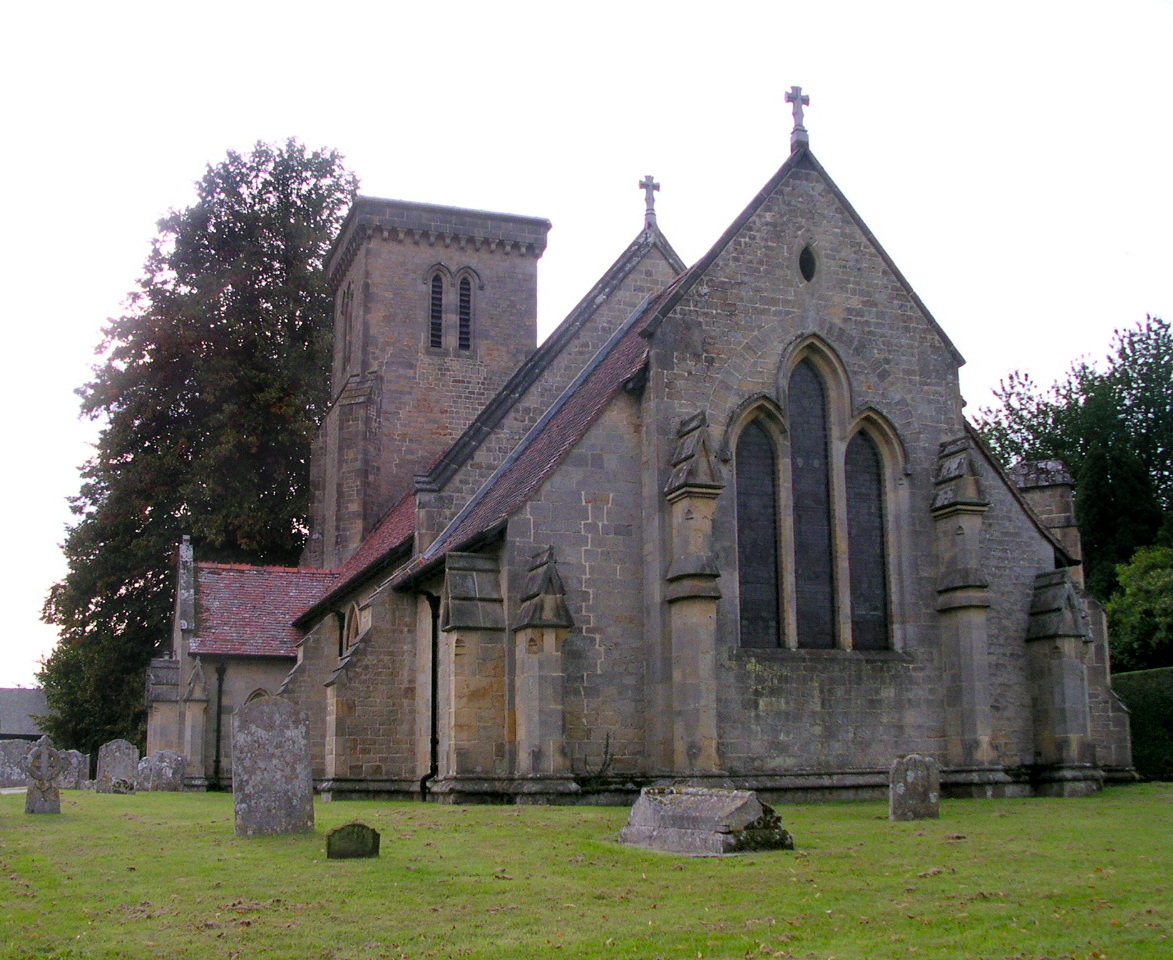
St Mary's Church, Iping,[1][7] is a solid sandstone Victorian church which was rebuilt in 1885. The church was built on the site of an old Saxon church and it is thought an even earlier church was on the site before this.

Commons

[edit]

Iping Common sits south of the A272 and is managed by the Sussex Wildlife Trust. This heathland is a Site of Special Scientific Interest and is part of the larger Iping and Stedham Commons.

References

[edit]
[edit]
Revisions and contributorsEdit on WikipediaRead on Wikipedia
from Grokipedia
Iping is a small village and former in the of , , now part of the civil parish of Stedham with Iping. Located on the River Rother approximately 2 miles (3.2 km) west of Midhurst and within the South Downs National Park, it covers an area historically recorded as 1,925 acres. The parish of Stedham with Iping had a population of 828 at the 2021 census. The village's name derives from the Saxon chief Ipa, reflecting its origins in the early medieval period. Archaeological indicates Roman occupation, including a probable mansio (a roadside or posting station) marked by banks, ditches, and a bank with rounded corners. By the 11th century, Iping featured a used for grinding , malting, fulling wool, sawing timber, and —the last such mill in until its destruction in 1925. The nearby Hammerwood area was a significant center for iron-making in the 16th and 17th centuries, powered by water hammers. Notable historic buildings include Fitzhall on Iping Common, constructed during the reign of by Sir John Bettesworth, and Iping House, built around 1800 by Admiral Sir Charles Hamilton, which later operated as a from 1939 to 1957. Iping gained literary prominence as the primary setting for much of ' 1897 science fiction novel , where the invisible protagonist Griffin takes refuge at the Coach and Horses inn, leading to chaotic events in the village. The story draws on the real location's rural isolation to contrast with urban , highlighting themes of community disruption and scientific . Today, Iping remains a rural settlement, valued for its natural beauty, walking trails like those through Iping Common and Hammer Wood, and proximity to the River Rother's scenic path.

Geography

Location and boundaries

Iping is a village in the of , , located at 50°59′55″N 0°47′09″W, with an grid reference of SU852228. The village lies approximately 2 miles (3.2 km) west of , positioned along the River Rother and close to the A272 road, which runs nearby to the south. This positioning places Iping within the , contributing to its rural character amid surrounding countryside. Historically, Iping formed its own covering 1,925 acres (779 hectares), but on 1 April 1974, it was abolished and merged with the neighboring parish of Stedham to create the larger of Stedham with Iping under the Local Government Act 1972. The current parish boundaries encompass both villages, along with hamlets such as Minsted and Iping Marsh, extending irregularly across 11 km² (2,671 acres or 4.2 square miles) and following natural features like the River Rother to the north and south. The village shares the postcode district GU29 with Midhurst and surrounding areas, facilitating postal services through the Midhurst . Additionally, Iping uses the dialling code 01730, which covers much of the Midhurst locality.

Topography and environment

Iping lies within the lowland heath landscape of the , a region characterized by undulating terrain formed by erosion of anticlinal structures, with the village situated along the valley of the River Rother, which meanders through sandy and pebbly deposits. The surrounding area features gently sloping ridges and better-drained higher ground interspersed with wetter low-lying zones, reaching a maximum elevation of approximately 62 meters above , providing panoramic views across the to the north and the to the south. Notable natural features include Hammer Wood, a 60-hectare expanse of mixed woodland and heath on a spur overlooking the Rother valley, contributing to the diverse mosaic of habitats in the vicinity. The environmental significance of Iping is highlighted by Iping and Stedham Commons, a 124.6-hectare lowland heathland designated as a (SSSI) since 1954 (revised 1980) for its exceptional . This habitat supports a rich array of , including , cross-leaved heath, and rare species such as bristle bent grass (Agrostis curtisii), the only known locality for this plant, alongside like Dartford warbler, , and silver-studded blue butterfly. The commons encompass dry and wet heath, acid grassland, bogs, mires, scrub, and open water bodies, forming one of the premier examples of this globally threatened in . Geologically, the area is underlain by Lower Greensand formations, including the Folkestone Beds (quartzose sands with pebbles and clay seams), Sandgate Beds (ferruginous loamy sands), and Hythe Beds (sands, sandstones, and chert), which overlie Clay in parts of the broader basin. These acidic, podzolic soils—thin and leached, with low nutrient content—foster the heathland while making the terrain prone to and . The region experiences a temperate maritime typical of , with mild winters and cool summers, and an average annual rainfall of approximately 800–900 mm, supporting the hydrological balance of wetlands and streams.

History

Etymology and early settlement

The name Iping originates from the Old English Īpingas, a patronymic formation denoting "the descendants or settlement associated with Ipa," where Ipa refers to a rare personal name attested in early medieval charters. This etymology aligns with broader patterns in Sussex place names ending in -ingas, which typically indicate tribal or familial groups linked to a founder figure during the Anglo-Saxon period. Historical spellings, such as Epinges in the Domesday Book of 1086, reflect the evolution from Old English to Middle English forms. Archaeological evidence for early human activity in Iping centers on prehistoric periods, with the earliest confirmed occupation dating to the era (circa 9600–4000 BCE). A key site on Iping Common, excavated in 1960–1961, revealed a concentration of flint artifacts—including cores, waste flakes, and tools with a Maglemosian affinity—within a stained sand layer beneath heathland peat, indicating seasonal use near marshes and springs. Pollen analysis from the site further supports an open woodland environment conducive to early activities. While no major (circa 2500–800 BCE) structures have been identified directly at Iping, the surrounding Rother Valley yields sparse but indicative finds, such as flint and stone tools, pointing to preliminary agrarian exploitation of the fertile lowlands for cultivation and . These artifacts suggest intermittent human presence transitioning from nomadic patterns toward more permanent by the late prehistoric period, around 500 BCE. This shift is contextualized by nearby evidence of organized settlement, including an at Hammer Wood overlooking the Rother.

Iron Age and Roman periods

The occupation of Iping is exemplified by a promontory hillfort located in Hammer Wood, situated on a natural spur overlooking the surrounding landscape. This fort, constructed between approximately 600 BCE and 100 BCE, features elaborate earthwork defenses that enclose an area of about 4 hectares in a roughly rectangular plan aligned southeast-northwest. The ramparts consist of earthen and rubble banks, some revetted with locally extracted ironstone slabs, with double defenses in places, particularly along the gentler sloping neck on the northeast side where parallel banks reach up to 11 meters wide; a single entrance provides access via a across the ditch. Excavations in 1957 revealed hearths associated with early ironworking activities within the interior, indicating the site's role as a defended settlement likely used for both habitation and resource exploitation in the Wealden region. Following the in 43 CE, a military or administrative station was established at Iping along the key Roman road connecting () to (), likely serving as a posting station or small fortlet (mansio) to facilitate travel and communication. The site, identified through in 1949, comprises a round-cornered rectangular measuring 86 meters by 112 meters, defined by a bank, internal ditch, and slight counterscarp bank. Archaeological evidence includes scatters of Samian ware and coarse pottery, alongside an undated Roman bronze coin, pointing to occupation from the later first century CE into the second or third century. This structure's position on the road underscores its strategic importance for logistics in the early , potentially supporting troop movements and official travel in the area. The Roman presence at Iping waned after the fourth century CE, coinciding with the broader imperial withdrawal from Britain around 410 CE, which led to the abandonment of such roadside stations and a return to localized, pre-Roman settlement patterns. Etymological evidence hints at cultural continuity from roots into later periods, though detailed linguistic analysis lies beyond this archaeological focus.

Medieval period

In 1086, Iping was recorded in the as "Epinges," situated in the hundred of Easebourne in , with a total of 15 households comprising 8 villagers, 2 smallholders, and 5 slaves. The manor featured 3 ploughlands supporting 1 lord's plough team and 2 men's plough teams, along with 3 acres of meadow, woodland capable of rendering 20 swine, and 1 mill valued at 3s 2d; its overall value stood at £4, unchanged from 1066 despite earlier fluctuations. Held by Aldred, brother of Bishop of , as tenant-in-chief under the king, the estate reflected a typical post-Conquest feudal holding with resources geared toward agrarian production. The manor of Iping evolved within the broader feudal framework of the Honour of Arundel, a major baronial estate encompassing numerous holdings surveyed in the early 14th and 15th centuries under the earls. By the reign of I (1272–1307), it belonged to Richard de Amundeville, passing in 1381 to Henry Hussee, Lord of Harting, through or grant, illustrating the transfer of lands via feudal tenure and alliances. A church was noted in the Domesday entry, pointing to pre-Conquest Saxon origins, likely as a simple wooden structure, which was subsequently rebuilt in stone after the to serve the growing parish community. Iping's medieval economy centered on , sustained by the fertile Rother valley soils that supported crop cultivation and , supplemented by the manor's for and the adjacent river for potential resource exploitation. The documented mill on the River Rother facilitated processing, while meadowlands provided hay for draft animals essential to ploughing; fisheries, common along rivers, likely contributed to local sustenance though not explicitly recorded in surviving surveys. This mixed agrarian system underscored Iping's role as a self-sufficient feudal vill within the , prioritizing stability over expansion until later medieval shifts.

Modern era

In the post-medieval period, Iping experienced gradual agricultural and industrial changes amid broader transformations in rural . The village's population reached a peak of 404 in 1861, reflecting modest growth driven by local milling and farming activities before stabilizing around 400 by 1931. A key development was the evolution of Iping Water Mill, which had operated since at least the but shifted to paper production by 1725, processing rags into newsprint supplied to publications like in the early . By the late , the mill specialized in , with upgrades around 1885 introducing new equipment for rag sorting, boiling, and pressing, enabling production in various weights and colors. However, operations ended abruptly when the mill was destroyed by fire in 1925, concluding nearly 900 years of milling on the site. The brought administrative consolidation, with the parishes of Iping and neighboring Stedham merging in 1959, followed by the formation of the of Stedham with Iping in 1974 to streamline local governance. In recent decades, preservation efforts have focused on Iping Common, designated a in 1954 and managed as part of the Iping and Stedham Commons by the Sussex Wildlife Trust since the , safeguarding lowland heathland habitats through and habitat management. Minor residential growth has occurred, but the area remains predominantly rural with limited development.

Administration and demographics

Governance and administrative history

Iping remained an independent within the Midhurst Rural District of until 1 April 1974, when it was amalgamated with the neighboring parish of Stedham to form the new of Stedham with Iping, as part of the broader local government reorganization mandated by the Local Government Act 1972. This act aimed to streamline administrative structures by consolidating smaller parishes and creating more efficient district councils, reducing the number of local authorities in . The merger reflected declining rural populations and the need for shared resources in administrative services, such as planning and community facilities. Prior to the 1974 amalgamation, Iping's ecclesiastical parish had merged with that of Stedham in , uniting church administration under a single while civil governance remained separate until the later changes. No significant civil boundary adjustments occurred in the interwar period that altered Iping's standalone status, maintaining its distinct administrative identity through the early 20th century. Today, Stedham with Iping operates under an elected parish council responsible for local matters including community events, maintenance of public spaces, and neighborhood planning within the . The parish falls within the Council, which handles district-level services such as housing and waste management, and is part of County Council for broader functions like education and transport. Representation on the Authority ensures coordination on environmental and planning policies affecting the area.

Population and demographics

The population of Iping has remained small and stable throughout its history, reflecting its rural character in . According to the of 1086, the settlement recorded 15 households, indicating a modest community centered on agricultural holdings. By the mid-19th century, the parish population had grown to 404 residents, supported by local industries such as milling and farming. In 1931, this figure stood at approximately 400, showing limited expansion over the preceding decades amid the agricultural focus of the area. Post-World War II, Iping's population experienced a slight decline, consistent with broader rural depopulation trends driven by and out-migration to larger towns. This stability, with minor reductions, aligns with patterns in similar English villages where younger residents often relocate for employment opportunities. The combined parish of Stedham with Iping, which encompasses Iping, reported a total of 828 residents in the 2021 Census, with Iping comprising a smaller portion of this figure. Demographically, the area features a high proportion of retirees, with 29% of the combined population aged 65 and over in , exceeding the national average of about 18%. The average age is estimated at 45-50 years, above the median of around 40, underscoring an aging community profile typical of rural . Ethnically, the population is predominantly , accounting for over 97% of residents in the Census, with minimal diversity reported.

Landmarks and sites

Parish church

The parish church of Iping is the Church of St Mary, an Anglican with roots tracing back to the medieval period, though it is believed to occupy the site of an earlier Saxon structure, possibly wooden, with no archaeological remains identified. The medieval church, documented in historical records, served as a central site for burials and religious events from at least the onward, with parish burial registers commencing in 1584 and continuing until 1853. Due to structural decay and shifts in local population influenced by agricultural changes and industrial developments like a nearby , the original medieval building was demolished and replaced in 1840 by a new structure designed by Thomas Greenshields of , featuring a prominent that incorporated a bell cast in 1616 by Roger Tapsil. This 1840 church proved short-lived; it was heavily rebuilt in 1885 by the Victorian architect E. P. Loftus Brock (also known as Loftus Brock) in a 13th-century Gothic style, scaled down to reflect declining parish numbers, with the south porch dated to that year. Architecturally, St Mary's exemplifies Victorian Gothic revival, constructed primarily from honey-colored Hythe sandstone sourced from Fittleworth Quarry, with a tiled roof and meticulous stonework that highlights its charm as a small country church. The layout includes a four-bay with north and south aisles, a , , and a three-stage retained from the 1840 build, featuring lancet windows, buttresses, and a machicolated . Interior elements blend periods: a Norman-style circular font, an 1885 roof with purlins and collar beams, original pews, and balustered railings; wall memorials include tablets from circa 1772 to Peter Betesworth and circa 1780 to Lucy Piggott, honoring local families, alongside later monuments. windows add to the artistry, with examples such as a 1901 installation by Curtis, Ward and Hughes in the south , depicting figures in predominantly dark tones against clear glass. A 13th-century slab bearing a fleur-de-lys motif is embedded in the east wall of the , linking to the site's longer heritage. As the Anglican parish church, St Mary's serves the united benefice of Stedham with Iping, formalized in 1959, and forms part of the broader Milland with Rake, and Linch with Iping Benefice since 2017, hosting services like Holy Communion and using the . It holds Grade II listed status for its special architectural and historic interest, recognized since 1998, and remains a focal point for community events including baptisms, weddings, and funerals, while its , framed by fine lime trees, enhances the village's serene riverside setting.

Iping Common

Iping Common forms part of the larger Iping and Stedham Commons, a 125-hectare lowland heathland designated as a (SSSI) in 1954 and revised in 1980, recognized for its exceptional and as one of the richest surviving examples of this habitat in . Managed jointly by and the Wildlife Trust, the area features a mosaic of dry heath dominated by heather and cross-leaved heath, interspersed with wet heath, acid grassland, and scattered pine woodland, supporting specialized flora and fauna adapted to nutrient-poor, acidic soils. It is home to rare species such as the sand lizard (Lacerta agilis), one of Britain's rarest reptiles that basks on sandy patches within the heath, and the ( europaeus), a cryptic bird that nests on the ground and is known for its churring calls at dusk. Other notable inhabitants include (Lullula arborea) and (Sylvia undata), alongside a diverse invertebrate assemblage featuring rare spiders and the unique bristle bent grass ( curtisii), the only locality for this plant. Historically, Iping Common has served as since , when it was primarily used for communal of such as sheep and by local manorial tenants, a practice that helped maintain the open heath through browsing and trampling while preventing woodland encroachment. This traditional management persisted into the , but by the mid-20th century, scrub invasion threatened the heathland, prompting its formal protection as an SSSI to preserve its ecological integrity. The designation in 1954 marked a shift toward active conservation, with ongoing efforts including by ponies and to mimic historical and sustain the habitat's mosaic structure. Public access to Iping Common is facilitated by an extensive network of permissive footpaths and bridleways, allowing visitors to explore the heath while adhering to guidelines that protect ground-nesting birds like nightjars. The site integrates with the national trail, providing recreational opportunities for walking and wildlife observation amid its gently undulating terrain. Biodiversity monitoring programs, coordinated by the Sussex Wildlife Trust and , involve regular surveys of reptile populations, bird breeding success, and vegetation condition to track conservation outcomes and inform adaptive management, such as controlled burns and invasive species removal. These initiatives have contributed to favorable condition assessments for much of the SSSI, with two of its three units rated as "unfavourable but recovering" as of 2013 inspections.

Iping Water Mill

The Iping Water Mill, located on the River Rother in , , originated as a water-powered milling site documented by 1665, when it housed a mill and mill under one roof, on the site of a former mill for cloth processing. While specific records of milling at Iping during the medieval period are scarce, the presence of the earlier infrastructure aligns with the widespread use of water mills for and textile processing in medieval Sussex, reflecting the region's early adoption of hydraulic power for agriculture and industry. By the early 18th century, around 1725, the mill was converted from grain processing to papermaking, marking a shift to industrial production that sustained operations for two centuries. Initially producing general paper, it transitioned in the 19th century to newsprint—supplying outlets like The Times—and later specialized in blotting paper by the 1880s, utilizing rags as the primary raw material sourced from domestic and international suppliers. This conversion exemplified broader 19th-century economic shifts toward specialized manufacturing in rural areas, driven by technological modernizations such as new boilers and rag-cutting machinery installed by the 1910s. The mill's operations employed local workers, including women in the rag-loft for sorting and cutting materials, until a devastating fire on 11 March 1925 destroyed the facility, ending papermaking there. The mill was powered by the River Rother, with water diverted through a weir system and mill races to drive the machinery, situated on a small island west of Iping Bridge for optimal flow. Key features included two weirs, processing buildings with steaming and boiling apparatus for rag disinfection, large drying sheds, a rag-loft on the south side, and ancillary structures like a cart house and stable, covering about 1.17 acres. Post-1925 fire, physical remnants are minimal, though elements of the mill race and weir infrastructure persist as subtle landscape features along the river, integrated into the modern Rother Valley. As an emblem of early industrial activity in rural , the Iping Water Mill highlights the transition from agrarian milling to specialized , contributing to Britain's expansive 19th-century paper industry amid over 300 operational mills nationwide. Its history also underscores risks in industrial settings, such as the 1883 smallpox outbreak traced to contaminated rags, which infected 19 people and caused five deaths but was contained through and isolation.

Cultural references

In literature

Iping serves as a central setting in ' 1897 science fiction novel , where the story's protagonist, Griffin, a who has rendered himself invisible, arrives seeking seclusion during a snowstorm. The village, depicted as a quiet rural hamlet in , becomes the backdrop for Griffin's disruptive presence at the Coach and Horses inn, run by the Halls, highlighting the intrusion of advanced science into everyday life. In the narrative, Iping's communal atmosphere is shattered by a series of escalating incidents, including Griffin's of the vicarage to fund his experiments and his eventual violent unveiling, which sparks widespread panic and chases through the village. These events, occurring primarily in chapters 1 through 10, underscore as villagers, initially curious about the bandaged stranger, turn to superstition and collective action against the unseen threat. Wells uses these scenes to illustrate the vulnerability of rural traditions to unchecked scientific ambition. Symbolically, Iping represents the and interconnectedness of pre-industrial English village life, contrasting sharply with Griffin's urban isolation and the novel's broader themes of scientific . The villagers' gossip, mutual support, and resistance embody a grounded that Griffin, as an "invisible" outsider, both envies and destroys, critiquing the alienation bred by modernity. This duality draws from Wells' own familiarity with landscapes, where he resided and observed rural-urban tensions during the 1890s. Beyond Wells' work, Iping receives passing mentions in local histories and Wells biographies as a real village that inspired the novel's fictionalized portrayal, emphasizing its role in evoking authentic English countryside motifs in early .

Community and modern life

Iping, as part of the Stedham with Iping parish, functions primarily as a commuter village, with approximately two-thirds of employed residents traveling more than five miles to work and about 25% commuting to via nearby rail links at . The local relies on tourism drawn by the National Park's natural beauty and attractions like Iping and Stedham Commons, which support visitor activities such as walking and . remains active through farms engaged in , arable, and equestrian operations, though has reduced employment in the sector. Small businesses, including home-based , a garden nursery, and a garage, contribute to the ; as of , around 40% of residents worked from , and there are no major industries following the decline of historical milling. The parish population was 828 at the 2021 . Community facilities center on the Stedham Memorial Hall, which hosts parish meetings, fitness classes, a monthly lunch club, and events like nights and showings, serving residents from Iping due to its shared parish ties. The Hamilton Arms pub in Stedham provides a social hub with . Additional gatherings include sports activities on the recreation ground, such as and organized by the voluntary Stedham Sports Association, and an annual plant sale by local gardening groups. Residents often access broader services in nearby Stedham, including the and churches like St Mary's in Iping. Modern life in Iping emphasizes and , with opportunities through the Wildlife Trust's management of Iping and Stedham Commons, a Local Nature Reserve where locals participate in for rare lowland heath species. Walking groups utilize extensive public rights of way, including segments of the Serpent Trail and planned circular paths, promoting community health amid the parish's 308 acres of protected heathland. The status imposes strict development controls to preserve rural character, biodiversity, and , limiting new builds to small-scale, low-impact projects that maintain tranquility. Local plans highlight gaps in youth amenities, with existing play equipment at nearby fields supplemented by proposals for a and ongoing youth club activities to address limited options for younger residents.

References

Add your contribution
Related Hubs
User Avatar
No comments yet.