


Community hub
Recent from talks
Contribute something
Nothing was collected or created yet.
Ischoklad
View on Wikipedia | |
| Type | Confectionery, candy |
|---|---|
| Place of origin | Germany |
| Main ingredients | Chocolate, coconut oil |

Ischoklad ("Ice chocolate"; Eiskonfekt in German, which is also translated as Ice Confectionery) is a candy originating in Germany which is now popular in Germany and Sweden.
History
[edit]Ischoklad was invented in 1927 by the confectioner Adam Eichelmann.[1] It is usually made using only chocolate (one-half to two-thirds) and coconut oil (one-third to one-half).[2]
The reference to ice in the name relates to the fact that it melts very easily in the mouth and is perceived to have a cooling effect as the heat energy is absorbed. This effect is due to the melting point of coconut oil lying between 20 and 23 degrees Celsius, around 10 degrees lower than chocolate. In some recipes, menthol is added, and in industrial production, glucose is sometimes added, which both increase the cooling sensation. Ischoklad is a popular Swedish Christmas treat. In Germany, the largest producer of Eiskonfekt is Eichetti.
References
[edit]- ^ "Schoko-Träume im Schlaraffenland. In: Main Post. 29. November 2005".[permanent dead link]
- ^ "Nugat, Trüffel und Eiskonfekt - Bundesverband der Deutschen Süßwarenindustrie". www.bdsi.de. Retrieved 2022-05-19.
 | This confectionery-related article is a stub. You can help Wikipedia by adding missing information. |
Further reading
[edit]- Thomas Vilgis: Eiskonfekt – Physics meets Physiology. in: Physik in unserer Zeit, 3/2009 (40), p. 162
External links
[edit]- Recipe (in Swedish)
 | This Swedish cuisine-related article is a stub. You can help Wikipedia by adding missing information. |
 | This German cuisine-related article is a stub. You can help Wikipedia by adding missing information. |
Ischoklad
View on GrokipediaOverview
Definition and Etymology
Ischoklad is a confectionery treat composed primarily of chocolate and coconut oil, designed to dissolve swiftly in the mouth for a soft, melt-in-your-mouth experience that evokes a cooling sensation.[4][5] This rapid melting distinguishes it from traditional chocolates, as the high fat content from the coconut oil lowers the melting point, allowing it to liquefy at body temperature almost immediately.[6][7] The name "Ischoklad" is derived from Swedish, where "is" translates to "ice" and "choklad" to "chocolate," aptly capturing the icy, fleeting melt on the tongue despite the absence of actual ice in its composition.[4][8] In Swedish pronunciation, it is rendered as ish-SHOCK-lahd (/ˈɪʂuːˌɕuːlɑːd/).[9] The German counterpart, "Eiskonfekt," follows a similar linguistic pattern, combining "Eis" (ice) and "Konfekt" (confectionery) to denote an ice-like sweet.[10][11] This confection holds particular prominence as a festive treat during Swedish Christmas celebrations, often prepared at home for seasonal enjoyment.[4][7]Physical Characteristics
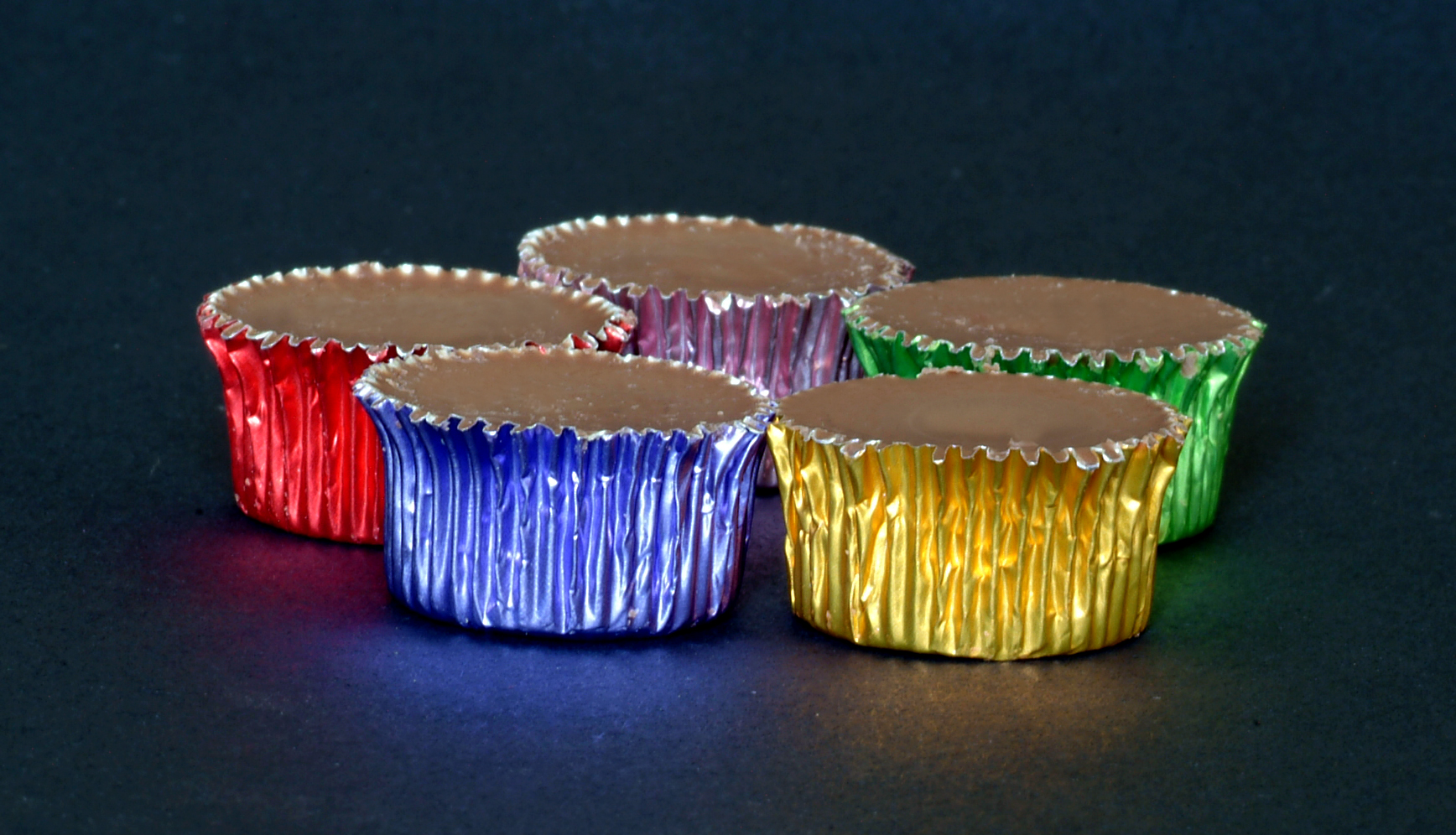
Ischoklad exhibits a distinctive soft and creamy texture, primarily resulting from its high coconut fat content, which causes it to firm up when chilled but soften and melt rapidly at room temperature, often described as dissolving like ice in the mouth.[2][3][5] In appearance, Ischoklad is typically presented as small, praline-sized pieces molded into foil-lined cups or capsules that provide a colorful and decorative display, with a smooth, glossy surface achieved through the emulsion of chocolate and fat.[2][3][7] The taste profile features a rich chocolate flavor, often from dark or milk varieties, balanced by the neutral or subtly nutty notes of coconut fat, resulting in a clean, non-cloying finish with a characteristic cooling sensation on the tongue due to the fat's melting properties.[2][5][7] Due to its high fat content and low melting point, Ischoklad has a limited shelf life at ambient temperatures and is best stored in an airtight container in the refrigerator for up to 2-3 months to prevent softening, though it should be served chilled to maintain its structure and avoid condensation issues upon serving.[5][7][2]Ingredients and Preparation
Primary Ingredients
The primary ingredients for traditional Ischoklad are high-quality chocolate and a solid fat, typically combined in a 2:1 ratio by weight for an optimal balance of structure and meltability.[12][13] The chocolate, often dark with at least 70% cocoa content but adaptable to milk or white varieties, serves as the foundational element, delivering the rich flavor profile and providing the necessary solidity to hold the confection's shape once set.[14][15] In a standard recipe yielding approximately 30-50 pieces depending on mold size, 200 grams of chocolate is used.[12] The solid fat component, traditionally coconut fat (kokosfett in Swedish), amounts to 100 grams and functions to lower the overall melting point of the mixture—around 20–24°C—resulting in a creamy texture that dissolves quickly on the tongue without excessive sweetness.[5][16] While butter can substitute for coconut fat in some preparations, the authentic version relies on food-grade coconut fat, sourced as solid blocks from the refrigerated sections of Swedish supermarkets to ensure a neutral base that enhances rather than overwhelms the chocolate's taste.[17][18] Substitutes like vegetable oils are avoided, as they can compromise the desired firm-yet-meltable consistency.[5] This combination briefly contributes to the signature "ice-like" dissolution noted in its physical properties.Step-by-Step Preparation
To prepare Ischoklad at home, begin by gathering the primary ingredients of coconut fat and dark chocolate, typically in a ratio of about 100 grams of coconut fat to 200 grams of dark chocolate for a standard batch.[19][14] The melting process starts with gently heating the coconut fat in a saucepan over low heat or using a double boiler to prevent scorching or separation.[19][14] Break the chocolate into small pieces and add it to the melted fat, stirring continuously with a spatula until the mixture is completely smooth and fully combined, which usually takes 5-10 minutes.[19][5] Overheating the mixture can cause the chocolate to become grainy or seize, so maintain a low temperature throughout.[6][14] Once smooth, remove from heat and carefully pour the mixture into small aluminum foil cups, candy molds, or mini muffin liners arranged on a tray, filling each about three-quarters full to allow for slight expansion during setting.[19][7] Under-mixing prior to pouring may result in an uneven texture, so ensure thorough incorporation before proceeding.[20] Allow the Ischoklad to set at room temperature for 30-60 minutes or in the refrigerator for 15-30 minutes until firm, avoiding direct freezing to preserve the creamy consistency.[19][5] The entire preparation typically takes 10-15 minutes of active time and yields approximately 30-50 pieces, depending on mold size.[7][20]Variations
Flavor Variations
Ischoklad can be adapted by selecting different types of chocolate to alter its taste profile while preserving the confection's signature creamy melt. Dark chocolate provides an intense, bittersweet flavor that balances the richness of the coconut fat base. Milk chocolate offers a sweeter, more approachable taste, making it suitable for those preferring a milder indulgence. White chocolate yields a subtler, creamier variation with less cocoa intensity, often enhancing delicate pairings.[17] Subtle flavor infusions are incorporated during the melting process to complement the chocolate without overpowering the core composition. Essences such as rum or cognac add a sophisticated, boozy note for adult-oriented versions. Cinnamon introduces a warm, spiced dimension, blended in after melting for even distribution. Citrus elements like lime juice or orange zest infuse a fresh, tangy undertone, particularly effective in white chocolate iterations. Peppermint extract delivers a cool, minty essence, evoking holiday refreshment.[14][21][22] A common ratio of 2:1 chocolate to coconut fat is used in many recipes, which can be fine-tuned slightly for texture preferences, such as increasing the fat marginally for a softer melt or reducing it for greater firmness, though deviations remain minimal to retain the treat's icy consistency.[17] In recent years, vegan adaptations have gained popularity by substituting dairy-free, plant-based chocolate, ensuring the confection remains accessible for dietary restrictions while maintaining its traditional appeal.[23] Commercial variations, particularly in Germany as Eiskonfekt, often include fillings such as nougat and flavored options like strawberry, sold in small pieces up to 20 grams.[1]Toppings and Garnishes
Toppings and garnishes play a key role in customizing ischoklad, providing aesthetic enhancement and textural contrast to the smooth, creamy base. Common options include chopped almonds or hazelnuts for a nutty crunch, crushed peppermint candies to evoke holiday festivity, and grated lime zest for a subtle citrus note. Other popular choices are flaked sea salt or Himalayan salt for a savory pop, dried fruits such as cranberries or raisins for chewiness, and freeze-dried raspberries for tartness and color.[17][24][25] These additions are typically applied immediately after the melted chocolate mixture is poured into molds, while the surface remains soft and tacky to promote adhesion. For instance, chopped nuts or crushed candies are sprinkled evenly over the top, and finer elements like zest or salt are distributed lightly to avoid overpowering the confection. This step occurs just before chilling in the refrigerator, allowing the garnishes to set firmly without sinking into the mixture.[17][24] For thematic presentations, especially during Christmas, garnishes like crushed Turkish pepper or peppermint candies align with Swedish holiday motifs, adding vibrant color and seasonal flair without altering the core melt-in-the-mouth texture of the ischoklad. Such decorations elevate the visual appeal, making the treats suitable for gifting or festive displays.[17][24]Cultural Significance
Role in Swedish Christmas Traditions
Ischoklad serves as a cherished staple in Swedish Christmas traditions, particularly as a homemade sweet integral to the holiday festivities. Prepared during the Advent season leading up to Christmas, it forms part of the array of julgodis, or Christmas candies, that adorn the julbord, the traditional Christmas table spread enjoyed on Christmas Eve.[3][26] The creation of ischoklad is a hands-on activity often undertaken in homes across Sweden, where families melt chocolate and coconut oil to pour the mixture into tiny, colorful paper cases, allowing it to set into bite-sized pralines. This process highlights its role in fostering communal bonding, as loved ones gather to produce batches of these treats, evoking the warmth of holiday preparation amid the winter chill.[3][26] Beyond the dinner table, ischoklad is shared at family gatherings and events such as Lucia celebrations on December 13, or packaged as thoughtful gifts in small containers to spread seasonal cheer. Its melt-in-the-mouth quality, reminiscent of ice despite the cozy context, symbolizes simple joy and nostalgic comfort in Swedish winter holidays. In modern practice, while commercial varieties appear in supermarkets during December, the homemade tradition endures, prized for its personal touch and connection to cultural heritage.[26][3]Presence in German Confectionery
In Germany, Eiskonfekt, the counterpart to Swedish Ischoklad, is enjoyed year-round as a simple, chilled confection rather than being confined to seasonal occasions. It is readily available in major supermarkets such as REWE, Kaufland, and Aldi, where it is stocked in the sweets aisle for everyday consumption, often in 200g or 400g packages of individually wrapped cubes or capsules.[27][28][29] This accessibility positions it as a convenient treat for casual snacking, distinct from more elaborate holiday desserts. The confection holds a notable presence in northern and western Germany, where brands like Moritz maintain facilities in Kempen, North Rhine-Westphalia, facilitating widespread distribution in these regions, often sold in bulk packs or as small, bite-sized pieces akin to petit fours in local confectioneries.[30][31] Regional bakeries and specialty shops in the north frequently offer it alongside coffee, emphasizing its role in daily rituals like afternoon breaks (Kaffeepausen).[2] Commercially, Eiskonfekt has been produced on a large scale since the mid-20th century, with Moritz establishing itself as a leading brand in 1936 through innovative formulations that achieve a cooling melt-in-the-mouth effect via high coconut fat content. Other producers, such as Eichetti, offer variations in similar formats, ensuring steady market presence without strong ties to Christmas, instead promoting it for versatile, non-seasonal indulgence.[30][2][32]History
Origins in Germany
Ischoklad, known in Germany as Eiskonfekt, originated in the 1920s amid the economic challenges following World War I. During this time, essential foodstuffs were scarce, and luxury items like high-quality chocolate were particularly expensive and limited in supply. To produce an affordable chocolate substitute, German confectioners turned to imported coconut fat, which was more economical and readily available, allowing for the creation of a confection that softened at room temperature without requiring expensive cocoa butter.[33] The specific invention of Eiskonfekt is credited to Adam Eichelmann, a confectioner based in Werneck, Bavaria. In 1927, Eichelmann developed the treat by emulsifying chocolate with a significant proportion of coconut fat, resulting in small, cube-shaped pieces that mimicked chocolate but featured a distinctive cooling melt in the mouth. Eichelmann, who had established his company in 1897 for pasta and later expanded into baking powder and confectionery, set up the first industrial production facility for Eiskonfekt in Werneck, marking a shift toward scalable manufacturing of this novel sweet.[34][35][36] Eiskonfekt's initial popularity stemmed from its simplicity: it was quick to prepare in small batches and easy to store in cool conditions, making it an accessible indulgence for households and confectioneries during Germany's economic recovery in the late 1920s. This economical treat provided a sense of luxury without the cost of traditional chocolate, appealing to a broad audience in the Weimar era.[33]Popularization in Sweden
Ischoklad was introduced to Sweden from Germany in the late 1920s, with the term entering the Swedish lexicon in 1929 as a direct adaptation of the original German "Eiskonfekt" to align with local linguistic conventions.[37] This renaming facilitated its integration into Swedish culinary culture, where it began appearing as a simple homemade confection made from chocolate and coconut fat. In the post-World War II era, particularly during the 1950s economic expansion that boosted household affluence and home cooking, ischoklad saw a surge in popularity as an accessible Christmas treat. Recipes emphasizing its straightforward preparation were promoted in consumer publications, encouraging widespread adoption among families. In response to contemporary dietary trends, recent decades have seen a revival of ischoklad in vegan formulations, substituting dairy-free chocolate while retaining the classic coconut fat base to meet plant-based preferences.[38]References
- https://en.wiktionary.org/wiki/ischoklad