Hubbry Logo
PeppermintPeppermintMain
Open search
Peppermint
Community hub
Peppermint
logo
8 pages, 0 posts
0 subscribers
Be the first to start a discussion here.
Peppermint
Peppermint
from Wikipedia

Peppermint
Scientific classification Edit this classification
Kingdom: Plantae
Clade: Tracheophytes
Clade: Angiosperms
Clade: Eudicots
Clade: Asterids
Order: Lamiales
Family: Lamiaceae
Genus: Mentha
Species:
M. × piperita
Binomial name
Mentha × piperita
Synonyms
List
  • Mentha × odora Salisb.
  • Mentha × balsamea Willd.
  • Mentha × banatica Heinr.Braun
  • Mentha × braousiana Pérard
  • Mentha × concinna Pérard
  • Mentha × crispula Wender.
  • Mentha × durandoana Malinv. ex Batt.
  • Mentha × exaltata Heinr.Braun
  • Mentha × fraseri Druce
  • Mentha × glabra Bellardi ex Colla
  • Mentha × glabrata Vahl
  • Mentha × hercynica Röhl.
  • Mentha × heuffelii Heinr.Braun
  • Mentha × hircina Hull
  • Mentha × hircina J.Fraser
  • Mentha × hirtescens Haw. ex Spach
  • Mentha × hortensis Ten.
  • Mentha hortensis var. citrata Ten.
  • Mentha × hudsoniana Heinr.Braun
  • Mentha × kahirina Forssk.
  • Mentha × langii Geiger ex T.Nees
  • Mentha × napolitana Ten.
  • Mentha × nigricans Mill.
  • Mentha × officinalis Hull
  • Mentha × pimentum Nees ex Bluff & Fingerh.
  • Mentha × piperoides Malinv.
  • Mentha × schultzii Boutigny ex F.W.Schultz
  • Mentha × tenuis Frank ex Benth.

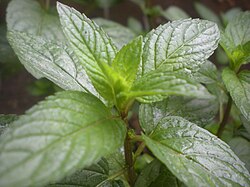
Peppermint (Mentha × piperita) is a hybrid species of mint, a cross between watermint and spearmint.[1] Indigenous to Europe and the Middle East,[2] the plant is now widely spread and cultivated in many regions of the world.[3] It is occasionally found in the wild with its parent species.[3][4]

Although the genus Mentha comprises more than 25 species, the one in most common use is peppermint.[5] While Western peppermint is derived from Mentha × piperita, Chinese peppermint, or bohe, is derived from the fresh leaves of M. haplocalyx.[6][7][8] M. × piperita and M. haplocalyx are both recognised as plant sources of menthol and menthone, and are among the oldest herbs used for both culinary and medicinal products.[5][9]

Botany

[edit]
Peppermint flowers
An 1887 illustration from Köhlers; Medicinal Plants

Peppermint was first identified in Hertfordshire, England, by a Dr. Eales, a discovery which John Ray published 1696 in the second edition of his book Synopsis Methodica Stirpium Britannicarum. He initially gave it the name Mentha spicis brevioribus et habitioribus, foliis Mentha fusca, sapore fervido piperis and later in his 1704 volume Historia Plantarum he called it Mentha palustris or Peper–Mint. The plant was then added to the London Pharmacopoeia under the name Mentha piperitis sapore in 1721.[10][11][12][13]

It was given the name Mentha piperita in 1753 by Carl Linnaeus in his Species Plantarum Volume 2.[14] Linnaeus treated peppermint as a species, but it is now agreed to be a hybrid between Mentha aquatica and Mentha spicata,[15] with M. spicata itself also being considered by some authors to be a hybrid between Mentha longifolia and Mentha suaveolens.[16]

Peppermint is a herbaceous, rhizomatous, perennial plant that grows to be 30–90 cm (12–35 in) tall, with smooth stems, square in cross section. The rhizomes are wide-spreading and fleshy, and bear fibrous roots. The leaves can be 4–9 cm (1.6–3.5 in) long and 1.5–4 cm (0.59–1.57 in) broad. They are dark green with reddish veins, with an acute apex and coarsely toothed margins. The leaves and stems are usually slightly fuzzy. The flowers are purple, 6–8 mm (0.24–0.31 in) long, with a four-lobed corolla about 5 mm (0.20 in) diameter; they are produced in whorls (verticillasters) around the stem, forming thick, blunt spikes. Flowering season lasts from mid- to late summer.[17][18] The chromosome number is variable, with 2n counts of 66, 72, 84, and 120 recorded.[19] Peppermint is a fast-growing plant, spreading quickly once it has sprouted.

Ecology

[edit]

Peppermint typically occurs in moist habitats, including stream sides and drainage ditches. Being a hybrid, it is usually sterile, producing no seeds and reproducing only vegetatively, spreading by its runners.[4][18]

Outside of its native range, areas where peppermint was formerly grown for oil often have an abundance of feral plants, and it is considered invasive in Australia, the Galápagos Islands, New Zealand,[20] and the United States[21] in the Great Lakes region, noted since 1843.[22]

Cultivation

[edit]

Peppermint generally grows best in moist, shaded locations, and expands by underground rhizomes. Young shoots are taken from old stocks and dibbled into the ground about 0.5 m (1.5 ft) apart. They grow quickly and cover the ground with runners if it is permanently moist. For the home gardener, it is often grown in containers to restrict rapid spreading. It grows best with a good supply of water, without being waterlogged, and planted in areas with partial sun to shade.

The leaves and flowering tops are used; they are collected as soon as the flowers begin to open and can be dried. The wild form of the plant is less suitable for this purpose, with cultivated plants having been selected for more and better oil content. They may be allowed to lie and wilt a little before distillation, or they may be taken directly to the still.

Cultivars

[edit]

Several cultivars have been selected for garden use:

  • Mentha × piperita 'Candymint' has reddish stems.[23]
  • Mentha × piperita 'Chocolate Mint'. Its flowers open from the bottom up; its flavour is reminiscent of the flavour in Andes Chocolate Mints, a popular confection.[24][25][26]
  • Mentha × piperita 'Citrata' includes a number of varieties including Eau de Cologne mint,[27] grapefruit mint, lemon mint,[28] and orange mint. Its leaves are aromatic and hairless.
  • Mentha × piperita 'Crispa' has wrinkled leaves.[29]
  • Mentha × piperita 'Lavender Mint'[30]
  • Mentha × piperita 'Lime Mint' has lime-scented foliage.[31][32]
  • Mentha × piperita 'Variegata' has mottled green and pale yellow leaves.[33]

Commercial cultivars may include:

Diseases

[edit]

Verticillium wilt is a major constraint in peppermint cultivation. 'Todd's Mitcham', 'Refined Murray', 'Roberts Mitcham' (see above), and a few other cultivars have some degree of resistance.[36]

Peppermint production
2022, in tonnes
 Morocco 42,898
 Argentina 6,977
 Mexico 1,173
World 51,081
Source: FAOSTAT of the United Nations[37]

Production

[edit]

In 2022, world production of peppermint was 51,081 tonnes, led by Morocco with 84% of the total and Argentina with 14% (table).

In the United States, Oregon and Washington produce most of the country's peppermint,[38] the leaves of which are processed for the essential oil to produce flavourings mainly for chewing gum and toothpaste.[39]

Chemical constituents

[edit]

Peppermint has a high menthol content.[40] Dried peppermint typically has 0.3–0.4% of volatile oil containing menthol (7–48%), menthone (20–46%), menthyl acetate (3–10%), menthofuran (1–17%), and 1,8-cineol (3–6%).[41]

Peppermint contains terpenoids and flavonoids such as eriocitrin, hesperidin, and kaempferol 7-O-rutinoside.[42]

Oil

[edit]

Peppermint oil has a high concentration of natural pesticides, mainly pulegone (found mainly in "M. arvensis var. piperascens" [= Mentha canadensis[43]],[44] and to a lesser extent (6,530 ppm) in Mentha × piperita[45]) and menthone.[46] It is known to repel some pest insects, including mosquitos,[47][48][49] and has uses in organic gardening[citation needed]. It is also widely used to repel rodents.[citation needed]

The chemical composition of the essential oil from Mentha × piperita was analysed by GC/FID and GC-MS. The main constituents were menthol (40.7%) and menthone (23.4%). Further components are 1,8-cineole (5.3%), (+/-)-Menthyl acetate (4.2%), iso-Menthone (3.7%), Menthofurane (3.7%), neo-Menthol (3.2%), Limonene (2.6%), Pulegone (1.9%), β-Caryophyllene (1.7%), β-Pinene (1.1%), Germacrene D (0.9%), α-Pinene (0.7%), and Piperitone (0.6%). Peppermint oil also contains smaller amounts of many additional compounds [50][51]

Research and health effects

[edit]
Peppermint throat lozenge, advertised as "prevention better than cure", sold in London in 1877

Peppermint oil is under preliminary research for its potential as a short-term treatment for irritable bowel syndrome.[52][53][54] High oral doses of peppermint oil (500 mg) can cause mucosal irritation and mimic heartburn.[55][56]

Peppermint oil and leaves have a cooling effect when used topically for muscle pain, nerve pain, relief from itching, or as a fragrance.[55][56]

Peppermint oil had supposed uses in ancient traditional medicine for minor gastrointestinal diseases.[55]

Culinary and other uses

[edit]

Fresh or dried peppermint leaves are often used alone in peppermint tea or with other herbs in herbal teas (tisanes, infusions). Peppermint is used for flavouring ice cream, candy, fruit preserves, alcoholic beverages, chewing gum, toothpaste, and some shampoos, soaps, and skin care products.[38][39]

Menthol activates cold-sensitive TRPM8 receptors in the skin and mucosal tissues, and is the primary source of the cooling sensation that follows the topical application of peppermint oil.[57]

Peppermint oil is also used in construction and plumbing to test for the tightness of pipes and disclose leaks by its odour.[58]

Safety

[edit]

Medicinal uses of peppermint have not been approved as effective or safe by the US Food and Drug Administration.[59] With caution that the concentration of the peppermint constituent pulegone should not exceed 1% (140 mg), peppermint preparations are considered safe by the European Medicines Agency when used in topical formulations for adult subjects.[60][61] Diluted peppermint essential oil is safe for oral intake when only a few drops are used.[55][60]

Although peppermint is commonly available as a herbal supplement, no established, consistent manufacturing standards exist for it, and some peppermint products may be contaminated with toxic metals or other substituted compounds.[59] Skin rashes, irritation, or allergic reactions may result from applying peppermint oil to the skin,[59] and its use on the face or chest of young children may cause side effects if the oil menthol is inhaled.[55][60] A common side effect from oral intake of peppermint oil or capsules is heartburn.[59] Oral use of peppermint products may have adverse effects when used with iron supplements, cyclosporine, medicines for heart conditions or high blood pressure, or medicines to decrease stomach acid.[59]

Standards

[edit]
  • ISO 676:1995—contains the information about the nomenclature of the variety and cultivars[62]
  • ISO 5563:1984—a specification for its dried leaves of Mentha piperita Linnaeus[63]
  • Peppermint oil—ISO 856:2006[64]

See also

[edit]

References

[edit]
[edit]
Revisions and contributorsEdit on WikipediaRead on Wikipedia
from Grokipedia
Peppermint ( × piperita) is a hybrid species of in the mint family , formed by the natural cross-pollination of watermint () and (). It is a herbaceous rhizomatous characterized by square stems, dark green lanceolate leaves, and small flowers arranged in dense whorls, typically growing 30–90 cm (12–35 inches) tall with a spreading habit via underground runners. Native to the Mediterranean region of and the , peppermint has been naturalized and cultivated worldwide, including in , , and , where it thrives in moist, well-drained soils and temperate climates. The is renowned for its , extracted from the leaves and flowering tops through , which contains high levels of (30–55%) responsible for its characteristic cooling, minty aroma and flavor. Peppermint has a rich history of human use dating back to ancient civilizations, with evidence of cultivation in as early as 1550 BCE for medicinal and ritual purposes, and mentions in Greek, Roman, and biblical texts for treating digestive ailments and as a agent. By the medieval period, it appeared in European traditions, and its commercial cultivation began in in the late , spreading to the by the , which has become the world's leading producer with states such as and among the top. Today, peppermint is one of the most economically important crops globally, with the producing over 70% of the world's supply (as of 2024), primarily for use in food , pharmaceuticals, and cosmetics. In culinary applications, peppermint serves as a key flavoring in products such as teas, candies, , and toothpastes, accounting for about 55% of its use in the due to its refreshing taste and digestive aid properties. Medicinally, it has been employed for centuries to alleviate gastrointestinal issues, and modern research supports its efficacy; for instance, enteric-coated peppermint oil capsules have been shown to reduce symptoms of (IBS), including , in clinical trials involving over 1,000 participants. Inhaled peppermint oil also demonstrates benefits in mitigating chemotherapy-induced based on reviews of studies with hundreds of patients. Additionally, the plant's extracts exhibit , , and activities, making them valuable in for skincare and oral care products, as well as in potential pharmaceutical developments for conditions like inflammation and microbial infections. Despite its benefits, peppermint oil should be used cautiously, particularly in topical applications on sensitive areas or in children, due to possible side effects like allergic reactions or .

Taxonomy and Description

Botanical Characteristics

Peppermint (Mentha × piperita) is a sterile hybrid species resulting from the natural cross-pollination between watermint () and (Mentha spicata), first documented in cultivation during the late in . As a member of the family, it exhibits the typical mint characteristics but is distinguished by its vigorous growth and inability to produce viable seeds due to its hybrid nature. This typically grows to a height of 30–90 cm, with square, upright stems that are often glabrous or lightly glandular-hairy. The leaves are opposite, lanceolate to ovate, measuring 5–9 cm in length and 1.5–4 cm wide, with dark green coloration, serrated margins, and an acute to acuminate tip; the undersides feature prominent glandular dots that secrete essential oils. In mid-to-late summer, it produces dense terminal spikes of small flowers, each about 4–6 mm long, with pale purple to pinkish corollas arranged in whorls around the stem; these blooms are attractive to pollinators but rarely set . Peppermint displays a rhizomatous growth habit, with wide-spreading, fleshy that produce fibrous and enable rapid vegetative , often forming extensive patches. The plant emits a strong, characteristic aromatic scent from its volatile oils, and its leaves impart a cooling sensation upon tasting due to the presence of .

Taxonomy and

Peppermint is classified within the family , subfamily , and genus , placing it among the aromatic herbaceous plants known for their essential oils. The species is a sterile hybrid, denoted by the multiplication sign () in its , arising from the natural cross between Mentha aquatica L. (watermint) and Mentha spicata L. (), with no independent wild progenitors beyond these parent species. Due to its sterility, Mentha × piperita does not produce viable seeds and is exclusively propagated vegetatively through rhizomes, stolons, or cuttings, ensuring clonal reproduction in cultivation and natural spread. The accepted binomial name, Mentha × piperita L., was formally described by Carl Linnaeus in his seminal work Species Plantarum in 1753, establishing it as a distinct entity within the mint genus. The genus name Mentha originates from Greek mythology, referring to Menthe (or Mintha), a nymph transformed into the mint plant by Persephone out of jealousy, a legend recorded in ancient texts by Ovid and others. The specific epithet piperita derives from the Latin word piper (pepper), alluding to the plant's pungent, spicy flavor and aroma, which distinguishes it from other mints. Several heterotypic synonyms have been proposed for × piperita over time, reflecting taxonomic revisions and historical misidentifications, including Mentha × balsamea Willd. and var. langii Geiger ex T. Durand. The name Mentha citrata Ehrh. is a non-accepted synonym sometimes associated with peppermint-like hybrids but now recognized as pertaining to a variety of M. aquatica with citrus notes, rather than true peppermint. Historically, common names such as "English mint" and "lamb mint" have been used in European herbal traditions to refer to this plant, emphasizing its regional cultivation and mild, lamb-associated culinary uses before the standardized term "peppermint" prevailed.

Ecology and Distribution

Natural Habitat

Peppermint ( × piperita), a sterile hybrid originating from the cross between watermint () and (), is native to and the . In its natural range, it thrives in temperate climates, tolerating USDA hardiness zones 3 through 11, though it prefers cooler conditions within this spectrum. Its rhizomatous growth habit, which allows extensive underground spreading, contributes to its adaptation in these wild settings. The plant favors moist, well-drained soils with a slightly acidic to neutral of 6.0–7.0, occurring in partial shade to full sun. It is commonly found in damp ecosystems such as banks, wet meadows, and waste grounds, where it forms dense patches in disturbed, riparian, or low-lying areas. Due to its aggressive production, peppermint exhibits invasive potential in wet habitats, rapidly colonizing and outcompeting native vegetation. Ecologically, peppermint plays a role in soil stabilization within riparian zones, where its fibrous root system helps bind soil and prevent erosion along water edges. It also demonstrates allelopathic effects, releasing compounds from its leaves and roots that inhibit the growth of nearby weeds and competing plants, thereby maintaining dominance in its habitat. Additionally, its small purple flowers attract pollinators including bees and hoverflies, supporting local insect populations during the summer blooming period.

Global Distribution

Peppermint (Mentha × piperita), a hybrid mint species, is native to temperate regions spanning , , and western , including the and extending to . This natural range encompasses diverse habitats from the Mediterranean Basin to the steppes of , where it originated as a sterile hybrid between watermint (Mentha aquatica) and spearmint (Mentha spicata). The plant has been widely introduced and naturalized beyond its native distribution through human activities, particularly since the 18th and early 19th centuries. In , peppermint was brought by , with initial cultivation documented in around 1810, and it has since naturalized across much of the continent, often escaping from gardens and agricultural fields into disturbed areas. Similarly, it has become naturalized in and , where it was introduced in the mid-19th century and frequently spreads via rhizomes in moist environments. These introductions, driven by ornamental planting, herbal use, and agricultural trade, have facilitated its establishment in temperate zones worldwide, though it remains absent from tropical and arid extremes without cultivation. Major areas of cultivation reflect its economic value for production, with over 80% of global output concentrated in select regions as of 2024. The dominates, accounting for more than 70% of worldwide peppermint production, primarily in the states of Washington and , as well as in the Midwest, where suitable climates and soils support large-scale farming. Other key producers include , the second-largest exporter; ; and North African countries such as and , where peppermint thrives in irrigated Mediterranean and semi-arid zones. These cultivation hotspots have expanded the plant's footprint through international trade networks and agricultural expansion, often leading to further naturalization. Peppermint holds no threatened under the , as it is a widespread and resilient bolstered by . However, it is monitored for potential invasiveness in certain ecosystems, particularly wetlands, where its aggressive rhizomatous growth can outcompete native vegetation in disturbed moist habitats across , , and parts of . Management efforts focus on containing escapes from cultivation to mitigate ecological impacts without restricting its beneficial uses.

Cultivation

Growing Requirements

Peppermint cultivation is best suited to cool temperate climates, where daytime temperatures of 29–35°C (85–95°F) combined with cool nights of 13–16°C (55–60°F) promote optimal growth and production. The plant exhibits frost tolerance down to -29°C (-20°F) but performs best with mild winters to minimize winterkill risk. Long day lengths exceeding 14 hours, typical in northern latitudes during summer, are essential for triggering maximum synthesis. Fertile, loamy soils with good drainage, such as sandy loams or loams, are ideal for peppermint, providing the necessary and retention while preventing waterlogging. The optimal ranges from 5.5 to 6.5, and soil tests should guide amendments to maintain this range for nutrient availability. is crucial in regions with low rainfall, supplying 10–20 cm (4–8 inches) of per season to approximate 152 cm (60 inches) of annual equivalent and support consistent growth. To facilitate air circulation and reduce fungal disease pressure, peppermint plants should be spaced 45–60 cm (18–24 inches) apart initially, allowing room for the plant's vigorous rhizomatous spread to form a dense stand by the second year. Row spacings of 50–100 cm (20–40 inches) are common in commercial fields to accommodate machinery. Nitrogen fertilization in spring, at rates of 140–280 kg N per (125–250 lb per acre) applied in split doses, supports robust vegetative growth without compromising oil yield. Excess applied late in the season can dilute quality by promoting excessive foliage; applications should be moderate, around 23 kg per (50 lb per acre) based on tests, as higher levels have minimal positive impact on oil production. at 45–68 kg per (100–150 lb per acre) further aids overall health. Crop rotation every 3–4 years prevents soil nutrient depletion, buildup of soilborne pests like nematodes, and diseases such as , with fields typically rested for at least 3 years under non-host crops like cereals, corn, or . Longer rotations of up to 10 years may be implemented in high-risk areas to sustain long-term productivity. Recent trials as of indicate potential expansion to regions like the Panhandle, adapting to local soils and climates.

Propagation and Harvesting

Peppermint ( × piperita) is propagated vegetatively because it is a sterile hybrid and does not produce viable seeds. Common methods include dividing established plants into rhizome cuttings or stem sections in spring, with stolons (underground runners) cut into 3-4 inch (7.6-10.2 cm) pieces for replanting. These cuttings are sourced from certified, disease-free stock to minimize pest introduction, and one acre of mature plants can yield enough material to establish 10 acres of new fields. Planting occurs in late fall or early spring, with densities typically ranging from 55,000 to 75,000 cuttings per to optimize growth and yield, depending on row spacing of 30-36 inches (76-91 cm). The cuttings are placed shallowly in prepared beds, preferring loose, well-drained with pH 5.5-6.5, though detailed soil preferences are covered elsewhere. During establishment, regular maintains moisture, and weeds are controlled through cultivation or approved herbicides to prevent competition. Ongoing maintenance involves split nitrogen applications of 125-250 pounds per acre to support vigorous growth, supplemental providing 4-8 inches of water per season if rainfall is insufficient, and topping or pinching off flower buds to encourage leafy over reproduction. Weeding remains critical in the first year, often requiring multiple passes to allow rhizomes to spread and form a dense stand. Harvesting begins 90-120 days after spring planting, typically 2-3 times per season, with the first cut when approximately 50% of plants are in flower to maximize essential oil content. The entire plant is cut at soil level using mowers, leaving stubble for regrowth, and subsequent cuts occur every 45-60 days under favorable conditions. Harvests are timed for dry mornings to reduce moisture-related losses. Post-harvest handling prioritizes preserving volatile oils; the cut material is windrowed in the field for 24-36 hours to wilt or shade-dried briefly before , which should occur immediately to avoid degradation. Distilled oils are stored in cool, dark conditions to prevent oxidation.

Cultivars and Varieties

Peppermint ( × piperita) has several notable s developed primarily for production, ornamental use, and specific agronomic traits. The 'Black Mitcham' , originating from around 1750, serves as the standard for commercial peppermint cultivation due to its high content in the , typically ranging from 40% to 50%. This variety is widely used for oil because of its robust aroma and yield potential under temperate conditions. 'Todd's Mitcham', an American adaptation of the original strain, offers improved disease resistance compared to 'Black Mitcham', making it suitable for regions prone to soil-borne pathogens, while its content is slightly lower at around 35%. This is particularly favored in the production of peppermint-flavored products like , where its balanced flavor profile and vigorous growth contribute to efficient harvesting. In contrast, 'Roberts Mitcham' is an early-maturing variety known for its high yield, which has made it popular in subtropical areas such as for accelerated cropping cycles and increased output per hectare. Ornamental cultivars like 'Chocolate Mint', a hybrid selection of peppermint, feature dark green leaves with a distinctive chocolate-like scent reminiscent of peppermint patties, though it is not typically used for commercial oil extraction due to its milder profile. Similarly, hybrids such as those akin to apple mint (Mentha suaveolens crosses) emphasize flavored aromas for garden aesthetics rather than industrial applications. Recent breeding efforts in peppermint focus on selecting clonal lines with elevated rosmarinic acid content, an compound, as demonstrated in studies exploring elicitation techniques to boost levels in M. piperita for enhanced bioactive potential. These trends, often pursued in North American programs, aim to diversify peppermint's utility beyond traditional oil production.

Pests and Diseases

Peppermint cultivation is challenged by several key insect pests, including aphids (Ovatus crataegarius), which feed on plant sap, stunt growth, and excrete honeydew that promotes sooty mold development. Mint root weevils (Otiorhynchus spp.) pose a significant threat through their larvae, which damage roots and rhizomes, leading to weakened plants and reduced vigor. Spider mites (Tetranychus urticae) are another common issue, causing leaf yellowing, stippling, and webbing as they rasp plant tissues. These pests are often managed using neem oil as a biopesticide, which disrupts insect feeding and growth while being suitable for organic systems, or through the release of beneficial insects such as ladybeetles for aphid control and predatory mites for spider mites. Fungal diseases significantly impact peppermint, with caused by the soil-borne pathogen Verticillium dahliae leading to vascular discoloration, wilting, and plant stunting. Powdery mildew, induced by Golovinomyces biocellatus, appears as a gray powdery on leaves, reducing and oil quality. of these fungal threats relies on with non-host crops like grasses or cereals for up to 10 years to reduce inoculum, alongside planting resistant varieties such as 'Redefined Murray' or those with moderate tolerance. Mint rust, caused by the fungal pathogen Puccinia menthae, results in orange pustules and leaf spots that defoliate plants and diminish yields. This disease overwinters on mint debris and wild hosts, spreading via spores during humid conditions. Effective control involves copper-based fungicides applied preventatively, combined with sanitation practices like residue removal. Viral infections, particularly alfalfa mosaic virus (AMV), induce leaf necrosis, mottling, and overall decline, contributing to yield reductions of approximately 20–30% in affected fields through impacts on plant growth and oil production. Propagation using certified clean stock from virus-tested sources is the primary strategy to prevent introduction and spread, often involving culture for elimination. Integrated pest management (IPM) in peppermint emphasizes biological controls, such as introducing natural enemies over synthetic chemicals, to sustain populations of beneficial organisms and support requirements. This approach integrates monitoring, cultural practices like rotation, and targeted interventions to minimize environmental impact while preserving crop health.

Production

Commercial Production

Commercial production of peppermint focuses on large-scale cultivation primarily for extraction and dried leaves used in teas and flavorings. Global production of peppermint is approximately 5,000–7,000 metric tons annually based on 2024 estimates, with yields typically ranging from 1–2% of the dry . Major producing regions for peppermint include the , , , and to a lesser extent, and , where fields are managed for optimal oil content through controlled and fertilization. Key processes in commercial production begin with harvesting the aerial parts of the plant at concentration, usually during early bloom. The harvested material is partially dried in windrows for 1–2 days to reduce moisture and facilitate handling, after which it undergoes field using to extract the , or full drying for leaf products used in and applications. involves chopping the dried and passing through it in large-scale distillers, condensing the vapors to separate the oil, which is then settled and filtered for purity. Mechanization plays a central role in efficient harvesting and transport. Tractor-pulled swathers or sickle bar mowers cut the crop close to the ground and form windrows, followed by forage harvesters that chop and load the material into trucks for bundling and delivery to nearby distilleries. This equipment allows for rapid processing of extensive fields, minimizing labor and exposure to weather. The supply chain typically flows from farms to centralized processors in key hubs such as the Yakima Valley in Washington, along with regions in and , where these three states account for over 90% of U.S. peppermint production and much of it is distilled before distribution to manufacturers of , pharmaceuticals, and . Recent sustainability efforts include a shift toward practices in major regions, which have reduced pesticide use since 2020 by promoting and biological controls.

Yield and Economic Aspects

Peppermint cultivation typically yields 2–4 tons of dry herb per , with variations depending on , , and selection. Essential oil extraction from these yields averages 30–60 kg per , influenced by harvesting timing and environmental conditions such as and rainfall. These output levels reflect optimized farming practices in major growing regions, where multiple cuttings per season can enhance total production. The global peppermint oil market was valued at approximately $321 million in 2024 and is projected to grow at a (CAGR) of 6.7% through 2030, driven by increasing demand in pharmaceutical, food, and cosmetic sectors. This expansion underscores the crop's role as a key natural ingredient, with market projections estimating a value exceeding $500 million by the end of the decade. India and the United States dominate peppermint oil exports, with India accounting for about 35–40% of global share and the USA around 35–36% as of 2023, followed by smaller contributors like China and Germany. Export prices fluctuate significantly due to weather-related yield variations and differences in menthol content, which can range from 40–50% in high-quality oils and directly impacts market premiums. These dynamics often lead to annual price swings of 20–30% in response to harvest outcomes and global supply disruptions. Peppermint production supports over 1 million jobs in rural areas across , the , and other key regions, providing stable income for smallholder farmers through seasonal labor in planting, harvesting, and processing. Value-added products such as concentrated extracts and isolated derivatives further enhance economic margins by 20–50% compared to raw oil sales, enabling diversification into higher-profit applications. Post-2020 trends show rising demand for flavors amid shifts toward clean-label products and wellness-focused diets, boosting peppermint consumption by an estimated 10–15% in and beverage sectors. However, challenges persist from synthetic alternatives, which offer cost advantages and supply consistency, potentially capping growth in price-sensitive markets unless oils differentiate through certifications.

Chemical Composition

Primary Constituents

Peppermint (Mentha × piperita) leaves contain volatile oils constituting 1–3% of their dry weight, primarily composed of monoterpenes. These oils are extracted mainly through and form the basis of peppermint's characteristic aroma and flavor profile. The volatile essential oils are stored in glandular trichomes on the leaves and within specialized cells. The primary compounds in peppermint include (typically 30–50%, responsible for the cooling sensation), (15–30%, contributing minty sharpness), and menthyl acetate (5–10%), along with lesser amounts of and 1,8-cineole (adding herbal depth). These monoterpenes vary in proportion depending on specific cultivars and growing conditions, with often dominating as the key active constituent. Non-volatile components in peppermint leaves encompass polyphenolic compounds such as rosmarinic acid, an , as well as including and its glycosides, and . These water-soluble phenolics contribute to the plant's overall biochemical diversity beyond the essential oils. The chemical composition of peppermint exhibits variations influenced by genetic factors, harvest timing, and environmental conditions; for instance, content tends to increase in cooler climates around 15–20°C. Analytical profiling of peppermint constituents, particularly the essential oils, is commonly performed using (GC) coupled with flame ionization detection (FID) or (MS), as standardized in pharmacopeias such as the , which specifies minimum oil yields and composition thresholds. This method allows for precise quantification of monoterpenes and ensures in commercial production.

Essential Oil Properties

Peppermint is primarily extracted through of the fresh or partially dried leaves and flowering tops of the Mentha piperita , a process that involves passing through the material to volatilize the components, which are then condensed and separated from the hydrosol. This method yields a pale yellow to greenish-yellow liquid known for its characteristic cooling sensation upon application, attributed to the presence of . Typical yields range from 0.5% to 1.0% (v/w) based on fresh herb weight, with higher outputs—up to 1.5%—often observed in the second due to increased oil gland development. The physical properties of peppermint essential oil are well-defined and serve as key indicators for quality assessment. It exhibits a relative density of 0.898 to 0.916 g/mL at 20°C, a of 1.457 to 1.467 at 20°C, and an between -10° and -30°. The oil's , as a complex mixture, is approximately 212–215°C at standard pressure, though individual components like distill around 212°C. These traits contribute to its volatility and sensory profile, with the oil being sparingly soluble in but miscible with alcohol and fixed oils. Purity in peppermint essential oil is categorized into natural (unrefined, directly from ) and rectified grades, where the latter undergoes additional to remove impurities, waxes, or undesired fractions for . Adulteration, often with synthetic , cheaper mint oils, or , is prevalent and detected using techniques like gas chromatography-isotope ratio (GC-IRMS), which analyzes stable ratios (e.g., δ¹³C) to verify botanical origin and authenticity against established isotopic fingerprints of genuine oil. High rates of adulteration—up to 42% in commercial samples—underscore the importance of such analytical methods for ensuring quality. Proper storage is essential to maintain the integrity of peppermint , as exposure to light, heat, and oxygen accelerates oxidation and degradation of volatile components. It should be kept in dark or containers in cool (below 20°C), dry conditions away from direct , ideally refrigerated for longer-term preservation. Under these conditions, the typically ranges from 2 to 5 years, though optimal potency is retained within the first 2–3 years.

Uses

Culinary Applications

Peppermint, known scientifically as × piperita, plays a prominent role in culinary applications due to its refreshing, cooling flavor derived primarily from and related compounds. Fresh peppermint leaves are commonly used in teas, where they are steeped to create invigorating herbal infusions, often blended with other mint varieties for balanced taste. They also enhance salads, adding a crisp, aromatic element to fresh greens, fruits, and vegetables like tomatoes and cucumbers. In desserts, peppermint leaves or varieties such as chocolate mint provide a subtle minty contrast, pairing harmoniously with in items like ice creams and cookies. Dried peppermint leaves offer versatility in savory dishes, frequently incorporated into stews, kebabs, and salads in for their concentrated flavor. They complement rich proteins like lamb, where the herb's brightness cuts through the meat's gaminess in marinades or sauces. Similarly, fresh or dried leaves pair well with peas, enhancing their natural sweetness in side dishes or purees, as seen in traditional recipes where mint is added during cooking. Peppermint oil and extracts serve as key flavorings in confections, , and toothpastes, imparting a distinctive minty sensation. As of 2023, approximately 55% of peppermint production is used for and 34% for toothpastes. In confections, concentrations typically range from 0.01% to 5% by weight, though lower levels around 0.1–1% are preferred to maintain balance without overwhelming the . Studies on mint-flavored candies confirm extract contents of 0.01–0.9%, highlighting their role in delivering flavor while minimizing bitterness from excess . In beverages, peppermint features prominently in cocktails like the , where fresh leaves or extracts muddle with lime and for a cooling twist on the classic. , a made by infusing neutral spirits with peppermint leaves and natural flavors, originated in and became popular in the for its intense mint profile in mixed drinks. Herbal teas and infusions also rely on peppermint leaves for their zesty notes, often served hot or iced as a refreshing option. Historically, peppermint's culinary use dates to and , where it flavored sauces, wines, and feast dishes to aid and enhance meals. Romans particularly valued it for perfuming and foods during banquets. In modern global cuisine, peppermint appears in Middle Eastern sweets and confections, building on the herb's ancient origins in the region. To prevent the overpowering bitterness of , culinary recipes generally incorporate peppermint at dosages of 0.1–1% by weight, allowing its cooling qualities to shine without dominating other ingredients.

Industrial and Other Uses

Peppermint is widely incorporated into for its cooling and soothing effects, appearing in products such as shampoos at concentrations up to 0.96%, lotions up to 5%, and foot sprays at 0.5%. , a primary component comprising 30%–55% of the oil, is used at 0.5% in aftershaves to provide a refreshing sensation. These applications leverage the oil's fragrance and skin-conditioning properties, with peppermint oil reported in 827 cosmetic formulations according to voluntary reporting data. Peppermint essential oil is also popularly used in do-it-yourself (DIY) cosmetic applications for temporary lip plumping. Users commonly dilute the oil and apply it directly to the lips or mix it into lip balms or glosses. The menthol content produces a tingling and cooling sensation that stimulates local blood flow, resulting in temporarily fuller-appearing lips. This is a user-generated practice rather than an official or manufacturer-endorsed use; for example, brands such as doTERRA do not offer products specifically designed for lip volumization, though they incorporate peppermint in some lip balms for hydration and aroma. Due to the sensitivity of the lip area, the oil must always be diluted with a carrier substance, and a patch test should be performed prior to use to prevent irritation or allergic reactions. In pharmaceuticals, peppermint oil serves as a base for topical analgesics and inhalants due to its content, which imparts a cooling effect for pain relief. It is also utilized in preparations like antacids, irritant laxatives, and mouthwashes for its therapeutic aroma and muscle-relaxing qualities. Historically, peppermint has been employed in perfumes since the 18th century in , building on earlier Greek and Roman uses to scent bath water and fabrics. Agriculturally, peppermint oil acts as a natural , with its volatile compounds repelling such as and the ; for instance, a 0.5% concentration achieves approximately 80% mortality in black aphids within 6 hours. This repellent action stems from the oil's disruption of pest feeding and mobility, making it a viable alternative to synthetic chemicals in . In traditional practices, peppermint is valued in Ayurvedic medicine for its cooling properties, where cold infusions relieve fever and by reducing inflammation and promoting relaxation. Similarly, in , known as Bo He, it expels wind-heat and calms the spirit, addressing symptoms like headaches and digestive discomfort through its pungent, cooling nature. Folklore across cultures attributes protective qualities to mint, including warding off spirits when placed in homes or carried as sachets. Other applications include its use in , where dried peppermint leaves from varieties like and chocolate mint create refreshing winter scents. Peppermint oil-based sprays serve as animal repellents, deterring like mice and rats through their strong aroma. Emerging research explores peppermint oil in biofuels, with blends like 20% peppermint oil-diesel showing improved engine performance and reduced emissions when enhanced with cetane improvers.

Health Effects and Research

Therapeutic Benefits

Peppermint, primarily through its rich in and other monoterpenes, has been traditionally used for various therapeutic purposes due to its bioactive properties. These include , cooling, and effects that contribute to its role in symptom relief across multiple systems. In digestive health, peppermint oil acts as an agent, helping to relax smooth muscles in the and thereby alleviating symptoms such as abdominal pain, bloating, and cramping associated with (IBS). It is also used for dyspepsia symptoms, serving as an antispasmodic and carminative to relax digestive muscles and relieve bloating and cramps; a traditional tisane preparation involves 1-2 teaspoons of dried leaves per cup of hot water, taken 2-3 times daily after meals, though it may aggravate reflux in some individuals. Enteric-coated formulations of peppermint oil are particularly effective for targeting the intestines without causing upper gastrointestinal irritation, promoting relief from IBS-related discomfort. Additionally, it has been employed to mitigate , including postoperative instances, by calming gastric spasms. For respiratory support, the component in peppermint provides a action by stimulating receptors in the nasal passages, which enhances the perception of airflow and helps clear sinuses. This cooling sensation also eases coughs and reduces buildup, making it useful in managing symptoms of upper issues like the . of peppermint oil has been shown to improve capacity and ability through its influence on respiratory flow. Peppermint oil offers relief when applied topically, leveraging menthol's cooling to reduce the of through activation of receptors, which modulate nociceptive signals. It is commonly used for tension headaches, where diluted oil applied to the temples provides rapid relief comparable to some analgesics. For muscle aches, topical peppermint preparations soothe soreness and inflammation post-exercise by promoting relaxation and reducing . The properties of peppermint oil stem from its ability to disrupt bacterial and fungal cell membranes, inhibiting pathogens such as and various fungi. This makes it valuable in oral care products, where it combats oral bacteria and fungi, reducing plaque and supporting hygiene. Studies confirm its efficacy against Gram-positive and Gram-negative bacteria, including multidrug-resistant strains. Beyond these, peppermint exhibits effects that may benefit skin conditions by suppressing inflammatory mediators and aiding . A review highlights its potential for appetite suppression, possibly through aroma-mediated modulation of signals.

Clinical Studies and Evidence

Clinical studies on peppermint ( × piperita) have primarily focused on its , investigating efficacy in gastrointestinal, neurological, , and potential oncological applications. Research emphasizes randomized controlled trials (RCTs) and meta-analyses to evaluate symptom relief and mechanistic effects, though many studies highlight methodological limitations. A 2013 meta-analysis of nine RCTs involving 726 patients with irritable bowel syndrome (IBS) showed that peppermint oil was superior to placebo for global symptom improvement (OR 2.23, 95% CI 1.78-2.81) and for improvement in abdominal pain (OR 2.14, 95% CI 1.40-3.26). This aligns with earlier meta-analyses confirming peppermint oil's antispasmodic effects on IBS, particularly for abdominal pain and bloating, through smooth muscle relaxation via menthol. For relief, topical application of diluted peppermint oil has been shown to reduce pain intensity in small trials. Inhalation or topical use of essential oils, including peppermint, has been investigated for migraines, though evidence is mixed. In vitro studies from 2019 confirmed peppermint essential oil's antimicrobial activity against , with minimum inhibitory concentrations (MIC) ranging from 0.5% to 2% v/v, disrupting bacterial cell membranes and inhibiting formation. These findings support its potential as an adjuvant in combating antibiotic-resistant strains, though clinical translation remains limited. Recent advancements include a 2024 review highlighting peppermint's anti-cancer potential, where induced in leukemic cell lines by upregulating caspase-3 and Bax while downregulating anti-apoptotic pathways. Additionally, a 2025 update in the American Botanical Council's HerbMedPro database incorporates evidence of cognitive benefits, with an RCT showing that 200 mL of improved and cerebral blood flow in healthy adults by enhancing and . Despite these promising results, clinical evidence is constrained by small sample sizes (often n<100), short durations (typically 4-8 weeks), and heterogeneity in formulations, necessitating larger, long-term RCTs for validation. Most health claims lack FDA approval, with peppermint oil recognized only as (GRAS) for food use, not therapeutic indications.

Safety Considerations

Peppermint oil can cause due to its ability to relax the lower esophageal sphincter, potentially allowing stomach acid to reflux into the . This effect may exacerbate symptoms in individuals with (GERD) or , making peppermint oil contraindicated for those conditions. Topical application may lead to in sensitive individuals, characterized by redness, itching, and irritation, particularly on the lips or skin exposed to undiluted oil. Due to the menthol content, which induces a cooling and tingling sensation that can temporarily increase local blood flow, some individuals apply diluted peppermint essential oil to the lips for a cosmetic plumping effect. This is a DIY practice and not an official or medically endorsed use. Because the lips are a highly sensitive area, peppermint oil must always be properly diluted (e.g., in a carrier oil or lip product) and a patch test should be performed on a small area of skin to assess for sensitivity or allergic reactions prior to lip application. Improper or undiluted use can cause significant irritation, burning, or dermatitis in this sensitive region. Peppermint oil may interact with certain medications by inhibiting enzymes, potentially enhancing the absorption and bioavailability of drugs like cyclosporine, which could lead to increased blood levels and . Individuals taking such medications should consult a healthcare provider before using peppermint oil. of undiluted peppermint oil directly from the bottle is not recommended, as it can cause irritation or burning in the mouth, throat, and stomach, along with heartburn, nausea, vomiting, or abdominal pain; in larger amounts, its high menthol content may lead to toxicity manifesting as difficulty breathing, confusion, slowed heart rate, or coma. High doses, typically exceeding 5-15 mL in adults, can result in toxicity with symptoms including nausea, vomiting, abdominal pain, and in severe cases, respiratory distress or seizures. Safe oral uses include enteric-coated capsules (which release in the intestines to minimize irritation and are used for conditions like IBS in recommended doses) or very small diluted amounts (such as 1-2 drops of food-grade oil in recipes, food, or tea); consultation with a healthcare provider is advised before ingestion due to potential interactions or individual health conditions. For oral use in general, safe limits are generally considered to be 0.2-0.4 mL per day for adults when administered in enteric-coated capsules to minimize gastrointestinal irritation. Peppermint oil's potent menthol vapors can irritate airways or cause respiratory issues such as spasms or distress in younger children via direct inhalation; it is not recommended for infants and young children, with guidelines suggesting caution or avoidance for those under 6 years old. For older children, use in moderation with supervision; consult a pediatrician for younger ages or consider milder alternatives like lavender blends. In and , caution is advised as limited data exist on its in medicinal amounts, though small amounts in are likely harmless. The U.S. Food and Drug Administration (FDA) recognizes peppermint oil as (GRAS) for use as a agent. However, as a , it is not regulated for purity or efficacy, and recent analyses have identified adulteration concerns, such as phthalate contamination in some commercial products, prompting warnings about potential health risks from impure sources.

Standards and Quality

Production Standards

Organic certification for peppermint cultivation adheres to stringent standards set by the (USDA) and the (EU), which prohibit the use of synthetic pesticides, herbicides, and fertilizers to protect and prevent chemical residues in the final product. Under USDA National Organic Program (NOP) guidelines, organic peppermint production must maintain through natural methods such as , cover cropping, and the application of allowed nonsynthetic substances, ensuring long-term without synthetic inputs. Similarly, EU organic regulations under Regulation (EU) 2018/848 require that peppermint fields avoid synthetic pesticides entirely, emphasizing soil management practices that enhance microbial activity and organic matter content to sustain ecosystem balance. These standards apply specifically to Mentha piperita cultivation, with certification bodies verifying compliance through annual inspections and residue testing. The quality of peppermint essential oil is standardized by the (ISO) under ISO 856:2006, which specifies compositional requirements for piperita oil, including a content of 30–55% to ensure consistent potency and purity for commercial use. This standard facilitates global trade by defining physical and chemical properties, such as and , to distinguish authentic peppermint oil from adulterated products. Good Agricultural Practices (GAP) for peppermint production emphasize from farm to final product and rigorous testing to minimize contamination risks. USDA Harmonized GAP audits require documented records of planting, harvesting, and processing stages, enabling full tracking to address any quality issues promptly. Water used for must undergo microbial and chemical , with standards ensuring it meets potable quality levels to prevent introduction into peppermint fields. Sustainability metrics in peppermint cultivation align with EU guidelines under the (CAP), promoting enhancement in fields, such as maintaining hedgerows and to support pollinators and beneficial insects, as outlined in the CAP environmental sustainability objectives. Testing protocols for peppermint products include residue limits for , such as less than 10 ppm for lead, to safeguard against soil or water contamination, in accordance with international guidelines for botanicals. Microbial counts are monitored to ensure safety, with standards limiting total plate counts to below 10^5 CFU/g and absence of pathogens like and E. coli, as per FDA guidelines for spices and botanical materials.

Regulatory Guidelines

Peppermint oil is classified as (GRAS) by the U.S. (FDA) for use as a direct , specifically as a agent in various products, based on its long history of safe consumption and expert evaluation. In the , peppermint and its are regarded as traditional foods under Regulation (EU) 2015/2283, exempting them from authorization requirements due to documented significant consumption prior to May 15, 1997. For medicinal applications, the (EMA) Committee on Herbal Medicinal Products (HMPC) has established a community herbal monograph for Menthae piperitae aetheroleum (peppermint oil), endorsing its oral use in adults and adolescents over 15 years for symptomatic relief of digestive disorders such as minor abdominal spasms, , and pain associated with (IBS), supported by well-established use evidence from clinical trials spanning at least 10 years in the . In contrast, the FDA does not approve peppermint oil as a pharmaceutical drug for treating gastrointestinal conditions without a (NDA), treating it instead as a where therapeutic disease claims are prohibited to avoid unapproved drug status. International import and export of peppermint plants, leaves, or derived products necessitate phytosanitary certificates issued by national plant protection organizations, such as the USDA Animal and Plant Health Inspection Service (APHIS), to verify freedom from quarantine pests and compliance with the importing country's sanitary and phytosanitary measures under the (IPPC). Dried peppermint herbs fall under (HS) tariff code 1211.90, which covers plants and parts thereof used primarily in perfumery, , or for similar purposes, facilitating and assessment in global trade. Labeling regulations for peppermint-containing products require disclosure of potential cross-contamination with major food allergens (e.g., nuts or soy) if processing facilities handle such substances, as mandated by the FDA's Food Allergen Labeling and Consumer Protection Act (FALCPA) to protect sensitive consumers. For dietary supplements, the (FTC) permits limited structure/function claims like "supports healthy " only if substantiated by competent and reliable , with stricter enforcement in 2024 emphasizing truthful advertising without implying disease treatment. In 2025, the (WHO) released updated guidelines within its Strategy 2025–2034, reinforcing evidence-based approaches for herbal monographs by requiring rigorous clinical data and safety assessments to support regulatory claims for traditional herbal medicines like peppermint, aiming to harmonize global standards and mitigate unsubstantiated health assertions.

References

Add your contribution
Related Hubs
User Avatar
No comments yet.