Hubbry Logo
Jack McCallJack McCallMain
Open search
Jack McCall
Community hub
Jack McCall
logo
8 pages, 0 posts
0 subscribers
Be the first to start a discussion here.
Jack McCall
Jack McCall
from Wikipedia

John McCall (/məˈkɔːl/) (1852/1853 – March 1, 1877), also known as "Crooked Nose" or "Broken Nose Jack", was the murderer of Old West legend Wild Bill Hickok. McCall shot Hickok from behind as he played poker at Nuttal & Mann's Saloon in Deadwood, Dakota Territory, on August 2, 1876. McCall was executed for the murder on March 1, 1877.

Key Information

Early life

[edit]

Many details of McCall's life are unknown. He was most likely born in the early 1850s in Jefferson County, Kentucky.[1] McCall was raised in Kentucky with three sisters and eventually drifted west to become a buffalo hunter.[1][2] By 1876, he was living in a gold mining camp outside Deadwood, under the alias "Bill Sutherland".[1]

Murder of Hickok

[edit]
A historical marker at the location of McCall's capture is on Main Street of Deadwood, South Dakota

McCall was intoxicated while drinking alcohol at Nuttal & Mann's saloon in Deadwood, Dakota Territory, on August 1, 1876, when one of the players dropped out of a poker game that included "Wild Bill" Hickok. The inebriated McCall quickly took his place. McCall proceeded to lose several hands, and was soon out of money. Hickok offered McCall money to buy breakfast and advised him not to play again until he could cover his losses. Though McCall accepted the money, he reportedly felt insulted.[1]

The following day on August 2, 1876, another poker game was taking place at the saloon. On this particular evening, Hickok had his back to the door, in contrast to his normal practice of sitting in a corner to protect his back. Among the players at the table (sitting in the corner) was Charles Rich, who refused Hickok's request to switch seats. Hickok reluctantly took the empty seat and joined the game, which was a fatal mistake. A drunken McCall entered the saloon, and ordered a drink from the bar. He proceeded to move down the bar, and stopped a few steps behind Hickok, as if to look at the hand he had been dealt. Not noticing McCall, Hickok said to another player, "The old duffer. He broke me on the hand," his final words. McCall shot Hickok in the back of the head with a single-action .45-caliber revolver, shouting "Damn you! Take that!" Hickok died instantly. McCall ran out the back door of the saloon and tried to make his escape on a horse, but the saddle was loose, causing McCall to fall off. He was apprehended by several men shortly after.[3]

First trial

[edit]

An impromptu court was called to order with the prosecution, defense, and jury made up of local miners and businessmen. On trial the next day in McDaniel's Theater, McCall claimed his actions were in retribution for Hickok having previously killed his brother in Abilene, Kansas.[4] McCall was found not guilty after two hours. The verdict brought the Black Hills Pioneer to editorialize: "Should it ever be our misfortune to kill a man... we would simply ask that our trial may take place in some of the mining camps of these hills."[4]

Second trial and execution

[edit]

Fearing for his safety, McCall soon left the area and headed into Wyoming Territory, where he repeatedly bragged at local saloons about killing Hickok in a "fair" gunfight.[1] But Wyoming authorities refused to recognize the result of McCall's acquittal on the grounds that the court in Deadwood had no legal jurisdiction. Because Deadwood was not under a legally constituted law enforcement or court system, officials argued that McCall could be tried for murder again. Agreeing, the federal court in Yankton, Dakota Territory, declared that double jeopardy did not apply, and set a date for a retrial.

The trial began on December 4, 1876. No witnesses were called for the defense, and the guilty verdict came in at 10:15 p.m. on December 6. McCall stated that he had been heavily intoxicated at the time of the murder and did not remember any details of the event. He requested a new trial, as well as claimed that his name was not really Jack McCall, and that he had changed it when he left home as a child. Judge Granville Bennett did not believe his story and sentenced McCall to death by hanging.

At 10:15 a.m. on March 1, 1877, McCall was hanged in a public execution in Yankton, at age 24.[3]

Aftermath and legacy

[edit]

McCall was buried in Sacred Heart Cemetery in Yankton County, South Dakota,[5] a cemetery which was moved in 1881. When McCall's body was exhumed, it was found to have the noose still around his neck.[1] McCall was the first person to be executed by federal officials in the Dakota Territory.[6]

The killing of Hickok and the capture of McCall is reenacted every summer evening (except Sundays) at the Masonic Temple in Deadwood.[7]

Portrayals

[edit]

McCall has been played by:

See also

[edit]

References

[edit]
[edit]
Revisions and contributorsEdit on WikipediaRead on Wikipedia
from Grokipedia
John McCall (c. 1853 – March 1, 1877), commonly known as Jack McCall, was an American drifter, gambler, and murderer infamous for assassinating the legendary Old West figure on August 2, 1876, in Deadwood, , by shooting him in the back of the head during a poker game at Saloon No. 10. Originally from , McCall had arrived in the Black Hills gold rush town earlier that year, working odd jobs as a and buffalo hunter before the unprovoked killing that secured his place in frontier history. McCall's motive remains unclear and disputed, with his defense in the initial claiming by alleging Hickok had previously killed his brother—though no evidence supported this assertion and it was widely regarded as fabricated. Immediately after the shooting, a miners' court in Deadwood hastily tried and acquitted him the following day on grounds of ; however, U.S. federal authorities determined the court lacked jurisdiction because Deadwood was located on unceded Lakota land and intervened, arresting McCall and transporting him to Yankton for a proper under territorial . There, on December 6, 1876, he was convicted of after testimony from eyewitnesses detailed the cold-blooded nature of the act. Sentenced to death, McCall was publicly hanged on March 1, 1877, outside Yankton. His execution marked one of the earliest applications of federal justice in the Dakota Territory amid the rapid expansion of .

Early Life

Childhood in Kentucky

John McCall, commonly known as Jack McCall, was born around 1852 or 1853 in Louisville, Jefferson County, Kentucky. Details about his parents are not well documented. As the only son in the family, McCall grew up alongside three sisters in the Louisville area. Little is documented about McCall's early upbringing, but historical accounts indicate he was raised in a typical household of the region during the mid-19th century. The family resided in Jefferson County, where McCall spent his formative years before venturing westward in his late teens. McCall acquired the nickname "Crooked Nose" or "Broken Nose Jack" early in life, stemming from a physical characteristic of his noticeably crooked or snub , though the precise origin of the injury remains unknown. This moniker followed him into adulthood and became associated with his later exploits in .

Drifting Westward

Around age 16 or 17 in 1869, McCall left his family home in , embarking on a restless journey westward that reflected the unsettled nature of his youth. He soon arrived in the Kansas-Nebraska border regions, where opportunities in the expanding frontier drew many young men seeking adventure and livelihood. In these borderlands, particularly the country, McCall took up employment as a buffalo hunter, joining groups that pursued the vast herds decimating the . This work honed his marksmanship and familiarity with firearms, skills essential for survival in the harsh environment. Later, he transitioned to roles as a freighter and general laborer, hauling goods and performing manual tasks in cattle and railroad towns in , , and , amid the booming cow town economy of the early 1870s. McCall's lifestyle became increasingly transient, characterized by aimless wandering through cattle towns in , , and , where he associated with gamblers, drifters, and the rough elements prevalent in these rowdy settlements. There is no record of or significant criminal activity during this period, underscoring a pattern of itinerant labor rather than structured pursuits. By the mid-1870s, sightings placed him in , continuing his nomadic path toward the .

Time in Deadwood

Arrival and Occupation

Jack McCall arrived in Deadwood, , sometime in 1876, likely by early summer, drawn by the illegal in the Black Hills, land ceded to the under the 1868 Treaty of Fort Laramie. The rush had begun earlier that year following significant gold strikes, such as the one by Fred and Moses Manuel on near present-day Lead, leading to rapid settlement of the area despite federal prohibitions. McCall, a drifter from who had wandered the West for years, sought his fortune amid the influx of thousands of miners and opportunists into the fledgling camp. In Deadwood, McCall took on odd jobs typical of the transient population, including work as a delivering freight, while engaging in and attempting in the gold fields. He often used the alias "Bill Sutherland" during this period, reflecting the fluid identities common among those evading past troubles or seeking fresh starts in the chaotic frontier. Rather than committing to steady employment, McCall associated with other transients in the lawless mining camp environment, frequenting establishments like Nuttall & Mann's Saloon No. 10, a central hub for card games, drinking, and rough camaraderie among the thousands of residents by midsummer. McCall's time in Deadwood was marked by financial instability, exacerbated by his compulsive gambling, which frequently left him without funds despite the camp's booming economy from claims and . This pattern of losses contributed to the mounting tensions in his daily existence, as he navigated the unregulated social scene without reliable income or prospects, relying on the camp's informal networks for survival.

Interactions with Hickok

Wild Bill Hickok arrived in Deadwood in July 1876, who had previously served as a , while working as a professional gambler and acting as a local peace officer, and he frequently patronized the town's saloons, including No. 10, where Jack McCall, a drifter and occasional gambler, was also a regular. The pair's first significant encounter took place on August 1, 1876, during a poker game at the saloon, where McCall lost all his money to Hickok, prompting a heated verbal exchange in which Hickok suggested he seek honest employment instead of gambling. McCall perceived this counsel as a personal affront, fueling his growing bitterness toward the renowned gunfighter. This resentment deepened amid possible further confrontations in the days leading up to the incident, exacerbated by Hickok's habit of carrying his revolvers openly. In the volatile atmosphere of Deadwood—a lawless camp rife with armed disputes over claims and resources—McCall felt increasingly slighted by Hickok's authoritative demeanor, though their interactions had not yet escalated to physical violence.

of Hickok

The Murder Incident

On August 2, 1876, around 4 p.m., James Butler "Wild Bill" Hickok was seated at a poker table in Nuttall & Mann's Saloon No. 10 in Deadwood, Dakota Territory, engaged in a game of five-card stud. He held a hand consisting of two black aces and two black eights, a combination later immortalized as the "dead man's hand" in poker lore. Hickok's usual caution of sitting with his back to the wall was compromised that day, as another player had taken his preferred spot, leaving his back exposed to the saloon's entrance. John "Jack" McCall, who had lost money to Hickok in a poker game the previous evening, entered the saloon and quietly moved behind Hickok. Without warning, McCall drew a .45-caliber revolver and fired a single bullet into the back of Hickok's head at point-blank range. The shot was fatal, causing Hickok to slump forward onto the table, scattering his cards and gold coins as he died instantly. No accomplices were involved in the direct act of the shooting. Chaos erupted immediately in the crowded saloon, with patrons shouting and reaching for weapons in potential retaliation against McCall, who fled toward the door yelling "Take that!" Bystanders intervened to prevent a , subduing the crowd's anger amid the pandemonium.

Motives and Claims

McCall's primary professed motive for assassinating was for the alleged killing of his brother in , several years earlier. He repeatedly asserted that Hickok had murdered his sibling during a confrontation in that town, claiming this justified his actions as retribution. However, this narrative has been widely disputed by historians, as no records or evidence exist of McCall having a brother, let alone one killed by Hickok in Abilene; contemporary investigations during his legal proceedings uncovered no supporting documentation or witnesses to corroborate the story. Alternative theories suggest McCall may have been hired or influenced by gamblers in Deadwood who resented Hickok's growing influence and moral stance against their operations. Rumors persisted that figures like gambler John Varnes or associate Tim Brady paid McCall to eliminate Hickok, fearing the lawman's presence would disrupt their lucrative activities in the lawless camp; McCall himself later hinted at such involvement during an escape attempt, implicating Varnes specifically, though no proof emerged to substantiate these claims. These speculations remain unproven, with historians noting they align with the era's tensions between vigilantes like Hickok and the gambling underworld but lack concrete evidence. A more personal grudge appears to have fueled McCall's resentment, rooted in a poker game the day before the shooting where he suffered heavy losses to Hickok. After running out of money, McCall accepted $25 from Hickok to buy —a of that McCall interpreted as humiliating , reportedly telling others that Hickok had "laughed at him" and threatened his life if they met again. This perceived slight, combined with McCall's heavy drinking, likely exacerbated his anger; his post-murder behavior, including boastful claims at saloons that he had killed Hickok in a "fair fight," further indicates a pursuit of notoriety among the rough crowd in Deadwood. Contemporary accounts universally condemned the killing as an act of cowardice, emphasizing that McCall approached an unarmed Hickok from behind during a poker game and fired a single shot into the back of his head, offering no opportunity for defense. Witnesses and newspapers of the time described the as a "dirty, cowardly" deed, stripping away any pretense of or honor in the frontier code, and solidifying McCall's reputation as a despicable figure rather than a avenger.

Miners' Court Trial

Following the assassination of on August 2, 1876, residents of the mining camp in Deadwood convened an impromptu miners' court the next day to try Jack McCall for . The proceedings occurred on August 3, 1876, in the makeshift venue of McDaniel's Theater, presided over by an elected local figure with a composed of 12 local miners, as Deadwood lacked any formal legal authority in the unorganized . To avert a potential , approximately 25 armed men guarded McCall overnight before the trial began at 9 a.m. During the brief hearing, McCall confessed to shooting Hickok but asserted , claiming the act was revenge for Hickok having killed his brother in a prior shootout in —a story unverifiable in Deadwood but accepted by the unfamiliar jury. Witnesses, including merchant , provided quick testimony recounting the shooting, where McCall approached Hickok from behind at the poker table in Nuttall & Mann's Saloon No. 10 and fired a single shot to the head, but the defense narrative dominated amid the camp's rough justice. The jury deliberated for under an hour before acquitting McCall, ruling the killing justifiable homicide due to the alleged provocation and the absence of established in the extralegal settlement. This decision, while reflecting frontier sympathies for a motive, held no validity under U.S. law, as the miners' court operated without in the federally protected lands.

Capture and Federal Trial

Following his acquittal in the informal miners' court in Deadwood on August 3, 1876—a later ruled invalid due to the court's lack of legal —Jack McCall fled the town to avoid potential retribution from Hickok's supporters. He traveled to , first stopping in before proceeding to Laramie, where he openly bragged about shooting , claiming it as a heroic act. These boasts, overheard in a Laramie saloon, prompted his on August 29, 1876, by Deputy U.S. Marshal S. A. D. , who was accompanied by a from the Deadwood incident. McCall was initially held in Laramie before being transferred eastward for extradition to . En route, while detained in , he attempted a jailbreak in early November 1876, but the effort was thwarted by U.S. J. H. Burdick. Upon arrival in Yankton, the territorial capital, a federal indicted him for murder in October 1876, establishing proper jurisdiction under U.S. law since Deadwood lay in unorganized territory outside state control. McCall spent the intervening months in jail awaiting trial, during which he maintained his innocence while repeating claims of tied to an alleged family grievance. The federal trial commenced on December 4, 1876, in Yankton before Peter C. Shannon of the Dakota Territory , held on the second floor of the St. Charles Hotel. Prosecutors presented compelling evidence, including testimony from multiple eyewitnesses to —such as saloon patrons who described McCall's unprovoked approach and shot from behind—and accounts of his celebratory boasts in saloons, which undermined his narrative. The defense, led by attorneys Oliver Shannon and William Henry Harrison Beadle, called no witnesses and argued double jeopardy based on the Deadwood acquittal, but the court rejected this, affirming the miners' tribunal's illegitimacy. The jury returned a guilty verdict for at 10:15 p.m. on December 6, 1876; McCall was sentenced to shortly thereafter, with appeals to the territorial and U.S. denied in January 1877.

Execution

Following his conviction in the federal trial for the of , Jack McCall was sentenced to death by hanging. In the final days before his execution, McCall continued to assert his innocence, repeating his claim that he had killed Hickok in revenge for the death of his brother, whom he alleged Hickok had ed in . He displayed signs of fear, petitioned authorities for a , and even insisted that his real name was not McCall but one he had adopted after leaving home as a . On March 1, 1877, at the age of 24, McCall became the first person legally executed by U.S. authorities in when he was hanged from a erected on a school section north of Yankton's Catholic . The public event drew nearly 1,000 spectators, who gathered orderly under the supervision of Sheriff Baker and Leeper on a cloudy morning with temperatures around 30 degrees . McCall walked to the scaffold with apparent firmness, prayed briefly, and, as the was adjusted, reportedly instructed the marshal, "Draw it tighter." The trap was sprung at 10:15 a.m. following a four-foot drop, but the short length resulted in slow strangulation rather than an instantaneous neck break; physicians Drs. D. F. Etter and J. M. Miller confirmed his death at 10:27 a.m., after the 12-minute ordeal during which the crowd held its breath in silence. McCall's body was placed in a plain coffin and buried in the southwest corner of Yankton's Catholic Cemetery later that day. When the cemetery was relocated in due to flooding, his remains were exhumed—with the hangman's rope still encircling his neck—and reinterred in Cemetery, though the exact location remains uncertain today. Contemporary accounts portrayed the hanging as a fitting act of justice for Hickok's assassination, closing a notorious chapter in frontier history, with the assembled crowd viewing it as retribution for the slaying of the legendary gunfighter.

Legacy

Historical Significance

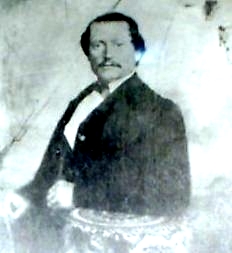
Jack McCall's assassination of Wild Bill Hickok in 1876 underscored significant jurisdictional challenges in the American frontier, particularly in the illegally settled Black Hills region of Dakota Territory. Deadwood, lacking formal legal authority as it was situated on unceded Lakota land, relied on an impromptu miners' court for McCall's initial trial, which acquitted him on grounds of self-defense despite the shooting occurring from behind while Hickok was unarmed and playing poker. This proceeding highlighted the tension between local vigilante justice and federal oversight, as the miners' court had no constitutional standing, allowing federal authorities in Yankton to nullify the verdict and retry McCall under U.S. law. The case exemplified the perils of informal frontier adjudication, influencing perceptions of systems in boomtowns where rapid population growth outpaced legal infrastructure. McCall's retrial and conviction established federal jurisdiction over the , affirming that territorial courts could override local customs in criminal matters and setting a for centralized authority in disputed regions. In Old West lore, McCall embodies cowardice, having shot Hickok in the back of the head without warning, an act that contrasted sharply with the era's romanticized code of facing one's opponent. This betrayal amplified Hickok's mythic status as a gunslinger felled unjustly, cementing the "dead man's hand"—a pair of aces and eights—as a symbol of untimely in poker , though the exact cards remain unverified legend. McCall's execution on March 1, 1877, in Yankton marked the first by federal officials in , closing the legal saga and reinforcing narratives of inevitable justice against frontier treachery. Debates persist over McCall's motives and identity, with theories suggesting he was hired by gambler John Varnes, who resented Hickok's interference in Deadwood's gambling scene, rather than acting alone out of personal grudge. His claim of avenging a brother's death—allegedly killed by Hickok in —proved false, as McCall had no such sibling, a fabrication that swayed the miners' but collapsed under federal scrutiny. Additionally, a purported long identified as McCall was challenged in 2013 by historian Bob Hanson, who cited discrepancies in facial features, age, and historical context to argue it depicts another man, fueling ongoing disputes over visual records of the assassin. McCall's story broader impact lies in its illumination of vigilante justice's flaws during the Black Hills Gold Rush, where miners' courts often dispensed hasty verdicts amid lawlessness, sometimes swayed by bribes or sympathy, as speculated in McCall's acquittal. The federal intervention and execution underscored the shift toward formalized law in transient mining camps, curbing extralegal practices and shaping territorial governance as the U.S. asserted control over resource-rich frontiers.

Cultural Depictions

Jack McCall has been a recurring figure in Wild West literature since the late , typically depicted as a cowardly in biographies and novels centered on Wild Bill Hickok's life and death. Early accounts in dime novels and Hickok-focused works from the onward portrayed him as a despicable assassin driven by petty grievances, reinforcing his role as a foil to Hickok's heroic image. In Pete Dexter's novel Deadwood, McCall appears as a "weak-looking Irishman with no butt end and a face like a ," emphasizing his pathetic and unheroic nature as he commits the infamous murder. In film and television, McCall's portrayals often amplify his villainy or incompetence, serving as a narrative device to highlight Hickok's legend. Porter Hall played McCall as a craven associate in Cecil B. DeMille's 1936 Western The Plainsman, where he assassinates Hickok amid broader frontier conflicts. The 1953 film Jack McCall, Desperado inverted this trope by casting George Montgomery as a heroic McCall wrongly accused, contrasting with Douglas Kennedy's villainous Hickok, though this sympathetic take remains atypical. David Arquette portrayed a troubled, mother-obsessed McCall in Walter Hill's 1995 biographical film Wild Bill, adding psychological depth to his motives during Hickok's final days in Deadwood. McCall received one of his most prominent and nuanced depictions in HBO's Deadwood (2004–2006), where Garret Dillahunt embodied him as a hapless, bumbling assassin whose cowardice and delusions drive the season-one plot, blending comic ineptitude with tragic pathos. Theater and reenactments have kept McCall's story alive through interactive historical dramas in Deadwood. The annual play The Trial of Jack McCall, performed at the Wild Bill Theatre, reenacts his miners' court trial and has run continuously since 1924, making it one of the longest-running stage productions in the United States; audiences often participate as jurors for added immersion. In 2024, the production relocated to the Eagle Bar and Steakhouse on Deadwood's Main Street to improve accessibility by eliminating stairs from the previous venue. Modern iterations emphasize historical accuracy, drawing on trial transcripts to portray McCall as a flustered defendant claiming self-defense. In 21st-century cultural analyses, McCall's representations continue to spark debates between villainous stereotypes and more sympathetic interpretations, particularly in tie-ins to Deadwood. Scholarly discussions and companion books to the HBO series explore his portrayal as a product of socioeconomic desperation, challenging earlier one-dimensional depictions in favor of humanizing the "hapless assassin" archetype. These modern works highlight how McCall's legacy in popular media reflects evolving views on Wild West antiheroes, from outright condemnation to contextual nuance.

References

Add your contribution
Related Hubs
User Avatar
No comments yet.