


Community hub
Recent from talks
Contribute something
Nothing was collected or created yet.
Jerry Scheff
View on WikipediaKey Information


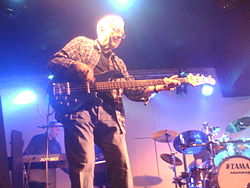
Jerry Obern Scheff (born January 31, 1941) is an American bassist, best known for his work with Elvis Presley from 1969 to 1977 as a member of his TCB Band and on the Doors' L.A. Woman.
Biography
[edit]Scheff grew up in Vallejo, California. After serving in the U.S. Navy he returned to California, ending up in Los Angeles as a session musician. After working at the Sands nightclub in Los Angeles with 16-year-old Billy Preston, Merry Clayton, and Don "Sugarcane" Harris, he played on his first hit record, The Association's "Along Comes Mary" (1966).[1]
That success led to other sessions with acts such as Bobby Sherman, Johnny Mathis, Johnny Rivers, Neil Diamond, Nancy Sinatra, Pat Boone, Sammy Davis Jr., Bobby Vinton, The Monkees, The Everly Brothers, Todd Rundgren, and the Nitty Gritty Dirt Band. In 1971, he appeared on L.A. Woman, the final album recorded by the Doors with Jim Morrison,[2] playing bass on virtually every track.[3]
In July 1969, Scheff became a member of Elvis Presley's TCB Band. Jerry played bass for the singer from July 31, 1969, to February 23, 1973, and again from April 24, 1975, until Presley's final show on June 26, 1977, at the Market Square Arena in Indianapolis.
He is heard on many Presley albums, beginning with From Memphis to Vegas / From Vegas to Memphis (live 1969 Vegas recordings), and including On Stage: February 1970 (live 1969-1970 Vegas recordings), That's The Way It Is (1970 film soundtrack with live Vegas recordings), Elvis As Recorded At Madison Square Garden (complete live 1972 New York concert), Aloha from Hawaii Via Satellite (complete live 1973 concert broadcast worldwide), From Elvis Presley Boulevard, Memphis, Tennessee (1976 studio work), Moody Blue (1976 studio work and 1977 live recordings). He is also seen performing in Elvis: That's the Way It Is (1970 documentary) and Elvis On Tour (1972 documentary).
In later years, Scheff worked with Elvis Costello, Crowded House, John Denver, Willy DeVille, The Doors, Bob Dylan, Roy Orbison, Sam Phillips, Demis Roussos, Richard Thompson, Chris Hillman, Bernie Leadon, Al Perkins, David Mansfield and many other artists.[1] Scheff was also the bassist for Southern Pacific on their debut album. In the January 1988 Cinemax television special Roy Orbison and Friends, A Black and White Night Scheff played acoustic bass in Orbison's backing band. In 1997, Scheff traveled to the Yukon Territory in Canada and played bass on "American Friend" an album featuring songs written by Alaskan recording artist Rev Neil Down.
Starting in 1997, Jerry joined other original TCB Band members in a project called Elvis: The Concert, a show that featured the video and isolated voice of Elvis with his 1970s backup band and vocalists playing live, perfectly synced using computer technology. In 2009, after touring with Elvis: The Concert for a decade, Scheff left the production.
Jerry has three sons: Jason, born in 1962, Darin in 1963, and Lauren in 1973. Jason grew up to be a professional musician, most notably as the bassist and lead vocalist in the band Chicago from 1985 until 2016. During a 1993 session, Jason co-wrote "Bigger Than Elvis" as a tribute to his dad. Featuring Jerry on bass, the track did not see release until a 2003 box set The Box. Darin and Lauren both followed in their brother's footsteps, also becoming multi-instrumentalists, songwriters and vocalists.
In 2012, Jerry published an autobiography, Way Down: Playing Bass with Elvis, Dylan, the Doors, and More: The Autobiography of Jerry Scheff.[1]
From 2013 to 2017 Scheff performed concerts in England with the singer Jenson Bloomer, playing the greatest hits of Elvis Presley, Bob Dylan, and the Doors. While in 2019 he made two shows in Denmark. A concert and a talk show. Both entirely dedicated to The Doors. On both the show and the concert he performed with the band Doors Legacy. Both were in co-operation with Mr Jan Puggaard Hansen, and were a huge success.
In April 2022 Jerry was back on stage, playing in a concert in Milan, Italy, with the Italian singer and guitarist, Luca Olivieri and his band, as a tribute to Elvis.
Discography
[edit]| Complete Discography | |||
|---|---|---|---|
| Year | Title | Group | Instrument |
| 2012 | Come to Me/Well Kept Secret/Take Heart | Juice Newton | Bass |
| 2012 | The Complete Columbia Album Collection | Johnny Cash | Bass |
| 2012 | The RCA Albums Collection | John Denver | Arranger, Bass, Rhythm Arrangements |
| 2011 | A Collection | The Doors | Bass |
| 2011 | Antelope Freeway/Equinox Express Elevator | Howard Roberts | Bass (Electric) |
| 2011 | Runt + Runt: The Ballad of Todd Rundgren | Todd Rundgren | Bass |
| 2011 | Setlist: The Very Best of Elvis Presley Live | Elvis Presley | Bass |
| 2010 | The Drugstore's Rockin' | Pat Boone | Bass |
| 2009 | Elvis 75 | Elvis Presley | Bass |
| 2009 | I Believe: The Gospel Masters | Elvis Presley | Saxophone |
| 2009 | The End: A New Beginning | Krondes, John | Bass |
| 2009 | Walking on a Wire: 1968-2009 | Richard Thompson | Bass, Bass (Electric), Double Bass, String Bass |
| 2009 | Where the Action Is! Los Angeles Nuggets 1965-1968 | Bass, Personnel | |
| 2008 | Paisley Dreams | Tommy Roe | Bass, Musician |
| 2008 | Southbound/Fearless | Hoyt Axton | Bass, Bass Instrument, Featured Artist, Tuba |
| 2008 | Speechless/Gagged But Not Bound | Albert Lee | Bass (Acoustic) |
| 2008 | Stone of Sisyphus: XXXII | Chicago | Bass, Guest Artist |
| 2008 | The Best of the Box | Roy Orbison | Bass, Main Personnel |
| 2008 | The Soul Of Rock 'n' Roll | Roy Orbison | Bass, Bass Instrument, Main Personnel |
| 2007 | Elvis: Viva Las Vegas | Elvis Presley | Bass |
| 2007 | Four Decades of Folk Rock | Bass | |
| 2007 | Pilgrims Progress | Mark Levine | Bass |
| 2007 | The Best of Elvis Costello: The First 10 Years | Elvis Costello | String Bass |
| 2006 | Elvis Lives: The 25th Anniversary Concert | Elvis Presley | Musician |
| 2006 | Elvis Lives: The 25th Anniversary Concert [DVD] | Elvis Presley | Musician |
| 2006 | Hollywood Maverick: The Gary Paxton Story | Bass | |
| 2006 | Live in Los Angeles at PJ's Club | Barney Kessel | Bass, Group Member |
| 2006 | Other Voices/Full Circle | The Doors | Bass |
| 2006 | Perception | The Doors | Additional Personnel, Bass, Bass Instrument |
| 2006 | Southern Nights | Elvis Presley | Bass |
| 2006 | Sugar Hill Records: A Retrospective [Box Set] | Bass, Bass (Electric) | |
| 2006 | The Essential Roy Orbison | Roy Orbison | Bass |
| 2006 | Twenty Twenty: The Essential T Bone Burnett | T-Bone Burnett | Bass, Bass Instrument, Main Personnel, Percussion, String Bass |
| 2005 | Crowded House/Temple of Low Men | Crowded House | Bass |
| 2005 | Live from Las Vegas | Elvis Presley | Bass, Guitar (Bass), Main Personnel |
| 2005 | RetroSpecto | Eliza Gilkyson | Bass |
| 2004 | Aloha from Hawaii Via Satellite [DVD Deluxe Edition] | Elvis Presley | Bass |
| 2004 | Bakersfield Rebels | Bass | |
| 2004 | Beach Party: Garpax Surf 'N' Drag | Bass | |
| 2004 | Boy Trouble: Garpax Girls | Bass | |
| 2004 | Impossible Dream | Elvis Presley | Musician |
| 2004 | Olympia 2003 | Frank Michael | Bass, Group Member |
| 2004 | Who's Gonna Go Your Crooked Mile? | Peter Case | Bass (Electric) |
| 2003 | Bob Dylan [Limited Edition Hybrid SACD Set] | Bob Dylan | Guitar (Bass) |
| 2003 | Chicago: The Box [Bonus DVD] | Chicago | Bass |
| 2003 | Do Unto Others | Sandy Salisbury | Bass |
| 2003 | Elvis at the International | Elvis Presley | Bass |
| 2003 | Elvis: Close Up | Elvis Presley | Accompaniment, Bass |
| 2003 | L.A. Woman/Morrison Hotel/The Doors | The Doors | Bass |
| 2003 | Legacy: The Absolute Best | The Doors | Bass |
| 2003 | Many Are the Times | Lee Mallory | Bass |
| 2003 | Southern Pacific/Zuma | Southern Pacific | Bass (Electric), Bass (Upright), Vocals (Background) |
| 2003 | The First Sessions | Warren Zevon | Bass |
| 2003 | Tuff and Stringy Sessions 1966-68 | Clarence White | Bass |
| 2002 | Anything Anytime Anywhere (Singles 1979–2002) | Bruce Cockburn | Bass |
| 2002 | Chambergrass: A Decade of Tunes From the Edges of Bluegrass | Berline + Crary + Hickman | Bass |
| 2002 | Just the Right Sound: The Association Anthology [Rhino] | The Association | Bass |
| 2002 | Just the Right Sound: The Association Anthology [WEA] | The Association | Bass |
| 2002 | Louisiana Rain | Gib Guilbeau | Bass |
| 2002 | Sometimes Happy Times | Dotti Holmberg | Guitar (Bass) |
| 2002 | Songs Inspired by Literature: Chapter One | The Sibl Project | Primary Artist |
| 2002 | That's the Way It's Gonna Be | Lee Mallory | Bass |
| 2002 | The Definitive Monkees | The Monkees | String Bass |
| 2002 | Voices of the Millennium | The Millennium | Bass |
| 2001 | Action Packed: The Best of the Capitol Years | Richard Thompson | Bass |
| 2001 | Blue Suede Shoes Collection | Elvis Presley | Bass |
| 2001 | Cadillac Walk: The Mink DeVille Collection | Mink DeVille | Bass |
| 2001 | Live In Las Vegas | Elvis Presley | Bass |
| 2000 | Christmas with Elvis Presley, Johnny Cash, and John Denver | Bass | |
| 2000 | Elvis Rockabilly | Elvis Presley | Bass (Electric) |
| 2000 | Loose Ends | Larry John McNally | Bass |
| 2000 | Misty Mirage | Curt Boettcher | Bass |
| 2000 | Sandy | Sandy Salisbury | Bass |
| 2000 | Sing Australia (In Concert) | John Denver | Bass |
| 2000 | The Best of Rosie & the Originals | Rosie & the Originals | Bass |
| 1999 | A Hundred Lies | Malcolm Holcombe | Bass, Bass (Upright) |
| 1999 | Artist of the Century | Elvis Presley | Bass |
| 1999 | Christmas | John Denver | Bass |
| 1999 | Concert 1999 World Tour | Elvis Presley | Bass |
| 1999 | Shake, Rattle & Roll [MCA] [Original TV Soundtrack] | Bass | |
| 1999 | Slim Slo Slider/Home Grown | Johnny Rivers | Bass |
| 1999 | The Collection [RCA] | Elvis Presley | Bass |
| 1999 | The Complete Studio Recordings | The Doors | Bass |
| 1998 | A Touch of Platinum, Vol. 2 | Elvis Presley | Unknown Contributor Role |
| 1998 | Anthology | The Monkees | String Bass |
| 1998 | Enchanted: The Works of Stevie Nicks | Stevie Nicks | Bass |
| 1998 | Guilty: 30 Years of Randy Newman | Randy Newman | Bass |
| 1998 | Like a Hurricane | Chris Hillman | Bass |
| 1998 | North American Long Weekend | Tom Freund | Bass |
| 1998 | Slide | Lisa Germano | Bass, Unknown Contributor Role |
| 1998 | Somewhere in the Middle | Eric Martin | Bass |
| 1997 | 24 Karat Hits! | Elvis Presley | Unknown Contributor Role |
| 1997 | A Heavy Dose of Lyte Psych | Unknown Contributor Role | |
| 1997 | An Afternoon in the Garden | Elvis Presley | Bass |
| 1997 | Decade, 1988-1998 | Jackopierce | Bass |
| 1997 | Elvis: The Fool Album | Elvis Presley | Bass |
| 1997 | Extreme Honey: The Very Best of Warner Brothers Years | Elvis Costello | 6-String Bass, Bass, Bass (Upright), Double Bass, Fuzz Guitar, Tuba |
| 1997 | Just a Singer/A Cowboy Afraid of Horses | Lobo | Bass, Musician |
| 1997 | Lay Me Down | Nancy Bryan | String Bass |
| 1997 | Platinum: A Life in Music | Elvis Presley | Unknown Contributor Role |
| 1997 | The Very Best of Todd Rundgren | Todd Rundgren | Bass |
| 1997 | Vanguard Collector's Edition | Bass (Electric) | |
| 1996 | Braver Newer World | Jimmie Dale Gilmore | Bass |
| 1996 | Greatest Hits [#1] | The Doors | Bass |
| 1996 | Omnipop (It's Only a Flesh Wound Lambchop) | Sam Phillips | Bass |
| 1996 | XXI | Dwight Twilley | Bass |
| 1996 | you? me? us? | Richard Thompson | Bass (Electric) |
| 1995 | Earth Songs | John Denver | Bass |
| 1995 | For the Love of Harry: Everybody Sings Nilsson | Bass | |
| 1995 | Greatest Hits [Rhino] | The Monkees | Bass, String Bass |
| 1995 | Kojak Variety | Elvis Costello | Ampeg Baby Bass, Bass, Bass (Electric), Guitar (Bass), Hammond B3, Main Personnel, Piano |
| 1995 | Ron Sexsmith | Ron Sexsmith | Bass |
| 1995 | Solo Collection | Glenn Frey | Bass |
| 1995 | Sweetwater | Elvis Costello | Unknown Contributor Role |
| 1995 | Torn Again | Peter Case | Bass |
| 1995 | Tower of Song: The Songs of Leonard Cohen | Bass | |
| 1995 | Walk a Mile in My Shoes: The Essential 70's Masters | Elvis Presley | Bass |
| 1994 | Beat the Retreat: Songs by Richard Thompson | Bass | |
| 1994 | Bob Dylan's Greatest Hits, Vol. 3 | Bob Dylan | Bass |
| 1994 | Bringing on the Weather | Jackopierce | Bass |
| 1994 | Dart to the Heart | Bruce Cockburn | Bass, Guitar (Bass), Vocals |
| 1994 | Greatest Hits [Curb] | Tommy Roe | Bass |
| 1994 | Heartaches & Harmonies [Box Set] | The Everly Brothers | Bass |
| 1994 | Martinis & Bikinis | Sam Phillips | Musician, Unknown Contributor Role |
| 1994 | Mirror Blue | Richard Thompson | Bass, Double Bass |
| 1994 | The Very Best of Elvis Costello and the Attractions | Elvis Costello | Double Bass, Fuzz Bass, String Bass |
| 1994 | Unplugged Collection, Vol. 1 | Bass | |
| 1994 | Weapons of the Spirit | Marvin | Bass, Vox Organ |
| 1993 | Spinout/Double Trouble | Elvis Presley | Bass |
| 1993 | Take a Step over | Dan Crary | Bass, Bass Instrument |
| 1993 | Through the Looking Glass | Eliza Gilkyson | Bass |
| 1993 | Watching the Dark | Richard Thompson | Bass, Performer, Primary Artist |
| 1993 | Way Down Deep in My Soul: The Best of Sugar Hill Gospel, Vol. 2 | Bass | |
| 1992 | 99.9 F° | Suzanne Vega | Bass |
| 1992 | Strange Weather | Glenn Frey | Bass |
| 1992 | The Criminal Under My Own Hat | T-Bone Burnett | Bass |
| 1992 | The Radical Light | Vonda Shepard | Bass |
| 1991 | Arkansas Traveler | Michelle Shocked | Bass |
| 1991 | Cruel Inventions | Sam Phillips | Bass |
| 1991 | Deadicated: A Tribute to the Grateful Dead | Bass, Bass (Electric) | |
| 1991 | Greatest Hits | Southern Pacific | Guitar (Bass) |
| 1991 | Listen to the Band | The Monkees | Unknown Contributor Role |
| 1991 | Mighty Like a Rose | Elvis Costello | 6-String Bass, Bass, Bass (Electric), Bass (Upright), Fuzz Bass, Guitar (Electric), Tuba |
| 1991 | Rumor and Sigh | Richard Thompson | Bass |
| 1990 | Christmas Like a Lullaby | John Denver | Arranger, Bass, Main Personnel |
| 1990 | Flower That Shattered the Stone | John Denver | Bass |
| 1990 | The Best of Delaney & Bonnie | Delaney & Bonnie | Bass |
| 1990 | The Best of Tommy Roe | Tommy Roe | Bass (Electric) |
| 1989 | A Black and White Night Live | Roy Orbison | Bass |
| 1989 | Great Balls of Fire | Bass | |
| 1989 | Maria McKee | Maria McKee | Bass |
| 1989 | Mystery Girl | Roy Orbison | Bass, String Bass |
| 1989 | Spike | Elvis Costello | Bass, Bass (Electric), Double Bass, Fuzz Bass |
| 1989 | The Man with the Blue Post Modern Fragmented Neo-Traditionalist Guitar | Peter Case | Bass, Bass (Electric), Bass (Upright), Guitar (Bass) |
| 1988 | A Black and White Night Live [Video] | Roy Orbison | Bass |
| 1988 | Amnesia | Richard Thompson | Bass |
| 1988 | Gagged But Not Bound | Albert Lee | Bass |
| 1988 | Pat McLaughlin | Pat McLaughlin | Bass |
| 1988 | Salty Tears | Semi-Twang | Bass |
| 1988 | The Alternate Aloha | Elvis Presley | Guest Artist |
| 1988 | The Indescribable Wow | Sam Phillips | Bass |
| 1988 | Twice the Love | George Benson | Composer |
| 1987 | Columbia Records 1958-1986 | Johnny Cash | Bass |
| 1987 | Delgado Brothers | The Delgado Brothers | Bass |
| 1987 | Out of Our Idiot | Elvis Costello | Bass |
| 1987 | Stand Up | The Del Fuegos | Composer |
| 1987 | The High Lonesome Sound | Tim Scott | Bass |
| 1987 | The Talking Animals | T-Bone Burnett | Bass, Guest Artist, Musician |
| 1987 | The Turning | Sam Phillips | Bass |
| 1986 | Crowded House | Crowded House | Bass |
| 1986 | Daring Adventures | Richard Thompson | Bass, Bass (Electric), Bass (Upright), Guest Artist, Main Personnel, String Bass |
| 1986 | King of America | Elvis Costello | Bass, Bass (Electric), Double Bass, Guitar (Bass), Main Personnel, String Bass |
| 1986 | One World | John Denver | Arranger, Bass |
| 1986 | Peter Case | Peter Case | Unknown Contributor Role |
| 1986 | T Bone Burnett | T-Bone Burnett | Bass, String Bass |
| 1986 | Wild Dogs | Dwight Twilley | Bass |
| 1985 | Dreamland Express | John Denver | Arranger, Bass |
| 1985 | Ever Call Ready | Ever Call Ready | Bass, Bass (Vocal), Member of Attributed Artist, Primary Artist, Vocals |
| 1985 | Southern Pacific | Southern Pacific | Bass, Vocals |
| 1984 | Desert Rose | Chris Hillman | Bass, Bass (Acoustic), Guitar (Acoustic), Guitar (Electric), Main Personnel |
| 1984 | Greatest Hits, Vol. 3 | John Denver | Bass |
| 1984 | Slamdance | Bass | |
| 1983 | Alive, She Cried | The Doors | Bass |
| 1983 | It's About Time | John Denver | Arranger, Bass |
| 1983 | Johnny 99 | Johnny Cash | Drums |
| 1982 | Morrison Hotel/L.A. Woman | The Doors | Bass |
| 1982 | Seasons of the Heart | John Denver | Arranger, Bass |
| 1980 | Le Chat Bleu | Mink DeVille | Bass |
| 1978 | An American Prayer | Jim Morrison, The Doors | Bass |
| 1978 | Demis Roussos [Mercury] | Demis Roussos | Bass |
| 1978 | Ever Call Ready | Chris Hillman | Bass, Primary Artist, Vocals |
| 1978 | Oh! Brother | Larry Gatlin & the Gatlin Brothers Band | Bass |
| 1978 | Randy Richards | Randy Richards | Bass |
| 1978 | Street Legal | Bob Dylan | Bass, Guitar (Bass) |
| 1978 | T.N.T. | Tanya Tucker | Bass |
| 1978 | Well Kept Secret | Juice Newton | Bass |
| 1977 | Broken Blossom | Bette Midler | Bass, Guitar (Bass) |
| 1977 | Road Songs | Hoyt Axton | Bass |
| 1977 | Spirit of a Woman | American Flyer | Bass, Unknown Contributor Role |
| 1977 | The Other Side | Tufano & Giammarese Band | Bass |
| 1976 | Fearless | Hoyt Axton | Bass |
| 1976 | Photograph | Melanie | Bass |
| 1975 | A Cowboy Afraid of Horses | Lobo | Bass |
| 1975 | Ain't It Good to Have It All | Jim & Ginger | Guitar (Bass) |
| 1975 | Paxton Brothers | Paxton Brothers | Bass |
| 1975 | Valdy | Valdy | Bass |
| 1974 | The Golden Scarab | Ray Manzarek | Bass |
| 1973 | Aloha from Hawaii Via Satellite | Elvis Presley | Guitar (Bass), Main Personnel |
| 1973 | Buckingham Nicks | Buckingham Nicks | Bass |
| 1973 | Dylan [1973] | Bob Dylan | Bass |
| 1973 | Great Scott | Tom Scott | Bass |
| 1973 | Letters to My Head | Mike Deasy | Bass |
| 1973 | Lookin' for a Smile | Gladstone | Bass |
| 1972 | As Recorded at Madison Square Garden | Elvis Presley | Bass |
| 1972 | Benny | Benny Hester | Bass |
| 1972 | Equinox Express Elevator | Howard Roberts | Bass |
| 1972 | I've Found Someone of My Own | The Free Movement | Bass |
| 1972 | Gladstone | Gladstone | Bass |
| 1972 | Through the Eyes of a Horn | Jim Horn | Bass |
| 1972 | Weird Scenes Inside the Gold Mine | The Doors | Bass |
| 1971 | America's Sweetheart | Sandy Szigeti | Bass |
| 1971 | Helen Reddy [Capitol] | Helen Reddy | Guitar (Bass) |
| 1971 | Home Grown | Johnny Rivers | Bass |
| 1971 | L.A. Woman | The Doors | Additional Personnel, Bass, Bass Instrument |
| 1971 | Minnows | Marc Benno | Bass |
| 1971 | Other Voices | The Doors | Bass |
| 1971 | Runt: The Ballad of Todd Rundgren | Todd Rundgren | Bass |
| 1971 | Sunstorm | John Stewart | Bass |
| 1970 | Ananda Shankar | Ananda Shankar | Bass, Guitar (Bass), Main Personnel |
| 1970 | Elvis in Person at the International Hotel, Las Vegas, Nevada | Elvis Presley | Bass |
| 1970 | Marc Benno | Marc Benno | Bass |
| 1970 | On Stage | Elvis Presley | Bass, Guitar (Bass), Main Personnel |
| 1970 | Slim Slo Slider | Johnny Rivers | Bass |
| 1970 | That's the Way It Is | Elvis Presley | Bass |
| 1970 | To Bonnie from Delaney | Delaney & Bonnie | Bass |
| 196? | Mother Hen | Mother Hen | Bass |
| 1969 | Goodnight Everybody | Mary McCaslin | Bass |
| 1969 | Inner Dialogue | Inner Dialogue | Group Member |
| 1969 | Nancy | Nancy Sinatra | Guitar (Bass) |
| 1969 | Running Down the Road | Arlo Guthrie | Bass, Unknown Contributor Role |
| 1969 | The Moonstone | Tommy Flanders | Bass, Musician |
| 1968 | Head | The Monkees | Bass |
| 1968 | Sounds of Goodbye | Gosdin Brothers | Bass |
| 1968 | The Holy Mackerel | The Holy Mackerel | Bass |
| 1967 | Friar Tuck & His Psychedelic Guitar | Friar Tuck and His Psychedelic Guitar | Bass |
| 1967 | Here's to You | Hamilton Camp | Bass, Tuba |
| 1967 | It's Now Winters Day | Tommy Roe | Bass |
| 1967 | Phantasy | Tommy Roe | Musician |
| 1965 | On Fire | Barney Kessel | Bass |
| 1964 | The Daily Trip | Your Gang | Bass |
| 1964 | The New Mustang & Other Hot Rod Hits | Road Runners | Bass |
| Dan Cassidy | Dan Cassidy | Bass | |
| Delivers One More Hallelujah | John Hurley | Bass, Guitar (Bass) | |
| Freeway Gypsy | Lynne Hughes | Guitar (Bass) | |
| Handcuffed to a Heartache | Mary K. Miller | Bass | |
| Jimmy Miller Productions 1976-1979 | Joey Stec | Guitar (Bass), Main Personnel | |
| Working! | Bobby Jameson | Guitar (Bass) | |
Bibliography
[edit]- Way Down: Playing Bass with Elvis, Dylan, the Doors, and More: The Autobiography of Jerry Scheff[1]
References
[edit]- ^ a b c d Scheff, Jerry (2012). Way Down: Playing Bass with Elvis, Dylan, the Doors, and More (book) (1st ed.). Milwaukee, Wisconsin: Backbeat Books. ISBN 9781617130328. OCLC 752067800.
- Rhetta Akamatsu (March 29, 2012). "Book Review: Way Down: Playing Bass with Elvis, Dylan, the Doors, and More by Jerry Scheff". BlogCritics. Archived from the original on 2012-04-01.
- ^ Album Liner notes for L.A. Woman by The Doors [DVD-A booklet]. Elektra (62612-9); in 2000 Liner notes
- ^ "Robby Krieger reopens the door to the 'L.A. Woman' sessions | Goldmine Magazine". www.goldminemag.com. Archived from the original on 2012-06-11.
External links
[edit]- Official website
- Jerry Scheff at IMDb
- Jerry Scheff at AllMusic
- Jerry Scheff discography at Discogs
- Official Jerry Scheff Facebook Page
- Elvis Australia interview with Jerry Scheff
- Jerry Scheff solo on YouTube

| International | |
|---|---|
| National | |
| Artists | |
| People | |
| Other | |