



Community hub
Recent from talks
Knowledge base stats:
Talk channels stats:
Members stats:
John Buford
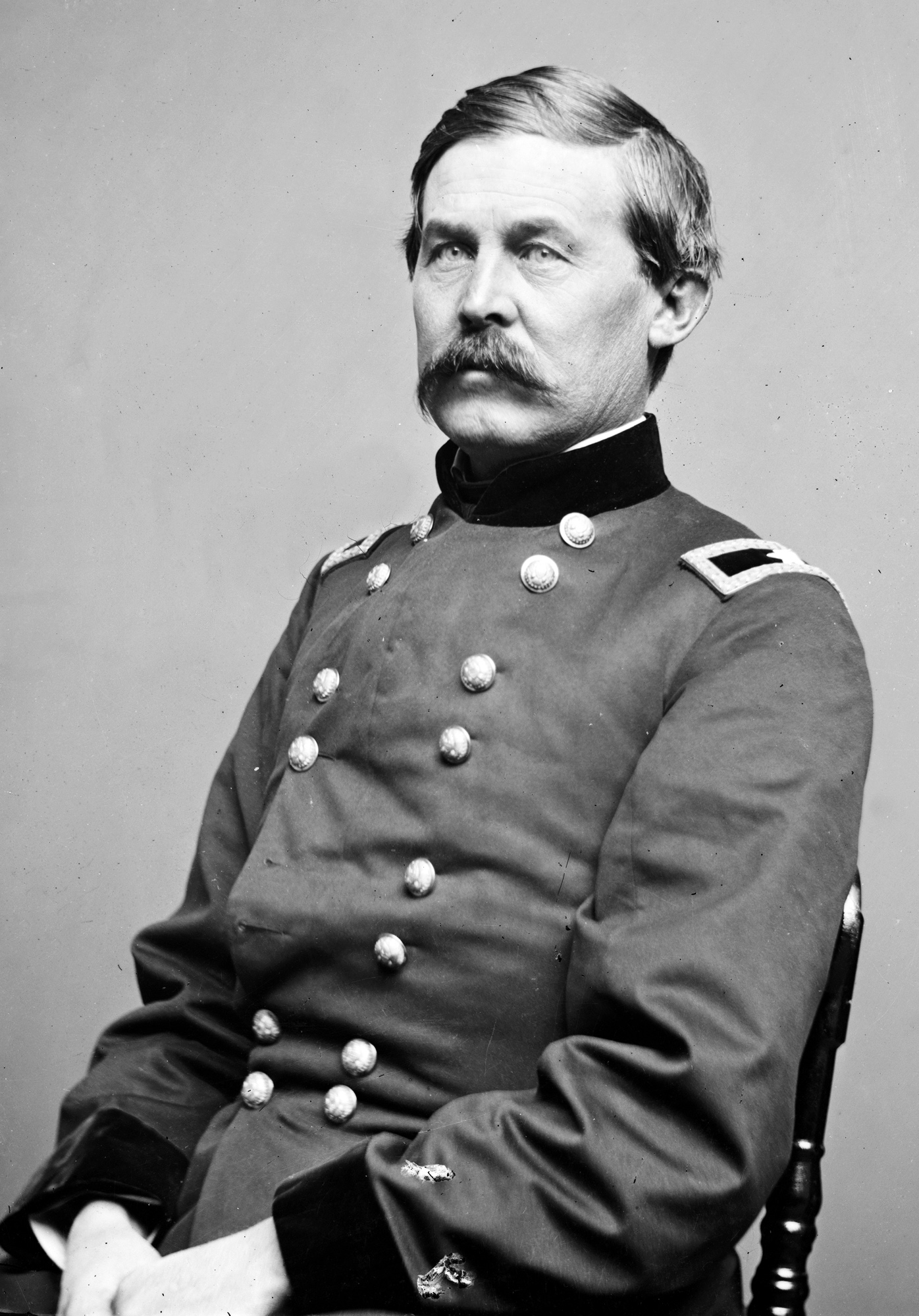
John Buford Jr. (March 4, 1826 – December 16, 1863) was a United States Army cavalry officer. He fought for the Union during the American Civil War, rising to the rank of major general. Buford is best known for his actions in the first day of the Battle of Gettysburg on July 1, 1863, by identifying Cemetery Hill and Cemetery Ridge as high ground that would be crucial in the impending battle, and by placing vedettes (the cavalry equivalent of "picket lines") to the west and north that delayed the enemy long enough for the Union Army to arrive.
Born in the divided border state of Kentucky, Buford graduated from West Point in 1848. He remained loyal to the United States when the Civil War broke out and fought against the Confederate Army of Northern Virginia as part of the Army of the Potomac. His first command was a cavalry brigade under Major General John Pope. He distinguished himself at Second Bull Run in August 1862, where he was wounded. He also saw action at Antietam in September and during Stoneman's Raid in spring 1863.
Buford's cavalry division played a crucial role in the Gettysburg Campaign that summer. Arriving at the small town of Gettysburg, Pennsylvania, on June 30, before the Confederate troops, Buford set up defensive positions. On the morning of July 1, Buford's division was attacked by a Confederate division under the command of Major General Henry Heth. His men held just long enough for Union reinforcements to arrive. After a massive three-day battle, the Union troops emerged victorious. Later, Buford rendered valuable service to the Army, both in the pursuit of Robert E. Lee after the Battle of Gettysburg, and in the Bristoe Campaign that autumn, but his health started to fail, possibly from typhoid. Just before his death at age 37, he received a personal message from President Abraham Lincoln, promoting him to major general of volunteers in recognition of his tactical skill and leadership displayed on the first day of Gettysburg.
Buford was born in Woodford County, Kentucky, but was raised in Rock Island, Illinois, at the age of eight. John, his father, was a prominent Democratic politician in Illinois and a political opponent of Abraham Lincoln. Buford was of English descent. His family had a long military tradition. John Jr.'s grandfather, Simeon Buford, served in the cavalry during the American Revolutionary War under Henry "Lighthorse" Lee, the father of Robert E. Lee. His great-uncle, Colonel Abraham Buford (of the Battle of Waxhaws), also served in a Virginia regiment. His half-brother, Napoleon Bonaparte Buford, would become a major general in the Union Army, while his cousin, Abraham Buford, would become a cavalry brigadier general in the Confederate States Army.
After attending Knox College in Galesburg, Illinois, for one year, Buford was accepted into the Class of 1848 at the United States Military Academy (West Point). Upperclassmen during Buford's time at West Point included Fitz-John Porter (Class of 1845), George B. McClellan (1846), Thomas J. Jackson (1846), George Pickett (1846), and two future commanders and friends, George Stoneman (1846) and Ambrose Burnside (1847). The Class of 1847 also included A. P. Hill and Henry Heth, two men Buford would face at Gettysburg on the morning of July 1, 1863. Buford and Heth fought together in the U.S. Army in 1855 during the Battle of Ash Hollow in the First Sioux War.
Buford graduated 16th of 38 cadets and was commissioned a brevet second lieutenant in the 1st U.S. Dragoons, transferring the next year to the 2nd U.S. Dragoons. He served in Texas and against the Sioux, including in the Battle of Ash Hollow (also known as the Harney Massacre), on peacekeeping duty in Bleeding Kansas, and in the Utah War in 1858. He was stationed at Fort Crittenden, Utah, from 1859 to 1861. He studied the works of General John Watts de Peyster, who urged that the skirmish line become the new line of battle.
Throughout 1860, Buford and his fellow soldiers had lived with talk of secession and the possibility of civil war, until the Pony Express brought word that Fort Sumter had been fired upon in April 1861, confirming secession as fact. As was the case with many West Pointers, Buford had to choose between North and South. Based on his background, Buford had ample reason to join the Confederacy. He was a native Kentuckian, the son of a slave-owning father, and the husband of a woman whose relatives would fight for the South, as would a number of his own. On the other hand, Buford had been educated in the North and come to maturity within the Army. His two most influential professional role models, Colonels William S. Harney and Philip St. George Cooke, were Southerners who elected to remain with the Union and the U.S. Army. He loved his profession and his time on the frontier had snapped the ties that drew other Southerners home.
John Gibbon, a North Carolinian facing the same dilemma, recalled in a post-war memoir the evening that John Buford committed himself to the Union:
Hub AI
John Buford AI simulator
(@John Buford_simulator)
John Buford
John Buford Jr. (March 4, 1826 – December 16, 1863) was a United States Army cavalry officer. He fought for the Union during the American Civil War, rising to the rank of major general. Buford is best known for his actions in the first day of the Battle of Gettysburg on July 1, 1863, by identifying Cemetery Hill and Cemetery Ridge as high ground that would be crucial in the impending battle, and by placing vedettes (the cavalry equivalent of "picket lines") to the west and north that delayed the enemy long enough for the Union Army to arrive.
Born in the divided border state of Kentucky, Buford graduated from West Point in 1848. He remained loyal to the United States when the Civil War broke out and fought against the Confederate Army of Northern Virginia as part of the Army of the Potomac. His first command was a cavalry brigade under Major General John Pope. He distinguished himself at Second Bull Run in August 1862, where he was wounded. He also saw action at Antietam in September and during Stoneman's Raid in spring 1863.
Buford's cavalry division played a crucial role in the Gettysburg Campaign that summer. Arriving at the small town of Gettysburg, Pennsylvania, on June 30, before the Confederate troops, Buford set up defensive positions. On the morning of July 1, Buford's division was attacked by a Confederate division under the command of Major General Henry Heth. His men held just long enough for Union reinforcements to arrive. After a massive three-day battle, the Union troops emerged victorious. Later, Buford rendered valuable service to the Army, both in the pursuit of Robert E. Lee after the Battle of Gettysburg, and in the Bristoe Campaign that autumn, but his health started to fail, possibly from typhoid. Just before his death at age 37, he received a personal message from President Abraham Lincoln, promoting him to major general of volunteers in recognition of his tactical skill and leadership displayed on the first day of Gettysburg.
Buford was born in Woodford County, Kentucky, but was raised in Rock Island, Illinois, at the age of eight. John, his father, was a prominent Democratic politician in Illinois and a political opponent of Abraham Lincoln. Buford was of English descent. His family had a long military tradition. John Jr.'s grandfather, Simeon Buford, served in the cavalry during the American Revolutionary War under Henry "Lighthorse" Lee, the father of Robert E. Lee. His great-uncle, Colonel Abraham Buford (of the Battle of Waxhaws), also served in a Virginia regiment. His half-brother, Napoleon Bonaparte Buford, would become a major general in the Union Army, while his cousin, Abraham Buford, would become a cavalry brigadier general in the Confederate States Army.
After attending Knox College in Galesburg, Illinois, for one year, Buford was accepted into the Class of 1848 at the United States Military Academy (West Point). Upperclassmen during Buford's time at West Point included Fitz-John Porter (Class of 1845), George B. McClellan (1846), Thomas J. Jackson (1846), George Pickett (1846), and two future commanders and friends, George Stoneman (1846) and Ambrose Burnside (1847). The Class of 1847 also included A. P. Hill and Henry Heth, two men Buford would face at Gettysburg on the morning of July 1, 1863. Buford and Heth fought together in the U.S. Army in 1855 during the Battle of Ash Hollow in the First Sioux War.
Buford graduated 16th of 38 cadets and was commissioned a brevet second lieutenant in the 1st U.S. Dragoons, transferring the next year to the 2nd U.S. Dragoons. He served in Texas and against the Sioux, including in the Battle of Ash Hollow (also known as the Harney Massacre), on peacekeeping duty in Bleeding Kansas, and in the Utah War in 1858. He was stationed at Fort Crittenden, Utah, from 1859 to 1861. He studied the works of General John Watts de Peyster, who urged that the skirmish line become the new line of battle.
Throughout 1860, Buford and his fellow soldiers had lived with talk of secession and the possibility of civil war, until the Pony Express brought word that Fort Sumter had been fired upon in April 1861, confirming secession as fact. As was the case with many West Pointers, Buford had to choose between North and South. Based on his background, Buford had ample reason to join the Confederacy. He was a native Kentuckian, the son of a slave-owning father, and the husband of a woman whose relatives would fight for the South, as would a number of his own. On the other hand, Buford had been educated in the North and come to maturity within the Army. His two most influential professional role models, Colonels William S. Harney and Philip St. George Cooke, were Southerners who elected to remain with the Union and the U.S. Army. He loved his profession and his time on the frontier had snapped the ties that drew other Southerners home.
John Gibbon, a North Carolinian facing the same dilemma, recalled in a post-war memoir the evening that John Buford committed himself to the Union: