


Community hub
Recent from talks
Contribute something
Nothing was collected or created yet.
John Handy
View on Wikipedia |
Key Information


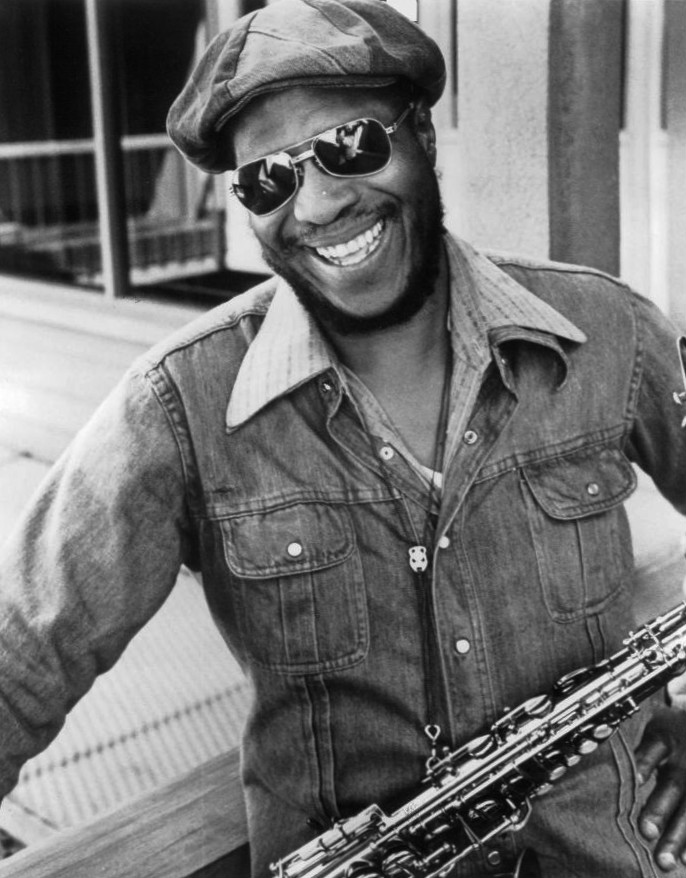
John Richard Handy III (born February 3, 1933)[1] is an American jazz musician most commonly associated with the alto saxophone. He also sings and plays the tenor and baritone saxophone, saxello, clarinet, and oboe.[2]
Biography
[edit]
Handy was born in Dallas, Texas, United States.[1] He first came to prominence while working for Charles Mingus in the 1950s.[1] In the 1960s, Handy led several groups, among them a quintet with Michael White, violin, Jerry Hahn, guitar, Don Thompson, bass, and Terry Clarke, drums.[1] This group's performance at the 1965 Monterey Jazz Festival was recorded and released as an album;[1] Handy received Grammy nominations for "Spanish Lady" (jazz performance) and "If Only We Knew" (jazz composition). [3]
After completing high school at McClymonds High School in Oakland, he studied music at San Francisco State College, interrupted by service during the Korean War, graduating in 1958. Following graduation, he moved to New York City. Handy has taught music history and performance at San Francisco State University, Stanford University, the University of California, Berkeley, and the San Francisco Conservatory of Music.[4]
In the 1980s he worked in the project Bebop & Beyond, which recorded tribute albums to Dizzy Gillespie and Thelonious Monk. His son, John Richard Handy IV, is a drummer who has played with Handy on occasion.
Discography
[edit]As leader
[edit]- In the Vernacular (Roulette, 1959)
- No Coast Jazz (Roulette, 1960)
- Jazz (Roulette, 1962)
- Recorded Live at the Monterey Jazz Festival (Columbia, 1966)
- The 2nd John Handy Album (Columbia, 1966)
- New View (Columbia, 1967)
- Quote, Unquote (Roulette, 1967)
- Projections (Columbia, 1968)
- Karuna Supreme (MPS, 1975) with Ali Akbar Khan
- Hard Work (Impulse!, 1976)
- Carnival (Impulse! 1977)
- Where Go the Boats (Warner Bros., 1978)
- Handy Dandy Man (Warner Bros., 1978)
- Rainbow (MPS, 1980) with Ali Akbar Khan and Dr. L. Subramaniam
- Excursion in Blue (Quartet, 1988)
- Centerpiece (Milestone, 1989) with CLASS
- Live at the Monterey Jazz Festival (Koch, 1996)
- Live at Yoshi's Nightspot (Boulevard, 1996)
- John Handy's Musical Dreamland (Boulevard, 1996)
As sideman
[edit]With Brass Fever
- Brass Fever (Impulse!, 1975)
- Time Is Running Out (Impulse!, 1976)
With Charles Mingus
- Jazz Portraits: Mingus in Wonderland (United Artists, 1959)
- Mingus Ah Um (Columbia, 1959)
- Mingus Dynasty (Columbia, 1959)
- Blues & Roots (Atlantic, 1960)
- Right Now: Live at the Jazz Workshop (Fantasy, 1964)
With Mingus Dynasty
- Live at the Theatre Boulogne-Billancourt/Paris, Vol. 1 (Soul Note, 1988)
- Live at the Theatre Boulogne-Billancourt/Paris, Vol. 2 (Soul Note, 1988)
References
[edit]- ^ a b c d e Colin Larkin, ed. (1992). The Guinness Who's Who of Jazz (First ed.). Guinness Publishing. p. 188. ISBN 0-85112-580-8.
- ^ "John Handy | Biography & History". AllMusic. Retrieved July 27, 2021.
- ^ "John Handy". Grammy Awards.
- ^ a b "Bay Area jazzman John Handy honored". The Mercury News. October 28, 2009.
External links
[edit]- Official website
- John Handy talks about the Fillmore neighborhood and Bop City (1999)
- Jazz Weekly interview with Handy
- Hard Work-John Handy-1976 on YouTube
| International | |
|---|---|
| National | |
| Artists | |
| People | |
| Other | |

John Handy
View on GrokipediaEarly Life and Education
Childhood and Family Background
John Handy was born on February 3, 1933, in Dallas, Texas, to John Richard Handy II and Pauline Elizabeth Conner. His parents met at N.W. Harlee grade school and married in their late teens, but separated early in his childhood. He grew up alongside his sister Shirley, born in August 1934, in neighborhoods such as Belmont and Highland Park, where he faced racial harassment from a young age, including catcalls starting around six years old. The family relocated briefly to Los Angeles around age 10 or 11 before moving to Oakland in November 1948.[3] The family had musical inclinations, with his mother playing piano, relatives performing on guitar, and influences from maternal grandparents Foster Conner and Inez Shumate, as well as paternal grandmother Martha Miller Handy.[7][3] Handy's initial exposure to music occurred in Dallas through local church and community sources. He attended the Church of God in Christ, an African-influenced denomination, where he sang gospel songs like "I’m Grazing in That Sweet Old Clover Field" alongside his grandmother Inez. Radio broadcasts and family Victrola records introduced him to swing bands such as Count Basie, blues artists including Louis Armstrong, Big Maceo, and Lil Green, and early bebop from Charlie Parker, as well as local groups like Bill Boy and the Cowboy Ramblers and the Light Crust Dough Boys. At age 13, he received a clarinet and began self-study using the Rubank Method at St. Peter’s Academy, marking his first hands-on engagement with instruments.[3] In November 1948, at age 15, Handy relocated with his family to Oakland, California, enrolling at McClymonds High School on November 22. The move brought him into a vibrant Bay Area environment, where he continued his pre-professional musical immersion through community events. He attended a school jazz band concert shortly after arriving, borrowed an instrument, and played his first gig that same week at the New Century Recreation Center. As a teenager, he engaged with the local blues scene in informal settings, sitting in at clubs like Slim Jenkins on Seventh Street and Bop City, often using a borrowed tenor saxophone to perform rhythm and blues alongside jazz explorations. These experiences laid the groundwork for his development before any structured musical education.[3][8]Formal Education and Early Musical Training
John Handy attended McClymonds High School in Oakland, California, after moving to the Bay Area at age 15 in 1948. There, he began his formal musical training around 1950 by joining the school's jazz band and two other ensembles, where he started playing the alto saxophone. Largely self-taught, Handy learned to read music and replicate tunes from the radio, drawing early influences from local Oakland performers such as blues saxophonist Illinois Jacquet and tenor saxophonist Big Jay McNeely, whom he heard live at venues like the Oaks Club. He graduated from McClymonds in 1951, having established himself as a promising young player among peers twice his age.[9][3][4] Handy's postsecondary education was interrupted by military service. Drafted into the U.S. Army in 1953 during the Korean War, he served two years primarily in Korea and Japan during the post-armistice period, where he formed a band and performed in military ensembles. Upon discharge around 1955, Handy briefly attended City College of San Francisco before resuming studies in music at San Francisco State College (now San Francisco State University), where he initially enrolled after graduating from high school in 1951. He played clarinet in the school's concert band and studied composition under Roger Nixon, completing coursework for prior incompletes after a brief relocation to the East Coast.[9][5][4] Handy earned a Bachelor of Arts in music from San Francisco State University in 1963. He later pursued advanced studies, obtaining a Master of Fine Arts in creative writing from the same institution, which complemented his musical development with skills in composition and expression. These academic experiences, combined with his self-directed practice and exposure to Oakland's vibrant scene, laid the foundation for his versatile saxophone technique and innovative approach to jazz.[4][9]Professional Career
Early Performances and Blues Roots
John Handy's entry into professional music occurred in the early 1950s in the Oakland area, where he joined blues bands as a teenager shortly after graduating from McClymonds High School in 1951.[3] His first significant gigs came around 1953, when he performed with the Roy Hawkins Blues Band, led by his cousin known as Jimbo, and appeared at events like the Primalon Ballroom with guitarist Pee Wee Crayton.[3] These engagements immersed him in the vibrant West Coast blues scene, providing foundational experience in ensemble playing and improvisation.[10] As a sideman in various rhythm and blues ensembles throughout the mid-1950s, Handy honed his technical skills on both alto and tenor saxophones during performances in local Bay Area clubs, such as those in Oakland's West End and San Francisco's Fillmore District.[3] These venues hosted a mix of blues and emerging R&B acts, allowing him to develop versatility amid the energetic, horn-driven arrangements typical of the era.[9] A notable milestone was his uncredited appearance on recordings with blues guitarist Lowell Fulson in 1953, arranged through local connections at San Francisco State College, marking his initial foray into studio work within the Bay Area's blues sessions.[3][9] Following his discharge from Army service in the mid-1950s, Handy continued transitioning from blues toward jazz experimentation, building on earlier experiences like performances alongside John Coltrane and Dizzy Gillespie at San Francisco's Bop City club starting in 1949. He frequented Bay Area venues like Bop City for jam sessions and gigs that emphasized bebop improvisation on alto saxophone, focusing on more structured jazz formats and laying the groundwork for his evolving style through the late 1950s.[3][11]Breakthrough with Charles Mingus
In 1958, following his early experiences playing rhythm and blues in the Oakland area, John Handy relocated to New York City, where he quickly immersed himself in the city's vibrant jazz scene. Arriving in July, he encountered Charles Mingus at a December jam session at the Five Spot Café, impressing the bassist with his alto saxophone playing to the point that Mingus invited him to join his Jazz Workshop ensemble the following day. This marked Handy's entry into a demanding creative environment, where Mingus's group emphasized collective improvisation and rigorous preparation, contrasting with Handy's prior blues apprenticeship on the West Coast.[12][13] Handy's tenure with Mingus, lasting about five months through 1959, resulted in participation on several landmark recordings that captured the group's innovative energy. He contributed alto saxophone to nine albums, including live sessions at the Nonagon Art Gallery in January 1959, yielding the album Jazz Portraits in Wonderland (later reissued as Mingus in Wonderland), featuring tracks like "No Private Income Blues" and "Wednesday Night Prayer Meeting." Studio dates followed, including Blues & Roots in February, with pieces such as "Wednesday Night Prayer Meeting" and "Cryin' Blues," and the dual-session Mingus Ah Um in May, highlighting Handy's tenor saxophone solo on "Goodbye Pork Pie Hat" and alto on "Better Git It in Your Soul." Additional contributions appeared on Mingus Dynasty in November, encompassing "Open Letter to Duke" and "Song with Orange." These efforts, along with performances at the Five Spot, showcased Handy's growing role in Mingus's evolving sound, blending structured themes with spontaneous interplay.[14][15][13][16] Mingus's leadership profoundly shaped Handy's improvisational approach through intense, chord-sparse rehearsals that compelled musicians to internalize melodies and respond intuitively, fostering a deeper emotional and rhythmic fluency. Handy recalled Mingus withholding chord charts from horn players, providing them only to the pianist, which forced reliance on ear training and collective listening—techniques that honed Handy's fiery, soul-infused style reminiscent of Charlie Parker. Mingus also encouraged Handy to explore tenor saxophone, as on interpretations of standards like "Body and Soul," broadening his technical versatility within the group's dynamic arrangements. This mentorship elevated Handy's ability to navigate complex compositions, such as the satirical "Fables of Faubus" from Mingus Ah Um, where his alto lines intertwined with the ensemble's political and harmonic tensions.[13][12] By late 1959, frustrations with Mingus's volatile methods—exemplified by frequent personnel shifts and unannounced changes during sessions like Blues & Roots—prompted Handy to depart the group, seeking independent opportunities. He confronted Mingus directly, asserting his readiness to move on, and was soon replaced by Eric Dolphy. This break allowed Handy to launch his solo career, including his debut album In the Vernacular on Roulette Records.[13][7]1960s Quintet and Festival Success
In 1965, saxophonist John Handy assembled his innovative quintet, featuring violinist Michael White, guitarist Jerry Hahn, bassist Don Thompson, and drummer Terry Clarke, creating a distinctive piano-less ensemble that drew on his prior experiences with Charles Mingus for its emphasis on collective improvisation.[17][18] The group's formation marked a pivotal shift in Handy's leadership, blending strings and guitar with rhythmic propulsion to explore extended compositions beyond traditional jazz structures. The quintet's debut at the 1965 Monterey Jazz Festival on September 18 proved transformative, captivating audiences with two extended pieces that showcased their dynamic interplay. Columbia Records producer John Hammond, impressed by the performance, immediately signed Handy to a contract, leading to the release of the live album Recorded Live at the Monterey Jazz Festival in 1966.[19] The recording earned widespread critical praise and two Grammy nominations, propelling the group to national prominence as one of the era's most exciting jazz acts.[18] Key tracks from the Monterey set, including the 19-minute "Spanish Lady"—a flamenco-infused exploration led by Handy's agile alto saxophone—drew significant media buzz and contributed to the album's commercial breakthrough, marking Handy's first major chart presence in the jazz genre.[16][20] Throughout the late 1960s, the quintet embarked on extensive tours across the United States and Europe, refining their sound in live settings that fused hard bop's intensity with modal frameworks and blues-inflected melodies, often extending pieces into hypnotic, avant-garde territories.[18][19] This period solidified their reputation for pushing jazz boundaries while maintaining accessibility, influencing subsequent recordings like The 2nd John Handy Album (1967).[21]Later Recordings and Collaborations
In the 1970s, John Handy expanded his recording career with albums on the Impulse! label, blending jazz with funk and blues elements to reach broader audiences. His 1976 release Hard Work became a notable crossover success, featuring energetic tracks that fused alto saxophone improvisation with rhythmic grooves, including the title track which highlighted his blues-inflected style.[22][23] The album, produced by Esmond Edwards, showcased Handy's ability to adapt his post-bop roots to contemporary sounds while maintaining melodic accessibility.[24] Handy also contributed to the Brass Fever project during this period, a jazz-funk ensemble that recorded two albums for Impulse!. On Time Is Running Out (1976), he played alto saxophone alongside other horn players in a large-section setup, emphasizing upbeat, horn-driven arrangements that echoed the era's fusion trends.[25][26] Later in the decade, he explored cross-cultural influences through Karuna Supreme (1975, World Pacific), a collaboration with Indian classical sarod master Ali Akbar Khan, where Handy incorporated modal structures and microtonal elements inspired by his studies with Ravi Shankar.[7][16] This project reflected Handy's interest in Eastern musical traditions, blending his saxophone lines with Khan's intricate ragas.[27] Into the 1980s, Handy continued collaborative efforts, including a live performance at San Francisco's Keystone Korner in 1981 with tenor saxophonist Sonny Stitt and altoist Richie Cole, where the trio traded solos on standards like "Star Eyes" amid a supportive rhythm section.[28][29] He then formed the ensemble John Handy with Class in the late 1980s, featuring three female violinists who also sang, resulting in the Milestone album Centerpiece (1989), which combined jazz standards with classical string textures for a sophisticated, chamber-like sound.[7][30] This group, known for its formal attire and elegant presentations, remained active for over 23 years, performing into the 2010s.[31] In the 1990s and 2000s, Handy focused on live documentation and multimedia applications. Live at Yoshi's Nightspot (1996, Boulevard), recorded at the Oakland jazz club, captured his quartet in spirited performances of originals and standards, emphasizing his warm tone and interactive phrasing.[2][7] Similarly, John Handy's Musical Dreamland (1996, Boulevard) featured intimate quartet sessions with a nod to his compositional depth.[32] His music gained visibility in popular media when the track "Hard Work" appeared on the soundtrack for the 2002 film All About the Benjamins, underscoring its enduring rhythmic appeal.[33] Handy has sustained an active performance schedule into recent years, leading John Handy with Class in ongoing engagements that highlight his longevity in the Bay Area scene. In 2023, at age 90, he made a notable appearance as a special guest with vocalist Faye Carol at her "Faye and the Folks" concert series on August 13 in Oakland, joining her trio for an evening of jazz standards and blues-inflected material.[9][34] In August 2024, he performed at a Saxophone Summit concert in the Bay Area.[35] This event exemplified his continued vitality and mentorship role within the regional jazz community.[36]Musical Style and Innovations
Instruments and Performance Techniques
John Handy is primarily known as an alto saxophonist, but he demonstrates remarkable proficiency across a range of instruments, including the tenor saxophone, saxello, baritone saxophone, clarinet, oboe, and vocals.[37][2] His multi-instrumental approach allows him to adapt fluidly to various ensemble formats, from solo performances to large orchestras, where he employs each instrument to enhance expressive depth and tonal variety.[37] This versatility stems from his self-taught reading skills and early mastery of the clarinet before transitioning to saxophone, enabling him to contribute meaningfully in both jazz and non-jazz contexts.[9] Handy's performance techniques emphasize extended improvisation, characterized by a free, open, and forward-thinking style that fuses structured and spontaneous elements to create coherent, provocative narratives.[2][37] His blues-inflected phrasing on saxophone delivers soulful, storytelling lines with emotional intensity and technical inventiveness, drawing from his foundational experiences in blues bands during his formative years.[2] He further innovates by integrating classical elements into jazz contexts, such as performing with symphony orchestras to blend orchestral textures with improvisational freedom.[37][9] In vocal work, Handy employs inventive scat techniques on up-tempo pieces and nuanced ballad singing, showcasing a rare command of phrasing that rivals leading interpreters.[2] A hallmark of Handy's ensemble innovation is his use of violin-guitar interplay to achieve textural richness, as seen in his 1960s quintet featuring violinist Mike White and guitarist Jerry Hahn, which created an unusual sonic palette for jazz exploration.[2] Later, in the long-running "John Handy WITH CLASS" ensemble, he incorporated three female violinists who doubled as vocalists, enhancing modal and blues-driven improvisations with layered string elements.[37] Over his career, Handy's style evolved from the hard bop foundations of the 1950s and 1960s toward modal jazz and world music integrations, incorporating instruments like the tabla and tanpura in live settings to expand rhythmic and harmonic possibilities.[9][37] This progression reflects his commitment to pushing jazz boundaries through technical adaptability and cross-cultural experimentation.[2]Key Compositions and Cross-Genre Influences
John Handy's compositional output reflects a deep engagement with improvisation and structure, drawing from his multifaceted musical background to create works that bridge jazz traditions with broader artistic expressions. Among his most recognized pieces is "Spanish Lady," a 1965 composition initially developed as a class project at San Francisco State University, which earned a Grammy nomination for Best Instrumental Jazz Performance in 1967. Similarly, "If Only We Knew," also originating from his studies at the same institution, received a Grammy nomination for Best Original Jazz Composition that year, showcasing Handy's ability to craft extended, modal explorations suitable for live ensemble performance. Other significant works include "Hard Work," the title track from his 1976 album, which blended jazz improvisation with funk rhythms and became a crossover hit in R&B circles due to its infectious groove and vocal elements. Handy's larger-scale efforts, such as the "Concerto for Jazz Soloist and Orchestra," commissioned and premiered by the San Francisco Symphony under Arthur Fiedler in 1970, demonstrate his orchestration skills, integrating saxophone virtuosity with symphonic textures over a 21-minute span that drew record attendance. Additionally, "Scheme Number One," composed in 1962 and premiered at Carnegie Recital Hall with pianist Bill Evans, bassist Julian Euell, and drummer Charlie Persip, exemplifies his avant-garde approach to balancing composed sections with free improvisation.[3] Handy's creative process was profoundly shaped by a range of influences across genres, beginning with blues roots from Bay Area artists like Roy Hawkins and Pee Wee Crayton, with whom he performed as a teenager on baritone saxophone, absorbing their rhythmic drive and emotional depth. In jazz, he drew inspiration from Charles Mingus, whose sextet he joined in the late 1950s, as well as Thelonious Monk and Duke Ellington, whose harmonic complexities and ensemble writing informed his own scoring techniques during shared performances and festivals. Classical elements entered through early exposure to the Dallas Symphony Orchestra at age 15 and formal training in orchestration and counterpoint at San Francisco State, where he studied under composer Roger Nixon, enabling him to adapt symphonic forms to jazz contexts. World music influences, particularly from Indian classical traditions, came via private lessons with Ravi Shankar in the 1960s and collaborations with him in 1980, as well as ties with Ali Akbar Khan beginning in 1971, where Handy explored raga structures to expand his improvisational palette.[27][9] Handy's cross-genre experiments further highlight his innovative spirit, particularly in the 1970s with jazz-blues-funk integrations evident in "Hard Work" and tracks like "Blues for Louis Jordan," which fused hard bop with R&B swing to appeal beyond traditional jazz audiences. By the 1980s, he deepened Indo-jazz fusions through recordings and tours with sarod master Ali Akbar Khan and tabla virtuoso Zakir Hussain, including the albums Karuna Supreme (1976) and Rainbow (1980) that incorporated modal ragas into quintet arrangements, as well as later performances in Germany and Berlin that blended these elements with his signature alto saxophone lines.[38] These efforts prefigured broader world music trends in jazz, emphasizing cultural synthesis without diluting improvisational freedom. Handy's scoring innovations garnered acclaim from jazz and classical luminaries; Igor Stravinsky praised "Scheme Number One" as "the best fixed and improvised music" during a lecture following its premiere, highlighting its structural ingenuity. Thelonious Monk and Duke Ellington similarly lauded his work for its fresh harmonic approaches and ensemble cohesion, as noted in personal endorsements during their interactions.Teaching and Legacy
Academic Roles and Mentorship
John Handy began his academic career in 1968 as a faculty member at San Francisco State University (SF State), where he taught music history and introduced the institution's first jazz course following the 1968 Black Student Union and Third World Liberation Front strike.[5][7] He continued teaching jazz history and performance there from 1969 to 1980, often incorporating guest performances by jazz luminaries such as the Bill Evans Trio and Charles Mingus Sextet to provide students with direct exposure to professional improvisation and ensemble playing.[39][4] His tenure at SF State extended into artist-in-residence roles in the Jazz Studies Program in 1998, 1999, and 2002, during which he helped develop curricula that blended jazz with world music elements, culminating in the launch of the Jazz and World Music Studies program in 1999.[7][4] Handy also held faculty positions at Stanford University, the University of California, Berkeley, and the San Francisco Conservatory of Music, where he taught music history, performance techniques, and improvisation from the late 1960s onward, emphasizing cross-genre influences including classical and non-Western traditions.[7][39] At the Conservatory, he bridged jazz and classical pedagogy, demonstrating versatility in techniques that allowed him to perform classical repertoire while challenging classical faculty to explore improvisational elements.[9] Through these roles, Handy mentored emerging Bay Area jazz musicians, including saxophonist Hafez Modirzadeh, whom he guided in composing, arranging, and altissimo saxophone techniques infused with non-Western musical traditions, and vocalist Kitty Margolis, to whom he imparted the cultural and emotional depth of jazz.[5][4] He tutored young sidemen not enrolled in formal programs, fostering hands-on learning in composition and ensemble dynamics that strengthened the regional jazz scene.[40] Handy's educational initiatives had a lasting impact on alumni, many of whom became influential figures in jazz; for instance, saxophonist Muata Kenyatta credited class interactions with masters for shaping his career, while vocalist Faye Carol highlighted Handy's ensemble guidance as pivotal to her development.[4][9] This influence extended to his son, John Richard Handy IV, a drummer who performed alongside him and benefited from familial mentorship in improvisation and rhythm.[1] In recognition of his contributions, SF State established the John Handy Scholarship in Jazz Studies, supporting students in blending improvisational and compositional skills across genres.[41] Handy's focus on oral traditions and cultural integration in curricula continues to shape Bay Area jazz education, producing generations of versatile performers.[4][5]Awards, Honors, and Lasting Impact
John Handy received two Grammy nominations during his career, recognizing his compositional and performance talents in jazz. The album John Handy Recorded Live at the Monterey Jazz Festival (1966) earned nominations at the 9th Annual Grammy Awards in 1967 for Best Original Jazz Composition ("If Only We Knew") and Best Instrumental Jazz Performance - Group Or Soloist With Group.[42][43] Handy has been honored with several prestigious awards celebrating his contributions to jazz. In 1995, he received the Lifetime Achievement Award from the San Jose Jazz Society, acknowledging his enduring role in the genre.[7][43] The San Francisco Jazz Festival presented him with the Beacon Award in 2009, highlighting his significance as an East Bay saxophonist and Bay Area jazz ambassador.[10] Additional recognitions include the Russian River Jazz Festival JazzNote Award in 1996 and a Jazzie Award from Jazz on the Green.[43] In 1999, San Francisco proclaimed August 28 as "John Handy Day" to honor his local impact.[7] Handy's lasting impact lies in his pioneering fusion of jazz, blues, and world music elements, which expanded the genre's boundaries and influenced subsequent generations of musicians.[16] As a multi-instrumentalist proficient on alto saxophone, tenor, baritone, saxello, clarinet, oboe, and vocals, he inspired versatility among jazz performers.[44] His work helped elevate Bay Area jazz to global prominence, establishing the region as a hub for innovative sounds since the 1960s.[4] Handy's mentorship in academic settings further amplified his legacy by shaping young artists who carry forward his cross-genre approaches.[7] At age 92 in 2025, Handy remains active, demonstrating sustained relevance through performances such as his 2023 appearance with the Akira Tana Quartet, where he received the Jazz Icon Award, and his honoring at the Jazz on the Hill Festival.[9][45]Personal Life
Family and Personal Relationships
John Handy was born in 1933 in Dallas, Texas, to Pauline Elizabeth Conner Handy and John Richard Handy II, who separated early in his life; his mother worked as a domestic for the De Genaro family in Highland Park, and he had a younger sister, Shirley, born in 1934.[3] At age 15 in 1948, Handy moved with his family from Dallas to Oakland, California, where he spent much of his adulthood rooted in the Bay Area, except for a four-year stint in New York from 1958 to 1962.[3] Upon returning to the region in 1962, he and his then-wife purchased a home in San Francisco's Western Addition neighborhood, establishing a stable family base amid his growing musical career.[3] Throughout his adult life, Handy resided primarily in the San Francisco and Oakland areas, later settling in Oakland's Sequoyah neighborhood with his third wife, Del Anderson, where they continue to live.[9][7] Handy's first marriage, which began around 1956, produced his son, John Richard Handy IV, born in 1957, who later became a professional drummer and occasionally performed in his father's groups.[9][3] This early family life in the Bay Area provided crucial support during key career transitions; for instance, following his U.S. Army service in Korea from 1953 to 1955—where he was drafted shortly after starting college—Handy returned to Oakland to live with his grandmother, allowing him to resume his education and musical pursuits.[3] His first wife played an instrumental role in facilitating his 1958 relocation to New York, saving money alongside him for the move, acting as his manager, and even securing a recording contract with Roulette Records upon arrival.[9][13] The couple, including their young son, initially stayed at the Flanders Hotel in New York, highlighting the family's commitment to his professional ambitions despite the challenges of uprooting.[13] In the close-knit jazz community, Handy formed deep personal bonds with mentors that resembled familial ties, particularly with bassist Charles Mingus, whom he first met in San Francisco in 1957.[13] Although their professional collaboration was intense and sometimes tense, Mingus's invitation to join his group—delayed initially due to Handy's new family responsibilities—underscored a mentor-protégé dynamic that Handy later described as profoundly influential, akin to an extended family within the jazz world.[13] These relationships, intertwined with his immediate family's unwavering support, sustained Handy through relocations and service obligations, reinforcing his lifelong connection to the Bay Area as a familial and creative anchor.[3]Non-Musical Pursuits
Beyond his renowned career in jazz, John Handy pursued several non-musical interests and endeavors that reflected his diverse background and practical approach to life. Early in his career, to support himself financially while developing as a musician, Handy worked at the United States Postal Service and the Naval Supply Center in Oakland, California, roles that provided stability during his formative years in the Bay Area.[3] Handy also engaged in formal education outside of music, enrolling in courses in science, mathematics, and humanities at San Francisco State University alongside his musical studies, demonstrating a broad intellectual curiosity that extended to analytical and liberal arts disciplines.[3] Later in life, he invested in real estate as a savvy financial pursuit, leveraging his earnings from performances to build long-term security independent of the uncertainties of the music industry.[3] As a teenager in Oakland, Handy developed a passion for boxing, competing as an amateur and winning a featherweight title, an activity that honed his discipline and physical resilience before he fully committed to music.[3] His childhood hobbies included painting and woodworking, where he crafted toys and models, revealing an early creative outlet that paralleled but diverged from his later artistic expressions.[3] Additionally, Handy showed interest in historical reading, exploring books on jazz figures and David D. Turner's Harlem of the West, which chronicled Black cultural life in San Francisco's Fillmore District.[3] Handy's commitment to community extended to broader social causes, including founding the Freedom Band during the civil rights movement in the 1960s, a group of about ten musicians that performed at rallies, benefits, and auditoriums to support activism and raise funds for related efforts in the Bay Area.[3] He also served on the Interim Committee for the Arts in San Francisco, contributing to local cultural policy discussions during a pivotal era for artistic development.[3] These pursuits underscored his role as a multifaceted figure whose impact reached beyond performance stages into education, economics, and civic engagement.Discography
As Leader
John Handy's debut as a leader came in the late 1950s with Roulette Records, where he recorded three albums emphasizing his alto and tenor saxophone work in straight-ahead jazz settings. In the Vernacular (1959, Roulette) featured Handy alongside bassist Edgar Dianno and drummer Charles Lampkin, capturing his early vernacular style rooted in bebop influences.[26] This was followed by No Coast Jazz (1960, Roulette), a quintet session with violinist Michael White making an early appearance, highlighting Handy's compositional skills in modal explorations.[46] The Roulette era concluded with Jazz (1962, Roulette), a more experimental outing that previewed his interest in freer forms.[26] In the mid-1960s, Handy signed with Columbia, producing a series of acclaimed albums that elevated his profile through innovative quintet arrangements featuring violinist Michael White and guitarist Jerry Hahn. Recorded Live at the Monterey Jazz Festival (1965, Columbia), captured at the festival, became a breakthrough with its energetic performance of "Spanish Lady," earning a Grammy nomination for Best Instrumental Jazz Performance and establishing Handy's reputation for dynamic live improvisation.[42] Subsequent releases included John Handy's Quintet (1966, GHB), The 2nd John Handy Album (1966, Columbia), John Handy (1966, Columbia), New View (1967, Columbia), and Projections (1968, Columbia), all showcasing fusion-like experiments blending jazz with rock elements via White's violin and Hahn's electric guitar; New View in particular received critical praise for its thematic depth.[26] A Roulette outlier, Quote Unquote (1967, Roulette), revisited earlier material with updated personnel.[1] The 1970s marked Handy's shift toward jazz-funk fusion on Impulse! and related labels, with Hard Work (1976, Impulse!) as a commercial pinnacle, reaching No. 4 on the Billboard Jazz Albums chart and No. 46 on the Billboard 200, driven by the title track's infectious groove and featuring guitarist Ray Obiedo.[47] Carnival (1977, ABC/Impulse!) continued this vein with vibrant, rhythmic compositions, while Where Go the Boats (1978, Warner Bros.) and Handy Dandy Man (1978, Warner Bros.) incorporated world music motifs, including Indian influences from prior collaborations.[26] Karuna Supreme (1976, MPS), co-led with Ali Akbar Khan, explored raga-jazz synthesis but under Handy's direction.[46] Rainbow (1980, MPS), another co-led effort with Khan, further developed this cross-cultural approach.[26] Later career albums reflected Handy's maturation, blending traditions on smaller labels. Excursion in Blue (1988, Quartet) returned to acoustic jazz roots, Centerpiece (1989, Milestone) featured a co-op group with reflective ballads, and Musical Dreamland (1996, Boulevard) incorporated poetry and spiritual themes with a diverse ensemble.[26] A 1996 live re-recording at Monterey (Koch Jazz) and Live at Yoshi's Nite Spot (2006, independent) underscored his enduring stage presence, while the 2009 Mosaic Select box set compiled key leader sessions from the 1960s.[26] Tracks like "If Only We Knew" from the 1965 live album earned additional Grammy nominations for composition.[42]As Sideman
John Handy's early career in the 1950s included sideman roles in Bay Area blues and R&B ensembles, where he contributed alto saxophone to recordings led by guitarist Pee Wee Crayton and singer Roy Hawkins, helping to shape the region's West Coast blues sound through energetic horn sections and improvisational fills.[8] From 1959 to the early 1960s, Handy became a core member of Charles Mingus's Jazz Workshop, appearing on several albums that showcased his agile alto saxophone work in Mingus's innovative post-bop arrangements, often featuring bold solos and ensemble interplay. Key contributions include alto saxophone on Blues & Roots (1959, Atlantic), where his lines added urgency to gospel-inflected tracks like "Wednesday Night Prayer Meeting"; Mingus Ah Um (1959, Columbia), contributing to the album's swinging hard bop on pieces such as "Better Git It in Your Soul"; Mingus Dynasty (1959, Columbia), delivering intricate solos amid the large-ensemble orchestration on "Song with Orange"; and Jazz Portraits: Mingus in Wonderland (1959, United Artists), with prominent alto features in the octet settings. He also appeared on Right Now: Live at the Jazz Workshop (1964, Fantasy), providing a guest alto saxophone spot that highlighted his continued affinity with Mingus's dynamic style.[7][48][49][50] In the 1970s, Handy expanded into fusion and orchestral contexts as a sideman, playing alto saxophone on Brass Fever (1975, Impulse!) and Time Is Running Out (1976, Impulse!), where his solos infused the brass-heavy funk-jazz arrangements led by Wade Marcus with bebop flair on tracks like "Fever" and "Sing a Simple Song." He also performed his composition "Concerto for Jazz Soloist and Orchestra" as featured alto soloist with the San Francisco Symphony in 1970, bridging jazz improvisation and classical orchestration in a premiere that underscored his versatility. Later, Handy rejoined Mingus alumni in the Mingus Dynasty band, contributing alto saxophone to Chair in the Sky (1979, Elektra), honoring Mingus's legacy through ensemble horn work and solos on standards like "Orange Was the Color of Her Dress, Then Blue Silk."[26][51][52][37][8][53] Handy occasionally supported tenor saxophonist Sonny Stitt in live and studio settings during the late 1970s and 1980s, including alto saxophone on compilation tracks from The Savoy Recordings (various dates, Savoy), where his interplay complemented Stitt's bebop phrasing on standards. These collaborations emphasized Handy's supportive role in straight-ahead jazz contexts without leading the sessions.[31][54]| Year | Leader/Ensemble | Album | Label | Handy's Contribution |
|---|---|---|---|---|
| 1959 | Charles Mingus | Blues & Roots | Atlantic | Alto saxophone (solos on multiple tracks) |
| 1959 | Charles Mingus | Mingus Ah Um | Columbia | Alto saxophone (ensemble and solos) |
| 1959 | Charles Mingus | Mingus Dynasty | Columbia | Alto saxophone (featured solos) |
| 1959 | Charles Mingus | Jazz Portraits: Mingus in Wonderland | United Artists | Alto saxophone (octet arrangements) |
| 1970 | San Francisco Symphony (Handy composition) | Concerto for Jazz Soloist and Orchestra (premiere recording/live) | N/A | Featured alto saxophone soloist |
| 1975 | Brass Fever | Brass Fever | Impulse! | Alto saxophone (solos and sections) |
| 1976 | Brass Fever | Time Is Running Out | Impulse! | Alto saxophone (horn arrangements) |
| 1979 | Mingus Dynasty | Chair in the Sky | Elektra | Alto saxophone (ensemble and solos) |
| 1981 | Sonny Stitt et al. | The Savoy Recordings (compilation) | Savoy | Alto/tenor saxophone (select tracks) |