


Community hub
Recent from talks
Contribute something
Nothing was collected or created yet.
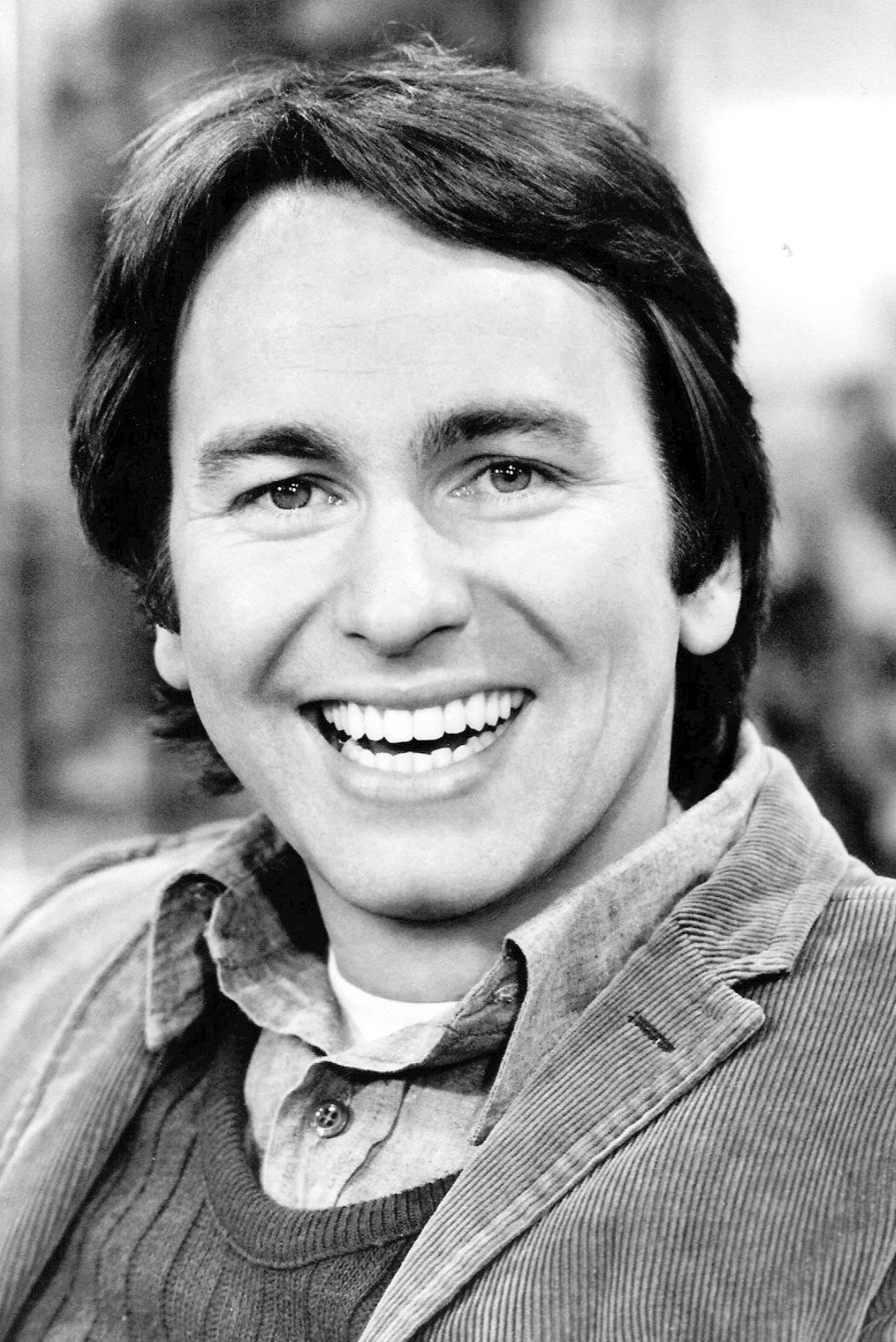
John Ritter
View on Wikipedia
Johnathan Southworth Ritter[1][2] (September 17, 1948 – September 11, 2003) was an American actor. He was a son of the singing cowboy star Tex Ritter and the father of actors Jason and Tyler Ritter. He played Jack Tripper on the popular ABC sitcom Three's Company (1977–1984), and received a Primetime Emmy Award and a Golden Globe Award for the role in 1984. Ritter briefly reprised the role on the spin-off Three's a Crowd, which aired for one season, producing 22 episodes before its cancellation in 1985.
Key Information


He appeared in over 100 films and television series combined and performed on Broadway, with roles including adult Ben Hanscom in It (1990), Problem Child (1990), Problem Child 2 (1991), a dramatic turn in Sling Blade (1996), and Bad Santa in 2003 (his final live action film, which was dedicated to his memory). In 2002, Don Knotts called Ritter the "greatest physical comedian on the planet". His final roles include voicing the title character on the PBS children's program Clifford the Big Red Dog (2000–2003), for which he received four Daytime Emmy Award nominations, and as Paul Hennessy on the ABC sitcom 8 Simple Rules (2002–2003). His style of comedy is based on musical and character comedy.
Early life
[edit]Johnathan Southworth Ritter was born on September 17, 1948, at Providence Saint Joseph Medical Center in Burbank, California.[3] His father, Tex Ritter (1905–1974), was a singing cowboy and film star, and his mother, Dorothy Fay (née Southworth; 1915–2003), was an actress.[4] He had an older brother, Thomas "Tom" Ritter.[5] Ritter attended Hollywood High School, where he was student body president. While a teenager, Ritter's right eye was permanently injured by a projectile flying into the car in which he was riding. This resulted in his right pupil having a strange appearance and only having peripheral vision in that eye for the rest of his life. Ritter attended the University of Southern California and majored in psychology with plans to have a career in politics. He later changed his major to theater arts and attended the USC School of Dramatic Arts (formerly School of Theatre). Ritter was a member of Phi Gamma Delta fraternity at USC. While still in college, Ritter traveled to the United Kingdom, the Netherlands, and West Germany to perform in plays. Ritter graduated in 1970.[6]
Career
[edit]Film and television
[edit]Ritter headlined several stage performances. After his graduation from USC in 1970, his first television acting experience was as a campus revolutionary in the television series Dan August starring Burt Reynolds and future Three's Company co-star Norman Fell. Ritter made his film debut in the 1971 Disney film The Barefoot Executive. He made guest appearances on the television series Hawaii Five-O, M*A*S*H, and many others. He had a recurring role as the Reverend Matthew Fordwick on the drama series The Waltons from October 1972 to December 1976. Because he was not a weekly cast member, he had time to pursue other roles, which he did until December 1976, when he left for a starring role in the hit sitcom Three's Company (the Americanized version of the 1970s British Thames Television series Man About the House) in 1977. In 1978, Ritter played Ringo Starr's manager on the television special Ringo. In 1982, Ritter provided the voice of Peter Dickinson in the animated film The Flight of Dragons.

Ritter became a household name on Three's Company, portraying struggling culinary student Jack Tripper with two female roommates. Ritter co-starred opposite Joyce DeWitt and Suzanne Somers, and then later Jenilee Harrison and Priscilla Barnes. Much of the comedy centered around Jack's pretending to be gay to keep the old-fashioned landlords appeased over the co-ed living arrangements. The series spent several seasons near the top of the ratings in the United States before ending in 1984. A year-long spin-off, Three's a Crowd, ensued, as the Jack Tripper character has a live-in girlfriend and runs his own bistro. The original series has been seen continuously in reruns and is available on DVD. During the run of Three's Company, Ritter appeared in the films Hero at Large, Americathon, and They All Laughed. In 1986, he played the role of Dad in the music video for Graham Nash's song "Innocent Eyes" from the album of the same name.
Hooperman was Ritter's first regular television role after Three's Company. Detective Harry Hooperman inherits a run-down apartment building and hires Susan Smith (Debrah Farentino) to run it. A relationship follows, and Hooperman must juggle work, love, and the antics of Bijoux the dog. In 1988, John was nominated for both an Emmy Award[7] and a Golden Globe Award for his work on Hooperman. Ritter won a People's Choice Award for this role. From 1992 to 1995, Ritter returned to television for three seasons as John Hartman, aide to a U.S. Senator, in Hearts Afire. This series starred Markie Post as Georgie Anne Lahti and Billy Bob Thornton as Billy Bob Davis. He also played Garry Lejeune / Roger Tramplemain in the production Noises Off in 1992.
After his time on television, he appeared in a number of films, most notably Problem Child and its first sequel. He co-starred with Jim Belushi in 1987's Real Men and played the lead role in Blake Edwards' 1989 film Skin Deep. He appeared in the film version of Noises Off, rejoined Billy Bob Thornton in the Oscar-winning Sling Blade (playing a kindhearted, gay, discount-store manager), and co-starred with Olivier Gruner in the 1996 action film Mercenary.
Ritter starred in many television films, including Gramps (1995), co-starring with Andy Griffith, Rob Hedden's The Colony (1995) with Hal Linden, Stephen King's It, Danielle Steel's Heartbeat with Polly Draper, and It Came from the Sky in 1999 with Yasmine Bleeth. Ritter also made guest appearances on television shows, such as Felicity, Ally McBeal, Scrubs, Buffy the Vampire Slayer, and Law & Order: Special Victims Unit. He also provided the voice of the title character in the animated children's show Clifford the Big Red Dog and its animated film adaptation Clifford's Really Big Movie (2004), a role for which he received four Emmy nominations. His final film was Stanley's Dinosaur Round-Up (2006), an animated direct-to-DVD film based on the television series, which was dedicated to his memory. At the time of his death, he was starring in 8 Simple Rules... for Dating My Teenage Daughter.[8][9]
Theater
[edit]In 2000, Ritter co-starred with Henry Winkler in Neil Simon's The Dinner Party at the Music Box Theatre on Broadway, portraying Claude Pichon.[10] It ran for 364 performances. Ritter won the Theatre World Award in 2001 for his performance in that work.[11]
He starred in "J For J" at LA's Court Theatre from March 14 – April 21, 2002, alongside Jeff Kober and Jenny Sullivan. It was directed by Joseph Fuqua and written by Jenny Sullivan.[12] In 2003, Ritter made his final stage appearance in All About Eve at the Ahmanson Theatre.
Personal life
[edit]On October 16, 1977, Ritter married actress Nancy Morgan, with whom he had three children. They divorced on September 1, 1996.[13] He married actress Amy Yasbeck on September 18, 1999, at the Murphy Theatre in Wilmington, Ohio.[14] They had a child born five years to the day before Ritter's death.[15] Yasbeck played his love interest in the first two Problem Child films, though as two different characters. Yasbeck also played Ritter's wife in two sitcom appearances. In 1991, both were guest stars on The Cosby Show, in which Yasbeck played the in-labor wife of Ritter's basketball coach character. In 1996, Ritter guest-starred on Yasbeck's sitcom, Wings, as the estranged husband of Yasbeck's character, Casey.
Death
[edit]
On September 11, 2003, Ritter was rehearsing for 8 Simple Rules... for Dating My Teenage Daughter on the Walt Disney Studios lot in Burbank, California, when he suddenly fell ill: sweating profusely, vomiting, and complaining of chest pain. He was taken across the street to the Providence Saint Joseph Medical Center (the same hospital where he had been born)[3] at 6:00 pm. Ritter was initially treated by emergency room physicians for an assumed heart attack; however, his condition quickly worsened.[16] Ritter was then diagnosed with aortic dissection and taken into surgery, but was pronounced dead at 10:48 pm, at the age of 54.[3][17]
A private funeral for Ritter was held in Los Angeles on September 15, 2003, after which he was interred at Forest Lawn Memorial Park in Hollywood Hills.[18][19]
In 2008, Ritter's widow Amy Yasbeck, on behalf of herself and Ritter's children, filed lawsuits against doctors involved in Ritter's treatment and Providence St. Joseph Medical Center. A number of those lawsuits were settled out of court, for a total of $14 million, including a settlement for $9.4 million with Providence St. Joseph.[20] A $67 million wrongful-death lawsuit against two of the physicians, radiologist Matthew Lotysch and cardiologist Joseph Lee, went to trial in 2008.[20] Yasbeck accused Lee, who treated Ritter on the day of his death, of misdiagnosing his condition as a heart attack and Lotysch, who had given him a full-body scan two years earlier, of failing at that time to detect an enlargement of Ritter's aorta.[21] In 2008, at the Los Angeles County Superior Court, the jury concluded that the doctors who treated Ritter the day he died were not negligent and thus were not responsible for his death.[22][23]
Response and legacy
[edit]Many of Ritter's colleagues expressed sorrow following the news of his death. Zach Braff, who worked with Ritter on Scrubs, called Ritter a "comic hero" of his and said he had approached series creator Bill Lawrence to get Ritter to play his character J.D.'s father[24] (which Ritter did for two episodes and was slated to return for a third the week following his death). Katey Sagal testified in the wrongful death lawsuit, calling Ritter a "funny man who was funny like nobody's business".[25] His Three's Company co-star Joyce DeWitt remarked he was "Impossible to forget. Impossible not to love."[26]
8 Simple Rules... for Dating My Teenage Daughter was later retitled 8 Simple Rules following Ritter's death and continued for one and a half more seasons before its cancellation in 2005. Ritter's character, Paul Hennessy, was said to have died after collapsing in a grocery store while buying milk. ABC aired the first three episodes of the show's second season that had been taped before his death, each of which was introduced by Katey Sagal. The remainder of the show dealt with the family trying to grapple with Paul's death. New male characters, played by James Garner and David Spade, were later added to the main cast as Ritter's replacements. Shortly before his death, Ritter had done a week-long taping with Hollywood Squares, which was aired as a tribute to him, introduced by Henry Winkler, the executive producer of the show and a very close friend of Ritter's. Four days after Ritter's death, Nick at Nite ran an all-night Three's Company marathon dedicated to his memory.[27]
In 2004, Ritter was posthumously given an Emmy nomination for playing Paul Hennessy in 8 Simple Rules... for Dating My Teenage Daughter but lost to Kelsey Grammer for his performances as the title character of Frasier. Upon accepting his trophy, Grammer's remarks included comments made in tribute and remembrance of Ritter.[28] Ritter's final films, Bad Santa and Clifford's Really Big Movie, along with a Season 4 episode of Scrubs (his character in this series died, as well), the Season 8 King of the Hill episode "Stressed for Success" (in which he played music teacher Eugene Grandy) and Stanley's Dinosaur Round-Up (in which he played Great Uncle Stew) were all dedicated to his memory.[29]
On June 6, 2008, Hollywood High School dedicated a mural of Ritter painted by Eloy Torrez.[30] In March 2010, the Thoracic Aortic Disease (TAD) Coalition, in partnership with Yasbeck and the John Ritter Foundation (JRF), announced the creation of the "Ritter Rules" which are life-saving reminders to recognize, treat and prevent thoracic aortic dissection. The purpose of the JRF is to provide accurate information to the general public about the disease and its risk factors, provide support to individuals who have thoracic aortic disease or have lost a loved one to the disease, and improve the identification of individuals at risk for aortic dissections and the treatment of thoracic aortic disease through medical research. Yasbeck worked with the University of Texas Health Science Center at Houston (UTHealth) to establish the John Ritter Research Program in Aortic and Vascular Diseases with the goal of preventing premature deaths due to aortic dissection by identifying genetic mutations that predispose individuals to thoracic aortic aneurysms and dissections.
Filmography
[edit]Film
[edit]| Year | Title | Role | Notes |
|---|---|---|---|
| 1971 | The Barefoot Executive | Roger | Film debut |
| Scandalous John | Wendell | ||
| 1972 | The Other | Rider | |
| 1973 | The Stone Killer | Hart | |
| 1975 | The Prisoner of Second Avenue | Elevator Passenger | Uncredited |
| 1976 | Nickelodeon | Franklin Frank | |
| 1977 | Breakfast in Bed | Paul | Short film |
| 1979 | Americathon | President Chet Roosevelt | |
| 1980 | Hero at Large | Steve Nichols | |
| Wholly Moses! | Satan (The Devil) | ||
| 1981 | They All Laughed | Charles Rutledge | |
| 1982 | The Flight of Dragons | Peter Dickinson | Voice, direct-to-video |
| 1987 | Real Men | Bob Wilson, Agent Pillbox, CIA | |
| 1989 | Skin Deep | Zachary "Zach" Hutton | |
| 1990 | Problem Child | Benjamin "Ben" Healy Jr. | |
| 1991 | Problem Child 2 | ||
| The Real Story of O Christmas Tree | Piney | Voice, direct-to-video[31] | |
| 1992 | Noises Off | Garry Lejeune, Roger Tramplemain | |
| Stay Tuned | Roy Knable | Voice[31] | |
| 1994 | North | Ward Nelson | |
| 1996 | Sling Blade | Vaughan Cunningham | |
| Mercenary | Jonas Ambler | Direct-to-video | |
| 1997 | Nowhere | Moses Helper | |
| A Gun, a Car, a Blonde | Duncan, The Bartender | ||
| Hacks | Hank | ||
| 1998 | Montana | Dr. Wexler | |
| The Truth About Lying | Simon Barker | ||
| Shadow of Doubt | Steven Mayer | ||
| I Woke Up Early the Day I Died | Robert Forrest | ||
| Bride of Chucky | Police Chief Warren Kincaid | ||
| 2000 | Panic | Dr. Josh Parks | |
| Tripfall | Tom Williams | ||
| Lost in the Pershing Point Hotel | Christian Therapist | ||
| Terror Tract | Bob Carter | ||
| Tadpole | Stanley Grubman | ||
| 2001 | Nuncrackers | Narrator | Voice, direct-to-video |
| 2002 | Man of the Year | Bill | |
| 2003 | Manhood | Eli | |
| Bad Santa | Bob Chipeska | Posthumous release; final live-action film | |
| 2004 | Clifford's Really Big Movie | Clifford the Big Red Dog | Voice, posthumous release; dedicated in memory[31] |
| 2006 | Stanley's Dinosaur Round-Up | Great Uncle Stew | Voice, posthumous release; final film role; dedicated in memory[31] |
Television
[edit]| Year | Title | Role | Notes |
|---|---|---|---|
| 1967 | The Dating Game | Contestant | Selected as the "Winning Bachelor" |
| 1968 | Crazy World, Crazy People | Various characters | TV special |
| 1970 | Dan August | Coley Smith | Episode: "Quadrangle for Death" |
| 1971 | Hawaii Five-O | Ryan Moore, Mike Welles | 2 episodes |
| 1972–1976 | The Waltons | Rev. Matthew Fordwick | Recurring role (18 episodes) |
| 1973 | Medical Center | Ronnie | Episode: "End of the Line" |
| Bachelor-at-Law | Ben Sykes | Unsold pilot | |
| M*A*S*H | Pvt. Carter | Episode: "Deal Me Out" | |
| 1974 | Kojak | Kenny Soames | Episode: "Deliver Us Some Evil" |
| Owen Marshall, Counselor at Law | Greg | Episode: "To Keep and Bear Arms" | |
| The Bob Newhart Show | Dave | Episode: "Sorry, Wrong Mother" | |
| 1975 | Movin' On | Casey | Episode: "Landslide" |
| Rhoda | Vince Mazuma | Episode: "Chest Pains" | |
| Mannix | Cliff Elgin | Episode: "Hardball" | |
| Great Performances | Richard | Episode: "Who's Happy Now?" | |
| The Bob Crane Show | Hornbeck | Episode: "Son of the Campus Capers" | |
| Petrocelli | John Oleson | Episode: "Chain of Command" | |
| Barnaby Jones | Joe Rockwell | Episode: "The Price of Terror" | |
| The Streets of San Francisco | John 'Johnny' Steiner | Episode: "Murder by Proxy" | |
| The Night That Panicked America | Walter Wingate | TV film | |
| The Mary Tyler Moore Show | Reverend Chatfield | Episode: "Ted's Wedding" | |
| The Rookies | Hap Dawson | Episode: "Reluctant Hero" | |
| 1976 | Starsky & Hutch | Tom Cole | Episode: "The Hostages" |
| Doc | Jeff, George | Episode: "A Little Bit of Soap" | |
| Rhoda | Jerry Blocker | Episode: "Attack on Mr. Right" | |
| Phyllis | Paul Jameson | Episode: "The New Job" | |
| 1977–1984 | Three's Company | Jack Tripper | Lead role (174 episodes) |
| 1977 | The Love Boat | Dale Riley | Episode: "Oh, Dale" |
| Tattletales | Himself (panelist) | Syndication | |
| 1978 | Ringo | Marty Flesh | TV film |
| Leave Yesterday Behind | Paul Stallings | ||
| $25,000 Pyramid | Himself (panelist) | Syndication | |
| 1979 | The Ropers | Jack Tripper | Episode: "The Party" |
| 1980 | The Associates | Chick | Episode: "The Censors" |
| The Comeback Kid | Bubba Newman | TV film | |
| John Ritter: Being of Sound Mind and Body | Himself, Various Characters | TV special | |
| 1981 | Insight | Frankie | Episode: "Little Miseries" |
| 1982 | Pray TV | Tom McPherson | TV film |
| In Love with an Older Woman | Robert Christenberry | ||
| The Fantastic Miss Piggy Show | Himself (guest star) | TV special | |
| 1983 | Sunset Limousine | Alan O'Black | TV film |
| The Love Boat | Ben Cummins | Episode: "The Emperor's Fortune" | |
| 1984 | Love Thy Neighbor | Danny Loeb | TV film |
| Pryor's Place | Himself (guest star) | Episode: "The Showoff" | |
| 1984–1985 | Three's a Crowd | Jack Tripper | Lead role (22 episodes) |
| 1985 | Letting Go | Alex Schuster | TV film |
| 1986 | Unnatural Causes | Frank Coleman | |
| A Smoky Mountain Christmas | Judge Harold Benton | ||
| Life with Lucy | Himself (guest star) | Episode: "Lucy Makes a Hit with John Ritter" | |
| 1987 | The Last Fling | Phillip Reed | TV film |
| Prison for Children | David Royce | ||
| 1987–1989 | Hooperman | Det. Harry Hooperman | Lead role (42 episodes) |
| 1988 | Mickey's 60th Birthday | Dudley Goode | TV special |
| Tricks of the Trade | Donald Todsen | TV film | |
| 1989 | Have Faith | Rick Shepherd | Episode: "The Window" |
| My Brother's Wife | Barney Rusher | TV film | |
| 1990 | It | Ben Hanscom | TV miniseries |
| The Dreamer of Oz: The L. Frank Baum Story | L. Frank Baum | TV film | |
| 1991 | The Cosby Show | Ray Evans | Episode: "Total Control" |
| The Summer My Father Grew Up | Dr. Paul Saunders | TV film | |
| Anything but Love | Patrick Serreau | Recurring role (5 episodes) | |
| 1992 | Fish Police | Inspector Gill | Voice, 6 episodes |
| 1992–1995 | Hearts Afire | John Hartman | Lead role (54 episodes) |
| 1993 | Heartbeat | Bill Grant | Television film |
| The Only Way Out | Jeremy Carlisle[32] | ||
| The Larry Sanders Show | Himself (guest star) | Episode: "Off Camera" | |
| 1994 | Dave's World | John Hartman | Episode: "Please Won't You Be My Neighbor" |
| 1995 | Gramps | Clarke MacGruder | TV film |
| The Colony | Rick Knowlton | ||
| NewsRadio | Dr. Frank Westford | Episode: "The Shrink" | |
| The Larry Sanders Show | Himself (guest star) | Episode: "The Fourteenth Floor" | |
| 1996 | Unforgivable | Paul Hegstrom | TV film |
| Wings | Stuart Davenport | Episode: "Love Overboard" | |
| For Hope | Date No. 5 | TV film (uncredited)[33] | |
| Touched by an Angel | Mike O'Connor, Tom McKinsley | 2 episodes | |
| 1997 | Loss of Faith | Bruce Simon Barker | TV film |
| A Child's Wish | Ed Chandler | ||
| Dead Man's Gun | Harry McDonacle | Segment: "The Great McDonacle" | |
| Over the Top | Justin Talbot | Episode: "The Nemesis" | |
| Buffy the Vampire Slayer | Ted Buchanan | Episode: "Ted" | |
| 1997–2004 | King of the Hill | Eugene Grandy | Voice, 4 episodes |
| 1998 | Chance of a Lifetime | Tom Maguire | TV film |
| Ally McBeal | George Madison | 2 episodes | |
| Dead Husbands | Dr. Carter Elston | TV film | |
| 1999 | Veronica's Closet | Tim | Episode: "Veronica's Favorite Year" |
| Holy Joe | Rev. Joe Cass | TV film | |
| It Came from the Sky | Donald Bridges | ||
| Lethal Vows | Dr. David Farris | ||
| 2000–2003 | Clifford the Big Red Dog | Clifford | Voice, main role |
| 2000 | Chicago Hope | Joe Dysmerski | Episode: "Simon Sez" |
| Batman Beyond | Dr. David Wheeler | Voice, episode: "The Last Resort"[31] | |
| Family Law | Father Andrews | Episode: "Possession is Nine Tenths of the Law" | |
| 2000–2002 | Felicity | Mr. Andrew Covington | Recurring role (7 episodes) |
| 2001 | Tucker | Marty | Episode: "Homewrecker for the Holidays" |
| 2002 | The Ellen Show | Percy Moss | Episode: "Gathering Moss" |
| Law & Order: Special Victims Unit | Dr. Richard Manning | Episode: "Monogamy" | |
| Breaking News | Lloyd Fuchs | Episode: "Pilot" | |
| Scrubs | Sam Dorian | Special guest role (seasons 1-2); 2 episodes | |
| 2002–2003 | 8 Simple Rules... for Dating My Teenage Daughter | Paul Hennessy | Lead role; 31 episodes |
Video games
[edit]| Year | Title | Role | Note |
|---|---|---|---|
| 2001 | Clifford the Big Red Dog: Learning Activities[34][31] | Clifford | |
| 2002 | Clifford the Big Red Dog: Musical Memory Games[35] | ||
| 2003 | Clifford the Big Red Dog: Phonics[36][31] | Posthumous release |
Awards and honors
[edit]| Association | Year | Category | Work | Result |
|---|---|---|---|---|
| Daytime Emmy Awards | 2001 | Outstanding Performer in an Animated Program | Clifford the Big Red Dog | Nominated |
| 2002 | ||||
| 2003 | ||||
| 2004 | ||||
| Primetime Emmy Awards | 1978 | Outstanding Lead Actor in a Comedy Series | Three's Company | |
| 1981 | ||||
| 1984 | Won | |||
| 1988 | Hooperman | Nominated | ||
| 1999 | Outstanding Guest Actor in a Comedy Series | Ally McBeal | ||
| 2004 | Outstanding Lead Actor in a Comedy Series | 8 Simple Rules | ||
| Golden Globe Awards | 1979 | Best Actor in a Musical/Comedy | Three's Company | |
| 1980 | ||||
| 1984 | Won | |||
| 1987 | Best Actor in a Mini-Series or Motion Picture Made for Television | Unnatural Causes | Nominated | |
| 1988 | Best TV Actor in a Musical/Comedy | Hooperman | ||
| People's Choice Awards | 1988 | Favorite Male Performer in a New TV Program[37] | Hooperman | Won |
| Screen Actors Guild Awards | 1997 | Outstanding Performance by a Cast in a Motion Picture | Sling Blade (shared w/co-stars) | Nominated |
- 1983: Star on the Walk of Fame – 6627 Hollywood Boulevard; he and Tex Ritter were the first father-and-son pair to be so honored in different categories.
References
[edit]- ^ Martin, Douglas (September 13, 2003). "John Ritter, 54, the Odd Man In 'Three's Company,' Is Dead". The New York Times. Retrieved March 17, 2008.
- ^ Braxton, Greg; King, Susan (September 13, 2003). "John Ritter, 54; Versatile Star of 'Three's Company,' '8 Simple Rules'". Los Angeles Times. Retrieved September 18, 2022.
- ^ a b c "John Ritter: 1948–2003". People. September 18, 2003. Archived from the original on November 22, 2016. Retrieved November 23, 2022.
- ^ Gliatto, Tom (September 29, 2003). "Wonderful Company". People. Archived from the original on December 3, 2013.
- ^ "John Ritter Biography". Biography.com. n.d. Retrieved December 22, 2015.
- ^ Lipton, Michael A. (December 16, 2002). "Acting His Age". People. Archived from the original on November 7, 2014.
- ^ "John Ritter Emmy Nominated". Emmys.com. September 12, 2003. Retrieved December 12, 2014.
- ^ Yasharoff, Hannah (August 26, 2021). "Kaley Cuoco gets emotional recalling her onscreen dad John Ritter's death: 'He's gone'". USA Today. Retrieved September 13, 2021.
- ^ Susman, Gary (September 15, 2003). "What will become of John Ritter-less 8 Simple Rules?". Entertainment Weekly. Retrieved September 16, 2021.
- ^ Isherwood, Charles (October 20, 2000). "The Dinner Party". Variety. Retrieved September 1, 2021.
- ^ Hodges, Ben; Willis, John A., eds. (November 1, 2009). Theatre World 2008–2009: The Most Complete Record of the American Theatre. Hal Leonard Corporation. ISBN 978-1-4234-7369-5. Retrieved July 16, 2013.
- ^ PLAYBILL, March 14, 2002
- ^ "John Ritter". CBS News. page 5. Retrieved October 4, 2012.
- ^ "John Ritter". CBS News. Page 10. Retrieved October 4, 2012.
- ^ St. Martin, Emily (March 3, 2025). "John Ritter's 4 Children: All About Jason, Carly, Tyler and Noah". People.
- ^ "John Ritter's widow talks about wrongful death suit". USA Today. February 4, 2008.
- ^ Considine, Bob (February 4, 2008). "John Ritter's widow talks about wrongful death suit". Today. NBC. Archived from the original on December 5, 2014. Retrieved December 2, 2013.
- ^ Grace, Francie (September 16, 2003). "John Ritter's Family Says Goodbye". CBS News.
- ^ "Where Celebrities Are Buried in LA". KCBS News. September 30, 2013.
- ^ a b Ornstein, Charles (January 24, 2008). "Ritter's family says he didn't have to die". Los Angeles Times. Archived from the original on January 27, 2008. Retrieved February 29, 2008.
- ^ Deutsch, Linda (April 2, 2008). "John Ritter's family seeks $67M in medical trial". USA Today. Retrieved November 7, 2014.
- ^ "Trial Begins Over John Ritter's Death". ABC News. Associated Press. February 11, 2008. Archived from the original on July 16, 2013. Retrieved February 29, 2008.
- ^ Ryan, Joal (March 14, 2008). "Jury Clears Ritter Doctors". E! News. Retrieved February 3, 2020.
- ^ "John Ritter Dies at 54". Extra. September 12, 2003. Archived from the original on April 6, 2012. Retrieved January 20, 2013.
- ^ Hammel, Sara (February 27, 2008). "Katey Sagal Testifies in John Ritter's Wrongful Death Trial". People. Archived from the original on March 6, 2008.
- ^ "DeWitt: Ritter 'so full of joy and love'". CNN. September 16, 2003. Archived from the original on December 25, 2003. Retrieved November 18, 2024.
- ^ Chung, Jen (September 15, 2003). "Three's Company Marathon". Gothamist. Archived from the original on October 17, 2015. Retrieved September 16, 2012.
- ^ Lammers, Tim (September 20, 2004). "'Angels,' 'Sopranos' Win Big at Emmys". KGTV News. Archived from the original on March 7, 2012. Retrieved February 29, 2008.
'I'd like to take a minute to pay respect to John Ritter and his family,' Grammer said the actor who received a posthumous nomination in the category. 'He was a terrific guy and his death was a shock to all of us. He will be missed not only for his kindness but for his work.'
- ^ Kennedy, Louise (April 23, 2004). "Clifford's 'Big Movie' will charm his small TV fans". The Boston Globe. Retrieved February 29, 2008.
...Clifford (voiced, as on TV, by the late John Ritter, to whom the movie is fittingly dedicated)...
- ^ "John Ritter photo added to mural". The Hollywood Reporter. Associated Press. June 5, 2008. Retrieved February 3, 2020.
- ^ a b c d e f g "John Ritter (visual voices guide)". Behind The Voice Actors. Retrieved August 7, 2024. A green check mark indicates that a role has been confirmed using a screenshot (or collage of screenshots) of a title's list of voice actors and their respective characters found in its credits or other reliable sources of information.
- ^ Everett, Todd (December 15, 1993). "Abc Sunday Night Movie the Only Way Out". Variety. Retrieved September 1, 2021.
- ^ Brennan, Patricia (November 17, 1996). "FOR HOPE". The Washington Post. ISSN 0190-8286. Retrieved August 11, 2020.
- ^ Clifford the Big Red Dog Learning Activities. Scholastic. Retrieved September 21, 2017. "Features popular characters and voices from the hit TV show"
- ^ Clifford the Big Red Dog: Musical Memory Games (CD ROM) CD-ROM – January 1, 2002
- ^ John Ritter. Moby Games. Retrieved September 20, 2017.
- ^ "14th People's Choice Awards 1988 Nominees and Winners". Archived from the original on June 17, 2016. Retrieved June 21, 2022.
Further reading
[edit]- Yasbeck, Amy (2010). With Love and Laughter, John Ritter. New York: Gallery Books. ISBN 978-1-4165-9841-1.
External links
[edit]


- John Ritter at IMDb
- John Ritter at the TCM Movie Database
- John Ritter at Rotten Tomatoes
- John Ritter at the Internet Broadway Database
- John Ritter at Emmys.com
- John Ritter discography at Discogs
- John Ritter's Death at Famously Dead
- John Ritter Foundation
- John Ritter's Life-Saving Rules
- John Ritter Research Program in Aortic and Vascular Diseases
