Hubbry Logo
Johnny BorrellJohnny BorrellMain
Open search
Johnny Borrell
Community hub
Johnny Borrell
logo
8 pages, 0 posts
0 subscribers
Be the first to start a discussion here.
Johnny Borrell
Johnny Borrell
from Wikipedia

Key Information

Jonathan Edward Borrell (born 4 April 1980) is an English guitarist and singer, currently the frontman of the rock band Razorlight, of which he is the only consistent original member.

Early life and career

[edit]

Borrell was born in Sutton, London. His father, New Zealand-born[1][2] John Borrell, was a war correspondent; his mother was a primary school teacher in Tottenham. His parents divorced when he was young. Borrell lived at Highgate, where he attended Highgate School. He moved to Camden School for Girls for sixth form.[3][4][5][6]

Borrell was involved in music and the Camden scene while still at school. At 17 he played bass guitar in a band called Violet alongside Paul Rose, aka dubstep pioneer Scuba (musician), who regularly played gigs on the Camden circuit. The band recorded an EP and started to gain some recognition before splitting acrimoniously live on stage at Dublin Castle in late '97 . The title track of the EP was subsequently used in the soundtrack of the 1998 Michael Winterbottom film 'I Want You'. After the split, he briefly switched to being a solo artist covering The Clash and Lead Belly songs. Many of these shows were played with close friends The Libertines.

Through his friendship with schoolmate John Hassall, at Highgate School,[7] Borrell was involved in the early formation of The Libertines. He was present at the sessions for their debut album Up The Bracket and appears as a character in songs, notably "Boy Looked at Johnny" and "Death on the Stairs", and also "What a Waster" which appeared as a bonus track on the album in Japan.

In 2002 he went on to form his own band which played house parties, rehearsing at a Hackney warehouse called Unit 13, comprising Carl Dalemo, Shïan Smith-Pancorvo (later replaced by Andy Burrows) and Björn Ågren. The band were watching a video recording of themselves playing a gig and misheard the ending refrain 'Its alright, it's alright' from the song "In The City" as 'razor-light, razor-light' which was then chosen as the band name. In early 2003 XFM DJ John Kennedy began to play the band's demos, recorded at Toerag Studios in east London with producers Liam Watson and John Fortis. Razorlight signed to Mercury Records on 23 May 2003 after the Universal label fought off bids from Sony.

After the number 8 single "Golden Touch", their debut album, Up All Night, was released on 28 June 2004, and charted at number 3 in the UK. The critical reception was generally good, receiving good reviews from NME ("Razorlight's debut packs more tunes than Franz [Ferdinand], more spirit than The Strokes and more balls than nearly every band out there right now."), Q magazine, Billboard and Rolling Stone who said "Razorlight's debut is a masterpiece. [Borrell]'s got the golden rock-star mop, the London sneer and a band full of crazy Swedes. But fortunately, he's also got the tunes."

Michael Parkinson saw coverage of the band performing at Glastonbury Festival and invited them onto his TV show. Razorlight performed "Golden Touch" with a gospel choir in front of the Parkinson studio audience and guest Tom Cruise. After 2004's constant touring Borrell was placed at No. 4 in NME's Cool List and Razorlight won Best New Act at 2004's Q Awards and the Best New Band category at the NME Awards in February 2005. French fashion brand Dior's creative director Hedi Slimane based his 2005 Autumn/Winter collection on Borrell and Pete Doherty and chose Razorlight to write music for the Paris show.

In the Spring of 2005 Razorlight played two sold-out shows at London's Alexandra Palace with Noel Fielding from The Mighty Boosh as their support act. Meanwhile, in between-album's single "Somewhere Else" reached number 2 in the UK charts. Q Magazine called it: "A punk rock symphony, a thrilling change in direction", and high-profile support slots with U2, Queen, The Who and Oasis and the band's appearance at Live 8 kept Razorlight occupied through the rest of the year prior to entering the studio for their second album in early 2006.

The self-titled follow up was produced by Pretenders, Sex Pistols and Roxy Music producer Chris Thomas. Their first single "In The Morning" went to number 3, and when the album was released on 17 July 2006 it gave the band their first number 1 in the UK album chart. The NME gave the album 8/10 and said: "A soulful romantic album that sees Razorlight comfortably leap the 'difficult second album' trap" whilst The Observer Music Monthly gave it 4/5 saying "[Borrell's] band's second album justifies the self-belief." Q Magazine called it "The best guitar album since Oasis's Definitely Maybe".

2006 saw Borrell and the band grow into an arena act and extend their international reach. Second single 'America' went straight to number 1 in the UK on 14 October dominating UK radio charts to the end of the year, and climbing airplay and singles charts in Ireland, the Netherlands, France, Denmark, Germany, New Zealand, Australia, Japan and America. The Rolling Stones asked the band to support them in Europe. An autumn UK arena tour culminated in a sold out Wembley Arena show and tours of Japan, Europe and the US led into a second UK arena tour and a sold-out show at London's 17,000 capacity Earl's Court in April 2007. Razorlight were the only UK band to headline the main stage at Reading Festival in August 2007. The Razorlight singer next emerged in October, duetting with The Kinks' Ray Davies on "Sunny Afternoon" for the BBC Electric Proms at London's The Roundhouse.

In late 2007 Borrell secluded himself on a remote Scottish island in the Outer Hebrides to begin writing for the band's third album. 2008's London sessions at Air studios lead to a more contemplative third album titled Slipway Fires. The album went to number 4 in the UK album charts in November 2008 and first single "Wire To Wire" got to number 5. Press reaction to the record was mixed although Q's Paul Rees gave the record 4/5 and said: "Borrell and his band come up triumphant. It does what third albums traditionally used to do, which is to say, have the confidence the leap into the previously unknown, and for that, all credit to Borrell".

In Germany, "Wire To Wire" was the sixth biggest chart hit of 2009 and the album went gold. Two round the world tours, including first visits to Australia, a move to a new label, Mercury Records/Island Def Jam and major festival appearances in the UK and across Europe took Razorlight to the end of the decade, finishing with a December headline at XFM's Brixton Academy Christmas show where they donated their fee to Borrell's charity of choice, Anno's Africa.

December 2009 also saw the digital release of a documentary on Razorlight made by UK film director Charles Henri-Belleville. Titled 'Rock'n'Roll Lies' the 70-minute film follows the band on a week of UK shows intercut with band member interviews about Razorlight's history. The film also features bonus material including Borrell's charity hovercraft crossing of the English Channel and drummer Andy Burrows' trials and tribulations whilst giving up smoking while on tour.

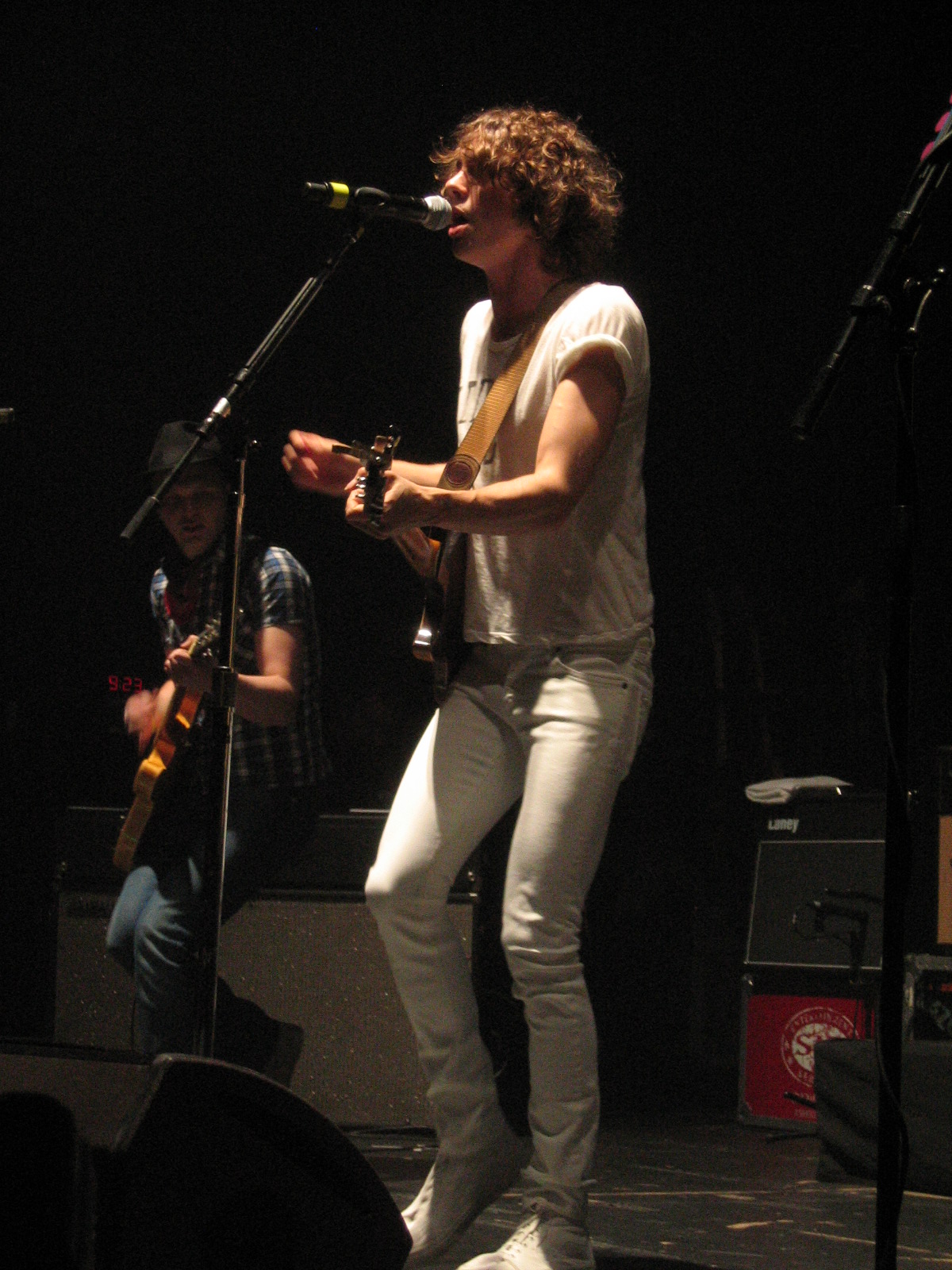
Borrell performing with Razorlight at the O2 Academy Brixton in 2024

Solo work

[edit]

Borrell's debut solo album, Borrell 1, was released in July 2013 in the UK. It was produced by Trevor Horn and received mixed reviews from critics. At Metacritic, which assigns a rating out of 100, the album received an average score of 46, based on 9 reviews by mainstream critics.[8]

The album was a commercial failure, selling 594 copies in its first week on sale and failed to secure a position in the UK Albums Chart.[9]

Reputation and charity work

[edit]

Borrell has sometimes been regarded as having a very arrogant attitude towards the press and is famous for his proclamations of his own abilities such as claiming he thinks he's the greatest songwriter in the world on MTV's Gonzo hosted by Zane Lowe.[10] However, like many other artists who come across negatively in NME interviews, Borrell and supporters have accused the magazine of misrepresentation and emphasising quotes out of context.[11]

Borrell has made numerous contributions to charity. Razorlight recorded 'Kirby's House' for the 2005 Warchild album and played London, Royal Albert Hall shows in 2006 and 2008 for The Who's Teenage Cancer Trust events (in 2008 the band performed 'Summertime Blues' with Roger Daltrey). In 2006 Borrell started to work for Friends of the Earth's climate change campaign 'The Big Ask', a relationship which has continued through 2006's show in Trafalgar Square for the 'icount' campaign to playing at FOE's November 2009 Hammersmith Apollo fundraiser. Razorlight were deemed to be one of the highlights of 2 July 2005 Live 8 charity concert in Hyde Park and continued to support Borrell's global warming concerns by taking part on 7 July 2007 Live Earth event at Wembley Stadium. Borrell is one of few amongst his contemporary generation of stars to have appeared on the cover of a national UK newspaper because of his political views. On 4 November 2006 his essay on climate change was the front cover story of The Independent. Razorlight have also regularly supported Nelson Mandela's 46664 Aids charity. In July 2005 the band flew to Tromso, Norway to play a 46664 fundraiser. Mandela invited Razorlight to perform at his 1 December 2007 World Aids day concert in Johannesburg, which allowed the band to visit township AIDs projects. Borrell also worked with environmentally friendly charity Global Cool on their 2007 green campaigns.[12]

They also played at Mandela's July 2008 90th birthday celebration fundraiser in Hyde Park. Through his love of cricket (he appeared on the cover of Time Out's cricket edition in August 2005 holding a cricket ball) Borrell has become friends with some of the English cricket team including former captain Andrew Flintoff who asked Razorlight to play at the inaugural night of his charity, The Andrew Flintoff Foundation (of which Borrell is a patron) in July 2009 at London's The Hurlingham Club. Borrell also played charity shows for Nordoff Robbins, and Save The Children in the latter part of 2009 and in September duetted on 'Je Suis Venue Te Dire Que Je M'en Vais' with legendary singer Jane Birkin as part of a fundraiser for Kenyan children's charity Anno's Africa.

Borrell and The Libertines

[edit]

Borrell is one of "The Dalston Set", a clique of indie notables connected to the early days of The Libertines, along with Dominic Masters of The Others, Pete Doherty, Carl Barât, John Hassall, and the Queens of Noize. It has been reported that he was briefly a stand-in bassist for The Libertines before they were signed, but in recent interviews he has claimed that this is not true; however, in Pete Welsh's Kids in the Riot, it is alleged that Borrell was sacked as The Libertines' bassist for unreliable behaviour.[13] In general though there is little animosity between the two bands, and Borrell remains friends with Carl Barât. The Libertines' song "The Boy Looked at Johnny" is reputedly about Borrell, and Razorlight's "Don't Go Back To Dalston" is reputedly directed at Pete Doherty, telling him to curtail his drug habit.

Xfm

[edit]

Following his four-week residency on London radio broadcaster Xfm, Borrell joined the station for a further nine-week stint hosting a Sunday night show called The Sunday Service. It began on 6 September 2009 with Borrell playing a broad range of records spanning Jamaican dancehall, blues, rock'n'roll, krautrock and spoken word.

Other work

[edit]

Borrell has appeared twice on The Mighty Boosh, once alone as a giant rapist rabbit in the 2006 stage show and once with Razorlight in the episode "The Priest and the Beast". Noel Fielding also opened for Razorlight at their two sold out Alexandra Palace shows in 2005 and appeared in the Razorlight video for the song 'In the Morning' and 'Up All Night'.[citation needed] Borrell appeared on the front cover of the May 2007 issue of Vogue magazine, alongside supermodel Natalia Vodianova, in his trademark skinny white jeans and topless. Borrell is one of only seven men who have appeared on the cover of the UK version of Vogue.[14] In 2008 Borrell and bandmate Andy Burrows appeared at the Teenage Cancer Trust comedy night at the Royal Albert Hall, hosted by Borrell's friend Noel Fielding. The two played a short acoustic set.

Late in 2007, Borrell played keyboards in a band he helped put together for Florence Welch of Florence and the Machine. The pair had met through Florence's manager Mairead Nash. Borrell went on to co-write and produced two songs with Welch, "The Hanging Song" and "Building Bricks" although these did not end up on Florence's debut album.

It was reported that Borrell would star in an Irvine Welsh scripted film alongside Colin Firth and Robert Carlyle called 'The Meat Trade',[15] however the film did not make it into production.

Borrell appeared on Never Mind The Buzzcocks in 2013, where host Jack Whitehall teased him about how Borrell used to date Whitehall's sister.[16]

In July 2022, Borrell performed at Standon Calling festival in Hertfordshire alongside Jack Flanagan of Mystery Jets under the name Jealous Nostril.

References

[edit]
[edit]
Revisions and contributorsEdit on WikipediaRead on Wikipedia
from Grokipedia
Jonathan Edward Borrell (born 4 April 1980) is an English singer, guitarist, and songwriter best known as the frontman and primary creative force of the band . Formed by Borrell in 2002, rose to prominence in the mid-2000s UK indie scene with their debut album Up All Night (2004), which peaked at number three on the , followed by the self-titled Razorlight (2006) that debuted at number one and achieved multi-platinum status. The band earned BRIT Award nominations for Best British Band and Best British Single for "America" in 2007, alongside Award nods, reflecting their commercial peak with hits like "Somewhere Else" and "In the Morning." Borrell's lyrics and guitar work defined the band's post-punk-infused sound, contributing to over a million album sales in the UK during the decade. Borrell's bold, unfiltered interview style—often proclaiming his genius or critiquing contemporaries—cemented his reputation as a polarizing figure in rock, sparking feuds and media scrutiny, though some observers argue it embodied authentic rock'n'roll bravado amid an era of polished indie conformity. Following 's hiatus after 2009's Slipway Fires, Borrell pursued solo endeavors, releasing Borrell 1 in 2013, produced by , which prioritized artistic integrity over commercial expectations despite modest sales. He reformed around 2015 with new lineup members, issuing Olympus Sleeping (2018) and resuming live performances, maintaining a career trajectory independent of mainstream validation.

Early Life

Childhood and Education

Jonathan Edward Borrell was born on 4 April 1980 in the London area to John Borrell, a New Zealand-born , and an English mother who worked as a in . His parents divorced when he was young, after which he was primarily raised by his mother in , , alongside an elder brother named Willy. Borrell had limited contact with his father, whom he later described seeing only a handful of times by adulthood. Borrell attended St Anthony's Preparatory School in before enrolling at the independent in . He later spent time studying in at the bilingual École Active Bilingue, reflecting early exposure to international environments amid his family's circumstances. These formative years in London's north, marked by familial separation and a progression through fee-paying institutions, preceded his immersion in urban social scenes during adolescence.

Initial Musical Influences

Borrell began learning guitar around age 14, starting with basic chords derived from the folk song "Scarborough Fair," which marked his initial foray into songwriting and self-directed musical exploration. By that time, he had already taken music seriously, serving as lead singer for a band called Oblivion at age 13 and performing Jimi Hendrix's "" in a Battle of the Bands at London's venue at age 14, an experience that affirmed his onstage presence amid audience feedback. These early efforts reflected a blend of rock improvisation and folk experimentation, though attempts to integrate into London's folk scene proved unsuccessful, steering him toward more energetic genres. His nascent tastes drew heavily from punk and new wave acts, including , , , , and , whose raw energy and urban lyricism informed the punk-inflected drive in his compositions. Classic influences like also surfaced in his quoting of lyrics and acknowledgment as a foundational songwriter, emphasizing narrative depth over technical virtuosity, while Hendrix provided a model for expressive guitar work. This foundation prioritized visceral performance and street-level storytelling, honed through informal practice rather than formal training. By age 17 in , Borrell had transitioned to in the band Violet, gigging regularly on the Camden circuit and recording an EP, immersing him in London's late-1990s indie-punk underbelly before broader scene involvement. These experiences solidified a songwriting style rooted in immediate, chord-based structures and socially observant themes, distinct from polished production, and laid the groundwork for his preference for live immediacy over studio polish.

Early Musical Career

Involvement with The Libertines

Borrell first became involved with during the band's embryonic phase in the late 1990s, introduced through his school friendship with John Hassall at . He briefly played bass alongside Hassall, contributing to rehearsals and early performances, including gigs held in Carl Barât's shared flat in Camden. This period predated the band's signing to and aligned with their initial lineup experiments before stabilizing around core members Barât, , and Hassall. Despite persistent rumors portraying Borrell as a short-term official member, have explicitly denied this characterization, describing it as an indie myth amplified by music media narratives. Borrell's tenure lasted only a matter of months, ending around as he opted to develop his own songwriting and band concepts rather than commit to the group's increasingly volatile dynamic, which later involved Doherty's legal and substance-related troubles. His exit allowed him to leverage connections from this network—such as familiarity with the Camden scene—to hone performance skills and establish independence, foreshadowing the formation of without entanglement in ' subsequent tabloid-fueled instability.

Formation of Razorlight

Razorlight was formed in the summer of 2002 in London by Johnny Borrell, who served as the band's lead singer and guitarist after advertising for musicians in the NME classifieds. Borrell recruited Swedish expatriates Björn Ågren on guitar and Carl Dalemo on bass, establishing the core lineup that drew from post-punk influences to craft an energetic indie rock sound characterized by Borrell's driving songwriting and charismatic stage presence. The band initially operated without a permanent drummer, with Christian Smith-Påhlman joining later to solidify the rhythm section before further changes. In their early days, focused on recording demos and playing gigs across London's indie venues, building momentum through word-of-mouth in the burgeoning scene. This grassroots approach highlighted Borrell's entrepreneurial drive, as he leveraged his prior connections from performing with acts like to secure visibility. By 2003, the band's live energy and raw tracks attracted major label interest, leading to a signing with Vertigo, a imprint under Universal. The group's debut single, "Rip It Up," released in , captured their urgent, riff-driven style and helped generate buzz ahead of their first album, with subsequent EPs reinforcing their position in the UK indie circuit through sharp, concise tracks that echoed punk ethos updated for the . Borrell's central role as primary songwriter shaped Razorlight's identity, emphasizing lyrical directness and guitar interplay that set them apart in a scene dominated by garage rock contemporaries.

Razorlight Career

Early Success and Breakthrough Albums

Razorlight achieved early commercial success with their debut album Up All Night, released on 28 June 2004, which peaked at number 3 on the UK Albums Chart and was later certified 4× platinum for sales exceeding 1.2 million copies in the UK. The album produced key singles including "Somewhere Else", which reached number 2 on the UK Singles Chart in October 2004, and "Golden Touch", contributing to the band's rising profile amid the mid-2000s UK indie rock scene. Following extensive touring, Razorlight won the Q Award for Best New Act in October 2004, as voted by the public and recognized at the ceremony alongside other honorees like Keane for Best Album. The band's momentum carried into major festival slots, including performances at in 2004 on the Stage and again in 2005, where they played hits like "Somewhere Else" to large crowds. These appearances solidified their live reputation and aligned with broader UK festival circuits that boosted visibility for emerging acts. 's second album, the self-titled , released on 17 July 2006, debuted at number 1 on the , marking a breakthrough in sales and critical metrics. It featured singles "In the Morning", peaking at number 3 on the UK Singles Chart upon its July 2006 release, and "America", which became their first number 1 single in October 2006 after displacing ' "I Don't Feel Like Dancin'". This period saw initial international expansion, with the band undertaking tours and appearances like SXSW in 2007, though chart performance remained modest compared to dominance. In 2005, also secured the Award for Best New Band, further validating their ascent through voter-driven accolades.

Commercial Peak and Band Dynamics

achieved their commercial zenith following the release of their self-titled second album in July 2006, which debuted at number one on the and sold over 1.5 million copies worldwide. The album's success, driven by singles like "America" and "In the Morning," propelled the band to headline major festivals and arenas, solidifying their status as a leading act amid extensive media coverage in outlets such as . This period marked peak sales for the group, with cumulative album sales exceeding four million units by the late . The band's third album, Slipway Fires, released on November 3, 2008, entered the at number four, though it sold approximately 210,000 copies, reflecting a decline from prior releases amid shifting trends. Lead single "Wire to Wire" reached number four, supporting a rigorous touring schedule that included an 11-date UK arena tour starting in October 2008 and headlining . These demands, combined with international promotion, highlighted the band's operational intensity, yet also foreshadowed strains from sustained high-profile commitments. Internally, Razorlight's dynamics centered on Johnny Borrell's dominant role in songwriting and creative direction, with most tracks credited primarily to him, as seen in the introspective shift for Slipway Fires recorded in isolated sessions. Founding Swedish members Björn Ågren (guitar and vocals) and Carl Dalemo (bass), who joined Borrell in , provided rhythmic and textural foundations influenced by their backgrounds, though Borrell's vision increasingly shaped production choices, including collaboration with for a polished sound. Borrell described the album's creation as their "easiest" process, underscoring his control, but subtle frictions emerged from this hierarchy, with bandmates later citing creative divergences in post-period reflections. The lineup, including drummer since 2004, remained stable through this era, enabling cohesive output despite Borrell's outsized influence.

Hiatus, Internal Conflicts, and Reformation

Following the release of their third album Slipway Fires in November 2008, entered an extended hiatus precipitated by successive member departures and stalled creative efforts. Drummer departed on March 6, 2009, citing a desire to pursue other musical ventures. Founding guitarist Björn Ågren and bassist Carl Dalemo followed in January 2011, leaving the band to continue with new members briefly before effectively disbanding. These exits coincided with the abandonment of a planned fourth album, contributing to a decade of inactivity during which internal dynamics, including reported tensions over direction and Borrell's leadership, hindered cohesion. The original lineup—Borrell, Burrows, Ågren, and Dalemo—reunited in April 2021 after more than ten years apart, marking the first collaboration since 2008 with a one-off streamed on June 2, 2021. This reformation addressed past rifts, as Borrell and Burrows later described "" to prioritize mutual respect and shared history over unresolved grievances. The band released a greatest hits compilation, Razorwhat? (The Greatest Hits...?), in December 2022, signaling renewed activity without immediate new material. Reformation efforts culminated in fresh output, including the single "Zombie Love" in 2024 and their fifth studio album Planet Nowhere, released on October 25, 2024—the first full-length record with the original quartet in 16 years. In a September 2024 whynow , Borrell reflected on the hiatus's causes, attributing longevity to deliberate avoidance of and a focus on substantive creative resilience rather than performative reconciliation narratives. He emphasized the band's determination to produce work warranting reunion, underscoring causal factors like aligned incentives over victimhood-framed discord. As of 2025, maintains an active status, supporting Planet Nowhere with a tour commencing April 26, 2025, in , followed by dates in , , , and . This phase highlights a shift toward sustained , with the lineup's reconvening demonstrating pragmatic resolution of prior conflicts through action-oriented collaboration.

Solo Career and Side Projects

Solo Album and Tours

Borrell 1, Johnny Borrell's debut solo album, was released on July 22, 2013, via Stiff Records and Virgin EMI. Produced by Trevor Horn, the record comprised eleven tracks, including "Erotic Letter," "Pan-European Supermodel Song (Oh! Gina)," and "Dahlia Allegro." It elicited mixed reviews from critics and modest commercial performance, with first-week UK sales of 594 copies, insufficient to chart in the Top 100. Borrell pursued the solo effort to reclaim personal connection with songwriting and achieve fuller creative autonomy, having recorded portions in with a former bandmate and a young producer; he characterized the process as "self-liberating." He later reflected that the experience restored his engagement with composition, prioritizing artistic integrity over broad appeal. Supporting the release, Borrell conducted a 2013 UK tour emphasizing intimate settings, commencing with low-key dates on June 11 in and extending to venues like , , and London's . This shift to smaller stages allowed for closer audience interaction, with Borrell favoring performances for attentive crowds of approximately 80 over larger, disengaged ones. No additional solo singles or EPs were issued contemporaneously outside the album context.

Other Collaborations and Ventures

In 2022, Borrell formed the band Jealous Nostril, enlisting bassist and vocalist Jack Flanagan from and drummer Ellis D. The project emphasizes techniques, with tracks captured on tape without digital edits. Jealous Nostril released its debut single, "Phase 6", on September 28, 2022, followed by " Is Their " in December 2022 and additional singles by early 2023, totaling at least four by mid-year. The band has toured venues and festivals, including a March 2023 and appearances tied to broader indie circuits. This venture connects Borrell to ongoing London indie networks through Flanagan's Mystery Jets ties, yielding raw, live-oriented output distinct from his primary work. No full-length album has been released as of 2023.

Media and Broadcasting Work

Xfm Radio Show

Johnny Borrell began his broadcasting work on London's Xfm station with a four-week residency in the summer of 2009. This initial stint led to an extended commitment, where he hosted the 10-part series The Sunday Service: Songs They Don't Play on the Radio, airing weekly on Sunday evenings from 6 September 2009. The program's format centered on curating and playing alternative tracks rarely featured on mainstream radio, drawing from indie and rock genres that aligned with Borrell's musical background. Episodes emphasized Borrell's personal selections and commentary, providing listeners with exposure to underplayed songs and insights into non-commercial music scenes. Borrell's Xfm tenure represented an extension of his public persona beyond Razorlight performances, highlighting his engagement with radio audiences through themed music programming. The series concluded after its 10 episodes in late 2009, marking the end of his regular slot on the station without subsequent renewals reported.

Interviews and Public Statements

In early 2000s interviews with NME and Q, Borrell frequently articulated bold assessments of his songwriting abilities and Razorlight's position relative to contemporaries. In a 2004 NME feature, he declared, "I'm the best songwriter of my generation. Ask me in 20 years about The Libertines," positioning his work above emerging UK indie acts like the Libertines. Similarly, in another 2004 statement covered by NME, he compared Razorlight's debut album favorably to Bob Dylan's output, remarking, "Compared to the Razorlight album, Dylan is making the chips, I'm drinking the champagne," which highlighted his view of the band's material as superior to established rock influences. These quotes, drawn from promotional discussions around Razorlight's formation and initial singles, underscored patterns in Borrell's early commentary on peers and industry benchmarks. By the 2010s, Borrell's interviews shifted toward reflections on media portrayals and career trajectory. In an August 2018 discussion referenced in NME and reported by Radio X, he addressed potential regrets over past remarks, stating, "Well, I'm not sure – because some of the things I was reported as saying were not said by me," attributing inconsistencies to journalistic misrepresentation rather than personal overstatements. This echoed critiques of press handling he had voiced in prior outlets like Drowned in Sound in 2013, where he described feeling "wildly misrepresented" amid Razorlight's internal challenges. In recent statements tied to Razorlight's 2021 reformation and subsequent releases, Borrell emphasized artistic priorities over commercial nostalgia. During a September 2024 whynow promoting the album Planet Nowhere, he described the reunion as a means of "moving forward," rejecting reliance on past hits. He elaborated on success metrics in a related Gigslutz exchange, noting, "If people give me the honour of the space to listen, that's success for me," framing new work as a "love letter" to dedicated audiences amid industry shifts. These comments continued his pattern of industry critique, as seen in a 2022 Telegraph piece where he labeled rock'n'roll an "" due to evolving listener habits.

Public Image and Controversies

Reputation for Arrogance and Key Statements

In a 2004 interview with , Borrell declared, "Firstly, I'm a genius. Musically, culturally, everything," while also claiming, "I'm the best songwriter of my generation. I've got more songs and more spirit than anyone else." These statements emerged amid Razorlight's debut album release, which peaked at number 11 on the , signaling early commercial traction despite the provocative rhetoric. Borrell further escalated comparisons by stating in the same year, "If you're comparing our debuts, Dylan's making chips and I'm drinking champagne," positioning Razorlight's self-titled album against Bob Dylan's early work. He also dismissed contemporaries like , remarking, "Ask me in 20 years about The Libertines," in reference to his superior songwriting output. Such remarks coincided with Razorlight's rising profile, as their 2006 album Up All Night reached number 2 on the charts and yielded hits like "America," which charted at number 2 on the UK Singles Chart, yet they fueled immediate media scrutiny labeling him as bombastic. By 2007, outlets like portrayed Borrell as prone to "stupid things" akin to his genius claim, framing him within debates of excess versus authenticity during the band's peak festival appearances and sales exceeding 1 million units for Up All Night in the UK. In a 2013 reflection, Borrell acknowledged, "I was obnoxious," admitting instances of amid Razorlight's earlier successes, which had propelled them to headline Glastonbury's Other Stage in 2006 but also amplified backlash in press coverage. This self-assessment came after the band's third album Slipway Fires underperformed, debuting at number 4 but selling fewer than prior releases, illustrating a pattern where bold assertions initially boosted visibility yet contributed to sustained reputational friction.

Criticisms and Defenses

Criticisms of Borrell have centered on his perceived arrogance and its role in Razorlight's internal conflicts, with former bandmates and media reports attributing the band's 2009 lineup split to his dominant ego and rumored drug-fueled excesses. These tensions contributed to the departure of key members like drummer Andy Burrows, amid accounts of creative clashes and personal strains that halted the band's momentum post their 2008 album Slipway Fires, which sold fewer units than predecessors like Razorlight (2006), peaking at number 4 on the UK charts but failing to sustain commercial highs. Borrell's solo debut Borrell 1 (2013) exemplified career fallout, shifting only 594 copies in its first week and missing the UK Top 100, often linked by critics to his divisive public persona alienating fans and industry figures. Razorlight's association with the "landfill indie" pejorative, a term for mid-2000s British guitar rock deemed formulaic and overhyped, has further tarnished Borrell's legacy, with outlets like VICE retroactively grouping the band in this derided category for prioritizing commercial sheen over innovation. This label, amplified in left-leaning music media skeptical of indie-rock bravado, reflects broader industry backlash against Borrell's unfiltered ambition, potentially fueled by envy of Razorlight's early successes like topping UK charts with "America" in 2006. Defenders, however, portray Borrell's behavior as emblematic of authentic rock individualism, uncompromised by performative humility demanded by modern media. A 2014 Guardian piece hailed him as a "national treasure" for embodying the swagger of past icons without apology, arguing mockery stems from discomfort with genuine frontman bravado rather than substantive flaws. Similarly, a 2013 Drowned in Sound profile described Borrell as "wildly misrepresented," downplaying ego and drug rumors as exaggerated narratives that ignored his role in Razorlight's global breakthroughs, including U.S. and high-profile media like Vogue covers. Borrell himself acknowledged past obnoxiousness in a 2013 NME interview but framed it as youthful intensity, not malice, crediting it for driving the band's output. Career impacts show resilience against these critiques: while solo ventures dipped sales, Razorlight's 2017 reformation and 2018 album Olympus Sleeping—produced with Burrows' return—revived touring viability, entering UK charts at number 39 and sustaining fan loyalty amid persistent media skepticism, suggesting criticisms induced temporary setbacks but not terminal decline. Supporters attribute this longevity to Borrell's refusal to conform, viewing attacks as causal fallout from an industry favoring consensus over bold individualism, even as left-leaning outlets oscillate between scorn and reluctant admiration.

Band Breakups and Personal Scandals

In late 2008, following the release of Razorlight's album Slipway Fires, internal tensions within escalated, contributing to a series of departures. , who had joined in and contributed to two albums, announced his exit on March 6, 2009, with frontman Johnny Borrell acknowledging Burrows' integral role over five years while expressing that would miss him. Carl Dalemo and Björn Ågren subsequently left in early 2010, leaving Borrell as the only remaining original member and prompting him to recruit replacements to continue under the name. Borrell later considered renaming after these changes but decided against it. Borrell's rumored early involvement with The Libertines, including myths of temporary membership, has been explicitly denied by the band, clarifying that he was never a formal part of the group despite shared indie scenes and Borrell penning tracks alluding to their dynamics. On the personal front, Borrell's relationship with actress , which began at the 2007 festival and lasted from March to November 2007, ended amid reports of incompatibility stemming from his rock 'n' roll habits, including a messy lifestyle that Dunst reportedly could not tolerate. Borrell has confirmed elements of such anecdotes, including an incident involving riding a through her residence, as part of broader relational strains during that period. Borrell has detailed his own history with substance use, beginning heroin injection and cocaine snorting at age 17 for approximately two years until quitting around 1998–1999 prior to Razorlight's formation. In a 2019 interview, he reflected on filling the resulting void with intensive gaming sessions of Championship Manager, describing the football management simulation as "the perfect drug" during that transitional phase, where he inverted his sleep schedule over a month managing a low-division team like Plymouth Argyle.

Personal Life

Relationships and Lifestyle

Borrell dated American actress from March to November 2007, having met her at the festival in . The couple briefly lived together in , but their relationship ended amid clashes between Borrell's touring schedule and party-oriented rock lifestyle, which Dunst reportedly found too chaotic. Borrell later reflected on the split as a consequence of his immersion in the music scene's excesses, which he suggested contributed to the authenticity of Razorlight's early output by channeling raw experiences into songwriting. In the years following Razorlight's peak fame, Borrell shifted from a lifestyle marked by substance use and high-pressure touring to more subdued pursuits, including recovery efforts supported by personal relationships. He has cited interests such as —praising its strategic tension over shorter formats—as a longstanding passion that provided mental respite amid career demands. Additionally, Borrell turned to the football management video game Championship Manager as a healthier substitute during periods of personal struggle, helping redirect focus from addictive patterns. These habits intersected with his creative by fostering , contrasting the indulgences that once fueled but ultimately disrupted band dynamics. As of 2025, Borrell maintains a low-profile , with no public records of or children.

Charity Involvement and Interests

Borrell has participated in several music-related fundraising efforts, often through Razorlight performances. In 2008, the band headlined a gig with proceeds directed to and Stop The Traffik, with Borrell commenting on the event's alignment with broader awareness of issues. Earlier, Razorlight contributed song sale proceeds to the campaign, reflecting involvement in global alleviation initiatives. He has also served as a patron for Anno's , a charity focused on and . Additional engagements include attending the Fundraising Lunch and participating in Soccer Six, a charity football event at United. Borrell supported via the Sound & Vision 2008 project, which featured contributions from musicians for awareness and funding. He endorsed Nordoff Robbins' Musical Amnesty initiative, aiding programs, and appeared in a 2008 Survival International compilation album organized by to highlight . In a commercial context, Borrell waived performance fees for a event, redirecting them to the Burberry Foundation and other charities during in 2011. Beyond , Borrell maintains a strong interest in , describing himself as an obsessive fan. In 2006, he was profiled as a prominent supporter of the sport amid Razorlight's rising fame. This hobby predates and persists alongside his music , though specific club memberships or competitive play remain undocumented in .

References

Add your contribution
Related Hubs
User Avatar
No comments yet.