Hubbry Logo
KarostaKarostaMain
Open search
Karosta
Community hub
Karosta
logo
8 pages, 0 posts
0 subscribers
Be the first to start a discussion here.
Karosta
Karosta
from Wikipedia
Original building plan

Karosta is a former Russian and Soviet naval base on the Baltic Sea, which today is a neighbourhood in Liepāja, Latvia. The base was built because, when the Hohenzollern Kingdom of Prussia merged into the German Empire in 1871, Nimmersatt became its northeasternmost settlement. Schoolchildren were taught the rhyme Nimmersatt, wo das Reich sein Ende hat, meaning "Nimmersatt, where the Empire ends". The village included a customs house and an inn (Kurhaus) providing shelter for travellers from and to the Russian Empire's Lithuanian provinces. Liepaja was the westernmost port.

History

[edit]

The naval base was originally constructed in 1890–1906 for Tsar Alexander III of Russia, and named Port Imperatora Aleksandra III (Russian: Порт Императора Александра III, lit.'Port of Alexander III').[1] Built on the bare coast it consisted of a large man-made harbour including a large breakwater and inland submarine base.

After Latvian independence in the aftermath of World War I, the base was called Kara osta ('War Port' in Latvian), later shortened to Karaosta and Karosta (Russian: Кароста).[2]

It was a closed military area and army town during the Soviet period, serving as a base for the Soviet Baltic Fleet. It was inaccessible to the civilians of neighbouring Liepāja.[3]

When the Soviet Union military left Latvia in 1994 after the restoration of Latvian independence, Karosta became largely uninhabited and most structures fell to ruin. In late 1990s, the area was troubled by high unemployment, street crime and drug problems. It is today a neighbourhood in the northern outskirts of Liepāja in Latvia, occupying a third of the area of the city.[4]

Today

[edit]

Today, Karosta is a popular place for tourists and artists, who are attracted to its historical sights, such as the scenic seascapes with partially blasted fortresses on the Baltic shore. The K@2 Artists center was established in 2000 and acts as a frame for many cultural activities by local and foreign artists who come to Karosta for art projects and to get inspiration from Karosta’s nature, buildings, ruins, and people.

The army headquarters include czar-era mansions used by admirals, a palace for the czar (reportedly only used once), an impressive Russian Orthodox Naval Cathedral, as well as underground bunkers and abandoned storehouses. Soviet-era buildings include many rows of block housing. At its height Karosta was home to over 20,000 people.

Karosta military prison has now been converted into a museum (open May - September) and it is possible to spend the night in the guardhouse, processed as a prisoner would have been.

[edit]
Karosta Prison museum exhibition in 2015.

In culture

[edit]

In 2008, Ivory Tower Pictures produced a television documentary called Karosta: Life After the USSR directed by Peter King.

References

[edit]
[edit]
Revisions and contributorsEdit on WikipediaRead on Wikipedia
from Grokipedia
Karosta is the northern neighborhood of , , forming the largest historical military garrison in the and comprising nearly one-third of the city's territory. Constructed from 1890 to 1906 under III as an autonomous to defend against the , it included comprehensive infrastructure such as fortifications, a power plant, water supply systems, a church, and a , designed as a self-sufficient settlement for the Russian Imperial Navy. During the Soviet occupation from 1944 to 1991, Karosta operated as a restricted for the , accommodating up to 16 submarines and storage facilities, with access barred to civilians and omitted from public maps. After regained independence, the site's abandonment preserved a mix of Tsarist-era fortifications and Soviet concrete blockhouses, now drawing tourists to explore military ruins, the North Pier, and the Karosta Prison Museum—the continent's sole preserved garrison prison offering guided tours of cells and wartime exhibits.

Geography and Infrastructure

Location and Physical Layout

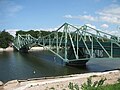
Karosta constitutes the northernmost district of , , occupying nearly one-third of the city's territory and situated along the coast. It is geographically separated from Liepāja's central areas by the Karosta Canal, with connectivity provided primarily through bridges such as the Oskars Kalpaks Bridge, a built in 1906. The district encompasses prominent coastal features, including the Northern Breakwater—the longest in Latvia—and surrounding fortifications that extend along the shoreline. Founded in 1890 by order of Tsar Alexander III as the Port of Emperor Alexander III, Karosta was engineered as an autonomous settlement equipped with independent infrastructure, such as an electric power station, water supply system, schools, and the St. Nicholas Orthodox Naval Cathedral. Its physical layout reflects a deliberate fusion of utilitarian design and elaborate late-19th-century ornamental , incorporating defensive structures like the Northern Forts, Fortification Battery No. 3, and the bastion system. The urban configuration emphasizes functionality for naval operations, with wide avenues suited for parades and a network of , administrative buildings, and facilities arranged in a semi-grid pattern amid open terrains and ruinous coastal defenses. Historically maintained as a restricted zone inaccessible to civilians until 1994, the layout preserves a surreal, fortress-like character blending intact heritage sites with derelict Soviet-era elements.

Key Infrastructure and Urban Design

Karosta's urban design stems from its foundation as a Russian Imperial naval fortress in the late 19th century, organized as an autonomous military settlement encompassing barracks, administrative facilities, schools, a church, and independent utilities including an electric power plant and water supply system. This layout, occupying approximately one-third of Liepāja's area, prioritized defensibility through integrated fortifications such as the star-shaped Northern Forts and Redans, complemented by canals that served dual roles in navigation and protection. The Karosta Canal, excavated from 1894 to 1901 and measuring 3.5 kilometers in length, forms a core hydrotechnical element, delineating the district's boundaries and facilitating naval access. The Oskars Kalpaka Turning Bridge, constructed in 1906, provides the principal land connection to central , historically swinging open daily to accommodate ship passage through the canal. Supporting this infrastructure, the Karosta Water Tower—built in at 37 meters tall in red brick—supplied to the enclosed base until 1989 and stands as a of , recognized as a local cultural monument in 2010. Soviet from the onward modified the urban fabric with additions like range-finder towers in 1940 and rail artillery command posts in 1954, alongside mass-constructed panel-block for families, which dominated the residential landscape and reinforced the closed-town character until Latvia's independence in 1991. Post-Soviet developments emphasize , including an expanding since the 2010s and a NATO-funded naval port upgrade allocated 160 million euros for enhanced strategic infrastructure.

Demographics and Social Composition

Historical Population Shifts

During the late , Karosta—originally established as a fortified naval outpost by the between 1894 and 1906—attracted a modest centered on , engineers, and laborers involved in its construction and operation, estimated in the low thousands and dominated by ethnic and other imperial subjects. This military-focused demographic persisted through and the interwar Latvian Republic, with limited civilian growth due to its strategic restrictions, though precise census data for the district remains sparse prior to Soviet incorporation. Soviet occupation from 1940, intensified after 1945, transformed Karosta into a major closed military town (similar to Soviet ZATO zones), driving rapid population expansion through the resettlement of personnel, officers, and families from across the USSR, predominantly ethnic and . By 1989, at the Soviet peak, Karosta's resident population reached approximately 25,000, reflecting broader trends where the city's total swelled to 114,000 amid heavy , with comprising 43.1% of inhabitants versus 38.8% . This influx prioritized support over local integration, fostering ethnic segregation. Latvia's 1991 independence triggered a sharp reversal as the Russian military withdrawal concluded in August 1994, prompting mass emigration of non-citizen residents—many stateless or opting for Russia—amid economic collapse and citizenship policies favoring ethnic Latvians. Karosta's population plummeted by over 75%, from 25,000 to roughly 6,000 by 2000, exacerbating urban decay with thousands of vacated apartments and barracks. Liepāja overall lost about 22% of its residents in the 1990s, but Karosta bore the brunt due to its military dependency. By 2011, stabilization hovered around 7,000, with a higher proportion of Latvians as remaining Russian-speakers integrated or departed, though depopulation persists amid regional emigration.

Current Ethnic and Socio-Economic Profile

Karosta, a district in northern , , has an estimated population of approximately 7,000 residents as of recent municipal assessments. This figure represents about 10% of 's total population of around 68,000. The area is characterized by low at 431 inhabitants per square kilometer, reflecting significant post-Soviet depopulation and urban shrinkage. Ethnically, Karosta features a high concentration of minorities, including , , and , resulting in an overwhelmingly Russian-speaking community. While overall has 60% ethnic and 26% Russians, Karosta's composition skews toward non-Latvian majorities due to its legacy as a Soviet that attracted Russian-speaking and families. About 20% of residents are school-aged children, contributing to a relatively youthful demographic profile compared to the city average. Socio-economically, Karosta faces pronounced challenges, including the highest risk of within and lower average household incomes. These issues trace to following the Soviet withdrawal in , leading to abandoned military and limited economic opportunities. City-wide indicators provide context: stands at 6.2%, with average gross monthly salaries at €708, but Karosta's minority-heavy, post-industrial profile likely exacerbates these rates through structural barriers and skill mismatches. Efforts to address inclusion involve community events and infrastructure improvements, yet persistent deprivation underscores the district's vulnerability.

Historical Development

Imperial Russian Foundation (1890s–1917)

In the early 1890s, the identified Libau (modern ) as a strategic location for a new due to its status as the only ice-free port in the under Russian control, contrasting with the vulnerability of to freezing conditions and potential German threats. On August 12, 1893, Emperor Alexander III presided over an official ceremony marking the establishment of the naval base, initiating planning for extensive fortifications and in the northern district that would become known as Karosta. Construction of the fortress complex and military city, originally named the Port of Emperor Alexander III ( Aleksandra III osts), commenced shortly thereafter, spanning from 1894 to 1905 and involving the erection of defensive batteries, , and supporting facilities to house up to 30,000 personnel. The fortifications, ordered by Alexander III, were designed primarily to safeguard the naval base against naval incursions from the , incorporating batteries and earthworks as part of a broader effort to bolster the Baltic Fleet's presence. By the early 1900s, Karosta had evolved into a self-contained military enclave connected to central via infrastructure like the Kalpaka Bridge, facilitating logistics for shipbuilding and fleet operations. During the (1904–1905), the base temporarily hosted elements of the , including the departure of the Second Pacific Squadron from Libau in October 1904, underscoring its operational readiness despite the empire's naval setbacks elsewhere. Through until , Karosta served as a key defensive outpost for Russian forces in the Baltic theater, with its batteries engaging in sporadic actions against German naval elements, though the broader region's strategic retreat limited sustained engagements. Russian command maintained the base's fortifications amid escalating pressures, but by late , revolutionary unrest within the empire began undermining military cohesion, setting the stage for subsequent German advances that captured in 1918.

Soviet Expansion and Militarization (1940s–1991)

Following the mutual assistance pacts imposed by the Soviet Union on Baltic states in 1939, Soviet forces entered Karosta and established a naval base, deploying thousands of sailors and constructing initial defensive positions including long-range artillery at the Liepāja Fortress batteries. In 1940, amid the full Soviet occupation of Latvia in June, four concrete cannon bases with a 25 km range, a command post, and a range-finder tower were built to bolster coastal defenses. These developments preceded Nazi German occupation from 1941 to 1945, after which Soviet forces reclaimed the area in May 1945 as part of the Baltic Offensive. Postwar reconstruction in the late transformed Karosta into a fortified hub for the Soviet , with expansions including a new command post and tower for 180 mm rail in 1954 adjacent to earlier structures. The base evolved into a primary facility, accommodating 16 submarines and serving as a storage site for nuclear weapons, underscoring its strategic role in naval projections. A bunker was constructed in the Karosta canal basin to shelter vessels, while the port was sealed to civilian shipping in 1967, enforcing total military control. Karosta operated as a closed military town, restricted to authorized personnel and off-limits to Latvian civilians and foreigners, spanning nearly one-third of Liepāja's territory and functioning as the largest such installation in the Baltics. Housing for up to 30,000 Soviet military personnel and their families was rapidly developed, particularly through dozens of prefabricated apartment blocks from the 1960s onward, creating a self-contained Eastern Bloc-style garrison with independent utilities, schools, and repurposed sites like the St. Nicholas Naval Cathedral converted into an entertainment venue. Beaches were fortified with patrols, trenches, and barriers to prevent unauthorized access. The base remained integral to Red Banner Baltic Fleet operations until the Soviet withdrawal began in 1991, prompted by Latvia's declaration of independence on August 21 of that year.

Post-Soviet Independence Era (1991–Present)

![Karosta Prison museum exhibition][float-right] The withdrawal of Russian forces from , including Karosta, was completed on , 1994, marking the end of the Soviet-era of the district. This event followed 's in 1991 and negotiations that delayed full troop removal due to logistical and diplomatic challenges. Post-withdrawal, Karosta experienced severe depopulation and socioeconomic decline, as the district's economy had been entirely dependent on activities. Many residents, including ethnic who formed a significant portion of the , emigrated to , exacerbating Liepāja's broader drop since 1994. Unemployment soared, leading to widespread abandonment of Soviet-era barracks and infrastructure, which fell into disrepair. In the late 1990s and early 2000s, the area gained a reputation for elevated street crime and drug-related issues amid the lack of investment and services. Documentaries from the period highlight residents coping with crumbling infrastructure and social decay in the former closed garrison town. Revitalization initiatives emerged in the 2000s, leveraging Karosta's military heritage for tourism. The historic garrison prison, constructed around 1900 and used for disciplinary purposes through the Soviet era, was converted into a museum offering guided tours and interactive "behind bars" experiences simulating inmate conditions. Preservation efforts have focused on forts, blockhouses, and naval structures, attracting dark tourism visitors interested in Cold War remnants. Recent projects include the 2022 opening of the Karosta and War of Independence Museum in the , featuring exhibitions on local . Environmental improvements, such as the ongoing cleanup of the funded by EEA Grants, aim to restore and urban usability as of 2024. These developments have fostered a niche cultural scene, blending preserved with artistic interventions, though the district remains marked by contrasts between revitalized sites and persistent underdevelopment.

Military and Strategic Role

Fortress Architecture and Defenses

Karosta's fortress architecture formed part of the broader Liepāja Sea Fortress complex, initiated by Russian Tsar Alexander III in the late 1890s to safeguard the naval base against incursions from the neighboring German Empire. Construction spanned from 1890 to 1906, incorporating a ring of coastal fortifications around the city, with an estimated total cost of 45 million gold roubles. The design emphasized earthworks, artillery emplacements, and underground bunkers, exploiting the flat dunes and straight shoreline for optimal defensive positioning. Central to the defenses were the Northern Forts, designated as Fortress Battery No. 1, built in the northern sector to house six 152 mm guns capable of engaging naval threats. These structures featured casemates, ammunition storage vaults, and observation posts, with the battery undergoing live-fire testing in November 1908. Adjacent Battery No. 2, positioned inland atop dunes, included 16 mortar pits supplied via subterranean magazines to support against amphibious assaults. Battery No. 3 further bolstered northern flanks, though significant portions have since eroded into the due to wave action. The system integrated logistical elements such as canals linking fort segments for water-based transport and a narrow-gauge railway for rapid ammunition movement, drawing inspiration from fortifications like Port Arthur. Defensive perimeters relied on earthen ramparts and moat-like ditches rather than high stone walls, prioritizing concealment and rapid gun traversal over static barriers. Soviet-era modifications in the added anti-aircraft positions and reinforced bunkers, but the core architecture retained its Imperial Russian configuration focused on . Following the Soviet reoccupation of after , Karosta was repurposed as a key operational hub for the Soviet , capitalizing on its ice-free deep-water harbor to enable year-round naval deployments in the . The base functioned primarily as a facility, housing 16 diesel-electric submarines capable of patrolling and projecting power against potential threats in the region. A specialized bunker constructed in the Karosta canal basin facilitated maintenance, repairs, and covert loading operations, enhancing the fleet's readiness for extended underwater missions during the standoff. storage depots were integrated into the complex, supporting the arming of submarines for strategic deterrence roles amid escalating East-West tensions from the late 1940s through the 1980s. By 1967, the port was sealed to all civilian shipping, designating Karosta as a fully closed zone inaccessible even to Liepāja's local population, with entry permitted only via military checkpoints and special passes. This isolation sustained uninterrupted base functions, accommodating up to 30,000 Soviet naval personnel, officers, and dependents in a self-contained featuring independent power plants, , , and training facilities. Daily operations emphasized submarine crew training, vessel overhauls, and logistical support for maneuvers, positioning Karosta as one of the Soviet Union's largest naval installations in the theater until the USSR's dissolution in 1991. Defensive blockhouses and fortified positions ringed the perimeter, integrating to safeguard against amphibious incursions and aerial attacks.

Legacy of Military Installations

![Ruins of the Northern forts](./assets/Zieme%C4%BCu_forti1616 The legacy of Karosta's military installations encompasses a vast array of Tsarist Russian and Soviet-era fortifications, naval infrastructure, and support buildings that shaped the district's identity as a strategic outpost. Constructed primarily between the 1890s and early 1900s under Imperial Russian auspices, these included coastal defense batteries, sea forts, and the Northern Forts complex, designed to protect against naval incursions with concrete emplacements, cannon positions, and command structures. During the Soviet period from 1940 to 1991, the installations expanded to support a major accommodating up to 30,000 military personnel and families, featuring missile ship facilities, blockhouses, and restricted harbor piers until the final withdrawal of Russian forces on June 1, 1994. Post-Soviet abandonment led to the deterioration of many structures, with ruins of the Northern Forts—among the most visually striking remnants—now partially eroded by coastal processes, including wave action and sediment loss that threaten isolated sea fort buildings and ammunition stores rising from the water. Preservation efforts have repurposed select installations for , such as the Karosta Prison, originally built in 1900 as a detention facility for naval personnel and operational through successive regimes, now functioning as Europe's only publicly accessible museum with exhibitions on incarceration history. The Northern Pier and fortifications also contribute to guided tours highlighting architectural and historical significance, transforming derelict assets into cultural landmarks. This enduring physical footprint underscores Karosta's transition from a closed Soviet —where civilian access was prohibited—to an open neighborhood, though many Soviet-era blockhouses and remain in disrepair, symbolizing the abrupt economic and demographic disruptions following de-militarization. Exhibitions like "The Legacy of Soviet Occupation in Karosta" at the Liepāja Museum document the installations' role in occupation-era control, emphasizing tangible remnants such as concrete cannon bases erected in 1940 amid early Soviet incursions. Ongoing challenges include balancing erosion mitigation with heritage conservation, as military ruins serve dual roles as monuments to past conflicts and assets for local revitalization, without significant modern military reuse beyond minor presence.

Economic and Urban Decline

Post-Soviet Deindustrialization and Abandonment

Following the restoration of Latvian independence in 1991, the Soviet Baltic Fleet's withdrawal from Karosta progressed slowly, with full evacuation completed on June 1, 1994, when the last three Russian missile ships departed the port. This closure dismantled the district's core economic pillar as a self-contained naval base supporting thousands of personnel, ancillary industries, and supply chains integrated into the Soviet planned economy. The abrupt loss of military operations triggered immediate , as ship repair facilities, logistics operations, and related manufacturing—once employing a substantial portion of the local —ceased functioning without viable market alternatives. Latvia's broader economic transition amplified these effects; national GDP plummeted 49% between 1990 and 1993 amid the collapse of Soviet trade networks and exceeding 900% in 1992. In Karosta, closures and surged, with the district's isolation as a former closed military zone hindering rapid repurposing of for civilian use. Population decline compounded the abandonment, with shrinking 25% from 112,000 residents in 1990 to 84,000 by 2011, driven by a sharp exodus between 1993 and 1995 as Soviet troops and families—numbering in the thousands—relocated. , housing 13-14% of the city's populace, saw acute depopulation and underutilization of , administrative buildings, and fortifications, leading to widespread , looting, and structural decay post-evacuation. This urban shrinkage reflected the district's dependence on militarized , leaving behind derelict Soviet-era assets amid Latvia's painful shift to .

Crime, Poverty, and Social Decay

Following the withdrawal of Soviet forces in 1994, Karosta experienced severe economic collapse, resulting in widespread unemployment and poverty among its predominantly Russian-speaking residents. The district, once home to tens of thousands of military personnel and families, saw its population plummet due to the base's abandonment, with estimates indicating a drop to around 8,900 inhabitants by the late 2000s. This deindustrialization left many former service members and dependents without livelihoods, exacerbating social exclusion in a region marked by poverty linked to post-industrial decline. High fueled petty , drug abuse, and , earning Karosta a reputation as a dangerous enclave plagued by activity and in the immediate post-Soviet years. Local initiatives have noted persistent criminal activity and , including and , contributing to the area's stigmatization as a high-risk environment. Liepāja's broader perceptions, including moderate levels of property crimes and drug-related issues, reflect these challenges, though official district-specific statistics remain limited. Social decay manifested in semi-abandoned Soviet-era blocks and neglect, fostering isolation and issues amid dramatic depopulation. By the , efforts to address these intertwined problems persisted, but the legacy of economic abandonment continued to hinder community cohesion and development.

Revitalization and Modern Developments

Tourism and Heritage Preservation Initiatives

Karosta's tourism development centers on its preserved Soviet-era military structures, with the emerging as a primary attraction since its opening to visitors in the early . Constructed around as a tsarist naval detention center and later used by Nazi and Soviet forces, the facility offers guided tours lasting 45 minutes, featuring interactive simulations of prisoner interrogations and historical reenactments to educate on its operational history without alteration to original cells and corridors. These experiences, available hourly without advance booking for small groups, aim to preserve Liepāja's while boosting visitor numbers to the district. Broader heritage preservation efforts include the project, which links Karosta's sites—such as the Northern Forts, , and —into themed routes across the Baltics, emphasizing 20th-century fortifications. An Interreg-funded initiative has developed solutions for 11 Estonian-Latvian sites, including pilots for enhanced visitor in Karosta since 2020. The 10-kilometer , established around 2020, connects key landmarks like the recently public-access and preserved artillery batteries of the Northern Forts, half-submerged and maintained as historical ruins. Local bottom-up groups, including the Karosta preservation association formed by enthusiasts, focus on documenting and exposing Soviet through site maintenance and public awareness campaigns. As part of Liepāja's designation as 2027, ongoing projects integrate art installations and nature trails to reframe Karosta from a restricted Soviet zone into a cultural destination, with open calls for innovative proposals launched in 2025. These initiatives prioritize historical authenticity over modernization, supporting economic reintegration while safeguarding tangible remnants like and blockhouses.

Infrastructure Improvements and Economic Projects

In recent years, significant investments have targeted Karosta's to enhance capabilities amid regional security concerns. allocated over €160 million for the development of a in the Karosta area, encompassing the of new berths, auxiliary support facilities, dredging operations, and land preparation for and Navy requirements. The 's design tender concluded on March 12, 2025, with technical documentation expected within six months and slated to commence in 2028. This initiative builds on prior enhancements, including a €30.3 million EU-co-funded for improving , which involved renovating hydrotechnical structures along the and northern breakwaters. Environmental rehabilitation efforts have focused on addressing Soviet-era contamination in the Karosta Canal. A feasibility study completed between August and October 2024, funded entirely by the Norwegian Financial Mechanism at €264,500, evaluated management options for a disposal site holding historically contaminated sediments, aiming to prevent further pollutant dispersion and support broader ecological restoration. This followed the removal of over 200,000 cubic meters of contaminated material in 2015 and 2023, as part of initiatives under Latvia's climate adaptation programs backed by EEA and Norway Grants. Such projects underscore ongoing commitments to sustainable port operations within the Liepāja Special Economic Zone (SEZ). Urban connectivity improvements include major road reconstructions linking Karosta to central Liepāja and the maritime port. In August 2025, repairs on Kalpaka iela commenced, budgeted at over €5.2 million with contributions from municipal funds (€700,000+) and utilities, to optimize vehicle and bicycle access. Complementary green space enhancements, such as expansions in Beberliņi Park, have incorporated EU-supported leisure facilities to boost local livability. Economic revitalization leverages Karosta's industrial heritage through the SEZ framework. The comprises 28 developed plots, financed via grants and municipal s, attracting logistics and manufacturing tenants. Broader SEZ strategies for 2023–2030 include establishing an offshore wind energy support hub in the of , alongside sediment remediation to enable commercial expansion. These efforts aim to diversify from reliance, though realization depends on sustained foreign and environmental compliance.

Challenges in Ongoing Renewal

Renewal initiatives in Karosta confront entrenched environmental contamination, notably in the Karosta Canal, where Soviet-era naval operations deposited hazardous sediments persisting for over three decades. Remediation efforts, supported by EEA and Norway Grants, have excavated and disposed of 164,403 cubic meters of polluted material by 2023, addressing nearly half the canal's length by early 2024, yet full cleanup demands ongoing investment amid complex sediment handling and disposal logistics. Socioeconomic obstacles, including chronic , , and elevated rates rooted in post-Soviet , hinder and investor confidence. Karosta's abandonment left a legacy of social decay, with deindustrialization-linked manifesting in dilapidated housing and limited economic opportunities, complicating community buy-in for projects like the 2027 initiatives. Depopulation exacerbates these issues, as Liepāja's overall shrinkage—evidenced by a roughly 30% drop since the Soviet peak—strains maintenance and public services, inflating costs for and health amid a shrinking tax base. This outflow, driven by limited jobs and amenities, perpetuates a cycle of underinvestment in Karosta's military relics and housing stock. Aging and further challenge renewal, with derelict Soviet installations vulnerable to advancement, necessitating costly fortifications to preserve heritage sites like northern forts while adapting them for or residential use. Low public engagement and skill gaps, including deficits, additionally impede and economic diversification efforts.

Cultural Representation and Perception

Attractions, Museums, and Events

Karosta's primary attraction is the Karosta Prison Museum, a former Tsarist and Soviet-era military detention center constructed around 1900, which operates as Europe's only garrison prison open to tourists. Guided tours, lasting 45-50 minutes and available hourly in Latvian, English, Russian, and other languages by arrangement, simulate the prisoner experience through theatrical elements including interrogations and harassment by actors portraying guards. The Northern Forts, part of Liepāja's 19th-century coastal defenses, feature preserved batteries and ruins that attract visitors interested in , with the first battery exemplifying artillery emplacements from the Imperial Russian era. The Redan Museum in Karosta details the district's development as a , displaying artifacts, a timeline of construction from onward, a 3D map, and exhibits on the including uniforms and weapons from 1919. Annual events include the Karosta Festival, held June 2-8 in 2025, featuring photo workshops, art installations, film screenings, music concerts, children's activities, and a fire show to engage locals and tourists with the area's heritage. The European Night of Museums in May incorporates Karosta Prison tours alongside historical reenactments and workshops. The Garden Festival occurs in August, utilizing Karosta's green spaces for cultural performances tied to the neighborhood's 130th anniversary celebrations in 2025.

Depictions in Media and Art

The 2008 documentary Karosta: Life After the USSR, directed by Peter King, portrays the district as a decaying remnant of Soviet might, focusing on residents' accounts of post-independence abandonment, , and resilient community life amid derelict infrastructure. The film, distributed on platforms like , emphasizes the human cost of imperial dissolution without romanticizing hardship, drawing from direct interviews to illustrate isolation and adaptation in the former . In Children of Karosta (2010), filmmaker Andris Kļeniņš depicts family life in the rundown Soviet-era housing, highlighting environmental decay and social stagnation through Viktorija's household narrative, underscoring generational ties to the site's militarized past. A 2008 episode of featured Karosta Prison as a site of investigation, framing its Soviet-era cells and barracks as haunted by historical trauma, though evidence remained anecdotal and unverified. Artistic representations include a large-scale by Latvian Eduards Dubrovskis on Invalīdu Street adjacent to Karosta Prison, symbolizing lingering state authority through imagery of abandoned power structures. The annual Karosta Festival, ongoing since at least 2015, commissions site-specific artworks, performances, and exhibitions in former naval facilities, transforming ruins into venues for contemporary creation that confront the area's militaristic legacy. projects, such as the 2007 BOP series The People of Karosta, document inhabitants amid post-industrial blight using analog film techniques, emphasizing authentic portraits over stylized narratives. Initiatives like the Karosta Water Tower Project invite to engage derelict structures for temporary installations, fostering experimental responses to the site's remnants.

Controversies and Debates

Environmental Degradation and Pollution

Karosta, as a former Soviet in , , inherited significant from decades of operations, including ship repairs, fuel handling, and waste disposal that contaminated the surrounding harbor and canal systems. The Karosta Canal, central to the base's logistics, accumulated heavy sediments laden with hydrocarbons, such as lead, , , and , and other from oil spills and industrial runoff during the Soviet era. and in the area showed visible signs of contamination, with assessments in the late 1990s noting obvious degradation in Harbor and speculating on widespread subsurface based on observed evidence like stained soils and derelict . Remediation efforts began in the post-Soviet period, focusing on the as a priority due to its role in ongoing port activities and risks to local . By 2022, the Liepāja Authority initiated procurement for and removal in the historically polluted Karosta , targeting the most contaminated sections to mitigate leaching into and the . Norwegian institutes NGI and NIVA provided technical support for analysis and cleanup strategies, confirming high levels from Soviet naval fleet activities. Progress advanced through international funding, including EEA and Grants, which enabled the removal of contaminated sediments from nearly half of the canal by early 2024, reducing risks to approximately 70,000 residents reliant on the area for water and economic uses. The project involved pumping out polluted materials and stabilizing sediments, with plans for continued long-term monitoring and further rehabilitation to address residual heavy metal and oil legacies. Despite these advances, full restoration remains challenged by the scale of Soviet-era deposits and the need for ongoing assessments of adjacent sites' with trace elements.

Soviet Legacy and National Memory Conflicts

Karosta served as a key Soviet naval base for the Baltic Fleet from the end of World War II until the withdrawal of Russian forces in 1994, functioning as a closed military town that housed up to 20,000 personnel and their families at its peak. The abrupt departure left behind extensive infrastructure, including barracks, blockhouses, and administrative buildings, which became symbols of the Soviet occupation period (1940–1941 and 1944–1991) in Latvia's national narrative. This era is widely regarded in Latvian historiography as an illegal occupation involving mass deportations, Russification policies, and suppression of national identity, contrasting with views among some ethnic Russian residents who associate it with stability and communal benefits. Post-independence de-Sovietization efforts in , intensified after Russia's 2022 invasion of , have focused on dismantling monuments and symbols glorifying the Soviet regime, with a 2022 authorizing the removal of over 60 such sites nationwide to counter perceived . In Karosta, these tensions manifest in debates over preserving utilitarian Soviet-era structures for their architectural and historical value versus viewing them as remnants of warranting or . Local preservation groups, such as the Karosta association, advocate for highlighting the site's —including pre-Soviet tsarist origins—to foster and economic reuse, arguing it educates on the occupation without endorsement. However, national policies emphasize dissonant heritage, where Soviet sites evoke trauma for many , leading to selective retention only if stripped of ideological elements. Ethnic divisions exacerbate these conflicts, as Karosta retains a significant Russian-speaking —descendants of Soviet —who have protested broader monument removals, such as Riga's Victory Monument in , framing them as erasure of shared rather than de-occupation measures. Stakeholder analyses of Soviet military sites like Karosta highlight potential socio-economic benefits from , yet underscore persistent divides: Latvian majorities prioritize causal disconnection from occupier legacies, while minorities invoke practical continuity and anti-erasure arguments. These dynamics reflect Latvia's ongoing reconciliation with its Soviet past, balancing empirical preservation of physical artifacts against realist acknowledgment of the occupation's coercive foundations.

References

Add your contribution
Related Hubs
User Avatar
No comments yet.