


Community hub
Recent from talks
Contribute something
Nothing was collected or created yet.
Hara Takashi
View on Wikipedia | This article includes a list of general references, but it lacks sufficient corresponding inline citations. (January 2011) |
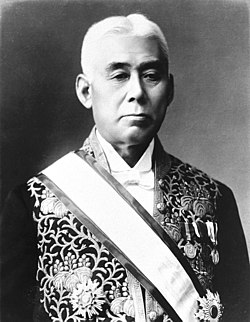
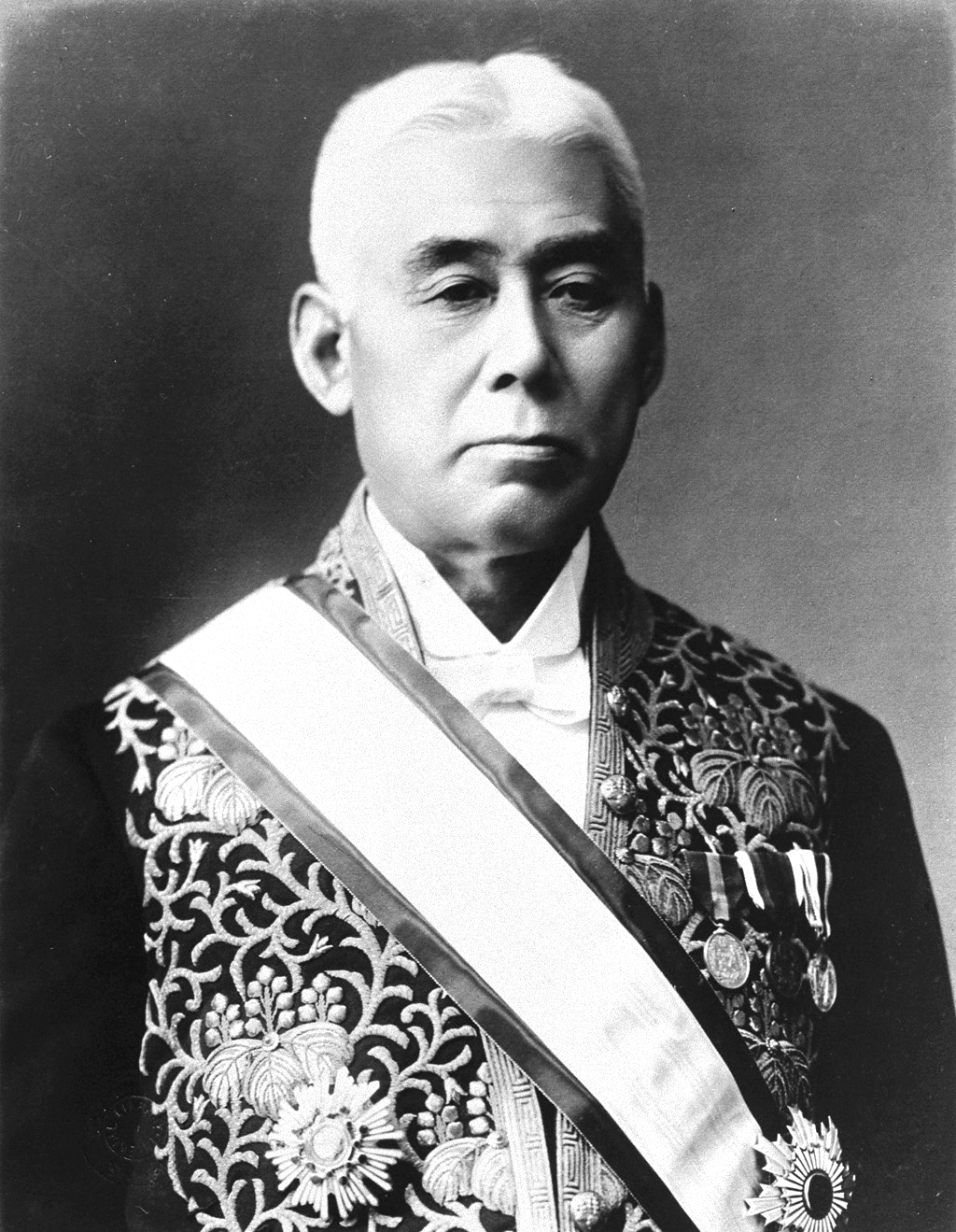
Hara Takashi (原 敬; 15 March 1856 – 4 November 1921), informally known as Hara Kei, was a Japanese politician who served as the Prime Minister of Japan from 1918 until his assassination. Hara was the first commoner and first Christian appointed to be Prime Minister of Japan, and was given the moniker of "commoner prime minister" (平民宰相, heimin saishō).
Key Information


Hara held several minor ambassadorial roles before rising through the ranks of the Rikken Seiyūkai and being elected to the House of Representatives. Hara served as Home Minister in several cabinets under Saionji Kinmochi and Yamamoto Gonnohyōe between 1906 and 1913. Hara was appointed prime minister following the Rice Riots of 1918 and positioned himself as a moderate, participating in the Paris Peace Conference, founding the League of Nations, and relaxing oppressive policies in Japanese Korea. Hara's premiership oversaw the Siberian intervention and the suppression of the March 1st Movement in Japanese-occupied Korea. Hara was assassinated by Nakaoka Kon'ichi, a far-right nationalist, on 4 November 1921.
Early life
[edit]Hara Takashi was born on 15 March 1856 in Motomiya, a village near Morioka, Mutsu Province, into a samurai family in service of the Nanbu Domain. Hara's family had resisted the Meiji Restoration in 1868 and fought against the establishment of the very government which Hara himself would one day lead. Hara was an outsider in Japanese politics due to his association with a former enemy clan of the new Imperial Government, which at the time was dominated by the former clans of Chōshū and Satsuma domains.
Hara left home at the age of 15 and moved to Tokyo by boat. Hara failed the entrance examination of the prestigious Imperial Japanese Naval Academy, and instead joined the Marin Seminary, a free parochial school established by the French. It was here that he learned to speak French language fluently. Soon after that, Hara joined the law school of the Ministry of Justice (later University of Tokyo), but left without graduating to take responsibility for a student protest against the school's room and board policy. At the age of 17, Hara was baptized as a Catholic, taking on "David" as his baptismal name. Even though it was speculated that Hara became Christian for personal gain at the time, he remained a Christian in public life until the day he died.[citation needed] At the age of 19, Hara chose to classify himself as a commoner (平民, heimin) rather than his family's status as shizoku (士族), a distinction for former samurai families who were not made into kazoku (華族; aristocratic peers). At various times later in his political career, offers were made to raise his rank, but Hara refused them every time on the basis that it would alienate himself from the common men and limit his ability to gain entrance to the House of Representatives. Beginning in 1879, Hara worked as a newspaper reporter for three years, but quit his job in protest over efforts of his editors to make the newspaper a mouthpiece for the Rikken Kaishintō, a political party led by Ōkuma Shigenobu.
Political career
[edit]In 1882, Hara took a position in the Ministry of Foreign Affairs at the request of Inoue Kaoru, the Foreign Minister at the time. Based on discussions Hara had with him on his views for the future of Japanese politics during a trip both men took to Korea in 1884, Inoue appointed Hara to become consul-general in Tianjin, and the first secretary to the embassy of Japan in Paris. Hara served as Vice-minister of Foreign Affairs and as ambassador to Korea under Mutsu Munemitsu. He then left the Foreign Ministry to work as a journalist for several years, and became the manager of a newspaper company, the Mainichi Shimbun based in Osaka.
In 1900, Hara returned to politics and joined Itō Hirobumi's newly founded Rikken Seiyūkai, becoming the first secretary-general of the party.
Hara ran successfully for the House of Representatives as a representative from his native Iwate Prefecture and was appointed Minister of Communications in the Fourth Ito Administration. Hara later served as Home Minister in several cabinets between 1906 and 1913, a powerful position that made it able for him to effect many reforms. Hara realized that a fundamental political issue in Japan was the tension between the elected government and the appointed bureaucracy, and his career was dedicated to weakening the power of the non-elected bureaucrats. As Home Minister, Hara tried to implement meritocracy by systematically dismissing local bureaucrats in local governments in every capacity from governors down to high school principals. Any public employee who fell under his power would be replaced by someone in whom he saw real ability instead of a mere useful recipient of a favor or nepotism. Thus, Hara created a system in which people with talent could rise to the top of the bureaucracy, regardless of their background or rank. Hara also understood that maintenance of the supremacy of the elected leaders depended on the government's ability to develop the Japanese national infrastructure and on a long-term economic plan that would address regional as well as national interests.
In 1914, after heated debate, Hara was appointed the president of the Rikken Seiyūkai to replace the outgoing leader, Saionji Kinmochi. Under Hara's leadership, Rikken Seiyūkai first lost its majority control of the Diet in the 1915 general elections, but regained its majority in the 1917 general elections.
Premiership (1918–1921)
[edit] Hara during his premiership | |
| Premiership of Hara Takashi 29 September 1918 – 4 November 1921 | |
| Monarch | Emperor Taishō |
|---|---|
| Cabinet | Hara Cabinet |
| Party | Rikken Seiyūkai |
| Election | 1920 |
| Seat | Naikaku Sōri Daijin Kantei |
| Constituency | Morioka |
 Emblem of the Government of Japan | |

In 1918, Prime Minister Terauchi Masatake fell from office as a result of the Rice Riots of 1918, and Hara was appointed as his successor on 28 September. It was the first cabinet headed by a commoner. Also, Hara was the first civilian in Japanese history to become the administrative chief of any of the armed services, when he temporarily took charge of the Navy Ministry, in absence of the Navy Minister, Admiral Katō Tomosaburō, who was serving as the Japanese representative at the Washington Naval Conference.
As prime minister, Hara suffered in terms of popularity, because he refused to use his majority in the lower house to force through universal suffrage legislation. Hara's cautious approach disappointed communists and socialists, who accused him of delaying universal suffrage as it would endanger his position in power. As a party politician, Hara had never been the favorite of the conservatives, bureaucrats and military, and he was widely despised by the ultranationalists. During his term of office, Japan participated in the Paris Peace Conference, and joined the League of Nations as a founding member. In Korea, Japan used military force to suppress the Samil Rebellion, but later began more lenient policies aimed at reducing opposition to Japanese rule. Particularly following the Samil Uprising, Hara pursued a conciliatory policy towards colonies, particularly Korea. Hara arranged for his political ally, Saitō Makoto, a political moderate, to take over as Governor-General of Korea; he instituted a colonial administration consisting mainly of civilians rather than military; and he permitted a degree of cultural freedom for Koreans, including (for the first time) a school curriculum that featured Korean language and history. Hara also sought to encourage a limited amount of self-rule in Korea – provided that, ultimately, Koreans remained under Japanese imperial control. His overtures, however, won few supporters either among Koreans or Japanese; the former considered them inadequate, the latter considered them excessive.
Hara oversaw most of the Siberian intervention, which led to growing antagonism between the government and the military.
Of Hara's supposedly proactive policies, most were directed toward politicians, merchants, and conglomerates. In addition, there are some differences in the evaluation of Hara's policies before and after his inauguration, such as the repeated incidents of jail charges and his negative attitude toward the implementation of the universal suffrage law, which was the people's great desire.
Assassination
[edit]

On 4 November 1921, Hara was stabbed to death by Nakaoka Kon'ichi, a right-wing nationalist railroad switchman, at Tokyo Station while catching a train to Kyoto for a party conference.[1] Nakaoka's motives for assassinating Hara were his beliefs that Hara was corrupt, involving the zaibatsu in Japanese politics, going to pass universal suffrage, and his handling of the Nikolayevsk incident during the Siberian intervention a year earlier. Nakaoka was also influenced by his boss, who was a vocal opponent of Hara. Nakaoka was found guilty of murder. Prosecutors sought a death sentence, but Nakaoka was instead sentenced to life imprisonment.[2] In 1934, he was released as part of a general amnesty issued by the Emperor to mark the birth of the Crown Prince, after which he emigrated to Manchuria.[3]
Hara was replaced by Uchida Kōsai as acting prime minister until Uchida was replaced a week later by Takahashi Korekiyo.
As opposed to many of his contemporaries, Hara lived a relatively simple lifestyle in a rented home near Shiba Park in downtown Tokyo. In his will, he left very few assets behind but among these was his diary, stating that "After a period of some years my diary must be made public. It is the most valuable of all my possessions, so it must be protected." According to the will, Hara's diary was made public and what came to be called the Hara Diary (原日記, Hara Nikki) turned out to be one of the most valuable first hand accounts of the political scene in that era. Most of his daily activities are written along with opinions and thoughts regarding the political figures of the time. Hara's diary itself is thousands of pages long and reveals, in depth, a broad range of information previously unknown to historians.
Honors
[edit]From the corresponding article in the Japanese Wikipedia
Japanese
[edit]- Order of the Sacred Treasure, Fifth Class (28 December 1893)
- Grand Cordon of the Order of the Rising Sun (4 April 1914; Third Class: 16 June 1896)
- Grand Cordon of the Order of the Rising Sun with Paulownia Flowers (7 September 1920)
- Grand Cordon of the Order of the Chrysanthemum (4 November 1921; posthumous)
Foreign
[edit] Belgium: Commander of the Order of Leopold (7 July 1888)
 Spain: Knight Grand Cross of the Order of Isabella the Catholic (26 October 1896)


References
[edit]- ^ Mitchell, Richard H. (1996). Political Bribery in Japan. University of Hawaii Press. p. 44. ISBN 9780824818197.
- ^ "Nakaoka". Sioux City Journal. 1922-06-13. p. 3. Retrieved 2023-07-20.
- ^ "MANCHUKUO: Pioneer Assassin". Time. July 9, 1934. Retrieved September 19, 2025.
Bibliography
[edit]- Najita, Tetsuo: Hara Kei in the Politics of Compromise 1905–1915. Harvard Univ. Press, 1967.
- Olson, L. A.: Hara Kei – A Political Biography. Ph.D.diss. Harvard University, 1954.
- Duus, Peter: Party Rivalry and Political Change in Taisho Japan. Cambridge/Mass.: Harvard University Press, 1968.
External links
[edit]


- Hara Kei Memorial Hall
- Tsuyoshi Masuda, Takashi Hara and China, part 1
- Tsuyoshi Masuda, Takashi Hara and China, part 2
- Newspaper clippings about Hara Takashi in the 20th Century Press Archives of the ZBW
| Empire of Japan (1868–1947) |
| ||||||
|---|---|---|---|---|---|---|---|
| Japan (1947–present) |
| ||||||

| International | |
|---|---|
| National | |
| Academics | |
| People | |
| Other | |

Hara Takashi
View on GrokipediaHara Takashi (原敬; March 15, 1856 – November 4, 1921) was a Japanese politician who served as the 19th Prime Minister of Japan from September 1918 until his death in 1921, becoming the first commoner and non-aristocrat to hold the office.[1][2] As leader of the Rikken Seiyūkai party, he pioneered party-centered governance by forming the first cabinet largely drawn from elected members of the Imperial Diet, shifting power away from oligarchic cliques toward parliamentary representation.[1][3] Hara's tenure emphasized pragmatic adaptation to the post-World War I international order, including efforts to strengthen ties with Western powers like the United States while navigating racial equality debates at global forums.[2] He advocated for gradual democratic reforms, such as expanding male suffrage, though his administration faced criticism for prioritizing party interests amid economic strains and colonial policies in Korea that blended assimilation rhetoric with firm control.[4] His leadership represented a brief era of Taishō democracy, fostering political pluralism before militarist influences resurged.[3] On November 4, 1921, Hara was assassinated at Tokyo Station by Nakaoka Kon'ichi, a disgruntled railway worker enraged by perceived partisan favoritism and corruption in government contracts, an act that symbolized backlash against emerging party politics from ultranationalist fringes.[5][2] Despite his assassination curtailing further reforms, Hara's legacy endures as a foundational figure in Japan's transition from oligarchy to representative rule, though his pragmatic conservatism limited deeper structural changes.[1][3]
Early Life
Childhood and Family Background
Hara Takashi, born Kenjiro on March 15, 1856, in the village of Motomiya near Morioka in Mutsu Province (present-day Iwate Prefecture), hailed from a high-ranking samurai family within the Nanbu Domain.[6][1] His ancestors had served the Nanbu clan for generations, though the domain's northeastern location contributed to the family's modest economic circumstances amid the feudal system's decline.[2] Hara's father, Naoji, died when he was a boy, leaving his mother, Ritsu, to raise Hara and his six siblings. Ritsu, known for her strong character and frugality, profoundly shaped his early worldview, instilling values of resilience and pragmatism that influenced his later political realism.[2] At age 19, Hara renounced his inherited shizoku (former samurai) status in favor of heimin (commoner) classification, a decision reflecting both personal ambition and the era's social upheavals following the Meiji Restoration.[1]Education and Early Influences
Hara Takashi was born on March 15, 1856, in the Nanbu domain (present-day Iwate Prefecture) to a family of high-ranking samurai who suffered financial ruin following the domain's defeat in the Boshin Civil War and the Meiji Restoration of 1868.[1] His father died when he was young, leaving his mother, Ritsu, to raise the family by selling goods to cover reparations debts; she instilled in him values of hard work, integrity, and the importance of education amid hardship.[1] As a precocious child, Hara received initial instruction at a local temple-run school before earning a scholarship to the Sakujinkan academy in Morioka around age 13 in 1870, a prominent institution for domain elites that exposed him to classical Japanese learning and early modern thought.[2] In his late teens and early twenties, he pursued Western languages and ideas, studying French for approximately two and a half years at the Ministry of Justice's law school in Tokyo without graduating, and enrolling in a French-language school operated by Nakae Chōmin, a key figure in the Freedom and People's Rights Movement.[1][2] These experiences profoundly shaped Hara's worldview, with Nakae's teachings on Jean-Jacques Rousseau's concepts of the "common good" and gradual political reform influencing his pragmatic approach to governance, while his mother's emphasis on resilience and his samurai heritage fostered a commitment to public service over aristocratic privilege.[1] Later, a three-year sojourn in Paris to study international law and observe European politics further honed his understanding of diplomacy and constitutionalism, bridging traditional Japanese ethics with modern liberal influences.[1]Entry into Politics
Journalistic Beginnings
Following his graduation from Tokyo Imperial University, Hara Takashi entered journalism in 1879, initially working as a reporter for the Yūbin Hōchi Shinbun, a prominent daily newspaper.[7] He also contributed to the Daitō Nippō during this period.[7] This early involvement lasted approximately three years, during which Hara gained exposure to reporting on political and social affairs amid Japan's rapid modernization in the Meiji era.[7] Hara resigned from his journalistic positions in 1882, reportedly in protest against editorial pressures to align the newspapers with the interests of the Rikken Kaishintō political party, reflecting his preference for independent coverage over partisan advocacy.[8] Influenced by liberal thinker Nakae Chōmin, whom he encountered during his student years, Hara had begun writing newspaper columns, honing skills in public commentary that underscored his emerging interest in political discourse.[2] After a decade in the Foreign Ministry, Hara returned to journalism in 1897 upon resigning as vice minister, joining the Ōsaka Mainichi Shimbun at the recommendation of former Foreign Minister Mutsu Munemitsu.[1] Promoted to manager the following year, he oversaw editorial operations and implemented reforms to enhance the paper's influence.[1] During this second stint, Hara served as editor-in-chief and eventually president, leveraging his bureaucratic experience to expand the newspaper's reach before departing in 1900 to focus on party politics with the Rikken Seiyūkai.[2][1]Initial Political Roles and Mentorship
Hara transitioned from journalism to politics in 1900 by joining the newly founded Rikken Seiyūkai (Constitutional Association of Political Friends), a major political party established by the influential statesman Itō Hirobumi to promote constitutional government and party-based administration.[1][2] This affiliation marked his formal entry into partisan politics, leveraging his prior experience in the Foreign Ministry and journalism to contribute to the party's organizational development amid Japan's evolving Meiji-era political landscape.[7] Under Itō's leadership, Hara benefited from mentorship that emphasized pragmatic party management, fundraising, and negotiation skills essential for navigating Japan's oligarchic system dominated by genrō (elder statesmen).[2] Itō, as a principal architect of Japan's modern constitution and multiple-time prime minister, provided Hara— a commoner outsider—with access to elite networks, enabling his rapid ascent within the Seiyūkai despite lacking aristocratic ties. This relationship was instrumental, as Itō's vision for party politics aligned with Hara's ambitions, fostering his role in party affairs and electoral strategies.[1] In 1902, Hara secured election to the House of Representatives from the Morioka constituency in Iwate Prefecture, his hometown region, beginning a series of consecutive terms that solidified his legislative presence.[1][7] His initial parliamentary roles focused on building Seiyūkai influence through coalition-building and policy advocacy, particularly on issues like fiscal reform and administrative efficiency, while cultivating loyalty among party members and local supporters. This period under Itō's indirect guidance honed Hara's political acumen, preparing him for higher responsibilities as the party vied for power against rival factions.[2]Rise to Prominence
Leadership in the Seiyūkai Party
Hara Takashi was elected the third president of the Rikken Seiyūkai (Constitutional Friends of Government Party) in 1914, succeeding Saionji Kinmochi as the party's formal leader.[7] Having joined the party upon its founding in 1900 and established himself as a key supporter of Saionji during the earlier "Kei-En" era of alternating cabinets between party and oligarchic factions, Hara focused on organizational modernization and electoral strategy to consolidate the Seiyūkai's position amid intensifying competition from rivals like the Kenseikai.[7][1] Under Hara's presidency, the Seiyūkai regained momentum after setbacks, emerging as the largest party in the House of Representatives following the April 20, 1917, general election, where it secured a leading share of seats through targeted appeals to rural and smallholder constituencies. His approach emphasized merit-based selection of candidates and policy priorities centered on citizens' welfare, including infrastructure and administrative reforms, rather than reliance on patronage or pork-barrel spending—even in his home Iwate Prefecture district, where he maintained voter support through consistent representation without district-specific favors.[1] This shift helped transform the Seiyūkai from an elite-aligned group into a more structured, mass-oriented political machine capable of sustaining influence in a democratizing Diet.[9] Hara's tenure as president also involved navigating internal factionalism and external pressures, such as the Taishō Political Crisis, by prioritizing party discipline and pragmatic alliances to position the Seiyūkai for governance.[10] By prioritizing electoral viability over ideological purity, he rebuilt the party's legislative strength, setting the stage for its dominance in the 1920 general election, where it won 278 of 464 seats.[11] His leadership underscored a commitment to party-centered politics, contrasting with the prevailing genrō-dominated system, though it drew criticism for compromising on universal suffrage and other progressive demands to protect the Seiyūkai's conservative rural base.[1]Key Positions in Government Prior to Premiership
Hara entered government service in the Ministry of Foreign Affairs in 1882, following an invitation from Foreign Minister Inoue Kaoru. He initially served as consul-general in Tianjin before advancing to director of the commercial bureau in 1892. Under Foreign Minister Mutsu Munemitsu, Hara rose to Vice-Minister of Foreign Affairs by 1895 and was appointed as minister to Korea from 1896 to 1897, handling diplomatic affairs during a period of heightened tensions on the peninsula.[1][8] After retiring from the Foreign Ministry in September 1897 to pursue journalism and Seiyūkai party activities, Hara reentered cabinet-level roles in 1906 as Minister of Home Affairs in Prime Minister Saionji Kinmochi's first administration, overseeing internal security, local governance, and electoral matters until the cabinet's resignation in 1908.[7] He held the same position again in Saionji's second cabinet from September 1911 to July 1912, focusing on administrative reforms amid growing party influence in politics.[1] In February 1913, Hara briefly returned as Home Minister in the Yamamoto Gonnohyōe cabinet, navigating domestic unrest including the Siemens scandal that led to its collapse later that year. These repeated Home Ministry appointments solidified Hara's reputation as a pragmatic administrator capable of balancing bureaucratic control with emerging democratic pressures.[1]Premiership (1918–1921)
Formation of the Cabinet and Domestic Reforms
Hara Takashi was appointed prime minister on September 29, 1918, following the resignation of the Terauchi Masatake cabinet, which had been destabilized by the nationwide Rice Riots earlier that month.[12] His formation of Japan's first true party cabinet, dominated by members of his Seiyūkai party except for the foreign, navy, and army ministers—who were selected to maintain equilibrium with non-party elites—signaled a departure from the prior trans-party oligarchic rule dominated by genrō (elder statesmen).[12] This structure prioritized elected politicians from the lower house of the Diet, reflecting Hara's strategy to consolidate party influence in governance while navigating resistance from bureaucratic and military factions.[1] The cabinet's composition emphasized pragmatic compromise, with Hara retaining the home affairs portfolio to leverage his experience in controlling local governance and police administration.[13] Domestically, the Hara government addressed immediate economic fallout from the Rice Riots by sustaining Terauchi-era interventions, including government purchases of rice to stabilize prices and mitigate urban shortages amid postwar inflation.[3] These measures aimed to restore social order without radical redistribution, prioritizing industrial development and fiscal expansion to harness the economic boom from World War I exports.[2] On political reforms, Hara pursued gradual enfranchisement, supporting the expansion of voting rights beyond the property-qualified electorate established in 1900, though he adopted a cautious stance against immediate universal male suffrage to avoid empowering socialist or radical elements that might disrupt Seiyūkai dominance.[6] [3] His administration introduced electoral boundary adjustments favoring Seiyūkai strongholds and sought to embed party loyalists in the bureaucracy, fostering a patronage system that tied regional economic projects to political support.[11] These efforts laid foundational steps for Taishō-era party politics but drew criticism for prioritizing partisan entrenchment over broader democratic overhaul, with universal suffrage legislation only advancing post-assassination in 1925.[13]Foreign Policy and International Relations
Hara Takashi's foreign policy as prime minister from September 29, 1918, to November 4, 1921, prioritized pragmatic cooperation with Western powers to consolidate Japan's gains from World War I while curbing unchecked military expansion abroad. He positioned Japan as a responsible great power, aligning with Allied objectives to secure diplomatic legitimacy for territorial acquisitions, such as the German-leased territories in Shandong Province and Pacific islands. This approach contrasted with more aggressive military advocacy, reflecting Hara's emphasis on party-led governance over genrō and army dominance in foreign affairs.[1] At the Paris Peace Conference of 1919, Hara's government directed Japan's delegation to prioritize formal recognition of its wartime seizures, successfully obtaining Allied transfer of German rights in Shandong despite protests from China and criticism from U.S. President Woodrow Wilson. The delegation also advanced a proposal for a racial nondiscrimination clause in the League of Nations Covenant, endorsed by Hara to foster Japan's integration into the international order and counter perceptions of isolation, though it was vetoed by Britain and the United States on February 14, 1919. These efforts underscored Hara's strategy of leveraging multilateral forums to balance imperial ambitions with Western goodwill, amid Japan's contributions to the war effort, including naval patrols in the Mediterranean and occupation of German holdings.[14] The Siberian Intervention, launched in August 1918 with Japanese forces landing at Vladivostok alongside Allied contingents, dominated Hara's foreign engagements and strained civil-military relations. Hara inherited an expedition initially justified by Allied requests to secure war supplies and support anti-Bolshevik forces, but Japan deployed the largest contingent—peaking at around 70,000 troops by 1920—far exceeding commitments to other powers. Seeking to limit escalation, Hara repudiated army plans for permanent occupation of the Russian Far East, negotiated reductions in troop strength, and secured a cabinet-military agreement on May 10, 1921, for phased withdrawal, though full evacuation extended into 1922 after his death. This restraint aimed to mitigate international backlash and fiscal burdens, aligning with Hara's broader goal of subordinating military adventurism to parliamentary oversight.[15]Response to Crises: Rice Riots and Korean Policy
The Rice Riots of 1918, erupting on July 23 in Toyama Prefecture amid wartime inflation and rice speculation, rapidly escalated into nationwide unrest affecting 42 of Japan's 47 prefectures, with participants numbering in the millions demanding price controls and merchant accountability.[16] Although suppression occurred under the preceding Terauchi cabinet through military deployments that restored order by mid-September, the riots' scale—exacerbated by economic disparities from World War I exports—precipitated Terauchi's resignation on September 21 and Hara's appointment as prime minister on September 29, marking the first party-led government as a stabilizing response to popular discontent.[13] Hara's administration prioritized economic stabilization by curbing excessive military spending to redirect funds toward infrastructure like transportation and communications, while avoiding immediate sweeping social welfare expansions in favor of business sector support to mitigate recurrence of such volatility.[1] This approach reflected Hara's pragmatic realism, viewing party governance as a mechanism to channel unrest into parliamentary processes rather than radical redistribution, though critics noted it deferred deeper reforms addressing rural poverty underlying the riots.[3] In colonial policy, Hara advocated assimilation (naisen ittai) of Koreans into the Japanese empire, arguing against models of self-rule like British indirect rule in favor of direct integration to foster loyalty and economic utility, a stance he maintained from pre-annexation debates.[17] The March 1 Movement of 1919, igniting on March 1 with independence declarations in Seoul and spreading to over 1,400 sites involving some two million Koreans, prompted initial brutal suppression by Japanese gendarmerie and army units, resulting in approximately 7,500 deaths, 15,000 injuries, and 46,000 arrests amid martial law declarations.[1] Under Hara's oversight, this military response prioritized restoring order but transitioned afterward to a "cultural policy" (bunka keiho), replacing the hardline military governor-general Hasegawa Yoshimichi with the more administrative Saito Makoto in July 1919, aiming to promote Japanese language education, legal equality, and civilian oversight to assimilate rather than merely repress.[1] [18] Hara's conciliatory shift sought to legitimize colonial rule through gradual incorporation, rejecting Wilsonian self-determination for Korea while experimenting with civilian governance to reduce alienation, though empirical outcomes showed persistent resistance and limited voluntary assimilation.[19] This policy, informed by Hara's belief in empire-building via cultural unity over coercion, marked a tactical pivot but preserved Japanese sovereignty without conceding independence demands.[17]Assassination
The Incident at Tokyo Station
On the evening of 4 November 1921, Prime Minister Hara Takashi arrived at Tokyo Station to board the 7:30 p.m. sleeper train to Kyoto for the Seiyūkai party's Kinki Conference.[5] Accompanied by aides, he approached the Marunouchi entrance gate when railway switchman Nakaoka Kon'ichi suddenly lunged from the crowd and stabbed Hara in the chest with a knife at approximately 7:25 p.m.[5] [20] Hara collapsed immediately amid chaos on the station platform, where guards and bystanders subdued and arrested the assailant on the spot.[21] He was rushed to a hospital but died from the wound within the hour.[22] The attack occurred without prior warning, highlighting vulnerabilities in public security for high officials during the Taishō era.[1]Assailant's Motives and Immediate Aftermath
Nakaoka Kon'ichi, a 19-year-old railway switchman, assassinated Prime Minister Hara Takashi by stabbing him in the lower abdomen with a tantō at Tokyo Station on November 4, 1921. Nakaoka's primary motive was outrage over Hara's alleged favoritism toward the Seiyūkai party in government appointments and policies, which he perceived as corrupt partisanship prioritizing party interests over national welfare.[5] As a rightist activist, Nakaoka also opposed Hara's promotion of party-centered governance, seeing it as a betrayal of traditional elite rule and a weakening of Japan's imperial authority.[21] Hara, who had been preparing to board a train for a Seiyūkai executive committee meeting in Kyoto, collapsed from the wound and was rushed to a nearby hospital. Despite surgical efforts, he succumbed to massive internal hemorrhage at 11:25 p.m. that evening, aged 65.[5] Nakaoka was immediately subdued by station guards and arrested without resistance; he expressed no remorse during interrogation, framing the act as righteous protest against political decay.[21] The killing sent shockwaves through Japan's political establishment, as it was the first assassination of a sitting prime minister since the advent of constitutional government in 1889.[5] Hara's cabinet tendered its resignation the following day, with Finance Minister Takahashi Korekiyo assuming the premiership on November 13 to maintain Seiyūkai continuity amid public mourning and calls for stability. Nakaoka received a life sentence but was paroled after 13 years in 1934, later relocating to Manchukuo amid the era's ultranationalist resurgence.[23]Legacy
Contributions to Party Politics and Taishō Era Stability
Hara Takashi's leadership of the Rikken Seiyūkai party, which he assumed in 1913 following the death of its founder Saionji Kinmochi, transformed the organization into a dominant political force capable of challenging the oligarchic genrō system. By cultivating alliances with business interests and emphasizing pragmatic governance, Hara expanded the party's influence in the House of Representatives, securing a majority that enabled the formation of Japan's first full-fledged party cabinet on September 29, 1918.[24] [1] This cabinet, composed primarily of elected Seiyūkai Diet members rather than unelected elites, institutionalized party-based rule and diminished the direct dominance of elder statesmen, marking a pivotal step toward parliamentary supremacy.[1] [2] His strategy of gradual cooperation with the genrō, rather than outright confrontation, facilitated the transition to Taishō Democracy—a period of liberalizing reforms and party alternation from 1918 to the early 1930s—without immediate systemic rupture.[24] Hara's premiership normalized party cabinets as a governance model, paving the way for subsequent administrations like those of Katō Takaaki and Tanaka Giichi, which sustained competitive party politics until military encroachment intensified.[24] By prioritizing legislative consensus and electoral viability, he embedded parties as essential mechanisms for policy formulation, fostering a more responsive political apparatus amid post-World War I social upheavals.[2] In terms of Taishō-era stability, Hara's moderate policies post-1918 Rice Riots restored order by replacing the crisis-ridden Terauchi cabinet and implementing targeted reforms, including railway expansions and educational enhancements via the 1918 University Ordinance, which supported industrial growth and public welfare.[1] He maintained equilibrium by resisting demands for immediate universal male suffrage—opting instead for a 1920 bill extending voting rights to men paying at least three yen in taxes—thus broadening participation incrementally while preserving elite control to avert radical instability.[25] Additionally, in response to the 1919 March First Movement in Korea, Hara eased colonial repression through administrative adjustments, aiming to quell unrest and secure imperial cohesion without full concessions.[25] These measures, grounded in pragmatic realism, provided short-term political continuity, enabling Japan to navigate economic recovery and international engagements like the Washington Naval Conference, though underlying tensions foreshadowed later fractures.[24]Criticisms, Controversies, and Long-Term Impact
Hara's administration faced criticism for its suppression of the March 1st Movement in Korea on March 1, 1919, where widespread demonstrations for independence were met with military force, resulting in thousands of arrests and hundreds of deaths, exacerbating anti-Japanese sentiment and fueling long-term resistance.[1] Critics, including Korean nationalists and some Japanese liberals, accused the government of entrenching colonial oppression rather than pursuing genuine assimilation or autonomy, despite Hara's earlier private critiques of unequal treatment in the colony.[17] While Hara implemented minor reforms, such as easing some administrative restrictions, these were viewed as inadequate responses to demands for self-rule, contributing to perceptions of his policy as Janus-faced—promising integration while prioritizing Japanese control.[25] Domestically, Hara drew ire for opposing universal male suffrage, arguing in 1919 Diet debates that expanding the electorate without economic prerequisites risked instability and radicalism akin to European upheavals post-World War I; this stance alienated progressives who saw it as elitist preservation of oligarchic influence. His reliance on patronage within the Seiyūkai party, including alliances with business interests and former clan elites, fostered accusations of cronyism and neglect of ordinary citizens' welfare, with detractors portraying him as prioritizing factional power over broader public needs.[3] Although no substantiated personal corruption scandals directly implicated Hara, the era's party politics were broadly tainted by bribery allegations in prior governments, and his assassin, railway worker Nakaoka Tetsutarō, cited perceived graft and subservience to special interests as motives on November 4, 1921, reflecting widespread right-wing disillusionment with civilian rule.[26] In the long term, Hara's premiership represented the zenith of Taishō-era party governance, establishing civilian cabinets drawn from elected politicians and reducing genrō dominance, yet his assassination accelerated the erosion of this system, as subsequent instability invited military intervention and the decline of democratic institutions by the early 1930s.[1] His model of pragmatic, party-led administration influenced postwar Liberal Democratic Party structures, including clientelist networks often criticized as origins of pork-barrel politics, though it failed to institutionalize suffrage or curb ultranationalist backlash, indirectly enabling the Shōwa militarism that culminated in World War II. Historians note that while Hara's death did not single-handedly cause democracy's collapse, it symbolized the fragility of his reforms against entrenched bureaucratic and military opposition, leaving a legacy of unfulfilled potential for constitutional governance in interwar Japan.[3]Honors
Japanese Honors
Hara Takashi was posthumously conferred the Grand Cordon of the Order of the Chrysanthemum (大勲位菊花大綬章), Japan's highest order of chivalry, on November 4, 1921, immediately following his assassination.[27] This supreme honor, typically reserved for statesmen of exceptional merit or members of the Imperial Family, recognized his service as prime minister and contributions to Taishō-era governance despite his status as a commoner.[27] Prior to his death, Hara had received the Grand Cordon of the Order of the Rising Sun (勲一等旭日大綬章) on April 4, 1914, for his roles in foreign affairs and party leadership. He was elevated to the Order of the Rising Sun with Paulownia Flowers (勲一等旭日桐花大綬章) on September 7, 1920, reflecting advancements in his political stature during World War I and the Paris Peace Conference era. Hara expressed a personal disinterest in titles and decorations throughout his career, reportedly instructing associates in his final testament to forgo any posthumous honors and proceed directly to cremation, viewing such awards as contrary to his principles as a self-made politician.[28] Nonetheless, the Imperial conferral proceeded as a state acknowledgment of his legacy in establishing party-based cabinet governance.Foreign Honors
Hara Takashi was awarded the Commander class of the Order of Leopold by the Kingdom of Belgium on July 7, 1888, in recognition of his early diplomatic service. He received the Officer class of the Legion of Honour from the French Republic on May 14, 1889, during his posting as a secretary at the Japanese legation in Paris. Additionally, Hara was conferred the Knight Grand Cross of the Order of Isabella the Catholic by Spain on October 26, 1896, reflecting his contributions to bilateral relations amid Japan's expanding international engagements. These decorations, typical for Japanese diplomats of the Meiji era posted in Europe, underscored Hara's role in fostering ties with Western powers before his shift to domestic politics. No further foreign honors are recorded in verifiable diplomatic records from his later career as prime minister.[29]| Country | Order | Class | Date |
|---|---|---|---|
| Belgium | Order of Leopold | Commander | July 7, 1888 |
| France | Legion of Honour | Officer | May 14, 1889 |
| Spain | Order of Isabella the Catholic | Knight Grand Cross | October 26, 1896 |