Hubbry Logo
search
logo
2229072

Kensico Cemetery

logo
Community Hub0 Subscribers

Wikipedia

from Wikipedia
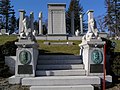
Main entrance
The Tower at the upper entrance
Mineola Lake
An elk statue

Kensico Cemetery is a cemetery in Valhalla, New York, United States. It was founded in 1889, when many New York City cemeteries were becoming full and rural cemeteries were being created near the railroads that served the city. Initially 250 acres (101.2 ha), it was expanded to 600 acres (240 ha) in 1905, but reduced to 461 acres (187 ha) in 1912, when a portion was sold to the neighboring Gate of Heaven Cemetery.

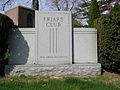
Many entertainment figures of the early twentieth century, including Russian-born Sergei Rachmaninoff, were buried here. The cemetery has a special section for members of the Actors' Fund of America and the National Vaudeville Association, some of whom died in abject poverty.

The cemetery contains four Commonwealth war graves, of three Canadian Army soldiers of World War I and a repatriated American Royal Air Force airman of World War II.[1]

As of December 2021, eight Major League Baseball players are buried here, including Baseball Hall of Fame inductee Lou Gehrig.[2]

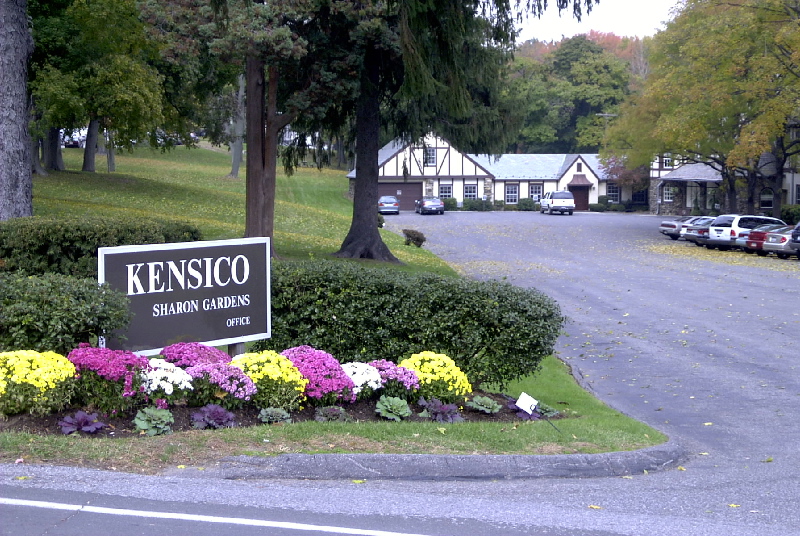
Sharon Gardens is a 76-acre (31 ha) section of Kensico Cemetery, which was created in 1953 for Jewish burials.

Notable interments in Kensico division

[edit]

Notable interments in Sharon Gardens division

[edit]
[edit]

References

[edit]
[edit]

Grokipedia

from Grokipedia
Kensico Cemetery is a non-sectarian rural cemetery spanning over 460 acres in Valhalla, Westchester County, New York, founded in 1889 under New York's Rural Cemetery Act of 1847 to address the overcrowding of urban burial grounds in New York City.[1][2] The site, selected for its pastoral landscape with gradual ascents, valleys, and proximity to railroad lines for accessible transport, features curved roads, mature trees, flowers, and fountains that enhance its park-like atmosphere.[1][2] The first interment occurred on September 1, 1889, marking the beginning of over a century of operation as a privately owned burial ground committed to permanence and care.[1] Notable for its architectural diversity, the cemetery contains elaborate mausoleums and monuments constructed from materials like marble and granite, drawing on styles from Roman pediments to Renaissance motifs, including community structures built in 1924 and a recent garden mausoleum at Montross Pond.[2][3] It also includes specialized sections such as Sharon Gardens, established in 1953 for Jewish families, and Angel’s Rest for infant burials, alongside an arboretum recognized as a Level II arboretum in Westchester County, home to hundreds of diverse tree species.[2][4] These elements underscore Kensico's role not only as a repository for the deceased but as a landscaped memorial park emphasizing aesthetic and horticultural preservation.[2]

History

Founding and Early Years (1889–1900)

Kensico Cemetery was incorporated in 1889 as a rural cemetery association under New York's Act of April 27, 1847, which authorized such entities to establish non-sectarian burial grounds outside urban centers.[1][5] The initiative arose amid overcrowding in New York City cemeteries, prompting the creation of expansive rural sites that emphasized natural landscapes and accessibility via railroads for urban mourners.[2] The cemetery operated without paid-in capital or stock issuance, functioning as a non-profit membership corporation from inception.[5] The site was selected in the hamlet of Valhalla, Mount Pleasant Township, Westchester County, on a tract of farmland offering approximately one mile of frontage along the New York Central Railroad tracks and a gradual elevation toward the highest point between Tarrytown and Long Island Sound.[1] Initial development focused on leveraging the area's valleys, hills, and pastoral terrain, with curving roads planned to integrate burials harmoniously into the environment, aligning with the rural cemetery movement's aesthetic principles.[2] The first interment occurred on September 1, 1889, marking the cemetery's operational start.[1] By 1890, an administration building had been constructed to handle funeral processions, and a dedicated railroad station opened along the New York & Harlem Railroad line to facilitate transport from Manhattan.[6][7] Early burials included prominent New Yorkers, such as Judge John Fitch, interred in 1890 with a granite Druid cross monument unveiled on November 12 of that year; the site's reputation quickly grew as a preferred resting place for affluent professionals, including judges and business figures.[8][9] Through the 1890s, the cemetery developed its initial 50 acres, with lot sales, family plot acquisitions, and the construction of early mausoleums by notable interments driving expansion.[10] Annual reports to lot proprietors emphasized dignified services, including black-attired attendants for funerals, underscoring the site's commitment to solemn, orderly operations amid growing demand from city dwellers seeking perpetual care in a serene rural setting.[9]

Expansion and Mid-20th Century Developments

Following the initial development phase, Kensico Cemetery expanded its physical footprint and infrastructure to meet increasing demand from urban populations in the early 20th century, with land holdings growing from an initial tract of farmland to over 460 acres by the mid-century period.[2] This growth facilitated the development of additional burial sections and amenities, including the construction of the Community Mausoleum in 1924, which provided above-ground crypts and niches as an alternative to traditional in-ground interments.[2] A pivotal mid-20th century advancement occurred in 1953 with the opening of Sharon Gardens, a dedicated division within the cemetery grounds designed specifically for Jewish burials and serving communities across the tri-state area.[11] This 52-acre section, integrated into the overall 460-acre property, reflected the cemetery's response to demographic shifts and the need for faith-specific accommodations, contributing to sustained interment growth with over 170,000 total burials recorded by the late 20th century.[12] [6] Railroad accessibility, a foundational feature since inception, supported these expansions by enabling efficient transport of remains and mourners via the New York Central Harlem Division, a service that persisted into the late 20th century.[6] These developments underscored the cemetery's evolution from a rural outpost to a comprehensive memorial landscape amid rising metropolitan pressures on burial space.[1]

Recent Preservation Efforts

In 2022, Kensico Cemetery received Level I Arboretum status from the American Public Gardens Association, recognizing its curated collection of over 5,000 trees representing more than 200 species and cultivars, as part of efforts to catalog and maintain its botanical assets for long-term conservation.[13] This designation built on ongoing tree inventories and labeling initiatives started in prior years to document and preserve the site's arboreal diversity amid urban pressures.[14] By March 2024, the cemetery advanced to Level II Arboretum status, the only such site in Westchester County and one of three in New York State, involving enhanced programming like tree tours and public education on native species conservation to sustain ecological health.[15] This upgrade included commitments to invasive species removal and habitat restoration, addressing degradation from weather and foot traffic.[16] The Friends of Kensico Cemetery, established as a 501(c)(3) nonprofit, has coordinated monument preservation since at least 2019, funding repairs to historic edifices and organizing free walking tours to raise awareness and support for architectural maintenance.[17] Their Woodland Restoration Project, active north of Montross Pond, focuses on rehabilitating native woodlands through selective clearing and replanting, with plans to develop six acres into a public garden featuring accessible paths while preserving scenic views.[14][6] Additional efforts include structural rehabilitations, such as the 2020 exterior repointing and pressure washing of water infrastructure to prevent decay, and ongoing maintenance of cultural landmarks to mitigate erosion and vandalism risks inherent to open-access historic sites.[18] These initiatives, funded partly through perpetual care trusts, emphasize evidence-based interventions like material analysis for durable repairs over cosmetic fixes.[19]

Location and Physical Characteristics

Geographical Setting and Accessibility

Kensico Cemetery occupies a 460-acre site in the hamlet of Valhalla, within the town of Mount Pleasant in Westchester County, New York, situated approximately 25 miles north of Manhattan by road.[20] [21] The terrain consists of rolling hills, valleys, and woodlands on land originally used as farmland, designed with curving roads that ascend gradually to elevated points, fostering a tranquil, pastoral landscape.[2] [22] [21] Natural elements include ponds such as Montross Pond, diverse tree species as part of its Level II arboretum status, and features like fountains that enhance the park-like atmosphere.[2] [4] The cemetery's location along the Metro-North Railroad's Harlem Line, with about one mile of frontage, historically supported direct access via the now-discontinued Kensico Cemetery station, which included provisions like a private railcar for funerals from Manhattan, roughly 26 miles away by train.[21] [23] [7] Today, the nearest public transit option is Valhalla station on the Harlem Line, from Grand Central Terminal, followed by a 21-minute walk to the grounds.[24] [25] Automotive access is available via Lakeview Avenue, with the main entrance and administration building at 271 Lakeview Avenue, Valhalla, NY 10595.[26]

Size, Layout, and Divisions

Kensico Cemetery encompasses over 460 acres in Valhalla, New York, following expansions from an initial 250 acres purchased in 1889 to a peak of 600 acres by 1905, after which approximately 139 acres were sold in 1912 to form the adjacent Kensico Reservoir, reducing the site to its current extent.[2][27] The terrain integrates natural valleys, hills, and ponds, with curving roads designed to follow the landscape's contours, creating a pastoral and spacious environment distinct from urban grid layouts.[2] The cemetery's layout emphasizes accessibility and serenity, featuring wide pathways, bridges over brooks, and designated garden areas such as rock gardens and willow-bordered streams, which enhance its role as a certified arboretum.[2] Sections are organized into themed or functional zones, including the Garden of the Apostles, the Birches, and Highland Gardens, with a central community mausoleum constructed in 1924 serving above-ground entombments.[2] Principal divisions include the main Kensico area, which is non-sectarian and accommodates diverse memorial styles, and Sharon Gardens, a 76-acre section established in 1953 exclusively for Jewish burials, featuring its own entrances, synagogues, and memorial gardens like Memory Gardens and Hill El.[11] Additional specialized areas comprise Angel’s Rest for infant memorials and the modern Garden Mausoleum at Montross Pond, offering crypts and niches amid landscaped grounds.[2] These divisions maintain distinct rules for memorials and interments while integrating into the overall site's topography.[28]

Natural and Architectural Features

Kensico Cemetery spans over 460 acres of rolling hillsides, valleys, woodlands, ponds, brooks, and streams, intentionally landscaped to create a serene, park-like environment reminiscent of 19th-century rural cemeteries.[4] The grounds feature diverse water elements, including Montross Pond and fountains that enhance the pastoral aesthetic.[29] Flowers and ornamental plantings are integrated throughout, contributing to the tranquil atmosphere.[2] The cemetery maintains the only Level II Arboretum in Westchester County, accredited by ArbNet, with 101 labeled species of trees and woody plants encompassing native North American varieties alongside exotics from Europe and Asia.[4] Notable natural enhancements include an apiary for honey production and a Monarch Station planted with milkweed to support pollinators.[4] These elements underscore the site's commitment to biodiversity and educational outreach on horticulture within a memorial context.[4] Architecturally, Kensico features the Community Mausoleum, dedicated in 1925 in Tudor Gothic style, constructed with Etowah pink marble exterior from Georgia, Alabama white marble interior, and extensive bronze doors, windows, and gates; it houses 292 crypts and a small chapel.[2] The Kensico Tower, built in 1928 from oolitic limestone by architect Sidney Lovell, exemplifies Gothic design at the entry.[18] More recently, the Garden Mausoleum, dedicated in 2022, is an open-air granite and stone structure measuring over 100 feet in length, 68 feet in width, and 18 feet high at the center roof, marking the first above-ground addition in nearly a century.[3] The cemetery's mausoleums and monuments display eclectic styles, including Neoclassical with Roman pediments, tumulus forms, Egyptian motifs with sphinxes, and pyramidal structures, reflecting the era's architectural eclecticism among affluent interments.[17] These features, combined with the natural topography, position Kensico as a designed landscape blending commemoration with scenic beauty.[2]

Notable Interments

Prominent Figures in Kensico Division

The Kensico Division of Kensico Cemetery serves as the final resting place for numerous prominent figures, particularly from entertainment, sports, music, and literature, reflecting the cemetery's appeal to non-sectarian burials since its founding. Among the most visited sites is the grave of Lou Gehrig (1903–1941), the New York Yankees first baseman famed for his 2,130 consecutive games played streak from 1925 to 1939 and his "Luckiest Man on the Face of the Earth" speech amid his battle with amyotrophic lateral sclerosis (ALS); his ashes were interred in Section 93 following his death on June 2, 1941.[30][31] In the realm of music, Sergei Rachmaninoff (1873–1943), the Russian composer, virtuoso pianist, and conductor known for works like the Piano Concerto No. 2 and Rhapsody on a Theme of Paganini, is interred here after emigrating to the United States in 1917 and becoming a U.S. citizen in 1942; he died on March 28, 1943, in Beverly Hills, California, with his body returned for burial at Kensico.[32] Tommy Dorsey (1905–1956), the American jazz trombonist, trumpeter, composer, and bandleader whose orchestra popularized hits like "Opus One" and employed Frank Sinatra early in his career, was buried following his death from choking on food on November 26, 1956, at age 51.[33] Actresses of note include Billie Burke (1884–1970), the Broadway and film star best remembered as Glinda the Good Witch in The Wizard of Oz (1939), who appeared in over 80 films and died on May 14, 1970, at age 85; and Anne Bancroft (1931–2005), Academy Award-winning actress for The Miracle Worker (1962) and iconic as Mrs. Robinson in The Graduate (1967), interred near her parents after succumbing to uterine cancer on June 6, 2005.[33][34] Philosopher and author Ayn Rand (1905–1982), born Alisa Zinovyevna Rosenbaum in Russia, developed Objectivism and penned influential novels The Fountainhead (1943) and Atlas Shrugged (1957); an atheist of Jewish descent who rejected religion, she died on March 6, 1982, from heart failure, with her gravesite located under a maple tree near Ossipee Avenue as noted in the cemetery's cell phone tour.[25][35]

Prominent Figures in Sharon Gardens Division

Sharon Gardens, established in 1953 as the dedicated Jewish section of Kensico Cemetery spanning 76 acres, serves as the final resting place for notable figures primarily from literature, human rights advocacy, and opera.[11] Elie Wiesel (September 30, 1928 – July 2, 2016), a Romanian-born American writer, professor, Nobel Peace Prize laureate (1986), and Holocaust survivor, is interred there. Wiesel, who endured imprisonment in Auschwitz and Buchenwald as a teenager, chronicled his experiences in the seminal memoir Night (first published in Yiddish as Un di velt hot geshvign in 1956; English edition 1960), which sold millions of copies and established him as a key voice on genocide and human dignity. He authored 57 books in total, held the Andrew W. Mellon Professorship in the Humanities at Boston University, and founded the Elie Wiesel Foundation for Humanity to combat indifference to oppression. Following a private funeral at the Fifth Avenue Synagogue, Wiesel was buried at Sharon Gardens in accordance with Jewish tradition emphasizing prompt interment.[36][37] Beverly Sills (born Belle Miriam Silverman; May 25, 1929 – July 2, 2007), an American coloratura soprano, is another prominent interment. Sills debuted professionally at age 18 and gained fame for bel canto roles in operas like Lucia di Lammermoor and The Daughter of the Regiment during her tenure with the New York City Opera, where she performed over 300 times and later served as general director from 1979 to 1989. She advanced arts administration as co-chairman of Lincoln Center (1994–2001) and chairman of the Metropolitan Opera's board (2001–2005), earning the National Medal of Arts in 1992. Despite personal challenges, including her children's disabilities, Sills maintained a career blending performance with advocacy for music education. Her gravesite in Sharon Gardens features a headstone reflecting her Jewish heritage.[38] Robert Merrill (born Milton Miller; June 4, 1917 – October 23, 2004), a leading American baritone, completed over 2,200 performances with the Metropolitan Opera across 31 seasons from 1945 to 1975, specializing in Verdi and Puccini roles such as Figaro in Il Barbiere di Siviglia and Germont in La Traviata. Born to Jewish immigrant parents in Brooklyn, he also pursued acting, appearing in films like Aaron Slick from Punkin Crick (1952), and became a tradition for singing "The Star-Spangled Banner" at New York Yankees games, performing it over 500 times. Merrill's interment in Sharon Gardens underscores the division's role in honoring Jewish contributors to American culture.[39]

Operations and Cultural Role

Management and Maintenance Practices

Kensico Cemetery is operated by the Kensico Cemetery Corporation, a non-sectarian, not-for-profit membership corporation founded in 1889 to provide rural burial options amid capacity constraints in New York City cemeteries.[2] Leadership as of the 2022 annual report includes President Matthew G. Parisi, Vice President and Superintendent Michael H. Cook, Jr. (overseeing operations), and Vice President and Chief Financial Officer Theresa M. Doran.[6] The corporation maintains a structured organization to handle over 2,000 interments annually across 460 acres, prioritizing orderly growth, budgeting, and service delivery including burial rights sales and interment services.[40] [41] Maintenance funding derives from perpetual care endowments, comprising four funds with a combined principal exceeding $238 million in 2022: the Permanent Maintenance Fund ($63.4 million), Declaratory Maintenance Fund ($115.2 million), Bequest and Endowment Principal Fund ($56.7 million), and Surplus Income Fund ($3.7 million).[6] New York state law mandates allocation of 15% of lot sale proceeds to the Permanent Maintenance Fund (increased from 10% in 1992), supporting lot care such as mowing, reseeding, fertilization, liming, weed and insect control.[6] [42] In 2022, groundskeeping expenses totaled $3.69 million, dominated by $3.28 million in salaries and wages for the grounds crew, plus supplies and external services.[6] Grounds practices emphasize a park-like setting with trees, flowers, and water features, including routine grass cutting and removal of overgrown or hazardous plantings after 15 days' notice to lot owners.[43] [44] Lot owners bear responsibility for maintaining permitted plantings (e.g., limited evergreens per lot size), with endowments or deposits required for perpetual upkeep; the cemetery reserves rights to adjust plantings for equipment access like mowing and excavation.[44] Monument and landscape preservation follows state law, with the cemetery handling foundations, approvals for stone/bronze memorials (capped at specified dimensions), and removal of damaged items.[44] As the sole Level II Arboretum in Westchester County accredited by ArbNet, Kensico adheres to professional standards with a collections policy, designated staff, and labeling of 101 tree and woody taxa from native and international origins.[4] Maintenance integrates annual Arbor Day plantings (e.g., Franklinia alatamaha in April), an on-site apiary, and a monarch butterfly station to support biodiversity and educational programming, enhancing overall grounds care without compromising memorial functions.[4]

Public Access, Tours, and Arboretum

Kensico Cemetery provides public access to its grounds daily from 8:30 a.m. to 4:30 p.m., 365 days a year, with no admission fee required for visitors.[4] The cemetery's office operates Monday through Friday from 9:00 a.m. to 5:00 p.m. and Saturday through Sunday from 9:00 a.m. to 4:00 p.m., facilitating inquiries and arrangements for non-interment visits.[22] This open policy supports exploration of the site's historical, architectural, and natural elements by the general public, subject to standard cemetery rules prohibiting activities such as picnicking or unauthorized photography of private graves.[22] Guided tours are organized primarily by the Friends of Kensico Cemetery, offering free historical, tree, and landscape walking tours, typically held in May evenings from 5:30 p.m. to 7:00 p.m., each covering about a half-mile section.[45] [46] Reservations are required for these events, which feature expert-led discussions on notable interments, mausoleum architecture, and botanical features, drawing crowds estimated at 2,000 to 2,500 participants annually for tree tours alone.[47] Independent guided options, such as in-depth walking tours by historian Frederick Cookinham, are available upon request for a fee of $30 per person ($25 for those 65 and older), focusing on specific gravesites like those of Lou Gehrig and Ayn Rand.[48] The Kensico Cemetery Arboretum, accredited as a Level II arboretum by ArbNet in March 2024—the only such designation in Westchester County—emphasizes a collection of 100 significant trees selected for their size, age, or rarity in the region, amid hundreds of diverse woody species across the 460-acre grounds.[15] [4] This status, upgraded from Level I achieved in 2022 with 44 certified varieties, requires a strategic management plan, public accessibility, and active participation in the ArbNet arboretum accreditation program.[13] The arboretum integrates cemetery preservation with horticultural education, supporting seasonal tree tours that highlight specimens unusual for the area.[49]

Reception and Minor Criticisms

Kensico Cemetery is widely regarded for its aesthetic appeal and serene environment, with visitors describing the 460-acre site as a park-like arboretum featuring winding lanes, mature trees, and elaborate mausoleums that blend natural beauty with artistic monuments.[50][51] Reviews highlight its peaceful ambiance, well-maintained landscapes, and value as a destination for historical and cultural exploration, particularly due to interments of notable figures in entertainment, sports, and business.[52][53] Public ratings reflect this favorable reception, including a 4.5 out of 5 score on Tripadvisor from 26 reviews and 4.3 out of 5 on Yelp from 13 reviews, as of October 2025, with commendations for the site's tranquility and visual splendor.[52][51] Minor criticisms primarily concern navigational challenges and staff interactions, with some visitors reporting that the expansive, winding layout lacks sufficient signage or organization, complicating efforts to locate specific graves.[54] Isolated accounts describe cemetery staff as unhelpful or unresponsive when seeking directions, leading to frustration during visits; one reviewer recounted multiple trips to find a loved one's plot due to these shortcomings.[54] Such feedback remains limited relative to overall positive sentiments, and the cemetery maintains accreditation with the Better Business Bureau since 1994, indicating no systemic operational complaints.[55]

References

User Avatar
No comments yet.