Hubbry Logo
Hydrophobic sandHydrophobic sandMain
Open search
Hydrophobic sand
Community hub
Hydrophobic sand
logo
8 pages, 0 posts
0 subscribers
Be the first to start a discussion here.
Hydrophobic sand
Hydrophobic sand
from Wikipedia
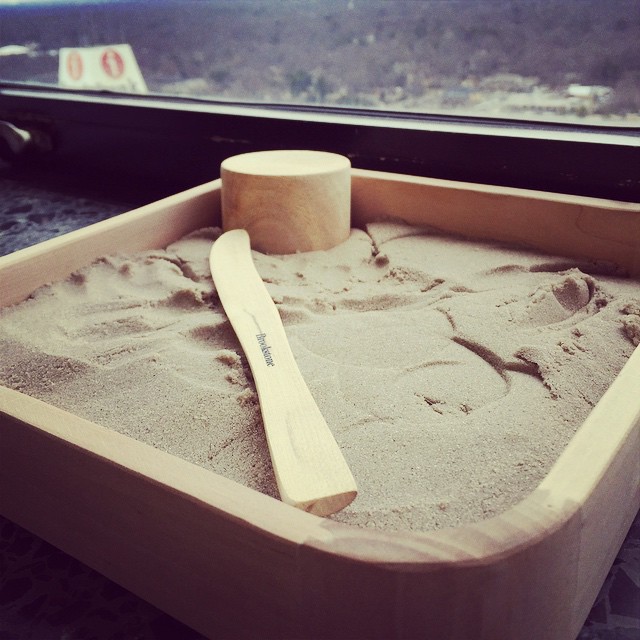
Kinetic sand in a box as an office toy

Hydrophobic sand (or magic sand) is a toy made from sand coated with a hydrophobic compound. The presence of the hydrophobic compound causes the grains of sand to adhere to one another and form cylinders (to minimize surface area) when exposed to water, and form a pocket of air around the sand.[1] The pocket of air makes magic sand unable to get wet. A variation of this, kinetic sand, has several of the same properties, but acts like wet sand that will not dry out. Hydrophobic sand, whether the wet or dry type, will not mix with water.[clarification needed]

History

[edit]
Trimethylsilanol

The earliest reference to waterproof sand is in the 1915 book The Boy Mechanic Book 2 published by Popular Mechanics. The Boy Mechanic states waterproof sand was invented by East Indian magicians. The sand was made by mixing heated sand with melted wax. The wax would repel water when the sand was exposed to water.[2]

Magic sand was originally developed to trap ocean oil spills near the shore. This was done by sprinkling magic sand on floating petroleum, which would then mix with the oil and make it heavy enough to sink. Due to the expense of production, however, it is no longer used for this purpose.

Hydrophobic sand has also been tested by utility companies in Arctic regions as a foundation for junction boxes, as it never freezes. It is also used as an aerating medium for potted plants.

Properties

[edit]

Magic sand

[edit]

The properties of Magic sand are achieved using ordinary beach sand, which contains tiny particles of pure silica, and exposing it to vapors of trimethylsilanol (CH3)3SiOH, an organosilicon compound. Upon exposure, the trimethylsilanol compound bonds to the silica particles while forming water. The exteriors of the sand grains are thus coated with hydrophobic groups. When Magic sand is removed from water, it is completely dry and free-flowing.

Brands

[edit]
Kinetic sand sculpted into a profile
Kinetic Sand
  • A toy trademarked and produced by Spin Master.[3] Kinetic Sand looks like regular wet sand but is available in different colors. It can be molded into any desired shape. It is 98% ultra-fine grain sand mixed with 2% dimethicone (polydimethylsiloxane), and coated with olive oil. Because of its oil coating, the sand never dries out. It mimics the physical properties of wet sand.[4]
Aqua Sand
  • Similar properties as above.
Asbestos in Play Sand in Australia
  • On 12 November 2025, the Australian Competition and Consumer Commission (ACCC) warned multiple brands of coloured play sand were contaminated with asbestos.[5] There were seventy schools closed for testing and possible decontamination.[6]

See also

[edit]

References

[edit]
[edit]
Revisions and contributorsEdit on WikipediaRead on Wikipedia
from Grokipedia
Hydrophobic sand, commonly referred to as magic sand, is fine silica sand grains coated with a thin layer of a hydrophobic chemical agent, such as trimethylhydroxysilane, which renders the material highly water-repellent while maintaining its ability to absorb non-polar substances like oils. This coating creates a nanoscale barrier that prevents water molecules from adhering to the sand's surface, causing it to clump together and remain dry even when submerged in water, in contrast to untreated sand which readily absorbs moisture and disperses. The hydrophobic effect arises from the non-polar nature of the coating, which repels the polar water molecules through surface tension and molecular interactions. Originally developed as a tool for environmental remediation, hydrophobic sand was invented to aid in oil spill cleanup by selectively binding to floating petroleum products without absorbing surrounding seawater, allowing the oil-sand aggregates to sink for easier removal. When sprinkled on oil slicks, the treated sand encapsulates the oil due to their mutual non-polar affinity, increasing the mixture's density and facilitating separation from water via skimmers or natural settling. In the 1980s, it gained popularity as an educational toy marketed by companies like Wham-O under the name Magic Sand, demonstrating principles of surface chemistry and hydrophobicity in classroom experiments. The earliest reference to waterproof sand dates to 1915. Beyond its initial applications, hydrophobic sand has found uses in scientific demonstrations to illustrate nanoscale coatings and the , as well as in modern research as of 2025 for , such as creating water-repellent soil amendments to enhance drought resistance in arid regions. Its stability under various environmental conditions, including changes and mechanical stress, makes it suitable for both practical and experimental purposes, though production typically involves silane-based treatments applied via vapor deposition or chemical immersion for uniform coverage.

Definition and Composition

Overview

Hydrophobic refers to ordinary grains that have been coated with a hydrophobic compound, rendering the material water-repellent such that forms beads on its surface rather than being absorbed. This coating creates a non-wetting surface where molecules are repelled, allowing the to maintain its dry texture even in aqueous environments. In contrast, regular exhibits hydrophilic properties, attracting molecules due to the polar nature of its silica grains, which leads to absorption and results in a clumpy, wet consistency upon contact with . Hydrophobic thus behaves oppositely, preserving its granular flow and integrity without saturation. Often presented as colorful grains in educational or recreational forms, hydrophobic remains dry and flows freely even when submerged in , demonstrating its unique repellent characteristics. A common variant known as " " highlights these properties in toy applications.

Chemical Components

Hydrophobic sand is primarily composed of silica-based sand grains, chemically (SiO₂), sourced from natural deposits such as beaches or quarries. These grains typically range in size from 0.1 to 2 mm, providing the granular structure essential for its toy and demonstrative applications. The key to its water-repellent properties lies in the hydrophobic coatings applied to these grains. Primary coatings include ((CH₃)₃SiOH), an organosilicon compound that reacts with the silica surface to form a thin layer of hydrophobic methyl groups. Another common coating is (PDMS), also known as dimethicone, a that creates a flexible, water-resistant film around each grain. Alternative coatings have been used historically and in specialized formulations. Wax-based options, such as paraffin, provide a simple hydrophobic layer by melting and adhering to the sand surface, often in mixtures with oils for enhanced durability. Modern variants employ organosilicon derivatives like trimethylchlorosilane or octadecyltrichlorosilane (OTS), which silylate the silica to yield robust superhydrophobic surfaces. In commercial products like Kinetic Sand, the composition is approximately 98% silica and 2% PDMS polymer, ensuring a balance between flowability and cohesion without altering the core granular feel.

Preparation Methods

Laboratory Synthesis

The laboratory synthesis of hydrophobic typically involves treating dry silica with trimethylchlorosilane (TMCS) to form a hydrophobic coating on the grain surfaces through . In a standard small-scale procedure, air-dried is weighed into a beaker, and a small volume of TMCS (approximately 0.004% by mass) is added dropwise using a micropipette within a ; the mixture is gently stirred for 30 seconds with a and then left exposed to ambient air for 24 hours to allow complete reaction and . For enhanced dehydration prior to treatment, the may be heated to 105°C for 24 hours, cooled, and optionally pre-wetted with a controlled amount of (e.g., -to-silane of 1.76) before TMCS addition, extending the reaction time to 3 days. This process results in the attachment of trimethylsilyl groups to the silanol (Si-OH) sites on the grains, briefly referencing the role of trimethylsilanol intermediates in forming the final hydrophobic layer. Safety precautions are essential due to the corrosive and toxic nature of TMCS, which releases hydrogen chloride fumes during reaction; all steps must be conducted in a well-ventilated fume hood with appropriate protective equipment, including gloves, goggles, and a lab coat, to prevent skin contact, inhalation, or eye exposure. Simpler variations suitable for educational or DIY settings include spraying dry sand with Scotchgard fabric protector on a baking pan, stirring thoroughly, and repeating the application three times before allowing it to dry in a ventilated area, though this yields less durable hydrophobicity compared to silane treatment. Another approach involves mixing sand with melted wax (e.g., from crayons) on a heated surface such as a low-temperature oven or sun-warmed pan, stirring until evenly coated, and cooling, providing a basic water-repellent effect but with reduced longevity. The resulting hydrophobic sand exhibits a contact angle of up to 131° and extreme repellency (water drop penetration time >5 hours), allowing it to float on surfaces or form stable air pockets when submerged without the grains. Testing involves the sessile drop method for measurement or simple submersion observation to confirm dryness upon removal. Required equipment includes a , micropipette or dropper, beaker and rod, oven for drying, and optionally a reactor vessel with (e.g., ) purging for controlled vapor exposure in advanced setups.

Industrial Processes

Industrial production of hydrophobic sand often involves vapor-phase in a , where silica particles are exposed to vapors to form a hydrophobic coating on the surface. Following the reaction, neutralizes unreacted groups, and the coated is dried to remove residual moisture. The technique's efficiency stems from its solventless nature and rapid reaction kinetics, often completing in minutes, enabling scalable production. In the 1980s, Cabot Corporation pioneered a process employing gases in a controlled vapor deposition to apply thin hydrophobic films on particles, optimizing uniformity for applications like oil-water separation. For toy products like Kinetic Sand, the process adapts to achieve a moldable consistency by blending ultra-fine silica (typically 98% by weight) with dimethicone (, approximately 2%) and minor binders in large-scale industrial mixers at ambient temperatures. The mixture is then colored with non-toxic pigments, sieved for particle uniformity, and packaged, prioritizing sensory play properties over extreme water repellency. Quality control in these processes involves measuring the water contact angle on coated particles, targeting values greater than 120° to verify effective hydrophobicity, alongside abrasion tests to evaluate under mechanical stress. Industrial preparation must also ensure the use of asbestos-free silica sand, as contamination has led to recalls of commercial magic sand products in November 2025 due to health risks from fibers. Environmental aspects emphasize , particularly in silane-based methods, where unreacted vapors are ideally captured and recycled to reduce emissions and waste generation.

History

Early References

The earliest documented reference to a form of hydrophobic is found in the 1915 publication The Boy Mechanic, Book 2: 1000 Things for Boys to Do, issued by Company. This work details a novelty trick called "The Hindoo Sand Trick," attributed to East Indian magicians who purportedly kept the method secret for generations, suggesting possible pre-20th-century origins in performative , though no verified earlier accounts exist. The trick demonstrates that repels , allowing it to be stirred in a basin of and removed completely dry, astonishing audiences at magic shows or fairs. Popular Mechanics tested and popularized the method for educational and recreational purposes, emphasizing its simplicity for young experimenters. The preparation involves heating about 2 pounds of fine silver sand in a frying pan over a clear fire until hot, then adding a small piece of paraffin wax or grease from a candle and stirring thoroughly to coat each grain evenly before cooling. This rudimentary process renders the sand hydrophobic by forming a thin, water-repellent layer on the particles, enabling the dramatic effect without advanced equipment. Despite its novelty, the wax-based coating had significant limitations, degrading rapidly under heat—given paraffin wax's low of around 46–68°C—or through abrasion, which could rub off the layer and restore the sand's wettability. These shortcomings confined its use primarily to short-lived demonstrations as a in books, magic performances, and early 20th-century science fairs, rather than any practical application. The contributed description, from magician Mighty Oaks of , underscores its role as an accessible wonder rather than a durable innovation.

Modern Developments

In the 1970s and 1980s, researchers at developed hydrophobic sand coated with trimethylchlorosilane (TMCS) derivatives, such as trimethylhydroxysilane, primarily for oil spill cleanup applications. This treatment rendered ordinary silica sand oleophilic while repelling water, allowing it to selectively absorb oil from aquatic environments without becoming waterlogged. Although tested for , the technology saw limited commercial adoption for this purpose due to processing challenges. By the 1990s, the material experienced a revival as an educational toy known as "Magic Sand," marketed by suppliers like Wham-O with silicone-based coatings to demonstrate hydrophobicity principles in classrooms and homes. Entering the 2000s, applications expanded beyond recreation into agriculture and construction, addressing water scarcity in arid regions. For instance, in 2015, Norway's Desert Control launched projects in the UAE using liquid nanoclay treatments on sand to improve soil water retention, transforming desert areas into arable land. This initiative, building on earlier concepts like superhydrophobic sand mulches, enabled up to 75% reduction in irrigation needs by minimizing evaporation. Concurrently, Spin Master introduced Kinetic Sand in 2014, a commercial variant blending 98% natural sand with polymer coatings for enhanced moldability in educational and play contexts. Research in the has shifted from early oil cleanup limitations to sustainable arid-land uses, with nano-enhanced hydrophobic sands—coated via nanoscale wax or layers—showing promise in boosting crop yields and soil stability. These advancements support applications in flood barriers, where treated sand forms water-repellent structures to divert runoff, and further .

Physical and Chemical Properties

Hydrophobicity Mechanism

The hydrophobicity of sand arises primarily from a chemical coating that significantly lowers the surface free energy of the silica grains, transforming their inherently hydrophilic nature into a water-repellent state. Untreated silica sand exhibits a high surface free energy of approximately 50–70 mJ/m², resulting in a low water contact angle (typically near 0°–20°), which allows water to wet and penetrate the grains easily. In contrast, the applied hydrophobic coating reduces this surface energy to below 30 mJ/m², creating a non-polar surface that minimizes favorable interactions with polar water molecules and promotes a contact angle exceeding 150° for superhydrophobicity. This reduction is achieved through covalent bonding of non-polar organosilane groups, such as -Si(CH₃)₃ (trimethylsilyl), to the silanol (-SiOH) groups on the silica surface, effectively shielding the polar substrate. At the molecular level, these hydrophobic groups form a dense, low-energy barrier that prevents water from spreading on the surface, leading to the Cassie-Baxter wetting state rather than the Wenzel state. In the Cassie-Baxter regime, air pockets are trapped between the rough sand grains and the water, further enhancing repellency by reducing the actual solid-liquid contact area. The equilibrium is described by Young's equation for the intrinsic contact angle θ on a smooth surface: cosθ=γsvγslγlv\cos \theta = \frac{\gamma_{sv} - \gamma_{sl}}{\gamma_{lv}} where γ_sv is the solid-vapor interfacial tension, γ_sl is the solid-liquid interfacial tension, and γ_lv is the liquid-vapor surface tension (72 mJ/m² for water at 25°C). For coated sand, θ approaches 150°–160°, as the low γ_sv (~20–30 mJ/m²) and high γ_sl result in cos θ < -0.86. The nanoscale roughness of the sand grains amplifies this effect, stabilizing the composite air-water interface and preventing liquid penetration into the porous structure. When exposed to water, hydrophobic sand exhibits distinct behaviors driven by these interfacial principles: water forms spherical beads or menisci on the surface without wetting, and submerged aggregates display a silvery sheen due to total internal reflection of light at the trapped air layer surrounding the grains. This plastron-like air film maintains the non-wetting state, allowing the sand to remain dry and cohesive underwater. The durability of this hydrophobicity depends on the coating integrity; organosilane treatments withstand pH ranges of 4–10 with minimal contact angle reduction (retaining >120°), but degrade under prolonged UV exposure (e.g., ~5° drop after 12 hours at 90–100 W/m²) or mechanical abrasion, which disrupts the air pockets and exposes underlying silica.

Structural Characteristics

Hydrophobic sand consists of individual grains that remain loose and non-adhesive both in air and when submerged in , owing to the hydrophobic that reduces inter-grain . This results in an of approximately 38°, lower than the 43° observed for untreated sand, allowing the material to flow more readily without clumping. At the bulk level, hydrophobic sand exhibits a of about 0.35 and of 0.26, enabling denser packing compared to untreated sand's void ratio of 0.75 and porosity of 0.43. Its is around 1.6 g/cm³, contributing to high permeability to air while maintaining near-zero permeability to due to the repellent surface. This supports effective flow similar to dry sand even underwater, permitting the construction of stable shapes that collapse only upon removal from . Commercial hydrophobic sand often features vibrant colors achieved through , enhancing its visual appeal for recreational use, while the coated surface provides a granular texture that feels dry and non-sticky to the touch. Unlike regular , which forms clumps and loses flowability after submersion, hydrophobic sand retains full flowability and dryness even after prolonged exposure to , such as 24 hours, due to the persistent air layer around grains.

Applications

Recreational and Educational Uses

Hydrophobic sand has gained popularity as a recreational , particularly through products like Magic Sand, which allows users to build stable underwater sculptures and structures that remain dry despite submersion. This property enables creative play, such as molding shapes like castles or apples beneath the water's surface without the sand dispersing or becoming saturated. Another prominent example is Kinetic Sand, introduced by in 2014, which mimics the texture of wet sand for molding and sculpting while staying mess-free and never drying out. Available in various colors, it promotes sensory play by sticking together for easy shaping and cleanup. In educational settings, hydrophobic sand serves as a hands-on tool to illustrate concepts of and hydrophobicity, often through classroom demonstrations where students observe the sand layering in water without wetting. Kits typically include experiments like pouring the sand into transparent tanks to highlight its water-repelling behavior, fostering understanding of material properties at a macroscale level. Variants such as Aqua Sand, produced by , extend recreational options with colored builds for artistic and imaginative play, emphasizing its non-wetting characteristics in aquatic-themed activities. These products have become staples in STEM toy markets, appealing to children's curiosity through interactive exploration. Safety considerations for these toys include non-toxic coatings on the sand grains, making them suitable for supervised play, though they are not intended for and carry warnings against consumption. Most brands recommend them for children ages 3 and older to ensure appropriate handling. The appeal of hydrophobic sand surged in the , driven by viral demonstrations showcasing its "magic" dry-in-water effect, which captivated audiences and inspired home experiments. It has also been featured in science fairs as a simple yet engaging physics exhibit to demonstrate repulsion principles.

Industrial and Environmental Uses

Hydrophobic sand has been explored for environmental cleanup, particularly in remediation, where its non-polar surface allows it to selectively bind hydrocarbons while repelling . When dispersed over crude spills on , the sand increases the mixture's specific , enabling easier separation and removal using skimmers, with efficiencies reaching up to 92% at a 1:1 sand-to- ratio. This approach was tested in settings using coated sand particles (100–250 µm) modified with nanoparticles derived from asphaltenes, demonstrating potential for rapid cleanup without dispersing the further into the environment. However, practical deployment has been limited by costs and challenges in separating the sand from the post-absorption, as noted in post-1970s evaluations of similar sorbents. In arid regions, hydrophobic sand serves efforts by acting as a or amendment to reduce and enhance retention. Applied as a 5–10 mm layer over , superhydrophobic sand mulches decrease water by 56–78% and increase content by 25–45% under daily , forming effective barriers that mimic natural hydrophobic surfaces like lotus leaves. In the , breathable hydrophobic technology, developed by Dake Rechsand, has been implemented in projects since around 2018, reducing needs by up to 80% and enabling the cultivation of water-intensive crops like and fruit trees on saline soils without chemicals. Field trials in at further confirmed these benefits, showing improved crop yields—such as 27–72% higher production and 73–208% greater yields—while supporting artificial water retention layers that sustain vegetation during dry periods. In , hydrophobic sand improves in sandy terrains by balancing drainage and moisture retention, particularly in drought-prone areas. When mixed into sandy soils or used as , it reduces requirements by 50–75% through minimized and enhanced water holding capacity, as evidenced by studies on crops like tomatoes and . This application promotes root zone hydration while preventing waterlogging, leading to higher productivity in arid farming systems without altering or introducing contaminants. Other industrial applications include protecting in extreme environments, such as utility installations. Utility companies have tested hydrophobic sand as a foundational fill for boxes in cold climates, where it repels to prevent freezing and , allowing easier access for even in . A layer of coated sand, topped with , ensures the contents remain dry and functional, leveraging the material's nanometer-thick coating for long-term reliability.

References

Add your contribution
Related Hubs
User Avatar
No comments yet.