Hubbry Logo
GaitGaitMain
Open search
Gait
Community hub
Gait
logo
8 pages, 0 posts
0 subscribers
Be the first to start a discussion here.
Gait
Gait
from Wikipedia
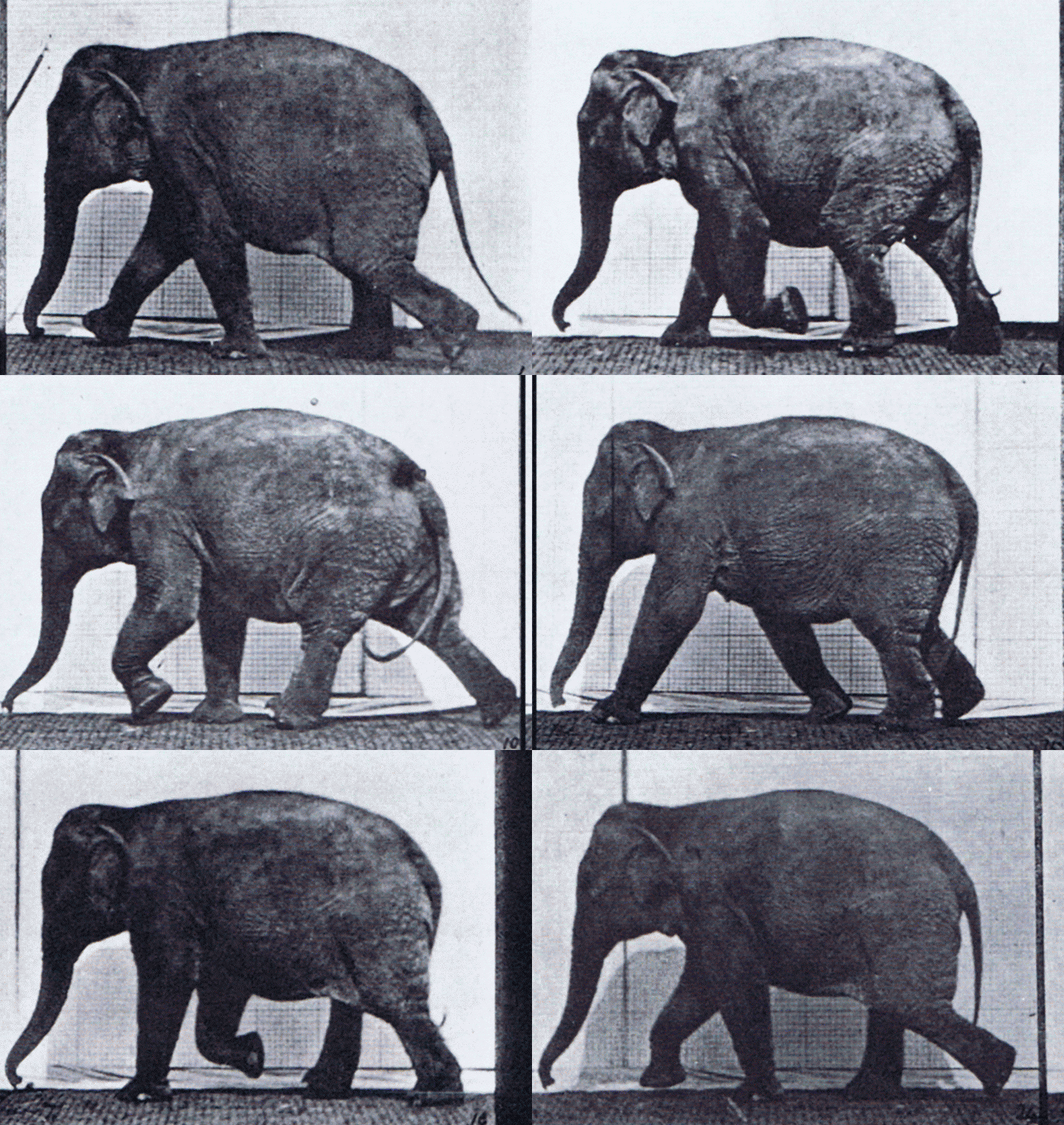
Elephant walking.

Gait is the pattern of movement of the limbs of animals, including humans, during locomotion over a solid substrate. Most animals use a variety of gaits, selecting gait based on speed, terrain, the need to maneuver, and energetic efficiency. Different animal species may use different gaits due to differences in anatomy that prevent use of certain gaits, or simply due to evolved innate preferences as a result of habitat differences. While various gaits are given specific names, the complexity of biological systems and interacting with the environment make these distinctions "fuzzy" at best. Gaits are typically classified according to footfall patterns, but recent studies often prefer definitions based on mechanics. The term typically does not refer to limb-based propulsion through fluid mediums such as water or air, but rather to propulsion across a solid substrate by generating reactive forces against it (which can apply to walking while underwater as well as on land).

Due to the rapidity of animal movement, simple direct observation is rarely sufficient to give any insight into the pattern of limb movement. In spite of early attempts to classify gaits based on footprints or the sound of footfalls, it was not until Eadweard Muybridge and Étienne-Jules Marey began taking rapid series of photographs that proper scientific examination of gaits could begin.

Overview

[edit]

Milton Hildebrand pioneered the contemporary scientific analysis and the classification of gaits. The movement of each limb was partitioned into a stance phase, where the foot was in contact with the ground, and a swing phase, where the foot was lifted and moved forwards.[1][2] Each limb must complete a cycle in the same length of time, otherwise one limb's relationship to the others can change with time, and a steady pattern cannot occur. Thus, any gait can completely be described in terms of the beginning and end of stance phase of three limbs relative to a cycle of a reference limb, usually the left hindlimb.

Variables

[edit]
Gait graphs in the style of Hildebrand. Dark areas indicate times of contact, bottom axis is % of cycle.

Gaits are generally classed as "symmetrical" and "asymmetrical" based on limb movement. These terms have nothing to do with left-right symmetry. In a symmetrical gait, the left and right limbs of a pair alternate, while in an asymmetrical gait, the limbs move together. Asymmetrical gaits are sometimes termed "leaping gaits", due to the presence of a suspended phase.

The key variables for gait are the duty factor and the forelimb-hindlimb phase relationship. Duty factor is simply the percent of the total cycle which a given foot is on the ground. This value will usually be the same for forelimbs and hindlimbs unless the animal is moving with a specially trained gait or is accelerating or decelerating. Duty factors over 50% are considered a "walk", while those less than 50% are considered a run. Forelimb-hindlimb phase is the temporal relationship between the limb pairs. If the same-side forelimbs and hindlimbs initiate stance phase at the same time, the phase is 0 (or 100%). If the same-side forelimb contacts the ground half of the cycle later than the hindlimb, the phase is 50%.

Physiological effects of gait

[edit]

Gait choice can have effects beyond immediate changes in limb movement and speed, notably in terms of ventilation. Because they lack a diaphragm, lizards and salamanders must expand and contract their body wall in order to force air in and out of their lungs, but these are the same muscles used to laterally undulate the body during locomotion. Thus, they cannot move and breathe at the same time, a situation called Carrier's constraint, though some, such as monitor lizards, can circumvent this restriction via buccal pumping. In contrast, the spinal flexion of a galloping mammal causes the abdominal viscera to act as a piston, inflating and deflating the lungs as the animal's spine flexes and extends, increasing ventilation and allowing greater oxygen exchange.

Differences between species

[edit]
A hamster walking on a transparent treadmill.
Alternating tripod gait of walking desert ants.

Animals typically use different gaits in a speed-dependent manner. Almost all animals are capable of symmetrical gaits, while asymmetrical gaits are largely confined to mammals, who are capable of enough spinal flexion to increase stride length (though small crocodilians are capable of using a bounding gait). Lateral sequence gaits during walking and running are most common in mammals,[3] but arboreal mammals such as monkeys, some opossums, and kinkajous use diagonal sequence walks for enhanced stability.[3] Diagonal sequence walks and runs (aka trots) are most frequently used by sprawling tetrapods such as salamanders and lizards, due to the lateral oscillations of their bodies during movement. Bipeds are a unique case, and most bipeds will display only three gaits—walking, running, and hopping—during natural locomotion. Other gaits, such as human skipping, are not used without deliberate effort.

Hexapod gaits have also been well characterized, particularly for drosophila and stick insects (Phasmatodea). Drosophila use a tripod gait where 3 legs swing together while 3 legs remain on the ground in stance.[3] However, variability in gait is continuous. Flies do not show distinct transitions between gaits but are more likely to walk in a tripod configuration at higher speeds. At lower speeds, they are more likely to walk with 4 or 5 legs in stance.[4] Tetrapod coordination (when 4 legs are in stance) is where diagonally opposite pairs of legs swing together. Wave (sometimes called a metachronal wave) describes walking where only 1 leg enters swing at a time. This movement propagates from back to front on one side of the body and then the opposite. Stick Insects, a larger hexapod, only shows a tripod gait during the larval stage. As adults at low speeds, they are most likely to walk in a metachronal wave, where only 1 leg swings at a time. At higher speeds, they walk in a tetrapod coordination with 2 legs paired in swing or a metachronal wave, only moving one leg at a time.[5]

Energy-based gait classification

[edit]

While gaits can be classified by footfall, new work involving whole-body kinematics and force-plate records has given rise to an alternative classification scheme, based on the mechanics of the movement. In this scheme, movements are divided into walking and running. Walking gaits are all characterized by a "vaulting" movement of the body over the legs, frequently described as an inverted pendulum (displaying fluctuations in kinetic and potential energy which are out of phase), a mechanism described by Giovanni Cavagna. In running, the kinetic and potential energy fluctuate in-phase, and the energy change is passed on to muscles, bones, tendons and ligaments acting as springs (thus it is described by the spring-mass model).

Energetics

[edit]
Bison galloping.

Speed generally governs gait selection, with quadrupedal mammals moving from a walk to a run to a gallop as speed increases. Each of these gaits has an optimum speed, at which the minimum calories per metre are consumed, and costs increase at slower or faster speeds. Gait transitions occur near the speed where the cost of a fast walk becomes higher than the cost of a slow run. Unrestrained animals will typically move at the optimum speed for their gait to minimize energy cost. The cost of transport is used to compare the energetics of different gaits, as well as the gaits of different animals.

Non-tetrapod gaits

[edit]

In spite of the differences in leg number shown in terrestrial vertebrates, according to the inverted pendulum model of walking and spring-mass model of running, "walks" and "runs" are seen in animals with 2, 4, 6, or more legs. The term "gait" has even been applied to flying and swimming organisms that produce distinct patterns of wake vortices.

See also

[edit]

References

[edit]

Further reading

[edit]
Revisions and contributorsEdit on WikipediaRead on Wikipedia
from Grokipedia
Gait is the pattern of limb actions that an uses repetitively during locomotion, encompassing coordinated movements of the limbs to propel the body forward over a solid substrate. In biology, it represents a fundamental aspect of mobility, varying across to optimize , stability, and speed based on anatomical structure, environmental demands, and physiological needs. Animals exhibit a range of gaits, broadly classified as symmetrical or asymmetrical, which are stable interlimb coordination patterns generated by spinal cord mechanisms and modulated by neural and biomechanical factors. Symmetrical gaits, such as the walk (alternating lateral or diagonal limb pairs) and trot (diagonal pairs moving together), maintain consistent phasing between fore and hind limbs, typically used at slower speeds for energy conservation. Asymmetrical gaits, like the canter and gallop, involve out-of-phase limb movements with a lead limb determining directionality, enabling higher velocities and maneuverability, as seen in cursorial quadrupeds such as horses and dogs. These patterns transition dynamically with speed, terrain, or fatigue, reflecting adaptations in herbivores for endurance and carnivores for bursts of acceleration. In s, gait specifically denotes the manner of walking or running, characterized by a cyclic sequence of limb movements that includes stance () and swing (non-weight-bearing) phases, ensuring forward progression with minimal expenditure. The normal human gait cycle lasts approximately 1 second at a comfortable speed, with about 60% spent in stance and 40% in swing, involving coordinated activation of over 40 muscle groups per leg. Disruptions in gait, known as abnormal or pathological gaits, can arise from neurological disorders (e.g., causing shuffling steps), musculoskeletal issues (e.g., from pain), or developmental conditions, serving as critical diagnostic indicators in clinical settings. , employing tools like and force plates, quantifies parameters such as stride length, velocity, and symmetry to assess function, predict fall risks, and guide rehabilitation.

Fundamentals of Gait

Definition and Overview

Gait is defined as the characteristic pattern of limb movements that animals employ repetitively during locomotion, distinguishing it from broader concepts of general body movement or static posture by focusing on coordinated, cyclic actions that propel the body forward over a substrate. This pattern encompasses specific sequences of limb placements and recoveries, enabling efficient traversal across varied terrains while maintaining stability. The study of gait originated with ancient observations, as (384–322 BCE) provided the earliest recorded descriptions of human walking mechanics in his work De Motu Animalium. Progress accelerated during the with Giovanni Alfonso Borelli's (1608–1679) experimental analyses of locomotion, but systematic advancements emerged in the through biomechanical pioneers. Notably, Eadweard Muybridge's in the 1870s and 1880s captured sequential images of animal and human motion, while Étienne-Jules Marey's concurrent developments in graphical recording techniques laid foundational methods for quantitative . Key terminology in gait studies differentiates —the overall act of self-propelled movement from one location to another—from gait, which specifies the discrete limb coordination patterns within that process. Gaits are further classified as symmetrical, where footfalls of paired limbs (e.g., fore and hind, or left and right) occur evenly spaced in time, or asymmetrical, where these intervals are uneven, influencing stability and speed. Foundational phases include the stance phase, during which a limb contacts the ground and supports body weight, and the swing phase, when the limb is elevated and advanced forward; these form the basis of the gait cycle. In , gait primarily examines these patterns across animal to understand evolutionary adaptations for mobility, with applications extending to where bio-inspired designs replicate animal gaits for enhanced efficiency and adaptability.

Gait Cycle and Kinematic Variables

The gait cycle represents the fundamental unit of locomotion, defined as the sequence of movements from initial contact of one foot with the ground to the next initial contact of the same foot. This cycle is typically divided into two primary phases: stance and swing, which together encompass approximately 100% of the gait period. The stance phase, comprising about 60% of the cycle in normal walking, involves the foot in contact with the ground, while the swing phase, about 40%, occurs when the foot is off the ground and advancing forward. In bipedal gait, these phases are further subdivided to capture nuanced : stance includes initial contact (heel strike), loading response (foot flat), midstance (single-limb support), terminal stance (heel rise), and preswing (toe-off); swing includes initial swing (foot clearance), midswing (limb advancement), and terminal swing (preparation for contact). Within the gait cycle, double support and single support periods delineate periods of bipedal stability and unilateral loading, respectively. Double support occurs twice per cycle—once at the transition from stance to swing of one limb and again at the opposite transition—totaling about 20% of the cycle time in walking, during which both feet are in contact with the ground. Single support, conversely, spans the midstance and swing phases for one limb, occupying roughly 40% of the cycle and representing the period of full on that limb. These temporal divisions enable precise analysis of locomotor efficiency and balance, with variations in their durations influencing overall gait stability. Kinematic variables quantify the spatial and temporal aspects of the gait cycle, providing measurable descriptors of movement patterns. Key parameters include , the linear covered during one complete gait cycle (from initial contact to the next of the same foot); stride time, the duration of one cycle; and , the number of steps taken per minute. Step width, the mediolateral between feet during consecutive steps, and foot , the orientation of the foot relative to the direction of progression, further characterize motion. Walking , a derived metric, is calculated as the product of and , adjusted for units: specifically, v=s×c120v = \frac{s \times c}{120}, where vv is in meters per second, ss is in meters, and cc is in steps per minute (noting that one stride equals two steps). Additional spatial and temporal parameters include the duty factor, defined as the ratio of stance phase duration to total gait cycle time, which typically ranges from 0.4 to 0.6 in walking gaits and reflects the proportion of time a limb supports body weight. metrics, such as left-right stride time variability or phase coordination, assess bilateral limb harmony, with deviations often indicating pathological gait; these are commonly evaluated using coefficients like the gait index, GSI=leftrightleft+right\text{GSI} = \frac{|\text{left} - \text{right}|}{\text{left} + \text{right}}, where values near zero denote . Such variables emphasize coordinated limb timing essential for efficient progression. Measurement of these variables can be achieved through basic observational or instrumental methods, such as using a to time strides over a known for cadence and calculations, or simple goniometers for foot assessment. More precise evaluations employ pressure-sensitive walkways or to capture step width and duty factor without invasive procedures. These approaches allow for accessible quantification in clinical or research settings, focusing on observable rather than underlying forces.

Human Gait

Normal Human Gait Patterns

Normal human gait is characterized by a cyclical bipedal progression that alternates between stance and swing phases for each , enabling efficient forward locomotion. The gait cycle begins with strike, or initial contact, where the heel of the leading foot contacts the ground, followed by foot flat as weight shifts onto the foot during early stance. Loading response occurs as the body weight is fully transferred, leading to midstance where the body progresses over the stance foot. Terminal stance involves heel rise and , culminating in toe-off, or pre-swing, where the toes leave the ground to initiate the swing phase. During swing, the advances forward with initial swing (acceleration), mid-swing (maximum knee flexion), and terminal swing (deceleration and preparation for strike). This sequence repeats for the opposite , with double support periods when both feet are in contact and single support when one foot bears the full body weight. In healthy adults, typical spatiotemporal parameters include an average stride length of approximately 1.4 meters, representing the distance between successive heel strikes of the same foot, and a of about 110 steps per minute, contributing to a walking speed of 1.2 to 1.4 meters per second. These values vary slightly with height and fitness but establish the baseline for efficient bipedal movement, where stride length and balance to optimize energy use without excessive stress. For example, taking 8,000 steps per day, a common daily walking goal associated with health benefits such as approximately a 50% lower risk of all-cause mortality compared to 4,000 steps, corresponds to about 6-6.5 km based on average step lengths of 0.7-0.8 meters. Gait cadence serves as a practical indicator of physical activity intensity. For walking, moderate-intensity activity is typically achieved at a cadence of approximately 100 steps per minute or more. Vigorous-intensity walking is indicated at greater than 130 steps per minute. Running is generally classified as vigorous-intensity activity, with efficient running cadences commonly ranging from 160 to 180 steps per minute. Arm-leg coordination enhances stability and efficiency during gait through contralateral pendular motion, where the arms swing forward as the opposite leg swings back, counteracting rotational torques generated by leg movement and minimizing vertical . This out-of-phase swinging reduces the body's overall energy expenditure by up to 12% and stabilizes the head and . rotation in the , approximately 4 degrees per side, complements this by lengthening effective step reach, while trunk rotation, about 2-5 degrees, further aids in balancing lateral sway and maintaining forward . Gait maturation begins in infancy with reflexive stepping observed at birth, transitioning from crawling to supported standing around 6-10 months, and independent walking typically achieved between 11 and 15 months. Early gait features wide-based steps, external rotation of hips, and high with short strides for stability, evolving by age 3 to narrower base, reduced flexion, and adult-like heel-toe progression as neuromuscular control and balance improve. Full adult patterns, including coordinated arm swing and minimal variability, stabilize by 4-7 years, influenced by growth in limb length and maturation. Subtle gender variations exist in normal gait, with females exhibiting shorter stride lengths (about 10-15% less than males) and higher to achieve similar speeds, alongside narrower step width for a more linear path, potentially linked to pelvic structure differences. Age-related changes in healthy elderly individuals without include a gradual slowing of to 90-110 steps per minute, reduced stride length (less than 1.2 meters on average), and decreased walking speed to 1.1-1.3 meters per second, reflecting adaptations in muscle power and joint flexibility rather than .

Physiological and Biomechanical Effects

During normal human gait, the musculoskeletal system experiences significant mechanical loads that facilitate propulsion and support. Ground reaction forces (GRFs) in the vertical direction peak at approximately 1.0 to 1.5 times body weight during walking, with the vertical component reaching up to 1.2 times body weight in typical overground locomotion. These forces arise primarily during the stance phase, where the body's weight is transferred to the ground, influencing joint stability and movement efficiency. At the major lower limb joints, internal torques are generated to counteract these external loads; for instance, the ankle plantarflexion moment peaks at around 1.1 to 1.5 Nm/kg during late stance to drive push-off, while extension and flexion-extension torques typically range from 0.5 to 1.0 Nm/kg each, varying with gait speed and individual anthropometrics. Gait also elicits pronounced cardiovascular and metabolic responses compared to , enhancing oxygen delivery and utilization to meet locomotor demands. Oxygen consumption rises from a resting baseline of about 3.5 ml/kg/min (1 metabolic equivalent, or MET) to 7-14 ml/kg/min (2-4 METs) during moderate walking, reflecting increased aerobic metabolism to sustain . correspondingly elevates, typically to 50-70% of maximum (e.g., 90-120 beats per minute for young adults), promoting greater and blood flow to active tissues. Electromyographic (EMG) studies reveal distinct muscle patterns, such as heightened gastrocnemius activity during the push-off phase of late stance, where it contributes up to 40-60% of peak plantarflexor effort to generate forward propulsion. Neural control of gait relies on spinal mechanisms for rhythmicity, modulated by sensory inputs. Central pattern generators (CPGs) in the produce the basic oscillatory patterns for locomotion, generating alternating flexor-extensor bursts in the absence of supraspinal input, as demonstrated in isolated spinal preparations and human studies. These circuits ensure coordinated limb movement during rhythmic walking. Proprioceptive feedback from muscle spindles and Golgi tendon organs further refines gait by providing real-time information on limb position and force, enabling adjustments to terrain or perturbations without conscious effort. Regular engagement in normal gait promotes long-term musculoskeletal adaptations that enhance durability and function. Weight-bearing activities like walking stimulate via , where mechanical loading increases activity and bone mineral density, particularly in the lower limbs and spine, reducing age-related resorption risks. Similarly, repetitive gait contractions strengthen lower limb muscles, such as the and plantarflexors, by inducing and improved neuromuscular efficiency over time. However, increasing walking speed amplifies joint stress, with joint moments and GRFs rising nonlinearly—e.g., a 20% speed increase can elevate ankle and knee loads by 10-30%—potentially accelerating wear if not balanced with recovery.

Comparative Animal Gaits

Gaits in Tetrapod Species

species, encompassing mammals, birds, reptiles, and amphibians, exhibit a variety of locomotion patterns adapted to their environments and body plans, with gaits broadly classified as symmetrical or asymmetrical based on the timing of footfalls relative to the stride cycle. Symmetrical gaits are characterized by evenly spaced footfalls within each pair of limbs (fore and hind), typically occurring at slower to moderate speeds and providing stable support phases where at least three limbs contact the ground simultaneously in walks. In these gaits, the left and right limbs of the same pair are separated by approximately half the stride duration, ensuring rhythmic alternation. The walk represents a foundational symmetrical gait in many tetrapods, featuring a four-beat footfall sequence where limbs move in either a lateral sequence (hind left, fore left, hind right, fore right) or diagonal sequence (hind left, fore right, hind right, fore left), with overlapping support periods that include phases of three-limb and occasionally four-limb support for enhanced stability. The trot, another symmetrical gait, involves diagonal limb pairs (fore left with hind right, and fore right with hind left) moving together in a two-beat rhythm, resulting in periods of two-limb support and brief suspension or double support depending on speed. In contrast, the pace is a symmetrical gait using lateral pairs (fore and hind on the same side), also in a two-beat pattern, which is less common but observed in species like some camels for energy conservation on soft substrates, though it can introduce more lateral sway. Asymmetrical gaits emerge at higher speeds and feature uneven spacing within limb pairs, often incorporating a suspension phase where all feet are off the ground, allowing for greater stride length and velocity. The canter is a three-beat asymmetrical gait with a lead limb (typically the inside in turns), featuring a hindlimb push-off, diagonal pair, and lead forelimb, followed by a brief suspension. The gallop, a faster four-beat variant, extends this pattern with separate footfalls for all limbs and a pronounced suspension phase, enabling rapid in pursuits or escapes. Specialized variants include the bound, where move together followed by in paired thrusts, common in bounding mammals like during rapid travel, and the pronk, a symmetrical-appearing but high-speed bounce where all four limbs contact and leave the ground simultaneously, used by small antelopes for alertness. In equines, these gaits are well-documented: the walk is a four-beat symmetrical gait at speeds up to about 1.5 m/s with continuous ground contact; the is a two-beat diagonal symmetrical gait reaching 3-4 m/s; the canter is a three-beat asymmetrical gait at 4-6 m/s; and the gallop is a four-beat asymmetrical gait exceeding 6 m/s, each distinguished by unique sequences that optimize and stability. Similarly, in canines, the serves as an efficient medium-speed gait for activities, with diagonal pairing minimizing vertical and maximizing energy return through elastic limb mechanisms, preferred over pacing in most breeds for balanced force distribution. Gait transitions in tetrapods are primarily driven by increasing speed, with shifts from symmetrical to asymmetrical patterns occurring to maintain stability and ; for instance, many mammals transition from walk to at speeds of 1-2 m/s, as this threshold balances support needs with energetic demands during . In birds, which often employ bipedal variants of these gaits, symmetrical walking predominates at low speeds with overlapping strides, transitioning to grounded running (a trot-like symmetrical form without full aerial phases) at intermediate velocities for sustained .

Gaits in Non-Tetrapod Animals

Non-tetrapod animals exhibit diverse forms of locomotion that deviate from the coordinated limb-based gaits of four-limbed vertebrates, often relying on undulatory, peristaltic, or propulsive mechanisms adapted to their body plans. In limbless reptiles such as snakes, locomotion primarily involves muscular contractions that generate body waves or direct pushing against substrates. Serpentine undulation, also known as lateral undulation, is the most common mode, where lateral waves propagate posteriorly along the body, with each wave's pushing against irregularities in the to produce forward ; this is facilitated by the snake's elongated vertebral column and ventral scales acting as anchors. Concertina motion, resembling an , involves alternating contraction and extension of anterior and posterior body segments, allowing snakes to navigate confined spaces by anchoring the front while extending the rear, and vice versa. Rectilinear crawling, used for stealthy straight-line progression, employs slow, unidirectional ventral scale movements powered by costocutaneous muscles to lift and advance body sections without lateral bending. Invertebrates demonstrate gait-like patterns through multi-legged coordination or segmental waves. , as hexapods, frequently employ an alternating tripod gait, where three legs (one from each pair: fore, middle, hind) on opposite sides contact the ground simultaneously, providing stability during locomotion; this pattern balances static support with efficient forward movement, particularly on varied terrains like vertical surfaces. , such as earthworms, utilize peristaltic waves for burrowing and surface crawling, where coordinated contractions of circular and longitudinal muscles create alternating bulges and elongations that propagate posteriorly, gripping the substrate via setae to achieve net forward displacement. Aquatic non-tetrapods often forgo limb analogs in favor of fluid-dynamic . typically rely on caudal oscillation for , where lateral undulations of the body and tail generate a propulsive wave culminating in rapid beating of the caudal , producing reactive forces that accelerate the body forward while minimizing drag. Cephalopods, like squids and octopuses, employ as a non-gait analog, rapidly contracting the mantle cavity to expel water through a , generating via momentum conservation; this intermittent mechanism allows bursts of speed for escape or predation. The evolutionary transition from fin-based propulsion in sarcopterygian fish to limb-supported gaits in early tetrapods involved modifications to fin rays and endoskeletal elements, enabling weight-bearing on land while retaining oscillatory elements for initial aquatic-terrestrial shifts.

Energetics and

Energy Efficiency and Consumption

Gait energetics encompass both metabolic and mechanical components, with metabolic primarily assessed through oxygen consumption (VO₂), which quantifies the aerobic demand of locomotion as the body converts into mechanical work. The cost of transport (COT), calculated as the net metabolic expended per unit distance traveled per unit body mass (J/kg/m), serves as a key indicator of , exhibiting a characteristic U-shaped curve with minimum values at preferred transition speeds between gaits. In humans, walking COT approximates 2.5 J/kg/m at optimal speeds near 1.2 m/s, reflecting economical use for bipedal progression. Across species, COT generally decreases with body size due to scaling effects on muscle mechanics and limb geometry, as established in seminal analyses of locomotion energetics. Mechanical energy consumption in gait arises from the interplay of positive work—where muscles generate to accelerate the body's —and negative work, where muscles or passive structures absorb energy during deceleration phases. In walking, the limbs perform roughly equal amounts of positive and negative work to maintain steady progress, but inefficiencies arise from collisions at heel strike that dissipate energy as heat. Running mitigates some losses through storage in tendons, particularly the in humans and analogous structures in other animals; during the stretch-shortening cycle, tendons capture negative work and return nearly all of it (with ~90% efficiency) as positive work via , contributing up to 50% of the positive work at the ankle in human running. This mechanism exemplifies how passive elements enhance efficiency. Several factors modulate gait energy efficiency, including speed, , and load, which alter the balance between metabolic and mechanical costs. At low speeds, energy use rises due to static posture maintenance, while high speeds increase it through greater muscle activation and air resistance; preferred speeds minimize COT by optimizing stride frequency and length. Uneven or inclined elevates costs by 20-50% compared to level ground, as limbs must perform additional vertical work against . Carrying loads proportionally increases energy expenditure, with humans showing a 1-2% rise in COT per 1% body mass added during walking. In comparative terms, equine trotting achieves a COT of approximately 1 J/kg/m, lower than human walking owing to quadrupedal stability and efficient limb compliance. Animals optimize energy consumption by selecting gaits and speeds that minimize overall COT, such as the spontaneous walk-to-run transition in humans at around 2 m/s, where running becomes more economical than holding an upright walking posture. This transition aligns with the point where metabolic costs of the two gaits intersect, driven by reduced negative work and enhanced in running. Such preferences are evolutionarily conserved, as seen in larger animals like horses switching from walk to at speeds that halve relative energy demands compared to forced slower gaits. These optimizations underscore the integration of metabolic and mechanical efficiencies in natural locomotion patterns.

Energy-Based Gait Classification

Energy-based gait classification categorizes locomotion patterns according to principles of mechanical energy minimization, distinguishing between vaulting mechanics in walks and bouncing mechanics in runs. In walks, the body vaults over stiff limbs functioning as an inverted pendulum, where gravitational potential energy (PE) and kinetic energy (KE) exchange out-of-phase to maintain forward progression with minimal muscular input. This model predicts energy fluctuations primarily from height changes in the center of mass (CoM), approximated as PE = mgh, where m is body mass, g is gravitational acceleration, and h is the vertical displacement of the CoM. Seminal analyses confirm that this vaulting mechanism achieves high efficiency at low speeds by conserving up to 70% of mechanical energy through pendulum-like motion. In contrast, runs employ a spring-mass model, where limbs act as compliant springs that store and recover during ground contact, enabling aerial phases and in-phase PE-KE exchanges. The stored in tendons and muscles follows E = \frac{1}{2} k x^2, with k as the spring and x as the compression distance, allowing for rapid energy return that reduces the cost of transport by 50% or more compared to rigid-limb locomotion. This bouncing paradigm dominates at higher speeds, as validated in and where scales with to optimize bounce frequency and contact time. in runs can reach 80-90% through , far exceeding the passive exchanges in walks. The duty factor, defined as the fraction of stride time a foot is in stance, plays a pivotal role in this classification by governing dynamic stability and CoM trajectory. Walks exhibit duty factors >0.5, ensuring continuous ground support and a low, stable CoM path that aligns with stability, preventing excessive vertical oscillation. Runs, with duty factors <0.5, introduce aerial phases that facilitate spring-like rebounds but require greater neuromuscular control for balance. This threshold distinguishes energy profiles: vaulting prioritizes gravitational stability for endurance, while bouncing leverages elasticity for speed, as evidenced in equine gaits where duty factor correlates with mechanical energy recovery. Comparative examples illustrate these principles across species. The camel's amble, a lateral-sequence pace with duty factor >0.5, exemplifies an efficient vaulting gait adapted for traversal, minimizing energy by maintaining a steady CoM height and reducing limb interference on loose sand through symmetrical pacing. In birds, small species like favor hopping—a symmetric run with spring-mass dynamics and duty factor <0.5—for short bursts, as a single hop covers distances more efficiently than multiple walking steps, despite higher peak forces. Larger birds, such as ostriches, prefer walking vaulting at moderate speeds to exploit efficiency, transitioning to grounded running only when aerial phases enhance elastic recovery without excessive metabolic cost.

Methods of Gait Analysis

Gait analysis methods range from qualitative approaches, which rely on subjective , to quantitative techniques that provide objective measurements of movement parameters. Qualitative methods, such as visual , involve clinicians assessing gait patterns for deviations in , timing, and coordination without . These methods often use standardized checklists, like the Rancho Los Amigos Observational Gait Analysis scale, to evaluate aspects such as stride length asymmetry and trunk stability during walking. Historically, pioneered gait documentation; in the late 19th century, employed sequential cameras to capture human and animal locomotion, revealing phase transitions like unsupported transit in strides that were imperceptible to the . Quantitative kinematic analysis measures spatial and temporal aspects of gait, such as joint angles and velocities. Optical motion capture systems, like Vicon, use reflective markers placed on anatomical landmarks and multiple cameras to track three-dimensional trajectories with sub-millimeter accuracy, enabling precise reconstruction of the gait cycle. Wearable accelerometers, often integrated into inertial measurement units, offer portable alternatives by detecting linear accelerations at body segments, facilitating real-time analysis of stride variability in unconstrained environments. Kinetic and dynamic methods quantify forces and muscle contributions during gait. Force plates embedded in walkways measure ground reaction forces (GRFs), capturing vertical, anterior-posterior, and medio-lateral components that reflect loading patterns across stance phases. (EMG), typically surface-based, records muscle electrical activity to identify activation timings, such as onset during early stance, providing insights into neuromuscular control. moments are computed via , starting from distal segments and propagating proximally using equations derived from Newton's laws; for a simplified segment, the net joint moment MM balances inertial and external effects as M=Iα+madM = I \alpha + m \mathbf{a} \cdot \mathbf{d}, where II is , α\alpha is , mm is , a\mathbf{a} is linear of the center of mass, and d\mathbf{d} is the perpendicular distance vector. Emerging modern advances leverage artificial intelligence for non-invasive analysis. Post-2020 developments in pose estimation, such as OpenPose, enable markerless video processing from single cameras to extract 2D or 3D keypoints, achieving spatiotemporal gait metrics comparable to traditional systems with errors under 5% for stride length. As of 2025, advancements in multimodal AI, combining video and sensor data, have further improved markerless gait analysis accuracy to under 3% error for key parameters. In robotics, these methods inform bipedal simulations; deep reinforcement learning models human-like gaits by optimizing stability in dynamic environments, transitioning between walking and running based on speed thresholds.

References

Add your contribution
Related Hubs
User Avatar
No comments yet.