Hubbry Logo
Limb developmentLimb developmentMain
Open search
Limb development
Community hub
Limb development
logo
8 pages, 0 posts
0 subscribers
Be the first to start a discussion here.
Limb development
Limb development
from Wikipedia
Development of the limbs
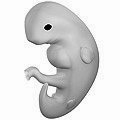
Illustration of a human embryo at six weeks gestational age
9-week human fetus from ectopic pregnancy
Anatomical terminology

Limb development in vertebrates is an area of active research in both developmental and evolutionary biology, with much of the latter work focused on the transition from fin to limb.[1]

Limb formation begins in the morphogenetic limb field, as mesenchymal cells from the lateral plate mesoderm proliferate to the point that they cause the ectoderm above to bulge out, forming a limb bud. Fibroblast growth factor (FGF) induces the formation of an organizer at the end of the limb bud, called the apical ectodermal ridge (AER), which guides further development and controls cell death. Programmed cell death is necessary to eliminate webbing between digits.

The limb field is a region specified by expression of certain Hox genes, a subset of homeotic genes, and T-box transcription factorsTbx5 for forelimb or wing development, and Tbx4 for leg or hindlimb development. Establishment of the forelimb field (but not hindlimb field) requires retinoic acid signaling in the developing trunk of the embryo from which the limb buds emerge.[2][3] Also, although excess retinoic acid can alter limb patterning by ectopically activating Shh or Meis1/Meis2 expression, genetic studies in mouse that eliminate retinoic acid synthesis have shown that RA is not required for limb patterning.[4]

The limb bud remains active throughout much of limb development as it stimulates the creation and positive feedback retention of two signaling regions: the AER and its subsequent creation of the zone of polarizing activity (ZPA) with the mesenchymal cells.[5] In addition to the dorsal-ventral axis created by the ectodermal expression of competitive Wnt7a and BMP signals respectively, these AER and ZPA signaling centers are crucial to the proper formation of a limb that is correctly oriented with its corresponding axial polarity in the developing organism.[6][7] Because these signaling systems reciprocally sustain each other's activity, limb development is essentially autonomous after these signaling regions have been established.[5]

Limb formation

[edit]

Limb bud

[edit]

Limb formation begins in the morphogenetic limb field. Limb formation results from a series of reciprocal tissue interactions between the mesenchyme of the lateral plate mesoderm and the overlying ectodermally derived epithelial cells. Cells from the lateral plate mesoderm and the myotome migrate to the limb field and proliferate to the point that they cause the ectoderm above to bulge out, forming the limb bud. The lateral plate cells produce the cartilaginous and skeletal portions of the limb while the myotome cells produce the muscle components.

The lateral plate mesodermal cells secrete fibroblast growth factors (FGF7 and FGF10) to induce the overlying ectoderm to form an organizer at the end of the limb bud, called the apical ectodermal ridge (AER), which guides further development and controls cell death.[8] The AER secretes further growth factors FGF8 and FGF4 which maintain the FGF10 signal and induce proliferation in the mesoderm.[citation needed] The position of FGF10 expression is regulated by two Wnt signaling pathways: Wnt8c in the hindlimb and Wnt2b in the forelimb. The forelimb and the hindlimb are specified by their position along the anterior/posterior axis and possibly by two transcription factors: Tbx5 and Tbx4, respectively.[9][10]

Precartilage condensations

[edit]

The limb's skeletal elements are prefigured by tight aggregates known as cellular condensations of the pre-cartilage mesenchymal cells.[11] Mesenchymal condensation is mediated by extracellular matrix and cell adhesion molecules.[12] In the process of chondrogenesis, chondrocytes differentiate from the condensations to form cartilage, giving rise to the skeletal primordia. In the development of most vertebrate limbs (though not in some amphibians), the cartilage skeleton is replaced by bone later in development.

Periodicities of the limb pattern

[edit]
Vertebrate limbs are organized into stylopod, zeugopod, and autopod.

The limb is organized into three regions: stylopod, zeugopod, and autopod (in order from proximal to distal). The zeugopod and the autopod contain a number of periodic and quasi-periodic pattern motifs. The zeugopod consists of two parallel elements along the anteroposterior axis and the autopod contains three to five (in most cases) elements along the same axis. The digits also have a quasi-periodic arrangement along the proximodistal axis, consisting of tandem chains of skeletal elements. The generation of the basic limb plan during development results from the patterning of the mesenchyme by an interplay of factors that promote precartilage condensation and factors that inhibit it.[13]

The development of the basic limb plan is accompanied by the generation of local differences between the elements. For example, the radius and ulna of the forelimb, and the tibia and fibula of the hindlimb of the zeugopod are distinct from one another, as are the different fingers or toes in the autopod. These differences can be treated schematically by considering how they are reflected in each of the limb's three main axes.

A general consensus is that the patterning of the limb skeleton involves one or more Turing-type reaction–diffusion mechanisms.[1]

Evolution and development

[edit]

The evolution of limbs from paired fins has been an area of much focus.[1] There have been many studies aimed at elucidating specific genes and transcription factors that are found responsible for limb development (See Table 1 below). In particular, studies have shown that SHH, DACH1, and the BMP, HOX, T-box, FGF, and WNT gene families all play a critical role in successful limb development and formation.[14][15] In order to study the genes involved in limb development (and thus evolution), limb reduction and limb loss in snakes is a complementary approach.[16] Conserved sequences involved in limb development are retained in the genomes of snakes. Certain limb-enhancer sequences are also conserved between different types of appendage, such as limbs and the phallus.[16][17] For instance, limb-development signalling plays a role both in the development of the limbs and of the genital tubercle in mice.[16][17] The study of limb reduction and limb loss is unravelling the genetic pathways that control limb development.[16] The Turing system has enabled a number of possible outcomes in the evolutionary steps of patterning networks.[1]

Table 1: Various genes known to be responsible for limb development (separated by gene family)
Bmp2, Bmp4, Bmp7
Dach1
En1
Fgf4, Fgf8, Fgf9, Fgf10, Fgf17, Fgfr1
Gli3
Gremlin1
Hand2
Hoxa13, Hoxd13
Msx1, Msx2
Pitx1
Shh
Tbx4, Tbx5
Wnt3, Wnt5a

Many of the genes listed in Table 1 play an important role in embryonic development, specifically during skeletal patterning and limb bud formation.[18] The Shh gene, and genes belonging to the BMP, Hox, T-box, FGF, and Wnt families, all play a pivotal role in cell signaling and differentiation to regulate and promote successful limb formation. Various other genes listed above, one example being Dach1, are DNA-binding proteins that regulate gene expression. The intricate combination of gene expression, regulation, activation, and de-activation allows these genes to produce limbs during embryonic development. Interestingly, many of these genes remain present even in animals that do not have limbs, such as snakes.

Snake evolution and limb loss

[edit]
Depiction of the spatiotemporal regulation of the Shh gene in coordinating vertebrate digits (fingers)[19]

An interesting aspect in understanding limb development is addressing the question of how snakes lost their legs. Snakes are a particularly good example for studying limb loss, as they underwent limb loss and regeneration multiple times throughout their evolution before they finally lost their legs for good. Much of the gene expression during embryonic development is regulated via spatiotemporal and chemotactic signaling,[20] as depicted by the image to the right. Recent evidence suggests that the highly conserved genes responsible for limb development (Table 1) still remain present in limbless vertebrates,[21] indicating that during embryonic development, the production of limbs, or lack thereof, may best be explained by gene regulation.

Possible role of Shh enhancer in snake limb loss

[edit]

One theory suggests that the degradation of enhancer sequences may have contributed to the progressive limb loss in snake evolution. In particular, many studies have focused on the ZPA Regulatory Sequence (ZRS) - the enhancer of the Sonic Hedgehog gene (Shh). This long-range enhancer is required for proper limb formation in several vertebrate species, with mutations in this sequence known to cause limb deformities.[17] As such, this sequence is highly conserved across a variety of vertebrate species.

Changes in the Shh enhancer ZRS (~800bp) throughout snake evolution contributed to progressive loss of enhancer function and thus limb development.[22]

Comparisons of the core ZRS in several snake species to the mouse and lizard sequences shows the presence of snake-specific alterations.[23] The core ZRS proved to be mainly conserved in basal snakes like the boa constrictor and python, which still contain pelvic girdle bones.[22] In contrast, advanced snakes such as the viper and cobra, in which no skeletal limb structures remain, have a much higher rate of nucleotide changes when compared to the mouse and lizard ZRS.[22] It is thought that these cumulative changes in the snake ZRS are indicative of a progressive loss of function in this enhancer throughout snake evolution.[22]

Alignment of partial ZPA Regulatory Sequence (ZRS) in vertebrates show increased substitutions in advanced snakes compared to limbed vertebrates and earlier basal snakes. Genomes from the UCSC Genome Browser and GigaDB, and orthologous ZRS enhancer sequences were compared by BLAST. After Kvon et al.[22]

Further investigation into these changes showed an increased rate of substitution in binding sites for transcription factors such as ETS1, whose binding to ZRS has been shown to activate Shh transcription.[24] This degradation in ZRS suggests that this enhancer may be important in further exploring the molecular mechanisms that propelled the morphological evolution of snakes.

Current conclusions and limitations

[edit]

Snakes are not a common model organism, i.e. they are not easily genetically tractable. In addition, their genome sequence data is incomplete and suffers from poor annotation and quality. These factors make it difficult to understand the mechanism of snake limb loss using a genetic approach, targeting and observing the presence and activity of these genes and their regulatory enhancers. Many of the genes necessary for limb formation are still retained in snakes, hence limb loss can probably not be explained by gene loss.[citation needed]

[edit]

The developing limb has to align itself in relation to three axes of symmetry.[25] These are the craniocaudal (head to tail), dorsoventral (back to front), and proximodistal (near to far) axes.[25]

Many investigations into the development of the limb skeletal pattern have been influenced by the positional information concept proposed by Lewis Wolpert in 1971.[26] In tune with this idea, efforts have been made to identify diffusive signaling molecules (morphogens) that traverse orthogonal axes of developing limbs and determine locations and identities of skeletal elements in a concentration-dependent fashion.

Proximodistal patterning

[edit]

Hox genes contribute to the specification of the stylopod, zeugopod and autopod. Mutations in Hox genes lead to proximodistal losses or abnormalities.[27] Three different models have been advanced for explaining the patterning of these regions.

Progress zone model

[edit]

The apical ectodermal ridge (AER) creates and maintains a zone of cell proliferation known as the progress zone.[28] It is thought that cells here gain the positional information they need to travel to their destined position.[28] It was proposed that their positional value was determined by the length of time that the cells were in the progress zone but this has yet to be proved (as of 2001).[28] Proximal structures were proposed to be formed by the first cells to leave the zone and distal ones, by cells that left later.[28]

The Progress Zone model was proposed 30 years ago but recent evidence has conflicted with this model.[29]

Experimental evidence:

  • Removing the AER at a later period of development results in less disruption of distal structures than if the AER was removed early in development.
  • Grafting an early limb bud tip onto a late wing results in duplication of structures, while grafting a late wing bud tip onto an early limb results in a deletion of structures.

Early allocation and progenitor expansion model (or prespecification model)

[edit]

Cells are specified for each segment in the early limb bud and this population of cells expand out as the limb bud grows. This model is consistent with the following observations. Cell division is seen throughout the limb bud. Cell death occurs within a 200 μm zone subjacent to the AER when it is removed; cell death forecloses some patterning. FGF-releasing beads are able to rescue limb development when the AER is removed by preventing this cell death.

Experimental evidence:

  • Labeled cells in different position of an early limb bud were restricted to single segments of the limb.[30]
  • Limbs lacking expression of required FGF4 & FGF8 showed all structures of the limb and not just the proximal parts.[31]

More recently, however, the investigators primarily responsible for both the Progress Zone and Prespecification models have acknowledged that neither of these models accounts adequately for the available experimental data.[29]

Turing-type reaction–diffusion model

[edit]
The Turing reaction-diffusion mechanism illustrates the complex chemical interactions involved in developmental pattern formation. "A" activates itself and "B", while "B" inhibits "A". The model depicts a slowly diffusing activator's (A) interaction with a rapidly diffusing inhibitor (B). The reaction-diffusion system is responsible for the characteristic patterning of the autopod, zeugopod, and stylopod in limb development.[32]

This model, a reaction–diffusion model first proposed in 1979,[33][34] is based on the self-organizing properties of excitable media described by Alan Turing in 1952.[35] The excitable medium is the limb bud mesenchyme, in which cells interact by positively autoregulatory morphogens such as transforming growth factor beta (TGF-β) and inhibitory signaling pathways involving fibroblast growth factor (FGF) and Notch. Proximodistal and craniocaudal axes are not considered to be independently specified, but instead emerge by transitions in the number of parallel elements as the undifferentiated apical zone of the growing limb bud undergoes reshaping.[36] This model only specifies a "bare bones" pattern. Other factors like sonic hedgehog (Shh) and Hox proteins, primary informational molecules in the other models, are proposed instead to play a fine-tuning role.

Experimental evidence:

  • Limb mesenchymal cells, when dissociated and grown in culture or reintroduced within ectodermal "hulls" can recapitulate essential aspects of pattern formation, morphogenesis and differentiation.[37][38]
  • Peculiarities of the limb skeletal pattern in the mouse Doublefoot mutant are predicted outcomes of a Turing-type mechanism.[39]
  • Progressive reduction in distal Hox genes in a Gli3-null background results in progressively more severe polydactyly, displaying thinner and densely packed digits, suggesting (with the aid of computer modeling) that the dose of distal Hox genes modulates the period or wavelength of digits specified by a Turing-type mechanism.[40]

Craniocaudal patterning

[edit]
Early signals that define the craniocaudal and proximodistal axis in vertebrate limb development.
Early signals that define the craniocaudal (anterior-posterior), and proximodistal axes in vertebrate limb development.

In 1957, the discovery of the zone of polarizing activity (ZPA) in the limb bud provided a model for understanding the patterning activity by the action of a morphogenic gradient of sonic hedgehog (Shh).[41] Shh is recognised as a limb-specific enhancer.[42] Shh is both sufficient and necessary to create the ZPA and specify the craniocaudal pattern in the distal limb (Shh is not necessary for the polarity of the stylopod). Shh is turned on in the posterior through the early expression of Hoxd genes, the expression of Hoxb8, and the expression dHAND. Shh is maintained in the posterior through a feedback loop between the ZPA and the AER. Shh induces the AER to produce FGF4 and FGF8 which maintains the expression of Shh.

Digits 3, 4 and 5 are specified by a temporal gradient of Shh. Digit 2 is specified by a long-range diffusible form of Shh and Digit 1 does not require Shh. Shh cleaves the Ci/Gli3 transcriptional repressor complex to convert the transcription factor Gli3 to an activator which activates the transcription of HoxD genes along the craniocaudal. Loss of the Gli3 repressor leads to the formation of generic (non-individualized) digits in extra quantities.[43]

Dorsoventral patterning

[edit]

Dorsoventral patterning is mediated by Wnt7a signals in the overlying ectoderm not the mesoderm. Wnt7a is both necessary and sufficient to dorsalize the limb. Wnt7a also influences the craniocaudal and loss of Wnt7a causes the dorsal side of limbs to become ventral sides and causes missing posterior digits. Replacing Wnt7a signals rescues this defect. Wnt7a is also required to maintain expression of Shh.

Wnt7a also causes Lmx1b, a LIM Homeobox gene (and thus a transcription factor), to be expressed. Lmx1b is involved in dorsalization of the limb, which was shown by knocking out the Lmx1b gene in mice.[44] The mice lacking the Lmx1b produced ventral skin on both sides of their paws. There are other factors thought to control the DV patterning; Engrailed-1 represses the dorsalizing effect of Wnt7a on the ventral side of the limbs.[45]

See also

[edit]

References

[edit]
Revisions and contributorsEdit on WikipediaRead on Wikipedia
from Grokipedia
Limb development refers to the embryological process in vertebrates by which limbs form from undifferentiated cells within , encased in , leading to the outgrowth and patterning of limb buds along three primary axes: proximal-distal (from or to fingertips or toes), anterior-posterior (from to or equivalent), and dorsal-ventral (from back of hand to palm). This process, occurring between approximately 4 and 8 weeks post-fertilization in humans, begins with the initiation of limb buds around days 24–28 for upper limbs and days 28–31 for lower limbs, driven by interactions between mesodermal and ectodermal tissues that establish signaling centers essential for growth and identity. The formation of limb buds is initiated at specific axial levels along the embryo's body, such as somites 15–20 for and 26–29 for in chicks, or equivalent positions in mammals, where transcription factors like Tbx5 (for forelimb identity) and Tbx4 or Pitx1 (for hindlimb identity) are expressed in the to specify limb-forming regions. These factors activate downstream signaling pathways, including Wnt and FGF, which promote the budding and initial outgrowth, while provide positional information along the antero-posterior axis of the body to ensure limbs develop at appropriate locations, such as cervical/thoracic levels for forelimbs and lumbar/sacral for hindlimbs. signaling further supports this initiation by upregulating Hox expression, highlighting the coordinated genetic regulation that prevents malformations like those seen in congenital disorders. Patterning along the limb axes is orchestrated by specialized signaling centers within the limb bud: the apical ectodermal ridge (AER) at the distal tip secretes fibroblast growth factors (FGFs, particularly FGF8) to drive proximal-distal outgrowth and maintain a progress zone of undifferentiated ; the zone of polarizing activity (ZPA) at the posterior margin produces Sonic hedgehog (Shh) to establish anterior-posterior polarity and digit identity; and dorsal-ventral polarity is mediated by Wnt7a from dorsal ectoderm and BMPs from ventral ectoderm. These interactions ensure progressive differentiation, with the AER-FGF loop sustaining proliferation until skeletal elements form, while Shh gradients pattern the five digits (or fewer in some species) through differential in the . Disruptions in these pathways, such as mutations in Shh or , can result in conditions like or synpolydactyly, underscoring the precision of this developmental program. Limb identity—distinguishing forelimbs from hindlimbs—arises early from the combinatorial action of T-box genes and Hox clusters, with Tbx5/Hox activity promoting features like the and in forelimbs, contrasted by Tbx4/Pitx1/Hox patterns yielding the and in hindlimbs. Bone morphogenetic proteins (BMPs) and other factors then guide chondrogenesis and formation, transforming the cartilaginous template into by later embryonic stages. Across vertebrates, this conserved mechanism allows for evolutionary variations, such as digit reduction in birds or limb loss in snakes, while maintaining core principles of mesenchymal condensation and vascularization.

Limb Initiation

Limb Field Specification

Limb field specification occurs during early embryogenesis in the (LPM), where discrete regions along the anterior-posterior axis of the are designated as presumptive and territories, prior to any morphological outgrowth. This process establishes the positional competence of the to form limbs, involving the coordinated expression of transcription factors and signaling molecules that confer limb-type identity and ensure proper positioning relative to the body axis. The specification is tightly linked to the underlying somitic and overlying , creating a molecular pre-pattern that dictates where and what type of limb will develop. Central to limb field specification are the T-box transcription factors Tbx5 and Tbx4, which are expressed in a limb-type-specific manner in the LPM: Tbx5 marks the field, while Tbx4 defines the hindlimb field. These factors initiate limb identity by activating downstream targets such as , which is essential for subsequent signaling interactions, and their differential expression helps distinguish from hindlimb morphology. In mice, Tbx5 is required for field competence, as conditional knockouts result in complete absence of buds despite normal initial patterning of the LPM, demonstrating its indispensable role in field initiation. Similarly, Tbx4 cooperates with the homeodomain transcription factor Pitx1 in the hindlimb field; Pitx1 enhances Tbx4 expression and is critical for hindlimb-specific features, with Pitx1-null mutants exhibiting severe hindlimb reductions, including shortened femurs and absent fibulae, underscoring its role in establishing hindlimb identity. Positioning of the limb fields along the body axis is regulated by retinoic acid (RA) gradients emanating from the somites, which provide anterior-posterior positional information to the LPM. RA signaling, mediated by the nuclear receptors RARs and RXRs, patterns the LPM by inducing collinear Hox gene expression along the A-P axis, thereby defining the boundaries of the forelimb (cervical levels) and hindlimb (lumbar levels) fields. Rostral Hox genes from paralog groups 4–6 are expressed in the forelimb field to induce Tbx5, while more posterior Hox genes from groups 9–11 dominate the hindlimb field to support Tbx4/Pitx1 expression, with their combinatorial codes integrating axial signals to specify regional competence. For instance, Hox9 paralogs repress Tbx5 expression in interlimb regions to prevent ectopic forelimb initiation, and misexpression of Hoxb9 can induce ectopic limbs, as shown in chick experiments. The competence of the specified LPM to form a limb requires reciprocal interactions with the overlying , where the induces ectodermal thickening and competence through secreted signals like BMPs and Wnts, while the in turn supports mesodermal . Classic recombination experiments in chick embryos demonstrate that LPM from specified fields can induce ectopic limbs when grafted under flank , but non-specified LPM cannot, highlighting the mesoderm's primary role in field competence. Mouse mutants further validate these mechanisms; for example, RA synthesis defects in Rdh10 mutants lead to severely reduced buds due to impaired outgrowth and Hox patterning, while hindlimbs are less affected, while gain-of-function Hox perturbations in chicks cause field duplications or shifts, confirming the genetic control of specification.

Limb Bud Formation

Limb bud formation in vertebrates begins with the physical outgrowth of the limb field into a protruding structure composed of and overlying . In mice, the bud emerges at embryonic day 9.5 (E9.5), while the hindlimb bud appears slightly later at E10.5. This timeline reflects the sequential activation of genetic programs in the , where the presumptive limb territories, identified by Tbx5 for forelimbs and Tbx4 for hindlimbs, transition from a flattened field to a three-dimensional bud through localized . The core process driving bud formation is the proliferation of mesenchymal cells in the , fueled by a loop between fibroblast growth factors (FGFs) expressed in the and . Mesenchymal cells initiate expression of , which signals to the overlying to induce Fgf8 production; Fgf8 then acts back on the mesenchyme to sustain Fgf10 expression and promote cell division, leading to the expansion of the mesodermal core. Concurrently, the thickens at the distal margin, forming a pseudostratified that envelops the proliferating mesenchymal bulge and contributes to the bud's structural integrity. To ensure limb buds form only at precise thoracic and lumbar positions along the body axis, BMP and Wnt signaling must be antagonized locally within the limb fields. High levels of BMP signaling inhibit expression and thus suppress ectopic outgrowth elsewhere, but in the limb territories, antagonists such as Gremlin1 and Noggin reduce BMP activity, permitting activation and bud initiation at those sites. Similarly, Wnt antagonists like Sfrp2 and confine canonical Wnt signaling to the prospective limb regions by inhibiting it in adjacent areas, preventing diffuse activation that could lead to misplaced buds. Across vertebrates, the timing of limb bud appearance varies with developmental tempo, but the underlying mechanisms are conserved. In chick embryos, (wing) buds form around day 3 of incubation, shortly followed by buds, while in , pectoral buds initiate as early as 24-30 hours post-fertilization—earlier relative to total compared to tetrapods, reflecting accelerated fin development in aquatic environments.

Establishment of Signaling Centers

Apical Ectodermal Ridge

The apical ectodermal ridge (AER) is a thickened epithelial structure that forms at the distal tip of the developing limb bud, serving as a critical signaling center for proximodistal outgrowth. This ridge emerges from the surface overlying the limb and is induced by 10 (FGF10) secreted from the underlying , which promotes ectodermal thickening and expression of AER-specific genes. Once established, the AER expresses 8 (FGF8), which diffuses to the adjacent to stimulate and , thereby driving iterative limb elongation along the proximodistal axis.81288-0) This proliferative response is mediated primarily through the /extracellular signal-regulated kinase (MAPK/ERK) pathway activated by FGF8 binding to fibroblast growth factor receptors (FGFRs) on mesenchymal cells. A key feature of AER function is a loop between the and that sustains outgrowth. FGF10 from the induces FGF8 expression in the AER, while FGF8 in turn maintains FGF10 expression in the distal , ensuring continuous signaling for limb bud progression. Disruption of this loop, as seen in knockout mice, prevents AER formation and results in complete absence of limb structures beyond initial . Classic experiments in chick embryos demonstrated the AER's indispensable role in outgrowth. Surgical removal of the AER at early stages halts distal limb development, leading to truncated limbs where the severity correlates with the timing of removal—the earlier the ablation, the more proximal the truncation. This phenotype can be rescued by implanting beads soaked in recombinant FGF8 or FGF4 into the AER-ablated limb bud, which restores mesenchymal proliferation and allows formation of distal elements, confirming that FGFs are the primary AER-derived signals for outgrowth. The maintenance of the AER is regulated by antagonistic interactions involving bone morphogenetic proteins (BMPs). , a secreted BMP antagonist expressed in the posterior , inhibits BMP signaling to prevent premature AER regression and sustain FGF expression; in mutants, AER breakdown occurs early, resulting in shortened limbs. This integrates AER function with other signaling centers, such as the zone of polarizing activity, to coordinate overall limb patterning.

Zone of Polarizing Activity

The zone of polarizing activity (ZPA) is a specialized region of posterior in the developing limb bud that establishes anteroposterior (AP) polarity by secreting signaling molecules. Discovered through classic experiments in chick embryos, the ZPA induces mirror-image duplications of limb structures when transplanted to the anterior margin, demonstrating its instructive role in patterning digits along the AP axis. For instance, such grafts typically produce duplicated digit patterns like 4-3-2-2-3-4, where the original posterior digits are mirrored anteriorly. The primary signaling molecule of the ZPA is Sonic hedgehog (Shh), a secreted protein expressed specifically in this posterior mesenchymal region starting at embryonic day 9.5 (E9.5) in mice and persisting until approximately E12.5. Shh diffuses from the ZPA to form a concentration across the limb bud , with high levels posteriorly and progressively lower levels anteriorly. This specifies digit identities in a concentration- and duration-dependent manner: high Shh exposure promotes posterior digits (e.g., the pinky or digit 5), while low exposure patterns anterior digits (e.g., the thumb or digit 1). Downstream of Shh, the family of transcription factors mediates its effects on target genes critical for AP patterning. Gli3 primarily acts as a transcriptional in regions of low Shh, where it inhibits expression of posterior-specifying genes; Shh relieves this repression in a gradient fashion to allow paracrine signaling.80678-9) In contrast, Gli2 functions in the ZPA itself for , activating targets such as the 5' gene cluster and bone morphogenetic proteins (BMPs). Shh-induced regulation of the 5' Hoxd genes (e.g., Hoxd13 and Hoxd12) is essential for conferring posterior identity to mesenchymal cells, thereby ensuring proper digit formation and limb asymmetry. BMPs, in turn, amplify these posterior fates by promoting chondrogenesis in Shh-responsive regions. Shh signaling from the ZPA coordinates briefly with fibroblast growth factors (Fgfs) from the apical ectodermal ridge to integrate AP patterning with proximodistal outgrowth.

Dorsal-Ventral Signaling Centers

The dorsal-ventral (DV) axis of the limb is patterned by reciprocal signaling between the and , with distinct signaling centers in the dorsal and ventral specifying opposing identities in the underlying . In the dorsal , Wnt7a is expressed from early limb bud stages (around embryonic day 9.5 in mice) and diffuses to induce expression of the LIM-homeodomain Lmx1b specifically in the adjacent dorsal . This induction establishes dorsal limb traits, including the formation of extensor muscles, dorsal , and nail structures on the dorsal surface. Lmx1b acts as a key effector by directly regulating downstream genes that promote these dorsal characteristics while repressing ventral programs in the .90143-2) In contrast, the ventral serves as a signaling center through expression of the Engrailed-1 (En1), which begins around the same and functions to repress Wnt7a transcription, thereby confining Wnt7a and its dorsalizing effects to the dorsal domain. En1 also positively regulates ventral-specific genes, such as Gdf11, which contributes to ventral muscle patterning by inhibiting excessive chondrogenesis and in the ventral . This mutual antagonism between dorsal and ventral ectodermal signals ensures sharp DV boundaries, with En1 preventing dorsal transformation in ventral tissues. Additionally, BMP signaling from the non-AER ectoderm reinforces ventral identity by maintaining En1 expression and promoting ventral differentiation, independent of AER function.00277-7) Genetic disruptions highlight the precision of these pathways. In Lmx1b knockout mice, limbs exhibit ventralization, with dorsal structures transformed to ventral fates (biventral phenotype), including duplicated ventral paw pads and loss of extensor tendons, underscoring Lmx1b's essential role in dorsal specification. Conversely, En1 mutants display dorsalization (bidorsal limbs), characterized by ectopic dorsal traits on the ventral surface, such as duplicated extensor muscles and nails, due to expanded Wnt7a expression ventrally. These phenotypes demonstrate that balanced DV signaling is critical for proper limb identity. Furthermore, DV signals integrate with anteroposterior (AP) patterning in the paw, where Wnt7a from the dorsal ectoderm sustains Shh expression in the zone of polarizing activity (ZPA), ensuring coordinated posterior digit identity and preventing AP defects in dorsalized contexts. This crosstalk occurs without altering proximal-distal outgrowth, though DV cues briefly overlap with AER positioning to refine ectodermal boundaries.90319-7)

Skeletal Element Formation

Mesenchymal Condensations

Mesenchymal condensations form as high-density clusters of prechondrogenic cells within the undifferentiated limb bud , serving as the initial templates for skeletal element formation during limb development. These aggregations occur in the central core of the limb bud and are characterized by increased and reduced deposition, distinguishing them from surrounding loose . Prechondrogenic cells in these condensations express key molecular markers indicative of their commitment to the chondrogenic lineage, including the Sox9 and early transcripts of . Sox9 acts as a master regulator, driving mesenchymal cell aggregation and initiating differentiation by activating genes essential for matrix production. mRNA appears at low levels in these cells prior to overt cartilage formation, marking the transition from mesenchymal to chondroprogenitor states. Cell adhesion molecules are crucial for mediating the close interactions that stabilize these clusters. Neural cell adhesion molecule (N-CAM) is transiently upregulated in precartilage regions, facilitating homotypic cell-cell adhesion and promoting condensation stability. Similarly, tenascin, an extracellular matrix glycoprotein, is expressed in the pericondensation areas, modulating cell-matrix interactions to support aggregation and inhibit premature differentiation. The spatial organization of condensations is patterned by integrated signaling gradients and networks. , such as Hoxa and Hoxd cluster members, exhibit nested expression domains along the proximodistal and anteroposterior axes, specifying the identity and morphology of individual skeletal elements within the condensations. (Fgf) signals from the apical ectodermal ridge and Sonic hedgehog (Shh) from the zone of polarizing activity create gradients that influence Hox expression and direct the positioning of condensations, ensuring proper alignment with limb axes. Condensations emerge after the initial specification of proximodistal identities in the limb bud , with formation initiating in proximal regions and progressing distally in a temporal sequence. In the , proximal stylopod (/) condensations appear around embryonic day 11.5, followed by zeugopod (/ or /) at E12.5, and distal autopod (digits) elements later, around E13.5. Condensations differ between skeletal regions: in long bones of the stylopod and zeugopod, they form elongated, continuous rods that expand proximodistally, whereas in digits, they develop as discrete, nodular structures separated by interdigital . In non-skeletal areas, such as prospective muscle or regions, mesenchymal cells fail to form complete high-density condensations, remaining as diffuse populations without progression to . These condensations subsequently differentiate into templates through chondrogenesis.

Chondrogenesis and Joint Formation

Following the formation of mesenchymal condensations, prechondrogenic cells in the core of these aggregates differentiate into chondrocytes, a process driven by the Sox9, which is essential for initiating and maintaining chondrogenesis by activating cartilage-specific genes such as Col2a1 and Acan. Sox9 expression is induced in the condensing and persists in immature chondrocytes, ensuring proper matrix production and preventing premature differentiation into other lineages. As chondrocytes mature, and Runx3 become critical for promoting , with Runx2 directly regulating genes involved in the transition to prehypertrophic and hypertrophic states, including the induction of Indian hedgehog (Ihh) signaling. Ihh, expressed specifically in prehypertrophic chondrocytes, coordinates hypertrophic differentiation by stimulating vascularization and recruitment while inhibiting excessive maturation through a loop. The Ihh-parathyroid hormone-related protein (Pthrp) feedback loop precisely balances proliferation and maturation in the growth plate. Ihh secreted from prehypertrophic induces Pthrp expression in periarticular regions, and Pthrp in turn signals back via its receptor (Pth1r) on to maintain proliferation and delay , thereby regulating the pace of . This loop ensures a steady supply of proliferative while allowing timed maturation; disruption of either component leads to accelerated or delayed differentiation, as seen in models where Ihh null mutants exhibit reduced proliferation and premature . Joint formation begins with the specification of interzones, flattened regions of mesenchymal cells that interrupt the chondrogenic condensations and prevent cartilage continuity between skeletal elements. Interzone cells are marked early by expression of growth differentiation factor 5 (Gdf5), a BMP family member that promotes joint progenitor identity and restricts chondrogenesis to adjacent regions, as demonstrated in Gdf5 knockout mice where multiple synovial fail to form. Wnt9a, expressed in the nascent interzone, further specifies joint fate by inhibiting canonical Wnt signaling in surrounding cells to suppress ectopic cartilage formation and maintain interzone integrity. Noggin, a BMP antagonist also upregulated in the interzone, cooperates with Gdf5 and Wnt9a to antagonize BMP signaling, thereby preventing chondrocyte differentiation within the joint space and allowing . Cavitation of the interzone involves (apoptosis) to sculpt distinct skeletal elements, with apoptotic cells appearing in the central interzone to facilitate tissue separation and synovial cavity formation. In chick embryos, this apoptosis peaks between Hamburger-Hamilton (HH) stages 25 and 29, coinciding with interzone flattening and the onset of bending. Suppression of apoptosis, as in models with inhibited activity, results in fused phalanges and failed cavitation, underscoring its role in establishing boundaries. Subsequent to cartilage template formation, endochondral ossification initiates with perichondral bone collar development, where the surrounding differentiates into osteoblasts under control, depositing bone matrix around the . This perichondral ossification transitions to periosteal as vascular invasion allows osteogenic cells to expand longitudinally, replacing progressively while preserving epiphyseal growth plates.

Axis Patterning Mechanisms

Proximodistal Patterning

Proximodistal patterning establishes the sequence of skeletal elements along the limb axis, from the proximal stylopod ( in or in ) to the intermediate zeugopod (/ or /) and the distal autopod (/ankle and digits). This process unfolds sequentially during limb bud outgrowth, with proximal structures specified first, followed by zeugopod and then autopod formation as the bud elongates. The timing of specification reflects the progressive differentiation of mesenchymal progenitors, ensuring coordinated growth and segmentation without overlap in domain identities. Key transcription factors delineate these domains and confer segment-specific identities. In the stylopod, Meis1 and Meis2 homeodomain proteins are expressed proximally and are essential for /femur development. The zeugopod is marked by Hoxa11, which activates in a distal stripe before restricting to the middle region, promoting /ulna or / formation. Distally, the autopod identity requires Hoxa13 and Sall4, with Hoxa13 initiating in a posterior-distal domain and expanding to specify digit progenitors, while Sall4 supports distal morphogenesis and digit patterning through regulation of downstream targets like signaling. These factors exhibit temporal colinearity, with proximal genes activating earlier than distal ones, linking transcriptional programs to positional cues. Signaling from the apical ectodermal ridge (AER) drives this patterning via a fibroblast growth factor (FGF) gradient that peaks distally and attenuates proximally, sustaining mesenchymal proliferation in an undifferentiated progress zone while specifying fates based on signaling duration and strength. FGFs (primarily Fgf8, Fgf4, and Fgf10) repress proximal markers like Meis1/2 distally, allowing activation of Hoxa11 and Hoxa13 as cells exit the high-FGF zone. Concurrently, retinoic acid (RA) promotes proximal specification through a complementary proximal-high gradient, generated by distal expression of the RA-degrading enzyme Cyp26b1 in the AER and mesenchyme, which clears RA to enable distal gene expression and prevent ectopic proximalization. This RA-FGF antagonism thus creates opposing gradients that interpret positional information along the axis. Classic AER ablation experiments in chick and embryos provide direct evidence for timing-dependent specification. Removal of the AER at early stages (e.g., Hamburger-Hamilton stage 18-20) arrests development at the stylopod, yielding humerus-only limbs; intermediate ablations (stages 21-23) truncate at the zeugopod, forming stylopod and partial zeugopod; and late removals (stages 24-26) permit stylopod and zeugopod but eliminate autopod elements. These domain-specific arrests demonstrate that prolonged AER-FGF signaling is required for sequential distal progression, with each segment's fate fixed upon exiting the signaling zone.

Anteroposterior Patterning

The anteroposterior (AP) axis of the vertebrate limb, which determines digit identities from to , is primarily patterned by Sonic hedgehog (Shh) signaling emanating from the zone of polarizing activity (ZPA) in the posterior . Shh diffuses anteriorly to form a concentration gradient, where high posterior levels specify posterior digit fates (e.g., digit 5 in mammals) and progressively lower anterior concentrations specify more anterior identities (e.g., digits 1-3). This concentration-dependent mechanism was first demonstrated in chick limb buds, where beads releasing varying Shh concentrations induced digit duplications mirroring the gradient's positional values. In mice, while Shh acts primarily as a short-range trigger to initiate a self-sustaining downstream network rather than a direct long-range , the gradient still ensures differential digit specification through relay signals. Shh signaling is amplified and maintained through feedback loops involving bone morphogenetic proteins (BMPs) and fibroblast growth factors (FGFs). Shh induces expression of the BMP antagonist Gremlin1 in posterior , which permits FGF production in the apical ectodermal (AER) and sustains Shh transcription via an Shh-FGF4 loop. Conversely, and BMP4 exert by restricting Shh expression to the ZPA, preventing anterior expansion; for instance, BMP application rapidly downregulates Shh within hours in chick and limb buds. These interactions integrate growth and patterning, ensuring the Shh domain remains posterior while promoting limb outgrowth. Downstream effectors like and Gli3 further refine AP digit identities based on Shh levels. High Shh in posterior regions upregulates expression, which is most prominent in presumptive digit 5 and promotes its identity through interactions with other 5′ Hoxd genes. Anteriorly, low Shh allows full-length Gli3 to be processed into a form (Gli3R), creating a graded activity that specifies anterior digits; Hoxa13 and directly modulate Gli3 transcription to fine-tune this balance, as evidenced by increased Gli3R and loss of digit 1 in Hoxa13-null mice. Recent work has also identified (Nf2) as a regulator of Shh signaling by controlling ciliary trafficking of the receptor , which is essential for proper digit patterning including anterior structures like . Mammals typically form five digits along the AP axis, but disruptions in Shh-Gli3 signaling lead to variation, such as . In Gli3 null mutants, loss of Gli3R causes ectopic anterior Shh expression and severe with up to seven unpatterned digits, highlighting Gli3's role in restricting digit number. Recent single-cell sequencing (scRNA-seq) studies have revealed Shh-responsive mesenchymal progenitors in both and limb buds; for example, in forelimbs (E10.5–E14.5), Shh influences transitions from naive Msx1+ progenitors to autopodial + states, while embryonic limbs (PCW5–PCW9) show Shh-linked clusters in posterior co-expressing and GLI1, underscoring conserved progenitor dynamics.

Dorsoventral Patterning

Dorsoventral patterning in limb development establishes the distinct dorsal and ventral identities of limb tissues, integrating signals with mesenchymal responses to orient the limb relative to the body axis. Early specification of the limb along the dorsoventral axis occurs prior to overt outgrowth, with the dorsal adopting a Wnt7a-expressing fate and the ventral ectoderm expressing Engrailed-1 (En1). These ectodermal domains then pattern the underlying through secreted signals, ensuring proper differentiation of dorsal structures like nails and extensor muscles from ventral features such as footpads and flexor muscles. In the dorsal compartment, Wnt7a secreted from the induces expression of the LIM-homeodomain Lmx1b in the adjacent dorsal , which is essential for specifying dorsal identity and distinguishing dorsal nail ridges from ventral paw pads. Lmx1b acts cell-autonomously in the to promote dorsal-specific , including markers of dorsal and skeletal elements. Ventrally, En1 in the represses Wnt7a expression to prevent ectopic dorsal signaling and maintains ventral identity. Cross-talk between axes is evident as Sonic hedgehog (Shh) from the posterior zone of polarizing activity represses Lmx1b expression in the ventral , thereby reinforcing DV boundaries and preventing dorsalization of posterior ventral tissues. Limb muscle patterning along the DV axis results in dorsal extensor groups and ventral flexor groups, arising from common Pax3- and Lbx1-expressing myogenic progenitors that delaminate from the somites and migrate into the limb bud. These progenitors initially express Pax3 and Lbx1 uniformly, but upon reaching the limb, they segregate into dorsal and ventral muscle masses influenced by local signals; dorsal progenitors develop extensors under Lmx1b regulation, while ventral progenitors form flexors with additional input from Shh to promote ventral myogenesis. Disruptions in DV signaling lead to malformations, as seen in Wnt7a knockout mice, where loss of dorsal induction causes bidirectional ventralization, resulting in paws with duplicated ventral paw pads, absent nails, and bidirectional hair patterns. This DV patterning mechanism is conserved across s, including in the pectoral s of teleost fish like , where dorsal expression of Lmx1b and orthologous Wnt signals establishes similar dorsoventral asymmetries in fin structures prior to endoskeletal development.

Theoretical Models of Patterning

Progress Zone Model

The progress zone (PZ) model, proposed by Summerbell, Lewis, and Wolpert in , posits that proximodistal (PD) patterning of the vertebrate limb occurs through a dynamic region of undifferentiated mesenchymal cells located immediately beneath the apical ectodermal ridge (AER). In this model, the AER maintains the PZ as a proliferative domain where cells remain labile and unspecified; as the limb bud elongates, cells progressively exit the PZ proximally, acquiring a PD positional value that depends on the duration of their residence within it. Cells leaving early adopt proximal fates, such as stylopod (), while those remaining longer specify more distal identities, including zeugopod (/) and autopod (digits). Central to the model is a developmental clock within PZ cells that records time spent under AER influence, with positional specification advancing in discrete steps. In the chick limb bud, this process operates on a timescale tied to cell proliferation rates, allowing distal fates to emerge from extended residence in the zone before exit. Fibroblast growth factor 8 (Fgf8), secreted by the AER, plays a critical role in sustaining PZ proliferation and preventing differentiation, thereby permitting the time-dependent acquisition of positional information. Removal of the AER, or inhibition of Fgf signaling, halts outgrowth and fixes the PD identity of exiting cells at the stage corresponding to the time of perturbation, underscoring the reliance on continuous AER-Fgf8 activity. Experimental support for the model derives from classic AER manipulation and rescue assays in chick embryos. For instance, implanting FGF-soaked beads in place of the AER at specific developmental stages restores outgrowth and results in limb truncations or specifications that precisely match the timing of intervention, aligning with the predicted exit-based fate assignment. However, the model faces challenges in accounting for early, uniform expression of across the limb bud , which precedes overt PD differentiation and suggests specification mechanisms not strictly tied to progressive distal timing.

Early Allocation Model

The early allocation model, also known as the early specification or prespecification model, proposes that the proximodistal (PD) identities of the limb are established prior to significant outgrowth of the limb bud, dividing the mesenchyme into three distinct domains corresponding to the stylopod (proximal humerus or femur), zeugopod (middle radius/ulna or tibia/fibula), and autopod (distal hand/foot). This model was introduced by Dudley, Ros, and Tabin in 2002, based on experimental evidence from chick limb buds, where these domains are initially specified as small, overlapping regions within the nascent limb field through gradients of Hox and Meis gene expression. Unlike time-dependent mechanisms, the domains expand through isotropic proliferation of progenitor cells, with the apical ectodermal ridge (AER) primarily promoting survival and growth rather than providing patterning information; removal of the AER leads to reduced proliferation and increased apoptosis in distal regions, truncating the limb without altering proximal fates. Key to this prespecification are the expression patterns of Hoxa and Hoxd paralogous genes, which exhibit a proximal bias in 3' genes (such as Hoxa9 and Hoxd8, associated with stylopod identity) and a distal bias in 5' genes (such as Hoxa13 and , marking autopodal elements), alongside Meis1/2 transcripts that initially cover the early bud but refine to the proximal domain under influence. These molecular gradients set up the PD prepattern before outgrowth, with Hoxa11 similarly restricting to zeugopod progenitors. Supporting evidence comes from lineage-tracing and transplantation experiments, where early limb labeled at the onset of bud formation contributes autonomously to specific PD segments upon grafting, retaining their fates without requiring ongoing AER signals or host interactions. This model addresses limitations of the progress zone hypothesis by reconciling data from mutants showing precocious PD specification, such as enlarged early domains that expand correctly despite accelerated timelines, indicating that positional values are allocated upfront rather than acquired progressively through time in a distal progress zone. In , genetic perturbations reveal that stylopod, zeugopod, and autopod progenitors are molecularly distinct from the earliest detectable limb buds, further validating the early allocation framework over time-based alternatives.

Reaction-Diffusion Model

The reaction-diffusion model, originally proposed by in 1952, describes how interacting chemical substances, or morphogens, can generate periodic spatial patterns through a process of local activation and driven by differential rates. In this framework, an activator molecule promotes its own synthesis and that of an inhibitor, but the inhibitor diffuses more rapidly, suppressing activator production in surrounding areas and thereby creating regularly spaced peaks of activator activity that correspond to patterned structures. Applied to vertebrate limb development, the model elucidates the formation and spacing of digits as an emergent property of in the mesenchymal condensates along the anteroposterior axis. Bone morphogenetic proteins (BMPs), particularly and BMP7, function as short-range activators by inducing chondrogenic differentiation and auto-activating their own expression, while BMP antagonists such as Noggin and act as longer-range inhibitors that bind and sequester BMPs, preventing excessive activation in adjacent regions. This activator-inhibitor dynamic ensures precise interdigit spacing, with experimental perturbations—such as Noggin overexpression leading to reduced digit number or BMP gain-of-function causing fusions—aligning with model predictions. Computational simulations of these reaction-diffusion systems demonstrate that the wavelength of the emerging pattern, governed by parameters like diffusion coefficients and reaction strengths, directly influences digit count; for instance, slower inhibitor diffusion or stronger activation yields longer wavelengths and more digits, recapitulating polydactyly phenotypes in mutants like Gli3-deficient mice. These models have been validated through two-dimensional and three-dimensional in silico recreations of mouse and chick limb buds, where parameter tuning matches observed digit morphologies without predefined positional cues. In the anteroposterior axis, the reaction-diffusion mechanism integrates with Sonic hedgehog (Shh) signaling from the zone of polarizing activity, where Shh induces BMP expression and modulates the Turing network to assign digit identities—higher Shh levels promote posterior fates via enhanced BMP activity in posterior domains. This interplay ensures that the periodic digit primordia acquire specific ray identities, as evidenced by Shh knockout resulting in severe limb truncation with loss of all digits. Recent advancements in the have extended these models to incorporate gradients, which provide global positional information along the proximodistal and anteroposterior axes, thereby enabling three-dimensional simulations that capture how Hox transcription factors like fine-tune local reaction-diffusion dynamics for coordinated skeletal patterning across the entire limb. Such integrations reveal how Hox dosage alters pattern wavelength, explaining evolutionary variations in digit number among vertebrates.

Evolutionary Aspects

Conservation in Vertebrates

Limb development across vertebrates exhibits remarkable conservation in the core genetic toolkit, including signaling pathways mediated by fibroblast growth factors (FGFs), Sonic hedgehog (Shh), Wnts, and Hox transcription factors, which orchestrate appendage outgrowth and patterning from fish fins to tetrapod limbs. FGFs, particularly FGF8 and FGF10, initiate and sustain limb bud outgrowth through an epithelial-mesenchymal feedback loop in both teleost fins and mammalian limbs, as demonstrated in comparative studies of mouse and chick embryos. Shh, expressed in the zone of polarizing activity (ZPA), directs anteroposterior patterning in pectoral and pelvic appendages, with conserved expression in catshark fin buds mirroring that in tetrapods. Wnt signaling, such as Wnt3a, maintains progenitor cell proliferation in the progress zone, while HoxA and HoxD clusters regulate proximodistal and digit identity through topological chromatin interactions preserved across sarcopterygians and actinopterygians. These mechanisms highlight a shared regulatory network that has persisted for over 400 million years, enabling morphological diversification while maintaining fundamental processes. The fin-to-limb transition, occurring approximately 400 million years ago during the period, involved the elaboration of the distal to form the autopod ( and digits) through modifications in Shh signaling duration. Transcriptomic analyses comparing forelimb buds and bamboo shark pectoral fins reveal an "hourglass" pattern of conservation, with mid-developmental stages showing the highest genetic similarity, while early and late stages diverge due to heterochronic shifts. In tetrapods, Shh expression and its targets (e.g., and Gli1) are prolonged compared to fish fins, promoting extended ZPA activity that facilitates autopod outgrowth; in sharks, these signals peak earlier and decline, limiting distal elaboration. This enhanced Shh signaling, independent of major regulatory changes, underscores how subtle temporal adjustments in conserved pathways drove the evolution of weight-bearing limbs from aquatic fins. Despite this conservation, variations in limb morphology arise from modifications in these shared mechanisms, as seen in and bird wings. In s, elongated wing digits result from upregulated Bmp2 expression in the , driven by altered Prx1 regulation, which promotes hypertrophic growth phases and suppresses to extend bone length. This Bmp extension integrates with conserved FGF-Shh loops but shifts timing to favor hyperphalangy, enabling flight adaptations. In birds, involves timing shifts in posterior HoxD gene expression (e.g., Hoxd11 and Hoxd12), which exhibit posterior-to-anterior displacement in the limb bud, contributing to reduced phalangeal counts and altered digit identity while preserving overall patterning. These changes, such as delayed collinear activation of in the , also influence limb positioning but highlight how regulatory timing tweaks diversify form within the blueprint. Molecular homology is evident in the T-box transcription factor Tbx5, which initiates and patterns pectoral from jawless vertebrates to mammals, including sharks and humans. Comparative embryonic studies show Tbx5 expression in the of catsharks and skates mirrors that in tetrapods, regulating fin/limb bud positioning and outgrowth through conserved enhancers, despite regulatory evolution between jawless and jawed lineages. This deep conservation supports the paired system's origin in early vertebrates, with Tbx5 maintaining pectoral specificity across ~500 million years. Fossil evidence from transitional forms like Tiktaalik roseae, dated to ~375 million years ago, illustrates this genetic conservation through morphological intermediates between fins and limbs. 's pectoral and pelvic fins feature robust endoskeletal elements with emerging limb-like joints and radials, bridging sarcopterygian fins and stylopodia, while lacking a fully formed autopod. Paleontological data align with genetic studies showing conserved Hox and Shh domains in basal tetrapodomorphs, confirming as a key link in the fin-to-limb evolutionary continuum.00469-3) Such fossils, combined with molecular homologies, affirm the incremental modification of shared developmental modules across classes.

Limb Reduction and Loss

Limb reduction and loss represent key evolutionary adaptations in various vertebrate lineages, particularly in squamates and cetaceans, where genetic modifications disrupt the core mechanisms of limb outgrowth and patterning. In snakes, the absence of limbs arises from alterations in the expression domains of , specifically the expansion of Hox10-13 expression along the anterior-posterior axis, which represses the specification of limb fields in the . This expanded Hox expression, observed in python embryos, shifts the thoracic identity anteriorly, preventing the formation of buds and severely reducing development. Concurrently, (RA) signaling, which normally patterns the Hox code and establishes limb competence, is altered due to these spatiotemporal shifts, leading to a failure in activating downstream limb initiation pathways. A critical molecular basis for limb loss in snakes involves mutations in the zone of polarizing activity regulatory sequence (ZRS), a long-range enhancer that drives Sonic hedgehog (Shh) expression in the limb bud's zone of polarizing activity (ZPA). In advanced snakes, progressive accumulation of snake-specific changes in the ZRS abolishes Shh expression, disrupting the Shh-Fgf feedback loop essential for limb outgrowth and preventing the establishment of the ZPA.31310-1) This enhancer degeneration occurred stepwise during snake evolution, with basal snakes like pythons retaining partial rudiments due to residual ZRS function, while more derived species exhibit complete loss. Genomic analyses of python species in the confirmed these ZRS alterations as a primary driver of reduction, highlighting in limb loss across amniotes.31310-1) In other reptiles, such as limb-reduced , vestigial limbs persist through partial retention of Shh expression, allowing limited outgrowth but insufficient for full patterning. For instance, in gymnophthalmid with digit-reduced limbs, Shh is expressed in a restricted domain within the rudimentary ZPA, correlating with truncated limb elements rather than complete absence. This partial Shh activity contrasts with the full abolition in snakes and underscores lineage-specific regulatory tweaks in the Shh pathway. Cetacean evolution illustrates limb modification rather than outright loss, with forelimbs transforming into flippers through regulatory changes in . Upregulation of expression in the developing flipper drives hyperphalangy, increasing digit number and flexibility for aquatic propulsion, as evidenced by functional studies overexpressing cetacean in , which recapitulates elongated phalanges. Fossil intermediates, such as and , document this transition, showing progressive shortening of hindlimbs and hyperphalangic forelimbs bridging terrestrial and fully aquatic forms. Despite these reductive changes, vestigial genetic programs remain active, indicating no complete "off switch" for limb development. In python rudiments, Fgf8 is expressed in AER-like ectodermal thickenings, supporting transient outgrowth before Shh loss halts progression. Recent genomic surveys reveal latent regulatory potential in snake genomes, with conserved limb enhancers showing minimal degeneration, suggesting evolutionary reversibility under altered selective pressures.00582-2)

References

Add your contribution
Related Hubs
User Avatar
No comments yet.