Hubbry Logo
search
logo
Lerna
Lerna
current hub
2161988

Lerna

logo
Community Hub0 Subscribers
Read side by side
from Wikipedia

In classical Greece, Lerna[1] (Greek: Λέρνα or Λέρνη) was a region of springs and a former lake located in the municipality of the same name, near the east coast of the Peloponnesus, south of Argos. Even though much of the area is marshy, Lerna is located on a geographically narrow point between mountains and the sea, along an ancient route from the Argolid to the southern Peloponnese; this location may have resulted in the importance of the settlement.[2]

Key Information

Its site near the village Mili at the Argolic Gulf is most famous as the lair of the Lernaean Hydra, the chthonic many-headed water snake, a creature of great antiquity when Heracles killed it, as the second of his labors. The strong Karstic springs remained; the lake, diminished to a silt lagoon by the 19th century, has vanished.

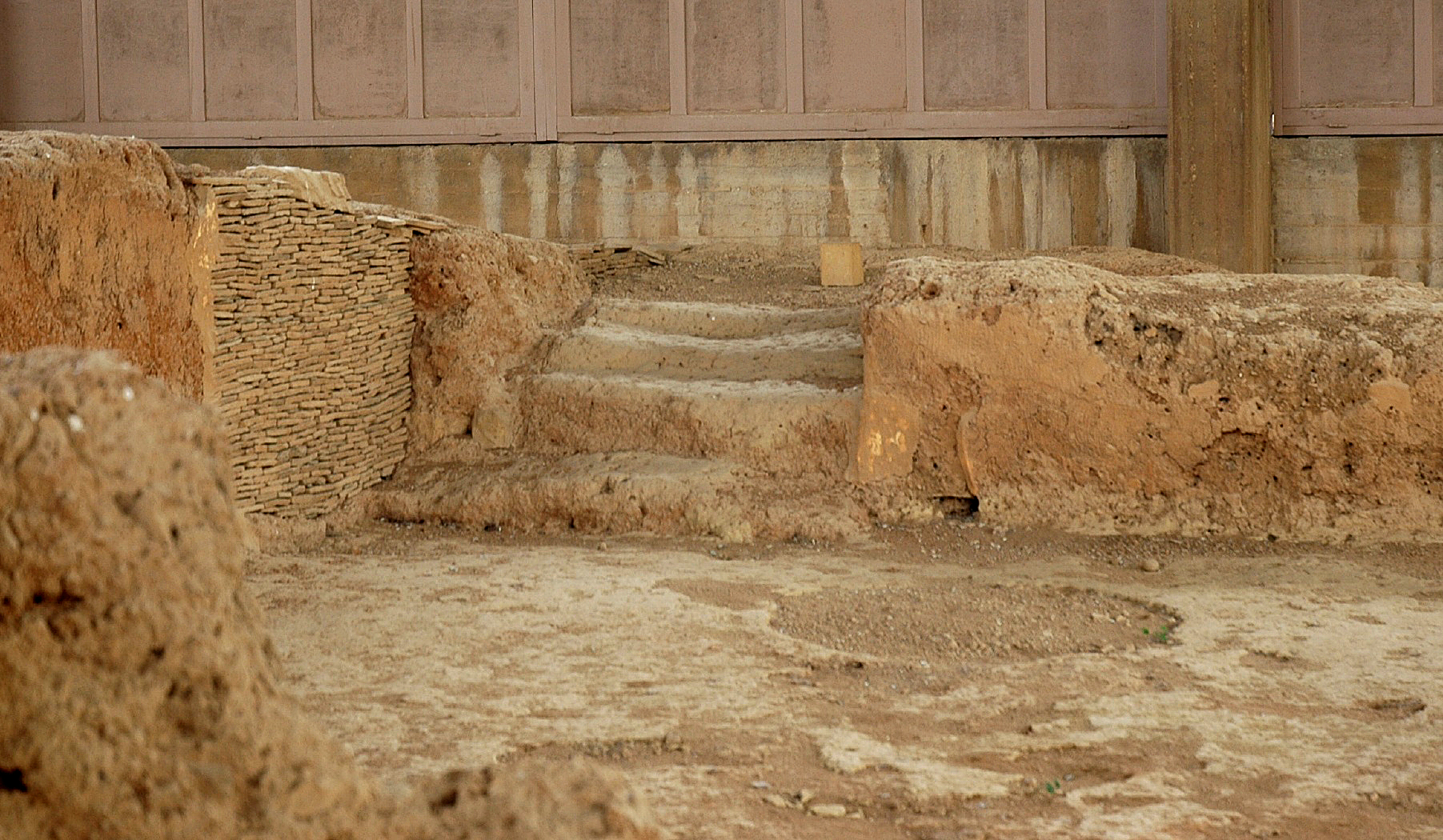
Lerna is notable for several archaeological sites, including an Early Bronze Age structure known as House of the Tiles, dating to the Early Helladic period II (2500–2300 BC).

Myths

[edit]

The secret of the Lernaean spring was the gift of Poseidon when he lay with the "blameless" daughter[3] of Danaus, Amymone. The geographer Strabo attests that the Lernaean waters were considered healing:

Lake Lerna, the scene of the story of the Hydra, lies in Argeia and the Mycenaean territory; and on account of the cleansings that take place in it there arose a proverb, 'A Lerna of ills.' Now writers agree that the county has plenty of water, and that, although the city itself lies in a waterless district, it has an abundance of wells. These wells they ascribe to the daughters of Danaus, believing that they discovered them ... but they add that four of the wells not only were designated as sacred but are especially revered, thus introducing the false notion that there is a lack of water where there is an abundance of it.[4]

Lerna was one of the entrances to the Underworld, and the ancient Lernaean Mysteries, sacred to Demeter, were celebrated there, along with a festival called the Lernaea, which was also held in her honor. Pausanias (2.37.1) says that the mysteries were initiated by Philammon, the twin "other" of Autolycus. Heroes could gain entry to the netherworld via the Alcyonian Lake. Prosymnus aided Dionysus in his search for his mother Semele by guiding him to this entrance. For mortals the lake was perilous; Pausanias writes:

There is no limit to the depth of the Alcyonian Lake, and I know of nobody who by any contrivance has been able to reach the bottom of it since not even Nero, who had ropes made several stades long and fastened them together, tying lead to them, and omitting nothing that might help his experiment, was able to discover any limit to its depth. This, too, I heard. The water of the lake is, to all appearance, calm and quiet but, although it is such to look at, every swimmer who ventures to cross it is dragged down, sucked into the depths, and swept away.[5]

At Lerna, Plutarch knew (Isis and Osiris), Dionysus was summoned as "Bugenes", "son of the Bull" with a strange archaic trumpet called a salpinx, while a lamb was cast into the waters as an offering for the "Keeper of the Gate." The keeper of the gate to the Underworld that lay in the waters of Lerna was the Hydra.

Archaeology

[edit]

Excavations at the site were initiated under John L. Caskey in 1952, whose efforts initiated the series of publications of Bronze Age Lerna, Lerna I-V, inspiring many other publications.

Early Helladic fortification wall of Lerna III

Lerna was occupied in Neolithic times, as early as the fifth millennium BCE, then was abandoned for a time before the sequence of occupation from the Early to Late Bronze Age (Early Helladic through Late Helladic or Mycenaean period). On-site techniques of flint-knapping with imported obsidian and chert attest to cultural continuity over this long stretch of time, with reduction in the supply of obsidian from Melos testifying to reduced long-distance trade at the end of Early Helladic III, corresponding to Lerna IV.[6]

The site of Lerna is one of the largest prehistoric tumuli in Greece (ca. 180 m by 160 m across), which accumulated during a long Neolithic occupation. The crest of the mound was levelled and extended in the Early Bronze Age (Early Helladic II period, ca. 2500–2200 BC), as at Eutresis and Orchomenus,[7] for the construction of a new settlement, known as Lerna III in the site's stratigraphy. Lerna III lacks signs of continuity with the previous occupation. It was strongly fortified by a double ring of defensive walls with towers[8] and was the site of a two-storey palace or administrative center known as House of the Tiles, for the terracotta tiles that sheathed its roof (an early example of tile roofing).[9] This building was destroyed by fire at the end of the Early Helladic II period.[10] In the following period (Lerna IV = Early Helladic III) the site of the "House of the Tiles" was covered by an earthen tumulus and not built upon again, whether through respect[11] or fear, until, at the end of the Middle Helladic period, shaft graves were cut into the tumulus, suggesting that the significance of the monument had been forgotten. Lerna was used as a cemetery during the Mycenaean age (Late Helladic period), but was abandoned about 1250 BCE.

Ceramics of Lerna III include the hallmark spouted vessels that archaeologists name "sauceboats", with rims that sweep upwards into a curved spout, as well as bowls with incurving rims, both flat-bottomed and with ring bases, and wide saucers, sometimes with glazed rims, more pleasant for the drinker's lips. Jars and hydria have swelling curves. Painted decoration is sparse; stamped sealing form decorative patterns on some pieces, or rolled scribed cylinders have been used to make banded patterns. Remarkably, banded patterns made with the self-same seal have been found at Lerna, Tiryns and Zygouries.[12] The burning of the House of Tiles brought the Third Period at Lerna to a decisive close; a low round tumulus marked its undisturbed, apparently sacrosanct site.

Lerna IV (Early Helladic III) marked a fresh start, not as a fortified seat of central authority this time, but as a small town, with houses of two and three rooms with walls of crude brick set upon stone foundations; several had central circular hearths. Narrow lanes separated houses. A great profusion of unlined pits (bothroi) was characteristic of this phase: eventually they became filled with waste matter, bones, potsherds, even whole pots. The pottery, markedly discontinuous with Lerna III, shows a range of new forms, and the first signs— regular spiral grooves in bases and parallel incised lines— marking the increasing use of the potter's wheel. Painted linear decoration in dark glaze on the pale body is characteristic of Lerna IV. Caskey identified[13] early examples of the ware that in Middle Helladic contexts would be recognized as Minyan ware, and, among the few examples of imported pottery, a winged jar characteristic of Troy, perhaps Troy IV.

Lerna V is continuous with the preceding phase, distinguished largely by new styles in pottery with the sudden, peaceful introduction of matte-painted ware, the thick-slipped Argive version of gray Minyan ware, and a vigorous increase in the kinds of imported wares, coming from the Cyclades and Crete (Middle Minoan IA). A new custom of burying the dead in excavations within the houses or between them is universal at the period.

Modern geological techniques such as core drilling have identified the site of the vanished sacred Lake Lerna, which was a freshwater lagoon, separated by barrier dunes from the Aegean. In the Early Bronze Age Lake Lerna had an estimated diameter of 4.7 km. Deforestation increased the rate of silt deposits and the lake became a malarial marsh, of which the last remnants were drained in the nineteenth century.

Etymology

[edit]

The lake is called "the Lake of Darkness" in Shakespeare's King Lear; see Nero in the arts and popular culture

Notes

[edit]

Further reading

[edit]
[edit]
Revisions and contributorsEdit on WikipediaRead on Wikipedia
from Grokipedia
Lerna is an ancient archaeological site situated on the western shore of the Argolic Gulf in the Peloponnese peninsula of Greece, near the modern village of Myloi in the Argolis region.[1] It represents one of the most significant prehistoric settlements in Greece, continuously occupied from the Neolithic period (circa 6th millennium BC) through the Mycenaean era (up to the 13th century BC), spanning approximately 5,000 years with few interruptions.[1][2] In Greek mythology, Lerna is famously known as the lair of the multi-headed Lernaean Hydra, slain by the hero Heracles as his second labor, and it was associated with the now-drained Alkyonia Lake and the spring of Amymone.[1] The site's archaeological importance stems from its layered stratigraphy, which documents the evolution of early Greek society from simple Neolithic villages to complex Early Bronze Age administrative centers.[2] Key phases include the Early Helladic II period (2700–2200 BC), marked by the House of the Tiles, a large (12 by 25 meters), two-story structure with a tiled roof—among the earliest known examples of such architecture in Europe—and over 150 clay sealings suggesting centralized authority and possibly palatial functions.[1][2] This building was destroyed by fire and later covered by a tumulus during the subsequent Early Helladic III phase (2200–2000 BC), which also features a circular stone enclosure mound of ritual significance.[1] Later Middle Helladic (2000–1700 BC) and Late Helladic (1700–13th century BC) layers reveal apsidal houses, fortifications, and shaft graves indicative of emerging Mycenaean culture.[1] Excavations, primarily conducted by the American School of Classical Studies at Athens from 1952 to 1958 under John L. Caskey, have yielded extensive artifacts including pottery, tools, and faunal remains, now housed in the Archaeological Museum of Argos, illuminating prehistoric trade, agriculture, and social organization in the Aegean.[2]

Geography and Setting

Location and Topography

Lerna is situated at coordinates 37°33′N 22°43′E in the Argolis regional unit of the Peloponnese peninsula, Greece, within the modern municipality of Argos-Mykines and near the village of Myloi.[3] This location places it approximately 10 km south of the city of Argos and along the western shore of the Argolic Gulf, facilitating access to maritime routes in antiquity.[4] The archaeological site occupies a low tumulus, roughly 180 m east-west by 160 m north-south, rising to a height of about 5.5 m and shaped by accumulated layers of settlement debris and protective earthen mounds erected over ruined structures.[5] The surrounding terrain features a karstic landscape with numerous freshwater springs emerging from limestone formations, historically feeding into a now-extinct coastal lake that covered parts of the southwestern Argolis Plain until recent millennia.[6] This has left behind extensive marshy areas, particularly during wetter climatic phases, with the site bordered by mountain ridges to the west, north, and east, and low-lying alluvial deposits near the gulf.[1] Positioned at a narrow coastal corridor between the sea and inland highlands, Lerna's watery environment—marked by springs, swamps, and the former lake—contributed to its ancient perception as a liminal or gateway region in the landscape.[7]

Environmental Evolution

In prehistoric times, the Lerna region featured a prominent freshwater lagoon known as Lake Lerna, which spanned approximately 4.7 km in diameter during the Early Bronze Age and was fed by strong karstic springs emerging from the underlying geology.[8][6] This coastal wetland formed around 8630 ± 100 BP as part of a karstic system influenced by groundwater and nearby rivers like the Inakhos, becoming isolated from the Gulf of Argos by a beach barrier approximately 7000 BP and covering much of the southwestern Argolis Plain.[6] The lake's stable water levels and fertile surroundings supported early human activities, with evidence of occupation dating back to around 8500 BP.[6] Geological processes gradually altered this landscape through sedimentation and silting, driven primarily by increased soil erosion following postglacial sea-level rise and later human-induced deforestation.[8] Reconstructions based on over 200 auger and drill cores from studies in the 1980s and 1990s, along with more recent analyses of sediment cores such as ALM3 and ALM4, reveal a progression from fluvial deposits to swampy lake environments, marked by peat layers, molluscan shells, and ostracod assemblages indicative of freshwater conditions transitioning to brackish marshes.[8][6] By the 19th century, rapid silting had reduced the lake to a shallow silt lagoon, which persisted as a malarial marsh until systematic drainage efforts eliminated its remnants.[8] The environmental features of Lake Lerna profoundly shaped human settlement patterns, particularly by providing reliable water sources that facilitated Neolithic agriculture in an otherwise semi-arid region.[6][9] Abundant freshwater from the springs and lagoon supported early farming communities, enabling crop cultivation on the surrounding alluvial soils and contributing to the site's long-term habitability from the Neolithic period onward.[6] In the modern era, the area has been fully drained and exists as a low-lying marshy plain, actively managed and protected by the 4th Ephorate of Prehistoric and Classical Antiquities to preserve its archaeological significance within a landscaped park setting.[1]

Mythology

The Lernaean Hydra

The Lernaean Hydra was depicted in ancient Greek mythology as a chthonic, serpentine monster inhabiting the swamps of Lerna in the Argolid region, characterized by multiple heads—typically nine, though accounts vary from fifty to one hundred—possessing poisonous breath and venomous blood so toxic that even its scent could kill. One of its heads was immortal, and the creature's body was enormous, with scales impervious to most weapons. As the offspring of the primordial giants Typhon and Echidna, the Hydra embodied the earth's dark, watery depths, reared by Hera to torment Heracles.[10][11][12] In the narrative of Heracles' second labor, King Eurystheus commanded the hero to slay the Hydra as penance, a task designed to ensure his failure due to the beast's regenerative ability: for every head severed, two more would grow in its place. Accompanied by his nephew Iolaus, Heracles descended into the Lernaean marshes, forcing the Hydra from its lair near the springs of Amymone by shooting fiery arrows or filling the cave with smoke. He then pinned the creature underfoot and struck its heads with his club, but the wounds only multiplied the threat; a giant crab, sent by Hera, attempted to aid the Hydra by nipping at Heracles' foot, only to be crushed and hurled into the sky as the constellation Cancer. With Iolaus' assistance, Heracles severed the heads using a sword—described in some accounts as a golden blade gifted by Athena—and Iolaus immediately cauterized the necks with burning brands from a nearby fire to prevent regrowth. The immortal head was cut off last and buried alive beneath a massive rock on the road between Lerna and Elaeus, while Heracles dipped his arrows in the Hydra's bile, creating a poison that proved invaluable in future labors. Due to Iolaus' help, Eurystheus initially disallowed the labor's completion, requiring another task.[12][13] The setting of Lerna enhanced the Hydra's mythic terror, as the nearby Alcyonian Lake was renowned as a bottomless pool serving as one of the entrances to the Underworld, from which heroes like Dionysus descended to retrieve lost loved ones, such as his mother Semele. Pausanias noted the lake's unfathomable depth, warning that no swimmer could reach its bottom, underscoring Lerna's liminal role between the living world and Hades.[14] Symbolically, the Hydra represented primordial chaos and the cyclical forces of destruction and renewal in Greek cosmology, its multi-headed form evoking the uncontrollable multiplicity of earthly perils and the chthonic threats Hera unleashed against order. The labor's emphasis on cauterization to halt regeneration highlighted themes of decisive intervention to conquer proliferating evils, a motif echoed in later proverbial expressions for futile endeavors.[15][10]

Other Myths and Rituals

In ancient Greek mythology, the region of Lerna was associated with a legend involving Poseidon and the Danaid Amymone, one of the fifty daughters of Danaus who fled to Argos from Egypt. Upon their arrival, Argos suffered a severe drought, as Poseidon had dried up the local springs in jealousy over the land's prior dedication to Hera. Desperate for water, the Danaids were sent to search for sources, during which Amymone hurled her spear at a deer but struck a sleeping satyr instead; the satyr attempted to assault her, but Poseidon intervened, driving him away. Amymone then lay with the god, who struck the earth with his trident to create the spring of Lerna, thus relieving the drought and providing a perennial water source named after her.[16] The waters of Lerna were renowned in antiquity for their reputed healing properties, believed to purge diseases and purify the body. The geographer Strabo described the Alcyonian Lake near Lerna as exceptionally clear, surrounded by pleasant flora, and cathartic for ailments, contributing to its sacred status. This led to the proverb "A Lerna of ills," invoked for troubles deemed incurable or relentlessly multiplying, akin to the Hydra's heads. Lerna served as a center for religious practices, particularly the Lernaean Mysteries, initiatory rites honoring Demeter known as Lernaean Demeter. These mysteries, celebrated at the site by the sea, paralleled other Demeter cults like those at Eleusis, emphasizing themes of agricultural renewal and the afterlife, though details of the secret rituals remain obscure due to oaths of silence. An annual festival, the Lernaea, was held there in her honor, involving processions, sacrifices, and communal rites to invoke fertility and prosperity.[17] Pausanias noted the presence of a sacred grove at Lerna, extending from low ground along a torrent, which housed altars dedicated to the Unknown Gods, local heroes, and the daughters of Proetus, reflecting the site's layered cultic significance beyond Demeter. These features underscored Lerna's role as a multifaceted ritual landscape in Argive religion.[17]

Archaeology

Excavation History

Interest in the archaeological site of Lerna dates back to the early 20th century, primarily driven by its association with classical mythology, though no systematic excavations occurred until after World War II. Preliminary surveys and soundings were proposed by the American School of Classical Studies at Athens (ASCSA) in the late 1940s and early 1950s, culminating in approval from the Greek Archaeological Council in August 1952 for initial investigations.[18] Systematic excavations began in 1952 under the direction of John L. Caskey of the ASCSA and continued annually until 1958, uncovering significant prehistoric remains across multiple areas of the mound. The digs covered approximately 20% of the site's low mound, which spans about 2.9 hectares (180 by 160 meters), focusing on stratified deposits from the Neolithic through the Late Bronze Age.[2][19] Results from these campaigns were published in preliminary reports in Hesperia from 1954 to 1960, followed by the comprehensive Lerna series (volumes I–X) issued by the ASCSA between 1969 and 2024, detailing fauna, human remains, pottery, architecture, and other aspects of the site.[2] Post-excavation studies in the late 20th and early 21st centuries included geological investigations to reconstruct the ancient landscape, notably Eberhard Zangger's 1991 analysis using core sampling to identify the now-vanished Lake Lerna as a freshwater lagoon separated from the Argolic Gulf by a barrier beach. In 2001, Britt Hartenberger and Curtis Runnels contributed further insights through analysis of flaked stone production, integrating environmental context from prior geological work. Today, the site is managed by the Ephorate of Antiquities of Argolis under the Greek Ministry of Culture and Sports, with public access provided via guided tours and an on-site museum displaying key artifacts like the House of the Tiles. No major new excavations have been conducted since 1958, though publication and conservation efforts continue without significant fieldwork post-2020.[1][2]

Settlement Phases and Chronology

The settlement at Lerna originated in the Neolithic phase during the 6th–5th millennium BCE, marked by initial human occupation evidenced by flint-knapping activities and signs of early farming practices, including cultivation of crops and animal husbandry. Lerna I (ca. 6500–3000 BCE) encompasses Neolithic and initial Early Helladic I phases with simple pit houses and pottery production, reflecting a small agrarian community, before the site was abandoned around the Late Neolithic.[20][5][2][21] Occupation resumed in the Early Helladic periods, beginning with Lerna II (early EH II, ca. 3000–2700 BCE), characterized by modest, unfortified structures indicative of a basic village layout.[22] The subsequent Lerna III phase (late EH II, ca. 2700–2200 BCE) saw significant development with the construction of fortifications, including the notable House of the Tiles, a large rectangular building with a tiled roof suggesting administrative or elite functions. The Lerna III phase featured fortifications including double walls and towers. It ended in a destructive fire around 2300 BCE, followed by rebuilding in the Lerna IV phase (EH III, ca. 2200–2000 BCE) with a circular stone enclosure tumulus over the ruins, signaling increased social complexity and regional interactions.[1][5][2][4] The Middle Helladic period, known as Lerna V and spanning roughly 2000–1700 BCE, transitioned to a smaller town settlement with apsidal houses, the introduction of Minyan ware pottery, and the presence of bothroi—deep pits used for storage, refuse, or rituals—that highlight shifts in daily life and possibly cultural practices.[18][23] In the Late Helladic period, or Lerna VI during the Mycenaean era from about 1700–1200 BCE, the site featured matte-painted pottery alongside imports from Cycladic and Cretan regions, indicating broader trade networks and Mycenaean cultural influences.[1][21] The settlement experienced final abandonment around 1250 BCE, coinciding with wider disruptions in the Late Bronze Age.[21] Overall, Lerna demonstrates remarkable continuity of human occupation from the 6th millennium BCE through the Late Bronze Age, punctuated by brief gaps such as the post-Neolithic abandonment, underscoring its role as a persistent regional hub.[2][4]

Key Discoveries and Artifacts

One of the most prominent discoveries at Lerna is the House of the Tiles, a monumental two-storey building from the Early Helladic II period (Lerna III, ca. 2700–2200 BCE), measuring approximately 25 by 12 meters with stone foundations, mud-brick walls, and a terracotta-tiled roof that represents one of the earliest known uses of such roofing in Europe.[1] This structure featured multiple rooms, corridors, a central courtyard, and storage areas, suggesting an administrative function tied to elite control, as evidenced by over 150 clay sealings bearing around 60 unique impressions used for securing goods or documents.[1] Destroyed by fire around 2300 BCE, the building's ruins preserved thousands of baked tiles and artifacts, underscoring its role in a centralized socio-economic system and marking a shift toward more complex urban organization in the region.[19] Fortifications from the same Lerna III phase further highlight the site's defensive capabilities, consisting of double walls up to 2 meters thick, integrated with horseshoe-shaped towers and a gated entrance on the south side to protect the settlement's core.[19][5] These structures included small adjacent rooms for habitation and storage, while an advanced corbelled drain system managed water flow, demonstrating sophisticated engineering for the Early Bronze Age and reflecting heightened security needs amid regional instability.[22] The fortifications enclosed key areas like the House of the Tiles, emphasizing Lerna's status as a fortified proto-urban center.[5] Among the artifacts, distinctive "sauceboat" ceramics from Lerna III stand out as spouted vessels with incurving rims, often simply decorated and used alongside bowls and saucers for serving liquids, indicative of specialized household or communal practices in the Early Helladic repertoire.[24] Stamped or incised pottery patterns, including geometric motifs on fine Urfirnis ware, appear in deposits associated with these structures, suggesting administrative marking or trade functions. Bothroi pits, circular storage or refuse pits filled with animal bones, broken pottery, and offerings like seeds, were common across phases, particularly in Lerna IV (EH III, ca. 2200–2000 BCE), pointing to ritual deposition or waste management tied to daily and ceremonial life.[24] Neolithic tools, such as obsidian blades and ground stone implements from Lerna I–II (ca. 5300–3200 BCE), provide evidence of early farming and hunting activities, while later Mycenaean imports, including matte-painted ware from the Middle Helladic period (Lerna V–VI, ca. 2000–1600 BCE), reflect external influences from the Cyclades and Crete, with geometric patterns on coarse vessels signaling broader Aegean networks.[1][24] Signs of sacred or ritual use are evident in features like a 19-meter-diameter stone-enclosed mound from Lerna IV, possibly serving as an ancestral memorial rather than a burial site, and shaft graves dug into the House of the Tiles ruins during the Middle Helladic transition (ca. 1700–1600 BCE), containing offerings that align with later ceremonial traditions at the location.[1] These elements, combined with bothroi contents, suggest ongoing ritual practices involving deposition and commemoration, linking physical remains to the site's enduring cultural importance.[24]

Cultural and Linguistic Legacy

Etymology of the Name

The name Lerna is attested in ancient Greek as Λέρνα (Lérna) or Λέρνη (Lérnē), forms that reflect its role as a toponym for the marshy, spring-fed lowlands in the Argolid region of the Peloponnese. This designation evokes the area's watery character, with scholars proposing it derives from a pre-Greek substrate language, denoting a place characterized by pools, springs, or bogs, consistent with the site's prehistoric environmental features of wetlands and lagoons.[25] This substrate influence aligns with linguistic evidence of pre-Indo-European elements in Greek place names tied to hydrological features, particularly in regions with early non-Greek populations.[25] In ancient Greek literature, Lerna appears as a toponym in early epic poetry, notably in Hesiod's Theogony (ca. 700 BCE), where it describes the lair of the monstrous Hydra: "She [Echidna] bore the Hydra of Lerna, she of the deadly heads, whom the goddess white-armed Hera nourished."[26] This usage establishes Lerna as a mythic locale associated with perilous waters, though Homer's epics do not explicitly name it, reflecting its integration into the oral tradition of heroic geography by the Archaic period.[26] The name's persistence in such texts underscores its ancient recognition as a distinct regional identifier, predating classical prose descriptions. Phonetically, the variants Λέρνα and Λέρνη illustrate minor shifts in vowel length and accent typical of Ionic and Doric dialects, with the stem Lern- possibly evolving from an earlier substrate form through Greek adaptation, as seen in the nominative Lérnē. Comparable terms appear in other Greek locales with watery connotations, such as the Boeotian Lerina (a marshy site) or hydronyms like Leraios in Thessaly, suggesting a shared pre-Greek lexical layer for boggy terrains across the mainland. The name's association with healing springs in local myths further highlights its semantic ties to aqueous renewal, though this motif extends into ritual contexts.[25]

Later References and Influence

Classical authors like Strabo and Pausanias provided enduring geographical and mythological descriptions of Lerna that shaped later understandings of the site. In his Geography (8.6.6), Strabo locates the Alcyonian Lake near Lerna in the Argive plain, associating it with the myth of the Hydra and its marshy, bottomless nature.[27] Pausanias, in Description of Greece (2.37.4–5), details the region's springs and the plane tree under which the Hydra dwelt, emphasizing Lerna's proximity to the sea and its integration into local Argive lore, including references to the Alcyonian Lake as a chthonic feature.[28] During the Renaissance and subsequent periods, Lerna's mythic imagery influenced European literature, evoking themes of darkness and the underworld. William Shakespeare alludes to a "lake of darkness" in King Lear (Act 3, Scene 6), where the character Frateretto describes Nero angling there, drawing on classical motifs of infernal waters.[29] This imagery resonated in later works, symbolizing moral and psychological depths. The Hydra myth associated with Lerna contributed to broader Romantic-era fascination with Greek mythology, fueling philhellenism's idealization of ancient sites as sources of sublime beauty and mythic mystery. This influenced 19th-century cultural movements that supported Greek independence through admiration of classical heritage. The legacy persisted in philhellenic literature, where the Hydra symbolized triumph over chaos, aligning with Romantic themes of human potential amid wild environments. In modern scholarship, Lerna's study reveals gaps, with excavations largely limited after the major campaigns of the mid-20th century, though targeted work post-2000—including geophysical surveys and analyses as of 2024—has reexamined Early Helladic transitions, faunal remains, and environmental changes.[30][31] Further environmental archaeology holds significant potential, as recent pollen and isotopic analyses highlight mid-Holocene vegetation shifts and coastal lake evolution, offering insights into prehistoric human impacts on the Argive plain.[32][6] Culturally, Lerna bolsters Greek heritage tourism as a prehistoric hub tied to Heracles' labors, while its underworld motifs—via the Alcyonian Lake—echo in contemporary media, from mythological adaptations to astronomical nomenclature like Pluto's Lerna Planitia.[5][33]

References

User Avatar
No comments yet.