Hubbry Logo
Les McCannLes McCannMain
Open search
Les McCann
Community hub
Les McCann
logo
8 pages, 0 posts
0 subscribers
Be the first to start a discussion here.
Les McCann
Les McCann
from Wikipedia

Key Information

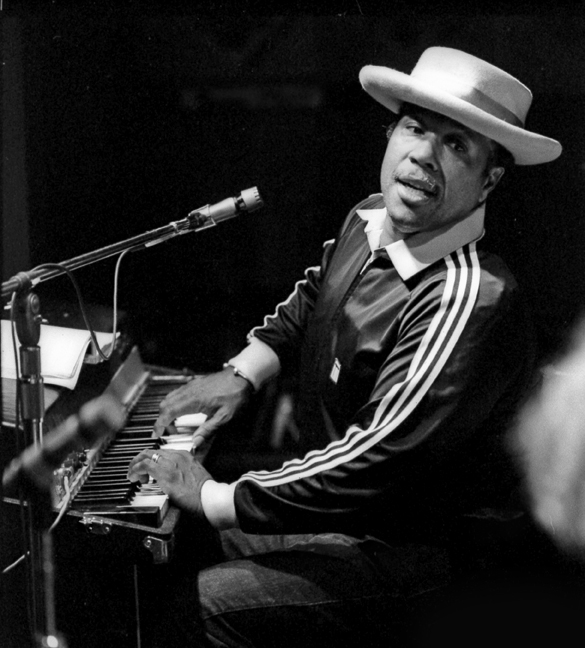
Leslie Coleman McCann (September 23, 1935 – December 29, 2023) was an American jazz pianist and vocalist.[1][full citation needed] He is known for his innovations in soul jazz and his 1969 recording of the protest song "Compared to What". His music has been widely sampled in hip hop.

Early life

[edit]

Leslie Coleman McCann was born in Lexington, Kentucky, on September 23, 1935.[2] He grew up in a musical family with four brothers and one sister, most of whom sang in church choirs.[3][4][5] His father was a fan of jazz music and his mother was known to hum opera tunes around the house.[5]

As a youth, McCann played the tuba and drums and performed in his school's marching band.[4][5] As a pianist, he was largely self-taught.[6] He explained that he received piano lessons for only a few weeks as a six-year-old before his teacher died.[4]

McCann attended Los Angeles City College, which was highly influential to his musical career.[7] At the age of 17, he joined the U.S. Navy in San Diego.[7]

Career

[edit]

During his service in the Navy, McCann won a singing contest, which led to an appearance on The Ed Sullivan Show.[1] After leaving the Navy, McCann moved to California and played in his own trio.[6] He declined an offer to work in Cannonball Adderley's band so that he could dedicate himself to his own music.[6] The trio's first job was at the Purple Onion club in 1959 accompanying Gene McDaniels.[4]

McCann (left) with the Les McCann Trio (Herbie Lewis and Ron Jefferson), 1962

The main part of McCann's career began in the early 1960s, when he recorded as a pianist with his trio for Pacific Jazz.[8] In 1969, Atlantic released Swiss Movement, an album recorded with saxophonist Eddie Harris and trumpeter Benny Bailey earlier at that year's Montreux Jazz Festival.[9] The album contained the song "Compared to What"; both reached the Billboard pop charts. The song, which criticized the Vietnam War, was written by Eugene McDaniels years earlier and recorded and released as a ballad by McCann in 1966 on his album, Les McCann Plays the Hits. Roberta Flack's version appeared as the opening track on her debut album First Take (1969).[10][11]

After the success of Swiss Movement, McCann, primarily a piano player, emphasized his vocals. He became an innovator in soul jazz, merging jazz with funk, soul and world rhythms. His music was influential for its use of electric piano, clavinet and synthesizer.[12]

In 1971, McCann and Harris were part of a group of soul, R&B and rock performers–including Wilson Pickett, the Staple Singers, Santana and Ike & Tina Turner–who flew to Accra, Ghana, to perform a 14-hour concert for more than 100,000 Ghanaians. The March 6 concert was recorded for the documentary film Soul to Soul.[13] In 2004, the movie was released on DVD with an accompanying soundtrack album.[14]

McCann had a stroke in the mid-1990s,[8] but he returned to music in 2002, when Pump it Up was released, and continued to release music until 2018.[12] He also exhibited his work as a painter and photographer.[1]

Death

[edit]

McCann died from pneumonia in a Los Angeles hospital on December 29, 2023, at age 88.[7]

Legacy

[edit]

McCann's recordings have been widely sampled in hip hop music, mostly in the 1990s and 2000s, by nearly 300 acts.[12][15] These include A Tribe Called Quest, Cypress Hill, De La Soul, the Notorious B.I.G., Sean Combs, Dr. Dre, Snoop Dogg, Nas, Mary J. Blige, the Pharcyde, Eric B. & Rakim, Mobb Deep, Gang Starr and Raekwon.[12][16]

Discography

[edit]

Source:[17][better source needed]

As leader

[edit]

As sideman

[edit]

References

[edit]
[edit]
Revisions and contributorsEdit on WikipediaRead on Wikipedia
from Grokipedia

Leslie Coleman McCann (September 23, 1935 – December 29, 2023) was an American jazz pianist, vocalist, and composer who pioneered soul jazz by fusing elements of gospel, blues, funk, and hard bop. Born in Lexington, Kentucky, to parents James and Anna McCann, he was self-taught on piano and began performing vocally in the 1950s after winning a U.S. Navy singing contest that led to a national television appearance on The Ed Sullivan Show. McCann's breakthrough came with his collaboration with saxophonist Eddie Harris at the 1969 Montreux Jazz Festival, where their live rendition of the protest song "Compared to What"—a critique of social and political hypocrisy—propelled him to international fame and became a soul-jazz standard. Over a prolific career spanning seven decades, he released more than 50 albums, including the landmark Swiss Movement (1969), and his recordings were extensively sampled in hip-hop by artists such as Dr. Dre, Snoop Dogg, and The Notorious B.I.G., extending his influence into contemporary genres. McCann died from pneumonia in a Los Angeles hospital at age 88.

Early Life

Upbringing and Family Background

Leslie Coleman McCann was born on September 23, 1935, in , to James McCann, a water maintenance engineer, and Anna McCann. His upbringing occurred in a musical household influenced by his parents' interests: his father enjoyed , while his mother hummed arias and actively encouraged musical development among her children. McCann grew up with siblings—a brother and three sisters—who, like much of the , sang in local church choirs, fostering an early immersion in vocal performance and communal music-making. At age six, he started formal lessons but abandoned them after a few weeks, frustrated by the instructor's rigidity, and proceeded to develop his skills as a self-taught by emulating recordings and influences. This environment in segregated mid-20th-century shaped his foundational affinity for rhythm, melody, and improvisation, though specific details on economic or social hardships in the McCann home remain sparsely documented in primary accounts.

Musical Beginnings and Military Service

Les McCann, largely self-taught as a after taking only four lessons from a local instructor in , developed his early musical foundation through exposure to in church choirs and family radio broadcasts featuring artists like . In high school, he participated in the , playing and drums, and attended performances by acts in local theaters, which broadened his appreciation for the genre. At age 17 in 1952, McCann enlisted in the U.S. Navy and was stationed in the , where a pivotal moment occurred upon hearing Erroll Garner's recording of "Lullaby of Birdland." This experience ignited his commitment to , recognizing it as his primary instrument and shifting his focus toward beyond his prior band instruments. During his Navy service, McCann won the All-Navy Talent Contest as a vocalist, an achievement that secured him a national television appearance on in 1956, where he performed with a full . This exposure highlighted his singing abilities, though his instrumental development on continued to draw from Garner's rhythmic and melodic approach, laying groundwork for his style.

Professional Career

Formative Years and Early Recordings

Following his discharge from the in the mid-1950s, Les McCann moved to , , and formed the piano trio Les McCann Ltd. with bassist Herbie Lewis and drummer Ron Jefferson. The group rapidly built a following through regular performances on the , including residencies at venues like The Bit coffee house, where their dynamic live sets drew crowds in the late 1950s. McCann declined an offer to join Cannonball Adderley's quintet, opting instead to develop his own ensemble. In 1960, McCann secured a with . His debut album, Les McCann Ltd. Plays the Truth, released that year, marked the label's best-selling record at the time and featured originals like "Vacushna" alongside standards such as "I'll Remember April." This was swiftly followed by The Shout (1960), highlighting McCann's work and vocal contributions in a soul-infused context. Early live recordings captured the trio's energy, including Les McCann Ltd. Plays the Shoot (1960), taped at a club, and sessions from San Francisco's Jazz Workshop. Between 1960 and 1964, McCann produced over a dozen albums for Pacific Jazz, primarily with his core trio but occasionally augmented by guests such as tenor saxophonist , organist Richard "Groove" Holmes, and trumpeter . These efforts solidified his presence in the scene, emphasizing rhythmic drive and bluesy phrasing before his transition to larger labels.

Breakthrough at Montreux and "Swiss Movement"

McCann's trio, comprising McCann on piano and vocals, bassist , and drummer Donald Dean, performed at the on June 21, 1969, in , where they were joined onstage by tenor saxophonist for a spontaneous collaboration. The live set, captured amid enthusiastic audience response, highlighted McCann's energetic style fused with Harris's improvisational , including extended grooves and vocal scatting. This performance yielded the album Swiss Movement, released by in October 1969, which documented the event's raw energy and marked a pivotal shift in McCann's career trajectory after more than a decade of recordings. The album's standout track, ""—a composition delivered with pointed lyrics decrying political hypocrisy and the —propelled McCann into mainstream visibility, peaking at number 85 on the as a single. Swiss Movement achieved significant commercial milestones, ascending to number one on the Jazz albums chart, number two on the R&B chart, and number 29 on the pop albums chart, while earning gold certification for sales exceeding 500,000 units . It received a Grammy nomination for Best Jazz Performance – Small Group or Soloist with Small Group, underscoring its artistic merit amid crossover appeal. The recording established McCann as a innovator capable of bridging , and protest elements, expanding his audience beyond niche circles and influencing subsequent live documentation; founder later credited the event with elevating 's profile for such captures. Prior recordings had garnered critical notice but limited sales, making this outing McCann's definitive breakthrough to enduring recognition.

Mid-to-Late Career Developments and Collaborations

Following the success of Swiss Movement in 1969, McCann signed with Atlantic Records and released Comment in 1970, incorporating electric piano and emphasizing his vocal style amid the evolving soul jazz landscape. He collaborated again with Eddie Harris on Second Movement in 1971, extending their Montreux partnership with live recordings that blended funk rhythms and improvisation. Throughout the early 1970s, McCann experimented with jazz-funk, as seen in Invitation to Openness (1972), featuring saxophonist Yusef Lateef and a 13-piece ensemble, and Layers (1974), where he pioneered ARP synthesizer integration for layered textures. In the mid-1970s, McCann continued with Atlantic on progressive soul-jazz albums such as Another Beginning (1974), Hustle to Survive (1975), and River High, River Low (1976), reflecting broader fusion influences with electric instrumentation and larger production. Transitioning labels to ABC and A&M by 1977-1978, he issued Music Lets Me Be, the live Change, Change, Change recorded at the Roxy Theatre, and The Man, produced by Paul Riser, maintaining a groove-oriented approach amid declining commercial interest in soul jazz. The 1980s saw reduced output but key releases like Road Warriors (1984) in collaboration with tenor saxophonist Houston Person on CTI, and Butterfly (1988) on Stone Records, focusing on acoustic elements. A severe stroke in January 1995, suffered onstage in Celle, Germany, paralyzed the right side of McCann's body, severely impairing his piano technique while preserving his vocal abilities. Post-recovery, he adapted by prioritizing singing and selective keyboard work, releasing On the Soul Side (1994, pre-stroke) followed by Listen Up! (1996) and a Piano Jazz session with Marian McPartland in 1996. Later collaborations included Pacifique (1997) with German pianist Joja Wendt and the guest-heavy Pump It Up (2002) featuring George Duke, Ernie Watts, and Marcus Miller, demonstrating resilience through vocal-led funk-jazz. McCann sustained sporadic performances and recordings into the 2010s, such as A Time Les Christmas (2018), underscoring his pivot to unaccompanied vocals after instrumental limitations.

Musical Style and Techniques

Soul Jazz Innovations

Les McCann advanced by infusing traditional jazz improvisation with the rhythmic drive and emotional depth of gospel, , and , creating a groove-centric style that emphasized accessibility and audience engagement. His self-taught technique drew from church choir experiences and influences, producing gritty, earthy licks with hard-swinging rhythms and infectious bass lines that bridged jazz's complexity with popular music's immediacy. This approach, evident in early works like the 1960 album Les McCann Plays the Truth, helped establish as a distinct subgenre in the late and by prioritizing soulful expression over pure abstraction. A hallmark of McCann's innovation was his integration of vocals into ensembles, often delivering gospel-charged hollering that added raw, declarative intensity to instrumental grooves. Unlike predominantly instrumental soul jazz pioneers, his dual role as and singer—showcased in trio formats with blues-drenched and tight sections—fostered a holistic, performative style that connected with broader audiences and influenced the genre's mainstream penetration. This vocal-piano synergy, rooted in his family's musical heritage and emulation of figures like , prefigured soul jazz's evolution toward funkier, more eclectic fusions while maintaining jazz's improvisational core. McCann further innovated by experimenting with electronic elements within frameworks, such as and on albums like Layers (1972), which extended the genre's sonic palette and anticipated without abandoning its soulful foundations. His emphasis on blending R&B rhythms with swing not only shaped contemporaries but also provided a template for later artists, solidifying 's role in democratizing for diverse listeners.

Piano Playing, Vocals, and Performance Approach

Les McCann was a self-taught whose style emphasized a percussive, rhythmic drive rooted in traditions. His playing featured a strong left-hand groove, often described as one of the most effective in for propelling ensembles forward with bluesy, funk-infused comping. McCann's approach integrated and elements into frameworks, prioritizing infectious, foot-tapping rhythms over complex harmonic . Vocally, McCann initially positioned singing as secondary to his work, but following the 1969 release of , he increasingly highlighted his raspy, gospel-derived delivery. His holler-like shouts and soulful phrasing added raw emotional intensity, blending seamlessly with instrumental lines to evoke communal energy akin to church services or street-corner . In performance, McCann favored a direct, audience-engaging style that fused with accessible and grooves, often leading trios with minimal verbal patter to maintain momentum. He pioneered the incorporation of , , and synthesizers into live settings as early as the late 1960s, expanding timbral possibilities while keeping ensembles tight and groove-oriented. This holistic method—combining piano propulsion, vocal exhortation, and rhythmic command—positioned McCann as a bridge between sophistication and broader popular appeal.

Social and Political Dimensions

Engagement Through "Compared to What"

"Compared to What," composed by Gene McDaniels in 1966 as a critique of American involvement in the Vietnam War and broader societal hypocrisies, gained widespread prominence through Les McCann's live rendition alongside saxophonist Eddie Harris at the Montreux Jazz Festival on June 21, 1969. McCann, on piano and vocals, delivered an impassioned, eight-minute performance that fused soul jazz energy with pointed anti-war lyrics, capturing the era's mounting disillusionment with U.S. foreign policy under President Lyndon B. Johnson and, increasingly, Richard Nixon. The track opens with McCann's raw exhortation against blind patriotism and political deception, including lines like "The president, he's got his war / Folks don't know just what it's for," directly challenging the rationale and human cost of the conflict, which by 1969 had resulted in over 58,000 American deaths and widespread domestic protests. This impromptu collaboration elevated McCann's profile beyond instrumental , positioning him as a vocal participant in the countercultural critique, where musicians increasingly intertwined artistry with against and institutional failures. McDaniels' original intent, as reflected in the ' disdain for religious and political leaders—"Time is a master plan / Preachin' from a holy stand / Tryin' to tell us what to do"—resonated through McCann's gospel-inflected delivery, which amplified the song's rhetorical questions about and systemic greed, such as "Possession is the motivation / Hangin' up the whole damn nation." Unlike studio recordings, the Montreux version's spontaneous intensity, including Harris's wailing interludes, mirrored the chaotic urgency of anti-war rallies, making it a sonic emblem of resistance rather than mere entertainment. McCann later recalled the performance as a natural extension of his evolving consciousness, influenced by the and urban unrest, though he emphasized its improvisational origins over premeditated protest. The subsequent release of the track on the 1970 Atlantic album Swiss Movement—recorded live at the festival—propelled it to commercial success, peaking at number 35 on the and crossing over to R&B audiences, thereby disseminating its political message to broader demographics amid escalating U.S. troop levels in , which reached 543,000 by year's end. Critics and contemporaries noted the rendition's role in bridging with soul's emotive directness, allowing McCann to engage audiences on issues of and false without diluting musical ; for instance, the song derides "Slaughterhouses... killin' hogs, wringin' blood / Makes me wanna holler and throw up," equating domestic exploitation to overseas carnage. While McCann did not author the piece—McDaniels, a fellow Atlantic artist, penned it amid his own shift toward socially conscious songwriting—his interpretation cemented his association with protest music, influencing subsequent fusions that tackled politics, though McCann avoided overt militancy in later works, favoring personal expression over sustained activism. This singular engagement through "" thus highlighted McCann's willingness to harness performance as a platform for questioning authority, aligning with the era's fusion of and while prioritizing artistic authenticity over ideological purity.

Broader Cultural Context and Reception of Political Elements

McCann's rendition of "" emerged amid the intensifying U.S. anti- War protests and civil rights struggles of the late , aligning with broader countercultural dissent against governmental hypocrisy and social inequities. The track's lyrics, decrying political leaders' moral failings and the war's futility, resonated with audiences disillusioned by escalating U.S. involvement in , which by 1969 had resulted in over 58,000 American deaths and widespread domestic unrest, including events like the riots. , as pioneered by figures like McCann, fused improvisational with gospel-infused rhythms and R&B grooves, providing a sonic vehicle for expressing black urban experiences and resistance during an era when artists increasingly incorporated explicit social commentary, as seen in works by contemporaries like and . The song's live recording from the 1969 Montreux Jazz Festival captured a raw, electrified energy that propelled it to commercial success, reaching number one on Billboard's jazz albums and number two on the R&B chart, thus bridging avant-garde jazz with accessible protest anthems for mass appeal. Critics and listeners at the time hailed its unfiltered critique of American imperialism and domestic , positioning McCann as a conduit for 's pivot toward politically charged expression, though some traditional purists dismissed the genre's populist leanings as diluting improvisational purity. Its enduring reception underscores soul 's role in amplifying marginalized voices without overt militancy, influencing later hip-hop samplings that repurposed its groove for urban narratives, yet McCann himself emphasized musical innovation over sustained , avoiding deeper entanglement in organized political movements.

Personal Life and Death

Family and Private Interests

Les McCann was born Leslie Coleman McCann on September 23, 1935, in , to James McCann, a water maintenance engineer at the local water company, and Anna McCann, a homemaker. He grew up as one of six children, with four brothers and one sister, in a household steeped in music; family members frequently sang in church choirs, his father appreciated recordings, and his mother enjoyed arias played during household chores. Public records provide scant details on McCann's marital status or immediate family in adulthood, reflecting his preference for privacy amid a career-focused life. Beyond music, McCann maintained interests in , working as an exhibited painter who specialized in watercolors, with a focus on floral subjects. His paintings have been displayed in galleries in , extending the creative expression evident in his family's early artistic leanings, such as his father's sketching habits.

Health Decline and Circumstances of Death

In January 1995, McCann suffered a while performing onstage in , which paralyzed the right side of his body and sidelined him from for several years. Despite the severity, he relearned to play using his left hand and returned to performing, though his recording output and commercial momentum had already waned in the preceding decade. McCann resided in a facility in , , in his later years, reflecting ongoing age-related health challenges. On December 22, 2023, he was admitted to a Los Angeles-area hospital with , a condition that proved fatal. He died there on December 29, 2023, at the age of 88, as confirmed by his longtime manager, Alan Abrahams. No other contributing factors beyond were publicly detailed by Abrahams or medical reports.

Legacy and Influence

Critical Assessments and Achievements

McCann's contributions to earned praise from critics for his innovative fusion of jazz improvisation with gospel-infused rhythms, bluesy phrasing, and vocal exclamations, establishing him as a key architect of the genre's accessibility to broader audiences in the and . Reviewers highlighted his self-taught technique, which echoed Erroll Garner's block-chord style but incorporated distinctive grunts, groans, and riff-building that conveyed raw emotional intensity, as evident in trio recordings where he prioritized groove over technical virtuosity. Some assessments critiqued him for being typecast as a mere soul-jazz exponent by "shortsighted" observers, underappreciating his left-hand proficiency and versatility across over 50 albums spanning blues-forward sessions to experimental works. His live performances, particularly the 1969 Montreux Jazz Festival collaboration with on , were lauded for capturing a spontaneous, protest-infused energy that bridged with countercultural movements, solidifying his reputation as a performer of "controlled abandon." Critics like referenced McCann's influence on subsequent pianists, noting how his swinging, earthy approach inspired emulations in circles. Despite commercial peaks, such as the gold-certified , some purists dismissed his populist leanings as diluting traditions, though his enduring stylistic imprint on 1970s and 1980s pianists affirmed his substantive role. Key achievements include a 1970 Grammy nomination for Best Jazz Performance - Small Group or Soloist with Small Group for . In 2013, he received honors from the Living Legends Foundation recognizing his crossover impact in R&B and alongside . Posthumously, the Jazz Foundation awarded him its Heritage Award in April 2025 for lifetime contributions to the genre. These accolades, coupled with his discography's role in expanding 's commercial footprint, underscore a career marked by innovation over orthodoxy.

Sampling in Hip-Hop and Enduring Commercial Impact

McCann's compositions, characterized by their infectious grooves and soulful piano riffs, became a cornerstone for hip-hop producers seeking vintage funk elements during the genre's golden age in the 1990s. His 1969 live recording of "Compared to What," featuring Eddie Harris, provided the backbone for tracks like Cypress Hill's "Break It Up" (1993), where the protest song's driving rhythm and vocal scats were looped to underscore the group's aggressive flows. Similarly, the piano intro from "Go on and Cry" (1971) was interpolated in Snoop Dogg's "Tha Next Episode" (1999, featuring Dr. Dre), contributing to the track's West Coast laid-back vibe and helping it achieve platinum certification as part of the 2001 album, which sold over 5 million copies in the U.S. Other notable samplings include Warren G's "Runnin' Wit No Breaks" (1994, feat. Jah Skillz and ), which drew from "Go on and Cry" for its bouncy bassline, and ' "Good Dwellas" (1996), utilizing the same source for underground East Coast grit. incorporated elements of McCann's work in "The World Is Yours" (1994), while sampled "" in "" (1988), embedding jazz-funk urgency into narrative rap. Mobb Deep's "Shook Ones Pt. II" (1995) and Massive Attack's "Teardrop" (1998) further exemplify cross-genre reach, with McCann's motifs adapted for tense beats and atmospheric . These usages spanned subgenres, from to , reflecting McCann's rhythmic versatility. The proliferation of samples—documented in over 200 hip-hop tracks on specialized databases—sustained McCann's commercial viability decades after his peak career. Clearance fees and royalty shares from high-profile releases like Dr. Dre's series and Snoop Dogg's albums generated ongoing revenue, revitalizing interest in his catalog amid hip-hop's dominance in the and . This enduring impact extended to reissues; for instance, (1969), home to "," saw renewed sales and streaming spikes following viral samples, underscoring how sampling bridged 's niche audience to hip-hop's mass market without diluting McCann's original intent.

Discography

As Leader

Les McCann served as bandleader on over two dozen albums from 1960 to 2002, primarily through his groups Les McCann Ltd. and later ensembles incorporating electric instruments for and explorations. Early releases on Pacific Jazz emphasized formats with vocal elements, while later works on Atlantic and other labels featured expanded lineups and live recordings. Key albums as leader include:
  • Les McCann Plays the Truth (1960, Pacific Jazz)
  • Les McCann in San Francisco (1960, Pacific Jazz)
  • The Shout (1960, Blue Note/Decca)
  • Les McCann Sings (1961, Pacific Jazz)
  • Pretty Lady (1961, Pacific Jazz)
  • Les McCann Ltd. in New York (1962, Pacific Jazz)
  • Les McCann on Time (1962, Pacific Jazz)
  • Jazz Waltz (1963, Pacific Jazz)
  • A Bag of Gold (1964, Pacific Jazz)
  • McCann/Wilson (1964, Pacific Jazz, with Gerald Wilson)
  • Bucket of Grease (1967, Limelight)
  • Swiss Movement (1969, Atlantic, with Eddie Harris)
  • Invitation to Openness (1971, Atlantic)
  • Layers (1973, Atlantic)
  • Hustle to Survive (1975, Warner Bros.)
  • Butterfly (1988, Stone Records)
  • Pump It Up (2002, ESC Records)
These recordings document McCann's evolution from hard bop-influenced trio work to fusion-oriented projects, with Swiss Movement achieving commercial breakthrough via the hit "Compared to What." Later efforts reflected health challenges but maintained his signature groove integration of jazz improvisation and R&B vocals.

As Sideman

Les McCann contributed piano to several jazz recordings as a sideman, particularly during the early 1960s when establishing his career on the West Coast scene. His debut sideman appearance came on saxophonist Teddy Edwards's album It's About Time, released in 1960 on Pacific Jazz Records, where McCann provided rhythmic support in a hard bop context. The following year, he appeared on organist Richard "Groove" Holmes's Groove (Pacific Jazz, 1961), blending soulful organ grooves with Holmes's bluesy style. In 1962, McCann played piano on vocalist Lou Rawls's Stormy Monday (Capitol Records), contributing to the album's blues-infused R&B-jazz arrangements during Rawls's early career transition. Later in his career, McCann revisited sideman roles in fusion-oriented sessions, including organist Jimmy McGriff's Flyin' Time (1975) and Soul Organ (1978), where he added keyboard textures to McGriff's funky organ leads. He also featured on flutist Herbie Mann's Deep Pocket (1992), supporting Mann's world-jazz explorations with piano and vocal elements. These appearances highlight McCann's versatility across , , and fusion, though his sideman work remained secondary to his prolific output as a leader.

References

Add your contribution
Related Hubs
User Avatar
No comments yet.