Hubbry Logo
Les MunroLes MunroMain
Open search
Les Munro
Community hub
Les Munro
logo
8 pages, 0 posts
0 subscribers
Be the first to start a discussion here.
Les Munro
Les Munro
from Wikipedia

Squadron Leader John Leslie Munro, CNZM, DSO, QSO, DFC, JP (5 April 1919 – 4 August 2015) was a Royal New Zealand Air Force pilot during World War II and the last surviving pilot of the Dambusters Raid of May 1943.[1]

Key Information

Early life

[edit]

Born on 5 April 1919 near Gisborne on New Zealand's East Coast,[2] Munro lived there until he enlisted in the Royal New Zealand Air Force on 5 July 1941.[3] He was originally turned down because of unsatisfactory scholastic ability, but studied by correspondence and was finally accepted.

His father was from the woollen mills of Glasgow; at the turn of the century he contracted T.B. and emigrated to New Zealand. He was employed as a shepherd on the isolated Marshlands sheep station (farm) which was 5 miles from the nearest settlement and school and 16 miles from Gisborne. Money was scarce, so Les gave up high school; working on a dairy farm and then a mixed sheep and cropping farm. He had a younger sister and brother; Ian joined the Army in 1940. But Les wanted to be a pilot not aircrew, so he took a correspondence course in mathematics to qualify. He was accepted for the Empire Air Training Scheme and left for advanced training in Canada in October 1941. Being conservative he chose to be a bomber pilot though being a fighter pilot was more popular.[4]

Military career

[edit]

Munro learned to fly in Tiger Moths at the RNZAF's Flying Training School at Bell Block near New Plymouth, and on graduation chose to fly bombers so was posted to Canada for initial bomber training. He trained on twin-engine aircraft in Saskatchewan[5] at RCAF Station Saskatoon, the present-day John G. Diefenbaker International Airport in Canada. He moved to England in October 1941 for further training, and joined 97 Squadron at Woodhall Spa in Lincolnshire. There, he flew Avro Manchesters and then Avro Lancasters in 1942/43 and while there his Distinguished Flying Cross was gazetted, on 11 June 1943.

On 25 March 1943, Munro, along with Flight Lieutenant Joe McCarthy and Squadron Leader David Maltby, were transferred to 617 Squadron to be part of the secretive Dambusters raid forming at RAF Scampton. The squadron was created to attack the dams of the Ruhr in an effort to wreck the industrial capacity of Germany. It was initially called Squadron "X", as the speed of its formation outstripped the RAF process for naming squadrons. Twenty-one bomber crews were selected from existing squadrons in 5 Group. These crews included RAF personnel of several different nationalities, as well as members of the Royal Australian Air Force (RAAF), Royal Canadian Air Force (RCAF) and Royal New Zealand Air Force (RNZAF), who were frequently attached to RAF squadrons under the Empire Air Training Scheme. Munro (the only RNZAF pilot in the squadron) took part in the Upkeep trials on 12 May; flying ED921. In Operation Chastise Munro was in Wave 2 in ED921 W.[6]

Of the 19 Lancasters that flew on that full-moon night, only 11 returned. Munro, as pilot of W-Willie, was scheduled to bomb the Sorpe dam. Over the Netherlands,[7] his aircraft was damaged by flak which knocked out all communications, so it turned back to land in Lincolnshire, still carrying its mine. His Distinguished Service Order was awarded while he was with 617, on 28 March 1943.

Munro was promoted to squadron leader[8] on 14 February 1944 and was posted to command 1690 BDTF Squadron (Bomber Defence Training Flight) on 13 July 1944. His logbook shows that when departing Scampton to bomb Bremen with four 500 lb general-purpose bombs, his aircraft crashed and burned shortly after takeoff, but the crew escaped.[9]

Munro took part in Operation Taxable in conjunction with the D Day landings in Normandy in which the Lancasters flew precise, elongated circuits dropping Window (aluminium strips),[10] to convince German radar installations that a huge flotilla of ships was approaching Cap d'Antifer. The ruse was successful and the last of No. 617 Squadron Window droppers witnessed German shore batteries firing on the "Ghost" convoy.

Munro described the operation in his logbook as:

The creation of a tactical surprise to support the landing of troops on the opening of the second front. The most hazardous, difficult and most dangerous operation ever undertaken in the history of air warfare. Involved flying within at least nine miles of the enemy coast without fighter cover, and in conditions of bright moonlight and at a height of not more than 3000 ft (three thousand) at which the aircraft was open to attack by the deadliest of all weapons – light flak.[11]

Munro's co-pilot on this operation was Wing Commander Leonard Cheshire, the squadron's commanding officer who later was awarded the Victoria Cross. When Cheshire was stood down, Cochrane also stood down 617's three flight commanders Dave Shannon from Australia, Joe McCarthy from Canada, and Les Munro. Munro was "not happy" as he had flown 59 ops and said:

I would have preferred the round figure of sixty ops. I never thought it would have been pressing my luck to go on. I don't think any of us did. We were all very close-knit and ran a very efficient operation during the Cheshire era. He exuded confidence in his own abilities, in flying, in operations and running the squadron, and that skill and professionalism filtered down to all of us.

So Munro was released from the Royal Air Force on 5 February 1946, and retired from flying. He was known (sarcastically) as "Happy" or "Smiler" because he was famed for his dour demeanour.[12]

In a 2006 interview, Munro said of his war experiences that he "...would be the first to admit that I was pretty lucky. Most blokes who survived even a couple of operational tours would say that luck was on their side."[13]

Later life

[edit]

Following his career in the military, Munro returned to New Zealand where he worked as a property valuer for a time and then on farms in the King Country before establishing his own farm near Te Kūiti. For some time he was involved in local politics as a councillor, and served as Mayor of Waitomo District Council from 1978 to 1995. On retirement, he moved to live in Tauranga. In the 1991 Queen's Birthday Honours, he was made a Companion of the Queen's Service Order for public services,[14] and in the 1997 Queen's Birthday Honours, he was appointed a Companion of the New Zealand Order of Merit, for services to local government and the community.[15]

Munro attended the 60th Anniversary commemoration of the Dambusters raid, along with the Queen and the Duke of Edinburgh in May 2003 at RAF Lossiemouth.[16] He was also present, along with Richard Todd, the actor who played Wing Commander Guy Gibson in the 1955 The Dam Busters film, for the 65th anniversary commemoration held at Derwent Reservoir (Derbyshire) on 16 May 2008. As the last living pilot of the strike team, Munro joined the production crew in Masterton as technical adviser on a remake of the film.

Munro's signature was appended to two sets of souvenir first day covers issued in Britain to commemorate the 65th anniversary of Operation Chastise. One, postmarked "Scampton, 17th May 2008", was signed by the six surviving crew members who flew on the raid,[17] and the other, postmarked 617 squadron, Scampton was signed by Munro alone.[18] In 2009, Munro took part in filming for the documentary Into the Wind, directed by Steven Hatton. The film, a feature-length documentary about the veterans of Bomber Command, was released on 30 November 2011. He has a street named in Te Kuiti, Les Munro Place.[19]

In 2014, his portrait was painted by Richard Stone, an artist famous for his paintings of royals, including Queen Elizabeth II and the Queen Mother. In March 2015, Munro intended to sell his war medals and flight logbook at auction to raise funds for the upkeep of the RAF Bomber Command Memorial in London. The auction was withdrawn after Lord Ashcroft donated £75,000 to the Royal Air Force Benevolent Fund towards the upkeep, with a further NZ$19,500 donated by the Museum of Transport and Technology in Auckland, where the medals will go on display.[20] On 14 April 2015, he was one of eight New Zealand servicemen who were awarded the Legion of Honour by the French Ambassador to New Zealand.[21]

The Dambusters pilot withdrew his war medals from auction, and agreed to give them to a museum in exchange for philanthropist's donations. Les Munro accepted the offer of British philanthropist Lord Ashcroft to donate $150,000 to assist in the upkeep of the Bomber Command Memorial in London and gave the medals to Auckland's Museum of Transport and Technology (MOTAT). Andrew Howard Barnes also set up a fund and donated an initial $30,000 to help preserve the historical legacy of Bomber Command in New Zealand. The fund was opened to donation from all New Zealanders.[22][23]

Munro died on 4 August 2015 in hospital at Tauranga, New Zealand, at the age of 96, after being ill with heart problems.[24]

References

[edit]
[edit]
Revisions and contributorsEdit on WikipediaRead on Wikipedia
from Grokipedia
John Leslie Munro, DSO, DFC (5 April 1919 – 4 August 2015), known as Les Munro, was a New Zealand-born pilot who served in the Royal Air Force during the Second World War as the sole Royal New Zealand Air Force member of No. 617 Squadron, participating in Operation Chastise—the "Dambusters" raid targeting German dams in the Ruhr Valley on 16–17 May 1943. Piloting Lancaster ED921/G in the mission's second wave assigned to the Sorpe Dam, Munro's aircraft sustained flak damage over the Netherlands, forcing an early return without completing the attack, though he had earlier contributed to trials of the innovative "bouncing bomb" weapon. Awarded the Distinguished Flying Cross for operational flying and later the Distinguished Service Order for leadership in subsequent Bomber Command missions, Munro survived the war and became the last living aircrew member from the Chastise operation, outliving his comrades by over seven decades. After demobilization, he returned to New Zealand, where he farmed, served as a local councillor, and occasionally reflected on his experiences, maintaining a modest profile despite his historical significance in one of the RAF's most audacious precision strikes.

Early Years

Birth and Family Background

John Leslie Munro, known as Les, was born on 5 April 1919 in Gisborne on 's East Coast. He was the eldest of three children in a family of descent. Munro's father, born in , , emigrated to in 1903 and established a sheep in the Gisborne region, where the family resided. The lay a few miles outside Gisborne, providing a rural upbringing centered on agricultural work. This background instilled early familiarity with farming practices, which Munro later returned to after the war.

Education and Pre-War Life

John Leslie Munro was born on 5 April 1919 near Gisborne on 's East Coast, the eldest of three children in a farming family. His father, originally from , , had emigrated to and managed a several miles from town, where the family resided. Munro attended local schools for his but departed at age 14 to assist with farm labor amid economic hardships, completing only two years of secondary schooling due to the Great Depression's impact on rural families. In the pre-war years, he worked on the family sheep farm, gaining practical experience in while living rurally until his mid-20s. This period solidified his self-reliant character, though formal qualifications were limited, prompting later home study to prepare for .

Military Enlistment and Training

Joining the Royal New Zealand Air Force

John Leslie Munro, born on a family farm near , initially aspired to join the Royal New Zealand Air Force (RNZAF) amid the escalating demands of but was rejected due to inadequate formal educational qualifications. Determined to serve, he undertook self-directed study at home for approximately 12 months to meet entry standards. This preparation enabled his successful enlistment into the RNZAF on 5 July 1941, at the age of 22. Munro's enlistment occurred during a period of rapid RNZAF expansion under the Empire Air Training Scheme, which aimed to supply trained to forces. As a volunteer from rural , his background in farming provided practical resilience, though he lacked prior aviation experience. Upon acceptance, he was assigned to initial ground and elementary flight instruction within , marking the start of his path toward bomber pilot training. This enlistment positioned him for subsequent overseas posting under the scheme, reflecting the RNZAF's reliance on colonial recruits to bolster Allied air operations.

Overseas Flight Training

Following initial elementary flying training in New Zealand on de Havilland Tiger Moth aircraft at the RNZAF Flying Training School at Bell Block, Munro elected to train as a bomber pilot and was selected for advanced instruction under the British Commonwealth Air Training Plan. He departed Auckland by ship in October 1941, arriving in Canada for overseas training that emphasized multi-engine and bomber operations. Munro's Canadian phase included postings to training establishments such as for initial advanced work and No. 4 Service Flying Training School (SFTS) in , , as part of Course 42. At , he logged hours on like the North American Harvard, building proficiency in instrument flying, formation, and night operations essential for bomber roles. He completed this phase and qualified as a commissioned pilot in February 1942, marking the culmination of his basic overseas flight instruction. Transferring to the later in 1942, Munro continued with specialized operational training at a designated Operational Training Unit (OTU), where he assembled an initial crew comprising a and wireless operator for simulations. By late September 1942, he progressed to conversion, integrating additional personnel such as a and , and practicing long-range navigation and bombing tactics on and related types. This rigorous sequence equipped him for front-line service, emphasizing crew coordination and endurance under simulated combat conditions.

World War II Combat Service

Initial Operations with No. 97 Squadron

Munro joined No. 97 Squadron RAF at , , in December 1942, transitioning to operational flying with heavy bombers after completing advanced training. His initial operation occurred on 8 January 1943, a minelaying off the coast of , , designated as part of Operation Gardening to disrupt enemy shipping. Subsequent early missions included a bombing raid on , , on 13 January 1943, targeting industrial facilities in the Ruhr Valley amid intense anti-aircraft fire and fighter opposition typical of Bomber Command night operations. Over the next ten weeks, Munro flew a total of 21 sorties with No. 97 Squadron, encompassing further minelaying, precision bombing of German cities and pens, and attacks on occupied territories, often under challenging weather and defensive conditions that demanded precise navigation and bombing accuracy. His persistence in completing these missions despite risks contributed to his recognition with the Distinguished Flying Cross, gazetted for "pressing home his attacks with great courage and determination." By late March 1943, after these operations, Munro and select crew members volunteered for a new specialist unit, facilitating his transfer to No. 617 Squadron.

Role in Operation Chastise

Les Munro, a in the Royal attached to the Royal Air Force, was selected for No. 617 Squadron's special mission due to his experience in operations with No. 97 Squadron, having completed 21 sorties by early 1943. As the only pilot in the squadron for , Munro piloted Lancaster B III ED921/G, marked AJ-W ("W-Willie"), equipped with the known as Upkeep. His crew consisted of navigator Grant Rumbles, bomb aimer James "Jimmy" Clay, wireless operator Francis Pollard, flight engineer Edward Coombs, front gunner William Howarth, and rear gunner Harvey Weeks. Assigned to the second wave targeting the , Munro's aircraft was the second to depart at 21:29 on 16 , following the first wave led by . The mission required low-level flight at approximately 60 feet (18 meters) over water to deliver the Upkeep device effectively against the earth-and-masonry structure of the , which differed from the gravity dams targeted by other waves. Munro had participated in Upkeep release trials on 12 , flying ED921 to test the weapon's deployment. Approximately 85 minutes into the flight, while crossing the Dutch coast near Vlieland, AJ-W encountered intense flak fire from German anti-aircraft defenses. Shrapnel damaged the aircraft, destroying the H2S radar navigation system and rendering the radio inoperative, which prevented communication with base or other aircraft and complicated navigation over unfamiliar terrain. Unable to maintain the precise low-level path or confirm position accurately without these instruments, Munro elected to abort the mission to preserve his crew and the valuable Upkeep mine, jettisoning no ordnance and returning safely to Scampton after a 4-hour 25-minute flight. This decision aligned with operational contingencies for damaged aircraft, as the Sorpe required multiple precise drops that a compromised bomber could not reliably execute. Of the 19 Lancasters dispatched, eight were lost, but Munro's timely return spared his crew from the high risks faced by others, including heavy flak and night fighters en route to the Valley targets. The raid succeeded in breaching the Möhne and Eder Dams while damaging the Sorpe, disrupting German industrial output through flooding and power loss, though at a cost of 53 lives. Munro later reflected on the abort as a pragmatic choice under duress, emphasizing crew safety over mission completion in post-war accounts.

Subsequent Missions with No. 617 Squadron

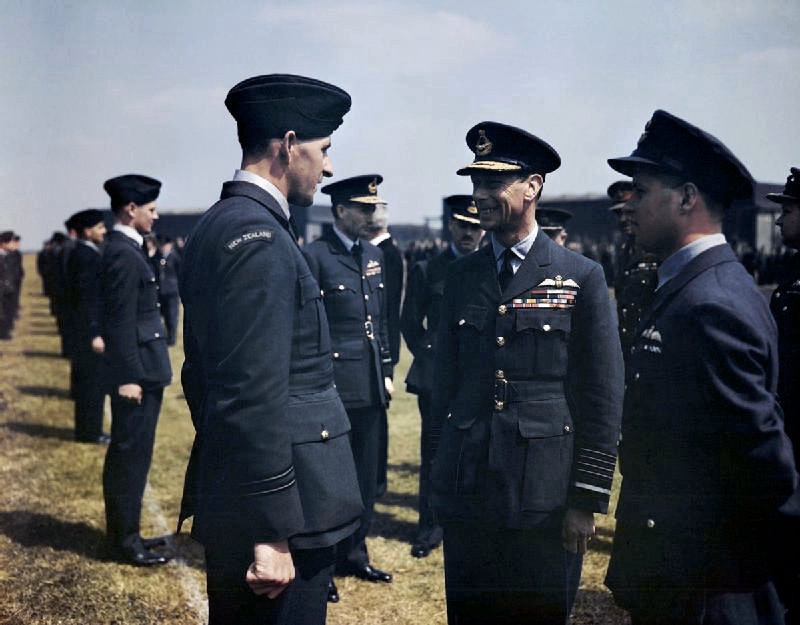
Following the success of on 16–17 May 1943, No. 617 Squadron resumed offensive operations in July 1943 with a raid targeting power stations in , during which Munro piloted a Lancaster from to in ; his aircraft sustained flak damage, resulting in a burst tyre upon and a minor flesh wound to bomb aimer James Clay. Munro's crew was not selected for the squadron's high-risk attempt on the Dortmund–Ems Canal on 14–15 September 1943, an operation that resulted in the loss of six out of nine due to the canal's fortified defenses and poor visibility. He subsequently participated in the abortive attack on the Antheor Viaduct in on 12–13 August 1943, part of broader efforts to disrupt Axis infrastructure, though and strong defenses prevented successful bombing. From November 1943 to July 1944, Munro flew nearly 30 operations with the squadron, focusing on precision strikes against hardened targets such as viaducts, aqueducts, and later sites in occupied Europe, contributing to the squadron's evolution from special-raid specialists to a versatile precision-bombing unit under . During this period, he was appointed Flight Commander of B Flight and served briefly as acting in February 1944 amid leadership transitions. His leadership in these missions, marked by consistent operational tempo despite increasing German air defenses, earned him the (DSO) gazetted on 21 April 1944, with the citation praising his "skill and determination" in pressing home attacks. In June 1944, shortly after D-Day, Ralph Cochrane, commander of No. 5 Group, grounded Munro along with key squadron figures like , Mick Martin, and Joe McCarthy to preserve experienced aircrew for roles and , ending his front-line flying after approximately 50 total operations. ![HM King George VI visits No. 617 Squadron RAF][float-right]

Post-War Career and Civilian Life

Return to New Zealand and Farming

Following his discharge from the Royal Air Force in October 1946, Munro returned to , where he resumed civilian life after nearly five years of overseas service. He initially took employment as a property valuer, leveraging administrative skills from his military background amid the post-war economic transition. Munro then transitioned to agriculture, working on farms before acquiring and operating his own sheep station near Te Kuiti in the King Country region of the . This pursuit aligned with his pre-war upbringing on a family sheep farm near Gisborne, where economic pressures had drawn him into rural labor from age 14. To support his farming venture, he briefly served in a administering loans to rehabilitated ex-servicemen for agricultural startups, facilitating land acquisition and stock purchases under New Zealand's post-war veteran resettlement programs. His farming operations emphasized sheep husbandry in the rugged King Country terrain, reflecting the practical, self-reliant ethos of rural New Zealand life during the late 1940s and 1950s recovery period. Munro maintained this low-profile agrarian focus for decades, prioritizing family and local enterprise over public recounting of his wartime exploits.

Community Involvement and Public Service

After returning to following , Munro worked as a property valuer before establishing a farm near , where he contributed to local agricultural and community efforts. He also served in a providing loans to ex-servicemen to support their post-war resettlement and farming ventures. Munro engaged extensively in , initially as a on the New Zealand Local Government Association and later as chairman and mayor of the Waitomo District Council from 1978 to 1995, spanning 17 years. During his tenure, he fostered international ties by establishing a relationship between and Tatsuno, , building on post-war reconciliatory friendships. His was recognized with the in June 1991 for contributions to local governance. In later years, Munro advocated for recognition of veterans, raising over NZ$160,000 in 2015 toward a in dedicated to those who served and perished. He emphasized preserving their memory amid what he viewed as historical neglect, reflecting a commitment to honoring wartime comrades through public remembrance initiatives. For services to and the community, he received the Companion of the in the 1997 Queen's . As a , he further supported community administration in .

Honors, Legacy, and Public Recognition

Military Decorations and Promotions

Munro entered the Royal New Zealand Air Force in 1941 as a pilot trainee and qualified as a pilot in February 1942 following heavy bomber training. By late 1942, he had joined No. 97 Squadron as a flight lieutenant, conducting operations on Manchester and Lancaster bombers. He retained the rank of flight lieutenant during Operation Chastise on 16–17 May 1943, leading a Lancaster in the second wave targeting the Sorpe Dam. In recognition of his operational record, Munro was promoted to squadron leader on 14 February 1944. Later that year, on 13 July 1944, he assumed command of No. 1690 Bomber Defence Training Flight Squadron. For his service with No. 97 Squadron, Munro received the Distinguished Flying Cross, gazetted on 1 June 1943, cited for pressing home attacks with "great courage and determination" across 21 operations. The followed on 7 April 1944 for leadership in No. 617 Squadron, encompassing 20 sorties since his DFC, including precise attacks on heavily defended targets; the citation highlighted his "very distinguished and successful operational record" leading to appointment as deputy leader for key missions and concluded that his "achievements have been worthy of the greatest praise."

Civilian Awards and Memorial Efforts

In 1991, Munro was appointed a Companion of the (QSO) for his public services in . He later received the Companion of the (CNZM), recognizing his contributions to community and veteran affairs. On 14 April 2015, Munro was awarded the French by the French Ambassador to , one of eight such honors given to New Zealand WWII servicemen for their roles in liberating . Munro actively supported memorial efforts for Bomber Command personnel, particularly the upkeep of the London Bomber Command Memorial unveiled in 2012. In early 2015, facing costs for its annual maintenance estimated at £50,000, he offered to auction his gallantry medals—including the Distinguished Service Order and Distinguished Flying Cross—to raise funds for the memorial, intending to donate the proceeds in honor of fallen comrades. Public response was overwhelming, with tributes from the RAF Benevolent Fund, which maintains the site and compiled a book of messages from supporters to present to him. British philanthropist Lord Ashcroft ultimately donated NZ$150,000 to the memorial fund, allowing Munro to retain his medals for display in a New Zealand institution rather than proceeding with the sale. The medals fetched £75,000 at auction but were redirected to remain in New Zealand, supporting local veteran heritage preservation alongside the memorial contribution.

Assessments of Contributions and Impact

Les Munro's participation in on the night of 16–17 May 1943 exemplified the high-stakes precision required of No. 617 Squadron pilots, as his aircraft, despite sustaining flak damage over the and aborting the attack on the , contributed to the overall mission that breached the Möhne and Eder dams, flooding over 250 square kilometers and disrupting German hydroelectric power and steel production for several weeks. Military analysts have assessed the raid's tactical impact as mixed—inflicting short-term industrial setbacks at the cost of 53 Allied aircrew lives and over 1,600 civilian deaths—but its innovation in low-level, specialized bombing techniques influenced subsequent RAF operations, with Munro's prior involvement in Upkeep mine trials underscoring his technical proficiency. Beyond Chastise, Munro's 20 subsequent sorties with No. 617 Squadron, including pathfinder roles in daylight markings for precision strikes like those supporting D-Day preparations, enhanced the unit's reputation for executing complex, high-risk missions against fortified targets, as he himself regarded such operations as among the squadron's most critical for their strategic enabling of broader Allied advances. His survival rate and leadership as a officer highlighted the Commonwealth's vital role in , where personnel from air forces comprised a significant portion of elite squadrons. In historical assessments, Munro's enduring impact lies in his status as the last surviving Chastise pilot until his death on 4 2015, allowing him to preserve firsthand accounts of the raid's execution and human costs through interviews and events, countering romanticized narratives with grounded reflections on the mission's perils and limited long-term disruption to German production. Tributes emphasized his humility—shunning publicity despite the raid's fame—and service ethic, with lauding him as a "remarkable man" whose "brave service" in "one of the most daring raids of WWII" embodied national valor without exaggeration. Munro's post-war efforts amplified his legacy by raising funds—estimated in thousands of dollars through air show appearances signing Lancaster models—for the 2012 Bomber Command Memorial in , ensuring recognition of the command's 55,000 losses, and accepting in 2015 to maintain his medals in while directing proceeds to memorial upkeep, thereby sustaining public awareness of Bomber Command's sacrifices amid debates over area bombing . This quiet advocacy reinforced his image as a bridge between wartime feats and modern remembrance, influencing New Zealand's military heritage discourse by prioritizing empirical service over mythologized heroism.

Death

Final Years and Passing

In his later years, Munro resided quietly in the of , where he had long been involved in local farming and community affairs following his return. He maintained a modest profile, avoiding much of the publicity associated with his wartime exploits despite occasional invitations to commemorative events, such as visits to Bomber Command memorials. Munro died on 4 August 2015 at Hospital, aged 96, after a short illness. He was survived by four children, 11 grandchildren, and four great-grandchildren; his wife had predeceased him by several years.

Immediate Tributes and Reflections

Upon the announcement of John Leslie Munro's death on August 4, 2015, by the New Zealand Bomber Command Association, tributes highlighted his role as the last surviving pilot from the RAF's No. 617 Squadron Dambusters raid. The association described him as "a mighty man" and a "true gentleman and hero," emphasizing his patronage of the group and his down-to-earth modesty despite wartime fame. New Zealand Prime Minister John Key issued an immediate statement via Twitter, stating, "Really sad to hear of Les Munro’s death, New Zealand has lost a remarkable man who led a remarkable life." The RAF Benevolent Fund expressed sorrow, with Air Marshal Chris Nickols praising Munro's bravery and selflessness in Bomber Command operations, noting his inspiration to serving personnel. Friend and association president Ron Mayhill reflected on Munro's character beyond the raid, calling him "a fine man... a very fine person" for his post-war service and humility. Reflections centered on Munro's unassuming nature and commitment to commemorating fallen comrades, as he had stated, "I am content that I have achieved my goal of doing all I can to ensure that the men of Bomber Command who lost their lives during the Second World War will be remembered with pride for generations to come." Lord Ashcroft, a military historian who met Munro, lauded him as "a true war hero and an inspirational figure," underscoring his in viewing his actions as mere duty amid the raid's high risks, where 53 of 133 crew perished. Fellow Dambusters veteran George Johnstone conveyed sympathy to Munro's family, recalling his daring low-level flying skills and expressing personal loss at future reunions. These accounts portrayed Munro as the final living connection to , with his legacy preserved through medals donated to New Zealand's Museum of Transport and Technology.

References

Add your contribution
Related Hubs
User Avatar
No comments yet.