Hubbry Logo
LophiusLophiusMain
Open search
Lophius
Community hub
Lophius
logo
8 pages, 0 posts
0 subscribers
Be the first to start a discussion here.
Lophius
Lophius
from Wikipedia

Monkfish
Temporal range: 48.6–0 Ma Lutetian to present[1]
Scientific classification Edit this classification
Kingdom: Animalia
Phylum: Chordata
Class: Actinopterygii
Order: Lophiiformes
Suborder: Lophioidei
Family: Lophiidae
Genus: Lophius
Linnaeus, 1758
Type species
Lophius piscatorius
Species

See text

Synonyms[2]

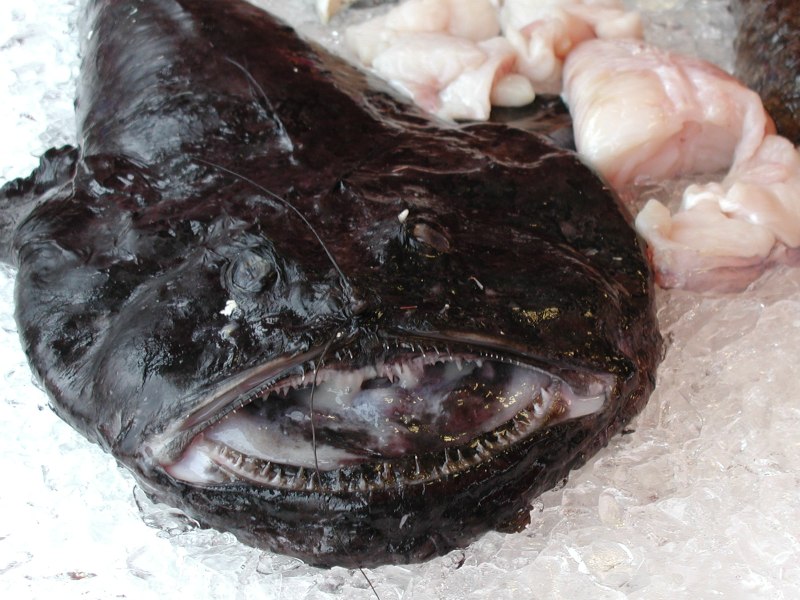
Members of the genus Lophius, also sometimes called monkfish, fishing-frogs, frog-fish, and sea-devils, are various species of lophiid anglerfishes found in the Atlantic and Indian Oceans. Lophius is known as the "monk" or "monkfish" to the North Sea and North Atlantic fishermen, a name which also belongs to Squatina squatina, the angelshark, a type of shark. The North European species is Lophius piscatorius, and the Mediterranean species is Lophius budegassa.

Taxonomy

[edit]

Lophius was first proposed as a genus by Carl Linnaeus when he described Lophius piscatorius in the 10th edition of Systema Naturae given as "in Oceano Europæo", meaning the Northeastern Atlantic Ocean, Mediterranean and Black Seas with localities mentioned including Bordeaux, Marseille and Montpellier in France; Genoa, Rome, Naples and Venice in Italy; Lesbos in Greece; and Syria.[2][3] The genus Lophius is one of 4 extant genera in the family Lophiidae which the 5th edition of Fishes of the World classifies in the monotypic suborder Lophioidei within the order Lophiiformes.[4] Within the Lophiidae Lophius is most closely related to Lophiomus with Lophiodes' being the sister taxon to these and with Sladenia as the most basal sister group to the other three genera.[5]

Etymology

[edit]

Lophius means "mane" and is presumably a reference to the first three spines of the first dorsal fin which are tentacle like, with three smaller spines behind them.[6]

Species

[edit]

The seven recognized extant species in this genus are:[7]

Image Scientific name Common name Distribution
Lophius americanus Valenciennes, 1837 American angler Western Atlantic from Newfoundland and Quebec south to northern Florida
Lophius budegassa Spinola, 1807 blackbellied angler Mediterranean and eastern Atlantic
Lophius gastrophysus A. Miranda-Ribeiro, 1915 blackfin goosefish coasts of northern South America, Central America, Aruba, Cuba, and Costa Rica
Lophius litulon D. S. Jordan, 1902 yellow goosefish Japan, Korea, and the Yellow and East China seas.
Lophius piscatorius Linnaeus, 1758 angler, European angler or common monkfish northeast Atlantic, from the Barents Sea to the Strait of Gibraltar, the Mediterranean and the Black Sea
Lophius vaillanti Regan, 1903 shortspine African angler Eastern Atlantic
Lophius vomerinus Valenciennes, 1837 devil anglerfish Durban, South Africa, as well as northern Namibia, where it is found in the Indian and Atlantic Oceans

Description

[edit]

Lophius monkfishes are characterised by having highly compressed heads and bodies. The frontal ridges have a covering of low, blunt knobs or cross ridges. There is a large spine on the parietal bone and there are spines on the lower quadrate bone. The soft-rayed portion of the dorsal fin has between 9 and 12 rays and the anal fin has between 8 and 10 rays. The gill opening reaches below and to the rear of the base of the pectoral fin. There are 6 dorsal spines, those on the head are well developed but those behind the head are very small. There are two well-developed spines on the sphenotic bone and one on the epiotic bone. There is a single spine on the joint at the front of the jaw joint and a single interopercular spine. The humeral spine is also well-developed and has 2 or 3 smaller spines on it.[8] The largest species in the genus is the angler (L. piscatorius), with a maximum published standard length of 200 cm (79 in), while the smallest is the blackfin goosefish (L. gastrophysus) with a maximum published total length of 67 cm (26 in).[9]

Reproduction

[edit]

The spawn of this genus consists of a thin sheet of transparent gelatinous material 60–100 cm (25–40 in) wide and 8–10 m (26–33 ft) in length. The eggs in this sheet are in a single layer, each in its own little cavity. The spawn is free in the sea. The larvae are free-swimming and have pelvic fins with elongated filaments.

Habitat

[edit]

The East Atlantic species is found along the coasts of Europe but becomes scarce beyond 60°N latitude; it also occurs on the coasts of the Cape of Good Hope.[clarification needed] The species caught on the North American side of the Atlantic is usually Lophius americanus. A third species (Lophius budegassa), inhabits the Mediterranean, and a fourth (L. setigerus) the coasts of Korea, China and Japan.[citation needed]

The black (L. budegassa) and white (L. piscatorius) anglerfish both live in deep, inshore waters from 800 metres (2,600 ft) to deeper waters (greater than 1,000 metres or 3,300 feet).[10] These two species are very similar, with only a few distinctions between them. These include the colour of the peritoneum (black for L. budegassa and white for L. piscatorius) and the number of rays in the second dorsal fin (L. budegassa, 9–10 and L. piscatorius, 11–12).[11] Also, minor differences in their distribution occur. Black anglerfish tend to have a more southern distribution (Mediterranean and eastern North Atlantic from the British Isles to Senegal). In contrast, the white anglerfish are distributed further north (Mediterranean, Black Sea and eastern North Atlantic from the Barents Sea to the Strait of Gibraltar).[11] Despite these differences, the overall distribution of the black and white anglerfish tend to overlap greatly.[11] A map of the distribution of anglerfish in the waters surrounding Europe and North Africa can be found in the external links section. The movements of both species of anglerfish indicate mixing of both northern and southern species could have strong implications for the geographical boundaries of the stocks from a management perspective.[10]

Commercial use

[edit]
Ankimo, a Japanese delicacy made of monkfish liver

Two species, Lophius piscatorius and Lophius budegassa, found in north-western Europe are referred to as monkfish, with L. piscatorius by far the most common species around the British Isles and of major fishery interest. Under UK Labelling Regulations, the phrase "monkfish" is only permitted for Lophiodes caulinaris, Lophius americanus, Lophius budegassa and Lophius piscatorius.[12]

Both species of Lophius are important because they are commercially valuable species usually caught by trawl and gillnetting fleets.[10]

Concern is expressed over the sustainability of monkfish fishing.[13] The method most commonly used to catch monkfish, beam trawling, has been described as damaging to seafloor habitats. In February 2007, the British supermarket chain Asda banned monkfish from their stores.[14]

References

[edit]

Further reading

[edit]
[edit]
Revisions and contributorsEdit on WikipediaRead on Wikipedia
from Grokipedia

Lophius is a of marine anglerfishes in the Lophiidae, consisting of that are primarily distributed along the Atlantic coasts of , , and , with one species extending into the . These demersal predators are characterized by their dorsoventrally flattened bodies, disproportionately large heads comprising up to half their length, expansive mouths lined with sharp, inward-curving teeth, and a modified first ray (illiciium) bearing a fleshy esca that serves as a lure to attract prey.
Species within the genus inhabit soft, sandy, or muddy bottoms from shallow coastal waters to depths exceeding 1,000 meters, employing an ambush strategy where they remain motionless on the seafloor, waving the esca to entice fishes and before rapid strikes with their cavernous jaws. Notable include L. piscatorius (common angler or monkfish) in the northeastern Atlantic, L. americanus (American ) along the western Atlantic shelf, and L. budegassa (black-bellied angler) in deeper Mediterranean and Atlantic waters, each adapted to regional temperature and depth variations while sharing core morphological traits for benthic predation. Commercially significant due to the tender tail meat prized in fisheries, Lophius support substantial landings, though populations face pressures from necessitating management measures like quotas in Atlantic stocks. Their features , with females producing gelatinous egg veils that float near the surface before sinking to hatch, contributing to wide larval dispersal.

Classification and Nomenclature

Taxonomic Classification

Lophius is a of marine ray-finned fishes in the Lophiidae, known as goosefishes or monkfishes. The genus was established by in 1758, with Lophius piscatorius as the . It comprises several valid species distributed across temperate and subtropical Atlantic, Indian, and Pacific Oceans. The taxonomic hierarchy of Lophius follows the Linnaean system and is classified as:
  • Kingdom: Animalia
  • Phylum: Chordata
  • Subphylum: Vertebrata
  • Infraphylum:
  • Class:
  • Order: Lophiiformes (anglerfishes)
  • Suborder: Lophioidei
  • Family: Lophiidae (goosefishes)
  • Genus: Lophius
Lophius is the of Lophiidae, which includes four extant genera totaling 34 as of current assessments. This classification reflects consensus from marine taxonomic databases, emphasizing bony fish () with advanced fin ray structures characteristic of teleosts.

The genus name Lophius derives from the lóphos (λόφος), meaning "crest" or "tuft," referring to the elongated, movable spines of the first that project forward over the head, forming a crest-like or tuft-like appearance. This etymological root highlights the genus's characteristic lophiid morphology, where the first three dorsal spines include the —a modified lure used for predatory deception—further emphasizing the "tufted" dorsal profile. The suffix -ius follows Linnaean conventions for forming names from Greek or Latin roots. formally established the genus in the 10th edition of Systema Naturae (1758), initially including like based on European specimens.

Species Diversity

The genus Lophius includes seven recognized , all members of the family Lophiidae, with distributions centered in the Atlantic Ocean (six species) and one extending to the Northwest Pacific. These exhibit morphological similarities, including the characteristic used for luring prey, but differ in geographic ranges, maximum sizes, and subtle anatomical features such as ray counts and coloration. Taxonomic assessments, based on morphological and genetic data, indicate relative stability in species delineation, though ongoing fisheries pressure and limited deep-sea sampling may reveal further intraspecific variation. The species are as follows:
Scientific NameCommon NamePrimary DistributionYear DescribedMaximum Length
L. americanusWestern Atlantic1837120 cm TL
L. budegassaEastern Atlantic1807100 cm SL
L. gastrophysusWestern Atlantic191567.5 cm TL
L. litulonNorthwest Pacific1902150 cm SL
L. piscatoriusEastern Atlantic1758200 cm SL
L. vaillantiEastern Atlantic190380.3 cm TL
L. vomerinusSoutheast Atlantic1837100 cm TL
Data compiled from FishBase taxonomic records. L. piscatorius and L. americanus support major commercial fisheries due to their larger sizes and accessible habitats, while others like L. gastrophysus remain less exploited owing to deeper or more restricted ranges. Genetic studies confirm distinct lineages corresponding to these species, with minimal hybridization reported across Atlantic populations.

Morphology and Adaptations

Physical Description

Species of the genus Lophius, commonly known as goosefishes or monkfishes, possess a dorso-ventrally compressed body morphology highly adapted for life on the seafloor, with the head disproportionately large and flattened, often accounting for nearly half the total length. The is exceptionally wide and cavernous, extending beyond the eyes and lined with numerous sharp, backward-curving teeth that facilitate prey capture. is thin, loose-fitting, and entirely scaleless, providing flexibility and aiding in through mottled brown, green, or reddish hues that blend with muddy or sandy substrates. The features three isolated anterior spines: the first is greatly elongated as an , a movable "" topped by a bifid esca consisting of two broad, flattened, leaf-like blades that can be waved to lure prey. The second and third spines are rigid and defensive, while the soft dorsal and anal fins are set far posteriorly on the tapering . Pectoral fins are enlarged, fan-shaped, and muscular, functioning like limbs for ambulation across the bottom, with additional pelvic fins reduced to spine-like structures. Eyes are small, dorsally directed, and capable of independent movement to monitor overhead prey. Body sizes vary across the approximately eight recognized species, with maximum total lengths ranging from about 50 cm in smaller forms like L. vomerinus to over 200 cm in L. piscatorius, though adults typically measure 50-150 cm depending on sex and region; females generally attain larger sizes than males. The overall form emphasizes ambush predation, with minimal streamlining for swimming and reliance on stealth over speed.

Sensory and Locomotor Adaptations

Lophius , as predators, possess a modified first ray known as the , topped with an esca that wiggles to mimic prey movements and attract and into striking range of their expansive mouths. This lure represents a key visual sensory , compensating for their reliance on stationary hunting rather than active pursuit. Chemosensory capabilities are enhanced by distributed , free nerve endings, and solitary chemosensory cells across the body surface, enabling detection of chemical cues from nearby prey. Visual adaptations vary by species and life stage to suit benthic habitats at depths often exceeding 100 meters, where light is dim. In L. budegassa, nocturnal activity correlates with high optical sensitivity, including enlarged photoreceptors (up to 5.7 μm² sr in larger individuals) and a preference for light intensities below 0.93 μE m⁻² s⁻¹, facilitating prey detection in low-illumination conditions. Conversely, L. piscatorius exhibits diurnal preferences with peak activity at higher light levels (decreasing below 0.87 μE m⁻² s⁻¹), featuring larger adult eyes (mean diameter 29.8 ± 2.2 mm above 50 cm) optimized for resolution amid suspended particles rather than extreme sensitivity. Auditory and balance senses are supported by otoliths, with L. budegassa showing 50% heavier otoliths than equivalently sized L. piscatorius (maximum 107.3 mg vs. 102.6 mg), suggesting greater acoustic reliance in dim environments. Locomotor adaptations emphasize efficiency over speed, aligning with their sedentary, bottom-dwelling lifestyle. The dorsoventrally flattened body and large, limb-like pectoral fins enable slow crawling or "walking" along the seafloor to reposition for ambushes or evade disturbances, minimizing expenditure in cold, low-oxygen depths. This lethargic movement is underscored by ventilatory cycles exceeding 90 seconds, facilitated by expansive chambers supported by pectoral fins, which reflect adaptations to prolonged inactivity and low metabolic rates. Juveniles demonstrate greater mobility, including vertical excursions from the substrate and horizontal displacements up to 876 km, likely for dispersal or feeding, while adults remain more site-faithful but capable of seasonal depth shifts.

Life History Traits

Reproduction and Development

Lophius species are oviparous with , characterized by females releasing buoyant gelatinous containing hundreds of thousands to over one million eggs per spawn. These , often exceeding 10 meters in length and 25 cm in width, float near the surface to facilitate oxygenation and dispersal of embryos and larvae. Spawning occurs seasonally, varying by species and region; for instance, L. americanus spawns from to October, while L. piscatorius exhibits peaks from November to June in Atlantic waters. Females are serial spawners, producing multiple per , which supports high but exposes eggs to predation and environmental risks. Sexual dimorphism influences reproductive timing, with males maturing at smaller sizes and earlier ages than females; in L. vomerinus, 50% maturity occurs at 39.9 cm for males and 58.2 cm for females. development involves progressive stages, from immature to ripe, with ovaries expanding dramatically in length during . Adults often migrate to shallower areas in spring for spawning, though precise behaviors remain poorly documented due to the benthic lifestyle and deep-water habitats of mature individuals. Egg development proceeds through embryonic stages within the veil, followed by larval . For L. americanus, embryogenesis spans 16 stages, transitioning to yolk-sac larvae (stages 17–21) and then feeding larvae (stages 22–26), with total pre-settlement duration estimated at weeks to months depending on temperature. Larvae are pelagic, initially transparent with developing pectoral and pelvic fins, and acquire melanophores post-, aiding during the shift to a benthic juvenile phase. This pelagic larval period promotes wide dispersal, potentially explaining the genus's transoceanic distributions, before to the ambush-predatory adult form on the seafloor.

Growth, Age, and Lifespan

Lophius species exhibit , with patterns generally characterized by rapid juvenile phases followed by slower increments in adults, as determined through tagging recaptures, length-frequency analyses, and direct ageing structures. Age estimation relies primarily on annuli counts in sectioned illicia (first rays), which deposit annual opaque-translucent bands reflecting seasonal growth variations; this method outperforms readings for older individuals due to reduced resorption and clearer ring visibility. In L. piscatorius, early growth reaches 18.5 cm in the first year, decelerating thereafter; von Bertalanffy growth function (VBGF) fits yield asymptotic lengths (L) of approximately 140 cm and growth coefficients (k) of 0.11 year−1, with tagging data confirming annual increments of 10–15 cm in juveniles. For L. americanus, adult growth is linear at 7.6–10 cm year−1, enabling females to attain 138–140 cm total length, while males max at 70–85 cm; VBGF parameters align with slow overall rates (k ≈ 0.08–0.10). In L. vomerinus, illicia-based VBGF indicates L = 110 cm and k = 0.08, with initial rates of 7–8 cm declining with age, and females outpacing males in size and longevity. Sexual dimorphism influences growth trajectories, with females achieving larger sizes and later maturity (4–8 years at 48–80 cm) compared to males (3–6 years at 35–60 cm), contributing to female-biased size distributions in catches. These traits render Lophius vulnerable to , as slow replenishment delays population recovery. Lifespans extend beyond 20 years, with validated maximums of 24–25 years for L. piscatorius females in wild populations; males typically reach 21 years. Comparable longevities apply to L. americanus, where ageing validations confirm ages exceeding 13 years in mature females, and to L. vomerinus (>10 years observed). Generation times average 11–12 years across Atlantic congeners, underscoring their -selected life history.

Ecology and Distribution

Habitat Preferences

Species of the genus Lophius are demersal fishes that inhabit the soft sediments of continental shelves and upper slopes, where they rest motionless on or partially buried in the seabed to ambush prey. They exhibit a strong preference for muddy, sandy, or shell hash substrates that facilitate camouflage through their mottled dorsal skin patterns and flattened body morphology, enabling effective integration with the surrounding environment. Hard or rocky bottoms are less favored, as these provide poorer opportunities for burial and concealment, though occasional occurrences on such substrates have been noted. Depth preferences vary ontogenetically, with juveniles and smaller adults typically occupying shallower coastal waters below 20 meters, while larger individuals migrate to depths exceeding 300 meters, up to 1,000 meters or more on the continental slope. This distribution correlates with bottom water temperatures generally above 7°C, though Lophius species thrive in temperate to cold marine conditions, avoiding extremes that disrupt their . Salinity tolerances align with full marine environments (30-35 ppt), with no evidence of adaptations. Habitat selection is influenced by seasonal factors, such as gradients and prey availability, leading to vertical migrations; for instance, in the Northeast Atlantic, L. piscatorius shifts to warmer, shallower depths in winter for spawning and deeper, cooler areas in summer. In the Northwest Atlantic, L. americanus shows associations with bottom temperatures of 4-12°C and depths of 50-500 meters during trawl surveys, underscoring a preference for stable, low-oxygen-tolerant soft-bottom that support their low-metabolic . Anthropogenic alterations, like trawling-induced disturbance, can degrade these preferences by reducing viability, though natural recovery occurs in unexploited areas.

Geographic Distribution

The genus Lophius comprises seven species distributed predominantly in the Atlantic Ocean, with one species in the Northwest Pacific. Six species occur in various Atlantic basins: three in the eastern Atlantic and Mediterranean, and three in the western Atlantic. Lophius piscatorius, the angler or common monkfish, inhabits the northeastern Atlantic from the southwestern Barents Sea southward to the Strait of Gibraltar, including the Mediterranean Sea and Black Sea; records extend to Iceland and coastal waters off Greenland, Norway, Britain, Ireland, and Senegal. Lophius budegassa, the blackbellied angler, overlaps extensively in the eastern Atlantic and Mediterranean, ranging from inshore waters to depths of 650 m or more, with occurrences noted in the Ionian Sea up to 1013 m. In the western Atlantic, Lophius americanus, the American angler or goosefish, ranges from Newfoundland and Labrador southward to northeastern Florida, primarily along the continental shelf from the Grand Banks and northern Gulf of St. Lawrence to Cape Hatteras, North Carolina, though it becomes uncommon in nearshore areas south of North Carolina; depths span 10–850 m, favoring sand, gravel, shell, and mud bottoms. Lophius gastrophysus, the blackfin goosefish, extends from North Carolina and the northern Gulf of Mexico southward to Argentina along the western Atlantic continental slope. Lophius vomerinus, the devil anglerfish, is confined to the southeastern Atlantic off , primarily on the deeper and upper slope. Lophius litulon, the yellow , represents the sole Pacific , occurring in the Northwest Pacific on sandy-mud bottoms.

Feeding Ecology

Lophius are predators that employ a sit-and-wait , utilizing a modified first ray () tipped with a fleshy lure (esca) to attract prey within striking distance before capturing it with a rapid expansion of their large, cavernous mouths. This tactic aligns with their sedentary, benthic lifestyle on soft substrates, where they remain largely motionless to minimize energy expenditure while exploiting opportunistic encounters with passing or nearby organisms. Diet composition across Lophius species is dominated by fishes, such as gadiforms, (Trachurus trachurus), and (Scomber scombrus), with secondary contributions from decapod crustaceans (e.g., shrimps, squat lobsters) and cephalopods; occasional predation on seabirds has been documented in L. piscatorius. L. piscatorius exhibits stronger piscivory, with fish comprising up to 100% of gut contents in larger individuals, whereas L. budegassa maintains a more balanced intake, including 25-50% benthic , particularly in shallower habitats. Gut content analyses from the reveal 34 prey taxa for L. piscatorius and 32 for L. budegassa, underscoring their opportunistic, non-selective feeding. Ontogenetic shifts are pronounced, with smaller individuals (<200-400 mm) consuming more invertebrates like red shrimp (Dichelopandalus leptocerus) and squid (Loligo pealeii), transitioning to exclusively teleost prey (e.g., sand lance Ammodytes spp., red hake Urophycis chuss) in larger size classes (>400 mm), including conspecific in L. americanus exceeding 600 mm. In L. piscatorius, prey diversity is higher in juveniles, with crustaceans giving way to fish as size increases; similar patterns occur in L. budegassa, though less markedly. Feeding intensity declines with size, evidenced by higher empty stomach frequencies (42-46%) in adults versus 9% in juveniles of L. americanus. Trophic levels, estimated via stable isotopes (δ¹⁵N), range from 3.3-3.8 in small individuals to 4-4.5 in large ones, positioning Lophius as top predators with increasing reliance on higher-trophic-level ; L. piscatorius shows steeper ontogenetic increases than L. budegassa. Spatial and seasonal variations influence diet, with deeper habitats favoring piscivory and shallower areas more in L. budegassa, alongside annual shifts linked to prey availability in older fish. Niche overlap between co-occurring species remains low (Schoener's index ≤0.49), facilitating coexistence through resource partitioning.

Behavior and Physiology

Hunting and Predatory Strategies

Species of the genus Lophius function as sit-and-wait ambush predators, remaining largely stationary on soft or mixed seafloor substrates to conserve energy while awaiting prey. This strategy exploits their benthic lifestyle, with individuals often depressing the substrate or partially burying themselves to enhance concealment. Their dorsoventrally flattened bodies and loose, mottled skin facilitate integration with the surrounding environment, minimizing detection by potential victims. Central to their predation is the illicium, a specialized, mobile anterior dorsal fin ray extending forward from the head and tipped with an esca—a fleshy, irregular lobe resembling small invertebrates or prey fragments. By elevating and oscillating the illicium, Lophius simulates live bait, drawing inquisitive fish and crustaceans into proximity; this lure-casting behavior adjusts based on prey position and distance, with erect secondary dorsal rays potentially augmenting the display. Prey detection relies on visual cues, including movement, which heightens responsiveness to the lure, rendering the strategy opportunistic rather than highly selective. Capture occurs via a swift, explosive mouth expansion, generating suction forces that ingest prey whole; the capacious mouth, lined with inward-curving teeth, accommodates items up to comparable body proportions, supported by a highly distensible stomach. Jaw protrusion and buccal volume increase enable rapid enclosure, preventing escape. Diet composition varies by location and size but predominantly features teleosts, cephalopods, and crustaceans, with larger specimens targeting bigger or more mobile prey and occasional cannibalism or atypical items like seabirds. This approach yields high capture efficiency for energy investment, though success depends on prey density and environmental visibility.

Migration and Movement Patterns

Species of the genus Lophius are primarily benthic and display limited mobility, often "walking" along the seafloor using enlarged pectoral fins or engaging in slow bursts of swimming, with tagging data indicating that many individuals remain within 25 km of release sites for extended periods. However, acoustic and data storage tagging studies reveal seasonal horizontal migrations, typically involving onshore-offshore shifts correlated with bottom temperature changes, prey availability, and spawning requirements; for instance, adults conduct annual movements between spawning and feeding grounds in regions like Faroese waters. In , a pronounced seasonal pattern occurs in the northeastern Atlantic, with individuals occupying shallower depths (<200 m) during summer months and migrating to deeper offshore waters (>400 m) in winter, as evidenced by hydrographic-correlated tracking in Faroese waters from 2018–2020. Tagging experiments around the Islands (1999–2001) documented recaptures up to 1,078 days at liberty, with 35% of 80 recaptured fish within 25 km of release, but others displaced northward to , the , or , suggesting occasional long-distance along-shelf migrations exceeding 1,000 km. For in the western North Atlantic, movements include seasonal onshore-offshore migrations, with fish departing the southern Mid-Atlantic Bight in mid-spring toward northern or deeper areas, potentially linked to maturing females shifting to deeper waters outside surveyed zones. tags deployed on L. americanus have recorded periodic vertical excursions up to 209 m over 14-hour cycles, alongside daily activity patterns indicating benthic dominance with occasional mid-water forays, though overall horizontal displacement remains modest compared to pelagic species. Other congeners, such as L. litulon in the , show sex-specific spawning migrations, with females undertaking ovarian maturation-driven displacements differing from males, highlighting variability across species but underscoring thermal and reproductive cues as primary drivers of Lophius movements. Population structure remains incompletely resolved, with tagging suggesting discrete stocks in some areas yet connectivity via larval drift or adult migrations in others.

Ecological Interactions

Role as Predator and Prey

Lophius species function primarily as ambush predators in marine ecosystems, employing a sit-and-wait facilitated by their modified first ray, the , which bears a fleshy lure to attract prey. This predatory behavior targets a diverse array of organisms, with diets dominated by fishes, followed by crustaceans and cephalopods, reflecting opportunistic feeding habits across various sizes and habitats. For instance, consumes primarily gadoids such as Norway pout (Trisopterus esmarkii) and lesser sandeel (Ammodytes marinus), while preys on red hake (Urophycis chuss), silver , and occasionally seabirds like dovekies. Their high , estimated at 4.5 for L. piscatorius, positions them as top predators capable of influencing prey through selective predation on active, schooling . As prey, adult Lophius individuals face limited natural predation due to their large size, cryptic coloration, and benthic lifestyle, though juveniles are vulnerable to larger piscivores including (Xiphias gladius), various sharks, and thorny skates (Amblyraja radiata). represents the dominant anthropogenic predation pressure, significantly impacting population structures and potentially altering trophic cascades in exploited regions. In unharvested contexts, Lophius contribute to stability by serving as intermediate consumers, with their predation helping regulate mid-trophic level abundances while providing to apex predators. Parasitic loads, exceeding 50 species in some populations, further integrate them into complex host-parasite networks, though these interactions do not constitute predation in the classical sense.

Interactions with Ecosystems

Lophius species, as benthic ambush predators, influence dynamics primarily through their position in demersal food webs, where they connect invertebrate and fish prey to higher trophic levels. Their opportunistic feeding on crustaceans, cephalopods, and teleosts—such as (Gadus morhua) and (Melanogrammus aeglefinus)—can modulate prey population structures in habitats, particularly on muddy and sandy bottoms at depths of 50–1000 meters. In the northeastern Atlantic, analyses of contents reveal seasonal and regional variations in diet composition, underscoring how prey availability shapes Lophius foraging and, reciprocally, how predator density affects benthic . These interactions support ecosystem-based fisheries models, which integrate multi-species trophic linkages to predict cascading effects on and . Observed shifts in Lophius distribution, such as the northward expansion of L. piscatorius in Icelandic waters since the early , illustrate responses to environmental changes that alter local assemblage structures. Warmer sea temperatures, rising by approximately 0.5–1°C in subpolar regions over the past two decades, correlate with increased juvenile recruitment and adult presence, potentially intensifying competition with native predators like (Reinhardtius hippoglossoides) and altering prey depletion rates. However, the complexity of these biotic and abiotic interactions complicates attribution of ecosystem-level changes, as small-scale studies indicate variable impacts on community stability without clear evidence of dominance shifts. For L. americanus in the northwest Atlantic, limited data suggest minimal direct -driven disruptions, though indirect effects via prey alterations remain understudied. Interspecific associations, including aggregation around artificial structures like oil platforms, highlight adaptive habitat use that enhances local by providing refuge and sites, though such effects are anthropogenic and localized. Genetic connectivity and occasional hybridization with congeners like L. budegassa in overlapping ranges may facilitate , influencing adaptive responses to stressors such as or hypoxia, but empirical quantification of these dynamics is sparse. Overall, while Lophius exerts detectable top-down pressure in exploited shelf , comprehensive assessments of indirect effects—like altered nutrient cycling or parasite transmission—require expanded trophic network analyses.

Fisheries and Exploitation

Commercial Harvesting

Commercial harvesting of Lophius species targets the tail meat, which constitutes a small portion of the fish's body weight but commands high market prices comparable to , while livers are valued for culinary uses such as Japanese ankimo. Primary gear includes demersal trawls and bottom-set gillnets, including tangle and entangling nets, deployed on continental shelves at depths of 50-500 meters where monkfish aggregate on muddy or sandy bottoms. accounts for the majority of catches in many regions due to its efficiency in capturing the sedentary species, though it generates substantial of other groundfish and . In the United States, where L. americanus dominates fisheries along the Northeast Atlantic coast from to the Mid-Atlantic Bight, commercial landings reached 15.4 million pounds (approximately 7,000 metric tons) in 2023, valued at $11.8 million at first wholesale. These landings primarily originate from trawl vessels, with gillnets comprising a smaller share, and are concentrated in states like and . Historical peaks exceeded 50 million pounds annually in the late before quota reductions, reflecting intensive exploitation that prompted stock assessments. European fisheries for L. piscatorius (white anglerfish) and the closely related L. budegassa (black-bellied anglerfish) in ICES areas such as Subareas 4, 6, 7, and 8 yield combined catches often exceeding 15,000 metric tons annually in monitored divisions, with major contributors including , the , and using similar trawl and net gear in the , , and . ICES data indicate variable landings, such as around 15,700 tonnes in Subarea 4 and adjacent divisions in recent assessments, driven by demersal fleets targeting mixed groundfish assemblages.

Management and Sustainability

Management of Lophius fisheries in the North Atlantic relies on stock assessments, total allowable catches (TACs), and quota allocations to prevent . In the United States, L. americanus is governed by a Management Plan implemented in 1999 after a 1997 assessment deemed the stock overfished, with joint oversight by the and Mid-Atlantic Fishery Management Councils. The fishery is divided into Northern ( and northern ) and Southern (southern to ) management areas, regulated via days-at-sea (DAS) limits—35 for Northern and 37 for Southern in fiscal years 2023–2025—and differential landing limits to control effort. Annual catch limits are set as acceptable biological catch (ABC) at 6,224 metric tons (Northern) and 5,861 metric tons (Southern), with total allowable landings (TAL) at 5,309 metric tons and 3,481 metric tons, respectively, for the same period; actual 2023 landings reached 15.4 million pounds (about 7,000 metric tons total), valued at $11.8 million, indicating quota underutilization at 84.4% in the North and 17.4% in the South. Stock assessments for U.S. L. americanus shifted to index-based methods post-2013 due to data limitations, resulting in an "unknown" status for overfished condition and as of 2023, despite the 2018 update showing at 67% of the target but neither overfished nor subject to . Discard rates declined in 2023 to about 13% of ACL in the North and 21% in the South, with latent effort evident as fewer than 20% of permitted vessels landed over 10,000 pounds. In European waters, L. piscatorius and L. budegassa fall under TACs derived from ICES advice, applied across subareas including the , , and West of . For 2025, ICES advises a 30,726-tonne TAC—a 211% increase from prior levels—consistent with (MSY) principles, as fishing mortality remains below FMSY and spawning stock exceeds MSY Btrigger, Bpa, and Blim thresholds, forecasting a 4.5% biomass rise by 2026. allocations vary by , though historical implementation has occasionally exceeded ICES recommendations by factors of two to four since 1994. Sustainability challenges include bycatch in multispecies trawl fisheries and documented declines in L. americanus size structure, with mean body length reduced by 48% across surveyed areas from historical baselines, potentially signaling recruitment variability or selective fishing pressure. U.S. regulations enforce accountability measures and observer coverage to mitigate overexploitation, rendering wild-caught monkfish a sustainably sourced option under federal oversight, while EU efforts emphasize species-specific sampling to refine stock separation and MSY compliance. Ongoing assessments aim to address data gaps, such as discard estimation and environmental influences on recruitment, to sustain yields amid mixed-fishery complexities. Stock assessments for Lophius species, primarily L. americanus in the northwest Atlantic and L. piscatorius in the northeast Atlantic, indicate regional recoveries from historical , driven by quota-based implemented in the late , though data limitations and methodological challenges persist in quantifying current and fishing mortality. In many exploited stocks, spawning stock has stabilized or increased following declines linked to in demersal fisheries, with annual surveys and landings data informing precautionary total allowable catches (TACs). IUCN evaluations classify L. piscatorius as Least Concern, reflecting broad distribution and responsiveness, while L. americanus remains unassessed and L. budegassa as due to sparse monitoring in the Mediterranean. For L. americanus in U.S. waters, the stock status shifted to "unknown" in 2023 after rejection of prior assessments due to flawed techniques using otoliths and illicia; index-based trends from trawl surveys suggest northern improvements since the early 2000s, but no analytical model confirms overfished or conditions. Landings in the Northern Management Area averaged 60-84% of annual catch limits from 2022-2023, with discards declining, supporting maintenance of current quotas through under Northeast Multispecies specifications, alongside precautionary reductions planned for southern stocks from 2029. Historical in the prompted a 1999 management plan that reduced directed effort via days-at-sea limits, contributing to observed abundance rebounds absent formal targets. In European waters, L. piscatorius assessments by the International Council for the Exploration of the Sea (ICES) for areas including the , , and report spawning stock biomass at 53,377 tonnes in 2024, exceeding MSY Btrigger (38,604 tonnes), Bpa (35,692 tonnes), and Blim (25,686 tonnes), with steady increases since 2018 based on biennial Stock Synthesis models integrating survey indices and commercial catch-per-unit-effort. mortality in 2023 stood at 0.089, below FMSY (0.137) and on a declining trajectory, prompting ICES advice for 2025 catches up to 30,726 tonnes— a significant increase from prior limits—under combined TACs for Lophius species enforced by the and UK. These trends reflect effective quota adherence, though misreporting and species aggregation with L. budegassa complicate single-stock precision, and seabed impacts from otter trawling remain unquantified in .

References

Add your contribution
Related Hubs
User Avatar
No comments yet.