Hubbry Logo
Low-code development platformLow-code development platformMain
Open search
Low-code development platform
Community hub
Low-code development platform
logo
8 pages, 0 posts
0 subscribers
Be the first to start a discussion here.
Low-code development platform
from Wikipedia
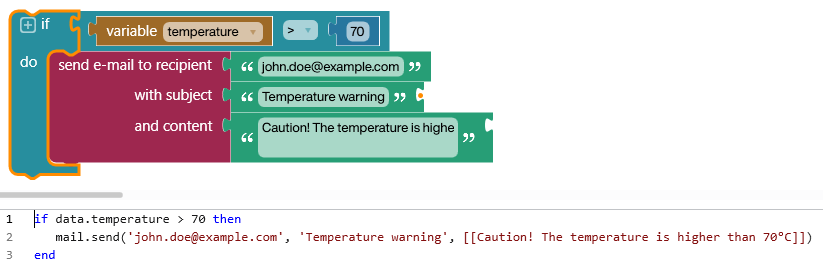
A visual low-code editor that enables the creation of process logics without programming knowledge, illustrated with an example from Peakboard.

A low-code development platform (LCDP) provides a software development environment – typically a graphical user interface (GUI) – that involves little or no writing of code. A low-coded platform may produce entirely operational applications, or require additional coding for specific situations. Low-code development platforms are typically on a high abstraction level, and can reduce the amount of traditional time spent, enabling accelerated delivery of business applications. A common benefit is that a wider range of people can contribute to the application's development, not only those with coding skills, but good governance is needed to be able to adhere to common rules and regulations. LCDPs can also lower the initial cost of setup, training, deployment, and maintenance.[1]

Low-code development platforms trace their roots back to fourth-generation programming language and the rapid application development tools of the 1990s and early 2000s. Similar to these predecessor development environments, LCDPs are based on the principles of model-driven architecture, automatic code generation, and visual programming.[2] The concept of end-user development also existed previously, although LCDPs brought some new ways of approaching this development. The low-code development platform market traces its origins back to 2011.[3] The specific name "low-code" was not put forward until 9 June, 2014,[1] when it was used by the industry analyst Forrester Research. Along with no-code development platforms, low-code was described as "extraordinarily disruptive" in Forbes magazine in 2017.[4]

Use

[edit]

As a result of the microcomputer revolution, businesses have deployed computers widely across their employee bases, enabling widespread automation of business processes using software.[5] The need for software automation and new applications for business processes places demands on software developers to create custom applications in volume, tailoring them to organizations' unique needs.[6] Low-code development platforms have been developed as a means to allow for quick creation and use of working applications that can address the specific process and data needs of the organization.[7]

Reception

[edit]

Research firm Forrester estimated in 2016 that the total market for low-code development platforms would grow to $15.5 billion by 2020.[8] Segments in the market include database, request handling, mobile, process, and general purpose low-code platforms.[9]

Low-code development's market growth can be attributed to its flexibility and ease.[10] Low-code development platforms are shifting their focus toward general purpose of applications, with the ability to add in custom code when needed or desired.[3]

Mobile accessibility is one of the driving factors of using low-code development platforms.[6] Instead of developers having to spend time creating multi-device software, low-code packages typically come with that feature as standard.[6]

Because they require less coding knowledge, nearly anyone in a software development environment can learn to use a low-code development platform.[11] Features like drag and drop interfaces help users visualize and build the application[8]

Security and compliance concerns

[edit]

Concerns over low-code development platform security and compliance are growing, especially for apps that use consumer data. There can be concerns over the security of apps built so quickly and possible lack of due governance leading to compliance issues.[10] However, low-code apps do also fuel security innovations. With continuous app development in mind, it becomes easier to create secure data workflows.

Criticisms

[edit]

Some IT professionals question whether low-code development platforms are suitable for large-scale and mission-critical enterprise applications.[12] Others have questioned whether these platforms actually make development cheaper or easier.[13] Additionally, some CIOs have expressed concern that adopting low-code development platforms internally could lead to an increase in unsupported applications built by shadow IT.[14]

See also

[edit]

References

[edit]
Revisions and contributorsEdit on WikipediaRead on Wikipedia
from Grokipedia
A low-code development platform (LCDP) is a type of software environment that enables the creation, deployment, and management of applications through visual interfaces, drag-and-drop components, and pre-built templates, significantly reducing the need for traditional hand-coding. These platforms accelerate application development by allowing both professional developers and non-technical users, often called citizen developers, to build software solutions more rapidly and efficiently. The origins of low-code concepts date back to the 1980s with early (RAD) tools, but the modern term "low-code" was first introduced by Forrester Research in a 2014 report highlighting platforms that minimize hand-coding for customer-facing applications. Over the subsequent decade, low-code platforms evolved from niche tools to mainstream solutions, driven by the need to address developer shortages, the demand for faster in enterprises, and recent advancements like integration with agentic AI. Key features typically include graphical modeling for workflows and data structures, automated code generation, built-in integration with and APIs, and support for cloud deployment, making them suitable for web, mobile, and enterprise applications. Low-code platforms offer several notable benefits, including reduced development time by up to 10 times compared to traditional coding, lower costs through minimized manual labor, and improved for businesses to respond to market changes. They also democratize software creation by empowering business users to contribute without deep programming expertise, fostering innovation across organizations. However, challenges such as , for complex applications, and integration with legacy systems remain important considerations for adoption. The global low-code development technologies market has experienced explosive growth, valued at approximately $30 billion in and projected to reach $58.2 billion by 2029, with a (CAGR) of 14.1%. forecasts that by the end of 2025, 70% of new applications developed by organizations will utilize low-code or no-code technologies, up from less than 25% in 2020, underscoring their role in the future of . Major vendors like , , and dominate the space, with platforms often categorized into enterprise low-code application platforms (LCAPs) for professional use and citizen developer tools for broader accessibility.

Overview

Definition

A low-code development platform is a software methodology and toolset that enables the creation of applications primarily through graphical user interfaces (GUIs), drag-and-drop functionalities, and configuration-based modeling, while requiring minimal manual coding to handle complex programming tasks. These platforms abstract underlying code generation, allowing users to focus on and rather than low-level implementation details. Key characteristics of low-code platforms include the provision of pre-built templates and reusable components that accelerate development, emphasis on configuration over extensive coding, and support for both professional developers and non-technical "citizen developers" within organizations. They typically integrate visual modeling tools to represent data flows, workflows, and interfaces, promoting and iteration. In distinction from traditional coding approaches, which demand comprehensive hand-written code for all aspects of an application, low-code platforms reduce development time by automating routine tasks and providing built-in extensibility. Unlike no-code platforms that eliminate coding entirely and thus offer limited customization for complex scenarios, low-code environments permit the insertion of custom code when needed, balancing accessibility with flexibility. Low-code platforms emerged as a response to the increasing demand for accelerated application development in agile and contexts, enabling organizations to address software backlogs more efficiently.

History

The origins of low-code development platforms trace back to the and 1980s with the emergence of fourth-generation programming languages (4GLs), which introduced higher levels of abstraction to simplify beyond the procedural focus of earlier generations. These languages emphasized non-procedural approaches, such as database query tools and report generators, to enable faster application building with less manual coding. By the 1990s, this evolved into (RAD) methodologies and tools, exemplified by Microsoft's , released in 1991, which popularized visual interfaces, drag-and-drop components, and to accelerate creation. The modern low-code era began in the early 2000s amid the rise of and enterprise demands for quicker software delivery, with pioneering platforms like , founded in 2001, and Mendix, established in 2005, introducing visual modeling and automated code generation for web and mobile applications. Widespread recognition came in 2014 when Forrester Research coined the term "low-code" in its report on new development platforms for customer-facing applications, highlighting their potential to streamline app creation through minimal hand-coding. Adoption surged in the as organizations sought alternatives to traditional coding amid growing backlogs, leading to the integration of low-code into enterprise stacks for both professional and citizen developers. Key milestones include Forrester's 2017 Wave evaluation of low-code platforms for application development and delivery professionals, which positioned leaders like , Mendix, , and as dominant forces in a market projected to grow rapidly, underscoring low-code's role in disrupting conventional development by enabling faster iteration and broader accessibility. In the , platforms began incorporating and for enhanced , such as predictive modeling and intelligent workflows, with generative AI features for auto-code generation emerging as a key trend to further reduce development time. This evolution was driven by persistent developer shortages, which low-code addresses by empowering non-technical users to contribute to app building, alleviating significant talent gaps affecting many organizations. The COVID-19 pandemic from 2020 to 2022 accelerated adoption through urgent needs, boosting low-code market growth to 22.6% year-over-year in 2021 as businesses rapidly deployed tools and customer-facing apps. Following the , low-code adoption continued to expand, with the market growing 19.6% in 2023 to $26.9 billion according to , driven by ongoing digital needs and AI enhancements. By 2025, integrations with generative AI and agentic technologies have become prominent, further democratizing development and addressing evolving enterprise requirements.

Core Components and Features

Visual Development Tools

Visual development tools form the core of low-code platforms, enabling users to construct applications through graphical interfaces rather than traditional coding. Drag-and-drop interfaces allow for intuitive UI/UX design, where components such as buttons, forms, and layouts can be positioned on a canvas to build responsive user interfaces. For instance, platforms like Microsoft PowerApps employ this approach to facilitate rapid prototyping of canvas-based applications suitable for both professional and citizen developers. Workflow builders further extend this capability by using visual notations like flowcharts or BPMN (Business Process Model and Notation) to define application logic and business processes without manual scripting. Vendors such as AgilePoint NX support BPMN-compliant modeling, enabling nontechnical users to orchestrate complex workflows visually. Modeling paradigms in low-code platforms emphasize visual representations to abstract data and functionality. Visual data modeling tools, often employing entity-relationship diagrams, permit the definition of data structures, relationships, and constraints through graphical elements, streamlining database design. Form builders enable the creation of interactive input screens by selecting and configuring fields visually, while report generators allow users to assemble queries and layouts that automatically produce output formats like dashboards or PDFs. These tools auto-generate underlying code, as seen in platforms like K2’s SmartForms, which produce HTML5-compatible interfaces from visual designs. Supporting elements enhance the of these visual tools with reusable assets integrated directly into the development environment. Pre-built widgets provide ready-to-use UI components, such as grids or charts, while libraries offer modular functions for common tasks like user authentication and notifications, reducing . For example, ’ Forge repository contains over 8,000 community-contributed components for such purposes. Version control mechanisms, embedded within the visual workspace, track changes to models and enable collaborative editing, akin to Mendix’s features. As of 2025, many low-code platforms have integrated (AI) into visual development tools to further streamline processes. AI-assisted features include automated UI generation from prompts, intelligent workflow suggestions based on business rules, and predictive during modeling, allowing users to build more sophisticated applications with minimal manual intervention. Low-code platforms operate by translating visual models into executable code through model-driven architecture (MDA), a paradigm that separates from platform-specific implementation. This process involves generating code from graphical artifacts, such as BPMN diagrams or entity models, often using automated transformation engines. Platforms like leverage MDA within their intelligent suites to produce scalable applications from visual inputs. Real-time previews allow developers to test and iterate designs instantly, displaying live renditions of the application as models are modified, thereby accelerating feedback loops. These tools may briefly reference external integrations, but their primary focus remains on internal application assembly.

Integration and Extensibility

Low-code development platforms emphasize seamless connectivity to external systems through core integration methods, including APIs, pre-built connectors for databases such as SQL and NoSQL variants, cloud services like AWS and Azure, and adapters for third-party applications including Salesforce and SAP. These platforms typically provide drag-and-drop interfaces for configuring connections, enabling users to link disparate data sources without deep programming expertise, as seen in offerings that support hundreds of pre-configured connectors for enterprise resource planning (ERP) and customer relationship management (CRM) systems. For instance, integration with relational databases like MySQL or PostgreSQL occurs via ODBC/JDBC drivers, while NoSQL options such as MongoDB are handled through native API mappings, facilitating bidirectional data flow in hybrid environments. Extensibility in low-code platforms allows developers to extend visual workflows by injecting custom code snippets, such as for front-end logic or Python for backend processing, directly within the platform's environment. Many platforms offer plugin architectures and software development kits (SDKs) to incorporate advanced functionalities, like custom algorithms or third-party libraries, ensuring that complex requirements can be met without abandoning the low-code paradigm. According to analyst evaluations, enterprise low-code application platforms (LCAPs) commonly include APIs for integrating with external tools, promoting modular extensions that align with agile development practices. Data handling capabilities within these platforms often incorporate built-in (ETL) processes to manage data pipelines, supporting transformations like aggregation, filtering, and enrichment during integration. Real-time syncing is achieved through event-driven mechanisms, such as webhooks or , which propagate updates across connected systems instantaneously, while layers abstract complexities in hybrid cloud-on-premises setups. This enables efficient data orchestration, where platforms like those evaluated in industry reports handle streaming from IoT devices or SaaS apps to centralized repositories without custom scripting in most cases. Support for industry standards enhances , with low-code platforms adhering to RESTful APIs for stateless communication and protocols for secure and in API calls. Additionally, many incorporate architecture to allow scalable, loosely coupled extensions, where individual services can be developed and deployed independently, aligning with containerized environments like . These standards ensure that integrations remain future-proof, as platforms evolve to support emerging protocols without disrupting existing connections.

Applications and Use Cases

Business Process Automation

Low-code development platforms enable (BPA) by offering visual modeling tools that allow users to design, deploy, and manage workflows with minimal custom coding, streamlining repetitive operational tasks across organizations. These platforms incorporate (BPM) capabilities, such as drag-and-drop interfaces for defining rules, sequences, and decision points, which empower both IT and non-technical business users to create automation solutions efficiently. A primary application of low-code platforms in BPA involves building workflow automation tools for routine processes like approval systems, , and HR onboarding. For instance, approval systems can automate routing and for documents or requests, while workflows match purchase orders to incoming bills, flag discrepancies, and trigger payments. In HR onboarding, low-code tools facilitate automated sequences such as sending welcome emails, provisioning software access, and scheduling orientations, reducing administrative overhead. Platforms like support these through prebuilt templates and connectors that integrate with enterprise systems, enabling seamless automation of such tasks. Low-code BPA extends to specific operational scenarios, including automating CRM updates by syncing data across sales and customer service tools, generating supply chain notifications for inventory thresholds or shipment delays, and producing compliance reporting by aggregating audit trails from multiple sources. These automations often leverage integrations similar to those in Zapier, connecting disparate applications via APIs to ensure real-time data flow and trigger-based actions without deep programming expertise. The benefits of low-code-driven BPA include significant reductions in manual errors through standardized, rule-based processes that minimize human intervention in data handling and . Processes that once took days, such as approvals or returns handling, can be significantly accelerated, often to hours or a couple of days, by automating validation and escalation steps, allowing for faster cycle times and improved operational responsiveness. Additionally, these platforms enable non-IT staff, like business analysts, to maintain and iterate on automations independently, fostering agility without constant developer involvement. In the finance industry, low-code BPA is applied to automate workflows for payments, , and matching, aiding compliance with regulatory standards. For retail, it supports by automating stock level alerts, reorder processes, and refund approvals, which can reduce handling times from multiple days to under two days in some cases. As of 2025, low-code platforms for BPA increasingly integrate AI capabilities, such as building intelligent agents to handle complex tasks like predictive workflow adjustments and in processes, enhancing efficiency.

Custom Application Development

Custom application development using low-code platforms involves creating tailored software solutions that integrate user interfaces, , and data handling to address specific organizational needs beyond standardized tools. These platforms enable the construction of web and mobile applications through visual interfaces, drag-and-drop components, and pre-built templates, allowing developers and non-technical users to build complex, interactive systems efficiently. Primary applications include internal tools for streamlining operations, customer-facing portals for enhanced engagement, and specialized dashboards for real-time data visualization, such as IoT monitoring systems that display sensor data with custom alerts and . For instance, organizations develop e-commerce with personalized user experiences, including inventory management and checkout flows built via modular UI components and logic builders. Employee self-service applications, which facilitate tasks like leave requests and performance tracking, leverage low-code's visual modeling to incorporate role-based access and workflow without extensive coding. Data dashboards, often customized for business intelligence, pull from multiple sources to generate interactive reports and visualizations, supporting in dynamic environments. The development process begins with ideation, where requirements are mapped using collaborative visual canvases to outline user journeys and data flows. Prototyping follows, utilizing drag-and-drop elements and templates to create functional mockups rapidly, often in days rather than weeks. Testing occurs through built-in visual simulators that emulate real-world interactions, enabling iterative refinements based on user feedback without full redeployments. Deployment involves one-click publishing to or on-premise environments, with supporting ongoing updates and scaling as needs evolve. This streamlined approach reduces the traditional lifecycle by emphasizing visual configuration over manual scripting. Across industries, low-code custom applications demonstrate versatility; in healthcare, they power patient management systems that track appointments, medical records, and treatment plans with secure, compliant interfaces to improve care coordination. In , applications analyze equipment data from sensors to forecast failures, integrating custom logic for automated notifications and minimizing through proactive interventions. These implementations highlight low-code's role in delivering industry-specific solutions that adapt to regulatory and operational demands. As of 2025, advancements in low-code custom development include AI-assisted tools for generative UI design and automated code suggestions, enabling faster creation of intelligent applications.

Benefits and Advantages

Development Efficiency

Low-code platforms significantly accelerate the lifecycle by minimizing manual coding through visual interfaces and pre-built components, often reducing overall time by 50% to 90% compared to traditional hand-coding methods. For instance, applications that might take months to build using conventional approaches can be completed in weeks, leveraging reusable templates and drag-and-drop functionalities that streamline repetitive tasks. This efficiency stems from the platforms' ability to abstract complex coding logic, allowing developers to focus on high-value customization rather than boilerplate implementation. Throughout the development lifecycle, low-code platforms enhance key phases such as prototyping, testing, and deployment. is facilitated by visual modeling tools that enable quick iterations without deep programming knowledge, shortening the feedback loop between design and validation. Automated testing is integrated natively, with built-in features for unit and integration tests that reduce error-prone manual scripts, while visual pipelines allow for seamless, one-click deployments to production environments. These capabilities compress the traditional or agile cycles, enabling and faster time-to-market for updates and new features. Resource optimization is another core efficiency gain, as low-code platforms require fewer specialized developers per project—often halving team sizes—while promoting parallel collaboration between business analysts and IT professionals. Business users can handle initial builds and requirements gathering independently, freeing IT resources for complex integrations and oversight, which reduces project bottlenecks and overall personnel costs. Evidence from industry studies underscores these benefits, with Forrester Research indicating that low-code development can be 10 to 20 times faster than traditional methods, leading to substantial productivity gains. Gartner's analyses similarly highlight up to 50% reductions in development timelines. Real-world examples include Bendigo Bank, which used Appian's low-code platform to develop 25 customer-facing applications in just 1.5 years—far quicker than traditional coding would allow—and , where Mendix reduced administrative processing time to one-third of previous levels through a custom lab management app. These cases demonstrate reduced project backlogs, with enterprises like McDermott automating 132 workflows without IT involvement, processing over 23,000 items annually and achieving 10x ROI.

Democratization of Development

Low-code development platforms empower citizen developers—non-technical users such as business analysts and department leads—to create applications through intuitive visual interfaces like drag-and-drop builders, thereby enabling innovation directly from within business teams without deep programming expertise. This approach allows individuals to prototype and deploy solutions tailored to specific organizational needs, such as workflow automations or data dashboards, fostering a culture where drives software creation rather than solely relying on IT specialists. By lowering entry barriers to , low-code platforms shift the focus of training from mastering coding syntax to understanding and , with many offering built-in guided tutorials and pre-built templates to accelerate learning. This reduces the traditional skills gap, enabling quicker onboarding for new users and allowing organizations to repurpose internal talent for app development tasks that align closely with operational goals. At the organizational level, low-code facilitates bridging the longstanding divide between IT and business units by promoting collaborative app-building practices that enhance communication and alignment on priorities. predicted in 2021 that by 2023, citizen developers would outnumber professional developers by a 4:1 ratio in large enterprises. A McKinsey survey indicates that organizations empowering citizen developers achieve 33% higher scores compared to those that do not. as this model distributes development responsibilities and accelerates idea realization. Low-code platforms further promote inclusivity by accommodating diverse teams, including remote workers, through seamless integrations with collaboration tools like Slack, which allow real-time feedback and shared editing during app development. This accessibility ensures that contributors from varied backgrounds—regardless of location or technical proficiency—can participate equitably, enhancing team diversity in software initiatives.

Challenges and Limitations

Security and Compliance

Low-code development platforms introduce specific risks, primarily stemming from their rapid development model and involvement of non-expert users. Vendor lock-in poses a significant challenge, as organizations may become dependent on a single platform's technologies, complicating and increasing long-term costs and dependencies. Exposed APIs during integrations with external systems can lead to unsecured endpoints, potentially allowing unauthorized access if not properly configured. Additionally, vulnerabilities arise from citizen developers' limited knowledge, resulting in misconfigurations or improper handling of sensitive during standard platform usage. To mitigate these risks, modern low-code platforms incorporate built-in security features such as for data at rest and in transit, (RBAC) to enforce granular permissions, and comprehensive audit logs for tracking user activities and changes. These platforms often achieve compliance certifications like GDPR for data privacy, HIPAA for healthcare data protection, and SOC 2 for trust services criteria, ensuring adherence to regulatory standards through third-party audits. Compliance tools further support automated policy enforcement to prevent violations, pre-built templates for structured data handling, and seamless integration with (SIEM) systems for real-time threat detection. Best practices for enhancing in low-code environments include maintaining regular platform updates to address emerging vulnerabilities, conducting reviews for any custom snippets introduced by developers, and adopting hybrid models that combine low-code tools with traditional pipelines for added oversight. Organizations should also prioritize training for citizen developers on secure practices and implement centralized to monitor integrations, thereby minimizing exposure while leveraging the platform's native guardrails.

Scalability and Complexity

Low-code development platforms often encounter scalability challenges when supporting high-traffic applications, primarily due to performance bottlenecks arising from abstraction layers that introduce inefficiencies in resource utilization and response times. For instance, during peak loads such as surges, these platforms can experience slower processing compared to traditional development, as the visual modeling tools limit fine-grained optimization of concurrency and handling. Additionally, heavy dependency on the platform's underlying restricts horizontal scaling without custom code, leading to potential latency spikes and increased operational costs in resource-constrained environments. Complexity hurdles further limit low-code platforms in managing highly customized logic, legacy system migrations, and AI-heavy applications that demand deep integrations. These platforms struggle with intricate custom workflows due to restricted customization options, often requiring pre-assessment of requirements to avoid technical debt, as seen in sectors like construction where expanding applications to larger systems necessitates database upgrades. Legacy migrations pose interoperability barriers with proprietary systems, such as SCADA or avionics, while AI integrations face gaps in real-time analytics and flexible architectures, resulting in higher computational overhead for tasks like energy grid simulations. As of 2025, emerging challenges include governance of AI models built on low-code platforms and scalability for AI-driven applications requiring advanced processing capabilities. Poorly designed visual interfaces can exacerbate these issues, leading to "spaghetti workflows" where graphical structures become unmanageable and akin to tangled code, complicating maintenance in large-scale implementations. Overall, low-code platforms are not ideal for ultra-complex systems requiring ultra-low latency, such as real-time trading platforms, where demands exceed the platforms' abstracted capabilities, often necessitating a shift to traditional coding for mission-critical reliability. To address these limitations, hybrid approaches combining low-code cores with pro-code extensions enable better handling of custom logic and scaling, as demonstrated in cases like Duke Energy's integration of Mendix with Python for AI compliance. Other workarounds include cloud bursting for dynamic during high traffic, modular architectural designs with load balancing, and monitoring tools to optimize querying and caching, thereby mitigating bottlenecks without full redevelopment.

Market Landscape

Low-code development platforms have seen rapid adoption, with predicting that by 2025, over 70% of new enterprise applications will be developed using low-code or no-code technologies, a significant increase from less than 25% in 2020. This surge reflects the platforms' role in accelerating amid talent shortages and the need for faster application delivery. Additionally, surveys indicate that by 2024, 65% of development activities in organizations will involve low-code tools, with 80% of low-code users coming from outside traditional IT departments by 2026. The global low-code development platform market is projected to reach USD 35.2 billion in 2025, expanding to USD 236.9 billion by 2035 at a (CAGR) of 21.0%. This growth is driven by the integration of to enhance platform capabilities and economic pressures necessitating cost-effective development solutions. Key factors include the demand for and deployment in response to volatile business environments. Emerging trends in low-code platforms for 2025 emphasize AI-assisted functionalities, such as automated generation and suggestions, which streamline development workflows. Platforms are also increasingly supporting to enable real-time processing in distributed environments, reducing latency for IoT and mobile applications. Furthermore, sustainability-focused features, including " coding" practices that optimize energy-efficient application design, are gaining traction to align with corporate environmental goals. Regionally, dominates the market with approximately 42% share in 2025, fueled by early adoption among tech-savvy enterprises. The Asia-Pacific region exhibits the strongest growth potential, with a projected CAGR of 33.5% through 2030, driven by digital initiatives in countries like and . Small and medium-sized enterprises (SMEs) are adopting low-code platforms faster than large legacy organizations, benefiting from their agility and lower implementation barriers.

Notable Platforms

OutSystems is a leading low-code platform renowned for its enterprise-scale capabilities, enabling full-stack development of mobile and web applications with a focus on speed and scalability. It supports complex, mission-critical apps through visual modeling and AI-assisted features, such as its AI Mentor introduced in 2024 for code generation and optimization. As of 2025, has been recognized as a Leader in the for Enterprise Low-Code Application Platforms for the ninth consecutive year, emphasizing its innovation in and deployment. Mendix, owned by , excels in collaborative development with strong integration capabilities across cloud and on-premises environments, allowing business and IT teams to build applications rapidly. It features robust connectivity and AI enhancements like Mendix Assist, an AI copilot launched in late 2024 that automates UI design and logic implementation. By 2025, Mendix serves over 4,000 organizations worldwide, powering more than 950,000 applications for 50 million end-users. Microsoft Power Apps integrates seamlessly with the Azure and ecosystem, facilitating low-code app creation for data-driven solutions like forms and workflows. Its Copilot Studio, updated in 2025, incorporates generative AI for natural language app building and automation. Power Apps boasts 56 million monthly active users as of 2025, driving widespread adoption in enterprise settings. Appian emphasizes (BPM) within its low-code framework, offering process and case management tools that prioritize compliance and efficiency. The platform's AI , enhanced in 2025, uses to identify optimization opportunities in workflows. is used by over 2,470 companies globally in 2025, with a focus on regulated industries like and . Salesforce Lightning provides low-code tools tailored for CRM extensions, enabling customization of sales, service, and marketing apps through declarative development. Its Einstein AI integrations, expanded in 2025, allow for and automated record updates via low-code flows. As a Leader in the 2025 Gartner , Lightning supports rapid prototyping within the Salesforce ecosystem for customer-facing applications. Bubble stands out as a no-code hybrid platform specialized in web app development, combining visual builders with custom code options for non-technical users creating interactive sites and MVPs. It includes AI-powered plugins for features like content generation, with updates in 2024-2025 enhancing for production-grade apps. Bubble's strength lies in its for startups and small teams, fostering quick iterations without infrastructure management. OutSystems, Mendix, Microsoft Power Apps, , and were selected based on their positions as Leaders in the 2025 for Enterprise Low-Code Application Platforms, evaluated on criteria including usability, scalability, and innovation in AI-driven development. Bubble is a notable no-code platform outside the enterprise LCAP scope.

References

Add your contribution
Related Hubs
User Avatar
No comments yet.