Hubbry Logo
MOS BurgerMOS BurgerMain
Open search
MOS Burger
Community hub
MOS Burger
logo
8 pages, 0 posts
0 subscribers
Be the first to start a discussion here.
MOS Burger
MOS Burger
from Wikipedia

MOS Food Services, Inc. (株式会社モスフードサービス, Kabushiki-kaisha Mosu Fūdo Sābisu), doing business as MOS Burger (モスバーガー, Mosu bāgā) (which stands for "Mountain Ocean Sun"[4][5]), is a multinational fast-food restaurant chain (fast-casual) from Japan. Its headquarters are in the ThinkPark Tower in Ōsaki, Shinagawa, Tokyo.[2] At one time its headquarters were located in Shinjuku, Tokyo.[6][7]

Key Information

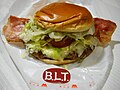
Being Japan's answer to McDonald's,[5] it is the second-largest fast-food franchise in Japan after McDonald's, and owns numerous overseas outlets over East Asia, Southeast Asia and Oceania, including China, Taiwan, Hong Kong, South Korea, Singapore, Thailand, Indonesia and the Philippines. "MOS Burger" is also the name of the standard hamburger offered by the restaurant, having been its first product when it opened in 1972.

MOS Burger's outlets are located in suburban areas to avoid the rising land costs in central areas where the outlets of its competitor McDonald's are located.[8] According to its then-president Kazuo Watanabe, MOS Burger is successful in its home country because it only cooks food when ordered, compared to its competitors which mass produce food items.[5] It also avoids heavy advertising in the mass media; in 1992, its advertising expenses for its home market were US$10 million, compared to McDonald's' US$100 million.[5]

Its working culture emphasises on the company's three attitudes of mind: self-resiliant, progressive and sympathetic towards others. Its managerial staff are trained for three months after being hired and are regularly sent for more training in Japan.[9]

As of February 2014 the publicly traded company runs 1,730 MOS Burger and several AEN, Chef's V and Green Grill stores. One slogan used within its stores is "Japanese Fine Burger and Coffee".[2]

Name

[edit]
A MOS Burger restaurant in Ichinomiya, Japan, 2023

The company name, styled in all caps: MOS Burger, is a backronym for "Mountain, Ocean, Sun".[5][10] Despite the backronym being coined by its founder Satoshi Sakurada, no one was able to explain whether mountains, oceans or suns have to do with burgers.[10] The company was originally was a spinoff of Atsushi Sakurada's previous company, Merchandising Organizing System.[11] Later,[when?] the company began to use playful English phrases in point-of-purchase marketing materials to explain the name, including "MOSt delicious burger", before it finally settled on the current backronym.

MOS Burger's logo as of 1992 was a yellow M with signage in red, similar to McDonald's.[5]

History

[edit]

Sakurada, then attached with Nikko Securities' Los Angeles branch in the early 1960s,[10] frequented the Los Angeles chili burger chain Original Tommy's.[better source needed][12] Wanting to strike out on his own after returning to Japan he decided to adapt the cook-to-order hamburger concept used by Original Tommy's. He also developed the MOS rice burger as an alternative to the hamburger.

As of 1992, MOS Burger had 1,100 outlets in Japan (1,021 in 1991[8] and 1,200 in 1993),[13] being the country's largest chain. It expects to open 100 more outlets in that year.[5]

Its most popular items were teriyaki burger and rice burger[8][5] with grilled rice cakes as its patty.[5]

International operations

[edit]

MOS Burger began its international expansion in 1989 [5] with Taiwan, where its sukiyaki rice burger was popular with its customers. In 1991, its outlets reach a monthly sales target of between ¥ 5 million and ¥ 10 million.[8]

As of 1992 it had five outlets in Hawaii, four in Taiwan and three noodle houses in the Los Angeles area.[5] Sales of its international outlets reach an estimate of US$3 million.[5] MOS Burger planned to open 500 more outlets in Asia, with 30 in Hong Kong, 250 in South Korea and the rest in Singapore and Taiwan.[5]

In 1992, MOS Burger expanded to Singapore through joint venture Moriyoshi Foods, with its franchisee Palate (S) Pte Ltd. Palate owned 70% of the joint venture while MOS takes the rest of the stake. It plans to open five outlets in 1993 with the first one in Orchard Road open in April.[5] The first outlet opened on 28 May 1993 at Isetan Scotts, with sales for its first year of operation expected to reach S$1.7 million. Palate later planned to open 7 more outlets in two to three years, totalling 30 in ten years. Its second outlet at Junction 8 opened in 1994.[14]

In 1993, MOS Burger planned to expand to China. A joint venture with Yaohan International and a Chinese firm, it planned to open 3,000 outlets by the end of the year.[15]

As of 1996, MOS Burger had five outlets in Singapore, with plans to expand to Hong Kong, Malaysia and Indonesia.[16]

In April 2011, MOS Burger opened its first store at Sunnybank Plaza, in Brisbane, Queensland, Australia. As at September 2021, the company had five stores in Australia, all of which were in Queensland.[17] MOS Burger announced the closure of all its Australian stores in August 2024.[18]

MOS Burger opened in the Philippines in February 2020.[19]

Products

[edit]

MOS Rice Burger

[edit]

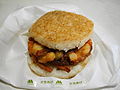
The MOS Rice Burger uses a bun made of rice mixed with barley and millet.[20][21] Rice was first used as a bun in 1987,[22] when the restaurant served the Tsukune Rice Burger, filled with ground chicken[23] and daikon, and seasoned with soy sauce.

The MOS Rice Burger has been imitated by the Taiwanese division of McDonald's,[24] where the rice bun was pan-seared, but it remains a MOS-exclusive item in Japan and other markets.

See also

[edit]

References

[edit]

Further reading

[edit]
[edit]
Revisions and contributorsEdit on WikipediaRead on Wikipedia
from Grokipedia
MOS Burger is a Japanese fast-food restaurant chain specializing in hamburgers adapted to local tastes, founded in 1972 by Satoshi Sakurada as a test store in Narimasu, , under MOS FOOD SERVICES, INC. The chain gained prominence with the introduction of the Burger in 1973, which became a major hit, and innovated further in 1987 with the MOS Rice Burger, featuring compressed rice patties in place of traditional buns to appeal to Japanese preferences for rice-based meals. This signature product, along with items like the Chicken Burger and various fresh vegetable toppings, distinguishes MOS Burger from Western-style competitors by emphasizing safe, healthy, and delicious food prepared with cordial service. By 1986, MOS Burger had expanded to become the first food service company with stores in all 47 Japanese prefectures, reaching 500 locations that year alone, and listing on the in 1988. As of October 31, 2025, the chain operates 1,337 stores in and 412 outlets internationally in countries including (298 stores), (42), (31), (23), (13), and the (5), totaling 1,749 locations across . MOS Burger's growth reflects its commitment to "making people happy through food," starting from Sakurada’s inspiration during his time in in the , where he encountered American hamburgers, leading him to create a homegrown Japanese alternative upon returning. The brand continues to prioritize made-to-order preparation, fresh ingredients, and menu innovations, such as limited-time collaborations, while maintaining a focus on and customer dialogue through initiatives like meetings.

Name and origins

Etymology

The name "MOS Burger" originates from a coined by its founder, Satoshi Sakurada, representing "Mountain, Ocean, Sun," symbolizing harmony with nature and an unlimited love for humanity. This interpretation reflects Sakurada's philosophy of creating a that embodies respect for the environment and sincerity toward , as expressed in the company's core values. Prior to this , "MOS" may have derived from "Merchandising Organizing System," the name of Sakurada's earlier venture focused on systematic strategies, which served as a precursor to the fast-food chain established in 1972. The brand name is stylized in all capital letters, "MOS," to create a distinctive, memorable identity that sets it apart from typical Western fast-food chains and emphasizes its Japanese origins.

Founding

MOS Burger was founded by Satoshi Sakurada, who drew inspiration from American hamburgers following entry into the Japanese market in 1971. Sakurada, previously a securities salesman at Nikko Securities, had encountered hamburgers during his time working in the United States, particularly influenced by the style at in . Motivated to bring a localized version to , he left his job to establish MOS Food Services, Inc., aiming to create a fast-food concept that resonated with domestic consumers. On March 12, 1972, Sakurada opened a store in , marking the inception of the chain. This modest establishment occupied a small 9.8 space, formerly a wholesaler's , and featured only five seats, emphasizing a compact, experimental setup to test the viability of the business in . The operation laid the groundwork for the official first store, MOS Burger Narimasu, which opened in June of the same year at the same location. From the outset, the focus was on adapting Western fast-food elements to Japanese preferences, prioritizing fresh ingredients and made-to-order preparation to ensure quality and appeal to local tastes accustomed to higher-end, customized dining experiences. This approach contrasted with more standardized international chains, incorporating elements like careful ingredient sourcing and immediate cooking to foster a sense of premium accessibility in everyday .

History

Early years in Japan

Following the opening of its inaugural company-owned store in in 1972, MOS Burger launched its first franchise location in November 1973 in Aratama, City, marking the beginning of its franchised expansion in . This move aligned with founder Sakurada's vision to introduce American-style hamburgers adapted for the Japanese market, prioritizing quality and local preferences over rapid assembly-line service. In May 1973, ahead of the first franchise opening, MOS Burger introduced the Burger, which quickly became a major hit by fusing traditional Japanese teriyaki sauce with a beef patty, , and on a bun. This innovation addressed early challenges in adapting Western to Japanese tastes, as consumers initially resisted the greasiness and speed-focused model of imported chains; instead, MOS emphasized fresh, made-to-order preparation using high-quality ingredients like crisp and savory sauces to appeal to diners seeking familiar flavors. The Burger's success helped drive initial growth, with the chain reaching its 50th store in Koza, Okinawa, by October 1976 and the 100th store in Shodoshima, , by January 1979. Building on this momentum, MOS Burger continued innovating in the to further localize its menu. In December 1987, it introduced the , featuring compressed rice patties mixed with barley and millet as "buns," filled with ground chicken meatballs () seasoned with and accompanied by radish. This product responded to ongoing adaptation efforts by incorporating —a staple of —as a gluten-free alternative to traditional buns, while maintaining the chain's commitment to fresh, customizable items prepared on demand rather than pre-cooked for speed.

Domestic expansion

Following the success of its early Teriyaki Burger, which became a staple in the Japanese market, MOS Burger accelerated its domestic expansion in the 1990s through aggressive franchising and store openings across urban and regional areas. By 1998, the chain reached a significant milestone with the opening of its 1,500th store in Japan, located in Eniwa, Hokkaido, reflecting robust growth amid increasing consumer demand for localized fast food. This expansion solidified MOS Burger's presence nationwide, positioning it as a key player in Japan's competitive burger sector. In the early 2000s, MOS Burger continued to innovate to sustain momentum, introducing popular menu items tailored to Japanese tastes, such as the Croquette Burger and the in 2000. These offerings emphasized fresh, regional ingredients like potatoes and shrimp, appealing to customers seeking alternatives to standard Western-style burgers and helping drive further store growth during a period of market saturation. To adapt to evolving consumer trends, MOS Burger implemented modern conveniences and updates throughout the . In 2012, the chain rolled out the prepaid e-money "MOS CARD" across all Japanese stores, facilitating easier transactions and loyalty programs amid the rise of cashless payments. Periodic renewals focused on seasonal and health-conscious options, maintaining in a dynamic fast-food . As of October 31, 2025, MOS Burger operates 1,337 stores in , establishing it as the second-largest domestic fast-food chain after . The company's strategies emphasize localization, incorporating Japanese ingredients, rice-based buns, and culturally attuned flavors to differentiate from global competitors and foster customer loyalty in a mature market. This approach has enabled sustained operations despite demographic challenges like .

International development

MOS Burger's international expansion began with its entry into in February 1991, when the first store opened at Xin Sheng South Road in . This marked the chain's initial foray outside , driven by a with TECO Electric and Machinery established in 1990 to facilitate localization and growth. By adapting its menu to include rice burgers, which became particularly popular in the region, MOS Burger quickly established a foothold, growing to 298 stores in by October 2025. Subsequent expansions targeted other Asian markets, with the first Singapore outlet opening at Isetan Scotts in 1993, followed by in October 2006 at the APM shopping complex in , in 2007 at Central World in , in December 2008 at Plaza Senayan in , in February 2012 at Jamsil Lotte in , and the in February 2020 at Robinsons Galleria in . These entries relied heavily on franchise partnerships and s to navigate local regulations and consumer preferences, such as incorporating regional flavors into signature items like and burgers. The chain's push into Oceania included Australia, where the first store debuted in April 2011 at Sunnybank Plaza in , , aiming to capitalize on demand for Japanese-style . However, operational challenges, including high labor costs and competitive pressures, led to the closure of all three Australian outlets by August 31, 2024. Despite this setback, MOS Burger maintained momentum in through menu adaptations tailored to local tastes, such as emphasizing rice-based burgers in markets like , where they align with staple dietary preferences. Franchise models enabled scalable growth, with partners handling day-to-day operations while adhering to MOS Food Services' quality standards. As of October 31, 2025, MOS Burger operated over 400 international stores, predominantly in , including 31 in , 42 in , 23 in , 13 in , and 5 in the , alongside its substantial presence in . This network reflects a strategic focus on high-density urban areas and shopping malls to maximize foot traffic, with ongoing adaptations like seasonal promotions featuring local ingredients to sustain relevance amid regional competition.

Products and menu

Signature burgers

MOS Burger's signature burgers are traditional bun-based offerings that incorporate Japanese flavors, featuring high-quality patties grilled to order for optimal juiciness and texture. These burgers emphasize fresh, crisp vegetables like and , paired with proprietary sauces inspired by , distinguishing them from Western-style . The standard MOS Burger consists of a 100% topped with , slices, and the chain's original sauce—a blend of and for a savory profile—served on a soft , priced at ¥470. This foundational item highlights the brand's commitment to made-to-order preparation using domestically sourced ingredients. A long-standing bestseller is the Burger, introduced in 1973 as one of the chain's earliest innovations and a major hit that helped establish its popularity. It features a grilled beef patty glazed with sweet-savory sauce, accompanied by and on a bun, priced at ¥460. Variations expand on these classics, including the , which adds melted cheese to the standard patty for a richer flavor while retaining the fresh and original . The Spicy MOS Burger incorporates jalapeños and a spiced into the base for added , appealing to those seeking bolder tastes. Premium options like the Tobikiri series use 100% Japanese beef patties—often featuring high-grade domestic cuts akin to for superior marbling and flavor—such as the New Tobikiri Cheese Burger with Hokkaido-produced Gouda and Cheddar cheeses, priced at ¥690. Double-patty versions of these, like the Double Tobikiri Cheese, provide enhanced portion sizes for heartier meals, typically around ¥980. All are prepared fresh with emphasis on vegetable quality and techniques to lock in juices.

Rice burgers

MOS Burger pioneered the rice burger in 1987 with the introduction of the , which featured buns made from compressed mixed with and millet to create a firm, grilled patty alternative to traditional buns. The original variant consisted of ground chicken mixed with radish, seasoned with for a savory profile that highlighted Japanese flavors. Among key variants, the MOS Rice Burger incorporates elements like for depth and soy sauce-seasoned patties, offering a simple yet iconic option. The Rice Burger features crispy atop the rice buns, priced at ¥460 and emphasizing fresh marine ingredients. The Rice Burger, meanwhile, pairs grilled beef with a mildly spicy between the patties, appealing to those seeking bolder, meat-forward tastes. This concept embodies a cultural fusion, blending Japan's staple traditions—reminiscent of onigiri—with the handheld convenience of Western , and it has become particularly popular throughout for its innovative adaptation of local dietary norms. Nutritionally, rice burgers typically provide higher content, such as around 52 grams per serving in variants, due to the rice base, while offering gluten-free alternatives suitable for those with wheat sensitivities. Early rice burger developments also drew brief influences from seasoning to enhance the grilled rice's flavor profile.

Sides, drinks, and variations

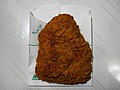
MOS Burger offers a range of side dishes that complement its main menu items, including available in small and large sizes, priced at ¥250 and ¥330 respectively. Salads, such as the Green Salad and Salad Set with Flaxseed at ¥450, provide lighter options using fresh vegetables. The Croquette, introduced as a side like the Croquette Pie made from premium potatoes, tender carrots, and corn, emphasizes regional ingredients for a crispy, flavorful bite. The Croquette Burger, featuring a potato-based , was first introduced in 2000 as part of the chain's expansion into diverse patty options. Beverages at MOS Burger include a variety of soft drinks like Pepsi Cola, , and Melon Soda, alongside teas such as and (Lemon or ) priced around ¥200 to ¥280. Milkshakes, known as MOS Shake in flavor, are available in medium size as set add-ons for an extra ¥70. The morning menu, available until 10:30 a.m., features items like the , a simple sausage bun option that can be paired with set drinks including hot blended or iced options. Variations extend to dietary adaptations, with vegetarian soy-based burgers like the Soy MOS Burger utilizing plant-derived patties made from soybeans, suitable for those avoiding animal products. Seafood options include the Shrimp Cutlet Burger, priced at approximately ¥480 to ¥500, featuring a crispy with . Limited-time items, such as the Ebi Ebi Fry Burger (launched in May 2025 and available until mid-July 2025), offered premium -focused experiences with double fried prawn elements and upscale sauces. Allergen and low-calorie options are addressed through detailed nutritional information, including soy variants like the Teriyaki Burger with reduced-calorie to accommodate sensitivities and health-conscious choices.

Operations and business model

Store network and franchising

MOS Burger operates a network of 1,337 stores in as of October 31, 2025, supplemented by 412 international locations across six countries: with 298 stores, with 31, [Hong Kong](/page/Hong Kong) with 42, with 23, with 13, and the with 5. The chain's global footprint reflects a focus on , following the closure of all Australian operations in 2024. The company introduced its model early in its development, with the first franchise store opening in Aratama, , in 1973. Under this system, MOS Burger grants exclusive territorial rights to operate stores to a single corporate entity, enabling controlled expansion while maintaining brand consistency. Franchise selection is rigorous, prioritizing partners who align with the company's of service, fresh ingredients, and ; selected franchisees undergo comprehensive training to ensure adherence to operational standards. Stores are predominantly situated in urban settings to serve high foot traffic, with variations including drive-thru facilities for convenience and specialized outlets in transportation hubs like . Typical locations provide indoor seating to accommodate dine-in customers, fostering a relaxed fast-casual environment distinct from traditional quick-service formats.

Supply chain and quality standards

MOS Burger maintains a robust centered on domestic Japanese sourcing to ensure ingredient quality and freshness. The company sources its vegetables exclusively from within , utilizing a network of over 3,000 farmers across 112 producing regions and seven company-owned MOS Farms, which deliver fresh produce daily to stores. This approach prioritizes seasonal, locally grown items such as lettuce and tomatoes, minimizing transportation times and supporting regional . For premium proteins, MOS Burger partners with Japanese suppliers to procure beef, renowned for its marbling and flavor, used in signature and limited-edition burgers. Similarly, select menu items incorporate Hokkaido-sourced potatoes, valued for their high quality and clean growing conditions, as seen in croquette burgers featuring premium varieties blended with other vegetables. A core element of the company's operations is its made-to-order policy, which ensures all items, including burgers and , are prepared fresh upon request. Patties are never pre-cooked, allowing for hot service and customizable cooking levels while preserving juiciness and texture. This practice extends to variants, where elements like are handled to maintain integrity. Hygiene protocols have been strengthened post-COVID-19, incorporating Hazard Analysis and Critical Control Points (HACCP) principles alongside MOS Food Safety Standards, which include regular staff training, surface disinfection, and installation of alcohol dispensers and barriers in stores. These measures emphasize from sourcing to service, reducing contamination risks. Quality standards are upheld through rigorous certifications and management protocols. The MOS Food Safety Standards guide procurement and preparation, ensuring compliance with Japanese regulations and international best practices for freshness and safety. For control, the company offers low- menu options, clearly labeling items and training staff on cross-contamination prevention, particularly for rice burgers containing . Sustainable sourcing is integrated into the , with an emphasis on responsibly managed resources; for instance, used in rice burgers is selected from suppliers adhering to eco-friendly practices to support long-term marine health. These commitments reflect MOS Burger's dedication to delivering reliable, high-quality products.

Sustainability initiatives

MOS Burger has pursued eco-friendly practices aimed at minimizing environmental impact, with a strong emphasis on reduction and the promotion of reusable items since the early . In December 2020, the company transitioned to straws composed of 30% material, while shortening their length by 10mm to curb usage. By 2023, take-out containers for cold drinks were fully switched to paper alternatives, and was replaced with RiceResin® , incorporating 25% non-edible rice sourced from Mos Farm to meet the annual needs of all stores. To encourage reusables, MOS Burger introduced a rewards program for customers using personal mugs during dine-in meals, aligning with broader efforts to foster sustainable consumer habits. All domestic stores have held Eco Mark certification for restaurants since 2017, recognizing compliance across six environmental evaluation categories. As part of its (CSR) activities, MOS Burger supports local agriculture and fosters community partnerships, particularly across . The company operates multiple MOS Farms, including the establishment of Mos Farm in 2020 to promote stable vegetable supply and young farmer development, and sources fresh produce from 117 production regions nationwide through GAP-certified inspections covering approximately 200 items. In 2023, it hosted nine "MOS Farm Fresh Vegetables Festivals" across eight prefectures to highlight local sourcing. As of 2023, with over 450 stores in including 303 in , MOS Burger conducted community initiatives such as clean-up events on "MOS Day" (March 12) through its Kyoei-Kai franchise network, with 95 activities implemented that year. These efforts earned recognition, including the 6th Sustainability Reporting Award in 2021 for outstanding . MOS Burger has set ambitious goals for carbon neutrality, targeting a 46% reduction in Scope 1 and 2 by fiscal 2030 compared to 2013 levels, with 35.7% progress achieved by 2023. The company endorses the Task Force on Climate-related Financial Disclosures and aims for full carbon neutrality by 2050, while committing to 100% eco-friendly disposable products by 2030—reaching 83.1% adoption in 2023. To support these objectives, initiatives like using low-emission lettuce (over 5% reduction) in stores since September 2023 contribute to lower footprints. In response to global challenges like the , MOS Burger adapted operations to ensure business continuity and employee welfare. The company expanded delivery services, partnering with to cover 437 stores across 29 prefectures by March 2021, which sustained order volumes above pre-pandemic levels with online sales rising from 7.0% to 8.5% since 2021. For employee support, it trialed the OriHime remote-controlled robot in 2020 at select stores to enable work for individuals affected by , disabilities, or childcare needs, while implementing infection prevention measures such as plexiglass partitions and alcohol dispensers. Franchisee assistance prevented closures, and welfare enhancements included an 8% wage increase in 2023 alongside a 100% childcare leave return rate.

Corporate profile

Ownership and leadership

MOS Food Services, Inc. serves as the parent company for the MOS Burger chain, headquartered at ThinkPark Tower in Shinagawa-ku, , . The company has been publicly traded on the since 1988 (initially on the Second Section) and on the Prime Market since April 2022, operating under stock code 8153. As a publicly listed entity, its shares are widely held, with no single shareholder dominating control, reflecting a stable governance structure free of major controversies. Ownership is primarily dispersed among institutional investors, financial institutions, and individual shareholders, with total issued shares standing at 32,009,910 as of March 31, 2024. Key institutional holders include The Master Trust Bank of Japan, Ltd. (9.07%) and Custody Bank of Japan, Ltd. (2.94%), alongside corporate entities such as Kohbai Foods Inc. (4.48%) and Duskin Co., Ltd. (4.21%). Overall shareholder composition features individuals and others at 53.16%, financial institutions at 16.04%, and other companies at 20.44%, underscoring broad public ownership with significant institutional participation. Leadership at MOS Food Services is headed by President and Representative Director Eisuke Nakamura, who assumed the role in June 2016 and continues to guide the company's strategic direction as of 2025. The board comprises nine directors, including three outside directors—Isamu Nakayama, Kana Odawara, and Kundo Koyama—to ensure independent oversight, supported by a four-member & with two outside members. This structure emphasizes swift decision-making through delegated authority and monthly board meetings, while integrating into . The company's governance philosophy draws from the legacy of founder Satoshi Sakurada, established in 1972, with principles like honesty and societal betterment influencing ongoing operations under familial ties, such as former Chairman Atsushi Sakurada.

Financial overview

MOS Food Services, Inc., the parent of MOS Burger, reported consolidated revenue of 96,185 million for the fiscal year ending March 31, 2025, marking a 3.36% increase from the previous year. This growth reflects steady demand in the domestic market, where MOS Burger operates the majority of its outlets. The 's market stood at approximately $779 million as of June 2025, with its stock price closing at $25.26 on the during that period. Employee numbers at MOS Food Services have shown growth over the decade, rising from levels around 1,375 in 2016 to 3,902 consolidated employees by 2025, underscoring the company's expansion amid increasing operational scale. This workforce expansion supports a store network of over 1,300 locations primarily in . Key financial trends include a robust post-pandemic recovery, with net sales for the six months ending September 30, 2025, rising 6.7% year-over-year, driven by renewed and adaptation to hybrid dining models. However, international operations faced setbacks, such as the closure of all MOS Burger outlets in by August 31, 2024, due to challenging market conditions, which contributed to minor revenue pressures from overseas segments. Profitability is bolstered by the franchise model, which generates steady fees from domestic partners—accounting for a significant portion of operating —and ongoing menu innovations, such as seasonal variants that enhance customer appeal and drive repeat visits. These factors helped achieve a of 3,150 million yen for 2025.

References

Add your contribution
Related Hubs
User Avatar
No comments yet.