



Community hub
Recent from talks
Contribute something
Nothing was collected or created yet.
Mad Money
View on Wikipedia
| Mad Money | |
|---|---|
 Original logo | |
| Genre | Talk show Finance Investment |
| Presented by | Jim Cramer |
| Country of origin | United States |
| Original language | English |
| Production | |
| Executive producer | Regina Gilgan |
| Production locations | CNBC headquarters, Englewood Cliffs, New Jersey (2005–2022) New York Stock Exchange Building (2022–present) |
| Running time | 60 minutes |
| Original release | |
| Network | CNBC |
| Release | March 14, 2005 – present |
Mad Money is an American finance television program hosted by Jim Cramer that began airing on CNBC on March 14, 2005. Its main focus is investment and speculation, particularly in public company stocks. Mad Money replaced Bullseye, a news and finance program, taking its 6 p.m. Eastern Time slot.
Mad Money was originally taped at CNBC's headquarters in Englewood Cliffs, New Jersey. A new studio set debuted in 2022, at the New York Stock Exchange Building. Since 2006, Mad Money has also conducted "Back to School" events, in which the show travels to universities across the United States. Special broadcasts, including the "Back to School" episodes, typically feature a live audience.
Program features
[edit]Mad Money host Jim Cramer, a former hedge fund manager, provides the viewer with tips and recommendations regarding the stock market and investing.[1][2][3] He researches a number of stocks each week and discusses them on the program.[4] Cramer does not own the stocks recommended on the show,[5] and he urges the viewer to do their own research regarding his advice.[6][5][7] A lengthy disclaimer also appears early on in the program.[8] Other onscreen information includes stock charts and facts.[9] Guest interviews with executives are a common feature of the show.[8]
Cramer defines "mad money" as the money one "can use to invest in stocks ... not retirement money, which you want in 401K or an Individual retirement account, a savings account, bonds, or the most conservative of dividend-paying stocks."[10]
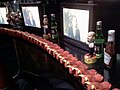
Cramer frequently says on the show, "Other people want to make friends . . . I just want to make you money. My job is not just to entertain you but to educate you."[11][12][13] To make Mad Money entertaining, Cramer used numerous gimmicks in the early years of the show,[14] including costumes and props.[15][16] Examples of the latter included an oil painting and bobblehead figures both of himself,[16][17] as well as miniature figurines of bulls and bears, a reference to the stock market terms "bull market" and "bear market". Cramer would sometimes throw the figurines at the camera or torture them in various ways, such as cooking them,[14][15][17] and he occasionally decapitated his bobbleheads in frustration.[4]
Cramer has a panel of oversized red buttons, which activate various sound effects and onscreen graphics,[18][19][20][21] including those related to bulls and bears.[1] The soundboard originated in the radio show Jim Cramer's Real Money, which preceded Mad Money.[22] The show also features heavy metal music at times.[23][24]


In a 2006 episode, Cramer had a monkey named Ka-ching make an appearance on the show. Ka-ching wore a CNBC T-shirt, sat in Cramer's chair, pressed the sound-effect buttons, and threw the bull figurines around the set.[17] By 2008, Cramer had added a new prop in the form of an Uncle Ben's rice box, but with an image of Ben Bernanke, who was serving as Chair of the Federal Reserve at the time; Cramer was a critic of Bernanke, believing that he contributed to the 2008 financial crisis.[16]
Forbes, in 2005, wrote that Mad Money "amounts to Cramer being Cramer--as raw and uncensored as ever. He feverishly bounces around the studio, rants at the camera and bangs on buttons blaring the sound effects of cash registers and bowling pins, growling bears and raging bulls."[8] Cramer himself wrote of the show in 2007: "I say stupid things, yell 'Booyah' with alarming frequency, and occasionally wear a diaper or jump into a pile of lettuce to illustrate the finer points of investing."[5]
- Various Mad Money props
-

-
-


Segments
[edit]Mad Money has featured various segments,[25] the most prominent one being the Lightning Round, which occurs near the end of the program. During this segment, viewers call in to the show and ask Cramer about whether to buy or sell a particular stock.[4][26] Cramer keeps track of more than 1,000 stocks, and this knowledge is used during the Lightning Round as he offers instant and brief assessments to each caller.[27][4] These quick assessments are based on Cramer's prior knowledge of the stock, rather than new research.[4][7] The Lightning Round is played until a buzzer sounds off.[28]
Cramer hates chairs,[15] believing that they encourage laziness. He did not have a chair at his hedge fund, and he generally avoids using one on Mad Money,[23][29] saying, "I believe that you should be standing at all times – standing over people, watching things, moving, staying in motion. I never like to be tethered."[23] During the first two years of the show, Cramer would start off the Lightning Round by throwing an office chair against the wall of his studio set,[5][29][30] damaging the wall on several occasions.[27] Around late 2006,[29] Cramer stopped throwing chairs in order to make time for more calls, and to stop straining his back.[5]
On February 25, 2008, Cramer introduced an online-only version dubbed Lightning Round Overtime, viewable on the program's website. This feature had additional stock picks that were not seen on the television broadcast.[31] Lightning Round Overtime was eliminated in July 2011.
Other segments have included:
- Am I Diversified?: A weekly segment in which Cramer reviews five stocks in each caller's portfolio and suggests how they might consider enhancing their diversification.[25][32]
- Sell Block: Another weekly segment in which Cramer informs the viewer of which stocks to sell.[25]
- Mad Mail: Cramer answers viewer emails.[25]
- Market Game Plan: A weekly segment that airs on Fridays where Cramer goes over the most important market events that impacts the following trading week.[33]
Catchphrases
[edit]Various catchphrases are used on Mad Money, including "Booyah", said by Cramer and his callers as a form of greeting.[18][14] It was previously used on Cramer's radio show, and the term's popularity led to it becoming part of Mad Money. Cramer later said "I had felt that we had left it behind when we had moved to TV. But there were too many people who listened to the radio show, it was a very popular radio show, that it became part of the TV show."[34] He explained the term's origin in 2005: "Here's what happened: A guy calls me on my radio show, and he says 'You made me a 100 smackers on K-Mart – a hundred points...' – he's from New Orleans – '...and we have one word for that down here and it's booyah. Then the next guy calls and he says 'you know you made me a lot of money on [a stock] so: booyah!' And now they all say it. It's not my rap".[35]
Cramer begins the program by introducing himself: "Hey, I'm Cramer!"[36] A common catchphrase, used by Cramer to start the Lightning Round, is "Are you ready, skee-daddy?" Another common saying is: "Bulls make money. Bears make money. Hogs get slaughtered."[37] The term "Cramerica" has also been used on Mad Money,[38] with fans of the show referred to as "Cramericans".[39][40][41] Cramer ends the program by stating, "There's always a bull market somewhere".[42][43]
Production
[edit]Cramer had previously co-hosted the CNBC program Kudlow & Cramer (2002–2005) alongside Larry Kudlow. Cramer said, "It was a traditional sort of financial-news and stock-picking show, and it did all right."[5] Mad Money was conceived by Susan Krakower,[27][44] who served as CNBC's interim head of prime-time programming. She liked Cramer's enthusiasm and thought he was ill-fitted for the calm, professional format used in Kudlow & Cramer. Upon learning that he also had a syndicated radio show, she sent a film crew to capture footage of the program. After viewing it, she became convinced that Cramer had potential for his own television program, saying "he had to be put in the right environment and he had to be opened up."[14] Krakower contacted Cramer and pitched her idea, but did not hear back from him after that, prompting her to track him down. Cramer is a sports fan, and according to Krakower, "I finally told him I want to create the 'SportsCenter' of financial shows. That got him going."[45]
Cramer himself, speaking of Kudlow & Cramer, later acknowledged that he wanted to move on and do "a different kind of show—one that still gave me a way to point people to great stocks but also allowed me to express my innate insanity, in all its glory, to everyone who might be interested."[5] The idea for Mad Money was pitched to NBC Entertainment president Jeff Zucker,[46] who, according to Cramer, greenlit the project despite "the objections of just about everyone at CNBC".[5] Cramer left Kudlow & Cramer in January 2005 to develop the program that would become Mad Money.[14][47] It premiered on March 14, 2005,[1][28] replacing Bullseye, a news and finance program.[48] Early in the show's run, Cramer would become exhausted while taping and would also wear out his voice, prompting him to begin a physical fitness routine and to take voice lessons.[45]

Cramer is the show's editorial director, deciding which stocks to discuss. Regina Gilgan, who has been with Mad Money since its premiere, had become the executive producer by 2007,[49] replacing Krakower.[50] Another major crew member since the show's first year is head writer Cliff Mason,[51][52] who is Cramer's nephew.[53][54] Cramer said in 2007 that "some of the show's best moments come out of the two of us competing to produce more and more surreal, ridiculous one-liners."[5] Cramer devises "the ideas and the serious content", then writes an early draft "with as much smart and funny stuff" as he can in his spare time. He and Mason then exchange drafts before settling on a final version,[5] which is written after the stock market closes at 4:00 p.m. Eastern Time.[27]
Taping of the show occurs from 4:30 to 5:30, for broadcasting from 6:00 to 7:00.[8][5] The program is shot with a Steadicam,[55][56] and was broadcast for the first time in 1080i HD on August 4, 2014.[57] The show's heavy metal score was composed by Willie Wilcox.[58] Krakower said that the Lightning Round "from the music to the lights to the camera angles is straight out of WWE."[45]
Mad Money was originally taped at CNBC's headquarters in Englewood Cliffs, New Jersey.[27] The show's studio set remained the same until April 23, 2013, when a redesign of the original was unveiled.[59][57] Plans to build a completely new set at the New York Stock Exchange Building were conceived in December 2021, with construction beginning four months later. The new set debuted on July 18, 2022.[56][60][61]
Special broadcasts
[edit]Mad Money has featured special broadcasts, typically with live audiences. These include the "Main Event" series (2005–06) and "Back to School" events (since 2006).
"Main Event" series
[edit]The first Mad Money "Main Event" was broadcast on July 20, 2005. The featured guest on the show was New York attorney general Eliot Spitzer, a classmate of Cramer at Harvard Law School. During the "Main Event", Cramer introduced a new segment titled "Am I Nuts?" in which he wore a doctor coat and spoke to audience members about the health of their stock portfolio.[62]
"Main Event II" premiered on October 26, 2005, with a 100-person audience and businessman Donald Trump as a special guest.[63][64][65] "Main Event III" was broadcast on November 30, 2005, and featured Mel Karmazin, CEO of Sirius Satellite Radio.[66] "Main Event IV" premiered on January 11, 2006, with guest Les Moonves, CEO of CBS. The fifth and final "Main Event" was broadcast on July 12, 2006, with Zucker as the featured guest.
"Back to School" events
[edit]Early on, Mad Money became especially popular among college students.[5][67] On February 1, 2006, the show launched a "Back to School" tour, traveling to universities across the United States. The first episode was broadcast from Harvard University, Cramer's alma mater, and again featured Spitzer as a guest.[68][69][70]
Subsequent "Back to School" tours and events were held in 2007,[71][72] 2008,[73][74] 2009,[75][76] 2010,[77][78] 2013,[79][80] and 2023.[81][82] Like regular episodes, guest executives are also commonly featured during "Back to School" broadcasts.[72][76]
-
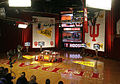 "Back to School" tour at Indiana University, 2007
 -
 A "Back to School" event at Tulane University, 2010
 -
 Cramer at Tulane
 -
 Cramer and an audience member at Tulane

.jpg)
.jpg)
.jpg)
Other notable episodes
[edit]Mad Money aired its first-anniversary episode on March 14, 2006, with a mix of stock questions and clips from previous episodes.[83] Other anniversary episodes have followed since then.[49][84] The third anniversary special included a live audience,[85][86] as did the fifth anniversary, the latter broadcast from Studio 8H in New York City.[87] "MMX", a special episode to celebrate the 10th anniversary, was taped from the show's studio set in front of a live audience and aired on March 12, 2015.[88][89] A 20th anniversary special aired on April 29, 2025.[90]
Special episodes have also been broadcast to commemorate other milestones. The 500th episode of Mad Money aired on June 11, 2007, and featured memorable clips from throughout the show, as well as viewer call-ins and stock questions.[91][92] The 1,000th episode aired on April 8, 2009, and the Mad Money staff surprised Cramer by having several unexpected guests join the show by phone, including Trump, Google chief executive Eric Schmidt, and football coach Andy Reid.[28][93] The 2,000th episode of Mad Money aired on October 1, 2013, and was taped outside the New York Stock Exchange Building in front of a live audience. Cramer was presented with a replica of his 1978 Ford Fairmont, which he lived in during financial hardship earlier in his life.[22][94]
Reception and impact
[edit]Mad Money quickly developed a loyal following after its premiere,[14][6] and brokerage firms began to include Cramer's stock advice in their research notes.[8] The term "Cramer Effect" was coined during the show's first year, in reference to a stock's price rising the day after being recommended on the show.[14][6] Journalist Michael Wolff, a friend of Cramer, said of his on-screen antics in 2006: "He's irresistible to watch. There's a kind of poetry when he talks about the market. And part of the fun is the possibility that you're watching a train wreck."[15] Bill Alpert of Barron's wrote of the Lightning Round, "It's dazzling -- a display of Cramer's freakish ability to remember something about thousands of stocks."[4]
Financial experts have been critical of Cramer's approach and advice on the show.[6][95][96] Joseph Nocera, a business columnist at The New York Times, opined in 2006 that the people who are watching Mad Money and following Cramer's advice are "fools", writing further, "It's great theater and it's great television, but it's not great investing."[19] Businessman Henry Blodget, writing for Slate in 2007, criticized Cramer for overstating his abilities as a market forecaster, noting that his suggested 2006 portfolio lost money "despite nearly every major equity market on earth being up between about 15% and 30%". However, Blodget wrote that Cramer's behavior on Mad Money made for "mesmerizing reality TV".[97] Based on a 2010 analysis of Cramer's advice, author Frank Partnoy wrote, "Mad Money is entertaining, but its recommendations won't make you rich."[17]
Ratings
[edit]CNBC's overall television ratings had fallen in the years before Mad Money debuted.[98][99] The show averaged 170,000 daily viewers during its premiere week.[100] By August 2005, Mad Money averaged 200,000 daily viewers and had become the second highest-rated program on CNBC, in what used to be its second lowest-rated time slot.[8] "Main Event II" earned a new record of 339,000 viewers.[65] By the end of 2005, Mad Money had 463,000 daily viewers.[6] In the midst of the Great Recession, ratings reached 427,000 average viewers in September 2008, nearly doubling its viewership from weeks earlier. This occurred shortly after the bankruptcy of Lehman Brothers, the federal bailout of American International Group, and the sale of Merrill Lynch.[55]
In popular culture
[edit]Mad Money has made appearances in several films and television shows. Examples of the latter include Arrested Development and 30 Rock.[101][102] Mad Money was licensed for a brief fictional segment in the 2008 film Iron Man. In the segment, shortly after the character Tony Stark declares Stark Industries will no longer manufacture weapons, Cramer is shown on Mad Money advising people in his trademark flair to sell off stock in the company.[103]
A comedy film, also titled Mad Money, was released in 2008, and includes an appearance from Cramer on his program. He also appeared alongside the stars of the film to ring the opening bell of the New York Stock Exchange, two days ahead of the film's release.[104][105]
In the animated television series South Park, Mad Money is spoofed as a podcast called Mad Friends in the 2010 episode "You Have 0 Friends".[106][107][108] Mad Money makes another appearance in the 2010 film Wall Street: Money Never Sleeps. Character Jacob Moore spreads rumors about the nationalization of an African oil field, Hydra Offshore, and Cramer advises his viewers to sell their stock.[101][109]
Mad Money is among topics covered in I Love the 2000s, a 2014 television compilation of highlights from the decade.[110]
Money Monster, a 2016 film, focuses on a flamboyant financial television host and his crew being taken hostage by an upset investor, who lost his life savings on a bad stock recommendation. The film received comparisons to Cramer and Mad Money, although director Jodie Foster and star George Clooney denied any connection.[101][111][112]
Since at least 2022,[113] Mad Money has occasionally been referenced on the comedy talk show Last Week Tonight with John Oliver.[114][115]
See also
[edit]- Fast Money, a CNBC financial investing program, hosted by Melissa Lee, which follows a similar format
- Jon Stewart–Jim Cramer conflict
- Squawk on the Street, a CNBC business news program that features Cramer's "Stop Trading!" segment
- TheStreet.com
References
[edit]- ^ a b c "The madman behind CNBC's 'Mad Money'". NBC News. Associated Press. July 5, 2005. Retrieved December 26, 2024.
- ^ "The 'Mad' Money Man". Newsweek. March 20, 2005. Retrieved December 26, 2024.
- ^ Maier, Thomas (March 26, 2006). "Booyah! Investment guru touts with clout". Newsday. Retrieved December 26, 2024.
- ^ a b c d e f Alpert, Bill (August 20, 2007). "Shorting Cramer". Barron's. pp. 1–2. Archived from the original on September 5, 2015.
- ^ a b c d e f g h i j k l Cramer, James J. (May 25, 2007). "Cramer vs. Cramer". New York Magazine. Retrieved December 25, 2024.
- ^ a b c d e "Investors tuning into Cramer's 'Mad' world". NBC News. March 3, 2006. Retrieved December 25, 2024.
- ^ a b Wilner, Richard (June 19, 2005). "Smart 'Money'? Cramer's Bark Worse Than Bite". New York Post. Retrieved December 26, 2024.
- ^ a b c d e f "Funny Money". Forbes. August 19, 2005. Retrieved December 25, 2024.
- ^ "Madness and method". The Berkshire Eagle. March 7, 2007. Retrieved December 27, 2024 – via Newspapers.com.
- ^ Cramer, James; Mason, Cliff (2006). Mad Money: Watch TV, Get Rich. New York: Simon & Schuster. p. 45. ISBN 978-1-4165-3790-8.
- ^ "Stocks With a Shtick". The Washington post. March 11, 2007. Retrieved December 25, 2024.
- ^ Guirales, Katherine (February 28, 2008). "First on CNBC: Jim Cramer, Host of "Mad Money w/Jim Cramer" Interviews Sen. Hillary Clinton, Democratic Candidate for President of the United States (Transcript Included)". CNBC.
- ^ Winant, Gabriel (March 11, 2009). "Why is Jim Cramer shouting at me?". Salon. Retrieved December 25, 2024.
- ^ a b c d e f g Gold, Matea (September 6, 2005). "Raging bull Jim Cramer fires up investors". Los Angeles Times. Retrieved December 25, 2024.
- ^ a b c d Feinberg, Andrew (October 2006). "Booyah! The manic universe of Jim Cramer". Kiplinger's Personal Finance. p. 3843. Retrieved December 25, 2024.
- ^ a b c Clark, Andrew (April 24, 2008). "Money madman who declares capitalism is crazy". The Guardian. Retrieved December 26, 2024.
- ^ a b c d Partnoy, Frank (June 26, 2012). Wait: The Art and Science of Delay. PublicAffairs. p. 174. ISBN 9781610390040.
- ^ a b Hill, Miriam (January 22, 2006). "TV Host Crazy, But Like A Fox?". The Ledger. Retrieved December 25, 2024.
- ^ a b Folkenflik, David (January 13, 2006). "'Mad Money': Stocks with a Shtick". NPR.
- ^ Franklin, Nancy (May 28, 2006). "All In the Game". The New Yorker. Retrieved December 26, 2024.
[...] he has a battery of props and a cacophonous symphony of sound effects: when he bangs on the buttons of a console during the show, we hear, among other evocative noises, barking dogs, a gong, a truck backing up, a few bars of 'The Stars and Stripes Forever,' a baby crying, a heart monitor beeping to indicate a flatlining patient, and machine-gun fire.
- ^ "Cramer's Soundboard". CNBC. March 13, 2017. Archived from the original on March 23, 2017.
- ^ a b "Go behind the scenes of "Mad Money" with CNBC's Jim Cramer during the 2024 Annual Meeting". CNBC. March 8, 2024. 9:00, 12:00. Retrieved December 27, 2024.
- ^ a b c Smith, Austin (April 21, 2005). "Wild Man of Wall St. – You Can't Flip Past the Angry Analyst". New York Post. Retrieved December 26, 2024.
- ^ Millstein, Seth (October 25, 2015). "Jim Cramer's Most Memorable Moments — Video". Bustle. Retrieved December 26, 2024.
- ^ a b c d "About Mad Money". CNBC. Archived from the original on August 8, 2011.
- ^ "There's method in his madness". Waco Tribune-Herald. June 12, 2005. Retrieved December 27, 2024 – via Newspapers.com.
- ^ a b c d e May, Jeff (October 9, 2005). "Jim Cramer profile: Who is this guy, and why is he yelling at me?". NJ.com. Retrieved December 25, 2024.
- ^ a b c Brennan, Tom (March 10, 2010). "Mad Money's 10 Most Memorable Moments". CNBC. Retrieved December 26, 2024.
- ^ a b c Mad Money. Simon and Schuster. 2012 [2006]. p. 190. ISBN 978-1-4165-3790-8. Retrieved December 26, 2024.
- ^ "In a staged stunt that he performs frequently [...]". Digital Public Library of America. 2005. Retrieved December 26, 2024.
- ^ "The Ticker: Velshi, Cramer, Africa..." Adweek. February 25, 2008. Retrieved December 26, 2024.
- ^ Nichols, Brian (2013). Taking Charge with Value Investing: How to Choose the Best Investments According to Price, Performance, & Valuation to Build a Winning Portfolio. McGraw Hill Professional. ISBN 978-0-07-180468-4. Retrieved December 27, 2024.
- ^ "Jim Cramer's game plan for the trading week of Dec. 13". CNBC. December 10, 2021. Retrieved April 8, 2025.
- ^ Zageris, Larissa (May 18, 2024). "The Story Behind Jim Cramer's Famous 'Booyah' Catchphrase". Money Digest. Retrieved December 25, 2024.
- ^ Late Night with Conan O'Brien (August 19, 2005).
- ^ "Mad Money". Instagram. March 14, 2024. Retrieved December 25, 2024.
- ^ Weiss, Vered (January 2, 2015). "Jim Cramer Says 'Don't Be a Stock Hog'". Jewish Business News. Retrieved December 25, 2024.
- ^ Raab, Scott (January 12, 2009). "Someday We'll All Look Back on This and Laugh..." Esquire. pp. 1–3. Archived from the original on January 14, 2009.
- ^ Johnson, Caitlin (February 14, 2007). "The Man Behind The Mad Money Madness". CBS News. Retrieved December 27, 2024.
- ^ Havrilesky, Heather (December 10, 2007). "Mad, mad, mad money". Salon. Retrieved December 27, 2024.
- ^ Rexrode, Christina (May 24, 2008). "Stock tips and quips at high speed". Charlotte Observer. Retrieved December 27, 2024.
- ^ Sandholm, Drew (June 2, 2011). "Cramer: There's Always a Bull Market Somewhere". CNBC. Retrieved December 27, 2024.
- ^ Thomas, Karen (June 23, 2022). "'There's always a bull market somewhere': Jim Cramer's famous words suggest you can make money no matter what". Yahoo. Retrieved December 27, 2024.
- ^ Lopez, Linette (May 24, 2016). "What the woman who created the real 'Money Monster' thinks about George Clooney's movie". Business Insider. Retrieved December 27, 2024.
- ^ a b c "Street Wise Guy (page 2)". Plain Dealer. February 19, 2006. Retrieved December 27, 2024 – via Newspapers.com. See here for page 1.
- ^ "Cramer Is 'Living A Lie,' 'Former Friend' Turned ABC Producer Says". Adweek. June 13, 2007. Retrieved December 26, 2024.
- ^ Furman, Phyllis (January 7, 2005). "Cramer Going Solo at CNBC". New York Daily News. Retrieved December 26, 2024.
- ^ Gough, Paul (March 28, 2006). "'Mad' man adds insight to CNBC money news". The Hollywood Reporter. Nielsen Company. Archived from the original on May 17, 2008. Retrieved March 11, 2007.
- ^ a b "'Mad' man is rich with insights". Tallahassee Democrat. March 8, 2007. Retrieved December 27, 2024 – via Newspapers.com.
- ^ "Mad Money Man Jim Cramer". CBS News. November 13, 2005. Archived from the original on November 24, 2005.
- ^ Mason, Cliff (June 13, 2008). "Freedom from the Known". CNBC. Retrieved April 27, 2025.
- ^ "Jim Cramer reflects on 20 years of 'Mad Money'". CNBC. March 14, 2025. Retrieved April 27, 2025.
- ^ Cramer, James J. (2014). Jim Cramer's Get Rich Carefully. Penguin. p. 415. ISBN 978-0-14-218138-6. Retrieved December 25, 2024.
- ^ Katz, A. J. (March 6, 2020). "Jim Cramer, Team Celebrate 15 Years of Mad Money by Ringing Opening Bell". Adweek. Retrieved December 26, 2024.
- ^ a b Carr, David (October 19, 2008). "Jim Cramer Retreats Along With the Dow". The New York Times. Retrieved December 26, 2024.
- ^ a b Kurz, Phil (September 16, 2022). "Simply 'Mad' About Cramer's New NYSE Set". TVTechnology. Retrieved December 26, 2024.
- ^ a b "Mad Money". TV Taping. Retrieved December 26, 2024.
- ^ "CNBC Mad Money by Willie Wilcox". January 2007 – via MySpace.
- ^ "Mad Money : CNBC : April 23, 2013". Archive.org. April 24, 2013. Retrieved December 26, 2024.
- ^ Mwachiro, Mark (July 6, 2022). "Mad Money with Jim Cramer Is Moving to New York Stock Exchange". Adweek. Retrieved December 26, 2024.
- ^ "Jim Cramer Rings Opening Bell as Mad Money Relocates to NYSE Trading Floor". Adweek. July 18, 2022. Retrieved December 26, 2024.
- ^ Brian (July 14, 2005). "Jim Cramer Can't Wait For Next Week's "Mad Money" Studio Audience". Adweek.
- ^ "'Mad Money: Main Event' Is Back". Adweek. October 25, 2005. Retrieved December 26, 2024.
- ^ "Trump Goes 'Mad'". New York Post. October 27, 2005. Retrieved December 27, 2024 – via Newslibrary.com.
- ^ a b Starr, Michael (October 28, 2005). "Starr Report". New York Post. Retrieved December 26, 2024.
- ^ "The Ticker: Lah, Henry, Mel, Brown..." Adweek. December 1, 2005. Retrieved December 26, 2024.
- ^ "'Mad Money' lures students". Courier-Journal. January 28, 2007. Retrieved December 27, 2024 – via Newspapers.com.
- ^ "School to host broadcast of 'Mad Money' featuring graduate Jim Cramer". Harvard Law Today. December 23, 2005. Retrieved December 27, 2024.
- ^ Gray, Katherine M. (February 2, 2006). "HLS Hosts 'Mad Money'". The Harvard Crimson. Retrieved December 27, 2024.
- ^ "Cramer Knows Best". The Baltimore Sun. October 8, 2006. Retrieved December 27, 2024.
- ^ "IU's 'Booyah' hysteria". The Indianapolis Star. March 8, 2007. Retrieved December 27, 2024 – via Newspapers.com.
- ^ a b Bruce, Allison (September 8, 2007). "At a West Coast premier taping, CNBC host is baffled by a stock". Ventura County Star. Retrieved December 27, 2024.
- ^ Dauble, Jennifer (March 12, 2008). "CNBC's Jim Cramer Kicks Off His 2008 'Mad Money Back to School' Tour at Penn State University on Wednesday, March 26th". CNBC. Retrieved December 27, 2024.
- ^ "CNBC's Jim Cramer to speak at University of Iowa". Globe Gazette. Associated Press. November 10, 2008.
- ^ Brennan, Tom (April 22, 2009). "Back to School at The Ohio State University". CNBC.
- ^ a b Mecoy, Don (October 30, 2009). "CNBC's Jim Cramer tapes show at OU". The Oklahoman. Retrieved December 27, 2024.
- ^ White, Jaquetta (October 10, 2010). "CNBC's Jim Cramer will host his 'Mad Money' show from Tulane University". The Times-Picayune. Retrieved December 27, 2024.
- ^ White, Jaquetta (October 20, 2010). "Jim Cramer's 'Mad Money' show, filmed in New Orleans, highlights Louisiana companies". The Times-Picayune. Retrieved December 27, 2024.
- ^ "CNBC's Jim Cramer Takes His Show Back on the Road with His Popular 'Mad Money Back To School Tour'". CNBC. April 5, 2013. Retrieved December 27, 2024.
- ^ Carey, Kathleen E. (April 25, 2013). "'Mad Money' host Jim Cramer says invest in what people need, not want". Delaware County Daily Times. Retrieved December 27, 2024.
- ^ "CNBC Resumes Popular 'Mad Money Back to School Tour' with Jim Cramer in Miami". CNBC. January 19, 2023. Retrieved December 27, 2024.
- ^ Sreeharsha, Vinod (February 12, 2023). "CNBC star shows UM students the inspiration and method to his 'Mad' ness". Miami Herald. Retrieved December 27, 2024.
- ^ CNBC TV – MAD MONEY – Anniversary Show Clip 1. November 23, 2006. Archived from the original on December 12, 2021 – via YouTube.
- ^ CNBC TV – MAD MONEY – 2nd ANNIVERSARY – Buzzer. March 20, 2007. Archived from the original on December 12, 2021 – via YouTube.
- ^ Starr, Michael (March 13, 2008). "Starr Report". New York Post. Retrieved December 27, 2024.
- ^ Mad Money w/ Jim Cramer – Third Anniversary Open. March 19, 2008. Archived from the original on December 12, 2021 – via YouTube.
- ^ "Jim Cramer Broadcasts from 8H for Anniversary Show". Adweek. March 16, 2010. Retrieved December 27, 2024.
- ^ "Mad Money is gearing up for its 10th anniversary". CNBC. March 2, 2015. Archived from the original on March 7, 2015.
- ^ Siegler, Mara (March 18, 2015). "Jim Cramer celebrates 10 years of 'Mad Money'". Page Six. Retrieved December 27, 2024.
- ^ "Mad Money". Instagram. April 22, 2025. Retrieved April 27, 2025.
- ^ Week in Review – June 11, 2007. July 28, 2007. Archived from the original on December 12, 2021 – via YouTube.
- ^ CNBC TV – MAD MONEY – 500th EPISODE – First On CNBC. November 20, 2007. Archived from the original on December 12, 2021 – via YouTube.
- ^ "Mad Money Celebrates Its 1,000th Episode" (Press release). CNBC. April 8, 2009. Retrieved April 8, 2009.
- ^ Ariens, Chris (October 2, 2013). "'Mad Money' Celebrates 2,000 Shows". Adweek. Retrieved December 27, 2024.
- ^ "Sad Money? Cramer's Stock-Picking Prowess In Question". The New York Times. March 24, 2006. Retrieved December 26, 2024.
- ^ Chafets, Zev (May 11, 2011). "Jim Cramer Hits an All-Time High". The New York Times. Retrieved December 26, 2024.
- ^ Blodget, Henry (January 29, 2007). "Pay No Attention to That Crazy Man on TV". Slate. Retrieved December 25, 2024.
- ^ Kadlec, Daniel (August 8, 2005). "Stock-Raving Mad". Time. Retrieved December 27, 2024.
- ^ Jensen, Elizabeth (October 2, 2006). "The Brashness Is Back in Money Talk, and Also at CNBC". The New York Times. Retrieved December 27, 2024.
- ^ "Have You Watched 'Mad Money' Yet?". Adweek. March 24, 2005. Retrieved December 26, 2024.
- ^ a b c Invested: How Three Centuries of Stock Market Advice Reshaped Our Money, Markets, and Minds. University of Chicago Press. 2023. p. 276. ISBN 978-0-226-82100-9. Retrieved December 26, 2024.
- ^ Bellafante, Ginia (April 17, 2009). "Embattled School Where No Joke Is Left Behind". The New York Times. Retrieved December 26, 2024.
- ^ Dellaverson, Carlo (May 2, 2008). "Cramer In 'Iron Man'". CNBC.
- ^ "Mad, Mad Money". Adweek. January 16, 2008. Retrieved December 26, 2024.
- ^ Brennan, Tom (January 16, 2008). "Queen Latifah Talks Stocks". CNBC. Retrieved December 26, 2024.
- ^ Isler, Ramsey (April 8, 2010). "South Park: "You Have 0 Friends" Review". IGN. Retrieved December 26, 2024.
- ^ St. James, Emily (April 8, 2010). "South Park: 'You Have 0 Friends'". AV Club. Retrieved December 26, 2024.
- ^ Sherlock, Ben (August 11, 2021). "South Park's 8 Best TV Parodies". ScreenRant. Retrieved December 26, 2024.
- ^ Schuker, Lauren A. E. (September 15, 2010). "Oliver Stone Relies on CNBC Over Fox News for 'Wall Street: Money Never Sleeps'". The Wall Street Journal. Retrieved December 26, 2024.
- ^ Busis, Hillary (June 20, 2014). "Everything mentioned from 2004 and 2005 in VH1's 'I Love the 2000s'". Entertainment Weekly. Retrieved December 26, 2024.
- ^ "George Clooney insists his 'Money Monster' TV host is not Jim Cramer". Entertainment Weekly. May 13, 2016. Retrieved December 26, 2024.
- ^ "Jodie Foster Says 'Money Monster' Isn't About Jim Cramer". Fortune. May 13, 2016. Retrieved December 26, 2024.
- ^ Hipes, Patrick (July 25, 2022). "John Oliver Dings CNBC's Jim Cramer For Not Ringing Bell Early Enough On Inflation". Deadline. Retrieved May 6, 2025.
- ^ Ortiz, Andi (April 14, 2025). "John Oliver Has Small Crisis After Jim Cramer Correctly Explains How Trump Tariffs Will Hurt Americans". TheWrap. Retrieved May 6, 2025.
- ^ Alter, Ethan (April 29, 2025). "Jim Cramer Talks SpinCo, John Oliver, and 20 Years of Mad Money". Adweek. Retrieved May 6, 2025.
External links
[edit]
- Official website

- Mad Money at IMDb
- About Mad Money – CNBC.com "Mad Money Manifesto" by Jim Cramer

Mad Money
View on GrokipediaHistory
Inception and Early Development
Mad Money premiered on CNBC on March 14, 2005, hosted by Jim Cramer, a former hedge fund manager and founder of TheStreet.com financial news website in 1996.[10] The program originated from Cramer's syndicated radio show Real Money, which he began hosting in 2001 and which emphasized actionable investment strategies for individual listeners.[11] Cramer pitched Mad Money as a high-energy television adaptation aimed at demystifying Wall Street for everyday investors, using theatrical elements like sound effects and rapid-fire commentary to engage viewers who felt excluded from professional trading circles.[2] In its inaugural episodes, the show focused primarily on stock selection and market timing, with Cramer delivering buy, sell, or hold recommendations during segments such as the "Lightning Round," where he evaluated viewer-submitted stocks in quick succession.[11] Produced initially at CNBC's headquarters in Englewood Cliffs, New Jersey, Mad Money aired weeknights at 6:00 p.m. ET, filling a post-market slot to capitalize on after-hours investor interest.[10] The format drew from Cramer's experience as a market commentator, incorporating props, audience interaction via phone calls, and an emphasis on short-term trading tactics over long-term indexing, reflecting his belief that active involvement could outperform passive strategies for informed retail participants.[11] Early development saw rapid audience growth amid a bull market, with the show's unorthodox style—featuring Cramer's animated delivery and audio cues borrowed from the radio predecessor—differentiating it from drier financial programming.[11] By mid-2005, Mad Money had established core features like the aforementioned soundboard for emphasis (e.g., bull growls for positives, chicken clucks for negatives), which enhanced its entertainment value while aiming to convey urgency in decision-making.[10] Critics noted the program's influence on short-term stock price movements following recommendations, though empirical studies later questioned the sustainability of such effects beyond initial hype.[11]Growth and Format Evolution
Following its premiere on March 14, 2005, Mad Money experienced rapid audience growth, elevating CNBC's 6 p.m. Eastern time slot from one of its lowest-rated to the network's top program. The show averaged 167,000 viewers in its early months and 178,000 by June 2005, with September ratings surging 141% year-over-year.[12][13] By November 2005, viewership approached 400,000 nightly, nearly double that of its predecessor Bullseye, and consistently drew over 380,000 viewers as CNBC's highest-rated offering.[14][5] The program's format initially emphasized direct stock recommendations and critiques without explanatory context, reflecting a high-energy, opinion-driven style suited to Cramer's background as a hedge fund manager. Within the first year, however, producers expanded creative scope, incorporating segments that elucidated market mechanics, such as the role of key analysts in driving stock rallies—for instance, a June 2008 explanation of a Research in Motion surge attributed to an influential "axe" analyst. This evolution allowed for broader storytelling beyond mere picks and pans.[15] The 2008 financial crisis prompted a significant pivot toward education over aggressive stock picking. Cramer noted a "metamorphosis" in the show's mission, reducing individual recommendations and instead promoting index funds like the S&P 500 for novice investors saving toward retirement accounts. Segments shifted to thematic analyses, equipping viewers with frameworks to assess equities independently rather than relying on nightly "hot ideas."[11] To broaden engagement, Mad Money introduced live studio audiences and outreach events, including campus "Back to School" tours starting around 2007, which extended its influence beyond television. The series marked milestones like its 1,000th episode in April 2009, broadcast live before an audience, and reached 20 years in 2025. In 2022, after 17 years, the production relocated to a refreshed set at the New York Stock Exchange, updating the visual presentation.[16][17]Recent Developments and Adaptations
In the early 2020s, Mad Money underwent a set redesign in 2022, incorporating a new studio layout at the New York Stock Exchange to refresh the visual presentation while preserving the show's high-energy style.[17] This update aimed to align with evolving broadcast aesthetics without altering core segments like the Lightning Round or executive interviews.[2] The program has since expanded digitally, with full episodes and clips available via livestreams, YouTube playlists, and on-demand video on the CNBC platform, broadening reach beyond traditional cable audiences.[2][18] Audio versions are distributed as podcasts on Apple Podcasts and similar services, enabling commuters and non-video viewers to follow Cramer's stock analyses.[19] As of October 2025, Mad Money airs weekdays on CNBC, maintaining its weekday schedule with episodes addressing contemporaneous market dynamics, such as fragmented economic indicators and sector-specific cautions for investors.[20][21] No major format pivots have occurred, reflecting the show's established appeal in delivering actionable, albeit speculative, equity insights amid volatile conditions like AI-driven advancements and regulatory shifts.[22]Format and Features
Core Segments and Structure
A typical episode of Mad Money airs for one hour on weeknights, structured around Jim Cramer's high-energy analysis of market events, stock recommendations, and interactive elements designed to educate retail investors on professional trading strategies. The format emphasizes rapid-fire insights rather than passive viewing, with Cramer often framing the show as a guide through Wall Street's complexities, including daily recaps of trading sessions and forward-looking commentary on sectors or economic indicators.[2][19] The core flow begins with an opening monologue where Cramer dissects the day's market movements, highlighting winners, losers, and thematic drivers such as earnings reports or policy shifts, drawing on his hedge fund experience to explain causal factors like supply chain disruptions or competitive dynamics. This transitions into in-depth stock discussions or executive interviews, where company leaders defend their strategies or reveal operational details, allowing viewers to assess investment viability based on disclosed fundamentals. Viewer engagement follows through calls or emails, prompting targeted advice, before culminating in high-paced segments that reinforce actionable takeaways.[23][24] Key recurring segments include:- Lightning Round: Positioned near the episode's end, this interactive feature involves Cramer fielding rapid viewer questions on specific stocks via phone, delivering concise buy, sell, or hold verdicts often accompanied by brief rationale tied to valuation, momentum, or risks; it handles 15-20 queries in minutes, embodying the show's emphasis on quick decision-making under uncertainty.[2][25]
- Sell Block: Cramer identifies and warns against overvalued or troubled stocks, detailing pitfalls like excessive debt or fading competitive edges to prevent viewer losses from hype-driven buys.[24]
- Game Plan: A strategic overview, typically weekly, outlining Cramer's anticipated market plays, sector rotations, or portfolio adjustments based on macroeconomic data and earnings calendars.[24]
Visual and Audio Elements
The Mad Money studio incorporates large video walls and flexible digital displays from Prysm Systems, enabling dynamic visualizations of stock charts, market data, and custom graphics that adapt to segment needs.[27] In July 2022, the production moved to a dedicated set at the New York Stock Exchange, blending the venue's iconic architectural features with sleek, modern elements for immersive on-air presentations.[6] On-screen graphics emphasize bold, immediate designs that align with host Jim Cramer's rapid delivery, including animated tickers, performance indicators, and visual cues for buy/sell recommendations during core segments.[28] Audio components feature a custom soundboard activated by Cramer, producing radio-style effects such as celebratory cheers, warning buzzers, "Hallelujah!" choruses, and comedic clips like a man falling from a window to underscore stock picks and market commentary.[29][30] These cues, integrated with on-screen graphics, enhance the show's energetic, theatrical style, with CNBC providing an online replica of the soundboard for public interaction.[29] The format draws from traditional broadcast production elements to maintain viewer engagement amid financial analysis.[30]Catchphrases and Energetic Style
Mad Money features host Jim Cramer's highly energetic presentation style, marked by rapid speech, emphatic gestures, and theatrical flair designed to engage retail investors.[12] This approach contrasts with traditional financial programming by incorporating physical movement and vocal intensity to convey urgency in market analysis.[31] Cramer activates a custom soundboard during segments, triggering audio effects such as alarms for bearish signals or celebratory chimes for bullish recommendations, enhancing the show's dynamic pacing.[29] [30] Key catchphrases punctuate Cramer's commentary, reinforcing his investment advice with memorable exclamations. "Booyah!", originating from his radio days, is frequently shouted during the Lightning Round to affirm strong buy recommendations or viewer successes.[32] "There's a bull market somewhere" serves as a recurring mantra, urging viewers to seek opportunities amid volatility rather than despair in downturns.[33] These phrases, delivered with high volume and enthusiasm, contribute to the program's entertaining yet instructional tone, aiming to demystify Wall Street for non-professionals.[34]Production
Studio and Technical Aspects
Mad Money is produced in a dedicated studio at the New York Stock Exchange (NYSE), having relocated from CNBC's headquarters in Englewood Cliffs, New Jersey, in July 2022.[6][35] The new studio is situated on the NYSE trading floor adjacent to the bell podium, incorporating architectural elements inspired by the exchange's historic design to enhance viewer immersion in market dynamics.[6][36] The set features interactive state-of-the-art technology, including large video walls for real-time stock data display and dynamic graphics overlays.[37] In September 2022, an updated graphics package was introduced, adopting a new color palette and streamlined visual approach to align with the NYSE environment.[38] Central to the production is a custom soundboard operated by host Jim Cramer, consisting of oversized red buttons that trigger audio effects—such as cash register chimes for buy signals or sirens for sells—and corresponding on-screen animations.[29][30] This radio-style integration emphasizes the show's high-energy format, with effects enhancing Cramer's emphatic delivery during segment transitions and stock recommendations.[30] Technical production relies on high-definition cameras capturing the host's desk setup, which includes multiple monitors for live market feeds and caller interactions via remote audio lines.[39] Lighting and camera angles are optimized for a fast-paced broadcast, with dynamic shots focusing on Cramer's gestures and button presses to convey urgency in financial advice.[40] The episode structure supports rapid editing for post-production insertion of graphics, ensuring alignment with CNBC's real-time market coverage standards.[35]Guest Appearances and Interviews
Interviews with corporate executives form a central component of Mad Money, where host Jim Cramer engages guests—predominantly chief executive officers (CEOs)—to discuss company strategies, financial performance, market challenges, and stock valuations. These one-on-one sessions typically occur mid-show, following Cramer's opening monologue, and last 10 to 15 minutes, allowing executives to address viewer questions indirectly through Cramer's probing on operational metrics, competitive landscapes, and growth initiatives.[23][41] The format emphasizes real-time insights, with Cramer often pressing guests on quantifiable data such as revenue guidance, margin pressures, and capital allocation decisions to help retail investors evaluate holdings or prospects. Guests span industries and company sizes, from established giants to emerging firms, selected based on recent earnings releases, sector trends, or macroeconomic relevance. For instance, NVIDIA Founder and CEO Jensen Huang appeared on May 28, 2025, to elaborate on artificial intelligence demand driving the company's revenue surge beyond $30 billion in the prior quarter. Similarly, Apple CEO Tim Cook joined Cramer on September 15, 2025, highlighting investments in U.S. manufacturing and partnerships amid iPhone sales exceeding 200 million units annually. Other examples include CoreWeave CEO Mike Intrator on October 8, 2025, detailing AI infrastructure expansion with quarterly results showing triple-digit growth, and Macy's outgoing CEO Jeff Gennette and incoming CEO Tony Spring on October 3, 2023, outlining turnaround efforts amid retail sector consolidation.[42][43][41] While CEO interviews dominate, the program occasionally features non-executive guests such as fellow CNBC contributors or sector experts for broader commentary. On October 21, 2025, Cramer interviewed Squawk Box co-anchor Andrew Ross Sorkin about his book on the 1929 market crash, drawing parallels to contemporary volatility. Political figures have appeared less frequently but notably; Donald Trump, then a private citizen, discussed oil prices and OPEC dynamics in a 2008 segment, critiquing production quotas amid crude trading above $140 per barrel. These interviews underscore Cramer's focus on actionable intelligence over promotional fluff, though critics note the potential for guests to selectively highlight positives without full disclosure of risks.[44][45]| Notable CEO Interviews | Date | Key Discussion Points |
|---|---|---|
| NVIDIA (Jensen Huang) | May 28, 2025 | AI chip demand, revenue exceeding $30B quarterly |
| Apple (Tim Cook) | September 15, 2025 | U.S. manufacturing investments, iPhone ecosystem |
| CoreWeave (Mike Intrator) | October 8, 2025 | AI data centers, triple-digit growth |
| Macy's (Jeff Gennette & Tony Spring) | October 3, 2023 | Retail restructuring, leadership transition |
Special Broadcasts and Events
Mad Money has conducted special live broadcasts from non-studio locations, primarily through its "Back to School" tour, which engages university audiences with investment education and market analysis. Launched in 2006, the tour targets business schools to deliver episodes featuring student questions, guest speakers, and Cramer's signature stock picks in front of campus crowds.[47] Early tour stops included the University of Southern California's Marshall School of Business on September 7, 2007, and Indiana University in 2007, where Cramer interacted directly with students on trading strategies and economic trends.[48] Subsequent events featured Ohio State University's Fisher College of Business in April 2009 and Tulane University in October 2010, emphasizing practical investing amid volatile markets.[49] [50] The tour paused during periods of market disruption but resumed in 2023 at the University of Miami's Patti and Allan Herbert Business School on February 2, broadcasting live to highlight emerging financial topics for young investors.[51] These events differentiate from standard studio productions by incorporating audience participation, fostering real-time dialogue on portfolio management and sector opportunities. A dedicated 20th anniversary special aired on April 29, 2025, at 7:00 PM ET on CNBC, reflecting on the show's two-decade history since its March 14, 2005, debut, including pivotal market calls and format innovations.[52] The program reviewed archival footage and Cramer's evolution as a broadcaster, underscoring the show's role in democratizing stock market access for retail investors.Host and Investment Philosophy
Jim Cramer's Background and Expertise
James Joseph Cramer was born on February 10, 1955, in Wyndmoor, Pennsylvania. He graduated from Harvard College in 1977 with a Bachelor of Arts degree in American Government, earning magna cum laude honors while serving as president and editor-in-chief of The Harvard Crimson.[53] Cramer later attended Harvard Law School, obtaining a Juris Doctor degree in 1984.[54] Following law school, Cramer entered journalism, working as a reporter covering financial markets for outlets including the Tallahassee Democrat, Los Angeles Herald-Examiner, and Philadelphia Inquirer, where he earned an initial salary of approximately $15,000 annually. During this period, he developed an interest in stock trading, which he pursued actively while in law school, reportedly generating sufficient returns to support himself financially. In 1987, Cramer co-founded the hedge fund Cramer & Co. (later known as Cramer Berkowitz & Co.) with partner Jack Berkowitz, focusing on short-term trading strategies in equities.[55][53] Cramer's hedge fund management demonstrated notable performance, achieving a compounded annual return of 24% after fees over 14 years, outperforming the S&P 500 by an average of 10 percentage points annually from 1992 to 2000. The firm grew to manage around $265 million in assets by 1999, employing a staff of nine principals, before Cramer retired in 2001, concluding with what was described as one of the strongest records in the industry at the time.[53][56][57] This background in successful hedge fund operation, combined with his journalistic experience in financial reporting, positioned Cramer as an expert in stock selection and market dynamics, informing his later roles in financial media and authorship of investment guides such as Confessions of a Street Addict (2002). His expertise emphasizes high-conviction, research-intensive approaches to identifying undervalued opportunities, though subsequent sections address evaluations of his predictive accuracy.[53]Core Principles of Advice
Cramer's investment advice on Mad Money centers on an active, research-driven strategy tailored for retail investors seeking to outperform passive indexing, emphasizing the need for thorough due diligence on individual stocks rather than broad market timing. He stresses that successful investing requires understanding company fundamentals, such as earnings growth and competitive advantages, while monitoring macroeconomic factors like interest rates and sector rotations. This approach draws from his hedge fund experience, where he learned to articulate clear theses before committing capital, a principle he imparts to viewers through segments like the "Lightning Round," where rapid stock assessments highlight undervalued opportunities based on recent financials and catalysts.[58][2] A foundational tenet is "trading around a core position," wherein investors maintain a substantial long-term holding in high-quality stocks—typically those with strong balance sheets and consistent revenue growth—while using short-term price fluctuations to buy low during dips and sell portions during rallies, thereby compounding returns without abandoning convictions. Cramer advises allocating the majority of a portfolio (around 75%) to diversified index funds for stability, reserving 25% for "play money" in individual picks to pursue alpha, provided investors conduct their own analysis of metrics like price-to-earnings ratios, earnings per share growth, and price/earnings-to-growth ratios. He warns against leverage, such as margin borrowing, which amplifies losses in volatile markets, and urges following corporate earnings reports closely to identify inflection points where accelerating profits signal buy opportunities.[59][60] Flexibility in market regimes forms another core principle, encapsulated in rules like "Bulls, Bears Make Money, Pigs Get Slaughtered," which counsel taking profits to avoid greed-driven holdouts during downturns and considering shorts or hedges when valuations exceed fundamentals. Cramer promotes contrarianism at sentiment extremes—buying when fear dominates and selling amid euphoria—but only after verifying underlying business strength, as sentiment alone drives temporary moves while earnings determine sustainability. Diversification across uncorrelated sectors mitigates risk, yet he encourages concentration in 10-20 high-conviction names after rigorous vetting, rejecting over-reliance on "what you know" without quantitative backing, as familiarity can breed complacency. These tenets, reiterated across episodes, aim to equip viewers with tools for navigating bull and bear phases without emotional pitfalls.[61][62]Approach to Market Analysis
Cramer's market analysis on Mad Money emphasizes fundamental evaluation of individual stocks over broad macroeconomic forecasting, focusing on company-specific factors such as earnings potential, management effectiveness, and competitive positioning within industries. He instructs viewers to prioritize stocks of businesses they comprehend, assessing balance sheets for debt levels and cash flow sustainability to ensure growth can be financed without excessive leverage.[63] This method draws from traditional Wall Street practices, incorporating metrics like earnings per share (EPS) growth and return on equity to gauge operational efficiency.[64] A core tool in his framework is the growth at a reasonable price (GARP) strategy, which balances growth prospects against valuation by comparing a stock's price-to-earnings (P/E) ratio to its expected earnings growth rate, often refined via the PEG ratio (P/E divided by annual EPS growth percentage).[63] Cramer advises weighing risk versus reward, favoring entries during temporary price pullbacks to capitalize on weakness while selling into strength to lock in gains, thereby timing trades around sentiment-driven volatility rather than predicting long-term market directions.[65] He supplements this with qualitative insights from CEO interviews and sector trend discussions, urging conviction in high-conviction holdings limited to 5-10% of a portfolio to avoid over-diversification that dilutes returns.[66] The show's Lightning Round segment exemplifies rapid application of these principles, where Cramer delivers buy, sell, or hold verdicts on viewer-submitted stocks based on instantaneous scrutiny of recent earnings beats, insider buying, or regulatory tailwinds, often overriding initial market pessimism if fundamentals align.[2] This contrarian tilt—buying overlooked winners amid broader sell-offs—stems from his hedge fund experience, though he cautions against greed, encapsulated in the adage that "pigs get slaughtered" by holding too long past rational peaks.[67] Overall, the approach promotes active retail investor engagement through disciplined, research-backed decisions, blending quantitative screens with narrative-driven catalysts like product launches or mergers.[68]Controversies and Criticisms
Prediction Accuracy and Track Record
Multiple empirical analyses of Jim Cramer's stock recommendations on Mad Money have concluded that they generally underperform broader market indices over the long term, with short-term gains often attributable to temporary visibility effects rather than superior insight. A 2007 Barron's review of picks over the prior two years found they failed to beat the market, even after accounting for transaction costs and timing.[69] Similarly, a 2009 Barron's assessment showed Cramer's recommendations lost more value than the market's approximately 30% decline from May to December 2008.[70] Cramer's Action Alerts PLUS (AAP) portfolio, which features many Mad Money selections and serves as a proxy for his track record, has consistently lagged the S&P 500. A Wharton School study covering August 2001 to 2017 reported AAP's annualized return at 4.08%, versus 7.07% for the S&P 500, with higher risk (standard deviation of 17.65% compared to 14.16%) and inferior risk-adjusted performance (Sharpe ratio of 0.16 versus 0.41).[71] The portfolio's composition—tilted toward smaller growth stocks and those with lower earnings quality—contributed to this gap, alongside cash holdings in the charitable vehicle. MarketWatch confirmed AAP's cumulative underperformance against the S&P 500 since 2001.[72]| Study/Source | Period | Key Performance Metric |
|---|---|---|
| Barron's | 2005–2007 | Failed to beat market benchmarks |
| Barron's | May–Dec 2008 | Greater losses than market's ~30% drop |
| Wharton (AAP) | 2001–2017 | 4.08% annualized vs. S&P 500's 7.07%; lower Sharpe ratio |
| MarketWatch (AAP) | 2001–2016 | Cumulative returns trailed S&P 500 |