Hubbry Logo
Mary ColterMary ColterMain
Open search
Mary Colter
Community hub
Mary Colter
logo
8 pages, 0 posts
0 subscribers
Be the first to start a discussion here.
Mary Colter
Mary Colter
from Wikipedia

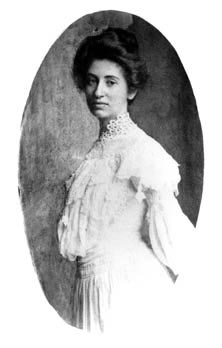
Mary Elizabeth Jane Colter (April 4, 1869 – January 8, 1958) was an American architect and designer. She was one of the very few female American architects in her day. She was the designer of many landmark buildings and spaces for the Fred Harvey Company and the Santa Fe Railroad, notably in Grand Canyon National Park. Her work had enormous influence as she helped to create a style, blending Spanish Colonial Revival and Mission Revival architecture with Native American motifs and Rustic elements, that became popular throughout the Southwest. Colter was a perfectionist, who spent a lifetime advocating and defending her aesthetic vision in a largely male-dominated field.[1]

Key Information

Early life and education

[edit]

Mary Colter was born in Pittsburgh, Pennsylvania to Irish immigrants William and Rebecca Crozier Colter. Her family moved to Colorado and Texas before settling down in St. Paul, Minnesota, the town she considered to be her home, when Mary was eleven.[2][3]

In 1880, the town of St. Paul was boasting a population of 40,000 people and a large minority population of Sioux Indians. As a child, a family friend, John Graham, presented the Colter family with Sioux drawings, made by prisoners at Fort Keogh.[3] This is the point where her fascination with the Native American cultures began.[citation needed] When the Indian community was ravaged by a smallpox outbreak, Colter's mother tried to burn all of the Native American things they had for fear that it would get her family sick. Mary, however, hid those drawings from her mother and so prevented them from being burned. Mary also kept these same Sioux drawings for much of her life, bequeathing them to the Custer Battlefield National Monument in 1956.[3]

Colter graduated high school in 1883 at the age of 14.[4][3] After her father died in 1886, Colter attended the California School of Design (now the San Francisco Art Institute) until 1890, where she studied art and design.[3][5] She promised that, when she graduated, she would return to St. Paul to financially support her mother and older sister, who was chronically ill.[6] While in San Francisco, she apprenticed in an architect's office to gain experience and support herself.[3] She was taught by teachers including Arthur Frank Mathews, who painted the earliest known portrait of Colter.[3]

After teaching at the Stout Manual Training School in Menomonie, Wisconsin for a year,[6] Colter moved back to St. Paul and taught art, drafting, and architecture for some years.[7][unreliable source?] Colter taught at the Mechanic Arts High School for fifteen years and lectured at the University Extension School.[8] At this time, she was involved in the Arts and Crafts movement.[6] She was also a clubwoman, and gave several lectures and classes related to art.[2][6]

Career

[edit]
Seated woman making a metal bowl
23-year old Mary Colter making a metal bowl.

By one account,[9] in 1902, Minnie Harvey Huckel helped Colter obtain a summer job with her family's Fred Harvey Company (operator of the famous railstop Harvey House restaurants), decorating the Indian Building at the Alvarado Hotel in Albuquerque (since demolished).[10][11] The Indian Buildings, one of Minnie's ideas executed by her husband, were meant to entertain passengers as trains made stops to replenish water and fuel. Colter was given the challenge of arranging salesrooms so tourists could imagine displaying goods in their homes.[6] She also worked with Charles Whittlesey on the El Tovar Hotel and began designing a curio shop. Upon returning to St. Paul to teach in the fall, Colter continued her work on the curio shop, which became the Hopi House.[6]

For the next seven years, Colter continued working for Harvey from St. Paul. She continued teaching and her involvement in art and clubs in the city. In 1908, Colter moved with her mother and sister to Seattle to take a position developing the Decoration Department for the Frederick and Nelson department store in Seattle. Colter left the position in 1909, when her mother became ill and died. The Colter sisters returned to St. Paul to bury their mother in the family plot.[6]

Colter began working full-time for the company in 1910, moving from interior designer to architect in a position based in Kansas City.[11][8] For the next 38 years, Colter served as chief architect and decorator for the Fred Harvey Company.[11] As one of the country's few female architects – and arguably the most outstanding – Colter worked in often rugged conditions to complete 21 landmark hotels, commercial lodges, and public spaces for the Fred Harvey Company, by then being run by the founder's sons.

Desert View Watchtower (1932) Grand Canyon National Park South Rim

Fred Harvey developed the West along the Santa Fe's main route through strategic use of restaurant efficiency, clean-cut and pretty young women, high-end tourism, and quality souvenirs. Anthropologists on his staff located the most appealing Native American art and artifacts like pottery, jewelry, and leatherwork. His merchandisers designed goods based on those artifacts. And in strategic locations, Colter produced commercial architecture with striking decor, based on some concern for authenticity, floorplans calculated for good user experience and commercial function, and a playful sense of the dramatic inside and out.

The Santa Fe railroad bought the La Fonda hotel on the plaza of the old city of Santa Fe, New Mexico, in 1925 and leased it to the Harvey Company to operate. For a major expansion, Colter was assigned to do the interior design and decorating.[12] She hired artists and artisans from the nearby pueblos to make the furniture. Native American styles were employed in hand-crafted chandeliers, copper and tin lighting fixtures, tiles and textiles, and other ornamentation. La Fonda became the most successful of the Harvey House hotels. Its striking blend of Pueblo people and Spanish artistic influences, today known locally as the Santa Fe Style, became very popular across the region.[13]

Grand Canyon buildings

[edit]
Hopi House (1905)

Colter created a series of remarkable works in the Grand Canyon National Park, mostly on the South Rim: the 1905 Hopi House,[14] the 1914 Hermit's Rest and observatory Lookout Studio, and the 1932 Desert View Watchtower, a 70-foot-tall (21 m) rock tower with a hidden steel structure, as well as the 1935 Bright Angel Lodge complex, and the 1922 Phantom Ranch buildings at the bottom of the canyon.[15] Colter also decorated, but did not design, the park's El Tovar Hotel. In 1987, the Mary Jane Colter Buildings, as a group, were listed as a National Historic Landmark. (She also designed the 1936 Victor Hall for men, and the 1937 Colter Hall, a dormitory for Fred Harvey's women employees.)

Colter worked with Pueblo Revival architecture, Spanish Colonial Revival architecture, Mission Revival architecture, Streamline Moderne, American Craftsman, and Arts and Crafts Movement styles, often synthesizing several together evocatively. Colter's work is credited with inspiring the Pueblo Deco style.[16]

The trend-setting Phantom Ranch Canteen, built at the bottom of the Grand Canyon

The Harvey Company got the concession in 1922 to operate a camp at the bottom of the Grand Canyon. Considering the Phantom Ranch's location, Colter's use of on-site fieldstone and rough-hewn wood was deemed the only practical thing for the permanent buildings that replaced tents.[17] In the following years this innovative work became a de facto model for subsequent National Park Service and Civilian Conservation Corps structures, influencing the look and feel of an entire genre of parkitecture, often called National Park Service Rustic. Her structures at the Grand Canyon set the precedent for using on-site materials and bold, large-scale design elements.

For her Bright Angel Lodge on the South Rim, she used a 6-foot (1.8 m) scale model to ensure that the lodge and cabins fit into the landscape. The lodge features a remarkable "geological fireplace" in the History Room, with rocks arranged ceiling to floor in the same order as the geologic strata along the Bright Angel Trail down the canyon wall.

A chain-smoking perfectionist, Colter cared about backstory and attractive features. She conceived Hermit's Rest as a sort of folly, as if it had been wired together by a reclusive mountain man. The Hopi House was a market for Native American crafts, made by Hopi artisans on the site, and designed in sandstone to resemble a Hopi pueblo. (Unfortunately, a recent cleaning eliminated the artificial age-effects.)[3] The Watchtower was the product of travel and research, and she cared enough to herself prepare a Manual for Drivers and Guides Descriptive of the Indian Watchtower at Desert View and its Relation, Architecturally, to the Prehistoric Ruins of the Southwest.[18] The original paintings inside the tower were by Hopi artist Fred Kabotie. She also insisted on her proposed name "Phantom Ranch" (over "Roosevelt Ranch") to capitalize on better mental images.[3]

Other works

[edit]

Colter's pioneering masterwork may have been the 1923 El Navajo in Gallup, New Mexico, remarkable for its forward-looking fusion of a Native American-inspired design on the severe Art Deco building by Santa Fe Railway architect A. E. Harrison. Her breakthrough creation incorporated Navajo sand paintings and rugs with hand-carved and hand-painted furniture. The original plans sketched about 100 bedrooms and 15 shared baths, making the structure physically obsolete before it was razed to make way for widening Route 77 in 1957, shortly before Colter's death.[19] (She saw demolitions of a few other projects before she died, causing her to despair, "It's possible to live too long.")[20]

Mary Colter herself declared the 1930 La Posada Hotel to be her masterpiece. The sprawling, hacienda-style Spanish Colonial Revival building[21] in Winslow, Arizona, has been called "the last great railroad hotel built in America". She was architect and designer for the entire resort, from the buildings to the acres of gardens, the furniture, china – even the maids' uniforms.[22] Closed in 1957, in a long decline it was first a drab 1960s office building for the Santa Fe, and then was empty when the National Trust for Historic Preservation placed the hotel on its annual "Most Endangered" list.[23]

Mary Colter looking at blueprints with Mrs. Ickes, c. 1935

Allen Affeldt heard about the endangered masterpiece, and in 1996 he and his wife Tina Mion, an artist, purchased it, and soon reopened parts of the hotel for business.[24] However, the hotel was without many of the design elements, which had been auctioned off.[6] Today, a museum of Mion's paintings is on the second floor; works by Dan Lutzick line the sculpture court; a museum of Route 66 is going into the former depot. The compound and gardens, being restored to the original and intended grandeur, are the core elements of the La Posada Historic District on the National Register.[24]

Ashtray designed by Mary Colter inspired by Native American motifs

Late in her career, Colter designed the exuberant Harvey House restaurant at the 1939 Los Angeles Union Station. Under a spectacular arched ceiling, a dazzling floor appears to be random zigzags and geometrics; from another angle the pattern turns out to be a block-long Navajo blanket made of linoleum tiles. The fabulous dining room and her sleek, Streamline Moderne cocktail lounge were padlocked except for occasional movie shoots and Los Angeles Conservancy tours until 2018.[25] On 4 October 2018, the restaurant was reopened as Imperial Western Beer Company.[26]

Not long before her retirement, Colter took on the 1947 renovation of the Painted Desert Inn in Arizona's Petrified Forest National Park. During the Depression, a 1922 inn had been overhauled by Civilian Conservation Corps workers to the Mission Revival style, using local materials and Native American motifs. Then Colter supervised the refreshening, provided a new color scheme, and commissioned Hopi artist Fred Kabotie to put murals in the dining areas. Showing that she was unafraid of the modern when the situation called for it, Colter installed plate glass windows to open up views of the splendid scenery. Closed in 1963, the inn survived a threatened demolition, and was placed on the National Register of Historic Places in 1987. It reopened in 2006, restored to the way it looked circa 1949 after Colter's redesign.[27]

Colter was the creator of Mimbreño china and flatware for the glamorous Super Chief Chicago–Los Angeles rail service, begun in 1936 by the Santa Fe Railroad.[28] Colter, herself by then an Indian art expert, based her designs on 1100 CE Mimbres patterns excavated by her friends Harriet and Cornelius Cosgrove at the Swarts Ruin in New Mexico from 1924 to 1927. Mimbreño china was produced by the Onondaga Pottery Co. of Syracuse, New York under its better-known trade name, Syracuse China, until 1970.[3] The luxury Super Chief and business class dining services were discontinued after the train was turned over to Amtrak in May 1971 (today the Southwest Chief covers the route). Later that year Mimbreño plates and pieces became available to ordinary individuals for the first time, disposed of in two large public offerings. Mimbreño railroad china remains avidly and competitively collected, with single plates selling for many hundreds of dollars. A line of authorized reproductions has been sold since 1989.

Legacy

[edit]
Mary Colter, age 80

Colter retired to Santa Fe, New Mexico, in 1948. She donated her collection of Native American pottery and Indian relics to Mesa Verde National Park.[29] She had to watch as many of her famous works were destroyed during her lifetime as automobile travel replaced train travel.[18][6]

Colter died on January 8, 1958.[18]

Four of her Grand Canyon National Park buildings are protected within the Mary Jane Colter National Historic Landmark District.[30]

Awards and honors

[edit]

Design projects

[edit]

Architectural

[edit]

Interior design

[edit]
  • Indian Building at the Alvarado Hotel, Albuquerque, New Mexico, c. 1902 (Demolished)
  • El Tovar Hotel, Grand Canyon Village
  • El Ortiz, Lamy, New Mexico (Demolished)
  • La Fonda, Santa Fe, New Mexico, 1925,
  • Harvey House Restaurant, Union Station, Los Angeles, 1939

Industrial design

[edit]

See also

[edit]

References

[edit]

Further reading

[edit]
[edit]
Revisions and contributorsEdit on WikipediaRead on Wikipedia
from Grokipedia
Mary Elizabeth Jane Colter (April 4, 1869 – January 8, 1958) was an American architect and interior designer who pioneered the style in the American Southwest, creating structures that harmoniously blended with their natural landscapes using local materials and Native American-inspired motifs. Working primarily as the chief architect and decorator for the from 1902 to 1948 in collaboration with the Atchison, Topeka and Santa Fe Railway, she designed more than 20 buildings and interiors at national parks, railway stations, and hotels, with her most iconic works at including House (1905), Hermit's Rest (1914), Lookout Studio (1914), (1922), and (1932). Born in , , to Irish immigrant parents William and Rebecca Colter, she moved frequently during her childhood across , , and , settling in St. Paul at age 11 in 1880; her father died in 1886. After graduating from high school in 1883, Colter studied art at the California School of Design in , where she apprenticed at an architectural firm and developed her interest in design. She taught manual arts and drawing for 15 years at schools in , and St. Paul, , before freelancing for the in 1902 on interior designs for their Harvey House hotels along the Santa Fe Railway. By 1910, she had become the company's full-time chief architect, overseeing projects that emphasized authenticity, such as sourcing materials directly from local quarries and artisans, and she remained in that role until her retirement at age 79. Other notable designs include Bright Angel Lodge (1935) at , La Posada Hotel in (1930), and interiors for Union Station in Kansas City (1914) and La Fonda Hotel in Santa Fe (1927–1928). Colter's perfectionist approach and innovative use of irregular forms, rough textures, and cultural elements made her a trailblazer in a male-dominated field, influencing the broader aesthetic of architecture. After retiring, she settled in , where she continued consulting briefly before her death. In 1987, her buildings were designated as the Mary Jane Colter Buildings District, preserving her legacy as a key figure in American architectural .

Early Life and Education

Family Background and Childhood

Mary Elizabeth Jane Colter was born on April 4, 1869, in , , to Irish immigrant parents William Colter, a , and Rebecca Crozier Colter, a milliner. The family experienced a transient early life, relocating several times across the Midwest from to and before settling in St. Paul, , in 1880 when Colter was 11 years old. This move immersed her in the Midwestern landscapes and the vibrant local community, including a significant Indian population in St. Paul. During her childhood in St. Paul, Colter developed a profound fascination with Native American artifacts and stories, sparked by interactions with indigenous communities and gifts from relatives, such as Sioux drawings created by prisoners at Fort Keogh. These early encounters, including family anecdotes of receiving items from Indian Country, ignited her lifelong interest in Native American culture, art, and design traditions. Colter graduated from St. Paul High School in 1883 at the age of 14, where her artistic talents were evident through early sketches and a budding interest in , as recalled in family accounts. Following her father's death in 1886, she transitioned to formal to pursue her artistic aspirations.

Artistic Training and Influences

Mary Colter enrolled in the California School of Design (now the ) in in 1887 at the age of 18, completing a four-year program in art and design by 1890. During her studies, she trained under prominent instructors including , a leading proponent of the Arts and Crafts movement, whose emphasis on harmonious, handcrafted aesthetics and integration of art with architecture profoundly shaped her early style. Mathews, who also painted her portrait around the time of her graduation, encouraged an approach that blended ornamental design with functional beauty, aligning with the broader Aesthetic Movement's focus on beauty in everyday objects. Following graduation, Colter apprenticed part-time in a architectural firm, gaining hands-on experience in drafting and building design that complemented her training. She then taught and for about a year at the Stout Manual Training School in , before returning to her hometown of St. Paul, Minnesota, where in November 1892 she began teaching freehand , drafting, and principles at the Manual Training School (later known as Mechanic Arts High School), an institution focused on practical arts education. Over the next several years, earning $50 per month, Colter refined her skills in ornamentation and through instruction and student projects, including exhibits that won a at the 1893 in . The 1893 Exposition, which Colter likely encountered through her teaching role and regional exhibits, further ignited her fascination with regional architecture and cultural motifs, building on a childhood interest in Native American art sparked by exposure to Sioux drawings from a family relative. The fair's displays of diverse indigenous crafts and structures highlighted the potential for architecture to reflect local environments and histories, influencing her emerging philosophy. In addition to teaching, Colter pursued initial freelance opportunities in the Midwest and , creating set designs and displays for local fairs and stores that allowed her to experiment with integrating cultural elements into ornamental work. These early commissions honed her ability to blend artistic motifs with practical applications, laying the groundwork for her later innovations in regionally inspired design.

Professional Career

Employment with Fred Harvey Company

In 1902, Mary Colter was hired by the to design the Indian Building at the Alvarado Hotel in , which served as her first major commission and introduced her innovative approach to incorporating Native American motifs into commercial hospitality spaces. This project stemmed from informal connections within the company's network, including recommendations from associates who recognized her artistic training in and manual training. Her success in creating an authentic, immersive environment that blended indigenous aesthetics with functional retail and display areas quickly established her value to the Harvey organization, which operated in partnership with the Atchison, Topeka and Santa Fe Railway to promote tourism in the American Southwest. By 1910, Colter had been promoted to chief architect and designer for the on a full-time basis, a role she held after proving her ability to integrate cultural authenticity with practical commercial design, elevating her from freelance interior work to overseeing broader architectural initiatives. This advancement came amid the company's expansion along railway lines, where her expertise in harmonizing regional Native American styles with modern hospitality needs became central to their branding strategy. Over the subsequent decades, she maintained a long-term collaboration with the Santa Fe Railway through the Harvey Company, directing 21 major projects across 38 years until her retirement in 1948. As one of the few women in during the early , Colter navigated significant challenges in a male-dominated , including persistent mislabeling as a mere "decorator" despite her comprehensive design authority and the need to assert her vision against skeptical contractors and executives. She adeptly handled negotiations for budgets that often required sourcing authentic materials from distant suppliers, while managing complex site logistics in remote Southwest locations, such as coordinating transportation via mules and adapting to rugged terrains far from urban infrastructure. These obstacles underscored her resilience, as she insisted on high standards for and structural integrity, contributing to the enduring impact of Harvey's developments.

Grand Canyon Projects

Mary Colter's work at , commissioned by the in partnership with the Santa Fe , transformed the site into a destination that harmonized tourism with the natural and cultural landscape. Beginning in 1905, her designs emphasized environmental integration, using local materials and indigenous motifs to create immersive experiences that encouraged visitors to appreciate the canyon's ancient heritage rather than merely viewing it as a spectacle. Over three decades, Colter crafted a series of structures that blended rustic with Native American influences, setting a precedent for culturally sensitive park development. Her first major project, the Hopi House, opened in 1905 near the park's South Rim entrance. This multi-story structure mimicked traditional Hopi , constructed from local stone and to evoke the dwellings of the people. Designed to house Native American artisans and their crafts, it served as both a sales outlet for , , and Zuni goods and a living exhibit of indigenous life, with interiors featuring kivas and rooftop terraces for demonstrations of and . Colter worked with artisans to ensure authenticity, incorporating details like ladder access and symbolic motifs that reflected Hopi cosmology. In 1914, Colter introduced two complementary rustic shelters on the South Rim: Hermit's Rest and Lookout Studio. Hermit's Rest, built into a natural alcove, utilized reclaimed materials such as old railroad ties and boulders to resemble an ancient hermit's refuge, complete with a stone chimney and arched fireplace for visitor contemplation. Its design concealed modern amenities like vending machines behind faux rock walls, preserving the illusion of timeless isolation. Nearby, Lookout Studio, perched on a , adopted a similar aesthetic with rough-hewn stone and reclaimed timbers to mimic prehistoric ruins, offering panoramic views while functioning as a tearoom and observation point. These structures were intentionally distressed during construction to enhance their weathered appearance, blending seamlessly with the canyon's . Phantom Ranch, completed in 1922 at the canyon floor, marked Colter's most ambitious project, accessible only by trail or river raft. Comprising stone-and-timber cabins and a central lodge, it drew from Southwestern ranch vernacular, using native and ponderosa sourced from the canyon's rim to withstand the harsh environment. The complex included dormitory-style lodging for hikers and riders, with interiors featuring simple, durable furnishings and a dining hall that served family-style meals, fostering a sense of communal adventure amid the remote setting. Colter's layout respected the terrain, tucking buildings into alcoves to minimize visual and ecological impact. The , dedicated in 1932, stands as a 70-foot stone tower inspired by Ancestral Puebloan watchtowers, such as those at . Constructed from Kaibab quarried on-site, it spirals upward with a cylindrical form, topped by a lantern room offering 360-degree vistas of the canyon and . Inside, Colter commissioned artist Fred Kabotie to paint murals depicting ancient migrations and ceremonies on the walls, integrating educational elements that highlighted indigenous history. The tower also housed a curio shop, continuing Colter's tradition of combining functionality with cultural storytelling. Bright Angel Lodge, opened in 1935, served as the South Rim's central hub with a log-and-stone complex that contrasted the canyon's grandeur through intimate, historic-scale design. Built around the original cabin of explorer Bass, it featured massive stone fireplaces, exposed-beam ceilings, and furnishings sourced from historic Western sites, including a massive crafted from a single . The lodge's and cabins provided direct rim access, while interiors evoked frontier hospitality without overt luxury. Colter's oversight ensured the use of reclaimed and local materials, reinforcing the site's narrative as a timeless gateway to the canyon. In 1987, the designated four of Colter's structures—Hopi House, Hermit's Rest, Lookout Studio, and —as the Mary Jane Colter Buildings District, recognizing their collective significance in pioneering interpretive architecture within national parks. This preservation effort underscores their role in educating visitors about the region's cultural and while maintaining structural integrity against environmental challenges.

Additional Projects

Colter's early commissions for the included the Indian Building and the adjacent Alvarado Hotel in , both completed in 1902. The Indian Building served as a pioneering museum and salesroom for Native American artifacts, functioning as the headquarters for Harvey's "Indian Detours" program, which promoted tourism to Indigenous sites across the Southwest. The Alvarado Hotel, a Mission Revival-style structure with 120 rooms, featured Colter's interior designs incorporating regional motifs, though both buildings were demolished in the 1970s to make way for urban development. In 1923, Colter designed the El Navajo Hotel and Harvey House complex in , an adobe-style ensemble blending Mission and Spanish Colonial elements with prominent motifs, such as sand paintings created in collaboration with medicine man Miguelito. The project included a freestanding curio shop showcasing Native American crafts, reflecting Colter's emphasis on cultural authenticity in Harvey properties; the complex operated until its demolition in 1957 to accommodate the widening of U.S. Route 66. Colter contributed interiors to the historic in , beginning in 1925, introducing Pueblo Deco elements that fused Pueblo adobe aesthetics with geometry. Her designs encompassed lobby furnishings, hand-carved beams, and stained-glass windows drawing from Native American and Hispanic traditions, enhancing the hotel's role as a cultural hub during its expansion by the . The La Posada Hotel in , opened in 1930 under Colter's direction as a Spanish Colonial Revival masterpiece, featuring expansive courtyards, formal gardens inspired by desert sustainability, and interior murals depicting regional history. Colter viewed it as her personal favorite, curating every detail from structural forms to custom furnishings; the property fell into disuse after but was restored in the 1990s and reopened as a preserving her original vision. In 1939, Colter designed the restaurant at Union Passenger Station, adopting a style with Hopi-inspired decor, including geometric murals and pottery displays that evoked Southwestern Indigenous artistry within the station's framework. This was her final Harvey House commission, marking a shift toward urban rail terminals as passenger travel evolved. Colter's last major project was the 1947 renovation of the Painted Desert Inn in Petrified Forest National Park, Arizona, where she adapted the existing Pueblo Revival structure by redesigning interiors to highlight Native American pottery collections and murals painted by Hopi artist Fred Kabotie. The updates emphasized rustic authenticity with exposed beams and cultural exhibits, transforming the inn into a interpretive space before its closure in 1949 and subsequent preservation as a National Historic Landmark.

Design Philosophy

Regional and Cultural Inspirations

Mary Colter's design ethos was profoundly shaped by her deep immersion in Native American art and architecture, particularly from the , , and Zuni cultures, which she pursued through extensive fieldwork and personal collections beginning in the . During her early career, Colter started acquiring indigenous artifacts, including Sioux ledger drawings and textiles, while visiting s and ancient ruins across the Southwest; these experiences informed her lifelong practice of incorporating authentic motifs and forms into her work. Her personal collections included over 500 pieces of , , and Zuni jewelry, as well as and ceramics, amassed during travels to sites like Oraibi village and Mesa Verde, where she photographed structures and collaborated with artists such as potter . This hands-on engagement allowed Colter to authentically evoke indigenous aesthetics, such as multi-storied dwellings and kiva-inspired spaces, rejecting superficial imitation in favor of cultural reverence. Colter's training in further influenced her by exposing her to Spanish Colonial and Mission Revival styles, which she adapted to the arid Southwest's environmental demands. As an apprentice in the , she encountered the Franciscan missions' , characterized by walls, tiled roofs, and courtyards, which resonated with the regional landscape's simplicity and durability. She blended these elements with Native American influences in projects like the Indian Building (1902), employing Mission-style arcades and exposed rafters to create shaded, climate-responsive spaces suited to the desert heat. This synthesis produced a hybrid style that harmonized European colonial forms with indigenous resilience, prioritizing functionality in harsh terrains over ornamental excess. Central to Colter's approach was an emphasis on site-specific harmony, achieved by integrating local materials that echoed the Southwest's natural formations. She favored red sandstone quarried on-site and reclaimed to construct buildings that appeared as organic extensions of the landscape, such as rugged stone facades mimicking canyon cliffs and timber beams salvaged from regional sources. This method not only reduced environmental impact but also fostered a of belonging, as seen in her use of and rough-hewn logs to blend structures seamlessly with arid terrains. By drawing directly from the locale's and , Colter ensured her designs enhanced rather than overshadowed the surrounding . Colter deliberately rejected the ornate Victorian styles prevalent in her era, opting instead for an "organic" rusticity that evoked simplicity and authenticity. While many contemporary structures adhered to Victorian and Beaux-Arts elaboration, her work embraced the Service's rustic ideal, using unpolished materials and asymmetrical forms to convey a raw, harmonious connection to nature. This shift reflected broader early-20th-century movements toward environmental integration, positioning her designs as timeless evocations of the Southwest's unadorned beauty.

Architectural Innovations

Mary Colter pioneered the use of "" aesthetics in her designs by employing distressed materials that harmonized structures with their natural surroundings, a technique that anticipated elements of modern by emphasizing environmental integration over imposition. She often sourced local, rugged stones and timbers, instructing workers to age surfaces through methods like soot-streaking fireplaces or selecting naturally eroded rocks to evoke ancient, lived-in appearances, thereby creating buildings that appeared as organic extensions of the landscape rather than new constructions. This approach not only reduced visual disruption in sensitive natural areas but also promoted longevity by using durable, site-specific resources that weathered gracefully over time. Colter's innovations extended to the seamless integration of functional interiors with symbolic exteriors, concealing modern amenities within facades that mimicked prehistoric to preserve an aura of authenticity. For instance, she incorporated contemporary like reinforced foundations and efficient plumbing behind rustic stonework and log elements, ensuring practicality without compromising the illusion of ancient habitation. This duality allowed her buildings to serve as both utilitarian spaces and evocative storytelling devices, where hidden conveniences supported visitor comfort while the outward appearance reinforced cultural and historical immersion. As one of the few women in early 20th-century , Colter advocated for female participation through her hands-on on-site , directly supervising crews and defending her visions against in a male-dominated , which helped normalize women's authoritative roles in design. Her persistent oversight and successful executions influenced the Service's rustic style guidelines in the 1930s, establishing precedents for using native materials and subdued forms that prioritized across park developments. Colter further innovated by crafting immersive experiences that educated visitors on indigenous histories through integrated elements like narrative murals and curated artifact displays, transforming buildings into interpretive environments. She collaborated with Native artists to incorporate authentic motifs and crafts, such as Hopi-inspired paintings and sales areas for traditional items, fostering a deeper appreciation for regional cultures as the foundation for her designs.

Later Life and Legacy

Retirement and Personal Contributions

After a long and successful career with the that provided her with , Mary Colter retired in 1948 at the age of 79. She relocated to , where she spent her final years in the city she had long admired for its cultural and architectural heritage. In a significant personal contribution to cultural preservation, Colter donated her extensive collection of Indigenous jewelry, , textiles, and other artifacts to in 1947. This donation, amassed over decades of her travels and professional engagements in the Southwest, enriched the park's holdings of Native American art and supported educational efforts about Indigenous cultures. In her later years, Colter occasionally consulted on restorations of sites, drawing on her expertise until her health began to decline in the . She passed away on January 8, 1958, in Santa Fe at the age of 88. True to her preference for simplicity and avoidance of personal acclaim, Colter was buried in an unmarked grave in Oakland Cemetery in .

Posthumous Recognition and Preservation

In 1987, four of Mary Colter's structures—Hopi House, Hermit's Rest, Lookout Studio, and —were collectively designated a , forming the Mary Jane Colter Buildings National Historic Landmark District to recognize their architectural significance and intact representation of her design principles. This posthumous honor, administered by the , underscored the enduring value of her integration of regional materials and cultural motifs into the landscape, preserving these sites as key examples of early 20th-century park architecture. Interest in Colter's contributions resurged during the late and , driven by scholarly publications and restoration projects that highlighted her influence on Southwestern design. Arnold Berke's 2002 book, Mary Colter: Architect of the Southwest, provided a comprehensive examination of her career, drawing on archival materials to emphasize her innovative use of indigenous-inspired forms and her role in shaping tourist experiences along the Santa Fe Railway. This period also saw the meticulous restoration of La Posada Hotel in —one of Colter's final major projects—which reopened to the public in 2011 after decades of neglect, revitalizing the structure as a of her hacienda-style vision while boosting local . Colter received several posthumous awards acknowledging her pioneering status as a female architect in a male-dominated field. In 1986, she was inducted into the Arizona Women's Hall of Fame for her transformative work in regional architecture and interior design. This was followed in 2009 by her enshrinement in the National Cowgirl Museum and Hall of Fame, honoring her as a trailblazing Western figure whose designs blended cultural authenticity with environmental harmony. Preservation efforts have continued into the 2020s, with the funding conservation projects to maintain Colter's buildings amid increasing visitation and environmental challenges. For instance, the underwent extensive interior restoration in 2019, including graffiti removal and mural preservation, to safeguard its Hopi-inspired murals and stonework for future generations. These initiatives reflect ongoing commitment to her eco-harmonious approach, which prioritized site-specific, low-impact construction using local stone and reclaimed materials. Recent scholarly works have addressed historical gaps in Colter's recognition, positioning her as a trailblazer for women in and a precursor to practices. A 2024 thesis by Allison M. Foster examines Colter's collaboration with artist Fred Kabotie on the , highlighting her deference to Native expertise as a model for culturally sensitive building. Profiles in resources like the Beverly Willis Foundation's Pioneering Women database further emphasize her as an early for gender equity in the profession, influencing modern discussions on inclusive and regionally adaptive .

References

Add your contribution
Related Hubs
User Avatar
No comments yet.