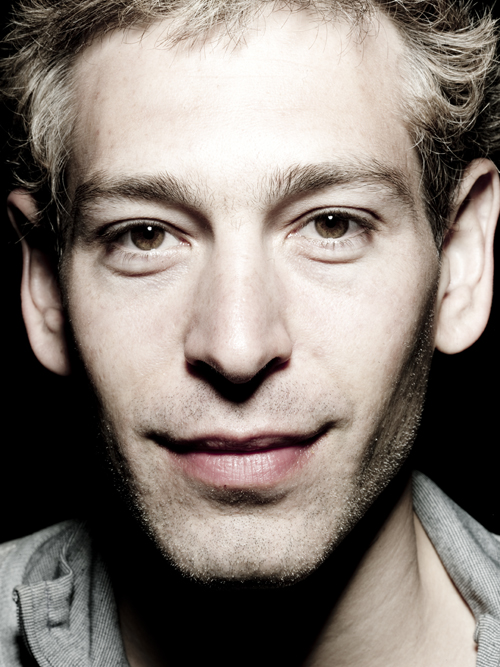

Matisyahu
View on Wikipedia
Key Information


Matthew Paul Miller (born June 30, 1979),[2][3] known by his stage name Matisyahu (/ˌmɑːtɪsˈjɑːhuː/ ⓘ; מתתיהו), is an American singer, rapper, beatboxer, and musician.
Known for blending spiritual themes with reggae, rock and hip hop beatboxing sounds, Matisyahu's 2005 single "King Without a Crown" was a Top 40 hit in the United States.[4] Since 2004, he has released seven studio albums as well as five live albums, two remix CDs and two DVDs featuring live concerts. Throughout his career, Matisyahu has worked with Bill Laswell and reggae producers Sly & Robbie and Kool Kojak. He has also appeared as an actor in films.
Early life
[edit]Matthew Paul Miller was born on June 30, 1979, in West Chester, Pennsylvania. His family eventually settled in White Plains, New York.[2][5][6] He was brought up a Reconstructionist Jew[7][8] and attended Hebrew school at Bet Am Shalom, a synagogue in White Plains.[9][10] He spent much of his childhood learning the tenets of Judaism,[11] but by the time he was a teenager, Miller began to rebel against his upbringing.[12] At one Phish concert, Matisyahu dropped acid for the first time, an experience he recounted in 2016 "changed my life."[13]
In autumn 1995, Miller attended a two-month program at the Alexander Muss High School in Hod Hasharon, Israel.[14][15] During the program's first month, he was restricted to staying on campus for disciplinary reasons. He became more interested in Judaism and started to identify more as a Jew. After he finished Muss, he returned to New York. He started taking drugs and dropped out of White Plains Senior High School on the first day of his senior year, becoming a self-professed "Phish-head", taking hallucinogens and following the rock band Phish on tour. A stint in a rehabilitation center in upstate New York followed.[16]
Miller then attended a wilderness expedition school for teenagers in Bend, Oregon, where he completed high school. "It was not necessarily for drug rehabilitation, but that was part of the reason I was out there," he explained to The Forward in 2008.[16][17] In Oregon, he identified himself as "Matt, the Jewish rapper kid from New York." Miller has contrasted this time in Oregon to his life in New York City. "I was suddenly the token Jew. This was now my search for my own identity, and part of Judaism feeling more important and relevant to me."[16] After being exposed to reggae and hip hop at the school, he began playing open mic sets.[13][12]
He returned to New York, began taking classes on Jewish spirituality at The New School, and started developing his reggae style, spending hours in his room, writing and practicing to the accompaniment of hip-hop tapes.[16] At the same time, he started going to The Carlebach Shul, an Orthodox Jewish synagogue on the Upper West Side of Manhattan and bought a prayer book and prayer shawl. He began attending religious services every Sabbath at the synagogue and started to wear a yarmulke (head covering) and tzitzit (a fringed undergarment).[13][16] One morning after getting drunk the night before, Matisyahu encountered Rabbi Dave Korn of the Chabad House at NYU, later moving into Korn's house to study Torah all day.[13]
By November 2001, Miller identified as a member of the Chabad-Lubavitch movement and moved to Crown Heights in early 2002. He delved into Hasidus and removed himself from popular culture.[16]
Career
[edit]Miller performed for over a year as MC Truth in Bend, Oregon. In 2004, after having signed with JDub Records, he released his first album, Shake Off the Dust... Arise, under the name Matisyahu. At Bonnaroo 2005, Trey Anastasio of the band Phish invited Matisyahu for a guest spot on his set.[18] Matisyahu also opened for a few Dave Matthews Band shows during their mid-2006 tour, including guesting on the song "Everyday" at the June 14, 2006, Darien Lake show.[19] Matisyahu's second release, Live at Stubb's, was recorded in Austin, Texas, and produced for Or Music by Angelo Montrone. It was distributed to Or Music by Sony/RED, and later upstreamed[clarification needed] to Sony/Epic.
In 2005 and 2006, Matisyahu toured extensively in the U.S., Canada, and Europe. He made a number of stops in Israel, including a performance as the supporting act for Sting in June 2006. The live version of the song "King Without a Crown" broke into the Modern Rock Top 10 in 2006. The song was also included on Matisyahu's second album, Youth, which was produced by Bill Laswell and released on March 7, 2006; it features minor contributions by pop producers Jimmy Douglass and the Ill Factor. On March 16, Youth was Billboard magazine's number-one digital album. In 2006, Matisyahu once again appeared at Bonnaroo, this time performing a solo set.[20] In late 2006, he released No Place to Be, a remix album featuring re-recordings and remixes of songs from his three earlier albums, as well as a cover of "Message in a Bottle" by the Police (written by Sting).

On March 1, 2006, right before the release of Youth, he informed JDub that he no longer needed its management services. He has since been represented by former Capitol Records president Gary Gersh. JDub claimed the artist had three years remaining on a four-year management contract. JDub managed his act, but was not his record label.[21]
Since his debut, Matisyahu has received positive reviews from both rock and reggae outlets. In 2006, he was named as Top Reggae Artist by Billboard[22] as well as being named a spokesperson for Kenneth Cole.[23] In 2006, Esquire magazine awarded Matisyahu the "Most Lovable Oddball" award in their "Esky" Music Awards, calling him "the most intriguing reggae artist in the world."[24]
At the 2007 Slamdance Film Festival, the film Unsettled, in which Matisyahu appears, won the Grand Jury Prize for Best Documentary Feature. While attending the festival, he performed in an impromptu concert at the Park City Film Music Festival in Park City, Utah. In the summer of 2007 he joined 311 on their Summer Unity Tour. He also performed in the 2008 documentary Call + Response.[25] His third studio album, Light, was released on August 25, 2009, along with the live EP Live at Twist & Shout. Around 2008–2009, he also began his longstanding collaboration with members of the Dub Trio.[26] From July 10–30, 2010, Matisyahu (along with The Dirty Heads) supported Sublime with Rome (the new version of the band) on their Sublime with Rome Tour.[27]
In November 2009, NBC used Matisyahu's song "One Day" as background music for their advertisement of the Olympic games. This stirred up speculation that "One Day" might become the theme song for the 2010 Olympics. However, it remained only NBC's top pick, and was not announced to be the theme song.[28] On August 2, 2010, Matisyahu revealed to OC Weekly that he has been writing new songs for his next album, which was expected to be recorded within weeks of his statement.[29] On November 3, 2010, he performed his music accompanied by a single acoustic guitarist, recited poetry and answered questions at the University of Central Florida.[30] On November 26, 2010, Matisyahu released "Two", a special edition Record Store Day Black Friday 7" vinyl record, for independent record stores. He recorded a Sephardic music-influenced hip hop song "Two Child One Drop" for Sephardic Music Festival, Vol. 1, a compilation album released by Shemspeed, alongside artists such as formerly-Hasidic rapper Y-Love, Israeli hip-hop group Hadag Nahash, and psychedelic rock/Sephardic fusion group Pharaoh's Daughter.[31]

On August 18, 2010, Matisyahu returned to Stubb's in Austin, Texas, for another live recording for Live at Stubb's, Vol. 2. He released the album on February 1, 2011.[32] That year, he embarked on a concert tour throughout the United States in support of the album with his backing band, Dub Trio.[33] In March 2011, Matisyahu was featured on the DeScribe song, "Pure Soul".[34] On July 17, 2012, Matisyahu released his fourth studio album, Spark Seeker, which was produced by Kool Kojak and featured two collaborations with rapper Shyne. The album also featured the single "Sunshine".[35]
On June 3, 2014, Matisyahu released Akeda, which is slightly different from his previous work. Matisyahu himself described it as a "stripped back sound" and in a style as he describes as "less is more".[36] Akeda was in the iTunes Top 10 a week later, ranking at No. 6 which was the same week he began his new tour. The tour started at Kakaako Waterfront Park in Honolulu, Hawaii, as part of the Republik Music Festival 4.[37]
On August 17, 2015, the Rototom Sunsplash festival in Spain canceled Matisyahu's scheduled appearance, at the request of the BDS Movement, due to his refusing to sign a letter stating he supports a Palestinian state, and would not bring up Israeli politics on stage.[38] This led to many organizations around the world criticizing the organization of discriminating against Jews.[39] Two days later the Spanish government condemned the decision to cancel his appearance.[40] On August 19, the festival apologized to Matisyahu and re-invited him to perform as originally scheduled, following outrage around the world.[41] The organizers released a statement saying they "made a mistake, due to the boycott and the campaign of pressure, coercion and threats employed by the BDS."[42] Matisyahu's performance was peaceful with some Palestinian flags waved by the audience,[43] however Matisyahu later said the racism he experienced was worse than anything else before.[44]
On October 10, 2015, Matisyahu performed in Israel at the Sultan's Pool in Jerusalem against the backdrop of escalating stabbing attacks in the city. Matisyahu stated that it is important for "American Jews like [him]self to come to Israel no matter what's happening here".[45] Jerusalem's mayor, Nir Barkat, thanked Matisyahu and said before the performance that "Everyone who came here today and is maintaining their regular routine is a partner in fighting terror."[46] Before singing "Jerusalem (Out of Darkness Comes Light)" (his ode to the city), Matisyahu said, "Jerusalem, I'm home."[46]
In 2016, Matisyahu went on a tour of 12 US college campuses as a response to being disinvited from the Rototom Sunsplash festival in 2015.[47][48] The tour was co-sponsored by various Hillel chapters.[49] On November 18, 2016, Matisyahu released Release the Bound, a five-song digital EP featuring brand new music. The EP includes collaborative efforts with relative mainstay Stu Brooks[50] as well as The Polish Ambassador[51] and Salt Cathedral.[52]
Matisyahu released his sixth studio album, Undercurrent, on May 19, 2017, via Fallen Spark and Thirty Tigers.[53][54] In the fall of 2017, he went on a European tour in support of the album.[55] Matisyahu's "One Day" was featured in the MacGillivray Freeman Film, Dream Big playing in IMAX theaters beginning in February 2018.[56]
In October 2021, Matisyahu released the single, "Chameleon".[57] He followed that in January 2022 with the single "Keep Coming Back For More".[58] The two songs served as the first singles off of his self-titled album which was released on March 25, 2022, through Thirty Tigers and distributed by The Orchard.[59] Produced by Colombian band and production duo Salt Cathedral, it was Matisyahu's seventh studio album and his first since 2017's Undercurrent.[60]
In February 2024, two concerts in the Southwest US, in Tucson, Arizona, and Santa Fe, New Mexico, were cancelled due to "safety concerns related to the reggae singer's staunchly pro-Israel stance," and in March 2024 another concert was cancelled in Chicago.[61][62] Pro-Palestinian activists credited themselves for the cancelations.[63] Matisyahu responded to the cancellations by saying, "they do this because they are either anti-Semitic or have confused their empathy for the Palestinian people with hatred for someone like me who holds empathy for both Israelis and Palestinians."[64] Matisyahu sent a message to his fans expressing sadness over the cancellations, ending with the message that "we will not respond to hate with hate."[61] Following the security threats and canceled shows, Matisyahu traveled to Israel to perform two live shows in Jerusalem and Tel Aviv.[65] Santa Fe Mayor Alan Webber issued a statement, saying "there is a significant difference between protesting the policies of the Netanyahu government in Gaza and shutting down the performance of a Jewish-American artist in Santa Fe."[66]
Collaborations
[edit]
Matisyahu has performed with Kenny Muhammad, a Muslim beatboxer. He also recorded the song "One Day" along with Akon, who is also Muslim.[67] Matisyahu is featured on Trevor Hall's single "Unity" from his self-titled album. Matisyahu is also featured on "Roots in Stereo" and "Strength of My Life" from P.O.D.'s album Testify. Matisyahu collaborated with Shyne on the song "Buffalo Soldier" from his 2012 release, Spark Seeker.
Matisyahu collaborated with J. Ralph on the song "Crossroads feat. J. Ralph" from his 2012 release, Spark Seeker. Matisyahu collaborated with Infected Mushroom on the song "One Day", as well as during various live sets. Matisyahu collaborated with Moon Taxi on the song "Square Circles" off the band's 2012 release Cabaret. He has also collaborated with The Crystal Method in their single "Drown in the Now". He is featured on Dirty Heads's album Cabin by the Sea on the single "Dance All Night". Matisyahu also collaborated with Boston-based rapper Nosson Zand on his 2013 release, "Believers". Matisyahu is featured on the 19-track compilation album, Songs for a Healthier America, a collaborative project by the Partnership for a Healthier America, whose honorary chair First Lady Michelle Obama, and Hip Hop Public Health. His song "U R What You Eat" also features Travis Barker, Ariana Grande, and Salad Bar. In 2014, Matisyahu was featured on Cisco Adler's song "Hypnotize", which was included on his Coastin album. In 2015, Matisyahu collaborated with Avicii in his album "Stories", where he sang alongside Wyclef Jean in "Can't Catch Me". Matisyahu is featured on the Common Kings 2018 EP One Day for the song "Broken Crowns". In 2022, he was featured on the song "Blacklist" by Hirie on her album "Mood Swings". In 2023, he was featured on Coyote Island's "Casio Magic".
Artistry
[edit]
Matisyahu fuses the African-influenced styles of reggae, rap, beatboxing, and hip-hop with vocal disciplines of jazz's scat singing and Judaism's hazzan style of songful prayer. The New York Times' Kelefa Sanneh wrote that "His sound owes a lot to early dancehall reggae stars like Barrington Levy and Eek-a-Mouse."[68]
The Chicago Tribune's Kevin Pang described a Matisyahu performance as "soul-shaking brand of dancehall reggae, a show that captures both the jam band vibe of Phish and the ska-punk of Sublime."[69]
In 2006, Matisyahu stated that "All of my songs are influenced and inspired by the teachings that inspire me. I want my music to have meaning, to be able to touch people and make them think. Chassidus teaches that music is 'the quill of the soul.' Music taps into a very deep place and speaks to us in a way that regular words can't."[70]
In 2009, he said about his recently released album Light, "I think the vast majority of people that respect what I do are willing to move with me. I think it's not so much about genres or styles of music as it is about expressing the emotion or the idea. ... Whatever allows you to do that, whatever style, as long as it's authentic." However, he has been criticized for cultural appropriation of Rastafarian, Jamaican and African American musical styles and imagery.[71]
Personal life
[edit]Family
[edit]Matisyahu met NYU film student Tahlia (née Silverman) when she interviewed him for a documentary about men and women not touching each other. They were set up by Rabbi Dov Yonah Korn, NYU's Chabad rabbi,[72] and they married in August 2004.[73] Together they have sons Laivy (2005), Shalom,[74] and Menachem Mendel (2011),[75] likely in homage to Rabbi Menachem Mendel Schneerson. In 2014, Matisyahu confirmed that he had divorced his wife approximately two years.[76]
Matisyahu also fathered his first daughter in 2014 with longtime friend Toma Danley. The baby was born in Portland, OR, while he was on tour with Adel Tawil in Germany. The newborn was diagnosed with a rare heart defect, underwent three open-heart surgeries at 1, 3, and 9 years old, and has reportedly fully recovered. She has lived with her mother in Portland, OR since birth. Matisyahu and Danley met in 1997 while he was attending the wilderness program in Bend, OR. Matisyahu and Toma have shared parenting responsibilities over the years.[77]
Matisyahu met Talia Dressler when she was 18 years old the two became engaged on April 20, 2019.[78] They were married in a private wedding ceremony held in Matisyahu's backyard on May 19, 2019.[79] They have one daughter born in 2020 and a son born in 2022.[citation needed]
His firstborn son Laivy Miller started his own music career in 2022.[80] The same year, Miller joined his father's summer tour across the US. Miller released various singles in 2023 and his first EP on November 2024.[81]
Religion
[edit]From 2001 through July 2007, Matisyahu was affiliated with the Chabad-Lubavitch Hasidic community in Crown Heights, Brooklyn, New York, whose rabbi officiated at his wedding in 2004. Soon after his adoption of Hasidism, Matisyahu began studying Torah at Hadar Hatorah, a yeshiva for returnees to Judaism where he wrote and recorded his first album. He counts Bob Marley, Phish,[82] God Street Wine and Rabbi Shlomo Carlebach among his musical inspirations and gives credit to Rabbi Simon Jacobson's book Toward a Meaningful Life for the lyrical inspiration to Youth's title track. As part of his faith, he strictly observed the Jewish Sabbath, which begins at sundown on Friday; thus he did not perform in concert on Friday nights. An exception to this rule occurred at a 2007 concert in Fairbanks, Alaska; since the sun did not set until 2:00 a.m., performing in the late hours was not a violation of Jewish observance.[83]
However, as of July 17, 2007, he told the Miami New Times in an interview that he no longer "necessarily" identifies with the Lubavitch movement. In the interview he stated, "The more I'm learning about other types of Jews, I don't want to exclude myself. I felt boxed in."[84] Additionally, in the fall of 2007, while on a family vacation spent primarily in Jerusalem's Nachlaot neighborhood, he expressed interest in another Hasidic group, that of Karlin.[85] As of November 2007 he had confirmed a preference to pray at the Karliner synagogue in Borough Park, Brooklyn, where the custom is to ecstatically scream prayers; however, he continued to reside in Crown Heights because of his wife's affinity for the community.[86]
On December 13, 2011, after a session with his therapist, Matisyahu walked into a Supercuts on the Upper West Side in Manhattan and shaved his beard.[13] Matisyahu posted a beardless picture of himself on Twitter, explaining on his website:[87]
When I started becoming religious 10 years ago it was a very natural and organic process. It was my choice. My journey: to discover my roots and explore Jewish spirituality—not through books but through real life. At a certain point I felt the need to submit to a higher level of religiosity...to move away from my intuition and to accept an ultimate truth. I felt that in order to become a good person I needed rules—lots of them—or else I would somehow fall apart. I am reclaiming myself. Trusting my goodness and my divine mission.
Despite shaving his beard, Matisyahu remained a religious Jew and began to attend a Hasidic synagogue associated with the Karlin dynasty in Williamsburg, Brooklyn.[13]
Politics
[edit]In 2012, he told the Cornell Sun in an interview, "As far as I understand, there was never a country called Palestine."[88] Matisyahu performed for the IDF and for AIPAC and supported Israelis in the Israeli-occupied territories.[89][90] He voiced support for Israel in the Gaza war. In January 2024, he told Newsweek: "I would like to see any terrorist, Hamas, or person who believes Israel has no right to exist or the Jews have no right to it, I would like Israel destroy those people. Then I would like to see some type of new world that comes about in Gaza where Jews can go back to the Middle East."[91]
Origin of his name
[edit]Matisyahu is an Ashkenazic Hebrew pronunciation of the Biblical Hebrew name מתתיהו Mattithyahu (Modern Hebrew pronunciation: Matityahu), meaning 'gift of God'. It is the name of the 2nd-century BCE Jewish leader of the Maccabees' revolt, often referred to by the Greek form of the name, Mattathias; and is the etymological source of the English name Matthew.
Matisyahu explained the origin of his use of the name as follows: while he, like most Jewish boys, received a Hebrew name at his brit milah (circumcision ceremony), when he was eight days old, Miller's family lost track of the names given. In Hebrew school, it was assumed to be Matisyahu because of the connection between Matthew and Matisyahu. The original certificate of bris was later located and Miller discovered that the actual name given at the bris was the Yiddish name "Feivish Hershel". He was advised by his rabbis to continue using the Hebrew name that he had grown up with.[92]
Touring members
[edit]- Current
- Matisyahu – vocals
- Aaron Dugan – guitar
- Jason Fraticelli – bass
- Jason Lindner – keyboards
- Matt Scarano – drums
- Stu Brooks – bass guitar (2009–present)
- Joe Tomino – drums (2009–present)
- D.P. Holmes – guitar (2009–present)
- Other current collaborators
- Salt Cathedral (Juliana Ronderos and Nicolas Losada)[51] – production (2016–present)
- Rob Marscher[93] – keyboards (2008–present)
- Tim Keiper[50][93] – drums
- Former
- Joe Tomino – drums (2015)
- Stu Brooks – bass (2015)
- Big Yuki – keyboards (2016)
- Borahm Lee – keyboards (2006–2007)
- Skoota Warner – drums (2007–2008)
- Ezra Miller – drums, vocals (August 2023 - September 2023)
- Aaron Dugan – guitar (2004–2010)
- Jonah David – drums (2004–2007)
- Josh Werner – bass (2004–2007)
Discography
[edit]
- Studio albums
- Shake Off the Dust... Arise (2004)
- Youth (2006)
- Light (2009)
- Spark Seeker (2012)
- Akeda (2014)
- Undercurrent (2017)
- Matisyahu (2022)
- Live albums
- Live at Stubb's (2005)
- Live at Twist & Shout (2009)
- Live at Stubb's, Vol. 2 (2011)
- Five7Seven2 Live (2013)
- Live at Stubb's Vol. III (2015)
- Remix albums
- Youth Dub (2006)
- No Place to Be (2006)
- EPs
- Shattered EP (2008)
- Youth EP (2009)
- Miracle (2011)
- Spark Seeker: Acoustic Sessions (2013)
- Release the Bound (2016)
- Compilation Albums
- Playlist: The Very Best of Matisyahu (2012)
Filmography
[edit]- A Buddy Story (2010) as Chassid
- The Possession (2012) as Tzadok
See also
[edit]- Awake Zion – a documentary that compares Rastafarians and Jews
- Shulem Lemmer – American Belz Hasidic singer from Borough Park, Brooklyn, in New York Ci
- Hatikva 6 (התקווה 6) [literally "Hope 6"] – An Israeli reggae group that is often compared to Matisyahu, due to the universality of their sound.
References
[edit]- ^ Brinn, David (June 20, 2011). "Holy hip-hop!". The Jerusalem Post. Retrieved April 22, 2015.
- ^ a b "Matisyahu". Billboard.com. Retrieved August 23, 2015.
- ^ Schneider, Christopher J.; Kotarba, Joseph A. (October 6, 2016). Symbolic Interactionist Takes on Music. Emerald Group. ISBN 978-1-78635-047-3.
- ^ "Matisyahu". Billboard.com. Retrieved February 15, 2010.
- ^ Blum, Brian (June 15, 2006). "Matisya-Who?". Shabbat Shalom. Orthodox Union. Archived from the original on June 18, 2006. Retrieved October 23, 2014.
- ^ Moses, Alexa (July 24, 2006). "Did you hear the one about the Jewish reggae star". The Sydney Morning Herald. Retrieved May 4, 2018.
- ^ "Matisyahu: Very old school". The Independent. April 22, 2006. Archived from the original on May 12, 2022. Retrieved May 1, 2018.
- ^ Peltz, Jonathan (December 3, 2014). "The Trials and Tribulations of Matisyahu". Vice Media. Retrieved May 1, 2018.
- ^ Wood, Gaby (May 21, 2006). "Hasieeed!". The Guardian. Retrieved May 1, 2018.
- ^ Murray, Noel (March 14, 2006). "Matisyahu". The A.V. Club. Retrieved May 1, 2018.
- ^ Merica, Dan (December 26, 2012). "Q and A with Matisyahu: 'Hasidic reggae superstar' sans the Hasidim". CNN. Archived from the original on December 31, 2012. Retrieved May 1, 2018.
- ^ a b "Matisyahu Video, Pictures, Biography". AskMen.com. June 30, 1979. Archived from the original on May 23, 2013. Retrieved January 3, 2012.
- ^ a b c d e f Friedman, Gabe (November 14, 2016). "Matisyahu in his own words, on music, Judaism, shaving". Times of Israel. Jewish Telegraphic Agency. Retrieved January 28, 2024.
- ^ Mansfield, Hap (January 26, 2013). "Q&A: Matisyahu on music's power to make you feel understood". The San Marcos Mercury. Archived from the original on May 1, 2018. Retrieved May 1, 2018.
- ^ McGregor, Nick (August 22, 2011). "Matisyahu mixes hip-hop, Hebrew influences into blend of modern music". The St. Augustine Record. Retrieved May 1, 2018.
- ^ a b c d e f Horn, Jordana (December 18, 2008). "Evolution of an Icon: Matisyahu's Musical and Spiritual Journey". The Jewish Daily Forward. Retrieved April 16, 2013.
- ^ Anderman, Joan (June 20, 2004). "Jewish MC rocks the mike and keeps it kosher". Boston Globe. Retrieved December 13, 2016.
- ^ Serpick, Evan. "Matisyahu: Hasidic Hot Stepper", Rolling Stone, February 24, 2006.
- ^ "DMBAlmanac.com²". Dmbalmanac.com. Retrieved August 12, 2022.
- ^ "Bonnaroo". Buzznet.com. Retrieved February 15, 2010.[dead link]
- ^ Sisario, Ben. "Hasidic Reggae Singer Surprises His Managers" Archived February 6, 2007, at the Wayback Machine, The New York Times, March 14, 2006.
- ^ Martens, Todd. "Sean Paul, Matisyahu reggae's top acts in '06". Reuters.com. Retrieved December 13, 2016.
- ^ Slutsky, Carolyn (August 20, 2008). "Matisyahu: Clothes Horse, Diversity Poster Boy". Jewish Week. New York. Archived from the original on December 22, 2008. Retrieved December 13, 2016.
- ^ "The Most Lovable Oddball". Esquire. February 8, 2007. Retrieved November 19, 2013.
- ^ Call + Response. CallandResponse.com. Archived from the original on February 23, 2011. Retrieved October 19, 2010.
- ^ Greenhaus, Mike https://jambands.com/features/2011/01/27/matisyahu-man-in-motion/ Jambands.com
- ^ "Sublime with Rome Tour". Sublimewithrome.com. Retrieved October 19, 2010.
- ^ "Matisyahu's "One Day" Official 2010 Olympics Song, or Just NBC's Top Pick?". The Vancouver Observer. November 12, 2009. Retrieved October 19, 2010.
- ^ Bose, Lilledeshan (August 2, 2010). "Matisyahu Talks About Touring with Sublime With Rome and His New Album". OC Weekly. Archived from the original on July 7, 2012. Retrieved October 19, 2010.
- ^ Colon, Melissa (November 3, 2010). "Matisyahu Rocks Acoustic Set at UCF's Venue". KnightNews.com. Retrieved December 13, 2016.
- ^ "Sephardic Music Festival Compilation Vol.1". Sephardicmusicfestival.com. Retrieved December 29, 2014.
- ^ "Matisyahu announces Live at Stubb's Vol. II". Consequence of Sound. December 3, 2010. Archived from the original on September 13, 2012. Retrieved December 29, 2014.
- ^ Martino, Ashley (August 11, 2011). "Matisyahu at the Regency Ballroom". Relix. Retrieved March 26, 2022.
- ^ "New Single from DeScribe and Matisyahu Lacks "Soul"". TC Jewfolk. April 26, 2011. Retrieved March 26, 2022.
- ^ Kennedy, Mark (July 18, 2012). "The evolution of Matisyahu takes another turn". Times-Union. Retrieved March 26, 2022.
- ^ Kerns, David (May 28, 2014). "Matisyahu is on a musical and spiritual journey". Napa Valley Register. Retrieved December 29, 2014.
- ^ "Matisyahu tackles new life path". Honolulu Pulse. June 6, 2014. Archived from the original on August 8, 2014. Retrieved December 29, 2014.
- ^ "Reggae Singer Matisyahu Disinvited From Music Fest for Not Endorsing Palestinian State". Haaretz.com. August 16, 2015.
- ^ "Spanish festival backtracks, re-invites Jewish singer". theolympian.[permanent dead link]
- ^ "Spain condemns cancellation of Jewish musician Matisyahu at reggae festival". The Jerusalem Post - JPost.com.
- ^ "Spanish reggae festival re-invites Matisyahu after worldwide criticism". The Jerusalem Post - JPost.com. August 19, 2015.
- ^ "A Rototom Sunsplash public institutional declaration regarding Matisyahu". August 20, 2015. Archived from the original on August 20, 2015.
- ^ "With Palestinian flags in background, Matisyahu vows: 'Jerusalem, if I forget you'". Jerusalem Post. August 23, 2015.
- ^ "Matisyahu: Anti-Semitism at Spanish festival was something I never experienced before". Jerusalem Post. Retrieved December 13, 2016.
- ^ Silverman, Anav (October 12, 2015). "In Tense Times, Thousands of Matisyahu Fans Find Some Light in Jerusalem". Huffington Post. Retrieved December 13, 2016.
- ^ a b Kelly, Laura (October 11, 2015). "Concert Review: Matisyahu". Jerusalem Post. Retrieved December 13, 2016.
- ^ "Matisyahu embarks on Hillels-sponsored college tour with Arab-American artist". JTA.org. Jewish Telegraphic Agency. March 21, 2016. Retrieved July 25, 2016.
- ^ "Matisyahu Spreading Empathy and Understanding Through His Music". Jewish Exponent. March 30, 2016. Retrieved July 25, 2016.
- ^ "Matisyahu and Nadim Azzam wrap up college campus tour". Hillel.org. Retrieved July 25, 2016.
- ^ a b "MATISYAHU'S "RELEASE THE BOUND" OUT NOW". The Grateful Web. November 18, 2016. Retrieved March 26, 2022.
- ^ a b Walden, Eric (March 20, 2017). "Matisyahu's 'walk back down the mountain' brings him to Park City". The Salt Lake Tribune. Retrieved March 26, 2022.
- ^ Volpe, Allie (May 3, 2017). "Balancing Faith and Music Isn't Easy—That's Why It's a Career Game Changer". Observer. Retrieved March 26, 2022.
- ^ "Matisyahu Releases New Album "Undercurrent"". Grateful Web. May 19, 2017. Retrieved September 28, 2017.
- ^ Mettler, Mike (June 16, 2017). "'Undercurrent' isn't a Matisyahu album, it's a soundtrack for life". Digital Trends. Retrieved March 25, 2022.
- ^ Kaminer, Michael (June 12, 2017). "Matisyahu: reinvented again". The Jewish Chronicle. Retrieved March 25, 2022.
- ^ "About – Dream Big: Engineering Our World". www.dreambigfilm.com. Retrieved February 23, 2018.
- ^ "Matisyahu Shares Lead Single Off Of Upcoming Self-Titled Album". Jambands.com. October 27, 2021. Retrieved March 25, 2022.
- ^ "Matisyahu Explores Fatherhood on Latest Release off Upcoming Self-Tilted LP". Jambands.com. January 26, 2022. Retrieved March 25, 2022.
- ^ Paltrowitz, Darren (March 16, 2022). "Matisyahu On His New Self-Titled Album, Future Plans, Phish, Fatherhood & More". Jewish Journal. Retrieved March 25, 2022.
- ^ Strazzabosco, Domenic (February 28, 2022). "REVIEW: Matisyahu gets introspective on his self-titled return". RIFF. Retrieved March 25, 2022.
- ^ a b Masley, Ed (February 15, 2024). "Reggae singer claims Arizona concert was canceled to 'silence' his pro-Israel stance". AZ Central. Retrieved February 21, 2024.
- ^ Lane, Charles (March 19, 2024). "Opinion | A pro-Israel musician faces challenges to artistic freedom — in the U.S." Washington Post. ISSN 0190-8286. Retrieved March 21, 2024.
- ^ Catlin, Nick (February 16, 2024). "Concert canceled at Meow Wolf due to protest concerns".
- ^ Halperin, Shirley (April 17, 2024). "For Jewish Singer Matisyahu, Protests and Concert Cancelations Only Deepen His Resolve". LAmag -Culture, Food, Fashion, News & Los Angeles. Retrieved April 21, 2024.
- ^ Steinberg, Jessica (April 1, 2024). "Back in Israel for two shows, rapper Matisyahu says it's nice 'to feel the love'".
- ^ "Jewish singer Matisyahu blames venue staffers after 2 shows are canceled amid Israel-Hamas war fervor". NBC News. February 16, 2024.
- ^ Ashley Iasimone (January 15, 2010). "Matisyahu, 'One Day' (Remix) Feat. Akon – New Song". Spinner.com. Archived from the original on April 3, 2012. Retrieved December 29, 2014.
- ^ Sanneh, Kelefa (March 8, 2006). "Dancehall With a Different Accent". The New York Times. Archived from the original on October 25, 2009. Retrieved May 12, 2010.
- ^ Pang, Kevin (March 6, 2006). "Matisyahu rocks jammed Riviera with steady beats". Chicago Tribune. Retrieved March 14, 2013.
- ^ Matisyahu (2006). "Matisyahu's Passover" (Interview). Archived from the original on January 10, 2007. Retrieved April 11, 2006.
- ^ Liebovitz, Liel. "Matisyahu and race: Is it okay for a white Jew to sing reggae?". Free Republic. Chicago Jewish News. Retrieved April 6, 2019.
- ^ They were set up by Rabbi Korn ('You have to set up a date through the rabbi') and went through a dating process that Matisyahu admits would make a great premise for a sitcom. 'After the date she called the rabbi and told him what happened, and I called the rabbi and told him what happened. Then we decided if we wanted to go another date. By the third date, I knew this was the person I wanted to marry.'
- ^ "Matisyahu". Jewish Virtual Library. Retrieved January 3, 2012.
- ^ "Matisyahu Live Chat – Monday 3/8 @ 4:30PM EST, Ustream.TV: Join Matisyahu on Monday 3/8 at 4:30pm EST for a live chat!". Ustream.tv. Archived from the original on March 8, 2010. Retrieved October 19, 2010.
- ^ December 11, 2011 episode of 'Chef Roble & Co' where he catered a Kosher Vegan Event for Matisyahu
- ^ David Rolland (April 22, 2014). "Matisyahu on Akeda, His Religious Evolution, Divorce, and "Dealing With a Lot of Rejection"". Miami New Times.
- ^ "Matisyahu's baby gets heart surgery". The Times of Israel.
- ^ Deane, Yvette J. (May 22, 2019). "Jewish reggae sensation Matisyahu celebrates his wedding in New York". The Jerusalem Post. Retrieved March 26, 2022.
- ^ "Watch: Daniel Zamir plays at Matisyahu's wedding". May 20, 2019.
- ^ Keys, Lisa (July 28, 2022). "Matisyahu's 16-year-old son Laivy Miller readies for his musical debut". Jewish Telegraphic Agency. Retrieved February 2, 2023.
- ^ Zeitlin, Alan (August 2, 2022). "Matisyahu's 16-Year-Old Son, Laivy Miller, Is Releasing His First Single". Kveller. Retrieved February 2, 2023.
- ^ Rolling Stone. 'New CDs: Matisyahu, Juvenile, by Peter Relic. March 6, 2006
- ^ Jacobs, Cheryl (June 17, 2008). "Articles". Oy!Chicago. Retrieved July 25, 2012.
- ^ Jonathan Cunningham (July 17, 2007). "Matisyahu Tonight at Sound Advice Amphitheatre". Crossfade. Retrieved December 29, 2014.
- ^ "The Bob and the Baba". Haaretz.com. October 9, 2007. Retrieved December 29, 2014.
- ^ Nussbaum Cohen, Debra. "Matisyahu's New Spiritual Groove"[permanent dead link]. The Jewish Week, November 28, 2007.
- ^ "News – Note from Matisyahu". Matisyahuworld.com. Archived from the original on January 7, 2012. Retrieved February 20, 2012.
- ^ "Questions for Matisyahu". The Cornell Daily Sun. October 30, 2012.
- ^ "Should Matisyahu play at a peace festival?". Al Jazeera. August 23, 2015.
- ^ "Omar Barghouti on Matisyahu: 'Perfectly reasonable to oppose performance by any bigot'". Mondoweiss. August 21, 2015.
- ^ "Rapper Matisyahu on 'Destroying' Hamas So 'Jews Can Go Back to Middle East'". Newsweek. January 17, 2024.
- ^ "Fall 2005 - Kosher Spirit". Archived from the original on January 10, 2016. Retrieved February 19, 2016.
- ^ a b May, Jake (December 10, 2020). "Matisyahu: Shining in the Darkness". Jambands.com. Retrieved March 25, 2022.
External links
[edit]
| International | |
|---|---|
| National | |
| Artists | |
| People | |
| Other | |

Matisyahu
View on GrokipediaEarly Life and Background
Childhood and Family Origins
Matthew Paul Miller, professionally known as Matisyahu, was born on June 30, 1979, in West Chester, Pennsylvania, to Jewish parents who maintained a non-observant, Reconstructionist background.[2][13] Shortly after his birth, his family relocated to Berkeley, California, where they lived until Miller was about five years old, exposing him to the area's countercultural environment shaped by his parents' involvement in 1960s-era influences, including early attendance at Grateful Dead concerts.[14][15] The Millers subsequently settled in White Plains, New York, where Miller grew up and attended Hebrew school as part of his family's cultural Jewish practices, without strong religious observance.[2][13] In his teenage years, Miller displayed early rebellious tendencies, becoming an avid fan of the jam band Phish; during his senior year of high school, he dropped out to pursue the band on national tour, embarking on a nomadic lifestyle marked by travel and personal exploration.[16][17][14]Education and Early Influences
Miller, born Matthew Paul Miller on June 30, 1979, in Westchester County, New York, and raised in White Plains, received early religious education through attendance at a strict Hebrew school affiliated with his family's Reconstructionist Jewish background. This included supplementary classes at Bet Am Shalom synagogue, focusing on basic Jewish traditions without deep observance. For secular education, he enrolled at White Plains Senior High School, a public institution.[18][19] In his mid-teens, Miller grew disaffected with structured schooling and dropped out on the first day of his senior year, around age 17 in 1996, citing an inability to endure another year of conventional classroom routine. This decision marked a shift away from formal education toward self-directed exploration.[20] Post-dropout, Miller immersed himself in alternative countercultural communities, particularly the touring scenes of jam bands like Phish and the Grateful Dead, hitchhiking across the country to follow performances and living transiently, including periods in parks such as in Burlington, Vermont, while awaiting Phish tours in 1996. During this time, he experimented with drugs and engaged deeply with improvisational live music environments, which cultivated his initial creative inclinations toward rhythmic expression. These experiences introduced precursors to his later style, including exposure to hip-hop beats, beatboxing techniques, and reggae-infused sounds prevalent in the jam band milieu, distinct from any religious framework.[14][21][18]Religious Journey
Path to Orthodox Judaism
Matthew Paul Miller, born in 1979 to a Reconstructionist Jewish family in White Plains, New York, experienced significant personal turmoil during his teenage years, including drug use and identity crises following high school dropout and periods of travel and rehabilitation.[22] At age 16, around 1995, he participated in a high school program at Alexander Muss High School in Hod HaSharon, Israel, where a visit to Mount Scopus overlooking Jerusalem—during which he sang "Jerusalem of Gold"—evoked his first profound spiritual connection to Judaism, marking an initial awakening amid his secular background.[23] Upon returning to the United States, Miller continued a largely secular lifestyle, living in Oregon and experimenting with spirituality, but gradually engaged more with Jewish practices, including classes on Jewish spirituality at The New School in New York and personal prayer using a siddur and tallit.[22] A pivotal encounter occurred when he met Rabbi Dov Yonah Korn, the Chabad rabbi associated with New York University, with whom he lived and studied Hasidic texts, leading to his formal affiliation with the Chabad-Lubavitch movement by November 2001.[22] This immersion prompted a deliberate shift toward observance, as he later described beginning his Jewish path through desperate prayer amid feeling "stuck" and directionless.[24] In spring 2002, Miller relocated to Crown Heights, Brooklyn, the center of Chabad-Lubavitch, where he enrolled in a Chabad yeshiva, dedicating himself to intensive Torah study and adopting traditional practices such as wearing a kippah, growing a beard, and adhering to halachic observance.[22][23] This period represented a comprehensive personal transformation from secular disconnection to committed Orthodox life, culminating in his marriage in 2001 to a woman who shared his emerging faith, further solidifying his observant lifestyle.[24] By 2002–2003, he had fully distanced himself from prior non-observant habits, embracing Chabad's intellectual and spiritual framework as a guide for daily conduct and self-discipline.[24]Adoption of Hasidic Practices
In the early 2000s, following a period of personal turmoil involving drug use and secular pursuits, Matthew Miller, later known as Matisyahu, underwent a profound transformation as a ba'al teshuvah, adopting the rigorous practices of Chabad-Lubavitch Hasidism. Around 2001, after moving to New York City, he began attending services at a Carlebach synagogue, donned tzitzit, and grew a beard as markers of his emerging observance. He resided with Rabbi Dave Korn, the Chabad rabbi at New York University, where he engaged in daily Torah study and immersed himself in Chabad teachings, eventually enrolling in yeshiva. By this time, he fully embraced core Hasidic commitments, including thrice-daily prayer, strict Shabbat observance prohibiting work and electricity use, adherence to kosher dietary laws, and traditional dress comprising a black suit, hat, and payot (sidelocks).[25][26] These practices became integral to his identity amid rising musical success, requiring deliberate efforts to balance family responsibilities with unyielding ritual demands. Married in 2004 and father to several children, Matisyahu maintained kosher homes and observance during extensive tours, coordinating travel to avoid Shabbat violations and prioritizing prayer schedules even as his 2006 album Youth propelled him to international fame. His affiliation with the Chabad community in Crown Heights, Brooklyn, until mid-2007, reinforced this discipline, viewing it as a foundational return to halachic authenticity derived from Torah imperatives rather than cultural adaptation.[25][27] While periods of internal questioning emerged, particularly after disaffiliating from Chabad's communal structure in 2007, Matisyahu reaffirmed core orthodox commitments, as evidenced by his 2011 decision to shave his beard—not as rejection of Judaism but as shedding external symbols that no longer aligned with his evolving spiritual authenticity, while upholding Shabbat, holidays, and Torah-inspired ethics for himself and his family. This shift marked a departure from Hasidic garb and stricter communal norms, yet preserved a personal adherence to mitzvot grounded in first-principles fidelity to Jewish law's ethical and ritual essence, avoiding total abandonment of orthodoxy.[8][27]Stage Name and Identity
Matisyahu, the stage name adopted by Matthew Paul Miller, originates from the Hebrew Matityahu (מַתִּתְיָהוּ), a biblical name meaning "gift of God" or "hope" in reference to divine salvation. This etymology traces to the figure of Mattathias, the Hasmonean priest who initiated the Maccabean Revolt against Hellenistic assimilation in the 2nd century BCE, symbolizing resistance to cultural erosion and fidelity to Jewish tradition.[28][29] Miller selected the name during his mid-1990s spiritual awakening and commitment to Orthodox Judaism under Chabad influence, rejecting his secular birth name to embrace a Hebraic identity rooted in ancestral heritage and Torah observance. This choice marked a deliberate reinvention, prioritizing religious authenticity over assimilated American Jewish norms, as he later explained in reflecting on his path from secular youth to Hasidic practice.[30][31][29] Since adoption around 1998, Matisyahu has been employed consistently in both professional and personal contexts, underscoring Miller's ongoing identification with its spiritual connotations rather than treating it as mere performance nomenclature. This sustained usage aligns with Orthodox customs of Hebrew naming to invoke covenantal ties, distinguishing it from transient artistic pseudonyms.[14][32]Musical Career
Initial Recordings and Breakthrough
Matisyahu's debut studio album, Shake Off the Dust... Arise, was released on October 28, 2004, by the independent Jewish label JDub Records.[33] The record, blending reggae, hip-hop, and beatboxing with Hebrew and Yiddish lyrics, initially circulated within niche Jewish and underground music scenes, building momentum through live performances at small venues and festivals where his high-energy stage presence drew crowds.[34] In early 2005, following the success of a live recording session at Stubb's BBQ in Austin, Texas, on February 19, Matisyahu partnered with Epic Records via a deal involving Or Music, transitioning from indie to major-label distribution.[35] Avant-garde producer Bill Laswell, recognized for collaborations with artists like Herbie Hancock and Miles Davis, oversaw production of his follow-up studio effort, incorporating dub and electronic elements to refine the sound.[36] The resulting album, Youth, debuted on March 7, 2006, under Epic Records and peaked at number 4 on the Billboard 200 chart while topping reggae album rankings.[37] Its lead single, "King Without a Crown"—a re-recorded track from earlier releases—climbed to number 28 on the Billboard Hot 100 and number 7 on the Alternative Songs chart, propelled by grassroots buzz from live tours, college radio play, and the novelty of a Hasidic Jewish artist in reggae, which fostered organic sharing absent heavy mainstream promotion.[38][34] This surge established Matisyahu as Billboard's top reggae artist of 2006.[39]Key Albums and Commercial Peaks
Matisyahu achieved his initial commercial breakthrough with the studio album Youth, released on March 7, 2006, which debuted at number 4 on the Billboard 200 chart after selling 119,000 copies in its first week.[40][41] The record, blending reggae rhythms with hip-hop elements and Hasidic Jewish themes, earned a Grammy Award nomination for Best Reggae Album at the 49th Annual Grammy Awards and was certified gold by the RIAA for shipments exceeding 500,000 units.[5][42] The 2009 album Light, issued on August 25, represented a commercial peak, debuting at number 19 on the Billboard 200.[43] Its lead single "One Day," released earlier that year, featured prominently in NBC's promotional campaigns for the 2010 Vancouver Winter Olympics, where Matisyahu also performed, amplifying its reach and contributing to sustained chart presence on the Reggae Albums tally.[44][45] The track's anthemic quality and crossover appeal underscored Matisyahu's ability to merge spiritual messaging with accessible reggae fusion, driving album sales without relying on mainstream pop concessions.[46] Spark Seeker, released on July 17, 2012, debuted at number 19 on the Billboard 200 with first-week sales of 16,000 units and secured the top position on the Reggae Albums chart.[47] This release coincided with personal transitions, including a shift away from traditional Hasidic appearance, and incorporated electronic and dubstep influences alongside reggae foundations, maintaining commercial viability through genre experimentation.[48][49] These albums collectively highlighted Matisyahu's peak market resonance from 2006 to 2012, with Youth alone surpassing 500,000 units sold, propelled by his novel synthesis of beatboxing, rap, and Orthodox Jewish spirituality in a reggae framework.[50]Style Shifts and Recent Output
Following the electronic experiments of Spark Seeker (2012), Matisyahu's subsequent releases incorporated dubstep and electronic elements into his reggae foundation, marking a shift toward genre fusion while maintaining rhythmic and lyrical roots in reggae and hip-hop.[51] This evolution emphasized diverse production techniques, including electro beats, diverging from earlier pure reggae riddims.[51] Akeda, released on June 3, 2014, via Elm City Music, exemplified this daring creativity by integrating varied influences across tracks like "Watch the Walls Melt Down" and "Built to Survive," achieving a Billboard 200 peak of #36.[52] The album's production highlighted Matisyahu's ability to blend spiritual themes with experimental sounds.[53] Undercurrent, his sixth studio album issued on May 19, 2017, represented his most musically bold and lyrically vulnerable work to date, featuring tracks such as "Step Out Into the Light" and "Coming Up Empty" that explored introspection amid electronic and reggae hybrids.[54] This release sustained his output amid personal and artistic transitions. The self-titled Matisyahu album, distributed via Fallen Sparks/Thirty Tigers on March 25, 2022, delved into introspective themes with Jewish references and Latin collaborations, pushing boundaries in fusion while inviting reflection and celebration.[55] It featured production emphasizing cultural landscapes and spiritual depth. Matisyahu's eighth studio album, Ancient Child, released October 3, 2025, adopts a subdued, meditative tone, spanning reggae drifts and tranquility across 12 tracks in under 40 minutes, though some critiques noted lapses into torpor lacking momentum.[56] The album probes history, identity, and destiny from a child's humility to generational wisdom.[57] Recent output includes the March 29, 2024, music video for "Ascent," filmed in Israel post-October 7, 2023, attacks at sites like the Nova festival, incorporating massacre footage, Holocaust imagery, and survivor testimonials to address antisemitism and resilience.[58] Despite backlash-related cancellations, Matisyahu maintained touring, launching an East Coast tour on October 11, 2025, to support Ancient Child, with dates through late October including Savannah, Athens, and St. Petersburg.[59] This continuity underscores empirical persistence in live performances amid chart-modest recent releases.[60]Artistry and Themes
Genre Fusion and Influences
Matisyahu's foundational style integrates reggae rhythms with hip-hop flows and beatboxing techniques, deriving reggae elements from Bob Marley's influential dub-infused soundscapes and hip-hop from urban rhythmic traditions.[61][62] This fusion emerged in his early work, such as the 2004 album Shake Off the Dust... Arise, where reggae's offbeat guitar skanks and basslines underpin rap cadences and scat-like vocal improvisations akin to jazz influences.[63] To achieve a more authentic roots reggae texture, Matisyahu collaborated with the Jamaican production duo Sly & Robbie on the 2007 EP No Place to Be, incorporating their signature one-drop drum patterns and dub echo effects on tracks like a reimagined "Jerusalem."[64] Sly & Robbie's involvement, known for their work grounding reggae's causal groove in live instrumentation, provided a counterpoint to Matisyahu's initial studio-based hip-hop leanings, emphasizing organic bass propulsion over synthesized beats.[65] His sound later expanded to encompass alternative rock structures and electronic production, as in the 2009 album Light, which layered electric guitar riffs and synth textures atop reggae cores, reflecting a shift toward broader genre hybridization verified in production credits and track dissections.[63][22] This evolution maintained reggae's rhythmic causality while integrating rock's chord progressions and electronic modulation for dynamic builds, evident in songs like "Smash," produced with influences from dubstep-adjacent drops.[34]Lyrics, Spirituality, and Cultural Impact
Matisyahu's lyrics predominantly feature themes of faith, redemption, and spiritual resilience derived from Torah study and Hasidic traditions. In the track "King Without a Crown," released in 2004 as the lead single from Shake Off the Dust... Arise, he conveys a personal struggle for divine connection, emphasizing surrender of ego and transformation through higher power, which mirrors his own shift toward Orthodox Judaism during yeshiva studies in Brooklyn.[66] These elements underscore a yearning for authenticity amid worldly distractions, positioning the song as a mantra of devotion that evolved in meaning for the artist over time.[66] Drawing from Jewish mystical sources, such as the teachings of Nachman of Bratslav, Matisyahu employs metaphors of exile and wilderness to depict spiritual journeys toward enlightenment and uplift, rendering complex religious ideas accessible yet rooted in tradition.[22] His compositions often frame personal redemption as intertwined with broader human spirituality, though grounded in halachic observance and scriptural references, fostering a sense of Torah-inspired endurance against adversity.[22] Culturally, Matisyahu's integration of overt Jewish spirituality into reggae-influenced tracks facilitated a mainstream crossover, with albums like Live at Stubb's (2005) selling over 100,000 copies and marking him as a pivotal figure in popularizing Orthodox themes beyond niche audiences.[23] This approach instilled vitality and creative freedom in Jewish youth, serving as a modern emblem of faith expression that resonated through live performances and fan engagement.[38] However, critics within and outside Jewish circles have pointed to the didactic tone of his spiritual messaging as overly preachy, while later stylistic evolutions toward commercial production were faulted for diminishing the raw religious intensity of earlier works.[38]Collaborations and Performances
Musical Partnerships
Matisyahu's breakthrough album Youth, released on March 7, 2006, was primarily produced by Bill Laswell, who handled most tracks and infused the project with dub and experimental production techniques drawn from his extensive reggae background, lending a rootsy authenticity to the reggae-rap fusion.[67][68] Laswell's involvement, spanning engineering and sonic layering, helped bridge Matisyahu's spiritual lyrics with intricate basslines and echoes, contributing to the album's polished yet organic sound that propelled tracks like "King Without a Crown" to mainstream radio.[69] In 2006–2007, Matisyahu partnered with reggae rhythm section legends Sly & Robbie alongside Laswell for the No Place to Be EP and related sessions, where the duo provided foundational grooves on select tracks, enhancing the project's fidelity to classic Jamaican reggae rhythms while accommodating beatboxing and hip-hop elements.[64][70] This collaboration underscored a symbiotic exchange, as Sly & Robbie's expertise in live drumming and bass propulsion authenticated the reggae core, allowing Matisyahu's Jewish-themed content to resonate within traditional genre frameworks without dilution.[64] For crossover expansion, Matisyahu featured Akon on the 2009 single "One Day" from the Light album, incorporating Akon's melodic R&B hooks to amplify pop-reggae appeal, which culminated in its selection as NBC's anthem for the 2010 Vancouver Winter Olympics.[71] This partnership broadened the track's rhythmic and vocal dynamics, blending Akon's urban sensibilities with Matisyahu's upbeat spirituality to achieve wider commercial reach while preserving thematic integrity.[71]Live Tours and Stage Presence
Matisyahu's live performances have been marked by high-energy executions since his early shows in 2004, blending rapid rapping, beatboxing, and reggae rhythms to create dynamic experiences. Audiences frequently participate in sing-alongs to anthemic tracks such as "King Without a Crown" and "Jerusalem," which rank among his most performed songs across hundreds of concerts.[72] His stage presence emphasizes improvisation and vocal intensity, often incorporating mixer effects and beatboxing segments that energize crowds.[73] Touring peaked in the mid-2000s following the release of his breakthrough album Youth, with an extensive 2006 schedule that included over 200 shows worldwide, spanning venues like the Hammerstein Ballroom in New York and international festivals such as V Festival in the UK.[74] [75] These tours featured full-band setups amplifying his reggae-rap fusion, drawing large audiences and solidifying his reputation for vigorous, spiritually infused deliveries. Subsequent global outings, including a confirmed summer tour in 2011 co-billed with Toots & The Maytals, maintained this momentum across the US and Europe.[76] Over time, Matisyahu adapted his live format to include acoustic arrangements, as showcased in the 2012 "An Acoustic Evening with Matisyahu" concert at London's O2 Academy, emphasizing stripped-down interpretations of his catalog.[77] Setlists have evolved accordingly, integrating newer material like "Sunshine" from Spark Seeker alongside enduring staples, reflecting shifts in his musical output while preserving core elements of audience engagement and rhythmic drive.[72] Recent performances, such as those in 2024 and 2025, continue to highlight his versatile stage command, with ongoing tours visiting venues like Victory North in Savannah.[59]Political Stances and Public Backlash
Support for Israel and Anti-Antisemitism Advocacy
Matisyahu has vocally affirmed his Zionist beliefs, declaring in a February 17, 2024, Instagram post: "It's true I am a Zionist. So was Bob Marley. That's who taught me about Zion."[78] Following the October 7, 2023, Hamas terrorist attack on Israel, he intensified his advocacy for the Jewish state, traveling to Israel in early 2024 to witness the aftermath of the atrocities and perform for Israel Defense Forces (IDF) soldiers. During this visit, he sang his hit song "One Day"—a peace anthem—with troops from the Golani Brigade as they prepared for operations against threats from Hamas and Hezbollah, emphasizing unity and resilience in defending the nation.[79][80] In a January 17, 2024, Newsweek interview, he stated that Hamas must be "destroy[ed]" to allow Jews to safely return to Gaza, framing the group's elimination as essential for regional security and Jewish safety.[81] He has criticized the Boycott, Divestment, and Sanctions (BDS) movement as discriminatory, particularly for targeting artists based on their support for Israel rather than artistic merit. In response to BDS pressure during a 2015 festival booking, he refused demands to issue statements endorsing Palestinian statehood or condemning Israel, describing such requirements as an infringement on his right to maintain neutral political expression as a performer.[82] This stance earned him recognition from the Anti-Defamation League (ADL), which honored him on October 16, 2015, for resisting anti-Israel boycotts, highlighting the campaign against him as a "clear case of anti-Semitism."[83] Matisyahu has extended his defenses to public figures facing antisemitism accusations, including Elon Musk; in January 2025, he rejected claims that Musk's raised-arm gesture at a Trump inauguration event was a Nazi salute, instead characterizing it as an "awkward" expression of enthusiasm from a self-described "nerd."[84] In broader anti-antisemitism efforts, Matisyahu released the music video for "Ascent" on March 30, 2024, filmed in Israel and explicitly addressing the October 7 attacks while urging Jews to "stand up to anti-semitism" and affirm their pride amid global backlash.[58] He has donated proceeds from disrupted performances to Israel-supporting organizations, such as those aiding hostage recovery efforts.[85] Supporters, including Jewish advocacy groups, praise his performances and statements for bolstering Jewish morale and countering delegitimization of Israel. Critics from pro-Palestinian activist circles, however, have branded him a "genocide supporter" and "fascist" for endorsing Israel's defensive actions and IDF engagements, a label applied selectively to pro-Israel Jewish artists despite analogous political expressions by non-Jewish performers facing less scrutiny.[86][87] In a September 14, 2024, New York Post interview, he attributed such opposition to an attraction to Hamas's "darkness," underscoring his commitment to empirical confrontation of threats over ideological concessions.[88]BDS Demands and 2015 Festival Incident
In August 2015, organizers of the Rototom Sunsplash reggae festival in Benicàssim, Spain, faced pressure from the local BDS (Boycott, Divestment, Sanctions) campaign to cancel Matisyahu's scheduled performance on August 22, citing his perceived support for Israel as a "Zionist" artist.[89][90] The festival demanded that Matisyahu issue a public statement endorsing Palestinian statehood and condemning Israeli military actions in Gaza, a requirement not imposed on non-Jewish performers.[91][92] Matisyahu refused, stating that he does not express political views on the Israeli-Palestinian conflict and opposes litmus tests that politicize artistic expression.[93] On August 17, 2015, Rototom Sunsplash announced the cancellation, attributing it to Matisyahu's non-compliance with the statement demand, which BDS framed as necessary to align with their anti-Israel boycott targeting cultural figures associated with Zionism.[91][94] This action drew immediate condemnation for discriminating against Matisyahu specifically due to his Jewish identity, as the demand singled him out among international artists despite his American nationality and lack of direct Israeli affiliation, highlighting BDS tactics that extend beyond Israeli entities to pressure Jewish individuals.[91][93] The Anti-Defamation League described it as a "clear case of anti-Semitic discrimination," arguing that the selective political precondition violated principles of artistic freedom and exposed underlying bias in BDS enforcement.[91] The cancellation prompted widespread backlash, including protests from Jewish organizations, Spanish government officials who condemned the exclusion as incompatible with democratic values, and public statements from figures like World Jewish Congress President Ronald Lauder decrying it as antisemitism.[95][94] This surge of support amplified critiques of BDS as imposing ideological conformity over free expression, backfiring on the boycotters by generating media coverage that underscored the movement's application of disparate standards to Jewish artists.[96] On August 19, 2015, festival organizers reversed course, issuing a public apology to Matisyahu for the cancellation—attributing it to "threats and coercion" from BDS activists—and reinviting him to perform as originally planned.[97][98] Matisyahu accepted the invitation and performed on August 22, rejecting any compelled political declarations.[99]Post-October 7 Cancellations and Protests
Following the October 7, 2023, Hamas attacks on Israel, Matisyahu experienced a series of concert cancellations in the United States, primarily attributed to safety concerns raised by venues amid threats of protests from pro-Palestinian activists objecting to his public support for Israel and performances for Israel Defense Forces (IDF) soldiers.[100][101] These incidents marked an escalation from prior isolated events, with venues citing staff shortages and potential disruptions as reasons for preemptive cancellations, even for sold-out shows.[102][103] On February 14, 2024, the Meow Wolf venue in Santa Fe, New Mexico, canceled Matisyahu's performance shortly before it was scheduled to begin, following calls from local pro-Palestinian groups for staff to walk out over his pro-Israel stance.[104][105] The following day, February 15, 2024, the Rialto Theatre in Tucson, Arizona, abruptly canceled another sold-out show hours prior to its 8:30 p.m. start time, explicitly due to "safety concerns and staff shortage" after similar activist pressure.[106][107] The Tucson event was relocated to The Rock venue, where it proceeded without incident.[108] On March 8, 2024, the House of Blues in Chicago canceled Matisyahu's "Hold the Fire Tour" performance due to the "threat of protests" from pro-Palestinian demonstrators, marking the third such incident in quick succession.[109][105] Into 2025, Matisyahu's tour continued to draw protests, with activists labeling him a "fascist" and "genocide supporter" for his IDF affiliations and opposition to antisemitism, including organized calls to cancel dates nationwide.[86] In May 2025, protests targeted his Cincinnati appearance, echoing demands for boycotts over his Israel advocacy.[86] A similar effort in October 2025 sought to disrupt his Albany, New York, show at Empire Live, framing it as opposition to "genocide supporters."[110] Matisyahu responded to these events by condemning them as manifestations of antisemitism, arguing that the selective targeting of Jewish artists voicing support for Israel—while sparing non-Jewish performers with comparable or divergent views—reveals underlying bias rather than principled objection to violence.[111][112] In contrast, Matisyahu's performances at Jewish-community venues proceeded successfully without comparable disruptions. For instance, in March 2024, over 200 attendees gathered for his Purim event at the University of Pennsylvania Hillel, highlighting resilience in supportive environments amid broader campus tensions.[113] These outcomes underscore a pattern where public venues yielded to protest threats, while targeted Jewish spaces maintained operations, a disparity Matisyahu attributed to institutional reluctance to confront activist intimidation.[114] Pro-Palestinian sources framed the cancellations as victories against "Zionist" performers, but critics, including Jewish advocacy groups, viewed them as evidence of disproportionate pressure on pro-Israel Jewish figures post-October 7.[110][115]Personal Life
Family Dynamics
Matisyahu married Tahlia Silverman in August 2004 after meeting her while she interviewed him as an NYU film student for a documentary project.[116] The couple had three sons: Laivy, born in 2005; Shalom, whose birth year has not been publicly specified; and Menachem Mendel, born in 2011.[117] These children were raised primarily in New York, where the family maintained a base amid Matisyahu's rising career demands.[118] The marriage ended in divorce in 2012, which Matisyahu publicly confirmed in 2014, approximately two years after the fact.[119] Despite the split, the former couple remained on good terms and prioritized co-parenting their sons, sharing responsibilities without reported conflicts.[120] In 2019, Matisyahu married Talia Dressler in a private backyard ceremony on May 19 in New York.[119] The couple welcomed daughter Esti River Miller in March 2020 following a home birth, and later son Judah Mac in 2022, expanding the family while continuing to reside in New York.[117][121] This second union has been described in interviews as providing a new family dynamic supportive of his ongoing professional life.[120]Sustained Religious Commitment
Following his divorce around 2012 and shifts in personal style, including shaving his beard in 2011, Matisyahu has sustained a commitment to Jewish spiritual practices rooted in Chabad-Lubavitch influences, adapting them amid the demands of international touring and fame. He continues to draw inspiration from Torah study and Kabbalah, integrating these into his creative process as a foundational source for lyrics and themes of resilience, even as he describes himself as less strictly observant.[122] Verifiable ongoing practices include holiday observance, such as building a sukkah and participating in Sukkot rituals in October 2025 before embarking on tour, reflecting consistency in marking Jewish festivals despite a packed schedule. On tour, he has historically prioritized Shabbat by refraining from electrical device use starting at Friday sunset, ensuring performances do not conflict with this weekly devotion—a logistics challenge navigated through careful scheduling that underscores causal persistence in core mitzvot amid professional pressures.[123][124] In public interviews, Matisyahu has reaffirmed faith's role in personal and communal resilience, particularly post-October 7, 2023, when antisemitism intensified his sense of Jewish solidarity and prompted a renewed "obsession" with identity, viewing Judaism as a "spiritual and truthful place" for drawing strength rather than rigid rules. While some in ultra-Orthodox circles have critiqued his secular musical collaborations as diluting orthodoxy, he defends this approach as outreach, using performances to provide "pure Jewish inspiration" and foster hope among diverse audiences, including college students facing identity challenges.[125][122]Works
Discography
Matisyahu released his debut studio album, Shake Off the Dust... Arise, on August 24, 2004, through JDub Records.[126] His second studio album, Youth, followed on March 6, 2006, via Epic Records, reaching number 4 on the Billboard 200 and selling over 500,000 copies in the United States.[37][50] Light, released August 25, 2009, on Epic Records, peaked at number 19 on the Billboard 200.[37]| Title | Release Date | Label | Billboard 200 Peak |
|---|---|---|---|
| Spark Seeker | July 31, 2012 | Fallen Sparks | 19 |
| Akeda | June 3, 2014 | Elm City Music | 36 |
| Undercurrent | May 19, 2017 | Fallen Sparks/Thirty Tigers | — |
| Matisyahu | March 25, 2022 | Fallen Sparks | — |
| Ancient Child | October 3, 2025 | — | — |