Recent from talks
Nothing was collected or created yet.
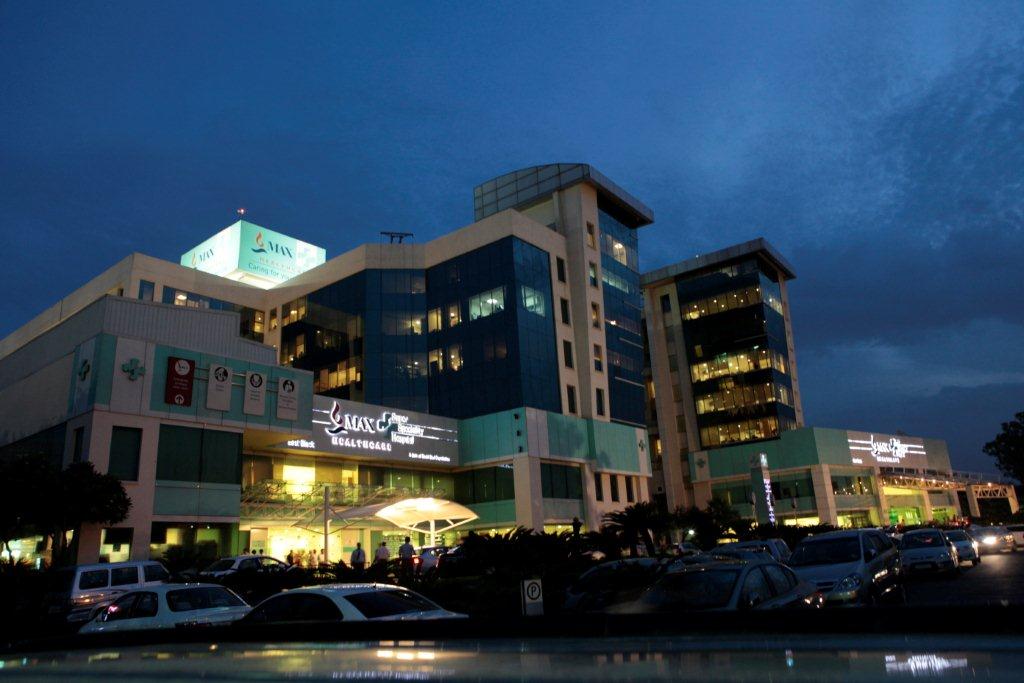
Max Healthcare
View on Wikipedia
Max Healthcare Institute Limited is an Indian for-profit private hospital chain headquartered in Delhi.[4][5] As of June 2025, Max Healthcare operates 22 hospitals, with a total of over 5,000 beds, primarily in North India.[6][7]
Key Information
Max Healthcare also operates the Max Lab pathology and Max@Home home medical services divisions.[8]
History
[edit]Max Healthcare opened its first medical center in South Delhi's Panchsheel Park in 2000. The company opened two other secondary care centers in Pitampura in North West Delhi and Noida in 2002.[9] In 2004, the company commissioned the East Block of its flagship tertiary care hospital called Max Hospital, Saket in South Delhi.
In 2007, Max Healthcare ventured into Gurgaon with a secondary care hospital.[10]
In 2011, Max Healthcare entered into a public–private partnership (PPP) agreement with the Government of Punjab to set up two hospitals in Mohali and Bathinda. In the same year, Max Healthcare commissioned its tertiary care hospital in Shalimar Bagh, North West Delhi.[11]
In 2012, Life Healthcare Group acquired a 26% stake in Max Healthcare for ₹516 crore (US$96.56 million). In 2014, Life Healthcare invested another ₹766 crore (US$125.51 million) to increase its stake to 46.41% and to become an equal joint venture partner with Max India.[12]


In 2015, Max Healthcare acquired the Pushpanjali Crosslay Hospital in Vaishali, Ghaziabad,[13] and the Saket City Hospital in Saket. These hospitals were subsequently renamed as Max Hospital Vaishali, and Max Smart Hospital, Saket.[14][15] A standalone oncology center called Max Cancer Centre was commissioned in Lajpat Nagar, South Delhi, in 2016.[16]
In 2018, Life Healthcare announced that it would sell its entire 49.7% stake in Max Healthcare and exit its joint venture with Max India.[17] In 2019, Radiant Lifecare acquired 49.7% stake in Max Health Institute Limited for ₹2,136 crore (US$303.32 million)[18][19] and Abhay Soi was made chairman.[20] In 2020, Max Healthcare merged with Radiant Lifecare, which operated BLK Hospital in Central Delhi and the Nanavati Hospital in Mumbai, to become the second-largest healthcare company in India by revenue.[21][1]
The company listed on the stock exchanges in August 2020.[22][23] Between 2021 and 2022, co-promoter KKR & Co. Inc. sold its entire stake in Max Healthcare. As a result, Abhay Soi became the sole promoter of the company with over 23% stake.[24][25]
In 2021, the company obtained the rights to aid the development of a 500-bed hospital in Saket, South Delhi.[26] It secured two land parcels in Gurgaon for two hospitals.[27] The company also executed an O&M agreement to manage the 300-bed Muthoot Hospital in Dwarka, Delhi.[28] In 2022, it acquired a controlling stake in Eqova Healthcare, which had the rights to provide medical services to an upcoming hospital in Patparganj, East Delhi.[29]
In December 2023, Max Healthcare acquired Sahara Hospital in Lucknow for ₹940 crore (US$110 million).[30] In February 2024, it acquired Alexis Multi-Specialty Hospital in Nagpur for ₹412 crore (US$49 million).[31]
In September 2024, Max Healthcare acquired a 64% stake in Jaypee Healthcare at an enterprise value of ₹1,660 crore (US$200 million), gaining control of three hospitals in Noida, Bulandshahr and Anupshahr.[32] In 2025, Max Healthcare sold the hospitals in Anupshahr and Bulandshahr for ₹40 crore (US$4.7 million) as it announced that it would focus on super-specialty hospitals in larger cities.[6]
Education and research
[edit]This section contains promotional content. (October 2024) |

Max Institute of Medical Excellence (MIME) has held various training programs across multiple disciplines.[33][34] Courses offered include a full-time postgraduate Internal Medicine Training (IMT) program in association with the Joint Royal College of Physicians Training Board (JRCPTB), UK.[35] The institute offers a program affiliated with the Lincoln American University, Guyana to train MBBS students. The clinical rotation of 88 weeks is divided among surgery, obstetrics and gynecology, pediatrics, and family medicine, and various electives like gastroenterology, urology, nephrology, psychiatry, dermatology, orthopedics, rheumatology, neurology and neurosurgery, cardiology, and cardio-thoracic surgery, etc.[36]
Subsidiaries
[edit]- Max Lab provides diagnostics and pathology services through its own labs and partner entities. It is the third-largest diagnostics chain in north India.[37]
- Max@Home provides home care, home health nursing, house call and medicine delivery services among others.[37]
Controversies
[edit]In September 2013, a patient who had received a pacemaker implantation at Max Super Speciality Hospital, Mohali, died after the doctor allegedly implanted a "wrong and cheap pacemaker". In 2014, the Chief Judicial Magistrate Court (CJM) of Mohali summoned the hospital's CEO and doctor to stand trial against charges of medical negligence, conspiracy and cheating.[38] In 2017, the State Consumer Disputes Redressal Commission ordered the hospital to pay a compensation of ₹32.94 lakh (US$50,582.3) to the wife of the deceased patient.[39] The CJM's summoning order was upheld by the Punjab and Haryana High Court in 2024.[40]
In 2015, the Competition Commission of India (CCI) ordered a probe into Max Super Speciality Hospital, Patparganj, which was allegedly selling disposable syringes to patients at inflated prices. In 2017, the CCI investigation concluded that the hospital was making 275% to 525% profits by forcing patients to buy the products at maximum retail price from its own pharmacy in "a clear instance of abuse of the dominant position". It noted that overcharging was prevalent across all 14 hospitals of Max Group.[41]
In 2016, the Government of Delhi ordered five hospitals in the city, including Max Super Speciality Hospital, Saket, to pay a total fine of ₹600 crore (US$89.29 million) for denying free-of-cost treatment to the poor. The government stated that the five hospitals were granted land at concessional rates on the condition that they provide free medical treatment to poor people totalling to 10% of all in-patients and 25% of all outpatients, but they had failed to comply with the condition.[42][43]
In December 2017, the Government of Delhi suspended the license of Max Super Speciality Hospital, Shalimar Bagh, which had wrongly declared a preterm baby dead that was later found to be alive. Delhi Health Minister Satyendar Jain labelled the hospital as a "habitual offender" and said that three notices had been served to the hospital earlier over medical lapses.[44][45] The hospital resumed operations later that month after the license suspension was stayed.[46]
During the outbreak of COVID-19 in 2020, Max Super Speciality Hospital, Patparganj, received criticism for its high treatment costs. The hospital issued a statement that charges of over ₹1 lakh (US$1,349.53) per day was applicable only for "very critical COVID-19 patients".[47][48]
References
[edit]- ^ a b Leo, Leroy (1 June 2020). "Max Healthcare completes merger of Radiant Life's hospital assets with self". mint. Retrieved 8 December 2020.
- ^ "Annual Report 2022-23" (PDF). Max Healthcare Institute Limited. Retrieved 29 March 2024.
- ^ "Earnings update – Q4 & FY25" (PDF). Max Healthcare Limited. Retrieved 28 May 2025.
- ^ "MAX HOSPITALS". www.ibef.org. Retrieved 21 August 2020.
- ^ Das, Sohini (1 June 2020). "Max Healthcare says will become second largest healthcare chain by revenue". Business Standard India. Retrieved 8 December 2020.
- ^ a b "Earnings update — Q1 FY26" (PDF). Max Healthcare Institute Limited. Retrieved 22 August 2025.
- ^ "Max Healthcare Institute Directors Report | Max Healthcare Institute Director Details". The Economic Times. Retrieved 10 July 2023.
- ^ Anand, Kshitij (17 November 2022). "Fundamental Radar: Why Max Healthcare could touch fresh record highs and scale Rs 500 levels in next 1 year". The Economic Times. ISSN 0013-0389. Retrieved 9 July 2023.
- ^ "Max Healthcare Centre". indiatimes.com. Retrieved 9 November 2011.
- ^ "Warburg Pincus enhances stake in Max Healthcare | Max India". Retrieved 8 December 2020.
- ^ Roy, Vijay C. (12 February 2009). "Max sole bidder for Punjab super-speciality hospitals". Business Standard India. Retrieved 8 December 2020.
- ^ "Life Healthcare completes Rs 766 crore investment in Max Healthcare". The Economic Times. Retrieved 11 January 2023.
- ^ Reporter, B. S. (29 May 2015). "Max acquires Pushpanjali Hospital for Rs 290 cr". Business Standard India. Retrieved 8 December 2020.
- ^ Punj, Shreya (29 May 2015). "Max Healthcare acquires NCR's Pushpanjali Crosslay Hospital". mint. Retrieved 8 December 2020.
- ^ "Max Healthcare acquires 76% stake in Pushpanjali Crosslay for Rs 287 crore". The Economic Times. Retrieved 8 December 2020.
- ^ "Delhi gets first standalone cancer daycare centre". Hindustan Times. 7 June 2016. Retrieved 8 December 2020.
- ^ "Life Healthcare To Sell Its Stake In Max Healthcare". BloombergQuint. 20 September 2018. Retrieved 21 August 2020.
- ^ "Radiant Life Care completes acquisition of 49.7% stake in Max Healthcare". www.businesstoday.in. Retrieved 8 December 2020.
- ^ "Max Healthcare announces change in leadership, reconstitutes board". @businessline.
- ^ "Max Healthcare Institute reconstitutes its board, ropes in ex-SEBI chief UK Sinha as independent director". Firstpost. 13 August 2019. Retrieved 21 August 2020.
- ^ "Max completes healthcare merger with Radiant Life". The Economic Times. 2 June 2020. Retrieved 19 February 2021.
- ^ "Turnaround Specialist Abhay Soi And KKR-promoted Max Healthcare Poised For D-Street Debut". Moneycontrol. 18 August 2020. Retrieved 11 March 2021.
- ^ "Max Healthcare Institute lists on bourses, eyes robust growth". Zee Business. 22 August 2020. Retrieved 8 December 2020.
- ^ Dhanjal, Swaraj Singh; Laskar, Anirudh (16 August 2022). "KKR sells Max stake in PE's largest exit". mint. Retrieved 24 December 2022.
- ^ Laskar, Anirudh (14 July 2022). "KKR might sell entire stake in Max Healthcare for ₹12,000cr". mint. Retrieved 9 July 2023.
- ^ "Delhi: Another Max Hospital to come up in Saket". The Indian Express. 29 August 2021. Retrieved 10 July 2023.
- ^ www.ETHealthworld.com (4 October 2021). "Max Healthcare plans Rs 1,600 cr investment to add around 1,000 beds in Gurugram". Economic Times. Retrieved 10 July 2023.
- ^ Pilla, Viswanath (20 January 2022). "Max Healthcare to manage 300 bed Muthoot Hospitals in Delhi suburb". The Economic Times. ISSN 0013-0389. Retrieved 10 July 2023.
- ^ "Max Healthcare Institute to acquire Eqova Healthcare". www.thehindubusinessline.com. 11 February 2022. Retrieved 10 July 2023.
- ^ "Max Healthcare expands footprint with ₹940-crore acquisition of Lucknow's Starlit Medical Centre". CNBCTV18. 8 December 2023. Retrieved 8 December 2023.
- ^ "Max Healthcare strengthens western presence by acquiring Alexis multi-specialty hospital". BusinessLine. 9 February 2024. Retrieved 9 February 2024.
- ^ "Max to buy 64% stake in Jaypee Healthcare". The New Indian Express. 14 September 2024. Retrieved 14 September 2024.
- ^ "Dr Dibya Singha Das lauded one top joint replacement surgeons country". International Business Times. 16 August 2021.
- ^ "Max institute to conduct emergency medicine exam". Amar Ujala (in Hindi). Retrieved 10 July 2023.
- ^ "Max Healthcare joins hands with The Royal College of Physicians to organise General Medicine Symposium". Express Healthcare. 17 January 2020. Retrieved 10 July 2023.
- ^ "Lincoln American University collaborates with Singhania University to help Indian medical aspirants". The Print. 6 August 2021.
- ^ a b "Max Healthcare - A three-act play: growth, quality, returns" (PDF). HDFC securities. Retrieved 11 January 2023.
- ^ "Max Hospital CEO, doc summoned". Tribune India. Retrieved 28 March 2024.
- ^ "Commission directs Max Hospital to pay Rs 32.94 lakh". Tribune India. Retrieved 28 March 2024.
- ^ "Death by medical negligence: HC refuses to quash summoning order against Mohali hospital, doc". Hindustan Times. 14 March 2024. Retrieved 28 March 2024.
- ^ "Max makes profit of up to 525% on syringes: CCI". The Times of India. 7 December 2017. Retrieved 28 March 2024.
- ^ "Five city hospitals 'fined' Rs 600 crore for spurning the poor". The Times of India. 12 June 2016. Retrieved 6 April 2024.
- ^ "Delhi government yet to recover Rs 600 cr fine from 5 private hospitals". DNA India. 10 July 2018. Archived from the original on 10 July 2018. Retrieved 6 April 2024.
- ^ Sharma, Neetu Chandra (8 December 2017). "Max Hospital Shalimar Bagh loses licence over negligence". Mint. Retrieved 28 March 2024.
- ^ "Foetus below 24 weeks not viable, say doctors". theweek.in. Retrieved 29 March 2024.
- ^ "Delhi: Max Hospital in Shalimar Bagh resumes operations, suspension of licence stayed". The Indian Express. 20 December 2017. Retrieved 28 March 2024.
- ^ Porecha, Maitri (14 June 2020). "Loss of face for Max Hospital over steep Covid-19 charges". Business Line. Retrieved 29 March 2024.
- ^ "Max Healthcare COVID-19 pricing controversy - All you need to know". Free Press Journal. Retrieved 17 March 2021.
External links
[edit]Max Healthcare
View on GrokipediaMax Healthcare Institute Limited is one of India's largest private healthcare providers, operating 22 facilities with over 5,300 beds focused on super-speciality care in northern regions including Delhi-NCR, Uttar Pradesh, Punjab, Uttarakhand, and Haryana.[1][2]
Founded in 2001 by Analjit Singh as part of the Max India group, the company has grown through acquisitions and expansions, becoming a publicly listed entity on the National Stock Exchange and Bombay Stock Exchange with annual revenue exceeding ₹9,000 crore as of 2025.[3]
It specializes in advanced treatments across oncology, cardiology, neurology, and organ transplants, employing over 5,000 doctors noted for pioneering expertise, and maintains NABH accreditation for quality standards at multiple sites.[4][5]
Max Healthcare plans aggressive capacity addition to reach approximately 9,500 beds by 2028 via brownfield and greenfield projects, capitalizing on India's rising healthcare demand amid a bed shortage.[6][7]
While recognized for clinical excellence, it has faced disputes including a failed 2023 bid for Care Hospitals leading to arbitration losses and occasional patient grievances over billing and fees, though these remain typical in the competitive sector without systemic regulatory findings.[8][9]
Historical Development
Founding and Early Expansion (1985–2001)
Max India Limited, the foundational entity behind Max Healthcare, was established in 1985 by entrepreneur Analjit Singh as a public limited company listed on the National Stock Exchange and Bombay Stock Exchange, initially concentrating on pharmaceutical manufacturing including penicillin-based drugs, bulk active pharmaceuticals, and packaging films.[1][10] The company's origins trace to 1984, when Singh set up operations in Railmajra, Punjab, leveraging partnerships with international firms such as Gist-brocades for technology transfer in drug production.[10] Through the late 1980s and 1990s, Max India expanded its industrial base by introducing innovations like satellite and cellular communication technologies in India, while maintaining a core in knowledge- and service-oriented sectors, which positioned the group for diversification beyond manufacturing.[10] This period saw the accumulation of over 37,000 shareholders, reflecting early investor confidence in Singh's vision for a multi-business conglomerate emphasizing quality and enterprise.[1] Max India's entry into direct healthcare services began in 2000 with the launch of Max Medcentre in Panchsheel Park, South Delhi, a modest outpatient facility equipped for daycare surgeries and specialized consultations, serving as the inaugural step toward building a dedicated healthcare arm.[1] This venture addressed gaps in accessible, high-quality ambulatory care in urban India, setting the stage for subsequent hospital developments while aligning with the group's shift toward service-driven enterprises by 2001.[1][10]Growth and Restructuring (2001–2015)
In the early 2000s, Max Healthcare consolidated its presence in the Delhi-NCR region through targeted expansions, including the establishment of secondary care centers in Pitampura, which became the first hospital in North Delhi to achieve ISO certification in 2002.[11] This period marked a shift from initial clinics to multi-specialty facilities, emphasizing quality standards and operational efficiency to support growing patient volumes in urban India. By focusing on greenfield developments and incremental capacity additions, the network grew steadily, laying the foundation for super-specialty services amid rising demand for advanced care in private healthcare.[12] Expansion accelerated in the late 2000s and early 2010s, with the launch of specialized centers of excellence in 2011 and the opening of Max Super Speciality Hospitals in key North Indian locations, extending beyond Delhi-NCR.[11][13] Growth was driven by a mix of organic builds and strategic acquisitions, increasing the bed capacity and geographic footprint to address underserved markets in tertiary care.[14] A pivotal financial milestone occurred in January 2012 when South Africa's Life Healthcare Group acquired a 26% stake for Rs 516.5 crore, valuing the enterprise at over Rs 2,300 crore and injecting capital for further infrastructure development.[15] This investment was followed by stake equalization in 2014, with an additional Rs 766 crore infusion at Rs 67.5 per share, elevating Life Healthcare's holding and enterprise value to Rs 3,650 crore.[16][17] Restructuring efforts intensified as part of Max India's broader corporate realignment, culminating in a three-way demerger approved by shareholders in July 2015 and effective from January 2016, with an appointed date of April 1, 2015.[18][19] This separation unlocked value by isolating Max Healthcare as a dedicated entity focused on hospital operations, divesting non-core segments like insurance and ventures into independent listed companies.[20] By fiscal year 2015, the restructured entity reported revenues of Rs 1,740 crore from over 2,000 beds across 12 hospitals, reflecting 24% net revenue growth and enhanced EBITDA margins amid operational synergies.[21][22] The demerger positioned Max Healthcare for independent capital raising and expansion, free from diversified group constraints, while maintaining promoter alignment under Analjit Singh's vision.[20]Modern Era and Public Listing (2016–Present)
In 2019, Radiant Life Care, promoted by Abhay Soi, acquired a 49.7% stake in Max Healthcare from South Africa's Life Healthcare Group, with financial backing from KKR, marking a significant ownership transition and strategic realignment under new Indian leadership.[23] This move positioned Abhay Soi as Chairman of Max Healthcare, emphasizing operational consolidation and expansion in the competitive Indian private healthcare sector.[24] The transaction integrated Radiant Life Care's assets, including facilities like Fortis Hospital in Mohali, into the broader Max network, enhancing tertiary care capabilities across North India.[25] The consolidation culminated in a composite merger scheme approved in 2020, whereby Radiant Life Care's healthcare business demerged into Max Healthcare, followed by a reverse merger to form Max Healthcare Institute Limited (MHIL) in June 2020.[26] This entity emerged as one of India's largest private hospital chains by bed capacity, operating over 3,200 beds across 16 facilities at the time, with a focus on high-end specialties like oncology and cardiology.[27] MHIL proceeded to an initial public offering (IPO), listing on the Bombay Stock Exchange (BSE) and National Stock Exchange (NSE) on August 21, 2020, with shares debuting at ₹107, reflecting investor confidence in its post-merger growth trajectory amid the COVID-19 pandemic's demand for advanced healthcare infrastructure.[28][29] Post-listing, MHIL pursued aggressive inorganic growth through targeted acquisitions to bolster its pan-India footprint. Notable deals included the acquisition of Nanavati Super Speciality Hospital in Mumbai, adding premium coastal-market capacity, and integrations of BLK-Max Super Speciality Hospital in Delhi, enhancing super-specialty offerings.[30] In fiscal year 2024, MHIL acquired Alexis Multispeciality Hospital in Nagpur and Sahara Hospital in Lucknow, followed by Jaypee Hospital in Noida in fiscal year 2025's third quarter, collectively expanding operational beds by over 1,000 and diversifying geographic presence beyond the National Capital Region.[30] These moves, funded partly through internal accruals and debt, aligned with a capital expenditure plan exceeding ₹5,000 crore over 3-4 years, targeting 6,500 beds by late 2020s via brownfield expansions—such as 268 beds at Nanavati and 400 at Saket—and greenfield projects like a 500-bed facility in Dwarka launched in 2025.[31][1] By mid-2025, the network comprised 22 facilities with over 5,100 beds, underscoring sustained capacity augmentation despite regulatory and competitive pressures in India's healthcare landscape.[32]Ongoing developments emphasize operational efficiencies and specialty enhancements, including oncology blocks at facilities like Shalimar Bagh in 2024, alongside asset-light models for faster scalability.[1] Co-promoter KKR divested its stake progressively from 2021 to 2022, allowing greater promoter control under Soi while maintaining institutional investor participation.[33] This era solidified MHIL's position as a leading player, prioritizing evidence-based clinical outcomes and infrastructure investments over subsidized public systems.[34]
Operational Overview
Hospital Network and Infrastructure
Max Healthcare Institute Limited operates a network of 22 healthcare facilities, comprising 17 hospitals and 5 medical centers, with a total bed capacity of approximately 5,300 beds as of 2025.[1] These facilities are primarily located in northern India, including the Delhi-NCR region, Haryana, Punjab, Uttarakhand, Uttar Pradesh, and Maharashtra, enabling broad accessibility in urban and semi-urban areas.[1] The network emphasizes super-specialty and multi-specialty care, with flagship institutions such as Max Super Speciality Hospital in Saket, Delhi, which features over 530 beds and advanced infrastructure including multiple intensive care units and modular operating theaters.[35] Key hospitals in the network include BLK-Max Super Speciality Hospital in Delhi, known for its oncology and neurology departments; Max Super Speciality Hospital in Mohali, Punjab, specializing in cardiac and neurosciences; and Max Hospital in Gurugram, Haryana, with 104 beds, 16 ICUs, and NABH accreditation.[36][37][38] Facilities are equipped with state-of-the-art infrastructure, such as robotic surgery systems, over 120 critical care beds in newer expansions like Dwarka, and non-invasive cardiology units across select sites.[39][40] This setup supports high-volume procedures in specialties like orthopedics, mother-and-child care, and dialysis, with operational capacities including multiple operating theaters per hospital.[40] The infrastructure prioritizes scalability and technological integration, with 76% of beds in metro and tier-1 cities to optimize patient inflow and resource utilization.[41] Ongoing investments focus on brownfield and greenfield projects to enhance capacity without compromising existing operational efficiency.[6]
Clinical Services and Specialties
Max Healthcare's clinical services span over 80 specialties, with a focus on super-specialty care delivered through its network of hospitals primarily in North India. The provider emphasizes multidisciplinary approaches for complex conditions, integrating diagnostic, therapeutic, and surgical interventions supported by advanced infrastructure such as catheterization laboratories and intensive care units.[42][4] Centres of Excellence form the core of its offerings, including bariatric and metabolic surgery for obesity management, bone marrow transplantation for hematological disorders, comprehensive cancer care encompassing surgical, medical, and radiation oncology, cardiac sciences covering interventions like bypass surgeries and electrophysiology, endocrinology and diabetes management, and ophthalmology for advanced eye treatments.[43] Additional key areas encompass neurosciences with expertise in neurovascular interventions, gastroenterology and hepatobiliary procedures, orthopaedics including joint replacements and sports medicine, and obstetrics and gynaecology with fertility services.[44][43] Specialized capabilities vary by facility; for instance, Max Super Speciality Hospital in Dehradun leads in cardiac resynchronization therapy, while the Saket campus in Delhi handles targeted cancer therapies and heart surgeries.[45][44] The network also supports ancillary services like arthroscopy for sports injuries, audiology for hearing disorders, and aesthetic reconstructive surgery, ensuring broad coverage from preventive care to high-acuity treatments.[43]Subsidiaries and Strategic Partnerships
Max Healthcare Institute Limited manages its operations through a network of subsidiaries, including wholly-owned entities that oversee individual hospitals and support services. Jaypee Healthcare Ltd., acquired in November 2024 for approximately 500 beds, operates as Max Super Speciality Hospital in Noida as a wholly-owned subsidiary.[7] Similarly, Alexis Multi-Speciality Hospital Pvt. Ltd. in Nagpur, acquired in the fourth quarter of fiscal year 2024 with 200 beds, functions under full ownership.[7] Ancillary subsidiaries include Max Lab Limited, which provides pathology and diagnostic services across the network, and Max@Home, delivering homecare and wellness offerings.[2] International subsidiaries such as Max Healthcare FZ-LLC in Dubai and MHC Global Healthcare Nigeria Ltd. support expansion beyond India.[7] The company engages in joint ventures to broaden its footprint, notably holding a 60% stake in Eqova Healthcare Pvt. Ltd., which manages around 400 beds in facilities in East Delhi.[7] Strategic partnerships emphasize clinical advancement and technology integration. In September 2025, Max Healthcare collaborated with Medtronic to launch a surgical skill laboratory at its Saket facility, focusing on laparoscopic and minimally invasive techniques for training surgeons.[46] Academic alliances include ties with Manipal Academy of Higher Education, Mazumdar Shaw Medical Foundation, Boston University, and Imperial College London for education and research initiatives, alongside collaborations with Pfizer and IIT Bombay and Delhi for innovation in healthcare delivery.[7] Partner healthcare facilities, operated under long-term operate-and-manage agreements with societies such as Balaji Medical & Research Centre for Max Patparganj and Gujarmal Modi Hospital & Research Centre for Women for Max Smart, extend the network's capacity without full ownership, with agreements extending to 2048–2112.[7] These arrangements, alongside subsidiaries like those for BLK-Max Super Speciality Hospital and Nanavati Max Super Speciality Hospital—integrated post-acquisition—enable scalable growth while leveraging local entities.[7]Academic and Research Initiatives
Educational Programs and Training
Max Healthcare operates the Max Institute of Medical Education (MIME), established to provide specialized training for medical and non-medical professionals across its network, focusing on enhancing clinical competencies through hands-on programs.[47] MIME offers fellowship and certificate programs that integrate intensive clinical exposure with structured curricula, targeting areas such as internal medicine, emergency medicine, and surgical specialties.[48] These initiatives emphasize practical skill development, with programs accredited by bodies like the National Board of Examinations for Diplomate of National Board (DNB) practical training.[49] For physicians, Max Healthcare provides fellowship pathways in superspecialties, including competency-based training in minimally invasive surgery and advanced cardiology interventions, often in collaboration with international partners.[46] A notable example is the MEM-GWU International Residency Program in emergency medicine, developed with George Washington University, which commenced applications in April 2025 and spans durations from 16 days to 12 months depending on curriculum needs.[50] Additional offerings include American Heart Association-certified courses in Basic Life Support (BLS) and Advanced Cardiovascular Life Support (ACLS), delivered by in-house instructors to build emergency response proficiency.[51] Nursing education at Max Healthcare encompasses onsite workshops, such as Electrocardiography (ECG) skills training lasting 2 days, and blended learning certificates in essentials of cardiac nursing, aimed at staff in wards, operating theaters, intensive care units, and emergency rooms.[52] These programs support career progression for nurses by providing specialized growth opportunities in critical care and perioperative settings.[53] Allied healthcare training includes bachelor's-level and postgraduate courses in medical laboratory technology, radiology imaging, dialysis therapy, and operation theater technology, with a strong emphasis on practical components to prepare students for healthcare roles.[54] Strategic partnerships, such as the September 2025 launch of the Max-Medtronic Skill Lab at Max Hospital Saket for laparoscopic training, and a July 2025 memorandum with Aston University for joint staff training and knowledge exchange, further bolster these efforts by incorporating global standards in surgical and disease management education.[46][55]Research Contributions and Innovations
Max Healthcare's research efforts are coordinated through the Max Research Centre, which focuses on conducting novel studies, fostering research excellence, and developing specialized research units across its network. The centre has overseen more than 30 funded research projects, completed over 650 clinical trials, and currently manages upwards of 80 ongoing clinical trials as of 2025.[56] These initiatives emphasize clinical outcomes in areas such as oncology, cardiology, and infectious diseases, including retrospective and prospective observational studies on conditions like COVID-19.[57] [58] The organization supports scholarly output through the Max Medical Journal, a quarterly publication launched in 2024 that features peer-reviewed research articles, challenging case studies, and clinician contributions from Max Healthcare facilities.[59] Affiliated researchers have produced over 455 documented publications indexed in databases like SciSpace, covering topics from surgical advancements to epidemiological analyses, with contributions from more than 540 researchers listed on platforms such as ResearchGate.[60] [61] Strategic partnerships enhance Max Healthcare's research capabilities. In July 2025, it entered a memorandum of understanding with Aston University in the UK to collaborate on clinical research, innovation, and capacity building in medical sciences, aiming to address global health challenges through joint studies and training.[55] An August 2025 alliance with the Global Health Alliance UK targets advancements in cardiology and cardiometabolic renal care via enhanced training and research programs.[62] Additional collaborations include a Pfizer India partnership for evidence generation, educational initiatives for healthcare professionals, and clinical research in multiple therapy areas, alongside a September 2025 agreement with Medtronic to establish a surgical skills lab for minimally invasive techniques.[63] [46] Innovations in research methodology at Max Healthcare incorporate technologies such as artificial intelligence for patient care optimization and predictive analytics, as explored in journal articles and trial designs.[64] The Office of Research promotes intramural studies, investigator-initiated trials, and grants, contributing to an academic environment that integrates robotic-assisted procedures— with 26 systems deployed network-wide—into clinical research protocols for improved precision and outcomes.[32] [65] These efforts prioritize evidence-based advancements over speculative applications, drawing from empirical data in high-volume super-specialty cases.Financial Performance and Strategy
Revenue Growth and Profitability Metrics
Max Healthcare Institute Limited recorded consolidated revenue of ₹5,437 crore in FY24 (ending March 31, 2024), marking a 19.17% increase from ₹4,563 crore in FY23.[66][67] This growth was driven by higher bed occupancy, average revenue per occupied bed (ARPOB), and contributions from newly acquired facilities. Over the preceding five years, revenue expanded at a compound annual growth rate (CAGR) of 28.4%, reflecting capacity additions and operational efficiencies.[68] Profitability metrics remained resilient amid expansion. Operating profit margin (OPM) improved to 27.4% in FY24 from 26.9% in FY23, supported by scale benefits and cost controls, though net profit margin dipped slightly due to higher depreciation from investments.[69] Profit after tax (PAT) growth has been accelerated, achieving an 80.5% CAGR over the last five years, underscoring improved earnings leverage from core hospital operations.[70] In the first quarter of FY26 (April-June 2025), revenue rose 27% year-over-year to ₹2,064 crore, with PAT increasing 17% to ₹308 crore and EBITDA margins holding at approximately 25%.[71][72] These figures align with analyst projections of 16-20% annual revenue CAGR through FY27, bolstered by ongoing bed expansions and premium service focus, though margins face pressure from wage inflation and integration costs.[73][74]| Fiscal Year | Revenue (₹ crore) | YoY Growth (%) | OPM (%) | PAT Margin (%) |
|---|---|---|---|---|
| FY23 | 4,563 | - | 26.9 | - |
| FY24 | 5,437 | 19.2 | 27.4 | - |
| TTM (as of Q1 FY26) | 7,513 | - | - | 15.3 |
Acquisitions, Investments, and Market Expansion
In June 2020, Max Healthcare completed a merger with Radiant Life Care, incorporating key assets such as the 650-bed BLK Super Speciality Hospital in Delhi (originally redeveloped by Radiant in 2010) and the 350-bed Nanavati Super Speciality Hospital in Mumbai into its network, significantly bolstering its presence in northern and western India.[26][76] Subsequent inorganic growth included the acquisition of Sahara Hospital in Lucknow on December 11, 2023, a 550-bed facility purchased for ₹993 crore, which expanded Max's footprint in Uttar Pradesh and demonstrated rapid post-acquisition revenue growth exceeding 50% in subsequent quarters.[77][30] In early 2024, the company acquired Alexis Multispeciality Hospital in Nagpur for ₹395 crore, adding 200 beds and marking entry into central India's underserved markets.[77][78] A landmark transaction occurred on September 13, 2024, when Max Healthcare secured a 64% controlling stake in Jaypee Healthcare under the Insolvency and Bankruptcy Code process at an enterprise value of ₹1,660 crore, encompassing the 500-bed Jaypee Hospital in Noida alongside smaller facilities in Bulandshahr and Anoopshahar; the latter two were divested in 2025 for ₹40 crore to streamline operations in the National Capital Region.[79][80] These acquisitions, totaling six since 2015 with an average deal size of approximately $80 million, have focused on high-potential tertiary care assets in tier-1 and tier-2 cities, enabling Max to leverage existing infrastructure for quicker scalability compared to greenfield developments.[81] Complementing acquisitions, Max Healthcare has committed ₹6,000 crore in capital expenditure through fiscal year 2028 to add 3,700 beds via brownfield expansions and new facilities, targeting a total capacity of 9,200 beds across approximately 30 hospitals and emphasizing pan-India coverage with priority on northern and central regions to address infrastructure gaps.[82] This includes ongoing projects such as expansions at Max Smart Super Speciality Hospital and Nanavati Max Super Speciality Hospital, alongside new launches like Max Hospital Mohali, aimed at enhancing multispecialty capabilities and operational efficiencies.[83][31]| Acquisition Date | Entity | Beds Added | Location | Enterprise Value |
|---|---|---|---|---|
| June 2020 (merger) | Radiant Life Care assets (incl. BLK, Nanavati) | ~1,300 | Delhi, Mumbai | Merger (undisclosed)[26] |
| December 2023 | Sahara Hospital | 550 | Lucknow | ₹993 crore[77] |
| Early 2024 | Alexis Hospital | 200 | Nagpur | ₹395 crore[77] |
| September 2024 | Jaypee Healthcare | ~500 (core) | Noida (primary) | ₹1,660 crore[79] |
Leadership and Governance
Key Executives and Management
Abhay Soi serves as Chairman and Managing Director of Max Healthcare Institute Limited, a role he has held since acquiring and restructuring the company as a first-generation entrepreneur with a finance background. Educated with an MBA from European University in Belgium and a bachelor's degree in arts from St. Stephen's College, Delhi University, Soi oversees operations across multiple locations and holds additional directorships in entities such as Neo Legno Products Private Limited and Infrahealth Pte. Limited. Under his leadership, Max Healthcare has expanded to become India's second-largest listed hospital chain by revenue.[84][85] Yogesh Kumar Sareen acts as Senior Director and Chief Financial Officer, managing the company's financial strategy, budgeting, and compliance.[86][87] Other key executives include Dhiraj Aroraa, Senior Vice President, Company Secretary, and Compliance Officer, responsible for legal affairs and regulatory adherence; Anas Abdul Wajid, Senior Director and Chief Sales and Marketing Officer, leading commercial operations and patient acquisition efforts; and Col. Harinder Singh Chehal, a senior operational leader contributing to facility management and expansion initiatives.[88][89][90]| Executive | Position | Key Responsibilities |
|---|---|---|
| Abhay Soi | Chairman & Managing Director | Strategic oversight, acquisitions, and overall growth |
| Yogesh Kumar Sareen | Senior Director & CFO | Financial planning, reporting, and risk management |
| Dhiraj Aroraa | Senior VP, Company Secretary & Compliance Officer | Governance, secretarial duties, and legal compliance |
| Anas Abdul Wajid | Senior Director, Chief Sales & Marketing Officer | Marketing strategy, sales, and brand positioning |
