


Community hub
Recent from talks
Contribute something
Nothing was collected or created yet.
Menden
View on Wikipedia | This article needs additional citations for verification. (August 2015) |

Key Information


Menden (German pronunciation: [ˈmɛndn̩] ⓘ, official name: Menden (Sauerland); Westphalian: Mennen) is a city in the district Märkischer Kreis, in North Rhine-Westphalia, Germany. It is located at the north end of the Sauerland near the Ruhr river.
History
[edit]Menden's first churches were built in the 9th century. From 1180 on the area around Menden was part of the Cologne region, however, as it was on the border with the County of Mark, it was often fought over. In 1276, it received city rights. Industrialization started early: in 1695 needle production was the first industry, later followed by limestone products such as cement. In 1816 Menden was included within Prussia, after being part of Hesse for 13 years. In 1975 the city was merged with several previously independent municipalities, thus it grew in area as well as population.
Points of interest
[edit]The Hönnetal, a narrow valley with some beautiful cliffs carved into the limestone bedrock by the river Hönne.
Education
[edit]Primary education
[edit]In Menden (Sauerland), there are eleven elementary schools.
Secondary schools
[edit]Besides four hauptschulen, two realschulen, there are three grammar schools:
- Heilig-Geist-Gymnasium, only for boys until 1977; since 2015 combined with the Walramgymnasium and now named Städtisches Gymnasium an der Hönne
- Walburgisgymnasium, only for girls until 1974
- Walramgymnasium; since 2015 combined with the Heilig-Geist-Gymnasium and now named Städtisches Gymnasium an der Hönne
Culture
[edit]The theatre managed by the city government, is the Theater am Ziegelbrand (TAZ). It is directed by Volker Fleige.
Music
[edit]Menden à la carte is a popular festival. It is organized by the Initiativkreis Mendener Wirtschaft.
Theatre
[edit]In Menden there are three theatres; the Theater am Ziegelbrand in an old factory building with places for 49 spectators. Another theatre is located under the indoor swimming pool with places for 99 people. It is called Zimmertheater Scaramouche and corporate appearances and a traditional Christmas stage play can be seen there. For the young visitors there is a kids club. The third theatre is in Halingen. It is called the Halinger Dorftheater.
Museum
[edit]Founded in 1912, the Museum of Menden specialized on the living circumstances of the citizens of Menden in medieval age. It informs about and reconstructs the equipment from farmers' and patricians' houses. It also presents bones of human beings from prehistoric times and the complete skeleton of a cave bear.
Buildings
[edit]- The ruin of Burg Rodenberg, an old caste in the forest near the indoor swimming pool.
- The St.-Vincenz-Kirche, founded in 1345, is the biggest church in Menden and is near the old city hall.
- Parts of the old city defense such as 3 towers and a little part of the city wall still exist and may be seen.
Sport
[edit]In Menden there are many sport clubs. It is the home of the Sauerland Cup, which is a competition for handball clubs from all around the world. Even clubs from Japan or Switzerland took part in 2005. It takes place in spring and nearly every sports hall available is used. Menden is also the host of an international soccer competition in which every U-10 club can take part. The Huckenohlstadion is a multi-purpose stadium. Menden also has clubs for basketball, tennis, swimming, dancing, volleyball, boxing and contests, matches and demonstrations can be attended nearly every weekend.
Regular events
[edit]The first event in a year is the carnival, with a parade of clubs and local dance groups.
The second event is the Lendringser Frühling. Organized by the Lendringser Werbegemeinschaft it is an event combined with the possibility of Sunday shopping. The public can visit stalls and presentations of different groups such as a bike performance or typical food from different communities like the Greek one.
The Good Friday procession has taken place since the 17th century. The route starts near the St Vincenz Church and goes over 14 stations to the St Antonius Chapel and it begins hourly. The route is 2.5 kilometres (1+1⁄2 miles) long, and especially for the youth there is a procession with music which is well attended by young people.
In the time around Pentecost, Menden organizes a kirmes with amusement rides, food stands and a big firework display on Tuesday at the end of the kirmes. This event is a big magnet for over 300,000 people living around Menden. This event takes place during four days, from the Saturday before Pentecost until the Tuesday after.
The series Mendener Sommer is a collection of several events of different national and international music artists. The events which are free and organized by the culture office are mainly in July and August and take place outside in the centre of the city.
Menden à la carte is an event which takes place in the summer from Friday to Sunday and is marked culturally and culinarily.
The Mendener Herbst is an event of the Menden advertising organization and takes place every year on the 3rd weekend of October. It is a kind of a junk market for arts and crafts from the region.
Twin towns – sister cities
[edit] Aire-sur-la-Lys, France (1965)
- Ardres, France (1974/75)
 Braine-l'Alleud, Belgium (1978)
 Flintshire, Wales, United Kingdom (1980)
- Lestrem, France (1971)
- Locon, France (1964)
- Marœuil, France (1984)
 Plungė, Lithuania (1992/93)
 Eisenberg, Germany


Friendly cities
[edit]Menden also has friendly relations with:[2]
 Chalcis, Greece (2000)

Notable people
[edit]
- Augustin Henninghaus (1862–1939), missionary bishop in China at the time of the German Empire
- Erich Bärenfänger (1915–1945), Major General
- Wolfram Kuschke (born 1950), former president of the regional government (Bezirksregierung Arnsberg) and member of the state parliament, social democrat
- Silvia Hollmann (born 1955), athlete
- Dieter Lemke (born 1956), footballer
- Dendemann (born 1974), rapper
References
[edit]- ^ "Alle politisch selbständigen Gemeinden mit ausgewählten Merkmalen am 31.12.2023" (in German). Federal Statistical Office of Germany. 28 October 2024. Retrieved 16 November 2024.
- ^ a b "Städtepartnerschaften". menden.de (in German). Menden (Sauerland). Retrieved 2021-02-24.
External links
[edit]
- Official website (in German)
- Theater am Ziegelbrand (in German)
Towns and municipalities in Märkischer Kreis | ||
|---|---|---|
 | ||
| International | |
|---|---|
| National | |
| Geographic | |
| Other | |

Menden
View on GrokipediaGeography
Location and terrain
Menden is situated in the northeastern part of the Märkischer Kreis district in North Rhine-Westphalia, Germany, at geographic coordinates 51°26′N 7°48′E.[13] The city occupies the northern edge of the Sauerland hills, immediately adjacent to the Ruhr River valley, with its northern boundary formed by the river itself.[14] Covering an area of 86.1 km², Menden shares administrative borders with neighboring municipalities, including Fröndenberg to the north and Iserlohn to the south.[15][16] The terrain features a hilly landscape typical of the Sauerland, with elevations ranging from 115 m above sea level at the lowest points near the Ruhr to 380 m at the highest elevations within the city limits.[17] Forests dominate significant portions of the area, encompassing about 2,656 hectares and contributing to roughly three-quarters of the land being devoted to forestry, open spaces, or agriculture.[14] This wooded, undulating topography provides a natural buffer between Menden and the densely urbanized Ruhr area, located approximately 10 km to the south.[3] A defining natural feature is the Hönnetal valley, traversed by the Hönne River, where erosion has incised up to 80 m deep into the underlying mass limestone, forming striking cliffs and exposing karst formations.[18] These limestone cliffs, part of a significant karst landscape, enhance the valley's rugged character and support diverse geological and ecological elements within Menden's boundaries.[19]Climate and environment
Menden experiences a temperate oceanic climate (Cfb) under the Köppen classification, characterized by mild temperatures and consistent moisture throughout the year.[20] The average annual temperature ranges from 9°C to 10°C, while annual precipitation typically falls between 900 mm and 1,000 mm, distributed relatively evenly across seasons.[21][22] Seasonal patterns reflect this classification, with mild summers featuring average highs around 20°C in July and August, and cold winters where temperatures often drop to 0°C or below in January, occasionally accompanied by frost and light snow.[23][24] The proximity to the Ruhr industrial basin moderates these extremes but introduces occasional variability from urban heat and pollution influences.[25] Key environmental features include the Hönnetal nature reserve, a protected limestone valley up to 80 meters deep, formed by the erosive action of the Hönne River over millennia, supporting diverse flora and fauna in its karst landscapes.[18] Air quality remains generally good to moderate, though it faces challenges from industrial emissions drifting from the nearby Ruhr region, contributing to periodic elevations in particulate matter.[26][27] Local green space initiatives emphasize forest management, with woodlands covering approximately 31% of Menden's area (2,656 hectares as of 2013), promoting ecological stability and carbon sequestration through sustainable practices.[14] Municipal sustainability efforts focus on renewable energy adoption and biodiversity enhancement, aligning with broader German policies to integrate solar and wind resources into local infrastructure.[28] These programs also include biodiversity initiatives, such as habitat restoration in former industrial sites, including reclaimed limestone quarries, where abandoned pits are transformed into successional ecosystems supporting native vegetation and wildlife. The Hönnetal valley further aids recreation through its trails and natural settings.[18]History
Early settlement and medieval development
The first documented mention of Menden dates to 1072, with the foundational elements of what would become the parish church of St. Vincenz serving as a focal point for agrarian communities amid the forested terrain of the Sauerland.[29] The first documented reference to the town's castle occurred in 1313, marking the beginning of its evolution as a fortified settlement. By the late 12th century, Menden had emerged as a strategic border outpost within the Electorate of Cologne, incorporated into its territory around 1180 amid territorial disputes with neighboring counts. Its location along emerging trade routes connecting the Rhineland to Westphalia facilitated the exchange of goods like iron, timber, and agricultural products, fostering gradual economic activity beyond subsistence farming. In 1276, Archbishop Siegfried von Westerburg of Cologne granted Menden town rights, elevating it from a village to a chartered municipality with privileges for markets and self-governance, though original documents were lost to medieval fires.[30] The medieval period saw Menden entangled in regional conflicts, particularly feuds between Cologne and the County of Mark. Further destruction occurred in 1344 under Count Adolf IV of the Mark, prompting the construction of comprehensive fortifications, including a city wall encircling the core settlement, a moat, and 12 defensive towers—one of which, the Poenigeturm, survives as a key remnant of this era. These measures underscored Menden's role as a fortified trading post, indirectly benefiting from Hanseatic League influences through nearby members like Attendorn, which enhanced regional commerce in metals and crafts.[31] By the late 15th century, Menden had transitioned from a primarily agrarian base to a modest urban center, with its population supporting guilds, markets, and ecclesiastical institutions. Architectural legacies from this period include the foundations of the old town hall and surviving elements of the medieval walls, which highlight the town's defensive and communal evolution up to the early modern era.[32]Industrialization and 20th-century changes
The industrialization of Menden began in the early 18th century with the establishment of needle production, when Cologne needle master Johann Heinrich Törnig relocated to the town in 1724, setting up grinding and polishing mills that marked the area's entry into manufacturing.[33] By the early 18th century, this industry had expanded significantly, employing around 300 workers by 1790 and producing thousands of needles daily, drawing on local water power and metal resources from the Sauerland region.[34] In the 19th century, limestone quarrying emerged as a key sector south of the town, particularly around Rödinghausen, fueling the development of cement production; the Hönnetal lime works, established in 1896, became one of Europe's largest facilities with advanced ring ovens for lime burning.[34] These industries spurred a population boom, transitioning Menden from an agrarian economy to one dominated by manufacturing, with wire drawing, metalworking, and textile factories like the Neuwalzwerk (founded 1827) and Schmöle (1808) exporting products across Europe and beyond.[34] The 20th century brought profound disruptions through the World Wars, particularly World War II, when Menden suffered multiple Allied bombings, including a devastating raid on February 1, 1945, that destroyed seven houses, severely damaged two others, and killed over 20 residents while shattering windows at St. Walburgis Church.[35] The town also relied on forced labor, with around 10,000 workers exploited in local industries under the "Schwalbe I" project during the war.[34] Post-1945 reconstruction accelerated during the Wirtschaftswunder economic miracle, as factories retooled for consumer goods like nylon stockings and attracted guest workers from southern Europe to bolster the manufacturing workforce, further entrenching the shift away from agriculture.[34] A major administrative change occurred on January 1, 1975, through North Rhine-Westphalia's communal restructuring, when Menden incorporated surrounding municipalities including Asbeck (part), Bösperde, Halingen, Lendringsen, Oesbern, and Schwitten, expanding its territory and integrating rural villages into the urban fabric.[36] This merger, part of broader regional reforms, boosted the population to approximately 52,912 by the end of 1975, reflecting suburbanization trends as industrial growth and improved infrastructure drew residents to the outskirts.[37] In the late 20th century, integration into the European Economic Community enhanced export opportunities for metal and cement products, supporting sustained industrial diversity while promoting suburban development amid economic recovery.[34]Demographics
Population trends
As of 2024, Menden (Sauerland) has an estimated population of 52,255 residents, with a population density of approximately 607 inhabitants per square kilometer across its 86.10 km² area.[1] The town's population has exhibited steady growth over the long term, expanding from about 7,500 in 1900 to over 30,000 by 1970, followed by a significant increase to around 55,000 in the mid-1970s due to the municipal merger on January 1, 1975, which incorporated surrounding communities such as Asbeck, Halingen, and Lendringsen.[38] This peak was sustained into the late 1990s and early 2000s, reaching 59,183 in 2001, but has since experienced a slight decline to 52,485 by end of 2022 (IT.NRW estimate; May 2022 census: 52,434) and 52,177 by end of 2023, primarily attributed to an aging population and negative net migration.[1][39] Projections from IT.NRW (Gemeindemodellrechnung) indicate a continued downward trend, with the population expected to fall to approximately 49,964 by January 1, 2030.[38] In terms of age structure, 2022 data reveals that 16.0% of residents were under 18 years old, while 32.1% were over 60, reflecting a maturing demographic.[38] This aging is evident in the higher proportions of seniors compared to younger cohorts, contributing to the observed population stagnation. Menden's urban-rural split highlights its position as a transitional town between the rural Sauerland region and the urban Ruhr area, with the core city districts like Menden-Mitte housing denser populations, while incorporated rural areas such as Asbeck and Lendringsen feature lower densities and more agricultural land use. Migration patterns show net outflows from these rural districts to nearby urban centers in the Ruhr, such as Dortmund and Iserlohn, particularly among younger residents seeking employment opportunities.[40]Ethnic and religious composition
Menden's population is predominantly ethnic German, with approximately 89.1% holding German citizenship as of the 2022 census.[1] Foreign nationals constitute about 10.9% of residents, including 5.1% from EU countries and 5.8% from non-EU nations, reflecting a modest level of ethnic diversity compared to larger urban centers in North Rhine-Westphalia.[1] The largest foreign communities include Turkish nationals (1.6%), followed by Polish (1.3%), Syrian (1.2%), and Italian (1.0%) residents.[1] Overall, around 24% of Mendens have a migration background, evenly split between foreign citizens and those naturalized as Germans.[41] The town's ethnic composition stems from post-World War II labor migration, particularly the influx of guest workers in the 1960s and 1970s recruited for the region's mining and manufacturing industries, including Italians, Turks, and Yugoslavs.[42] More recent immigration includes EU citizens from Eastern Europe, such as Poles, drawn by economic opportunities, as well as Syrian refugees arriving after 2015 amid the European migration crisis.[1] To support integration, the local council offers programs through the Integrationsrat, a body representing residents with migration backgrounds, and provides multilingual services via the Volkshochschule for language courses in Turkish, Arabic, and Polish.[43][44] Community centers host cultural events and advisory services tailored to minority groups, fostering social cohesion in a town where over 80% of residents were born in Germany.[45][1] Religiously, Menden exhibits a Christian majority shaped by its historical ties to the Sauerland region, with Roman Catholics comprising 48.7% of the population in 2022, down from 54.1% in 2015 due to ongoing secularization.[1][46] Protestants account for about 19.9%, primarily affiliated with the Evangelical Church in Westphalia.[1] The remainder, approximately 31.4%, includes unaffiliated individuals, Muslims (estimated at 3-4% based on Turkish and Syrian communities), and smaller groups like Jehovah's Witnesses.[1][46] This distribution highlights broader trends of declining church membership in Germany, with unaffiliated residents rising as the third-largest category since the early 2010s.[46]Government and politics
Administrative structure
Menden is classified as a Mittelstadt, or mid-sized town, within the Märkischer Kreis district of North Rhine-Westphalia, Germany.[47] The town's administrative structure was significantly reshaped by the communal territorial reform (kommunale Gebietsreform) effective January 1, 1975, which incorporated the former independent municipalities of Bösperde, Halingen, Lendringsen, Oesbern, and Schwitten, along with Asbeck from the Amt Balve and the eastern part of Sümmern, expanding the municipal area from roughly 10 km² to 86 km².[40] The municipality is subdivided into 10 Stadtbezirke (city districts), which facilitate local administration and representation, reflecting the integration of historical localities post-reform.[38] The city council (Stadtrat), the primary legislative body, comprises 60 members elected every five years through direct and list voting, with responsibilities including enacting local ordinances, approving the annual budget, and overseeing municipal policies.[48][49] Under the Gemeindeordnung für das Land Nordrhein-Westphalia (Municipal Code of North Rhine-Westphalia), Menden as a municipality handles core services such as waste collection and disposal, maintenance of local roads, and spatial planning, ensuring compliance with state-level regulations while addressing community needs. These functions are coordinated through the city's administration, led by the mayor and supported by specialized departments.Current leadership and elections
The current mayor of Menden (Sauerland) is Manuela Schmidt of the Christian Democratic Union (CDU), who assumed office on November 4, 2025, following her election in the 2025 municipal elections.[50] Schmidt, a long-time city administration official who served as head of the "Citizen Services, Security, and Order" department since 2022, won the mayoral runoff on September 28, 2025, against SPD candidate Jens Wilkens with 62.7% of the vote.[51][52] Her term runs from 2025 to 2030.[53] The city council (Stadtrat) consists of 60 members, elected on September 14, 2025, with a voter turnout of 54.3%.[52] The CDU holds the largest faction with 21 seats (34.8% of the vote), followed by the Alternative for Germany (AfD) with 10 seats (16.7%), the Social Democratic Party (SPD) with 10 seats (15.6%), and the Greens (Bündnis 90/Die Grünen) with 8 seats (13.8%).[52][49] Smaller parties include Menden Innovativ (4 seats, 7.3%), The Left (Die Linke, 3 seats, 4.4%), the Free Democratic Party (FDP, 2 seats, 3.6%), Free Voters/Independent Community of Voters (FW/UWG, 1 seat, 1.8%), and the Independent Citizens' Initiative (USF, 1 seat, 1.4%).[52][49] No single party holds a majority, requiring coalitions for governance. In the 2025 mayoral election's first round, Schmidt led with 42.8% of the vote, ahead of Wilkens at 27.1%, prompting the runoff where turnout dropped to 37.7%.[52][54] This marked the first time a woman was elected mayor in Menden's history.[55] The previous mayor, Dr. Roland Schröder, an independent with a background in media studies and academia, served from 2020 to 2025 after winning with 75.1% in that year's runoff.[56] The next municipal elections are scheduled for 2030. Schmidt's policy priorities emphasize modernizing administration through digitization and process simplification, investing in infrastructure such as schools and energy-efficient buildings, and enhancing local economic development via business support and youth programs.[50] She also focuses on safety measures, including a municipal order service, sustainability efforts like flood protection and climate action plans, and community initiatives to bolster volunteering and social inclusion.[50][53] These align with broader regional cooperation in the Märkischer Kreis, particularly on urban development and environmental projects.[50]Economy
Key industries
Menden's economy is anchored in traditional industries that trace their origins to the 19th century, particularly metalworking and wire production, which emerged from the region's rich ore deposits and skilled craftsmanship in the Sauerland area.[57] These sectors continue to thrive through numerous small and medium-sized enterprises (SMEs) specializing in precision metal processing, such as Grewe-Metalltechnik GmbH for milling and welding, and Broki Metallwaren for custom metal components in retail fixtures.[58][59] Another longstanding pillar is the production of cement and limestone, exemplified by the Rheinkalk GmbH & Co. KG plant in Hönnetal, part of the global Lhoist Group, which processes local limestone deposits into lime and dolomite products for construction and industrial applications.[60][61] The town's industrial landscape has diversified significantly, hosting over 3,500 companies that span manufacturing, logistics, and services, fostering a robust SME-driven economy.[8] Prominent global players include OBO Bettermann Holding GmbH & Co. KG, a leading manufacturer of electrical installation systems headquartered in Menden since 1911, which invested €50 million in a new logistics center in 2025 to enhance supply chain efficiency.[62] Similarly, BEGA Gantenbrink-Leuchten KG produces high-quality architectural lighting solutions, contributing to the region's expertise in electrotechnical manufacturing, while Friedrich Grohe GmbH & Co. KG focuses on sanitary fittings in the Industriepark Edelburg.[63][64] SMEs dominate logistics and retail services, with growth in tourism-related businesses leveraging Menden's proximity to the Ruhr area. Key industrial parks support this expansion, including the Gewerbepark Hämmer, a 60-hectare modern development awarded for its sustainability features, accommodating light industry and technology firms with gigabit fiber infrastructure.[65] The Industriepark Edelburg hosts manufacturing operations like Grohe's, emphasizing efficient production spaces. Innovation drives further progress through the Sauerland Competence Cluster Light, which networks lighting manufacturers like BEGA and Maßling GmbH to advance LED and architectural illumination technologies.[7][66] Circular economy initiatives are also prominent, as seen in Lobbe Group's state-of-the-art AI-equipped waste sorting facility in Menden, aimed at maximizing resource recycling and minimizing landfill use.[67]Employment and economic indicators
As of 30 June 2023, Menden had 21,564 employed residents (social insurance obligated, at place of residence), reflecting a stable labor force in the region.[38] The unemployment rate was 6.2% as of August 2024, higher than the 2018 figure but aligned with regional trends around 7.0% average in 2023 for Märkischer Kreis.[68][69] Commuter patterns are significant, with many residents traveling to nearby Ruhr cities such as Dortmund and Hagen for work, contributing to a net out-commuting balance.[69] Income metrics highlight the economic vitality of local businesses, with per capita purchasing power of €27,606 as of 2023.[69] Manufacturing plays a key role, accounting for approximately 48% of employment in the Märkischer Kreis as of 2023, underscoring its industrial heritage within the Sauerland area.[69] Infrastructure supports economic activity through reliable transport links, including Menden station on the Volmetalbahn railway line, which connects to the regional network, and access via the A445 highway for efficient goods and personnel movement. Business incubators, such as those facilitated by local economic development initiatives, aid startups and small firms in innovation and growth. Challenges include an aging workforce, which poses risks to long-term labor supply, and a gradual shift toward service-sector jobs amid structural changes in traditional industries. Over 3,500 active enterprises contribute to economic resilience despite these pressures.[8]Education
Primary and special education
In Menden, primary education is provided through eight state-funded Grundschulen, which collectively serve approximately 1,817 students across grades 1 through 4 as of the 2024/2025 school year.[70] These schools emphasize foundational skills in reading, writing, mathematics, and social development for children aged 6 to 10, with a strong focus on local integration to support community ties and accessibility for families.[71] Among the facilities, confessional options include Catholic-affiliated schools such as the Josefschule Menden and the Bischof-von-Ketteler-Schule, which incorporate religious education alongside the standard curriculum while remaining publicly funded.[72] [73] Special education in Menden's primary schools follows North Rhine-Westphalia's inclusive model, where students with special educational needs are primarily integrated into regular classrooms through the "Gemeinsames Lernen" initiative. This approach supports around 7.7% of primary pupils statewide who require sonderpädagogische Förderung, with dedicated special educators and tailored programs addressing learning, emotional, or developmental challenges.[74] Schools like the Albert-Schweitzer-Schule and Bischof-von-Ketteler-Schule employ sonderpädagogical staff to facilitate this integration, ensuring individualized support without segregation in most cases.[75] [76] While full Montessori primary schools are not available within Menden, elements of Montessori-inspired pedagogy, such as child-led learning activities, are incorporated in some facilities like the Josefschule to promote self-directed development.[77] Post-2020, Menden has advanced digitalization efforts in its primary schools ahead of the regional schedule, allocating additional funding for devices, software, and teacher training to enhance interactive learning. By late 2021, Grundschulen received equipment for digital media integration, including tablets and classroom technology, to prepare students for modern competencies while maintaining a balanced approach to screen time.[78] [79] These initiatives build toward smoother transitions to secondary education, where more specialized curricula begin. Enrollment remains stable, with recent first-grade intakes around 470-490 students annually, reflecting steady demographic needs.[80]Secondary and vocational schools
In Menden, secondary education (Sekundarstufe I) is provided through a variety of school types serving students from grades 5 to 10, including one Hauptschule, two Realschulen, one Gesamtschule, and two Gymnasien, accommodating approximately 3,800 students in total.[81][38] The Städtische Gemeinschaftshauptschule Bonifatius, located at the Gesamtschule site, focuses on practical skills and vocational preparation, while the Realschulen—Städtische Realschule Menden and the private Walburgis-Realschule—emphasize intermediate qualifications leading to technical or commercial pathways.[81] The Städtische Gesamtschule Menden integrates multiple tracks, allowing flexible progression toward different qualifications.[81] The Gymnasien, comprising the public Gymnasium an der Hönne and the private Walburgis-Gymnasium, prepare students for university entrance, with around 1,885 enrolled across both institutions.[81][82] For Sekundarstufe II (grades 11–13), the Gymnasien and Gesamtschule offer the gymnasiale Oberstufe, culminating in the Abitur examination, with pass rates in North Rhine-Westphalia averaging about 95.7% in recent years.[83] These programs emphasize academic rigor, with extracurricular activities often highlighting STEM subjects to align with Menden's industrial heritage in metalworking and manufacturing.[84] Vocational education is supported by three Berufskollegs, serving roughly 1,780 students and focusing on practical training tailored to local industries.[38] The Hönne-Berufskolleg specializes in technology, IT, and health-related trades, including metalworking apprenticeships that connect directly to regional employers in the Sauerland manufacturing sector.[85] The Placida-Viel-Berufskolleg, a private Catholic institution, offers similar vocational tracks with an emphasis on social services and education.[85] The Euro-Schulen Märkischer Kreis provides commercial and business-oriented programs, facilitating dual education systems where students alternate between classroom learning and on-the-job training.[85] These institutions also enable pathways to the Abitur for career-oriented students. Menden lacks its own universities, but secondary and vocational schools maintain collaborations with institutions in nearby Dortmund, such as the Technical University of Dortmund, for advanced courses, internships, and transitional programs to higher education.Culture and sights
Historic sites and buildings
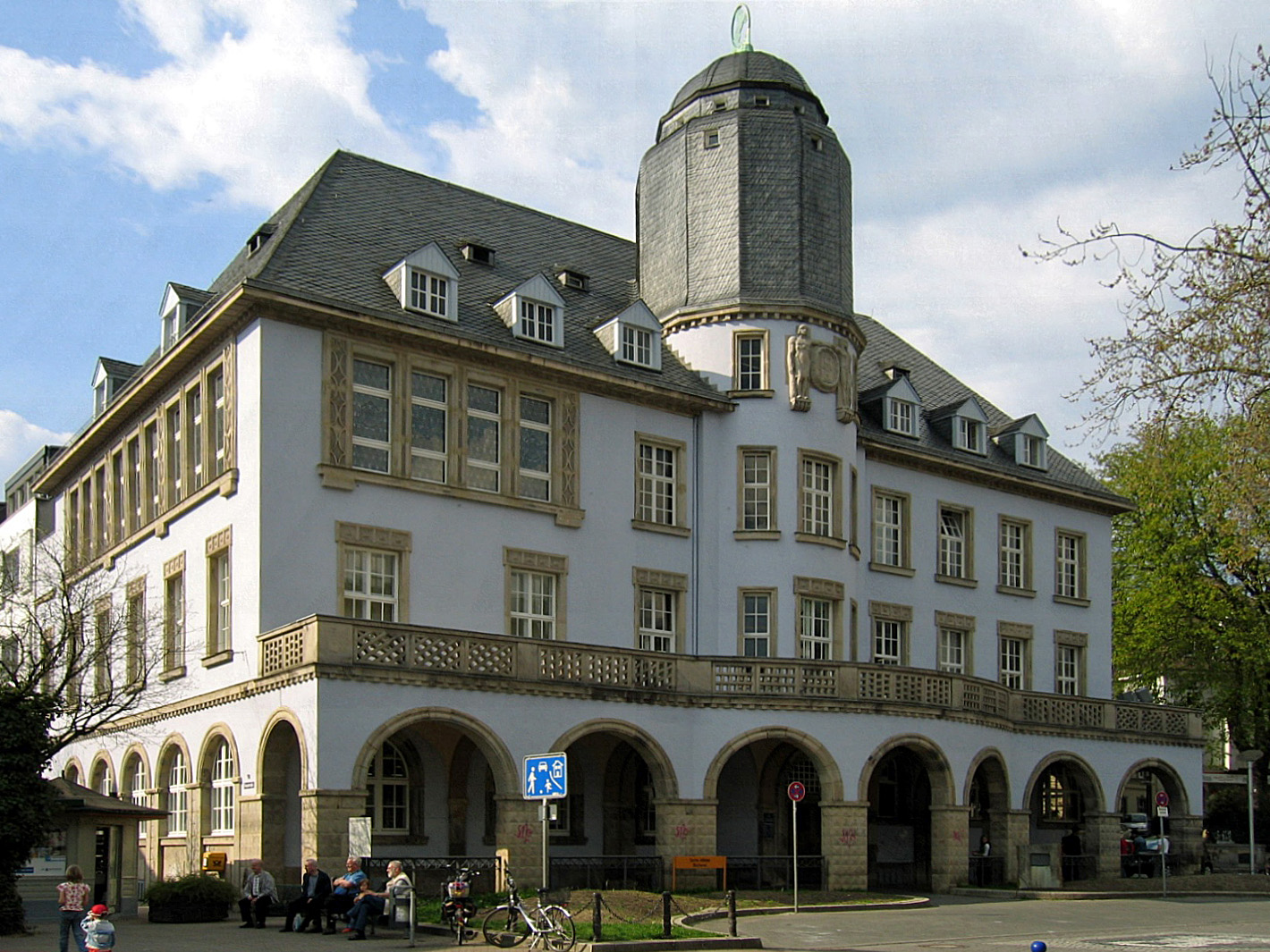
Menden's historic sites and buildings reflect its medieval origins and industrial development, with several structures preserved as cultural monuments under North Rhine-Westphalia's heritage protection laws. The town's old town center, or Altstadt, features a medieval layout centered around the marketplace, where remnants of the 13th-century rampart walls and town gates remain visible, underscoring Menden's granting of town rights in 1276 by the Archbishop of Cologne. These fortifications, partially restored, offer guided walking tours that highlight the settlement's transition from a fortified medieval community to an early industrial hub.[3][10] A prominent landmark is the St. Vincenz Church, the largest in Menden, with foundations tracing back to the 13th century and a Romanesque hall church constructed around 1200, later expanded in the Gothic style after damages in 1344. Originally one of the earliest parishes in the Westphalian Archdiocese of Cologne, it exemplifies the town's religious heritage from the late medieval period. The church's tower and nave are listed as protected monuments, with interior tours available to view historical altars and frescoes.[86][3] The Altes Rathaus, or Old Town Hall, built between 1911 and 1912 in Art Nouveau style by Cologne architect Carl Moritz, serves as a bridge between Menden's medieval past and early 20th-century civic architecture. Located on the historic marketplace, this ornate building with its facade of curved lines and decorative elements now houses the city library and is designated a protected monument, symbolizing administrative continuity since the town's medieval charter. Guided tours emphasize its role in local governance during the industrialization era.[87][88] The Altstadt also preserves numerous half-timbered houses from the 17th and 18th centuries, clustered around the marketplace and along narrow streets, many of which are listed in North Rhine-Westphalia's monument registry for their Fachwerk construction and carved beamwork. These residences illustrate everyday life in a prospering medieval town, with some, like the Schmarotzerhaus, leaning against surviving city wall remnants for structural support, earning its nickname for "parasitizing" the fortification. Preservation efforts include regular maintenance funded by the state, and self-guided audio tours are offered to explore their architectural details.[10][89] Menden's industrial heritage is embodied in 19th-century structures tied to its limestone quarrying and early manufacturing, such as the preserved mill buildings and workshops at Gut Rödinghausen, now part of the Industriemuseum Menden. These sites document the town's shift to needle production in the late 17th century and limestone processing in the 1800s, which fueled regional economy; the quarries themselves, operational since the medieval period, are recognized as geo-heritage elements with select areas protected and accessible via educational tours. The museum's exhibits on these mills and quarries highlight their role in Menden's growth as an industrial center, with structures listed under state monument protection to prevent urban encroachment.[90][91]Arts, museums, and performing arts
Menden's cultural landscape features the Museum für Stadt- und Kulturgeschichte, founded in 1912 by local historian Friedrich Glunz as a repository for the city's heritage. Housed in a historic patrician building from 1730, the museum explores urban and cultural history, with permanent exhibits on medieval living conditions and the evolution of local industries.[92][93][94] Complementing this is the Industriemuseum Menden at Gut Rödinghausen, opened in 2020, which delves into over 300 years of industrial development in the area. While emphasizing metalworking and manufacturing, its displays highlight the interconnected regional crafts, including needle production techniques that transitioned from cottage industries to factory settings during the Industrial Revolution. These museums collectively preserve Menden's industrial legacy while educating visitors on its socioeconomic impact.[95][96] In performing arts, the Theater am Ziegelbrand serves as a central venue since its inauguration in 1999 on the occasion of Johann Wolfgang von Goethe's 250th birthday. Managed by the Mendener Schaubühne, it hosts a diverse program of professional and amateur productions, encompassing theater plays, cabaret, musicals, dance performances, and concerts that attract both locals and regional audiences. The theater's intimate 250-seat auditorium fosters community engagement through collaborative stagings that blend contemporary drama with classical works.[97][98][99] Annual music festivals enhance Menden's performing arts scene, with events like the Hardcore Hills Festival drawing enthusiasts for high-energy rock and metal performances in outdoor settings. These gatherings, often held in collaboration with local venues, feature emerging and established acts, promoting musical diversity and youth involvement in the arts.[100] The music community thrives through local orchestras and choirs, such as the acclaimed VokalArt Menden, a mixed-voice Meisterchor founded to perform a cappella and accompanied choral works ranging from classical to contemporary compositions. Performances occur at key venues including the Kulturzentrum and Theater am Ziegelbrand, where ensembles like those from the Musikschule Menden present orchestral pieces and vocal recitals. These groups emphasize community participation, with regular concerts that highlight Sauerland's choral tradition.[101][102][103] Municipal support bolsters these endeavors via the Kulturbüro, which allocates funding and grants to artists and cultural projects. Initiatives include subsidies for event production, artist residencies, and public art installations, evaluated by a dedicated commission to ensure alignment with community values. This framework, updated in 2025, prioritizes accessible opportunities for visual and performing artists, fostering creative growth in Menden.[102][104][105]Sports and recreational facilities
Menden hosts a vibrant sports scene centered around team sports, with football and handball being particularly prominent. The town is home to BSV Menden e.V., a longstanding football club founded in 1973 through the merger of SuS Menden 09 (1909) and Alemannia Menden, that competes in regional leagues and emphasizes youth development programs.[106] Similarly, SG Menden Sauerland Wölfe e.V. is a key handball club that organizes the annual Sauerland Cup, one of Germany's largest youth handball tournaments, attracting teams from across the country and featuring competitive events for A- and B-junior categories.[107] These clubs, along with others like VfL Menden Platte Heide e.V. for multi-sport activities including tennis, contribute to a network of approximately 20 major sports associations serving around 10,000 members as of 2018—though memberships have been declining in the region—reflecting strong community engagement in organized athletics.[108][109] Key venues support both competitive and casual play. The Huckenohl-Stadion serves as a central facility for football and athletics, featuring a natural grass field, artificial turf pitch, and an surrounding track, recently renovated through federal funding to enhance accessibility and safety.[110] The Kreissporthalle Menden provides indoor space for handball, basketball, and other team sports, accommodating regional tournaments and school events with its multi-court layout.[111] For aquatic activities, the Bürgerbad Leitmecke offers public swimming pools, including leisure areas with water slides and sports options like water polo, complemented by adjacent playgrounds and volleyball courts.[112] These municipal facilities, numbering over 17 indoor halls and multiple outdoor fields in total, are maintained through local budget allocations to promote inclusive recreation.[113] Outdoor pursuits leverage Menden's natural surroundings, particularly the hilly terrain suitable for endurance activities. Hiking trails in the Hönnetal valley, part of the broader Sauerland region, offer scenic loops like the 8 km Hoennetal from Klusenstein, ideal for moderate walks amid forests and streams.[114] Cycling enthusiasts utilize dedicated paths along the Ruhr River, such as segments of the Ruhrtalradweg, which connect Menden to nearby towns via low-traffic routes blending urban and rural landscapes.[115] Indoor alternatives include nearby climbing options at facilities like Kletterhalle Bergwerk, providing bouldering and rope courses for all skill levels. Public parks, such as those with integrated soccer fields and bike paths, further enhance everyday fitness, fostering a balance between structured sports and leisurely exercise.[116][117]Local events and festivals
Menden hosts a variety of annual events and festivals that reflect its Sauerland heritage, emphasizing community participation and local traditions. These gatherings, organized primarily by the city council and various Vereine (local associations), include markets, parades, and cultural celebrations that draw residents and visitors alike, contributing to over 500,000 attendees across town festivals each year.[3] The Menden Christmas Market, or Weihnachtsmarkt, is a highlight of the winter season, typically held in late November and December in the historic town center. Featuring wooden stalls with handmade crafts, seasonal foods like Glühwein and gingerbread, and festive lighting, it captures the cozy atmosphere of Sauerland holiday traditions and is organized by the city in collaboration with local vendors.[3] Carnival, known locally as Karneval, unfolds annually from November through Ash Wednesday, culminating in vibrant parades on Rosenmontag (Shrove Monday). Parades feature colorful floats, marching bands, and costumed participants, coordinated by associations such as the Mendener Karnevalsgesellschaft Kornblumenblau e.V., which has promoted the event since 1952 and emphasizes satirical themes tied to regional identity.[118] The Sauerland Cup stands out as a prominent sports-cultural hybrid, an annual youth handball tournament held in early August at the Walram-Sporthalle. Organized by the SG Menden Sauerland Wölfe since 1979, it is Germany's largest such event, hosting over 100 teams from national and international clubs, fostering community spirit through matches, family activities, and post-game socials.[119] Cultural festivals include the Mendener Sommer, a series of free outdoor concerts in July and August held in the town center and along the Hönne River, showcasing local and regional musicians in genres from folk to pop, arranged by the city's Kulturbüro to promote summer leisure. Historical reenactments feature the annual Medieval Market in early summer, where artisans demonstrate traditional crafts like blacksmithing and weaving in the Altstadt, evoking Menden's 9th-century origins and drawing history enthusiasts for immersive experiences.[120][121] Weekly markets occur twice a week, on Tuesdays and Fridays, at the Marktplatz, offering fresh produce, baked goods, and regional specialties from local farmers and vendors, supported by the city to bolster community commerce. Seasonal fairs, such as the Whitsun Fair in late May and spring/autumn markets in March and October, provide additional opportunities for fairs with rides, food stalls, and artisan displays, organized jointly by the council and trade associations.[122][3]International relations
Twin towns
Menden maintains formal twin town partnerships with several municipalities across Europe, primarily established to promote cultural exchange, reconciliation, and European integration following World War II. These relationships are managed by the city's culture office and dedicated friendship associations, fostering ongoing people-to-people connections.[123] The partnerships include the following:| Twin Town | Country | Year Established |
|---|---|---|
| Aire-sur-la-Lys | France | 1965 |
| Ardres | France | 1974/1975 |
| Braine-l'Alleud | Belgium | 1978 |
| Chalkida | Greece | 2000 |
| Flintshire | United Kingdom | 1980 |
| Lestrem | France | 1971 |
| Locon | France | 1964 |
| Maroeuil | France | 1984 |
| Plungė | Lithuania | 1992/1993 |
Partner cities and collaborations
Menden participates in the "5 für Südwestfalen" initiative, an EU-aligned smart city model project funded through Germany's national "Smart City Model Projects" program, collaborating with neighboring municipalities in the Südwestfalen region including Arnsberg, Bad Berleburg, Olpe, and Soest to advance sustainable urban development.[130][131] This partnership emphasizes digitalization for environmental protection, mobility, and community cohesion, with Menden focusing on projects like sensor networks for climate monitoring and augmented reality virtual tours of local heritage sites.[130] Beyond formal twinning, Menden engages in environmental collaborations with Ruhr-area neighbors through regional frameworks like the Märkischer Kreis sustainability efforts, addressing cross-border issues such as green infrastructure and biodiversity in the transition from industrial to ecological landscapes.[132] These initiatives promote shared resource management and pollution reduction, leveraging proximity to the Ruhr Metropolis for joint habitat restoration programs.[133] Cultural exchanges occur via the Märkischer Kreis, including expanded ties with Waterford, Ireland, formalized in 2023 at the district level, in which Menden participates, to emphasize heritage preservation and artistic collaborations, such as joint festivals and artist residencies.[134] These efforts foster informal tourism links with French partner communities in the Pas-de-Calais region, facilitating visitor exchanges and cultural tourism promotion without binding agreements.[123] Such partnerships yield benefits including youth engagement through programs like the Smart Cities Schule workshops, which involve students in innovation projects, and participation in international trade fairs such as the Smart City Expo in Barcelona to showcase regional advancements and attract investment.[130]Notable people
- Edin Terzić (born 30 October 1982), German-Croatian football manager, current head coach of Borussia Dortmund.[135]
- Ulrich Borowka (born 19 May 1962), former German professional footballer who played as a defender for Schalke 04 and the West Germany national team.[136]
- Burcu Düner (born 20 August 1979), German-born Turkish former women's football midfielder, who played for clubs including 1. FFC Turbine Potsdam and the Turkey women's national team.[137]
- Jim Boeven (born 11 November 1967), German-American actor known for roles in films and television, including voice work.[138]
- Erich Bärenfänger (1915–1945), German Wehrmacht general during World War II, one of the youngest major generals in the German army.[139]
- Augustin Henninghaus (1862–1939), German Roman Catholic missionary and bishop who served in China.[140]