


Community hub
Recent from talks
Contribute something
Nothing was collected or created yet.
Midstream
View on Wikipedia

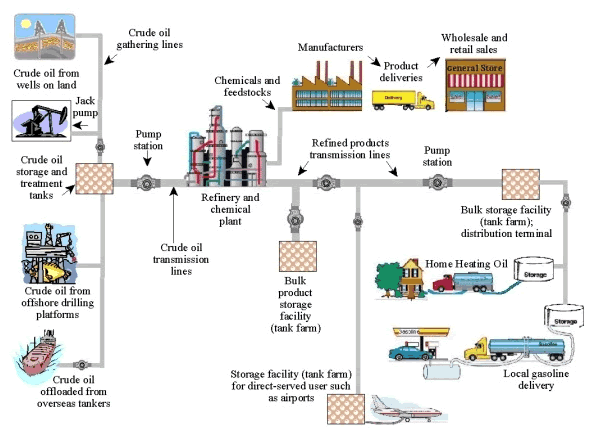
The oil and gas industry is usually divided into three major components: upstream, midstream and downstream. The midstream sector involves the transportation (by pipeline, rail, barge, oil tanker or truck), storage, and wholesale marketing of crude or refined petroleum products. Pipelines and other transport systems can be used to move crude oil from production sites to refineries and deliver the various refined products to downstream distributors.[1][2][3] Natural gas pipeline networks aggregate gas from natural gas purification plants and deliver it to downstream customers, such as local utilities.
Midstream in oil and gas also includes services that help oil and gas producers, such as managing and disposing of wastewater and other oilfield waste.
The midstream operations are often taken to include some elements of the upstream and downstream sectors. For example, the midstream sector may include natural gas processing plants that purify the raw natural gas as well as removing and producing elemental sulfur and natural gas liquids (NGL) as finished end-products.
Service providers
[edit]- Barge companies
- Railroad companies
- Trucking and hauling companies
- Pipeline transport companies
- Logistics and technology companies
- Transloading companies
- Terminal developers and operators
ISO 20815 defines "midstream" in its definition section as:
3.1.27 midstream
business category involving the processing and transportation sectors of petroleum industry.[4]
- Examples: transportation pipelines, terminals, gas processing and treatment, LNG, LPG, and GTL.
See also
[edit]References
[edit]- ^ "Petroleum industry". Archived from the original on 2013-04-12. Retrieved 2013-05-23.
- ^ "Upstream, midstream & downstream". Archived from the original on 2014-01-07. Retrieved 2014-01-07.
- ^ Petroleum Services Association of Canada (PSAC), Industry Overview Archived 2017-05-08 at the Wayback Machine
- ^ ISO, ISO 20815, accessed 6 June 2018
External links
[edit]
 | This article related to natural gas, petroleum or the petroleum industry is a stub. You can help Wikipedia by expanding it. |
Midstream
View on GrokipediaDefinition and Role in Energy Supply Chain
Core Definition and Scope
The midstream sector constitutes the intermediate phase of the oil and natural gas value chain, encompassing the collection, processing, transportation, and storage of raw hydrocarbons extracted from upstream production sites prior to their delivery for downstream refining or end-user consumption.[9][10] This segment bridges the gap between wellhead extraction and final market distribution, ensuring hydrocarbons are conditioned and moved efficiently across regions.[11] Key activities include gathering unprocessed gas and oil via feeder pipelines, initial separation of water and impurities at field facilities, and large-scale transport through dedicated infrastructure.[12] Midstream operations primarily focus on natural gas, crude oil, and natural gas liquids (NGLs), with processing plants removing contaminants like carbon dioxide and hydrogen sulfide from gas streams to meet pipeline quality standards, often yielding marketable NGLs such as propane and butane as byproducts.[13] Transportation modalities span intrastate and interstate pipelines, tanker trucks, railcars, and marine vessels, adapting to geographic and economic demands; for instance, U.S. interstate pipelines span over 300,000 miles for natural gas alone, facilitating bulk movement to refineries or export terminals.[14] Storage encompasses underground reservoirs, tank farms, and liquefied natural gas (LNG) facilities, buffering supply fluctuations and enabling wholesale marketing to downstream buyers.[15] The scope excludes upstream exploration and production as well as downstream refining and retail, concentrating instead on logistical and preparatory functions that minimize bottlenecks in the supply chain; however, boundaries can blur with integrated firms handling multiple segments.[16] Midstream entities often operate under regulated frameworks, such as those enforced by the U.S. Federal Energy Regulatory Commission for interstate pipelines, emphasizing safety and reliability in handling volatile commodities.[17] This sector's efficiency directly influences energy prices and availability, with innovations in compression and fractionation technologies expanding its capacity to process increasing volumes from shale plays.[18]Position Between Upstream and Downstream
The midstream sector occupies the central position in the hydrocarbon supply chain, bridging upstream activities of exploration, extraction, and initial production of crude oil and natural gas with downstream operations of refining, processing, and distribution of finished products to end-users.[19][20] Upstream entities focus on identifying reserves and producing raw feedstocks, which midstream entities then collect, process to remove impurities like water and sediments, and transport via pipelines, tankers, rail, or trucks to refineries or markets.[21][22] This intermediary role ensures the efficient movement of unrefined hydrocarbons from production sites, often remote, to processing facilities, mitigating logistical bottlenecks inherent in the geographically dispersed nature of extraction.[15] Midstream functions as a stabilizing buffer, managing storage to balance fluctuations in upstream supply—such as variable production rates from wells—and downstream demand, thereby preventing shortages or oversupply that could disrupt market prices.[20][23] For instance, natural gas processing plants in midstream separate valuable components like ethane and propane before pipeline delivery, enabling downstream petrochemical production.[24] While sector boundaries are not always rigid—some integrated firms overlap activities—midstream's primary emphasis on logistics and initial treatment distinguishes it, with transportation accounting for the majority of its infrastructure investments, including over 2.6 million miles of pipelines in the United States as of 2023.[10][25] This positioning exposes midstream to unique risks, such as regulatory hurdles on pipeline approvals and commodity price volatility, yet it provides relative stability compared to upstream's exploration uncertainties, often through fee-based contracts rather than direct ownership of reserves.[26][16]Distinction from Adjacent Sectors
The midstream sector is primarily distinguished from the upstream sector by its focus on post-production handling rather than resource extraction. Upstream activities center on exploration, drilling, and initial production of crude oil and natural gas at the wellhead, culminating in the delivery of raw hydrocarbons to gathering systems.[27][28] In contrast, midstream begins with the aggregation of these raw products from multiple wells via gathering pipelines, followed by basic processing such as separation of water, solids, and natural gas liquids (NGLs), compression, and dehydration to prepare for transport.[10][2] This handover point, often termed the "custody transfer," marks the boundary, with midstream entities assuming responsibility for logistics rather than geological risks or production volumes inherent to upstream operations.[27] Midstream further diverges from the downstream sector through its emphasis on bulk transportation, storage, and wholesale marketing of unrefined feedstocks, avoiding the transformation into end-user products. Downstream involves refining crude oil into derivatives like gasoline, diesel, and petrochemicals via processes such as distillation and cracking, followed by retail distribution to consumers.[28][2] Midstream infrastructure, including interstate pipelines, terminals, rail cars, tankers, and underground storage, facilitates the movement of crude or processed gas over long distances to refineries or markets without altering their fundamental composition beyond initial conditioning.[10][2] While boundaries can blur in vertically integrated firms, the midstream's fee-based model—charging for transport and storage services—insulates it from the price volatility and demand fluctuations more acutely affecting upstream extraction and downstream refining.[27][10]| Aspect | Upstream | Midstream | Downstream |
|---|---|---|---|
| Primary Focus | Exploration, drilling, production | Gathering, processing, transport, storage | Refining, marketing, retail |
| Key Risks | Geological, reserve uncertainty | Infrastructure, regulatory compliance | Market demand, product quality |
| Output | Raw crude/gas at wellhead | Bulk feedstocks to markets | Finished fuels/petrochemicals |
Historical Evolution
Origins in 19th-Century Pipelines
The discovery of oil in Titusville, Pennsylvania, by Edwin Drake in 1859 initiated commercial production, yielding three million barrels within three years, but transportation relied on wooden barrels hauled by wagons and boats, leading to high costs and inefficiencies.[29] Early experiments with pipelines, such as wooden troughs in 1862, proved impractical due to leakage and sabotage by teamsters whose livelihoods were threatened.[30] The first successful commercial oil pipeline was constructed by Samuel Van Syckel, an oil buyer and shipper, in 1865, spanning approximately five miles from Pithole City to Miller Farm in Venango County, Pennsylvania, where it connected to the Oil Creek railroad.[31] [32] Made of two-inch wrought-iron pipe screwed together and buried underground, it used steam pumps to transport oil at a rate of 81 barrels per hour, delivering 1,950 to 2,000 barrels daily starting October 10, 1865.[33] Despite violent opposition—including pickaxe attacks by teamsters—the pipeline reduced transport costs from $2.50 to $0.20 per barrel, demonstrating viability and spurring further adoption.[34] [35] This innovation marked the origins of midstream infrastructure, shifting from barrel-based logistics to fixed pipelines and foreshadowing integrated systems.[36] For natural gas, rudimentary pipelines emerged earlier; in 1821, William Hart drilled the first U.S. natural gas well in Fredonia, New York, piping gas via hollowed pine logs to illuminate 30 street lamps and homes through the Fredonia Gas Light Company, the nation's first natural gas utility.[37] These short, local wooden conduits preceded iron pipelines but remained limited in scale until the late 19th century.[38]20th-Century Expansion and WWII Innovations
The 20th century marked a period of rapid infrastructure growth in the midstream sector, propelled by surging domestic demand for petroleum products from automobiles and natural gas for heating and industry. Natural gas pipeline networks expanded significantly, reaching over 115,000 miles by the late 1920s, with key milestones including the completion of the first 1,000-mile interstate line from Amarillo, Texas, to Chicago in 1931 by Natural Gas Pipeline Company of America, which enabled efficient long-distance transmission previously limited by local distribution.[39] [38] Oil pipelines similarly proliferated to connect prolific fields in Texas and Oklahoma to refineries and markets, supported by advancements in welded steel pipe manufacturing that became standard by 1940, reducing costs and enhancing reliability for high-pressure transport.[40] World War II catalyzed unprecedented innovations in midstream logistics to counter German U-boat attacks on Atlantic tankers, which had sunk over 3.1 million tons of shipping by mid-1942, threatening East Coast fuel supplies. In response, the U.S. government formed War Emergency Pipelines, Inc., in 1942 to construct the Big Inch—a 24-inch-diameter, 1,254-mile crude oil pipeline from Longview, Texas, to Linden, New Jersey—completed in just 359 days at a cost of $50.7 million, with a capacity of 500,000 barrels per day by 1944.[41] [42] This project pioneered large-scale, rapid-deployment engineering, employing assembly-line techniques for pipe welding and laying over diverse terrain, delivering 550 million barrels of oil during the war to avert shortages.[43] The companion Little Big Inch, a 20-inch-diameter, 1,475-mile line for refined products like gasoline and fuel oil, followed in 1943–1944, extending from Texas to the Philadelphia area and adding 245,000 barrels per day of capacity, collectively safeguarding 70% of wartime East Coast petroleum imports.[41] [43] These federally financed efforts (totaling $110 million) demonstrated scalable midstream resilience, influencing post-war deregulation and conversion—such as the Big Inch's repurposing for natural gas in 1947—while spurring a broader pipeline boom that grew U.S. gas transmission lines by thousands of miles in the 1940s–1960s.[44] [45]Shale Boom and Modern Transformations (2008 Onward)
The shale boom, propelled by technological advancements in hydraulic fracturing and horizontal drilling, initiated a rapid escalation in U.S. oil and natural gas production from approximately 2008 onward. Shale gas output began surging in 2007-2008, transforming the domestic market from potential shortages to abundance, with unconventional production rising from negligible levels to comprising over 70% of total U.S. natural gas supply by the mid-2010s.[46] Similarly, shale oil production expanded from about 0.5 million barrels per day in 2008 to over 7 million barrels per day by 2019, accounting for the bulk of a 7 million barrel per day increase in total U.S. crude output during that decade.[47] [48] This production surge, concentrated in geologically remote basins like the Permian, Marcellus, and Bakken, overwhelmed existing midstream capacity, leading to widespread bottlenecks, elevated local prices, and reliance on inefficient alternatives such as trucking and flaring.[49][50] Midstream operators responded with extensive infrastructure buildouts, particularly pipelines, to alleviate constraints and connect production to demand centers. Between the onset of the boom and the mid-2010s, an estimated 50,000 miles of new or upgraded pipelines were required to support shale gas development alone, facilitating the transport of associated natural gas liquids (NGLs) and dry gas.[51] Interstate natural gas pipeline capacity expansions accelerated, with projects targeting high-output regions; for instance, post-2010 investments addressed Permian and Appalachian bottlenecks through pipelines like those enhancing takeaway from Texas and Pennsylvania.[52] By 2020, these efforts had integrated shale volumes into broader networks, reducing differentials and enabling producers to access distant markets, though intermittent constraints persisted in landlocked basins due to regulatory delays and local opposition.[49][53] Processing facilities underwent parallel transformations to handle the wet gas streams rich in NGLs from shale plays, with capacity additions keeping pace with output growth in regions like the Marcellus and Eagle Ford. Investments in fractionation and cryogenic plants extracted ethane, propane, and butane for petrochemical and export markets, mitigating flaring and capturing value from byproducts.[54] Storage infrastructure also expanded, including underground facilities and rail terminals for crude, to buffer volatility amid the boom's cyclical production patterns. These developments shifted midstream business models toward stable, fee-based transportation and processing contracts, insulating operators from commodity price swings.[55] A pivotal modern transformation emerged with the advent of liquefied natural gas (LNG) exports in 2016, repositioning U.S. midstream from primarily domestic orientation to global supply chain integration. The shale abundance enabled the U.S. to become the world's leading LNG exporter by volume within a decade, with exports rising from negligible to over 80 million tons annually by 2023, necessitating coastal liquefaction terminals and expanded Gulf Coast pipelines.[56] This export-driven demand spurred further upstream-midstream linkages, including 17.8 billion cubic feet per day of new pipeline capacity added in 2024 alone to evacuate Permian and Haynesville gas toward export hubs.[57] By 2025, ongoing projects reflect adaptations to rising data center power needs and international contracts, underscoring midstream's evolution into a resilient, export-enabling sector amid sustained shale productivity.[58][59]Operational Components
Gathering and Processing Facilities
Gathering facilities form the initial link in midstream operations, comprising networks of small-diameter, low-pressure pipelines that collect raw hydrocarbons directly from upstream wellheads or production sites and convey them to central processing plants or transmission points.[60] These systems handle untreated crude oil or natural gas, aggregating output from multiple wells across producing fields, with pipeline diameters typically ranging from 2 to 16 inches and lengths varying by basin geography.[17] In major U.S. shale plays like the Bakken, gathering pipelines can extend over 2,000 miles to support scalable production growth.[61] Equipment such as separators, compressors, dehydrators, and headers enables flow management, pigging for maintenance, and isolation of streams, ensuring efficient transport despite variable well pressures and compositions.[62] For natural gas, gathering systems feed into processing plants where raw production—containing methane, non-methane hydrocarbons, water, CO2, H2S, and other impurities—undergoes treatment to meet pipeline specifications.[63] Processing occurs in five primary stages: condensate and oil removal via separators; acid gas (CO2 and H2S) extraction using amine treating; dehydration to prevent hydrate formation; NGL recovery through turboexpanders or absorption; and final compression of residue sales gas to transmission pressures, often exceeding 1,000 psi.[64] These facilities, numbering over 500 in the U.S. as of recent federal inventories, recover valuable byproducts like ethane, propane, and butanes for separate markets while mitigating corrosion and safety risks in downstream transport.[63] Crude oil gathering parallels gas systems but emphasizes stabilization and separation at field level before midstream custody transfer, with pipelines delivering emulsion-laden crude to treaters that break water and gas out using heat, chemicals, or electrostatics.[17] Midstream operators often integrate water handling alongside hydrocarbons, as produced water volumes can exceed oil output in waterflooded or shale operations, requiring parallel gathering lines for disposal or reuse.[61] Unlike gas processing, crude facilities focus less on fractionation and more on achieving API gravity standards (typically 30-50 degrees) and low basic sediment levels (<1%) for pipeline injection, with centralized terminals providing storage tanks holding up to 100,000 barrels each.[10] These facilities enhance operational efficiency by centralizing treatment, reducing upstream flaring, and enabling byproduct monetization; for instance, NGL extraction in gas plants supports petrochemical feedstocks, contributing to midstream revenue diversification.[65] Regulatory oversight by agencies like PHMSA ensures integrity through leak detection and material standards, though jurisdictional debates persist over whether gathering lines qualify as interstate commerce.[63] In aggregate, U.S. gathering infrastructure spans hundreds of thousands of miles, underpinning 90% of domestic gas processing capacity as of 2023.[60]Transportation Infrastructure
Transportation infrastructure in the midstream sector encompasses pipelines, rail, truck, and marine vessels for conveying crude oil, natural gas, and natural gas liquids from production fields to processing plants, refineries, storage terminals, or export points. Pipelines dominate due to their capacity to handle large volumes efficiently over long distances, with lower per-unit transport costs and incident rates compared to alternatives.[66][67] The U.S. hazardous liquid pipeline system, including crude oil and petroleum products, totals approximately 228,374 miles as of 2024, operated by 663 entities under Pipeline and Hazardous Materials Safety Administration (PHMSA) oversight.[68] Interstate crude oil pipelines, such as those managed by Enbridge spanning 18,085 miles with capacities up to 796,000 barrels per day on key segments, connect major basins like the Permian to Gulf Coast refineries.[69] Natural gas transmission infrastructure, regulated by the Federal Energy Regulatory Commission (FERC), supports takeaway from shale plays; completions in 2024 added 6.5 billion cubic feet per day (Bcf/d) of capacity, exemplified by the Matterhorn Express Pipeline's 2.5 Bcf/d starting October 2024.[70][71] Major operators like Energy Transfer maintain over 130,000 miles across 44 states, facilitating intrastate and interstate flows.[72] Alternative modes fill gaps in pipeline coverage, particularly for short-haul or rapid-response needs in regions like the Bakken or Permian before new lines come online. Rail transports energy products including crude, with volumes peaking post-2008 shale boom but declining to under 10% of total crude movements by 2024 as pipeline expansions reduced reliance; a single unit train can carry 700,000 to 900,000 barrels equivalent.[73][74] Tank trucks handle last-mile delivery or uneconomic pipeline routes, though limited to smaller volumes of 8,000-10,000 gallons per load.[74] Marine options, including tankers and barges, serve coastal exports and imports, with liquefied natural gas (LNG) carriers enabling overseas shipment after liquefaction.[75] Safety data underscores pipelines' advantages: from 2004-2020, pipelines spilled less crude per ton-mile than rail or trucks, with rail accidents causing higher human injury rates and spill probabilities per barrel-mile.[76][77] PHMSA mandates integrity management, including inline inspection tools, contributing to pipelines' record of transporting billions of barrel-miles annually with minimal incidents relative to volume.[68] Recent FERC approvals and expansions reflect ongoing adaptation to production surges, enhancing energy security while prioritizing risk mitigation over less efficient modes.[70]Storage and Wholesale Marketing
Midstream storage facilities serve as critical buffers in the oil and gas supply chain, enabling the temporary holding of crude oil, natural gas, and natural gas liquids (NGLs) to manage fluctuations in production and demand.[9] For crude oil and refined products, storage primarily occurs in above-ground tanks, tank farms, and terminals, with individual tanks ranging from a few hundred barrels to 1.5 million barrels in capacity.[78] U.S. crude oil storage levels have varied between approximately 400 million and 530 million barrels from 2015 to 2024, reflecting midstream operators' role in inventory management amid market volatility.[78] Natural gas storage, predominantly underground, utilizes depleted reservoirs, aquifers, and salt caverns to inject and withdraw gas seasonally.[79] As of 2024, the U.S. hosts over 400 such facilities with a total demonstrated peak capacity of 4,277 billion cubic feet (Bcf), up 1.7% or 71 Bcf from the prior year, driven by increased market reliance on storage for supply stability.[80] Approximately 84% of this capacity is in depleted reservoirs, which offer cost-effective large-scale storage but slower withdrawal rates compared to salt caverns.[79] Wholesale marketing in midstream involves the bulk sale of stored hydrocarbons to refiners, exporters, and industrial users, optimizing value through market access and timing.[81] Midstream firms, often asset owners like pipeline operators, handle transactions for crude, NGLs, and gas, leveraging storage to arbitrage seasonal or regional price differences.[82] This segment bridges upstream production and downstream refining, with marketing activities contributing to efficient allocation; for instance, some operators market propane via integrated assets including terminals and fractionation facilities.[82] Revenue from these sales provides midstream stability, as contracts frequently include take-or-pay provisions tying payments to capacity reservations rather than volumes sold.[9]Business Models and Key Participants
Service Providers and Operators
Midstream companies provide stable, fee-based cash flows from transporting oil and gas; they are not pure-play oil producers. Service providers and operators in the midstream sector primarily facilitate the movement, storage, and initial processing of crude oil, natural gas, and natural gas liquids through fee-based services, minimizing exposure to direct commodity price fluctuations via long-term contracts with producers and end-users.[83] Operators own or control core infrastructure like pipelines and terminals, while specialized service providers offer ancillary support such as maintenance, equipment repair, and logistics to ensure operational continuity.[84] This distinction allows operators to focus on asset management and throughput, with service providers handling targeted tasks like pipeline integrity assessments or temporary transport solutions.[85] Among major U.S. operators, Kinder Morgan, Inc. stands out with interests in or operation of approximately 79,000 miles of pipelines, 139 terminals, and over 700 billion cubic feet of natural gas storage capacity as of October 2025.[86] Its network spans natural gas transmission (about 66,000 miles), refined products, and crude oil transport, serving key regions including the U.S. Gulf Coast and Pacific Northwest.[87] Enterprise Products Partners L.P., another leading operator, manages over 50,000 miles of pipelines, more than 300 million barrels of storage capacity, 26 fractionation facilities, and extensive natural gas processing infrastructure, emphasizing NGL transportation and export capabilities.[88][89] Energy Transfer LP operates one of North America's largest systems, encompassing roughly 140,000 miles of pipelines for intrastate and interstate natural gas, crude, and products movement as of March 2025.[90] The Williams Companies, Inc. focuses on interstate natural gas pipelines, including the Transco system (handling about 15% of U.S. supply) and Northwest Pipeline, with assets in high-production areas like the Rockies, Gulf Coast, and Marcellus Shale.[91][92] These operators collectively dominate U.S. throughput, with pipelines adding significant capacity expansions—such as 6.5 billion cubic feet per day in natural gas takeaway completed in 2024—to support growing output from basins like the Permian and Haynesville.[70] Service providers complement operators by delivering specialized expertise, including Intertek's asset maintenance and testing for processing facilities, or Savage Companies' rail, barge, and truck logistics for crude and products delivery to refineries.[93][94] Firms like Harvest Midstream provide integrated gathering and processing services tailored to producers, often in private equity-backed models to address regional bottlenecks without full asset ownership.[95] This ecosystem relies on operators' scale for efficiency and providers' flexibility for adaptability, though consolidation via mergers has concentrated control among top firms amid stable demand projections for 2025.[96]Financial Structures like MLPs
Master Limited Partnerships (MLPs) are publicly traded partnerships that primarily own and operate midstream energy infrastructure, including pipelines for transportation, storage facilities, and processing plants for natural gas and crude oil.[97] These entities qualify for MLP status under U.S. tax law by deriving at least 90% of their income from qualifying sources like natural resource activities, avoiding entity-level federal income taxation and passing income directly to unitholders.[98] Midstream assets constitute the majority of MLP market capitalization, with approximately 70% focused on gathering, processing, compression, and transportation of oil and natural gas.[99] The MLP structure features a general partner managing operations and limited partners (unitholders) providing capital, often with incentive distribution rights that align interests by rewarding growth in distributions.[100] This pass-through taxation defers investor taxes on distributions, treating much as return of capital that reduces basis rather than immediate taxable income, potentially yielding after-tax returns 40% higher than equivalent corporate dividends depending on tax brackets.[101] [102] However, upon sale of units, any remaining basis reduction triggers capital gains taxation, and distributions exceeding basis may incur ordinary income treatment, complicating reporting via Schedule K-1 forms.[103] Unrelated business taxable income (UBTI) can also arise, rendering MLPs unsuitable for tax-advantaged accounts like IRAs without potential tax liabilities.[104] Post-2017 Tax Cuts and Jobs Act, which reduced corporate rates to 21%, diminished the relative tax efficiency of MLPs compared to C-corporations, prompting several midstream firms to convert structures for broader investor appeal and simplified taxation.[105] The 2018 Federal Energy Regulatory Commission policy shift eliminated tax allowances in pipeline rate-setting, further pressuring MLP valuations and contributing to a decline in new MLP formations.[106] Despite these challenges, MLPs remain vital, with around 30 active entities as of 2025 offering yields up to 10.1% and strong distribution coverage amid rising energy demand.[101] Prominent examples include Energy Transfer LP and Enterprise Products Partners L.P., which reported robust EBITDA growth in 2024 driven by natural gas infrastructure expansions.[107] Alternative structures like C-corporations have gained traction in midstream for their ability to retain earnings for growth without K-1 complexities, though they incur double taxation.[108] Private equity ownership has also risen for non-public assets, providing flexibility amid volatile commodity cycles, yet public MLPs continue to dominate listed midstream investments due to liquidity and yield advantages.[105]Ownership Trends and M&A Activity
Ownership in the midstream sector has undergone significant structural evolution since the late 2010s, driven primarily by the 2017 Tax Cuts and Jobs Act, which lowered the corporate tax rate and eroded the tax advantages of master limited partnerships (MLPs) relative to C-corporations.[109] This prompted numerous MLPs to convert to C-corp structures to simplify tax reporting, enhance liquidity, expand investor appeal, and improve governance, with benefits including potential valuation multiples expansion.[110] By the end of 2023, U.S. C-corps surpassed MLPs to hold the largest share of midstream market capitalization for the first time, reflecting ongoing consolidations and simplifications that shifted capital allocation toward C-corp formats.[111] Examples include Summit Midstream's conversion to a C-corporation in 2024, aimed at facilitating growth and reducing administrative burdens for unitholders.[112] Private equity ownership has fluctuated, with U.S. oil and gas deal activity falling from $48.2 billion in 2019 to $17.3 billion in 2023 amid market volatility, though midstream assets remain attractive for their stable, fee-based cash flows tied to volume commitments.[113] Concentration trends show a mix of fragmentation in gathering systems and higher consolidation in interstate pipelines, where larger operators control significant throughput to key basins like the Permian.[16] Institutional investors have increased stakes in resilient midstream entities, emphasizing assets with long-term contracts amid rising natural gas demand.[114] Mergers and acquisitions activity in midstream has emphasized scale, basin access, and integration with downstream refining or export facilities, with deal values reaching approximately $30 billion in the U.S. year-to-date as of mid-2024, fueled by natural gas liquids (NGL) infrastructure needs.[115] Notable transactions include Phillips 66's $2.2 billion acquisition of EPIC Midstream's NGL business in January 2025, bolstering its fractionation and logistics capabilities, and ONEOK's completion of its EnLink Midstream purchase in January 2025, securing a 50.1% stake in a key midstream joint venture.[116][117] Permian-focused deals dominated 2024, with over $12.5 billion announced, as operators pursued inorganic growth to capture production surges.[96][118] While midstream M&A transaction values hit a recent low of $53 billion— the second-lowest since 2012—deal counts rose 36% year-over-year, indicating a shift toward smaller, strategic tuck-in acquisitions over megadeals.[119] Looking to 2025, analysts forecast sustained activity driven by economies of scale, LNG export expansions, and energy demand growth, with midstream firms prioritizing assets offering predictable returns over commodity exposure.[120] Private equity's rebound potential could further accelerate consolidations, though regulatory scrutiny on basin dominance remains a factor.[113][121]Economic Contributions
Impact on Employment and GDP
The midstream sector, encompassing transportation, storage, and initial processing of hydrocarbons, directly supports a modest number of high-wage jobs in the United States, with pipeline transportation—its core component—employing approximately 60,400 workers as of July 2025.[122] These roles, classified under NAICS 486, typically offer above-average compensation, reflecting the technical demands of operating complex infrastructure amid regulatory and safety requirements.[123] Direct employment remains stable but has grown modestly in recent years, driven by expansions in natural gas and crude oil pipelines to accommodate shale production surges.[123] In terms of gross domestic product, pipeline transportation contributed about $19.3 billion in value added in 2022, accounting for roughly 0.08% of total U.S. GDP that year.[124] This figure, derived from Bureau of Economic Analysis data, captures the sector's operational efficiency in moving vast volumes of energy resources, though it understates broader midstream activities like gas processing and storage terminals, which are often embedded in adjacent NAICS codes.[125] Recent estimates place the overall U.S. oil and gas midstream market revenue at $10 billion in 2024, with projections for growth to $14.77 billion by 2032 at a 5% CAGR, signaling sustained economic relevance amid rising exports.[126] Indirectly, midstream infrastructure amplifies employment and GDP through construction, maintenance, and supply chain effects, particularly during the shale era. Industry analyses indicate that midstream development projects from 2018 to 2035 are projected to support an average of 325,000 to 725,000 jobs annually across construction, operations, and induced sectors, with cumulative GDP contributions exceeding $565 billion over the period.[55] These multipliers stem from causal linkages: efficient midstream networks lower transport costs by up to 50% compared to alternatives like rail or truck, enabling upstream production scalability and downstream refining viability, which together bolster the oil and gas industry's overall 7.6% share of U.S. GDP in 2021 (nearly $1.8 trillion total impact).[127] Empirical data from regional studies, such as in Texas, further show midstream expansions correlating with localized wage premiums and job growth in engineering and logistics.[128]| Metric | Direct Contribution (Pipeline Proxy) | Broader Impact (Including Multipliers) |
|---|---|---|
| Employment | ~60,400 jobs (2025)[122] | 325,000–725,000 jobs/year supported (2018–2035 projection)[55] |
| GDP Value Added | ~$19.3 billion (2022)[124] | >$565 billion cumulative (2018–2035)[55] |
Revenue Stability and Investor Returns
Midstream operations derive revenue primarily from fee-based services such as transportation, storage, and processing, often secured through long-term contracts that include take-or-pay provisions, ensuring payment for reserved capacity regardless of actual volumes shipped.[129][130] This structure insulates revenues from commodity price volatility, as midstream entities charge fixed tariffs per unit transported or stored, contrasting with upstream producers who bear direct exposure to oil and gas price fluctuations.[131][132] For instance, contracts typically span 5 to 20 years or more, with minimum volume commitments providing predictable cash flows even during market downturns.[130][133] This fee-based model contributes to revenue stability, with midstream cash flows exhibiting lower volatility—often in the 16-20% range annually—compared to upstream's higher sensitivity to energy prices.[132] Empirical data from sector analyses show that midstream EBITDA remains largely fee-driven, supporting consistent free cash flow generation irrespective of broader energy market cycles.[134][129] As of mid-2025, this resilience has been evident in sustained operations amid fluctuating natural gas demand, bolstered by infrastructure expansions tied to liquefied natural gas exports.[133] For investors, midstream's stable revenues underpin attractive returns, particularly through master limited partnerships (MLPs) and corporations that prioritize distributions and dividends. Average yields for midstream MLPs stood at 7.5% as of late 2024, with C-corporations at 6.1%, often exceeding broader market averages while backed by growing free cash flows.[135] Dividend growth has been robust, with second-quarter 2025 increases across major players enhancing yields to around 7.5% for indices like the Alerian Midstream Energy Index.[136] Specific examples include Cheniere Energy Partners at 6.2% yield and others offering 8-10%, supported by disciplined capital allocation and low leverage ratios, such as debt-to-EBITDA falling to 4.35x by mid-2025.[137][138][133] These returns reflect the sector's defensive qualities, providing income reliability in volatile energy environments.[139]Role in Energy Security and Market Efficiency
The midstream sector, encompassing pipelines, storage facilities, and wholesale marketing, is essential for energy security by enabling the reliable transportation and distribution of oil and natural gas from production sites to end-users, thereby reducing vulnerabilities to supply disruptions. In the United States, the extensive pipeline network—spanning over 3 million miles—facilitates domestic movement of resources, contributing to the country's status as a net total energy exporter since 2019, which diminishes reliance on foreign imports and mitigates geopolitical risks associated with overseas shipping routes prone to conflict or piracy.[140] [141] Natural gas pipelines, in particular, deliver fuel to electric power plants, supporting grid stability and reducing exposure to international market fluctuations.[142] Midstream infrastructure enhances market efficiency by providing cost-effective alternatives to rail or truck transport, allowing for optimized resource allocation and price stabilization. Transporting crude oil via pipeline costs approximately $5 per barrel, compared to $10–$15 per barrel by rail and up to $20 per barrel by truck, which lowers overall logistics expenses and enables producers to access distant markets without prohibitive surcharges. [143] This efficiency is amplified by storage facilities that buffer supply-demand imbalances, preventing localized shortages or gluts that could spike prices, as seen in regions with underdeveloped takeaway capacity.[144] Furthermore, midstream assets promote competitive markets through long-term, fee-based contracts that incentivize infrastructure investment, fostering resilience against commodity price volatility and supporting export growth to global buyers.[145] By connecting shale production basins to refineries and export terminals, the sector unlocks value from abundant domestic reserves, as evidenced by the U.S. shale boom's reliance on expanded pipelines to avoid production curtailments.[146] However, vulnerabilities such as cyberattacks on pipeline systems underscore the need for robust cybersecurity to maintain these security benefits.[147]Technological and Safety Advances
Pipeline Integrity Management
Pipeline integrity management encompasses the systematic processes operators employ to identify, assess, evaluate, mitigate, and monitor risks to pipeline systems, ensuring safe and reliable operation while minimizing the potential for leaks, ruptures, or failures. In the United States, these programs are mandated by the Pipeline and Hazardous Materials Safety Administration (PHMSA) under federal regulations, primarily targeting pipelines in high consequence areas (HCAs) such as populated regions, navigable waterways, or environmentally sensitive zones. For gas transmission pipelines, 49 CFR Part 192 Subpart O requires operators to develop and implement a written integrity management program, including baseline assessments within specified timelines and ongoing reassessments at intervals not exceeding seven years, or more frequently based on risk evaluations. Similarly, for hazardous liquid pipelines, 49 CFR § 195.452 mandates a continual integrity assessment process, with baseline evaluations completed by deadlines tied to pipeline characteristics, such as December 17, 2003, for certain older lines.[148][149] Core techniques in pipeline integrity management include in-line inspection (ILI), also known as intelligent pigging, where devices propelled through the pipeline by product flow detect anomalies using sensors for metal loss, cracks, dents, or geometric deformations. Common ILI methods utilize magnetic flux leakage (MFL) to identify corrosion and metal loss by measuring magnetic field distortions, or ultrasonic testing (UT) for precise wall thickness measurements and crack detection through echo reflections. For pipelines unsuitable for ILI, alternatives such as external corrosion direct assessment (ECDA), internal corrosion direct assessment (ICDA), or stress corrosion cracking direct assessment (SCCDA) involve indirect surveys, soil analysis, and targeted excavations to evaluate and remediate threats. Hydrostatic testing, pressurizing segments with water above operating levels, serves as a confirmatory method to verify strength after repairs or for baseline integrity. Industry guidance, such as API Recommended Practice 1160 (3rd edition, updated to incorporate recent mechanics and proactive risk approaches), outlines a management system framework for hazardous liquid pipelines, emphasizing threat identification (e.g., corrosion, mechanical damage), risk modeling, and performance metrics to prioritize preventive actions.[150][151][152] Effectiveness of these programs is gauged through leading indicators like short-term and imminent repair notifications under PHMSA's Significant Change in Repair Criteria rules, which track operator responses to ILI findings to preempt failures. PHMSA data indicate that integrity management has contributed to declining incident rates, with gas transmission integrity assessments accelerating since the 2003 rulemaking, focusing resources on high-risk segments and yielding fewer reportable incidents per mile over time, though external factors like third-party damage remain primary causes. For instance, operator-implemented standard procedures have demonstrably reduced failure opportunities in the past decade by integrating data from multiple inspections to refine risk models and remediation schedules. Challenges persist, including data integration across aging infrastructure and adapting to emerging threats like hydrogen blending, but empirical evidence supports that rigorous application lowers rupture risks, with PHMSA's 2022 updates to repair criteria enhancing specificity for non-HCA segments to further bolster overall system reliability.[153][154][155]Innovations in Monitoring and Efficiency
Distributed fiber-optic sensing (DFOS) systems have emerged as a key innovation for real-time pipeline monitoring, utilizing optical fibers laid alongside pipelines to detect temperature anomalies, strain, acoustic signals, and vibrations indicative of leaks or third-party interference. These systems provide continuous, high-resolution coverage—often with detection points every few meters—enabling localization of leaks within minutes, such as identifying a 0.1% leak volume ten times faster than traditional internal methods.[156] Companies like OptaSense and SLB deploy DFOS for buried or unburied pipelines, integrating it with computational algorithms compliant with standards like API 1175 for rapid alert generation and reduced false positives.[157][158] Artificial intelligence (AI) and machine learning enhance monitoring by analyzing vast datasets from sensors, SCADA systems, and IoT devices to predict integrity threats and optimize inspections. In midstream operations, AI models process real-time data for anomaly detection, forecasting pipeline failures with proactive maintenance alerts that minimize downtime and environmental risks.[159] For instance, AI-driven platforms from firms like Shoreline AI enable condition-based monitoring of natural gas compressors, identifying vibrations or inefficiencies before failures occur, thereby improving reliability across transmission networks.[160] Efficiency gains in midstream infrastructure stem from advancements in compressor technology and flow optimization. Modern centrifugal compressors, powered by gas turbines, have achieved thermal efficiencies up to 88%, compared to 75% in earlier generations, reducing fuel consumption in pipeline stations that boost pressure for long-distance transport.[161] Midstream operators like Williams and Enbridge have integrated AI with upgraded equipment to cut emissions and enhance throughput, ensuring more precise delivery volumes while addressing leaks in reciprocating units and controllers.[162] Digital twins and IoT further drive efficiency by simulating pipeline networks for virtual testing of scenarios, optimizing storage utilization, and automating valve controls to minimize energy loss. These technologies support predictive analytics for demand forecasting and maintenance scheduling, with midstream analytics markets growing due to demands for integrity compliance and reduced operational costs.[163] Overall, such innovations have empirically lowered leak incidents and operational expenses, as evidenced by industry deployments yielding faster response times and up to 20-30% improvements in asset utilization in monitored systems.[164]Comparative Safety Data Versus Alternatives
A 2019 report by the Pipeline and Hazardous Materials Safety Administration (PHMSA) analyzing crude oil transportation incidents from 2007 to 2016 found that pipelines spilled 0.0010% of total shipped volume (13,161 thousand gallons out of 1,298,630,088 thousand gallons), compared to 0.0076% for rail (1,751 thousand gallons out of 23,052,960 thousand gallons) and 0.0011% for trucks (521 thousand gallons out of 47,894,868 thousand gallons).[165] This equates to pipelines experiencing approximately 13 times fewer serious incidents per billion ton-miles than rail or trucks, based on normalized risk assessments incorporating volume transported and distance.[166] When adjusted for ton-miles, pipelines demonstrate a release probability 2.5 times lower than rail for petroleum products from 2004 to 2015, with most pipeline releases being small (under 50 barrels) versus rail's propensity for larger, high-consequence events like derailments.[167] In terms of human safety, pipeline operations recorded 14 serious injuries and 3 fatalities over the decade studied, far below rates for alternatives; rail and truck modes, despite lower volumes, showed comparable or higher per-incident risks due to traffic exposure and derailment dynamics.[165] Worker fatality rates for pipelines averaged 0.2 annually from 2000 to 2009, contrasted with rail's 91 fatalities in 2010 alone, reflecting pipelines' enclosed, automated nature versus the human-operated elements of rail and trucking.[168] Recent PHMSA data through 2022 indicates continued improvement, with total pipeline incidents declining 28% over the prior five years and a success rate exceeding 99.999% for barrels delivered without incident.[169][170]| Transport Mode | Spill Rate (% of Volume, 2007-2016) | Incidents (2007-2016) | Serious Injuries | Fatalities |
|---|---|---|---|---|
| Pipelines | 0.0010% | 1,796 | 14 | 3 |
| Rail | 0.0076% | 453 | 0 | 0 |
| Trucks | 0.0011% | 862 | 1 | 3 |