Hubbry Logo
Moncef BeyMoncef BeyMain
Open search
Moncef Bey
Community hub
Moncef Bey
logo
8 pages, 0 posts
0 subscribers
Be the first to start a discussion here.
Moncef Bey
Moncef Bey
from Wikipedia

Muhammad VII al-Munsif, (Arabic: محمد السابع المنصف; 4 March 1881 in La Manouba – 1 September 1948 in Pau)[1] commonly known as Moncef Bey (Arabic: المنصف باي) was the Bey of Tunis between 19 June 1942 and 14 May 1943. He was the penultimate ruler of the Husainid dynasty.

Key Information

Youth

[edit]
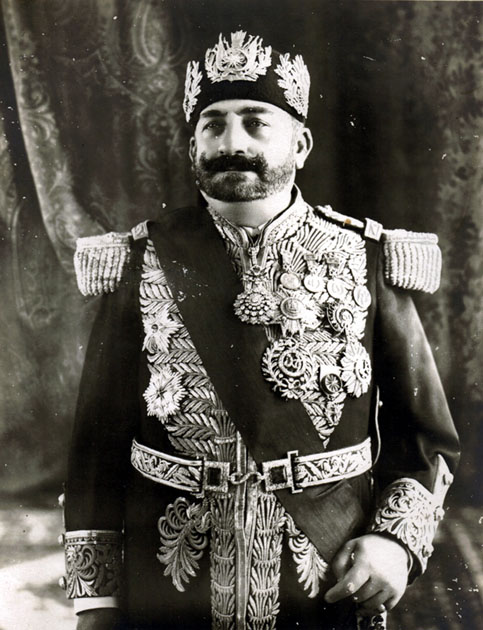
Portrait of Moncef Bey as a young man

Muhammad VII al-Munsif was the son of Muhammad V an-Nasir.

As a young man Moncef Bey distinguished himself during the events of April 1922 when he supported the nationalist Destour movement and prevailed on his father Naceur Bey to receive its representatives. He was invested as Bey al-Mahalla on 30 April 1942 and succeeded his first cousin once removed, Ahmed Bey, on the latter's death on 19 June of the same year.[2]

Reign

[edit]

Relations with the Vichy regime

[edit]

On 2 July 1942, Moncef Bey was awarded the Grand Cross of the Légion d'honneur by the Vichy regime.[3] Nevertheless, his attitude on the throne was not one which France found easy to deal with. Thus, in a memorandum of 2 August 1942 to Marshall Pétain presented by his Grand Vizier Hédi Lakhoua he reaffirmed his belief in Tunisian sovereignty, undiminished by the French protectorate. He insisted on the establishment of a consultative legislative council in which Tunisians would predominate, access to civil service roles for Tunisians, and measures against poverty and unemployment. He also wanted compulsory schooling in Arabic, the nationalisation of key enterprises, and a range of other measures of a broadly nationalist character.[4]

On 12 October 1942, at the Eid al-Fitr ceremonies in the palace of La Marsa, Moncef Bey expressed his surprise that there was not a single Tunisian among the senior government personnel who were attending with the French Resident General, Admiral Jean-Pierre Esteva. Esteva replied 'seuls les Français sont aptes aux postes de commande' ('only the French are suited to positions of authority'). The Bey then sent a telegram to Marshal Pétain asking for Esteva to be recalled,[5] the request was denied and tensions continued to mount between the Bey and Esteva[6] In December 1942, a confrontation blew up during a session of the Council of Ministers between Esteva and the Minister of Justice Abdeljelil Zaouche, after the Minister expressed reservations about funding for the National Gendarmerie and Esteva angrily rejected any criticism of the gendarmerie. Moncef Bey considered that the Resident General's tone was an insult to his representative and thus to his own person.

Axis troops arrived in Tunisia on 16 November 1942, and the Tunisian Campaign turned much of the country into a battlefield. Moncef Bey was confronted by demands from Pétain to remain loyal to France and from Roosevelt to allow free passage for Allied troops. Moncef Bey proclaimed Tunisian neutrality while secretly providing assurances to Roosevelt that Tunisia would support the Allies.[5] He also refused an offer from the Italian ambassador Bombieri to repudiate the Treaty of Bardo and enter into a new treaty with Italy.[5]

Moncef Bey with his ministers (left) and the princes (right)

On 1 January 1943, the Bey named as his new prime minister, Mohamed Chenik, who was described as 'half-American' by the German representative, Rudolf Rahn.[5] Chenik headed a government which included the Destourian Salah Farhat, the neo-destourian Mahmoud El Materi and an independent, Aziz Djellouli.[7]

Protector of the Jews

[edit]

His predecessor Ahmed Bey was often referred to as 'the Bey of the French' and signed several decrees prepared by the Vichy regime which were detrimental to the Jewish community in Tunisia. Moncef Bey on the other hand was referred to as 'the Protector of the Jews' and made efforts to ensure that these decrees were not put into effect. He also refused to sign any other anti-Jewish decrees, including those requiring Jews to wear the yellow star, or to undertake forced labour, or to exclude Jews from certain activities.[8][5] Between November 1942 and May 1943, while Axis troops occupied the country, he intervened repeatedly to protect his people, particularly the Jewish community, from their exactions.

Deposition and exile

[edit]
Moncef Bey at Pau, 5 October 1947

When Allied troops occupied Tunis, the French colonial lobby around Henri Giraud, including the former Resident General and Vichy minister Marcel Peyrouton, found a pretext to accuse the Bey of collaborating with Axis forces.[5] After Esteva fled, General Alphonse Juin became acting Resident General. On 13 May 1943, on the orders of Giraud, Juin demanded the Bey's abdication, but he refused.[5] The following day he was removed by a decree from Giraud and flown out of the country by the French airforce.[5] He was succeeded by his second cousin, Lamine Bey, on 15 May 1943.

Mausoleum of Moncef Bey at the Jellaz Cemetery

Moncef Bey was sent to Laghouat in southern Algeria, where he formally abdicated on 8 July.[5] He was then moved to the small town of Ténès, in the north of the country and on 17 October 1945 he was moved again to Pau where he remained until his death on 1 September 1948.[9] His remains were brought back to Tunis and he was buried with full honours in the Jellaz Cemetery unlike other ruling members of his family, who were mostly buried in Tourbet el Bey.

He is commemorated today in the Place Moncef-Bey in La Marsa, formally named on 1 September 2012 by President Moncef Marzouki.[10]

Family and private life

[edit]

He married Lalla Traki Beya, daughter of Muhammad IV al-Hadi (and thus his second cousin)[1] in October 1900 in Sidi Bou Saïd. She was the mother of his four children:

  • Prince Salaheddine Bey (1902-1938)
  • Prince Mohammed Raouf Bey (1903-1977)
  • Prince Omar Bey (1904-1938)
  • Princess Lalla Farida (1911-?)

After Lalla Traki's death in 1919 he married Lalla Zoubaida (née Azzouz) and then another cousin, Lalla Habiba (1888-1969), whom he divorced. His last wife was Lalla Arbiya in August 1942, and she followed him into exile, dying in 1974.[1]

Bibliography

[edit]

References

[edit]
[edit]
Revisions and contributorsEdit on WikipediaRead on Wikipedia
from Grokipedia

Muhammad VII al-Munsif, commonly known as Moncef Bey (4 March 1881 – 1 September 1948), was the Bey of who ruled from 19 June 1942 to 14 May 1943 as the penultimate monarch of the under French protectorate.
His brief tenure, amid , marked a pivotal challenge to colonial authority as he appointed a ministry sympathetic to Tunisian nationalists, including members of the Destour party, aiming to assert greater local control.
French authorities deposed him on 14 May 1943, citing alleged collaboration with Axis forces following the German occupation of , though subsequent accounts highlight his resistance to Nazi demands and explicit efforts to protect the Jewish population from and persecution.
Exiled to France until his death, Moncef Bey's nationalist stance and defiance earned him enduring popularity among Tunisians as a symbol of resistance against colonial rule, contrasting with the more compliant policies of his successors.

Early Life

Birth and Family Background

Muhammad VII al-Munsif, commonly known as Moncef Bey, was born on 4 March 1881 at La Manouba, a residence near in present-day . He was the eldest son of Muhammad V an-Nasir Pasha, who ruled as Bey of Tunis from 1902 until his death in 1922. Moncef Bey belonged to the , which had held power in since 1705, when , an Ottoman officer of Turkish origin, seized control from the Muradid dynasty and established hereditary rule with Ottoman nominal suzerainty. The dynasty maintained semi-independent governance over , blending Ottoman administrative traditions with local Arab-Berber influences, until the French protectorate was imposed in 1881—the year of Moncef's birth—effectively subordinating the Beys to French oversight while preserving their ceremonial role. As a prince within this lineage, Moncef received a traditional education suited to the royal family, though details of his early upbringing remain sparse in historical records.

Education and Early Influences

Muhammad VII al-Munsif, commonly known as Moncef Bey, was born on 4 March 1881 in to Naceur Bey, a prince of the . His father actively opposed French colonial encroachments, notably attempting to resist Resident General Lucien Saint's overreach in 1922 by supporting claims of the nationalist Destour party and challenging administrative impositions on the Bey's authority. From an early age, Moncef served as a close advisor to his father, immersing himself in the political tensions of the French era, where the Husainid rulers faced diminishing sovereignty. This familial involvement exposed him to resistance against colonial policies, fostering a reputation as an upright and pious figure sympathetic to Destourian , which advocated for Tunisian self-rule within a reformed framework. Unlike more palace-isolated princes, his youth was marked by direct engagement in nationalist undercurrents outside the court, shaping his later advocacy for reforms during his brief reign. Specific details on Moncef Bey's formal remain sparse in historical records, likely reflecting the traditional princely upbringing common among Husainid heirs, which emphasized Islamic scholarship, dynastic duties, and rudimentary exposure to European administrative norms under . His early political acumen, evident in advisory roles by the , suggests practical influences from observing his father's confrontations rather than structured academic training, aligning with the era's constraints on native elite formation amid French dominance.

Ascension to Power

Predecessor’s Rule and Transition

Ahmad II Bey (1862–1942) ruled from February 11, 1929, until his death, during a period dominated by the French Protectorate, where the Bey's authority was ceremonial and overshadowed by the French Resident-General's control over foreign affairs, defense, and administration. His reign, marked by political insignificance and courtly decadence, saw no significant challenges to French dominance amid rising nationalist sentiments in the interwar years. Following France's capitulation in June 1940 and the imposition of rule, Ahmad II cooperated with Vichy officials, including Resident-General Admiral Jean-Pierre Esteva, in enforcing discriminatory policies such as anti-Jewish regulations decreed by Vichy on October 3, 1940, which extended to despite the Bey's nominal sovereignty. This alignment maintained the protectorate's amid Axis advances in , with Ahmad II avoiding any overt resistance as German and Italian forces approached in late 1942. Anticipating Ahmad II's failing health at age 80, the Vichy French administration designated Muhammad VII al-Munsif—known as Moncef Bey, a distant and grandson of the deposed III Bey—as Bey al-Mahalla (crown prince) on April 30, 1942, selecting him over other Husainid heirs for his perceived pliancy and lack of strong nationalist ties. Ahmad II died on June 19, 1942, at Dar al-Taj Palace in , enabling Moncef Bey's immediate accession without disruption, as the French viewed the transition as a means to ensure continued collaboration during the escalating war.

Circumstances of Succession in 1942

Ahmad II ibn Ali, the Bey of Tunis since 1929, died on June 19, 1942, at the age of 80 in . His death occurred amid the uncertainties of , with remaining under the French protectorate, where the French Resident-General held effective control over key decisions, including dynastic succession. Ahmad II left ten sons, but none were positioned as immediate successors; instead, the throne passed to his cousin, Muhammad VII al-Munsif, known as Moncef Bey. Moncef Bey had been formally invested as (heir apparent) on April 30, 1942, less than two months prior, in a move that reflected the Bey's authority to designate a successor from within the Husainid family, subject to French concurrence. This appointment bypassed II's direct heirs, likely due to a combination of Moncef's seniority, his prior military and administrative roles, and the Vichy authorities' preference for a figure perceived as maintainable under oversight. The swift enthronement of Moncef on the day of II's death ensured continuity, avoiding a during a period when was aligning with while facing Allied advances in . The selection surprised many Tunisians, as Moncef had earlier demonstrated sympathy toward nationalist aspirations, including defending the Destour Party in 1922, contrasting with Ahmad II's more compliant stance toward French rule. Nonetheless, the French viewed the transition as stabilizing, unaware that Moncef would soon pursue reforms challenging protectorate dominance. No evidence suggests foul play in Ahmad II's death, which historical records attribute to natural causes given his advanced age and long rule marked by limited autonomy under colonial oversight.

Reign (1942–1943)

Domestic Reforms and Nationalist Initiatives

Upon acceding to the on 19 1942, Moncef Bey pursued nationalist initiatives to assert greater Tunisian autonomy within the French protectorate, focusing on the Tunisianization of administrative roles and the reduction of French oversight in domestic governance. He appointed Tunisian nationals to ministerial positions, challenging the established French-influenced structure and aligning with aspirations of local nationalists. In early August 1942, Moncef Bey presented French Resident-General Jean-Pierre Esteva with a series of demands aimed at restoring Tunisian control over internal affairs, including administration, education, and justice, while maintaining framework. These initiatives positioned him as a focal point for nationalist sentiments, drawing support from groups like the Destour party, though they provoked resistance from French authorities wary of eroding their authority. Moncef Bey further advanced these reforms by selecting M'hamed Chenik, a prominent Tunisian figure, as Grand Vizir, forming a cabinet that emphasized local leadership and indirectly bolstered nationalist momentum amid wartime pressures. Despite the brevity of his rule, these actions symbolized a push for , contributing to his popularity among but ultimately fueling conflicts leading to his deposition.

Relations with the Vichy Regime

Upon his ascension to the throne on 14 June 1942, Moncef Bey inherited a French protectorate structure under control, where the Resident-General, Jean-Pierre Esteva, held effective authority over Tunisian affairs despite the Bey's nominal sovereignty. Moncef quickly sought to assert greater Tunisian influence by demanding Esteva appoint local officials to key government positions, a request Paris rejected, exacerbating frictions over administrative autonomy. Relations deteriorated further amid Vichy's enforcement of anti-Jewish statutes, enacted across since October 1940, which included quotas on Jewish civil servants, professionals, and students. Moncef Bey resisted these measures by refusing to countersign discriminatory decrees requiring his approval, effectively stalling their implementation in and signaling opposition to Vichy's racial policies. In a public gesture of solidarity, he awarded the Nishan Iftikhar, Tunisia's highest honor, to approximately 20 Jewish subjects during this period of escalating persecution. Despite these conflicts, Vichy formally recognized Moncef's status on 2 July 1942 by granting him the Grand Cross of the Légion d'honneur, a ceremonial honor that masked underlying tensions. Moncef's broader nationalist push for Tunisian clashed with 's maintenance of colonial control, leading to accusations from French authorities of , though his actions prioritized local sovereignty over alignment with Vichy collaborationist aims. These strains persisted until the Allied landings in shifted regional dynamics, but Vichy's pre-invasion resistance to Moncef's initiatives foreshadowed his later deposition.

Policies Toward Jewish Subjects

Upon ascending the throne on May 14, 1942, Moncef Bey demonstrated sympathy toward Tunisia's Jewish subjects by awarding the Nishan Iftikhar, the kingdom's highest distinction, to approximately 20 prominent Jews, including doctors and businessmen, just eight days into his reign. This gesture occurred amid France's enforcement of anti-Jewish statutes in the Tunisian , which included professional bans, property restrictions, and quotas limiting Jewish access to education and public roles. Moncef Bey leveraged his authority to stall the implementation of these discriminatory laws, as all required his formal approval or , allowing him to delay decrees on evictions, "" of Jewish businesses, and other economic penalties. In coordination with Resident-General Jean-Pierre Estéva, he heeded appeals from Jewish leaders, postponing financial impositions and mitigating hardships during the initial phase of his rule. He also exploited loopholes in statutes to grant exemptions for native Tunisian deemed to have rendered exceptional service to the state, continuing a practice initiated under his predecessor. Following the Axis occupation of in November 1942, Moncef Bey's administration provided targeted protections despite German demands for deportations and forced labor. His court sheltered fleeing German camps, and Mohamed Chenik relayed warnings of impending roundups, enabling some to evade . Interventions by cabinet ministers under his direction prevented certain deportations, though broader enforcement of anti-Semitic measures persisted under occupation until Allied liberation in May 1943. These actions earned him enduring recognition among Tunisian as a protector, evidenced by oral testimonies recounting personal interventions and communal gratitude.

Interactions with Axis and Allied Forces

Following the Axis landings in Tunisia on November 16, 1942, in response to , Moncef Bey maintained a policy of official neutrality between the occupying German and Italian forces and the advancing Allies, using the turmoil to advance Tunisian nationalist interests without committing to belligerency on either side. German and Italian troops established a defensive in eastern , bolstered by French collaboration under Resident-General René Estéva, but Moncef Bey avoided declarations of allegiance, instead prioritizing the protection of Tunisian autonomy amid the escalating . On November 9, 1942—one day before the full Allied landings in and —U.S. President dispatched a direct message to Moncef Bey, requesting permission for American forces to transit through to enable a swift confrontation with Axis armies, framing it as a mutual opportunity to defeat shared enemies without intent to impair Tunisian . The Bey did not accede to this overture, citing the need to navigate demands for loyalty to France while resisting full subjugation to Axis commands; concurrent pressures from Marshal urged resistance to the Allies, placing Moncef Bey in a precarious diplomatic bind. Under Axis occupation, which persisted until the Allied capture of on May 7, 1943, Moncef Bey took limited but symbolic steps against discriminatory policies, notably awarding the Nishan Iftikhar—Tunisia's premier —to roughly 20 prominent Jewish physicians and businessmen in late 1942, a gesture of solidarity amid Italian and German enforcement of Vichy-era anti-Semitic statutes like forced labor and property seizures. This act, alongside delays in implementing anti-Jewish decrees, positioned him as a protector of Jewish subjects despite Axis presence, though it did not extend to military resistance or . Post-victory, on May 14, 1943, French authorities deposed Moncef Bey, charging him with compromising 's security through alleged Axis —a claim unsubstantiated by and widely viewed as a pretext to eliminate his nationalist reforms, with Allies tacitly endorsing the move to stabilize French colonial rule under . No documented transfers of resources or intelligence to occurred under his brief tenure, contrasting with Estéva's more overt accommodations, such as airfield access; the accusations served primarily to justify amid fears of Moncef Bey leveraging wartime chaos for greater .

Deposition and Exile

Allied Occupation and French Accusations

Following the Axis defeat in the , Allied forces, including American, British, and Free French troops, occupied in early , marking the end of hostilities in and the establishment of provisional Allied military administration. The French Resident-General Jean Estéva fled as Axis forces retreated, leaving General as acting Resident-General under the authority of General , the co-leader of the Free French Forces. This occupation shifted control from Vichy-aligned authorities to the Allies, who sought to restore French colonial oversight while addressing local governance amid rising Tunisian nationalist sentiments. On May 14, 1943, Giraud ordered the deposition of Moncef Bey, accusing him of compromising the regency's internal and external security by maintaining his position during the Axis presence and allegedly collaborating with German and Italian forces. French investigations cited his refusal to abdicate earlier and the awarding of decorations to Axis generals on April 12, 1943, as evidence, though these were minor protocol gestures under duress rather than active support. No formal trial occurred; the deposition was abrupt, with Moncef Bey replaced by his cousin Lamine Bey, a more compliant figure favored by French colonial interests. Pressure from French settlers, who viewed Moncef's nationalist reforms and popularity as threats to colonial stability, influenced Giraud's decision, framing the bey's neutral stance amid Vichy-Axis-Allied pressures as disloyalty. The collaboration charges lacked substantiation, as Moncef Bey had navigated wartime demands without providing material aid to Axis operations, instead protecting Jewish subjects and engaging in cautious diplomacy with Allied envoys like U.S. President , who had urged troop passage in November 1942. Historians note the accusations served primarily to eliminate a ruler whose brief had empowered Tunisian , exacerbating French fears of movements; Giraud himself later expressed doubts about the charges' validity. The deposition triggered protests and arrests of nationalists, underscoring Allied complicity in perpetuating French rule despite Moncef's non-aggressive policies. Following his deposition on 14 May 1943 by order of , who accused him of collaborating with Axis forces during the , Muhammad VII al-Munsif (Moncef Bey) was immediately exiled from . Initially confined to in the Algerian desert under French military oversight, he formally abdicated on 8 July 1943, after which he was relocated to Ténès, a coastal town in , where living conditions were described as austere and restrictive. On 17 October 1945, he was transferred to Pau in southwestern , where he resided in relative isolation until his death on 1 September 1948, subject to ongoing surveillance that limited his political activities and contacts. The removal of Moncef Bey proceeded without any formal or judicial , as French authorities invoked wartime exigencies and unsubstantiated collaboration claims—despite that he had maintained neutrality by refusing explicit alignment with either Axis or Allied forces—to bypass legal norms under treaty. This extrajudicial action, ordered directly by Giraud to neutralize a ruler seen as enabling nationalist governance through his appointment of Tunisian ministers, lacked or opportunity for defense, prioritizing colonial control over evidentiary review. No independent legal challenges succeeded during his lifetime, though Tunisian nationalists later protested the deposition as an illegitimate suppression of , highlighting the absence of recourse mechanisms for Husainid rulers under French dominance.

Attempts at Return and International Appeals

Following his deposition on May 14, 1943, Moncef Bey remained in French-imposed exile, initially in before being transferred to , where he was held under surveillance until his death. Tunisian nationalists, particularly from the Neo-Destour party, viewed his removal as an affront to national sovereignty and mobilized campaigns for his reinstatement, portraying him as a legitimate ruler sympathetic to reformist aspirations. In August 1946, Tunisian nationalist groups formally petitioned French authorities for 's restoration to the throne, emphasizing his popularity among the Muslim population and his brief tenure's alignment with Destourian goals. Neo-Destour leader incorporated demands for recognition of Moncef Bey as Tunisia's legal sovereign into broader independence appeals submitted to France, arguing that autonomy should proceed under his rule rather than the imposed successor, Muhammad al-Amin Bey. Internationally, the Council of the Arab League on November 23, 1946, urged to free Moncef Bey alongside other detained North African figures, framing his detention as unjust within the context of Tunisia's status. Supporters escalated efforts by bringing his case before the in 1948, seeking diplomatic pressure on to end the exile, but these appeals yielded no concessions as French officials maintained the deposition on grounds of alleged Axis sympathies and administrative necessity. Moncef Bey died in Pau, , on September 1, 1948, without returning to , though his exclusion fueled ongoing nationalist sentiment.

Death and Legacy

Final Years and Death in 1948

Following his deposition and initial exile to in southern , where he formally abdicated on 8 July 1943, Moncef Bey was transferred to Pau in southwestern during the summer of 1945. He resided at Villa Cadaval under ongoing French surveillance, accompanied by his Raouf Bey, who had been permitted to join him. Throughout these years, Moncef Bey symbolized resistance to French colonial rule for Tunisian nationalists, who viewed his ouster as an illegitimate act by the Free French under General , predicated on unproven charges of compromising regency security through alleged Italian contacts. Supporters, including Destour party affiliates, escalated international appeals, preparing to submit his case to the Economic and Social Council just prior to his death, arguing for recognition of his legitimacy and potential restoration. Moncef Bey died on 1 September 1948 in Pau at age 66.

Funeral and Public Response

Moncef Bey died of on 1 September 1948 in Pau, , where he had been held under surveillance since 1945. His remains were repatriated to aboard the French torpedo boat Somali and arrived in shortly thereafter. The official funeral took place on 5 September 1948 on the hillside of Sīdī b. al-Ḥasan in , drawing an estimated 300,000 mourners in a display of public veneration despite ongoing French colonial oversight. Neo-Destour activists prominently participated by laying wreaths at his tomb, framing the event as a nationalist affirmation of Moncef Bey's legacy as a reformist ruler sympathetic to aspirations. He was interred with full honors in the Jellaz Cemetery, distinguishing his burial from those of other rulers who received lesser ceremonies under colonial restrictions. The massive attendance and organized nationalist involvement highlighted Moncef Bey's enduring popularity among , particularly as a figure who had briefly challenged French authority through domestic Tunisian governance and protections for Jewish subjects during , though French authorities had portrayed him as collaborationist to justify his 1943 deposition. This response contrasted with the limited official recognition during his exile, signaling growing anti-colonial sentiment that influenced subsequent negotiations between nationalists and the French protectorate.

Historical Evaluations and Controversies

Historical evaluations of Moncef Bey portray him as a pivotal figure in Tunisian nationalism, credited with advancing proto-independence sentiments during World War II through reforms that challenged French colonial oversight, though his brief reign invited sharp divisions in interpretation. French colonial authorities and their postwar narratives framed him as a security risk whose contacts with Axis representatives compromised Allied interests, justifying his 1943 deposition as a necessary measure to restore stability under Vichy-aligned governance. This perspective, advanced by Resident-General René Étienne and General Henri Giraud, emphasized alleged secret meetings with German envoys in late 1942, portraying such interactions as evidence of disloyalty amid the Axis occupation of Tunisia from November 1942 to May 1943. The collaboration accusations, however, remain unsubstantiated by declassified records or Axis documentation, with French motivations appearing rooted in Moncef's refusal to fully implement Vichy anti-Jewish statutes and his appointment of a nationalist-leaning ministry on 8 September 1942, which included Destour sympathizers and eroded control. General , who oversaw the transition post-deposition, privately expressed skepticism toward the charges, noting insufficient proof of active Axis aid despite Moncef's nominal allegiance to the Beylical throne under French suzerainty. Postwar French , influenced by anxieties, sustained this narrative to legitimize the installation of the more pliant Lamine Bey on 14 May 1943, sidelining Moncef's appeals to the in 1947–1948 as subversive agitation. In contrast, Tunisian collective memory and emerging independence-era scholarship rehabilitate Moncef as a symbol of resistance against colonial overreach, highlighting his 1942 decree shielding Jewish subjects from discriminatory labor drafts—issuing 46,000 exemption certificates by December 1942—and his defiance of Italian and German pressures for full compliance with racial laws. This view, echoed in oral histories from Tunisian Jewish communities, attributes his exile not to Axis affinity but to French exploitation of wartime chaos to neutralize a ruler whose popularity surged via public audiences and subtle anti-colonial rhetoric, fostering Destourian mobilization that presaged the 1956 independence. Academic analyses caution against binary collaboration-resistance frames, noting Moncef's pragmatic diplomacy—such as limited resource provisions to Axis forces under duress—reflected Beylical survival amid encirclement, rather than ideological alignment, with no evidence of voluntary territorial concessions or military support beyond protocol. Controversies persist over the evidentiary basis for his ouster, with critics of French accounts arguing that archival gaps stem from deliberate suppression to protect colonial legitimacy, as Moncef's 1943 yielded no convictions on charges. His 1948 death in Pau, , amid unheeded repatriation pleas, amplified martyrdom narratives in , where protests on 2 1948 drew thousands decrying the deposition as a colonial , influencing Habib Bourguiba's Neo-Destour campaigns. Balanced assessments, drawing from Allied intelligence reports, affirm Moncef's non-aggression toward invaders while underscoring French bias in equating with collaboration, a pattern seen in parallel Moroccan cases under Mohammed V.

Personal Life

Marriages and Family

Muhammad VII al-Munsif, known as Moncef Bey, married his second cousin, Princess Lalla Traki Beya, the eldest daughter of Muhammad IV al-Hadi, in October 1900 at Sidi Bou Saïd. Lalla Traki died on 18 1919 at the Essâada Palace in and was buried at al-Bey in the . The marriage produced four children: Prince Slaheddine Bey (1902–1938), Prince Mohamed Raouf Bey (1903–1977), Prince Amor Bey (1904–1938), and one daughter whose details remain private. After Lalla Traki's death, Moncef Bey took additional wives, including Lalla Zoubaida Azzouz and Lalla Habiba Bey, though no children from these unions are recorded in available genealogical records. His fourth wife, Lalla Arbiya (née Ben Abdallah), whom he married in August 1942, accompanied him during his exile following deposition; she had previously served as a to Habiba and died on 30 July 1974.

Private Character and Interests

Moncef Bey, whose regnal name al-Munsif translates to "the just one" or "the equitable," was regarded for his strong sense of fairness and devotion to the welfare of his subjects, transcending religious and ethnic divides. He demonstrated notable tolerance and solidarity, particularly toward Tunisian during , by providing moral support, intervening against discriminatory measures, and funding communal projects such as a for a Jewish alongside mosques and schools. Contemporary accounts portray him as charismatic and popular, with a modern, enlightened temperament open to debate and hands-on engagement, including travels to remote Tunisian regions to connect directly with communities. His personal habits reflected a liberal outlook for his era, emphasizing protection of all subjects as his "children," which earned him enduring fondness among diverse groups. Little is documented about specific private interests or hobbies beyond his commitment to equitable and cultural , though his actions suggest a preference for fostering unity through religious and educational initiatives rather than personal pursuits.

References

Add your contribution
Related Hubs
User Avatar
No comments yet.