Hubbry Logo
DurmitorDurmitorMain
Open search
Durmitor
Community hub
Durmitor
logo
8 pages, 0 posts
0 subscribers
Be the first to start a discussion here.
Durmitor
Durmitor
from Wikipedia

Durmitor (Montenegrin: Дурмитор, pronounced [durmǐtɔr] or [dǔrmitɔr]) is a massif located in northwestern Montenegro. It is part of the Dinaric Alps. Its highest peak, Bobotov Kuk, reaches a height of 2,523 meters (8,278 ft).

Key Information

The massif is limited by the Tara River Canyon on the north, the Piva River Canyon on the west, and by the Komarnica River Canyon on the south. To the east, the Durmitor opens to a 1,500 m (4,921 ft) high plateau, called Jezerska površ (Plateau of Lakes). Mount Sinjavina is located to the east of the Jezerska površ plateau. The Durmitor is for the most part located in the Žabljak municipality.

The massif gives its name to the national park that comprises it. Durmitor National Park was founded in 1952, and designated as a World Heritage Site in 1980.

Peaks

[edit]
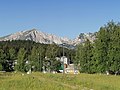
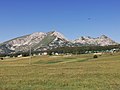
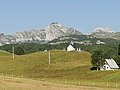
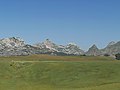
View of Durmitor near Minin Bogaz

The massif has 48 peaks above 2,000 meters (6,562 ft). Highest peaks are:

  • Bezimeni vrh (Nameless Peak) 2,487 m (8,159 ft)
  • Šljeme 2,455 m (8,054 ft)
  • Istočni vrh Šljemena (East Peak of Sljeme) 2,445 m (8,022 ft)
  • Soa / Đevojka 2,440 m (8,005 ft)
  • Milošev tok 2,426 m (7,959 ft)
  • Bandijerna 2,409 m (7,904 ft)
  • Rbatina 2,401 m (7,877 ft)
  • Lučin vrh 2,396 m (7,861 ft)
  • Prutaš 2,393 m (7,851 ft)
  • Minin bogaz 2,387 m (7,831 ft)
  • Planinica 2,330 m (7,644 ft)
  • Kobilja glava 2,321 m (7,615 ft)
  • Šupljika 2,310 m (7,579 ft)

Lakes

[edit]

Durmitor features 18 glacial lakes, scattered over mountain massif and Jezerska Površ plateau. The lakes add significantly to the beauty of the mountain, and have been nicknamed Gorske Oči, or "mountain eyes".[1][2]

Name

[edit]
Durmitor National Park
Peaks of Durmitor Mt. over the Black Lake
Map
Interactive map of Durmitor National Park
LocationMontenegro
Nearest cityŽabljak
Coordinates43°09′12″N 19°02′13″E / 43.153198375177084°N 19.0368730920165°E / 43.153198375177084; 19.0368730920165
Area32,100 ha (124 sq mi)
Established1952 (1952)
Governing bodypublic
World Heritage site1980
Websitehttp://www.durmitornp.com/ ; https://nparkovi.me/parks/durmitor

One theory of the name Durmitor is that it is derived from Romanian, meaning 'sleeping place' (cognate with English dormitory) and was given by Romanian settlers in the middle age. There are similarly named mountains, such as Visitor (cf. visător 'dreamer') and Cipitor (cf. ațipitor 'sleeper') across the former Yugoslavia.[3]

Another theory is that the name was given by the Celts, and the meaning would be anything from 'water from the mountain' to 'ridged mountain'.[citation needed] Considering the duration of time that the ancient Celts spent around these part and the Tara River (Tara is a Celtic goddess, as well),[citation needed] its name being of Celtic origin, it is very possible that Durmitor is a name of similar origin. Zeta river also has a Celtic origin name ("Loved one").[citation needed]

National park

[edit]
Durmitor National Park
UNESCO World Heritage Site
Map
Interactive map of Durmitor National Park
LocationMontenegro
CriteriaNatural: (vii)(viii)(x)
Reference100bis
Inscription1980 (4th Session)
Extensions2005
Area32,100 ha (79,000 acres)
Coordinates43°09′12″N 19°02′13″E / 43.153198375177084°N 19.0368730920165°E / 43.153198375177084; 19.0368730920165
Durmitor is located in Montenegro
Durmitor
Durmitor
Location of Durmitor in Montenegro

Durmitor National Park, created in 1952, includes the massif of Durmitor, the canyons of Tara, Sušica and Draga rivers and the higher part of the canyon plateau Komarnica, covering an area of 390 square kilometers (150 sq mi). It is the largest protected area in Montenegro, and it was inscribed on the list of UNESCO World Heritage Sites in 1980.[2]

At 80 kilometers (50 mi) long and 1,300 meters (4,300 ft) deep, the Tara River Canyon in Durmitor National Park is the deepest gorge in Europe.[2][4]

Tourism

[edit]

Durmitor mountain is the centre of Montenegrin mountain tourism. The tourist facilities are concentrated around the town of Žabljak.[2][4] In winter, the main activities on Durmitor are skiing and snowboarding. In summer, the activities shift to hiking, mountaineering and recreational tourism. Water sports are also practiced in the area.[5] Some of the most prominent attractions of Durmitor mountain are 18 glacial lakes, the best known of which is the Black Lake and the mountain peak Stožina.[6]

[edit]

References

[edit]

Bibliography

[edit]
[edit]
Revisions and contributorsEdit on WikipediaRead on Wikipedia
from Grokipedia
Durmitor is Montenegro's largest , spanning 39,000 hectares in the northern part of the country within the . Established in 1952 and designated a in 1980 for its outstanding natural beauty, geological features, and , the park encompasses a dramatic limestone massif shaped by ancient glaciers, featuring over 48 peaks exceeding 2,000 meters, including the highest point, Bobotov Kuk at 2,523 meters. It is renowned for its glacial lakes—such as the iconic Black Lake (Crno Jezero)—deep river canyons like the Tara River Gorge (Europe's deepest at up to 1,300 meters), and a network of underground streams and forests that create a diverse alpine and Mediterranean-influenced . The park's geography reflects millions of years of tectonic and erosional forces, with elevations ranging from 500 meters to over 2,500 meters, supporting varied microclimates and habitats from lush valleys to stark plateaus. The Tara River, a Biosphere Reserve component, bisects the area, carving profound canyons that highlight the region's formations, including caves and sinkholes. Approximately 18 glacial lakes, often called "mountain eyes," dot the landscape, with Black Lake being the largest at 0.515 km² (51.5 hectares) and up to 52 meters deep, serving as a focal point for ecological and recreational value. Over 100 kilometers of marked trails, including ascents to peaks and descents into canyons, make Durmitor a premier destination for , , and , while traditional shepherding practices add cultural depth to its high meadows. Durmitor's biodiversity is exceptional, hosting more than 1,600 species of vascular plants, including 37 endemic to the wider area—such as ancient (Serbian spruce) forests and rare orchids. Fauna includes large mammals like brown bears, gray wolves, and , alongside 130 bird species such as the and over 50 fish species in its rivers, notably the endemic soft-mouthed trout. The park's conservation efforts address threats like potential hydroelectric dams on the Tara and mining pollution; as of 2025, the IUCN World Heritage Outlook assesses the park with significant concern due to persistent pressures including developments, over-visitation, and . Its UNESCO criteria (vii) for superlative scenery, (viii) for geological processes, and (x) for underscore its global significance as a model of integrated natural and cultural heritage.

Geography

Location and Boundaries

Durmitor is a prominent limestone massif situated in northwestern Montenegro, forming a key component of the Dinaric Alps mountain system. It lies primarily within the boundaries of Žabljak Municipality, with portions extending into neighboring municipalities such as Plužine, Šavnik, Mojkovac, and Pljevlja. The central area of the Durmitor massif is positioned at approximately 43°09′12″N 19°02′13″E, while its highest peak, Bobotov Kuk, rises at 43°07′40″N 19°02′00″E. The spans roughly 40 kilometers in length from northwest to southeast and about 16 kilometers in width, encompassing a core area of approximately 360 square kilometers. This extent highlights Durmitor's role as one of the most substantial mountainous features in the region, contributing to Montenegro's diverse alpine landscape. The Durmitor National Park, which largely aligns with the natural boundaries of the massif, covers 390 square kilometers and serves as a protected extension of this geographical entity. Durmitor's boundaries are distinctly defined by prominent natural features: the deep to the north, the Piva River Canyon to the west, and the Komarnica River Canyon to the south. To the east, it transitions into the expansive Jezerska Površ plateau at an elevation of around 1,500 meters, separating it from the adjacent Sinjavina . These hydrological and elevational limits create a well-demarcated perimeter that underscores the massif's isolation and ecological uniqueness within the Balkan Peninsula.

Topography and Peaks

Durmitor's topography is dominated by a rugged landscape typical of the , featuring extensive plateaus, steep cirques, and U-shaped glacial valleys that descend from high elevations to river gorges. The massif rises dramatically from surrounding lowlands, with altitudes ranging from approximately 450 meters in the canyon floors to over 2,500 meters at its summits, creating a diverse elevational gradient that supports varied microclimates. This terrain, shaped in part by past glacial activity, includes prominent dolines, poljes, and underground drainage systems, contributing to the park's dramatic vertical relief. The Durmitor contains 48 peaks exceeding 2,000 meters in elevation, making it the highest mountain range in outside the Prokletije. The highest of these is , reaching 2,523 meters and occupying a central position within the massif's main ridge system. This summit offers broad panoramas across the park and is accessible via well-marked trails starting from nearby passes like Sedlo, typically involving moderate to strenuous ascents through alpine meadows and rocky . Among the other prominent peaks are Bezimeni Vrh at 2,487 meters, noted for its sharp, pyramidal prominence rising steeply from the surrounding ridges and offering a striking against the , and Šljeme at 2,455 meters, which forms part of an elongated east-west ridge with multiple subsidiary summits that enhance the massif's interconnected highland profile. These peaks contribute to the overall structural complexity of Durmitor, where interconnected ridges and valleys create a labyrinthine network of terrain.

Geology

Formation and History

Durmitor forms part of the , which originated as segments of the Adriatic-Dinaric carbonate platform during the era, a vast shallow-marine depositional system that accumulated thick sequences of carbonates amid the opening and evolution of the between the African and Eurasian plates. This platform, spanning from the to the , experienced initial rifting in the ( stage, approximately 183 million years ago), leading to its separation from broader Tethyan megaplatforms and the establishment of stable carbonate sedimentation environments. The platform's setting facilitated the deposition of up to 8,000 meters of limestones and , setting the stage for later tectonic deformation. The modern mountainous topography of Durmitor emerged during the , driven by the northward convergence and collision of the African and Eurasian plates, which compressed the Adriatic plate and initiated widespread faulting and folding across the Dinaric domain. Uplift of the region began in the epoch (approximately 34–23 million years ago), associated with the initial phases of and the formation of fold- belts, including major structures that dissected the carbonate platform into thrust sheets. This process intensified during the (23–5.3 million years ago), with accelerated shortening and exhumation leading to the development of prominent anticlines and synclines, while peak elevations, such as those exceeding 2,500 meters, were largely achieved within the last 5 million years through ongoing tectonics. The dominant composition of Durmitor reflects the underlying platform heritage. Subsequent modification of Durmitor's landscape occurred during the Pleistocene epoch (2.58 million to 11,700 years ago), when multiple glacial advances carved distinctive erosional features amid a series of ice ages. Glaciers, including extensive valley systems and smaller types, descended from high elevations to form U-shaped valleys, steep-sided , and associated moraines, with evidence of at least three major phases: an older widespread glaciation covering about 67 km², a younger phase spanning 44 km², and a final cirque-dominated stage limited to 23.9 km². These processes overprinted the tectonic structures, enhancing the rugged relief through periglacial activity and repeated advances during marine isotope stages such as and .

Rock Types and Features

The geology of Durmitor is dominated by limestone formations, spanning the Middle and Upper Triassic, Upper , and Upper periods, which constitute the primary rock type across the massif. These s, often thick and intensely folded, form the bulk of the exposed surface and are characterized by their high-quality white composition, resulting from marine sedimentation in ancient Tethyan seas. Evidence of fossilized marine life, such as bivalves and other , is preserved within these limestones, underscoring their origin as shallow-marine deposits. Interbedded with the limestones are layers of dolomite, particularly from the period, which contribute to the carbonate-dominated substrate and influence local development. Minor sedimentary deposits, including clayey-marly-sandy beds from the Late and Lower , as well as Middle eruptive rocks, occur in subordinate positions, adding structural complexity but covering only limited areas. Durmitor exemplifies classic due to the of its rocks, featuring extensive sinkholes (dolines), elongate depressions known as poljes, and over 200 documented caves that serve as conduits for underground drainage. These karst phenomena include subterranean rivers that capture surface runoff, often draining glacial lakes into deeper aquifers, with notable examples like Montenegro's deepest cave at 897 meters on the southwestern slopes. has sculpted unique surface features, such as sharp rock towers and pinnacles, enhancing the massif's jagged skyline against a backdrop of glacial modification.

Hydrology

Glacial Lakes

Durmitor is home to 18 named glacial lakes, locally referred to as "mountain eyes" due to their striking vivid colors and reflective surfaces that mirror the surrounding peaks. These lakes are post-glacial formations, created during the Pleistocene era when glaciers carved out depressions in the mountain basins, which later filled with meltwater after the ice retreated. Primarily fed by seasonal from the high-altitude terrain and underground springs, the lakes exhibit noticeable fluctuations in water levels, rising in spring and summer from increased and thawing, while diminishing in drier periods. Among the most prominent is Black Lake (Crno Jezero), the largest in the park with a total surface area of 0.515 km², comprising two interconnected basins: the larger Veliko Jezero (0.338 km², maximum depth 24.5 m) and the smaller Malo Jezero (0.177 km², maximum depth 49.1 m), making the latter the deepest in Durmitor. Other notable examples include the Škrčko lakes in the central massif—Veliko Škrčko Jezero at 1,686 m elevation with a maximum depth of 15.2 m, and adjacent Malo Škrčko Jezero at 1,711 m with a depth of 17.2 m—both nestled in alpine valleys below prominent ridges. These lakes contribute to the park's hydrological diversity, with their clear, cold waters supporting specialized aquatic ecosystems. The glacial lakes of Durmitor are predominantly oligotrophic, characterized by low nutrient levels that foster clear waters and unique microbial and communities adapted to the pristine, oxygen-rich environment. This sustains endemic , such as certain charophyte , thriving in the nutrient-poor conditions typical of high-mountain glacial remnants.

Rivers and Canyons

The rivers of Durmitor, primarily the Tara, Piva, and Komarnica, carve dramatic canyons that shape the mountain's rugged hydrology and topography. The Tara River, originating in the Komovi Mountains and flowing through Durmitor, forms the most prominent feature: a canyon approximately 82 kilometers long and up to 1,300 meters deep, recognized as Europe's deepest gorge. The Piva River, emerging from springs in the Maglić massif, and the Komarnica River, its tributary rising near Durmitor's peaks, create narrower but equally steep gorges that extend the network of incised valleys across the region. These rivers collectively drain the 's high plateaus, contributing to the Drina River basin, with the Tara serving as a major tributary that carries significant discharge from into . Canyon characteristics in Durmitor are defined by steep walls rising vertically from riverbeds, often exceeding 1,000 meters in height, which foster unique microclimates and serve as biodiversity hotspots. The Tara Canyon's walls support dense riparian forests and endemic species, including rare orchids and fish like the softmouth trout, while the Piva and Komarnica canyons host diverse avian and communities adapted to the shaded, moist environments. These formations also play a critical role in delineating the boundaries of Durmitor's hydrological zones, with the Tara Canyon marking a natural western edge that isolates the massif from adjacent valleys. Hydrologically, these rivers draw from a combination of glacial meltwater—briefly augmented by outflows from the region's glacial lakes—and abundant springs that emerge from the permeable limestone aquifers. The Tara River, for instance, maintains a flow sustained by high precipitation and underground recharge, averaging discharges that support and stability year-round. Geologically, ongoing fluvial continues to deepen these canyons, with rates in the Dinaric landscape typically ranging from 0.02 to 0.06 millimeters per year, reflecting the slow but persistent dissolution and mechanical incision in the .

Etymology and History

Name Origin

The name "Durmitor" is most commonly attributed to Romanian linguistic roots, deriving from the word dormitor, meaning "sleeping place" or "dormitory," which evokes the mountain range's vast, resting, and seemingly dormant form reminiscent of a volcanic massif at rest. This etymology is tied to the historical presence of Vlach (Romanian-speaking) communities in the region, who contributed numerous toponyms to the Balkan landscape, including nearby peaks like Visitor and Pirlitor, reflecting their pastoral and transhumant traditions in mountainous areas. An alternative theory suggests a Celtic origin, with the name stemming from Dur mead tir, potentially translating to "water from the mountain" or "ridged mountain," alluding to the abundance of glacial lakes and hydrological features; however, this interpretation lacks robust linguistic verification and appears primarily in regional rather than scholarly analysis. The name's earliest documented appearances occur in 19th-century European cartographic records, often adapted into local Slavic dialects within Montenegrin oral traditions and legends, where Durmitor is portrayed as a mythical resting place for ancient deities. Despite these theories, no consensus exists among linguists, as interpretations rely on comparative regional without corroborating archaeological or epigraphic evidence to confirm a singular origin.

Human Settlement and Exploration

Human presence in the Durmitor region dates back to prehistoric times, with evidence of Illyrian tribes inhabiting broader from the 5th to 2nd centuries BCE, utilizing mountain passes and trails for trade and migration across the rugged terrain. Roman influence followed, marked by remnants of stone bridges and caravan roads in the Žabljak area, indicating the use of Durmitor's valleys and routes for military and commercial movement during the province of Dalmatia's expansion in the 1st century CE. These early pathways, including fortifications along key passes, facilitated connectivity between coastal and inland areas but left sparse permanent settlements due to the harsh alpine environment. By the late CE, Slavic peoples began settling the fertile valleys of the Piva and Tara rivers, establishing communities focused on and rearing; these migrants, often referred to as "Vlasi" or cattle keepers, formed tribes such as the Novljani (later Drobnjaci) and Banjani, who integrated with pre-existing Wallachian (Romanic) pastoralists. Medieval Slavic expansion intensified in the , with permanent hamlets emerging in sheltered plateaus like Jezerska, supported by self-governing structures under elected dukes amid the region's feudal ties to early Serbian states. Archaeological traces, including a Christian-era cemetery near Riblje Lake, suggest organized communities with ties to Orthodox traditions by this period. During the Ottoman era from 1482 onward, Durmitor's population remained sparse and predominantly Orthodox Christian, with no Turkish settlements established due to the steep terrain and frequent local resistance; the area served primarily as a corridor for , where shepherds seasonally drove to highland pastures via ancient caravan roads linking the Adriatic to inland routes toward and . Taxation by Ottoman authorities was enforced, but communities maintained autonomy through hereditary princes, exemplified by major uprisings like the 1862 battle at Šaranci near the Tara River, where locals repelled Turkish forces. This period reinforced the region's role in economies, with Vlach and Slavic herders practicing vertical uninterrupted by imperial oversight. European interest in Durmitor surged in the , driven by scientific surveys under Habsburg geodetic efforts from 1873 to 1875, which produced the first medium-scale topographic maps (1:200,000) of the , documenting the massif's peaks and hydrology for military and exploratory purposes. The first recorded ascent of , Durmitor's highest peak at 2,523 meters, occurred in 1883 by Austrian cartographer Oscar Baumann, who traversed the challenging ridges during regional mapping expeditions. Subsequent explorations included Kurt Hassert's 1895 publication on Durmitor's and early photographic documentation by Austrian mountaineers in 1891, highlighting the area's botanical and geological uniqueness. In the , Durmitor played a pivotal role during as a base for , who established their general headquarters in the mountains in 1943 amid Operation , using the dense forests and canyons for guerrilla operations against Axis forces; notable actions included the 1942 demolition of the by Partisan units to disrupt German supply lines. The region suffered heavy losses, with over 2,500 local fighters killed, including 15 proclaimed national heroes, commemorated by monuments such as the one near Black Lake. , initial tourism efforts began in the late 1940s, building on pre-war mountaineering interest with the development of as a highland resort, including the construction of basic accommodations to attract domestic visitors to the scenic plateaus and lakes.

Ecology

Flora

Durmitor's flora encompasses over 1,600 species in the wider , with approximately 700 recorded within the across its altitudinal range from 450 to over 2,500 meters, influenced by a blend of alpine and Mediterranean climates that foster diverse microhabitats. The terrain, with its formations, sinkholes, and exposed rocky surfaces, plays a crucial role in creating specialized niches for rare and adaptive , particularly in grasslands and bogs. This high underscores the massif's status as a key center for Dinaric plant diversity. Vegetation communities are distinctly zoned by elevation, reflecting climatic gradients and soil variations. At lower elevations below 1,500 meters, deciduous forests dominate, featuring beech (Fagus sylvatica) and oak species alongside understories of shrubs. Mid-elevations from 1,500 to 2,000 meters support extensive coniferous forests, including black pine (Pinus nigra), Norway spruce (Picea abies), silver fir (Abies alba), and the relict Serbian spruce (Picea omorika), with some stands representing Europe's last virgin black pine forests, some trees exceeding 400 years old. Above 2,000 meters, subalpine heaths transition to alpine meadows rich in herbaceous perennials, such as edelweiss (Leontopodium alpinum) and gentians (Gentiana spp.), adapted to short growing seasons and harsh winds. Over 37 plant species are endemic to the broader region encompassing Durmitor, with at least six species restricted specifically to the massif, highlighting its role as a hotspot for evolutionary divergence. Notable endemics include the Durmitor bellflower (Edraianthus glisicii), a cushion-forming in rocky high-altitude crevices, and the Durmitor mullein ( durmitoreum), which thrives in subalpine grasslands. Other examples are levicalyx, malyana, Trifolium durmitoreum, and Viola zoysii, many of which are confined to karst-specific habitats and contribute to the area's 12% endemic flora proportion. High-altitude species face threats from , including warmer temperatures and altered precipitation patterns that could compress alpine habitats and drive extinctions of specialized endemics unable to migrate upslope.

Fauna

Durmitor National Park supports a diverse adapted to its varied altitudes and landscapes, with around 300 animal recorded, including a high number of . These animals play key roles in the , with herbivores sustaining predator populations and birds aiding in and insect control. The park's fauna includes a mix of widespread European and regional subspecies, though specific endemics are more prominent among reptiles than mammals or amphibians. Mammals in Durmitor number around 50 species, dominated by forest and alpine dwellers such as the (Ursus arctos), grey wolf (Canis lupus), (Lynx lynx), and European wild cat (Felis silvestris). The northern chamois (Rupicapra rupicapra) maintains a significant population in the park's high-altitude pastures and gorges, serving as primary prey for large carnivores like bears and wolves, which influences dynamics by regulating herbivore numbers and preventing . Other notable mammals include the wild boar (Sus scrofa) and (Lutra lutra), which inhabit riverine areas. While no strictly endemic subspecies are confirmed for Durmitor, local populations exhibit adaptations to the massif's isolation. The avifauna comprises 163 species, many utilizing the park's canyons as migratory corridors between and . Raptors such as the (Aquila chrysaetos) and (Falco peregrinus) nest on cliffs and prey on smaller mammals and birds, helping control rodent and bird populations within the . Ground-dwelling species like the capercaillie (Tetrao urogallus) and (Lyrurus tetrix) thrive in forested and meadow habitats, contributing to seed distribution. Reptiles and amphibians, totaling about 30 species, are concentrated in lower elevations and aquatic environments. The park hosts vipers such as the nose-horned viper () in rocky lower slopes, where they regulate small mammal populations as apex micro-predators. Endemic reptiles include the sharp-snouted rock lizard (Dalmatolacerta oxycephala), adapted to Mediterranean-influenced fringes. In glacial lakes, the (Mesotriton alpestris) is prevalent, occupying aquatic niches and serving as prey for and birds, though it is not uniquely endemic to Durmitor. These groups benefit from the diverse habitats provided by the surrounding , enhancing overall resilience. The park's waters host over 50 fish species, including the endangered Danube salmon (Hucho hucho) and the endemic soft-mouthed trout (Salmo obtusirostris).

Durmitor National Park

Establishment and Status

Durmitor was established in 1952, marking a significant early effort in regional conservation. Initially encompassing a smaller area focused on the Durmitor , the park was expanded in 1978 to incorporate the Tara River gorge, achieving its current extent of 39,000 hectares. In 1980, the park received designation under criteria (vii) for its exceptional aesthetic qualities, including dramatic glacial cirques and the —Europe's deepest gorge; (viii) for its outstanding examples of ongoing geological processes, such as formations and glacial morphology; and (x) for its rich , supporting endemic species and diverse ecosystems. The World Heritage property itself covers 32,100 hectares within the park boundaries. The park operates under the legal authority of the Republic of , governed by the Law on National Parks and administered by the Public Enterprise "National Parks of ." It incorporates a broader through the Tara River Basin, designated as a UNESCO Reserve in 1976 spanning 182,889 hectares, to ensure the long-term preservation of its core natural features: glacial landscapes, profound canyons, and intact ecosystems.

Management and Conservation

Durmitor National Park is administered by the Public Enterprise for National Parks of (PENPMNE), a state-owned entity established in that oversees the management and protection of the park along with four other national parks in the country. The administration operates under a five-year management plan (2021-2025), adopted in August 2023, that emphasizes biodiversity preservation, , and community involvement, though implementation is hampered by funding shortages. The park's staff comprises around 13 rangers who conduct patrols, supported by researchers focused on ecological monitoring and administrative personnel handling operations, but limited vehicles and equipment constrain their effectiveness across the 39,000-hectare area. Conservation efforts center on proactive measures to safeguard the park's ecosystems, including regular patrols by rangers to deter illegal hunting of species like the and Balkan , and recent initiatives such as GPS collaring of s in July 2025 as part of international projects. restoration initiatives involve projects in fire-affected areas to restore pine and beech forests, while ongoing monitoring tracks such as certain non-native plants that threaten endemic . A key program, launched in 2024, develops early warning systems for forest fires using satellite data and drones, alongside educational workshops for local communities and over 300 schoolchildren to promote fire prevention and habitat stewardship. The park confronts significant challenges, including climate change-driven glacier retreat in the Bobotov Peak region, which alters hydrology and increases fire vulnerability, as well as persistent that fragments habitats despite enforcement efforts. The IUCN's 2025 conservation outlook rates the site's status as of significant concern due to ongoing threats. exacerbates pressures, with visitor numbers exceeding 300,000 in 2024 and continued growth into 2025, leading to trail erosion and waste accumulation; in response, strategies implemented since the early 2000s aim to balance economic benefits with ecological limits through and capacity assessments. International collaborations bolster these efforts, with providing continuous monitoring under the and funding joint projects, such as the 2024 partnership with the abrdn Charitable Foundation for fire risk reduction. The supports initiatives through grants for habitat protection, while the International Union for Conservation of Nature (IUCN) conducts advisory missions and facilitates knowledge exchange with parks like Germany's .

Tourism and Recreation

Visitor Activities

Durmitor attracts visitors year-round with a diverse array of outdoor pursuits, emphasizing its rugged terrain and pristine landscapes. Summer activities dominate, offering opportunities for exploration on foot or by water, while winter transforms the area into a hub for snow-based sports. These pursuits are supported by the park's extensive network of trails and facilities, promoting active engagement with its natural features. In summer, stands out as a primary draw, with over 150 kilometers of marked s crisscrossing the park's mountains and valleys. Popular routes include the challenging ascent to , Durmitor's highest peak at 2,523 meters, which involves an out-and-back of approximately 9.5 kilometers from Sedlo Pass, featuring steep inclines and exposed sections secured by cables. complements for more experienced visitors, involving technical climbs on the park's spires and ridges, often integrated with routes that highlight the range's alpine history through modern guided ascents. on the Tara River, Europe's deepest canyon, provides an adrenaline-fueled alternative, with guided trips covering sections up to 33 kilometers through class II-IV rapids amid dramatic gorges and biodiversity hotspots. Winter activities shift focus to snow sports, particularly and at resorts near , such as the Savin Kuk Ski Center, which offers 4.7 kilometers of groomed slopes serviced by six lifts across elevations from 1,515 to 2,212 meters. These facilities cater to intermediate skiers with panoramic views of the surrounding peaks. thrives in the park's valleys and forested plateaus, with marked trails like the 800-meter loop near 's Sports Center providing accessible routes through snow-covered meadows and woods for all skill levels. Beyond seasonal adventures, visitors enjoy calmer pursuits such as in areas around Jablan and Black Lakes, where species like golden eagles and peregrine falcons can be observed in their natural habitats. Photography opportunities abound at glacial lakes like Black Lake, renowned for its mirror-like reflections of surrounding peaks, especially during dawn or . Paragliding from high points like Savin Kuk peak delivers aerial perspectives of the massif, with tandem flights lasting 15-20 minutes at altitudes up to 2,200 meters, suitable for beginners under certified pilots. The park sees over 300,000 visitors annually as of 2024, with peaks in summer and winter seasons, underscoring its appeal as a multifaceted destination. To mitigate environmental strain, management emphasizes low-impact guidelines, including limits on group sizes, restrictions on off-trail travel, and promotion of sustainable practices like waste minimization and habitat-sensitive routing, as outlined in the park's conservation strategies.

Infrastructure and Access

Žabljak serves as the primary gateway to , a small town with a population of approximately 1,700 residents located at the park's northern edge. Access by air is facilitated through , situated about 130 km south, or , roughly 165 km to the southwest, both offering connections to major European hubs with transfer times of 2.5 to 4 hours by road. From these airports, visitors typically proceed by bus, rental car, or organized transfer to Žabljak, which acts as the logistical hub for park entry. The park's external boundaries are bordered by the E65 highway, a major European route that provides efficient paved access along its western and southern peripheries from cities like and . Within the park, a network of internal gravel roads connects key sites, including routes to glacial lakes such as Black Lake and more remote ones like Sušica Lake, though these often require high-clearance vehicles due to their unpaved and winding nature. During winter, mountain roads within and leading to the park can be affected by snow and ice, requiring experienced drivers, winter tires or snow chains, and possibly four-wheel drive vehicles for certain routes; visitors should verify current road conditions beforehand. Complementing these, the Savin Kuk cable car system transports visitors from to elevations over 2,000 meters, enabling easier access to high-altitude trails and the nearby Debeli Namet glacier without extensive hiking. Accommodation options are concentrated in and the Black Lake vicinity, encompassing a range of hotels, eco-lodges such as Casa di Pino, and campsites that cater to diverse budgets and preferences. These facilities provide amenities like free , parking, and family rooms, with recorded volumes surpassing 150,000 overnight stays in the first eight months of 2025 in the area. Post-1990s developments have focused on enhancing visitor infrastructure, including investments in ski lifts at sites like Savin Kuk and the construction of visitor centers to improve orientation and services. Recent sustainable transport efforts include the deployment of electric buses in to reduce emissions and promote eco-friendly mobility within the park vicinity.

References

Add your contribution
Related Hubs
User Avatar
No comments yet.