



Community hub
Recent from talks
Contribute something
Nothing was collected or created yet.
NHL 2001
View on Wikipedia | This article needs additional citations for verification. (June 2015) |
| NHL 2001 | |
|---|---|
 North American box art featuring Owen Nolan | |
| Developer | EA Canada |
| Publisher | EA Sports |
| Series | NHL |
| Platforms | PlayStation, PlayStation 2, Windows |
| Release | PlayStation, Windows PlayStation 2 Elitserien/SM-Liiga 2001
|
| Genre | Sports (ice hockey) |
| Modes | Single-player, multiplayer |
NHL 2001 is a video game released by Electronic Arts in 2000. It is the successor to NHL 2000. An add-on featuring Elitserien and SM-Liiga was released on the PC version on March 8, 2001, that added Swedish and Finnish hockey leagues and teams to the game. It is the tenth installment of the NHL series, the final to be released on PlayStation, and the first to be released on PlayStation 2.
Gameplay
[edit]Jim Hughson remains as play-by-play announcer in the game, with Bill Clement joining as an analyst for a second time, debuting in the previous edition, NHL 2000. This is also the first NHL game to appear on the PlayStation 2 and also to include Latvia and Ukraine to the 18 national teams first featured in NHL 98 (only available in the PC and PlayStation 2 versions). There is also a brand new feature called the Momentum Bar, which goes to the team who has scored goals, done big hits, etc.
Expansion
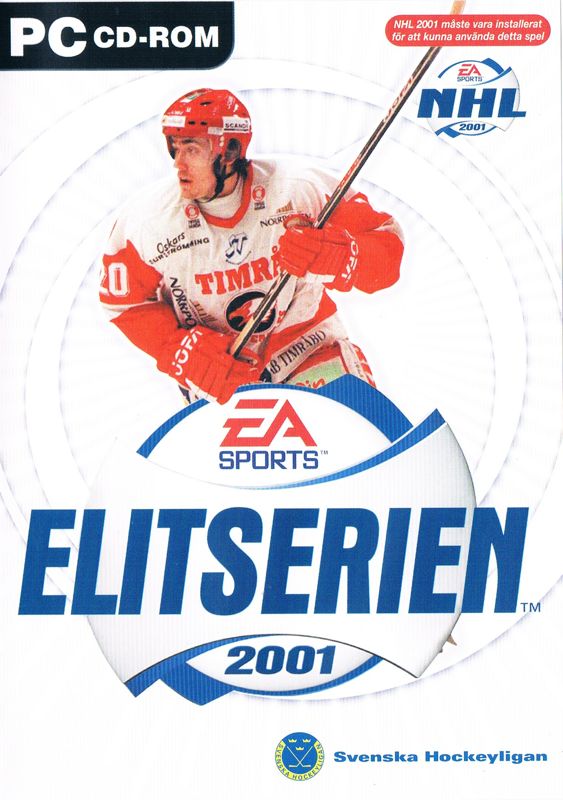
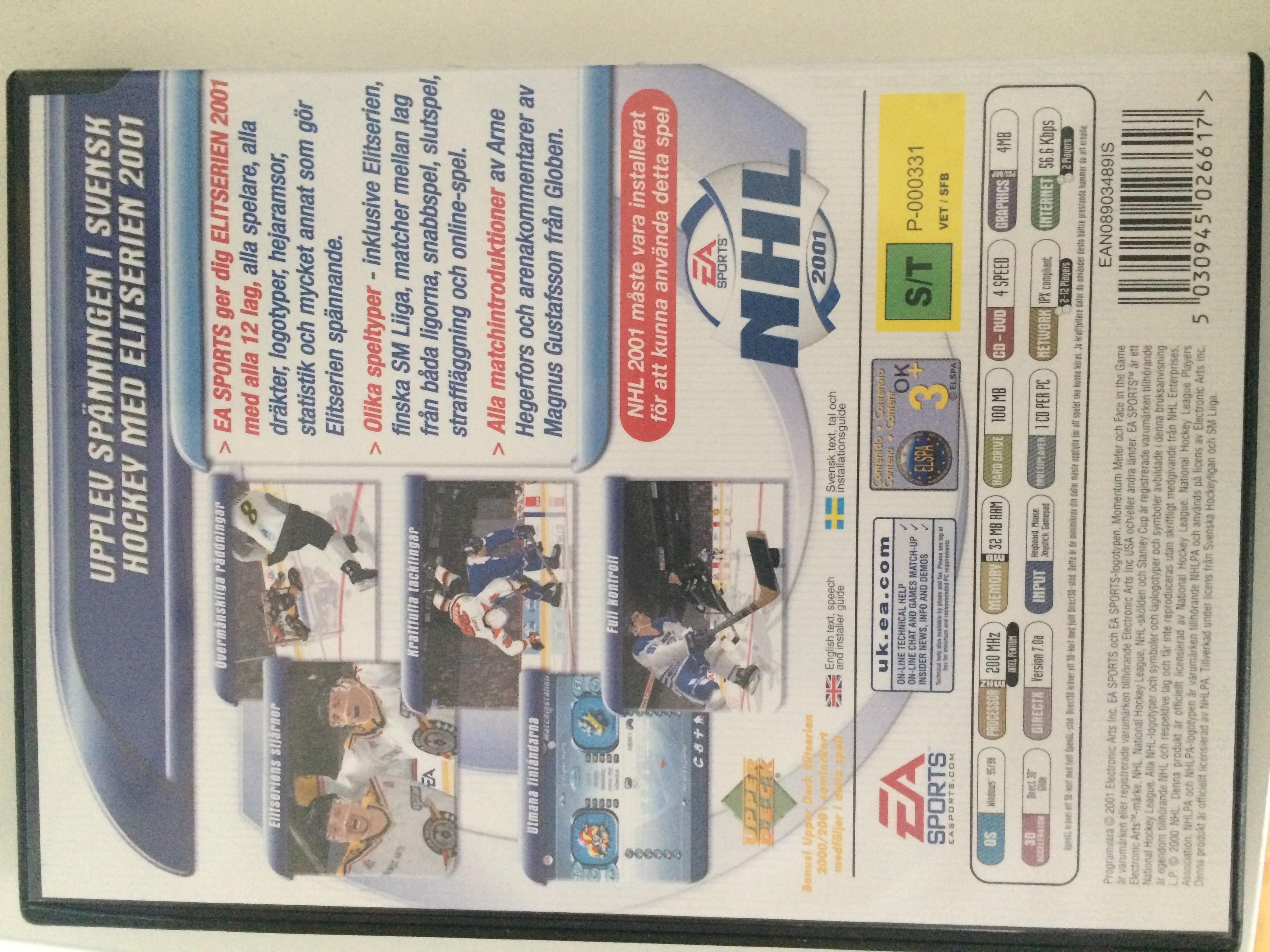
[edit]An expansion pack for the PC version of NHL 2001 including the Swedish and Finnish elite leagues was released in early 2001, titled Elitserien 2001 (SM-Liiga 2001 in Finland). It includes all 12 teams from Elitserien and all 13 teams from SM-Liiga at the time. It also includes new intro play-by-play by Arne Hegerfors in Swedish, and Mika Saukkonen in Finnish. And new arena announcers by Magnus Gustafsson in Swedish, and Pentti Lindegren in Finnish. The cover athlete on Elitserien 2001 is Henrik Zetterberg of Timrå IK, and the cover athlete on SM-Liiga 2001 is Raimo Helminen of Ilves.[4][5][6][7]
Reception
[edit]| Aggregator | Score | ||
|---|---|---|---|
| PC | PS | PS2 | |
| Metacritic | 90/100[8] | 88/100[9] | 85/100[10] |
| Publication | Score | ||
|---|---|---|---|
| PC | PS | PS2 | |
| CNET Gamecenter | 9/10[11] | 9/10[12] | 9/10[13] |
| Computer Games Strategy Plus |   [14] [14] | N/A | N/A |
| Computer Gaming World |  [15] [15] | N/A | N/A |
| Electronic Gaming Monthly | N/A | 6/10[16] | 9.5/10[17][a] |
| EP Daily | 9.5/10[18] | N/A | 6.5/10[19] |
| Game Informer | N/A | 7.75/10[20] | 8.5/10[21] |
| GameFan | N/A | 86%[22][b] | 93%[23][c] |
| GameRevolution | N/A | N/A | C+[24] |
| GameSpot | 8.8/10[25] | 8.6/10[26] | 8/10[27] |
| GameSpy | 89%[28] | N/A | 84%[29] |
| IGN | 9/10[30] | 8.4/10[31] | 7.8/10[32] |
| Next Generation | N/A | N/A | [33] |
| Official U.S. PlayStation Magazine | N/A | [34] | [35] |
| PC Gamer (US) | 92%[36] | N/A | N/A |
| The Cincinnati Enquirer | N/A | N/A | [37] |
The PC version received "universal acclaim", while the PlayStation and PlayStation 2 versions received "generally favorable reviews", according to the review aggregation website Metacritic.[8][9][10] Emmett Schkloven of X-Play gave the PS2 version four stars out of five and stated, "EA has spent a lot of effort making NHL 2001 accessible to newcomers and non-hockey fanatics. Easier controls, clean gameplay and a fast, slick interface all contribute to the company's success in this endeavor. Fortunately, the depth and realism that make hockey lovers like myself such fans of the franchise have not been sacrificed. The game is not as flawless as it could be, but it is damn close. And it's still only launch year."[38] Jim Preston of NextGen said, "EA's first NHL effort on Playstation 2 [sic] is almost as deep as it is pretty."[33]
Clayton Crooks of AllGame gave the PC version four-and-a-half stars out of five and said, "Hockey fans are sure to enjoy NHL 2001. It offers impressive (albeit repetitive) audio, superb graphics and animation to go along with exciting gameplay and fans of both arcade and simulation-style sports games should be able to find some aspect to enjoy. Online play, customizable rosters that are available for download from the Internet and multiple season modes make this a game that should occupy the hard drive for a long time, at least until the next version is released."[39] Matt Grandstaff of the same website gave the PlayStation version four stars, saying that it was "a better game than its PS2 counterpart. Even though it lacks some of the many customizations available in the PS2 version and is an ugly duckling in comparison, gamers looking for the most authentic hockey action for the 2000-2001 season should go with the PS version -- even if they own a PS2."[40] However, Terry Chung gave the PS2 version three stars, calling it "a worthy attempt at bringing the series to a 128-bit system, but with a few minor problems that need to be worked out, it should have been sent down to the minors for some reconditioning before coming back up."[41]
Kevin "BIFF" Giacobbi of GameZone gave the PC version a perfect ten, calling it "a must have".[42] Kevin Krause later gave the PlayStation 2 version 9.3 out of 10, calling it "a great game overall and the innovative new features put it yet another step ahead of the pack. My recommendation? Pick this one up!"[43]
John Marrin of GamePro said that the PC version "isn't perfect, but it's about as close as EA has come in the past. The coaching strategies, gameplay options, and superb graphics make this one sports experience that PC gamers should be thankful for."[44][d] Human Tornado said in one GamePro review that the PlayStation version "keeps its lead over Sony's NHL FaceOff, but every year, that gap gets smaller. Still, NHL 2001 has better controls and coaching strategies, and the plethora of options rounds out this excellent hockey package. NHL 2001 takes this year's PlayStation Championship, but it was a tight seven game showdown."[45][e] In another GamePro review, Air Hendrix said of the same console version, "If you're not a huge hockey fan, NHL 2001 is similar enough to its 2000 edition that you may be content with that version. For the hockey hardcore, the tuned A.I. and new features make NHL 2001 the only game in town."[46][f] The former author said in one GamePro review, "NHL 2001 for the PS2 is one of the finest console sports games ever to ship. The sweet gameplay, delicious game options, intense graphics, and jamming audio make it a fantastic hockey simulation, and one of the best games to ship for the PS2 on launch day."[47][g] In another GamePro review, the latter author said of the same PlayStation 2 version, "All told, NHL 2001 is an impressive example of next-gen sports action, ranking it as one of the new system's best titles. If you were lucky enough to score a PS2 at launch, make sure you grab a copy of this gem to go with it."[48][h]
The PS2 version was a runner-up for GameSpot's annual "Best PlayStation 2 Game" award, which went to SSX.[49] In the same way the PC version was a runner-up for the website's annual "Sports Game of the Year" award, which went to FIFA 2001.[50] The same PC version won the award for Sports Game of the Year at the CNET Gamecenter Computer Game Awards for 2000.[51] The staff of Computer Games Magazine nominated the same PC version for their 2000 "Sports Game of the Year" award, whose winner remains unknown.[52] It was a runner-up for "Sports Game of 2000" in both Editors' Choice and Readers' Choice at IGN's Best of 2000 Awards.[53]
According to PC Data, NHL 2001 sold 190,000 units in 2000 for the PlayStation 2.[54]
Notes
[edit]- ^ Three critics of Electronic Gaming Monthly gave the PlayStation 2 version each a score of 9/10, 9.5/10, and 10/10.
- ^ In GameFan's viewpoint of the PlayStation version, one critic gave it 85, and the other 86.
- ^ In GameFan's viewpoint of the PlayStation 2 version, one critic gave it 93, and the other 92.
- ^ GamePro gave the PC version two 4.5/5 scores for graphics and sound, and two 5/5 scores for control and fun factor.
- ^ GamePro gave the PlayStation version 4.5/5 for graphics, 4/5 for sound, and two 5/5 scores for control and fun factor in one review.
- ^ GamePro gave the PlayStation version two 4.5/5 scores for graphics and sound, and two 5/5 scores for control and fun factor in another review.
- ^ GamePro gave the PlayStation 2 version three 5/5 scores for graphics, control, and fun factor, and 4.5/5 for sound in one review.
- ^ GamePro gave the PlayStation 2 version all perfect 5/5 scores for graphics, sound, control, and fun factor in another review.
References
[edit]- ^ IGN staff (September 27, 2000). "EA Ships NHL 2001". IGN. Ziff Davis. Archived from the original on April 17, 2023. Retrieved October 26, 2023.
- ^ Bramwell, Tom (November 21, 2000). "Launch titles confirmed". Eurogamer. Gamer Network. Archived from the original on September 27, 2021. Retrieved October 26, 2023.
- ^ IGN staff (October 27, 2000). "The PS2 Launch Titles". IGN. Ziff Davis. Archived from the original on October 14, 2023. Retrieved October 26, 2023.
- ^ "SM-Liiga 2001 front cover". Huuto. Archived from the original on October 26, 2021. Retrieved October 26, 2023.
- ^ "SM-Liiga 2001 back cover". Huuto. Archived from the original on October 26, 2021. Retrieved October 26, 2023.
- ^ "Elitserien 2001 front cover". MobyGames. Atari SA. Archived from the original on March 31, 2023. Retrieved October 26, 2023.
- ^ "Elitserien 2001 back cover". Internet Archive.
- ^ a b "NHL 2001 critic reviews (PC)". Metacritic. Fandom. Archived from the original on April 17, 2023. Retrieved October 26, 2023.
- ^ a b "NHL 2001 critic reviews (PS)". Metacritic. Fandom. Archived from the original on April 17, 2023. Retrieved October 26, 2023.
- ^ a b "NHL 2001 critic reviews (PS2)". Metacritic. Fandom. Archived from the original on June 7, 2023. Retrieved October 26, 2023.
- ^ Rubenstein, Glenn (September 26, 2000). "NHL 2001 (PC)". Gamecenter. CNET. Archived from the original on October 17, 2000. Retrieved January 2, 2022.
- ^ Rector, Brett (September 25, 2000). "NHL 2001 (PS)". Gamecenter. CNET. Archived from the original on October 17, 2000. Retrieved January 2, 2022.
- ^ Rector, Brett (October 25, 2000). "NHL 2001 - PlayStation 2 Review". Gamecenter. CNET. Archived from the original on December 13, 2000. Retrieved January 2, 2022.
- ^ Abner, William (October 9, 2000). "NHL 2001". Computer Games Strategy Plus. Strategy Plus, Inc. Archived from the original on July 3, 2003. Retrieved May 18, 2020.
- ^ Lackey, Jeff (January 2001). "Shot on Goal (NHL 2001 Review)" (PDF). Computer Gaming World. No. 198. Ziff Davis. pp. 134–35. Archived (PDF) from the original on April 4, 2023. Retrieved October 26, 2023.
- ^ Leahy, Dan (December 2000). "NHL 2001 (PS)" (PDF). Electronic Gaming Monthly. No. 137. Ziff Davis. p. 226. Archived (PDF) from the original on September 26, 2022. Retrieved October 26, 2023.
- ^ Leahy, Dan; Kujawa, Kraig; Funk, Joe (December 2000). "NHL 2001 (PS2)". Electronic Gaming Monthly. No. 137. Ziff Davis. p. 231.
- ^ Sandhu, Mandip (October 27, 2000). "NHL 2000 (PC)". The Electric Playground. Greedy Productions Ltd. Archived from the original on July 18, 2003. Retrieved October 26, 2023.
- ^ Grant, Jules (December 8, 2000). "NHL 2001 (PS2)". The Electric Playground. Greedy Productions Ltd. Archived from the original on January 9, 2003. Retrieved October 26, 2023.
- ^ "NHL 2001 (PS)". Game Informer. No. 91. FuncoLand. November 2000.
- ^ Anderson, Paul (November 2000). "NHL 2001 (PS2)". Game Informer. No. 91. FuncoLand. Archived from the original on November 13, 2004. Retrieved June 21, 2015.
- ^ Higgins, Geoff "El Nino"; Jacques Strap (December 2000). "NHL 2001 (PS)". GameFan. Vol. 8, no. 12. BPA International. p. 126. Retrieved January 2, 2022.
- ^ Higgins, Geoff "El Nino"; Van Stone, Matt "Kodomo" (December 2000). "NHL 2001 (PS2)". GameFan. Vol. 8, no. 12. BPA International. p. 126.
- ^ G-Wok (December 2000). "NHL 2001 Review (PS2)". GameRevolution. CraveOnline. Archived from the original on June 22, 2015. Retrieved May 18, 2020.
- ^ Ryan, Michael E. (September 28, 2000). "NHL 2001 Review (PC)". GameSpot. Fandom. Archived from the original on January 15, 2005. Retrieved June 21, 2015.
- ^ Satterfield, Shane (October 4, 2000). "NHL 2001 Review (PS)". GameSpot. Fandom. Archived from the original on November 20, 2000. Retrieved October 26, 2023.
- ^ Satterfield, Shane (November 2, 2000). "NHL 2001 Review (PS2)". GameSpot. Fandom. Archived from the original on January 7, 2001. Retrieved October 26, 2023.
- ^ Sparkes, Ralph (September 29, 2000). "NHL 2001 (PC)". GameSpy. IGN Entertainment. Archived from the original on December 15, 2004. Retrieved June 22, 2015.
- ^ Sparkes, Ralph (March 16, 2001). "NHL 2001". PlanetPS2. IGN Entertainment. Archived from the original on July 3, 2001. Retrieved June 22, 2015.
- ^ Benner, Eric (October 5, 2000). "NHL 2001 (PC)". IGN. Ziff Davis. Archived from the original on April 15, 2023. Retrieved October 26, 2023.
- ^ Blache III, Fabian (September 25, 2000). "NHL 2001 (PS)". IGN. Ziff Davis. Archived from the original on April 12, 2023. Retrieved October 26, 2023.
- ^ Zdyrko, David (October 24, 2000). "NHL 2001 (PS2)". IGN. Ziff Davis. Archived from the original on April 12, 2023. Retrieved October 26, 2023.
- ^ a b Preston, Jim (December 2000). "NHL 2001 (PS2)". NextGen. No. 72. Imagine Media. p. 102. Retrieved May 18, 2020.
- ^ Zuniga, Todd (November 2000). "NHL 2001 (PS)". Official U.S. PlayStation Magazine. No. 38. Ziff Davis. p. 166. Retrieved October 26, 2023.
- ^ Zuniga, Todd (November 2000). "NHL 2001 (PS2)". Official U.S. PlayStation Magazine. No. 38. Ziff Davis. p. 155. Retrieved October 26, 2023.
- ^ "NHL 2001". PC Gamer. Vol. 7, no. 12. Imagine Media. December 2000. p. 158.
- ^ Saltzman, Marc (December 13, 2000). "NHL 2001 shoots, scores". The Cincinnati Enquirer. Gannett Company. Archived from the original on March 16, 2006. Retrieved June 21, 2015.
- ^ Schkloven, Emmett (January 11, 2001). "NHL 2001 (PS2) -- Review". X-Play. TechTV. Archived from the original on January 27, 2001. Retrieved June 22, 2015.
- ^ Crooks, Clayton. "NHL 2001 (PC) - Review". AllGame. All Media Network. Archived from the original on November 16, 2014. Retrieved June 21, 2015.
- ^ Grandstaff, Matt. "NHL 2001 (PS) - Review". AllGame. All Media Network. Archived from the original on November 16, 2014. Retrieved June 21, 2015.
- ^ Chung, Terry. "NHL 2001 (PS2) - Review". AllGame. All Media Network. Archived from the original on November 16, 2014. Retrieved June 21, 2015.
- ^ Giacobbi, Kevin "BIFF" (December 22, 2000). "NHL 2001 Review - PC Game". GameZone. Archived from the original on January 14, 2004. Retrieved June 21, 2015.
- ^ Krause, Kevin (February 5, 2001). "NHL 2001 Review on PlayStation 2". GameZone. Archived from the original on February 8, 2005. Retrieved June 21, 2015.
- ^ Marrin, John (November 9, 2000). "NHL 2001 Review for PC on GamePro.com". GamePro. IDG. Archived from the original on February 9, 2005. Retrieved June 22, 2015.
- ^ Human Tornado (October 9, 2000). "NHL 2001 Review for PlayStation on GamePro.com". GamePro. IDG. Archived from the original on September 3, 2004. Retrieved October 26, 2023.
- ^ Air Hendrix (November 2000). "NHL 2001 Buries One In the PlayStation Twine" (PDF). GamePro. No. 146. IDG. p. 160. Archived (PDF) from the original on July 17, 2023. Retrieved October 26, 2023.
- ^ Human Tornado (October 20, 2000). "NHL 2001 Review for PS2 on GamePro.com". GamePro. IDG Entertainment. Archived from the original on February 9, 2005. Retrieved June 22, 2015.
- ^ Air Hendrix (December 2000). "The Best Hockey Game Ever (NHL 2001 PS2 Review)" (PDF). GamePro. No. 147. IDG. p. 158. Archived (PDF) from the original on June 30, 2023. Retrieved October 26, 2023.
- ^ GameSpot staff (January 5, 2001). "Best and Worst of 2000 (Best PlayStation 2 Game Runners-Up, Part 2)". GameSpot. CNET. Archived from the original on June 29, 2001. Retrieved January 1, 2022.
- ^ GameSpot staff (January 5, 2001). "Best and Worst of 2000 (PC: Sports Game of the Year, Nominees)". GameSpot. CNET. Archived from the original on June 9, 2001. Retrieved January 2, 2022.
- ^ Gamecenter staff (January 25, 2001). "The Gamecenter Computer Game Awards for 2000! (Sports Game of the Year Winner)". Gamecenter. CNET. Archived from the original on February 6, 2001. Retrieved January 2, 2022.
- ^ CGM staff (February 8, 2001). "Computer Games Magazine announces nominees for annual best in computer gaming awards". Computer Games Strategy Plus. Strategy Plus, Inc. Archived from the original on February 9, 2005. Retrieved January 2, 2022.
- ^ IGN staff (January 26, 2001). "Best of 2000 Awards (PC: Sports Game of 2000)". IGN. Ziff Davis. Archived from the original on August 21, 2001. Retrieved January 2, 2022.
- ^ Gaudiosi, John (January 22, 2001). "PlayStation 2 shorts game business in 2000". Video Business. Archived from the original on August 27, 2025. Retrieved August 27, 2025 – via Gale Research.
External links
[edit]| Main series |
|  | ||||||||
|---|---|---|---|---|---|---|---|---|---|---|
| Other games | ||||||||||
| Cover athletes |
| |||||||||
| Authority control databases: National |
|---|



NHL 2001
View on GrokipediaDevelopment and Production
Studio and Team
NHL 2001 was developed by EA Canada, a studio originally founded in 1983 as Distinctive Software and acquired by Electronic Arts in 1991 for about $10 million, after which it was renamed EA Canada.[5][6] The game was published by Electronic Arts under its EA Sports label, marking the tenth installment in the NHL series.[4] As the successor to NHL 2000, released in September 1999, NHL 2001 built upon previous entries by emphasizing enhanced realism in player movements and animations alongside improved accessibility for a broader range of players through adjustable AI and difficulty options.[7][8] Development for NHL 2001 began in late 1999, shortly after the release of its predecessor, aligning with the annual production cycle typical of EA Sports titles at the time.[9] A key aspect of the production involved adapting to emerging hardware capabilities, particularly the transition from the PlayStation 1 to the PlayStation 2 console, which launched in North America in October 2000; NHL 2001 served as a launch title for the PS2, allowing the team to leverage its advanced graphics and processing power for more detailed visuals and smoother gameplay.[10] The production team was led by Executive Producer Rory Armes, with support from Line Producer Kevin Wilkinson and Senior Associate Producer Dave Warfield, all based at EA Canada.[11][12] Notable contributions came from motion capture specialists who incorporated over 900 new animations, performed by NHL players and Hollywood stunt performers, to achieve more lifelike checking and skating mechanics.[13] This effort underscored EA Canada's focus on authentic simulation elements during the game's development phase.Design Innovations
NHL 2001 introduced several key design innovations that enhanced the realism and strategic depth of the hockey simulation, building on the foundation of previous entries in the series.[14] A prominent addition was the Momentum Bar, a visible on-screen meter that dynamically tracks team performance during gameplay. This bar fills in favor of the team executing strong plays, such as scoring goals, delivering solid checks, or generating scoring chances, and it influences AI behavior by boosting player speed, shot accuracy, and overall team attributes when momentum swings positively.[15][16] Conversely, losing momentum can slow players and reduce effectiveness, encouraging tactical decisions like strategic icing to reset the meter and regain control.[15] The game also featured significant advancements in graphics and physics, contributing to more immersive on-ice action. Player models received enhanced detailing, including improved facial animations with blinking eyes, opening mouths during celebrations, and recognizable features that allowed for better identification of real-life NHL stars like Steve Yzerman.[17][18] These visual upgrades were paired with refined physics simulations for collisions, where factors such as player speed, direction, and momentum affected outcomes, potentially leading to realistic tumbles or injuries upon high-impact hits.[18] The physics engine integrated these elements into core movements, making checks and shots more responsive to in-game context, such as altering shot trajectories mid-air if a player is disrupted.[18] Expanding the scope beyond NHL rosters, NHL 2001 incorporated additional international national teams, including Latvia and Ukraine, bringing the total to 20 selectable squads for global tournaments.[14] These teams featured rosters with players from their respective countries, allowing for broader competitive modes and cultural representation in exhibitions.[14] This expansion was available in the PC and PlayStation 2 versions, enhancing replayability for users seeking variety outside standard league play.[4] Control refinements focused on skating mechanics, with tighter analog stick responsiveness enabling more precise dekes, turns, and checks.[19] Players could execute advanced maneuvers like one-footed wristers or cannon shots from the point, with the system accounting for fatigue and momentum to simulate realistic stamina management.[18] Customization options allowed adjustments to skating speed and checking intensity via in-game sliders, tailoring the experience to different playstyles while maintaining fluid, motion-captured animations for natural movement.[15]Release and Marketing
Platforms and Dates
NHL 2001 was developed and released for the PlayStation (PS1), PlayStation 2 (PS2), and Microsoft Windows PC platforms.[4] The game launched in North America first, with the PS1 version releasing on September 27, 2000, and the PC version on September 28, 2000.[9] European releases followed, with both PS1 and PC versions on October 6, 2000, in the United Kingdom. For other PAL regions, the PC version released in Germany on October 2 and France on October 27, 2000, while the PS1 version in France arrived later on December 12, 2000.[9] The PS2 version marked the series' debut on the new console, launching as a North American launch title on October 26, 2000.[20] In Europe, the PS2 edition arrived on November 24, 2000.[9]| Platform | Region | Release Date |
|---|---|---|
| PlayStation | North America | September 27, 2000[9] |
| PlayStation | Europe (UK) | October 6, 2000[9] |
| PlayStation | Europe (France) | December 12, 2000[9] |
| Windows PC | North America | September 28, 2000[9] |
| Windows PC | Europe (UK) | October 6, 2000[9] |
| Windows PC | Europe (Germany) | October 2, 2000[9] |
| Windows PC | Europe (France) | October 27, 2000[9] |
| PlayStation 2 | North America | October 26, 2000[20] |
| PlayStation 2 | Europe | November 24, 2000[9] |