Hubbry Logo
NesomyidaeNesomyidaeMain
Open search
Nesomyidae
Community hub
Nesomyidae
logo
8 pages, 0 posts
0 subscribers
Be the first to start a discussion here.
Nesomyidae
Nesomyidae
from Wikipedia

Nesomyidae
Temporal range: Late Oligocene–Recent
Scientific classification Edit this classification
Kingdom: Animalia
Phylum: Chordata
Class: Mammalia
Order: Rodentia
Superfamily: Muroidea
Family: Nesomyidae
Major, 1897
Type genus
Nesomys
Peters, 1870
Subfamilies

Cricetomyinae
Delanymyinae
Dendromurinae
Mystromyinae
Nesomyinae
Petromyscinae

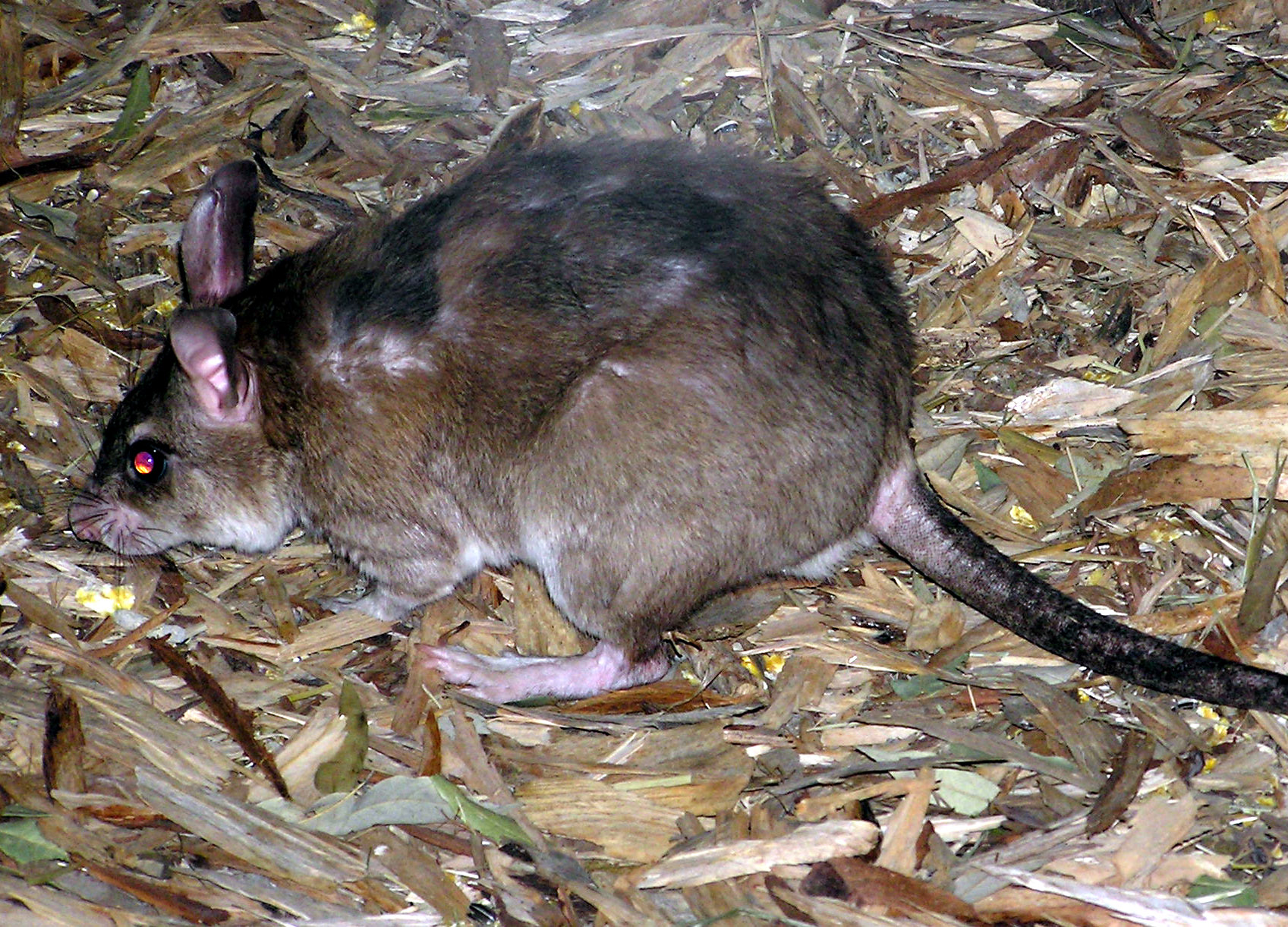
The Nesomyidae are a family of African rodents in the large and complex superfamily Muroidea. It includes several subfamilies, all of which are native to either continental Africa or to Madagascar. Included in this family are Malagasy rodents, climbing mice, African rock mice, swamp mice, pouched rats, and the white-tailed rat.

Characteristics

[edit]

Nesomyids are small- to medium-sized rodents, with the largest being the size of a rat. Physically, they may resemble mice, rats, voles, or hamsters, depending on the species and subfamily. Their diets vary from fairly strict herbivory to nearly pure insectivory. Their habits are similarly variable, with some species climbing trees, and others burrowing in the ground. They give birth to up to four young after a gestation period around six weeks.[1]

Classification

[edit]

Many of these animals were once thought to be related to other groups of muroid rodents, but this African-based clade has been proposed and confirmed on the basis of genetic studies.[citation needed] Such alternate arrangement include the pouched rats in the family Muridae, and the white-tailed rat in the family Cricetidae. Likewise, all members of the Nesomyidae are often placed in the family Muridae along with all other members of the Muroidea.[2]

Nesomyids are classified in six subfamilies, 21 genera, and 68 species.

FAMILY NESOMYIDAE

References

[edit]
Revisions and contributorsEdit on WikipediaRead on Wikipedia
from Grokipedia
Nesomyidae is a family of in the superfamily , comprising 67 across 21 genera and six subfamilies, all native to and . These exhibit high morphological diversity, ranging from small mouse-like forms to larger rat-sized species, with adaptations such as cheek pouches in some subfamilies and specialized limbs for climbing or burrowing in others. The family is characterized by its ancient African origins, with records dating back to the early , and represents a monophyletic confirmed by . The six subfamilies include Cricetomyinae (African pouched rats), Delanymyinae (swamp mice), Dendromurinae (African climbing mice), Mystromyinae (), Nesomyinae (Malagasy rats and mice), and Petromyscinae (rock mice), with Nesomyinae being the only one endemic to while the others occur in continental . Nesomyids inhabit a wide array of environments, from tropical forests and shrublands to grasslands, savannas, wetlands, and even high-altitude montane regions up to 4,300 meters, often in close association with human-modified landscapes like agricultural fields. Behaviorally, they are predominantly nocturnal or crepuscular, with lifestyles varying from arboreal and scansorial to fully terrestrial or semi-aquatic; many species are solitary or live in small family groups, and some undertake seasonal migrations or enter estivation during dry periods. Conservation concerns are significant for several nesomyids, particularly those in , where habitat destruction from , , and threatens endemic taxa; as of 2024, according to IUCN assessments, at least 5 are critically endangered, 7 are endangered, and 10 are vulnerable. The family's evolutionary underscores its role in understanding diversification in , with divergence from other muroids estimated around 19 million years ago and subsequent radiations driven by ecological opportunities in isolated island and continental habitats.

Taxonomy and phylogeny

Etymology and history

The family name Nesomyidae is derived from its Nesomys, which combines the Greek words nesos () and mys (mouse), reflecting the endemic occurrence of these on the of . The Nesomys was first described by Wilhelm Peters in 1870, based on specimens from , marking the initial taxonomic recognition of this distinctive group of . The family Nesomyidae was formally established by Charles Immanuel Forsyth Major in 1897, who initially proposed it as the subfamily Nesomyinae within the larger family , following his expeditions to in the mid-1890s that yielded key specimens. In the early , taxonomic revisions often allied nesomyids with the due to shared morphological traits, such as dental and cranial features, as proposed by Miller and Gidley (1918) and later Simpson (1945). Mid-20th-century classifications debated their precise placement, with some authorities, like Ellerman (1941), retaining them within while others explored affinities to , reflecting uncertainties in morphological interpretations of muroid diversity. By the 1990s, molecular phylogenetic analyses, particularly Jansa et al. (1999), used cytochrome b sequences to demonstrate that nesomyines formed a distinct separate from both and , confirming Nesomyidae as an independent family and resolving long-standing taxonomic debates.

Classification

Nesomyidae is a family of classified within the superfamily of the order Rodentia. The family is divided into six subfamilies: Cricetomyinae (pouched rats), Delanymyinae (swamp mice), Dendromurinae (African climbing mice), Mystromyinae (containing the ), Nesomyinae (Malagasy rodents), and Petromyscinae (rock mice). These subfamilies encompass 21 genera and approximately 68 species in total. Key genera include Cricetomys (African giant pouched rats, approximately 2–7 species depending on ongoing revisions), Nesomys (3 species), Eliurus (14 species), Dendromus (9 species), and Saccostomus (4 species), among others such as Beamys, Brachytarsomys, Brachyuromys, Delanymys, Dendroprionomys, Gymnuromys, Hypogeomys, Macrotarsomys, Malacothrix, Megadendromus, Monticolomys, Mystromys, Petromyscus, Prionomys, Steatomys, and Voalavo. Recent taxonomic revisions, driven by molecular phylogenetic analyses, have highlighted greater diversity within certain genera; for instance, studies on Cricetomys using sequencing and craniometric data have identified multiple distinct lineages, supporting the recognition of higher beyond the traditionally accepted two .

Evolutionary history

Nesomyidae originated during the epoch, approximately 23 to 5 million years ago, from muroid ancestors in . The family's early evolution is evidenced by sparse records, with the earliest known nesomyid-like remains belonging to extinct such as †Afrocricetodon songhori and †Notocricetodon petteri from the early to middle (around 19–16 million years ago) in East African sites including , , and . These s, attributed to the extinct †Afrocricetodontinae, highlight an African cradle for the lineage amid expanding savannas and climatic shifts. The Nesomyidae underwent significant radiation into , with the clade diverging from its closest relatives around 19 million years ago. This diversification extended to approximately 15.6 to 12.8 million years ago, where the subfamily Nesomyinae emerged as a monophyletic group endemic to the island. The Malagasy colonization likely occurred via oceanic rafting from eastern African mainland populations, though hypotheses involving ancient land bridges during lower sea levels have also been proposed. Subsequent within-island radiations produced diverse genera adapted to Madagascar's varied ecosystems, contrasting with continental African lineages that remained tied to sub-Saharan habitats. Molecular phylogenetic analyses, utilizing markers such as the mitochondrial alongside nuclear loci, robustly confirm Nesomyidae as a monophyletic with strong bootstrap support (100%). Within the superfamily , Nesomyidae forms a basal to and , sharing a common ancestry but diverging distinctly due to geographic isolation in , which fostered endemic subfamilies like Dendromurinae and Cricetomyinae. Key evolutionary adaptations in Nesomyidae arose in response to heterogeneous African and Malagasy habitats, including enhanced climbing capabilities in arboreal forms—such as prehensile tails and opposable toes in genera like Dendromus—and burrowing traits like robust skulls and limbs in terrestrial species for digging in soils. In the subfamily Cricetomyinae, cheek pouches evolved as specialized structures for storing and transporting food, enabling efficient in resource-variable environments. These innovations contributed to the family's ecological success across diverse niches.

Description

Physical characteristics

Nesomyids exhibit a diverse array of body forms, generally resembling rats, voles, or gerbils, with many species featuring elongated snouts adapted for , large eyes for enhanced vision in varied conditions, and tails that are often longer than the head and body length for balance and sensory functions. Their fur is typically soft, dense, and thick, providing insulation and , with coloration ranging from various to brown across the dorsal surface and lighter underparts. The limbs of nesomyids show subfamily-specific adaptations for locomotion; for instance, members of Petromyscinae possess elongated hindlimbs that facilitate jumping and agile movements over rocky terrains, while those in Dendromurinae feature strong claws and an opposable fifth digit on the hindfoot, enabling proficient on and structures. These limb modifications support their varied microhabitats, from terrestrial scampering to arboreal navigation. Dental structures in nesomyids are characterized by high-crowned () molars with large cusps arranged in three transverse lobes on the upper molars, well-suited for grinding tough or crushing depending on the ' diet. Notably, the Cricetomyinae possesses internal cheek pouches, which are evaginations of the oral cavity used for temporarily storing seeds and food items during . Sensory adaptations among nesomyids include prominent mystacial vibrissae () that aid in tactile navigation through low-light environments, such as dense or burrows, by detecting subtle air currents and surfaces. Burrowing species, like certain pouched rats, demonstrate acute hearing, which helps in detecting predators and conspecifics in subterranean settings where visual cues are limited.

Size and morphological diversity

Nesomyids exhibit a wide range of body sizes, from the diminutive Delanymys brooksi, with a head and body length of 50-63 mm and weight of 5.2-6.5 g, to the large Cricetomys gambianus, which reaches up to 400 mm in head and body length and 1-2 kg in weight. This diversity spans over three orders of magnitude in mass, reflecting adaptations to varied ecological niches within the family. Morphological variations among nesomyids include arboreal forms like those in the genus Eliurus, which possess long, prehensile tails and slender bodies suited for climbing in Malagasy forests. Terrestrial burrowers, such as Saccostomus pouched mice, feature robust skulls, short limbs, and internal cheek pouches for , enabling efficient underground foraging. Semi-aquatic traits are evident in species like Delanymys brooksi, with an opposable hallux on the hind feet and dense fur suitable for swampy environments. Sexual dimorphism in nesomyids is generally minimal, though males tend to be larger than females in genera such as Cricetomys, particularly in body mass and skull size, likely linked to polygynous mating systems.

Distribution and habitat

Geographic range

The Nesomyidae family, comprising African and Malagasy endemic rats and mice, has a primary geographic range spanning sub-Saharan Africa from Senegal in the west to South Africa in the south, excluding extreme desert regions such as the Sahara. This continental distribution is widespread across savannas, forests, and other non-arid habitats south of approximately 30°N latitude, with the family absent from North Africa and the Saharan barrier. No Nesomyidae species occur outside Africa or Madagascar, reflecting their strict ethiopian biogeographic affinity. A significant portion of the family's diversity is concentrated in , where about 40% of the 67 species are endemic, primarily within the subfamily Nesomyinae. All members of Nesomyinae are restricted to the island, showcasing a remarkable radiation that accounts for 27 species across nine genera. For instance, species in the genus Nesomys occupy varied ranges across , such as N. rufus in eastern montane rainforests, N. audeberti in eastern lowland rainforests, and N. lambertoni in drier western forests and transitional habitats to spiny thickets. The current distribution traces back to historical expansions facilitated by Miocene forest corridors connecting eastern to . Nesomyinae colonized the island in the early (approximately 15.6–12.8 million years ago) from an eastern African origin, with subsequent diversification linked to the persistence of these wooded pathways. This biogeographic pattern underscores the family's dependence on Afro-Malagasy ecosystems, with no evidence of dispersal to or other continents.

Habitat preferences

Nesomyids exhibit diverse habitat preferences across their range in and , occupying forests (including rainforests and dry forests), grasslands, shrublands, rocky outcrops, and edges of agricultural landscapes. Some species, particularly within the Dendromurinae , are scansorial and climb vegetation in grasslands and savannas for foraging and nesting, while others, such as pouched rats in Cricetomyinae, are and construct extensive systems in soils. This versatility allows nesomyids to exploit both natural and human-modified environments, with many species showing tolerance for disturbed habitats like farmlands and plantations. On the continent, some species occur at elevations up to 4,300 meters in montane grasslands and rocky areas. In , the Nesomyinae subfamily predominates and displays strong regional specificity, with species inhabiting humid eastern rainforests as well as xerophilous scrub in the drier western regions. Elevations range from to approximately 2,500 meters, encompassing wet meadows, sandy coastal forests, dry scrublands, and inland wet or dry forests. For instance, genera like Hypogeomys are restricted to dry deciduous forests on the western coast, where they rely on seasonal for cover and resources. Adaptations to these varied conditions include physiological tolerance to in western populations, enabling survival in areas with pronounced dry seasons. On the African continent, Cricetomyinae prefer moist savannas, scrub forests, woodlands, and agricultural fields, often burrowing in sandy plains or mounds for shelter. These habitats typically receive over 800 mm of annual rainfall, supporting dense that provides foraging opportunities. In contrast, Petromyscinae, or rock mice, are specialized for dry, open mountainous terrains featuring rocky outcrops and inselbergs, where they navigate boulder fields and crevices. Many continental nesomyids also utilize human-altered landscapes, such as fallow fields and rural gardens, demonstrating opportunistic reliance on anthropogenic edges for expanded range and resources.

Behavior and ecology

Diet and feeding

Nesomyids exhibit a broad dietary spectrum, ranging from predominantly herbivorous to largely insectivorous, with most species displaying omnivorous tendencies. Seeds and fruits form the primary components of the diet for the majority of nesomyids, supplemented by roots, stems, leaves, and fungi, while insects and other small invertebrates are more prominent in certain subfamilies such as Dendromurinae. For instance, species in the Dendromurinae, like those in the genus Dendromus, consume a mix of grains, seeds, and insects, reflecting their opportunistic foraging in grassy habitats. In contrast, the link rat (Deomys ferrugineus) in the same subfamily is highly insectivorous, specializing in millipedes, termites, and earthworms. Larger species, such as the African pouched rats in Cricetomyinae (Cricetomys spp.), occasionally incorporate rare carnivorous elements like small vertebrates, crabs, snails, and carrion into their otherwise plant-based diet dominated by palm fruits, nuts, and vegetables. Among Malagasy nesomyines, diets are primarily vegetarian, emphasizing fruits and seeds with occasional arthropods. Foraging strategies among nesomyids vary with and phylogeny, often occurring nocturnally to avoid predation. Terrestrial species, including many African nesomyids, engage in ground-based , scanning leaf litter and soil for seeds and under cover of darkness. Arboreal or semi-arboreal forms, particularly Malagasy nesomyines like Eliurus and Nesomys, employ techniques in trees and shrubs, adeptly to access fruits and foliage. A distinctive in the Cricetomyinae is the use of large, expandable cheek pouches to collect and food, allowing individuals to transport seeds, nuts, and other items back to burrows for storage and later consumption. This hoarding behavior enhances survival in resource-scarce environments. Their , featuring high-crowned molars suited for grinding tough plant material, supports efficient processing of fibrous foods across these strategies. Seasonal variations in diet reflect fluctuations in resource availability, with many nesomyids shifting toward higher consumption during dry periods when matter is limited. For example, omnivorous species in variable climates increase intake to meet protein needs when fruits and seeds dwindle. Some, particularly pouched rats, mitigate shortages by storing excess food in burrows, a behavior intensified in the lean season. In Malagasy nesomyines, dietary composition adjusts to seasonal fruiting cycles, maintaining overall omnivory without extensive caching. Nutritional adaptations enable nesomyids to extract maximal value from their diverse diets, particularly through hindgut fermentation in the cecum and colon, which breaks down fibrous plant material via symbiotic microbes. This process allows efficient digestion of cellulose-rich foods like stems and leaves, common in herbivorous members. Coprophagy, the reingestion of soft fecal pellets containing fermented residues, further enhances nutrient absorption, as observed in species like the Gambian pouched rat (Cricetomys gambianus). These mechanisms support the family's ecological flexibility across herbivorous to omnivorous niches.

Reproduction and life cycle

Nesomyids display diverse breeding systems across their subfamilies, with many species exhibiting polygynous where males mate with multiple females, though some form monogamous pairs suggestive of pair-bonded systems. Breeding patterns vary by ; in regions with pronounced dry seasons, reproduction is often seasonal and restricted to the wet period when resources are plentiful, whereas tropical populations may breed year-round. Gestation periods in Nesomyidae range from 20 to 42 days in subfamilies like Cricetomyinae and Dendromurinae, though Nesomyinae species can have extended durations up to 138 days. Litter sizes typically comprise 1 to 6 young, with Nesomyinae producing 1 to 4 and examples in Nesomys around 2 to 4; offspring are generally altricial, born hairless and blind with slow development. Sexual maturity is attained at 2 to 6 months in smaller species such as Cricetomys gambianus, but delays to 2 years occur in larger Nesomyinae forms like Hypogeomys antimena. In the wild, lifespans average 1 to 5 years, limited by predation and environmental factors, while captive individuals like Cricetomys can live up to 7 years. Parental care is primarily maternal, with females nursing for 3 to 4 weeks until , as seen in Cricetomys where young become independent around 30 days; males provide minimal involvement except in monogamous species, where they may guard against predators.

Conservation

Major threats

Habitat loss represents the most significant threat to Nesomyidae populations, driven primarily by anthropogenic activities that fragment and destroy their preferred forested and woodland habitats. In , where the majority of nesomyid diversity occurs, slash-and-burn agriculture (known locally as tavy) for rice cultivation and cattle grazing has led to the loss of approximately 44% of the island's forest cover since the 1950s, severely impacting endemic subfamilies like Nesomyinae that rely on intact dry deciduous and humid forests. This exacerbates isolation of remnant populations, reducing genetic connectivity and increasing extinction risk for species such as Eliurus myoxinus in northwestern . On the African mainland, and expanding similarly degrade and woodland habitats for genera like Cricetomys and Dendromus, converting natural areas into unsuitable human-dominated landscapes. Hunting and persecution further endanger certain nesomyids, particularly the larger species that overlap with human activities. Giant pouched rats (Cricetomys gambianus and C. emini) are widely hunted across for , providing a protein source in rural communities, and are also consumed in practices for purported therapeutic benefits. Additionally, these rodents are targeted as agricultural pests due to their on crops like , , and groundnuts, leading to direct persecution through trapping and poisoning that can deplete local populations. Invasive species pose a critical competitive , especially in Madagascar's fragmented ecosystems. Introduced black rats ( rattus) outcompete endemic nesomyids for food resources and nesting sites in dry deciduous forests, contributing to population declines and local extinctions of native species like Macrotarsomys bastardi. This invasion is facilitated by disturbance, allowing Rattus to thrive in and edge habitats where native struggle. Nesomyids also face risks from zoonotic diseases, with species like Cricetomys acting as potential reservoirs or amplifiers for pathogens such as in West and , heightening human-wildlife conflict and indirect population pressures through control measures. Climate-driven range shifts further compound vulnerability by altering suitability and increasing overlap with invasive competitors or vectors, as observed in distributional changes for Nesomys rufus in eastern Madagascar's biodiversity hotspots. These shifts disrupt the ecological niches of forest-dependent nesomyids, potentially leading to in rapidly changing environments.

IUCN status and conservation efforts

The IUCN Red List assesses approximately 67 within the Nesomyidae family, with about 18% classified as threatened (Vulnerable or higher), though this proportion rises to around 30% among the 27 endemic Malagasy in the subfamily Nesomyinae, many of which face data deficiencies due to limited field surveys. Several Malagasy endemics are categorized as , reflecting gaps in distribution and population data for like those in the Eliurus, which hinders precise risk assessments. In contrast, widespread African such as the Cricetomys gambianus are listed as Least Concern owing to their adaptability to human-modified landscapes. Notable threatened species include the lowland red forest rat Nesomys lambertoni, classified as Endangered due to its restricted range in western Madagascar's dry forests, and the giant jumping rat Hypogeomys antimena, uplisted to Critically Endangered in 2022 from ongoing habitat loss and low population numbers estimated at approximately 5,000 mature individuals. The family's Critically Endangered species are Hypogeomys antimena and Dendromus kahuziensis, both facing severely fragmented habitats; other endangered nesomyids include Eliurus penicillatus and Macrotarsomys ingens, both Malagasy forest-dwellers. No major changes to these statuses have occurred as of 2025. Conservation efforts prioritize habitat protection through Madagascar's network of national parks and reserves, such as Kirindy Mitea National Park, which safeguards key populations of species like Hypogeomys antimena and supports initiatives. Phylogenetic research programs, including molecular studies on nesomyine rodents, have refined taxonomic classifications to enable more targeted monitoring and protection for endemic lineages. In African regions, community-based approaches have shown success in curbing trade impacts on pouched rats, with education and alternative livelihood programs reducing hunting pressure in areas. While no nesomyid species are broadly listed under , localized protections for pouched rats in trade hotspots complement these efforts, though challenges persist from inadequate funding and enforcement in remote habitats.

References

Add your contribution
Related Hubs
User Avatar
No comments yet.