Hubbry Logo
CastoridaeCastoridaeMain
Open search
Castoridae
Community hub
Castoridae
logo
8 pages, 0 posts
0 subscribers
Be the first to start a discussion here.
Castoridae
Castoridae
from Wikipedia

Castoridae
Temporal range: Late Eocene–Recent
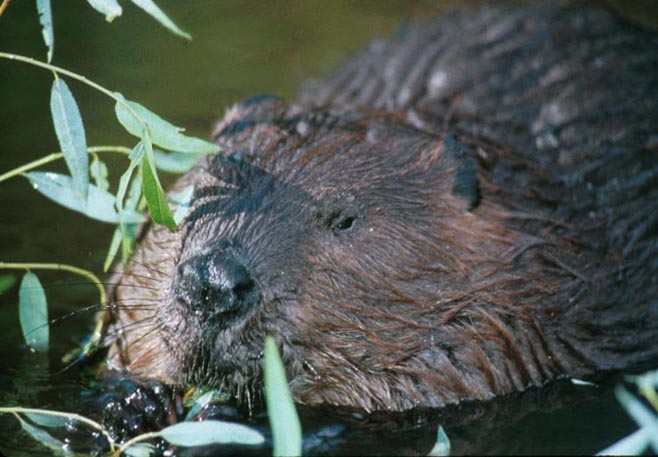
North American beaver, Castor canadensis
Scientific classification Edit this classification
Kingdom: Animalia
Phylum: Chordata
Class: Mammalia
Order: Rodentia
Superfamily: Castoroidea
Family: Castoridae
Hemprich, 1820
Type genus
Castor
Linnaeus, 1758
Genera

See text

Castoridae is a family of rodents that contains the two living species of beavers and their fossil relatives. A formerly diverse group, only a single genus is extant today, Castor. Two other genera of "giant beavers", Castoroides and Trogontherium, became extinct in the Late Pleistocene.

Characteristics

[edit]
Skull of a beaver

Castorids are medium-sized mammals, although large compared with most other rodents. They are semiaquatic, with sleek bodies and webbed hind feet, and are more agile in the water than on land. Their tails are flattened and scaly, adaptations that help them manoeuvre in the water.

Castorids live in small family groups that each occupy a specific territory, based around a lodge and dam constructed from sticks and mud. They are herbivores, feeding on leaves and grasses in the summer, and woody plants such as willow in the winter.[1] They have powerful incisors and the typical rodent dental formula:

Dentition
1.0.1-2.3
1.0.1.3

Evolution

[edit]
Euhapsis barbouri, collected in Wyoming. At the AMNH.
Castoroides ohioensis
Eucastor tortus, collected from Cherry County, Nebraska. At the AMNH.

The earliest castorids belong to the genus Agnotocastor, known from the late Eocene and Oligocene of North America and Asia.[2] Other early castorids included genera such as Steneofiber, from the Oligocene and Miocene of Europe, the earliest member of the subfamily Castorinae, which contains castorids closely related to living beavers.[3] Their teeth were not well suited to gnawing wood, suggesting this habit evolved at a later point, but they do appear adapted to semiaquatic living.[4] Later, such early species evolved into forms such as Palaeocastor from the Miocene of Nebraska. Palaeocastor was about the size of a muskrat, and dug corkscrew-shaped burrows up to 2.5 m (8.2 ft) deep.

Giant forms evolved in the Pleistocene, including Trogontherium in Europe, and Castoroides in North America. The latter animal was as large as a black bear, yet had a brain only marginally larger than that of modern beavers. Its shape suggests it would have been a good swimmer, and it probably lived in swampy habitats.[5]

Taxonomy

[edit]

McKenna and Bell[6] divided Castoridae into two subfamilies, Castoroidinae and Castorinae. More recent studies[2][3] have recognized two additional subfamilies of basal castorids, Agnotocastorinae and Palaeocastorinae, which is followed here. Within the family, Castorinae and Castoroidinae are sister taxa; they share a more recent common ancestor with each other than with members of the other two subfamilies. Both subfamilies include semiaquatic species capable of constructing dams.[2] The Palaeocastorinae include beavers that are interpreted as fossorial (burrowing),[2] as are nothodipoidins and Migmacastor.[7] The following taxonomy is based on Korth[3][7][8] and Rybczynski,[2] with preference given to the latter where these differ.

References

[edit]
Revisions and contributorsEdit on WikipediaRead on Wikipedia
from Grokipedia
Castoridae is a family of rodents in the order Rodentia, encompassing two extant species of large, semiaquatic mammals commonly known as beavers: the North American beaver (Castor canadensis) and the Eurasian beaver (Castor fiber). These herbivores are renowned for their role as ecosystem engineers, constructing dams, lodges, and canals that profoundly modify freshwater habitats by creating ponds and wetlands, which in turn support diverse wildlife. The family originated during the late Eocene epoch, with a rich fossil record that includes approximately 30 extinct genera, such as the giant Castoroides ohioensis, which could exceed 100 kg in weight and represent some of the largest rodents ever known. Members of Castoridae exhibit distinctive adaptations for a lifestyle, including robust, stocky bodies measuring 80–120 cm in length (including the ), weights of 11–32 kg, dense waterproof fur, webbed hind feet for propulsion in , and a broad, flattened used for , balance, and signaling. Their most iconic feature is a pair of large, orange-tinted incisors enriched with iron for durability, which grow continuously and self-sharpen through gnawing on wood, enabling them to fell small trees for and materials. s are primarily nocturnal and live in family groups of 4–8 individuals, communicating through vocalizations, scent marking, and tail slaps on to warn of predators. Their diet consists mainly of bark, twigs, leaves, and aquatic plants from species like , aspen, and poplar, with cached underwater for winter consumption. Castoridae species are distributed across the Holarctic region, with C. canadensis native to —from to —and C. fiber inhabiting parts of and , from to . Both prefer riparian zones near streams, lakes, and rivers, where they engineer complex structures: dams typically 15–60 m in length but reaching up to 850 m, and lodges with underwater entrances that provide shelter from predators like wolves, bears, and otters. Historically decimated by the fur in the 17th–19th centuries, populations have rebounded through conservation efforts, and both species are classified as Least Concern on the as of 2022 due to stable or increasing numbers across their ranges.

Taxonomy

Classification

Castoridae is classified within the order Rodentia, specifically the suborder , which also encompasses the families Geomyidae (pocket gophers) and (kangaroo rats and pocket mice). The family is traditionally divided into four subfamilies: Castoroidinae, comprising giant beavers; Castorinae, which includes modern beavers; Agnotocastorinae, early semiaquatic forms; and Palaeocastorinae, burrowing forms. Notable extinct genera within Castoridae include Agnotocastor from the subfamily Agnotocastorinae, Palaeocastor from Palaeocastorinae, Castoroides from Castoroidinae (reaching up to 2.5 meters in length), and Trogontherium from Castoroidinae. The family name Castoridae originates from the Greek "kastōr," meaning . The only extant is Castor, represented by two living species. Subspecies distinctions for both species are debated, with genetic analyses suggesting some may not be valid due to historical translocations and .

Living Species

The family Castoridae is currently represented by a single , Castor, comprising two extant : the (Castor canadensis) and the (Castor fiber). Castor canadensis has several proposed (up to 15 recognized in some classifications) within , reflecting regional variations in morphology and distribution, though extensive translocations have blurred some distinctions. In contrast, C. fiber has up to 8 recognized across its Eurasian range, with genetic studies supporting these divisions based on historical isolation. Key morphological differences distinguish the two species. The incisors of C. canadensis exhibit an orange coloration due to iron enrichment in the enamel, which enhances tooth durability for gnawing . C. fiber, meanwhile, has a fur color ranging from glossy brown to yellowish-brown and distinct secretions, contributing to different scent profiles used in territorial marking. The Eurasian beaver (C. fiber) experienced near-extinction due to overhunting for fur and castoreum, with populations reduced to approximately 1,200 individuals across eight isolated groups by the early 1900s. Recovery efforts, including captive breeding programs and reintroductions starting in the 1920s, have led to population growth exceeding 1.5 million individuals as of 2020. DNA analyses, including mitochondrial genome sequencing, have confirmed deep genetic distinctions between C. canadensis and C. fiber, with their lineages diverging approximately 7.7 million years ago during the late Miocene. This separation is further evidenced by chromosomal differences (40 chromosomes in C. canadensis versus 48 in C. fiber) and unsuccessful hybridization attempts.

Description

Physical Characteristics

Members of the Castoridae family, commonly known as beavers, exhibit a body size range of 1 to 1.3 meters in total length and 16 to 30 kilograms in weight for living species. The body is streamlined and robust, featuring a scaly, paddle-shaped tail that can measure up to 45 centimeters in length, webbed hind feet adapted for propulsion in water, and clawed forefeet suited for manipulation and excavation. Their pelage consists of dense, waterproof comprising a soft underfur layer overlaid by coarser guard hairs, which provides insulation; they also possess small, rounded ears and a that protects the eyes during submersion. The dental formula is I 1/1, C 0/0, P 1/1, M 3/3, totaling 20 teeth, with the prominent incisors being ever-growing and featuring enamel ridges that maintain their chisel-like edge. These incisors display a characteristic orange coloration due to iron enrichment in the enamel.

Adaptations

Castoridae species exhibit specialized anatomical features that facilitate their lifestyle, particularly during prolonged submersion. Valves in the and ears close automatically when submerged, preventing water ingress and allowing effective navigation and foraging. These adaptations, combined with the ability to hold their breath for up to 15 minutes, enable beavers to remain submerged for extended periods while cutting vegetation or escaping predators. Oil-secreting glands near the base of the tail produce , a pungent substance from the anal glands used for scent marking territory and the fur by distributing oils that maintain insulation in wet conditions. Historically, has been utilized in as a nerve tonic, , and to induce . Beavers demonstrate high metabolic tolerance to low oxygen levels and elevated through physiological adjustments in blood chemistry. Their herbivorous diet is accommodated by molars with transverse enamel folds that provide grinding surfaces for crushing and pulverizing fibrous vegetation, such as bark and aquatic plants.

Behavior and Ecology

Members of the family Castoridae exhibit a centered on monogamous breeding pairs that form groups, typically consisting of 4 to 8 individuals including the adult pair, yearlings, and subadults. These colonies are cohesive units where offspring remain with the parents for up to 2 years after birth, contributing to group activities and fostering strong familial bonds. Family groups utilize constructed lodges as secure shelters for communal living and rearing young. Reproduction in Castoridae is seasonal, with mating occurring during winter months from to in northern populations, leading to kits emerging in spring. The gestation period lasts approximately 105 days, after which females give birth to a single annual litter of 1 to 6 , with averages of 3 to 4 for Castor canadensis and 2 to 3 for Castor fiber. Newborn are precocial, born fully furred with eyes open and capable of swimming within 24 hours. Territorial behavior is prominent, with family groups actively defending areas of several hundred meters along waterways through scent marking via mud piles anointed with from anal glands. Communication within and between groups relies on a combination of chemical signals, vocalizations such as whining, groaning, and whistling, and physical actions like powerful tail slaps on the water surface to issue alarm calls. These behaviors help maintain integrity and deter intruders. Cooperative rearing is a key aspect of , where yearlings and subadults assist the by gathering food, grooming kits, and providing protection, enhancing survival rates. This alloparental care allows the dominant pair to focus on maintenance and future reproduction. In the wild, individuals typically live 8 to 12 years, though some may reach up to 15-20 years under favorable conditions, limited by predation and environmental pressures.

Habitat Modification

Beavers, the primary members of the family Castoridae, profoundly alter their environments through elaborate construction activities that transform streams and rivers into ponds and wetlands. They build dams primarily using branches, logs, mud, and stones, strategically placing larger materials at the base and reinforcing with smaller debris and soil to impound water and create stable ponds. These dams can reach lengths of up to 850 meters, as exemplified by the longest known beaver dam in Wood Buffalo National Park, Alberta, Canada, which spans approximately 850 meters and exemplifies the scale of their engineering in low-gradient habitats. By slowing water flow, these structures flood surrounding areas, raising water levels to depths suitable for protection and foraging, often resulting in ponds covering several hectares. Adjacent to these ponds, beavers construct lodges as secure shelters, typically dome-shaped mounds of sticks, mud, and sod rising 1 to 2 meters above the surface, with interior chambers up to 3 meters in diameter. Access to lodges occurs exclusively through entrances, usually 20 to 30 centimeters in diameter, which deter predators by requiring submersion for entry and provide a safe refuge during winter when surface ice forms. These lodges often include multiple chambers for sleeping, grooming, and raising young, with ventilation holes at the top to maintain air quality. To facilitate foraging in areas distant from the pond, beavers excavate extensive canal systems, up to 400 meters in total length and up to a meter deep, using their forepaws and teeth to dig channels that connect food sources to the water. These canals enable efficient transport of harvested materials by floating them back to the dam or lodge, reducing energy expenditure and predation risk. Preferred tree species for both food and construction include aspen (Populus tremuloides), willow (Salix spp.), and poplar (Populus spp.), which are selected for their soft wood, rapid regrowth, and nutritional bark. Beavers fell these trees by gnawing at the base, often girdling trunks up to 30 centimeters in diameter, and may travel hundreds of meters to access stands of these species. As strict herbivores, beavers consume a diet dominated by bark, , twigs, leaves, and buds from trees, supplemented by aquatic vegetation such as water lilies and sedges, particularly during warmer months when herbaceous plants constitute up to 50% of intake. In winter, they rely more heavily on stored bark and underwater-accessible , caching branches in the for later use. To enhance extraction from their fibrous diet, beavers practice coprophagy, reingesting soft, nutrient-rich feces produced during midday rest periods to recycle proteins and vitamins via . Family groups coordinate these and construction efforts, with adults and yearlings working together to maintain canals and harvest food. Through these activities, beavers function as keystone engineers, increasing heterogeneity and by creating that support diverse and . Flooding from dams promotes wetland plant growth and provides breeding grounds for amphibians, , and waterfowl, while the structures trap sediments and nutrients, reducing downstream and enriching . Studies indicate that beaver-modified landscapes can boost local , fostering complex food webs and resilient ecosystems.

Distribution and Conservation

Geographic Range

The family Castoridae, comprising the North American beaver (Castor canadensis) and the Eurasian beaver (Castor fiber), exhibits a predominantly Holarctic distribution across the Northern Hemisphere. C. canadensis is native to North America, ranging from Alaska and Canada southward through the continental United States to northern Mexico, inhabiting diverse aquatic and semi-aquatic environments within this extensive area. Similarly, C. fiber occupies a broad Eurasian range, extending from Scandinavia and western Europe eastward through Russia to Mongolia and parts of China, with populations adapted to temperate and boreal landscapes across this vast territory. Historically, both species experienced significant range contractions due to intensive fur trapping and overhunting, which decimated populations and led to local extirpations across much of their former habitats by the early . For C. fiber, overhunting reduced numbers to approximately 1,200 individuals in scattered refugia from to around 1900, severely fragmenting its distribution. In , C. canadensis faced near-extirpation in many regions during the 19th-century era, confining survivors to remote or protected areas. Since the mid-, however, ranges have expanded through natural dispersal and targeted reintroductions; notable examples include C. fiber reintroductions in the starting in 2009 and in since the early 2000s, where populations have grown via both releases and subsequent spread. Castoridae species preferentially occupy riparian zones, wetlands, and boreal forests, where access to and suitable supports their semi-aquatic lifestyle and dam-building activities. These habitats provide the necessary resources for and , with populations occurring from up to altitudinal limits of approximately 2,000 meters in mountainous regions. In areas of created by introductions, such as parts of where C. canadensis has been established (e.g., since 1937 and subsequent spread to and ), overlap zones with C. fiber occur, leading to potential competition in shared riparian and environments.

Conservation Status

The (Castor canadensis) is classified as Least Concern by the , with a global population estimated at 10–15 million individuals as of 2024, reflecting robust recovery from historical overhunting. In contrast, the (Castor fiber) is also rated Least Concern overall, though certain regional subpopulations remain vulnerable due to fragmented habitats and ongoing human pressures. Both species face primary threats from habitat loss and degradation driven by , , and river channelization, which reduce available riparian zones essential for dam-building and . poses a significant mortality , particularly during dispersal or overland movements, with studies showing correlations between intensity and beaver fatalities in semi-aquatic habitats. Diseases such as , caused by the bacterium , can lead to outbreaks that kill multiple individuals, as documented in recent cases where infected beavers were confirmed dead in affected watersheds. Human-wildlife conflicts exacerbate these issues, as beaver often flood agricultural lands, prompting lethal control measures despite their ecological value. Reintroduction efforts have been pivotal for C. fiber, expanding from eight isolated populations totaling around 1,200 individuals in the early to over 1.5 million as of 2024, with continued growth reported through 2025. In , programs initiated in the 1960s in regions like and have achieved notable success, contributing to a stable national population exceeding 30,000 beavers across approximately 160,000 km². Recent trials in the UK, including 2024 assessments of stakeholder perceptions, highlight mixed outcomes, with opposition stemming from concerns over but growing support for managed enclosures in reserves; beavers received full legal protection in in 2022, aiding further expansion as of 2025. As , enhance conservation by restoring wetlands that boost ; for instance, a 2024 study found increased activity in beaver ponds due to expanded habitats and abundance. Their dam-building also supports climate adaptation through in organic-rich sediments, aiding resilience against and flooding.

Evolution

Fossil Record

The family Castoridae first appeared in during the late Eocene, approximately 37 million years ago, with primitive genera such as Agnotocastor representing the earliest known members of the lineage. These basal forms, part of the subfamily Agnotocastorinae, exhibited relatively long rostra and parallel-sided skulls, marking an initial diversification from other rodents in a terrestrial context before the of more specialized semi-aquatic traits. evidence from n deposits indicates that Castoridae dispersed to shortly thereafter, establishing a Holarctic distribution by the . During the Miocene, Castoridae underwent significant diversification, exemplified by genera like Palaeocastor, which lived approximately 20–23 million years ago in what is now the Great Plains of North America. Palaeocastor is renowned for constructing elaborate corkscrew-shaped burrows, known as Daimonelix, up to 2.5 meters deep and spiraling at angles that facilitated stability in friable soils; these trace fossils, first identified in the late 19th century, were confirmed as beaver-made through incisor scratch marks matching the species' dental morphology. This period saw the emergence of burrowing adaptations in more terrestrial castorids, contrasting with later aquatic specializations, as evidenced by robust limb bones suited for excavation. In the Pliocene, evolutionary innovations in gnawing behavior became prominent, as demonstrated by early woodcutting adaptations in genera like Dipoides. A 2020 stable isotope analysis of Dipoides sp. enamel from Arctic (dated ~4 million years ago) revealed a diet comprising roughly 50% woody and 50% aquatic macrophytes, indicating that tree-felling initially evolved for food procurement—such as bark stripping and caching—rather than dam construction. Craniodental features, including rounded incisors less efficient than those of modern Castor, supported this foraging strategy, with isotopic signatures (δ¹³C: -20.8 to -19.1‰) confirming reliance on terrestrial vegetation amid shifting paleoenvironments. The Pleistocene hosted some of the largest castorids, including the North American giant Castoroides ohioensis, which reached up to 100 kg and measured approximately 1.9–2 m in length, and the Eurasian Trogontherium cuvieri, a similarly robust form distributed across the Palaearctic from to . Castoroides fossils, abundant in deposits, document its dependence on habitats for aquatic plants, while Trogontherium persisted from the into the (~40,000 years ago), with records from indicating adaptation to cooler, forested ecosystems. Castoroides went extinct around 10,000–12,000 years ago during the Pleistocene-Holocene transition, coinciding with megafaunal die-offs driven by post-glacial warming, aridification, and wetland contraction that eliminated key food sources and habitats; Trogontherium had disappeared earlier, by approximately 40,000 years ago, also linked to late Pleistocene climatic changes.

Phylogenetic Relationships

Castoridae belongs to the superfamily , where it forms the to Geomyoidea (comprising Geomyidae and ), a relationship supported by both morphological and molecular phylogenetic analyses. This clade diverged from other major lineages approximately 54 million years ago during the early Eocene, as estimated through molecular dating of mitochondrial genomes that place the split between Castorimorpha and its closest relatives, such as Anomaluromorpha, in this period. The ancient divergence reflects the broader radiation of , with Castoridae evolving specialized adaptations for aquatic and semi-aquatic lifestyles early in diversification. Within Castoridae, cladistic analyses based on cranial, dental, and postcranial characters indicate that the Agnotocastorinae occupies a basal position, representing the primitive condition from which more derived forms arose. In contrast, Castorinae (including extant beavers) and Castoroidinae (extinct giant beavers) form a monophyletic , united by shared synapomorphies such as advanced hypsodonty in cheek teeth and modifications for enhanced aquatic locomotion. This topology is corroborated by parsimony-based phylogenies that resolve Palaeocastorinae as an intermediate group between the basal Agnotocastorinae and the derived , highlighting a progression from terrestrial to increasingly behaviors. Molecular clock analyses, calibrated with fossil constraints, estimate the origin of Castoridae in the late Eocene, around 40–34 million years ago, coinciding with the initial diversification in . The genus Castor, encompassing the two extant (C. canadensis and C. fiber), arose later, with their divergence dated to approximately 7 million years ago in the , rather than the as sometimes approximated in earlier studies. This split predates the Pleistocene glaciations but aligns with the - transition in broader timelines. The Holarctic radiation of Castoridae, spanning , , and , is explained by dispersals facilitated by tectonic events like the Bering Land Bridge and climatic shifts toward cooler, wetter conditions in the . A 2017 retroposon-based study, representing a key recent synthesis, confirms this pattern, linking faunal exchanges to and that promoted adaptive radiations across northern continents.

References

Add your contribution
Related Hubs
User Avatar
No comments yet.