


Community hub
Recent from talks
Contribute something
Nothing was collected or created yet.
Spalacidae
View on Wikipedia
| Spalacidae Temporal range:
| |
|---|---|

| |
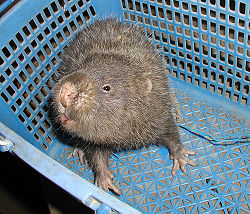
| Lesser bamboo rat, Cannomys badius | |
Scientific classification 
| |
| Kingdom: | Animalia |
| Phylum: | Chordata |
| Class: | Mammalia |
| Order: | Rodentia |
| Superfamily: | Muroidea |
| Family: | Spalacidae Gray, 1821 |
| Type genus | |
| Spalax Güldenstädt, 1770
| |
| Subfamilies | |
The Spalacidae, or spalacids, are a family of rodents in the large and complex superfamily Muroidea. They are native to eastern Asia, the Horn of Africa, the Middle East, and southeastern Europe. It includes the blind mole-rats, bamboo rats, mole-rats, and zokors. This family represents the oldest split (excluding perhaps the Platacanthomyidae) in the muroid superfamily, and comprises animals adapted to a subterranean way of life. These rodents were thought to have evolved adaptations to living underground independently until recent phylogenetic studies demonstrated they form a monophyletic group.[1] Members of the Spalacidae are often placed in the family Muridae along with all other members of the Muroidea.
Characteristics
[edit]Spalacids are mouse- to rat-sized rodents, adapted to burrowing and living underground. They have short limbs, wedge-shaped skulls, strong neck muscles, large incisor teeth, and small eyes and external ears. In the zokors, which dig primarily with their feet, rather than their teeth, the front claws are also massively enlarged. These features are least extreme in the bamboo rats, which spend at least some of their time above ground, foraging for food. They are most highly developed in the blind mole-rats, whose eyes are completely covered by skin, and entirely lack external ears or tails.
All of the spalacid species dig extensive burrows, which may include storage chambers for food, latrine chambers, and breeding nests. They are generally solitary animals, and do not share their tunnel complexes with other individuals. All the species are herbivores, feeding on roots, bulbs, and tubers.
They give birth to litters of up to six young after a gestation period between three and seven weeks, depending on the species. As with many other muroids, the young are born blind, hairless, and helpless. They may stay with the mother for several months before setting off to establish their own burrows, although some species disperse as soon as they are weaned.[2]
Characteristics
[edit]Norris et al.[3] listed several characteristics present in all members of this family which distinguish them from the rest of the muroids, (the clade Eumuroida). These are "the reduction or absence of external eyes, reduced pinnae, stocky body, short tail (<50% head and body length), broad rostrum, triangular-shaped braincase, infraorbital canal ovoid shape and does not extend ventrally to the roof of the palate, zygomatic plate absent or much reduced, nasolacrimal canal inside infraorbital canal, incisive foramina small to medium-sized, extensive neck musculature and prominent points of attachment on the occipitum, minimal reduction in M3 relative to M1 and M2, and a distinct orientation of the manubrium of the malleus bone." Spalacid genomes also share a derived filovirus-like nucleoprotein element with an open reading frame.[4]
Classification
[edit]The spalacids are classified in three subfamilies, six genera, and 37 species.
Family Spalacidae
- Subfamily Myospalacinae - zokors
- Genus Myospalax
- Myospalax myospalax species group
- False zokor, M. aspalax
- Siberian zokor, M. myospalax
- Myospalax psilurus species group
- Transbaikal zokor, M. psilurus
- Myospalax myospalax species group
- Genus Eospalax
- Chinese zokor, E. fontanierii
- Rothschild's zokor, E. rothschildi
- Smith's zokor, E. smithii
- Genus Myospalax
- Subfamily Rhizomyinae
- Tribe Rhizomyini - bamboo rats
- Genus Rhizomys
- Hoary bamboo rat, R. pruinosus
- Chinese bamboo rat, R. sinensis
- Large bamboo rat, R. sumatrensis
- Genus Cannomys
- Lesser bamboo rat, C. badius
- †Genus Brachyrhizomys (Miocene to Pleistocene)
- Genus Rhizomys
- Tribe Tachyoryctini
- Genus Tachyoryctes - African mole-rats
- Ankole African mole-rat, T. ankoliae
- Mianzini African mole-rat, T. annectens
- Aberdare Mountains African mole-rat, T. audax
- Demon African mole-rat, T. daemon
- Kenyan African mole-rat, T. ibeanus
- Giant root-rat, T. macrocephalus
- Navivasha African mole-rat, Tachyoryctes naivashae
- King African mole-rat, T. rex
- Rwanda African mole-rat, T. ruandae
- Rudd's African mole-rat, T. ruddi
- Embi African mole-rat, T. spalacinus
- Northeast African mole-rat, T. splendens
- Storey's African mole-rat, T. storeyi
- Genus Tachyoryctes - African mole-rats
- Tribe Rhizomyini - bamboo rats
- Subfamily Spalacinae - blind mole-rats
- Genus Spalax
- Mehely's blind mole-rat, S. antiquus
- Sandy blind mole-rat, S. arenarius
- Giant blind mole-rat, S. giganteus
- Bukovina blind mole-rat, S. graecus
- Oltenia blind mole-rat, S. istricus (possibly extinct)
- Greater blind mole-rat, S. microphthalmus
- Kazakhstan blind mole-rat, S. uralensis
- Podolsk blind mole-rat, S. zemni
- Genus Nannospalax - small-bodied mole-rats
- Subgenus Nannospalax
- Middle East blind mole-rat or Palestine mole-rat, N. ehrenbergi
- Subgenus Mesospalax
- Lesser blind mole-rat, N. leucodon
- Anatolian blind mole-rat or Nehring's blind mole-rat, N. xanthodon
- Subgenus Nannospalax
- Genus Spalax
References
[edit]- ^ Wilson, D. E.; Reeder, D. M., eds. (2005). "Spalacidae". Mammal Species of the World: A Taxonomic and Geographic Reference (3rd ed.). Baltimore: Johns Hopkins University Press. ISBN 978-0-8018-8221-0. OCLC 62265494.
- ^ Corbet, Gordon (1984). Macdonald, D. (ed.). The Encyclopedia of Mammals. New York: Facts on File. pp. 666–671. ISBN 0-87196-871-1.
- ^ Norris, R.W.; et al. (2004). "The phylogenetic position of the zokors (Myospalacinae) and comments on the families of muroids (Rodentia)". Molecular Phylogenetics and Evolution. 31 (3): 972–978. doi:10.1016/j.ympev.2003.10.020. PMID 15120394.
- ^ Taylor, Derek J.; Barnhart, Max H. (2024). "Genomic transfers help to decipher the ancient evolution of filoviruses and interactions with vertebrate hosts". PLOS Pathogens. 20 (9) e1011864. doi:10.1371/journal.ppat.1011864. PMC 11398700. PMID 39226335.
Bibliography
[edit]- Jansa, S. A. and M. Weksler. 2004. Phylogeny of muroid rodents: relationships within and among major lineages as determined by IRBP gene sequences. Molecular Phylogenetics and Evolution, 31:256-276.
- Michaux, J., A. Reyes, and F. Catzeflis. 2001. Evolutionary history of the most speciose mammals: molecular phylogeny of muroid rodents. Molecular Biology and Evolution, 17:280-293.
- Steppan, S. J., R. A. Adkins, and J. Anderson. 2004. Phylogeny and divergence date estimates of rapid radiations in muroid rodents based on multiple nuclear genes. Systematic Biology, 53:533-553.
Spalacidae
View on GrokipediaTaxonomy and phylogeny
Etymology and history
The family name Spalacidae derives from the type genus Spalax, which in turn originates from the Ancient Greek word σπάλαξ (spálax), meaning "mole," alluding to the fossorial habits of these rodents.[6][7] The family designation was formally established by British zoologist John Edward Gray in 1821, in his publication in the London Medical Repository.[8] During the early 19th century, Spalacidae gained recognition as a distinct family separate from Muridae, based on morphological specializations for subterranean life, such as reduced eyes and enlarged incisors.[8] Early classifications broadly encompassed various Old World subterranean rodents, reflecting convergent adaptations among fossorial species, but subsequent refinements excluded unrelated groups like the African mole-rats of Bathyergidae, which belong to the suborder Hystricomorpha.[8] A key milestone came in 1866 when Swedish zoologist Wilhelm Lilljeborg proposed the subfamily Myospalacinae to accommodate zokors (Myospalax spp.), distinguishing them from blind mole-rats based on dental and cranial features.[9] Further taxonomic revisions occurred in the mid-20th century; for instance, Chaline et al. (1977) reallocated Spalacinae within Cricetidae before its restoration as a distinct family in Muroidea, emphasizing phylogenetic separation of subfamilies like Rhizomyinae and Tachyoryctinae through comparative morphology.[10] Early paleontological insights emerged in the 19th century with descriptions of Miocene fossils from European deposits, such as the genus Pliospalax named by Johann Jacob Kaup in 1832 from sites in Germany, linking the family to ancient Eurasian lineages.Classification
Spalacidae is a family of rodents within the superfamily Muroidea and order Rodentia, recognized as monophyletic and comprising four subfamilies, seven genera, and approximately 37 species as of 2005, with ongoing revisions for cryptic species.[8][1] The subfamilies are Spalacinae, which includes the genera Spalax (blind mole-rats) and Nannospalax (lesser blind mole-rats); Myospalacinae, encompassing Myospalax and Eospalax (zokors); Rhizomyinae, consisting of Rhizomys and Cannomys (bamboo rats); and Tachyoryctinae, consisting of Tachyoryctes (African mole-rats).[11][12][13] The type genus of the family is Spalax.[3] Species diversity varies across subfamilies, with Tachyoryctinae containing 13 species in Tachyoryctes, Rhizomyinae containing four species (three in Rhizomys and one in Cannomys), Myospalacinae including six species across its two genera, and Spalacinae accounting for over 20 species (eight in Spalax and more than a dozen in Nannospalax).[13][12][14] Recent taxonomic revisions have elevated the Bukovina blind mole-rat (Spalax graecus) to distinct species status within Spalax, contributing to the updated count in Spalacinae.[15] Karyotypic variation serves as a key taxonomic marker, particularly in Spalacinae, where Spalax species exhibit diploid chromosome numbers ranging from 2n=52 to 60.Evolutionary relationships
Spalacidae occupies a basal position within the superfamily Muroidea, representing one of the earliest diverging lineages among muroid rodents, with the family splitting from other muroids approximately 25–32 million years ago during the late Oligocene.[16][3] Molecular phylogenetic analyses, including those using mitochondrial DNA sequences and multi-gene datasets, have strongly supported the monophyly of Spalacidae, with bootstrap values exceeding 95% in comprehensive trees of rodent diversification.[17] Inter-subfamily relationships within Spalacidae have been resolved through phylogenomic approaches employing concatenated sequences from thousands of orthologous nuclear genes derived from transcriptomes and genomes. Recent studies indicate that Rhizomyinae forms a sister group to Myospalacinae, with this clade in turn sister to Spalacinae, a topology supported by Bayesian posterior probabilities of 1.0 and maximum likelihood bootstrap values of 100%; Tachyoryctinae is nested within or sister to Rhizomyinae based on mitochondrial and morphological data.[3][18][13] This phylogeny suggests independent origins of key fossorial traits across the subfamilies, as convergent morphological specializations for subterranean life—such as reduced eyes and robust forelimbs—arose separately following their divergence around 28 million years ago.[3][19] Cryptic speciation in Spalacidae is prominently illustrated by chromosomal evolution in blind mole-rats of the Nannospalax ehrenbergi complex (formerly Spalax ehrenbergi superspecies), where parapatric populations exhibit distinct cytotypes with diploid chromosome numbers of 2n=52, 54, 58, and 60.[20][21] These cytotypes, corresponding to species such as N. galili (2n=52), N. golani (2n=54), N. carmeli (2n=58), and N. xerica (2n=60), demonstrate reproductive isolation through chromosomal rearrangements and ecological divergence, indicative of incipient sympatric speciation in some overlapping habitats.[20][22] Comparative genomics has uncovered lineage-specific adaptations in Spalacinae, particularly enhancements in hypoxia tolerance genes that align with their phylogenetic isolation as a derived clade. Genes in the hypoxia-inducible factor (HIF) pathway and erythropoietin (EPO) regulation exhibit positive selection and regulatory modifications in blind mole-rats, enabling prolonged survival in oxygen-deprived burrow environments. These genomic changes, distinct from those in Rhizomyinae and Myospalacinae, highlight how phylogenetic divergence facilitated specialized physiological responses to subterranean hypoxia.[23][24][25]Description
General morphology
Members of the Spalacidae family exhibit a range of body sizes, from small mouse-like forms to larger rat-sized individuals, with head-body lengths typically spanning 130–500 mm and weights from approximately 100 g to 4 kg across the family.[1] Their overall body plan is cylindrical and mole-like, adapted for a fossorial lifestyle, featuring a robust, stocky build with short, dense fur that varies in color from pale gray-yellow to dark brown or gray.[26] The tail is generally short, measuring 1–20 cm depending on the subfamily, and is often vestigial or hairless, particularly in Spalacinae species.[26][1] The skull is characteristically wedge-shaped, with a long facial region and a shortened cranial area, providing structural reinforcement for burrowing activities.[26] Dentition includes enlarged, procumbent upper incisors that are strong, wide, and rootless, enabling continuous growth and use in soil excavation; these incisors are separated from the oral cavity by prominent lips during digging.[26] The molars are reduced in number and complexity, featuring a pterydomidal structure with average crown height suited for grinding tough plant material such as geophytes.[26] Limbs are short in both fore- and hindlimbs, each bearing five digits equipped with well-developed claws for manipulation and propulsion in subterranean environments; forelimbs are particularly robust, with elongated scapulae and strong elbow extensors.[26] External features include small, rounded ears reduced to mere skin folds hidden beneath fur, and vestigial eyes concealed under the skin and covered by hair, minimizing vulnerability in soil.[26] Additionally, sensitive vibrissae are present on the head and body, serving as tactile sensors in the dark burrow systems.[26]Adaptations for fossorial life
Spalacids exhibit a suite of specialized anatomical features that facilitate their subterranean lifestyle, distinguishing them from surface-dwelling relatives through convergent evolution toward fossoriality. These adaptations include reductions in visual and auditory structures, enhancements in musculoskeletal systems for excavation, and physiological modifications for enduring low-oxygen burrow environments. Such traits vary across subfamilies, with Spalacinae (blind mole rats) showing the most extreme specializations, while Myospalacinae (zokors) and Rhizomyinae (bamboo rats) display intermediate forms suited to their respective habitats.[19] Sensory systems in spalacids are profoundly modified to prioritize tactile and vibrational cues over vision and hearing, reflecting the perpetual darkness and acoustic challenges of underground life. In the Spalacinae, eyes are severely reduced to pinhead-sized, subcutaneous rudiments covered by skin and fur, rendering them non-functional for image formation but potentially sensitive to light intensity via the retina and Harderian gland.[27] External ear pinnae are absent or vestigial across the family, eliminating protruding structures that could hinder tunnel navigation.[28] Instead, spalacids rely heavily on tactile sensation through elongated vibrissae (whiskers) distributed across the body and specialized mechanoreceptors on the rhinarium and lips, enabling detection of soil texture, obstacles, and prey vibrations.[29] These somatosensory enhancements, particularly in Spalax species, support precise orientation in confined spaces without visual input.[30] Musculoskeletal adaptations in spalacids emphasize robust forelimb and cranial structures optimized for soil displacement via head-thrusting or scratching motions. Powerful neck musculature, including hypertrophied trapezius and splenius muscles, allows forceful extension of the head against burrow walls during digging, a trait most pronounced in Spalacinae.[31] The pectoral girdle is broadened and reinforced to withstand repetitive impacts, distributing stress across the shoulders and supporting enlarged forelimbs. Subfamily-specific variations further tailor these features: Myospalacinae zokors possess elongated, curved foreclaws up to three times longer than hind claws, ideal for scratching through dense steppe soils.[32] In contrast, Rhizomyinae bamboo rats have stocky forefeet with strong, broad claws suited for loosening root-bound earth in forested understories.[33] Physiological traits in spalacids promote survival in hypoxic, humid burrows by enhancing oxygen efficiency and mobility. The fur is short, dense, and soft, with individual hairs capable of lying flat in any direction, which facilitates movement through burrows in either direction without trapping soil and aids in maintaining insulation in variable burrow temperatures.[34] In Spalacinae, hemoglobin and globin proteins like neuroglobin and myoglobin exhibit molecular adaptations that improve oxygen binding and delivery under low-oxygen conditions, correlating with reduced metabolic rates and hypoxia tolerance during burrow flooding.[35] Compared to non-fossorial muroids, spalacids display heightened vertebral flexibility through elongated cervical and thoracic regions, enabling serpentine undulation for propulsion in tunnels, unlike the more rigid spines of aboveground relatives. This, combined with reduced ocular and auditory structures, underscores the family's divergence toward tactile dominance, with skull shapes converging on wedge-like forms for wedging into soil—features absent in surface-adapted muroids like murines.[19]Distribution and habitats
Geographic range
The family Spalacidae exhibits a broad distribution within the Palearctic, Indomalayan, and Afrotropical realms, spanning southeastern Europe, North Africa, East Africa, the Middle East, Central Asia, and into eastern and southeastern Asia. Specific examples include the genus Spalax occurring in Ukraine, species like Rhizomys found as far east as Vietnam, and Tachyoryctes in East Africa. This range reflects adaptations to diverse continental environments.[1][36][33][37] The four main subfamilies show distinct geographic patterns. Spalacinae, comprising blind mole-rats, is distributed in southeastern Europe, the Caucasus region, the Levant, and North Africa, including areas from the Balkans and Ukraine eastward to Asia Minor, Syria, Palestine, Egypt, and Libya. Myospalacinae, known as zokors, inhabits the steppes and highlands from Kazakhstan across Central Asia to the Tibetan Plateau, with core ranges in Mongolia, China, and southern Siberia. Rhizomyinae, including bamboo rats, occupies hilly and forested regions of the Indomalayan realm, ranging from India and Myanmar through southern China to Vietnam and the Malay Peninsula. Tachyoryctinae, known as African mole-rats, is restricted to the highlands of East Africa, from Ethiopia and Somalia south to Kenya, Tanzania, Uganda, Rwanda, Burundi, and eastern Democratic Republic of the Congo.[36][38][33][37][39] Historical patterns have shaped these distributions, including post-glacial recolonization in Europe following the Last Glacial Maximum, where populations of Spalacinae expanded northward from southern refugia in the Balkans and Anatolia. Ranges are often fragmented due to geographic isolation, with significant gaps exceeding 1,000 km between populations, such as those separated by marine barriers like the Bosphorus or uplifted mountain ranges in the Carpathians, limiting gene flow and promoting chromosomal divergence.[40]Habitat preferences
Spalacids exhibit a strong preference for loose, friable soils such as loam and sand that facilitate burrowing, while avoiding rocky terrains, waterlogged areas, and deserts.[41] These rodents thrive in moist or semi-moist conditions, with soil hardness influencing population density; for instance, harder basaltic soils support higher densities compared to softer rendzina due to better moisture retention and food availability.[41] Their elevational range spans from sea level to approximately 4,000 m, particularly in mountainous regions where zokors occupy high-altitude plateaus.[42] In terms of vegetation and land use, spalacids favor geophyte-rich environments like grasslands, scrublands, and forest edges, where underground plant parts provide ample forage.[41] They commonly inhabit agricultural fields and plantations, but human activities such as plowing can disrupt burrow systems and reduce habitat suitability.[41] Within their geographic ranges, preferences lean toward areas with herbaceous gaps over dense shrub cover, as seen in Mediterranean batha where grassy patches dominate over thorny vegetation.[41] Habitat preferences vary across subfamilies. Bamboo rats (Rhizomyinae), such as Rhizomys sinensis, occupy tropical undergrowth in mixed coniferous-broadleaf forests and bamboo thickets at elevations above 1,000 m, selecting slopes of 20°–40° with high shrub density for concealment.[43] Blind mole-rats (Spalacinae), exemplified by Spalax galili, prefer Mediterranean steppes and batha with basaltic or rendzina soils supporting herbs like Carlina hispanica.[41] Zokors (Myospalacinae), including Myospalax baileyi, inhabit alpine meadows and steppes on the Qinghai-Tibet Plateau at 2,000–4,200 m, favoring soft, organic-rich soils in river valleys and pastures.[42] African mole-rats (Tachyoryctinae), such as Tachyoryctes macrocephalus, occur in high-altitude grasslands, savannas, woodlands, and agricultural areas in East Africa with annual rainfall exceeding 500 mm, at elevations up to 4,150 m, preferring moist, well-drained soils.[37] Microhabitats consist of burrow systems typically 20–100 cm deep, with shallower tunnels (11–21 cm) for foraging and deeper chambers for nesting, often featuring surface mounds that aid ventilation and soil aeration.[41] These structures are more complex in preferred soils, adapting to local moisture and vegetation to optimize resource access.[41]Behavior and ecology
Burrowing behavior
Spalacids employ specialized digging techniques adapted to their fossorial lifestyle, primarily using a head-thrust method that leverages their prominent incisors and powerful forelimbs to loosen and excavate soil. In blind mole rats of the genus Spalax, individuals thrust their heads forward to chisel through compact soil with oversized incisors, while forelimbs scrape and push loosened material backward along the tunnel.[44] Zokors (Myospalax spp.) rely more on robust claws of the forelimbs for scratching through loose, friable soils in steppe environments, supplemented by incisor use for harder substrates.[38] Bamboo rats (Rhizomys spp.) combine incisor chiseling with foreclaw digging and frequently push excavated dirt forward using their heads and shoulders to clear tunnels in dense, root-filled forest soils.[33] African mole rats of the genus Tachyoryctes dig using a combination of incisors and forelimbs to excavate friable soils in East African grasslands and highlands, constructing burrow systems up to 52 m in total length.[37] These rodents construct complex, multi-level burrow systems tailored to their ecological needs, featuring shallow foraging tunnels typically 10-30 cm deep for accessing surface vegetation and deeper nest areas reaching 50-200 cm for protection from temperature fluctuations and predators.[41] Systems include specialized chambers for breeding, waste (latrines), and temporary storage, connected by branching horizontal and vertical tunnels reinforced with a soil-urine mixture for structural stability.[45] Total burrow lengths can extend up to 300 m per individual in expansive habitats, with Spalax systems often comprising one to three layers and zokor burrows featuring extensive horizontal networks up to 225 m long in plateau regions.[46] Bamboo rat tunnels, by contrast, form deep, labyrinthine architectures with escape routes and nest chambers lined with vegetation for insulation.[45] In Tachyoryctes spp., burrows include foraging tunnels 15-30 cm deep, nest chambers, food storage areas, and bolt holes, with ejected soil forming mounds varying from 15 cm wide and 7 cm high to 18 m wide and 2 m high.[37] Burrowing activity in spalacids is predominantly solitary and varies between nocturnal and diurnal patterns, influenced by predator avoidance strategies in their respective habitats. Spalax species exhibit a mainly diurnal monophasic rhythm, emerging to eject soil during daylight to minimize encounters with nocturnal predators like owls.[47] Zokors and bamboo rats often shift to crepuscular or nocturnal digging in areas with high diurnal predation risk, such as from raptors, while maintaining territorial boundaries through seismic and vocal signals during solitary excavation.[48] African mole rats (Tachyoryctes spp.) are diurnal and active year-round, with reduced activity in the dry season.[37] Aggressive vocalizations, including threat calls and cries, serve to defend territories and deter intruders without direct confrontation, preserving the integrity of individual burrow systems.[49] Burrow maintenance involves periodic repairs to seal breaches from collapses or intrusions, achieved by backfilling with loose soil using forelimbs and heads, ensuring the system's stability against flooding or predators.[41] Excavated soil is ejected through vertical shafts as characteristic mounds, often volcano-shaped in Spalax, reaching heights of up to 40 cm and serving as ventilation outlets while minimizing surface exposure.[45] These anatomical aids, such as reinforced skulls and enlarged incisors, facilitate efficient repair and ejection without compromising the fossorial adaptations.[44]Diet and foraging
Members of the Spalacidae family are primarily herbivorous, with their diet consisting mainly of underground plant parts such as roots, bulbs, tubers, and rhizomes.[1] This subterranean focus reflects their fossorial lifestyle, where geophytes and herbaceous plants form the core of their nutrition, supplemented occasionally by surface vegetation like leaves, shoots, seeds, and fruits, as well as rare invertebrates such as insects or arthropods.[50] In blind mole-rats of the subfamily Spalacinae (genus Spalax), for example, species like Spalax galili preferentially consume high-energy bulbs and roots from plants including Ornithogalum lanceolatum and Ranunculus asiaticus, enabling survival in resource-limited soils.[41] Foraging in spalacids is predominantly subterranean, with individuals excavating tunnels to access food sources while minimizing exposure to predators. Blind mole-rats adhere to an optimal foraging model, acting as generalists by collecting plant species in proportions matching their local availability, as demonstrated in Spalax ehrenbergi where 61% of hoarded items were geophytes without strong selectivity.[51] They employ sensory cues like plant odors and seismic vibrations from head drumming to detect and probe potential food patches before full excavation, optimizing energy expenditure in costly tunneling environments. Food is often transported to storage chambers within burrows, with caches averaging around 122 grams (up to 332 grams) of geophytes per individual in S. galili, supporting periods of reduced activity.[41] Surface foraging occurs opportunistically, particularly at night, but constitutes a minor portion of overall activity.[52] Dietary habits vary across subfamilies, reflecting habitat and ecological niches. In the Rhizomyinae (bamboo rats, genus Rhizomys), foraging targets bamboo stems, roots, and shoots, along with other crop plants like sugarcane, often emerging nocturnally to gather leaves, seeds, and fruits.[53] Zokors of the Myospalacinae (genus Myospalax or Eospalax) graze on grasses and forbs via short surface-connected tunnels, consuming both underground parts (e.g., rhizomes of Echinops and Littledalea) and aerial stems and leaves, with occasional insects.[54] In contrast, Spalacinae species like blind mole-rats show greater selectivity for nutrient-dense bulbs over less profitable items, enhancing caloric intake in arid conditions.[51] Members of the Tachyoryctinae (African mole rats, genus Tachyoryctes) consume roots, rhizomes, bulbs, tubers, and grasses, storing excess food in underground chambers; they forage aboveground for more than 5% of the day.[37] Spalacids exhibit nutritional adaptations for processing fibrous plant material, including complex gastrointestinal structures and gut microbiomes specialized for lignocellulose breakdown. In plateau zokors (Eospalax fontanierii), a well-developed stomach with glandular regions and elongated intestines facilitates efficient fermentation of high-fiber rhizomes rich in cellulose and lignin.[55] Similarly, bamboo rats rely on microbial communities to digest bamboo's tough components, supporting their herbivorous diet.[56] Seasonal shifts occur in response to resource availability, with blind mole-rats increasing reliance on stored geophytes and seeds during dry periods when fresh underground vegetation declines, ensuring sustenance without frequent surface risks.[36]Sociality and communication
Spalacids exhibit a predominantly solitary social structure, with most individuals inhabiting and defending their own extensive burrow systems against intruders. This territorial behavior is particularly pronounced in species like the blind mole rat (Spalax ehrenbergi), where animals are highly aggressive toward conspecifics, engaging in physical confrontations at burrow boundaries to prevent overlap in foraging areas.[29][1] In contrast to more social subterranean rodents such as those in the family Bathyergidae, spalacids lack eusociality and form only brief maternal-offspring associations during early post-weaning periods, after which juveniles disperse to establish independent territories.[50] African mole rats (Tachyoryctes spp.) are also solitary and territorial, with one individual per burrow system and associations between sexes limited to mating.[37] Territorial ranges vary by species, sex, and habitat quality, with males typically defending larger areas—up to 1,500 m² in zokors (Myospalax spp.)—compared to females, whose ranges may be under 500 m². Population densities generally range from 1 to 6 individuals per hectare, influenced by resource availability and soil conditions, though higher densities up to 20 per hectare occur in optimal habitats.[57][58] Rare exceptions to strict solitude include temporary familial groups in some populations of the greater blind mole-rat (Spalax microphthalmus), where offspring may remain with the mother briefly after weaning before dispersal.[59] Communication among spalacids relies heavily on non-visual cues adapted to their subterranean lifestyle. Seismic signaling is prominent in blind mole-rats (Spalax spp.), achieved through head-banging or tooth-chattering against burrow walls to produce substrate-borne vibrations that propagate long distances for territorial advertisement or intruder deterrence.[60][61] In bamboo rats (Rhizomys spp.), vocalizations such as grunts, squeaks, and low-frequency "boop" calls serve similar functions during encounters near burrow entrances.[62] Olfactory cues, derived from urine and fecal markings deposited in soil mounds or burrow plugs, play a key role in species recognition, mate attraction, and territorial demarcation across the family, with distinct odor profiles varying seasonally and by individual.[63][64] These multimodal signals minimize direct contact in the confined underground environment while reinforcing the solitary lifestyle.[50]Reproduction
Breeding systems
Spalacidae exhibit mating systems facilitated by the solitary lifestyles of most species, where individuals maintain exclusive territories and only converge during the brief mating periods, often involving male invasions of female burrows.[65] Male-male competition is intense and manifests through aggressive burrow invasions and agonistic encounters, where larger or more dominant males secure access to receptive females.[66] Breeding in Spalacidae is generally seasonal, aligned with environmental cues such as photoperiod and rainfall, particularly in temperate species where reproduction occurs in spring or summer.[67] Gestation periods range from 3 to 7 weeks, with shorter durations observed in tropical forms; litters typically consist of 1 to 6 young, averaging around 3 in many species, and females produce 1 to 2 litters per year.[65] For example, in blind mole-rats of the genus Spalax, gestation lasts approximately 34 days, yielding litters of 3 to 4 young born between January and April following winter courtship.[67] Variations in breeding systems occur across subfamilies, reflecting ecological adaptations. In Spalacinae (blind mole-rats), females exhibit induced ovulation triggered by copulatory stimuli during extended courtship sequences, ensuring synchronization with male presence in subterranean environments.[67] Rhizomyinae (bamboo rats), inhabiting tropical regions, often breed year-round with peaks during wet seasons from February to April and August to October, allowing multiple litters in response to resource availability.[68] Myospalacinae (zokors) maintain strict seasonal breeding with mating in April and one litter per year, emphasizing solitary habits even during rutting periods.[69] Tachyoryctinae (African mole rats) breed seasonally, synchronized with rainfall patterns, with gestation around 38 days and litters of 3 to 6 young.[37] Physiological traits in Spalacidae underscore high reproductive effort, particularly in solitary species where energy allocation prioritizes few but viable offspring amid fossorial constraints.[67]Development and parental care
Young in the Spalacidae family are born altricial, typically hairless and with closed eyes, in dedicated underground nest chambers constructed by the female.[1] Litter sizes range from 1 to 5 offspring, depending on the species and environmental conditions.[1] In the wild, survival rates for litters are influenced by subterranean predation and resource availability, though specific quantitative data remain limited for most species.[70] Postnatal growth varies across subfamilies but generally follows a pattern adapted to fossorial life. Eyes open around 2–3 weeks in species with functional vision, such as bamboo rats in the Rhizomyinae, while blind mole rats (Spalacinae) possess rudimentary, non-functional eyes from birth.[33] Weaning occurs at 4–6 weeks, after which juveniles begin consuming solid food while still relying on the burrow system.[1] Sexual maturity is reached between 6 and 12 months, aligning with the attainment of adult body size.[50] Wild lifespan averages 2–4 years, though individuals of Spalax species can survive up to 20 years or more in captivity.[71] Parental care is exclusively maternal, with females providing nursing for 3–4 weeks and protection within the burrow.[1] Offspring remain in the natal burrow for 1–3 months post-weaning, during which maternal aggression toward maturing young increases to facilitate dispersal or eviction.[50] Males contribute nothing beyond fertilization. In the Rhizomyinae subfamily, such as bamboo rats, young exhibit relatively more precocial traits, with hair growth by 2 weeks and begin foraging with the mother by 3 months.[33] For zokors (Myospalacinae), juveniles remain with the mother for several months before independence, though detailed observations are scarce.[38]Fossil record and evolution
Origins
The fossil record of Spalacidae extends to the late Eocene (~36 million years ago), with molecular estimates placing the crown-group diversification around 25–28 million years ago during the late Oligocene.[72][3] This temporal framework is supported by recent fossil discoveries and molecular phylogenies, situating the initial radiation within the broader muroid diversification.[73] The cradle of Spalacidae likely lay in the Anatolia-Middle East region, corresponding to the East Mediterranean area of southeastern Europe and western Asia, where early fossils indicate the family's antiquity.[72] Ancestral spalacids exhibited a transition from a more scansorial or surface-dwelling lifestyle—typical of early muroids—to a fully fossorial existence, with initial adaptations including semi-hypsodont teeth and incipient burrowing modifications in the skull and limbs.[72] These changes reflect early responses to environmental pressures, shifting from arboreal or terrestrial foraging to underground refugia as a survival strategy.[19] Blindness, a hallmark of extreme fossoriality, evolved independently across subfamilies, with degeneration of visual structures occurring separately in response to perpetual darkness in burrows rather than a single ancestral event.[74] Subfamily divergence occurred during the Oligocene, with Spalacinae branching basally around 28 million years ago, followed by the split between Myospalacinae and Rhizomyinae around 26 million years ago.[3] Rhizomyinae initially diversified in Asian contexts before some lineages dispersed to Africa, while Myospalacinae and Spalacinae developed distinct distributions in East Asia and the Mediterranean region, respectively.[16] Miocene climate shifts, characterized by increasing aridification and the expansion of grasslands across Eurasia and Africa, drove these early adaptations by favoring subterranean niches as stable refugia from surface drying and vegetation changes.[16] This correlation with paleoenvironmental transitions underscores how ecological instability promoted the evolution of burrowing behaviors, enhancing survival in increasingly open, drier landscapes.[75]Fossil species
The fossil record of Spalacidae documents a diverse array of extinct species primarily from Eurasia, with the earliest records dating to the late Eocene approximately 36 million years ago.[72] A new species, Debruijnia tintinnabulus, from late Eocene deposits in Serbia, represents the oldest known spalacid. Subsequent early records include the genus Debruijnia from the early Miocene of Greece, with D. kostakii characterized by primitive dental morphology that bridges early forms to later lineages.[76] In Turkey, Prospalax appears in Early Miocene deposits, marking the initial diversification of the family in Anatolia.[77] Overall, around 15 species have been described from Miocene to Pliocene sediments across these regions, reflecting a period of moderate species richness before later contractions.[78] Key fossil discoveries highlight significant evolutionary milestones. Spalax denizliensis, from Early Pleistocene sites in the Denizli Basin of southwestern Turkey, exemplifies late persistence of spalacid forms with specialized fossorial adaptations in cheek teeth morphology.[79] Earlier, the Afşar locality in western Turkey (Early Pliocene) has yielded one of the richest assemblages of Spalacinae, including Pliospalax cf. macoveii and P. tourkobouniensis, the first records of the latter outside Europe, indicating ongoing taxonomic complexity and regional endemism.[80] Sites in the Middle East, particularly Anatolia, reveal a radiation of spalacids during the Miocene, with multiple genera co-occurring and contributing to biostratigraphic correlations across southeastern Europe and western Asia.[72] Extinct lineages provide insights into spalacid origins, with the Anomalomyidae, including genera like Anomalomys, Anomalospalax, and Prospalax, considered a possible stem group due to shared primitive traits and temporal overlap from the Early Miocene to Late Pliocene.[10] Fossil distributions closely mirror modern patterns, confined to Eurasia with no evidence from the Americas, underscoring the family's Old World affinity and limited dispersal.[16] These fossils illustrate multiple independent evolutions toward fossoriality within Spalacidae, with convergent adaptations in dental and cranial features across subfamilies like Spalacinae and Rhizomyinae.[19] Diversity declined post-Pliocene, likely influenced by Pleistocene glaciations that contracted suitable steppe habitats, reducing genera to survivors like Eospalax and Myospalax.[16]Conservation status
Threats
Habitat loss represents a primary threat to Spalacidae populations, driven largely by agricultural expansion and urbanization that fragment their subterranean ranges. In Mediterranean regions, species such as blind mole rats in the genus Spalax and Nannospalax have experienced significant declines in suitable habitats due to the conversion of grasslands and scrublands into croplands and urban developments, with deep tillage practices destroying burrows and associated vegetation. For instance, the area of occupancy for Spalax antiquus has been estimated at 366 km² and is continuing to decrease, while the extent of occurrence spans 2,128 km² but faces ongoing fragmentation from these anthropogenic pressures. Overgrazing and invasive plant species further exacerbate habitat degradation by altering soil structure and reducing burrow viability in these ecosystems.[81][82] The ongoing Russo-Ukrainian War, as of 2025, poses an acute additional threat to Spalacidae species in Ukraine, such as the sandy blind mole-rat (Spalax arenarius) and Podolsk blind mole-rat (Spalax zemni), through direct habitat destruction from military activities, shelling, and infrastructure damage. This conflict has led to an estimated 50% population decline for S. arenarius and contributed to the uplisting of S. zemni to Endangered status by the IUCN in 2024, with the IUCN recognizing armed conflict as a key extinction risk factor in regional assessments.[83][84] Agricultural conflicts pose another major risk, particularly for bamboo rats (Rhizomys spp.) and zokors (Myospalax spp.), which damage crops through burrowing and foraging activities, prompting retaliatory measures like poisoning and trapping. Bamboo rats, abundant in Asian farmlands, consume roots, bulbs, and stems of staple crops such as rice and vegetables, leading to outbreaks during bamboo masting events that amplify population surges and subsequent control efforts. Similarly, zokors in alpine meadows of the Qinghai-Tibetan Plateau disrupt grasslands used for livestock, with their mound-building and herbivory contributing to soil erosion and reduced forage quality, often resulting in targeted poisoning campaigns that deplete local populations. These interventions have been linked to broader declines in farmland-dwelling spalacids, as control methods indiscriminately reduce numbers in agricultural zones while failing to address underlying habitat pressures.[85][86][87] Climate change intensifies vulnerabilities for spalacids by altering soil conditions and food resources critical to their subterranean lifestyle. Drying soils, projected to worsen under global warming scenarios, harden burrow substrates—particularly clay-rich types—making excavation more energy-intensive and reducing overall habitat suitability. This aridity also diminishes the availability of geophytes, the underground bulbs and tubers that form a staple diet for many species like blind mole rats, as prolonged droughts limit plant growth and storage organ development in arid and semi-arid zones. For high-elevation zokors such as Eospalax baileyi, models predict range shifts of 1–14 km northward in northern populations by mid-century under moderate emissions scenarios, potentially expanding suitable habitat by about 6% but straining adaptation in fragmented landscapes.[41][88][41][89] Additional threats include predation from introduced species and pollution impacts on burrow ecosystems. While spalacids' underground habits offer protection from most predators, incursions by non-native mammals like domestic dogs or feral cats in urbanizing areas can increase mortality during rare surface exposures. Pesticides and herbicides from agricultural runoff infiltrate burrow systems, contaminating soil and geophyte food sources, which leads to direct toxicity and ecosystem degradation affecting microbial communities and invertebrate prey within these confined habitats. For Spalax antiquus, such pollutants are noted as ongoing stressors, contributing to reduced burrow ecosystem health and individual survival rates.[52][81]Protected species
Several species within the Spalacidae family are classified as threatened on the IUCN Red List, warranting specific protection measures due to habitat loss, agricultural expansion, and limited distributions. These listings guide national and international conservation efforts, including habitat protection and monitoring programs. For instance, the Oltenia blind mole-rat (Spalax istricus), endemic to a small region in Romania, is assessed as Critically Endangered (Possibly Extinct) under criteria B1ab(i,ii,iii), with no confirmed sightings since the 1980s despite searches; its potential extinction highlights the urgency of ongoing surveys and habitat restoration in the Oltenia region.[90] The sandy blind mole-rat (Spalax arenarius), restricted to sandy steppes in southern Ukraine, holds Endangered status under IUCN criteria, primarily threatened by afforestation, urbanization, and the ongoing Russo-Ukrainian War, which has caused an estimated 50% population decline; it receives legal protection within the Black Sea Biosphere Reserve, where burrows are monitored to assess population viability despite conflict-related disruptions.[91][84] Similarly, Méhely's blind mole-rat (Spalax antiquus), confined to the Transylvanian Plateau in Romania with an extent of occurrence of 2,128 km² and area of occupancy of 366 km², is Endangered (B1ab(i,ii,iii)+2ab(i,ii,iii)) due to agricultural intensification; conservation actions include designation of protected areas and research into population trends at its four known locations.[92] Other notable protected species include the giant root-rat (Tachyoryctes macrocephalus), Endangered and endemic to the afroalpine zones of the Ethiopian highlands, where it faces habitat degradation from overgrazing and fire; it benefits from protections in Bale Mountains National Park, supporting colony-based monitoring.[93] The Podolsk blind mole-rat (Spalax zemni), distributed across fragmented steppe habitats in Ukraine and Moldova, is Endangered (as of 2024) owing to ongoing land conversion and intensified threats from the Russo-Ukrainian War; conservation efforts focus on reserve establishment and anti-poaching measures in key sites, though military activities complicate monitoring.[94][83] These examples illustrate how Spalacidae protections emphasize habitat preservation, as subterranean lifestyles make species particularly susceptible to surface disturbances, though many remain Data Deficient due to cryptic behaviors complicating assessments.[1]References
- https://en.wiktionary.org/wiki/Spalax