



Community hub
New York Guard
View on Wikipedia
| New York Guard | |
|---|---|
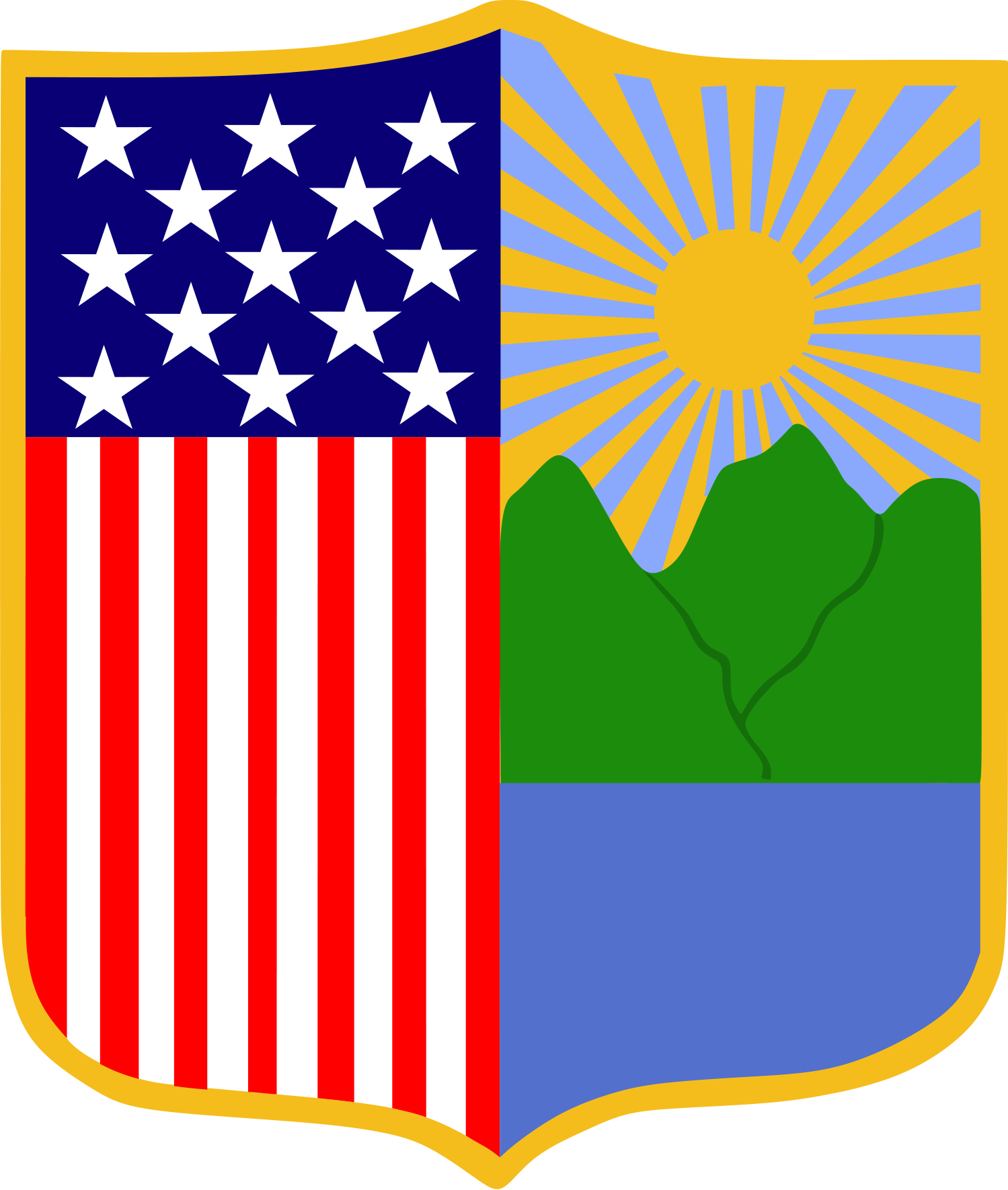
 The shoulder sleeve insignia of the New York Guard | |
| Active | 1917–present |
| Country |  United States United States |
| Allegiance |  New York New York |
| Type |  State defense force State defense force |
| Role | "Reserve Land Force of NYS Organized Militia" |
| Size | 400[1] |
| Part of | New York Division of Military and Naval Affairs |
| NYG HQ | Camp Smith Training Site, NY |
| Nickname | NYG |
| Anniversaries | August 3, 1917 |
| Website | dmna |
| Commanders | |
| Civilian Leadership | Governor Kathy Hochul (Governor of the State of New York) |
| State Military Leadership | Major General Ray Shields (Adjutant General of New York)
Brigadier General Peter P. Riley (Commanding General) |
| Notable commanders | Lieutenant General Hugh Aloysius Drum |
| Insignia | |
| Beret flash of the New York Guard |  |
The New York Guard (NYG) is the State Defense Force (SDF) of New York State, and is one of the four branches of the New York Military Forces (NYMF), the other three branches being the New York Army National Guard, New York Air National Guard and the New York Naval Militia.[1][2] Originally called the New York State Militia, it can trace its lineage back to the American Revolution and the War of 1812.[3]
The organization now has a unified command structure, while formerly it contained an Army Division and an Air Division. The missions of the New York Guard include augmentation, assistance, and support of the New York Army National Guard and New York Air National Guard respectively and aide to civil authorities in New York State. New York also has a New York Naval Militia which, with the State Guard and the Army and Air National Guards, is under the command of the Governor of New York, the Adjutant General of New York, and the Division of Military and Naval Affairs (DMNA).
The New York Guard is one of the largest organized State Defense Forces in the United States.[4] It is historically derived from Revolutionary and Civil War era state military units that were reorganized several times in American history in response to various international and domestic crises.
Organized under the New York State Military Law, both the New York Guard & Naval Militia cannot be federalized at any time, and cannot be deployed outside New York State without the consent of the governor.
Members of the New York Guard are entitled to many of the benefits accorded members of other components of the "Organized Militia of the State of New York", the legal collective term describing the New York Army and Air National Guards, New York Naval Militia and New York Guard. These include military leave for employees of state or local governments and many private employers.
History
[edit]The 265th New York State Militia was a small unit of the New York line and could trace its lineage to the War of 1812. The new regiment was given the designation, 14th regiment, which is one of the oldest military organizations in the United States because of its direct lineage through various separate companies, to the militia companies of the Dutch burghers of New Amsterdam.[5]
In Sketches of America (1818) British author Henry Bradshaw Fearon, who visited the young United States on a fact-finding mission to inform Britons considering emigration, described New York military service as he found it in New York City in August 1817:
Every male inhabitant can be called out, from the age of 18 to 45, on actual military duty. During a state of peace, there are seven musters annually: the fine for non-attendance is, each time, five dollars. Commanding officers have discretionary power to receive substitutes. An instance of their easiness to be pleased was related to me by Mr. —, a tradesman of this city. He never attends the muster, but, to avoid the fine, sends some of his men, who answer to his name; the same man is not invariably his deputy on parade: in this, Mr. — suits his own convenience; sometimes the collecting clerk, sometimes one of the brewers, at others a drayman: and to finish this military pantomime, a firelock is often dispensed with, for the more convenient wartime weapon—a cudgel. Courts-martial have the power of mitigating the fine, on the assignment of a satisfactory cause of absence, and in cases of poverty. Upon legal exemptions I cannot convey certain information. During a period of three months in the late war, martial law existed, and no substitutes were received. Aliens were not called out.[6]
Civil War era
[edit]For more detail, see List of New York Civil War Regiments.

Many units of the New York State Militia saw service in the American Civil War, after being activated into federal service by President Abraham Lincoln.
The activation of state militia by President Abraham Lincoln led to some conflict with State authorities in command of the units:
With the advent of the Civil War in April 1861, the 14th regiment saw its first war service in guarding the Brooklyn Navy Yard. By mid-April of that year, the "Brooklyn Chasseurs" were ready to leave New York for Washington D.C. Colonel Alfred Wood advised the Honorable Governor Morgan that the regiment was prepared to march and had accepted a three-year federal enlistment. However, the governor would not issue orders for the regiment to leave New York. While encamped at Fort Greene Park in Brooklyn, Colonel Wood and Congressman Moses O'Dell went to see President Lincoln to secure orders for the regiment to march to Washington. President Lincoln lost no time in issuing those orders to the 14th Brooklyn. When Governor Morgan learned that the regiment was preparing to march, he telegraphed Colonel Wood and inquired "by what authority" did he move his regiment, Colonel Wood coolly replied, "By the authority of the President of the United States."[5]
Following the Civil War, efforts were made to link the varied military units in New York under overall headquarters. As a result of this, the 3rd Brigade, New York State Militia, came into being on August 5, 1886.[7]
New York Guard created, 1917
[edit]On 3 August 1917, the Adjutant General of New York, in order to comply with the provisions of the State Constitution requiring that troops be available to the Governor for the protection of life and property of the citizens of New York, organized a State Military Force known as the New York Guard. The new force replaced the New York National Guard, drafted in the service of the United States on 5 August 1917.
Additionally, in accordance with Special Orders No. 311, Adjutant General's Office dated 11 December 1917 a Provisional Brigade of the New York Guard was created from existing units, to include a Brigade Headquarters and the 1st and 2nd Provisional Regiments which were ordered to active duty guarding public property. The Headquarters of the Brigade was located at Albany, New York. The 1st Provisional Regiment Headquarters first located at Croton Lake and later at Ossining, New York, had the mission of guarding the water supply of the City of New York, with its territory extending from the northern boundary of the city to include the entire Croton Aqueduct system. The territory assigned to the 2nd Provisional Regiment extended from Troy and Albany across the State to the International Border at Niagara Falls. The Headquarters of the 2nd Provisional Regiment was located in the State Armory, Troy, New York.
During the existence of the Provisional Brigade, a total of 9,960 men were ordered on active duty. Discipline was maintained by enforcement of Articles of War, State Military Law & Regulations. On 1 January 1919, the strength of the NYG was approximately 22,000 officers and men.
After the Armistice was signed and the Federalized New York National Guard units were returned to State status, New York Guard units were deactivated.[8]
New York Guard during WWII
[edit]On 25 October 1940, the New York Guard was formally organized to replace Federalized New York National Guard units. The 76th Congress provided the authority for State Guards to be organized as a replacement force for the National Guard in October 1940.
The approved organization established a Headquarters, New York Guard, five (5) Brigade Headquarters and twenty (20) Regiments. New York Guard units were distributed so that at least one (1) unit was located in every one of the seventy-four (74) armories in the State.
As New York National Guard units departed for Federal service, New York Guard units were organized and mustered into State service. In 1941, the units were organized and after the first year of existence unit reports indicated the average attendance at armory drills was 83%.
During the period from 1941 to early 1944, the New York Guard was issued individual uniforms and organizational type ordinance and equipment, providing the New York Guard with sufficient support to conduct both weekly home station training and annual training for periods of 10 to 12 days duration. In 1943, the NYG gained a new Commander in LTG Hugh Aloysius Drum,[9] (until 1948). By 22 February 1944, the New York Guard attained an aggregate strength of 24,722 officers and enlisted men. On 15 June 1944, the New York State Emergency Plan Field Order No. 1 was completed and issued.
On 30 January 1945, the Governor declared a State Emergency caused by extraordinary heavy snow storms and freezing weather, jeopardizing the transportation of fuel and food. The New York Guard was alerted for mobilization under the provisions of Field Order No. 1. The area involved was central and western New York State. The Governor directed the Commanding General New York Guard to order into active service such parts of the New York Guard as necessary to facilitate movement of transportation and supplies. Assigned troops were relieved from active duty on 10–11 February 1945, & 19 February 1945. The Governor, by a Statewide radio broadcast, commended and congratulated the personnel of the New York Guard for their service.
Also during 1945, the State Headquarters initiated plans to reorganize the New York National Guard, effective 1 January 1946. New York Guard units would be used as the basis for this reorganization when directed to do so by the Federal Government, as the New York National Guard was not to return to State status as organized units. During 1945, twelve (12) days of field training was completed.
In 1946, a United States property and fiscal office was established within New York State, which subsequently determined that federal property assigned to the New York Guard would be utilized to equip newly organized National Guard units. During the transition from New York Guard to National Guard, an organization known as the State War Disaster Military Corp (SWDMC) was established to be available to the State, to supplement the National Guard in case of domestic disaster or disturbances. The SWDMC consisted of personnel from New York Guard units and lasted a short time and was then deactivated.
On 7 October 1946, an official National Guard troop allotment was accepted, and the New York Guard of World War II was phased out of existence by the reorganization of the National Guard.[10]
New York Guard, 1950–2000
[edit]In 1950, Federal legislation was again enacted authorizing States to establish State Guard units as replacement forces for the National Guard.
In 1951, after several New York National Guard units had been ordered into Federal service, the Chief of Staff to the Governor directed planning for the reorganization of a New York Guard. New Tables of Organization were approved and published authorizing 2 Area Commands, 5 Zone Commands, 6 to 8 Group Headquarters & 35 Battalions of 4 Companies each. However, only Area and Zone Command Headquarters were organized, with a mission of preparing plans for the organization and recruitment of subordinate units, if and when a New York National Guard Division was ordered into Federal service.
By the conclusion of the Korean Emergency, the New York Guard organization was limited to a cadre staff of Headquarters, New York Guard. The mission of this cadre was to prepare plans in coordination with Civil Defense to furnish logistical support to State Military Forces in the event of a National Emergency.
Pursuant to federal legislation for the creation of State Defense Forces, enacted by the 84th Congress (1955 – Public Law 364), and State Legislation enacted in 1958, the New York Guard was reorganized as a reserve land force of the organized Militia of New York.
Through the ensuing years to 1977, the New York Guard cadre force continued to function, with its primary objective being to establish and maintain necessary plans and programs in coordination with the Division of Military and Naval Affairs to insure of a rapid and smooth mobilization to full strength if ordered to replace the New York Army National Guard.
To insure Cadre personnel at each level of Command were prepared to properly respond to tasks assigned, administrative & training directives were developed and issued requiring all cadre members to attend weekly home station training drills, and to participate in scheduled annual training programs designed to test the effectiveness of training conducted at home station.
As a result of New York Guard training, over one hundred & thirty-five (135) members were placed on State Active Duty in support of the New York Army National Guard during the State Correctional Officers Strike, from 19 April to 6 May 1979.
Further, a New York Guard study conducted in mid 1979 concluded that for the New York Guard Cadre to maintain its readiness to respond to state emergencies as ordered, its Tables of Organization should be expanded to allow for the recruitment and assignment of personnel having professional and technical skills compatible with advancing technologies. Approval for such expansion was extended by issuance of Division of Military & Naval Affairs, Permanent Orders 66-1 dated 25 September 1979, which authorized a Command Headquarters Professional and Technical Detachment. This Detachment was subsequently reorganized as a Command Support Brigade effective 7 July 1989.
Like its forefathers, members of the New York Guard have and continue to serve in a voluntary capacity; support and participate in local and state community projects and give willingly of their time and talents to ensure that the New York Guard is prepared to fulfill its designated missions providing protection to the citizens of the State of New York.[11]
New York Guard, 2001 to present
[edit]In the wake of the September 11, 2001, terrorist attacks, the New York Guard provided security, disaster relief, legal, communications and other services to New York City and the surrounding areas in cooperation with the National Guard. During this period, Major General John F. Bahrenburg was Commander of the New York Guard (his tenure as Commander was from 1999 to 2002).[12]
The New York Guard experienced a resurgence after the September 11, 2001 attacks. New York Guard units were activated after the attacks, performing a variety of missions, including logistical support to forces stationed at "Ground Zero." Medical units of the Guard worked in conjunction with other DMNA forces providing care at several location including Camp Smith, in Westchester county.


Principal occupational specialties of the New York Guard include, communications, logistics, administrative, and medical and legal services, provided in support of all components of New York State military forces, i.e., the Army and Air National Guards, Naval Militia and the New York Guard, as well as to civil authorities.
Trained and state-certified New York Guard soldiers augment and assist National Guard units in the following missions: weapons of mass destruction [WMD] decontamination – the joint New York Army National Guard / New York Air National Guard / New York Guard decontamination, or CERF, team was activated by the governor for state duty for 11 days during the 2004 Republican National Convention in New York City, Military Emergency Radio Network – the Guard is assigned to operate the MERN at various locations to ensure the free flow of information during an emergency, and search and rescue (SAR) a secondary mission to the state. New York Guard SAR teams have been mobilized, for example, in the summer of 2006 to search for a missing camper in the Adirondack Mountains preserve. Selected units and personnel of the New York Guard were called to State Active Duty with pay in response to Hurricane Irene in 2011.
2012 saw the largest deployment of the New York Guard since the September 11, 2001 attacks. Every brigade was at least partially activated for service during 'Superstorm' Sandy. New York Guard members served as equals alongside the Army National Guard, Air National Guard, and New York Naval Militia, at one point making up approximately one third of all troops in the field during a two-month deployment.
New York State Guard personnel provide training to the New York Army and Air National Guards including first aid training at Camp Smith Training Center.
The 244th Medical Group has worked with the NY Army National Guard Medical Command (MEDCOM), augmenting National Guard personnel for in-state MEDCOM missions. These have included screening of National Guard personnel in Soldier Readiness Programs.
In addition to its SAR work as a secondary mission under the New York State Defense Emergency Act and Article 2-B of State and Local, Natural and Man-Made disasters Act, engineer units of the NY Guard 10th and 65th Brigades have built facilities for the National Guard.
The New York Guard augments the capabilities of the National Guard. Guard personnel are drawn from almost every profession and areas of expertise – from plumbers to professors, clerks and CEOs, persons with long prior military service and those without, and every part of the state.
The headquarters unit of the New York Guard is located at Camp Smith, Cortlandt Manor, New York. Camp Smith is a New York State military reservation. It is adjacent to Peekskill, New York, and about 35 miles north of New York City.
In March 2020, New York Guard service members were activated to support National Guard efforts at combating the coronavirus pandemic. State guardsmen were activated to serve in essential command and control roles to support operations throughout New York State. In total, over 185 New York Guard members served as part of the Joint Task Force tasked with various civil support operations including supporting testing and vaccination centers, warehouse operations, nursing home support missions, and logistic support.[13]
Structure
[edit]The New York Guard has recently undergone a force reorganization aimed at increasing overall service member availability for State Active Duty. The current structure of the NYG follows a model akin to US Army Civil Affairs commands with units (referred to as Companies) composed of platoons and led by a command team of Majors (Company Commanders) and a Company First Sergeant.
The New York Guard is currently organized as follows as of August 2025:[14]
- New York Guard Headquarters (NYG HQ) located at Camp Smith, Cortlandt Manor
- 56th Company (Upstate New York)
- 88th Company (NYC, Long Island)
- 8th Training Command (Camp Smith, NY)[15]
Enlistment criteria
[edit]Eligibility
[edit]
To join, an applicant must be between 18 and 55 years of age, a citizen of the United States, and successfully pass a medical health screening and background check. Potential recruits work with NYG Recruiters to ensure that they meet eligibility requirements, and must commit to a minimum enlistment period of three years.[16]
Awards and decorations
[edit]New York Guard personnel are eligible to receive both New York State and New York Guard awards and decorations. The New York Guard issues several awards.
New York Guard (NYG) awards:[17]
 NYG Commander's Citation
 NYG Achievement Medal
 NYG Good Conduct Medal
 NYG Operations Support Medal
 NYG Service Ribbon
 NYG Distinguished Graduate Ribbon
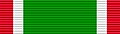 First Provisional Regiment Medal


Descriptions of New York State awards and decorations can be found at the New York State Division of Military and Naval Affairs website: dmna.ny.gov.[18]
See also
[edit]- Brigadier General Amos M. Gailliard Jr.
- 71st Infantry Regiment (New York)
- 369th Infantry Regiment (United States) "Harlem Hellfighters" (formerly 15th NYNG)
- State Defense Forces
- List of United States militia units in the American Revolutionary War
References
[edit]- ^ The State Guard Sentinel; Volume 1, No. 3 Archived October 31, 2008, at the Wayback Machine New York Guard, Spring 2008
- ^ Haskell, Bob (June 2022). "State Guards". National Guard Magazine. National Guard Association of the United States. Retrieved April 20, 2025.
- ^ a b A History of the 14th Regiment N.Y.S.M. Infantry
- ^ Bradshaw, Henry (1819). Sketches of America. A narrative of a journey of five thousand miles through the eastern and western states of America (XV ed.). London: Longman, Hurst, Rees, Orme, and Brown. pp. 48–49. ISBN 0678005842. OCLC 2038519. Retrieved April 20, 2025.
{{cite book}}: ISBN / Date incompatibility (help) - ^ "53rd Troop Command History". New York State Division of Military & Naval Affairs. Retrieved August 14, 2010.
- ^ Durr, Eric (April 25, 2017). "New York Guard was born in World War I as the National Guard went to war". New York National Guard. United States Army. Retrieved April 20, 2025.
- ^ "Hauser and Drum Promoted by Governor". Buffalo Evening News. Buffalo, NY. Associated Press. October 2, 1948. p. 37 – via Newspapers.com.
- ^ "The New York Guard in World War II" (PDF). New York State Military Museum and Veterans Research Center. New York State Division of Military and Naval Affairs. Retrieved April 20, 2025.
- ^ "New York Guard History". New York State Guard Volunteer Force History. New York State Division of Military and Naval Affairs. Retrieved April 20, 2025.
- ^ "Home :: New York State Military Museum and Veterans Research Center" (PDF).
- ^ "The New York Guard in Action during the COVID-19 Activation". statedefenseforce.com. March 24, 2020. Retrieved March 30, 2020.
- ^ "New York Guard Units" (PDF). New York Guard. Retrieved June 21, 2021.
- ^ "Subordinate Commands/Companies" (PDF). dmna.ny.gov.
- ^ "New York Guard State Volunteer Force Enlistment".
- ^ New York Guard Decorations and Awards
- ^ New York Guard Awards Order of Precedence
External links
[edit]| International | |
|---|---|
| National | |


New York Guard
View on GrokipediaHistory
Origins in Colonial and Civil War Eras
The militia system that forms the historical foundation of the New York Guard originated in the colonial Province of New York during the 17th century, driven by necessities of frontier defense against Native American incursions and European competitors. Initial militia formations emerged in the 1630s across English colonies, including New York, in response to conflicts such as the Pequot War (1636–1638) and subsequent Indian wars that threatened settlements.[4] By the early 1700s, the Province of New York's militia was organized along county lines, with officers commissioned by the royal governor and membership mandated for able-bodied males generally aged 16 to 60, totaling thousands across the colony.[5] These colonial militias fulfilled essential roles in imperial conflicts, including the French and Indian War (1754–1763), where New York units guarded frontiers and supported British campaigns under leaders like Sir William Johnson. During the American Revolution (1775–1783), New York militiamen provided local security against Loyalist and British forces, while the Provincial Congress authorized four Continental regiments—the 1st through 4th New York—each comprising about 750 men, drawn from militia ranks for extended service.[6] Post-independence, New York's 1777 Constitution and subsequent statutes preserved the militia as a state institution, requiring enrollment of white males aged 18 to 45 and emphasizing readiness for defense and suppression of insurrections.[7] In the antebellum period leading to the Civil War, New York's militia evolved into a more structured force with uniformed regiments conducting regular drills, reflecting both tradition and urban militarism in cities like New York and Brooklyn. The system's vitality was tested immediately upon the outbreak of war; following President Abraham Lincoln's April 15, 1861, proclamation for 75,000 three-month volunteers, pre-organized units such as the 7th New York Militia Regiment mobilized within days, departing Albany on April 18, 1861, and reaching Washington, D.C., on April 24 as among the first reinforcements, credited with bolstering Union defenses amid the Baltimore riot of April 19.[5] Other regiments, including the 12th, 14th, 28th, and 71st New York State Militia, similarly activated for initial federal service, providing trained cadres that accelerated the formation of volunteer units; by war's end, New York had supplied over 248 infantry regiments, 27 cavalry, and 15 artillery outfits, many rooted in this militia heritage.[8][9][10] This rapid response underscored the militia's dual state-federal character, though short enlistments limited sustained contributions, prompting expansions into long-term volunteer forces.[5]Creation and World War I Service (1917–1918)
The New York Guard was established on August 3, 1917, by Governor Charles S. Whitman through authorization by the state's Adjutant General, in response to the federal mobilization of the New York National Guard units earlier that year under the National Defense Act of 1916.[11][12] This creation addressed the New York State Constitution's mandate for maintaining troops available to the governor for defense against invasion, insurrection, or domestic violence, as the National Guard's departure left critical infrastructure vulnerable amid fears of sabotage or coastal threats during U.S. involvement in World War I.[11][12] Adjutant General Charles H. Sherrill led the initial recruitment effort, targeting men ineligible for the federal draft—primarily those aged 17 (pre-draft) and over 45—resulting in 10,600 enlistees by October 1917 against an initial goal of 10,000.[11] The force comprised volunteers from diverse backgrounds, including a unique cavalry troop of 40 polo players formed in Garden City for mounted patrols.[11] Approximately 2,000 members served full-time in two provisional regiments, receiving $1.25 per day, while the remainder participated part-time; by the end of 1918, a total of 22,000 individuals had served, with a maximum field strength of about 5,000 as reported in 1919 by Adjutant General Charles W. Berry.[11] Training emphasized practical skills for home defense rather than combat preparation, drawing on veterans and civilians to fill roles vacated by the National Guard. During its World War I service, the New York Guard focused on internal security and infrastructure protection, patrolling 95 miles of aqueducts, 500 miles of canals, key railroad bridges, and public utilities across the state to deter espionage, sabotage, or unrest.[11] The First Provisional Brigade, a key formation, specifically guarded vital water supply routes, continuing duties initiated by National Guard units earlier in 1917.[13] The organization suffered 32 fatalities in the 1918 influenza epidemic, including 17-year-old Private Merville Harrington, highlighting the risks of service amid broader public health crises.[11] Its effectiveness was commended by Brig. Gen. Eli D. Hoyle and noted positively in The New York Times for demonstrating patriotism and organizational quality despite limited resources.[11]World War II Mobilization and Duties (1940–1946)
The New York Guard was formally organized on 25 October 1940 as the state's volunteer military force, following the federalization of New York National Guard units under the Selective Service Act and national defense preparations amid escalating global tensions. Major General William N. Ottmann assumed command on that date, with Brigadier General George P. Tyner serving as chief of staff; initial strength comprised 1,116 officers and 12,573 enlisted personnel organized into headquarters, five brigades, and 20 regiments stationed primarily in major urban areas including New York City, Albany, and Buffalo.[14] [2] This structure was authorized by federal legislation in the 76th Congress, enabling states to maintain home defense capabilities separate from federalized forces.[15] The Guard's primary duties centered on internal security, safeguarding critical infrastructure such as public buildings, aqueducts, canals, and transportation hubs against potential sabotage or invasion threats, while also supporting civil authorities in emergencies. Personnel conducted weekly four-hour drills and annual summer training camps lasting 10 to 12 days, often at Camp Smith, to maintain readiness for defensive operations and mock mobilizations.[16] [14] By 1943, the force expanded to 22 regiments and two additional battalions, reflecting increased recruitment; peak strength reached 18,676 members in December 1945, including 1,703 officers and 16,705 enlisted.[14] Notable activations included a large-scale exercise on 29 April 1942, in which 5,000 troops from 12 metropolitan regiments were mobilized from armories and transported via fleet to simulate rapid response; standby duties during the Harlem riots on 2–3 August 1943 involving 8,000 personnel; snow and traffic emergency support from 31 January to 11 February 1945 with over 2,000 troops deployed; security for President Franklin D. Roosevelt's funeral procession on 14–15 April 1945; disaster relief following the Jamestown tornado on 11–13 June 1945; and traffic control in Buffalo from 17–20 December 1945 using 58 personnel.[14] These operations underscored the Guard's role in supplementing state resources without deploying abroad, as members were statutorily prohibited from federal service.[2] Restructuring commenced in late 1945 as wartime threats diminished and National Guard units returned, leading to the Guard's phase-out by early 1946 and planned conversion elements to the New York Army National Guard effective 1 January 1946; monthly rosters document ongoing activities through this period.[14] [17] The force's service ensured continuity of state defense, with over 18,000 volunteers contributing to homeland security amid national mobilization.[2]Postwar Reorganization and Cold War Period (1950–2000)
Following the demobilization of World War II-era state guard units, the New York Guard remained inactive until federal legislation in 1950 authorized states to reestablish volunteer defense forces as backups for potentially federalized National Guard units amid Korean War tensions.[2] This prompted initial planning in New York for reactivation, focusing on a cadre structure to enable rapid expansion for homeland defense roles such as internal security and infrastructure protection.[2] In 1951, the state chief of staff directed reorganization, envisioning two area commands, five zone commands, six to eight group headquarters, and 35 battalions each comprising four companies, though implementation was limited to area and zone headquarters due to resource constraints.[2] By the mid-1950s, further federal (Public Law 364) and state enactments formalized the New York Guard as a permanent reserve component, emphasizing non-federalizable units for state-specific missions.[2] General Orders No. 25, issued on September 1, 1958, outlined the updated structure: Headquarters and Headquarters Company (New York Guard), six regional command headquarters, six medical companies, six transportation truck companies, 20 internal security battalion headquarters, and 58 internal security companies, prioritizing readiness for civil unrest or wartime augmentation without deploying outside state borders.[2] Throughout the Cold War, the New York Guard operated primarily in a skeletal cadre mode, conducting periodic training to maintain skills in areas like emergency response and security operations, while avoiding federal integration to preserve its state-exclusive status.[2] Reorganizations continued to adapt to evolving threats; Permanent Orders No. 23-1 on March 1, 1977, shifted to a three-phase framework with three brigade headquarters and eight regimental headquarters, enhancing flexibility for rapid mobilization.[2] A notable activation occurred in 1979, when 135 members augmented the New York Army National Guard during the correctional officers' strike from April 19 to May 6, providing logistical and security support at facilities statewide.[2] Later adjustments included the establishment of a Command Support Brigade on July 7, 1989, to centralize administrative and operational functions, followed by a 1995 restructuring into five brigade headquarters, 22 battalion headquarters, one clinic, one training command, and one civil-military affairs unit, reflecting a focus on disaster preparedness and coordination with civil authorities amid post-Cold War fiscal pressures.[2] These changes maintained the force's volunteer, unpaid nature, with membership drawn from civilians ineligible or uninterested in federal service, ensuring a pool of approximately cadre-sized personnel—typically under 1,000—ready for state emergencies without drawing on active-duty resources.[2] By 2000, the New York Guard had solidified as a stable, low-profile entity, having conducted routine drills at sites like Camp Smith while contributing to civil defense planning against hypothetical threats like nuclear fallout or sabotage, though without large-scale mobilizations.[2]Post-9/11 Revival and Contemporary Operations (2001–Present)
Following the September 11, 2001, terrorist attacks on New York City, members of the New York Guard were activated to provide security at state armories across New York, thereby enabling New York National Guard personnel to focus on recovery and security operations in the impacted areas. This deployment marked an early post-9/11 utilization of the force to augment state military resources during a period of heightened demand on federalized National Guard units. In the mid-2000s, the New York Guard underwent structural adjustments to enhance operational efficiency. On August 20, 2005, the Civil Affairs Brigade Headquarters was disbanded, with its regiments reassigned directly to the five existing brigades to better align support functions with National Guard missions.[2] The following year, on June 17, 2006, the Air Division Headquarters was deactivated, consolidating aviation-related units under a unified Headquarters and Headquarters Company.[2] These changes streamlined command and improved integration for state active duty tasks, such as emergency planning, logistics, and personnel augmentation. Contemporary operations emphasize disaster response and homeland security support. During the 2017 Lake Ontario shoreline flooding, the New York Guard initially deployed 130 volunteers for flood control efforts, including sandbagging and traffic management, with additional troops mobilized shortly thereafter to sustain operations.[18] The force has also participated in responses to hurricanes and winter storms, providing logistical aid, communications support via emergency radio networks, and augmentation for Joint Task Force Empire Shield, which maintains ongoing subway and transportation security since 2001.[19] Training occurs annually at facilities like Camp Smith Training Site, focusing on skills such as weapons qualification and emergency management to prepare unpaid volunteers—often retired military personnel—for state missions without federal deployment obligations.[1]Legal Basis and Authority
State Statutory Foundations
The New York Guard derives its authority from Article VIII of the New York Military Law (Chapter 36 of the Consolidated Laws), encompassing sections 165 through 170, which outline its organization, activation, personnel transfers, and operational privileges.[20] This framework positions the Guard as a volunteer state defense force, distinct from the federally integrable New York National Guard, enabling deployment solely within state borders for missions such as homeland security, disaster response, and support to civil authorities.[21] The law empowers the governor to activate the Guard as needed, ensuring continuity of state military capabilities when the National Guard is federalized or otherwise committed.[2] Section 165 constitutes the core establishment provision, directing the governor to organize the New York Guard "whenever any part or all of the organized militia of the state has been or shall be called, ordered or drafted into the service of the United States" or when required for safeguarding public peace, safety, or welfare. It specifies that the force shall consist of officers and enlisted personnel appointed or enlisted as volunteers, mirroring the structure of the state's organized militia but without federal mobilization liability, and mandates relief from duty upon cessation of necessity. This section was instrumental in the Guard's post-World War II reorganization, formalized through state legislation in 1958 following federal authorization under Public Law 84-364.[2] Sections 166 through 169 address composition, strength, and personnel management: Section 166 details the Guard's internal organization into units analogous to the National Guard, with strength prescribed by the governor; sections 167 and 168 govern temporary assignments of officers and enlisted members from the National Guard or Naval Militia to fill Guard roles during emergencies; and section 169 facilitates resumption of prior militia membership for returning federal service members.[21] Section 170 delineates duties—executing governor-directed orders akin to those for the organized militia—and extends equivalent state active duty privileges, immunities from civil arrest (except for felonies), and protections against employment discrimination. These provisions underscore the Guard's role as a non-deployable reserve, emphasizing voluntary service without pay except during ordered duty periods. The statutory structure reflects periodic updates, including significant revisions in 1951 and 1977 to align with evolving state defense needs, maintaining the Guard's operational independence from federal command while integrating it into the broader Division of Military and Naval Affairs.[2] No federal statutes supersede these state foundations, as affirmed by 32 U.S.C. § 109, which permits but does not mandate state defense forces.Distinctions from Federal and National Guard Forces
The New York Guard operates as a state defense force under exclusive state authority, distinct from both the New York National Guard, which maintains a dual state-federal status, and U.S. federal military forces under the Department of Defense. Authorized by New York State Military Law and federally recognized under 32 U.S.C. § 109, the New York Guard comprises volunteer personnel who cannot be federalized or deployed outside state boundaries without gubernatorial consent, ensuring it remains insulated from national military obligations.[3][22] In contrast, National Guard units can transition to federal active duty under Title 10 of the U.S. Code at the president's direction, while federal forces operate under unified national command without state veto. This structure positions the New York Guard as a dedicated reserve for intra-state emergencies, augmenting the National Guard when the latter is mobilized elsewhere.[1]| Aspect | New York Guard | New York National Guard | U.S. Federal Forces |
|---|---|---|---|
| Command Authority | Governor of New York via state Adjutant General; no federal oversight | Dual: Governor for state duty; President for federalized service | President via Secretary of Defense; no state control |
| Federal Mobilization | Cannot be federalized; state-only force | Can be called to federal active duty under 10 U.S.C. | Inherently federal; no state activation required |
| Deployment Scope | Confined to New York State boundaries | State missions or nationwide/overseas when federalized | Global operations as directed nationally |
| Funding Source | Entirely state-funded; no federal appropriations | Mix of state and federal funds (e.g., for training, equipment) | Fully federal budget via Congress |
| Personnel Status | Volunteers, often retirees or civilians; exempt from federal draft | Subject to federal activation, benefits, and obligations | Active/reserve duty with federal pay, benefits, and Uniform Code of Military Justice applicability |
Mission and Roles
Core Defensive and Support Functions
The New York Guard functions primarily as a volunteer state defense force, providing augmentation to the New York National Guard during state active duty missions while maintaining a capacity for territorial defense within New York.[1] Its defensive roles emphasize securing state assets against domestic threats, including infrastructure protection and support for joint task forces addressing security requirements during emergencies.[22] Members, who cannot be federalized, focus on non-deployable operations solely within state borders, ensuring a ready reserve for rapid response to invasions, insurrections, or disruptions that endanger public safety.[22] In support capacities, the Guard delivers manpower and specialized skills for civil operations, such as disaster relief and emergency management, acting as a force multiplier through planning, training, and execution assistance.[1] This includes providing pre-deployment legal and medical evaluations for National Guard units, as well as contributing to chemical, biological, radiological, and nuclear (CBRN) response efforts when activated.[1] During state emergencies, personnel integrate into operations like flood response or public health crises, offering logistical aid, communications, and administrative support without drawing on federal resources.[22] The force's strategic plan underscores readiness for operational support across New York, prioritizing trained volunteers for missions under the Governor's direction. These functions are executed through cadre-based organization, with members undergoing annual training at facilities like Camp Smith Training Area to maintain qualifications in areas such as emergency management and security protocols.[1] Unlike the National Guard, the New York Guard's exclusively state-oriented mandate avoids overseas commitments, allowing sustained focus on homeland defense and community resilience.[22] Activation occurs via gubernatorial order for state-specific needs, ensuring seamless integration with other state military components during heightened threats or recoveries.[1]Integration with State Emergency Response
The New York Guard integrates into New York's state emergency response framework primarily through its subordination to the Division of Military and Naval Affairs (DMNA), where it augments the New York National Guard during state activations for disasters, public health crises, and civil support missions.[1] Under the command of the state adjutant general, Guard members provide rear-area security, logistical support, administrative augmentation, and specialized skills to free National Guard units for forward operations, ensuring seamless coordination with the New York State Office of Emergency Management and other agencies via joint operations centers.[1] This structure allows the Guard to deploy on state active duty orders from the governor, distinct from federal mobilizations, enabling rapid scaling of response capabilities without depleting deployable federal reserves.[23] During major events, such as Hurricane Sandy in October 2012, the New York Guard sustained long-term recovery efforts after initial National Guard surges, contributing personnel for supply distribution, infrastructure assessment, and community assistance across affected regions, including delivery support for over 2.5 million emergency meals statewide.[24] By November 2022, Guard volunteers had logged more than 166,000 man-days of service in emergency operations, underscoring their role in bridging gaps in prolonged responses where National Guard elements might be stretched thin.[23] Training exercises emphasize interoperability, such as annual drills at Camp Smith Training Area that simulate integration with state emergency management protocols for hazard mitigation and resource allocation.[25] This integration extends to non-combat augmentation, including planning for contingencies like pandemics or mass migrations, where Guard expertise in volunteer coordination and local knowledge enhances overall resilience without supplanting primary responders.[1] Official assessments highlight the Guard's value in maintaining state-level readiness amid federal constraints, as evidenced by its activation protocols aligned with New York's Comprehensive Emergency Management Plan.[26]Organization and Structure
Command Hierarchy
The New York Guard functions as a component of the New York Military Forces, with ultimate authority vested in the Governor of New York as Commander-in-Chief.[1] Operational oversight falls under the New York Division of Military and Naval Affairs, directed by the Adjutant General, currently Major General Raymond F. Shields, Jr., who coordinates state military activities including the Guard's integration with National Guard missions.[27] Direct command of the New York Guard is exercised by the Commanding General, Brigadier General Peter P. Riley, a retired New York Army National Guard officer appointed to lead the volunteer force in supporting state emergencies and defense operations.[28] Riley, who previously served as the Guard's G1 (personnel) and Task Force COVID North Commander, reports to the Adjutant General and manages strategic planning, training, and deployment of Guard units.[28] The senior enlisted leader, Command Sergeant Major Michael C. Ibarra, serves as the principal advisor to the Commanding General on matters affecting enlisted personnel, including morale, discipline, and operational readiness; Ibarra, a retired U.S. Army and Army Reserve veteran with expertise in intelligence and operations, reports directly to Riley.[28] This structure ensures civilian control at the state level while maintaining a military chain of command for efficient response to directives from the Governor or Adjutant General.Component Units and Regional Commands
The New York Guard operates under a unified headquarters with subordinate component units structured to provide state-level support, including headquarters elements, brigade-level commands, battalions, and specialized companies focused on logistics, medical aid, and emergency response. Following the 2006 deactivation of its separate Air Division, the force consolidated into a single ground-based command, retaining five brigade headquarters to coordinate regional activities, alongside 22 battalion headquarters, a medical clinic, a dedicated training command, and a civil-military affairs unit.[2] Regional commands, aligned with New York's geographic divisions, enable localized response capabilities, drawing from historical models of six regional headquarters established in 1958 for cadre operations during emergencies. These commands facilitate integration with National Guard joint task forces, as demonstrated in 2020 COVID-19 operations spanning the Hudson Valley, Capital Region, New York City, Long Island, Syracuse (Central New York), and Buffalo (Western New York).[2][29] Component units emphasize non-combat roles, such as six medical companies for health support, six transportation companies for logistics, and internal security battalions reconfigurable for disaster relief or civil support, with manning scaled for rapid expansion during activations.[2] The structure prioritizes volunteer cadre maintenance, allowing units to augment active forces without federal deployment obligations.[1]Personnel and Enlistment
Eligibility and Recruitment Standards
Eligibility for enlistment in the New York Guard requires applicants to be United States citizens between the ages of 18 and 55.[22] Candidates must also satisfy medical standards, including height and weight criteria and passing a physical examination documented via New York Guard Form 1308.[22] Recruitment emphasizes volunteer service without pay during non-activated periods, with compensation provided only upon state activation for missions within New York.[22] Prospective members initiate the process by contacting recruiters at Camp Smith Training Site or submitting an online information request form, followed by completion of the enlisted application.[22] No prior military experience is mandated, allowing civilians to enlist, though the force serves solely in a state defense capacity and cannot be federalized for overseas deployment.[22] Medical fitness is assessed against standards outlined in gender-specific forms, focusing on conditions that could impair performance in emergency support roles, such as disaster response assistance.[22] While explicit background check requirements are not detailed in enlistment resources, the volunteer nature and state-level operations imply standard vetting for suitability in defensive and logistical support functions.[22] Enlistees commit to availability for training and state missions, aligning with the organization's role as a non-federalized auxiliary to the New York National Guard.[22]Training Protocols and Qualifications
Eligibility for enlistment in the New York Guard requires applicants to be United States citizens between the ages of 18 and 55.[22] Candidates must also satisfy medical standards, including height and weight criteria detailed in New York Guard Form 1308 for males and females, respectively.[22] No prior military service is mandated, enabling civilians to join, though many enlistees include retired military personnel.[1] Enlistment involves submitting an application form and committing to service within New York State, without a strict residency prerequisite.[22] New recruits complete a one-week basic training course focused on essential skills for state defense roles.[3] This initial entry training, often held at Camp Smith Training Site, prepares members for potential active duty assignments upon successful completion.[1] Annual training follows a week-long summer format, emphasizing professional development such as uniform protocols, saluting procedures, and military etiquette.[3] All training occurs on an unpaid, volunteer basis, aligning with the organization's non-federal status.[1]Equipment, Uniforms, and Logistics
Uniform Evolution and Standardization
The uniforms of the New York Guard have undergone iterative changes to balance historical militia traditions, operational practicality, and requirements for distinct identification from federal and National Guard forces. Early formations, such as during World War I, adopted attire compliant with New York State constitutional mandates for organized reserves, featuring standard militia elements like wool service uniforms typical of the era's state forces.[2] In the World War II era, following federalization of the National Guard in 1941, the New York Guard received state-issued individual uniforms and limited organizational equipment, enabling a uniformed home defense capability through early 1944; these emphasized blue service coats and trousers with guard-specific insignia to denote non-federal status. Postwar reconstitutions in the 1950s maintained similar distinctions, evolving toward woodland Battle Dress Uniforms (BDU) by the 1980s-1990s for alignment with active-duty patterns, though always with modifications like unique patches to avoid impersonation.[2] Modern standardization accelerated with the adoption of digital camouflage Army Combat Uniforms (ACU) around 2005-2010, modified via New York Guard Directive (NYGD) 1334.2 to include the New York Guard Crest as shoulder sleeve insignia, a blue New York State flag patch on the right shoulder, U.S. flag on the left, and subdued rank insignia; black nametapes with white lettering further differentiated from standard military wear.[30][31] In February 2019, the Guard transitioned to Operational Camouflage Pattern (OCP) uniforms—mirroring those of the New York Army and Air National Guard—for enhanced field utility and interoperability during joint state missions, with a three-year phase-out for legacy ACU stocks; current configurations retain black/silver nametapes, black patrol caps, and state-specific flashes.[32][33][34] These evolutions reflect causal pressures for uniformity to facilitate training and emergency response alongside National Guard units, tempered by federal National Guard Bureau policies mandating distinctions—such as proposed red nametapes and caps for State Defense Forces since a 2024 directive—to mitigate public confusion and legal risks of perceived impersonation, though New York has prioritized practical similarities amid recruitment challenges.[35][36] NYGD 1334.2 governs wear protocols, prohibiting unauthorized modifications and emphasizing issued or procured items via state logistics to ensure compliance and equity across volunteer ranks.[31]Non-Combat Equipment Provisions
The New York Guard provisions non-combat equipment to support its roles in emergency response, logistics augmentation, and training assistance to the New York National Guard, without arming its volunteer members. Equipment focuses on personal attire, identification, and mission-specific support items, reflecting the organization's status as a state-funded but largely self-equipped force activated only within New York. Uniforms constitute the primary personal equipment, with members responsible for purchasing standard items to ensure uniformity and interoperability with National Guard units. Since March 2019, the authorized uniform has been the Operational Camouflage Pattern (OCP) equivalent to that worn by the U.S. Army, phasing out prior digital-pattern Army Combat Uniforms over a three-year transition period due to discontinued manufacturing. Modifications include black patrol caps with gold (enlisted) or silver (officer) rank insignia, black name and service tapes with silver lettering, the New York Guard shoulder sleeve insignia, and a New York State flag patch on the right sleeve in place of the U.S. flag.[37][3] Members procure these at their own expense from military surplus or authorized vendors, except for specialized items issued for state active duty, such as cold or wet weather gear.[37] Logistics support equipment emphasizes certification in non-tactical operations, including handling transportation assets and supply movement to augment National Guard missions during disasters or homeland security events. Personnel train to operate standard logistics gear, such as forklifts or flatbed vehicles for resupply tasks, though the state does not routinely issue personal protective or communication devices beyond uniform accessories.[38] This self-reliant model aligns with the Guard's volunteer structure, where members receive no federal benefits and equip themselves for unpaid drill participation, with reimbursements limited to active duty activations.Awards and Recognitions
State-Specific Decorations
The New York Guard maintains a distinct set of decorations and ribbons to recognize member achievements, service, and conduct, separate from federal or broader New York State Organized Militia awards. These awards, governed by DMNA Regulation 672-1, emphasize exceptional performance, fidelity, and contributions within the NYG's volunteer framework, with approvals typically by the NYG Commander or delegated unit authorities.[39] They follow New York State awards in order of precedence and include both medals and ribbons, often with shield devices for multiple awards (silver for the first subsequent, gold for five).[39] Key NYG-specific decorations include the New York Guard Achievement Medal, awarded for exceptional duty performance that distinguishes a member from peers, such as superior leadership or initiative in training or operations.[39] The New York Guard Good Conduct Medal recognizes exemplary behavior, efficiency, and fidelity sustained over at least three years of service, verified through command channels.[39] Both medals use silver and gold shield devices for repeats.[39] Ribbon awards focus on service milestones and specialized excellence. The New York Guard Service Ribbon is a one-time award for completing six months of consecutive service with at least 90% attendance at required drills during the first year.[39] The New York Guard Distinguished Graduate Ribbon, with shield devices for multiples, honors top performers graduating from designated NYG annual training courses or schools.[39] The New York Guard Commander's Citation Ribbon acknowledges outstanding meritorious performance by groups of two or more members in difficult, extraordinary circumstances, such as emergency response support.[39][39] Historically limited awards include the New York Guard Help Ribbon, granted once for participation in authorized "GuardHelp" community support programs between October 1, 1999, and December 31, 2009.[39] Nominations for all require documentation submitted via memorandum to NYG headquarters, ensuring awards align with verifiable contributions rather than routine duties.[39]| Award | Type | Primary Criteria | Devices/Repeats |
|---|---|---|---|
| Achievement Medal | Medal | Exceptional individual performance distinguishing from peers | Silver (1st repeat), Gold (5th) |
| Good Conduct Medal | Medal | 3+ years exemplary behavior and efficiency | Silver (1st), Gold (5th) |
| Commander's Citation Ribbon | Ribbon | Group meritorious achievement in challenging situations | Silver (1st), Gold (5th) |
| Service Ribbon | Ribbon | 6 months service, 90% drill attendance (one-time) | None |
| Distinguished Graduate Ribbon | Ribbon | Top graduate of NYG training/schools | Silver (1st), Gold (5th) |
| Help Ribbon | Ribbon | "GuardHelp" program duty (1999-2009, one-time) | None |