Hubbry Logo
logo
Nuclear envelope
Community hub

Nuclear envelope

logo
0 subscribers
Read side by side
from Wikipedia
Nuclear envelope
Human cell nucleus
Identifiers
THH1.00.01.2.01001
FMA63888
Anatomical terminology

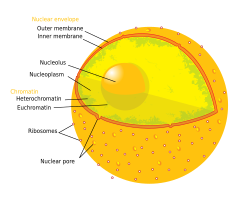
The nuclear envelope, also known as the nuclear membrane,[1][a] is made up of two lipid bilayer membranes that in eukaryotic cells surround the nucleus, which encloses the genetic material.

The nuclear envelope consists of two lipid bilayer membranes: an inner nuclear membrane and an outer nuclear membrane.[4] The space between the membranes is called the perinuclear space. It is usually about 10–50 nm wide.[5][6] The outer nuclear membrane is continuous with the endoplasmic reticulum membrane.[4] The nuclear envelope has many nuclear pores that allow materials to move between the cytosol and the nucleus.[4] Intermediate filament proteins called lamins form a structure called the nuclear lamina on the inner aspect of the inner nuclear membrane and give structural support to the nucleus.[4]

Structure

[edit]

The nuclear envelope is made up of two lipid bilayer membranes, an inner nuclear membrane and an outer nuclear membrane. These membranes are connected to each other by nuclear pores. Two sets of intermediate filaments provide support for the nuclear envelope. An internal network forms the nuclear lamina on the inner nuclear membrane.[7] A looser network forms outside to give external support.[4] The actual shape of the nuclear envelope is irregular. It has invaginations and protrusions and can be observed with an electron microscope.

A volumetric surface render (red) of the nuclear envelope of one HeLa cell. The cell was observed in 300 slices of electron microscopy, the nuclear envelope was automatically segmented and rendered. One vertical and one horizontal slice are added for reference.

Outer membrane

[edit]

The outer nuclear membrane also shares a common border with the endoplasmic reticulum.[8] While it is physically linked, the outer nuclear membrane contains proteins found in far higher concentrations than the endoplasmic reticulum.[9] All four nesprin proteins (nuclear envelope spectrin repeat proteins) present in mammals are expressed in the outer nuclear membrane.[10] Nesprin proteins connect cytoskeletal filaments to the nucleoskeleton.[11] Nesprin-mediated connections to the cytoskeleton contribute to nuclear positioning and to the cell's mechanosensory function.[12] KASH domain proteins of Nesprin-1 and -2 are part of a LINC complex (linker of nucleoskeleton and cytoskeleton) and can bind directly to cystoskeletal components, such as actin filaments, or can bind to proteins in the perinuclear space.[13][14] Nesprin-3 and -4 may play a role in unloading enormous cargo; Nesprin-3 proteins bind plectin and link the nuclear envelope to cytoplasmic intermediate filaments.[15] Nesprin-4 proteins bind the plus end directed motor kinesin-1.[16] The outer nuclear membrane is also involved in development, as it fuses with the inner nuclear membrane to form nuclear pores.[17]

Inner membrane

[edit]

The inner nuclear membrane encloses the nucleoplasm, and is covered by the nuclear lamina, a mesh of intermediate filaments which stabilizes the nuclear membrane as well as being involved in chromatin function.[9] It is connected to the outer membrane by nuclear pores which penetrate the membranes. While the two membranes and the endoplasmic reticulum are linked, proteins embedded in the membranes tend to stay put rather than dispersing across the continuum.[18] It is lined with a fiber network called the nuclear lamina which is 10-40 nm thick and provides strength.[citation needed]

Mutations in the genes that encode for the inner nuclear membrane proteins can cause several laminopathies.[citation needed]

Nuclear pores

[edit]
Nuclear pores crossing the nuclear envelope

The nuclear envelope is punctured by around a thousand nuclear pore complexes, about 100 nm across, with an inner channel about 40 nm wide.[9] The complexes contain a number of nucleoporins, proteins that link the inner and outer nuclear membranes.[citation needed]

Cell division

[edit]

During the G2 phase of interphase, the nuclear membrane increases its surface area and doubles its number of nuclear pore complexes.[9] In eukaryotes such as yeast which undergo closed mitosis, the nuclear membrane stays intact during cell division. The spindle fibers either form within the membrane, or penetrate it without tearing it apart.[9] In other eukaryotes (animals as well as plants), the nuclear membrane must break down during the prometaphase stage of mitosis to allow the mitotic spindle fibers to access the chromosomes inside. The breakdown and reformation processes are not well understood.

Breakdown

[edit]
Breakdown and reassembly in mitosis

In mammals, the nuclear membrane can break down within minutes, following a set of steps during the early stages of mitosis. First, M-Cdk's phosphorylate nucleoporin polypeptides and they are selectively removed from the nuclear pore complexes. After that, the rest of the nuclear pore complexes break apart simultaneously. Biochemical evidence suggests that the nuclear pore complexes disassemble into stable pieces rather than disintegrating into small polypeptide fragments.[9] M-Cdk's also phosphorylate elements of the nuclear lamina (the framework that supports the envelope) leading to the disassembly of the lamina and hence the envelope membranes into small vesicles.[19] Electron and fluorescence microscopy has given strong evidence that the nuclear membrane is absorbed by the endoplasmic reticulum—nuclear proteins not normally found in the endoplasmic reticulum show up during mitosis.[9]

In addition to the breakdown of the nuclear membrane during the prometaphase stage of mitosis, the nuclear membrane also ruptures in migrating mammalian cells during the interphase stage of the cell cycle.[20] This transient rupture is likely caused by nuclear deformation. The rupture is rapidly repaired by a process dependent on "endosomal sorting complexes required for transport" (ESCRT) made up of cytosolic protein complexes.[20] During nuclear membrane rupture events, DNA double-strand breaks occur. Thus the survival of cells migrating through confined environments appears to depend on efficient nuclear envelope and DNA repair machineries.

Aberrant nuclear envelope breakdown has also been observed in laminopathies and in cancer cells leading to mislocalization of cellular proteins, the formation of micronuclei and genomic instability.[21][22][23]

Reformation

[edit]

Exactly how the nuclear membrane reforms during telophase of mitosis is debated. Two theories exist[9]

  • Vesicle fusion — where vesicles of nuclear membrane fuse together to rebuild the nuclear membrane
  • Re-shaping of the endoplasmic reticulum—where the parts of the endoplasmic reticulum containing the absorbed nuclear membrane envelop the nuclear space, reforming a closed membrane.

Origin of the nuclear membrane

[edit]

A study of the comparative genomics, evolution and origins of the nuclear membrane led to the proposal that the nucleus emerged in the primitive eukaryotic ancestor (the "prekaryote"), and was triggered by the archaeo-bacterial symbiosis.[24] Several ideas have been proposed for the evolutionary origin of the nuclear membrane.[25] These ideas include the invagination of the plasma membrane in a prokaryote ancestor, or the formation of a genuine new membrane system following the establishment of proto-mitochondria in the archaeal host. The adaptive function of the nuclear membrane may have been to serve as a barrier to protect the genome from reactive oxygen species (ROS) produced by the cells' pre-mitochondria.[26][27]

Notes

[edit]

References

[edit]
[edit]
Revisions and contributorsEdit on WikipediaRead on Wikipedia
from Grokipedia
The nucleus was first described by Robert Brown in 1831, with its surrounding double lipid bilayer, known as the nuclear envelope, visualized using electron microscopy in the mid-1950s.[1] The nuclear envelope encloses the nucleus in eukaryotic cells, serving as a selective barrier that separates the genetic material and nucleoplasm from the cytoplasm while facilitating controlled exchange of molecules.[2] It consists of an inner nuclear membrane (INM) facing the nucleoplasm and an outer nuclear membrane (ONM) continuous with the endoplasmic reticulum, with the two layers fused at sites of nuclear pore complexes (NPCs) and separated by a narrow perinuclear space of approximately 30–50 nm.[3] This structure provides mechanical stability to the nucleus and supports essential cellular processes, including the organization of chromatin and the regulation of gene expression.[4] Key components of the nuclear envelope include the nuclear lamina, a dense meshwork of intermediate filament proteins known as lamins (primarily A-type and B-type in metazoans), which underlies the INM and anchors chromatin, transcription factors, and other nuclear proteins to maintain nuclear architecture.[3] Embedded within the envelope are NPCs, massive protein assemblies composed of around 30 distinct nucleoporins forming octagonal channels with an outer diameter of about 100 nm and a central transport pore of roughly 40 nm, numbering 3,000–4,000 per nucleus in vertebrate cells.[4] Additional elements, such as integral membrane proteins (e.g., LEM-domain proteins like LAP2, emerin, and MAN1 on the INM) and linker of nucleoskeleton and cytoskeleton (LINC) complex components (e.g., SUN and KASH proteins spanning the membranes), connect the envelope to both chromatin and the cytoplasmic cytoskeleton.[2] The primary functions of the nuclear envelope encompass nucleocytoplasmic transport, where NPCs enable passive diffusion of small molecules (<40–60 kDa) and active, energy-dependent translocation of larger macromolecules like proteins and RNAs via receptor-mediated mechanisms involving Ran GTPase.[5] Beyond transport, it contributes to genome protection by shielding DNA from cytoplasmic threats, influences gene regulation through interactions with chromatin at the nuclear periphery (e.g., heterochromatin tethering), and participates in mechanosensing by transmitting mechanical forces from the cytoskeleton to modulate nuclear shape and function.[2] The envelope is highly dynamic, undergoing disassembly during mitosis in open-mitosis organisms and reassembly afterward, with recent studies highlighting roles for ESCRT-III machinery in repairing ruptures and maintaining integrity under stress.[4]

Overview

Definition and basic components

The nuclear envelope is a double lipid bilayer that encloses the nucleus in eukaryotic cells, consisting of an outer nuclear membrane and an inner nuclear membrane that together separate the nuclear contents from the surrounding cytoplasm.[3][6] This structure forms a selective barrier that protects the genetic material within the nucleus while facilitating controlled exchange of molecules between the nucleoplasm and cytoplasm.[4][3] Key associated structures include nuclear pore complexes, which span the double membrane to enable transport, and the nuclear lamina, a meshwork that provides mechanical support to the inner membrane.[4][7] The nuclear envelope is a hallmark of eukaryotic cells, where it enables compartmentalization of cellular processes; it is absent in prokaryotes, which lack a membrane-bound nucleus.[8][9]

Historical context and discovery

The earliest observations of the cell nucleus, including hints of its surrounding envelope, date back to the advent of microscopy in the late 17th and early 18th centuries. In 1710, Dutch microscopist Antoni van Leeuwenhoek reported seeing a distinct structure within amphibian and avian erythrocytes using his single-lens microscope, which is now recognized as the nucleus, though he did not fully describe its membranous boundary.[1] Subsequent light microscopy efforts in the 18th century, such as Felice Fontana's 1781 description of a central body in eel skin cells, built on this but remained limited by resolution.[1] Advancements in the 19th century provided clearer insights into the nucleus and its envelope through improved optics and systematic botanical studies. In 1831, Scottish botanist Robert Brown observed a dense, opaque structure in the cells of orchids and other plants during his investigations of fertilization mechanisms, coining the term "nucleus" to describe it and noting its consistent presence across plant species.[10] Eduard Strasburger, a German cytologist, further detailed nuclear structures in plant cells during the 1880s, describing the nucleus's role in division in works on mitosis, contributing to the emerging cell theory.[11] These light microscopy observations established the nucleus as a universal cellular feature but could not resolve its fine architecture. The double-membrane nature of the nuclear envelope was confirmed in the 1950s with the advent of electron microscopy. In 1950, H.G. Callan and S.G. Tomlin used electron micrographs of amphibian oocyte nuclei to reveal a porous outer layer and continuous inner layer, marking the first visualization of nuclear pores.[12] Shortly after, in 1954, M.L. Watson's electron microscopy of mammalian cells demonstrated pores in the nuclear membrane and its continuity with the endoplasmic reticulum, solidifying the envelope's bipartite structure.[13] Studies in the 1960s and 1970s elucidated the nuclear envelope's dynamic behavior during mitosis, showing its disassembly to facilitate chromosome segregation. Ultrastructural analyses using electron microscopy revealed that the envelope disassembles during prophase, with nuclear pore complexes breaking down to allow spindle access to chromatin. Further work in the 1970s, including electron microscopic tracking of envelope reformation in telophase, highlighted phosphorylation-driven breakdown and dephosphorylation-mediated reassembly, establishing its essential role in cell division.[14]

Structure

Outer nuclear membrane

The outer nuclear membrane (ONM) forms the cytoplasmic-facing layer of the nuclear envelope and is directly continuous with the rough endoplasmic reticulum (ER), allowing the perinuclear space to connect seamlessly with the ER lumen.[3] This continuity enables the ONM to participate in ER-associated functions, including the binding of ribosomes on its cytoplasmic surface, which facilitates the synthesis of transmembrane and secreted proteins.[3] In many cell types, these ribosomes stud the ONM, mirroring the rough ER's role in protein translation.[3] The ONM is a phospholipid bilayer, primarily composed of glycerophospholipids such as phosphatidylcholine (PC) and phosphatidylethanolamine (PE), with low levels of cholesterol compared to the plasma membrane.[15] This lipid profile, enriched in polyunsaturated fatty acids, supports the membrane's fluidity and curvature while resembling that of the ER due to their shared continuity.[16] The bilayer measures approximately 10 nm in thickness, contributing to the overall structural integrity of the nuclear envelope.[17] Key integral membrane proteins associated with the ONM include the nesprin family, which span the membrane and extend into the cytoplasm to link the nucleus to the cytoskeleton.[18] Nesprins, such as nesprin-1, -2, and -3, interact with actin filaments via nesprin-1 and -2, and with intermediate filaments through nesprin-3, thereby anchoring the nucleus and providing mechanical stability against cytoskeletal forces.[19] This linkage is essential for maintaining nuclear positioning and shape during cellular processes involving mechanical stress.[18]

Inner nuclear membrane

The inner nuclear membrane (INM) forms the nucleoplasm-facing layer of the nuclear envelope, directly interfacing with the nuclear lamina and chromatin to maintain nuclear architecture and facilitate specific molecular interactions. Unlike the outer nuclear membrane, the INM hosts a specialized proteome of integral membrane proteins that anchor nuclear components and contribute to genome organization. These proteins are targeted to the INM through diffusion-retention mechanisms involving binding to nuclear lamina or chromatin after initial insertion into the endoplasmic reticulum.[20] Key integral membrane proteins of the INM include lamina-associated polypeptides (LAPs), such as LAP1 and LAP2, as well as emerin, which collectively define the INM's functional identity. LAPs and emerin possess the LEM domain, a conserved structural motif approximately 40 amino acids long that forms a helix-turn-helix structure critical for protein-protein interactions.[21] This domain enables binding to barrier-to-autointegration factor (BAF), a DNA-bridging protein that links the INM to chromatin. Other LEM-domain proteins, like MAN1, further diversify these interactions, supporting post-mitotic nuclear reassembly and chromatin tethering.[21][22] Through LEM-domain proteins, the INM serves as an anchoring site for heterochromatin, promoting the peripheral localization of lamina-associated domains (LADs) that repress gene expression. BAF-mediated binding recruits heterochromatin to the INM, influencing chromosome architecture and facilitating epigenetic silencing in these regions.[23] The INM's lipid bilayer, approximately 4-10 nm thick and similar to the outer nuclear membrane, exhibits curvature that conforms to the nucleus's irregular shape, shaped by underlying structures like the nuclear lamina.[24] INM-chromatin and INM-lamina interactions enhance nuclear mechanical properties, contributing to overall nuclear stiffness and proper positioning within the cytoplasm. Tethering of chromatin to the INM via these proteins resists deformation, with nuclei depleted of such tethers showing significantly reduced stiffness under mechanical stress. The nuclear lamina, a thin meshwork underlying the INM, amplifies this support by distributing forces across the nuclear surface.[25]

Perinuclear space and nuclear lamina

The perinuclear space is a narrow, fluid-filled lumen situated between the inner and outer nuclear membranes of the nuclear envelope, typically measuring 30-50 nm in width. This space is continuous with the lumen of the endoplasmic reticulum, allowing for the exchange of ions, small molecules, and certain proteins that participate in cellular signaling and homeostasis. The perinuclear space serves as a dynamic compartment that maintains the spatial separation between the two membranes while facilitating limited molecular diffusion, contributing to the overall integrity of the nuclear barrier.[26][27][28] Beneath the inner nuclear membrane lies the nuclear lamina, a dense meshwork of intermediate filaments that provides essential structural support to the nucleus. Composed primarily of lamin proteins classified as type V intermediate filaments, the lamina includes A-type lamins (lamins A and C, which are splice variants derived from the LMNA gene) and B-type lamins (lamins B1 and B2, encoded by LMNB1 and LMNB2 genes, respectively). These lamins assemble into a filamentous network through head-to-tail polymerization and lateral associations, forming a resilient scaffold approximately 30-100 nm thick that lines the nucleoplasmic side of the inner membrane. The lamina's structure is stabilized by interactions with inner nuclear membrane proteins, such as LAP2, emerin, and MAN1, which anchor it to the membrane.[29][30][31] The nuclear lamina plays critical roles in maintaining nuclear integrity by conferring mechanical stability and resistance to physical stress, enabling the nucleus to withstand cytoskeletal forces during cellular movement and deformation. It also anchors chromatin domains, particularly lamina-associated domains (LADs), to the nuclear periphery, thereby influencing chromatin organization and gene expression regulation. Lamin proteins contain specific phosphorylation sites, primarily in their N- and C-terminal regions, which are targeted by kinases like CDK1 during mitosis to trigger lamina disassembly, allowing for nuclear envelope breakdown. In interphase, dephosphorylation restores the meshwork, ensuring nuclear reformation and structural recovery. These functions highlight the lamina's dual role as a supportive framework and a regulator of nuclear architecture.[32][33][34][35]

Nuclear pore complexes

The nuclear pore complex (NPC) is a massive macromolecular assembly that spans both membranes of the nuclear envelope, serving as the primary conduit for molecular exchange between the cytoplasm and nucleus. In eukaryotic cells, each NPC exhibits eightfold rotational symmetry and is composed of approximately 30 distinct proteins known as nucleoporins (Nups), which together form around 1,000 protein subunits with a total molecular mass of about 110 MDa. The overall structure forms an octagonal complex with an outer diameter of roughly 100-120 nm and a central channel approximately 40-50 nm in diameter, embedded within the perinuclear space.[36] The NPC architecture consists of a symmetric core scaffold flanked by asymmetric extensions. The core includes cytoplasmic and nuclear rings connected by a central framework, with the cytoplasmic ring anchoring short filaments and the nuclear ring supporting a basket-like structure. Key scaffold nucleoporins, such as Nup153, line the nuclear basket and contribute to anchoring the complex to the inner nuclear membrane, while the central channel is lined by FG-nucleoporins (FG-Nups) rich in phenylalanine-glycine repeats that form a hydrogel-like barrier. The Y-shaped Nup107-160 subcomplex forms the outer rings, providing structural stability and facilitating assembly.[37][36] NPCs assemble through two primary mechanisms depending on the cell cycle stage. In post-mitotic cells, particularly in metazoans, NPCs are inserted into the reforming nuclear envelope during telophase, where pre-existing subcomplexes, such as the Nup107-160 scaffold, integrate into the double membrane. During interphase, de novo assembly occurs through the fusion of inner and outer nuclear membranes around a proto-pore structure formed by transmembrane Nups like Pom121 and Ndc1, allowing new NPCs to form without envelope breakdown.[38][39] Regarding permeability, the NPC central channel permits passive diffusion of small molecules and ions up to approximately 40 kDa without energy input, while larger cargoes require active transport mediated by nuclear transport receptors. This size selectivity arises from the FG-Nups, which create a selective permeability barrier that restricts uncoated macromolecules above the diffusion limit through entropic exclusion and hydrophobic interactions.[40][36]

Functions

Selective barrier and molecular transport

The nuclear envelope functions as a selective barrier that separates the nucleoplasm from the cytoplasm, preventing the free diffusion of most macromolecules while allowing controlled exchange through specialized channels. This barrier is primarily impermeable to molecules larger than approximately 40 kDa, such as proteins and RNAs, ensuring compartmentalization of cellular processes.[36] Small molecules and ions below this size threshold, including metabolites and ions, can passively diffuse across the envelope via the nuclear pore complexes, which act as aqueous channels embedded in the double membrane.[41][42] For macromolecules exceeding 40 kDa, transport across the nuclear envelope requires active mechanisms mediated by the nuclear pore complexes. This process is driven by a Ran-GTP gradient, where high concentrations of Ran-GTP in the nucleus promote cargo binding to exportins for outbound transport and release from importins for inbound delivery, while low cytoplasmic Ran-GTP levels facilitate the reverse.[43][44] The energy for this directionality derives from GTP hydrolysis by Ran, catalyzed by RanGAP in the cytoplasm and maintained by the chromatin-bound nucleotide exchange factor RCC1 in the nucleus.[43] Importins (karyopherin-β family members) recognize nuclear localization signals on cargo for import, while exportins bind nuclear export signals for export, enabling bidirectional shuttling of proteins, mRNAs, and ribonucleoprotein complexes.[44] Central to this selectivity are the FG-nucleoporins, which line the nuclear pore complexes and feature phenylalanine-glycine (FG) repeats that form a hydrogel-like sieve or selective phase barrier. These intrinsically disordered FG domains interact via hydrophobic and multivalent bonds to create a mesh that excludes non-specific macromolecules but permits rapid transit of transport factor-cargo complexes, as importins and exportins transiently bind FG repeats to dissolve and re-form the barrier.[45][46] This sieve mechanism ensures high fidelity, allowing only appropriately signaled cargoes to pass while maintaining the overall impermeability of the envelope.[45] Nuclear pore complexes facilitate remarkably efficient transport, with each pore capable of mediating up to 1,000 translocations per second under physiological conditions, supporting the high flux required for cellular homeostasis.[47][48] This rate underscores the pore's role as a dynamic gateway, balancing selectivity with speed through the coordinated action of the Ran cycle and FG sieve.[47]

Role in chromatin organization and gene regulation

The nuclear envelope plays a pivotal role in organizing chromatin architecture by tethering specific genomic regions to its inner membrane and underlying lamina, thereby influencing gene expression patterns throughout the cell cycle. Inner nuclear membrane proteins, such as lamin B receptor (LBR) and LAP2β, along with nuclear lamina components, anchor chromatin loops to the nuclear periphery, forming stable associations that help compartmentalize the genome into active and repressive domains.[49] This peripheral positioning is mediated by interactions between chromatin-binding proteins and lamina-associated domains (LADs), which constitute approximately 40% of the mammalian genome and are enriched in late-replicating, gene-poor regions.[50] LADs represent key sites of chromatin tethering where heterochromatin is preferentially localized, promoting transcriptional repression through sequestration away from central nuclear transcription factories. Genes within or near LADs exhibit reduced expression due to this peripheral attachment, as demonstrated by genome-wide mapping techniques like DamID, which identified over 1,000 LADs in human fibroblasts associated with silencing histone marks such as H3K9me2/3 and H3K27me3.[51] For instance, disruption of lamin B tethering leads to LAD detachment and derepression of silenced genes, underscoring the envelope's role in maintaining epigenetic boundaries.[49] Additionally, nuclear envelope contacts facilitate interactions with transcription factors and epigenetic regulators; proteins like Lmo7 and Smads bind to inner membrane components, potentially sequestering activators or recruiting repressors like HDAC3 to deacetylate histones and silence nearby loci.[50] Evidence from chromatin conformation capture studies, including Hi-C, reveals how nuclear envelope tethering shapes long-range chromatin interactions and impacts gene regulation. Hi-C data show that LADs form compact, self-interacting domains at the periphery with reduced contacts to transcriptionally active euchromatin, correlating with lower expression levels for peripheral genes.[52] In lamin-depleted cells, Hi-C profiles indicate disrupted compartmentalization, with increased inter-LAD interactions and aberrant activation of repressed genes, highlighting the envelope's influence on 3D genome folding and regulatory fidelity. These spatial constraints also affect enhancer-promoter looping, where peripheral enhancers are often silenced, as seen in developmental contexts like adipogenesis where one-third of enhancers relocate to the envelope for repression.[53]

Dynamics during cell division

Envelope breakdown

The nuclear envelope breakdown (NEBD) is a critical process during the early stages of mitosis in organisms undergoing open mitosis, allowing the spindle apparatus to access chromosomes. In animal cells, NEBD typically initiates during prophase and completes by prometaphase, coinciding with chromosome condensation and centrosome separation.[54][55] The primary mechanism driving NEBD involves phosphorylation events orchestrated by cyclin-dependent kinase 1 (CDK1) in complex with cyclin B. CDK1 phosphorylates lamins, the intermediate filament proteins forming the nuclear lamina, at specific serine residues, which disrupts head-to-tail interactions and leads to lamina depolymerization.[55] This depolymerization destabilizes the nuclear envelope's structural integrity, enabling membrane disassembly. Additionally, CDK1, along with polo-like kinase 1 (PLK1), phosphorylates inner nuclear membrane proteins and nucleoporins, such as Nup98 and Nup53, facilitating the initial disassembly of nuclear pore complexes (NPCs).[54] Mechanical forces from early spindle microtubules contribute by inducing folds and tears in the lamina, with holes forming at sites of maximum tension, accelerating the breakdown process.[56] Following lamina depolymerization, the inner and outer nuclear membranes fragment into small vesicles that disperse and integrate into the endoplasmic reticulum network.[54] NPC disassembly proceeds in a stepwise manner, with peripheral nucleoporins releasing first, followed by the central scaffold, ensuring the envelope's complete dissolution.[55] NEBD mechanisms vary across species, reflecting differences in mitotic strategies. In metazoans, such as mammals, open mitosis involves full envelope disassembly to permit spindle-chromosome interactions.[54] In contrast, yeasts exhibit partial or closed mitosis; for instance, Schizosaccharomyces pombe maintains envelope integrity throughout, while Schizosaccharomyces japonicus undergoes limited breakdown during anaphase.[54]

Envelope reformation

Nuclear envelope reformation occurs during telophase, following chromosome segregation in anaphase, as decondensing chromatin in daughter cells recruits nuclear components to re-establish the nucleocytoplasmic barrier.[54] This process ensures the spatial separation of nuclear and cytoplasmic contents, completing the mitotic cycle.[57] A key initial step involves the dephosphorylation of nuclear lamins, which were phosphorylated by mitotic kinases such as CDK1 during envelope breakdown to disassemble the nuclear lamina. Protein phosphatase 1 (PP1) primarily mediates this dephosphorylation in telophase, enabling lamins to polymerize and reform the supportive nuclear lamina beneath the inner nuclear membrane. Simultaneously, ER-derived membranes, which disperse the nuclear envelope components during mitosis, begin to envelop the chromatin surface, often forming sheet-like cisternae rather than discrete vesicles in metazoans.[54] Fusion of these ER membranes is facilitated by SNARE proteins and GTPases like atlastins, creating a continuous double-membrane envelope around each set of chromosomes.[58] The Ran-GTP gradient, generated by chromatin-bound RCC1, promotes this membrane recruitment and fusion by releasing importin-bound factors that otherwise inhibit assembly.[59] Nuclear pore complex (NPC) reinsertion follows membrane enclosure, with nucleoporins reassembling in a chromatin-guided manner to restore selective transport. The nucleoporin ELYS (also known as MEL28) binds directly to decondensing chromatin via its AT-hook domains and recruits the Nup107-160 subcomplex, serving as a scaffold for sequential assembly of other nucleoporins into functional pores. This post-mitotic NPC biogenesis ensures hundreds to thousands of pores are positioned at chromatin surfaces, typically completing by early G1.[60] Regulation of envelope sealing involves the ESCRT-III machinery, which resolves membrane gaps and annuli left by incomplete fusion or pore insertion during telophase. ESCRT-III filaments, nucleated by CHMP7 at LEM domain proteins like LEM2 on the inner membrane, constrict and sever these defects in a VPS4-dependent manner, preventing leakage and maintaining barrier integrity.[57] This mechanism is conserved across eukaryotes undergoing open mitosis and is essential for viable nuclear reformation.30790-4)

Evolution and origins

Evolutionary emergence in eukaryotes

The nuclear envelope, a defining feature of eukaryotic cells, is believed to have emerged during the early evolution of eukaryotes through processes involving membrane remodeling in the ancestral cell. One prominent theory posits an inside-out origin, where the envelope formed via invagination of the endoplasmic reticulum (ER) from a prokaryotic ancestor, creating a double-membrane barrier around the genome to facilitate compartmentalization and material exchange with an ectosymbiotic proto-mitochondrion.[61] In this model, extracellular membrane protrusions fused to enclose cytoplasmic components, with the inner nuclear membrane deriving from the original plasma membrane and the outer from the ER, establishing the perinuclear space and enabling selective transport.[61] An alternative framework integrates this with the endosymbiotic model of eukaryogenesis, where an archaeal host cell engulfed an alphaproteobacterium that evolved into the mitochondrion; the nuclear envelope subsequently arose from invaginations of the archaeal host's plasma membrane, driven by the need to spatially separate transcription and translation amid increasing genomic complexity introduced by the symbiont.[62] This process likely occurred after mitochondrial acquisition, as the envelope's formation helped protect splicing machinery from bacterial ribosomes and supported the evolution of linear chromosomes with introns.[62] Fossil evidence supports this timeline, with the earliest unambiguous eukaryotic microfossils, such as acritarchs, appearing around 1.8 billion years ago in the Paleoproterozoic era, marking the rise of complex cellular organization.[63] In the last eukaryotic common ancestor (LECA), the nuclear envelope featured primitive nuclear pore complexes (NPCs) that mediated essential nucleocytoplasmic transport, reflecting an already sophisticated barrier system. Comparative genomics reveals that core nucleoporins, the protein components of NPCs, are highly conserved across eukaryotic lineages, tracing back to LECA and underscoring the envelope's ancient origin as a stable innovation.[64] These conserved elements, including FG-nucleoporins for selective permeability, indicate that the envelope's basic architecture was established prior to eukaryotic diversification.[64]

Comparative features across organisms

The nuclear envelope in eukaryotes universally consists of a double lipid bilayer separated by the perinuclear space, perforated by nuclear pore complexes (NPCs) for selective transport, but exhibits notable structural and functional variations adapted to diverse cellular needs across organismal groups. In animals (metazoans), the inner nuclear membrane is supported by a robust nuclear lamina composed primarily of type A and C lamins (intermediate filaments) alongside type B lamins, which provide mechanical stability, organize chromatin, and anchor nuclear pore complexes.[65] In contrast, plants share the canonical double-membrane architecture but lack lamins A and C, relying instead on alternative scaffolds such as crowded nuclear-associated proteins (e.g., CRWNs) and LEM-domain proteins like PNET2 to form a functional nuclear lamina that maintains envelope integrity and supports chromatin tethering.[66] These differences reflect adaptations to plant-specific stresses, such as mechanical forces from turgor pressure, without compromising the envelope's barrier function.[65] Fungi, including model yeasts like Saccharomyces cerevisiae and Schizosaccharomyces pombe, feature a nuclear envelope that undergoes closed mitosis, where the membrane remains largely intact but experiences partial disassembly of NPCs to permit spindle access and chromosome segregation.[67] Their NPCs are structurally conserved with metazoan counterparts but smaller in overall mass (approximately 52 MDa versus 110 MDa in vertebrates), with fewer copies of certain nucleoporins, resulting in a more compact assembly that suits the compact fungal genome and rapid cell cycles.[68] This partial NPC remodeling during mitosis—unlike the complete envelope breakdown in many animals—highlights an evolutionary adaptation for efficient division in walled cells.[67] Among protists, the nuclear envelope displays greater diversity, with alveolates (e.g., dinoflagellates and apicomplexans) showing unique organizational features such as persistent nucleoli in close contact with the envelope, facilitating specialized chromatin dynamics in their often large, non-nucleosomal genomes.[69] These variations may involve subtle membrane adaptations, though the core double-membrane structure persists. Exceptions include kinetoplastids like trypanosomes, where nuclear transport is atypical due to divergent NPC composition—lacking certain canonical nucleoporins—and reliance on specialized RNA export pathways adapted to polycistronic transcription and trans-splicing, enabling efficient gene expression in parasitic lifestyles.[70] Such modifications underscore the envelope's plasticity in unicellular eukaryotes facing environmental pressures.

Clinical and pathological aspects

Laminopathies and nuclear envelope defects

Laminopathies represent a diverse group of rare genetic disorders primarily resulting from mutations in the LMNA gene, which encodes the A-type lamins essential for nuclear envelope integrity.[71] These mutations disrupt the nuclear lamina, a meshwork of intermediate filaments underlying the inner nuclear membrane, leading to structural instability and impaired cellular functions.[72] Over 15 distinct disorders have been linked to LMNA mutations, as well as defects in associated proteins like emerin (encoded by EMD), highlighting the broad clinical spectrum of these conditions.[73] Among the most studied laminopathies is Hutchinson-Gilford progeria syndrome (HGPS), caused by a specific point mutation (c.1824C>T) in LMNA that activates a cryptic splice site, producing a truncated protein called progerin.[74] This leads to accelerated aging phenotypes, including loss of subcutaneous fat, skeletal abnormalities, and cardiovascular disease, typically resulting in death around age 14.5 years from myocardial infarction or stroke, with treatments extending survival to nearly 20 years.[71][75] LMNA mutations also underlie various muscular dystrophies, such as Emery-Dreifuss muscular dystrophy (EDMD), characterized by early contractures, progressive muscle weakness, and cardiac conduction defects.[72] Additionally, dilated cardiomyopathy with conduction system disease is a common LMNA-related condition, often presenting with arrhythmias and heart failure, affecting up to 30% of carriers in some families.[76] The pathological mechanisms of laminopathies involve defective nuclear lamina assembly, which compromises nuclear mechanics and leads to abnormal nuclear shapes, including lobulations and blebbing.[77] These structural defects increase nuclear envelope fragility, promoting transient ruptures that allow DNA exposure to the cytoplasm, thereby inducing DNA damage through reactive oxygen species and activation of DNA damage response pathways like ATM and p53.[78] In affected cells, such as fibroblasts from HGPS patients, persistent progerin accumulation exacerbates lamina disorganization, chromatin tethering disruptions, and genomic instability, contributing to premature cellular senescence.[79] Similar mechanisms underlie muscle and cardiac pathologies, where mechanical stress on weakened nuclei triggers apoptosis and tissue degeneration.[74] Diagnosis of laminopathies often relies on identifying characteristic nuclear abnormalities via microscopy, such as blebbing and irregular contours in patient-derived cells stained for lamin proteins.[77] Genetic testing confirms LMNA or EMD variants, with over 500 pathogenic LMNA mutations reported as of 2025.[73][80] Recent advances include CRISPR-Cas9-based models post-2020, such as iPSC-derived cardiomyocytes from LMNA-mutant patients corrected via base editing, which recapitulate disease phenotypes like nuclear deformation and enable testing of therapeutic interventions.[81] Zebrafish models with LMNA knock-ins have also demonstrated skeletal muscle defects, providing in vivo insights into early-onset laminopathies.[82] Therapeutic options include lonafarnib (Zokinvy), approved by the FDA in 2020, which extends average lifespan by about 25%. Emerging approaches as of 2025 include RNA therapies and nicotinamide mononucleotide (NMN) supplementation in preclinical models.[83][84]

Interactions with pathogens and other disorders

The nuclear envelope (NE) serves as a critical barrier that pathogens, particularly viruses, must navigate to access the host nucleus for replication. Many viruses exploit the nuclear pore complexes (NPCs) embedded in the NE for genome delivery. For instance, herpesviruses dock their capsids at the NPC, where proteins like VP1/2 and UL25 facilitate a conformational change that ejects viral DNA through the pore, interacting with nucleoporins such as Nup214 and importin-β.[85] Similarly, lentiviruses like HIV-1 form a pre-integration complex (PIC) containing viral DNA and capsid proteins, which translocates through the NPC in non-dividing cells via interactions with Nup153, Nup214, and transportin 3.[85] Adenoviruses also dock at the NPC, partially disassembling with kinesin-1 assistance to release DNA, often involving protein VII and localized NPC disruption.[85] Some viruses bypass or disrupt the NE entirely to gain nuclear access. Parvoviruses, for example, activate host caspases to induce NE breakdown, allowing viral entry without relying on NPCs, a mechanism that has been used to study mitotic triggers.[86] Bacteria, while not entering the nucleus themselves, deploy effector proteins that traffic through NPCs to modulate host nuclear functions. Nucleomodulins from pathogens like Salmonella and Legionella contain nuclear localization signals (NLS) that enable import via the NPC, where they interfere with transcription, DNA repair, or immune signaling to promote infection.[87] These interactions highlight the NE's role as a battleground in host-pathogen conflicts, often leading to altered nucleocytoplasmic transport and enhanced pathogen survival.[88] Beyond infections, NE dysfunction contributes to various disorders, including cancer and neurodegenerative diseases. In cancer, alterations such as increased NPC density and NE rupture drive tumor progression by promoting genomic instability and metastasis. For example, loss of tumor suppressors like p53 or Rb enhances NE rupture frequency, allowing cytoplasmic DNA exposure and chromosomal aberrations that fuel carcinogenesis.[89] NE proteins also influence mechanotransduction, where stiff tumor microenvironments weaken the envelope, facilitating invasion in cancers like breast and prostate.[90] In neurodegenerative disorders, NE and NPC impairments disrupt nucleocytoplasmic transport, exacerbating protein aggregation and neuronal loss. In amyotrophic lateral sclerosis (ALS), C9orf72 mutations lead to nucleoporin depletion and TDP-43 mislocalization, clogging NPCs and impairing mRNA export.[91] Alzheimer's disease involves tau and amyloid-β accumulation that damages NPCs, such as Nup62 and Nup98, causing nuclear invaginations and transport deficits in hippocampal neurons.[91] Similar mechanisms occur in Huntington's and Parkinson's diseases, where mutant proteins sequester nucleoporins, underscoring the NE's vulnerability in age-related pathologies.[91]

References

User Avatar
No comments yet.