Hubbry Logo
Outboard motorOutboard motorMain
Open search
Outboard motor
Community hub
Outboard motor
logo
8 pages, 0 posts
0 subscribers
Be the first to start a discussion here.
Outboard motor
Outboard motor
from Wikipedia
Basic parts of an outboard motor

An outboard motor is a propulsion system for boats, consisting of a self-contained unit that includes engine, gearbox and propeller or jet drive, designed to be affixed to the outside of the transom. They are the most common motorised method of propelling small watercraft. As well as providing propulsion, outboards provide steering control, as they are designed to pivot over their mountings and thus control the direction of thrust. The skeg also acts as a rudder when the engine is not running. Unlike inboard motors, outboard motors can be easily removed for storage or repairs.

Bolinder's two-cylinder Trim outboard engine
A Mercury Marine 50 hp outboard engine, circa 1980 to 1983
1979 Evinrude 70 hp outboard, cowling and air silencer removed, exposing its shift/throttle/spark advance linkages, flywheel, and three carburetors

In order to eliminate the chances of hitting bottom with an outboard motor, the motor can be tilted up to an elevated position either electronically or manually. This helps when traveling through shallow waters where there may be debris that could potentially damage the motor as well as the propeller. If the electric motor required to move the pistons which raise or lower the engine is malfunctioning, every outboard motor is equipped with a manual piston release which will allow the operator to drop the motor down to its lowest setting.[1]

Advantages and disadvantages

[edit]

Large ships, boats and yachts will inevitably have inboard engines. Medium size vessels may have either inboards or outboards, and small vessels rarely have inboard motors. If one has a choice, these factors should be noted:

  • Inboard engines are almost invariable diesel, allowing ruggedness, reliability and fuel economy. The very few outboards that are diesels tend to be large heavy items, suitable for workboats and very large RIBs. Diesel outboards are rarely found on leisure craft.
  • Outboards may be easily removed from the vessel for safe-keeping and servicing. They are also vulnerable to theft (a risk rarely suffered by inboard engines).
  • Outboards are cheaper and lighter than inboards. They are often fitted to cruising yachts. Cruising catamarans up to around 10 metres LOA frequently have a petrol longshaft engine with a propeller that is larger and slower-turning than other types.
  • Catamarans that have an engine for each hull (to aid manoeverability) tend to have twin inboards, as twin outboards might interfere with rudder arrangements.
  • While inboards may be mounted in a optimum position for balance, outboards must be mounted on (or shortly ahead of) the transom. This means that a significant weight is at the aft end of the boat, and this must be taken into consideration.

General use

[edit]
An open seagoing boat with an outboard motor attached

Large outboards

[edit]

Large outboards are affixed to the transom using clamps and are either tiller steered or controlled from the helm. Generally motors of 100 hp plus are linked to controls at the helm. These range from 2-, 3-, and 4-cylinder models generating 15 to 135 horsepower (11 to 101 kW) suitable for hulls up to 17 feet (5.2 m) in length to powerful V6 and V8 cylinder blocks rated up to 627 hp (468 kW).,[2] with sufficient power to be used on boats of 37 feet (11 m) or longer.

Portable

[edit]

Small outboard motors, up to 15 horsepower (11 kW) or so, are easily portable. They are affixed to the boat via clamps and thus easily moved from boat to boat. These motors typically use a manual start system, with throttle and gearshift controls mounted on the body of the motor, and a tiller for steering. The smallest of these weigh as little as 12 kilograms (26 lb), have integral fuel tanks, and provide sufficient power to move a small dinghy at around 8 knots (15 km/h; 9.2 mph) This type of motor is typically used:

  • to power small craft such as johnboats, dinghies, canoes, etc
  • to provide auxiliary power for sailboats
  • for trolling aboard larger craft, as small outboards are typically more efficient at trolling speeds. In this application, the motor is frequently installed on the transom alongside and connected to the primary outboard to enable helm steering. In addition many small motor manufacturers have begun offering variants with power trim/tilt and electric starting functions so that they may be completely controlled remotely

Electric-powered

[edit]

Electric outboard motors are self-contained propulsory units for boats, first invented in 1973 by Morton Ray of Ray Electric Outboards.[3] These are not to be confused with trolling motors, which are not designed as a primary source of power. Most electric outboard motors have 0.5- to 4-kilowatt direct-current (DC) electric motors, operated at 12 to 60 volts DC. Recently developed outboard motors are powered with an alternating current (AC) or DC electric motor in the power head like a conventional petrol engine. With this setup, a motor can produce 10 kW output or more and is able to replace a petrol engine of 15 HP or more. The advantage of the induction or asynchronous motor is the power transfer to the rotor by means of electromagnetic induction. As these engines do not use permanent magnets, they require less maintenance and develop more torque at lower propeller speeds.

Pump-jet

[edit]

Pump-jet propulsion is available as an option on most outboard motors. Although less efficient than an open propeller, they are particularly useful in applications where the ability to operate in very shallow water is important. They also eliminate the laceration dangers of an open propeller.

Propane

[edit]

Propane outboard motors are available from several manufacturers. These products have several advantages such as lower emissions, absence of ethanol-related issues, and no need for choke once the system is pressurized.[4] Lehr is regarded as the first manufacturer to have brought a propane-powered outboard motor to market by Popular Mechanics and other boating publications.[5][6][7][8]

History and developments

[edit]

The first known outboard motor was a small 11 pound (5 kg) electric unit designed around 1870 by Gustave Trouvé,[9] and patented in May 1880 (Patent N° 136,560).[10] Later about 25 petrol powered outboards may have been produced in 1896 by American Motors Co[9]—but neither of these two pioneering efforts appear to have had much impact.

The Waterman outboard engine appears to be the first gasoline-powered outboard offered for sale in significant numbers.[11] It was developed from 1903 in Grosse Ile, Michigan, with a patent application filed in 1905[12] Starting in 1906,[13][14] the company went on to make thousands of his "Porto-Motor"[15] units,[16] claiming 25,000 sales by 1914.[17] The inboard boat motor firm of Caille Motor Company of Detroit were instrumental in making the cylinder and engines.

The most successful early outboard motor,[16] was created by Norwegian-American inventor Ole Evinrude in 1909.[18] Historically, a majority of outboards have been two-stroke powerheads fitted with a carburetor due to the design's inherent simplicity, reliability, low cost and light weight. Drawbacks include increased pollution, due to the high volume of unburned gasoline and oil in their exhaust, and louder noise.

Four-stroke outboards

[edit]

Four-stroke outboards have been sold since the late 1920s, such as the Roness and Sharland. In 1962 Homelite introduced a four-stroke outboard a 55-horsepower (41 kW) motor, based on the four-cylinder Crosley automobile engine. This outboard was called the Bearcat and was later purchased by Fischer-Pierce, the makers of Boston Whaler, for use in their boats because of their advantages over two-stroke engines. In 1964, Honda Motor Co. introduced its first four-stroke powerhead.[19] In 1984, Yamaha introduced their first four-stroke outboards, which were only available in the low-power range. In 1990 Honda released 35 hp and 45 hp four-stroke models. They continued to lead in the development of four-stroke engines throughout the 1990s as US and European exhaust emissions regulations such as CARB (California Air Resources Board) led to the proliferation of four-stroke outboards. At first, North American manufacturers such as Mercury and OMC used engine technology from Japanese manufacturers such as Yamaha and Suzuki until they were able to develop their own four-stroke engine. The inherent advantages of four-stroke motors included: lower pollution (especially oil in the water), noise reduction, increased fuel economy, and increased torque at low engine speeds.

Honda Marine Group, Mercury Marine, Mercury Racing, Nissan Marine, Suzuki Marine, Tohatsu Outboards, Yamaha Marine, and China Oshen-Hyfong marine have all developed new four-stroke engines. Some are carburetted, usually the smaller engines. The balance are electronically fuel-injected. Depending on the manufacturer, newer engines benefit from advanced technology such as multiple valves per cylinder, variable camshaft timing (Honda's VTEC), boosted low end torque (Honda's BLAST), 3-way cooling systems, and closed loop fuel injection. Mercury Verado four-strokes are unique in that they are supercharged.

Mercury Marine, Mercury Racing, Tohatsu, Yamaha Marine, Nissan and Evinrude each developed computer-controlled direct-injected two-stroke engines. Each brand boasts a different method of DI.

Fuel economy on both direct-injected and four-stroke outboards measures from a 10 percent to 80 percent improvement compared with conventional two-strokes.[20]

However, the gap between two-stroke and four-stroke outboard fuel economy is beginning to narrow. Two-stroke outboard motor manufacturers have recently introduced technologies that help to improve two-stroke fuel economy.[21]

LPG outboards

[edit]

In 2012, Lehr inc. introduced some small (<5 hp) outboards based on modified Chinese petrol engines to run on propane gas. Tohatsu currently also produces propane powered models, all rated 5 hp. Conversion of larger outboards to run on Liquified petroleum gas is considered unusual and exotic although some hobbyists continue to experiment.

Outboard motor selection

[edit]

It is important to select a motor that is a good match for the hull in terms of power and shaft length.

Power requirements

[edit]

Whether using a displacement or planing vessel, one should select an appropriate power level; too much power is wasteful (adding unnecessary weight), and may often be dangerous.[22] Boats built in the US have Coast Guard Rating Plates, which specify the maximum recommended engine powers for the hulls. In the united kingdom, boats have CE plates on the transoms which specify maximum engine power, shaft length, maximum engine weight and maximum number of persons or maximum load.

Shaft length

[edit]

Outboard motor shaft lengths are standardized to fit 15-, 20- and 25-inch (38-, 51- and 64-centimeter) transoms. If the shaft is too long it will extend farther into the water than necessary creating drag, which will impair performance and fuel economy. If the shaft is too short, the motor will be prone to ventilation. Even worse, if the water intake ports on the lower unit are not sufficiently submerged, engine overheating is likely, which can result in severe damage.

General dimensions

[edit]

Different outboard engine brands require different transom dimensions and sizes. This affects performance and trim.

Outboard brand Model Transom angle Max transom thickness Transom to bulkhead
Yamaha F350 12° 712 mm
Yamaha F300 12° 712 mm
EVINRUDE DE 300 14° 68.58 mm
EVINRUDE G2 300 HP 14°
SUZUKI DF 300 AP 14° 81 mm
MERCURY 300 HP 14°
LEHR 5.0HP 14°
LEHR 2.5HP 14°

Operational considerations

[edit]

Motor mounting height

[edit]

Motor height on the transom is an important factor in achieving optimal performance. The motor should be as high as possible without ventilating or loss of water pressure. This minimizes the effect of hydrodynamic drag while underway, allowing for greater speed. Generally, the antiventilation plate should be about the same height as, or up to two inches higher than, the keel, with the motor in neutral trim.

Trim

[edit]

Trim is the angle of the motor in relation to the hull, as illustrated below. The ideal trim angle is the one in which the boat rides level, with most of the hull on the surface instead of plowing through the water.
Neutral trim Trimmed in Trimmed out
If the motor is trimmed out too far, the bow will ride too high in the water. With too little trim, the bow rides too low. The optimal trim setting will vary depending on many factors including speed, hull design, weight and balance, and conditions on the water (wind and waves). Many large outboards are equipped with power trim, an electric motor on the mounting bracket, with a switch at the helm that enables the operator to adjust the trim angle on the fly. In this case, the motor should be trimmed fully in to start, and trimmed out (with an eye on the tachometer) as the boat gains momentum, until it reaches the point just before ventilation begins or further trim adjustment results in an increase in engine speed with no increase in travel speed. Motors not equipped with power trim are manually adjustable using a pin called a topper tilt lock.

Ventilation

[edit]

Ventilation is a phenomenon that occurs when surface air or exhaust gas (in the case of motors equipped with through-hub exhaust) is drawn into the spinning propeller blades. With the propeller pushing mostly air instead of water, the load on the engine is greatly reduced, causing the engine to race and the propeller to spin fast enough to result in cavitation, at which point little thrust is generated at all. The condition continues until the prop slows enough for the air bubbles to rise to the surface.[23] The primary causes of ventilation are: motor mounted too high, motor trimmed out excessively, damage to the antiventilation plate, damage to propeller, foreign object lodged in the diffuser ring.

Safety

[edit]

If the helmsman goes overboard, the boat may continue under power but uncontrolled, risking serious or fatal injuries to the helmsman and others in the water. A safety measure is a "kill cord" attached to the boat and helmsman, which cuts the motor if the helmsman falls overboard.[24]

Cooling system

[edit]
Rotor of the impeller pump (cooling system) of an outboard motor

The most common type of cooling used on outboards of all eras use a rubber impeller to pump water from below the waterline up into the engine. This design has remained the standard due mainly to the efficiency and simplicity of its design. One disadvantage to this system is that if the impeller is run dry for a length of time (such as leaving the engine running when pulling the boat out of the water or in some cases tilting the engine out of the water while running), the impeller is likely to be ruined in the process.

Air-cooled outboards

[edit]

Air-cooled outboard engines are currently produced by some manufacturers. These tend to be small engines of less than 5 horsepower (3.7 kW). Outboard engines made by Briggs & Stratton are air-cooled.[25]

Closed-loop cooling

[edit]

Outboards manufactured by Seven Marine use a closed-loop cooling system with a heat exchanger. This means saltwater is not pumped through the engine block, as is the case with most outboard motors, but instead engine coolant and outside water are pumped through (opposite sides of) the heat exchanger.

Engine Stalls

[edit]

An outboard engine may stall if it does not have the correct inputs. Common problems that lead to stalling are electrical issues, low quality fuel or clogged fuel filer.[26] Other issues may include a damaged carburetor oil switch.

Use in long-tail boats

[edit]
Vietnamese-style "shrimp tail outboard motor" schematic

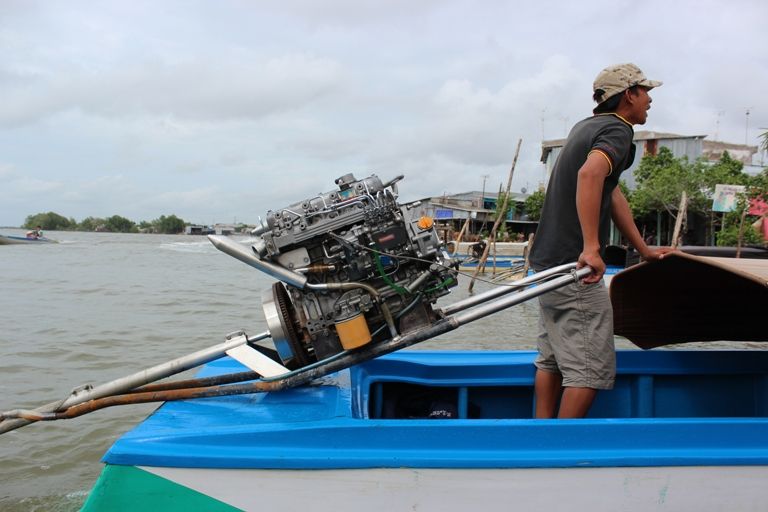
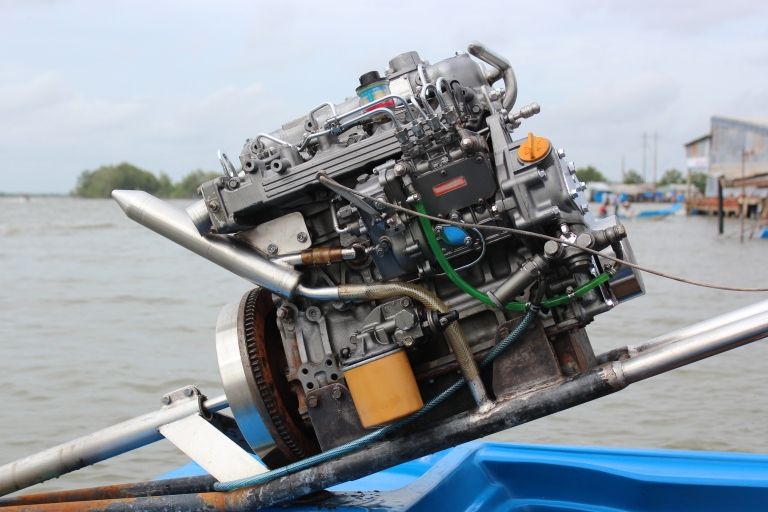
In Vietnam and other parts of southeast Asia long-tail boats use outboard motors altered to extend their propellers far from the rest of the motor. In Vietnam these outboards are called máy đuôi tôm (shrimp tail motor), which are smallish air-cooled or water-cooled gasoline, diesel or even modified automotive engines bolted to a welded steel tube frame, with another long steel tube up to 3 m long to hold an extended drive shaft driving a conventional propeller. The frame that holds the motor has a short, swiveling steel pin/tube approximately 15 cm long underneath, to be inserted into a corresponding hole on the transom, or a solid block or wood purposely built-in thereof.[27][28][29][30][31] This drop-in arrangement enables extremely quick transfer of the motor to another boat or for storage – all that is needed is to lift it out. The pivoting design allows the outboard motor to be swiveled by the operator in almost all directions: Sideways for direction, up and down to change the thrust line according to speed or bow lift, elevate completely out of water for easy starting, placing the drive shaft and the propeller forward along the side of the boat for reverse, or put them inside the boat for propeller replacement, which can be a regular occurrence to the cheap cast aluminum propellers on the often debris-prone inland waterways.

Manufacturers

[edit]

Electric outboard manufacturers

[edit]

Former manufacturers

[edit]

See also

[edit]
  • Yacht tender – Boat used for servicing larger racing or cruising pleasure craft
  • Pneumatic motor – Compressed-air engine
  • Sterndrive, also known as Inboard/outboard drive – Type of boat engine

References

[edit]
[edit]

Patents

[edit]
Revisions and contributorsEdit on WikipediaRead on Wikipedia
from Grokipedia
An outboard motor is a portable, self-contained system for boats, typically consisting of an , a gearbox, and a integrated into a single unit that mounts externally on the transom at the rear of the vessel. It provides by rotating the to push water backward, propelling the forward, and is widely used for its high , ease of installation, and straightforward maintenance on small to medium-sized such as boats, dinghies, and recreational vessels. The outboard motor's development traces back to the late , with early gasoline-powered prototypes emerging around 1896 from the American Motor Company in New York, though these were rudimentary and not commercially viable. Norwegian-American inventor created the first practical and commercially successful model in 1909, a 1.5-horsepower that revolutionized by making motorized accessible and reliable for everyday use. Evinrude's spurred rapid industry growth; by the , he had refined designs into more powerful multi-cylinder units, leading to the formation of companies like Elto Outboard Motor Co., and the technology became integral to recreational and commercial marine applications. Modern outboard motors are categorized primarily by engine cycle—two-stroke and four-stroke—with two-stroke models historically favored for their simplicity, lighter weight, and quick acceleration but increasingly restricted due to higher emissions and noise. Four-stroke engines dominate today for their superior , lower emissions, quieter operation, and compliance with environmental regulations, such as those from the U.S. Environmental Protection Agency, while advancements like electronic in the 1980s and 1990s enhanced overall reliability and performance across both types. Emerging electric outboard motors, powered by batteries rather than fuel, offer zero-emission alternatives with instant and minimal maintenance, gaining traction in eco-conscious applications like urban waterways and small electric boats. Key components include the powerhead (housing the engine's cylinders, pistons, and ), the midsection (containing the driveshaft and mechanisms), and the lower unit (enclosing the gearbox and for underwater propulsion), all designed for and tilt adjustment to optimize boat handling.

Introduction

Definition and components

An outboard motor is a portable, self-contained system designed to be mounted externally on the transom of a , providing through a driven by an or . It integrates the engine, gearbox, and into a single detachable unit, allowing for easy installation, removal, and maintenance on small to medium-sized . The primary components of an outboard motor are divided into three main sections: the powerhead, midsection, and lower unit. The powerhead, located at the top, houses the engine's core elements, including the cylinder block, , pistons, and cylinder heads, which convert fuel or into mechanical power. It typically features cooling passages with a to maintain optimal operating temperatures during use. The midsection serves as the structural connector between the powerhead and lower unit, enclosing the vertical driveshaft that transmits rotational power from the downward, along with a shift rod for gear selection and a water tube for cooling. This section also includes mounting brackets for securing the motor to the boat's transom and mechanisms for tilting or trimming to adjust angle. The lower unit, submerged in water when in operation, contains the gearbox, shaft, water pump, (a protective below the ), and anti-cavitation plate (a horizontal surface above the to prevent air bubbles from disrupting ). The gearbox uses gears to redirect the driveshaft's vertical rotation by 90 degrees to spin the horizontal shaft. In operation, the in the powerhead generates rotational force, which travels down the driveshaft in the midsection to the lower unit's gearbox; there, forward, neutral, or reverse engage to turn the , creating water flow and forward thrust to propel the . Outboard motors are rated by horsepower, typically ranging from as low as 2.5 HP for small auxiliary units to over 600 HP for high-performance models, such as the Mercury Verado V12.

Advantages and disadvantages

Outboard motors offer several practical advantages over inboard or stern-drive alternatives, primarily due to their external mounting and . One key benefit is their ease of installation and removal, allowing users to quickly attach or detach the motor from the transom without invasive modifications to the boat hull, which simplifies trailering, storage, and basic servicing. As self-contained units, outboards integrate essential systems such as , cooling, and exhaust directly into the motor assembly, eliminating the need for separate hull penetrations or complex components found in inboard systems. They also provide flexible control options, including tiller handles for smaller setups or remote for larger applications, enabling straightforward operation across a range of vessel sizes. Additionally, the ability to tilt the motor upward facilitates shallow-water operation, keeping the and lower unit elevated to avoid grounding or damage while navigating rivers, flats, or beaches. Despite these strengths, outboard motors present notable disadvantages, particularly in and under certain conditions. Their external positioning exposes the to harsh environmental elements like saltwater spray and UV radiation, increasing the risk of on metal components such as the propeller shaft and exhaust ports if not regularly flushed and maintained. This vulnerability contrasts with inboard motors, where the is shielded within the hull. Outboards also feature a higher center of gravity due to their rear-mounted position, which can compromise stability in rough waters or during sharp turns compared to the lower, centralized weight distribution of inboard setups. Furthermore, they tend to generate more noise and vibration transmitted through the transom, potentially reducing comfort on longer trips, although modern four-stroke models have mitigated this somewhat relative to older two-strokes. While most commonly used on smaller vessels, outboards can power up to 60 feet or more, often employing multiple engines on larger hulls to achieve adequate power and maintain balance. On the environmental front, older outboard models emitted higher levels of hydrocarbons and nitrogen oxides, contributing to greater , but contemporary designs comply with stringent EPA and CARB standards, achieving reductions of up to 65% in key pollutants through advanced catalytic converters and .

History

Early inventions

The origins of the outboard motor trace back to the late 19th century, with French inventor Gustave Trouvé developing the first known in 1881. Trouvé's electric outboard was a portable, removable unit powered by batteries and an , mounted on a 5-meter boat named Le Téléphone. Demonstrated on the River Seine in , it achieved speeds of 3.6 km/h upstream and 9 km/h downstream, marking the initial concept of a detachable propulsion system for small boats. Earlier gasoline-powered attempts included about 25 rudimentary units produced by the American Motor Company in 1896, though not commercially viable. The shift to gasoline-powered designs emerged in the early , driven by the need for greater range and power beyond electric limitations. In , American engineer Cameron Waterman introduced the first commercially successful gasoline outboard, the Waterman Porto Motor, a 2-horsepower, single-cylinder, air-cooled unit weighing about 20 pounds that propelled an 18-foot rowboat at 7 mph for 8 hours on a of . Waterman's affordable model, produced in increasing numbers—25 units in and up to 6,000 annually by —helped popularize the technology until he sold the operation around (with a water-cooled redesign in 1907). Meanwhile, Norwegian-American inventor built his first prototype in 1907, inspired by the inconvenience of to fetch ice cream, resulting in a detachable rowboat motor patented as a self-contained internal-combustion unit. Evinrude's 1909 production model delivered 1½ horsepower at 1,000 rpm and weighed 62 pounds, establishing the horizontal-cylinder, vertical-crankshaft design that became an industry standard. Early outboard motors faced significant challenges that hindered widespread adoption. They were often heavy—many exceeding 60 pounds for low-horsepower outputs—making them difficult to mount on small boats, while unreliable ignition systems, typically magneto-based, frequently failed in damp conditions. Limited power and structural vulnerabilities further restricted use to calm waters, as rough conditions could cause stalling or structural failure. Key early figures contributed to iterative refinements amid these obstacles.

Technological advancements

In the 1920s and , outboard motor manufacturers shifted toward two-stroke engines to enhance simplicity, portability, and ease of operation compared to earlier four-stroke designs. This transition emphasized lightweight construction and fewer moving parts, making engines more suitable for recreational boating. A notable example was the 1921 Elto 3 hp twin-cylinder two-stroke model, which weighed just 47 pounds and incorporated extensive aluminum use for reduced weight and improved handling. Similarly, the Johnson 2 hp twin-cylinder engine, produced in late 1921, utilized aluminum alloys to achieve a mere 35 pounds, further popularizing two-strokes for their compact design and reliability in small boats. Following , the outboard industry experienced a production boom, with innovations focused on materials and induction systems to boost performance and usability. In the late 1940s, widespread adoption of aluminum construction significantly reduced engine weight; for instance, the 1949 Johnson Sea Horse QD model was nearly all-aluminum, cutting weight by approximately 50% over cast-iron predecessors while maintaining against . Complementing this, induction systems emerged in the 1950s, replacing piston-port designs to improve low-end torque and throttle response. revived and refined reed valves—previously abandoned by competitors like Evinrude in 1935—allowing better air-fuel mixture control at low RPMs, which enhanced acceleration and efficiency in variable boating conditions. The 1960s and 1980s brought refinements in lubrication, control, and convenience features, addressing user maintenance and operational challenges. Oil injection systems, introduced by in 1980, automated the delivery of , eliminating the need for manual premixing and reducing smoke while ensuring consistent lubrication. Evinrude pioneered power tilt and trim in 1968, enabling hydraulic adjustment of the engine angle for optimal hull planing and easier trailering, a feature that became standard on larger models. Remote controls also proliferated during this era, with OMC equipping engines from the mid-1950s onward for side-mount or console integration, allowing operators to manage , shift, and from the helm without direct engine handling. Four-stroke engines reentered the market in the late 20th century to meet growing environmental concerns, offering quieter operation and lower emissions than dominant two-strokes. Yamaha launched its Enduro series four-stroke models in the early 1980s, with the first commercial releases around 1984 targeting durable, low-maintenance applications; these engines, though initially 20-30% heavier, reduced hydrocarbon emissions by up to 90% through complete combustion cycles. By the 1990s, electronic fuel injection (EFI) further advanced fuel efficiency, with widespread adoption by 1997 across brands like Evinrude and Yamaha, and Mercury introducing direct fuel injection (DFI) systems like Optimax on recreational outboards around 2000. EFI systems optimized air-fuel ratios in real-time, achieving 15-20% reductions in fuel consumption compared to carbureted models, alongside smoother idling and cold starts.

Recent developments

In the 2000s, the U.S. Environmental Protection Agency (EPA) implemented Phase 3 emission standards for marine spark-ignition engines, effective from model year 2006, which required significant reductions in hydrocarbons and nitrogen oxides to near-zero levels through technologies such as direct fuel injection (DFI) in two-stroke engines and catalytic converters in four-stroke designs. These regulations, building on earlier phases from the late , accelerated the transition to cleaner propulsion, with four-stroke engines achieving compliance more readily due to their inherent efficiency and lower emissions profile. By the , four-stroke outboards had achieved over 90% globally, driven by these mandates and consumer demand for quieter, more fuel-efficient operation. Electrification and hybrid innovations emerged prominently in the as responses to ongoing emissions pressures and goals. Although gas-electric hybrids remain in stages for major manufacturers, Yamaha showcased a hydrogen-powered outboard motor in 2023, aiming to combine zero-emission with existing architectures for reduced carbon output. Complementing this, Yamaha introduced the fully electric HARMO outboard in 2025, equivalent to 9.9 horsepower and designed for seamless integration with lithium-ion batteries, marking a shift toward battery-assisted in recreational applications. Digital integrations have transformed outboard operation and in the , enhancing user control and . Mercury's VesselView , updated throughout the decade, enables wireless connectivity for real-time engine diagnostics, fuel monitoring, and GPS-linked features like automated trolling speed adjustments to optimize battery or fuel use during low-speed . These systems provide fault-code troubleshooting via , reducing downtime and supporting for fleets. Alternative fuels like gained traction in the through conversion kits, offering clean-burning options for existing outboards. Systems such as those from Lehr allowed retrofitting of four-stroke engines to , achieving approximately 25% lower CO2 emissions compared to while cutting by up to 60% and minimizing particulate matter. These adaptations, compliant with EPA standards, appealed to environmentally conscious users in remote or rental scenarios. Market trends reflect robust growth amid recreational boating expansion, with global outboard production estimated at 684,000 units in 2025. The industry is projected to reach a value of $5.98 billion by 2033, fueled by rising leisure participation, technological advancements, and regulatory incentives for low-emission models.

Types and Variants

Internal combustion outboards

Internal combustion outboards, powered by engines, represent the traditional and most widespread type of outboard motor . These engines operate on the principle of internal combustion, where is ignited to drive pistons and generate mechanical power transmitted to the via a driveshaft. The majority utilize spark-ignition four-stroke or two-stroke cycles, with four-stroke designs featuring , compression, power, and exhaust strokes for each cylinder, while two-strokes complete the cycle in one revolution for simpler operation. Two-stroke outboards feature a simpler with fewer , enabling higher power-to-weight ratios in models up to 150 horsepower or more, making them suitable for boats and quick acceleration. However, they require a -oil or separate oil injection system for , as the oil burns with the , resulting in higher emissions of hydrocarbons and particulates compared to four-strokes. Due to environmental regulations, conventional carbureted two-stroke outboards were largely phased out in many regions following the U.S. EPA's 2008 emission standards, which mandated significant reductions in exhaust pollutants and effectively shifted production toward cleaner alternatives. In contrast, four-stroke outboards incorporate mechanisms—an valve opens to admit the air-fuel mixture, followed by compression, ignition, and exhaust expulsion—enhancing and reducing emissions by separating from . They operate more quietly with smoother performance and deliver superior at low RPMs, ideal for trolling and varied conditions. Four-stroke designs now dominate the market for new recreational outboards, comprising the majority of sales due to their compliance with stringent emission rules and improved reliability. Fuel delivery systems in internal combustion outboards vary between carbureted and electronic fuel injection (EFI) setups. Carbureted systems mix air and fuel mechanically via a , which is simpler but less precise, leading to potential inefficiencies at varying loads. EFI, by contrast, uses sensors and electronic controls to inject fuel directly at optimal ratios, improving fuel economy by 10-15% and enabling easier cold starts with reduced emissions. Power outputs for internal combustion outboards span a wide range from 2.5 horsepower for small auxiliary motors to 600 horsepower in high-performance models, accommodating everything from dinghies to large center-console boats. Supercharged variants, such as the Mercury Verado series, exemplify high-end capabilities, with earlier L6 configurations reaching up to 400 horsepower through for enhanced acceleration and top speed. Maintenance for these engines differs significantly by design. Two-stroke outboards necessitate premixing oil with or using an oil injection system to ensure during operation, with routine checks focusing on lines, spark plugs, and lower unit changes every 100 hours. Four-stroke models require more comprehensive servicing, including engine oil and filter changes every 100 hours, along with valve adjustments at similar intervals to maintain proper clearance and prevent performance degradation.

Electric outboards

Electric outboard motors utilize brushless DC (BLDC) motors powered by lithium-ion batteries, typically operating on 24V to 48V systems with integrated battery management and charging capabilities for efficient energy delivery. These systems provide thrust equivalent to 1 to 100 horsepower gasoline models, depending on the motor's input power ranging from 1 kW to over 50 kW, enabling propulsion for small dinghies up to larger vessels. The absence of gearboxes in many designs enhances efficiency, often exceeding 50% overall, while the direct-drive mechanism delivers instant torque for responsive handling. Range varies significantly based on battery capacity, typically 1 to 20 kWh, vessel load, speed, and conditions, yielding 5 to 50 nautical miles per charge. For instance, a 1 kWh battery might support 20-25 nautical miles at low speeds (4-6 knots) on a lightweight tender, while larger 10-20 kWh packs extend this to planing speeds of 20-25 knots under moderate loads. Factors like wind, current, and propeller efficiency further influence endurance, with real-world tests showing 3-8 hours of operation at half throttle for portable units. At trolling speeds with low power draw (typically under 200W), compatible solar panels can exceed motor consumption, enabling net battery charging during operation and significantly extending range for activities like fishing or drifting, as supported by manufacturer accessories and user experiences. Key advantages include zero exhaust emissions, contributing to cleaner waterways and compliance with no-discharge zones, alongside operation quieter than 60 dB for minimal disturbance to and users. Instant from BLDC provides superior low-end compared to engines, and the lack of systems eliminates maintenance needs like oil changes or cleaning, reducing long-term costs. These also avoid power loss at altitude or in varying temperatures, ensuring consistent performance. Prominent models include the Torqeedo Cruise series, with variants like the Cruise 6.0 offering 6,000 W input power equivalent to a 9.9 HP outboard, suitable for boats up to 3 tons, and higher models reaching 20 HP equivalence for planing hulls. The ePropulsion Spirit 1.0 Plus is a portable option delivering 1 kW (3 HP equivalent) with an integrated 1.276 kWh lithium battery, ideal for tenders and small fishing boats under 1 ton. The electric outboard market is expanding, valued at over USD 910 million in 2024 with a projected CAGR of 6.1% through 2034, driven by regulatory incentives for emissions reduction and advancements in battery . Despite these benefits, limitations persist, including high initial costs ranging from $2,000 for basic 1-3 HP units to $15,000 for 20+ HP systems, often 1.5-2 times that of comparable models. Charging times typically span 4-8 hours from standard outlets, limiting spontaneous long trips without access. In heavy-use scenarios, such as full load or high speeds, power output may diminish as batteries deplete, reducing sustained thrust compared to fuel-based alternatives.

Alternative propulsion outboards

Alternative propulsion outboards encompass specialized designs that deviate from conventional or electric systems, utilizing fuels like or (LPG), impeller-based jets, or emerging options such as and to address environmental, operational, or environmental challenges in niche marine applications. and LPG outboards typically involve converted s adapted to burn gaseous fuels, offering reduced evaporative emissions compared to counterparts. For instance, the 2025 Mercury FourStroke 5 hp model features a 123 cc single-cylinder rated at 5 horsepower, utilizing as its primary fuel source for stable storage without degradation over time. These systems achieve approximately 20% lower overall emissions, including (CO) and hydrocarbons, due to the cleaner of , which produces no vaporative pollutants and aligns with stringent regulations in eco-sensitive areas. However, they deliver 10-15% less power output than equivalent models because of the lower of , necessitating vaporizers to convert to gas for consistent . Pump-jet outboards employ impeller-driven instead of exposed propellers, drawing water through an and expelling it via a for , which enhances maneuverability in shallow or obstructed waters. HamiltonJet's waterjet systems, adaptable to outboard configurations, range up to 300 horsepower and provide superior efficiency in weedy or debris-laden environments, with loss under 5% compared to traditional propellers that can foul or cavitate. These designs eliminate external blades, reducing damage risk in rivers or marshes, though they incur a 20% reduction in top speed relative to propeller-driven equivalents due to hydraulic inefficiencies in energy transfer. Other alternatives include prototypes and -compatible diesel outboards, which remain experimental or niche. Yamaha conducted 2024 trials of a 450 horsepower V8 combustion outboard in collaboration with Roush Industries and Regulator Marine, demonstrating zero-carbon emissions during on-water testing while maintaining performance parity with fossil fuel versions. Biodiesel compatibility in diesel outboards, though viable for reducing particulate matter in marine applications, holds less than 1% due to limited adoption and fuel availability concerns. These propulsion variants find applications in specialized scenarios, such as mud motors like the Go-Devil series for navigating sandy or muddy shallows in wetlands, where surface-drive impellers prevent grounding without sacrificing traction. models suit eco-regions like , complying with (CARB) evaporative emission standards through non-polluting fuel storage. Drawbacks persist, including the need for propane vaporizers to ensure reliable fuel delivery in varying temperatures and the inherent speed limitations of jets, which prioritize durability over high-velocity performance.

Applications

Recreational and portable use

Portable outboard motors, typically ranging from 2.5 to 25 horsepower and weighing under 100 pounds, are designed for easy transport and manual operation, featuring pull-start mechanisms and steering for straightforward control. For instance, the BF2.3, a 2.3-horsepower four-stroke model, weighs just 29.5 pounds, making it highly suitable for small vessels like dinghies and kayaks where weight is a critical factor. These lightweight designs allow users to carry the motor short distances to the without assistance, enhancing for solo boaters or those with limited storage space. In recreational applications, these motors power a variety of small craft, including inflatable boats and aluminum fishing skiffs up to 20 feet in length, providing reliable for leisure outings and . They are often paired with auxiliary trolling motors to achieve precise low-speed maneuvers, such as maintaining speeds between 0.5 and 4 for bait presentation during . This combination supports activities like leisurely cruising on calm waters or targeted sport , where quiet operation and are prioritized over high-speed performance. Power selection for these setups generally aligns with the boat's size and load to ensure safe handling without overpowering the hull. Recreational use accounts for approximately 76% of outboard motor sales as of , reflecting the growing demand for affordable, versatile propulsion in personal . Common accessories include portable fuel tanks of 3 to 6 gallons, which connect via quick-disconnect fittings, along with protective carrying cases to facilitate transport in vehicles or storage. Setup is rapid, often completed in under 5 minutes by attaching the motor to the transom, connecting the , and priming the system, allowing users to launch quickly for spontaneous outings. Emerging trends show a rise in electric portable outboards, driven by environmental concerns and advancements in battery technology, with models like the Haswing Protruar 1.0 offering 1 horsepower equivalent from a 12-volt system ideal for kayaks and small inflatables. These battery-powered options provide silent operation and zero emissions, appealing to eco-conscious recreational users, and can achieve speeds up to 4 miles per hour while weighing around 15 pounds without the battery. As lithium-ion batteries improve runtime to several hours, electric portables are increasingly adopted for short-range and trips.

Commercial and large-scale use

In commercial and large-scale applications, outboard motors ranging from 90 to 600 horsepower power workboats, yachts, and larger vessels that demand high output and durability for demanding marine tasks. These engines, often built with V6 or V8 configurations, excel in offshore fishing and commercial hauling due to their robust and . For instance, Yamaha's V8 5.6L XTO Offshore delivers 425 horsepower and is engineered for vessels 50 feet or longer, providing the needed for heavy loads in professional settings. Similarly, Mercury Marine's Verado 600hp outboard, powered by a 7.6L V12 powerhead, sets benchmarks for smooth operation and high performance in ultra-large applications. Multi-engine configurations, such as twins or , are standard in commercial setups to offer and scale total power to 600–1,800 horsepower, ensuring operational continuity if one unit fails. These arrangements also integrate controls for precise docking and maneuvering in confined or challenging waters. A representative example is the triple 300hp setup on 30-foot center console boats, which balances power distribution for stability during commercial operations. Specific commercial uses include lobster boats and dive charter vessels up to 40 feet, where outboards enable efficient transport of gear and passengers on extended saltwater runs. To withstand corrosive saltwater environments, these motors incorporate sacrificial anodes—typically or aluminum—that erode in place of critical components like the and lower unit, extending life in marine commercial service. High-horsepower outboards in these roles achieve top speeds of 50–70 mph under optimal conditions, with cruising consumption ranging from 20–50 gallons per hour based on load and speed. Models introduced in 2025 feature advanced control and engine management systems that enhance economy over prior versions, reducing operational costs for commercial fleets. U.S. Coast Guard regulations mandate inspections for commercial outboard-powered operations, particularly in and services, to verify safety gear including personal flotation devices, fire extinguishers, visual distress signals, and sound-producing devices, ensuring vessel seaworthiness and crew protection.

Specialized applications

Outboard motors find specialized applications in challenging environmental and regional contexts, where standard designs are modified for extreme conditions such as shallow, obstructed, or hazardous waters. Long-tail boats, prevalent in and other parts of , utilize extended-shaft outboard systems known locally as "reua hang yao" or "peá." These feature shafts measuring 6 to 10 feet in length, often pole-mounted to elevate the engine above shallow riverbeds, mangroves, and floodplains. Propulsion is typically provided by converted automobile engines, ranging from 20 to 100 horsepower, offering an economical and maintainable solution derived from readily available automotive parts. This design excels in the intricate waterways of the , where long-tail boats serve essential roles in transportation, fishing, and . Mud motors represent another adaptation for swampy and marshy terrains, employing surface-drive mechanisms that keep the above the water surface to avoid submersion in mud or . These motors operate effectively in depths as shallow as a few inches, with articulated tillers enabling 360-degree pivoting for precise navigation through dense obstacles. A representative example is the Mud-Skipper 35 HP model, which combines robust construction for hunting and exploration in wetlands like those in the . In military and rescue operations, jet outboards provide propulsion without exposed propellers, ideal for rapid maneuvers in shallow or debris-filled waters. These systems water through a protected and expel it via a for , minimizing damage risks in rocky or sandy shallows. The U.S. utilizes rigid inflatable boats () equipped with such drives for swift response missions, enhancing safety and speed in coastal and riverine environments. Adaptations for ice and cold-water conditions include heated carburetors and anti-icing features to counteract fuel system freezing during low-temperature operation. These modifications warm intake air or fuel mixtures to prevent ice buildup in the carburetor throat, ensuring reliable performance in sub-freezing environments. Such specialized outboards constitute a niche segment, primarily for northern latitude users in fishing or patrol duties.

Selection and Installation

Determining power needs

Determining the appropriate horsepower for an outboard motor involves assessing the 's loaded weight, hull design, and performance expectations to ensure safe and efficient operation. A widely used is to allocate 1 horsepower for every 25 to 40 pounds of the total loaded weight, accounting for the hull, motor, fuel, passengers, and gear. For instance, a 16-foot with a loaded weight of 1,000 pounds typically requires 25 to 40 horsepower to achieve adequate planing and control. Several key factors influence this calculation. Hull type plays a critical role: planing hulls demand higher horsepower to elevate the boat above the water's surface for speeds beyond displacement limits, whereas displacement hulls operate efficiently at lower power levels suited to their slower, wave-piercing design. Additional load from passengers and gear, which can add up to 500 pounds or more, increases the effective weight and necessitates proportional power adjustments to maintain performance. Intended speed goals further refine the selection; for example, achieving a cruising speed of 20 to 30 on a planing hull requires sufficient horsepower to overcome hydrodynamic resistance without straining the . Basic formulas provide a starting point for estimation. For planing hulls, the minimum required horsepower can be approximated by dividing the boat's weight in pounds by 40, yielding a baseline for getting on plane. However, the absolute maximum horsepower must adhere to the limit specified on the boat's USCG capacity plate affixed to the transom—that is the binding rating, such as 90 horsepower for many mid-sized boats—to prevent structural overload and ensure compliance with safety regulations. Exceeding this rating is not recommended due to safety risks such as boat instability, porpoising, and potential structural failure; while not prohibited by federal law in the US, it may violate state laws and could lead to civil liability in accidents. Modifications like ECU flashing to increase the motor's output beyond its rated capacity are discouraged for the same reasons. Practical testing is essential to validate selections, as theoretical calculations may not account for real-world variables like wind or currents. Overpowering the boat risks porpoising, where the bow repeatedly dips and rises, leading to instability, water ingress over the transom, and potential structural stress on the hull. Conversely, underpowering causes bogging, characterized by sluggish acceleration, high engine strain, and limited top speeds; for example, equipping an 18-foot boat with only 15 horsepower might cap performance at around 15 miles per hour, even lightly loaded. To aid in precise determination, online calculators derived from American Boat and Yacht Council (ABYC) standards incorporate boat dimensions, weight, and hull type to recommend horsepower ranges, helping users avoid common pitfalls in selection.

Shaft length and mounting considerations

Outboard motors are available in standard shaft lengths designed to match the transom height of various boat types, typically categorized as short (15 inches), long (20 inches), and extra-long (25 inches). These lengths ensure the operates at an optimal depth relative to the hull, with short shafts suited for low-transom boats like small dinghies and canoes, long shafts for standard recreational boats, and extra-long shafts for vessels with higher transoms such as bass boats or pontoons. A mismatch between shaft length and transom height can lead to ventilation, where air is drawn into the , causing significant degradation including reduced and inefficient propulsion. Mounting an outboard motor involves securely bolting it to the transom using clamps or brackets, with torque specifications generally ranging from 30 to 60 foot-pounds depending on the model and transom material to prevent loosening under vibration. The motor should be positioned so the anti-cavitation plate (also known as the anti-ventilation plate) aligns 0 to 2 inches below the bottom of the hull for proper flow and to minimize drag while avoiding submersion that could cause excessive resistance. Tilt and trim mechanisms, often hydraulic or electric, allow for adjustments typically up to 20 degrees in the trim range for fine-tuning angle during operation, with full tilt extending to 70-90 degrees for trailering or shallow . Power trim and tilt systems are standard on outboards rated above 25 horsepower to facilitate easier control and improved handling. Compatibility between the motor and transom requires consideration of the boat's material, as transoms often need reinforcement with backing or metal plates to handle the stress, unlike denser wood transoms which provide inherent strength. Large outboard motors exceeding 500 pounds necessitate robust brackets capable of supporting the weight without compromising structural integrity, particularly on smaller vessels. During installation, ensuring the motor is level and centered on the transom is essential to prevent uneven , , and accelerated wear on components.

Size and compatibility

Outboard motors vary significantly in physical dimensions to accommodate different sizes and applications, with widths typically ranging from 15 to 25 inches to fit standard transom openings. Heights, when measured in the tilted position, generally span 20 to 40 inches, depending on the shaft and model . These dimensions ensure compatibility with a wide range of vessels, from small dinghies to larger offshore s. Weights for outboard motors range from approximately 50 pounds for portable 2- to 10-horsepower models to over 1,200 pounds for high-performance units exceeding 300 horsepower, directly influencing trailer ratings and towing requirements. For instance, a 50-horsepower four-stroke motor often weighs 210 to 270 pounds, while larger V8 models can approach 1,000 pounds or more. This weight spectrum necessitates careful consideration of the boat's structural capacity and transport logistics. Compatibility with the boat's transom is essential, where standard transom widths of 20 to 30 inches accommodate most single-motor installations, with mounting bolt patterns standardized at 12-7/8 inches between top holes and 9-7/8 inches between bottom holes for . Tiller-equipped motors provide a arc of up to 270 degrees for maneuverability in tight spaces, while electrical systems on models over 10 horsepower require a 12-volt battery to power starting, ignition, and accessories. Control options include manual handles for smaller engines or remote systems for larger setups, with mechanical cables for and shift typically spanning 10 to 20 feet to reach from the helm to the motor, allowing for flexible . Premium 2025 models, such as the DF200A and BF250, incorporate digital controls for precise, responsive operation without traditional cables. For storage, many outboards feature foldable arms that reduce overall length for compact trailering, often paired with portable carts rated for 100 to 500 pounds to facilitate loading and unloading. Compatibility with accessories like bimini tops or swim platforms requires verifying clearance, as extended tillers or cowlings may interfere with overhead or rear structures on certain designs. Upgrades such as jack plates enable 4 to 12 inches of vertical height adjustment to optimize performance and reduce drag, with manual models costing $500 to $1,000 and hydraulic versions $1,000 to $1,500. These devices mount between the transom and motor, providing setback as well for better weight distribution.

Operation and Maintenance

Mounting height and trim adjustments

Mounting height refers to the vertical position of the outboard motor on the transom, which significantly influences performance and overall handling. The optimal mounting height for planing hulls positions the anti-ventilation plate (also known as the cavitation plate) level with or 0 to 1 inch above the bottom of the hull when the shaft is level with the line. This setup ensures efficient water flow over the , minimizing drag while providing sufficient thrust for smooth planing. If mounted too high, the may draw in air, leading to ventilation and reduced efficiency; conversely, mounting too low increases hydrodynamic drag and heightens the risk of the striking underwater obstacles. Trim adjustments involve tilting the outboard motor to alter the angle of the propeller thrust relative to the boat's hull, optimizing performance during different phases of operation. In neutral trim (0°), the propeller shaft is parallel to the water surface or , providing balanced for displacement speeds. For planing, operators typically trim out (upward) by 5 to 15 degrees, which lifts the bow and reduces wetted surface area for higher speeds and better . During or hole shots, a negative trim of about -5 degrees (trimmed in or downward) digs the propeller deeper to maximize initial and quicker planing. Modern outboards, such as those from , incorporate automatic trim systems like Active Trim, which use speed sensors to dynamically adjust the angle for optimal performance without manual intervention. Adjustment methods vary by motor size and type. Smaller outboards (typically under 25 horsepower) often use manual trim via a pin in the transom , where operators select from preset holes to set the , requiring the engine to be tilted by hand for changes . Larger motors employ power trim s—either hydraulic or electric—activated by a or switch on the control, allowing full-range adjustments (usually 20 degrees) in 20 to 60 seconds for seamless operation. Proper trim settings can enhance fuel economy by up to 10% by reducing drag and optimizing engine load, though over-trimming (excessive upward ) risks propeller ventilation, where air is sucked into the blades, causing loss of and potential damage. Trim requirements differ based on type and load. Heavily loaded vessels, such as those carrying passengers or gear, benefit from deeper (more negative) trim angles to maintain bow lift and prevent plowing. In contrast, lightweight racing hulls perform best with shallower positive trim to minimize drag and achieve higher top speeds. These adjustments should be made incrementally while monitoring RPM and boat attitude to ensure and .

Cooling and ventilation

Outboard motors primarily employ systems to manage generated by the , known as the powerhead. An impeller-driven pump, located in the lower unit, draws through intakes near the and circulates it through passages in the powerhead to absorb and dissipate before expelling it via the exhaust. This open-loop system typically achieves flow rates of 10-20 gallons per minute (GPM), sufficient for engines up to several hundred horsepower, depending on load and ambient conditions. For operation in cold climates where freezing poses a risk, some outboard configurations incorporate closed-loop cooling, where the powerhead is filled with an mixture, such as Mercury's pre-diluted 50/50 solution, separated from raw water by a . This setup prevents internal freezing while maintaining efficient , contrasting with the standard open-loop design used for typical saltwater or freshwater environments. Air-cooled variants remain rare in modern outboards and are confined to small electric or vintage designs under 5 horsepower. These rely on via engine fins to dissipate heat without water circulation, suitable for low-power applications like portable trolling motors but limited by overheating risks at higher loads. Proper ventilation prevents air from being drawn into the , which can cause —where the prop loses grip on water due to high trim angles or speeds, leading to symptoms like sudden RPM spikes and reduced . To mitigate this, operators should lower the trim to ensure the remains fully submerged and maintains solid water contact. Maintenance of the cooling system is essential, particularly after saltwater use, to prevent and blockages. Flushing with fresh water using attached to the lower unit intakes at approximately 1,000 RPM for 5-10 minutes removes salt deposits effectively. The should be inspected and replaced every 3 years or 300 hours of operation, whichever comes first, to ensure reliable water flow and avoid overheating.

Safety features and practices

Outboard motors incorporate several built-in safety features to mitigate risks during operation. The engine cut-off switch (), often referred to as the kill switch, features a attached to the operator's life jacket or clothing and connected to the motor's magneto , which grounds the circuit to immediately stop the engine if the operator is separated from the helm, such as when falling overboard. This device is standard on most modern outboards and prevents the from continuing to run unattended, reducing collision hazards. Since April 1, 2021, U.S. Coast Guard regulations have required the use of ECOS on recreational vessels less than 26 feet in length powered by engines of 3 horsepower or greater whenever the operator is in the normal operating position. Overheat protection systems in outboard motors include temperature sensors monitoring cylinder heads or coolant, which activate an audible alarm when temperatures reach critical levels, typically in the range of 180–200°F depending on the model and manufacturer specifications. In premium models from brands like Yamaha and Mercury, these systems may also trigger an automatic engine shutdown to prevent severe damage from overheating, often accompanied by reduced RPM modes as a warning. Regular checks of the cooling system, including water intake and impeller condition, are essential to ensure these alarms function reliably. Propeller safety is enhanced by the motor's skeg, a protective fin extending below the gearcase that shields the from underwater obstacles and offers partial defense against strikes. Optional guards, such as full cages or partial enclosures, provide additional , particularly in applications involving divers or swimmers, by surrounding the spinning blades to minimize contact injuries. According to U.S. data, propeller strikes resulted in 187 injuries in 2012 alone, and while effectiveness varies by design and speed, guards can significantly reduce the severity of such incidents in low-speed scenarios. Operators must follow key safety practices to complement these features. Fuel systems should be vented outdoors during refueling and storage to disperse potentially explosive vapors and prevent buildup inside the boat or portable tanks. (CO) awareness is crucial, as exhaust from outboard motors can enter cabins or enclosed areas, especially at idle or low speeds, where concentrations as low as 0.01% (100 ppm) can cause symptoms like and , and higher levels can be lethal by binding to and causing or death; installing battery-powered CO detectors and maintaining proper ventilation mitigates this risk. Life jackets, or personal flotation devices (PFDs), must be worn at all times by children under 13 on recreational vessels less than 26 feet in length that are underway, unless the child is in an enclosed cabin, with strong USCG recommendations for all passengers to wear USCG-approved wearable PFDs to prevent in case of falls or . U.S. Coast Guard regulations enforce additional safeguards for outboard-equipped boats. While backfire flame arrestors are required on all inboard engines installed after April 25, 1940, outboard motors are exempt due to their exposed design, though operators should ensure clean air intakes to prevent backfires. Fire extinguishers are mandated on motorboats with outboard motors greater than 10 horsepower if they have closed or permanent tanks, requiring at least one USCG-approved Type B-I (5-B rating) extinguisher readily accessible; boats under 26 feet in open may be exempt if no fixed fire system is present.

Troubleshooting common issues

Engine stalls in outboard motors are frequently caused by fuel starvation, such as a clogged or kinked lines, ignition failure from worn or fouled spark plugs, or overheating that triggers safety shutdowns. To diagnose, inspect the for blockages and ensure fresh is used; for ignition issues, remove and clean or replace spark plugs, setting the gap to 0.030 inches for optimal performance. If overheating is suspected, verify the cooling as detailed below before restarting. Starting issues often occur in two-stroke engines that become flooded from excessive priming, leading to an overly rich fuel mixture, or in electric-start models where battery voltage drops below 12 volts, insufficient for cranking. For flooded two-strokes, turn off the fuel supply, run the engine dry to clear excess fuel, and avoid priming on restart; for electrics, battery voltage with a and charge or replace if under 12 volts. Additionally, perform a compression by removing spark plugs, disabling ignition, and cranking the engine—healthy readings range from 100 to 150 across cylinders, indicating good ring and valve seal. Overheating typically results from impeller wear in the water pump, where shredded or aged rubber fails to circulate water effectively, or blocked water intakes clogged with debris like weeds or marine growth. Check the tell-tale stream for a steady flow of cooling water; if weak or absent, inspect and clear intakes, then replace the if damaged—disassemble the lower unit per manufacturer guidelines. As referenced in cooling system , regular every 100 hours prevents escalation. Excessive vibration commonly stems from a loose propeller nut or a bent propeller shaft, which can misalign the drive train and cause uneven power delivery. Tighten the propeller nut to the manufacturer's specified (typically 40-60 foot-pounds depending on the model) using a calibrated to secure it without over-stressing the shaft; for bent shafts, align the propeller and lower unit with a and straighten or replace if deviation exceeds 0.010 inches. For to prevent storage-related issues like corrosion-induced stalls, apply fogging oil directly into the cylinders via holes or carburetors while the engine runs briefly until it stalls, coating internal components against moisture. Add fuel stabilizer at a ratio of 1 ounce per gallon for long-term storage to inhibit ethanol-related degradation, then run the engine for 10-15 minutes to distribute it through the system. Post-storage, if starting problems arise, replace fogged and verify fuel quality to restore reliable operation. For electric outboards, regularly inspect battery connections for corrosion, ensure proper charging to avoid over-discharge (typically maintaining 20-80% for lithium-ion batteries), and check the for damage or debris, following manufacturer guidelines for and to prevent fire risks or reduced performance.

Manufacturers

Major global manufacturers

, based in the United States and owned by , is a leading manufacturer in the global outboard motor market. The company is renowned for its Verado 400 HP V10 outboard engine, which delivers high performance through advanced supercharging and quiet operation, alongside the versatile FourStroke series designed for efficiency across various power ratings. Yamaha Motor Co., Ltd., headquartered in , is a leading manufacturer emphasizing durability and innovation in its lineup. Key offerings include the F300 V6 , known for its smooth power delivery, and specialized jet drive models suited for shallow-water applications. Yamaha underscores reliability with a standard 5-year limited warranty on its outboards. Honda Marine, a division of Honda Motor Co., Ltd. from , has focused on marine engines since introducing its first four-stroke outboard in 1964. The BF150 four-stroke model incorporates technology, achieving up to 20% fuel savings at cruising speeds compared to competitors in its class. Suzuki Marine, part of Suzuki Motor Corporation in , offers precision-engineered designs. The DF350A V6 outboard features advanced control systems for enhanced maneuverability, while models like the DF150 exemplify lightweight construction at 474 pounds for the 20-inch shaft version, facilitating easier handling and installation. Tohatsu Corporation of produces affordable outboard motors ranging from 2.5 to 250 HP, often rebranded as Marine for broader distribution. These engines comply with OEDA (Outboard Engines Distributors Association) emissions standards, ensuring environmental adherence in key markets like .

Electric and niche manufacturers

Torqeedo, a German manufacturer specializing in electric propulsion systems and acquired by Yamaha Motor in January 2024, offers advanced outboard and pod motors designed for integration with sources. The company's Cruise 12.0 FP pod drive delivers 12 kW of input power, equivalent to 25 horsepower in comparable to diesel inboards, with a static of up to 405 pounds, making it suitable for sailboats up to 12 tons. Its TorqLink communication system enables seamless solar charging and hydrogeneration, allowing batteries to recharge while underway under favorable conditions. In March 2025, parent company Yamaha launched the HARMO electric outboard system, a 3.7 kW unit equivalent to 9.9 horsepower with 227 pounds of , suitable for boats up to 32 feet in single or twin configurations. ePropulsion, based in with operations in , produces portable electric outboards emphasizing efficiency and ease of use for smaller vessels. The 6.0 Evo model provides 6 kW of power, equivalent to 9.9 horsepower, with a lightweight design weighing 36.6 kg and compatibility with 39-60V batteries for versatile applications on boats up to 1.5 tons. In testing with a standard , it achieves ranges exceeding 70 miles at low speeds (around 4 mph at 500W output), though practical range varies with load and battery capacity, often reaching 10-45 miles in typical recreational scenarios. The Evo series includes portable tiller-controlled options like the 3.0 and 6.0, which fold for transport and support quick battery swaps. Elco Motor Yachts, an American company founded in , traces its roots to early propulsion and continues to innovate in electric and hybrid systems for marine use. The EP-20 outboard equates to 20 horsepower, operating on a 48-volt system with a weight comparable to a 9.9-horsepower , ideal for displacement hulls up to 4,200 kg. Elco's systems support hybrid configurations by integrating a small for extended range, allowing seamless switching between electric and auxiliary power without compromising the core battery-driven operation. Among niche manufacturers, Minn Kota focuses on electric trolling motors that serve as low-power outboard alternatives, typically in the 1-5 horsepower equivalent range for auxiliary propulsion on small boats. Models like the 55-pound thrust units draw around 50 amps at 12 volts, providing roughly 0.7 horsepower based on standard conversions where 72-75 pounds of thrust approximate 1 horsepower, suitable for freshwater fishing crafts under 2,000 pounds. Haswing offers budget-friendly portable electric outboards, such as the Ultima 3.0, a 3 kW unit weighing 15.9 kg with 110 pounds of thrust, designed for kayaks and dinghies up to 1 ton, featuring foldable shafts and wireless controls for easy storage and operation. For alternative fuels, TURNER Marine provides propane conversion kits for existing outboard engines, adapting gasoline models to run on liquefied petroleum gas for reduced emissions and cleaner combustion in niche recreational applications. The electric outboard sector is experiencing robust growth, with the global market valued at approximately $911 million in 2024 and projected to expand at a of 6.1% through 2034, driven by regulatory pushes for zero-emission and advancements in lithium-ion batteries. Niche segments, including and specialized trolling electrics, represent less than 5% of the total outboard market, overshadowed by broader electric adoption in recreational and commercial uses.

Historical and defunct companies

The Evinrude and Johnson outboard motor brands, originating in the United States, were pivotal in early outboard development. Evinrude was founded in 1907 by Norwegian-American inventor in , , marking one of the first commercial outboard engines. The company introduced the E-TEC direct-injection in 2004, which significantly reduced emissions and improved fuel efficiency compared to traditional carbureted models. Johnson Motors, established in 1911 by the as a competitor, focused on lightweight designs and innovations like the first detachable fuel tank. Both brands were acquired by Bombardier Recreational Products (BRP) in 2001 following the of their parent company, but production of Evinrude outboards ceased in May 2020 due to global supply chain disruptions from and a strategic shift toward and snowmobiles. In October 2024, BRP announced a process to sell its marine boat brands. The (OMC), formed in 1929 through the merger of Evinrude, Elto, and Johnson companies, became a dominant force in the industry. Headquartered in , OMC expanded into boats and other marine products, achieving market leadership in the 1970s as the world's largest outboard manufacturer. A key innovation was the Variable Ratio Oil (VRO) injection system introduced in 1984 for its two-stroke engines, which automatically adjusted the oil-to-fuel ratio based on engine load to enhance lubrication and reduce manual mixing. However, facing financial pressures from diversification, environmental regulations, and competition, OMC filed for on December 22, 2000, resulting in the of thousands of employees and the sale of its assets. British Seagull, a United Kingdom-based manufacturer, produced durable two-stroke outboard motors from 1931 until the mid-1990s, emphasizing simplicity and reliability for small boats. The engines gained prominence during for military applications, powering assault craft, pontoon bridges, and support vessels in Allied operations across . Known for their robust , models like the typically required a 25:1 fuel-to-oil mixture after 1978, though earlier variants used richer 10:1 ratios to ensure performance in harsh conditions. Production ended in the 1990s amid declining demand for two-strokes, but parts remain available through specialized suppliers like Sheridan Marine as of 2025. Elto Outboard Motor Company, founded in by , pioneered the twin-cylinder outboard design with its lightweight Evinrude Light Twin Outboard (ELTO), which weighed just 47 pounds and sold over 3,500 units in its second year. This innovation improved power delivery and reduced vibration compared to single-cylinder predecessors, influencing subsequent designs. Elto was merged into the newly formed in 1929, integrating its technology into OMC's broader portfolio. The legacy of these defunct companies endures through their contributions to outboard technology and ongoing aftermarket support. OMC, at its peak, commanded a significant portion of the global market, shaping standards for reliability and performance in the . As of 2025, parts for Evinrude, Johnson, Elto, and engines are widely available via aftermarket providers, enabling restoration and maintenance of vintage motors. BRP's E-TEC technology, once reaching up to 300 HP with for reduced emissions and improved fuel economy, remains influential in historical contexts.

References

Add your contribution
Related Hubs
User Avatar
No comments yet.